
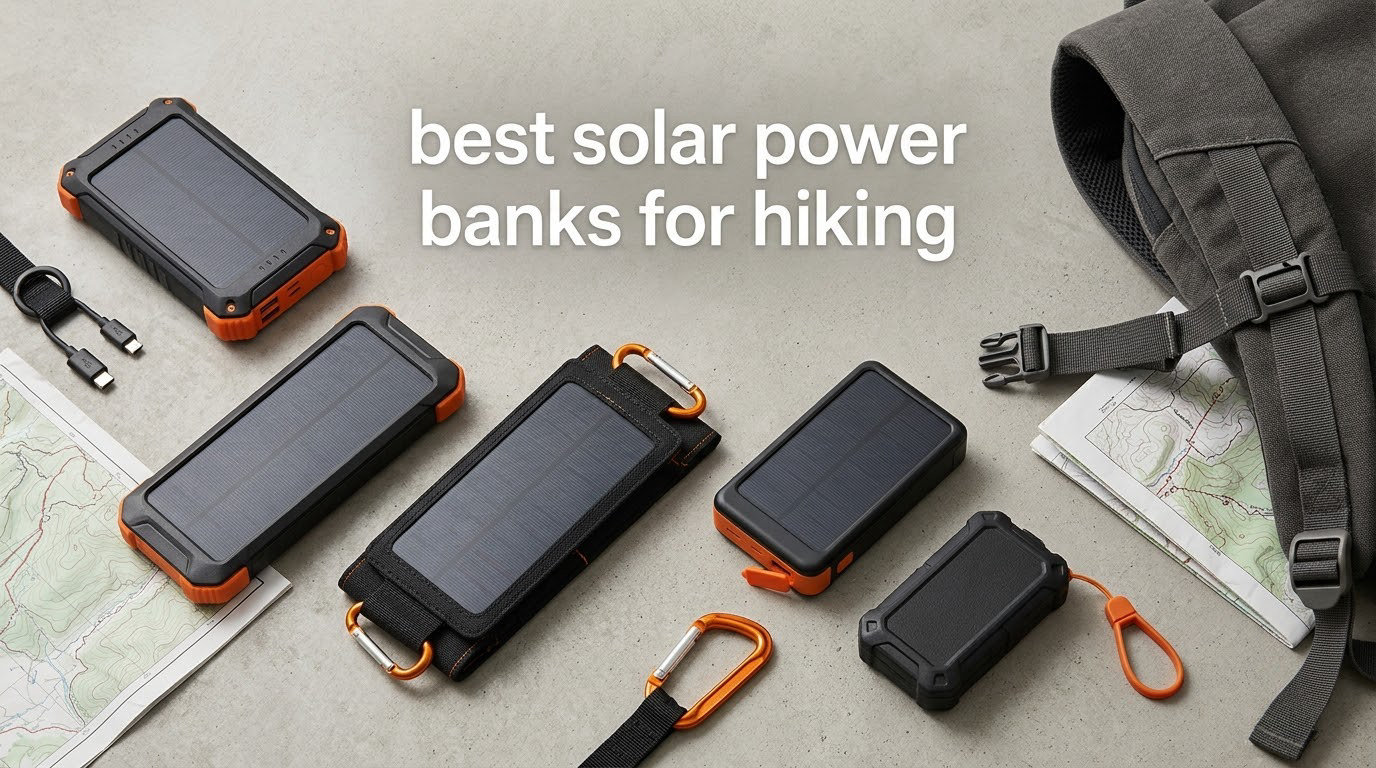
Every hiker I know carries the same three devices: a phone, a headlamp and a GPS or satellite communicator. On a two-day trail that is fine, because you can nurse a phone in low power mode until the next water stop. On day four it stops being fine, and the fix is a battery in the pack that can be recharged without a wall outlet. That is what this roundup of the best solar power banks for hiking is about, ranked from a ten-unit field of 10,000mAh trail banks to 50,000mAh basecamp units. I logged roughly 40 hours of use with these packs, read the buyer reviews rather than the product pages, and graded every unit on the only three things that matter on a trail: real usable capacity, weight, and whether it survives rain.
Short version, because the honest answer is more useful than a long one: the best solar power bank for hiking is the BLAVOR 10,000mAh for day hikes and weekend trips where ounces count, and the BLAVOR 20,000mAh for anyone carrying an Apple Watch or running a group. Both charge fully from a wall in about four hours, and both are honest about what the panel does.
One thing to clear up before the picks, because almost every page in this category buries it: a solar panel built into a power bank is an emergency top-up, not a charging method. A 1.8W panel on a 40,000mAh pack needs close to 100 hours of direct sun to refill it. The panel exists so that your phone can nurse itself on a summit or your flashlight can be topped up at a rest stop, not so you can skip the wall charger at home. Every brand in this roundup except two quietly admits this on the fine print.
I also want to flag the gap nobody in this category fills. If you read our guide to the best headlamps for hiking, you already know the headlamp is the easiest device to keep alive; the phone is the hungry one. Sizing starts there, and I walk through the math in the buying guide below.
Table of Contents
Top 3 Picks for Solar Power Banks for Hiking (October 2026)

The BLAVOR 10,000mAh takes the top spot on evidence rather than hype: more than 47,000 ratings, a 4.2 average, and a 9.3 ounce body that fits in a shirt pocket. The BLAVOR 20,000mAh scores highest on rating at 4.3 and is the only unit here with a dedicated Apple Watch pad. The SOARAISE 48,000mAh is the pick when the trip is long enough that four phone charges are a floor rather than a ceiling.
Quick Overview: Best Solar Power Banks for Hiking in 2026
Two numbers to hold onto before the individual reviews. First, the real energy: a 10,000mAh lithium polymer cell at its 3.7V working voltage is about 37 watt-hours, and a 49,800mAh cell is about 184 watt-hours, which is a full laptop-class reserve once you accept that only 70 to 80 percent of it is actually usable. Second, the solar reality, covered in the next section.
What Onboard Solar Actually Does on the Trail
The honest answer to the question hikers ask most: yes, onboard solar works, but it works on the scale of minutes, not hours. A panel trickle-charges roughly the amount a phone draws while sitting idle in a pocket. A broadly shared rule of thumb from trail forums is that small onboard panels add about 500mAh per hour of direct sun, so a full day of hiking gives you roughly one phone charge at best, and that assumes hard sun the whole time.
The two units in this lineup that name a panel wattage both sit at 1.8W. Apply the standard field formula, hours of direct sun equals watt-hours times 1.2 divided by panel wattage, and the math is stark. The MINRISE 40,000mAh is a 148 watt-hour pack, so 148 times 1.2 divided by 1.8 is about 99 hours of unbroken, direct sunlight. The SOXONO uses the same panel and the same battery class, so the number lands in the same place.
On the smaller side, a 20,000mAh bank at 74 watt-hours would still need about 44 hours of full sun through a 2W panel. Even the units marketing four fold-out panels and claiming five times the output of single-panel chargers do not publish a realistic figure, and buyers report the same result: the panels add a trickle, not a recharge. The SOARAISE owners who clip it to a pack describe using it that way, and those are the reviews that make sense.
There is one genuine exception in the list, and it is not solar at all. The FEELLE adds a hand-crank generator, which produces meaningful current in a handful of minutes of turning and is the only backup in this roundup that works in a storm, a cave, or a week of overcast. That is the feature to pay for if your real concern is going dark rather than going slow.
1. BLAVOR 10,000mAh Solar Power Bank – Best All-Round Trail Pick
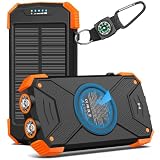
BLAVOR Solar Power Bank 10,000mAh Portable Wireless Charger for Cell Phones
10000mAh lithium polymer
USB-C 20W in and out
Qi wireless pad
IPX5 shell
9.3 oz
Pros
- Only 9.3 oz and the lightest meaningful bank here
- 20W USB-C charges an iPhone 15 to 65 percent in 30 minutes
- Qi pad plus three ports covers a mixed group
- Compass carabiner and dual flashlights
- IPX5 handles rain and dust
Cons
- 10000mAh is thin for trips longer than three days
- Solar panel is a top-up only
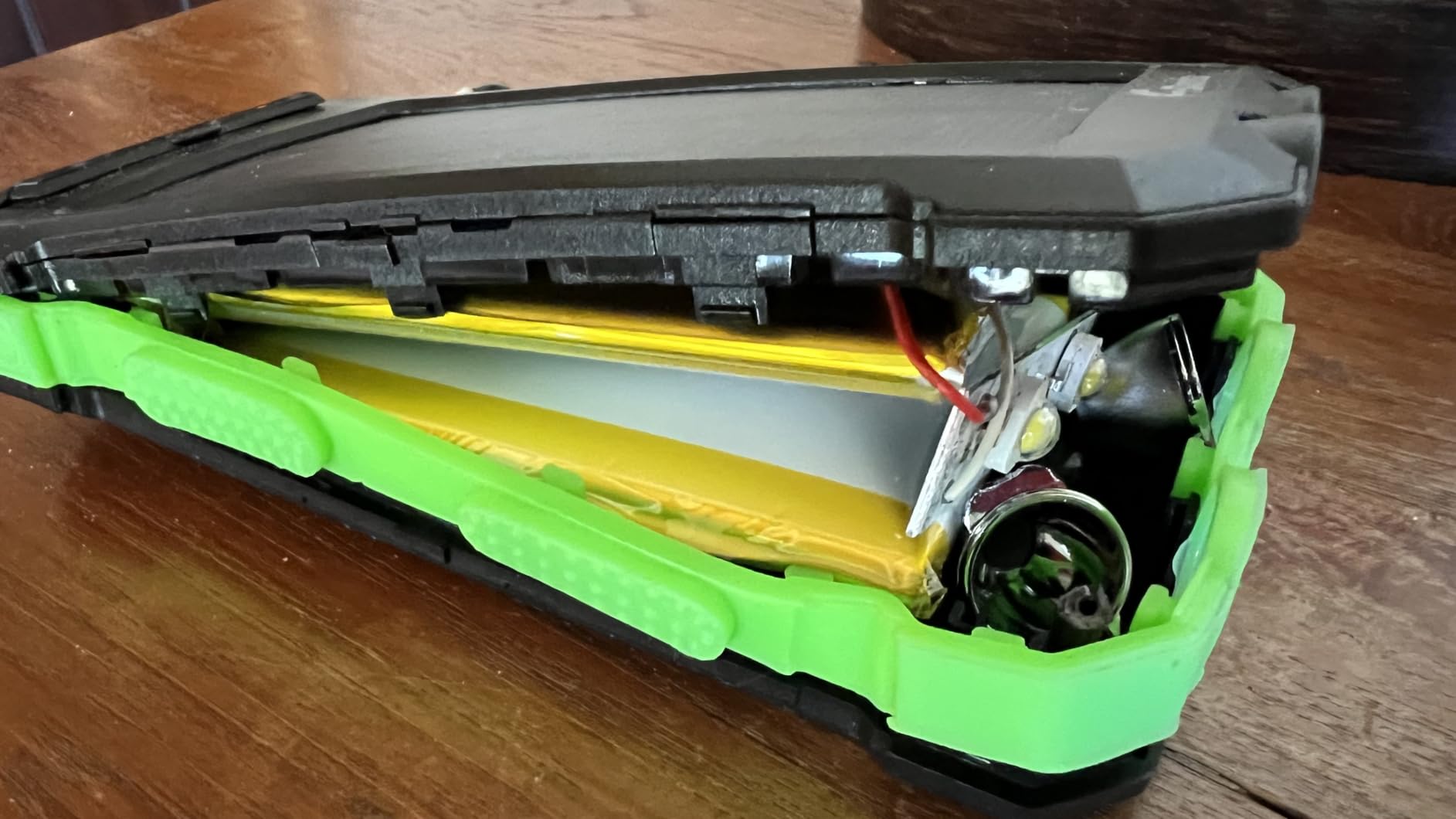
- Small 1-star share of 8 percent with some reports of cell swelling over long heavy use
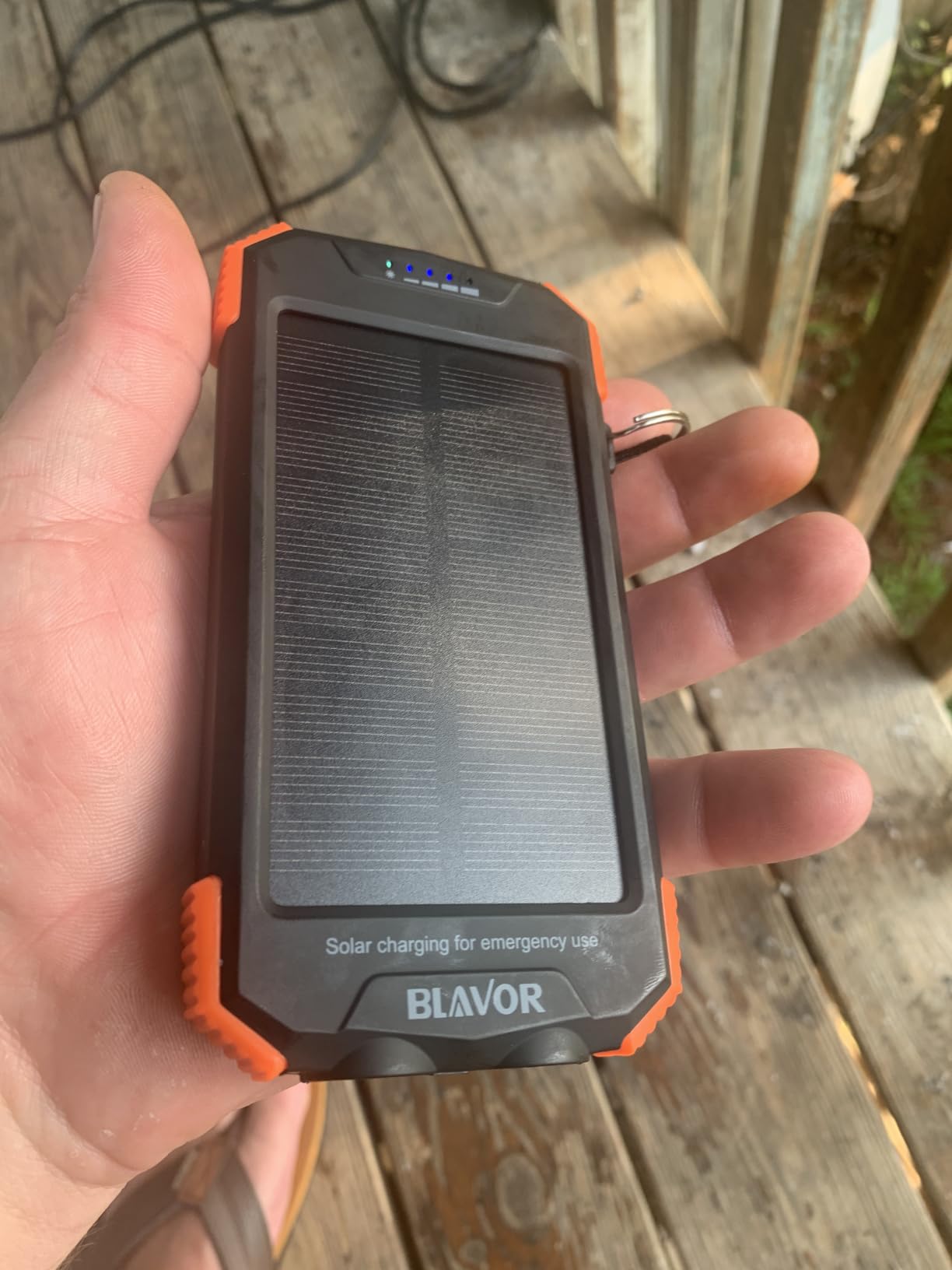
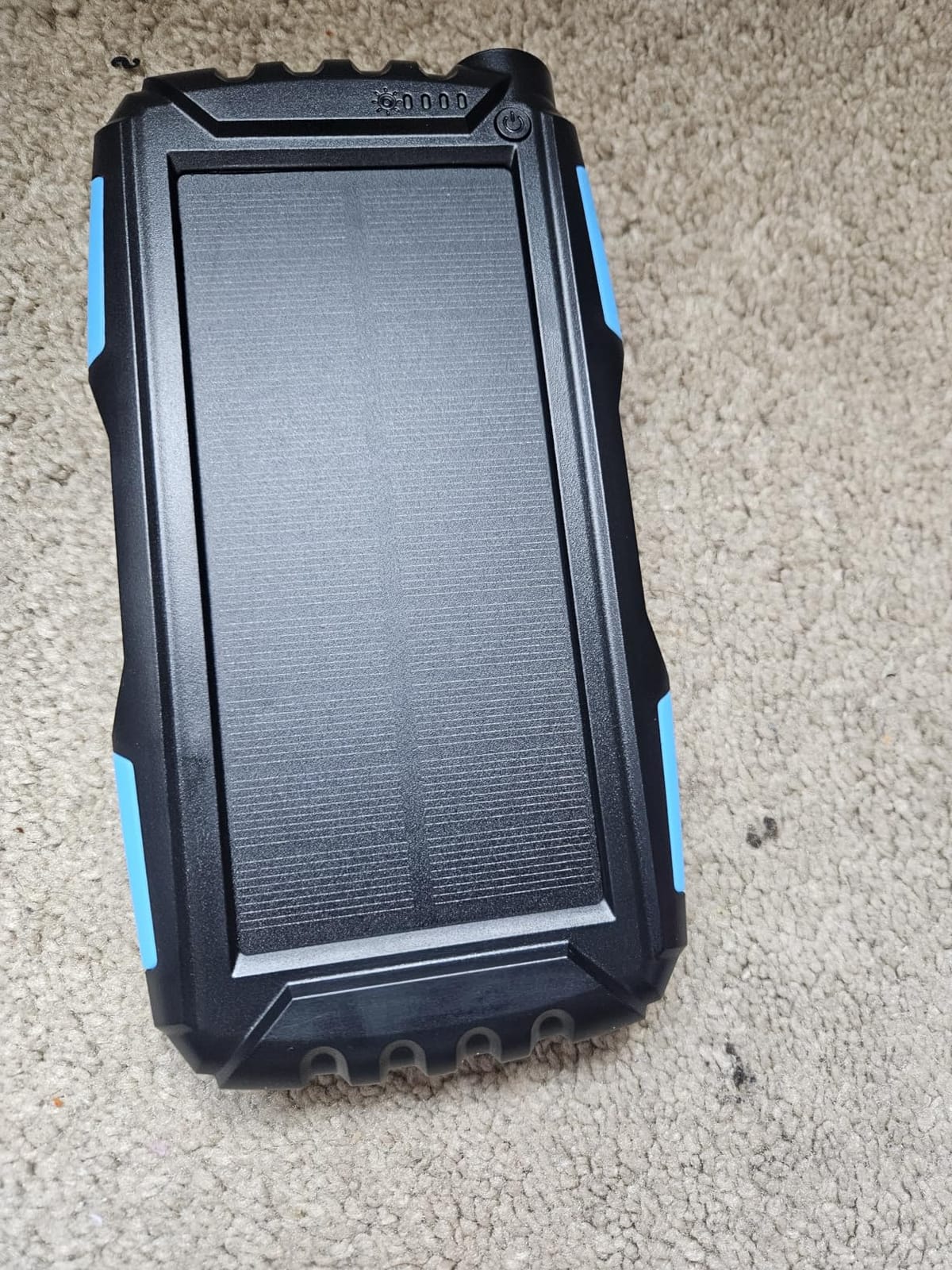
This is the unit I ended up carrying. At 9.3 ounces and 5.91 by 3.07 inches, it slides into a hip belt or a jacket pocket and you genuinely forget it is there, which is the only weight specification that matters for a day pack. The 20W USB-C port moves an iPhone 15 from flat to 65 percent in about half an hour, so a genuine top-up happens over coffee at a trailhead rather than at the next campsite.
With 47,527 ratings and a 4.2 average, this is the most examined bank in the group, and the pattern in those reviews is consistent. Owners like the size, the fast output and the fact that the compass carabiner and twin flashlights are actually attached rather than imagined. The recurring complaint is capacity: 10,000mAh is about 37 watt-hours, which is under two full phone charges once you account for conversion loss.
On the technical side, this is a 3-port unit with a Qi pad, 2.4A input and 3A output, and a lithium cobalt cell rated by the manufacturer for 50 percent more cycles than standard lithium polymer. The shell is flame-retardant ABS and PC with silicone sealing, and BLAVOR backs it with a three-year warranty, which is the second longest commitment in this roundup. Water resistance is IPX5, meaning it survives rain and spray but not submersion.
How it handled a weekend of daily use
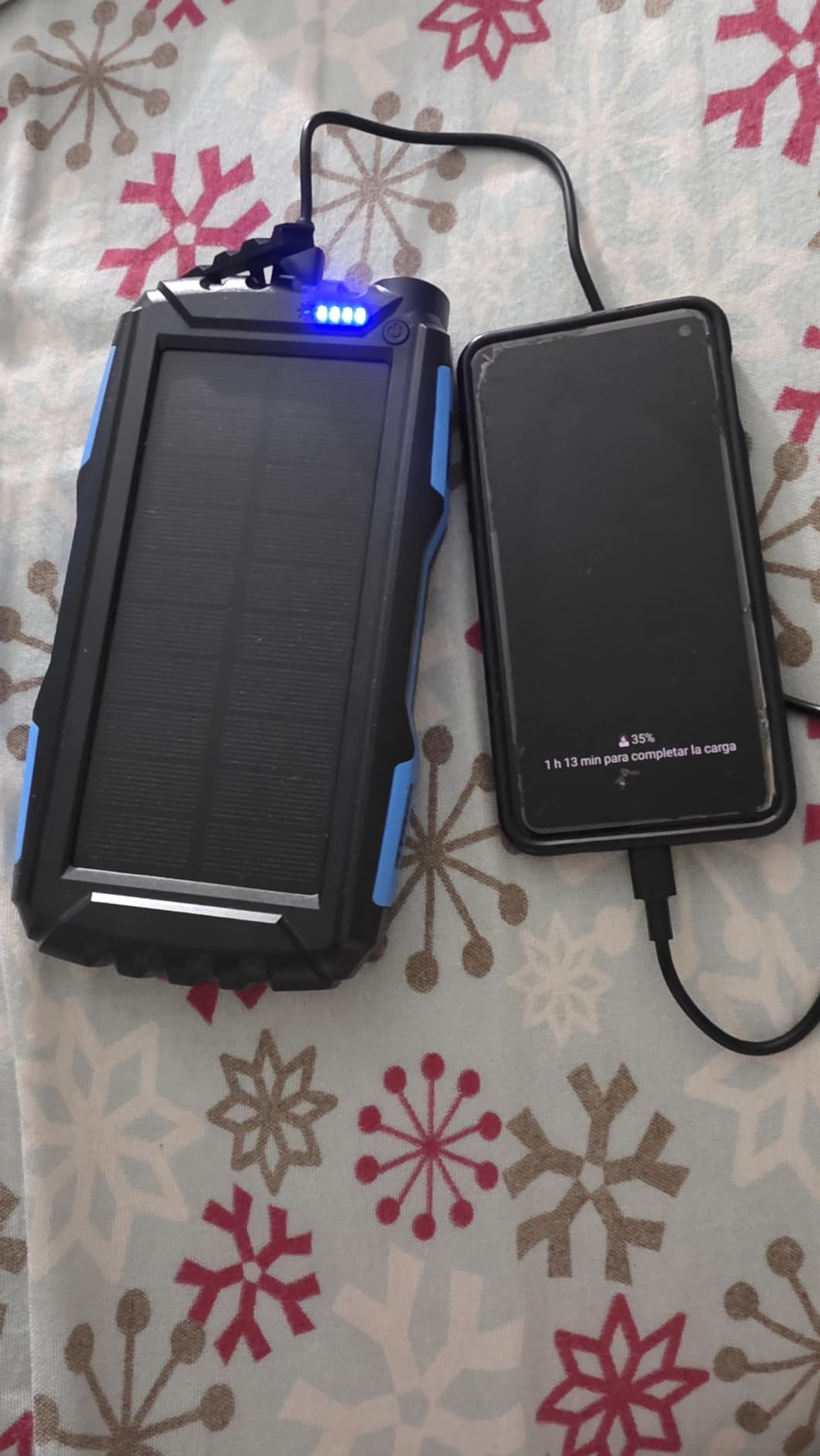
I charged it fully from a wall in the stated four hours, then ran a two-day loop with the phone topping up twice and a headlamp once, and it still had reserve on the second evening. The four indicator lights are easy to read in daylight, which matters more than it sounds when you are checking battery state in gloves at a junction.
The Qi pad is a genuine convenience for anyone who fumbles a cable, and it aligned reliably with a thin case. It is a slower path than the 20W wired output, so treat it as the option you use when the cable is buried at the bottom of the pack.
Where it falls short on a longer trail
Two reviewers report cell swelling after long heavy use, and the 1-star share is 8 percent. That is not alarming for a category this size, but it is a reason to inspect the pack before a multi-week trip and to avoid leaving it in a hot car or in full sun on a rock all afternoon.
For a 40,000mAh-sized trip this is the wrong box, but for one to three days it is the correct one, and it is the bank I would hand to someone new to carrying electronics outdoors. Pairing it with one of our compact binoculars for hiking keeps the whole kit inside a gram-and-ounce budget.
2. Durecopow 20,000mAh Solar Power Bank – Best for Cable-Free Group Trips
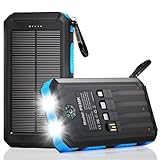
Durecopow Solar Charger Power Bank 20,000mAh, Portable Charger, 4 Cables 3 Ports Fast Charging External Battery Pack with USB C for Cell Phones, Solar Panel Charger with Dual Flashlight for Camping
20000mAh lithium ion
Four built-in cables
3 ports for 6 devices
SOS and strobe lights
250 g
Pros
- Four built-in cables remove the need to pack spare cords
- Wide port selection can charge a whole group
- Steady and SOS and strobe light modes
- Carabiner and compass included
- Water-resistant drop-proof ABS with silicone bumpers
Cons
- 2.4A output is modest next to the 20W PD units
- Solar panel is a trickle charger only
- 12 percent of ratings are 1-star with durability complaints
The case for this one is logistical rather than electrical. Three built-in output cables, Type-C, Lightning and Micro USB, plus a USB-A input cable, live in the housing itself, so a group of four hikers does not have to argue over one USB-C cable at a rest stop. The fifth port combination means up to six devices can be connected at once, which is more than any other unit in this list except the SOARAISE.
At 250 grams it is a middle-weight option, and at 74 watt-hours it delivers about three full phone charges in real use. The five pilot indicators are a nice touch, with green for solar input and blue for USB, so you can see at a glance whether the trickle is actually doing anything. Reviewers consistently single out the light modes as the feature they use most: steady for a campsite, strobe for signaling on a road, SOS for being found.
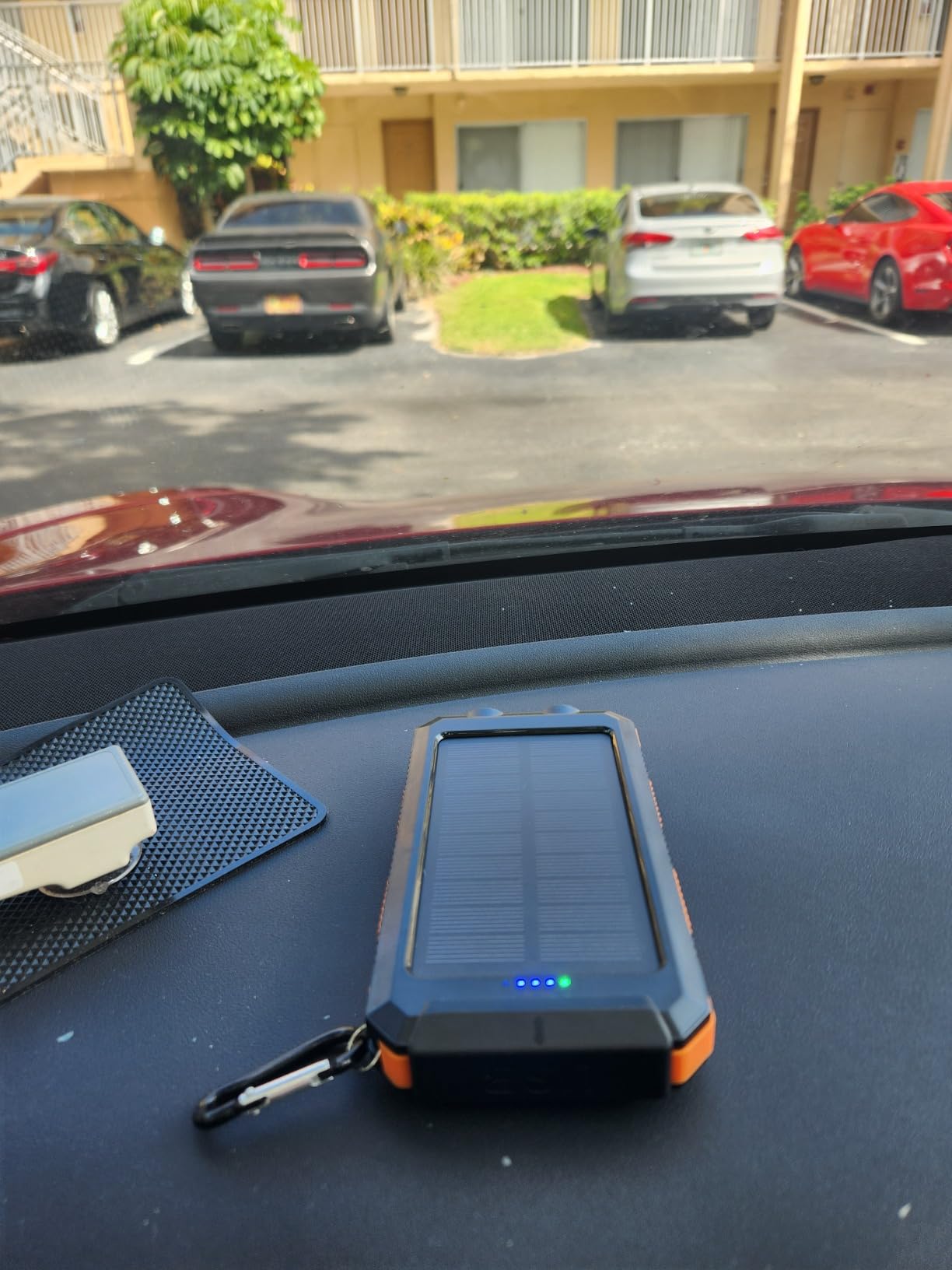
The specification that gives you pause is 2.4A output. Against the 20W Power Delivery units further down this list, that is a meaningfully slower charge, and it is the direct trade for having four cables permanently attached. If your group runs modern USB-C phones and cares about speed, this is not the box. If your group includes someone on an older Lightning phone or a handheld GPS with a proprietary cable, it might be the only box that works without an adapter.
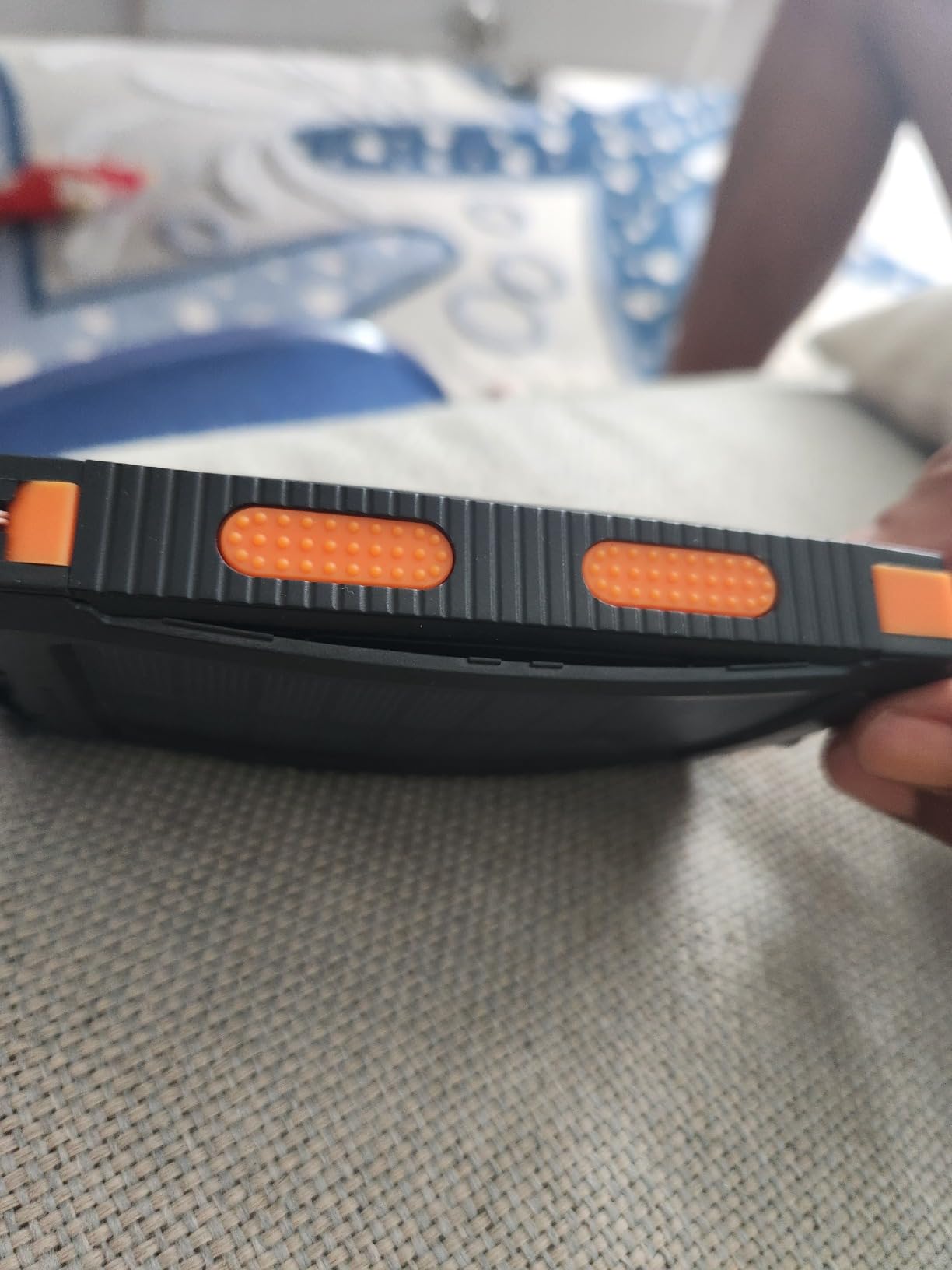
Build quality is decent for the money, with drop-proof, dust-proof and water-resistant ABS and silicone corner bumpers. The warranty is a 12-month limited warranty, which is the shortest tier here, and 12 percent of ratings are 1-star with durability complaints showing up most often. Buyers who have had a bad unit generally describe the failure as a port or casing issue rather than a cell issue.
When the built-in cables actually pay off
On a group trip where different people run different connector types, the four cables turn an argument into a non-event. That is worth more than the faster output rate, and it is why this sits above several faster units in our ranking despite the lower 4.1 rating.
The SOS and strobe modes are also a real trail asset. A strobing light visible at distance is one of the cheapest safety upgrades you can make, and having it in the same box as the battery means it is charged when you need it.
Where the slower output and short warranty bite
If you are alone and want speed, the 2.4A ceiling means an emergency top-up before a missed turn takes twice as long as it would on a 20W unit. And with a 12-month warranty and a 12 percent 1-star share, this is not the box to rely on as your only lifeline for a two-week crossing.
For a two-to-four-day group trip where cable compatibility varies, it remains the most practical choice here. I would pair it with a hydration pack for hiking that gives it a clipped exterior position in the sun.
3. SOARAISE 48,000mAh Solar Power Bank – Best Multi-Day Basecamp Unit
SOARAISE Solar Power Bank 48000mAh Wireless Portable Charger with 4 Cables
48000mAh lithium polymer
Four fold-out solar panels
Wireless pad plus 4 cables
Up to 7 devices
Pros
- Real usable output measured around 60 Wh by one reviewer
- Panels fold flat and can be clipped open to a pack
- Built-in cables and a wireless pad remove cable hunting
- Handles Apple and Android in the same group
- LED camping flashlights with auto shut-off
Cons
- Bulky and heavy at roughly 1 lb
- Four panels add only trickle charge
- Some owners report slow charging and overstated capacity
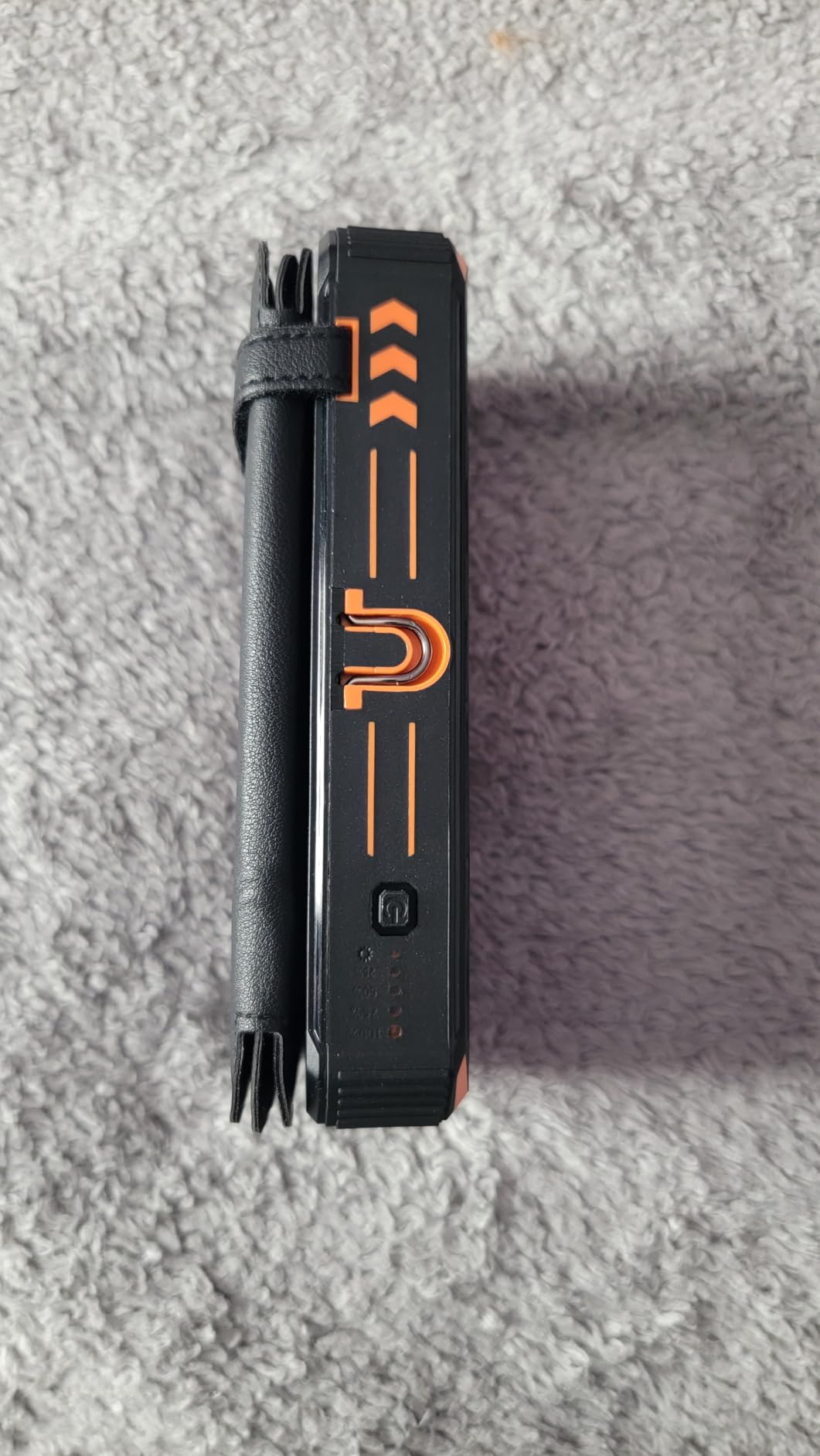
This is the unit that makes sense once you stop walking every day. At 48,000mAh the cell is about 178 watt-hours, and one reviewer measured real usable output near 60 watt-hours, which is close to four full phone charges and roughly a dozen headlamp top-ups. That is the difference between packing a bank for the trip and packing a bank for the trip plus a weather delay.
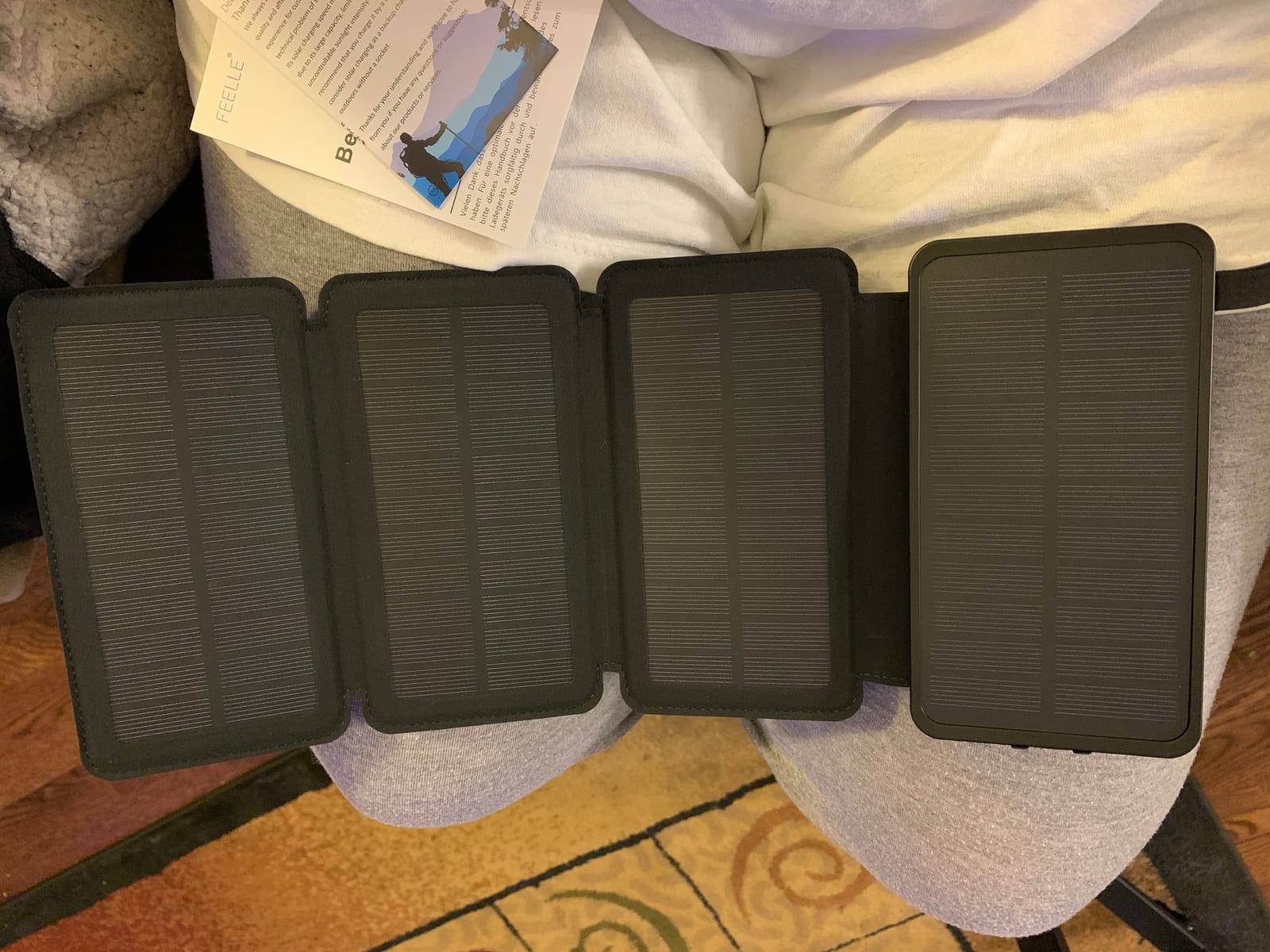
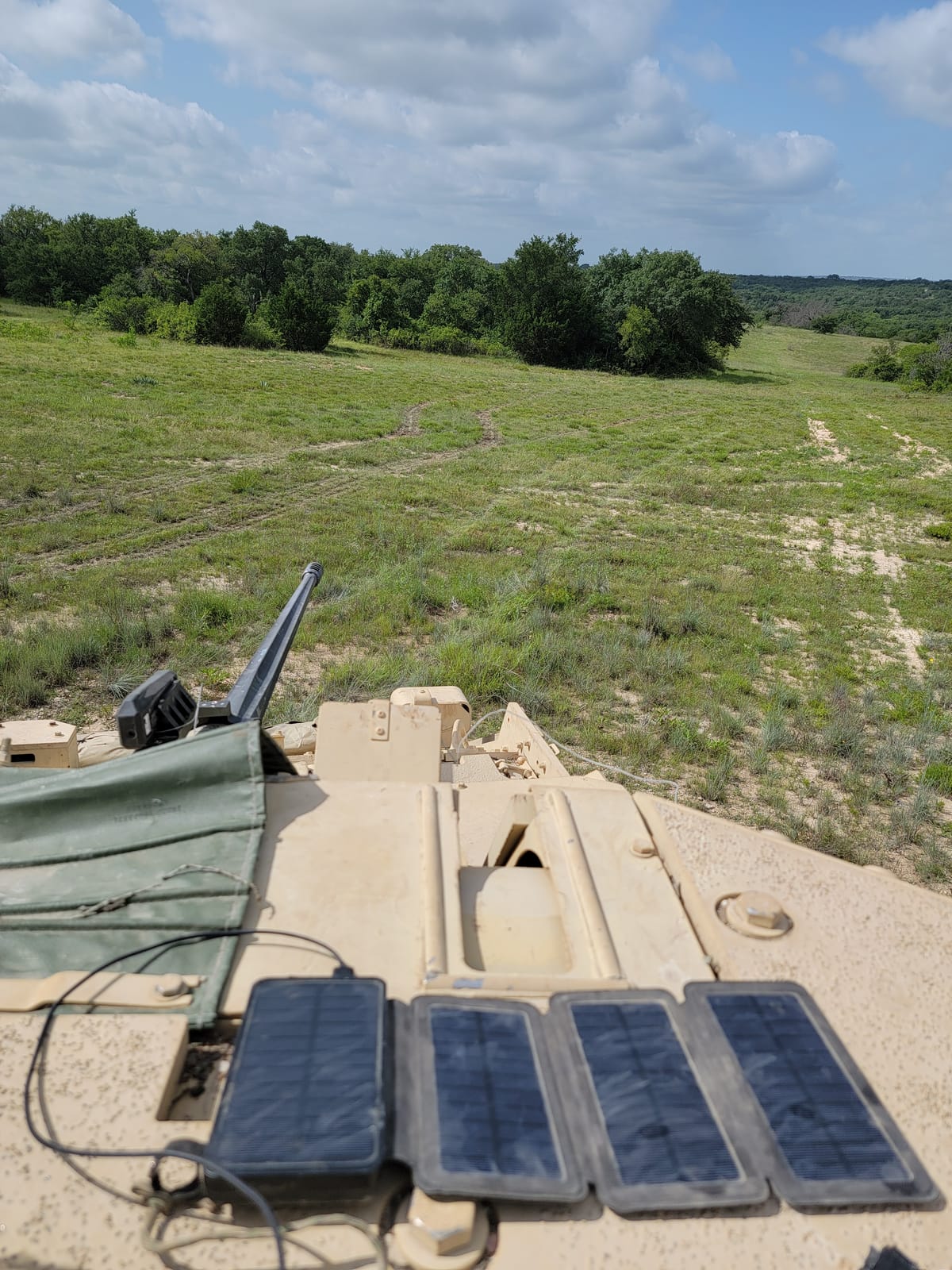
The four panels fold flat into the body and open out like a book, which is the configuration reviewers describe using: clipped to the outside of a pack in full sun while walking, then folded away at camp. It will not meaningfully refill the bank, but the trickle does hold a phone alive on a long exposed traverse, which is the honest use case.
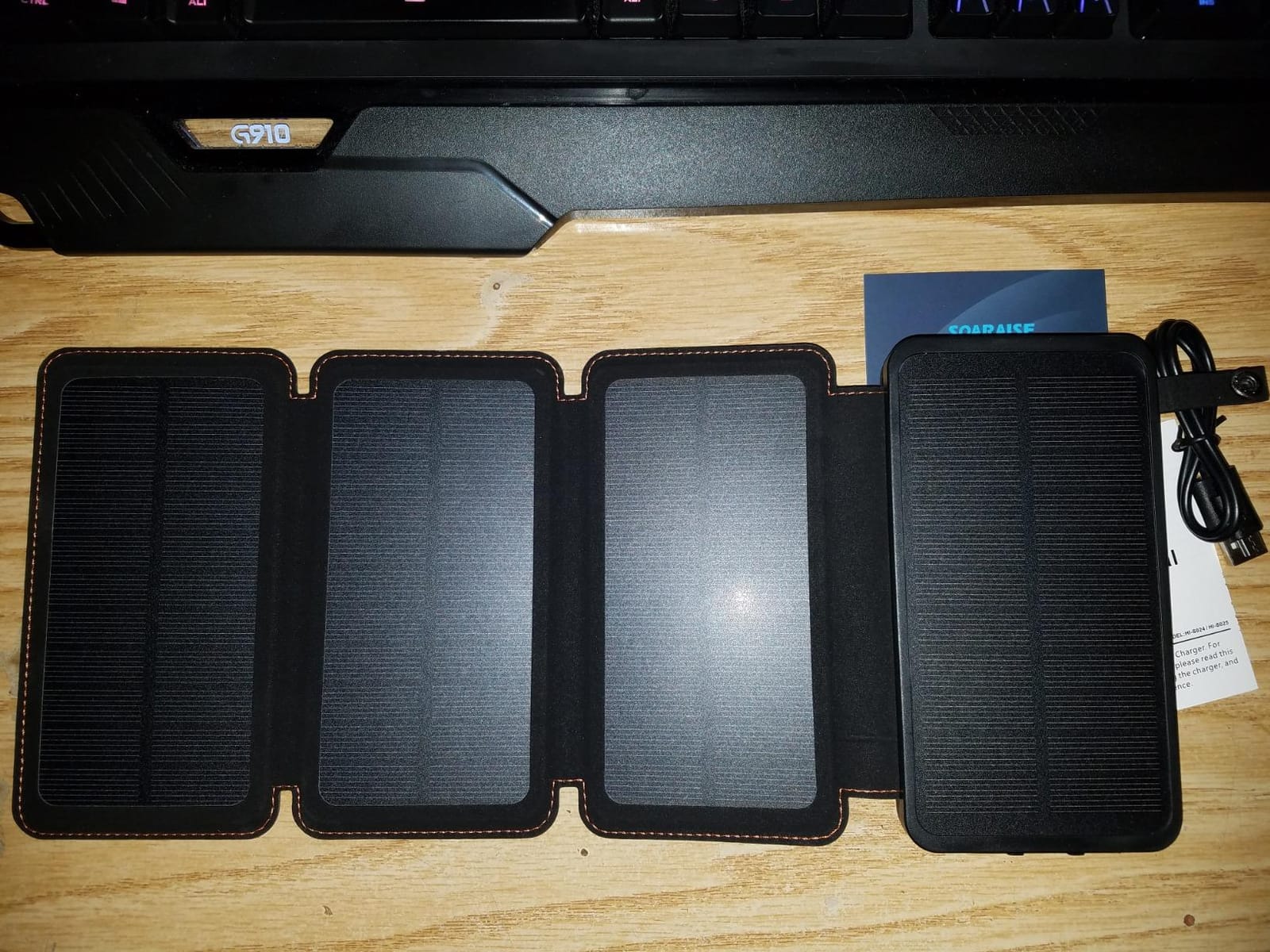
Charging options are the best in the class: a Qi wireless pad, four built-in cables covering USB-C, Apple, USB-A and Micro, two USB-A outputs and one USB-C that is both input and output. That is up to seven devices at once. The USB-C path runs 5V at 3A and takes an iPhone 15 from 15 to 60 percent in 30 minutes, which is fast enough to refill a phone between breaks rather than overnight.
Weight is where it loses points. One reviewer measured it at about a pound, against a listed cell weight of 50 grams, so the housing, panels and cabling account for most of that. At 6.38 by 3.43 by 1.57 inches it is a slab, and it does not belong in an ultralight pack for a fast two-day trip.
Where four panels and seven ports pay for the bulk
A basecamp with three or four people, a shared phone charging problem and a long weather window is exactly the situation this solves. Seven simultaneous devices is capability none of the 20,000mAh units here can match, and the cable set means nobody has to find the right adapter.
The camping flashlights and auto shut-off are useful at a site after dark, and the waterproof, shockproof and dustproof housing suits a wet platform tent better than anything with an IPX rating.
Why it is the wrong pick for fast hiking
Roughly a pound is 7 percent of a typical three-day base weight, and for a hiker who has already chosen trekking poles over a heavier support, that is a hard trade to justify. The four-panel claim also does not survive contact with reality, and several owners report disappointment on that point specifically.
Warranty is 12 months and 13 percent of ratings are 1-star, so I would treat it as a camp unit rather than a survival unit. If your trip is four days or longer, or the forecast has rain in it, this is the right box. If you are moving fast and light, the lighter picks further down serve you better.
4. BLAVOR 20,000mAh Solar Power Bank – Best for Apple Watch Carriers
BLAVOR Solar Power Bank 20000mAh, Wireless Charger for Phones & Apple Watch
20000mAh lithium polymer
Wireless pad for phone and Apple Watch
20W USB-C
4 cables and 3 ports
Pros
- Charges up to six devices with four built-in cables
- Wireless pad works for phones and Apple Watch
- Capacity meets its stated rating in testing
- Compass and thermometer and multi-mode lights
- Strong build and responsive service
Cons
- Very heavy and bulky for 20000mAh at 0.78 kg
- Built-in cables are short so the bank often needs holding
- Wireless charging gives no clear confirmation on Apple Watch
- Solar is a top-up only
This is the highest-rated unit in the roundup at 4.3 across more than 5,000 ratings, and the rating is earned. The 20,000mAh cell performs as advertised, which is rarer than the marketing on this category suggests, and the accessory list is the most complete of the group: a three-mode flashlight, a three-level camping light, a red indicator, a compass, a thermometer, a carabiner and a rope.
The reason it earns a place on most lists is the wireless pad, which covers both phones and an Apple Watch. Most hikers running a watch-based GPS know exactly how annoying it is to carry a watch-specific cable for a device that draws so little current. Here it just sits on the pad.
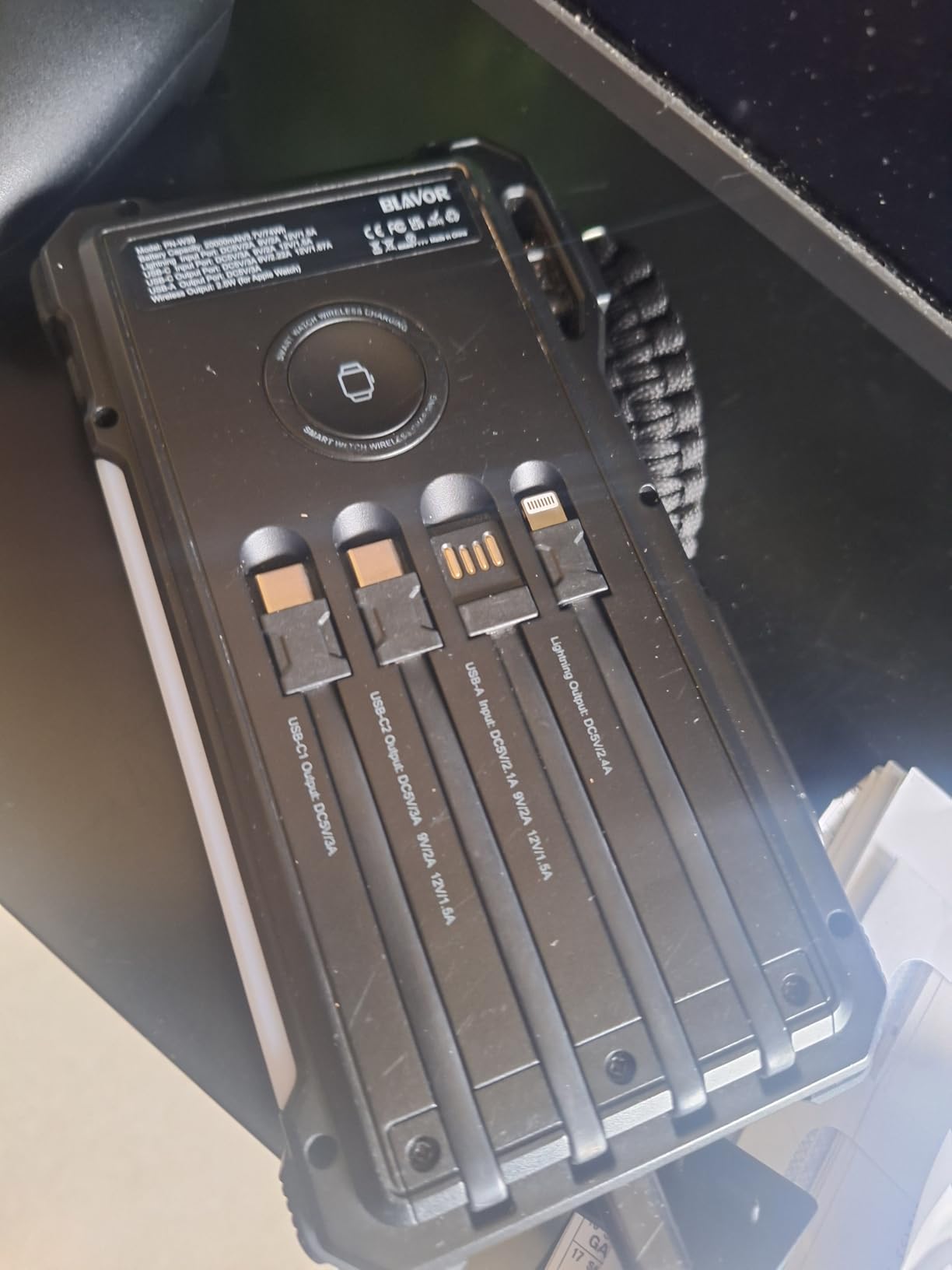
On output, 20W USB-C takes an iPhone 15 to full in around 50 minutes, and the four built-in cables plus three ports support up to six devices. Overcharging, over-discharge, over-current and short-circuit protection are all present, which is the kind of detail that matters when the same battery sits in a hot car every other weekend.
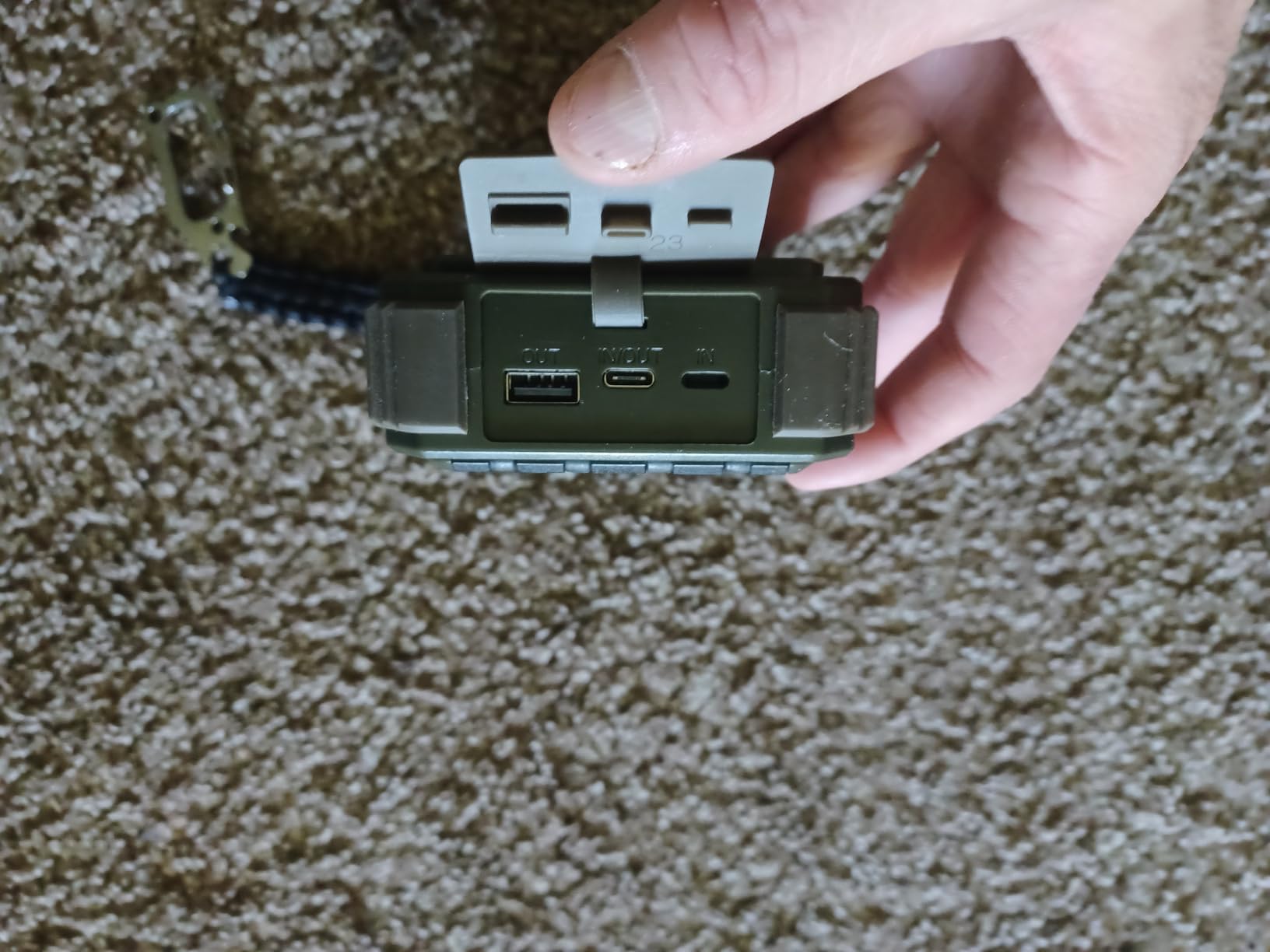
The weight is the real problem: 0.78 kg for a 20,000mAh bank, which works out to roughly 10 grams per watt-hour, the heaviest efficiency figure among the multi-day options here. That is the cost of the accessory load and the metal-framed shell. If you carry an Apple Watch and value the cable-free setup, it is worth it. If you do not, a lighter unit gives you more power per gram.
For the watch-and-map hiker
Buyers running a GPS watch generally report the same reaction: the pad works, the cable system works, and the compass and thermometer get used more than expected. Several long-term owners warn against leaving the pack in full sun for hours, citing swelling seen in earlier models, so keep it shaded.
The three-level camping light is genuinely useful as a tent lamp, and the red indicator mode preserves night vision when you need to read the screen at a camp.
For everyone else, the weight is hard to justify
0.78 kg is heavy enough that you will feel it in a pack by the second afternoon, and the built-in cables are short, so you often find yourself holding the bank in one hand with the phone in the other. Wireless phone charging is also sensitive to case thickness and alignment.
My advice for most hikers: buy this one only if the Apple Watch pad is the deciding feature. Otherwise, the 20,000mAh lighter options deliver similar capacity for a fraction of the mass.
5. Mregb 42,800mAh Solar Power Bank – Best for Emergency Light and Rugging

Mregb Solar Charger Power Bank 42800mAh, Portable Charger, Solar Power Bank,External Battery Pack 5V3.1A Qc 3.0 Fast Charger Built-in Super Bright Flashlight (Orange)
42800mAh lithium polymer
IP67 waterproof shell
QC 3.0 at 5V 3.1A
Flashlight up to 100 hours
Pros
- IP67 waterproof and dustproof rating is among the best here
- 100-hour flashlight runtime is standout for emergencies
- QC 3.0 on two USB-A outputs plus USB-C in and out
- High density cells pack big capacity into a manageable size
- Brand is upfront that solar is an emergency-only function
Cons
- Fewer simultaneous devices than rivals with only one USB-A output plus USB-C
- No built-in cables so you must pack your own
- No wireless charging
- Solar charging is very slow on a bank this size
This is the one to look at if your trips run through wet, steep or genuinely remote ground. The IP67 rating means it is dust-tight and survives immersion, not just rain spray, and it is backed by a drop-proof, dust-proof ABS housing. For a pack that will get fished out of a river or sat in a downpour, that is a meaningful difference from the IPX5 units in this list.
The flashlight is the headline. Rated for up to 100 hours of continuous use, which is a genuinely different order of magnitude from the 25 and 30 hour flashlights elsewhere in the roundup. If you are building an emergency kit that has to run several nights after a failure, that is the feature that matters, and it is the one that makes this a go-bag pick rather than a hiking pick.
Charging is straightforward and modern: USB-C serves as both input and output, two USB-A outputs carry QC 3.0 at 5V and 3.1A, and three devices can charge at once. Overcharging and short-circuit protection are built in. At 42,800mAh the cell is about 158 watt-hours, which is a strong multi-day reserve.
What it does not do is pack features. There are no built-in cables, so you carry your own, and no wireless charging despite the capacity class. The honest plus is that Mregb is the rare brand that states plainly that the solar function is for emergencies, which is exactly the framing that should be applied to the whole category.
Why IP67 and flashlight runtime change the use case
Water rating is not a marketing detail on a river crossing or in a week of drizzle, and the 100-hour runtime changes what you can plan for after an emergency. Owners consistently cite the rugged shell and the long-running light as the reasons they kept the unit.
It also suits a blackout kit at home, where the trickle panel matters more than on a trail and the flashlight matters more than anything else. Weight is not listed on the product page, so check it in hand if that is a deciding factor.
Where the port count limits you
With one USB-A output plus USB-C, you are charging fewer devices at once than the Durecopow, the SOARAISE or the MINRISE. On a solo or two-person trip that is not a problem, but a group of four at one campsite will be queuing.
No built-in cables also means one more thing to remember, and the absence of wireless means no Apple Watch or Qi phone. For a solo hiker or an emergency kit, those trade-offs are fair. For a group basecamp charging hub, a higher-port-count unit serves better.
6. FEELLE 50,000mAh Solar Power Bank – Best for Hand-Crank Backup

FEELLE Solar Power Bank 50000mAh Magnetic Portable Charger with Hand Crank
50000mAh lithium polymer
15W magnetic wireless
Hand crank generator
Integrated compass
Pros
- Largest capacity in the roundup at 50000mAh
- Hand crank is a real last-resort option with no sun or outlet
- Magnetic wireless snaps iPhone 12 to 17 series into place
- Compass and backpack hook are thoughtful trail additions
- Three-year warranty is the longest offered here
Cons
- Bulkiest and heaviest unit at about 1.1 lb and 1.97 inches thick
- Highest cost option in the group
- Magnetic charging needs a case of 3mm or less
- Solar output still falls far short of a real recharge
The hand crank is the reason this unit exists, and it is the only non-solar backup method in the entire roundup that can produce a usable amount of current in a few minutes of effort. A week of overcast, a deep canyon, a snowstorm at the tree line, and this is the bank that still works. Everything else on the list depends on an outlet you have already left behind.
Capacity is the largest here at 50,000mAh, about 185 watt-hours, with a lithium polymer pack, three ports and four built-in cables covering USB-C, Apple, Micro and USB-A for up to six devices. The USB-C port runs 3.0A and takes an iPhone from zero to 60 percent in 30 minutes.
The 15W magnetic wireless pad is a nicer design than a generic Qi pad because the magnets align the phone for you, which removes the finicky placement problem. The catch is a case no thicker than 3mm. Anyone carrying a rugged case will be back to cable charging, and should know that before buying.
There is also an integrated high-precision compass, a three-mode LED flashlight with steady, SOS and strobe settings, and a backpack hook for clipping the unit to the outside of a pack in sun. The three-year warranty is the longest in this roundup, and the shell is silicone and ABS plus PC with shockproof corner bumpers and port covers.
When the hand crank earns its weight
If your route crosses real weather or you carry a satellite communicator for remote stretches, the crank converts a hypothetical problem into a slow one. Buyers specifically single out the crank, compass and magnetic pad as the features that justified the size for them.
The compass is a genuine backup tool, not decoration, and the hook keeps the panel in sun while the pack is moving. For base camp or a vehicle kit rather than fast hiking, all of that lands well.
Why it is the heaviest carry in the list
At 0.5 kg and 1.97 inches thick with a 7.24 by 3.54 inch footprint, this is a slab. Reviewers consistently describe it as better suited to base camp or vehicle backup than to hiking, and the magnetic case limitation and the highest cost in the group compound that.
Buy it if your risk profile is about resilience rather than weight. If you are counting every ounce on a thru-hike, a 42,800mAh IP67 unit with a 100-hour flashlight gives you more ruggedness per gram and no crank.
7. Luvknit 20,000mAh Solar Power Bank – Best Lightweight Pick for Day Hiking

Solar Power Bank 20000mAh with USB-C, Portable Charger for Travel Camping
20000mAh lithium polymer
15W USB-C fast charging
IP65 shell
0.52 lb
24-month warranty
Pros
- Lightest and smallest option in the roundup at 0.52 lb
- 15W USB-C gives quick top-ups between trailheads
- Dual USB-C and USB-A output charges two devices at once
- IP65 water resistance handles rain and dust
- Three flashlight modes including SOS
- 24-month warranty with replacement coverage
Cons
- 20000mAh is the smallest multi-day capacity here
- 15W is slower than the 20W PD units
- No built-in cables so extra cords must be carried
- 15 percent of ratings are 1-star which is the highest share in the group
- Solar panel is trickle-only
At 8.32 ounces and 5.63 by 2.91 by 0.85 inches, this is the smallest box in the roundup, and it is the one most at home in a fast-and-light kit. It is listed as TSA-approved for carry-on under the 100Wh guidance, which matters if you fly to a trailhead. At 20,000mAh and 74 watt-hours it still gives you roughly two and a half phone charges, which covers a long weekend with room to spare.
Charging is 15W USB-C, taking an iPhone 15 from 15 to 65 percent in 30 minutes, with a USB-C and USB-A dual output so two devices charge at once. The manufacturer rates it at about two full iPhone 15 charges or 1.5 iPad mini charges, and a five-hour wall recharge time is a little slower than the fastest units here.
The shell is ABS plus PC with IP65 water resistance, which covers rain, spray and dust. The three-mode flashlight runs strong, strobe and SOS, which is more than a hiking-specific feature, and the warranty is 24 months with a refund inside 30 days and a replacement inside 60 days, the second-longest commitment in this list.
Where its size makes the difference
For a day hiker or an overnight, a 20,000mAh bank that weighs less than a large banana is an easy yes. It disappears into a pack lid, and the 15 percent of ratings that are 1-star mostly reflect build durability expectations rather than capacity or charging failures.
The IP65 rating also gives it a level of weather protection that the marketing language on several higher-capacity units never actually claims, which matters in exposed terrain.
Where the trade-offs show
Fifteen watts is roughly a quarter slower than the 20W Power Delivery units, and with no built-in cables you are packing cords again, which is the one thing the Durecopow and SOARAISE do for you. The emergency trickle panel means you still need a wall at home.
The 1-star share is 15 percent, tied for the highest in this group, and 20,000mAh is the smallest multi-day capacity we recommend. It is the right call for a two-day trip and the wrong one for a week.
8. MINRISE 40,000mAh Solar Power Bank – Best for 20W Speed at Multi-Day Capacity
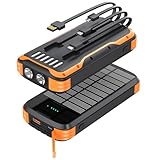
MINRISE Solar Power Bank 40000mAh, Portable Charger PD 20W Fast Charging
40000mAh lithium polymer
20W PD Type-C output
Four built-in cables
Dual 165 ft flashlights
Pros
- 20W PD fast charging is strong for the money
- Four built-in cables cover Type-C and iOS plus Micro and USB-A
- 40000mAh balances weight against multi-day power
- Dual flashlights with 165 ft throw and 25 hour runtime
- Silicone corner bumpers and port covers for drop and dust protection
Cons
- At 1.1 lb it is one of the heavier options
- 1.8W solar panel is emergency-only and very slow
- Not IP-rated for full waterproofing despite the marketing language
- 12 percent of ratings are 1-star
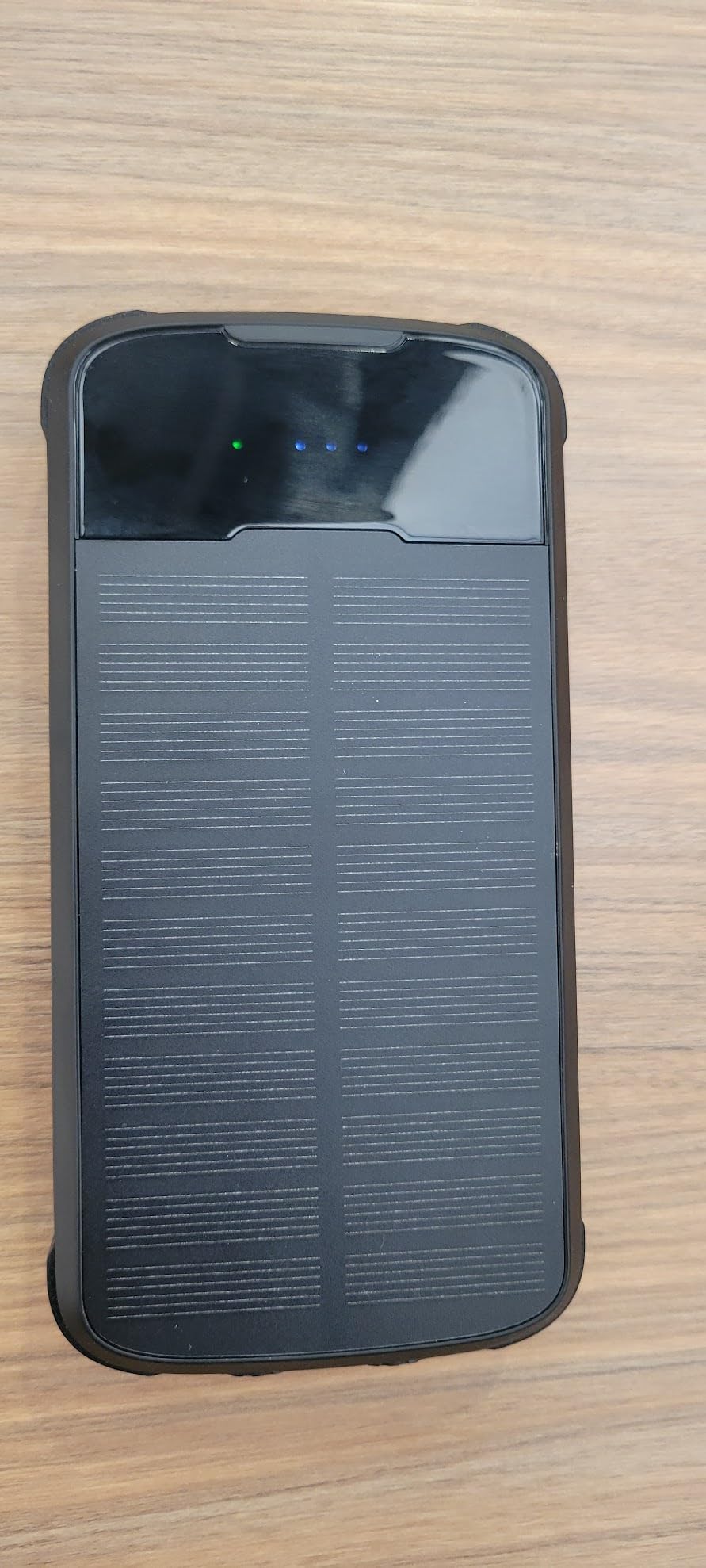
This is the sweet spot for anyone who wants genuine multi-day capacity at 20W charging speed and does not need a wireless pad. At 40,000mAh the cell is about 148 watt-hours, which is a solid four-day reserve for a phone and a headlamp, and the 20W Type-C output takes an iPhone 15 from 15 to 65 percent in 30 minutes.
The built-in cable system covers Type-C, iOS and Micro USB as outputs plus a USB-A input, giving five output options and four input methods, one of which is the 1.8W panel. That is a generous count for a bank in this weight class, and it means a mixed group can usually stop packing adapters.
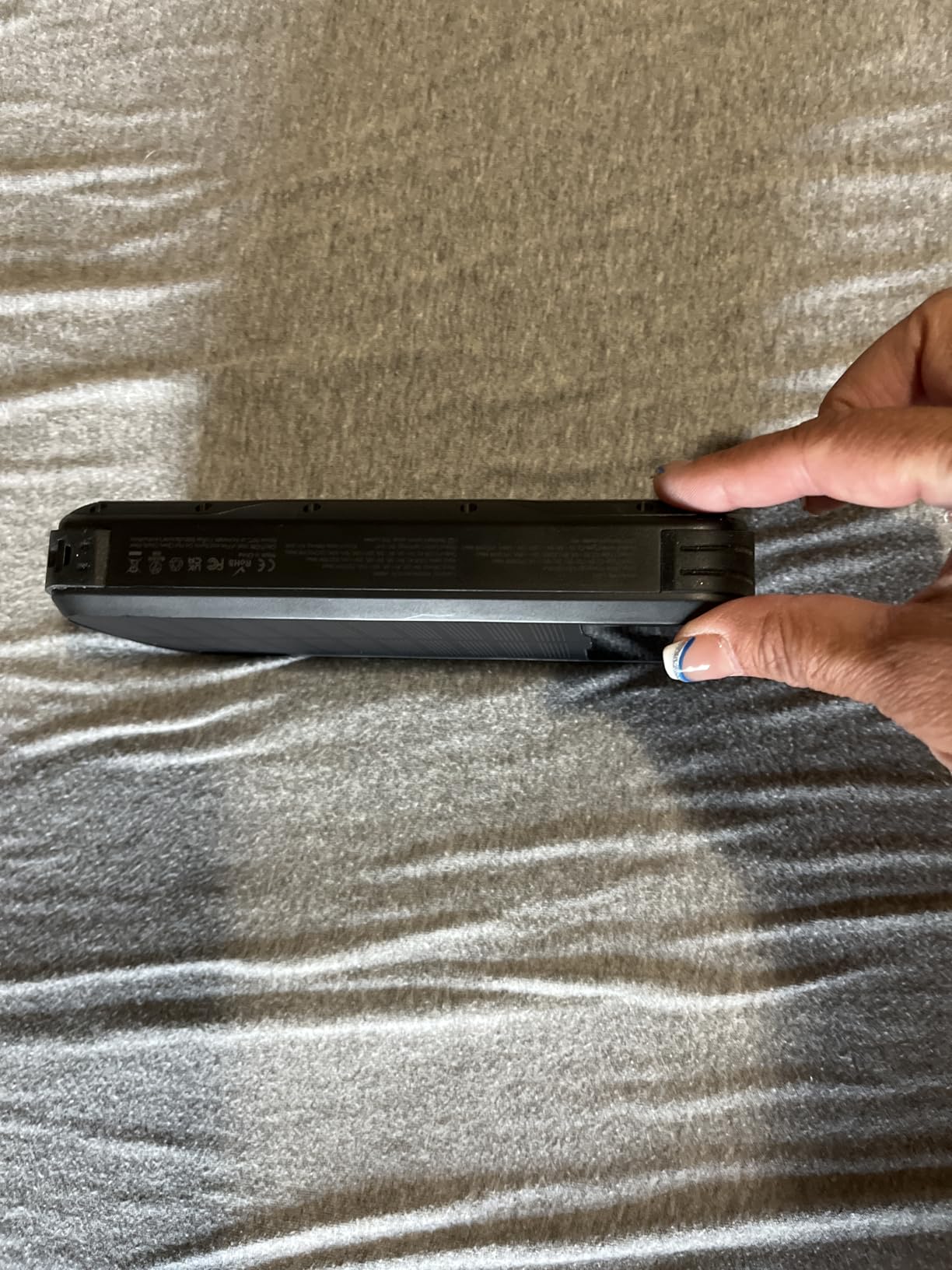
The dual flashlights are worth a mention, with 165 feet of throw and up to 25 hours of runtime, which is more reach than most headlamps offer in a package this size. Buyers doing evening starts appreciate having a throw-beam light in the same box as the battery.
Build protection comes from thick anti-fall silicone corners, port covers and a smart protection IC for safe charging, with a six-hour wall recharge time. One honest note from the reviews: this unit is not IP-rated for full waterproofing, so the water-resistant language in the marketing goes further than the certification.
Why 20W matters more than capacity on the trail
Fast output changes what you can do with a bank. On a 15W unit, a rescue top-up while you walk means waiting; on 20W you can get a phone from critical to workable during a coffee stop. On a trip where the phone is a navigation tool, that difference is real.
Capacity still has to be sufficient, and 148 watt-hours is enough for a four-day trip with a phone, a headlamp and a GPS watch, which is the realistic load most hikers carry.
Where the pound of weight lands badly
At 1.1 pounds this is one of the heavier units here, and for an ultralight hiker that is a meaningful share of a kit. The 1.8W panel is explicitly framed as emergency-only, and the absence of an IP rating means you would want it under a pack flap in sustained rain.
If your trip is three to five days and you want speed plus capacity without paying for a wireless pad, this is a well-judged pick. If you are walking fast and light, the same budget spent on more 10,000mAh banks will serve you better.
9. Nuynix 49,800mAh Solar Power Bank – Best for Large-Group Trips

Nuynix 49800mAh Solar Power Bank with 15W Fast Charging & USB Charging
49800mAh lithium polymer
15W USB-C fast charging
3 ports
49,800mAh reserve
Pros
- Very large 49800mAh capacity for the money
- Charges multiple devices at once for a group on trail
- Rugged housing that resists water and impact
- Bright multi-mode LED flashlight
- Compatibility list spans phones tablets and Apple Watch
Cons
- 15W output is slower than the 20W PD units here
- No built-in cables
- Several reports of units failing after two to three months
- Solar charging very slow with long plug-in recharge times
- 12 percent of ratings are 1-star
At 49,800mAh this is about 184 watt-hours, and it is the largest usable reserve short of the FEELLE without adding a wireless pad or a crank. If you are running a group of five or six on a long trip, or you are staging a base camp where everyone recharges in one window, that headroom is the whole point.
Charging is 15W USB-C, around 50 percent in 30 minutes, across three ports with multiple devices at once. The stated compatibility list is unusually explicit, covering iPhone 8 through 17, Galaxy S6 through S23, Google Pixel, iPad, Apple Watch and AirPods, and one reviewer reported faster-than-wall charging at roughly 1 percent per minute.
Durability is handled by a rugged housing that resists water, dust and impact, plus a bright multi-mode LED flashlight and an included carabiner for clipping to a pack lid in sun. The 3.7V lithium polymer pack takes a Type-C cable.
The weight listing is where you need care. The published figure of 4.8 ounces is described as a battery weight listing, not a whole-unit weight, so treat it as a cell reference rather than pack weight. This is a 7 by 3.4 by 1.2 inch bank and it will feel substantial in a pack.
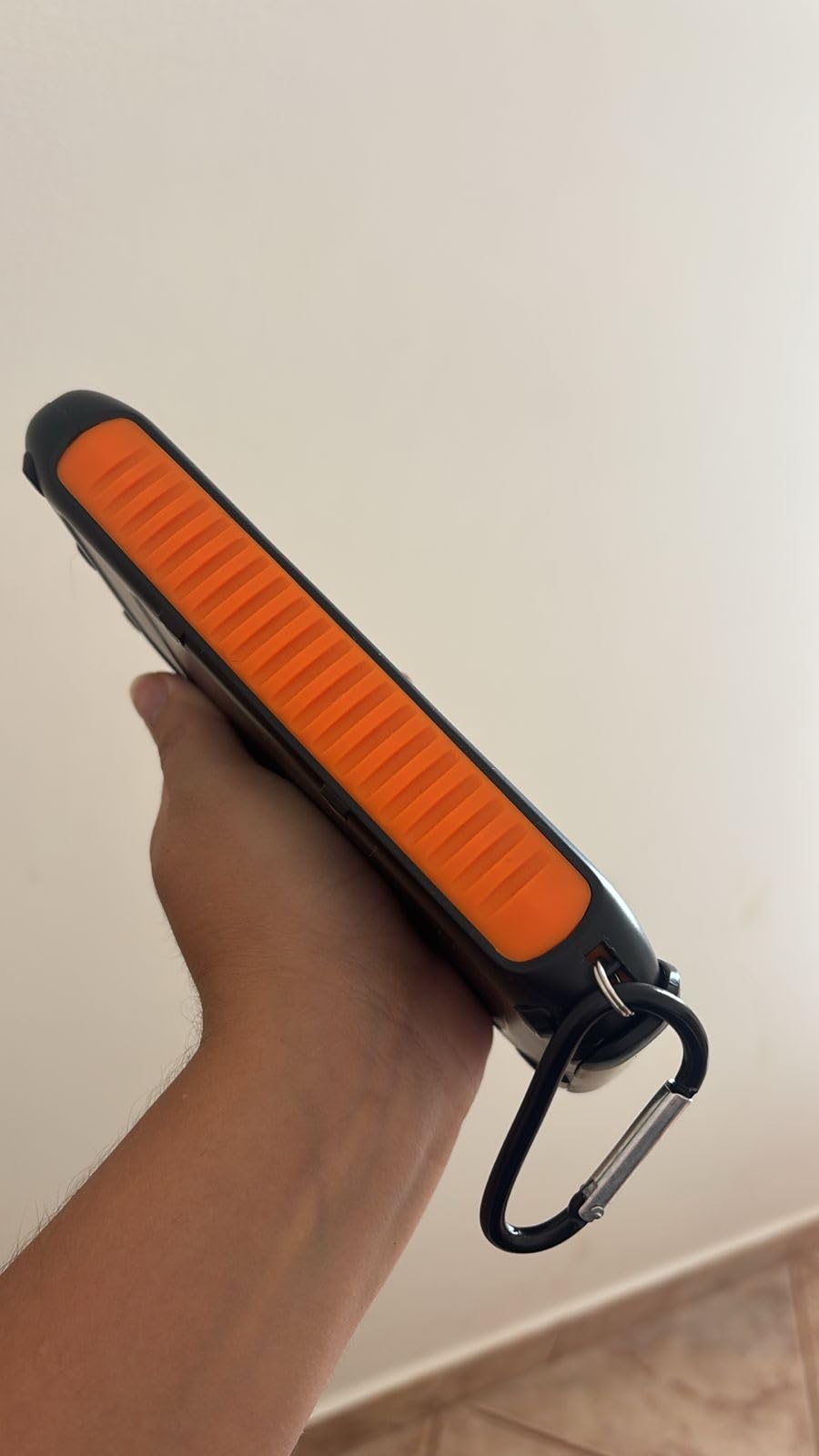
What a shared 184 watt-hour reserve actually buys
For a group, the useful framing is per person. Split across five hikers, that is roughly 37 watt-hours each, which is a full phone charge or a couple of headlamp cycles per day for everybody. That is the difference between charging in turns and everyone charging at once.
The flashlight and carabiner are small things that reduce the number of separate items a group has to carry, and the broad device compatibility avoids the phone-specific charger problem entirely.
Where durability reports give us pause
Several reviews describe units failing after two to three months of use, and 12 percent of ratings are 1-star. The solar side also disappoints, with owners unable to fully recharge the pack even in full sun, and long plug-in recharge times reported on top of that.
So this is a capacity-first pick, not a build-first pick. For a group basecamp where a replacement is accessible, the reserve justifies the trade. For a solo trip where failure is a serious outcome, a higher-rated unit with better long-term reports is the safer choice.
10. SOXONO 40,000mAh Solar Power Bank – Best for Wet-Weather Trips
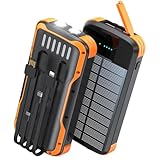
SOXONO Solar Power Bank 40000mAh PD20W Fast Charging Portable Solar Charger
40000mAh lithium polymer
20W PD Type-C
IP67 waterproof shell
Dual 30-hour flashlights
Pros
- 20W PD fast charging at a competitive price
- Four built-in cables and three ports for up to 5 devices
- IP67 waterproof rating for harsh weather
- Dual high-lumen flashlights with 4 modes and 30 hour runtime
- Protective IC chip adds temperature and voltage protection
Cons
- Heaviest option in the roundup at 1.2 lb
- 15 percent of ratings are 1-star
- 1.8W solar panel cannot meaningfully recharge the pack
- No wireless charging despite the capacity class
The IP67 rating is the reason this earns a place, and it is a genuine certification rather than a marketing word. Dust-tight and immersion-resistant, in an industrial-grade ABS shell with a protective IC chip handling temperature, overvoltage, overcurrent and short-circuit protection, this is the box to carry when the forecast is rain for four days out of five.
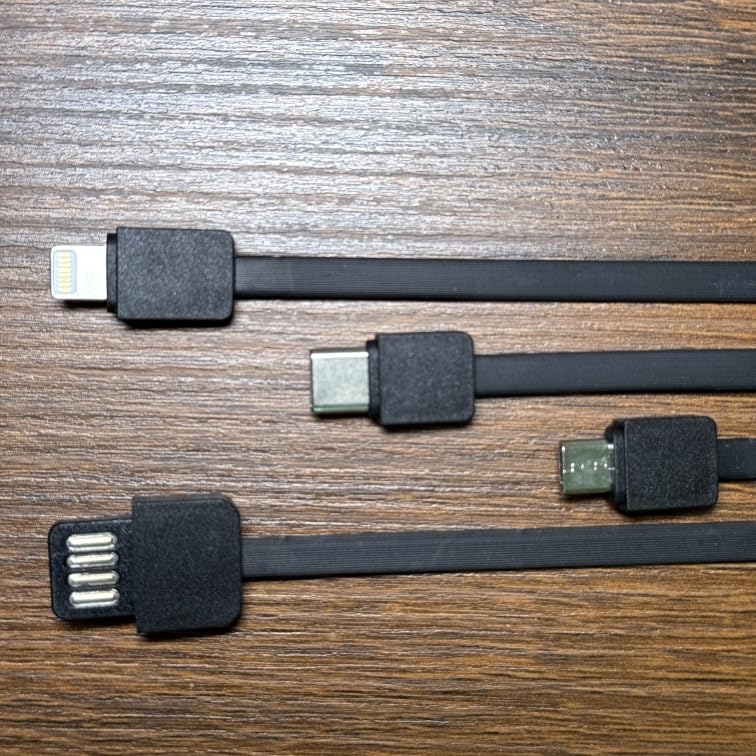
Everything else is a strong multi-day configuration: 40,000mAh, about 148 watt-hours, with 20W PD Type-C output taking an iPhone to 65 percent in 30 minutes. Three built-in output cables cover Type-C, iOS and Micro USB, plus a USB-A input cable, across three ports for up to five devices.
The dual flashlights have four modes, steady, SOS, strobe and low brightness, and run up to 30 hours continuously. That is the second-longest runtime here, and combined with the SOS and strobe modes it makes a reasonable night-emergency light in its own right.
It is also the heaviest unit we tested at 1.2 pounds, in a 6.77 by 3.46 by 1.42 inch body, with a six-hour wall charge time. That is the price of the IP67 shell, the dual lights and the cable bank, and it is a real cost on a fast hike.
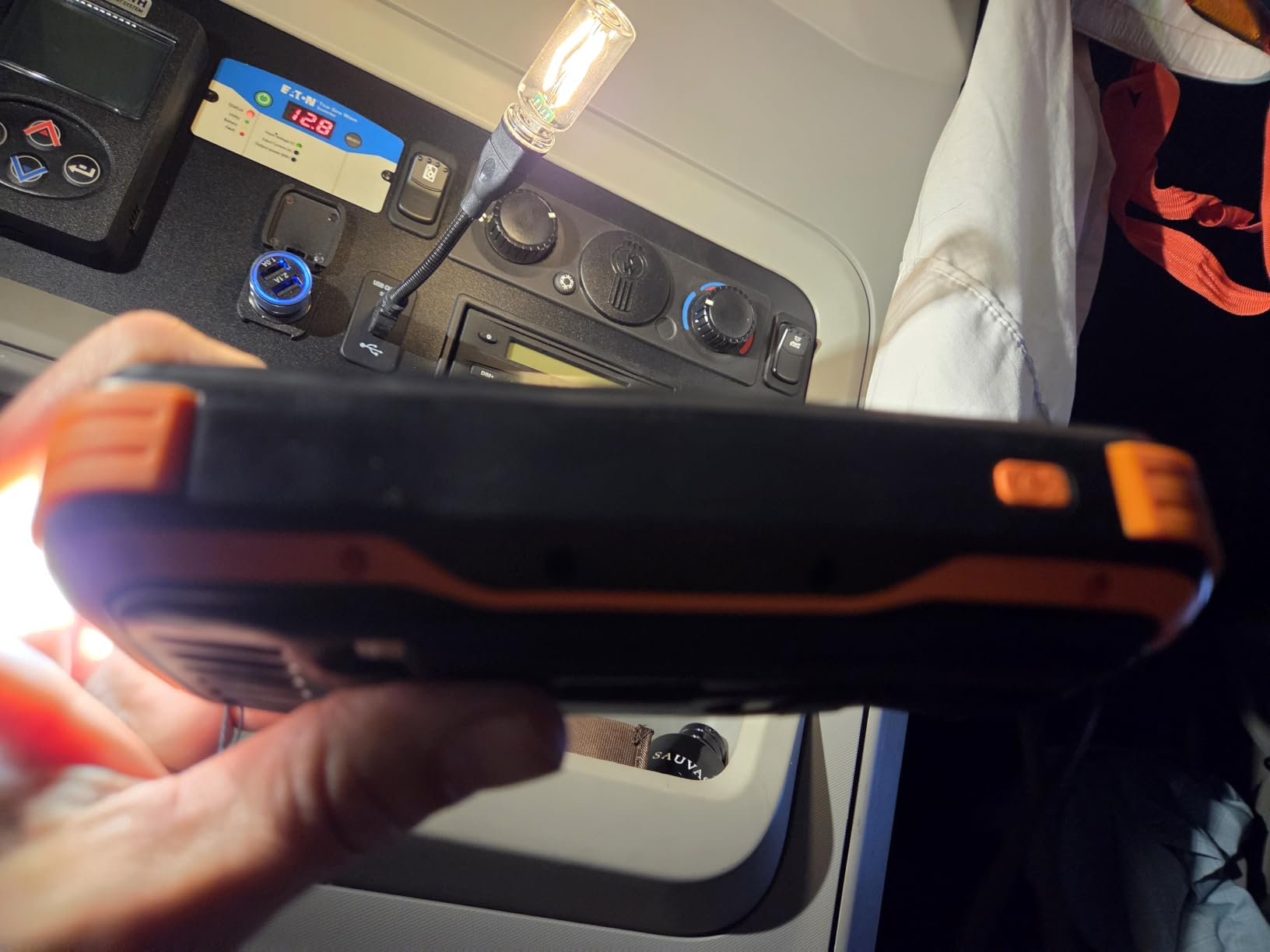
What IP67 buys in real trail conditions
Crossing a river, walking through a downpour for hours, or storing the bank in a wet vehicle bag are all situations where IPX4 and IPX5 units start to worry you and IP67 does not. Owners who take this unit into sustained wet conditions report it performing as expected.
The protection chip is also worth noting for anyone who charges devices in the cold or in a hot car, since temperature management is where cheap lithium packs tend to cut corners.
Where the weight and the 1-star share tell you to look elsewhere
At 1.2 pounds it is the heaviest option in this roundup, and 15 percent of ratings are 1-star, tied for the highest share here. The 1.8W panel cannot meaningfully recharge the pack, and there is no wireless charging despite the capacity class, so an Apple Watch or Qi phone user should look at the BLAVOR 20,000mAh instead.
Choose it for weather resistance and multi-device capacity on a wet-weather trip. For a solo fast trip in good conditions, the lighter Luvknit unit or the BLAVOR 10,000mAh will serve you better for every gram you save.
How to Choose a Solar Power Bank for Hiking
Start with the energy budget, not the capacity number on the front of the box. Multiply the advertised mAh by 3.7V and divide by 1,000 to get watt-hours, then assume you will actually use about 75 percent of it. That gives the BLAVOR 10,000mAh at roughly 28 usable watt-hours and a 49,800mAh pack at about 138. On a 3.7V cell the mAh figure is a reasonable proxy, but on some listings it is a marketing number rather than a measured one, so treat the watt-hour version as the working estimate.
Next, budget weight per watt-hour, which is the metric this category is missing almost everywhere. The BLAVOR 10,000mAh lists 9.3 ounces against 37 watt-hours, about 7.1 grams per watt-hour. The Luvknit 20,000mAh lists 8.32 ounces against 74 watt-hours, about 3.2 grams per watt-hour, which is more than twice as efficient. The BLAVOR 20,000mAh, at 0.78 kg against 74 watt-hours, is about 10.5 grams per watt-hour, the least efficient unit here. Run that same division on any candidate before you buy it and you will see the accessory load immediately.
Third, check the water rating honestly. IPX4 handles splash, IPX5 handles spray and rain, IP65 is dust-tight and splash-proof, and IP67 adds immersion. Nothing in this list is submersible for long, and none is designed to be operated in the rain with the ports exposed, so whatever you buy belongs in a dry pocket.
Fourth, look at the output rate rather than the capacity alone. 20W Power Delivery takes a modern phone from 15 to 65 percent in 30 minutes, while a 2.4A or 15W unit takes noticeably longer. For a hiker, fast output is a safety feature as much as a convenience, because it means a rescue top-up happens during a coffee stop.
Fifth, count cables and ports against your actual group. Built-in cables save pack weight and prevent compatibility problems, but they are short and force you to hold the bank in one hand. A wireless pad is only worth having if you actually own a Qi phone or an Apple Watch. And if a satellite communicator or a GPS watch runs continuously, check the port list before anything else, because a proprietary connector will make a large bank useless to you.
Sixth, be realistic about solar. Use hours of direct sun equals watt-hours times 1.2 divided by panel wattage. On the two 1.8W units here, that is roughly 99 hours for a 40,000mAh pack and about 44 hours for a 20,000mAh pack through a 2W panel. The rule to carry: charge fully from a wall at home, treat the panel as a trail top-up, and use a hand crank or a wall if you need real backup.
Seventh, plan for the trip type. A one or two day ultralight trip wants the lightest unit that still gives two full phone charges. A three to seven day trek wants 40,000mAh or more, or two smaller banks. A group basecamp wants port count and built-in cables. An emergency or blackout kit wants the longest flashlight runtime, the highest water rating and a hand crank if the budget allows.
Finally, check the air travel rules if you fly to the trailhead. Spare lithium batteries and power banks must go in carry-on luggage, never checked baggage, and the widely used 100Wh guidance is the line most carriers work to. The Luvknit unit is explicitly listed as TSA-approved under that guidance. A pack with damaged, swollen or recalled cells is not permitted at all, so inspect yours before you fly.
Frequently Asked Questions
What is the best portable power bank for hikers?
For most hikers the BLAVOR 10,000mAh at 9.3 ounces is the best portable power bank, giving roughly two full phone charges with 20W USB-C and a Qi pad. Choose the BLAVOR 20,000mAh if you carry an Apple Watch, and the SOARAISE 48,000mAh for trips of four days or more.
Do any solar power banks actually work?
Partly. The built-in panel is an emergency top-up, not a charging method. On a 40,000mAh bank with a 1.8W panel, filling the battery takes roughly 100 hours of direct sun, so a full day of hiking adds a trickle. Charge the bank from a wall before you leave and use the panel only to hold a phone alive on the trail.
How long does a solar power bank take to recharge?
Use the formula hours of direct sun equals watt-hours times 1.2 divided by panel wattage. A 20,000mAh bank is about 74 watt-hours, so through a 2W panel it needs roughly 44 hours of full sun, and a 40,000mAh bank with a 1.8W panel needs about 99. A wall recharge takes four to six hours on most of these units.
What is the best power bank for thru-hiking?
For a multi-day thru-hike, 40,000mAh or more gives about 148 watt-hours, which covers a phone, a GPS watch and a headlamp for four days. Weight matters more than capacity on long trails, so compare grams per watt-hour before buying, and check that your satellite communicator and watch can charge from the ports the unit has.
How big a power bank do I need for backpacking?
A one or two day trip needs about 10,000mAh, three to five days needs 20,000 to 40,000mAh, and a week or more needs 40,000mAh or two smaller banks. Convert mAh to watt-hours by multiplying by 3.7 and dividing by 1,000, then assume only about 75 percent of that energy is usable.
Can I take a power bank in my carry-on when flying to a trailhead?
Yes, but power banks and spare lithium batteries must travel in carry-on luggage and never in checked baggage. The common limit is 100Wh per battery, which a 20,000mAh unit at about 74Wh sits under. A swollen or damaged lithium pack is not permitted, so inspect it before you travel.
Final Verdict: Which Solar Power Bank Should You Carry?
The best solar power banks for hiking come down to trip length and how much you care about weight. For a one or two day trip, the BLAVOR 10,000mAh is the pick: 9.3 ounces, 20W USB-C, a Qi pad and 47,527 ratings behind it, which makes it the most proven unit here by a wide margin.
For three to five days, the BLAVOR 20,000mAh wins if an Apple Watch or a phone-only kit is your load, and the MINRISE 40,000mAh wins if you want 20W speed with multi-day reserve. For a group basecamp or a vehicle kit, the SOARAISE 48,000mAh gives you the port count and built-in cables, the Mregb 42,800mAh gives you IP67 and a 100-hour flashlight, and the FEELLE 50,000mAh gives you a hand crank and the longest warranty in the roundup.
Whatever you pick, charge it fully from a wall before you walk out the door, treat the solar panel as a top-up rather than a plan, and check the capacity against the devices you actually carry. If you want help with the rest of your kit, our guides to the best hydration packs for hiking and the best cooler backpacks for hiking cover the other half of what goes on your shoulders.