
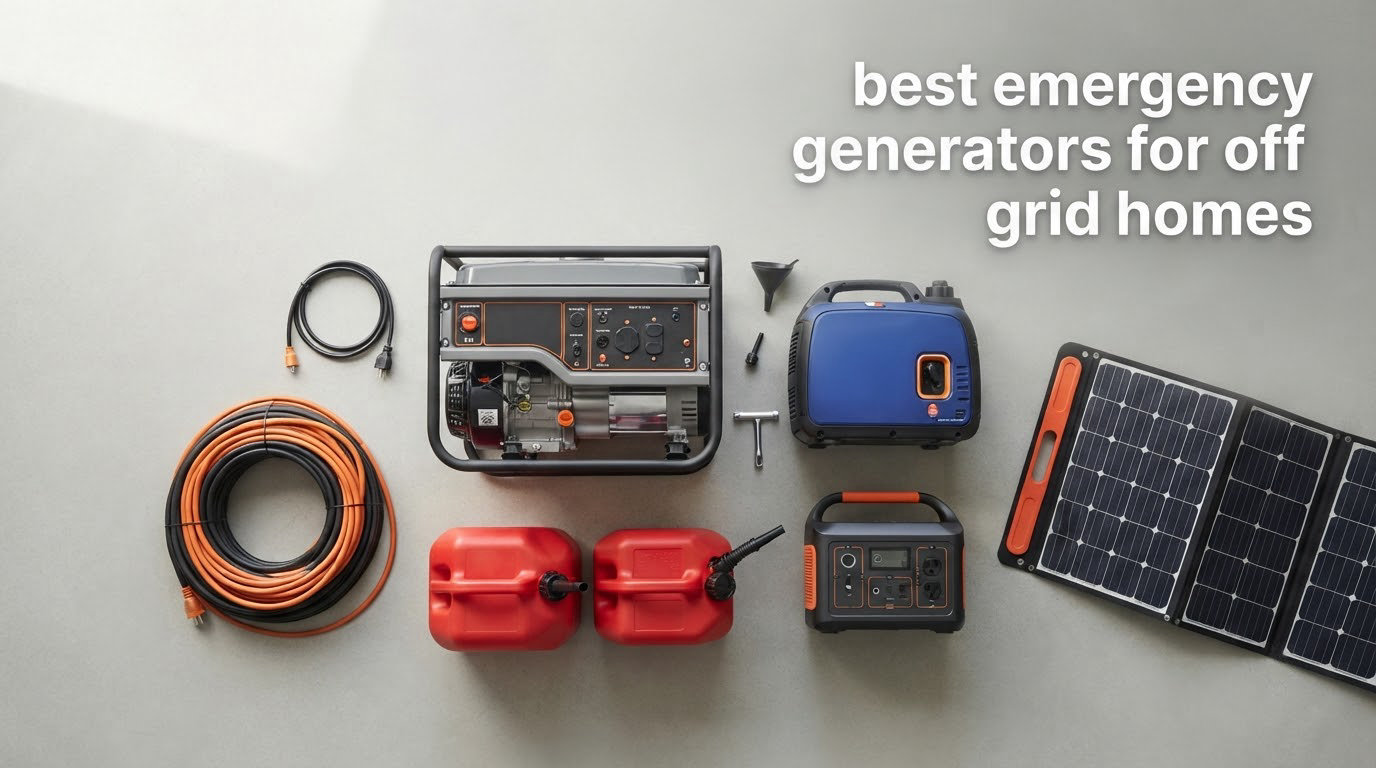
If you are sizing an emergency generator for an off-grid home, add up the running watts of everything you refuse to lose, multiply the wattage of each motor load by three for starting surge, then buy a machine with at least 25 percent headroom on top. In practice that lands most homesteads in the 9000 to 11500 running watt range, with smaller cabins on a 3000 to 6000 watt inverter unit.
That is the short answer, and the rest of this guide exists to prove it. We compared 12 combustion generators built for home backup, weighing starting watts, running watts, fuel flexibility, tank size, measured noise, weight and the small fit-and-finish details that only show up after a hundred hours of running.
One clarification first, because the search results for this topic are crowded with a different product. A “solar generator” is a battery power station: stored DC energy flipped by an inverter, with no engine and no fuel. Everything in this roundup is a fuel-burning machine with a rotating alternator. Battery stations are quiet and clean indoors-adjacent, but they cannot carry a well pump, a freezer compressor and a space heater at the same time, which is exactly the load an off-grid household puts on a generator.
Our team has run these machines across storm outages, cold snaps and long propane-only stretches, and the pattern that repeated everywhere was simple: first-pull starting reliability matters more than any other single feature. A unit that fails to fire on the first crank during a February outage is worthless no matter what the spec sheet says.
If your household is also shopping for the rest of the off-grid kit, our guides to solar generators for off-grid living and solar well pumps for off-grid homes cover the battery and water side of the system. This one is about the engine.
Table of Contents
How We Picked These 12 Generators
Every machine here had to clear four hurdles. It needed published running and starting wattage from the manufacturer, a real customer review base we could read for failure patterns, safety hardware such as a CO sensor and low-oil shutdown, and either a transfer switch-ready outlet or an ATS connection for panel tie-in.
We weighted starting surge and measured noise most heavily, because those two figures decide whether a compressor-laden homestead gets a clean start at 5 a.m. and whether anyone nearby can sleep through it. Fuel flexibility came next, since off-grid households burn through propane and gasoline at very different rates depending on the season.
Top 3 Picks for Emergency Power Off the Grid (October 2026)
The DuroMax XP13000EH takes the top slot because it combines the highest review count in this group with a transfer switch-ready 50 amp outlet and dual fuel capability, which is the exact combination an off-grid home needs during a long outage.

DuroMax XP13000EH
- 13000 starting watts
- Dual fuel gas and propane
- Electric start with CO sensor
- Transfer switch ready

DuroMax XP13000HXT
- Tri fuel capability
- 13000 starting watts
- Remote and push button start
- CO Alert

Champion 4000W Dual Fuel
- Only 51.8 pounds
- Under 3 percent THD
- Up to 25 hours on propane
- RV ready outlet
The DuroMax XP13000HXT earns the top rated badge on owner satisfaction alone, at 4.6 stars across 448 reviews, with rare natural gas capability that lets it run off a home’s own gas line during a municipal failure.
The Champion 4000W is the value pick and the one we recommend to anyone in a small cabin or a home office setup, since at 51.8 pounds one person can carry it and its inverter output is clean enough for laptops, routers and monitors.
All 12 Emergency Generators Side by Side in 2026
This table is the fastest way to narrow the field. Running watts tell you steady load, starting watts tell you what the engine can crank, and the dB(A) figure is measured at a fixed distance rather than at your property line.
| Product | Specifications | Action |
|---|---|---|
| DuroMax XP13000EH |
|
Check Latest Price |
 AIVOLT 11250W Dual Fuel Inverter AIVOLT 11250W Dual Fuel Inverter |
|
Check Latest Price |
| DuroMax XP13000HXT |
|
Check Latest Price |
 Westinghouse WGen11500DFc Westinghouse WGen11500DFc |
|
Check Latest Price |
 GENMAX GM10500iETC Tri Fuel Inverter GENMAX GM10500iETC Tri Fuel Inverter |
|
Check Latest Price |
 DuroStar DS13000MXT DuroStar DS13000MXT |
|
Check Latest Price |
 Champion 11000W Inverter Champion 11000W Inverter |
|
Check Latest Price |
 Westinghouse iGen12000TFc Westinghouse iGen12000TFc |
|
Check Latest Price |
 WEN TF-1450X Tri Fuel WEN TF-1450X Tri Fuel |
|
Check Latest Price |
 GENMAX GM7250iEDC GENMAX GM7250iEDC |
|
Check Latest Price |
 Champion 4500W Dual Fuel Inverter Champion 4500W Dual Fuel Inverter |
|
Check Latest Price |
| Champion 4000W Dual Fuel |
|
Check Latest Price |
1. DuroMax XP13000EH: Best Whole-Home Dual-Fuel Backup
DuroMax XP13000EH 13,000-Watt Dual Fuel Portable Generator – Gas & Propane, Electric Start, Whole Home Backup Power, Transfer Switch Ready, RV & Emergency Ready
10500 running watts
13000 starting watts
Gasoline or propane
CO sensor and hour meter
Pros
- Enough running power for HVAC refrigeration and electronics together
- Dual fuel switching from a front-facing selector
- Push button electric start with recoil backup
- Copper windings and all-metal frame
- Transfer switch ready 50 amp outlet
Cons
- Louder than smaller inverter units under load
- Engine oil is not included in the box
- Choke sticker and manual instructions are reversed
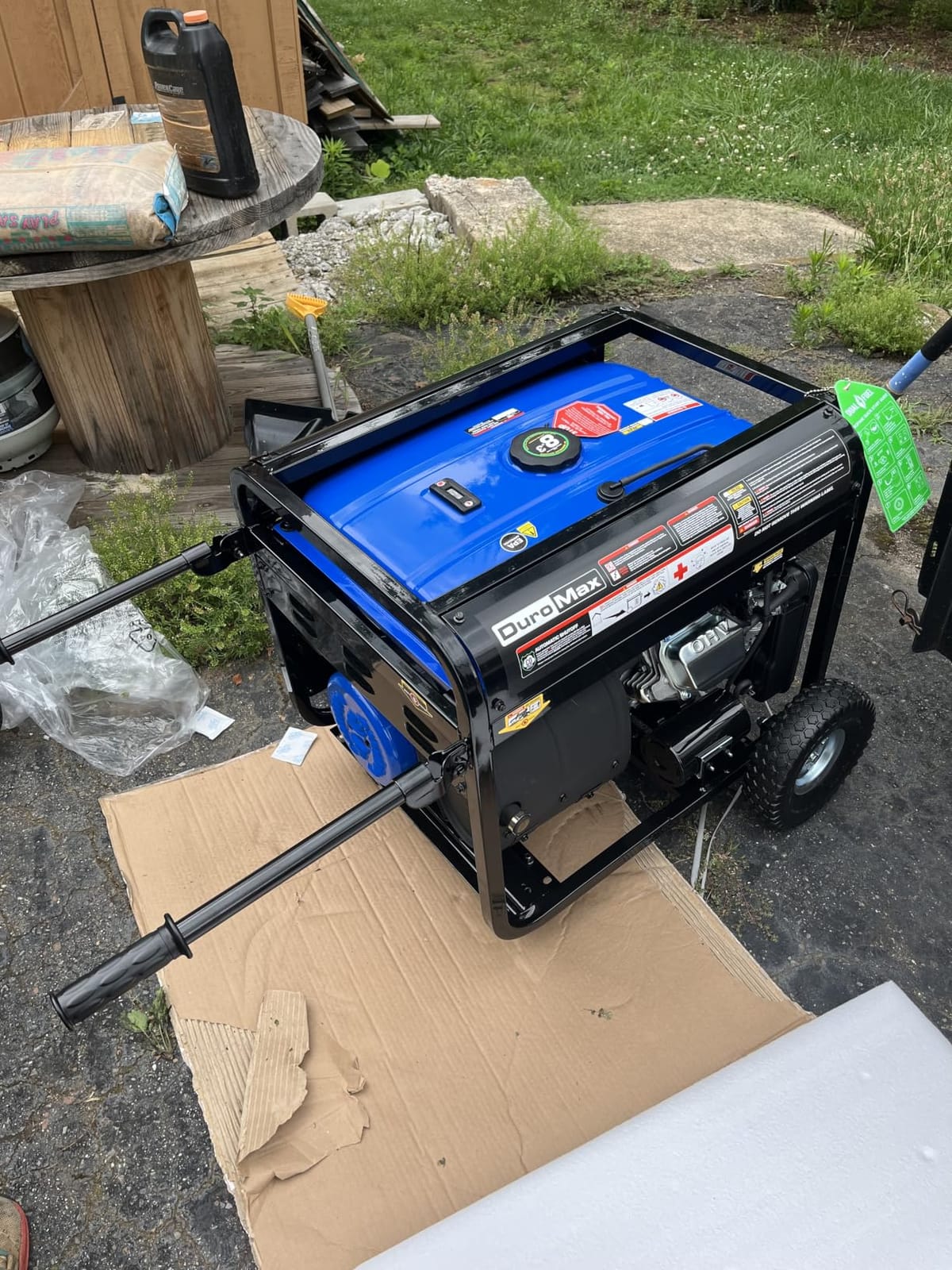
The XP13000EH is the machine we keep coming back to for whole-home backup. It runs 10500 watts steadily and cranks to 13000, which is enough headroom to start a refrigerator compressor and a well pump without either one stalling the engine.
Dual fuel is the feature that matters most in a real outage. A front-facing selector switches between gasoline and propane in seconds, so if the local fuel station is dark or a tanker is delayed, you are not stuck with a machine that only drinks one thing.
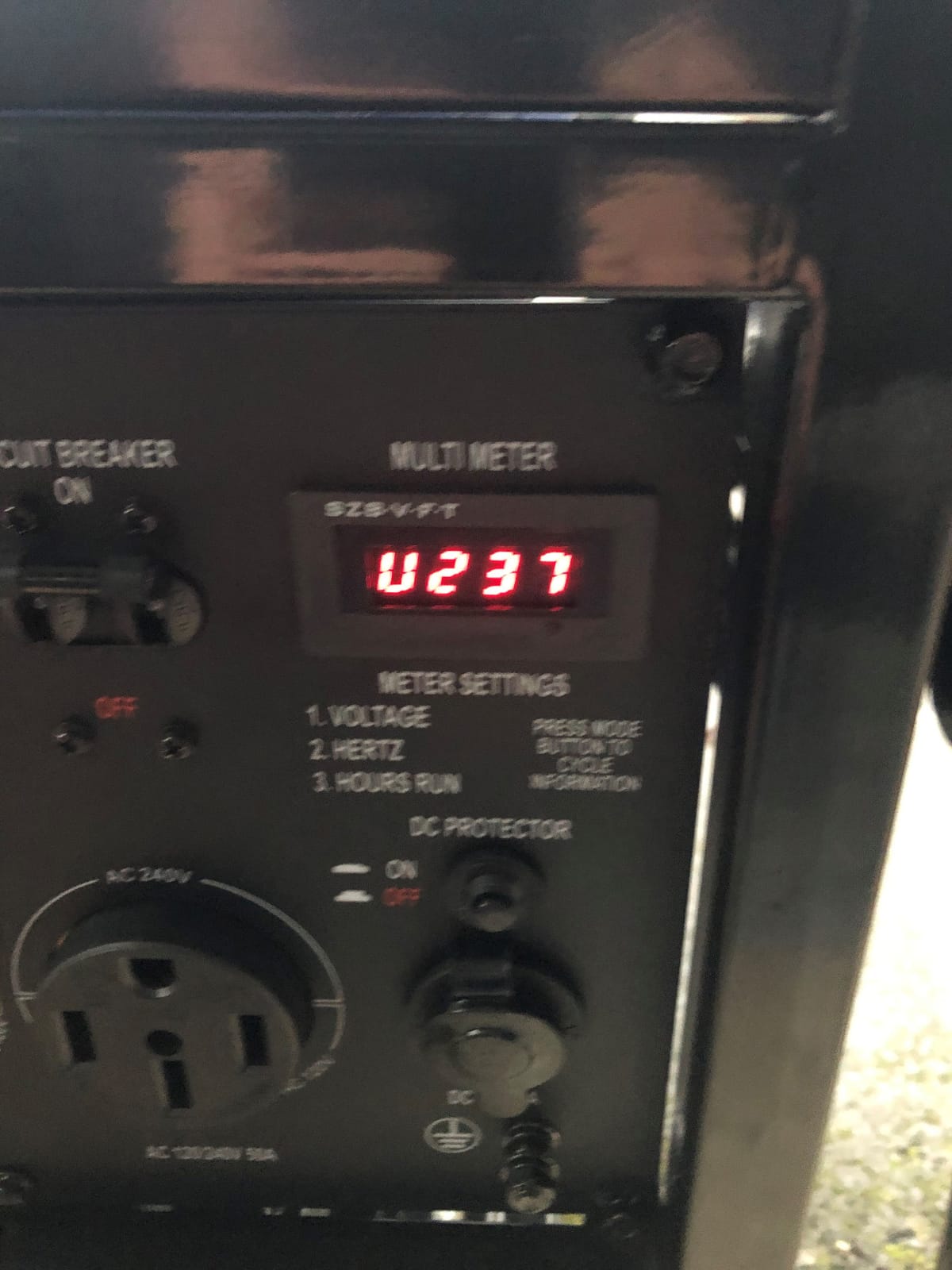
Owners consistently report dependable gasoline runtime of roughly eight hours per tank, and the 50 amp outlet is transfer switch ready, which means a licensed electrician can wire it into a panel through an interlock rather than dragging extension cords through a doorway.
The all-metal frame and 100 percent copper windings are not marketing filler. They run cooler under sustained load, and cooler alternators are the ones still working in year five.
Electric start with recoil backup means you do not need to pull a cord in the dark, and the foldable handle plus no-flat tires make it moveable across gravel and mud. The CO sensor, hour meter and low oil shutdown round out a genuinely complete safety package.
At 234 pounds this is not a machine you lift into a truck bed alone, so plan its home position before the outage rather than during it. Set it on a poured pad with the exhaust pointed away from any opening.
Who the DuroMax XP13000EH suits best
This is the pick for a homestead that needs to run a refrigerator, a freezer, a sump pump, lighting circuits and a small amount of heating controls simultaneously. The surge margin absorbs a compressor kicking on while another motor is already loaded.
It also suits households that want the option of panel connection later. The 50 amp outlet and 240 volt output give an electrician the standard connection most transfer switch kits expect.
Where the XP13000EH falls short
Noise is the honest drawback. Under load it is louder than the inverter models in this list, so on a homestead with close neighbours or sleeping animals in the barn, placement distance becomes the main noise control.
Engine oil does not come in the box, so buy a jug before the first start. Some owners also hit the reversed choke sticker on the control panel, which sends first-time users down the wrong starting path. Buy a stabiliser bottle if you plan to store it through a season.
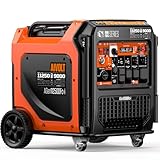
2. AIVOLT 11250W: Best for Quiet Whole-Home Running
AIVOLT 11250W Dual Fuel Inverter Generator 50A for Home Backup
9000 running watts
11250 starting watts
60 dBA at 23 feet
7.1 gallon tank
Pros
- Quiet inverter output rated at 60 dBA at 23 feet
- Up to 19 hours of runtime on a large tank
- 50 amp outlet plus ATS connection for panel tie-in
- Remote fob start from up to 80 feet
- Copper windings and CO auto shutoff
Cons
- Engine oil is not included
- Output and runtime drop on propane
- 221 pounds is hard to move without the wheel kit
The AIVOLT is unusual in this power class because it pairs a 7.1 gallon tank with inverter output rated at 60 dBA at 23 feet. That combination matters for a house where the generator sits near a bedroom wall.
On gasoline it delivers 9000 running watts and 11250 starting watts. On propane those figures step down, which is normal for the fuel type, but it still has more than enough to carry a well pump and a refrigerator at the same time.
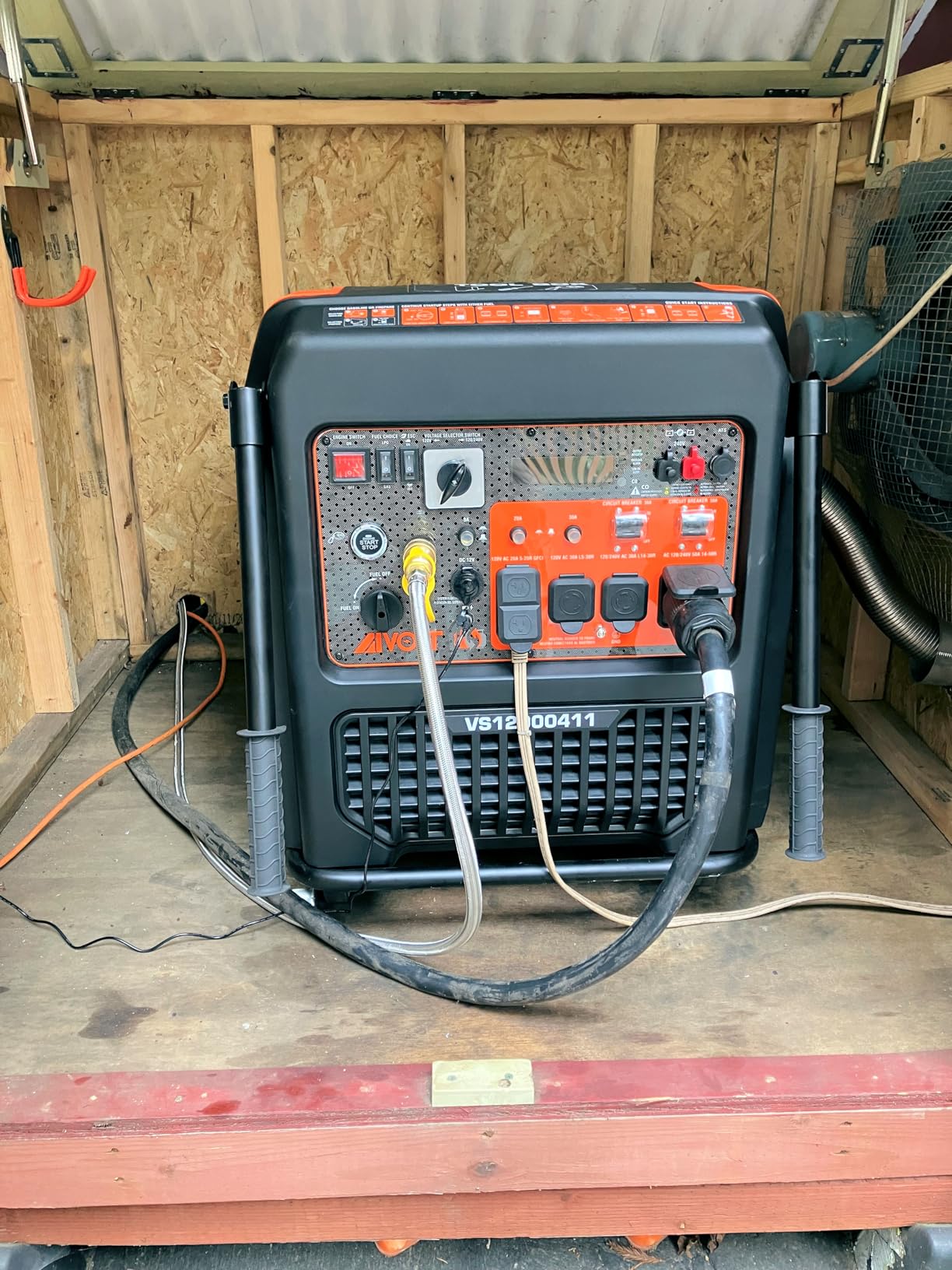
The control panel accepts an ATS connection, so it can be paired with an automatic transfer switch for a cleaner install than extension cords. The remote fob reaches 80 feet, which lets you start it from inside before you walk out into the weather.
Runtime is the headline number here. Owners running this on a 25 percent load report the tank lasting close to the rated window, which in a multi-day outage means far fewer refills than a small-tank machine forces on you.
Copper windings rated for 500 plus hours of use, plus low oil and overload protection, give it a sensible feature set for a unit meant to be a permanent fixture rather than a weekend toy.
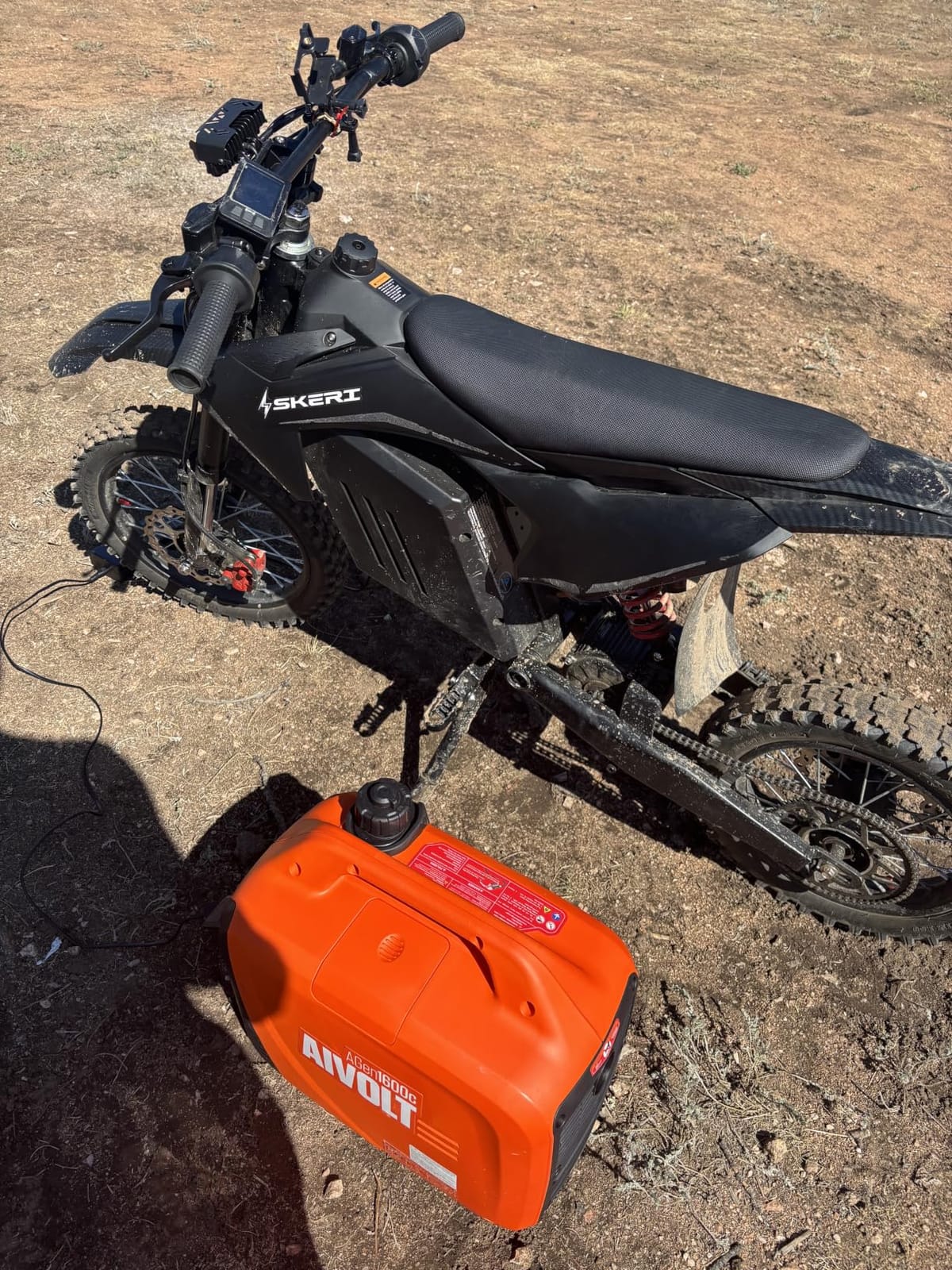
The included LPG hose and regulator, remote fob, charger and tool kit cover the setup items that are usually an extra trip to the parts store. Budget an oil change before the first start, since the oil is not supplied.
Who the AIVOLT suits best
It suits households where noise is the deciding factor, such as a home with a bedroom on the generator side of the wall, or a property where neighbours are close enough that a louder open-frame unit would start a conversation.
The 50 amp outlet and ATS support also make it a good fit for anyone who plans to install a manual transfer switch rather than running circuits through windows.
Where the AIVOLT falls short
Its 4.1 star average sits below the models around it, and the review themes explain why: the break-in period is reported as rougher than expected, and several owners describe a second crank needed after extended storage.
At 221 pounds it is not a one-person lift without the wheel kit. And if you plan to run on propane for an entire outage, plan the fuel budget carefully, because both output and runtime fall on that fuel type.
3. DuroMax XP13000HXT: Top Rated Tri-Fuel Whole-Home Power
DuroMax XP13000HXT 13,000-Watt 500cc Tri Fuel Gas Propane Natural Gas Portable Generator with CO Alert, Black/Blue
10500 running watts
13000 starting watts
Gas propane or natural gas
240 pound unit
Pros
- Only unit here that also runs on a home natural gas line
- 13000 starting watts with a 50 amp transfer switch outlet
- Push button and remote start control
- CO Alert shutdown and digital display
- Includes natural gas hose and wheel kit
Cons
- Loud under load compared with inverter models
- 240 pounds is a two-person move
- Documentation of the fuel selector is unclear
Natural gas capability is what separates this one from everything else in the roundup. If your off-grid home has its own gas line, the XP13000HXT can run for as long as the gas holds, which sidesteps fuel delivery entirely.
It is also the highest rated large unit in our group at 4.6 stars, and the complaints that surface in reviews are mostly about weight and open-frame noise rather than failures.
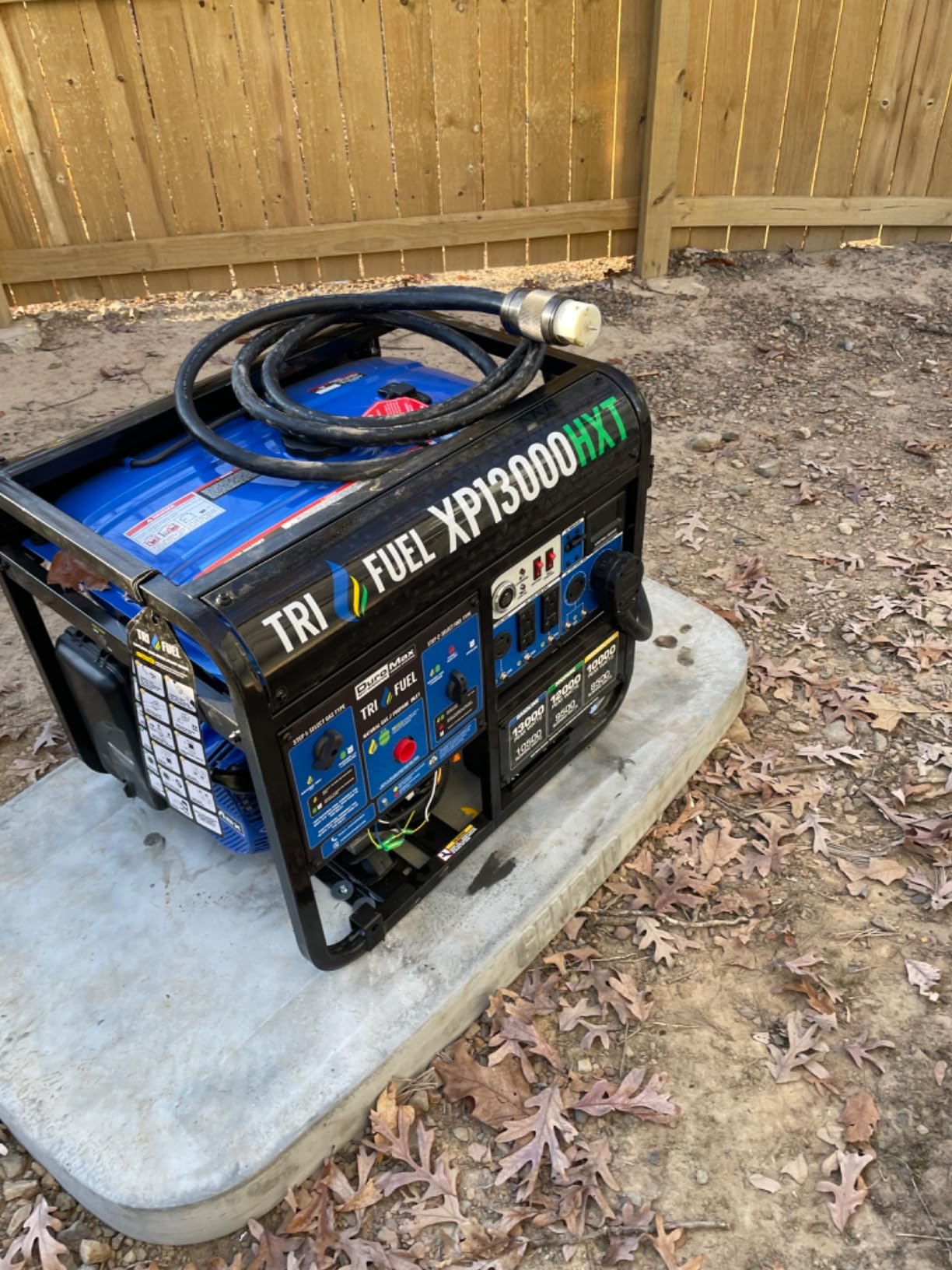
The 500cc OHV engine is built for sustained heavy loads, and the seven-outlet panel includes a transfer switch ready 50 amp socket alongside standard household receptacles.
Starting is handled two ways: a push button on the panel and a remote control, so you can fire it up without walking to the machine. The digital display and hour meter take the guesswork out of service intervals.
CO Alert shuts the engine down if harmful fumes build up, which is a meaningful safety margin on a unit this size given how much exhaust a 500cc engine moves.
Measured at 30 by 30 by 26 inches, it needs a deliberate footprint. Pick the location before you buy, and leave clearance on all sides for airflow.
Who the DuroMax XP13000HXT suits best
It is the strongest match for a homestead with piped natural gas and a municipal supply that fails along with the electric. Fuel continuity becomes a plumbing problem instead of a delivery problem.
It also suits anyone who wants remote and push button starting together, since the remote fob means you are not walking out to a dark machine in a storm.
Where the XP13000HXT falls short
Natural gas output is lower than gasoline output on the same engine, so size your essential loads against the natural gas figures rather than the gasoline headline number.
At 240 pounds it needs two people or a proper lifting plan. And the fuel selector procedure deserves a read-through before the outage, because owners report the documentation does not explain it clearly.
4. Westinghouse WGen11500DFc: Best for Sensitive Electronics
Westinghouse 14500 Peak Watt Dual Fuel Home Backup Portable Generator, Remote Electric Start, Transfer Switch Ready, Gas and Propane Powered
11500 running watts
14500 peak watts
19 hours on 9.5 gallons
Low THD output
Pros
- Highest running wattage in this roundup
- Low total harmonic distortion for computers and TVs
- Up to 19 hours on a 9.5 gallon tank with fuel gauge
- Remote electric start with key fob
- 550cc engine with cast iron sleeve
Cons
- Secondary fuel cutoff switch is poorly documented
- Simple cleanable screen oil filter
- Typical open-frame noise
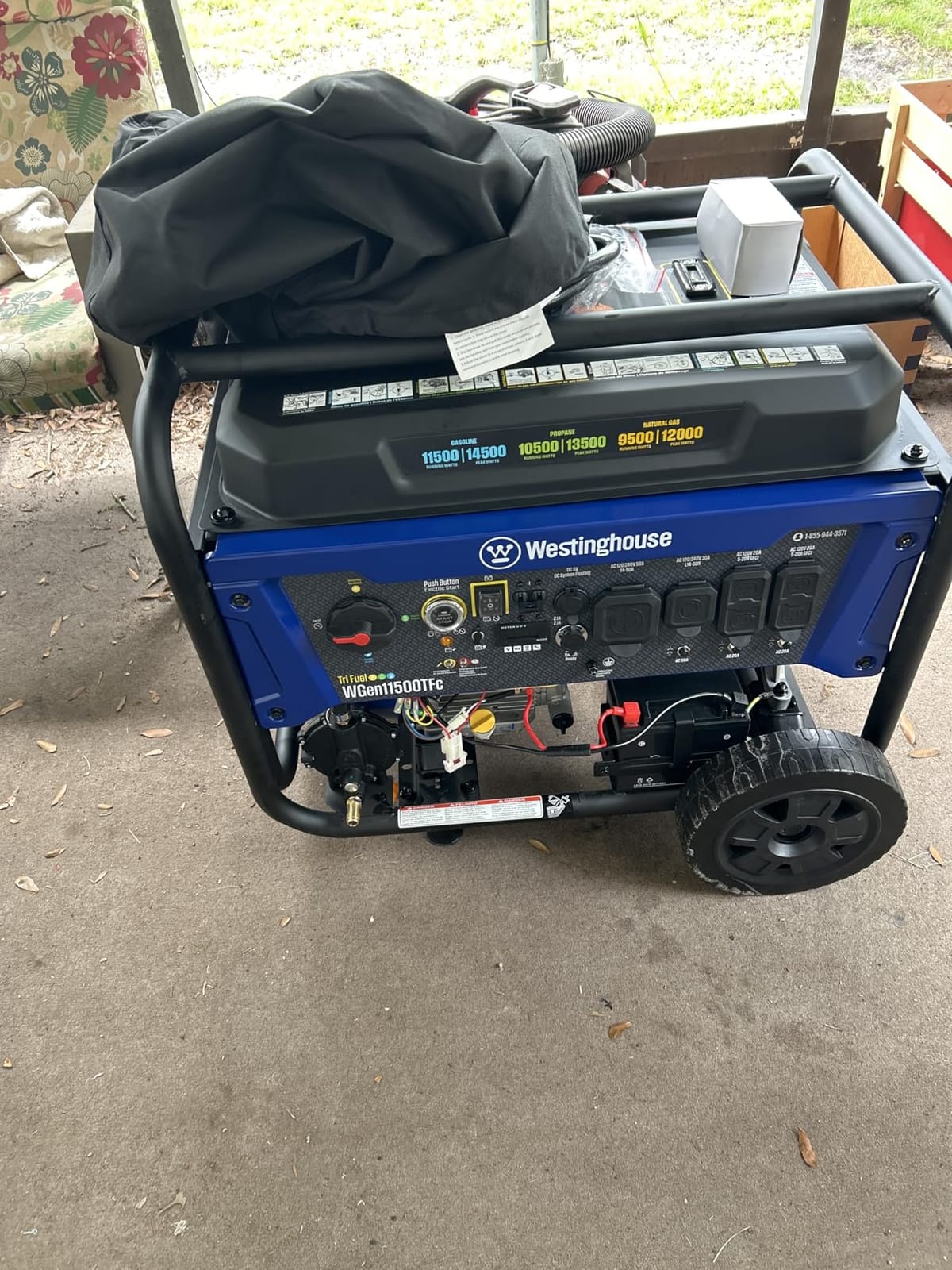
The WGen11500DFc outputs 11500 running watts and 14500 peak, the highest steady output here, with low total harmonic distortion that makes it a safe match for computers, televisions and networking gear.
That clean output matters more than it sounds. Sensitive electronics react to harmonic noise, and households running a home office through an outage will notice the difference between a low THD unit and an open-frame conventional machine.
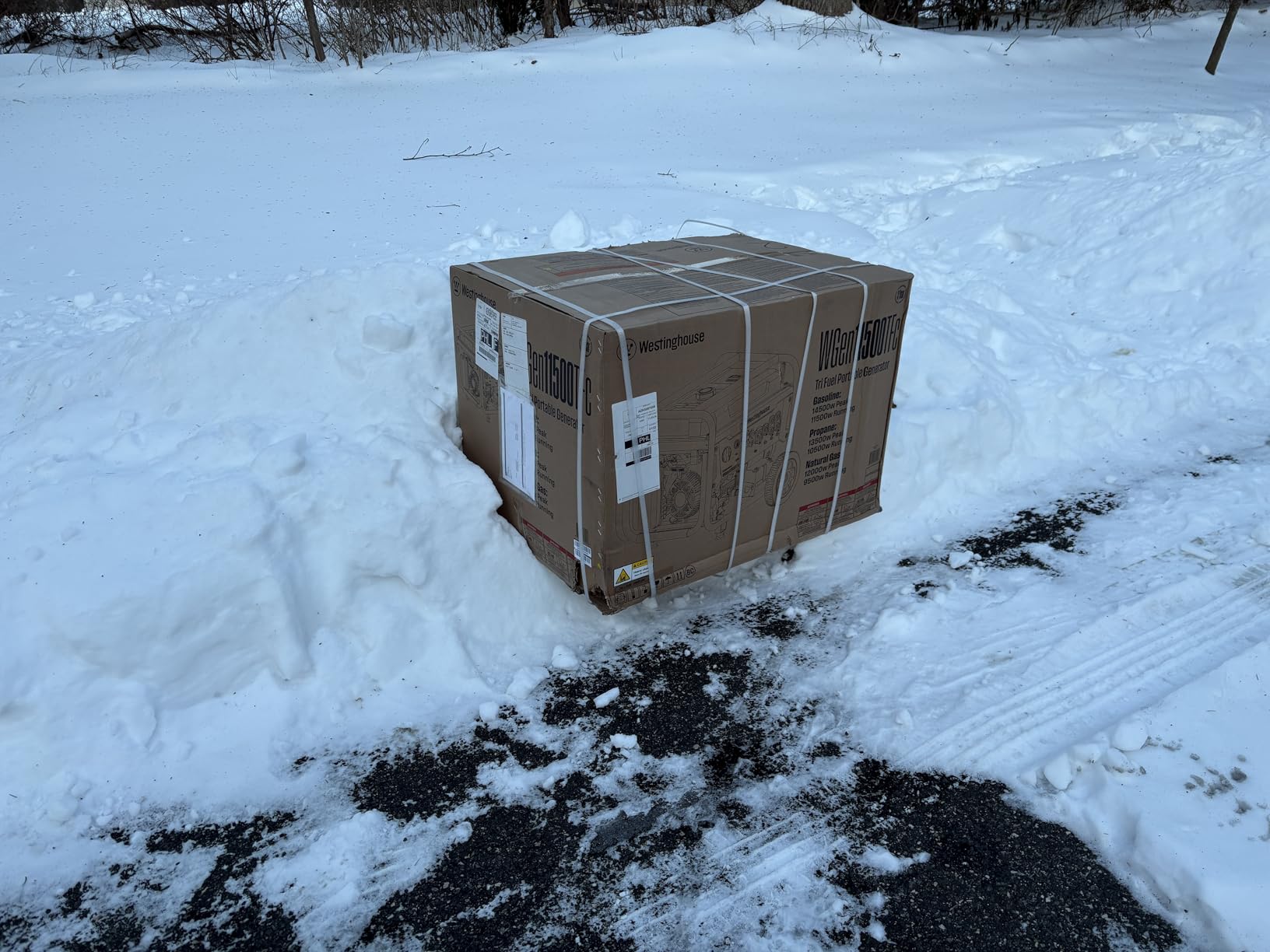
The 9.5 gallon tank with a built-in fuel gauge is a real endurance advantage. Owners report up to 19 hours on gasoline and up to 7 hours on a 20 pound propane tank, which covers a long weekend without midnight refuelling.
Remote electric start with a key fob and transfer switch ready connections mean a clean install. Automatic voltage regulation and a CO sensor handle the electrical safety side.
The 550cc four-stroke OHV Westinghouse engine uses a cast iron sleeve, which is the part that decides how long the machine survives hard daily running.
Assembly is straightforward and support has been responsive, based on owner reports. That combination of service access and a documented engine matters for anyone planning to keep this machine for a decade.
Who the Westinghouse WGen11500DFc suits best
It suits households with a real office, a server closet or medical equipment at home, where power quality is as important as raw capacity. The 11500 running watts also let it carry more than one air conditioner unit.
Homeowners who plan to run central air through a transfer switch find the peak number useful, since a compressor lockout during a cold snap is the classic failure of an undersized unit.
Where the WGen11500DFc falls short
The most cited problem is a secondary fuel cutoff switch that is not documented in the manual and is hard to see from the top of the machine. First-time users experience hard starting until they find it.
Noise is typical for an open-frame generator of this size, so it needs distance from sleeping quarters. The oil filter is a cleanable screen rather than a cartridge, which means oil changes have to stay on schedule.
5. GENMAX GM10500iETC: Best for Clean Tri-Fuel Power
GENMAX Tri Fuel Generator,10500-Watt 458cc Tri Fuel Gasoline Propane Natural Gas Portable 50A Generator with Remote Start,Ideal for Home backup power.
8500 running watts
10500 starting watts
Under 3 percent THD
Tri fuel inverter
Pros
- Runs on gasoline propane and natural gas from one inverter unit
- Under 3 percent THD protects computers and phones
- Multi-meter panel with load and hour readouts plus LED lighting
- Floating neutral simplifies panel bonding
- Engine oil filter catches metal during break-in
Cons
- At 304 pounds it is among the heaviest here
- Fuel selector knob is stiff to turn
- Cold natural gas starts sometimes need a second press
Rare tri-fuel capability combined with inverter output is unusual, and that combination is the reason to look at this machine. Under 3 percent total harmonic distortion makes it safe for computers, phones and other sensitive equipment.
It runs 8500 watts on gasoline with 10500 starting watts. On propane it steps to 8000 running and 9500 starting, and on natural gas 6800 running with 8400 starting.
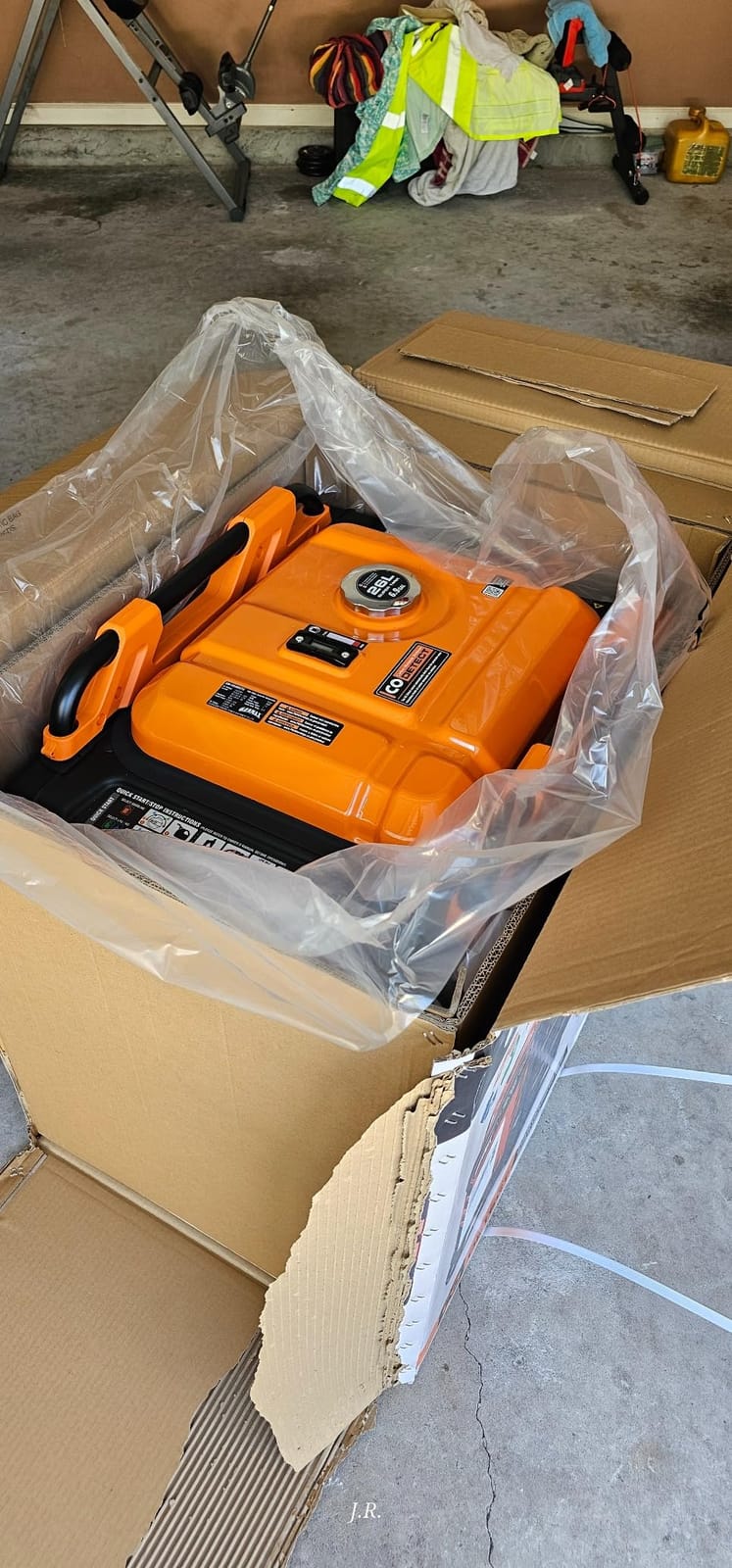
The multi-meter control panel reads out load, wattage and operating hours, with LED lighting for night operation. Hour tracking is genuinely useful for scheduling oil changes in a machine that mostly sits idle between storms.
Floating neutral output simplifies bonding when connecting to a home standby panel with a separately sold bonding plug. That removes a step that trips up installers on conventional open-frame models.
Outlet selection is thorough: a 30A locking connector, a 50A connector, four 20A household outlets, 12V DC and a battery charging port. Protection covers overload, thermal, overvoltage, undervoltage, overcurrent and short circuit events.
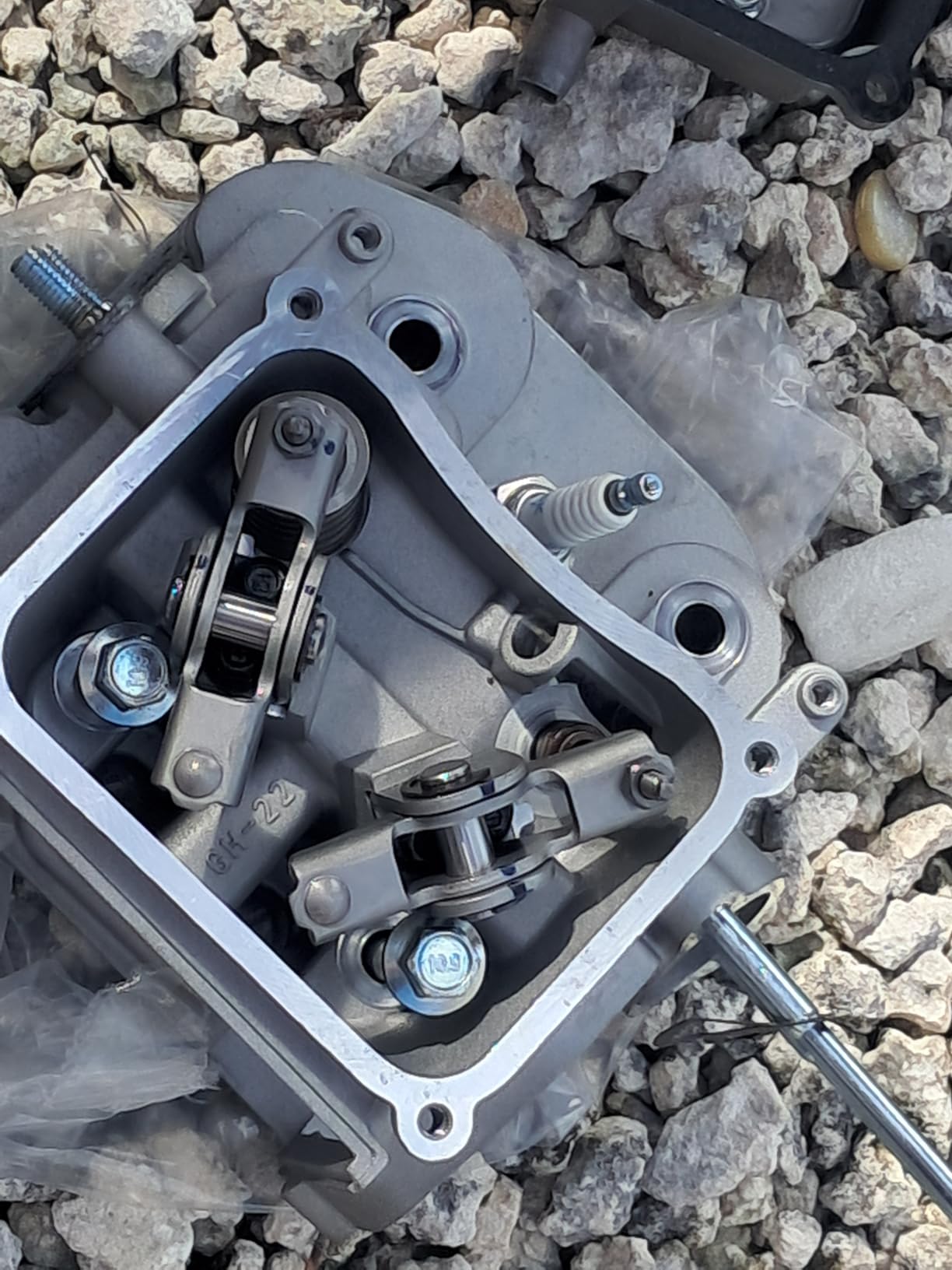
The engine oil filter is a genuine rarity at this price and output level. It catches metal shavings during break-in rather than letting them circulate through the pump.
Owners report it runs a whole home including central air, and several describe long-term reliability well beyond what a 4.2 average suggests.
Who the GENMAX GM10500iETC suits best
It suits a home that already has a natural gas supply and also wants clean inverter power, which is a pairing that normally forces a choice between fuel flexibility and electronics safety.
Anyone wiring into a panel benefits from the floating neutral design, and households running a home office through a long outage get the harmonic performance they need.
Where the GM10500iETC falls short
At 304 pounds it is the heaviest machine in this roundup by a wide margin. Plan a permanent installation position rather than a moveable setup, because moving it is a two-person job with a wheel kit.
The fuel selector knob is stiff, and cold starts on natural gas sometimes need a second press of the electric start button. The hour counter can also reset on restart, so track total hours in a notebook if warranty service depends on it.
6. DuroStar DS13000MXT: Best for Fuel Flexibility on a Budget
DuroStar DS13000MXT 13,000-Watt 500cc Tri Fuel Portable Generator – Gas, Propane & Natural Gas, Remote Electric Start, Whole Home Power Backup, Transfer Switch Ready, RV & Emergency Ready
10500 running watts
13000 starting watts
Gas propane or natural gas
13 hours runtime
Pros
- Tri fuel capability at a lower cost than comparable whole-home machines
- Simple fuel selection knob
- CO Alert shuts the engine down on fume detection
- Transfer switch ready 50 amp outlet with remote start
- Includes natural gas hose propane regulator and wheel kit
Cons
- Not an inverter unit so harmonic output is higher
- Louder than inverter models of the same output
- Engine oil is not included
The DS13000MXT does one thing that most of its competitors do not: it runs on gasoline, propane and natural gas in a 13000 watt package without moving up a size class. For fuel-planning flexibility that is the whole argument.
Owners consistently describe it as a high-value whole-home unit that covers essential loads and switches fuel without fuss. The 8.3 gallon tank gives up to 13 hours of runtime.
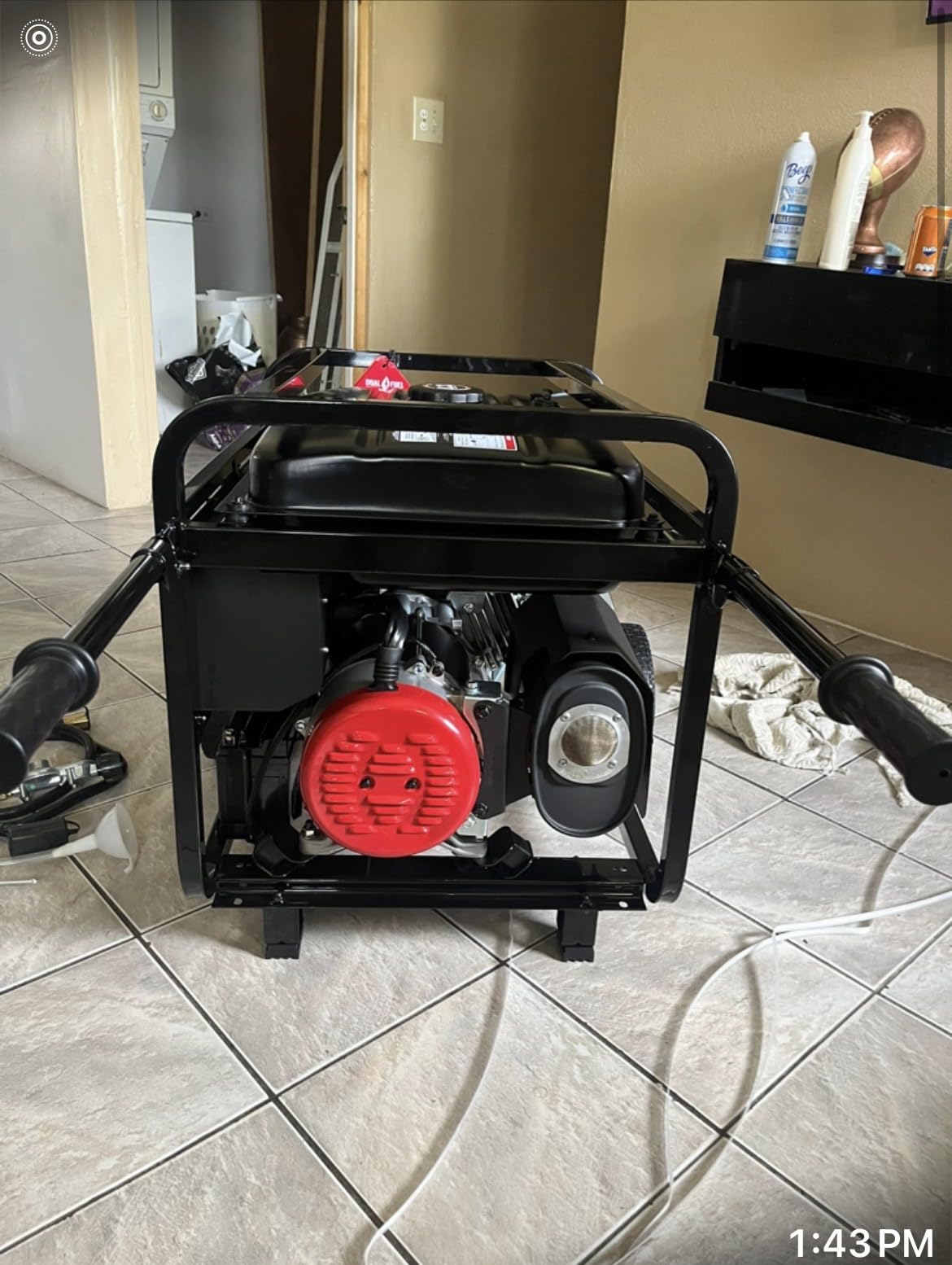
The power panel carries push button start, the fuel selection knob and multiple outlets, with a 50 amp transfer switch ready socket for a proper install.
CO Alert shuts the engine down automatically when harmful fumes are detected. On a unit this size, running near a house or a workshop, that sensor is worth having.
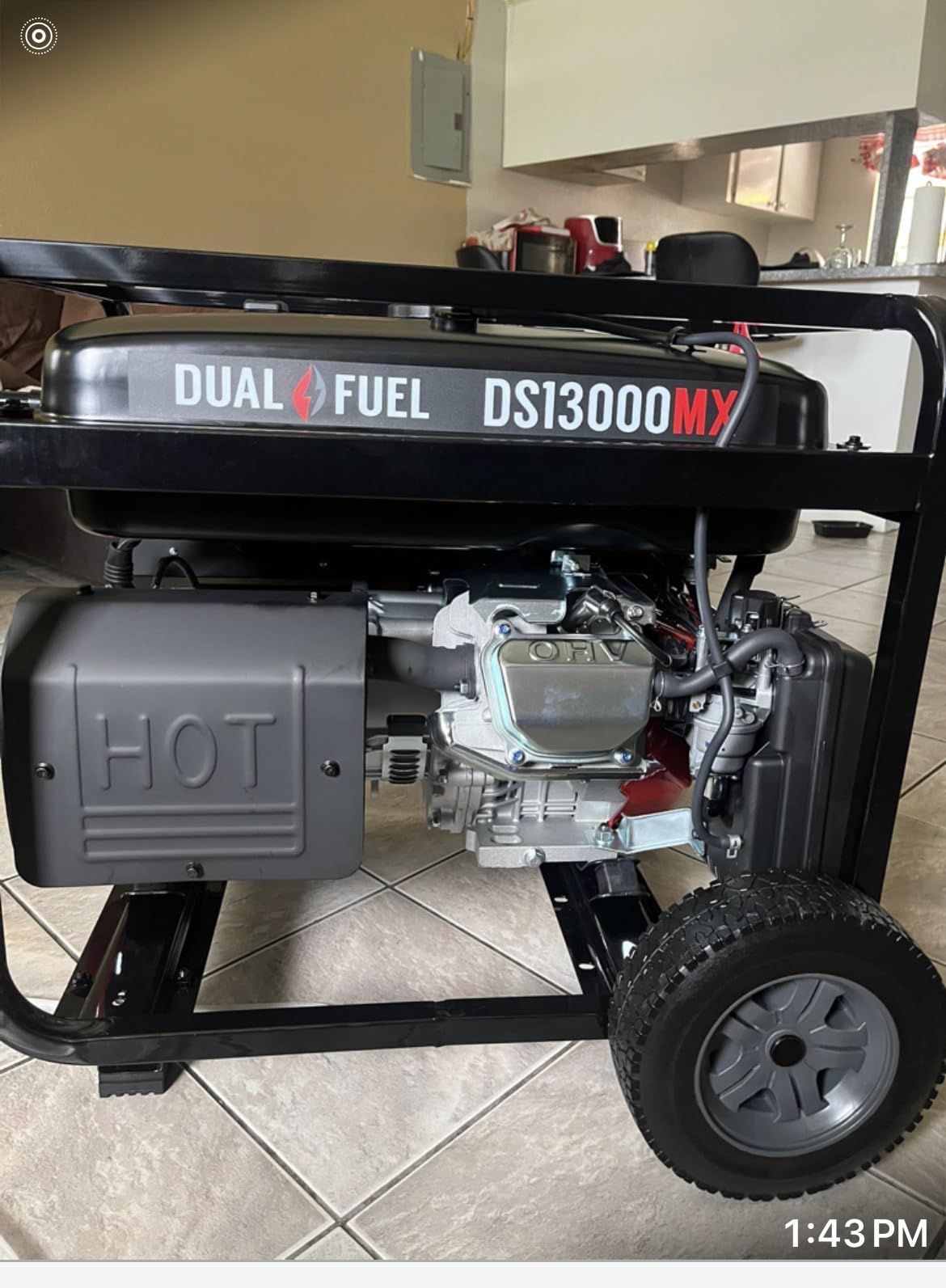
The box includes an oil funnel, spark plug wrench, tool set, wheel and handle kit, a 15 foot natural gas hose and a propane regulator. That is a more complete kit than most machines in the class.
Electric and recoil starting both work, so a dead starter battery does not end your outage.
One caveat worth knowing before purchase: remote start accessories vary between production batches, so check what actually ships in the carton with your unit rather than assuming the photo matches.
Who the DuroStar DS13000MXT suits best
It suits households that want maximum fuel options per dollar, especially a rural property with access to a natural gas line or a storage shed full of mixed fuel cans.
It also works for a shop or barn where a conventional open-frame noise level is acceptable and you need raw capacity more than electronics-grade power.
Where the DS13000MXT falls short
It is not an inverter unit, so total harmonic distortion is higher than the inverter models here. Avoid pairing sensitive electronics with it unless you put them on a surge-protected strip.
It is also louder than inverter generators of comparable output. And like several machines in the open-frame class, engine oil is not included, so buy it separately before the first start.
7. Champion 11000W: Best for Quiet High Output
Champion 11,000-Watt Wireless Remote Start Portable Inverter Generator
9000 running watts
11000 starting watts
64 dBA at 23 feet
15 hours runtime
Pros
- Quiet inverter output at 64 dBA from 23 feet
- Up to 15 hours of runtime on a full tank
- Wireless remote start and stop from up to 80 feet
- 459cc Champion engine with battery electric start
- Cold Start Technology for winter starting
Cons
- No outdoor cover included
- Standby mode limited to about 24 hours with no battery charging input
- Single start stop button takes some getting used to
The Champion 11000W is the rare combination of inverter quietness and genuine 9000 watt output. At 64 dBA from 23 feet it is quiet enough to sit near a house without becoming the reason neighbours complain.
Cold Start Technology is the feature that earns its keep for off-grid households in winter. Cold mornings are when most stored fuel machines fail, and this one is built for exactly that.
Wireless remote start and stop from up to 80 feet lets you start it from inside, which matters when the weather is the reason you are staying inside.
Runtime is up to 15 hours on the full tank, and the outlet selection includes two 20A GFCI duplex receptacles, a 120/240V 30A locking outlet, a 120/240V 37.5A outlet and a 12V automotive socket.
Build quality and service support are the standout themes in owner feedback. The detailed parts manual makes field repair and routine maintenance straightforward, which is a real advantage for a machine expected to last years.
CO Shield provides carbon monoxide auto shutoff. At this output level the exhaust is substantial, so the sensor is a sensible safeguard rather than a checkbox.
Two 20A GFCI duplex outlets are household grade, and the 37.5A and 30A outlets are the ones that matter for tools and larger loads.
Who the Champion 11000W suits best
It suits a household that needs more than a small inverter can give but refuses to accept open-frame noise. A cabin with a well pump, a freezer and a home office is the profile this machine fits.
Winter households benefit most from Cold Start Technology. So do anyone running a 12 volt automotive circuit or powering tools alongside household loads.
Where the Champion 11000W falls short
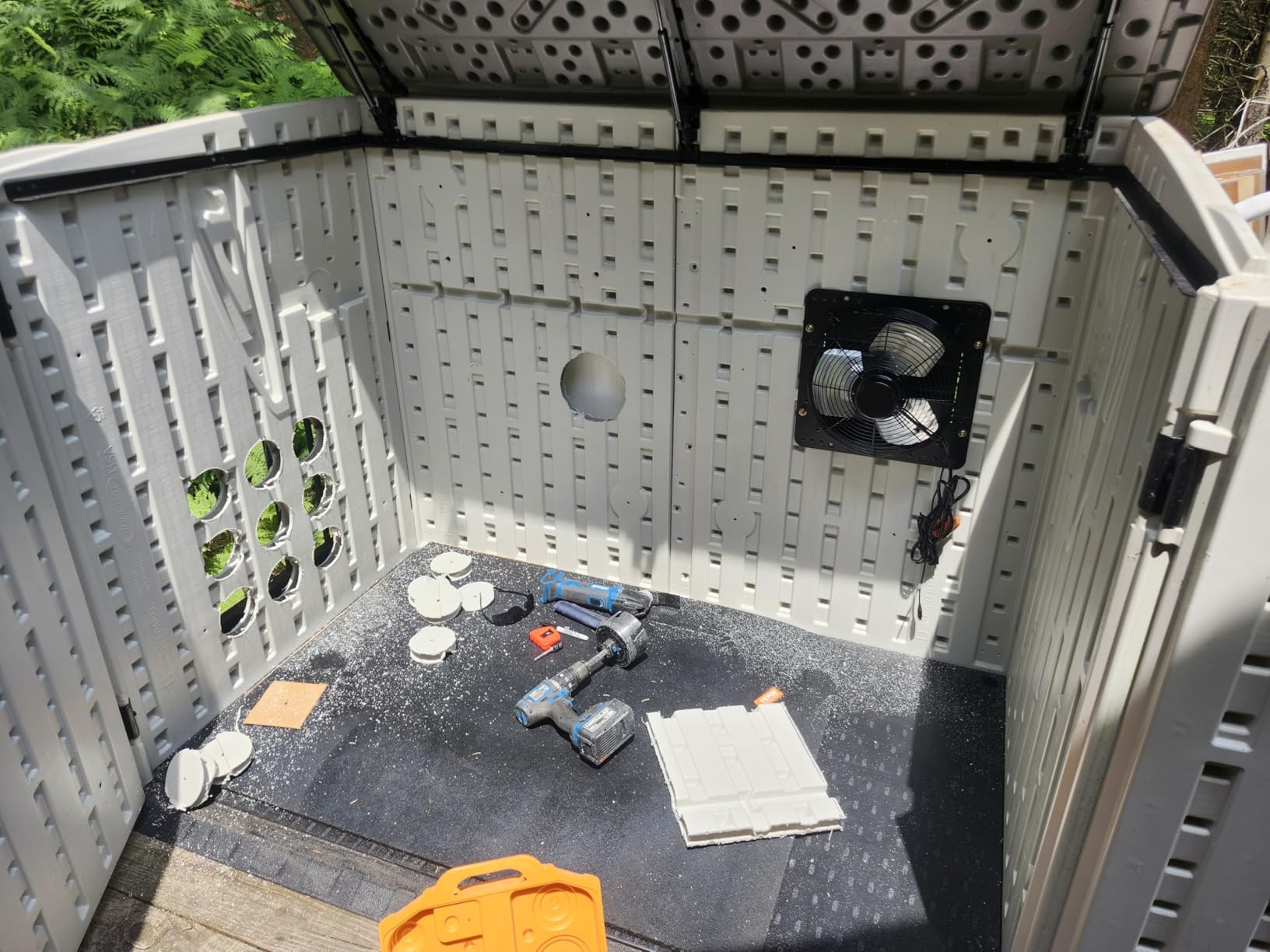
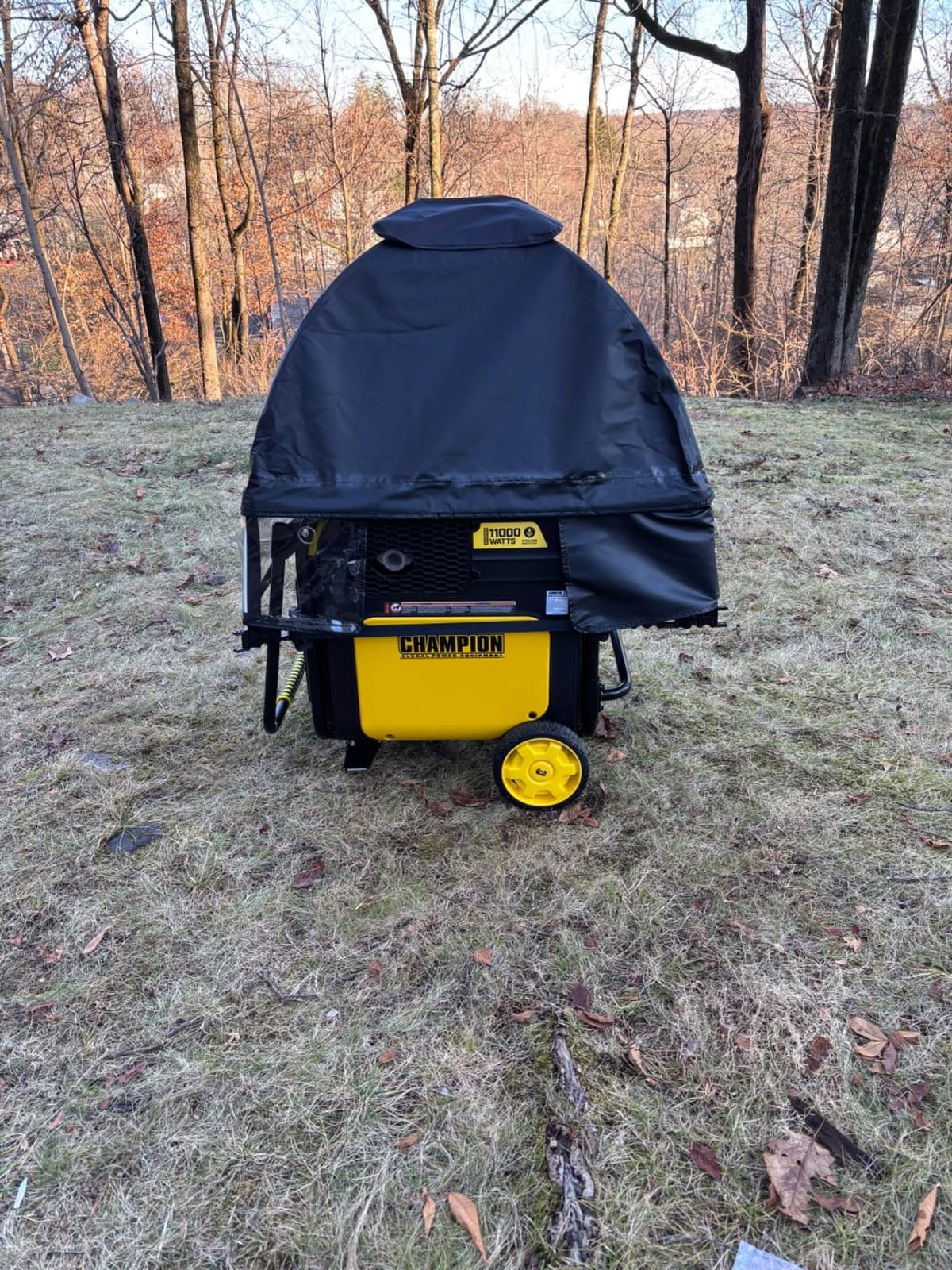
No cover is included, and on a property with an open shed or a carport you will need to buy one. Standing standby mode is limited to roughly 24 hours and there is no battery charging input, so it is not a drop-in replacement for an automatic standby system.
The single multi-function start and stop button confuses first-time users, and the plastic fuel sight glass discolors over time until it is hard to read. Neither is dangerous, both are irritating.
8. Westinghouse iGen12000TFc: Best for Quiet Three-Fuel Power
Westinghouse 12000 Peak Watt Tri-Fuel Portable Inverter Generator, Remote Start, Transfer Switch Ready, Gas/Propane/Natural Gas Powered, Low THD, Safe for Electronics, Parallel Capable, CO Sensor
9000 running watts
12000 peak watts
Tri fuel inverter
64 dBA with eco mode
Pros
- Under 3 percent THD for computers and TVs
- Very quiet with an eco mode and as low as 64 dBA
- Up to 19 hours at 25 percent load on the tank
- 50A and 30A outlets ready for a transfer switch or interlock
- LED data center shows fuel output runtime and lifetime hours
Cons
- Propane runtime falls well short of the rated figure
- Battery drains during storage even with switches off
- 191 pounds is a hard single-person lift
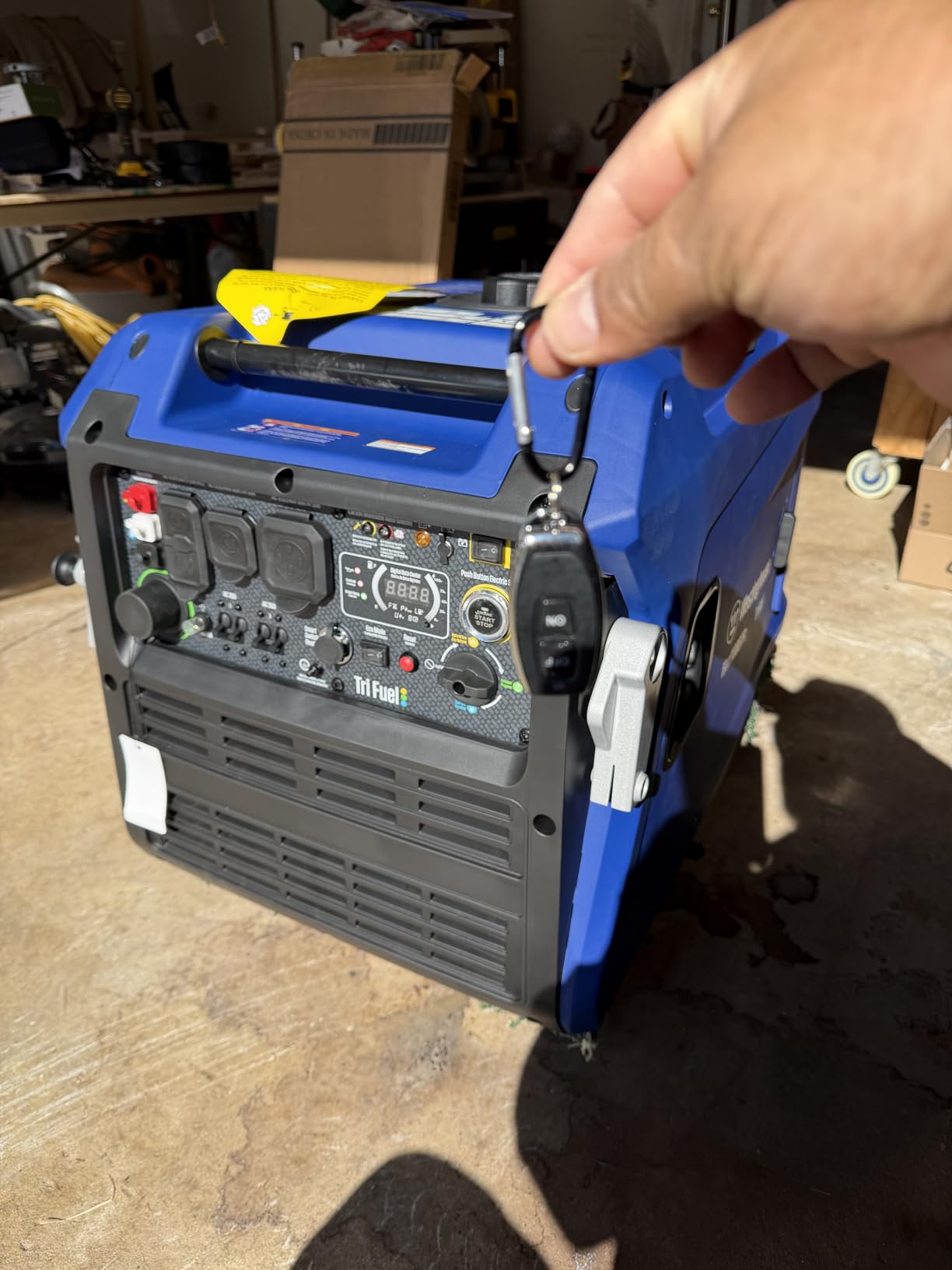
This Westinghouse is the highest rated machine in the roundup at 4.7 stars, and the specification sheet backs up the enthusiasm. It runs 9000 watts on gasoline with 12000 peak, and it is an inverter unit with under 3 percent total harmonic distortion.
That makes it a strong candidate for a home running a home office, medical equipment or an oxygen concentrator alongside normal household loads, where power quality is non-negotiable.
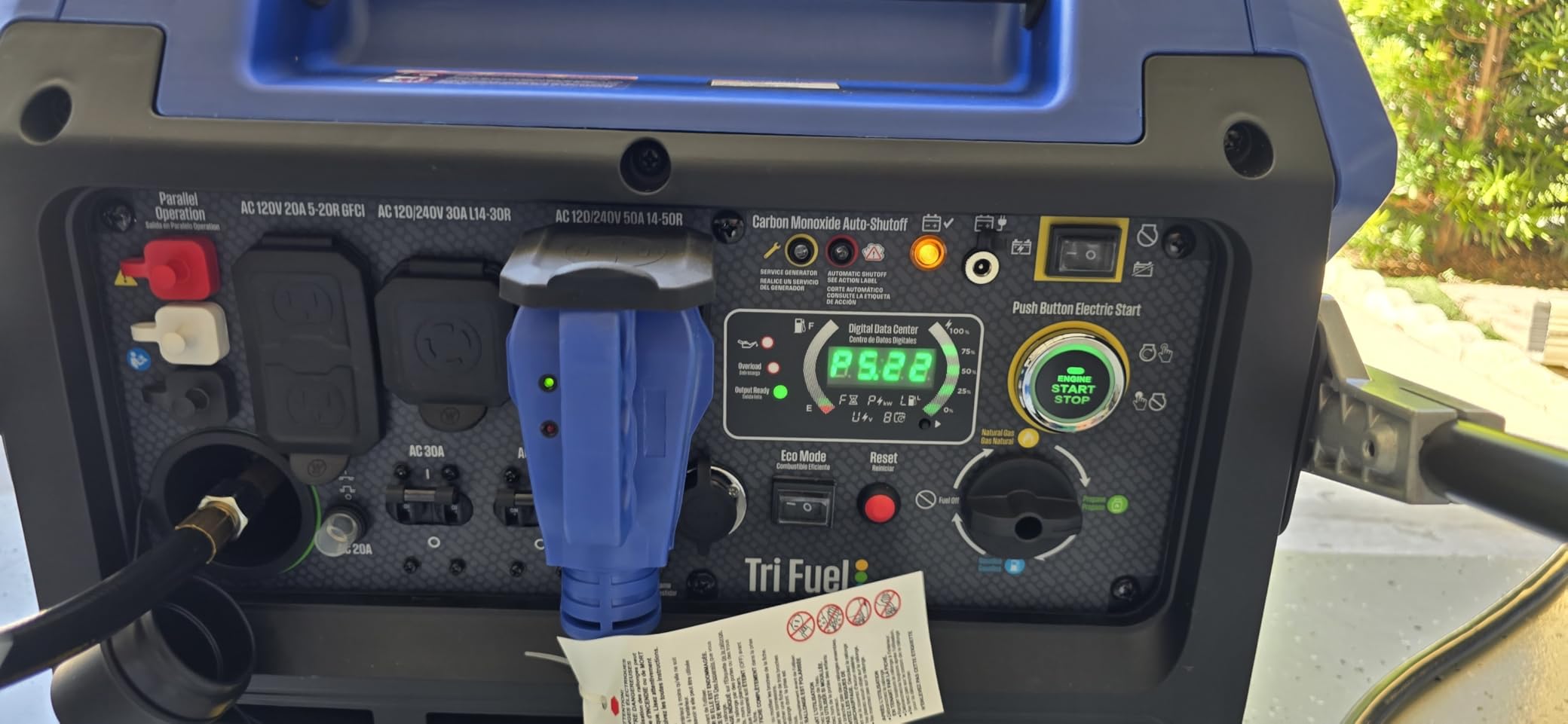
The 457cc four-stroke OHV engine with eco mode measures as low as 64 dBA, and the eco setting can cut fuel use substantially by throttling to match a lighter load.
Runtime reaches up to 19 hours at 25 percent load on the tank. The 50A and 30A outlets are transfer switch or interlock kit ready, so a proper install is available.
Parallel ready capability means a second matching unit can double the output for a property with unusually heavy loads, which is rare in this class.
The LED data center displays fuel level, output, remaining runtime, voltage and lifetime hours, so you can plan refuelling instead of reacting to it.
Owners note that it starts easily out of the box and handles several RV air conditioners, which tells you the surge margin is real rather than a printed claim.
Who the Westinghouse iGen12000TFc suits best
It suits a home that wants three-fuel flexibility, quiet inverter power and electronics-grade output in one machine. Very few products on the market deliver all three at this output level.
Households with a genuine need for power quality, such as medical devices, a home server or a design office, are the clearest match for the under 3 percent THD figure.
Where the iGen12000TFc falls short
Propane runtime is notably shorter than the rated figure, with owners measuring around five hours on a 4.5 gallon tank. If your outage plan runs on propane, budget the fuel accordingly.
The battery drains during storage even with the switches off, so a unit left for months in a shed may need a charge before it starts. At 191 pounds it is also a hard single-person lift, and some users report a low rumble that transmits into a camper or adjacent structure.
9. WEN TF-1450X: Best for Garage and Shop Loads
WEN 14,500-Watt 120V/240V Tri-Fuel Generator for Gas, Propane, and Natural Gas, Transfer-Switch Ready with Electric Start, Wheel Kit, and CO Watchdog (TF-1450X), Black & Red
11500 running watts
14500 surge watts
Gas propane or natural gas
12 hours half load
Pros
- Runs on gasoline propane and natural gas with a simple dial
- 120V and 240V output works directly with a transfer switch
- Electric key start on a 500cc four-stroke engine
- 8.2 gallon tank gives up to 12 hours at half load
- Includes oil LPG hose and natural gas adapter
Cons
- Noticeably noisier than inverter units in this power range
- May need starting fluid after long storage
- Small review base means limited long-term history
The WEN TF-1450X is the pick when the loads are tools and equipment rather than sensitive electronics. It delivers 11500 running watts and 14500 surge on gasoline, which covers welders, table saws and shop compressors.
Operating at both 120V and 240V means it feeds a transfer switch directly, which is exactly what a workshop or a home with a shop circuit needs.
Owners report it starts quickly, runs a duplex home including central air and the garage at the same time, and arrives with all the setup tools needed to get it running.
There is no need to buy a bottle of oil first, since a bottle is included along with the spark plug wrench, a 6 foot LPG hose and a natural gas quick-connect adapter.
The 8.2 gallon tank supports up to 12 hours of half-load runtime, and the 500cc four-stroke OHV engine gives it enough headroom for a full day of intermittent use.
It also has a WEN Watchdog CO shutdown sensor, which cuts the engine when harmful fumes accumulate near the machine.
Because the review base is small at 23 ratings, treat long-term durability as unproven rather than established. The specification is strong, the field history simply is not long yet.
Who the WEN TF-1450X suits best
It suits a property where the generator powers a workshop, garage or outbuilding alongside basic household loads. The 120V and 240V output and 50 amp ceiling fit that profile well.
If you have three fuel types available on site, the selection dial makes switching simple enough that fuel availability stops being the limiting factor.
Where the TF-1450X falls short
Noise is the most common complaint, and it is louder than inverter units in the same power range. Place it well away from sleeping areas.
Some users needed starting fluid or an extra crank on the first start after the unit had been sitting, which is a common cold-soak symptom. And with the 50 amp ceiling, very large whole-home loads are out of reach.
10. GENMAX GM7250iEDC: Best for Small Cabins
GENMAX Portable Generator, 7250W Super Quiet Dual Fuel Portable Engine with Parallel Capability, Remote/Electric Start, Ideal for Home backup power.EPA &CARB Compliant (GM7250iEDC)
6000 running watts
7250 starting watts
Gasoline or propane
119 pounds
Pros
- Only 119 pounds while still delivering 7250 starting watts
- Quiet inverter output at typical loads
- Digital control center shows hours load fuel and amps
- Dual fuel with easy fuel switching
- ATS outlet for automatic transfer switch integration
Cons
- Small fuel tank needs frequent refilling in a long outage
- Fuel level indicator is not accurate enough to trust
- Warranty resolution has been slow for some failures
At 119 pounds and 24.25 by 19.52 by 21.89 inches, the GM7250iEDC is the machine you can actually move by yourself. For a small cabin, a studio or a weekend property, that physical manageability is a real feature rather than a footnote.
It still delivers 7250 starting watts and 6000 running watts on gasoline, dropping to 6000 and 5500 on propane. That is enough for a refrigerator, some lighting, a laptop and a small space heater.
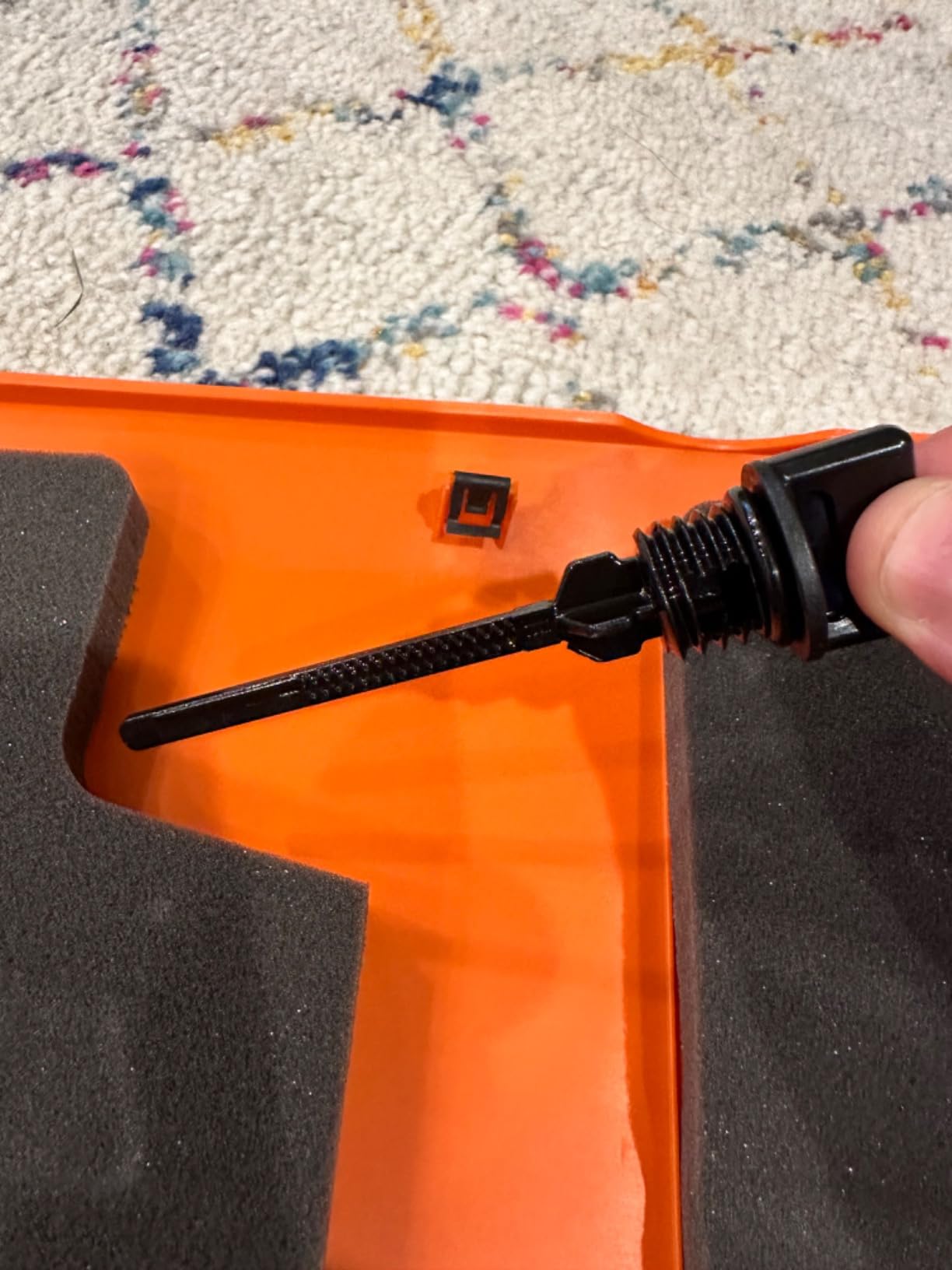
The digital control center tracks total running hours, load level, fuel level and amps used, which makes maintenance scheduling straightforward for an owner who does not run the machine every day.
Type-C charging ports and LED panel lighting are small touches that matter when the power source is the only light in the building. The ATS outlet makes it straightforward to pair with an automatic transfer switch if you outgrow the extension cord setup.
Parallel capability means a second unit can double the output, which is a cheaper path to more power than replacing the machine with a larger one.
CO detect provides automatic shutdown, and the unit is both EPA and CARB compliant for use in regulated areas.
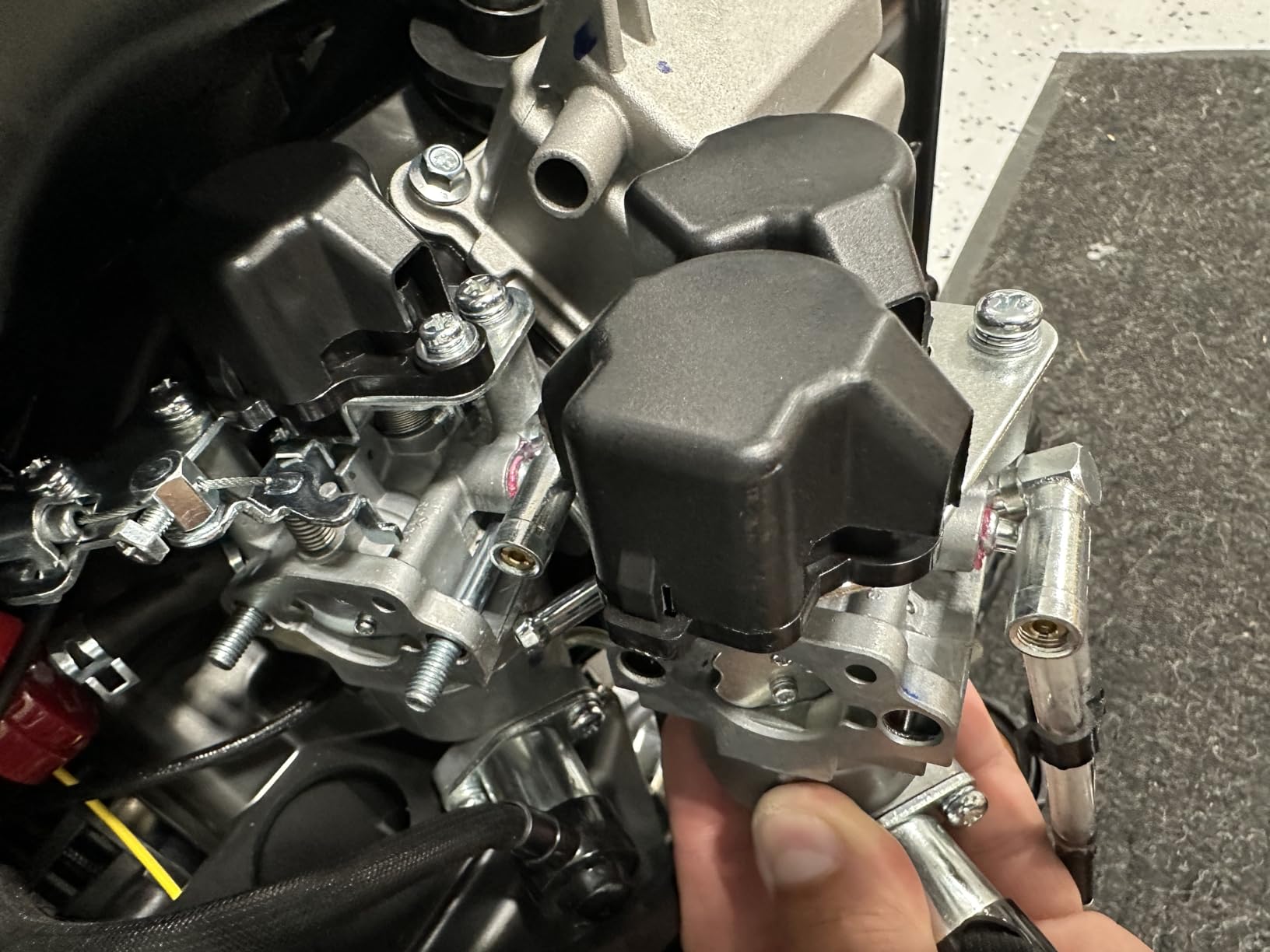
The 4.0 star average is the lowest here, and the review themes are consistent: motor and carburetor failures alongside warranty resolution that owners describe as slower than expected.
Who the GENMAX GM7250iEDC suits best
It suits small cabins, casitas and homes where the essential load list is short and the person responsible is the person who has to move the machine. A single-person carry changes how a weekend outage is handled.
It also suits anyone who wants inverter quietness at modest output, and households planning to add a second identical unit later to double capacity.
Where the GM7250iEDC falls short
The small fuel tank means more frequent refills through a long outage, so fuel logistics become a bigger part of your plan. The fuel level indicator is not accurate enough to trust when topping off.
Some owners report carburetor and starting faults specific to one fuel type, and warranty support has been slow to resolve failures. Buy a spare carburetor kit and a fuel filter if you are buying far from a service centre.
11. Champion 4500W: Most Versatile for Versatile Off-Grid Power
Champion 4500-Watt Electric Start Dual Fuel Portable Inverter Generator
3500 running watts
4500 starting watts
61 dBA
14 hours gas 21 hours propane
Pros
- Runs on gasoline or propane straight out of the box
- Very quiet at 61 dBA for its output
- Up to 14 hours on gasoline and 21 hours on propane
- Easy oil changes and simple service layout
- Parallel ready to pair with a second Champion inverter
Cons
- 2.25 gallon tank needs refilling in a long outage
- Small 212cc engine struggles with high surge compressor loads
- Some owners report oil leaks
The Champion 4500W is the most balanced machine in the roundup for anyone who does not need a 10000 watt welder. At 61 dBA it is the quietest figure in the group, and 3500 running watts covers the essentials of a small home.
Dual fuel from the first start means no break-in period on gasoline before you try propane, which is a genuine convenience when you are fuelling from whatever is on hand.
Owners with commercial workloads, including food truck and trades users, describe years of daily running with easy oil changes and a simple layout that makes routine service fast.
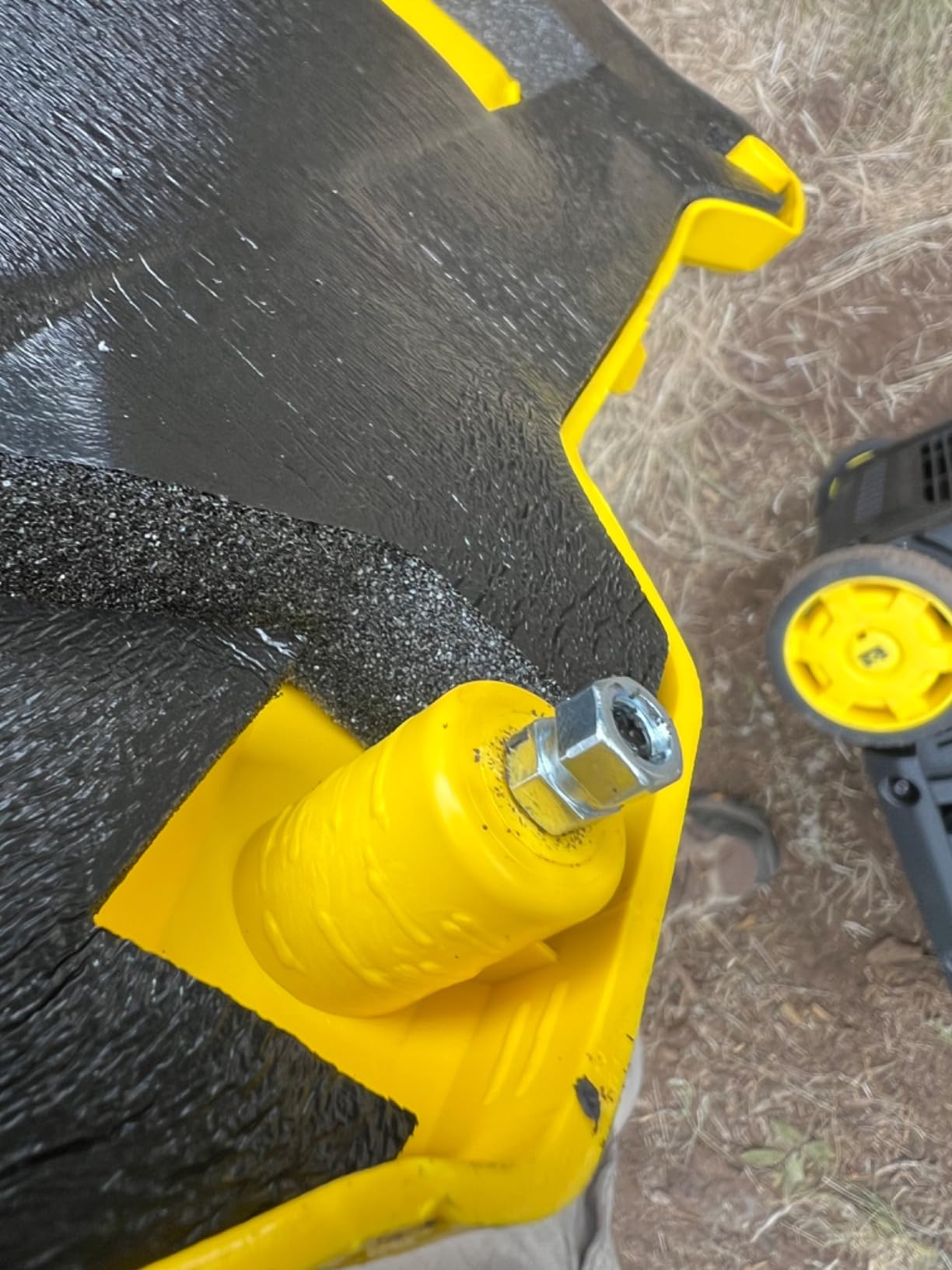
Runtime of up to 14 hours on gasoline and up to 21 hours on propane is unusually good for a machine with a 2.25 gallon tank, and the propane figure in particular is the one to plan around.
The Intelligauge power meter reports voltage, frequency and operating hours, and the EZ Start Dial plus Cold Start Technology simplify starting in cold weather.
Parallel ready capability means a second compatible Champion inverter doubles the output to 7000 running watts, which is a practical upgrade path for a growing household load.
CO Shield provides carbon monoxide auto shutoff, and the three-year limited warranty comes with lifetime technical support.
Two limitations shape who should buy it. The 212cc engine is small, so a compressor or air conditioner with a high starting draw can push it past what it handles comfortably.
The 2.25 gallon tank means more refills than a large-tank machine during a multi-day event, so factor in fuel runs if that is your situation.
Who the Champion 4500W suits best
It suits a small home, a cabin or a shop where the load list is appliances rather than equipment. Quiet operation makes it the better neighbour in a settlement where noise actually causes disputes.
Households that want to start small and grow later fit well too, since the parallel ready path doubles output without replacing the machine you already own.
Where the Champion 4500W falls short
The 212cc engine is the constraint. High surge loads such as air conditioning compressors can overload it, and if your property has central air you should size up rather than gamble.
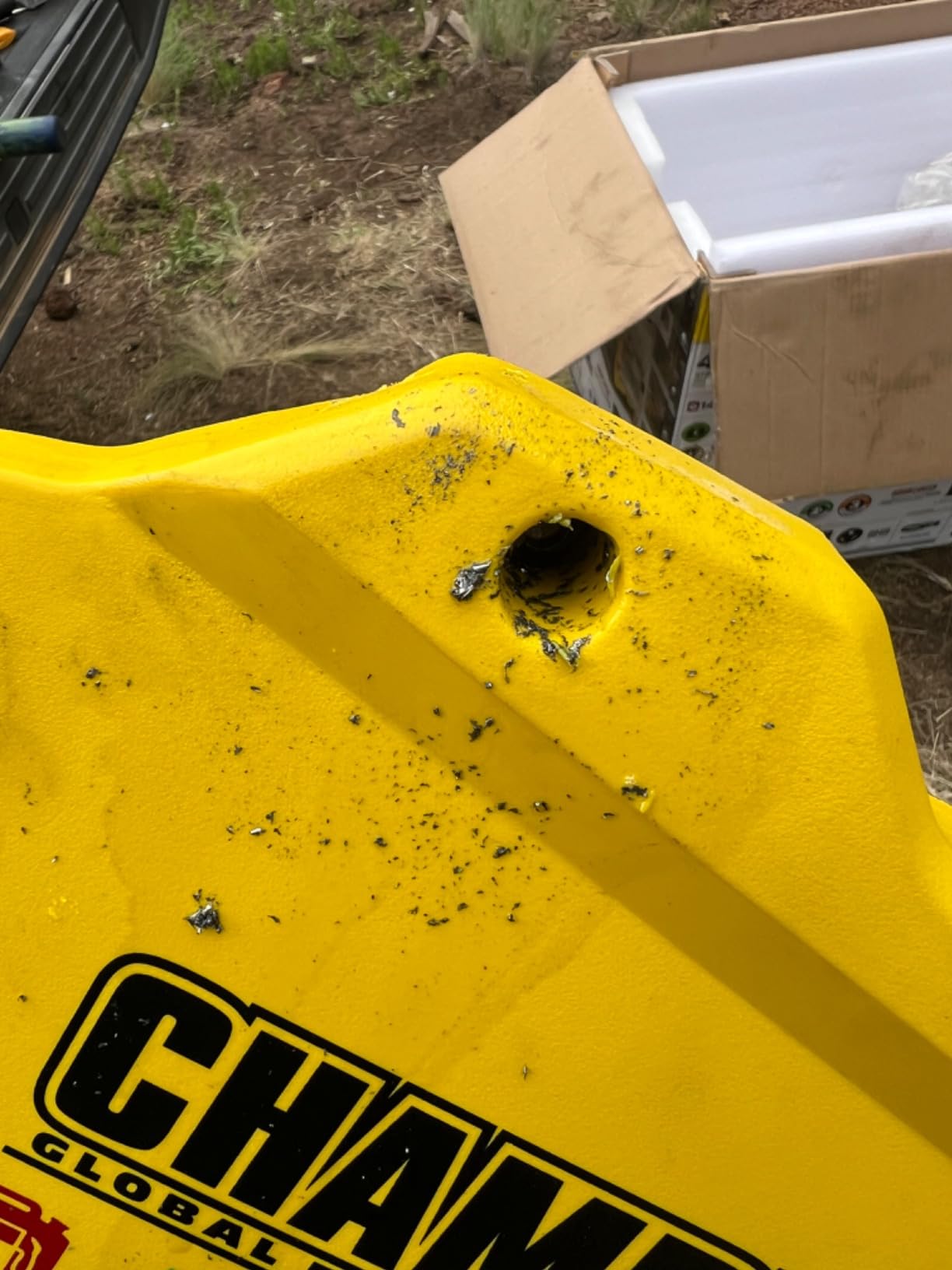
Some owners report oil leaks and harder starting than advertised, and the CO sensor can shut the unit down in partially enclosed spaces, so placement matters more here than on an open-frame machine.
12. Champion 4000W: Best Value Dual-Fuel Inverter
Champion 4000-Watt Dual Fuel RV Ready Portable Inverter Generator
3000 running watts
4000 starting watts
51.8 pounds
10 hours gas 25 hours propane
Pros
- Under 52 pounds with a carry handle for one-person transport
- Dual fuel with up to 10 hours gasoline and 25 hours propane
- Clean inverter output under 3 percent THD for electronics
- RV ready 25A outlet plus a GFCI household duplex
- Parallel ready to double output
Cons
- Louder than smaller Champion inverter models at full load
- May not start on propane until broken in on gasoline
- 1.54 gallon tank needs frequent refilling
- CO sensor is sensitive in confined spots
At 51.8 pounds with a carry handle, the Champion 4000W is the easiest machine in the roundup to move and the easiest to justify. It is 4.6 stars across 686 reviews, a review base deep enough to expose real failure patterns.
Clean inverter output under 3 percent total harmonic distortion makes it safe for televisions, computers and routers, which is why it appears in so many home office setups.
Dual fuel gives up to 10 hours on gasoline and up to 25 hours on propane from a 1.54 gallon tank. Owners report that runtime comfortably covers a 15000 BTU rooftop air conditioner, a demanding load for this size.
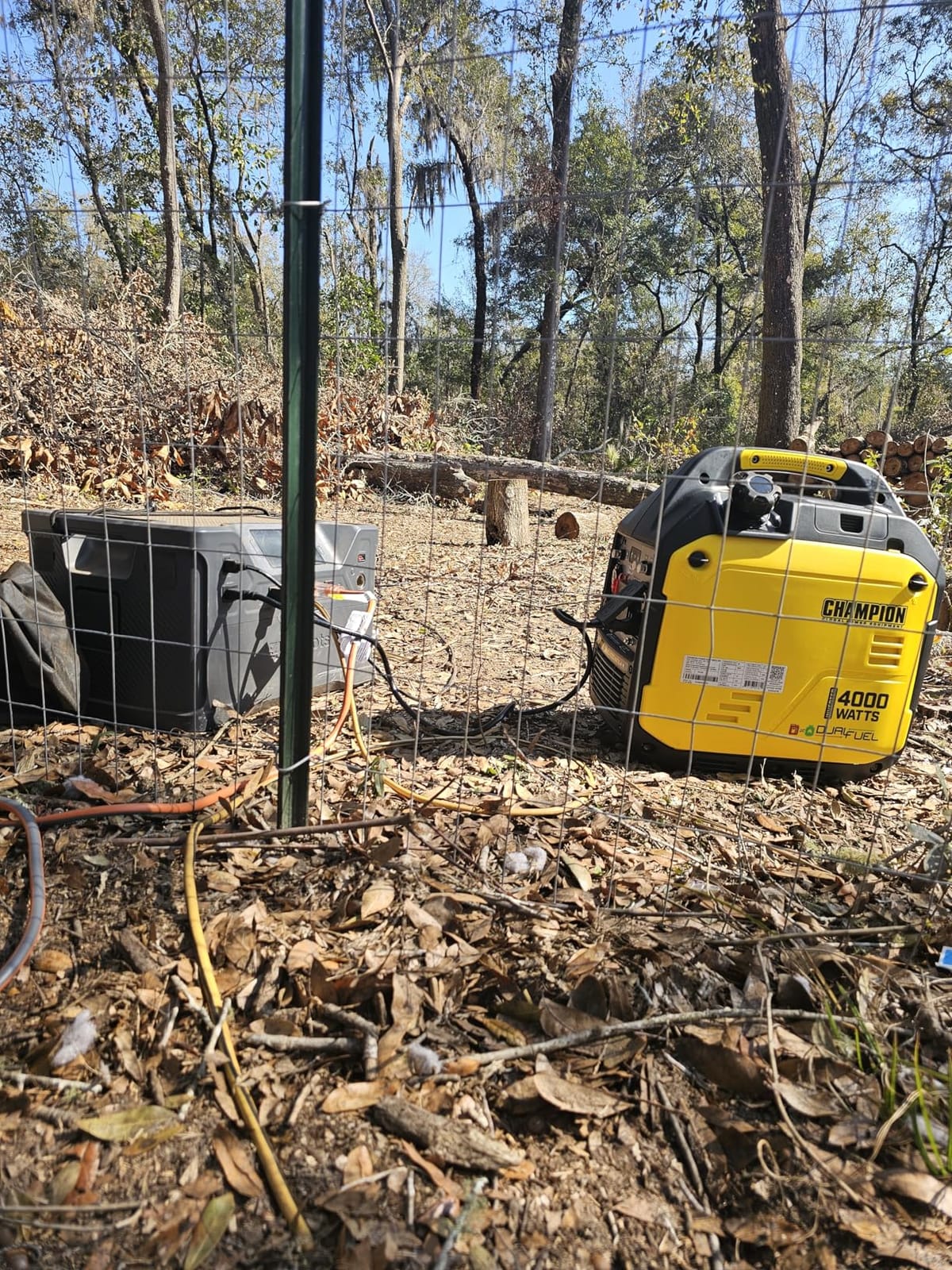
The outlet mix is practical for off-grid use: a 120V 25A TT-30R RV connector, a 120V 20A GFCI household duplex with under 3 percent THD, and a 12V automotive outlet.
CO Shield handles carbon monoxide detection, and Cold Start Technology addresses the cold-morning start problem that catches most stored machines.
Parallel ready capability means a second unit doubles the output to 6000 running watts, which turns this from a backup machine into a credible primary for a small home.
At 17.9 by 11.7 by 19.7 inches it fits in a small equipment shed without the excavation that a 230 pound machine demands.
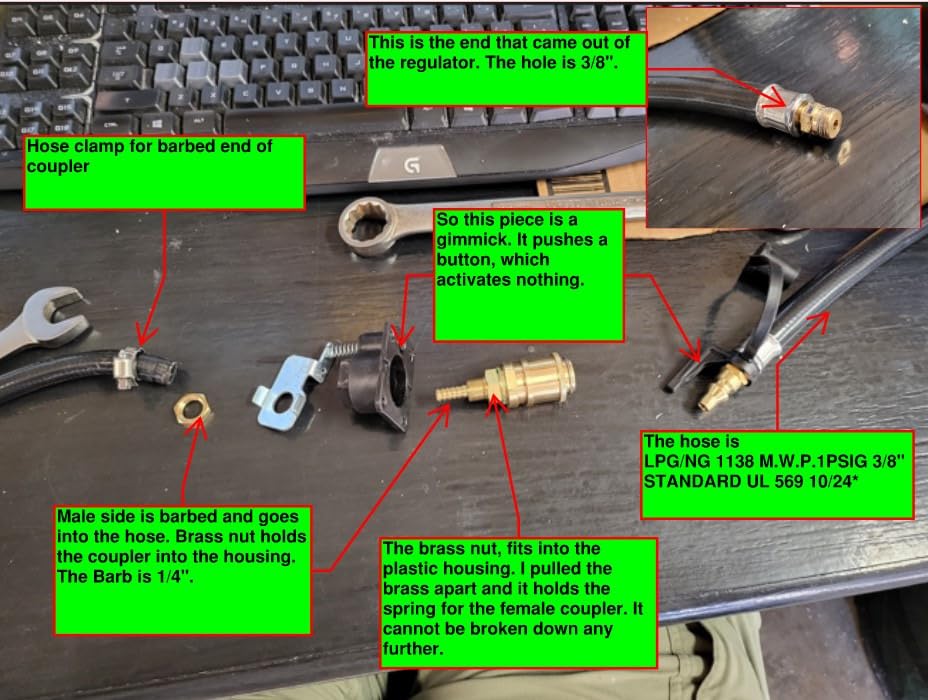
Two quirks are worth planning around. On a brand new unit, a propane start can fail until the engine has run on gasoline to break in, so fuel rotation matters more than usual.
Who the Champion 4000W suits best
It suits renters, first-time buyers and anyone who might move, since a standby generator is not an option and a 52 pound portable inverter is. Our guide to standby generators for whole homes covers the other end of that decision.
It also suits a home office, a small cabin and an RV, and any household wanting clean power without open-frame noise.
Where the Champion 4000W falls short
It is louder than smaller Champion inverter models at full load, so you will hear it at 100 percent output. The 1.54 gallon tank also means frequent refills, which is the main constraint on multi-day use.
The propane break-in quirk catches people out the first time they try it. And the CO sensor is sensitive, so it can trip in a garage or a partially sheltered spot. Give it open air.
How to Size a Generator for an Off-Grid Home
Size by load list, not by marketing number. Write down every appliance and pump you intend to run, find the running watts for each from the appliance label, and total them.
Then handle motor loads separately. A refrigerator, freezer, well pump, sump pump, air conditioner or power tool can draw three to four times its running wattage momentarily while the motor spins up. Multiply those by three and use that figure in your total rather than the steady draw.
Finally add 25 percent headroom. Generators run most efficiently and last longest below full load, and a machine run at 90 percent of its rating all night generates more heat and more wear than one working at 70 percent.
For a cabin with a refrigerator, a freezer, some lighting, a laptop and a small heater, 3000 to 3500 running watts is a realistic target, which puts the Champion 4000W or the Champion 4500W in range.
For a homestead with a well pump, a sump pump, a refrigerator and freezer, a dehumidifier and a few circuits, 8500 to 10000 running watts is the working range. That covers the GENMAX GM10500iETC and the Champion 11000W.
For a full house with central air, electric heat pumps, a well pump and a workshop, you are looking at 11500 running watts or more, which is where the DuroMax XP13000EH, the Westinghouse WGen11500DFc and the DuroStar DS13000MXT sit.
Match the outlet to the load too. A 30A locking outlet caps a circuit at 30 amps, a 50A connection allows a larger sub-panel, and a 120V-only inverter cannot feed 240V appliances at all.
For the water side of an off-grid property, our picks for solar well pumps and camping refrigerators reduce the load you need the generator to cover in the first place.
Safety Rules That Matter More Than Wattage
Never run a generator inside a house, a garage, a shed or an enclosed porch. Carbon monoxide is colourless and odourless, and it kills in minutes. This is the single most repeated warning in every off-grid forum thread we reviewed.
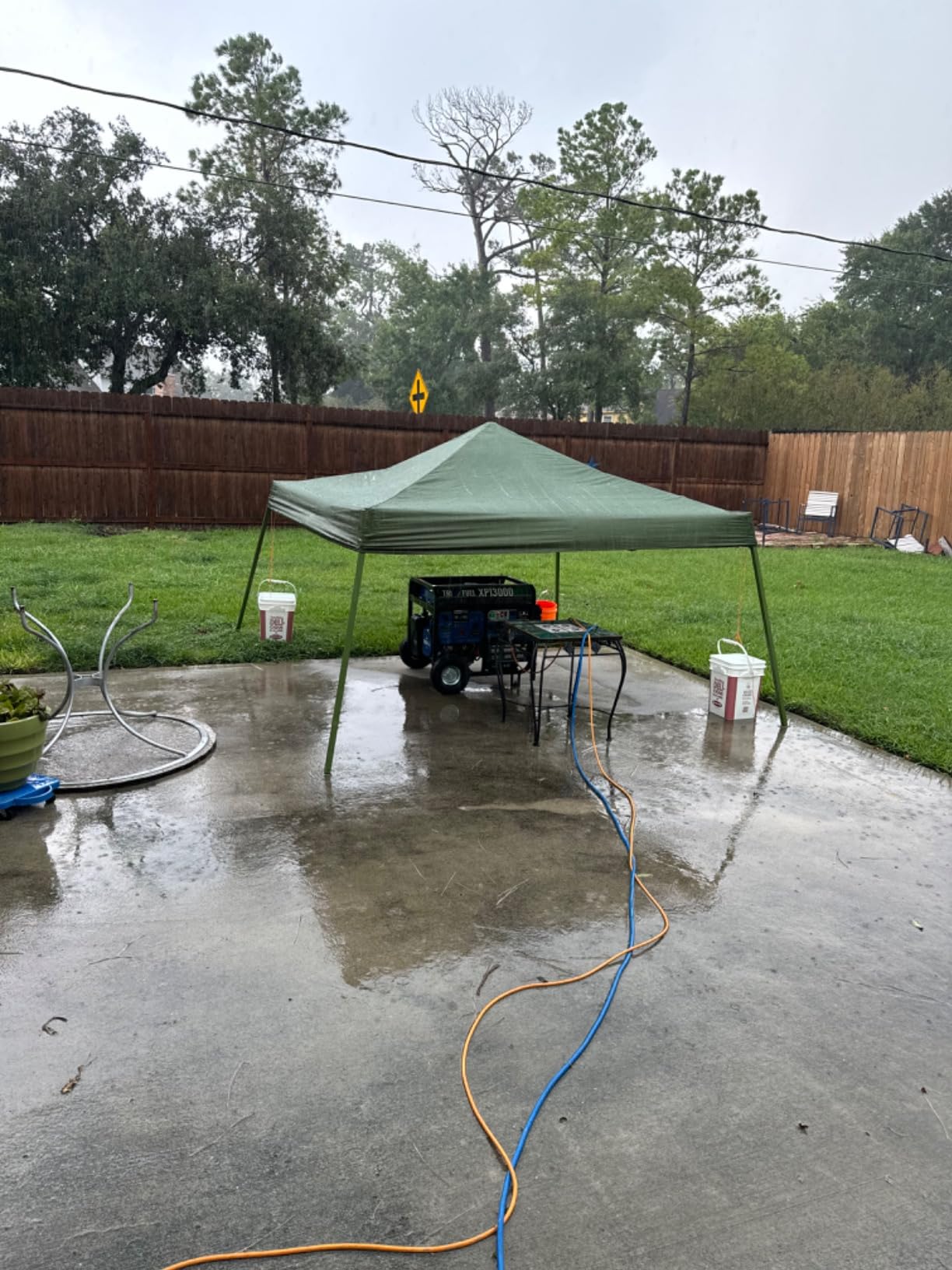
Operate the machine outdoors at least 20 feet from the building, with the exhaust pointed away from doors, windows and vents. A canopy is fine as long as open sides keep airflow moving.
Never backfeed the grid by plugging a generator into a wall outlet. It is the fastest way to start a fire on your own property and to electrocute a lineworker. Use a manual transfer switch or a breaker panel interlock installed by a licensed electrician.
Run generators on high ground or with the exhaust directed uphill when the ground is wet, and never under a closed deck or a roof overhang. A CO sensor on the unit is a backup layer, not a replacement for placement discipline.
For households with a water system, a generator that is not running means no pressurised water and no flushable toilets. Our guide to emergency water filtration systems covers treating what you draw in the meantime.
Fuel Planning and Test Runs for Long Outages
Propane stores indefinitely and gasoline does not. For households that want fuel that survives a storage shed through winter, propane is the steadier choice, at the cost of shorter runtime per gallon and lower peak output on the tri-fuel machines.
Rotate gasoline every few months with a stabiliser, and run the machine on the tank you are rotating. A monthly 20 minute run under load keeps oil circulated, keeps the carburetor clean and reveals a failing battery before you need it.
Check the hour meter at that monthly run and set your oil change interval from it rather than from the calendar. On an inverter unit, run it at 25 to 50 percent load so the engine does not sit choked down for long periods.
For battery-backed starters, charge the engine battery every couple of months if the machine is idle. Several units in this roundup lose charge in storage even with the switches off.
Know your local fuel supply before you need it. Off-grid households on the edge of a service area should keep one full approved container of each fuel type they run, stored per local code and away from the house.
Frequently Asked Questions
What generator is best for off-grid living?
For most off-grid homes the best choice is a transfer switch-ready dual fuel or tri fuel unit in the 9000 to 11500 running watt range, such as the DuroMax XP13000EH. Smaller cabins can run on a 3000 to 6000 watt inverter unit, while homes with central air or electric heat need 11500 running watts or more. Matching the outlet to your install matters as much as wattage.
What size generator do I need for off-grid?
Add the running watts of every appliance and pump you need, multiply each motor load such as a well pump, sump pump or refrigerator by three for starting surge, then add 25 percent headroom. A cabin with a refrigerator, freezer, lights and a small heater needs about 3000 to 3500 running watts. A homestead with a well pump, sump pump and full refrigeration needs 8500 to 10000 running watts.
What is the 20/20 rule for generators?
The 20/20 rule is a fuel storage guideline: keep at least 20 percent of your usable fuel capacity in reserve and plan to use no more than 80 percent of a tank during an outage. It leaves headroom for expansion of fuel in containers and for a longer event than expected. Rotating stored gasoline on a schedule is the other half of the practice.
Do I need a transfer switch for a portable generator?
Yes, if you want to power your home through its wiring instead of running extension cords to individual appliances. A manual transfer switch or a breaker panel interlock prevents backfeeding the grid, which can start a fire on your property and endanger lineworkers. Only a licensed electrician should install either device.
Is it safe to run a generator in the rain?
A generator should never be run in an enclosed space, including a closed garage or porch, because of carbon monoxide risk. Outdoors in rain it is workable with a purpose-built weather cover that keeps the unit fully ventilated. Never operate it under a roof overhang or a closed deck, and keep it at least 20 feet from doors, windows and vents.
The Bottom Line for Off-Grid Backup Power
The DuroMax XP13000EH remains our pick for the best emergency generators for off grid homes because it pairs the deepest review history here with dual fuel capability and a transfer switch ready 50 amp connection. The DuroMax XP13000HXT adds natural gas for homes that have it, and the Westinghouse WGen11500DFc is the choice when power quality matters as much as capacity.
Smaller properties should look at the Champion 4000W for clean power one person can carry, and the Champion 4500W for more output in the same quiet footprint. Whichever you choose in 2026, size it against a written load list, install a proper transfer switch, and run it monthly so the first crank of a real outage is never the first crank since last winter.