
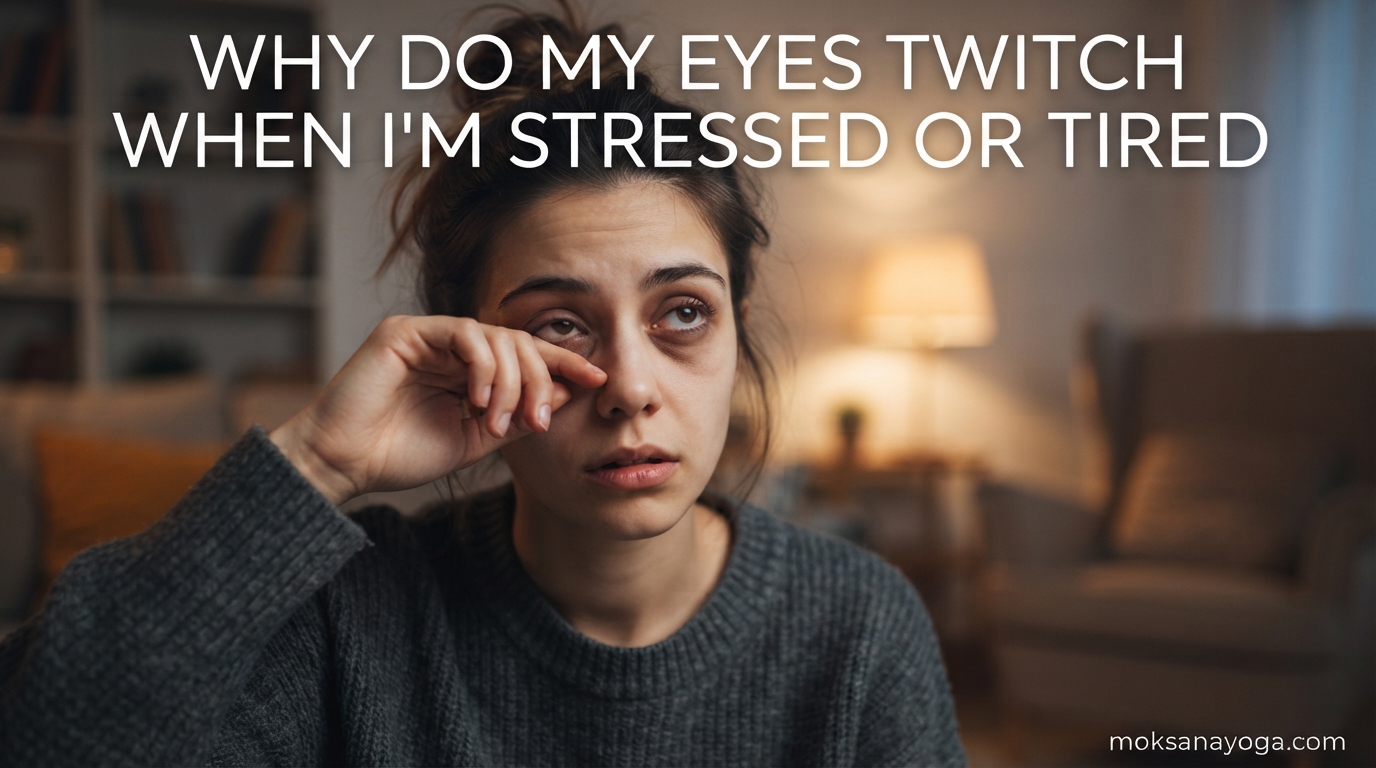
You are deep into a work deadline, running on four hours of sleep and your third coffee, when you feel it: a tiny, rhythmic flutter in your eyelid that will not quit. If you have ever found yourself frantically googling “why do my eyes twitch when I’m stressed or tired,” you are in good company. It is one of the most common health searches for a reason.
The good news is that eye twitching is almost always harmless. The even better news is that understanding what is happening inside your body gives you the power to stop it. In this guide, we will break down exactly why stress and fatigue trigger those annoying eyelid spasms, what the cortisol connection really looks like, and which relief strategies actually work.
Table of Contents
What Is Eye Twitching (Eyelid Myokymia)?
Eye twitching, clinically known as eyelid myokymia, is an involuntary, uncontrollable spasm of the eyelid muscles. Most people feel it in the lower eyelid, but the upper lid can twitch too. The movement is usually subtle, a faint rippling or fluttering sensation that you feel more than others can see.
Myokymia is a type of fasciculation, which is the medical term for small, spontaneous muscle contractions caused by misfiring motor nerves. Your eyelid contains a tiny muscle called the orbicularis oculi, and when the nerves controlling it become irritated or overstimulated, the muscle fires on its own without your permission.
This is incredibly common. Surveys suggest that nearly everyone experiences eyelid myokymia at some point in their lives. It is benign in the vast majority of cases, which means it is not damaging your eye or threatening your health. But it can be deeply distracting, and the anxiety it creates can ironically make the twitching worse.
Why Do My Eyes Twitch When I’m Stressed or Tired: The Core Causes
Stress and fatigue are the two most frequently cited triggers for eyelid myokymia, and they often show up together. Here is what is actually happening inside your body when these triggers activate.
How Stress Triggers Eye Twitching (The Cortisol Connection)
When you are under stress, whether from work pressure, relationship conflicts, financial worries, or health concerns, your body activates the fight-or-flight response. This triggers your adrenal glands to release cortisol, the primary stress hormone, along with adrenaline. These hormones prepare your body to deal with a threat.
But here is the problem: cortisol acts as a powerful stimulant on your nervous system. It increases nerve excitability, which means your motor nerves become more likely to fire spontaneously. When the nerves controlling your eyelid muscles become hyper-excitable, they send erratic signals that cause the orbicularis oculi to contract involuntarily. That is the twitch you feel.
Cortisol also depletes certain minerals that muscles need to function smoothly, particularly magnesium. Low magnesium levels make muscles even more prone to spasms. So stress creates a double effect: it overstimulates your nerves and simultaneously strips away the minerals that would normally keep your muscles calm.
People who search “why do my eyes twitch when I’m stressed or tired” are often experiencing this cortisol effect without realizing it. The twitching is your body sounding an alarm that your stress load has exceeded what your nervous system can comfortably handle.
Why Fatigue and Sleep Deprivation Cause Eyelid Spasms
Fatigue triggers eye twitching through a different but related mechanism. When you are sleep-deprived, your body produces more cortisol to keep you alert during the day. Yes, the same stress hormone we just discussed. So even if you do not feel emotionally stressed, sleep deprivation creates a biochemical stress response that sensitizes your nerves.
Sleep is also when your muscles and nerves recover and reset. During deep sleep, your nervous system performs maintenance, clearing out metabolic waste and restoring normal nerve signaling thresholds. When you cut that recovery time short, your nerves remain in a state of heightened excitability. The result is muscles that twitch, flutter, and spasm more easily.
Research from sleep studies shows that even a single night of poor sleep can increase involuntary muscle activity throughout the body. The delicate muscles around the eye are among the first to show symptoms because they are thin, highly innervated, and constantly active during waking hours.
The Stress-Fatigue Combo: A Double Trigger
In real life, stress and fatigue rarely appear alone. A stressful period at work leads to poor sleep, which raises cortisol, which makes it harder to sleep, which raises cortisol further. This creates what researchers call an allostatic load cycle, where your body’s stress response gets stuck in overdrive.
Reddit users in communities like r/Anxiety and r/Stress frequently describe this exact pattern: a high-pressure week, bad sleep, too much caffeine to compensate, and then an eye twitch that lasts for days. The combination of high cortisol from stress, impaired nerve recovery from poor sleep, and muscle fatigue from overuse creates the perfect storm for eyelid myokymia.
Understanding this cycle matters because it explains why fixing just one factor does not always work. You might get a full night of sleep but still twitch because your daytime stress is still elevated. Or you might manage your stress but still experience twitching because you are chronically sleep-deprived. Addressing both triggers together is usually the key to lasting relief.
Other Common Causes of Eye Twitching
While stress and fatigue are the leading culprits, several other factors can trigger or worsen eyelid myokymia. Identifying your personal combination of triggers is important for effective relief.
Caffeine and Stimulants
Caffeine is a central nervous system stimulant that directly increases nerve excitability. If you are already stressed or tired and using coffee to push through, you are adding fuel to the fire. Studies suggest that consuming more than 400mg of caffeine daily (roughly 4 cups of coffee) significantly increases the likelihood of muscle fasciculations, including eye twitching. Energy drinks, pre-workout supplements, and certain medications also contain stimulants that can have the same effect.
Digital Eye Strain and Screen Time
Staring at screens for extended periods fatigues the muscles that control eye movement and focusing. When these muscles become overworked, they are more likely to spasm. The 20-20-20 rule (every 20 minutes, look at something 20 feet away for 20 seconds) helps reduce this strain. Blue light exposure from screens can also interfere with melatonin production, worsening the sleep problems that contribute to twitching.
Dry Eyes and Allergies
Dry eye syndrome creates irritation on the surface of the eye, which can stimulate the nerves controlling the eyelid and trigger twitching. Allergies cause similar irritation, and the antihistamines people take for allergies can actually dry out the eyes further. If your twitching is accompanied by a gritty, sandy feeling in your eyes or visible redness, dry eyes or allergies may be contributing factors.
Nutrient Deficiencies
Several nutrient deficiencies have been linked to increased muscle twitching. Magnesium is the most commonly cited, as it plays a direct role in muscle relaxation and nerve function. Low levels of potassium, calcium, and vitamin B12 can also contribute. If your twitching persists despite stress management and better sleep, a simple blood test can check for these deficiencies.
Types of Eye Twitching: When It Is More Than Just Stress
Not all eye twitching is the same. Understanding the different types helps you know whether your symptoms are the common, benign variety or something that needs medical attention.
Eyelid myokymia is what we have been discussing: a mild, intermittent flutter in one eyelid, usually triggered by lifestyle factors. It comes and goes, lasts seconds to hours at a time, and resolves on its own when triggers are addressed.
Benign essential blepharospasm is a more forceful, sustained spasm that causes the eyelids to close involuntarily. It typically affects both eyes and can interfere with driving, reading, and other daily activities. This condition is a neurological disorder that may require treatment such as BOTOX injections.
Hemifacial spasm involves twitching that spreads beyond the eyelid to affect one entire side of the face. This can be caused by a blood vessel pressing on the facial nerve and may require surgical intervention. If your twitching is spreading to other parts of your face, it is time to see a doctor.
How to Stop Eye Twitching: Relief Tips That Actually Work
Most cases of stress-related eye twitching respond well to self-care. The key is addressing the underlying triggers rather than just the symptom itself.
Immediate Relief Strategies
When you want the twitching to stop right now, try these approaches:
1. Apply a warm compress to the affected eye for 5 to 10 minutes. The warmth relaxes the orbicularis oculi muscle and increases blood flow, which can calm the spasms.
2. Gently massage the area around your eye in small circles. This helps release tension in the facial muscles and stimulates circulation.
3. Drink a glass of water. Dehydration can worsen muscle excitability, and many people are mildly dehydrated without realizing it.
4. Step away from screens for at least 10 minutes. Give your eye muscles a genuine break by looking at distant objects or closing your eyes.
5. Cut your caffeine intake for the day. Switch to water or herbal tea and let your nervous system calm down.
Lifestyle Changes for Long-Term Prevention
For lasting relief, focus on these foundational habits:
Aim for 7 to 9 hours of quality sleep per night. This is the single most effective intervention for stress-related eye twitching. Your nervous system needs that time to reset and recover.
Reduce your overall caffeine consumption to under 200mg per day if twitching is a recurring problem. Pay attention to hidden caffeine sources like chocolate, certain medications, and energy drinks.
Use lubricating eye drops if you spend long hours at a screen. Keeping the surface of your eye moist reduces irritation that can trigger nerve misfiring.
Eat magnesium-rich foods like spinach, almonds, black beans, and dark chocolate. If you suspect a deficiency, talk to your doctor about supplementation.
Practice the 20-20-20 rule religiously during screen-heavy workdays to prevent muscle fatigue in the eye area.
Relaxation and Breathing Techniques for Eye Twitching
Since cortisol is at the root of stress-related twitching, anything that lowers cortisol will help. This is where yoga and breathwork come in, and they are especially relevant if you are reading this on a yoga and wellness site.
Box breathing is one of the most effective techniques for rapidly reducing cortisol. Inhale for 4 counts, hold for 4, exhale for 4, and hold empty for 4. Repeat this cycle for 5 minutes. Research shows that controlled breathing activates the parasympathetic nervous system, which directly counteracts the fight-or-flight response that raises cortisol.
Gentle yoga sequences, particularly restorative poses like child’s pose, legs-up-the-wall, and savasana, have been shown to reduce cortisol levels by up to 30 percent in regular practitioners. Even 10 minutes of daily practice can make a measurable difference in your body’s baseline stress level.
Progressive muscle relaxation, where you systematically tense and release each muscle group in your body, helps discharge the nervous tension that accumulates from chronic stress. Starting from your face and working downward, spend 5 seconds tensing each area and 10 seconds releasing. By the time you reach your feet, your entire body, including those twitchy eyelid muscles, will be significantly calmer.
Meditation, even in short 5-minute sessions, has been demonstrated in clinical studies to reduce cortisol levels over time. Apps like Insight Timer, Calm, or simply sitting quietly and focusing on your breath can train your nervous system to spend less time in fight-or-flight mode.
How Long Does Eye Twitching From Stress Last?
This is one of the most frequently asked questions, and the answer depends on how quickly you address the underlying triggers.
For most people, a single episode of stress-related eye twitching lasts anywhere from a few hours to a few days. Once you get adequate sleep, reduce caffeine, and lower your stress level, the twitching typically resolves within 24 to 72 hours.
However, if the underlying stress continues, twitching can persist for weeks. Reddit users in stress and anxiety communities frequently report eye twitches lasting 2 to 3 weeks during particularly intense life events. This is still considered normal as long as the twitch remains limited to the eyelid and does not spread.
If your eye twitch lasts longer than 2 to 3 weeks despite making lifestyle changes, it is worth consulting a healthcare provider. Persistent twitching could indicate a nutrient deficiency, a thyroid issue, or a neurological condition that requires specific treatment.
Left vs Right Eye Twitching: Does It Matter?
Medically speaking, there is no significance to whether your left or right eye twitches. Both sides are equally susceptible to myokymia, and the side that twitches is simply a matter of which nerve becomes irritated first.
Cultural and spiritual traditions, particularly in Chinese and Indian cultures, assign different meanings to left versus right eye twitching. Some traditions associate left eye twitching with bad luck for men and good luck for women, with the reverse for the right eye. These beliefs are culturally interesting but have no medical basis.
From a health perspective, the only time laterality matters is if the twitching spreads from one side to the other or involves both eyes simultaneously. Bilateral twitching or twitching that progresses from the eyelid to the rest of the face warrants medical evaluation.
When to See a Doctor About Eye Twitching
Most eye twitching does not require a doctor visit, but certain signs should prompt you to seek medical evaluation. Here are the specific red flags to watch for:
Your eye twitch has lasted longer than 2 to 3 weeks without improvement, even after addressing stress, sleep, and caffeine.
The twitching has spread beyond your eyelid to other parts of your face, particularly if it involves one entire side of your face.
Your eyelid closes completely during spasms, making it difficult to open your eye normally.
You notice additional symptoms like drooping eyelids, facial weakness, redness or swelling of the eye, discharge, or vision changes.
The twitching is severe enough to interfere with your daily activities, such as reading, driving, or working.
You experience twitching along with other neurological symptoms like dizziness, numbness, weakness, or difficulty speaking.
If any of these apply, schedule an appointment with an optometrist, ophthalmologist, or your primary care physician. They can evaluate for conditions like blepharospasm, hemifacial spasm, thyroid disorders, or, in rare cases, more serious neurological issues.
For the vast majority of people reading this, the twitching is benign myokymia caused by stress and fatigue. But knowing when to escalate gives you peace of mind, which itself can help reduce the stress that contributes to twitching.
FAQs
How do I stop my eyes from twitching due to stress?
To stop stress-related eye twitching, get 7 to 9 hours of sleep, cut back on caffeine, apply a warm compress to the affected eye, practice relaxation techniques like box breathing or gentle yoga, and stay hydrated. Most cases resolve within a few days once the underlying stress is addressed.
What do anxiety twitches look like?
Anxiety twitches typically appear as small, rapid muscle contractions that you can feel but others may not easily see. In the eyelids, they feel like a fluttering or rippling sensation. They can also occur in other muscles like the arms, legs, or face. They are involuntary, often intermittent, and tend to worsen during periods of heightened anxiety.
What mental illness causes eye twitching?
No mental illness directly causes eye twitching, but anxiety disorders and chronic stress are strongly associated with it. The elevated cortisol and adrenaline levels that accompany anxiety increase nerve excitability, which triggers eyelid spasms. Treating the underlying anxiety through therapy, medication, or stress management typically resolves the twitching.
How long does anxiety eye twitching last?
Anxiety-related eye twitching typically lasts a few hours to a few days per episode. If the anxiety persists, twitching can continue for 1 to 3 weeks. Once stress levels decrease and sleep improves, the twitching usually resolves on its own. If it lasts longer than 3 weeks, consult a doctor to rule out other causes.
The Bottom Line on Stress-Related Eye Twitching
Understanding why your eyes twitch when you are stressed or tired comes down to one key hormone: cortisol. Stress and sleep deprivation both raise cortisol levels, which overstimulates your nerves and depletes the minerals your muscles need to stay calm. The result is the annoying but harmless fluttering of eyelid myokymia.
The path to relief is straightforward even if it is not always easy: prioritize sleep, reduce caffeine, manage stress through breathing and movement, and give your eyes regular breaks from screens. For most people, these changes resolve twitching within days.
Remember that eye twitching is your body’s early warning system. It is telling you that your stress load has exceeded your current coping capacity. Rather than ignoring it, use it as a cue to slow down, breathe deeply, and give your nervous system the recovery time it needs. Your eyes, and the rest of your body, will thank you.