
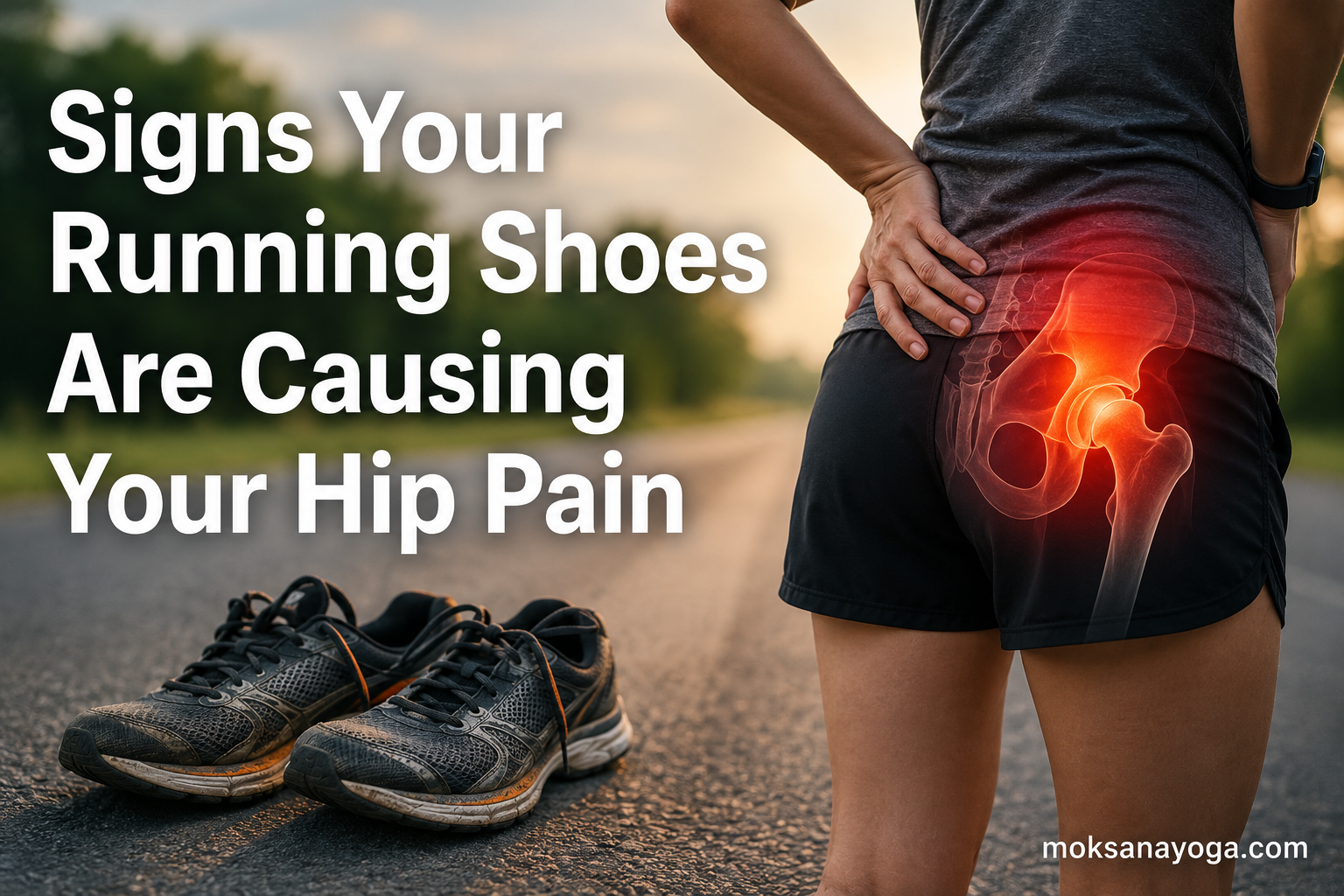
I remember the first time my hips started aching after a run. I blamed my training plan, my stretching routine, even my mattress. It took me three weeks of worsening pain before I looked down at my feet and realized the real problem was my shoes.
If you are experiencing hip discomfort during or after your runs, your footwear might be the hidden culprit. Recognizing the signs your running shoes are causing your hip pain can save you weeks of frustration, unnecessary doctor visits, and lost training time. This guide walks you through exactly what to look for, how shoes affect your hip biomechanics, and what steps to take when your shoes are working against you.
Whether you just switched to a new model or have been running on the same pair for months, understanding the footwear-hip connection helps you make smarter decisions for your body.
Table of Contents
The Shoe-Hip Connection: How Footwear Affects Your Hips
Every step you take while running sends impact forces from your feet up through your ankles, knees, and into your hips. Your running shoes act as the first line of defense in this kinetic chain, absorbing shock and supporting proper alignment. When your shoes fail at either job, your hips pick up the slack.
Think of your body as a stacked structure. If the foundation (your shoes) tilts or compresses unevenly, everything above it shifts to compensate. Over the course of a 5-mile run, that means roughly 7,000 steps where your hip muscles work overtime to stabilize misalignment. This repetitive overload is what eventually leads to pain and injury.
Three footwear factors directly impact your hip health. Shock absorption determines how much impact force reaches your hip joints with each footstrike. Stability features control how much your foot rolls inward or outward, which affects the angle of force traveling up your leg. And heel drop (the height difference between heel and forefoot) influences your running mechanics, foot strike pattern, and which muscle groups bear the most load.
When any of these factors are off, your body compensates. Your hip flexors, glutes, and IT band absorb the extra work. Run enough miles in the wrong shoes, and those compensations turn into pain.
7 Clear Signs Your Running Shoes Are Causing Your Hip Pain
Identifying the signs your running shoes are causing your hip pain requires paying attention to patterns. Here are the seven most common indicators that your footwear is the problem, not your training.
1. Hip Pain Started After Switching to New Shoes
This is the most obvious clue. If you were running pain-free in your old shoes and developed hip discomfort within days of switching to a new pair, the shoes are the prime suspect. I have seen this pattern play out countless times in running communities, where runners report hip pain after switching to Brooks, HOKAs, or other brands with noticeably different cushioning or heel drop profiles.
Different shoe models have different characteristics. A shoe with more cushioning changes how your foot senses the ground, which can alter your running mechanics without you realizing it. A higher heel drop shifts load from your calves to your hips and knees. These changes are not inherently bad, but if they do not match your body’s needs, your hips will let you know.
The key question to ask yourself is simple: did the pain start within one to two weeks of wearing the new shoes? If yes, the correlation is strong enough to investigate.
2. Pain Appears Only When Running, Not During Other Activities
If your hips feel fine during walking, cycling, yoga, and daily activities but hurt specifically when you run, your shoes are a likely contributor. Running places three to four times your body weight of impact force on each footstrike, compared to about one times body weight during walking. This dramatic increase amplifies any shoe deficiencies.
A shoe that feels comfortable during a 10-minute walk might lack the cushioning or stability needed for a 45-minute run. The repetitive stress of thousands of footstrikes exposes weaknesses that casual wear never reveals.
Pay attention to when the pain starts during your run. If it kicks in after mile two or three, your shoes may be losing their shock absorption capacity mid-run as the midsole compresses. This pattern often points to worn-out cushioning.
3. One Hip Hurts More Than the Other
Asymmetric hip pain, where one side hurts significantly more than the other, is a strong indicator of a shoe problem. Most running shoes wear down unevenly over time based on your individual gait pattern. If you overpronate on one side, that shoe breaks down faster, creating a side-to-side imbalance that stresses one hip more than the other.
This is especially common when runners have a slight leg length difference or unilateral pronation pattern. The shoe on your longer or more pronating leg compresses unevenly, tilting your pelvis with every step.
Check the soles of your running shoes. If one shoe shows significantly more wear on the inner or outer edge compared to the other, uneven wear is likely contributing to your one-sided hip pain.
4. Hip Pain Persists Despite Rest and Strength Training
You took a week off. You did your hip strengthening exercises religiously. You stretched and foam rolled every day. And yet, when you returned to running, the hip pain came right back. This stubborn pattern suggests that the underlying cause is something you carry with you on every run: your shoes.
Strength training and rest address muscle weaknesses and inflammation, but they cannot fix a biomechanical problem caused by improper footwear. If your shoes force your body into poor alignment with every step, no amount of hip bridges or clamshells will overcome that repetitive stress.
Many runners in online forums describe this exact scenario. They spent months doing physical therapy with limited results, only to find that switching shoes resolved the pain within one to two weeks.
5. Pain Coincides With Worn-Out Shoes
Running shoes have a limited lifespan. Most models lose their effective cushioning and support between 300 and 500 miles. If your hip pain started creeping in as your shoes approached or passed this mileage range, the midsole is likely compressed beyond its useful life.
Worn-out midsoles cannot absorb impact forces effectively, meaning more shock travels directly to your hip joints with each step. The stability features also degrade, allowing excessive foot motion that your hips must work to control.
Check your training log or estimate your shoe mileage. If you cannot remember when you bought your current pair, that itself might be a sign it is time for a replacement. As a general rule, runners who log 20 miles per week should replace shoes every four to six months.
6. Hip Discomfort Comes With Knee or Foot Pain
When your shoes are the problem, the pain rarely stays isolated to one area. Improper footwear creates a domino effect along your entire kinetic chain. You might notice hip pain alongside knee discomfort, plantar fasciitis, shin splints, or Achilles tightness.
This multi-site pain pattern suggests a systemic biomechanical issue rather than a localized muscle strain. Shoes that promote overpronation can cause your knee to cave inward, which then twists your hip with each step. Shoes with insufficient arch support can collapse your foot arch, sending ripple effects all the way up to your pelvis.
If you are experiencing pain in multiple lower body joints simultaneously, your shoes are one of the first things to evaluate.
7. Pain Worsens on Hard Surfaces or Downhills
If your hip pain intensifies when running on concrete, asphalt, or downhill stretches, your shoes likely lack adequate shock absorption. Hard surfaces generate higher impact forces that travel directly through worn or thin cushioning into your hip joints.
Downhill running amplifies these forces even further, as your body absorbs more impact with each braking step. Shoes with proper cushioning and a supportive midsole help manage these loads. Without that protection, your hips take a beating.
Notice whether the pain eases when you run on softer trails or a cushioned track. If surface type makes a significant difference, your shoes are not providing the impact protection your hips need.
Specific Shoe Characteristics That Cause Hip Pain
Not all hip-friendly shoes look the same, but certain characteristics are more likely to trigger problems. Understanding these features helps you evaluate whether your current shoes are working against you.
Heel Drop Mismatch
Heel drop, measured in millimeters, is the height difference between the heel and forefoot of the shoe. Traditional running shoes have a drop of 8 to 12 millimeters, while minimalist shoes range from zero to 4 millimeters. If you switch from a 12-millimeter drop to a 4-millimeter drop, your Achilles and calf take on more load while your hip mechanics shift significantly.
This transition can stress your hip flexors as they adapt to a different foot strike pattern. Some runners experience hip pain when moving to lower-drop shoes because their body is not conditioned for the change. The reverse can also happen: switching to a higher drop can shift excessive load to your knees and hips.
Wrong Level of Cushioning
Maximalist shoes with thick cushioning have become popular, but excessive cushioning can actually cause problems for some runners. When the midsole is very thick and soft, your foot has less ground contact sensitivity, which can lead to less stable foot strikes. Your hip muscles then work harder to stabilize each landing.
On the other end, minimalist shoes with thin cushioning transmit more impact force to your joints. Runners who need more shock absorption but wear thin-soled shoes often develop hip pain from repetitive impact stress.
The right cushioning level depends on your body weight, running surface, mileage, and personal preference. There is no universally correct answer, but a mismatch between your needs and your shoe’s cushioning is a common pain trigger.
Pronation Support That Does Not Match Your Gait
Your pronation pattern describes how your foot rolls inward upon landing. Overpronators need stability or motion control shoes to limit excessive inward roll. Underpronators (supinators) benefit from neutral shoes with extra cushioning. Runners with neutral gait can wear either neutral or lightly supportive shoes.
Problems arise when stability shoes force a neutral runner into an unnatural position, or when a severe overpronator runs in unsupportive neutral shoes. Both scenarios create misalignment that stresses the hips. As one running forum member put it, too much anti-pronation support can be just as harmful as too little.
Worn-Out Midsole
Even the perfect shoe becomes a problem when it wears out. Midsole foam compresses over time, losing its ability to cushion and support. The cushioning breakdown is not always visible from the outside, which is why tracking mileage matters more than visual inspection.
Signs of a dead midsole include visible creasing in the foam, a lopsided appearance when placed on a flat surface, and a noticeably firmer feel compared to when the shoes were new. If your shoes fail any of these checks, they are likely contributing to your hip pain.
Hip Conditions Linked to Improper Running Shoes
Shoe-related hip pain is not just general soreness. Improper footwear can contribute to specific, diagnosable conditions. Knowing these terms helps you communicate effectively with a physical therapist or doctor if needed.
IT Band Syndrome
The iliotibial (IT) band is a thick band of tissue running from your hip to your knee along the outside of your thigh. IT band syndrome causes sharp pain on the outside of the knee or hip, especially during running. Shoes that promote overpronation can increase IT band tension by allowing excessive inward knee movement with each step.
Trochanteric Bursitis
Hip bursitis is inflammation of the bursa, a small fluid-filled sac that reduces friction at the outside of your hip joint. It causes tenderness and pain on the outer hip, particularly when lying on that side or climbing stairs. Repetitive impact from inadequate cushioning or poor shock absorption can irritate the bursa over time.
Hip Flexor Strain
Your hip flexors lift your knee toward your torso with each running stride. When shoes alter your running mechanics, these muscles may work harder than normal, leading to strain. Symptoms include pain in the front of the hip or groin area, especially when lifting your leg or climbing stairs.
Hip Impingement
Femoroacetabular impingement occurs when the ball and socket of your hip joint do not fit together perfectly, causing friction during movement. While this is typically a structural issue, improper footwear that alters your running mechanics can worsen symptoms by changing the angle of force through the joint.
Shoe Evaluation Checklist: Is Your Footwear the Culprit?
No competitor offers a self-assessment tool for shoe-related hip pain, so here is one you can use right now. Work through these questions honestly to determine whether your shoes are contributing to your discomfort.
- When did the hip pain start, and did it coincide with getting new shoes or passing 300 miles on your current pair?
- Does the pain occur only when running, or does it happen during walking and other activities too?
- Is the pain worse on one side, and do your shoes show uneven wear between left and right?
- Have you tried rest and strengthening exercises without lasting improvement?
- Do you also experience knee, foot, or lower leg pain alongside your hip discomfort?
- Does the pain worsen on hard surfaces or downhill sections?
- Have you changed shoe brands, models, heel drop, or cushioning level recently?
- Place your shoes on a flat surface at eye level. Do they lean to one side or show visible compression?
- Press your thumb into the midsole foam. Does it feel firm and unresponsive compared to a new shoe?
- Check the outsole wear pattern. Is the wear concentrated on the inner edge (overpronation), outer edge (underpronation), or unevenly between left and right shoes?
If you answered yes to three or more of these questions, your running shoes are likely a significant contributor to your hip pain. The more yes answers, the stronger the connection.
Tips for Choosing Hip-Friendly Running Shoes
Once you have identified your shoes as the problem, the next step is finding a pair that works with your body instead of against it. Here is what I recommend based on research and real runner experiences.
Get a Professional Gait Analysis
Multiple experienced runners in online forums recommend visiting a specialty running store or physical therapist for a gait analysis. This assessment identifies your pronation pattern, foot strike, and any biomechanical imbalances. Armed with this information, you can choose shoes that match your specific needs rather than guessing.
A gait analysis typically involves running on a treadmill while a specialist records your feet and legs from multiple angles. Some running stores offer this service free of charge. Physical therapy clinics provide more detailed assessments for a fee, often including recommendations for exercises to address any identified weaknesses.
Match Cushioning to Your Body and Mileage
Heavier runners and high-mileage runners generally benefit from more cushioning. If you run on hard surfaces like concrete and asphalt, prioritize shock absorption. Lighter runners or those who run primarily on soft trails may prefer less cushioning for better ground feel and stability.
Avoid the assumption that more cushioning is always better. Some runners develop hip pain in heavily cushioned shoes because the soft midsole reduces stability. Test different levels to find what works for your body.
Be Cautious With Heel Drop Changes
If you want to try a different heel drop, transition gradually. Do not switch from a 12-millimeter drop to a zero-drop shoe overnight. Instead, move to an intermediate drop first and give your body four to six weeks to adapt before making another change.
During the transition period, alternate between your old and new shoes for short runs. This approach gives your muscles and tendons time to adjust without overloading them.
Replace Shoes on Schedule
Track your shoe mileage using a running app or a simple spreadsheet. Replace your running shoes every 300 to 500 miles, or every four to six months if you run regularly. Do not wait for visible signs of wear, as midsole breakdown is often invisible.
Some runners rotate between two pairs of shoes to extend the life of each pair and give the midsole foam time to recover between runs. This practice also exposes your body to slightly different stimulus, which can help prevent overuse injuries.
Transition Between Shoe Models Slowly
When you find a shoe that works, stick with it for future purchases. If your favorite model gets discontinued or you want to try something new, transition gradually. Start with short, easy runs in the new shoes and increase mileage over two to three weeks.
Listen to your body during the transition. If you notice any hip discomfort during the adjustment period, scale back and give your body more time to adapt. Some runners find they can never switch to certain shoe types without pain, and that is perfectly okay.
When to Stop Running and See a Doctor
While shoe-related hip pain often improves with a footwear change, certain symptoms require medical attention. Stop running immediately and consult a healthcare professional if you experience any of the following.
Sharp, sudden pain during a run that forces you to stop. Pain that persists for more than a few days even when you are not running. Hip pain accompanied by limping or an inability to bear weight. Pain that radiates down your leg or causes numbness and tingling. Hip pain after a fall or direct impact. Pain accompanied by fever, redness, or warmth around the joint.
These red flags could indicate a stress fracture, labral tear, or other serious condition that requires professional diagnosis and treatment. A sports medicine physician or orthopedic specialist can determine whether your pain is shoe-related or stems from a different cause.
FAQs
What are the signs of a deteriorating hip joint?
Signs of a deteriorating hip joint include persistent groin or hip pain, stiffness that worsens over time, reduced range of motion, clicking or catching sensations in the joint, pain that interferes with daily activities like walking or putting on shoes, and a feeling that your hip may give way. If you notice these symptoms alongside running-related hip pain, see a doctor for proper evaluation.
What are the first signs of hip bursitis?
The first signs of hip bursitis include tenderness on the outside of your hip, pain that worsens when lying on the affected side, sharp pain that later becomes an ache, discomfort when climbing stairs or getting out of a chair, and pain that radiates down the outside of your thigh. Running shoes with poor shock absorption can contribute to bursitis by sending repetitive impact forces to the hip bursa.
What is runner’s hip?
Runner’s hip refers to hip pain or dysfunction caused by the repetitive stress of running. It typically involves conditions like hip flexor strain, IT band syndrome, trochanteric bursitis, or hip impingement. The pain often results from a combination of factors including muscle imbalances, training errors, and improper footwear that disrupts natural running mechanics and places excessive load on hip structures.
Can HOKAs cause hip pain?
Yes, HOKAs can cause hip pain for some runners. Their maximalist cushioning changes ground feel and running mechanics, which may alter your stride in ways that stress your hips. Runners switching to HOKAs from lower-cushion shoes sometimes develop hip discomfort during the transition period. If you experience hip pain after switching to HOKAs, try a gradual transition or consider whether the high cushioning level suits your running style and body mechanics.
Conclusion
Your running shoes play a bigger role in your hip health than you might realize. By recognizing the signs your running shoes are causing your hip pain early, you can make a simple footwear change that saves you from weeks of unnecessary discomfort. Start with the self-assessment checklist above, and if your shoes are the problem, prioritize a professional gait analysis before buying your next pair.