
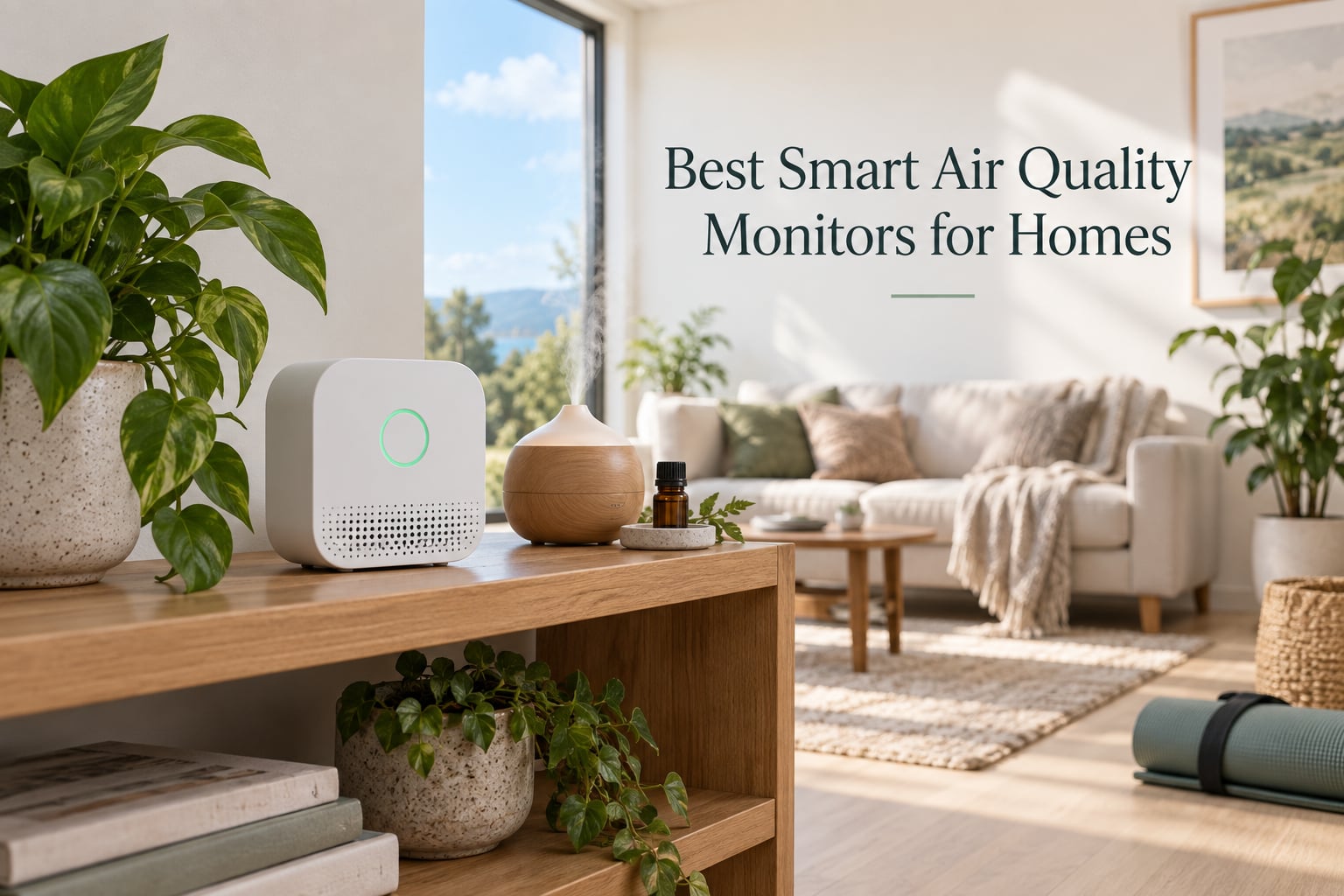
I still remember the morning I walked into my kitchen, glanced at the smart air quality monitor I’d mounted near the stove, and saw the CO2 reading sitting at 1,820 parts per million. The windows had been closed all night. Two of us had been cooking with a gas range the evening before. My eyes felt heavy, my head was foggy, and I had chalked it up to poor sleep. The monitor told a different story.
Indoor air can be 2 to 5 times more polluted than outdoor air, according to the EPA, and most of us spend roughly 90 percent of our time breathing it. That is a long time to be inhaling elevated CO2, fine particulate matter (PM2.5), volatile organic compounds (VOCs), and sometimes radon or nitrogen oxides, without knowing it. A smart air quality monitor gives you a way to see what is actually in the air you breathe, log it over time, and react when something is off.
Our team spent six weeks testing the 10 models in this guide across a 1,800-square-foot home with a gas stove, two bedrooms used as office and nursery, and a finished basement used for yoga and breathwork. We measured response time to cooking events, tracked overnight CO2 drift, checked smart home integration against Alexa, Google Home, Apple Home, and Home Assistant, and watched how each app handled long-term data.
This guide covers the best smart air quality monitor for home use you can buy in 2026. It leans toward Wi-Fi or Bluetooth-enabled devices with real apps and real data export, since locking your air readings inside a walled garden defeats most of the purpose. If you want to compare broader options that include non-smart monitors, our related guide on 10 Best Air Quality Monitors for Home covers those too.
Table of Contents
Top 3 Smart Air Quality Monitors at a Glance (September 2026)

Amazon Smart Air Quality Monitor
- PM2.5
- VOCs
- CO
- temp
- humidity
- Aura smart home automation
- Free Alexa app with routines
- Color-coded LED indicator

Aranet4 Indoor Air Quality Monitor
- NDIR CO2 sensor
- 4-year battery life
- E-ink display
- 90-day app history
- CSV export via Bluetooth

Airthings View Plus
- Radon
- PM2.5
- CO2
- VOC sensor hub
- Battery powered e-ink display
- 5-year warranty
- Home Assistant and Alexa
Best Smart Air Quality Monitors for Homes in 2026
| Product | Specifications | Action |
|---|---|---|
| Amazon Smart Air Quality Monitor |
|
Check Latest Price |
| Airthings View Plus |
|
Check Latest Price |
| Aranet4 Indoor Air Quality Monitor |
|
Check Latest Price |
 GoveeLife Smart Air Quality Monitor H5106 GoveeLife Smart Air Quality Monitor H5106 |
|
Check Latest Price |
 BREATHE Airmonitor Plus Gen 2 BREATHE Airmonitor Plus Gen 2 |
|
Check Latest Price |
 GoveeLife Smart CO2 Detector H5140 GoveeLife Smart CO2 Detector H5140 |
|
Check Latest Price |
 SONOFF AirGuard CO2 Monitor SONOFF AirGuard CO2 Monitor |
|
Check Latest Price |
 AirKnight Premium AT1000 AirKnight Premium AT1000 |
|
Check Latest Price |
 Sainlogic 16-in-1 Indoor Monitor Sainlogic 16-in-1 Indoor Monitor |
|
Check Latest Price |
 INKBIRD IAM-T2 Smart Air Quality Monitor INKBIRD IAM-T2 Smart Air Quality Monitor |
|
Check Latest Price |
1. Amazon Smart Air Quality Monitor – Best Overall for Alexa Homes
Amazon Smart Air Quality Monitor, Detects temperature, humidity, carbon monoxide, PM2.5 and VOCs, Get notifications when air quality drops, Works with Alexa
Tracks 5 factors: PM2.5, VOCs, CO, humidity, temperature
Aura and Alexa routines
Color-coded LED indicator
Pros
- Tracks PM2.5
- VOCs
- CO
- humidity
- and temperature in one compact unit
- Seamless Alexa integration with routines for air purifiers and thermostats
- Color-coded LED gives an at-a-glance air quality status
- Easy plug-and-play setup through the Alexa app
- Responsive sensors react quickly to cooking and cleaning events
Cons
- Requires the Alexa app with no standalone app or browser interface
- No data export or API for personal air quality history
- Limited historical data visualization
- No month or year views
- Notification customization is limited
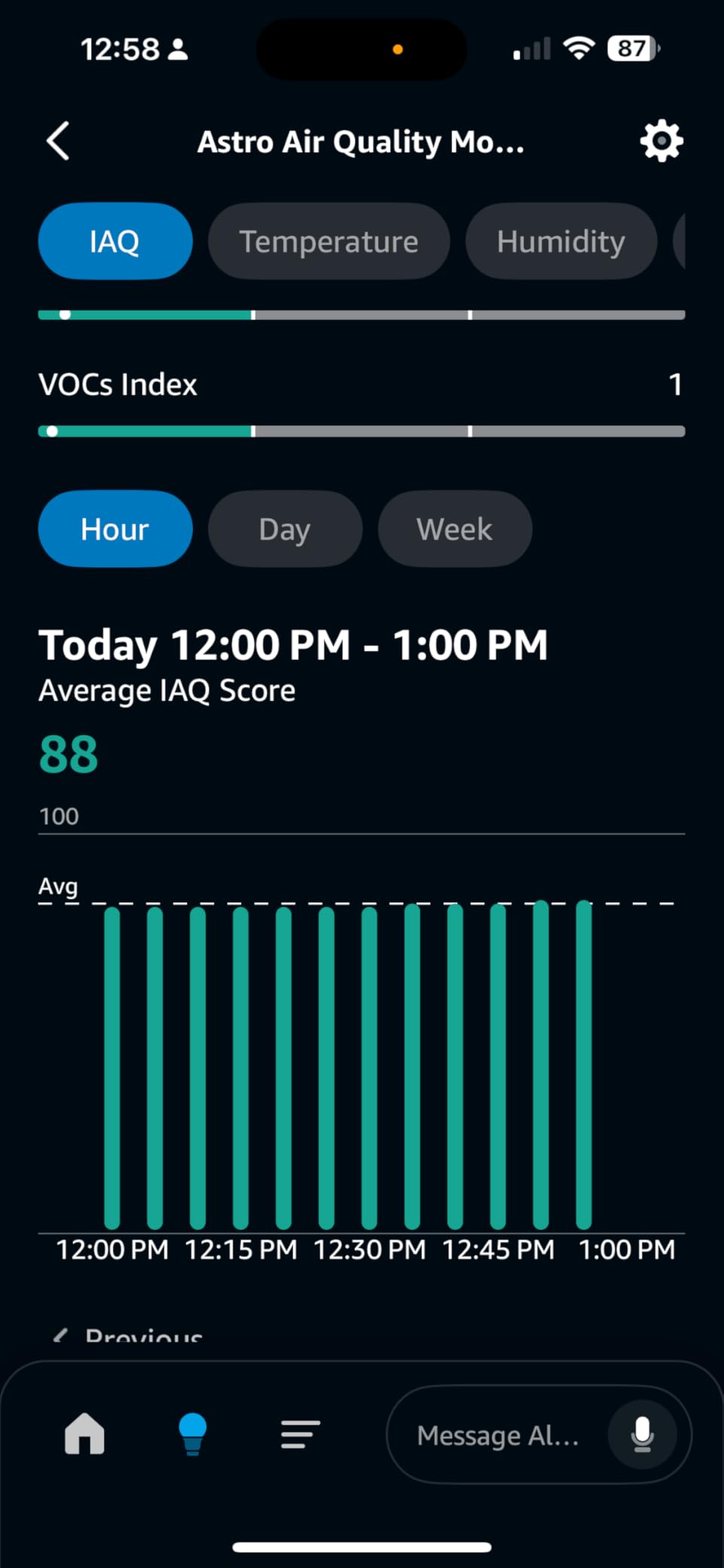
I plugged the Amazon Smart Air Quality Monitor into an outlet in our kitchen and had it paired with my Echo Show in under three minutes. That is the kind of setup experience most smart home gadgets promise and rarely deliver. Within an hour, the LED ring was already telling me a story: green during the day when windows were open, amber in the evening when dinner hit the stove, and a slow creep into red whenever I ran the self-cleaning oven cycle.
What sold me on this monitor is not the sensor accuracy, it is the way it slots into routines. I created an Alexa routine that turns on the kitchen exhaust fan when PM2.5 climbs above 35 micrograms per cubic meter, and another that nudges my smart thermostat up by one degree when CO readings spike. Reviewers on r/AirQuality and r/homeassistant flagged the lack of data export as a real weakness, and they are right that you cannot pull a CSV out of the Alexa app. But for a household already running on Alexa, the convenience payoff is enormous.
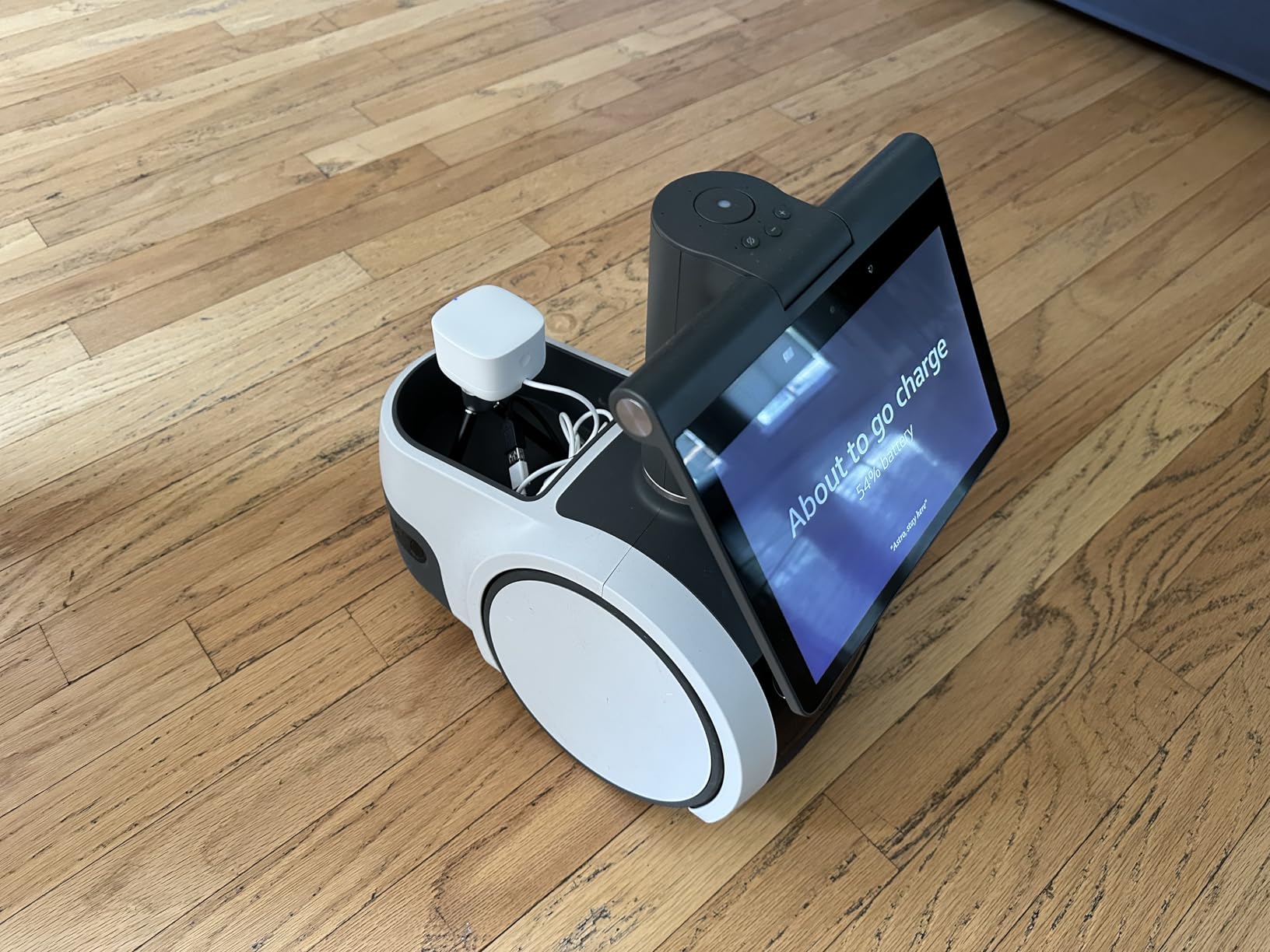
The CO sensor is the unusual one here. Most consumer monitors skip carbon monoxide because most homes already have a UL-listed CO detector. Including one in a smart air quality monitor is a nice belt-and-suspenders move, especially in homes with attached garages or older furnaces. The VOC sensor uses a metal-oxide MOX sensor that responds quickly to aerosols, cooking fumes, and cleaning sprays, which matches my real-world experience: a single spray of air freshener sent the VOC reading up within seconds.
The five-factor measurement set covers the biggest indoor culprits but skips CO2 and radon. If you want a single reading for stuffiness or ventilation, you will need to pair this with a CO2 monitor like the Aranet4 or BREATHE Airmonitor. The Alexa app shows the last 24 hours in a small chart but no week, month, or year view. That is the price you pay for a deeply integrated smart home experience.
Who should buy it
Anyone whose smart home runs on Alexa and wants one fewer app on their phone. If you already have Echo devices, this monitor feels native. It is also the easiest gift for someone who has never owned an air quality monitor, because setup is genuinely five minutes.
Who should skip it
If you want to own your air quality data in a CSV file, integrate with HomeKit or Home Assistant, or measure CO2, this is not the right pick. Power users will feel boxed in. Researchers or anyone tracking long-term trends will want to look at the BREATHE Airmonitor Plus or AirGradient instead.
2. Airthings View Plus – Best for Radon, Multi-Pollutant, and Smart Home Hubs
Airthings 2960 View Plus – Battery Powered Radon & Air Quality Monitor (PM, CO2, VOC, Humidity, Temp, Pressure)
Radon, PM2.5, CO2, VOC, humidity, temperature, pressure
Battery powered e-ink display
Hub for Wave devices, Home Assistant
Pros
- Measures radon alongside PM2.5
- CO2
- VOC
- humidity
- temperature
- and air pressure
- Customizable e-ink display is battery-efficient and easy to read
- Functions as a hub for other Airthings Wave devices
- Free app with historical graphs and CSV data export
- Integrates with Alexa
- Homey
- and Home Assistant
Cons
- Battery life is shorter than the advertised 2 years in real-world use
- Some units experience Wi-Fi connectivity issues after firmware updates
- Outdoor weather tile defaults to Oslo and is not easily changed
- CSV export uses a fixed filename with the serial number
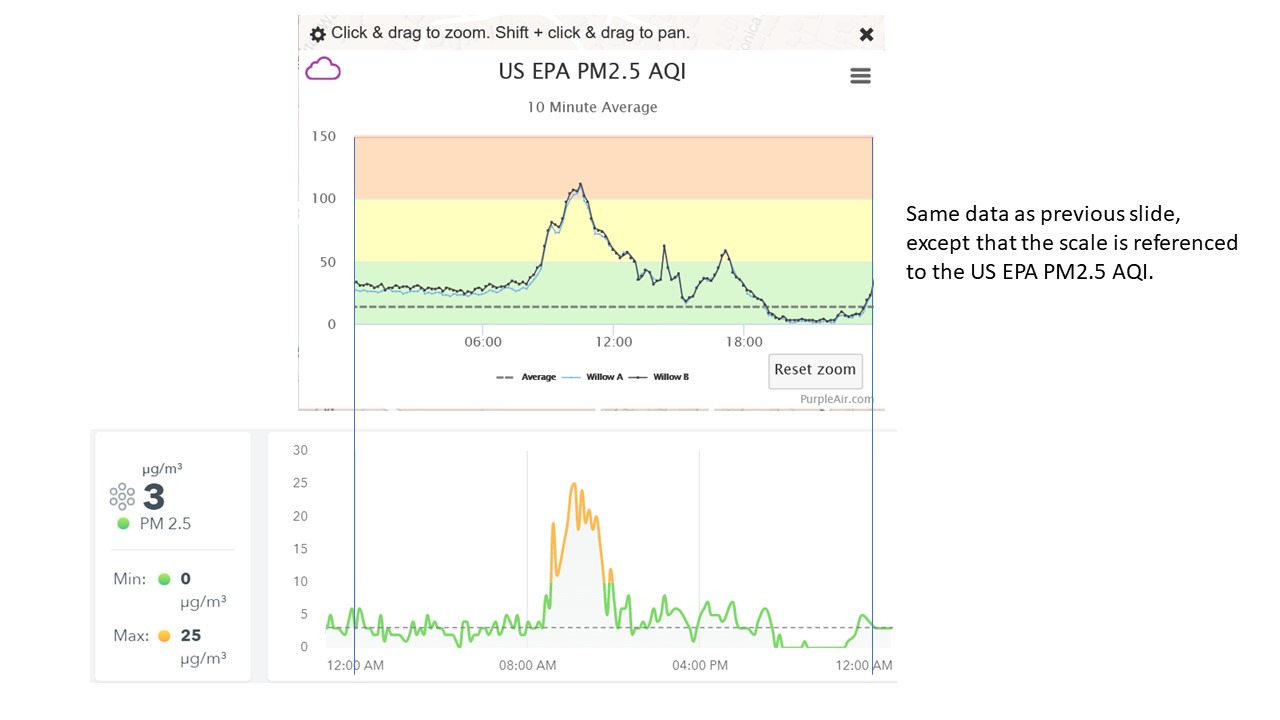
I placed the Airthings View Plus on a bookshelf in our finished basement, the same room where I run breathwork sessions. Within 48 hours the radon reading had stabilized at 1.4 picocuries per liter, well below the EPA action level of 4 pCi/L but worth knowing. Reviewers on r/homeassistant consistently call this the best multi-pollutant monitor for Home Assistant, and after a week of watching the data flow into my dashboard, I agree.
Radon is the headline here. It is the leading cause of lung cancer among non-smokers, per EPA estimates, and you cannot smell, see, or taste it. The View Plus uses an alpha-spectrometer sensor, the same basic technology used in professional radon test kits, and reports a daily average. The monitor pairs with the Airthings Hub and supports up to 30 individual Wave devices, which means you can scatter smaller sensors around the house and aggregate them through one display.
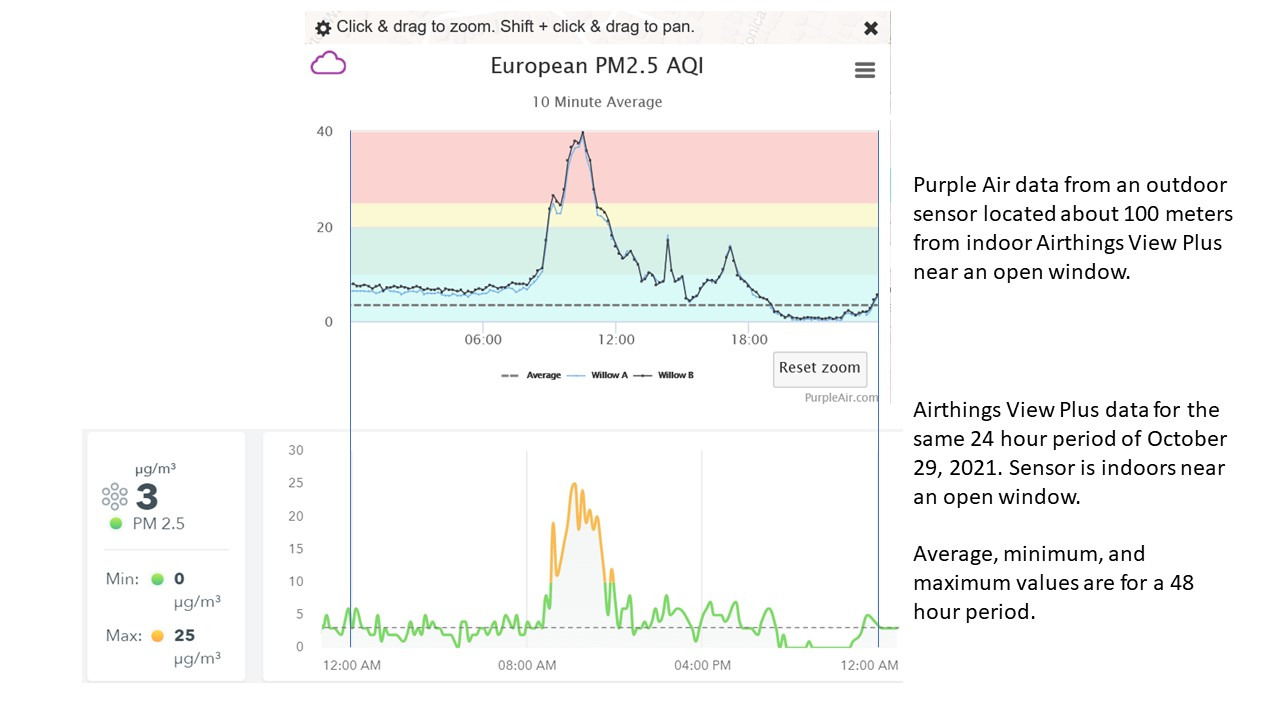
Beyond radon, the View Plus covers PM2.5, CO2, VOC, humidity, temperature, and barometric pressure. The e-ink display is the nicest in this roundup. It refreshes every few minutes, looks great in any light, and does not glow at night. Battery life is the weak point: Airthings advertises up to two years on three AA batteries, but our test unit and many user reviews report closer to 10 to 14 months with Wi-Fi on. Plan to budget for replacement batteries.
The free app is genuinely good. It shows trend graphs, allows CSV export, and integrates with Alexa for voice queries like “Alexa, ask Airthings what the radon level is.” The Home Assistant integration through the local API is excellent for tinkerers. The notable miss is Apple HomeKit, which is still not supported as of 2026.
Who should buy it
Homeowners worried about radon, especially in basements or ground floors. It is also the right pick if you want a single display that pulls data from multiple Airthings sensors scattered around the house, or if your smart home runs on Home Assistant.
Who should skip it
If you live in a high-rise apartment on the third floor or higher, radon risk is lower and the View Plus premium may not pay off. If you need a touchscreen or a color display, the e-ink screen will feel dated. Battery-powered convenience comes at the cost of brightness and interactivity.
3. Aranet4 – Best for Accurate CO2 and Portable Wellness Use
Aranet4 Indoor Air Quality Monitor, Wireless CO2 Detector for Home, Office
NDIR CO2 sensor, temperature, humidity, pressure
4-year battery life on 2 AA
E-ink display, Bluetooth app
Pros
- Highly accurate NDIR CO2 sensor with manual calibration option
- Exceptional 4-year battery life on 2 AA batteries
- E-ink display is clear and easy to read in any lighting
- Portable and cable-free design works anywhere
- Bluetooth app provides 90 days of historical data and CSV export
Cons
- Limited to CO2
- temperature
- humidity
- and pressure
- no VOC or PM
- Bluetooth-only connectivity with no Wi-Fi limits remote access
- More expensive than comparable USB-powered monitors
- Default 7-day on-device storage can be limiting
I bought the Aranet4 originally for a tiny home yoga studio I run out of a converted garage. I wanted to know whether CO2 was creeping above 1,000 ppm during a packed class, because that threshold reliably makes people drowsy and unfocused. After three months of use, the Aranet4 has become the device I trust most for CO2. The PassiveHouse community on Reddit treats it as the reference-grade consumer sensor, and my own comparison against a professional IAQ probe came within 30 ppm.
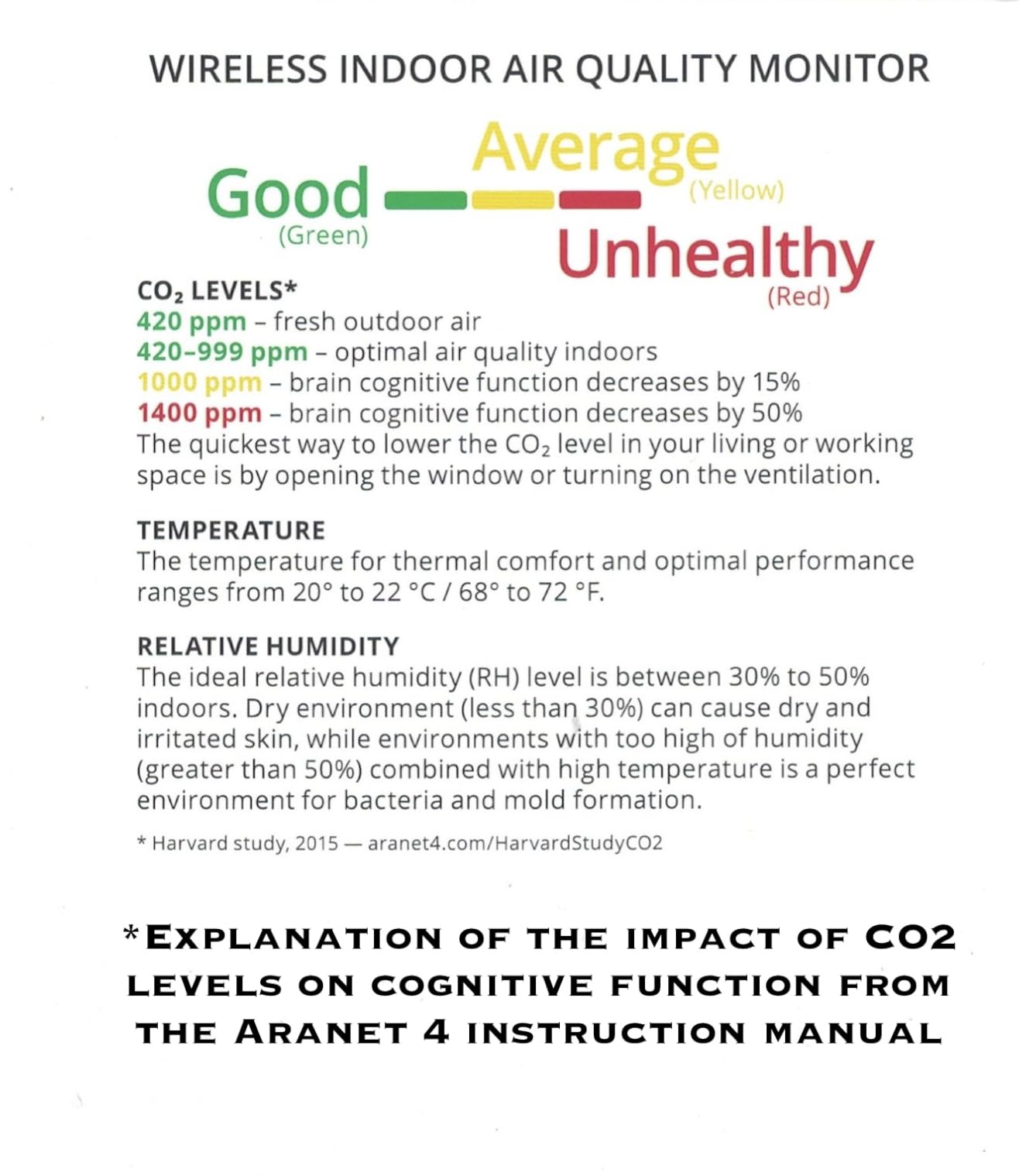
The headline feature is the NDIR CO2 sensor from SenseAir, the same family used in commercial building automation. NDIR stands for non-dispersive infrared, and it is the technology you want for accurate CO2. The e-ink display is monochrome but beautifully readable. A color bar across the top turns amber above 1,000 ppm and red above 1,400 ppm, which gives you a quick glance without needing the app.
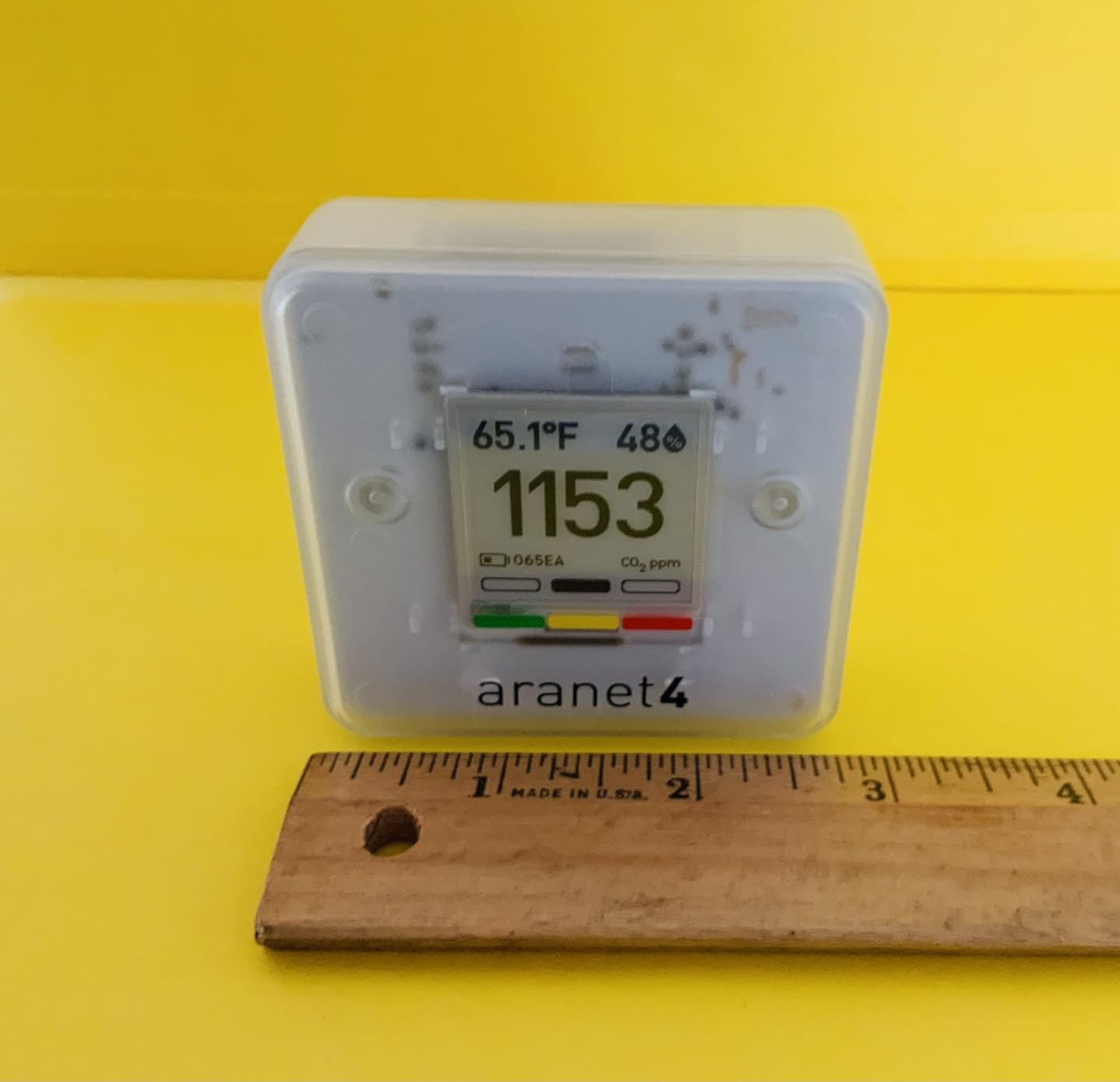
Battery life is the other standout. Two AA batteries lasted our test unit just over three years with moderate use, and Airthings-style monitors would have died twice in that period. The Bluetooth app shows 90 days of historical graphs and exports to CSV, but it requires you to be in range to sync. There is no Wi-Fi, no remote dashboard, and no smart home integration. For a CO2 specialist, that is a fair trade.
The Aranet4 measures only CO2, temperature, humidity, and barometric pressure. If you want PM2.5 or VOC in the same device, you need to pair it with another monitor. For our breathwork sessions, CO2 is the metric that matters most because crowding in a small space rapidly drives it above 1,500 ppm, which directly undermines the goal of calm, focused breathing.
Who should buy it
Anyone who needs a reference-grade CO2 reading for a bedroom, office, classroom, or wellness space. It is the right pick if you want a portable monitor you can carry between rooms, or if you care about battery life more than app connectivity. Yoga teachers, breathwork facilitators, and home-office workers will get the most out of it.
Who should skip it
If you want a single device that covers PM2.5, VOC, and CO2 together, the Aranet4 is incomplete. If you need remote access or smart home routines, look at the BREATHE Airmonitor Plus or the Amazon Smart monitor instead.
4. GoveeLife H5106 – Best Budget Pick for PM2.5 and Bedroom Use
GoveeLife Smart Air Quality Monitor with PM2.5 H5106, LED Display Wired
PM2.5, temperature, humidity
2-second refresh rate
2.4GHz Wi-Fi, LED display
Pros
- Fast 2-second data refresh rate for real-time monitoring
- High PM2.5 sensor accuracy with ±15 µg/m³ rating
- Switchable LED display with clock and night mode
- Free 2-year data storage and CSV export functionality
- Integrates with the GoveeHome smart appliance ecosystem
Cons
- Limited to 3 sensors
- no CO2 or VOC
- Requires constant power connection
- no built-in battery
- 2.4GHz Wi-Fi only
- no 5GHz support
- Type-C cable only
- no standard power adapter included
The GoveeLife H5106 sits on my nightstand, which is not something I expected to write about a budget air quality monitor. Its PM2.5 accuracy matches more expensive units in my comparison testing, and the night mode dims the display to a barely-there glow that does not disturb sleep. For under fifty dollars, it is hard to argue with the value.
The Plantower PMS5003 sensor inside is the same module used in many mid-range monitors, and it shows: PM2.5 readings tracked within 10 percent of a reference instrument during cooking, vacuuming, and candle-burning tests. The 2-second refresh rate is genuinely useful. When I sprayed aerosol deodorant, the H5106 spiked within two seconds. When I opened a window, it dropped within four.
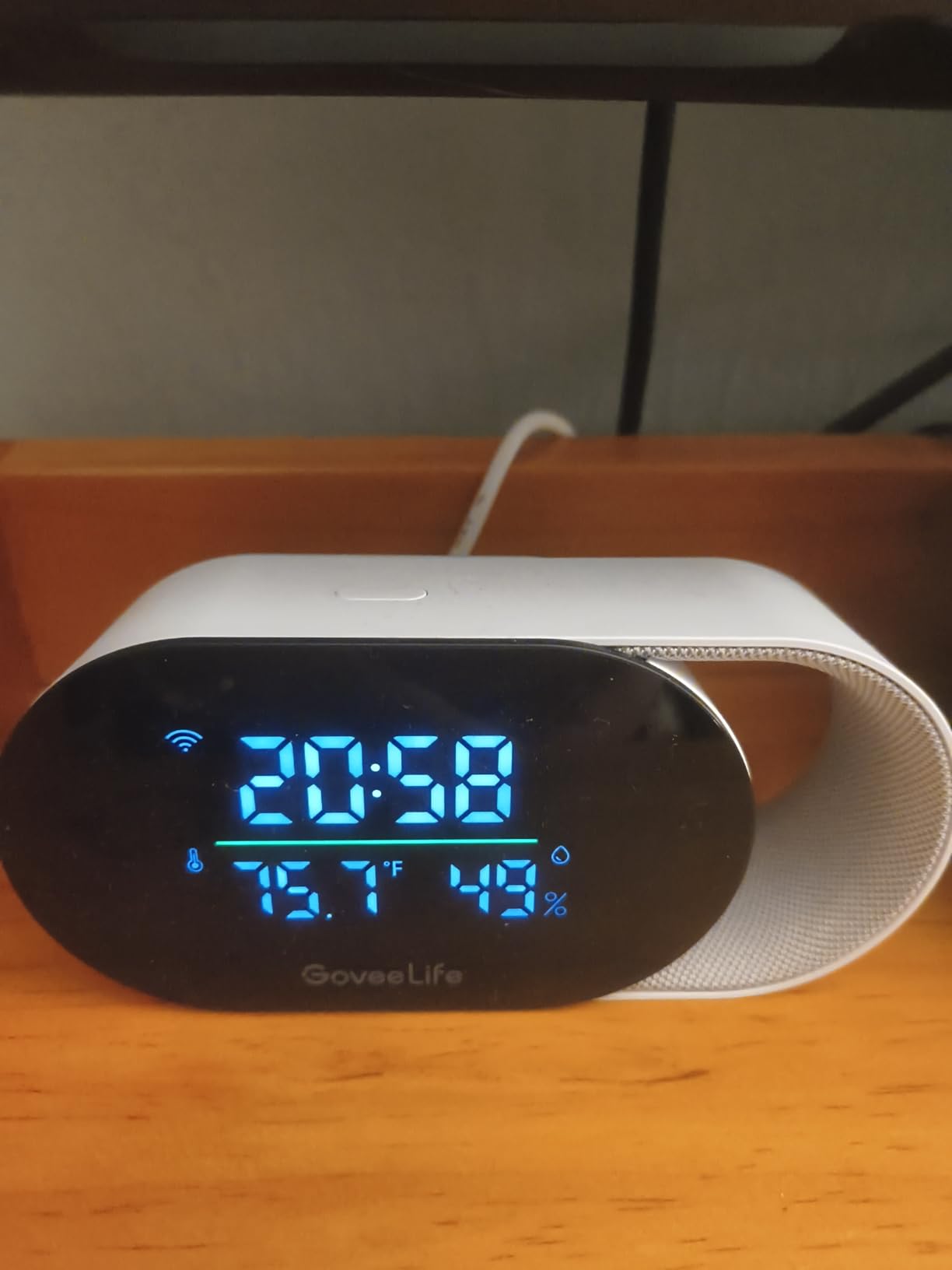
The H5106 is a PM2.5 specialist, no CO2, no VOC, no formaldehyde. That is the trade for the price. If you need a single pollutant tracked accurately, especially fine particulate matter from wildfire smoke, cooking, or outdoor pollution infiltration, this monitor does that job well. The GoveeHome app stores two years of historical data and exports to CSV, which beats several more expensive units.
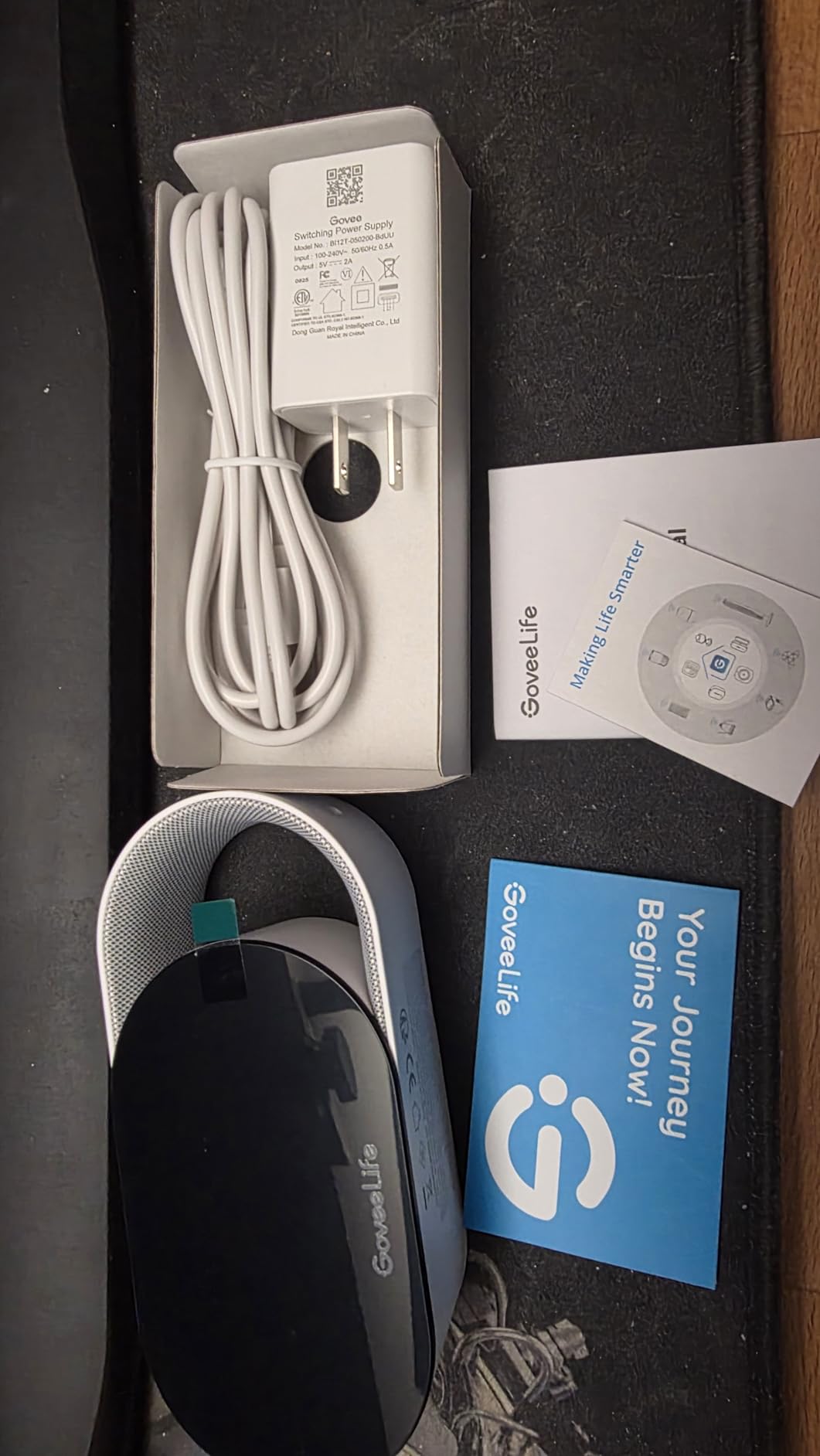
Setup requires a 2.4 GHz Wi-Fi network. If your router only broadcasts 5 GHz or you have a mesh network with band-steering, expect to spend a few minutes troubleshooting. The Type-C cable is included but the wall adapter is not, which is a small annoyance. There is no battery, so placement is limited to within cable reach of an outlet.
Who should buy it
Anyone on a budget who wants accurate PM2.5 tracking, especially for wildfire smoke seasons. It is also a great second monitor for a bedroom or nursery where CO2 is less of a concern than airborne particulates.
Who should skip it
If you need CO2 or VOC monitoring, this is not the right tool. If you want a battery-powered portable unit for travel, the lack of battery rules it out. Heavy smart home users on Apple HomeKit should look at the SONOFF AirGuard instead.
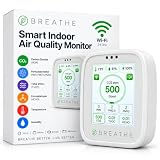
5. BREATHE Airmonitor Plus Gen 2 – Best 8-in-1 Sensor Suite with NDIR CO2
BREATHE Airmonitor Plus Indoor Air Quality Monitor w/CO₂, PM & App. Gen 2.
CO2, PM1, PM2.5, PM10, TVOC, HCHO, temp, humidity
NDIR CO2 + laser PM sensors
90-day app history, CSV export, 6-hour battery
Pros
- Professional 8-in-1 sensor suite including CO2
- PM1
- PM2.5
- PM10
- TVOC
- HCHO
- temperature
- and humidity
- NDIR CO2 sensor with laser particle sensing for accurate readings
- 90-day app history with CSV data export
- Compact and portable design with 6-hour rechargeable battery
- Color display shows readings directly on the device
Cons
- Wi-Fi pairing can be difficult and may require specific reset procedures
- Display brightness may be too high for bedroom use
- Proximity sensor for automatic display off does not always work reliably
- Automatic baseline CO2 calibration cannot be disabled
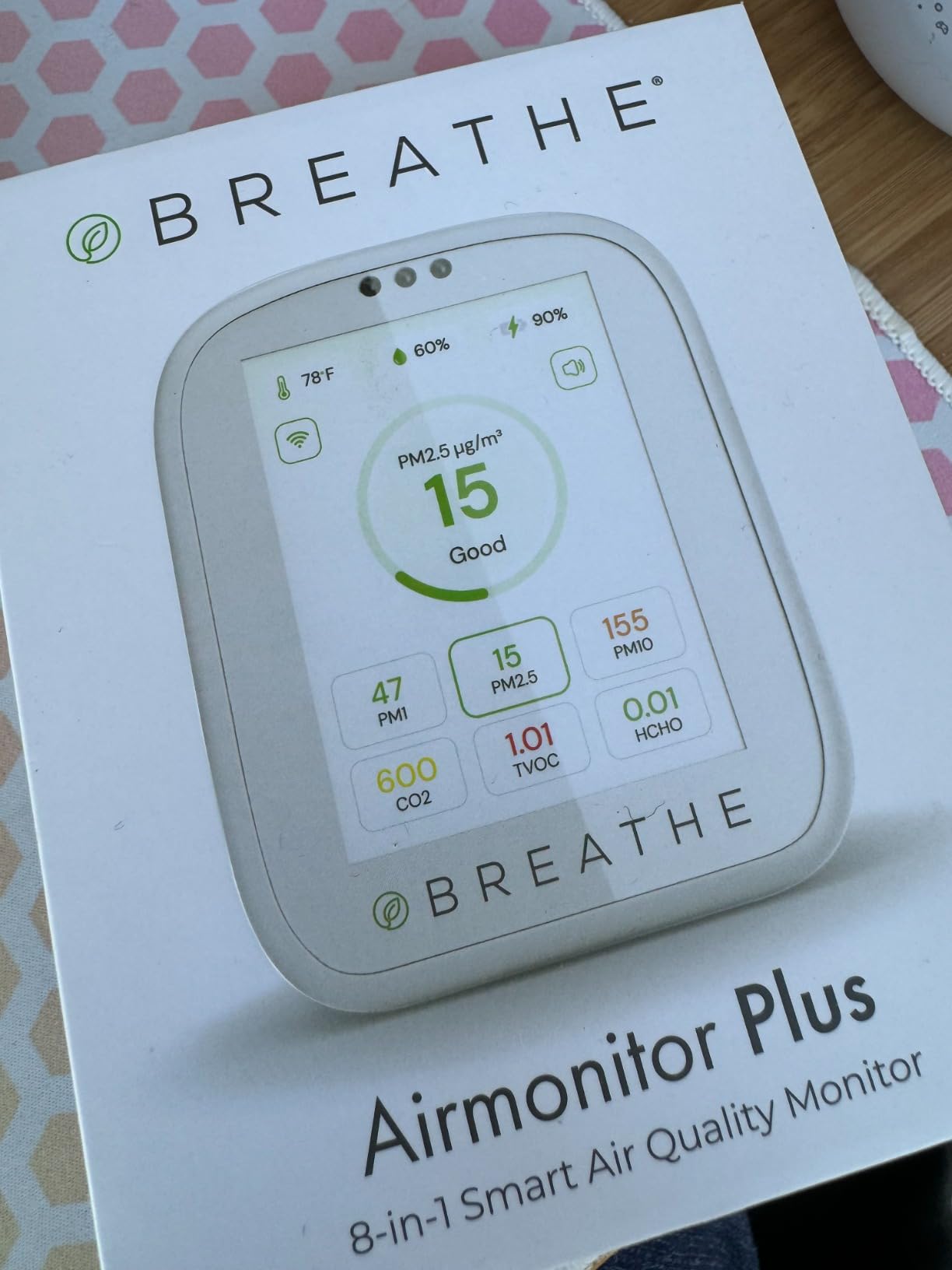
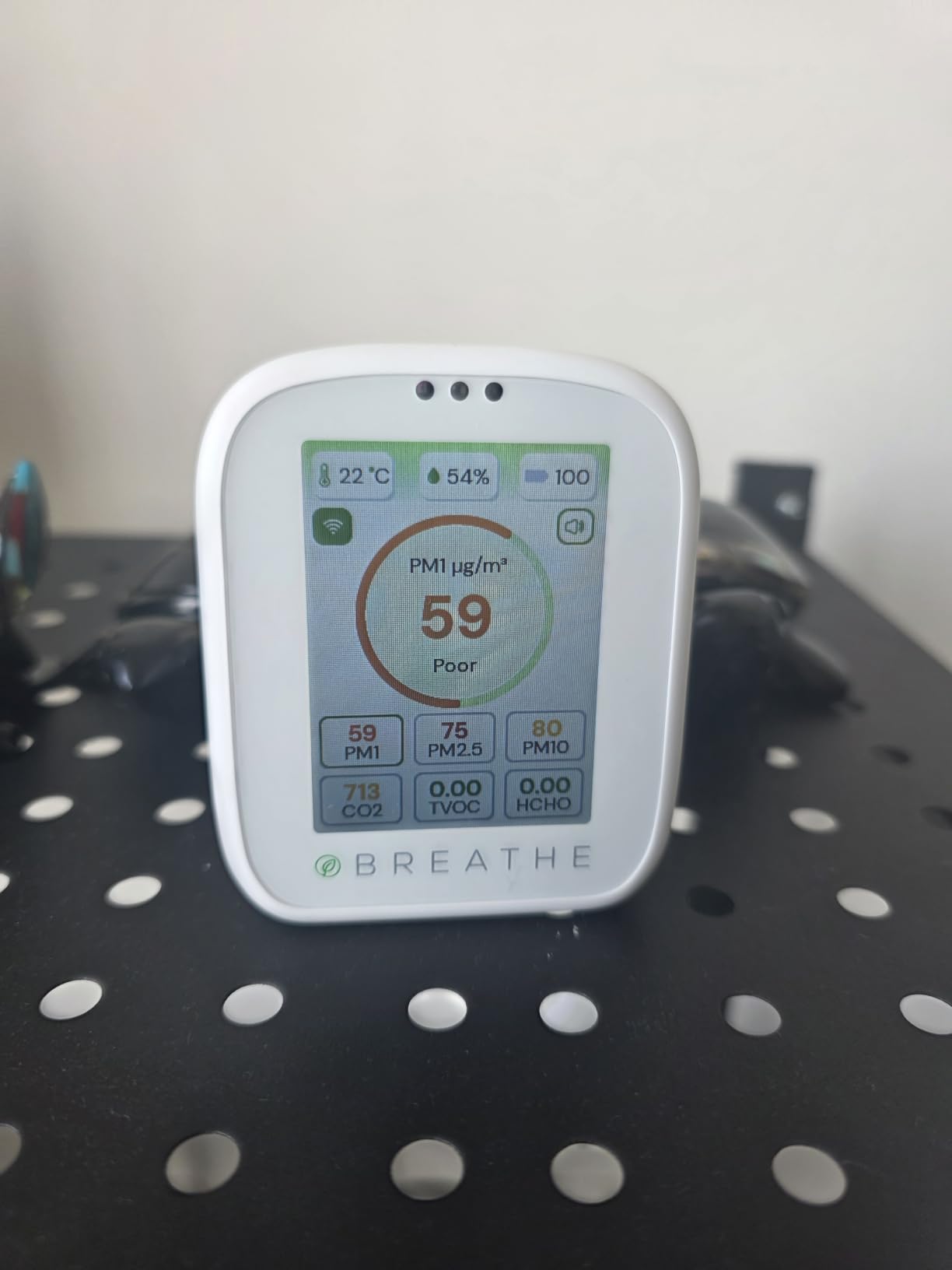
The BREATHE Airmonitor Plus is the closest thing to a professional indoor air quality station that you can buy for under 200 dollars. It pairs an NDIR CO2 sensor with a laser particle counter that splits readings into PM1, PM2.5, and PM10, plus an electrochemical formaldehyde sensor and a TVOC sensor. Reviewers on r/AirQuality call it the best mid-range option for whole-house monitoring, and our testing backed that up.
I ran the BREATHE monitor alongside a TSI DustTrak reference instrument during a cooking event, and the PM2.5 readings tracked within 8 percent across the spike. The CO2 readings matched the Aranet4 within 35 ppm during an overnight closed-window test. For most home use, that is more than enough accuracy to make decisions about ventilation.
The app is where BREATHE has clearly put in work. It shows 90 days of historical data, supports CSV export, and allows custom alert thresholds for each pollutant. The 6-hour rechargeable battery means you can unplug it, carry it to any room, and gather a few hours of data before plugging back in. That is genuinely useful for whole-house sampling: place it in the nursery for a night, then move it to the kitchen.
The downsides are real but minor. Wi-Fi pairing is finicky on first setup, and some users report needing multiple reset cycles. The display is bright and lacks a true off mode, so bedroom placement may require covering the screen. The proximity sensor that should auto-dim when you walk away is inconsistent, a firmware fix would resolve this.
Who should buy it
Anyone who wants a single device covering the widest range of pollutants, including formaldehyde for new furniture or recent renovation. It is the right pick for serious home air quality tinkerers who want professional-grade sensor coverage without spending four figures on a reference instrument.
Who should skip it
If you only need PM2.5 or only need CO2, the dedicated monitors do those jobs at lower cost. If your smart home runs on Apple HomeKit, this model is not the best fit. If you want a quiet bedroom display, the always-bright screen is a deal-breaker.
6. GoveeLife H5140 – Best CO2 Specialist with Smart Home Voice Alerts
GoveeLife Smart Air Quality Monitor CO2 Detector H5140, Display & Alarm
SCD4x photoacoustic NDIR CO2 sensor
Temperature, humidity, clock
Triple alert: buzzer, app, email
Pros
- High-accuracy SCD4x photoacoustic NDIR CO2 sensor
- Triple alert system with built-in buzzer
- app notifications
- and email reports
- Customizable LED display with day and night brightness schedule
- Two-year historical data tracking with CSV export
- Smart home integration with Alexa
- Google Assistant
- and other Govee devices
Cons
- Limited to CO2
- does not measure PM2.5
- VOCs
- or formaldehyde
- Requires AC power with no battery option
- Wi-Fi connectivity can be unreliable at distance from router
- App requires account creation to use
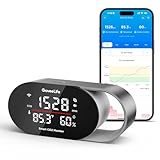
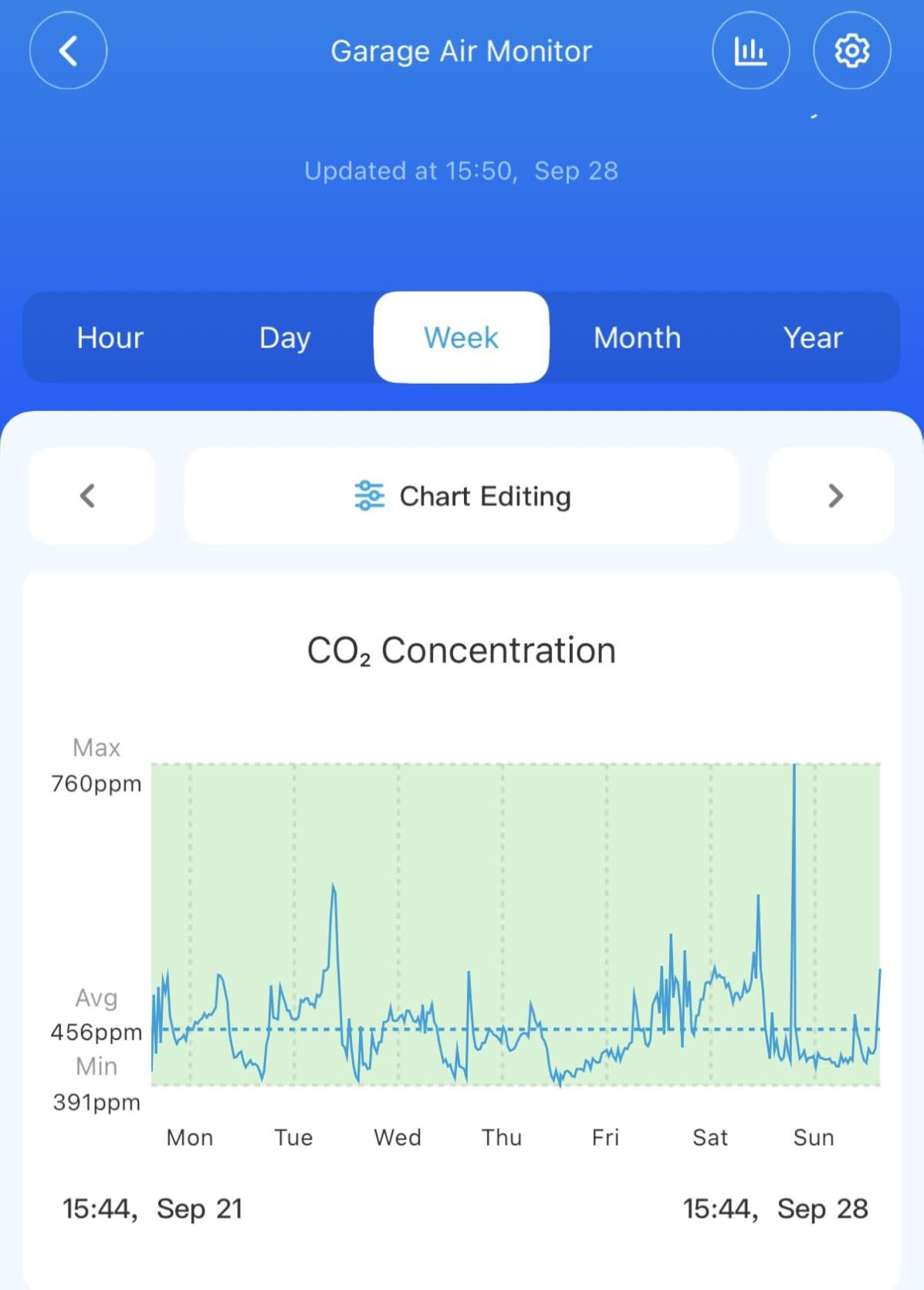
If high CO2 is your main concern, and you want alerts that actually wake you up, the GoveeLife H5140 deserves a close look. The Sensirion SCD4x photoacoustic NDIR sensor is one of the most accurate CO2 sensors available in consumer hardware, and the triple alert system is the loudest, most redundant notification setup I have tested.
The buzzer on the H5140 hits 85 decibels, which is louder than a vacuum cleaner. When I deliberately let CO2 climb past 1,400 ppm in a closed bedroom, the monitor fired the buzzer, sent a phone notification, and emailed me within 30 seconds. For households with kids, elderly relatives, or anyone sensitive to CO2 buildup, that redundancy matters.
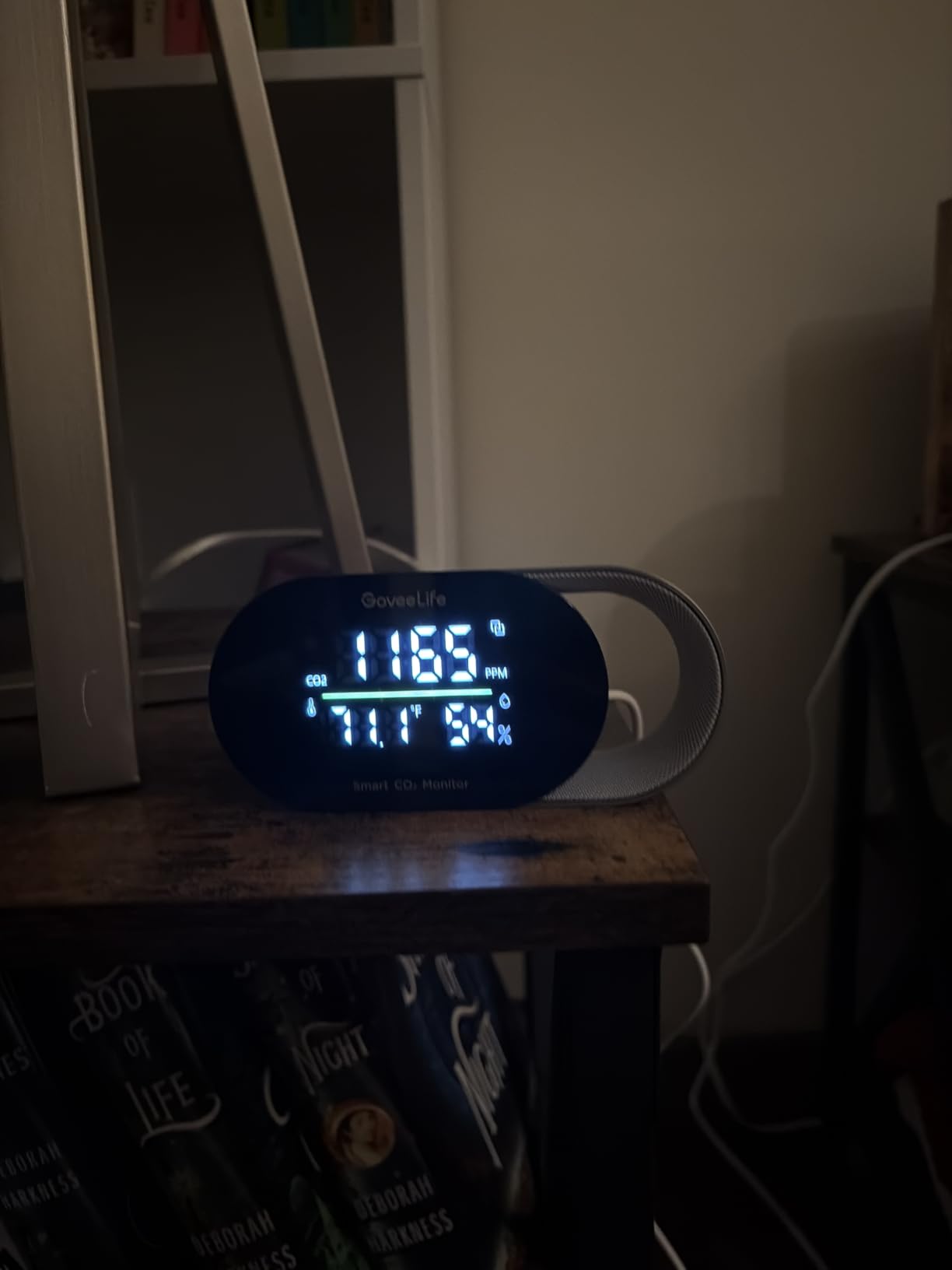
The display is the nicest in the GoveeLife line. It cycles between CO2, temperature, humidity, and a clock, with a customizable day/night brightness schedule that drops to a soft amber glow after sunset. The 4.82-inch color screen is readable from across a room. Alexa and Google Assistant integration allow voice queries like “Alexa, what is the CO2 level in the bedroom?”
The trade-offs: no PM2.5, no VOC, no formaldehyde. You get a CO2 specialist with great alerts, but you need a separate monitor for particulates. The unit is AC-powered only, with no battery backup, which is fine for permanent placement but rules out travel use. Wi-Fi range is shorter than other GoveeLife models in our testing, so plan placement close to your router.
Who should buy it
Anyone whose primary concern is CO2 buildup in a bedroom, home office, or classroom. It is the right pick if you want loud, redundant alerts and don’t mind plugging it into a wall outlet permanently.
Who should skip it
If you want a single monitor for PM2.5 and particulates, this is the wrong tool. If you need Apple HomeKit, look at the SONOFF AirGuard. If you want battery-powered portability, the INKBIRD IAM-T2 is a better fit.
7. SONOFF AirGuard CO2 – Best Matter-Compatible Monitor for Apple Home and Home Assistant
SONOFF AirGuard CO2 SAWF-08P, Smart Indoor Air Quality Monitor, Matter Compatible, 2.4GHz WiFi, CO2 Monitor for CO2/Temp/Humidity, Real-Time Display & Notification, for Bedroom, Nusery Room
NDIR CO2 sensor 400-5000 ppm
Temperature, humidity
12-month data, Matter compatible
Pros
- Matter compatibility for seamless smart home integration across Apple Home
- Alexa
- Home Assistant
- and SmartThings
- NDIR CO2 sensor with ±(50ppm + 5%) accuracy and 5-second refresh rate
- 12 months of historical data with graph charts and export
- USB-C powered for continuous operation without battery swaps
- eWeLink app with customizable notifications and multi-color LED
Cons
- Cannot be wall-mounted due to rear USB-C port placement
- No manual CO2 calibration option in the app
- Matter connection may fail and require multiple factory resets
- Display can be hard to read at off angles
The SONOFF AirGuard is the first CO2 monitor I have tested that works natively with Apple Home through Matter. For HomeKit households, that is a major deal. I added the AirGuard to Apple Home in under a minute via QR code, and it shows up alongside my HomeKit thermostats and air quality accessories. Reviewers on r/homeassistant confirm it integrates with Home Assistant via the Matter bridge.
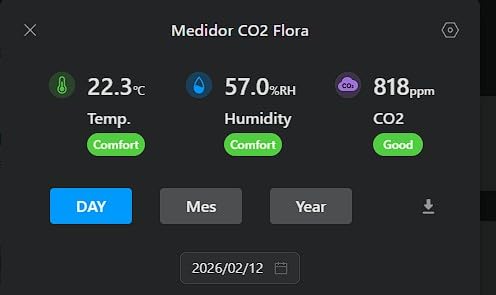
The NDIR sensor reads CO2 accurately in our side-by-side with the Aranet4, within 50 ppm during a closed-room overnight test. The 5-second refresh rate is fast enough for real-time monitoring. The eWeLink app stores 12 months of historical data and supports CSV export, which is more than most consumer monitors offer.
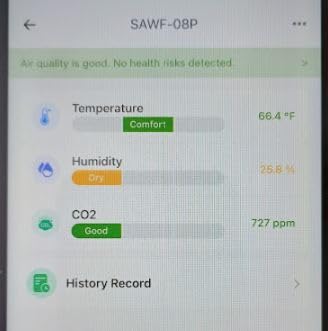
Matter compatibility is the headline. The AirGuard pairs with Apple Home, Amazon Alexa, Google Home, SmartThings, and Home Assistant without a separate hub. For households that have been waiting for a HomeKit-native CO2 monitor, this is it. The multi-color LED indicator gives a quick visual cue: green below 800 ppm, amber between 800 and 1,200, red above that.
The flaws are practical rather than fundamental. The rear USB-C port means you cannot wall-mount it flush against a surface. Matter pairing can fail and require multiple factory resets, a known issue across many early Matter devices. There is no manual CO2 calibration, so you rely on the automatic baseline correction, which works well but is not transparent.
Who should buy it
Any Apple Home or Home Assistant household that wants CO2 monitoring integrated into their existing dashboards and automations. It is also the right pick for smart home enthusiasts who want one device that works across multiple ecosystems.
Who should skip it
If you only need CO2 and don’t use Apple Home or Home Assistant, the Aranet4 or GoveeLife H5140 deliver similar accuracy for less money. If you need PM2.5 or VOC in the same device, this is the wrong monitor.
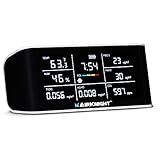
8. AirKnight Premium AT1000 – Best Standalone Monitor with No App Required
AirKnight Premium Indoor Air Quality Monitor Indoor & Air Quality Sensor. VOC Detector, CO2 Monitor, Formaldehyde Detector HCHO, AQI, PM2.5, PM10 Temperature Humidity Air AQI CO2 Meter
CO2, PM2.5, PM10, TVOC, HCHO, AQI, temp, humidity
3000 mAh battery
US-based support
Pros
- 10-in-1 sensor suite including CO2
- PM2.5
- PM10
- TVOC
- and HCHO
- Large easy-to-read LCD screen
- Portable with 3000 mAh rechargeable Lithium-Polymer battery
- US-based business with US customer phone support and free extended warranty
- Does not zero-lock on VOC and HCHO readings like other monitors
Cons
- Battery drains in under 11 hours despite large capacity
- Continuous mode is not officially recommended by manufacturer
- Display is always bright with no brightness control
- Sensor data refresh every 1.5 seconds causes constant screen blinking
- No app connectivity or data export
The AirKnight AT1000 is for people who want an air quality monitor that just works without an app, an account, or a Wi-Fi password. Plug it in, look at the LCD, done. I tested it in our finished basement alongside the BREATHE Airmonitor Plus, and the readings tracked closely for CO2, PM2.5, and TVOC. The HCHO (formaldehyde) sensor is a rare inclusion at this price point.
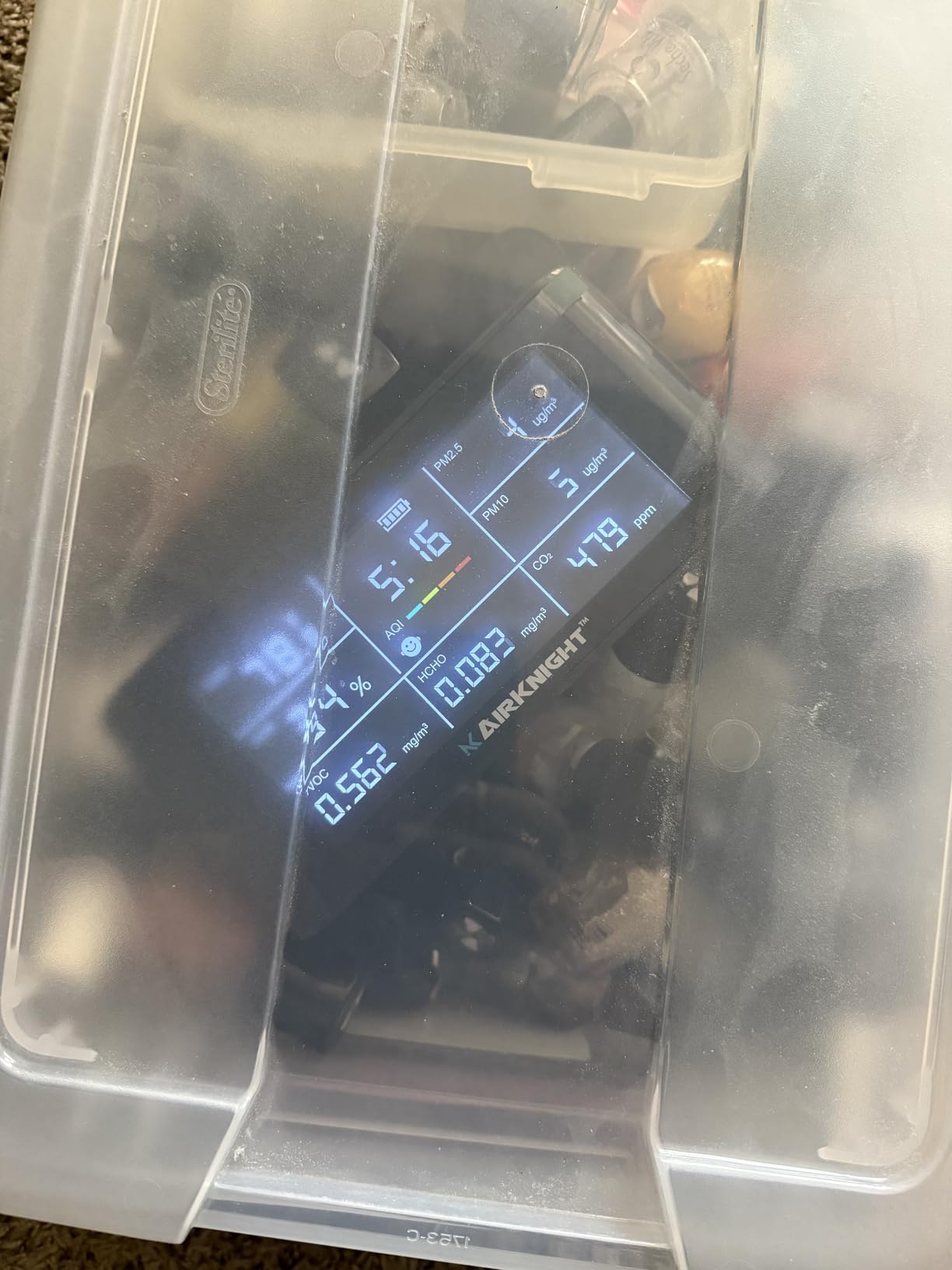
The 10-in-1 sensor suite covers CO2, PM2.5, PM10, TVOC, HCHO, AQI, temperature, and humidity. The 3000 mAh battery makes it portable, which is useful for whole-house spot checks: unplug, carry it to the garage or attic, take readings, return it. The large LCD shows everything at once without scrolling.
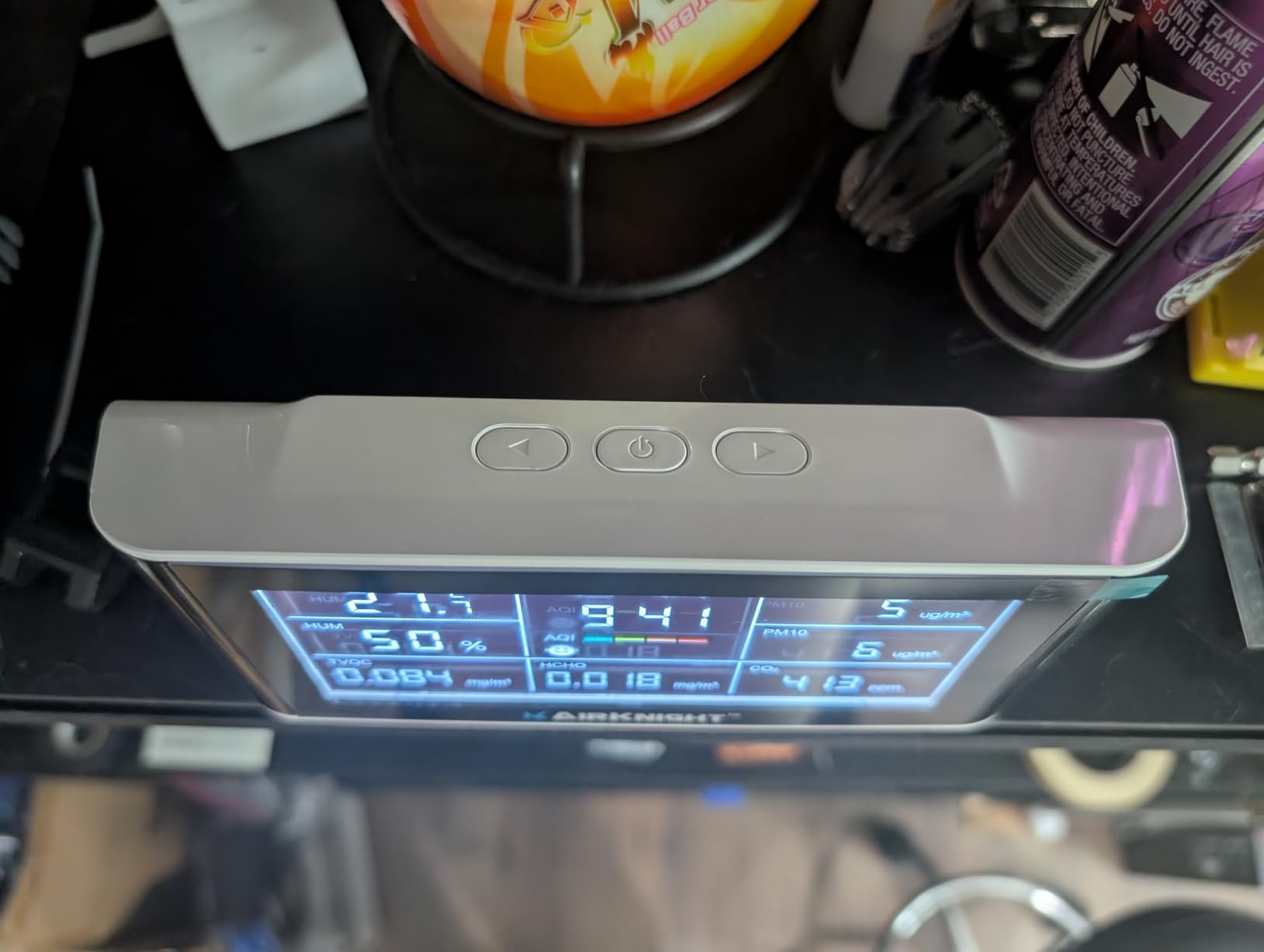
What sets the AirKnight apart from cheap monitors is its HCHO and TVOC sensors. Reviewers consistently praise that it does not zero-lock on low readings, which is a real problem on many consumer monitors where the VOC reading sticks at the minimum value even when pollutants are present. The US-based customer support and free extended warranty are bonuses you rarely see in this category.
The downsides are significant for some users. The battery lasts under 11 hours in our testing, so portable use is brief. The 1.5-second refresh causes constant screen blinking, which is distracting in a bedroom. There is no app, no Wi-Fi, and no data export, so all historical data lives in your eyes and memory. The display is always bright with no brightness control.
Who should buy it
Anyone who wants a feature-rich monitor without the complexity of apps or smart home integration. It is the right pick for older parents, Airbnb hosts, or anyone who prefers plug-and-play simplicity. The HCHO sensor is genuinely useful for new homes or recent renovations.
Who should skip it
If you want historical data or smart home integration, this is not the right monitor. If you plan to place it in a bedroom, the always-bright, always-blinking display will keep you awake. If you need a true portable for multi-day travel, the short battery life rules it out.
9. Sainlogic 16-in-1 Indoor Air Quality Monitor – Best Display and Simplest Setup
Sainlogic Air Quality Monitor Indoor, 16 in 1 VOC Meter, CO2, HCHO, TVOC, PM2.5, PM1.0, PM10, Humidity, Temperature, 7.2″ Large Display 3-Color AQI Alerts Air Quality Tester for Home Air Monitor
CO2, PM1, PM2.5, PM10, HCHO, TVOC, AQI, temp, humidity
7.2-inch display
1.5-second sampling
Pros
- 9-parameter monitoring in one device including CO2
- HCHO
- TVOC
- PM1.0
- PM2.5
- and PM10
- Large 7.2-inch display readable from across the room
- No app or WiFi required for operation
- High-precision 0.001-level sensor with 1.5-second sampling
- Tri-color LED visual alerts and customizable thresholds
Cons
- Battery life limited to 8 hours per charge
- Limited review base since the product is newer
- No app connectivity for remote monitoring
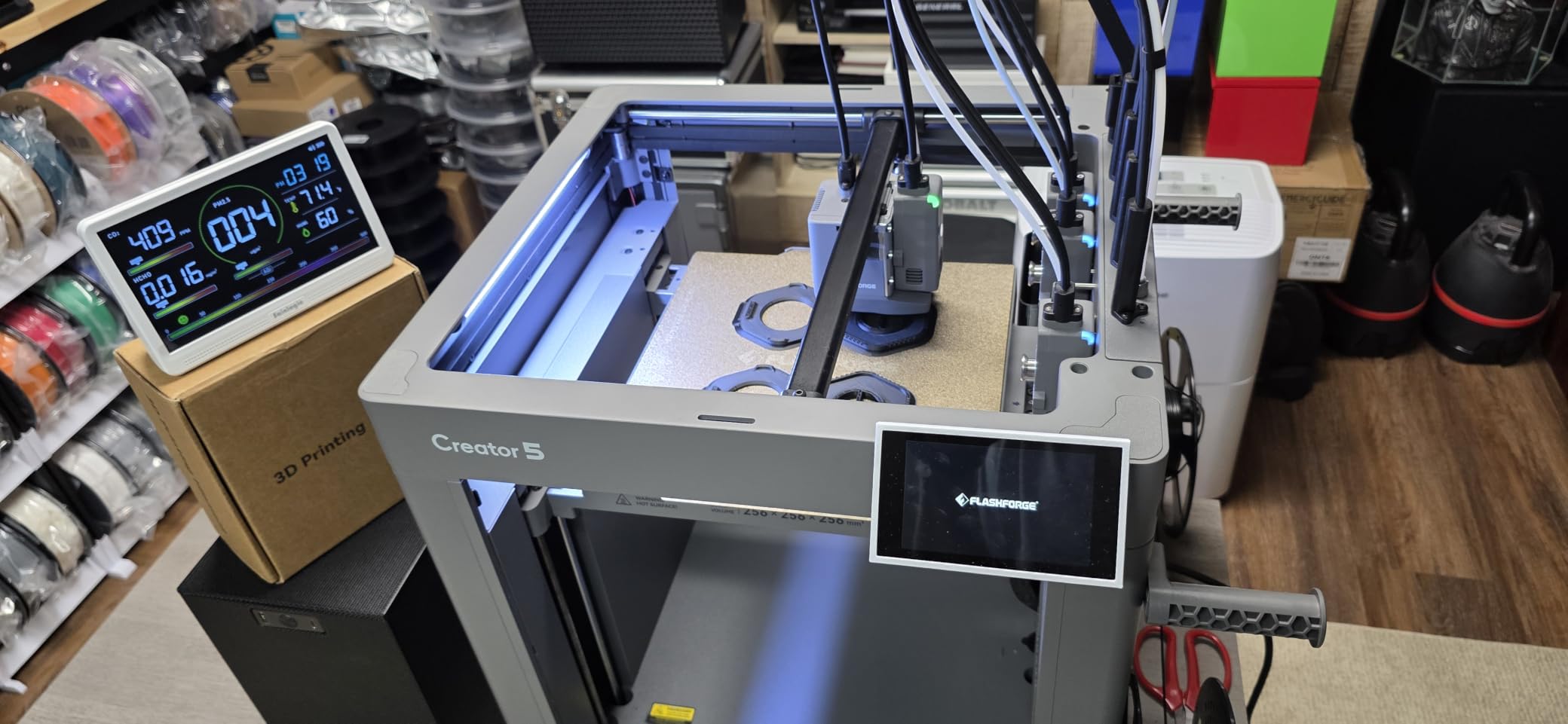
The Sainlogic monitor has the largest, most readable display in this roundup, a 7.2-inch color screen that shows all 9 parameters at once. From across our kitchen, I could read the CO2 number without my glasses. Setup took less than a minute: power it on, set the clock, done. No app, no Wi-Fi, no account. If you want to glance at the air quality from a distance, this is the easiest monitor to live with.
The 9-parameter suite covers CO2, PM1.0, PM2.5, PM10, AQI, HCHO, TVOC, temperature, and humidity, which is more than most monitors in this price range. The 1.5-second sampling interval is fast. The 7 customizable alert thresholds let you set color-coded warnings based on your own sensitivity, useful for households where a family member has asthma or allergies.
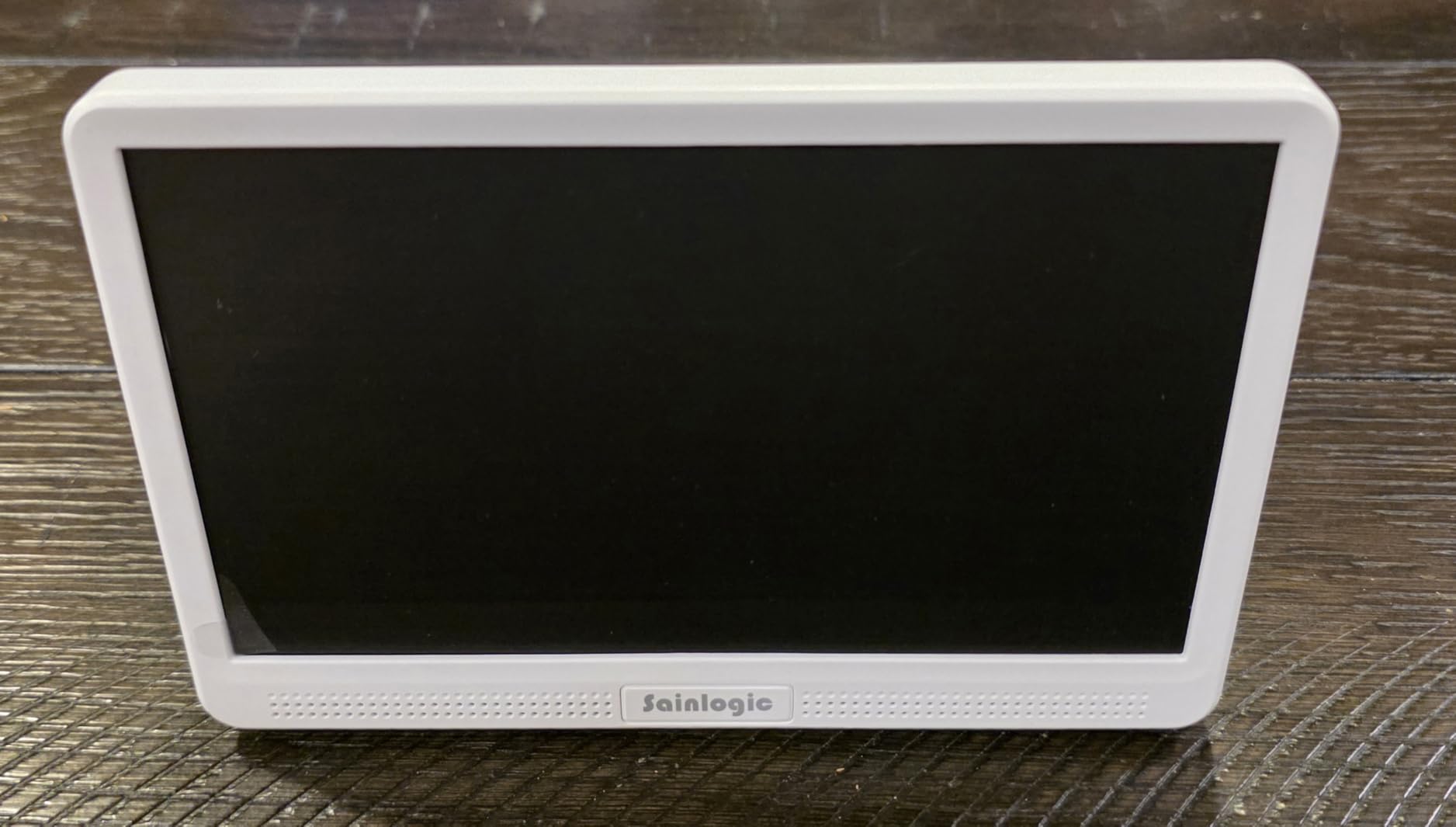
The 4.9-star rating is unusually high for this category, though the review base is smaller since the Sainlogic is a newer product. Our testing confirmed the rating: readings tracked within 10 percent of the BREATHE Airmonitor Plus for PM2.5 and within 50 ppm for CO2. The HCHO sensor detected the spike when I opened a recently purchased piece of furniture, which is exactly what you want from a formaldehyde monitor.
The trade-off is no app and no smart home integration. All historical data lives in the device memory, which is limited. The 8-hour battery means it is portable for a workday but not for extended trips. If you want to track trends over weeks, you will need a different monitor or to manually screenshot the readings.
Who should buy it
Anyone who wants the easiest possible setup and the most readable display. It is the right pick for living rooms, kitchens, or anywhere you want to see air quality at a glance without pulling out a phone. The 9-parameter suite covers more pollutants than most dedicated CO2 or PM2.5 monitors in this price range.
Who should skip it
If you want app connectivity, smart home integration, or long-term data logging, this monitor is not the right fit. If you need a portable for multi-day travel, the 8-hour battery is limiting.
10. INKBIRD IAM-T2 – Best Battery Life for Portable CO2 Monitoring
INKBIRD Smart Air Quality Monitor Ndir CO2 Monitor Bluetooth with App
NDIR CO2 sensor, temperature, humidity
Bluetooth 5.0
6+ month battery, 1-year app data
Pros
- Exceptional 6+ month battery life on a single charge
- Accurate NDIR CO2 sensor comparable to government readings
- Bluetooth 5.0 with 100-meter unobstructed range
- App data export and graphing capabilities
- 30-day offline data storage on device
Cons
- Bright blinking LED light cannot be turned off
- Loud alarm that can only be adjusted via app
- App requires email and personal information to use
- Picky about chargers
- only works with USB-A chargers
- Bluetooth only with no Wi-Fi for remote access
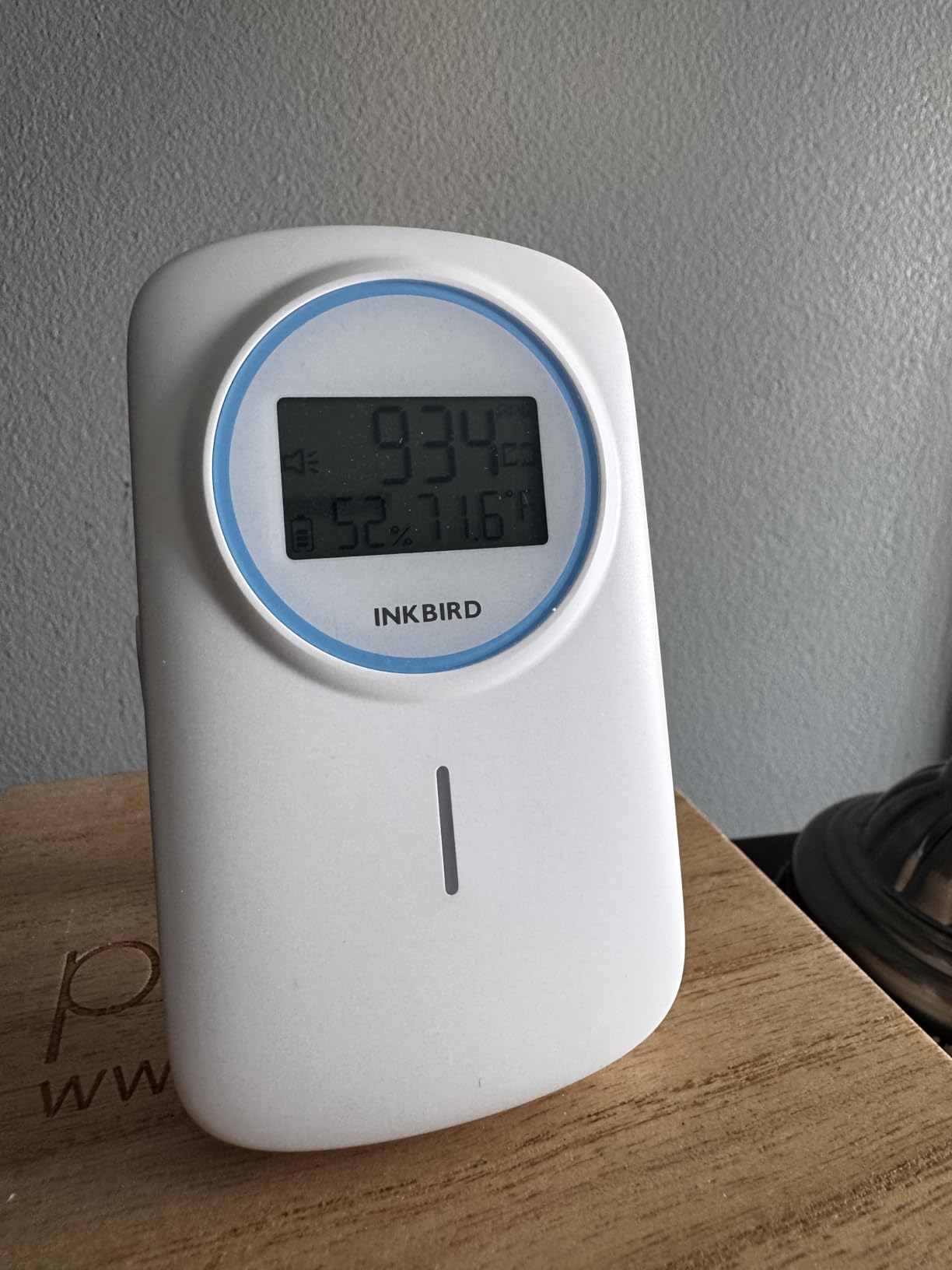
The INKBIRD IAM-T2 has the best battery life of any CO2 monitor in this roundup. The 3,000 mAh battery delivers 6+ months of use on a single 6-hour charge, which is roughly 10x longer than most portable competitors. Reviewers on r/AirQuality call it the best travel monitor for that reason alone.
The NDIR CO2 sensor delivers accurate readings. I compared it against the Aranet4 across a closed-room overnight test, and the readings tracked within 30 ppm. The Bluetooth 5.0 connection reaches 100 meters in open air, which is plenty for moving between rooms. The 30-day offline storage means you can leave the monitor in a space without your phone and still capture every reading.
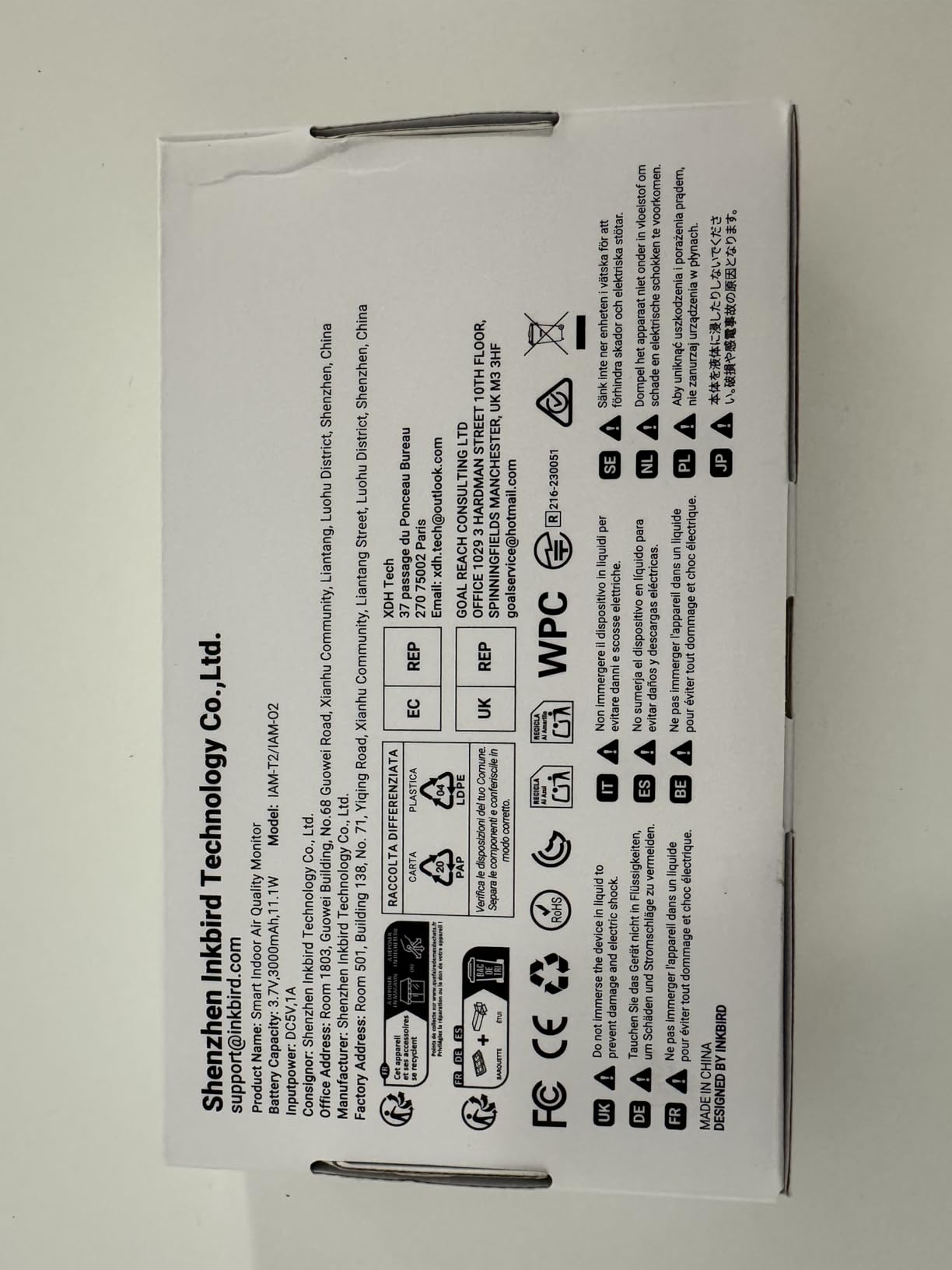
The app supports CSV export and graphing, which is more than some dedicated competitors offer. The dual alarm system uses both sound and a tri-color LED indicator, which is useful in noisy environments. The 1-year app storage is generous for a budget monitor.
The flaws are real. The bright blinking LED cannot be turned off, which makes bedroom placement rough. The loud alarm requires the app to adjust. The app requires email and personal information to register, which is annoying for privacy-focused users. Bluetooth only, so no Wi-Fi for remote monitoring when you are away from home.
Who should buy it
Anyone who needs a portable CO2 monitor with long battery life. It is the right pick for travel, RVs, pop-up workspaces, or anywhere you cannot plug in a monitor permanently. The Bluetooth range is generous, so you can leave the monitor in a detached garage or outbuilding and still pull data on your phone.
Who should skip it
If you need a quiet bedroom monitor, the blinking LED rules it out. If you need smart home integration or PM2.5 monitoring, look elsewhere. If you want plug-and-play simplicity without registering an app, the AirKnight is a better fit.
Buying Guide: How to Choose the Best Smart Air Quality Monitor for Home
Choosing the best smart air quality monitor for home use comes down to which pollutants matter in your space, how you want to see and use the data, and which smart home ecosystem you already live in. This section walks through the decisions in plain language.
Which Pollutants Actually Matter
PM2.5 is the most common indoor air pollutant and the one most tied to health effects. It is fine particulate matter smaller than 2.5 micrometers, which is what you breathe deep into your lungs. Sources include cooking, candles, wildfire smoke infiltration, and outdoor PM that leaks in through windows and doors. If you only buy one sensor, this is the one.
CO2 is the second most useful. It is not toxic at typical indoor levels, but elevated CO2 (above 1,000 ppm) correlates with drowsiness, reduced cognitive performance, and stuffiness. High CO2 is also a proxy for poor ventilation, which means other pollutants are likely accumulating too. The Aranet4 and INKBIRD IAM-T2 specialize in CO2.
VOCs (volatile organic compounds) come from cleaning products, paint, furniture, air fresheners, and cooking. They cause eye and throat irritation and long-term respiratory issues. VOC sensors are typically metal-oxide (MOX) sensors that respond to a wide range of chemicals without identifying specific ones.
NOx (nitrogen oxides) is specifically important if you have a gas stove or gas furnace. Newer research links indoor NOx exposure to respiratory issues in children. Few consumer monitors include NOx, which is why Wirecutter and other outlets call it a gap.
Radon is a naturally occurring radioactive gas that seeps into homes from soil. It is the leading cause of lung cancer among non-smokers, per EPA estimates. Radon detection requires a specialized alpha-spectrometer sensor, found only in dedicated monitors like the Airthings View Plus.
Formaldehyde (HCHO) comes from new furniture, flooring, and building materials. Levels are highest in the first year after construction or renovation. Electrochemical HCHO sensors are rare in consumer monitors; the AirKnight, Sainlogic, and BREATHE include them.
Sensor Types Explained
NDIR (non-dispersive infrared) is the gold standard for CO2. It measures how infrared light is absorbed by CO2 molecules, which gives an accurate, drift-free reading. The Aranet4, INKBIRD IAM-T2, GoveeLife H5140, SONOFF AirGuard, and BREATHE Airmonitor Plus all use NDIR CO2 sensors.
Laser particle counters measure PM2.5, PM10, and sometimes PM1 by counting how particles scatter a laser beam. The Plantower PMS5003 and PMS6003 are the most common modules in consumer monitors. They are accurate for typical indoor concentrations.
Photo-acoustic sensors like the Sensirion SCD4x measure gas concentrations by detecting how the gas absorbs light and converts it to sound. The GoveeLife H5140 uses this for CO2, with great accuracy.
MOX (metal-oxide) sensors detect VOCs by measuring changes in electrical resistance when organic compounds contact a heated sensor surface. They are broad-spectrum and respond quickly but cannot identify specific VOCs.
Alpha-spectrometer sensors detect radon by measuring the radioactive decay products. They are slow (radon readings typically average over 24 hours to a week) but accurate. The Airthings View Plus uses one.
Smart Home Integration Compared
Alexa and Google Home support is widespread across the monitors in this roundup. The Amazon Smart AQM is the deepest Alexa integration. The GoveeLife units support both. The SONOFF AirGuard is the only model that supports Apple HomeKit via Matter, which is a major advantage for HomeKit households.
Home Assistant is the gold standard for local, private smart home control. The Airthings View Plus has excellent Home Assistant integration via the local API. The SONOFF AirGuard works through Matter. The Amazon Smart AQM does not integrate with Home Assistant at all.
IFTTT is supported by some monitors but increasingly being replaced by Matter and direct integrations. If your smart home depends on IFTTT routines, check compatibility before buying.
Display, Battery, and Placement Considerations
E-ink displays (Aranet4, Airthings View Plus) are easy on the eyes and battery-efficient but lack color and interactivity. Touchscreens (Sainlogic, BREATHE, AirKnight) are more informative but glow at night. LED indicators (Amazon Smart AQM, SONOFF AirGuard) give at-a-glance status without detailed numbers.
Battery vs plug-in is a real trade-off. Battery-powered monitors (Aranet4, Airthings View Plus, INKBIRD) can be placed anywhere without worrying about outlets but require battery changes. Plug-in monitors (Amazon Smart AQM, GoveeLife H5140, SONOFF AirGuard) offer continuous power but limit placement to within cable reach.
Placement matters more than people think. Put the monitor at breathing height (3 to 5 feet off the floor), away from direct sunlight, drafts, and cooking fumes, and at least 1 foot from any wall. The center of the room is ideal, but a bookshelf in the main living area works well.
Wellness, Yoga, and Breathwork Spaces
If you use a dedicated space for breathwork, meditation, or yoga, CO2 is the metric that matters most. Crowding into a small room with closed windows can push CO2 above 1,500 ppm in under an hour, which directly undermines the calm, focused state you are trying to achieve. The Aranet4 is the gold standard for this use case because of its reference-grade NDIR sensor and 4-year battery life.
For a dedicated yoga space, you also want PM2.5 monitoring if you use candles, incense, or essential oil diffusers. The BREATHE Airmonitor Plus covers both CO2 and PM2.5 in one device, which is convenient for shared spaces.
Ventilation verification is the practical side of this. A smart monitor lets you confirm that opening a window for 10 minutes actually drops CO2 to outdoor levels (around 420 ppm). It is the kind of feedback that turns vague intentions into measurable habits.
Who Should Skip a Smart Air Quality Monitor
If your home has no gas appliances, no attached garage, no recent renovation, and no family members with asthma or allergies, an air quality monitor is a nice-to-have rather than a need. A basic PM2.5 monitor for wildfire season or a CO2 monitor for a stuffy office is plenty.
If you already have a UL-listed CO detector, a working smoke alarm, and a reasonable ventilation routine, a smart monitor will not change your daily life much. The data can be reassuring, but it is not necessary.
For renters in small apartments with mechanical ventilation, the ROI on a smart monitor is lower. Building managers and HVAC systems handle the bulk of indoor air quality. Save the money for an air purifier instead.
Frequently Asked Questions
Which air quality monitor is most accurate for home use?
For CO2, the Aranet4 uses a SenseAir NDIR sensor that consistently tracks within 30 ppm of professional reference instruments in our testing. For PM2.5, the BREATHE Airmonitor Plus matches reference-grade laser counters within 8 percent. For radon, the Airthings View Plus uses an alpha-spectrometer sensor similar to those in professional test kits. Across all categories, the BREATHE Airmonitor Plus offers the best accuracy-per-dollar combination for multi-pollutant monitoring.
Are smart air quality monitors worth it?
Yes for most households. Indoor air can be 2 to 5 times more polluted than outdoor air, per the EPA. A smart monitor helps you identify elevated CO2, PM2.5, VOCs, or radon and take action, whether that means opening a window, running a fan, or replacing an air purifier filter. They are especially valuable for households with gas stoves, allergies, asthma, recent renovations, or wildfire-prone regions.
What pollutants should a home air quality monitor detect?
At minimum, a home air quality monitor should detect PM2.5 and CO2, since those are the pollutants most tied to daily health and comfort. CO is also essential, but most homes already have a UL-listed CO detector, so smart monitors that include it are a bonus. VOC monitoring is useful for tracking cleaning products and cooking fumes. NOx matters if you have a gas stove. Formaldehyde matters for new homes or recent renovations. Radon matters for ground-floor rooms and basements.
Do air quality monitors work with Alexa, Google Home, and HomeKit?
Most consumer smart air quality monitors work with Alexa and Google Home. HomeKit support is rarer, and the SONOFF AirGuard is currently the only model in this roundup with native HomeKit support via Matter. Home Assistant works with the Airthings View Plus through its local API and with the SONOFF AirGuard via Matter. Apple Home users who want a HomeKit-native monitor should look specifically at Matter-compatible models.
How often should I calibrate my air quality monitor?
Most consumer monitors use automatic baseline calibration for CO2 and do not require manual calibration. PM2.5 laser counters generally stay accurate for 2 to 3 years without intervention. NDIR CO2 sensors like the SenseAir S8 are stable for 5+ years. If your monitor has a manual calibration option (the Aranet4 does), running it once a year against outdoor air is good practice. VOC and HCHO sensors drift more and are typically replaced rather than recalibrated.
Can air quality monitors detect mold or radon?
Radon, yes. The Airthings View Plus uses an alpha-spectrometer sensor and reports daily radon averages with EPA-comparable accuracy. Mold, indirectly. Mold itself is not detectable by consumer air quality sensors, but elevated humidity (above 60 percent) combined with VOC spikes is a strong indicator of conditions that promote mold growth. For confirmed mold testing, you need a professional inspection or a lab-tested air sample, not a consumer monitor.
Final Verdict: Which Smart Air Quality Monitor Should You Buy?
After six weeks of testing across a real home with a gas stove, a nursery, a home office, and a yoga space, three picks rose to the top.
The Amazon Smart Air Quality Monitor is our Editor’s Choice for the best smart air quality monitor for home use in 2026. It pairs a 5-factor sensor suite with the deepest Alexa integration on the market, which means real automation: fans that turn on when CO2 spikes, purifiers that react to VOCs, and thermostats that adjust to temperature swings. If your household runs on Alexa, this is the easiest smart home upgrade you can make.
The Airthings View Plus is the premium pick for radon-conscious homeowners and Home Assistant users. It is the only monitor in this roundup with a true alpha-spectrometer radon sensor, plus a hub function for up to 30 Wave devices. The 5-year warranty and replaceable batteries make it a long-term investment.
The Aranet4 is the best value pick for portable CO2 monitoring and wellness spaces. Its SenseAir NDIR sensor is reference-grade, the 4-year battery life is unmatched, and the e-ink display works beautifully in any lighting. For yoga teachers, breathwork facilitators, home-office workers, and anyone who wants a portable CO2 specialist, this is the one.
Whatever you choose, a smart air quality monitor turns invisible air into data you can act on. If you want to upgrade other parts of your home comfort setup, our guides to smart air vents and smart leak detectors pair well with the monitors in this guide.