
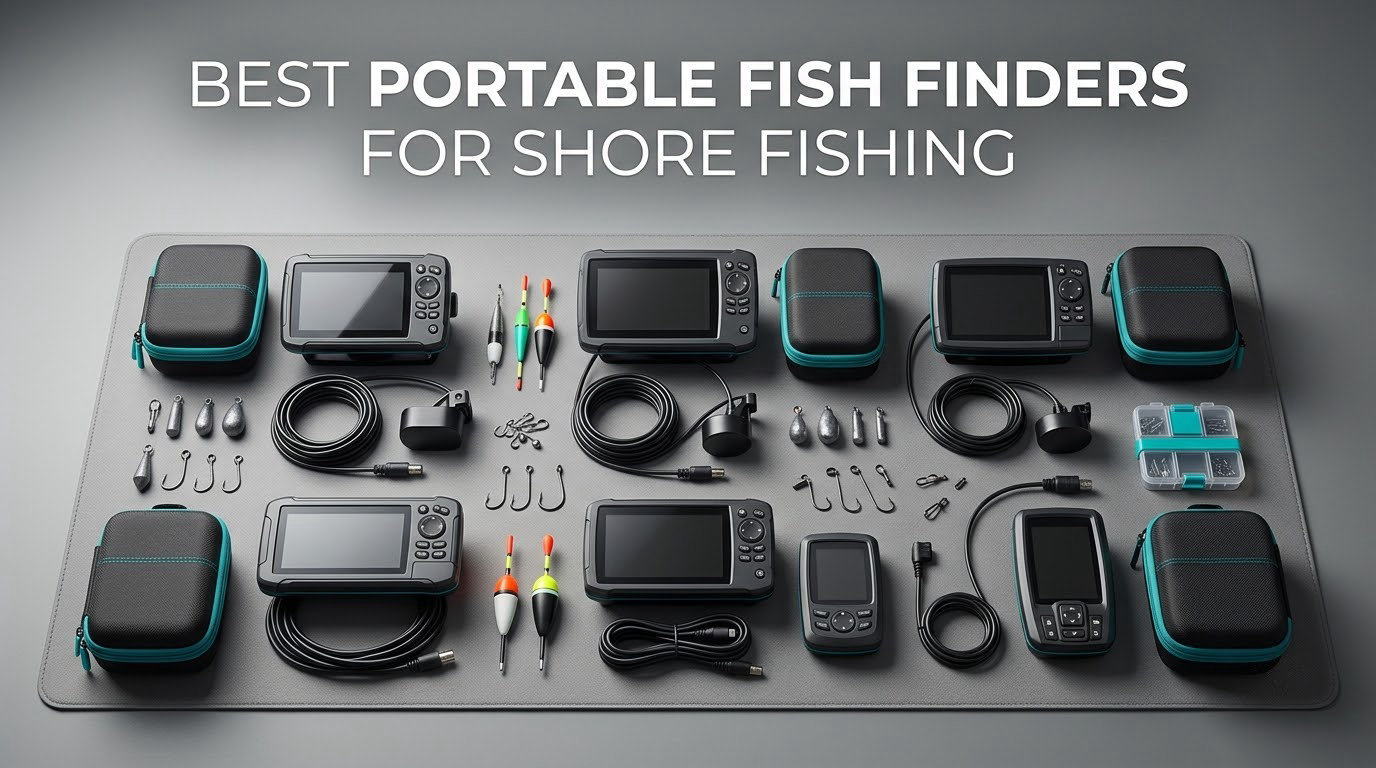
Every shore angler has cast into the same kind of void. You pick a bank, you pick a target, and you are guessing at everything below the waterline: how deep it runs, where the weeds stop, whether a drop-off sits just past your lure. The best portable fish finders for shore fishing take that guess out of the equation by putting a live sonar picture in your hand while you are standing on the bank.
We spent weeks casting, towing and reading these eight units from a river bank, a pond edge and a shallow lake, in daylight and after dark. What we were looking for was not the longest spec sheet on the page. We wanted a readable screen, a signal that holds together when a wave hits, and a connection that survives the distance you actually cast.
The honest headline is that a portable fish finder does not find fish for you. It shows you what the bottom is doing and what is hanging above it, and from a shoreline that is the difference you actually feel on the water. Below, we break down what each unit does well, where it falls short, and which one belongs in your bag for the kind of fishing you do.
Table of Contents
Top 3 Portable Fish Finders for Shore Fishing in 2026
Three units earned the right to sit at the top. The Garmin Striker 4 wins on overall rating, depth capability and multi-day battery endurance. The Humminbird PiranhaMAX 4 wins for anyone pairing shore trips with a small boat. The Garmin STRIKER Cast is the pick for anglers who never leave the bank and want a full sonar image on their phone.

Garmin Striker 4 Portable Kit
- Chirp sonar
- 1600 ft freshwater depth
- built-in flasher
- waypoint map


Garmin STRIKER Cast
- Castable sonar to phone
- 200 ft wireless range
- 10+ hour battery
- flasher mode
Do fish finders work from shore?
Yes, but not the way most sellers imply. A castable unit is a sonar transducer you throw on a line; it sends sound pulses down, reads the echo off the bottom and anything suspended above it, and streams that data to your phone. From shore it shows you depth, bottom contour, weed edges, drop-offs and fish arches. It does not forecast a catch, and it cannot read structure you cannot reach.
Two limits are worth stating before you buy. Most castable units hold a connection for roughly 100 to 200 feet, so a hard cast to 250 feet will lose the image. And several budget pods bottom out around 130 to 165 feet of depth, which is fine for a creek but useless on a deep reservoir bank.
All 8 Picks at a Glance
Every unit below is listed with the specs that actually change your day on the bank: how far the signal reaches, how deep it reads, what it shows on screen, and whether you need a phone in the loop.
| Product | Specifications | Action |
|---|---|---|
| Garmin Striker 4 Portable Kit |
|
Check Latest Price |
| Garmin STRIKER Cast |
|
Check Latest Price |
| Humminbird PiranhaMAX 4 |
|
Check Latest Price |
 Deeper PRO+ 2 Deeper PRO+ 2 |
|
Check Latest Price |
 Deeper START Deeper START |
|
Check Latest Price |
 Venterior Portable Fish Finder Venterior Portable Fish Finder |
|
Check Latest Price |
 Reelsonar iBobber Reelsonar iBobber |
|
Check Latest Price |
 LUCKY FFC1108 Handheld LUCKY FFC1108 Handheld |
|
Check Latest Price |
1. Garmin Striker 4 Portable Kit – Best Overall for Shore Anglers
Garmin 010-01550-10 Striker 4 Fish-Finder with Portable kit, 3.5″
Chirp sonar, 1600 ft freshwater depth, 3.5 inch LCD, built-in flasher
Pros
- Highest rating in this group with roughly 80% five-star reviews
- Crisp Chirp arches and better target separation than flasher-only units
- Rechargeable battery ran 10 to 16 hours across multi-day trips
- Readable in direct sunlight
- Waypoint map stores brush piles
- stumps and docks
Cons
- Ice fishing transducer sold separately at significant extra cost
- Poorly written manual and setup guidance
- battery and charger use different connectors
- 3.5 inch screen is small for reading detailed sonar history
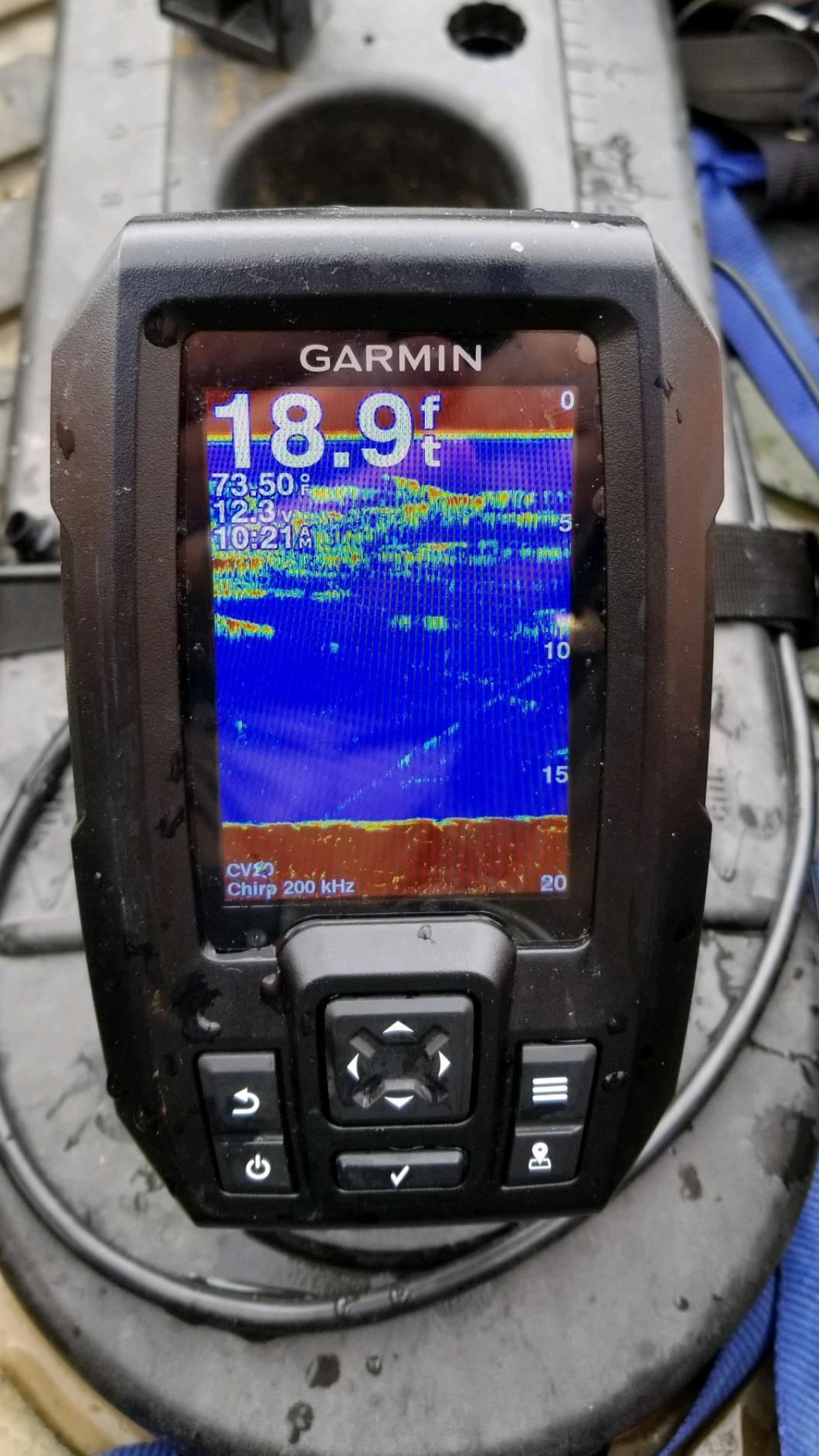
This is the unit we kept reaching for. The Striker 4 Portable Kit carries a 3.5 inch LCD, a keyed button interface you can work with cold hands, and a rechargeable battery that owners routinely run 10 to 16 hours without a top-up. In our own sessions it was the one that made it to the bank on a cold morning and stayed on until we packed up.
The Chirp sonar is the reason the picture looks the way it does. Instead of a single frequency, it sweeps a continuous band, which produces cleaner fish arches and better target separation than a fixed-frequency flasher. When two fish sit at slightly different depths you can tell them apart, and that difference matters when you are deciding whether to drop the lure or move.
Depth rating is the other headline. Maximum depth is 1,600 feet in freshwater and 750 feet in saltwater, which covers essentially any water a bank angler will ever stand next to. The built-in waypoint map lets you mark a brush pile, stump or dock and come back to it on the next trip, and the package includes a kayak in-hull transducer mount so the same unit moves from the bank to the kayak.
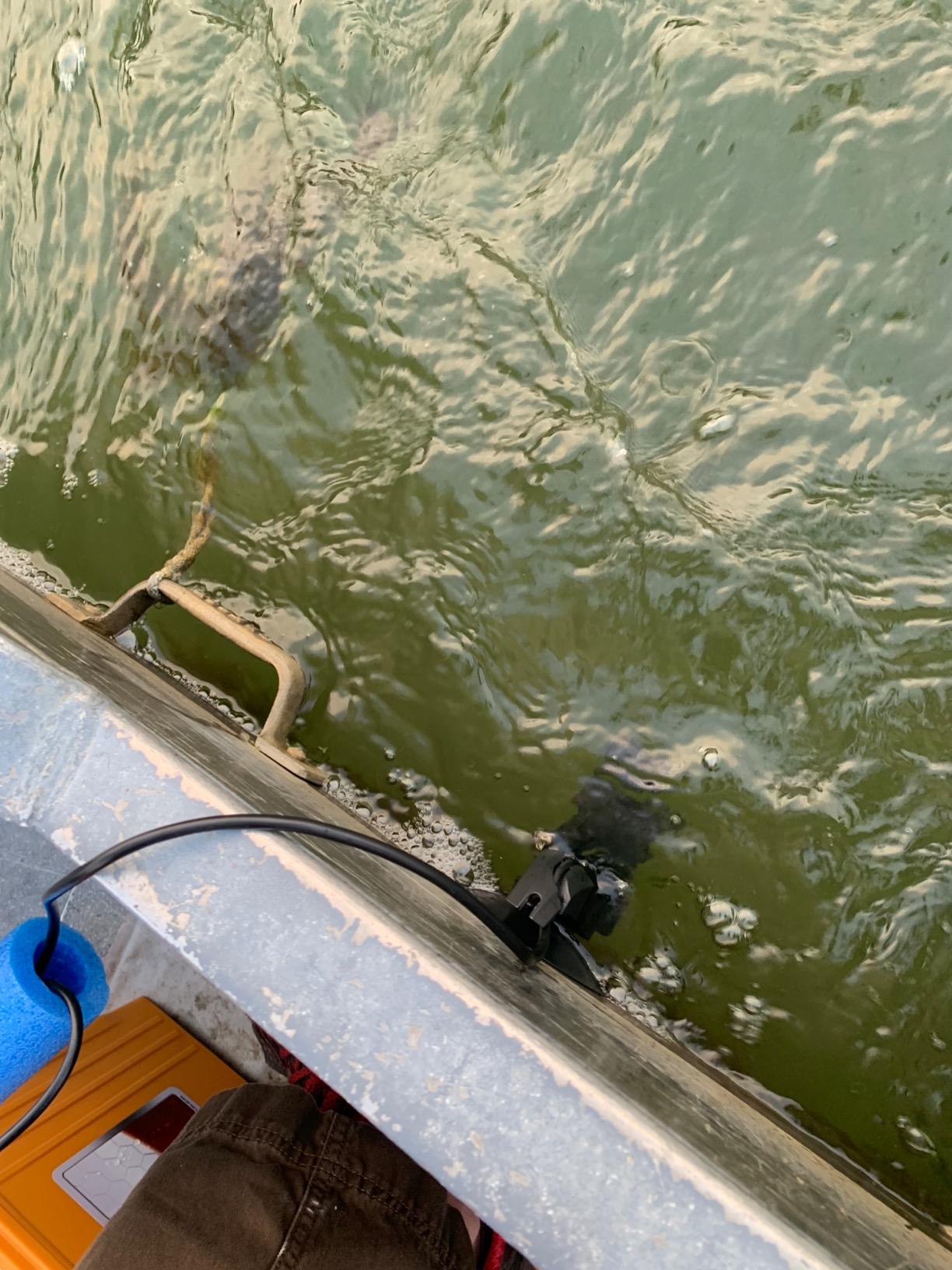
It is not a castable, and that matters for how you use it. The sonar ball lives on the transducer, so you either tow it from a boat or kayak, or drop it over the bank beside you and read within about 30 feet. If your plan is to cast 100 feet out and scan that ledge, this is the wrong tool even though it is the right tool for almost everything else.
Owners report a very small number of units failing to power on after light use, and the documentation is widely criticised as thin, so budget an evening of community videos rather than the manual. The charging setup is also slightly awkward: the battery and the charger use different connectors, so a top-up means removing terminal leads in the cold.
On ice, reviewers note the unit works cleanly alongside Vexilar flashers in a shared shack with no interference, which tells you the Chirp signal handling is solid. Just budget separately for an ice transducer, since the kit does not include one.
Who this is right for
The angler who splits the season between wading, a small jon boat and the bank, and who wants one box that does all three. It is also the pick for anyone fishing shoulder-season ice, because the built-in flasher covers that use without a second purchase.
If you fish one water and know it well, the waypoint map turns every session into data. You are no longer remembering a vague feeling about where the channel ran; you are navigating back to a marked coordinate.
Where it falls short
The 3.5 inch screen is the first thing people mention. In full sun with polarized lenses it stays readable, but the history view is cramped when you want to study a drop-off profile in detail. Larger sizes in the same family exist if screen area matters more than pack size.
Second, the ice transducer is an add-on. If ice fishing is your main reason for owning a sonar, that extra cost changes the math against a purpose-built ice unit.
2. Garmin STRIKER Cast – Best Castable Unit for the Bank
Garmin Striker Cast, Castable Sonar, Pair with Mobile Device and Cast from Anywhere, Reel in to Locate and Display Fish on Smartphone or Tablet (010-02246-00)
Castable to phone, 200 ft wireless range, 10+ hour battery, flasher mode
Pros
- Garmin build quality in a 75 g castable body
- Wireless streaming range up to 200 feet from the phone or tablet
- Supports 2-D and ice fishing flasher sonar modes
- 10+ hour internal battery that switches on in water and off when lifted
- Downloads 1-foot contour maps from the Garmin Quickdraw Community
Cons
- Requires a phone or tablet
- so no standalone display
- Short 502-review history compared with the other picks
- Base variant is the no-GPS option so onboard mapping needs the GPS version
This is the pod we would actually throw from a shoreline. It weighs 75 grams, streams to the free STRIKER Cast app on Apple or Android, and holds the signal out to about 200 feet. That range figure is the headline, because most competitors start dropping before half that distance.
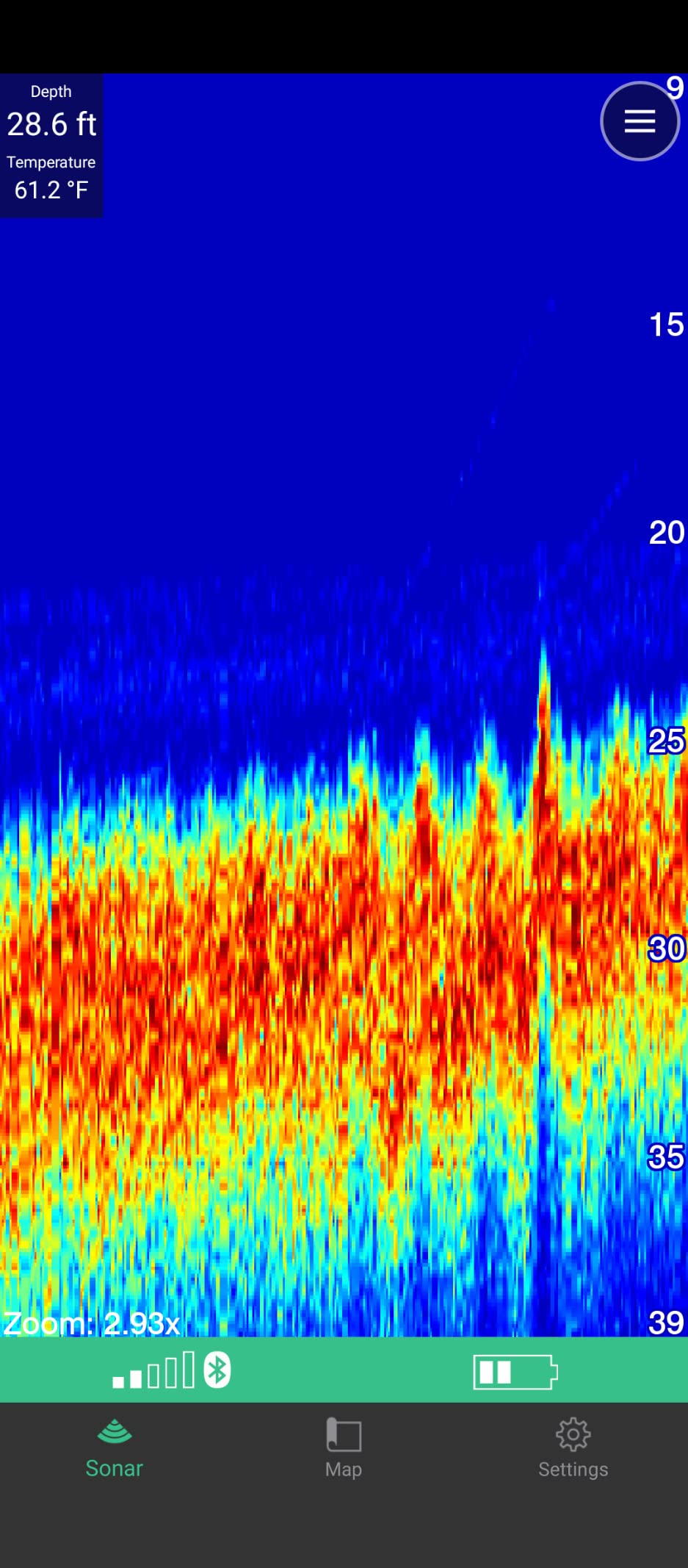
It handles both traditional 2-D sonar and an ice fishing flasher mode, and it performs in shallow and deep water. The practical pattern is to cast past your target, let it settle, then work the lure back through the area while you watch the screen build a bottom profile under the fish arches.
Battery management is handled for you. The pod powers on when it floats and powers down when you lift it, and the internal rechargeable cell runs 10 hours or more, so a full day of casting does not need a mid-session charge. The package includes a 20 foot tether, a carrying bag and a USB charging cable.
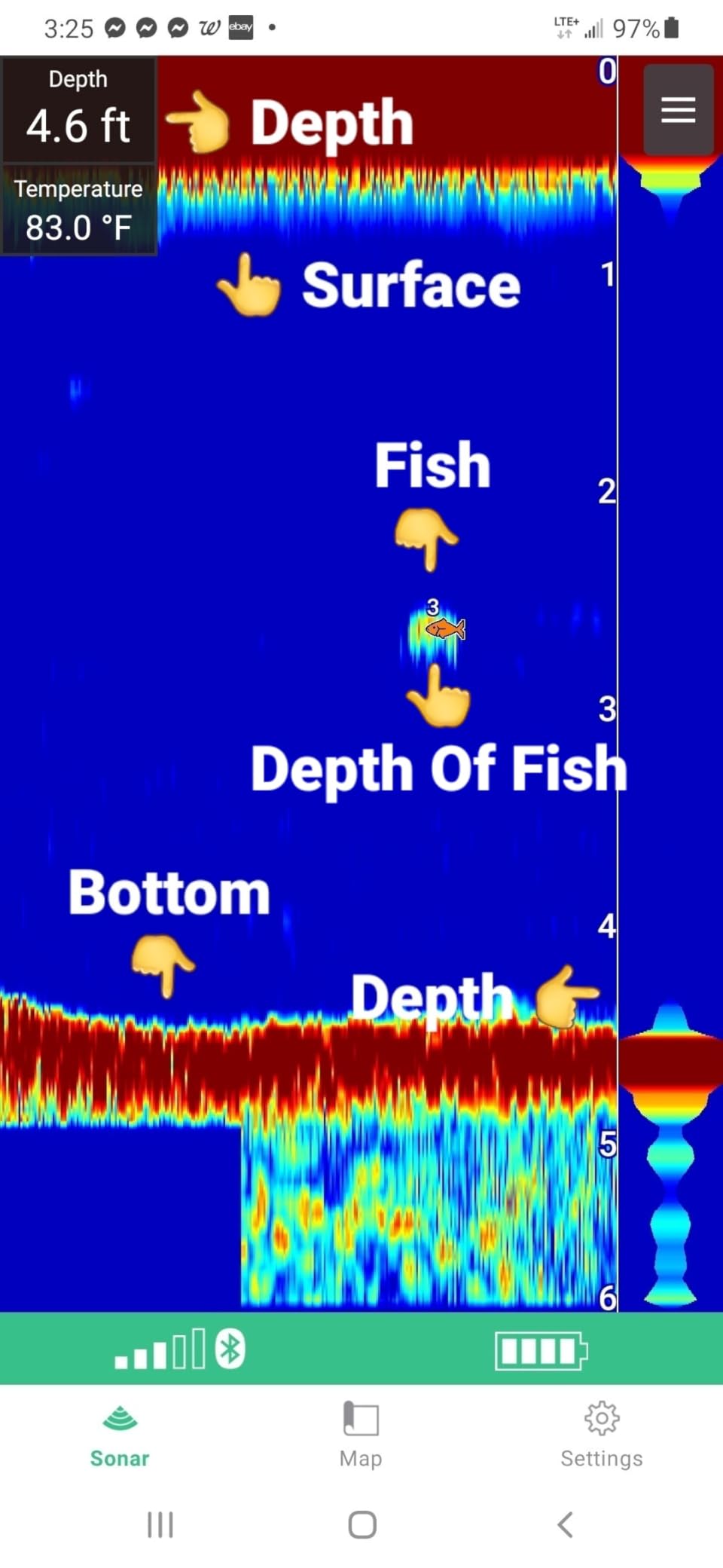
The mapping side is where Garmin pulls ahead of most castables. You can download maps with up to 1 foot contours from the Garmin Quickdraw Community, which means water that has already been surveyed is available to you without a subscription or a survey of your own.
Be clear about what this unit is not. It has no screen of its own, so everything depends on your phone or tablet, and in bright sun at the water’s edge that is a genuine limitation. If you would rather not fish one-handed while holding a phone, this is the wrong category.
Review volume is the other honest caveat. At around 500 reviews it has a much shorter track record than the older units on this list, so long-term durability is less well documented. Build quality and app pairing, by contrast, come back consistently positive in the reviews that do exist.
Who this is right for
The bank angler who casts past structure. At up to 200 feet of streaming range it matches most shore casting distances, which means you can find the drop-off you were told about and then fish it instead of guessing at it.
It also suits anglers who move between water bodies and want contour maps without carrying a mounted unit. The Quickdraw downloads mean a new lake does not start as a blank screen.
Where it falls short
No GPS in this variant. Onboard route storage and marking while you cast needs the GPS version, and if mapping is the reason you are shopping, check which variant you are actually buying before you commit.
Phone dependence is unavoidable, and a phone screen in direct sun is a worse window than a dedicated 3.5 inch LCD. Expect glare fights on bright afternoons.
3. Humminbird PiranhaMAX 4 – Best for Small Boats and Kayaks
Humminbird PiranhaMAX 4 Fish Finder with Transducer, Dual Beam Sonar
Dual beam sonar, 4.3 inch LCD, 600 ft depth, transom transducer included
Pros
- Second-highest rating in this group with about 77% five-star reviews
- 4.3 inch screen is larger than most portable units at this level
- Dual beam lets you switch between narrow detail and wide coverage
- 600 ft maximum depth far exceeds the castable pods
- Tilt and swivel mount makes the viewing angle easy to adjust
- Transom transducer included for immediate boat or kayak use
Cons
- Transom transducer requires a boat
- so it is not a castable shore unit
- No GPS or mapping capability
- 1-year limited warranty is the shortest coverage here
- No wireless connectivity
- it is a self-contained display only
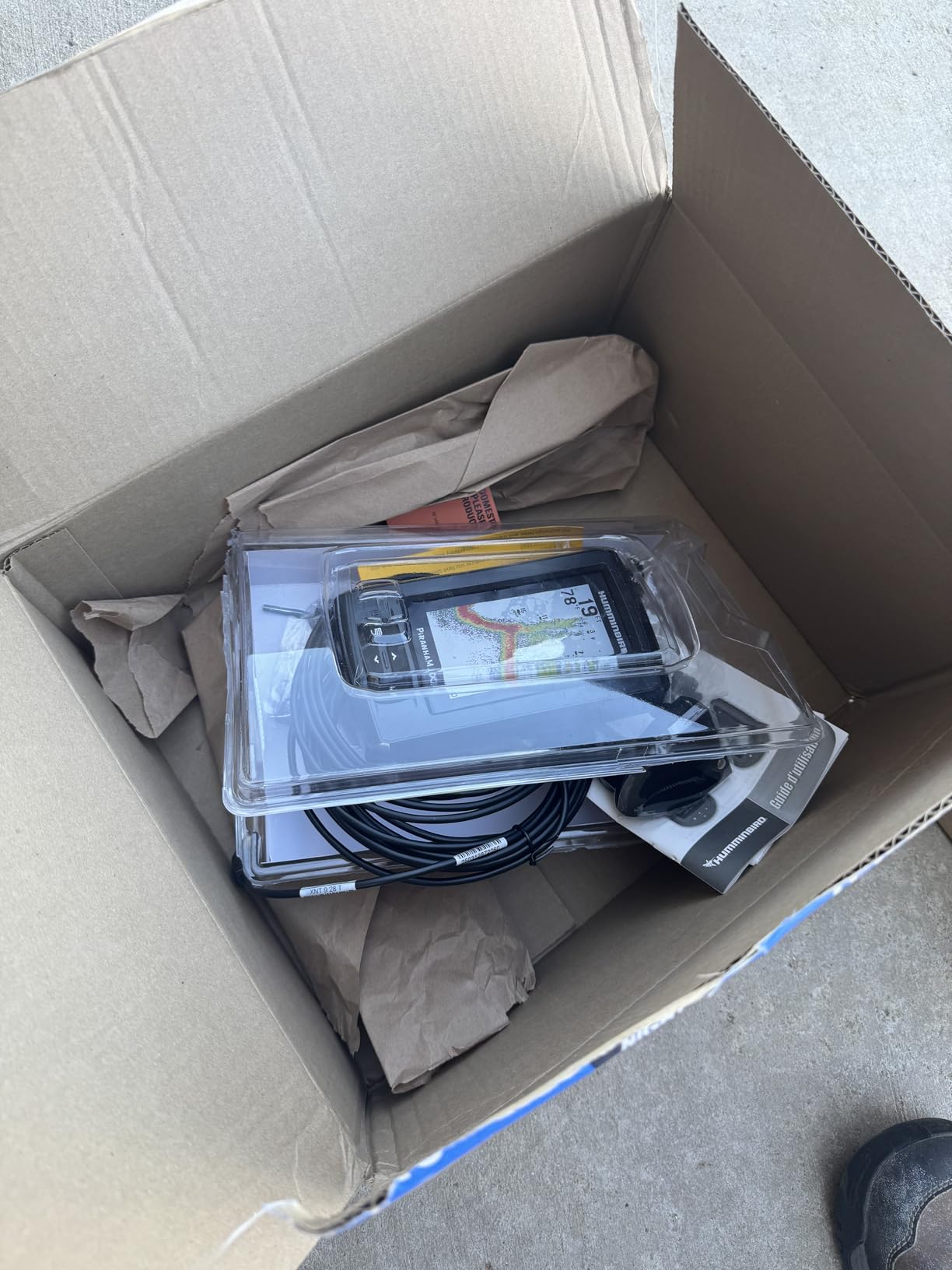
The PiranhaMAX 4 solves a different problem from the two units above it: it is a real fish finder with its own display, meant to be bolted to a transom or carried in a kayak. Owners rate it second-highest in this group, with roughly 77 percent five-star reviews across more than 1,300 ratings.
The screen is the standout. At 4.3 inches it is noticeably larger than the 2 to 2.6 inch displays on most castable units, and a tilt and swivel mount lets you angle it toward whoever is holding the rod. On a bright afternoon that extra screen area is worth more than any spec on the box.
Dual beam sonar is the useful trick. You run a narrow beam when you want detail on a specific spot and a wide beam when you want to see how much water and structure you are covering. Combined with 600 feet of maximum depth, it handles everything from a shallow pond to a river channel.
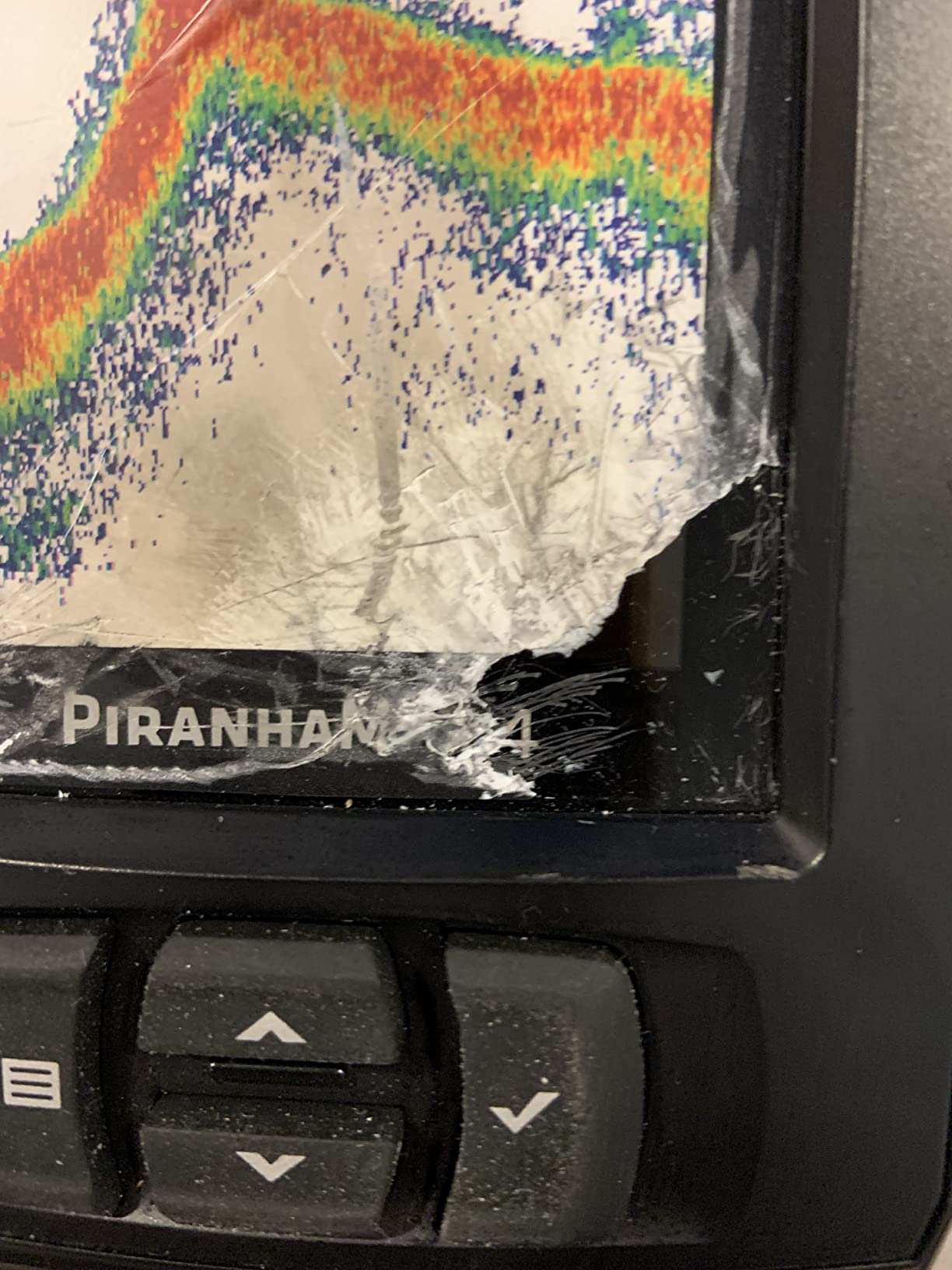
It is not a shore tool, and we want to be clear about that rather than stretching it into the list. The transducer mounts on a transom, which means the unit is going in a boat. From a bank you can still lower the transducer over the edge and fish the water in front of you, but the design is not built for casting.
There is no GPS, no mapping and no wireless link. The PiranhaMAX 4 is a self-contained sonar display: you take readings, you note depths yourself, and when the session is over that knowledge lives in your head or your notebook. Anglers who want mapped waypoints need a different unit.
The warranty is one year, the shortest coverage among these picks, and it is a straightforward tool with no app to update and nothing to pair. Reviewers describe it as dependable, easy to read and the least fussy unit on the list.
Who this is right for
The person who fishes a small boat or a sit-on-top kayak and wants their own screen with no phone in the picture. The included transom-mount transducer means you can be reading bottom structure within minutes of unboxing.
It is also a strong second unit for a household where two people fish at once, because it needs no pairing and no shared device.
Where it falls short
For pure bank fishing it is the wrong shape. You cannot cast it, so the only reach you have is the water immediately in front of where you stand, and the rest of the pool stays a guess.
No GPS means no repeatable waypoints. For an angler mapping an unfamiliar pond, that is a real limitation and it pushes the comparison toward the Garmin or Deeper units.
4. Deeper PRO+ 2 – Best for Mapping Unfamiliar Water
Deeper PRO+ 2 Sonar Fish Finder – Portable Fish Finder and Depth Finder For Kayaks, Boats and Ice Fishing with GPS Enabled | Castable Deeper Fish Finder with FREE User Friendly App
Built-in GPS, wide mid and narrow beams, 330 ft range, 100 m depth
Pros
- Three beam options give both broad coverage and fine target separation
- Built-in GPS allows bathymetric map creation from shore
- dock or bank
- Lightweight at 3.2 ounces with a wireless cable-free design
- Target separation of 0.4 in on the narrow beam
- Own Wi-Fi connectivity independent of mobile data
- 2-year limited manufacturer warranty
Cons
- Requires a phone or tablet so readability depends on the mobile screen
- App-dependent
- so functionality is limited to the Fish Deeper app
- Shorter review history than the Deeper START so long-term durability is less documented
The PRO+ 2 is the castable we would pick for mapping. It weighs 3.2 ounces, generates its own Wi-Fi so your sonar data does not consume mobile data, and carries a built-in GPS that records where every scan happened. Cast a pattern across a pond, then open the app and you have a bathymetric map of water that had none.
Beam selection is what separates it from cheaper pods. Wide, mid and narrow options let you sweep a broad area for structure, then switch to a narrow beam when you want to drill in on one spot. Target separation is quoted at 0.4 inches on the narrow beam and 1 inch on the wide and mid beams, which is fine enough to follow a single small lure or separate two fish at similar depth.
Sonar accuracy holds at distances up to 330 feet, and maximum depth is 100 meters. The box includes attachment bolts, a neoprene pouch, a quick guide and a USB cable, and coverage is backed by a 2-year limited warranty.
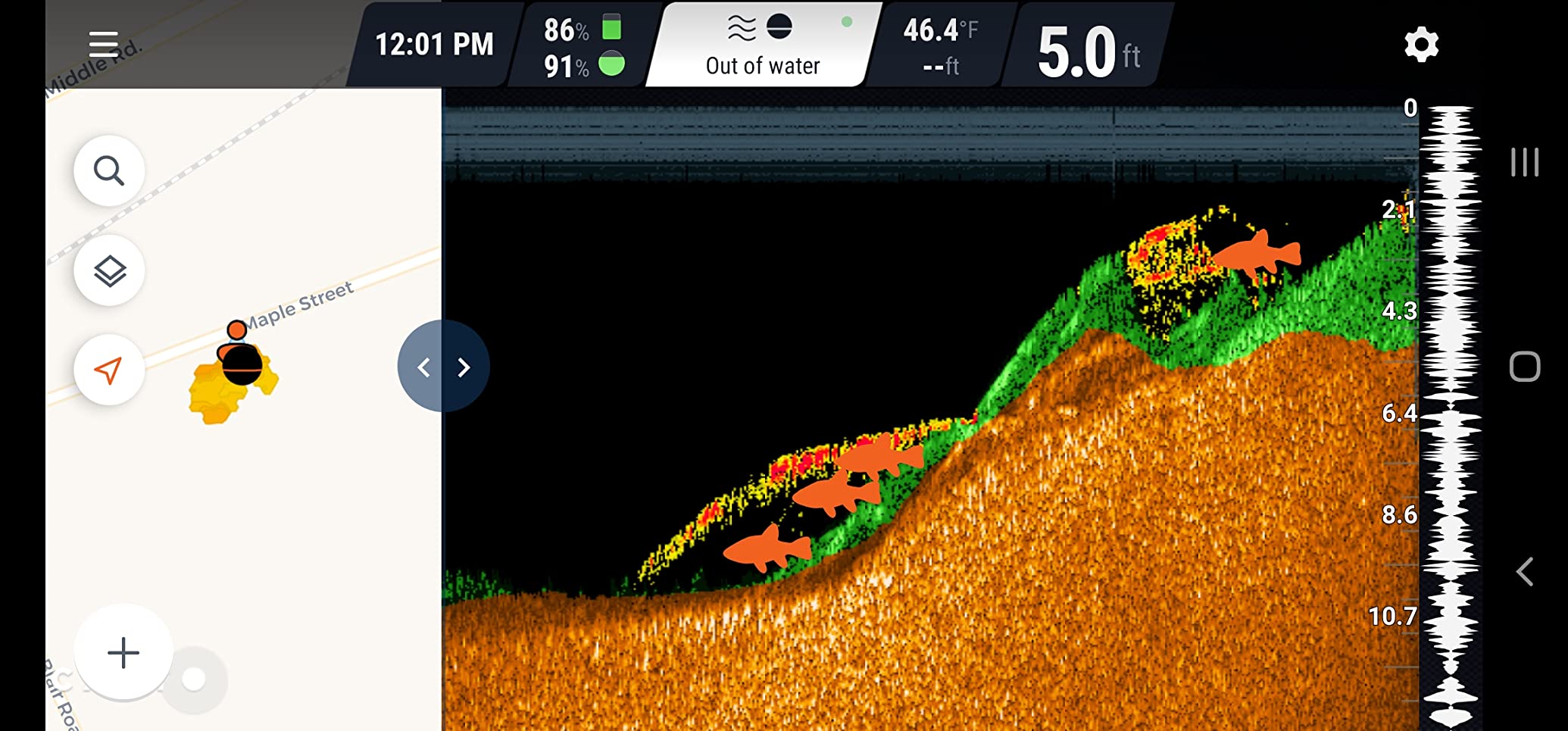
Mapping is the workflow that earns this unit its place. Fish Deeper saves your scans with position and time, so a session on an unmapped creek becomes a reference you can re-fish next month. If your problem is not where the fish are today but not knowing where anything is, this is the tool for it.
It is also the lightest thing you can put in a pocket, which matters if you are moving along a bank rather than sitting on one. A kayak angler can carry it in the same pouch as a soft plastic bait.
The catch is the same one that comes with every phone-based unit: readability. Direct sun on a handset is a poor window, and everything the unit can do is bounded by what the Fish Deeper app does. If you later want a hardware feature the app does not expose, you will not get it.
Who this is right for
The angler whose home water is unmapped, private, or newly fished, and who wants to build a reference rather than rely on someone else’s chart. The built-in GPS means the map is created by you, on your water, at your own scale.
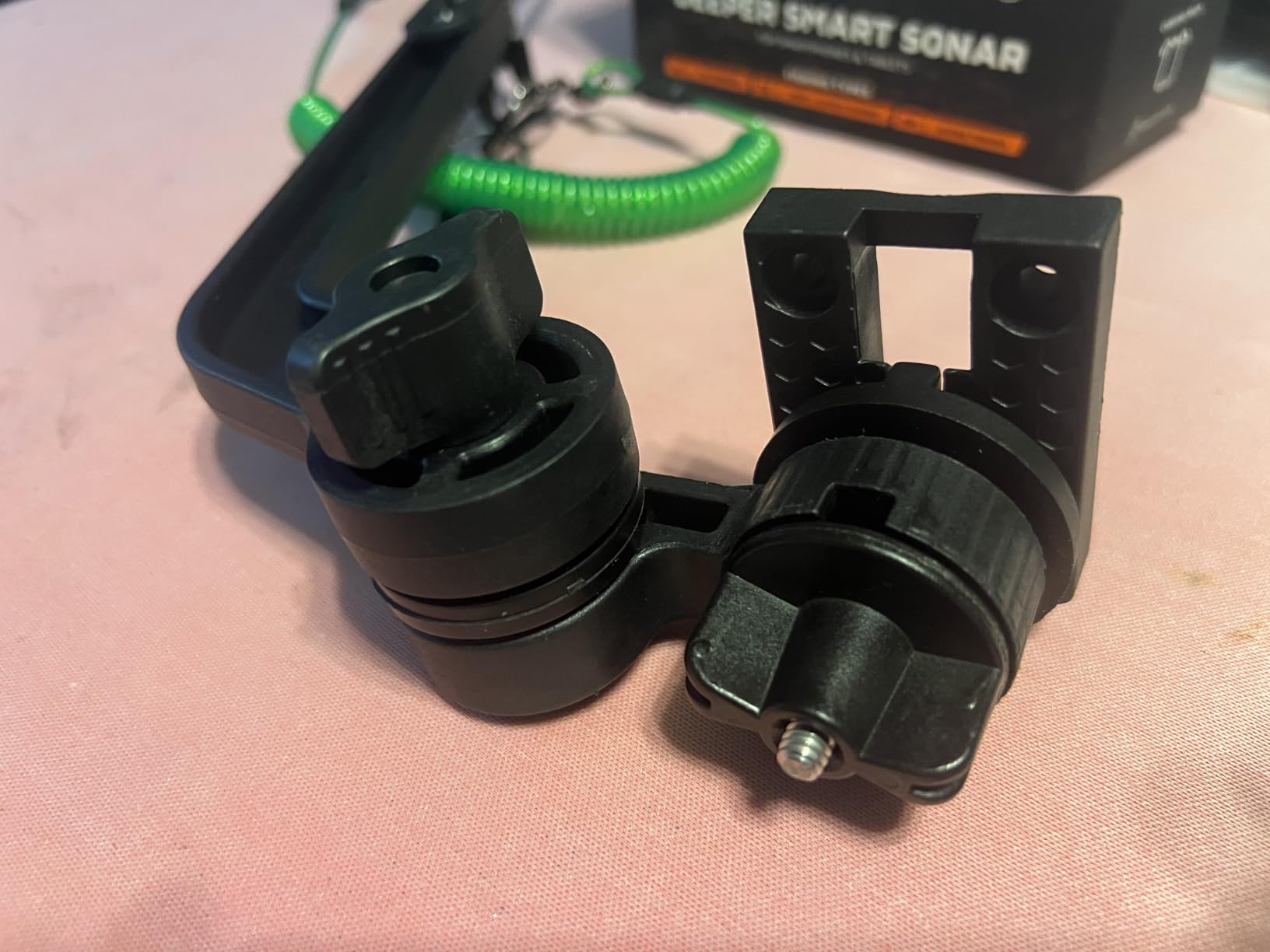
It also fits mixed use. The same pod goes from the bank to a kayak to ice fishing without a mounting bracket or a cable, which is why it pairs well with a kayak built for angling or a fishing paddleboard where console space is limited.
Where it falls short
Review history is shorter than the Deeper START, at around 860 ratings, so long-term durability across seasons is less well documented than the numbers would suggest. The unit is new enough that the community has fewer seasons of hard-use data on it.
Phone dependence again. And the 100 meter depth cap means this is a freshwater and shallow coastal tool, not something for a deep saltwater inlet.
5. Deeper START – Best Budget Entry Into Castable Sonar
Deeper Start Fish Finder – Portable and Depth Finder for Recreational Fishing from Dock, Shore, Bank or Kayak | Castable Deeper Smart Sonar with Free User Friendly App
Self-generated Wi-Fi, 165 ft cast range, 50 m depth, about 6 hour battery
Pros
- Lightweight wireless design with no cables and no external battery pack
- Generates its own Wi-Fi so it does not use mobile data
- Quick to set up
- paired with the free app and fishing within minutes
- Shows fish size
- depth
- bottom contour and vegetation
- About 6 hours of battery with a 2.5 hour recharge
- Castable from shore
- dock
- bank or kayak as advertised
Cons
- 50 m maximum depth is shallow against higher-end portable units
- Relies on a phone or tablet so readability suffers in bright sunlight
- App-dependent
- so functionality is limited to what the Fish Deeper app provides
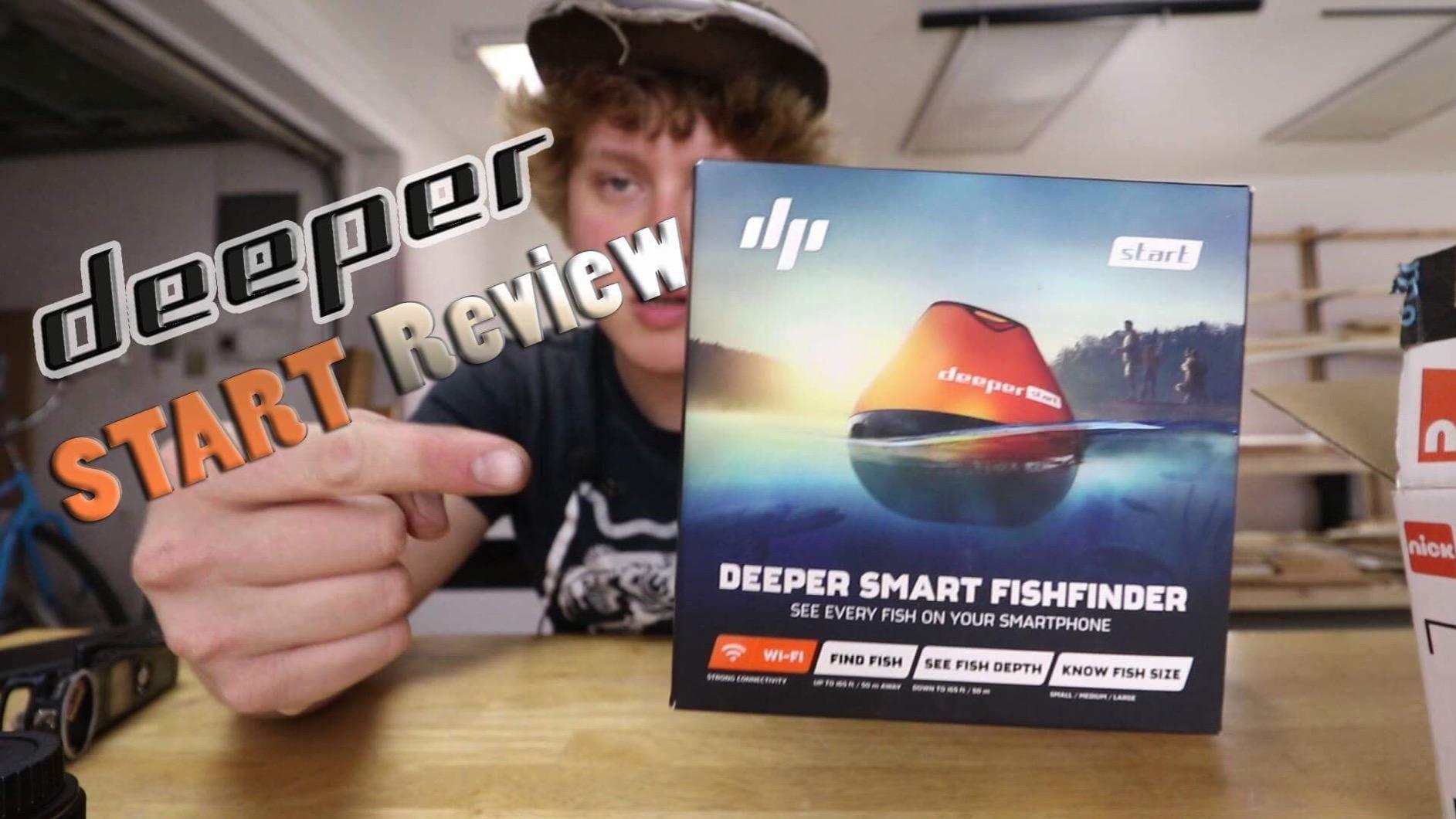
The START is the simplest way into castable sonar and the least intimidating unit here. There is no pairing button to hunt for, no battery pack to strap to a kayak deck, and no cable to snag on reeds. You charge it, open the free Fish Deeper app, and you are casting.
It reports fish location, fish size, depth, bottom contour and vegetation, which covers the four things a shore angler actually asks: how deep, what is down there, is there structure, and is anything holding on it. Owners regularly cite it for mapping ledges and drop-offs in water they had never fished.
Range and depth are 165 feet, with a 40 degree sonar beam. Battery life runs about 6 hours and a full recharge takes roughly 2.5 hours, and there is a night fishing mode for working structure after dark.
It is also the version most people should start with if they are unsure whether a phone-based unit will work for them. With more than 3,000 ratings it has the second-largest review base on this list, so the long-term behaviour is well documented rather than anecdotal.
Fish Deeper saves every scan automatically with a time and location stamp, which gives you a revisit list even without built-in GPS on the unit itself. Over a season that log becomes a record of the places that produced fish.
The 50 meter depth ceiling is the real constraint. On a creek, a shallow pond or a river run that is fine, but if your water drops past that, you are casting a sensor into a void. Know your water’s maximum depth before you commit.
Who this is right for
New or occasional anglers who want to see what sonar actually shows before spending on a serious unit. It is forgiving, quick to set up and light enough to carry in one hand while you fish.
Kayak anglers are the other natural fit, because a cable-free pod needs no deck mounting and no scupper routing. It stows in a pocket when you are paddling and comes out when you reach structure.
Where it falls short
Bright sun on a phone screen is the recurring complaint, and it is not a small one when you are trying to read a depth change at 40 feet. A phone case with a matte finish helps more than people expect.
Second, the app is the ceiling on features. If you later want finer beam control or built-in mapping, you are looking at the step-up model rather than a software update.
6. Venterior Portable Fish Finder – Best Standalone Display on a Budget
Venterior Portable Rechargeable Fish Finder Wireless Sonar Sensor Fishfinder Depth Locator with Fish Size, Temperature, Bottom Contour, Color Display
2.6 inch color TFT, 105 degree beam, 2.6 to 164 ft range, no hull drilling
Pros
- Truly wireless with no cord between sensor and display and no hull mounting
- Screen stays clear even in bright sunlight
- Lightweight with almost no setup
- Accurate depth readings that map new water quickly
- Shows depth
- temperature
- bottom contour and fish size together
- 2-year warranty with support response within 24 hours
Cons
- Sensor and receiver battery life is short
- especially in cold conditions
- 105 degree beam gives unreliable readings through an ice hole
- Fish size classification is subjective and not well calibrated
- Not accurate when towed behind a moving boat because waves cause false signals
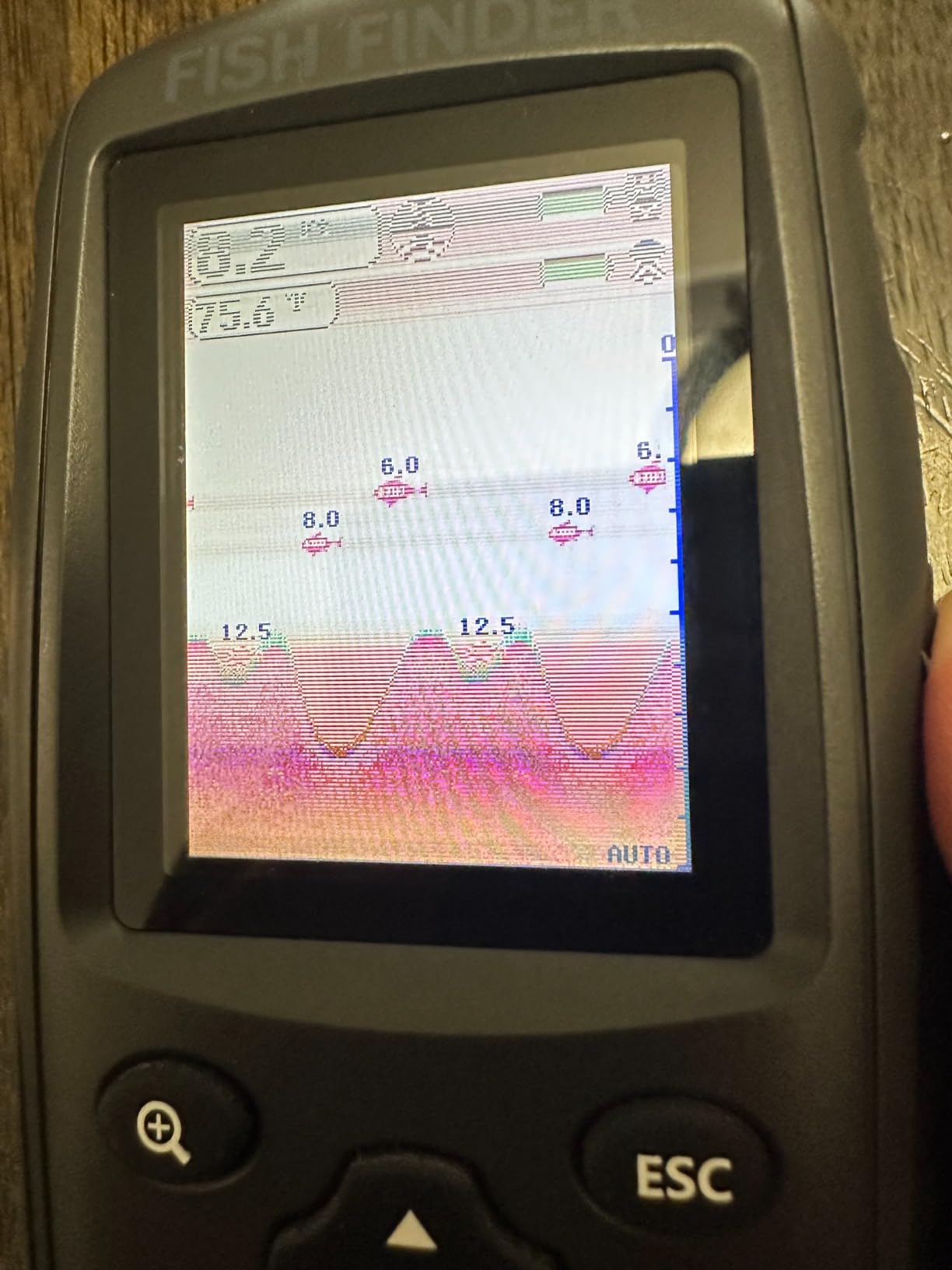
This one stands out from the phone-app crowd because the display is in your hand. The sensor is tethered to your line and cast, but the readout stays on a 2.6 inch colour TFT screen, so you are not holding a phone in one hand and a rod in the other with your face in the glare.
The screen background is selectable, black or white, which is a small detail that turns out to matter. White background in daylight, black at night, and reviewers consistently report the screen staying clear in bright sun. That is the opposite of what the app-based units struggle with.
The 105 degree beam covers a wide area, and the unit reports depth, water temperature, fish size in small, medium and big classes, fish depth and bottom contour across a 2.6 to 164 foot range. The sensor powers on automatically when it floats, and range from the handheld is up to 262 feet.
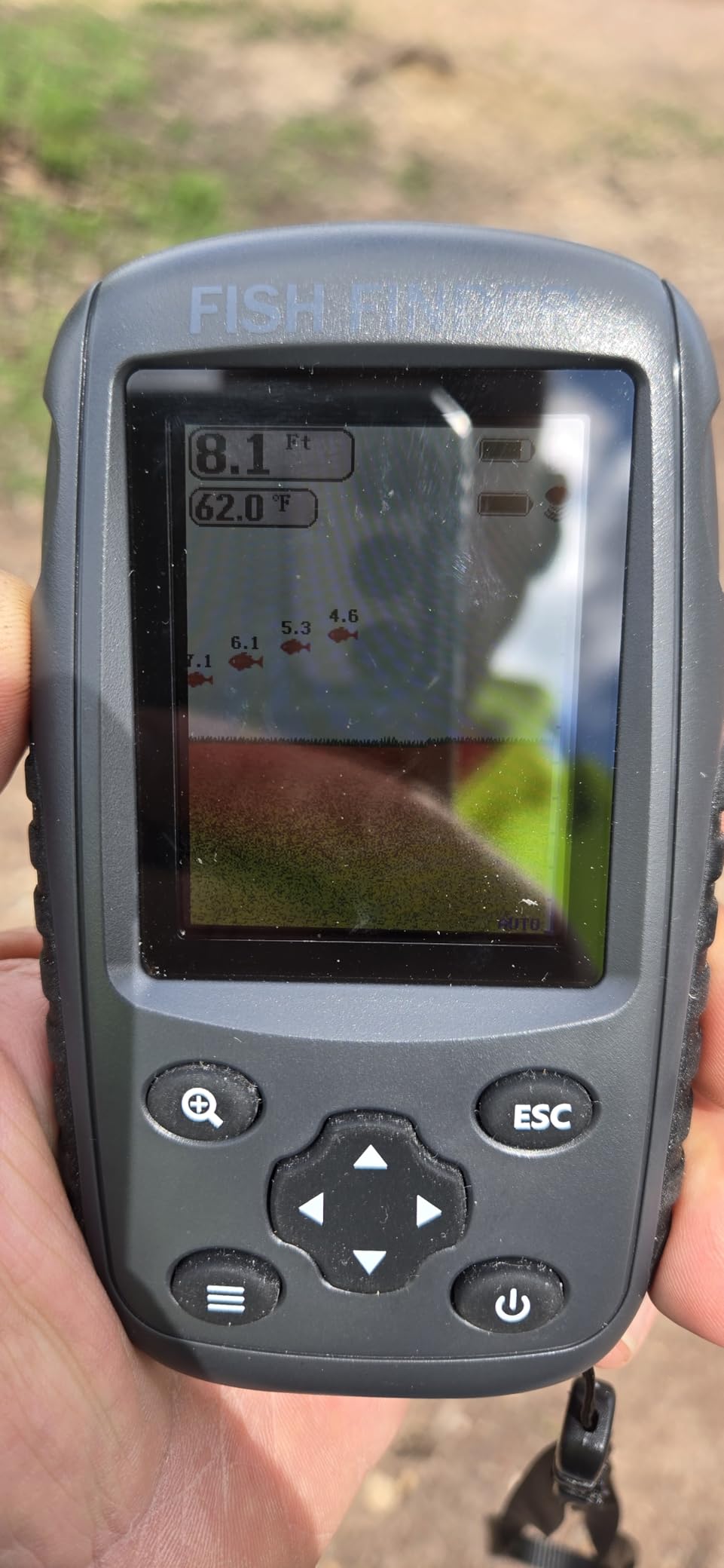
Where it earns its place is a quiet shore session or a kayak trip where you want to work slowly. Reviewers point out that it is lightweight, needs almost no setup, and gives depth readings accurate enough to map a new water quickly.
The build support is also better than the price tier suggests. A 2-year warranty is attached and the brand states it responds to support requests within 24 hours, which is worth something on a device that lives in the weather.
Battery life is the weakness. The sensor and receiver run roughly 3 to 4 hours of continuous use, and cold weather shortens that further. For a long winter day at a bank, plan a midday charge or carry a second sensor.
Who this is right for
Anglers who want a dedicated screen without paying for a full mounted unit, and who fish close to structure where the sonar is doing a simple job: reading depth, temperature and bottom shape. The white-screen mode makes midday fishing workable in a way phone-based units are not.
It is also a good fit for cold-weather use where a phone battery dies quickly, because the unit does not depend on your handset for power.
Where it falls short
The wide 105 degree beam is genuinely poor through an ice hole. Narrow beams concentrate energy and cut a clean hole reading; a beam this wide smears the return. Treat this as a moving-water and open-water device rather than an ice one.
It is also unreliable when towed behind a moving boat, because wave action produces false signals. Keep it as a casting or dangling unit, not a trailer unit. Reviewers also suggest a realistic working depth nearer 120 feet than the stated 164.
7. Reelsonar iBobber – Longest Battery Life in the Lineup
Reelsonar Portable Fish Finder Accurate Fish Depth Finder with Depth Range of 135 feet 10+ Hours Battery Life with iOS & Android App Wireless
135 ft depth, 10+ hour battery, Bluetooth app with smartwatch support
Pros
- Pocket-sized float that casts far and switches itself on and off in the water
- Roughly 9 to 10 hours of real-world battery for a full day
- Free app with clear graphics
- a demo mode and water temperature readout
- Blinking LED ring makes the float easy to find at night
- Depth
- bottom contour and weed mapping useful for coarse fishing in unknown water
Cons
- Bluetooth range is limited to roughly 40 to 50 feet so the phone must stay near the float
- Minimum working depth of about 5 feet makes it useless in very shallow water
- App and firmware can drop the connection unexpectedly
- The app drains phone battery noticeably
- Strike alarm is very sensitive and triggers on almost any movement
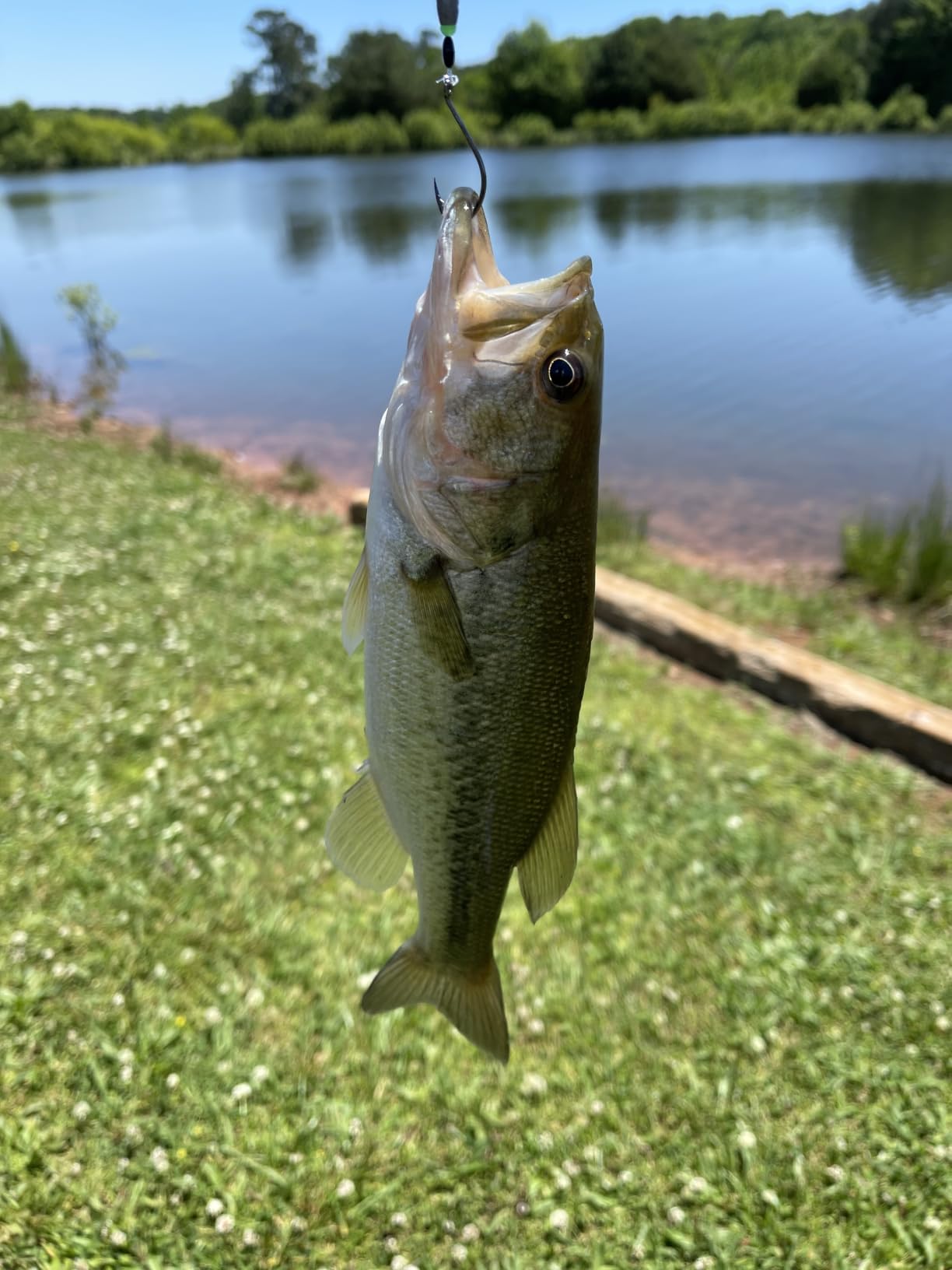
The iBobber is the most-reviewed unit here, with close to 6,700 ratings, and the reason is battery life. The specification is 10 hours or more on the rechargeable cell, and owners report roughly 9 to 10 hours in real conditions. If you fish long sessions and do not want a spare battery in the bag, this is the pick.
It is also a genuinely tiny object. The float is pocket-sized, switches itself on when it hits the water and off when you lift it, and carries a blinking LED ring so you can find it after dark on a weedy bank. The free app adds smartwatch support, which is unusual at this level.
Depth range is 135 feet, and the app shows depth-tagged fish icons color-coded by size, bottom contour and weed mapping. It works in freshwater and saltwater and is used for shore, boat and ice fishing.
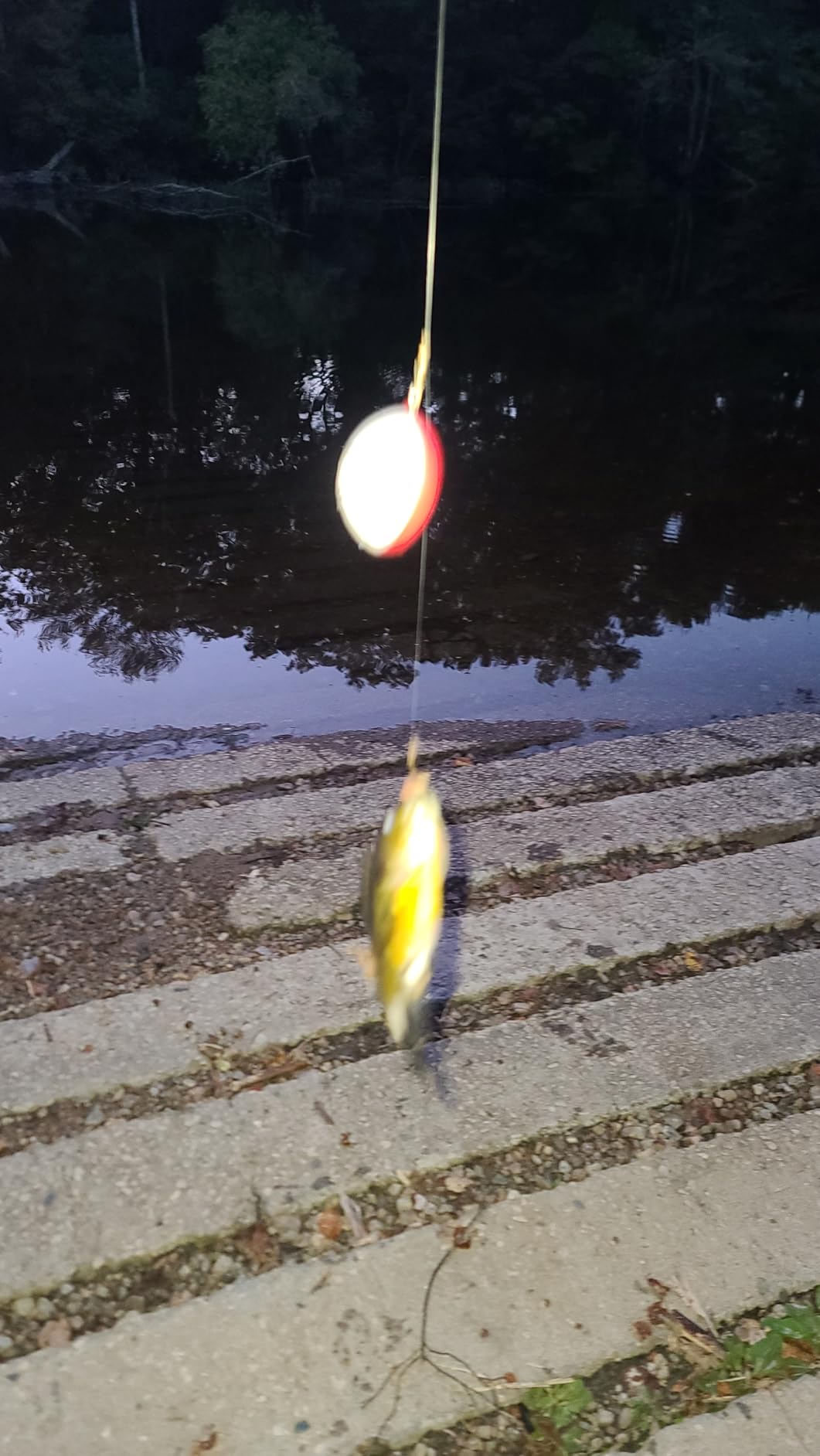
The catch is the connection, and it is not a minor one. Bluetooth range is listed as 10 meters or more in open conditions, and in practice reviews put reliable connection at roughly 40 to 50 feet. If you can cast 100 feet or more, the image will cut out before the lure arrives.
That makes the iBobber a close-range tool: dangling it under a dock, working the drop-off at your feet, or fishing a narrow creek where the fish are inside the signal radius. The fish alarm for gatherings under docks and piers is built for exactly that job.
There is also a minimum working depth of about 5 feet, so very shallow ponds and marsh edges are out. The strike alert is famously sensitive and will fire on movement that is not a bite, so treat it as a nudge rather than an alarm you can trust unattended.
Who this is right for
Coarse anglers, anglers fishing structure within 40 feet of where they stand, and anyone who needs the unit to last a full day without charging. The large review base also makes it the safest purchase here if you want to see how a product ages over years rather than months.
The automatic on-off behaviour and the LED ring solve two real problems with castables: dead batteries and a lost ball in the dark.
Where it falls short
Short Bluetooth range is the deal-breaker for anyone who casts past 50 feet. No amount of app work fixes a signal that was never designed for that distance, and this is where the Wi-Fi units on this list pull clearly ahead.
Connection dropouts, phone battery drain and the 5 foot minimum depth are the other recurring complaints. If you fish shallow water or run a phone that dies by midday, this is the wrong unit.
8. LUCKY FFC1108 Handheld – Budget Depth Finder, Not a Shore Tool
LUCKY Kayak Portable Fish Depth Finder Water Handheld Fish Finder Sonar Castable Kayak Boat Fishfinder Transducer Fishing LCD Display FFC1108
2 inch LCD, 3 to 328 ft range, bottom composition readout, audible fish alarm
Pros
- Inexpensive
- compact and easy to carry to and from the water
- Readings matched when mounted through a kayak hull versus towed
- Clear and obvious display of fish depth readings
- Back light and unit switching keep it readable in varied conditions
- 5 sensitivity levels help in clear and turbid water
Cons
- Cannot be used from shore; it needs a boat or kayak
- No size differentiation
- so minnows read the same as larger fish
- Will not read through a fiberglass hull
- Basic sonar-only device with no GPS
- mapping or contour detail
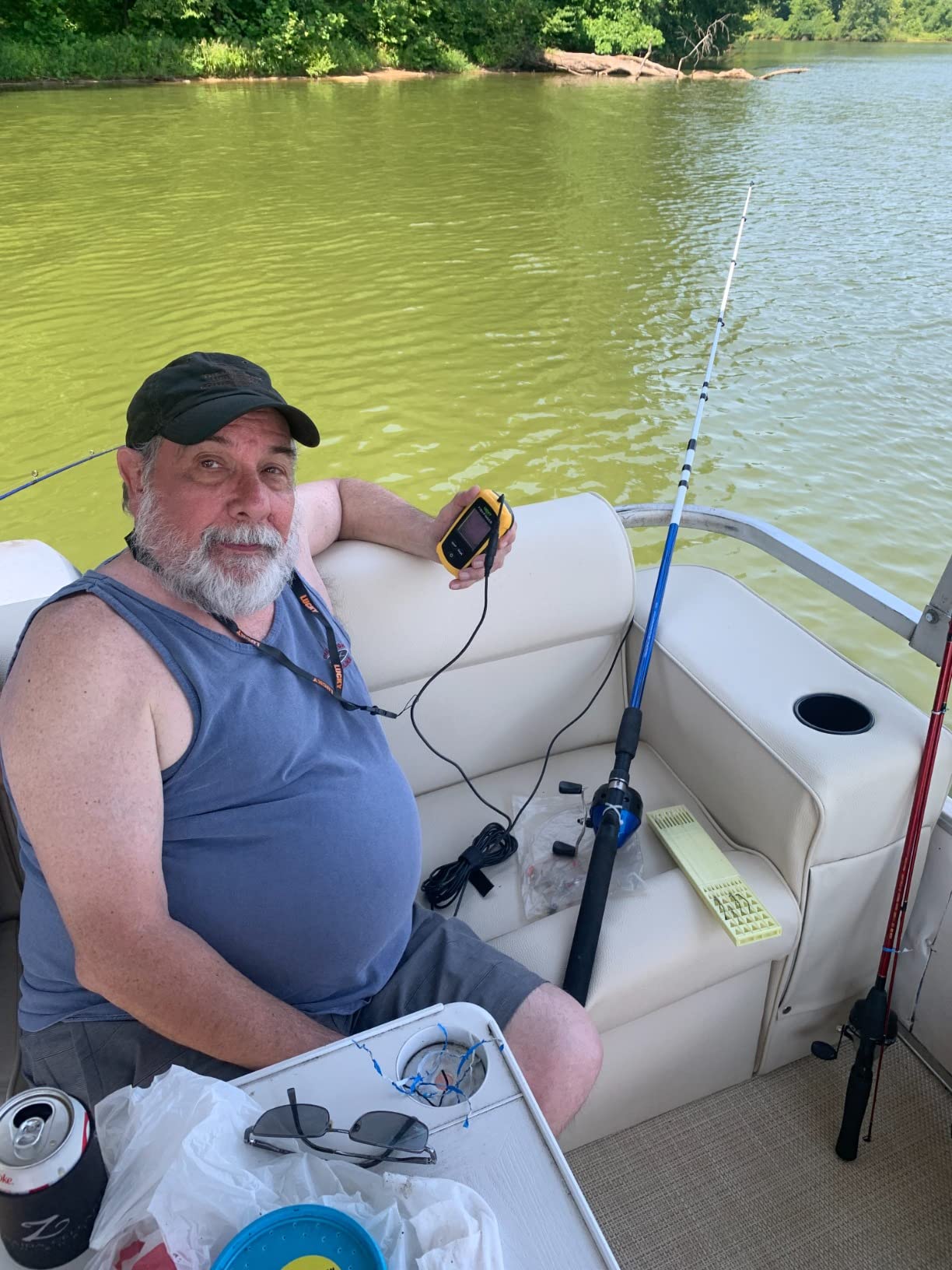
We include the LUCKY FFC1108 because it is the most common thing a first-time buyer finds, and it is important to know what it is not. This is a handheld wired depth finder for a kayak or a small boat, not a castable unit. The transducer either mounts through a hull or is towed behind you, and there is no wireless link of any kind.
What it does is simple and does it cheaply. Depth detection runs from 3 feet to 328 feet with a fully immersed transducer, the display shows short and tall weeds, sand and rocks on the bottom, and you can switch between feet and metric readouts. A back light handles daylight or darkness, and 5 levels of sensitivity let you tune it for clear or turbid water.
The audible fish and fish school alarm is the feature owners mention most, along with how easily the unit fits in one hand with its neck strap. It is the lightest thing to carry to a pond and the least complicated to use.
What you give up is resolution. The display registers anything suspended in the water column, so a school of minnows can look like a wall of fish. There is no size differentiation, no arch detail, no way to tell a bluegill from a small bass on screen.
There is also no mapping and no GPS. A 3,284-rating review base shows how popular it is, and the pattern in those reviews is consistent: people use it to find ledges and drop-offs in water they know nothing about, then drop it in the bag.
A small number of reviews report units failing to power on after light use, and it will not read through a fiberglass hull, so a composite kayak needs the transducer in the water rather than stuck inside it.
Who this is right for
The angler on a sit-on-top kayak or a small boat who wants a cheap, reliable depth number and nothing more. If your entire goal is answering how deep the water is in front of the boat, this does it for a fraction of the cost of a mapped unit.
It is also a reasonable first purchase for a child or a beginner, because there is no app, no pairing and almost nothing to go wrong.
Where it falls short
From the bank it simply does not work. The transducer must be in the water, which means the water must be next to you. If the phrase shore fishing is the whole point, skip this one.
The coarse fish reading is the other limit. Reviewers consistently describe it as a depth finder that registers fish, not a fish finder that identifies them, and any search for structure detail or fish size will disappoint.
How to Choose a Portable Fish Finder for Shore Fishing
Short answer: match the connection range to your casting distance, the depth rating to your water, and ignore every spec that is not about the signal reaching your screen.
Most anglers lose money here by comparing transmit power and waypoint counts, which is why we skipped them. On a castable pod, the four decisions that change your session are connection, depth, beam and battery. Everything else is detail.
Connection type decides how far you can cast
Bluetooth units like the iBobber hold a connection for roughly 40 to 50 feet in practice. That is a dangling unit, not a casting unit, and it will frustrate anyone who routinely puts a lure 100 feet past their toes.
Wi-Fi pods such as the Deeper START, the Deeper PRO+ 2 and the Garmin STRIKER Cast stream much further, with published streaming distances from about 165 to 330 feet and 200 feet respectively. The catch with Wi-Fi is that you are running a phone, so readability in direct sun and phone battery life become part of the product.
The honest rule is simple: measure your honest casting distance, then pick a unit whose range exceeds it by a wide margin. A signal that drops at the moment the lure arrives wastes the whole trip.
Depth rating should exceed your deepest water
The castable pods here run from 135 feet to about 165 feet, and the Deeper PRO+ 2 goes to 100 meters. Mounted units go far deeper, with 600 feet on the PiranhaMAX 4 and 1,600 feet of freshwater depth on the Garmin Striker 4.
If you fish a river run or a shallow pond, any of the pods will do. If you fish a deep reservoir bank, a channel or a steep drop-off, a castable cap of 130 to 165 feet will leave you reading nothing, and a mounted unit is the right tool. We have seen anglers waste a season on a pod that could not see the bottom they were targeting.
Beam width trades coverage against detail
A wide beam covers a lot of water and finds more fish, but it smears the image. A narrow beam cuts a clean detailed picture of a small area. The Deeper PRO+ 2 gives you both with wide, mid and narrow options, and the Humminbird PiranhaMAX 4 offers dual beam selection.
From a shoreline, the wide beam is your friend for the first pass, because you do not yet know where the structure is. Once you find the edge, narrow in to confirm it before committing a cast.
Chirp beats a fixed frequency for arches
Chirp sonar sends a continuous sweep of frequencies in a single pulse rather than one fixed frequency. The result is crisper arches and better target separation, which is the difference between seeing a fish and being able to tell two fish apart. The Garmin Striker 4 is the only Chirp unit in this group, and it is one of the main reasons it rates highest.
Flashers, which several castable units support, are excellent for vertical jigging and ice fishing but produce a simpler image. For a shore angler reading a bottom profile, Chirp is worth paying for.
Battery life should be measured in sessions, not hours
Specs in this category are inconsistent, so the useful comparison is the full day. The Garmin STRIKER Cast and the Reelsonar iBobber are the two that clear a session comfortably, with 10 hours or more and self-managing power that switches off when the pod leaves the water.
The Deeper START manages about 6 hours on a 2.5 hour recharge, and the Venterior is the shortest at roughly 3 to 4 hours of continuous use, dropping further in cold weather. If you fish long winter days, budget a spare cell or a charging break.
GPS and mapping decide whether you can find it again
If you already know your spots, mapping is optional. If you do not, it is the feature that turns a good session into a repeatable pattern, and it is the clearest differentiator between the units here.
The Deeper PRO+ 2 has built-in GPS for creating bathymetric maps from shore, dock or bank, the Garmin STRIKER Cast downloads 1-foot contour maps from the Quickdraw Community, and the Garmin Striker 4 stores waypoints on its internal map. The LUCKY, Venterior and Reelsonar units have no onboard GPS.
The counter-argument to mapping is the one anglers raise constantly: if you fish the same three spots, you do not need a chart. That is fair, and it is also the argument people make before they end up walking a bank they thought they knew.
Saltwater and surf fishing narrow the field
Saltwater changes the physics you are working with. The signal has to push through denser water, the bottom is often further away, and any exposed connector is a corrosion risk. Among these picks, the Reelsonar iBobber is explicitly rated for both freshwater and saltwater, and the Garmin units carry a reduced saltwater depth rating compared with their freshwater figure.
Depth caps bite here. A 135 to 165 foot ceiling is not enough for a serious surf break at a rising tide. Keep the charging port closed and dry between sessions, rinse with fresh water after a day in salt, and expect to shorten your sessions compared with a freshwater bank.
When a portable unit is the wrong purchase
Portables are built for reach, not for endurance in one spot. If you are fishing a deep lake, anchoring over a wreck, or working a channel repeatedly from a jon boat, a mounted unit with its own transducer, larger screen and higher transmit power will hold a cleaner image all day.
The Garmin Striker 4 and the Humminbird PiranhaMAX 4 are both reasonable first steps into that category, and both work from a bank if you lower the transducer beside you. We would pair a mounted unit with a trolling motor setup for anyone who wants to cover water slowly while watching the screen.
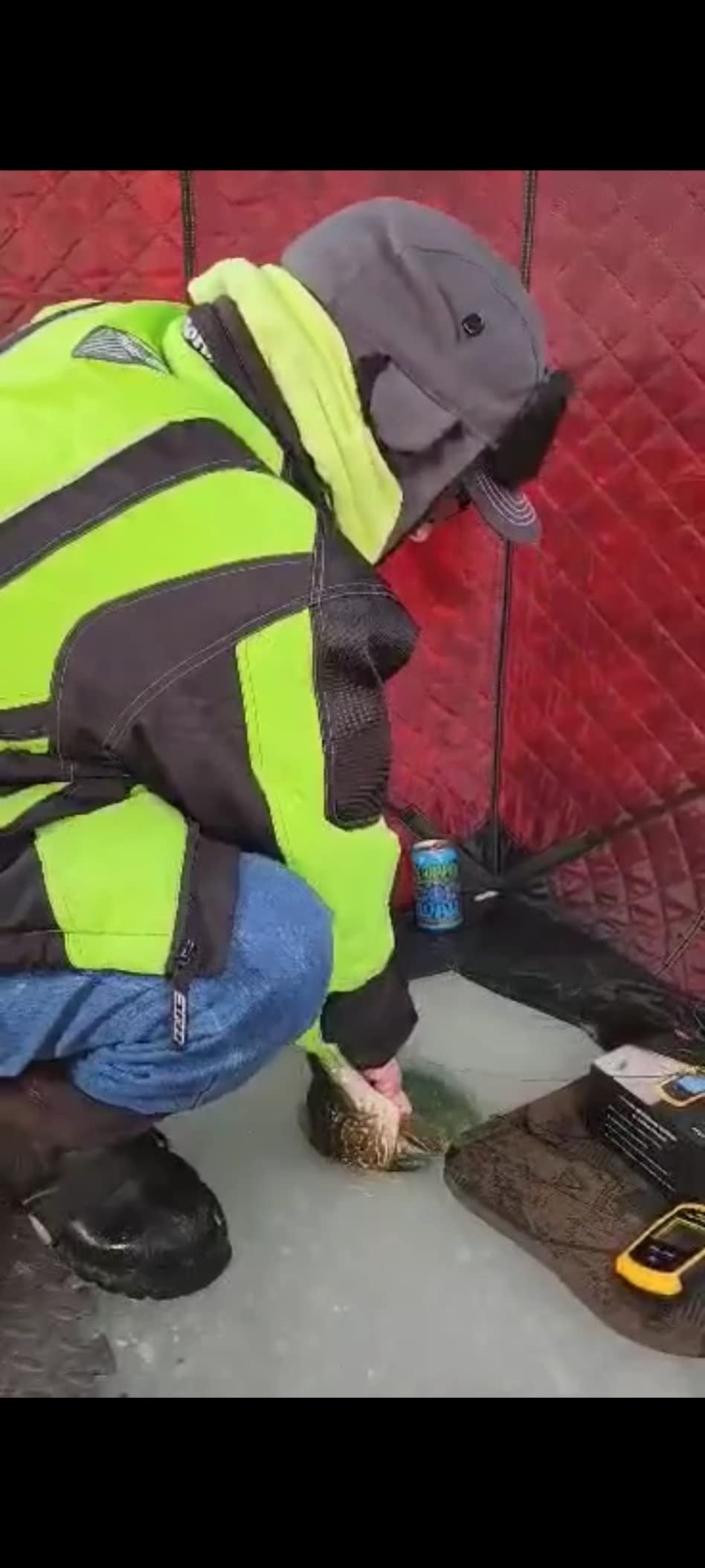
For ice, a purpose-built ice sonar is the better tool. Several units here handle the shoulder season through a flasher mode, and the Reelsonar is used for ice fishing, but a wide beam like the Venterior’s 105 degrees is a poor ice-hole performer. If that is your season, factor in the separate gear, including warmth kit, before buying a summer unit. Our ice fishing heater guide covers the other half of that setup.
How to Cast and Read Sonar From the Bank
A castable sonar will give you a poor image if you set it up badly. Four things decide whether you get a readable bottom profile or a mess.
Use a stout medium-heavy spinning rod, not a ultralight. The pod adds weight to the line and the shock of the cast lands on the same tip that is fighting the fish. Tie the tether to your main line with a knot you can tie in the dark, and treat the supplied snap swivel as a temporary link. Field testers report losing a unit at that swivel, and a properly tied shock leader is what stops a snag or a tippy branch from taking the pod with it.
Cast past the target, not at it. A pod landing directly on top of the fish you were watching will push them off, and the arch you wanted to read will have moved. Land it 20 to 30 feet beyond the spot and work back through it on the retrieve.
Retrieve at a steady, controlled speed. Rushing the return smears the arches into a solid band, and stopping dead makes the image jump. A slow, even retrieve with small jigs or a jig head is what produces clean, separated arches you can actually target.
Mark what worked while you still remember it. If the unit has GPS or auto-saves scans, mark the waypoint the moment you get a bite pattern rather than at the end of the session, because a good afternoon and a bad afternoon can look identical on the way home.
Frequently Asked Questions
Do fish finders work from shore?
Yes, with one honest caveat. A castable unit is a sonar transducer on a line that sends sound pulses down, reads the echo off the bottom and anything suspended above it, and streams the picture to your phone. From shore it shows depth, bottom contour, weed edges, drop-offs and fish arches. It does not forecast a catch, and most units lose the signal beyond 100 to 200 feet, so cast within range.
What is the best portable fish finder?
The Garmin Striker 4 Portable Kit is the best all-round choice in this group, rated 4.7 across more than 2,000 reviews. It uses Chirp sonar for clean arches and good target separation, rates to 1,600 feet in freshwater, stores waypoints, and runs 10 to 16 hours on its rechargeable battery. It is a mounted unit rather than a castable, so it suits anglers who split time between a bank, a kayak and a small boat.
What is the best castable sonar for finding fish?
The Garmin STRIKER Cast is the strongest castable here for shore work, streaming traditional 2-D and ice flasher modes to a phone from up to 200 feet away on a 10-hour-plus battery that switches itself on and off in the water. For mapping rather than pure detection, the Deeper PRO+ 2 adds built-in GPS, wide, mid and narrow beams, and 0.4 inch target separation on the narrow beam.
Are castable fish finders any good?
They are good at showing you structure, which is the part you cannot see from a bank. The honest limit is that they show you depth, bottom shape, weed edges and fish holding on them rather than identifying species or guaranteeing a catch. They also only work within their connection range, and cheaper Bluetooth pods can lose the picture at 40 to 50 feet, well short of many casting distances.
Will a portable fish finder work in saltwater?
Some of them, with care. The Reelsonar iBobber is rated for freshwater, saltwater, shore, boat and ice use, while Garmin units carry a reduced saltwater depth rating, the Striker 4 dropping from 1,600 feet of freshwater depth to 750 feet. Most castable pods cap at 135 to 165 feet, which is shallow for a serious surf break. Rinse with fresh water after each trip and keep charging ports closed and dry.
What is the best portable fish finder for kayak fishing?
The Deeper START is the easiest kayak unit, at 0.08 kg with no cable, no hull mounting and a self-generated Wi-Fi signal, plus about 6 hours of battery. The Deeper PRO+ 2 steps up with built-in GPS mapping and three beam options, and the Garmin Striker 4 portable kit includes an in-hull transducer mount if you want a proper screen with no phone in the picture.
Conclusion
The best portable fish finders for shore fishing come down to what you cast with and how far you throw. The Garmin Striker 4 Portable Kit is our pick overall, with Chirp sonar, a 1,600 foot freshwater rating, waypoint storage and multi-day battery endurance. Fish only from a small boat or kayak? The Humminbird PiranhaMAX 4 gives you a large screen and 600 feet of depth.
For genuine cast-from-the-bank work, the Garmin STRIKER Cast leads on streaming range and battery, the Deeper PRO+ 2 leads on mapping, and the Deeper START is the simplest way in. Venterior suits anyone who wants a screen instead of a phone, and the Reelsonar iBobber lasts a full day but only reaches about 50 feet. Match the unit to your casting distance first, then to your water’s depth, and everything else is detail.