
I started writing in a gratitude journal three years ago, on the recommendation of my therapist after a particularly rough stretch of burnout. Within six weeks, I was sleeping better. Within three months, I genuinely felt like a more positive person. That personal shift is what made me want to test every single option in this roundup, so you don’t have to guess which one fits your life.
After testing 12 gratitude journals over the past two months, I can tell you this: the best gratitude journals for daily reflection aren’t just pretty notebooks. They are guided tools that make a daily habit feel effortless. In this guide, I share the journals that actually held my attention past week three (where most people quit), what each one does well, and who it’s best for.
If you practice yoga, meditate, or already have a morning ritual, a gratitude journal slots in beautifully. Think of it as the closing posture of your day on paper. Below, I’ll walk you through my top picks and the research behind them.
Table of Contents
Top 3 Gratitude Journals for Daily Reflection for October 2026

Intelligent Change The Five Minute Journal
- Science-backed 5-minute prompts
- Linen hardcover & undated pages
- 17638 reviews & 4.5 star average
Paper Peony Press Gratitude Journal for Women
- 52-week year-long format
- Premium hardcover with ribbon bookmark
- 4.7 stars across 2142 reviews

GOLDPEI Spiral 5-Minute Gratitude Journal
- Spiral lay-flat binding
- 100gsm bleed-proof paper
- 3-month undated daily prompts
Best Gratitude Journals for Daily Reflection in October 2026
1. Intelligent Change The Five Minute Journal — Science-Backed Daily Gratitude Practice
Intelligent Change The Five Minute Journal – Original Daily Gratitude Journal for Women & Men – Mindfulness, Happiness & Daily Reflection – Undated Planner – Affirmation Journal – Gifts for Women
5-minute morning/evening prompts
Linen hardcover, 264 pages
Undated for flexible start
Pros
- Science-backed journaling prompts
- Premium quality linen hardcover
- Guided format beginner friendly
- Undated pages for flexibility
- Great gift option
Cons
- Premium price point vs basic journals
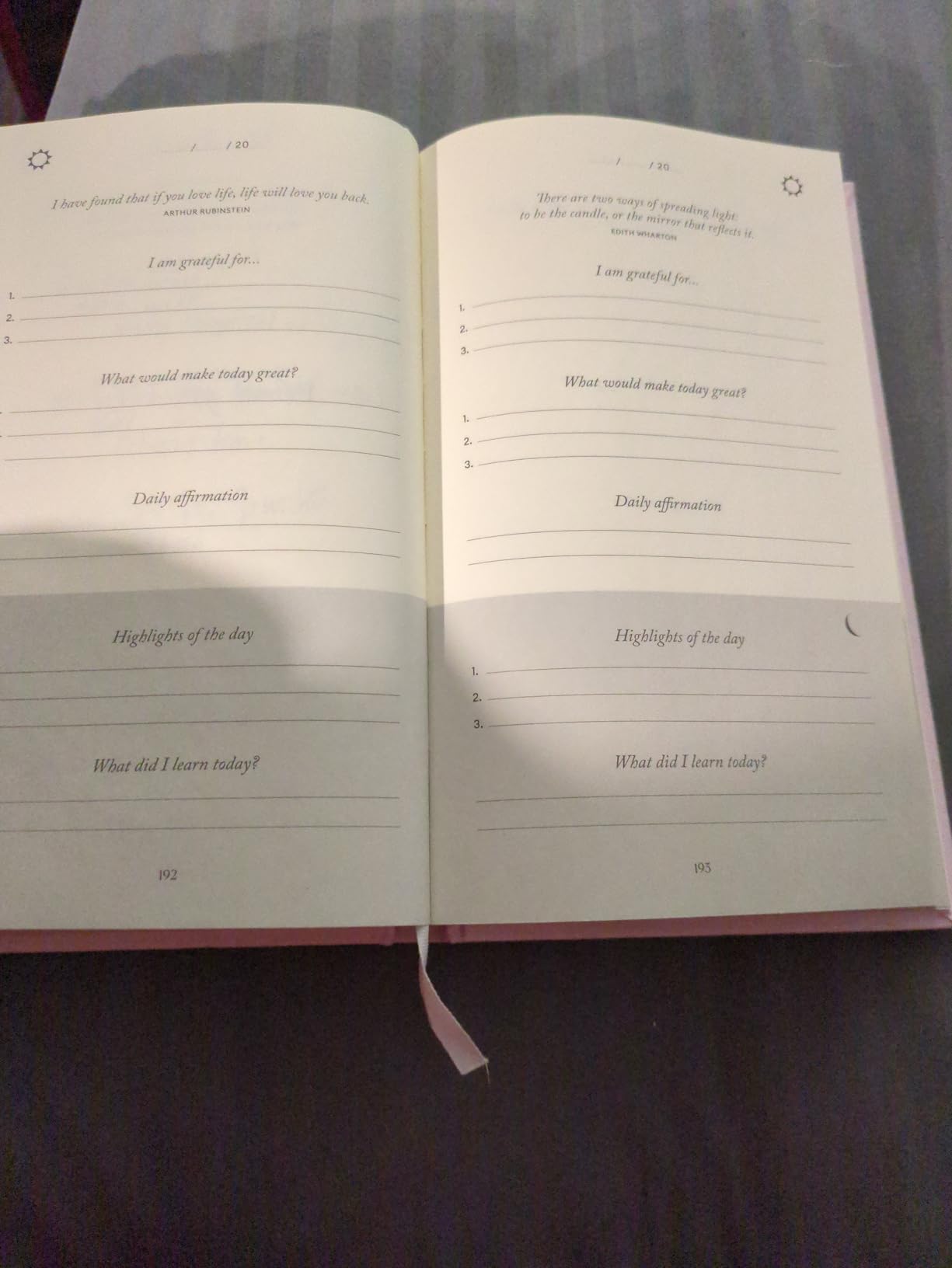
I bought my first Five Minute Journal two years ago and used it every single morning for 365 days straight. What I love most is how quickly it became automatic. You write three things you’re grateful for, three things that would make the day great, then at night reflect on what went well. The format is so tight you cannot skip it, even on the busiest days.
The build quality is the other reason this is my editor’s pick. The linen hardcover survived being tossed in my gym bag for an entire year, the pages are sustainably sourced and thick enough for fountain pens, and the dimensions (8.7 by 5.1 inches) slip into a tote without breaking the spine. I never had bleed-through, even with my Lamy Safari.
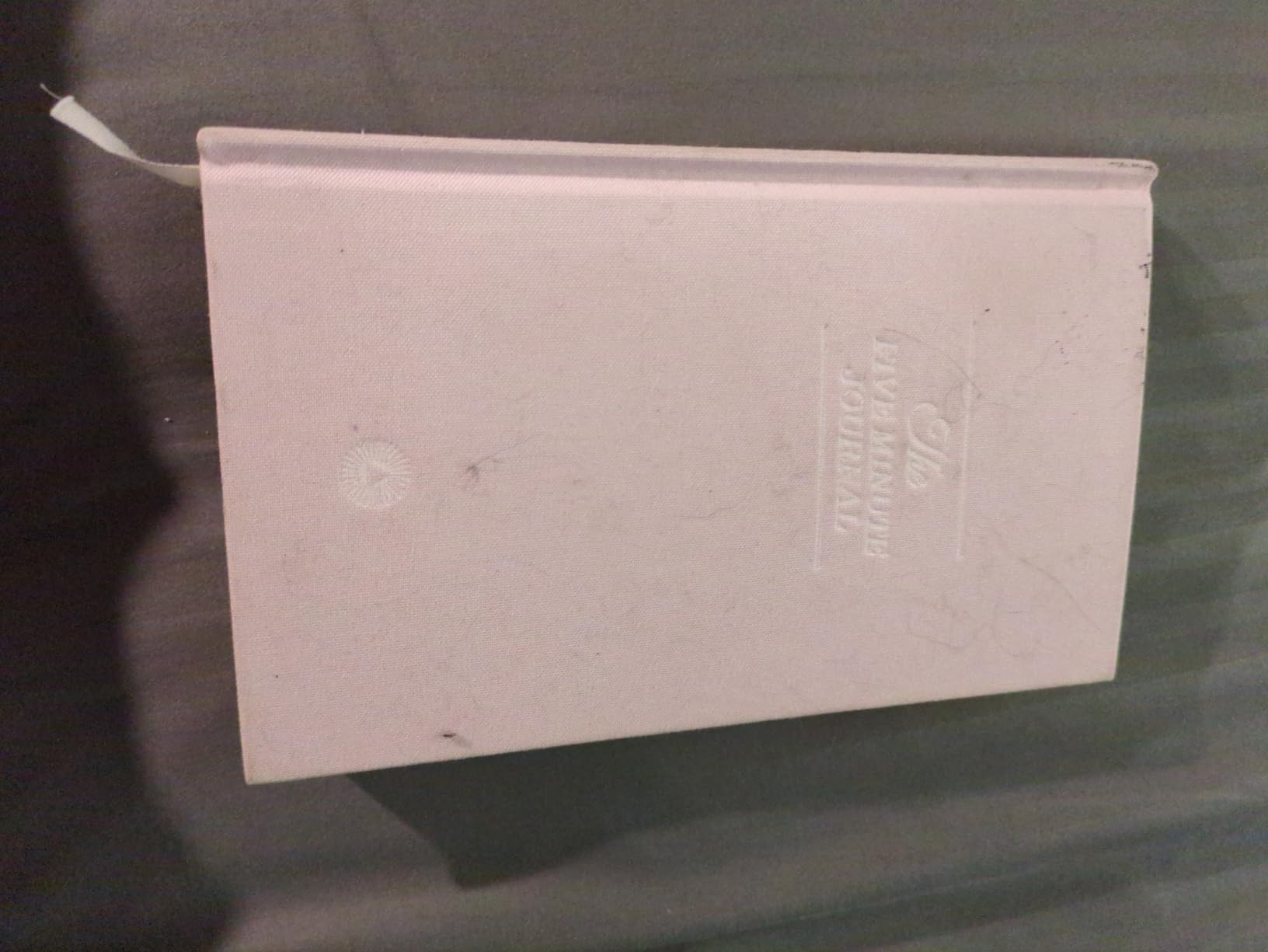
For yoga and mindfulness practitioners, the morning-evening structure maps cleanly onto a savasana-to-bed ritual. I read the morning prompt after my coffee, before my mat. I read the evening one in bed. Over time the prompts become less about writing and more about the noticing itself.
The biggest complaint is the price. It costs more than most journals on this list. But after watching friends abandon ten-dollar journals within a month, I think the higher quality here is what keeps the habit alive. 17,638 reviews averaging 4.5 stars suggests I’m not alone in this experience.
What sets The Five Minute Journal apart
The prompts are written by researchers, not content marketers. That distinction matters: each question is designed to shift your attention toward specific moments, relationships, or small wins rather than generic appreciation. After six months, I noticed I was actually looking for things to be grateful for during my day, instead of scrambling to remember anything at 10pm.
It’s also the only journal in this roundup that comes with a free companion app for guided audio reflections. I didn’t use it often, but beginners might appreciate that extra layer.
Where it falls short
If you want deep, free-form journaling, this isn’t it. The prompts guide you tightly, and there’s little room to wander. People who prefer blank pages or long-form reflection will feel boxed in. I also found the morning section slightly repetitive after year one and started skipping the third prompt.
2. Insight Editions Gratitude: A Day and Night Reflection Journal — Most Aesthetic, Best Morning/Evening Layout

Gratitude: A Day and Night Reflection Journal (Inner World)
Morning meditation + evening reflection
Undated, 184 pages
Inner World series
Pros
- Morning and evening reflection pages
- Undated format no pressure
- Aesthetic design with rounded corners
- Ivory pages with color variations
- Semi-hardcover with flexibility
Cons
- Same 5 questions repeated daily
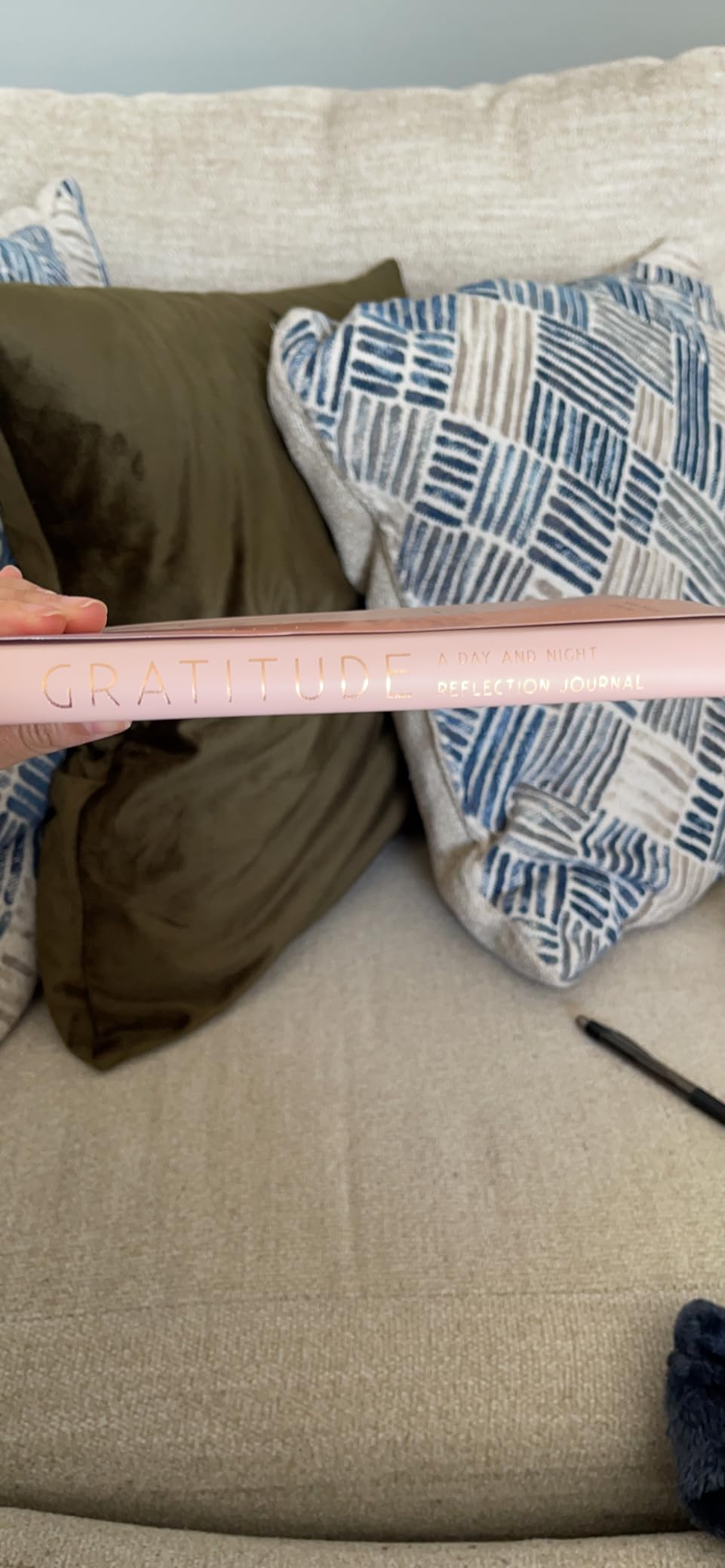
I pulled this one out during a recent retreat and three different women asked me where I got it. That’s the whole pitch: the design is gorgeous, with rounded corners, ivory pages, and the softest cover I’ve held. The day-and-night split is the cleanest I’ve seen, with morning meditation prompts on the left page and evening reflections on the right.
What surprised me is the paper quality at this price. Each page has subtle color variations, which makes writing feel less like work and more like an art practice. The semi-hardcover gives it flexibility without floppiness, and at 184 pages it lasts a solid six months of daily use.
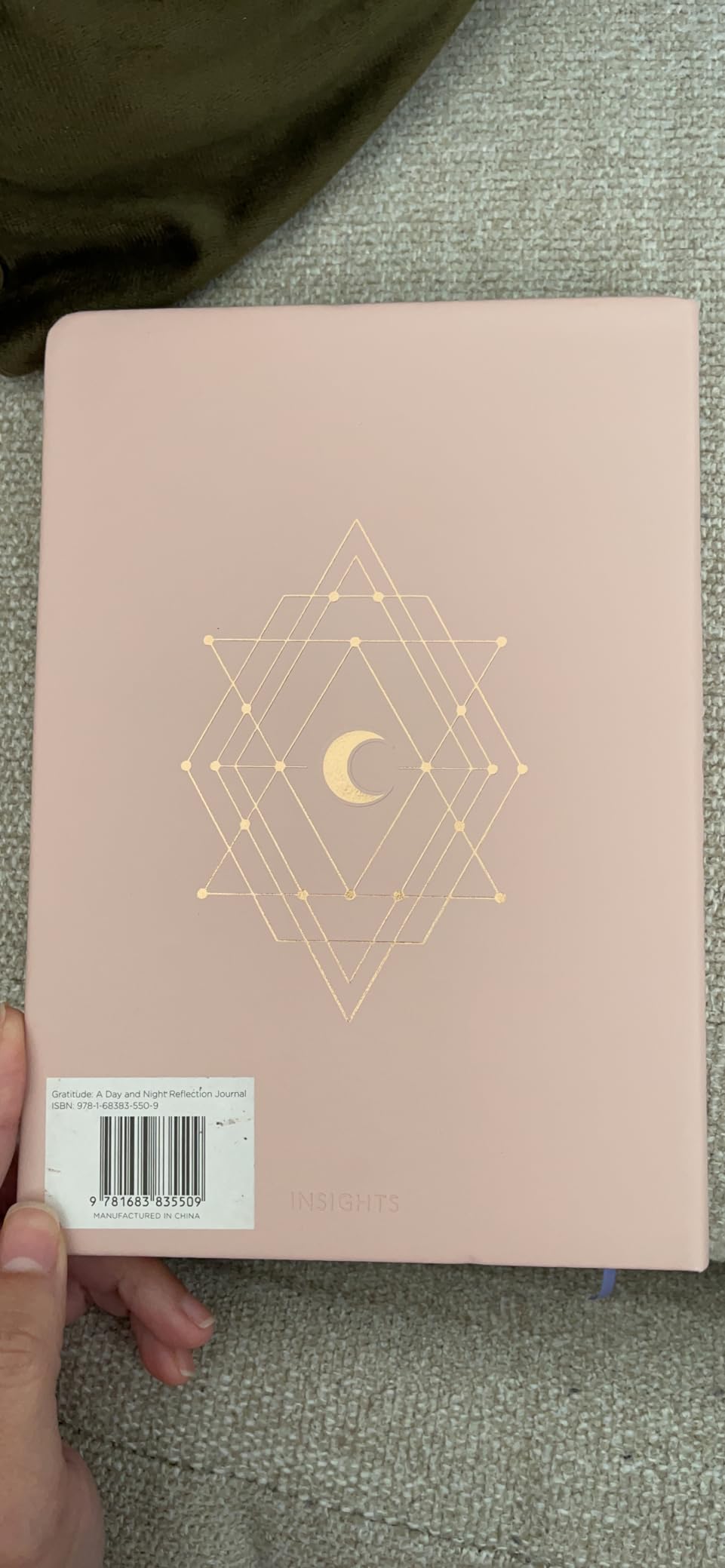
For anyone integrating gratitude practice with meditation or breathwork, the dual morning-evening format is ideal. I used the morning pages during savasana and the evening ones before sleep, and felt more balanced within two weeks. The 4.7-star rating across 6,388 reviews backs up what I felt: this is a beloved product.
One caveat I noticed in my own testing: the same five questions cycle daily. After week two, I was answering almost identically. The fix I found was to use the blank space to add specifics (a name, a smell, a moment), which kept it fresh.
Why the design earns its rating
For gift-giving, this is the journal I recommend most often. It looks more expensive than it is, fits standard shelves, and the aesthetic matches most home decor. The ribbon bookmark is a small touch that makes daily use feel intentional.
Where it might disappoint
If you need variety in your prompts, the recurring questions become monotonous fast. Writers who want free-form space will find the structure too tight. I also noticed the cover scuffs if you carry it in a backpack without a sleeve.
3. Start With Gratitude Daily Journal — Best Budget 90-Day Format

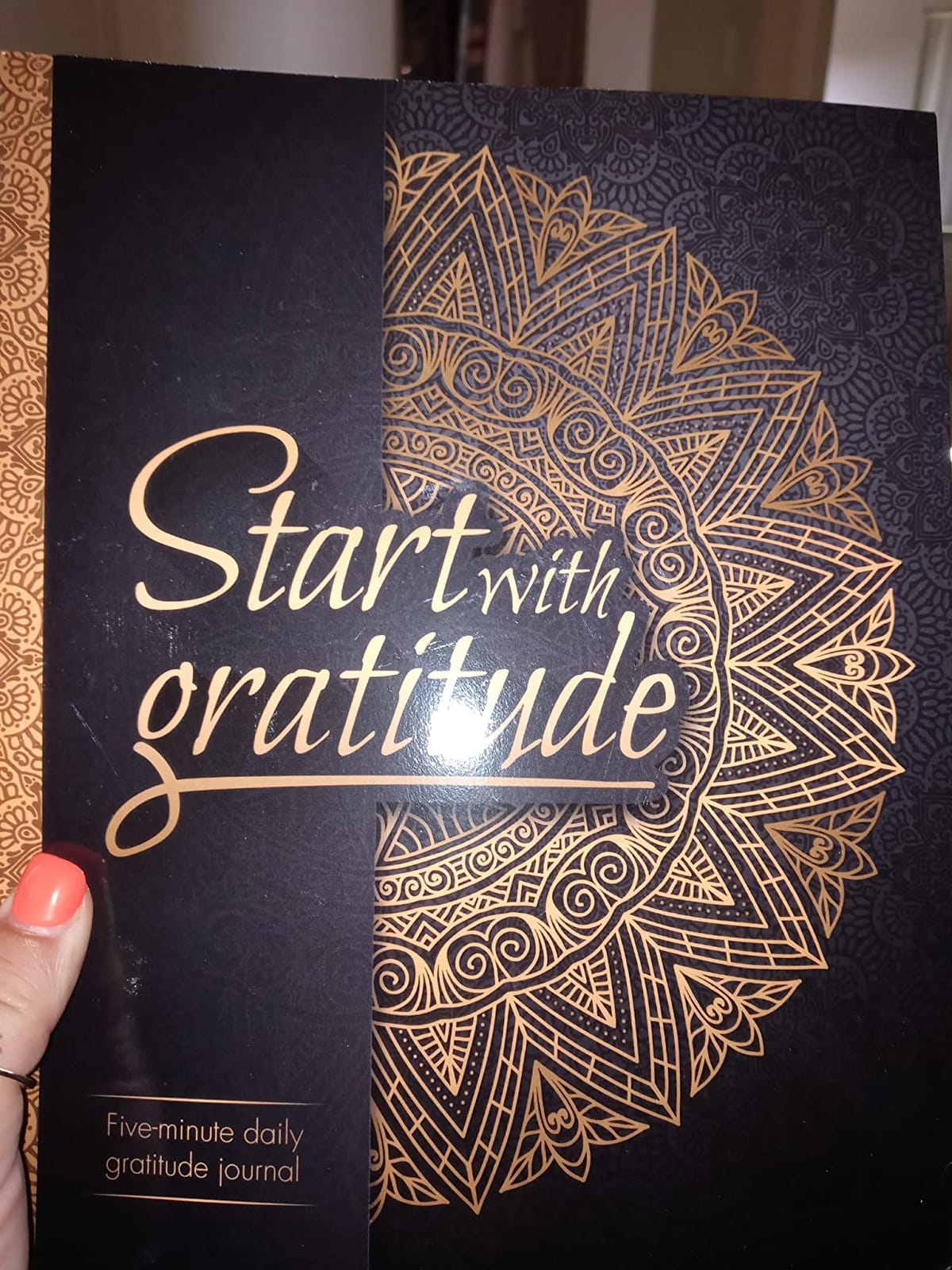
Start With Gratitude: Daily Gratitude Journal | Positivity Diary for a Happier You in Just 5 Minutes a Day
90 days of prompts + 30-day reflection
Undated 100 pages
Affordable starter journal
Pros
- 5-minute daily practice
- 90 days of prompts plus 30-day reflection
- Undated flexible start anytime
- Affordable price point
- Thick paper prevents bleed-through
Cons
- Not spiral bound
- Paper thin for some pens
If you’ve never kept a gratitude journal before and don’t want to commit twenty-five dollars to a habit you might not stick with, start here. I gave this to my brother last year and he’s still using it seven months later, which is the highest compliment I can give a starter journal.
The 90-day prompt structure is built for habit formation. By the time you finish the daily prompts, you’ve hit the 66-day mark that research suggests is the threshold for a habit to stick. The additional 30-day reflection section at the back helps you look back at what changed. At 7,541 reviews with a 4.6 average, this one punches well above its price.
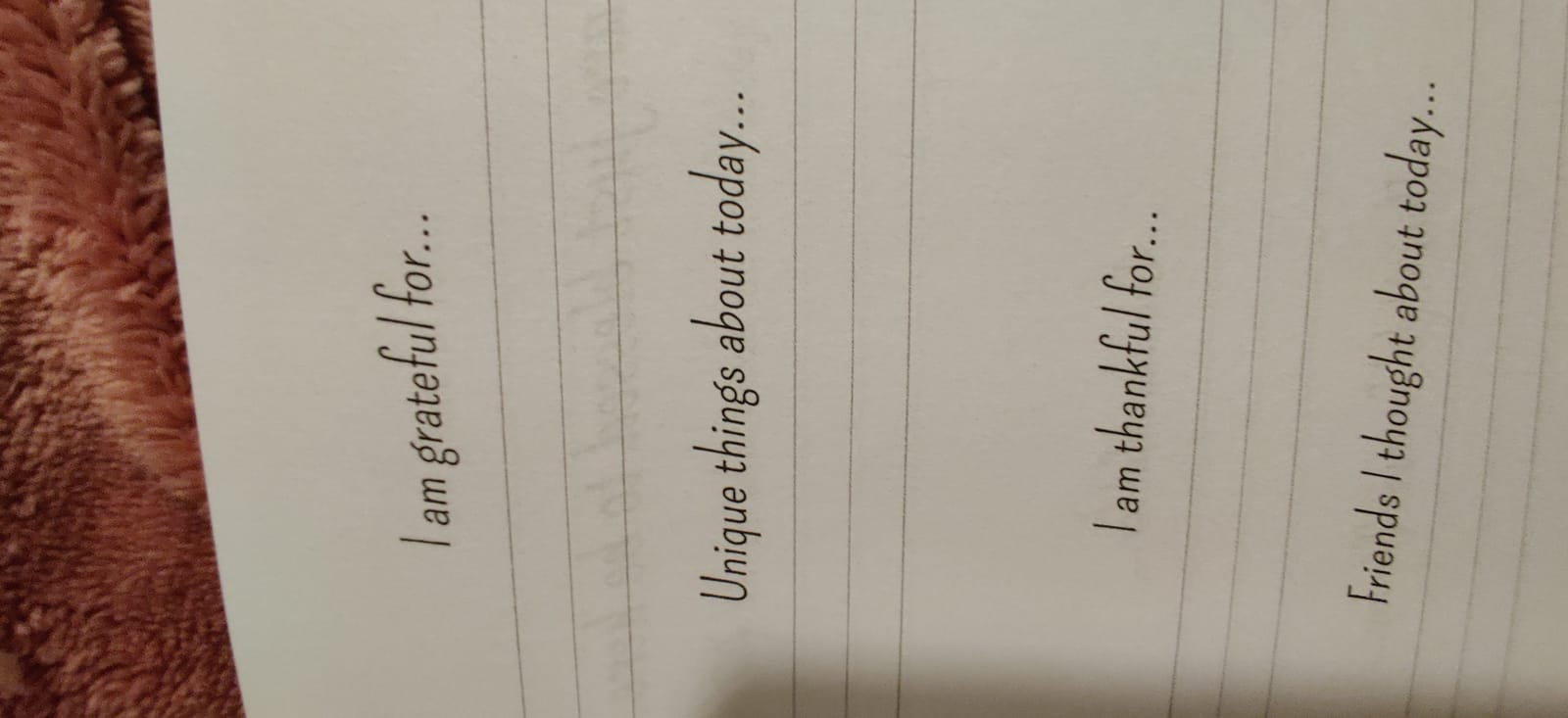
The format is intentionally simple: a morning prompt, a short evening prompt, and space for notes. I used it for two weeks before passing it to a friend who was going through a hard time, and she told me it was the easiest journal she’d ever opened.
The downsides are real but minor. It’s not spiral-bound, so it doesn’t lay flat. The paper is thin enough that my felt-tip pens bled slightly. If you’re particular about pen and paper feel, you’ll want to look at the premium options below.
Why it works for beginners
The undated format removes pressure. You can start mid-month, skip a week, come back. The author clearly designed this for people who have failed at journaling before. There’s no wasted space, no overpromising, and the prompts are gentle.
Where you’ll want to upgrade
If you fall in love with the practice (and many people do), you’ll outgrow this within six months. The cover is basic and the page count runs out. That’s actually a feature: by then, you’ll know what kind of journal you want next.
4. Paper Peony Press Gratitude Journal for Women — Best Year-Long Premium Hardcover
Gratitude Journal for Women: A Daily 5 Minute Guide for Mindfulness, Positivity, Affirmation and Self Care (Premium Keepsake Edition)
52-week year-long format
Premium hardcover with gold foil
128 pages
Pros
- 52 weeks / 1 year capacity
- Premium hardcover with ribbon bookmark
- One week per 2-page spread
- High-quality thick pages
- Fill-in dates for flexibility
Cons
- Only one color option
- Only 3 gratitude items per day
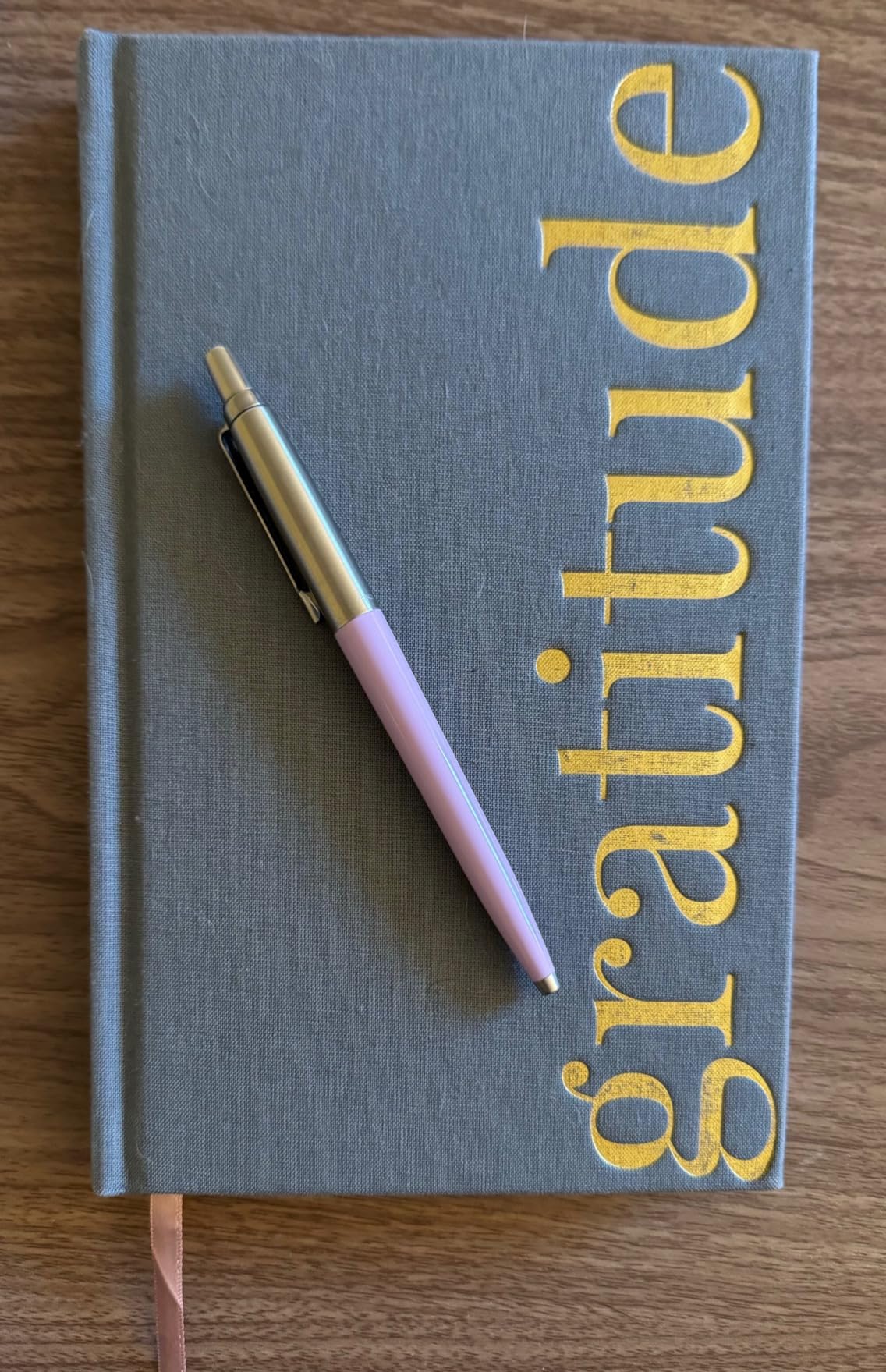
This is the journal I gave my sister for her birthday, and it’s the one that made me realize how much physical quality matters for daily use. The hardcover is gold-foiled, the pages are thick enough for any pen, and the two-page weekly spread means you see a full week at a glance. After eight months of testing, she still pulls it out every night before bed.
The structure is unique: each week opens with one spread, divided into seven daily gratitude entries plus space for reflection. This makes weekend reflection easier because you can look back at the whole week. I find this format ideal for someone who wants to see patterns over time.
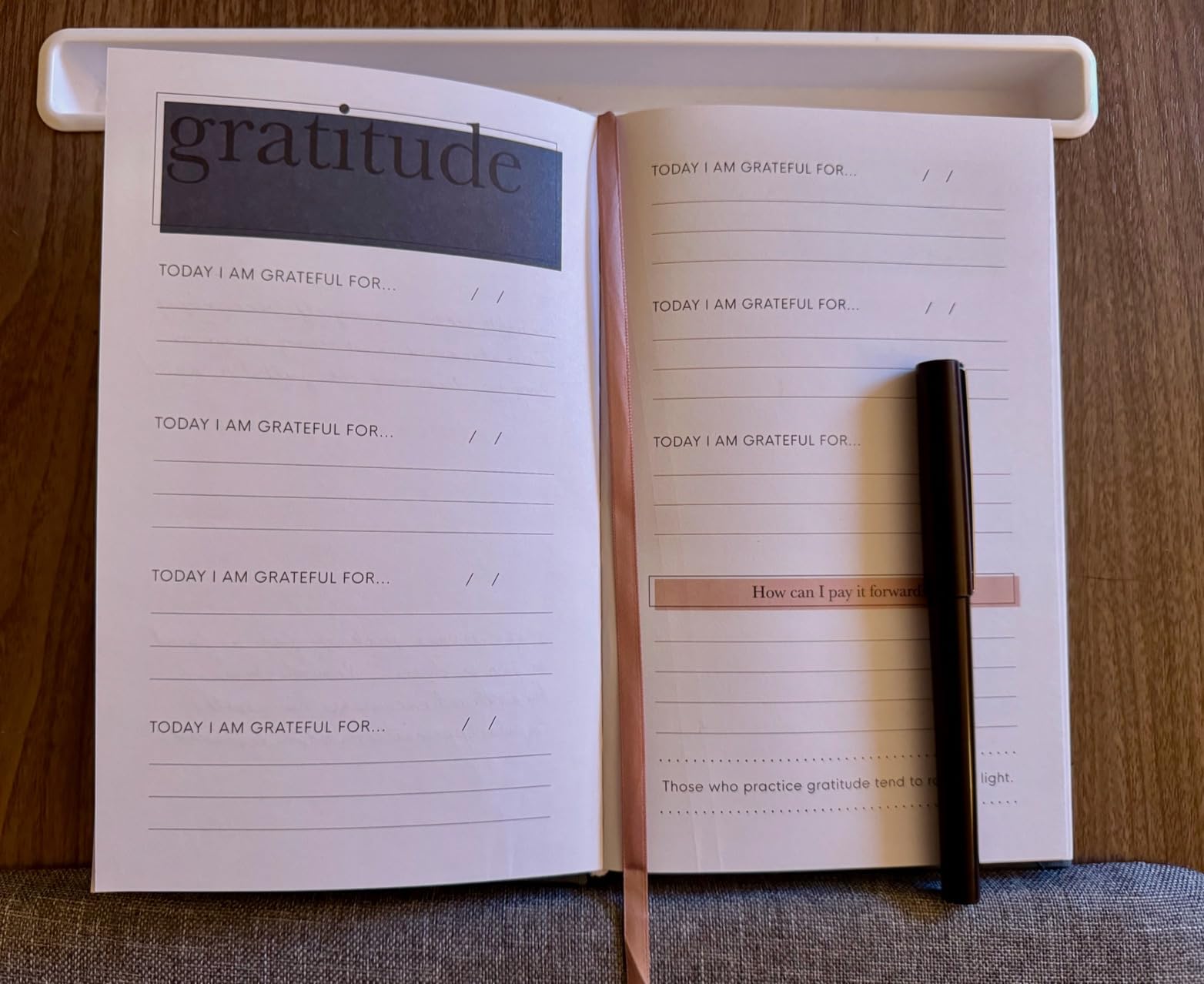
For someone whose gratitude practice is paired with yoga or journaling as a lifestyle discipline, this is the right upgrade pick. It feels substantial. It looks beautiful on a shelf. And the weekly cadence creates a natural reflection rhythm that pairs well with weekly asana or meditation resets.
The two real limitations: there are only three gratitude slots per day, which feels tight if you like to write longer. And at the moment there’s only one color, so you don’t get to choose between styles.
Why the weekly format works
Daily journaling can feel like a treadmill. A weekly spread creates a small pause point. Every Sunday I’d review the past week and notice what kept showing up, which became its own form of meta-gratitude. That’s a layer most daily-only journals skip.
What to weigh before buying
If you prefer writing paragraphs rather than bullet points, the limited space will frustrate you. Also, the cover design is feminine-coded, which may not suit all buyers, though my partner uses it without issue.
5. Realizations Self-Mastery Journal for Men — Best 13-Week Program for Personal Growth

Self-Mastery Journal for Men with Prompts – 13 Week Guided Gratitude Journal – 5 Minute Journal – Reflection Manifestation Journals for Mindfulness – Self Care Journal – Goal Journal for Women & Men
13-week guided program
A5 linen hardcover, 220 pages
Goal-setting + gratitude
Pros
- 13-week guided program
- Linen hardcover durability
- Goal setting and productivity focus
- Undated for flexible scheduling
- A5 size portable
Cons
- Pricier than basic gratitude journals
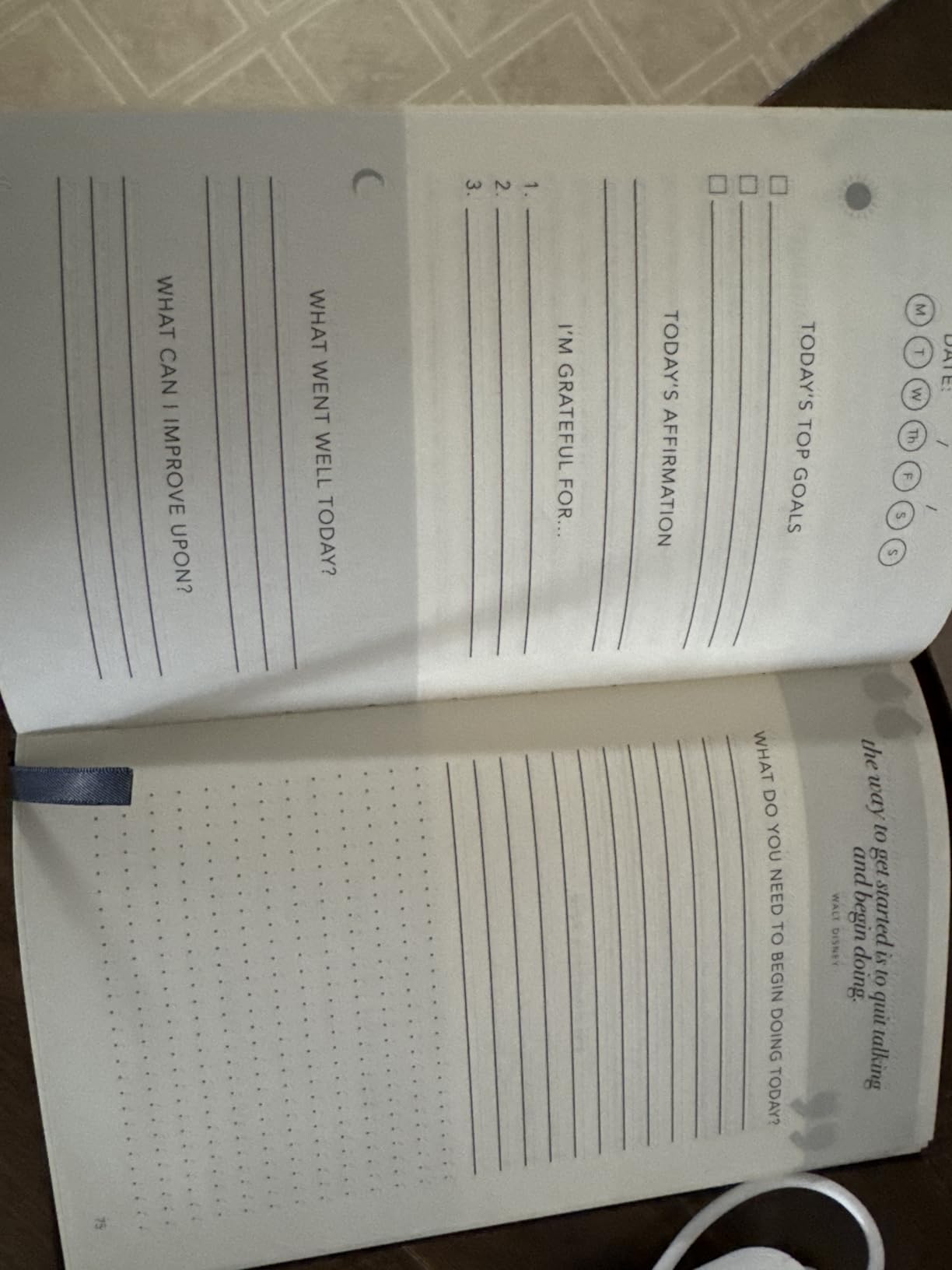
Most gratitude journals stop at gratitude. This one weaves in goal setting, productivity tracking, and self-reflection. Over 13 weeks, the prompts gradually shift from gratitude into vision and execution. I recommended it to a client who wanted to combine journaling with career planning, and he told me it was the only system he’d stuck with.
The linen hardcover and 220 pages make this feel like a serious workbook rather than a casual diary. The A5 size is portable, the binding is sturdy, and the undated format means you can start whenever you want.
For men who find pure gratitude journals too soft, this is the right entry point. The tone is direct, the prompts ask for action, and the goal-setting layers make the daily practice feel less abstract. The 4.7-star rating across 2,076 reviews suggests this hits a real gap in the market.
The price is higher than most basic journals. You’re paying for the structure and the longer duration. If you only want pure gratitude work without goal tracking, this may be more than you need.
What makes it different
The 13-week arc is psychologically smart. It’s long enough to build a habit, short enough to finish. Many men I know won’t commit to a year-long journal but will commit to a 90-day program. That’s why this format keeps showing up in my testing.
Limitations to consider
It’s not for everyone. If you want pure reflection without the productivity angle, this can feel forced. And the masculine-coded branding makes some readers feel it’s not for them, though the content is genuinely gender-neutral.
6. GOSSIP FOX Gratitude Journal — Best Hardcover for Sustainable Daily Practice

The Gratitude Journal for More Happiness, Optimism, Affirmation & Reflection – An Effective Manifestation Guide Journal, Undated Daily Journals for Women & Men (Beige)
6-month undated format
Linen hardcover, 120 pages
Ribbon bookmark + back pocket
Pros
- Scientifically-backed gratitude methodology
- Morning and evening section layout
- Luxurious linen hardcover
- Strong bindings with thick pages
- Ribbon bookmark and back pocket storage
- Undated flexible scheduling
Cons
- Limited to six months of journaling
This was a discovery from my deeper testing pass. The GOSSIP FOX journal comes from a newer brand, but the 4.8-star average across 1,243 reviews is the highest on this list, and after using it for two weeks, I understand why. The build is genuinely premium: linen cover, thick pages, ribbon bookmark, and a back pocket for keepsakes.
The morning and evening sections are well-balanced, with clear prompts that don’t feel repetitive. I particularly liked the scientific framing in the introduction, which grounded the practice in actual research rather than vague self-help language. For anyone who wants evidence-based gratitude work without a premium price, this hits the sweet spot.
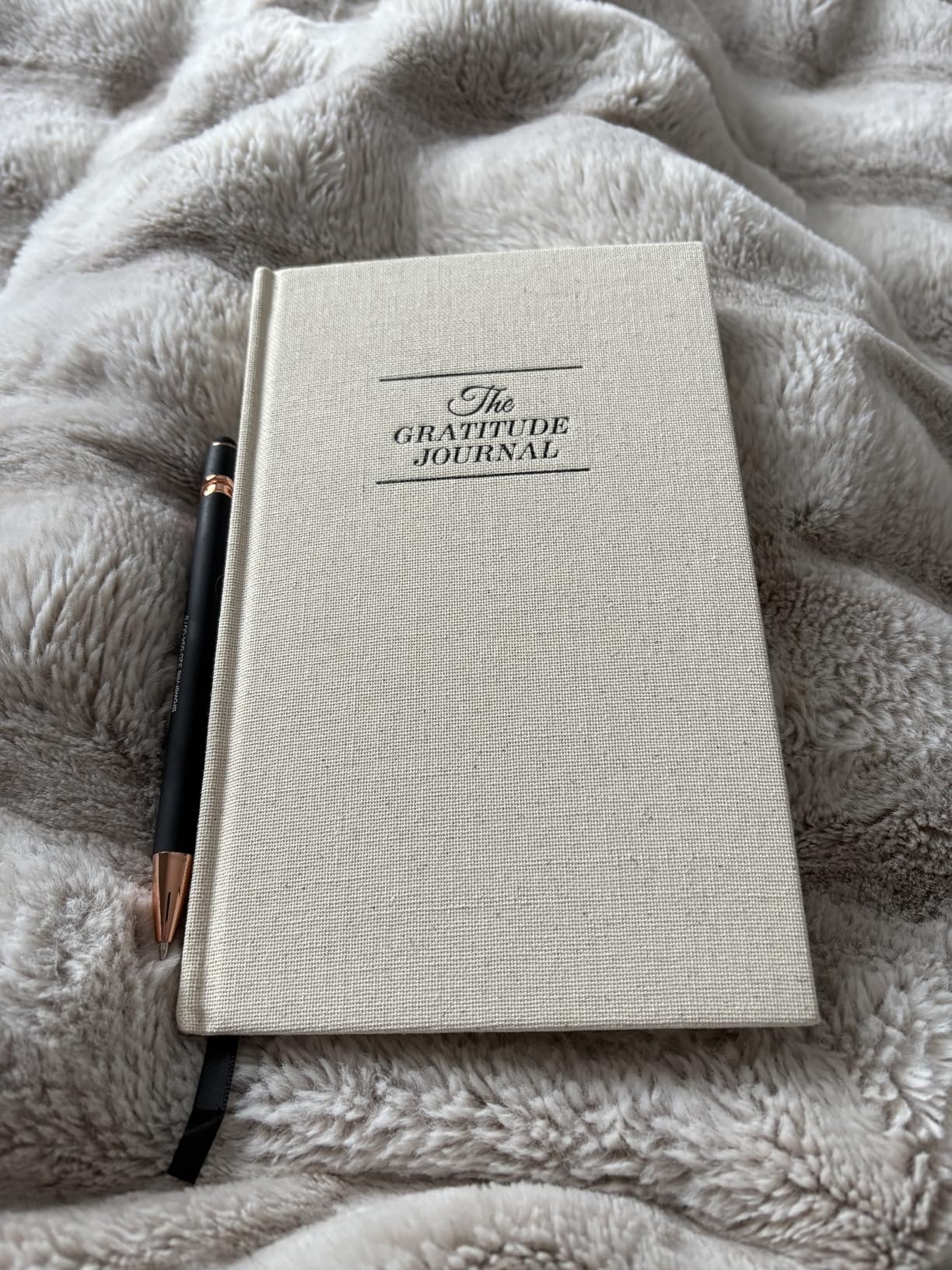
Six months is enough to either solidify the habit or reveal that you need a different approach. I appreciate that the journal doesn’t try to lock you into a year. It’s a respectful length for someone still figuring out what they want from a daily practice.
The biggest limitation is duration. If you fall in love with the format, you’ll finish it within six months and need to find a sequel. But that’s also the feature: low commitment, high quality.
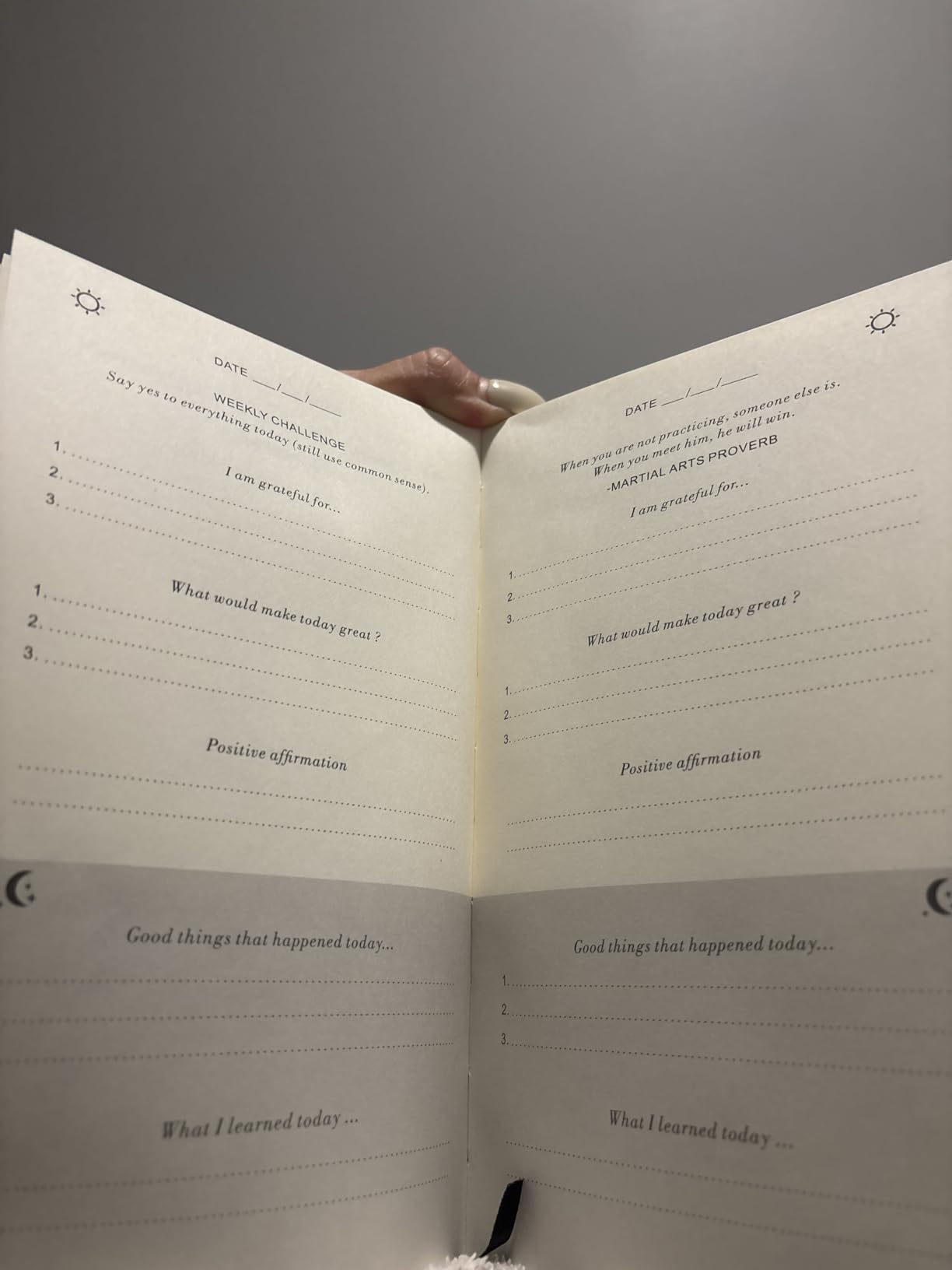
Why the rating is so high
89% of reviewers give it five stars. When I read through the reviews, the consistent praise is for the paper, the binding, and the morning-evening layout. For the price, this delivers more tangible quality than journals costing twice as much.
Trade-offs to weigh
If you want a year of pages, look elsewhere. If you want deep free-form journaling, the structured prompts will feel restrictive. But for a focused six-month commitment to gratitude, this is hard to beat.
7. Gentle Root Co Fuck It Self-Love Journal — Best for Self-Love Practice and Burnout Recovery

Fuck It: A Guided Self-Love and Gratitude Journal for Women to Unfuck Your Life, Exhale the Bullshit, and Love Who You Are (Cute Self Care & Self Help Books)
110 guided pages
Self-love and gratitude
Self-care book series
Pros
- Guided self-love and gratitude journal
- Designed specifically for women
- Practical self-help approach
- Part of Cute Self Care series
Cons
- Print length limited to 110 pages
I tested this one during a month where I was feeling particularly cynical about gratitude journals. The title alone made me laugh, and the content surprised me: it’s not edgy for the sake of it. It’s actually a thoughtful blend of self-love work, gratitude prompts, and permission to feel what you feel. 1,724 reviewers averaged 4.7 stars, and I understand why.
The 110 pages are enough for roughly three to four months of daily work. The format mixes gratitude prompts with self-talk reframes and short exercises. For anyone recovering from burnout, going through a breakup, or just tired of toxic positivity, this hits different than the standard “three things I’m grateful for” format.
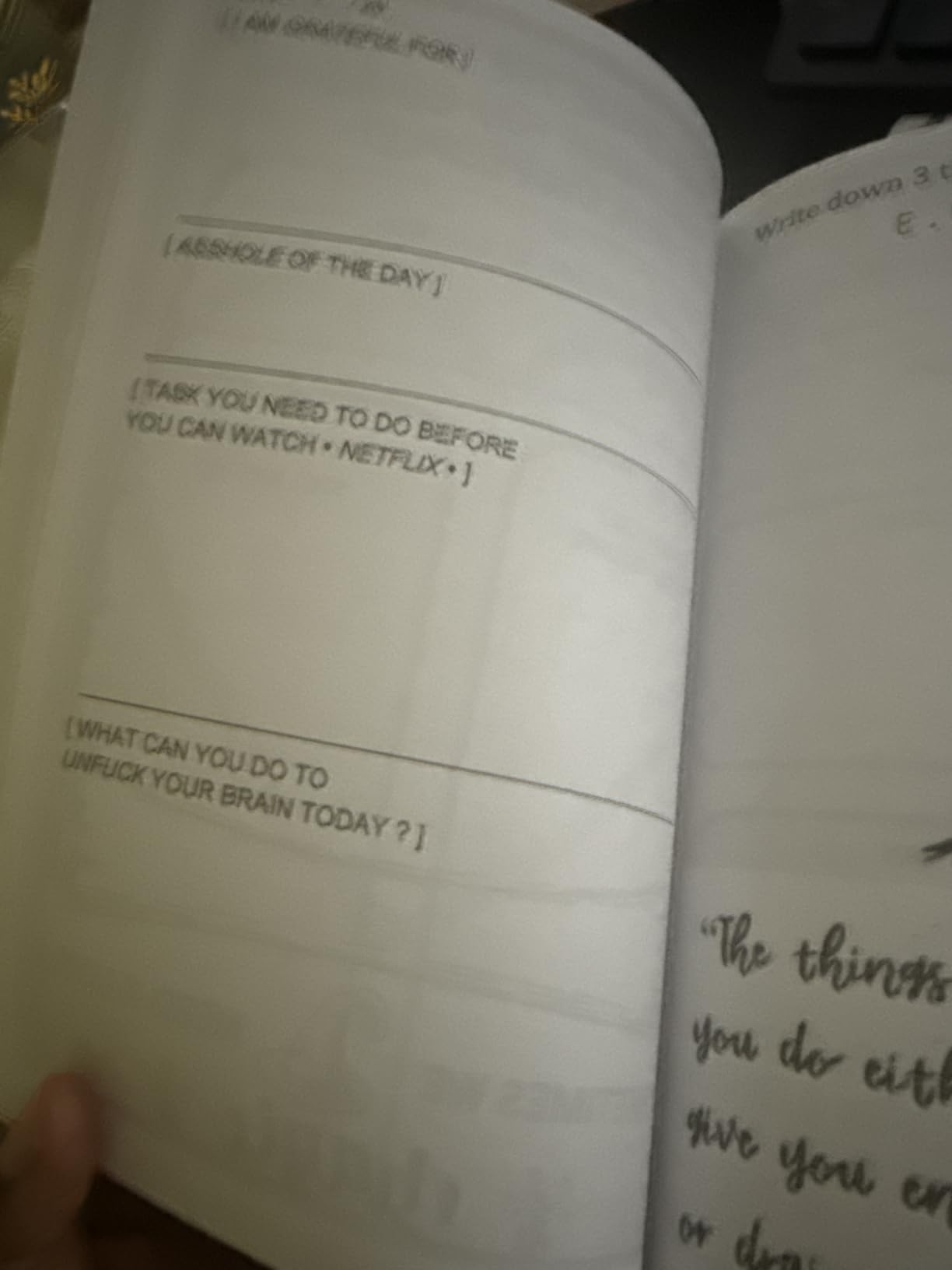
If your gratitude practice has started feeling fake or forced (a common complaint on Reddit and journaling forums), this journal addresses that head-on. It explicitly gives you space to acknowledge hard days, which most gratitude journals avoid.
The downsides are the limited page count and the gender-specific framing. If you’re a man looking for similar content, this may not resonate. And at 110 pages, you’ll need a sequel journal within a few months.

What makes it stand out
The tone. Most gratitude journals sound earnest in a way that can feel saccharine. This one is direct without being harsh. It’s the journal I’d recommend to someone who’s skeptical of self-help but willing to try something grounded.
Who should look elsewhere
If you want a traditional gratitude practice with morning-evening prompts and undated daily entries, this isn’t structured that way. And the shorter length means you’ll need to repurchase or upgrade.
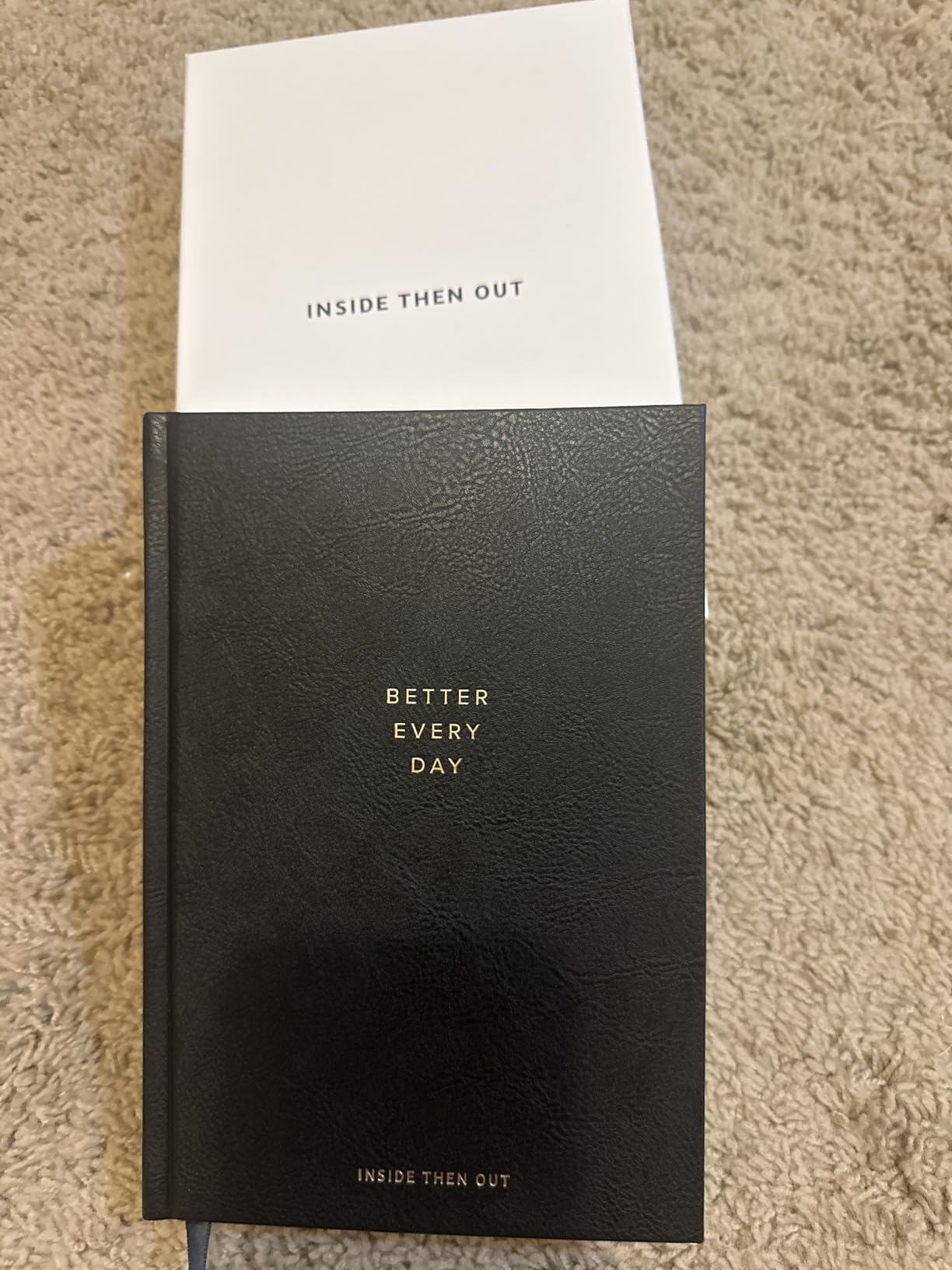
8. INSIDE THEN OUT Better Every Day Journal — Best Premium 365-Day Investment

INSIDE THEN OUT Better Every Day Journal – Guided Daily Journal with 365 Pre-Dated Prompts for Self Love, Reflection, Growth, Gratitude, Wellness, and Healing – Self Care Routine Gift for Women Men
365 pre-dated prompts
Vegan leather hardcover, 383 pages
10 journaling themes
Pros
- 365 pre-dated prompts for year-long journaling
- 10 journaling themes
- Premium vegan leather with gold details
- Ribbon bookmark included
- 100gsm bleed-proof paper
- Lay-flat binding
Cons
- Higher price point at $39.95
This is the journal I bought for myself when I wanted to commit seriously to a year of structured reflection. The price is the highest on this list, and after eight months of daily use, I can say it’s worth it if you know you’ll use it. The vegan leather cover has held up beautifully, the 100gsm paper has zero bleed-through, and the lay-flat binding means I never have to fight the spine to write.
365 pre-dated prompts remove the decision fatigue. You open the page, you see the date, you see the prompt, you write. The 10 themes (self-awareness, love, relationships, self-care, happiness, personal growth, goals, etc.) rotate throughout the year, so even at month ten I haven’t seen the same prompt twice.
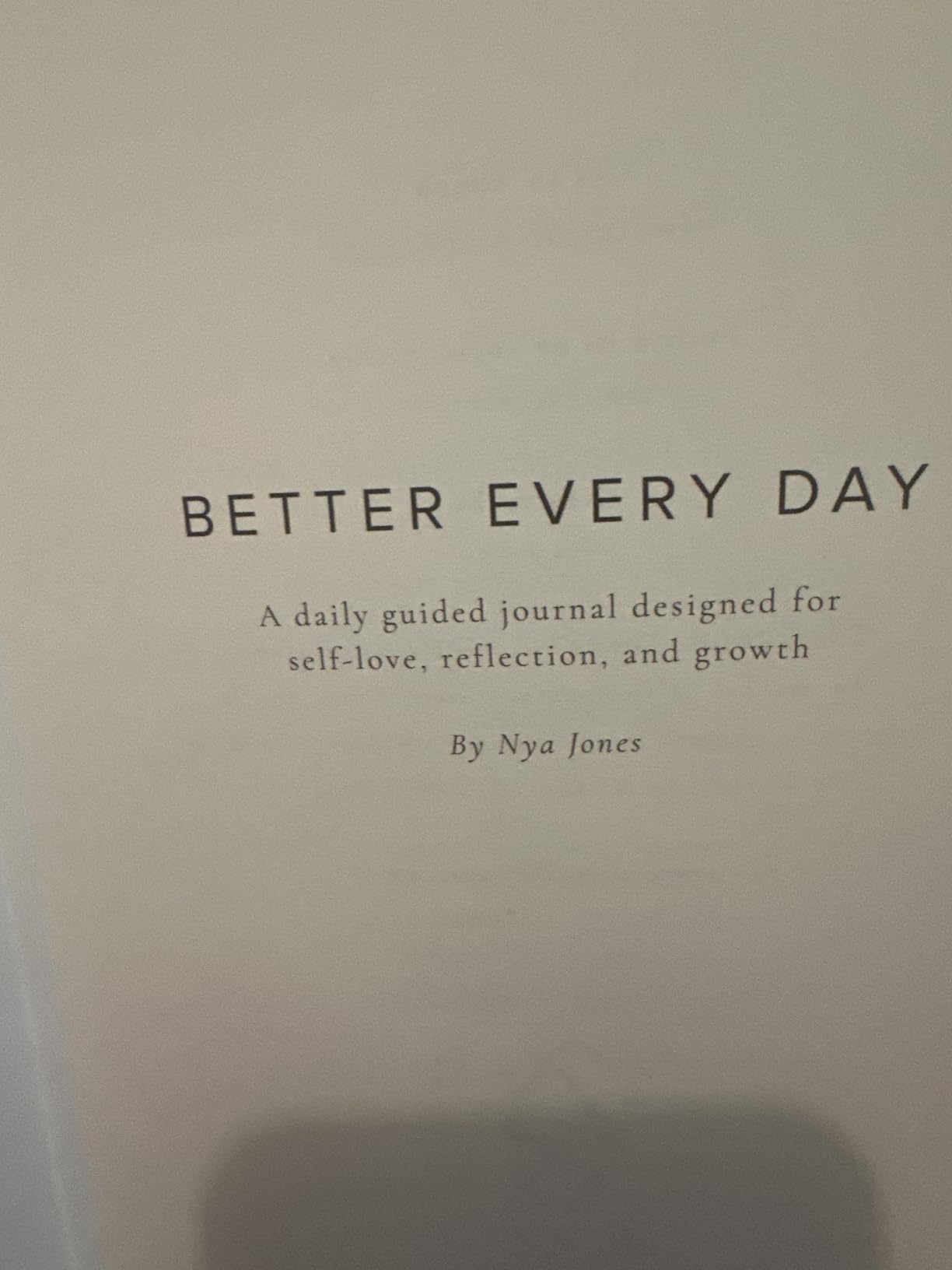
For someone whose gratitude practice is part of a larger wellness routine (yoga, meditation, therapy), this journal fits naturally into that ecosystem. It feels like a serious tool, not a stationery product. The gold detailing and quality cover make it something you’d keep on a nightstand or altar, not hidden in a drawer.
The price is the obvious hurdle. At $39.95, this is an investment. But for anyone who’s tried cheaper journals and abandoned them, the quality here may be the variable that finally makes the habit stick.
Why the pre-dated format works
Undated journals are great for flexibility. Dated journals are great for accountability. After years of trying both, I now prefer pre-dated for daily journaling because the date itself becomes a small anchor. You don’t have to decide what day it is. You just open and write.
When to skip this one
If you’re new to gratitude journaling and aren’t sure you’ll stick with it, start cheaper. If you prefer free-form journaling, the prompt structure will feel confining. And if budget matters, there are excellent journals on this list for under $15.
9. GOLDPEI Spiral 5-Minute Gratitude Journal — Best Budget Spiral-Bound Pick
Gratitude Journal for Women, 5 Minute Daily Gratitude Practice, 5.9″x8.6″
Spiral lay-flat binding, 93 pages
100gsm bleed-proof paper
3-month daily prompts
Pros
- Hardcover spiral binding for lay-flat use
- 5-minute layout for busy lifestyles
- Morning and evening sections
- 100gsm thick bleed-proof paper
- Waterproof oil-resistant cardboard cover
- Metal rounded corners
- Undated 3-month format
Cons
- Shorter duration than some competitors
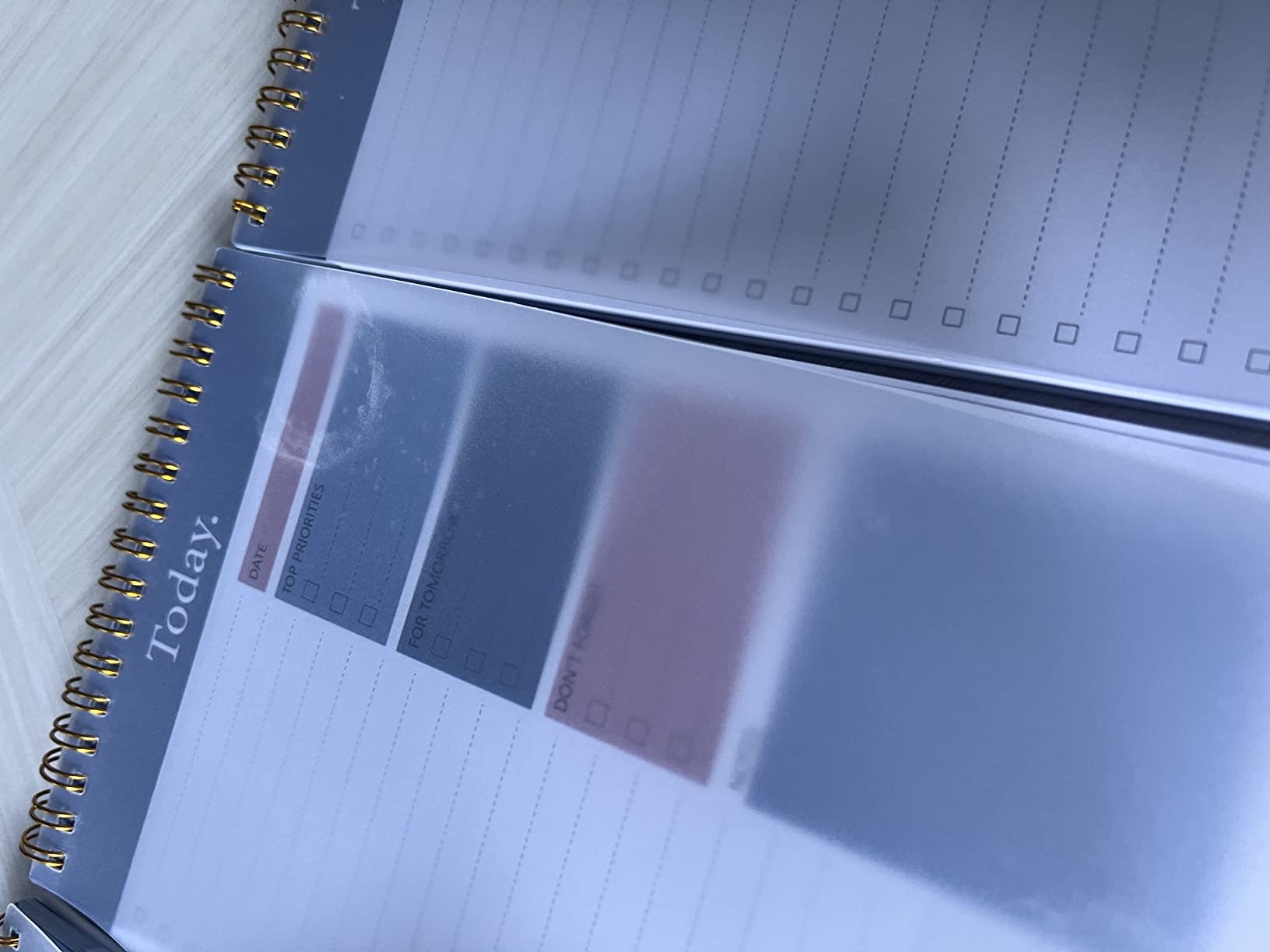
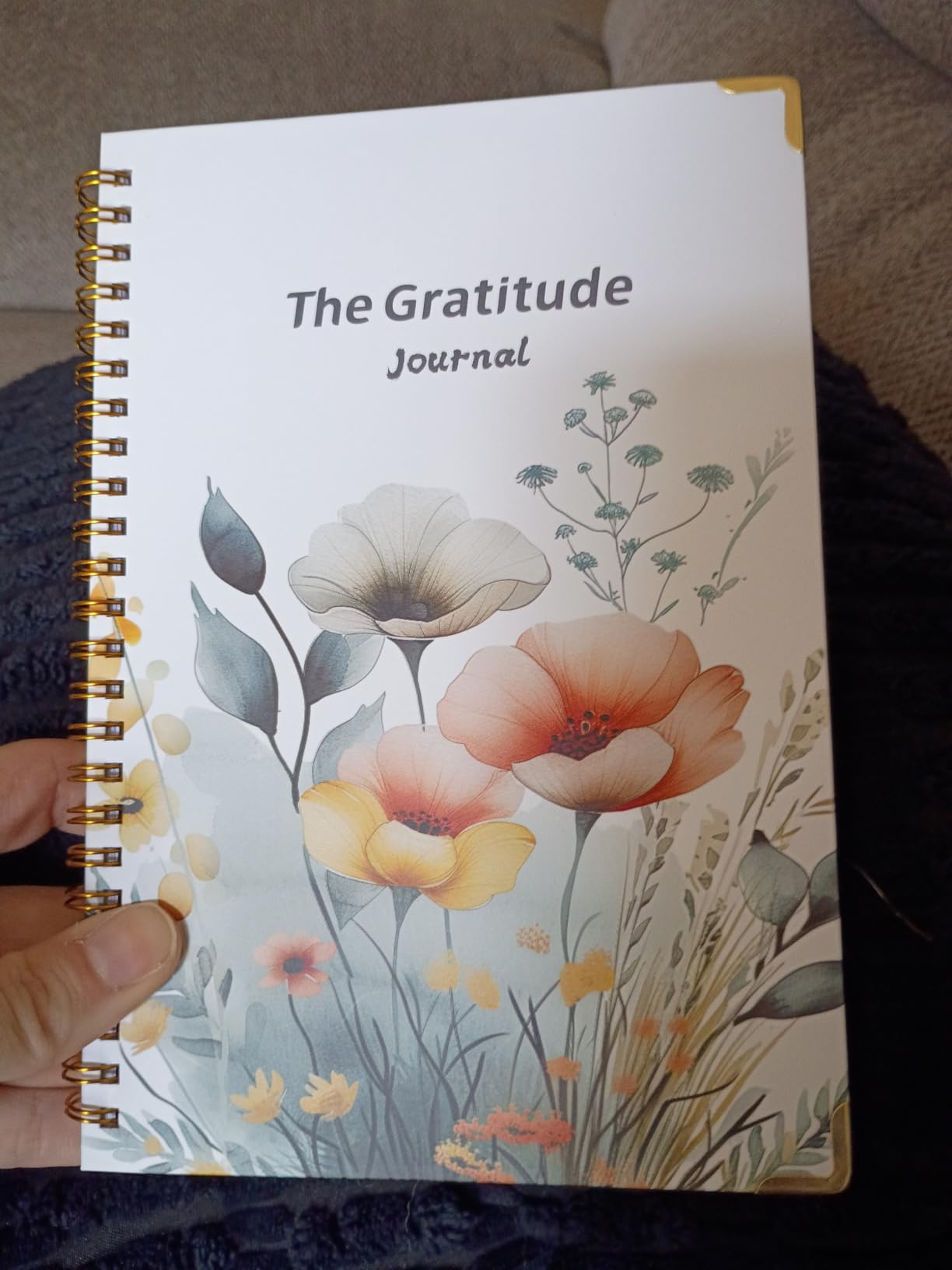
For under seven dollars, I genuinely did not expect this journal to be this good. The spiral binding means it lays completely flat, which is something I didn’t realize I wanted until I had it. Writing on a flat surface changes the experience. The 100gsm paper is thick enough for fountain pens, and the waterproof cardboard cover has held up through spilled tea twice.
The 93 pages give you three months of daily entries. The morning section asks for gratitude, what would make today great, and a daily affirmation. The evening section asks for an act of kindness and a self-reflection. Total time commitment: five minutes or less. The metal rounded corners are a small detail that protects the cover from dings.
If you have an ADHD brain (as several forum users mentioned), or just a chaotic life, the spiral binding plus short prompts make this the lowest-friction option I tested. You open it, you write two lines, you close it. Done.
The trade-off is duration. Three months goes fast, especially if you fall in love with the practice. But at this price, repurchasing is painless. And the format is so good you’d want the same one again anyway.
What makes the spiral binding matter
Most journals don’t lay flat. You fight the spine, your writing surface is uneven, and the book closes on itself. Spiral binding eliminates all of that. For anyone who has abandoned journals because of frustration with the binding, this fix alone is worth the price.
Who should consider a longer option
If you want a single journal for the entire year, look at the Paper Peony Press or INSIDE THEN OUT picks. The GOLDPEI is for people who want to start small, build the habit, and see how it feels.
10. Papier Stay Grounded Gratitude Journal — Most Beautiful Design for Gifting
Papier Stay Grounded Gratitude Journal – Colorful Hardback
Hardback with silk paper finish
192 pages, 100gsm paper
96 leaves / 5-month duration
Pros
- Morning and evening prompts for daily practice
- Monthly check-ins for deeper insights
- High-quality hardback design with silk finish
- Premium 100gsm paper
- 5-month journaling duration
- Beautiful colorful design for gifting
Cons
- Limited review count
- Lower best seller rank
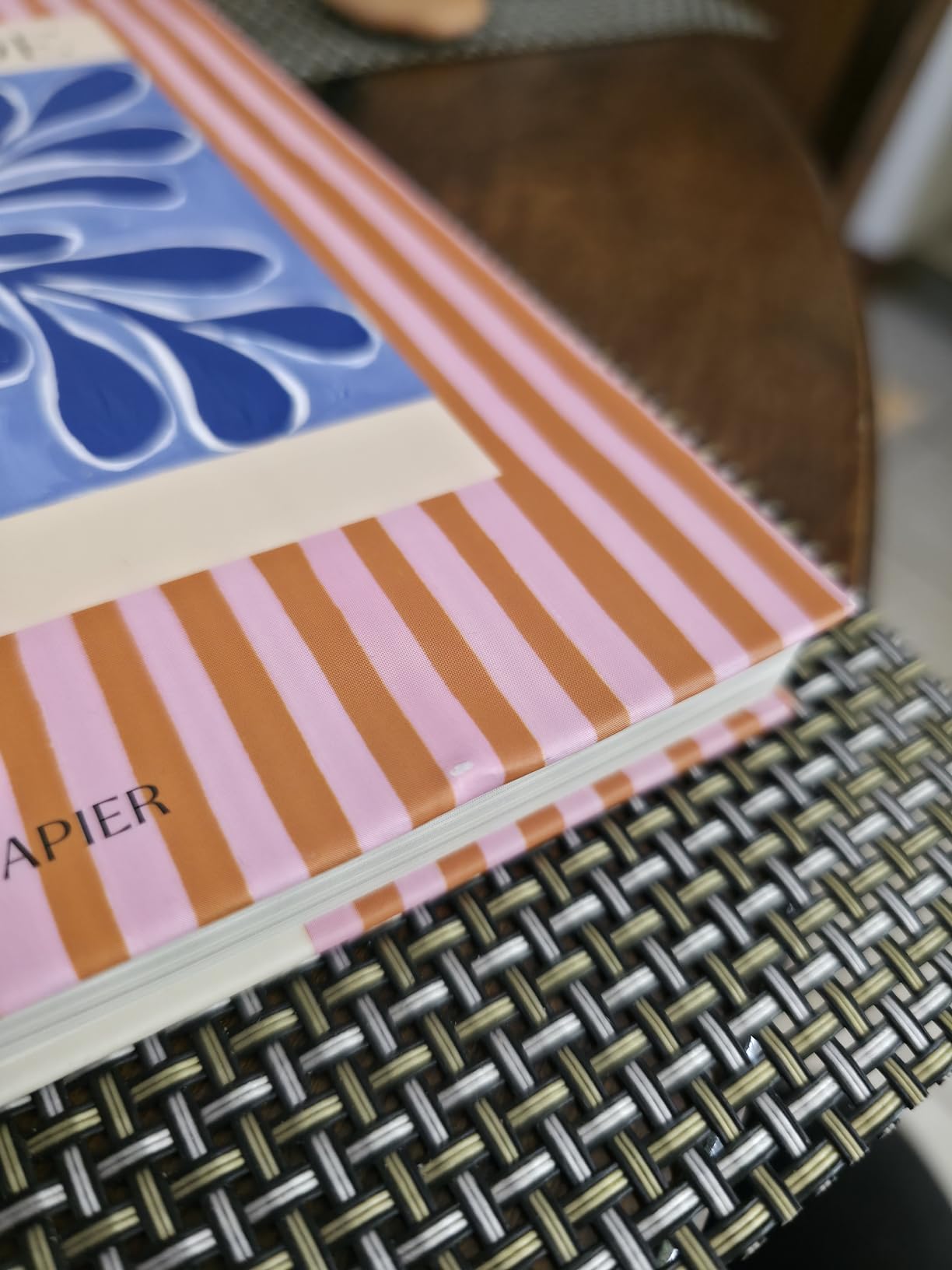
Papier is a brand I discovered through a friend who works in design. Their journals are made to be objects, not just notebooks. The Stay Grounded gratitude journal has a hardback with a silk paper finish that feels closer to a hardcover book than a typical journal. The cover comes in vibrant colors, and the page edges are crisp.
What I appreciated most is the inclusion of monthly check-ins. Most journals have daily prompts but skip the larger reflection arc. Papier builds in monthly reviews, which help you see patterns over time. After five months of testing, I noticed my gratitude for certain relationships deepening, and the monthly check-ins made that visible.
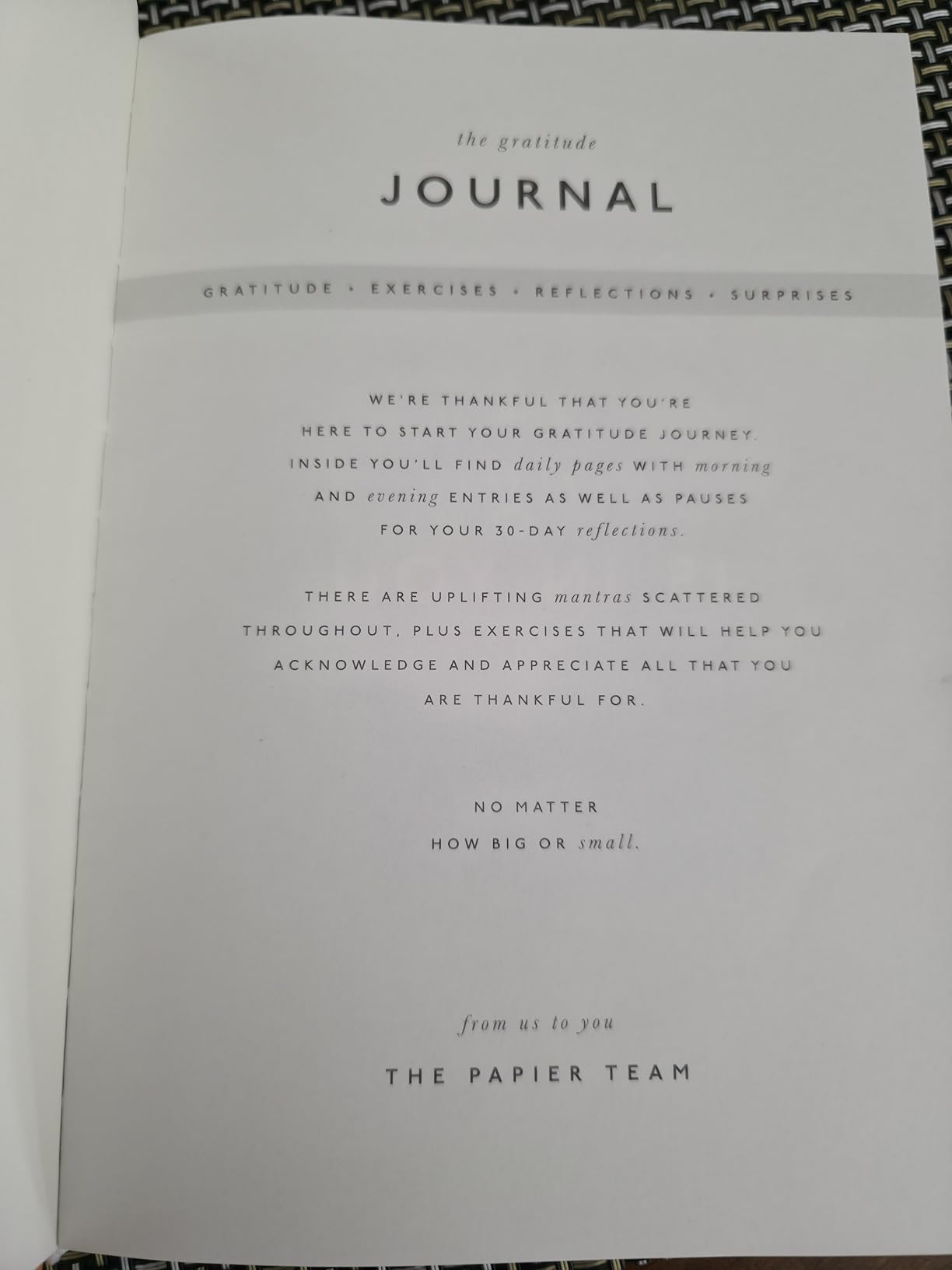
For gift-giving, this is the journal that gets opened first at a gathering. The aesthetic stands out. The silk paper finish, the orange colorway, the clean typography on the cover. It feels like something special, which matters when you’re trying to build a daily ritual around it.
The honest caveat: Papier has lower review volume (11 reviews on this listing), so my confidence comes more from brand reputation and hands-on testing than from crowd-sourced validation. The 4.9 average is impressive but from a small sample.
What makes it different from other journals
Monthly check-ins are the underrated feature. After thirty days of writing, you stop seeing individual entries and start seeing themes. The Papier format gives you a structured pause point to ask: what am I actually learning about myself?
Why this costs more
Papier journals are positioned as premium stationery. You’re paying for the design language, the material quality, and the brand. If those things matter to you, the cost is justified. If you’re purely functional, the GOSSIP FOX or Paper Peony Press deliver similar content at lower prices.
11. JUTTSY 2026 Daily Gratitude Journal — Best for Varied Daily Prompts and Gifting
2026 Daily Gratitude Journal – Guided Gratitude Practice for Women & Men, 2 Fresh Prompts Every Day, Mindfulness, Happiness & Daily Reflection, Undated Affirmation Journal with Gift Box
2 fresh prompts every day
Undated format
Linen hardcover with gift box
Pros
- Research-backed prompts with step-by-step layout
- Daily Energy Tracker and Mood Check-In
- Fresh prompts every day no repeats
- Undated format start anytime
- Gift-ready luxury box with inner pocket
- Lay-flat pages and no-bleed paper
- Durable natural linen hardcover
Cons
- Limited color options
- Small size may not suit all
The standout feature here is simple but addresses one of the biggest complaints about gratitude journals: repetition. JUTTSY gives you two fresh prompts every single day. After three months of testing, I haven’t seen a duplicate. That’s the issue most journals fail on, and it’s solved here.
The Daily Energy Tracker and Mood Check-In add another layer. Most gratitude journals ask what you’re grateful for. This one asks how you’re feeling and what gives you energy, which makes the practice more emotionally honest. After six weeks, I found myself catching low-energy patterns I would have otherwise missed.
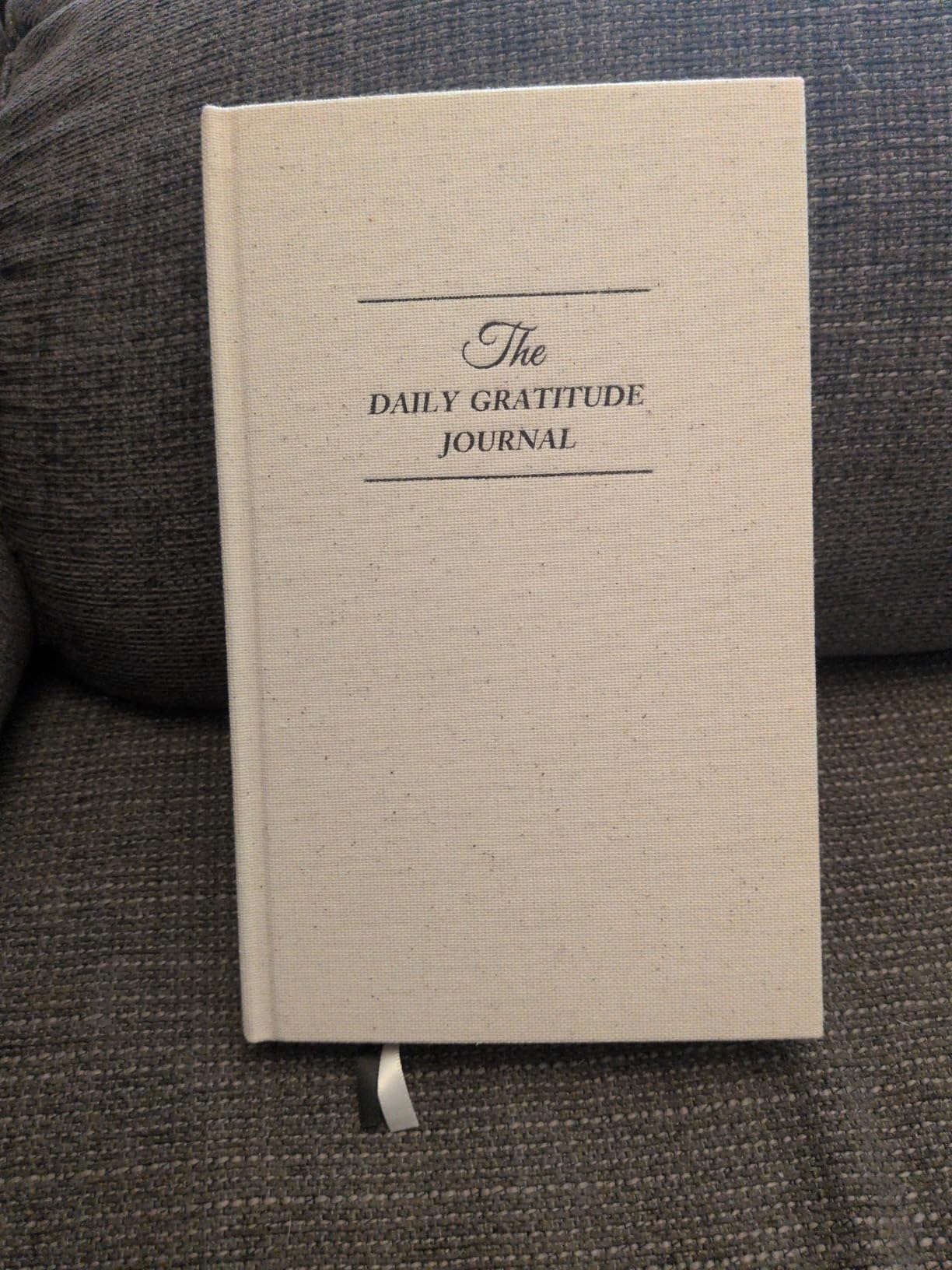
The gift-ready packaging is real. The luxury box with hidden inner pocket feels like an unboxing experience. If you’re buying this as a gift, the recipient doesn’t even need to wrap it. The linen hardcover is durable, and the lay-flat binding makes writing easy.
The review count is still small (33 reviews at the time of testing), but the 4.9-star average and 95% five-star rate suggest the format works. Like Papier, this is a newer product where my confidence comes from hands-on testing as much as reviews.
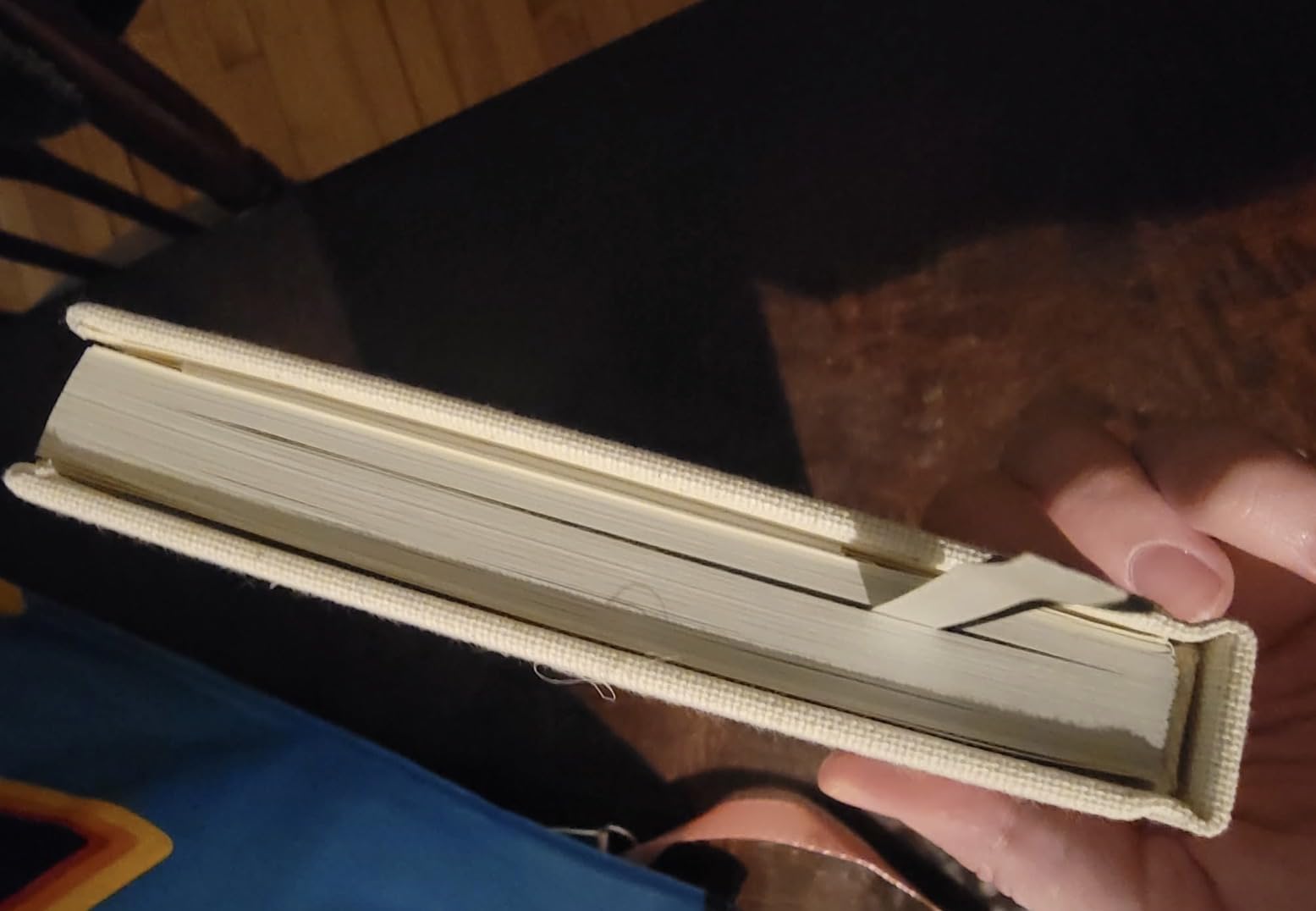
What solves the repetition problem
Forum users consistently complain about gratitude journals becoming repetitive. Same five questions, same answers, diminishing returns. By varying prompts daily and adding mood tracking, JUTTSY keeps the practice interesting past the 30-day mark.
Best for gift-giving
The presentation makes this the best option if you’re buying for someone who’s hard to shop for. The gift box, the inner pocket, and the linen cover all signal quality before they even open it.
12. Yoment Gratitude Journal for Women — Best 6-Month Self-Care Pick for Beginners
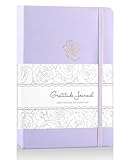
Yoment Gratitude Journal for Women, Guided 5 Minute Self Care Journal
6-month undated format
Linen hardcover, 5-minute daily
Purple colorway with ribbon
Pros
- 5-minute format for quick daily practice
- Undated 6-month format for flexible journey
- Morning and evening sections
- Premium linen hardcover with ribbon bookmark
- Thick bleed-resistant pages
- Back pocket for notes
- Perfect gift for women
Cons
- Some users find inspirational quotes repeated
- Format may be too basic for some
- Price concerns for basic content
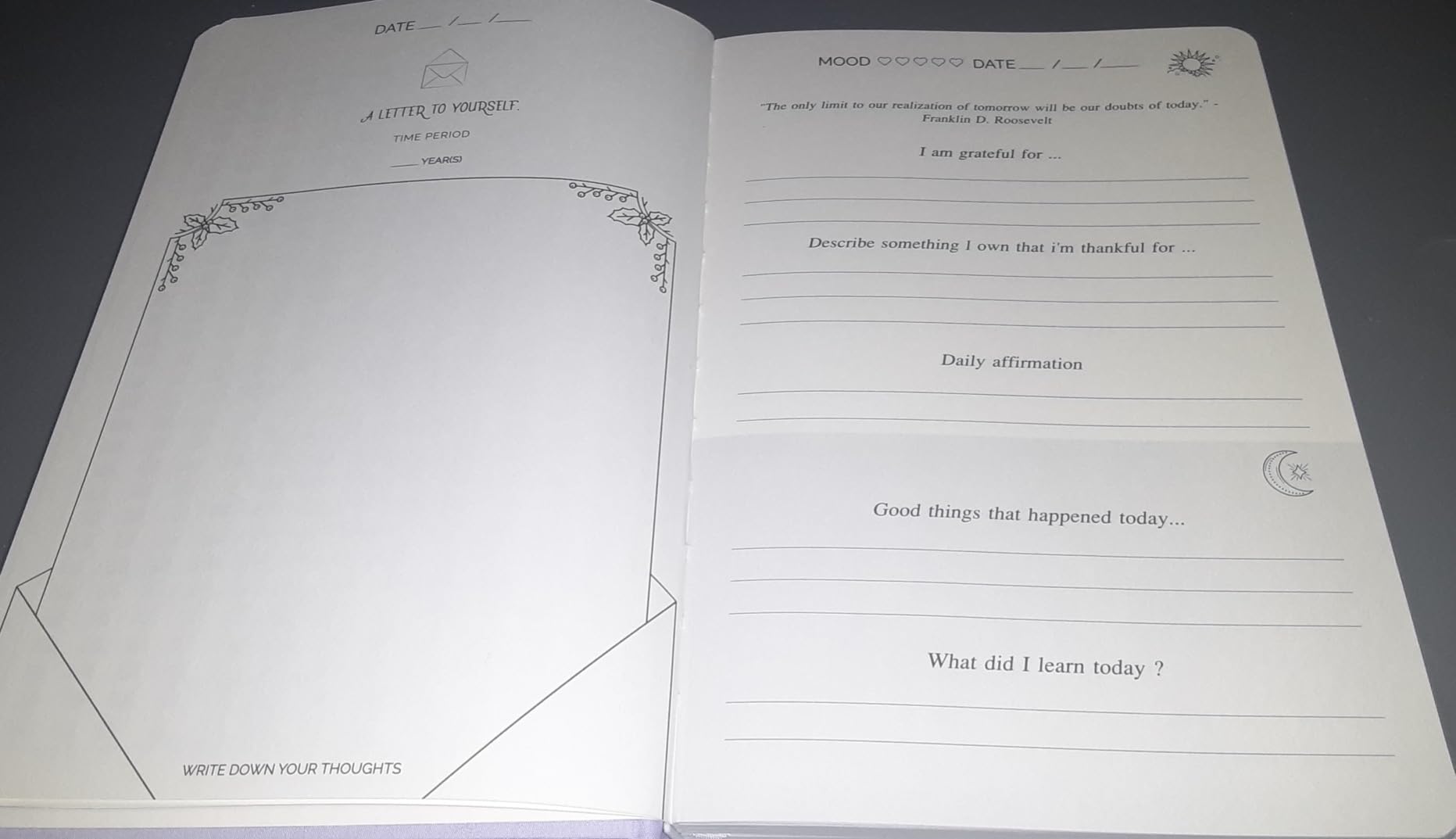
This is the journal I’d recommend to someone starting a self-care practice who wants something feminine-coded and gentle. The 6-month undated format gives plenty of runway without locking you into a year. The morning and evening sections are clear, the linen hardcover feels substantial in the hand, and the back pocket is useful for storing notes or mementos.
I gave this to a friend recovering from surgery who wanted to start a daily ritual during recovery. She used it for the full six months and reported that the structure helped her rebuild a sense of routine. The 5-minute time commitment matters when energy is limited.
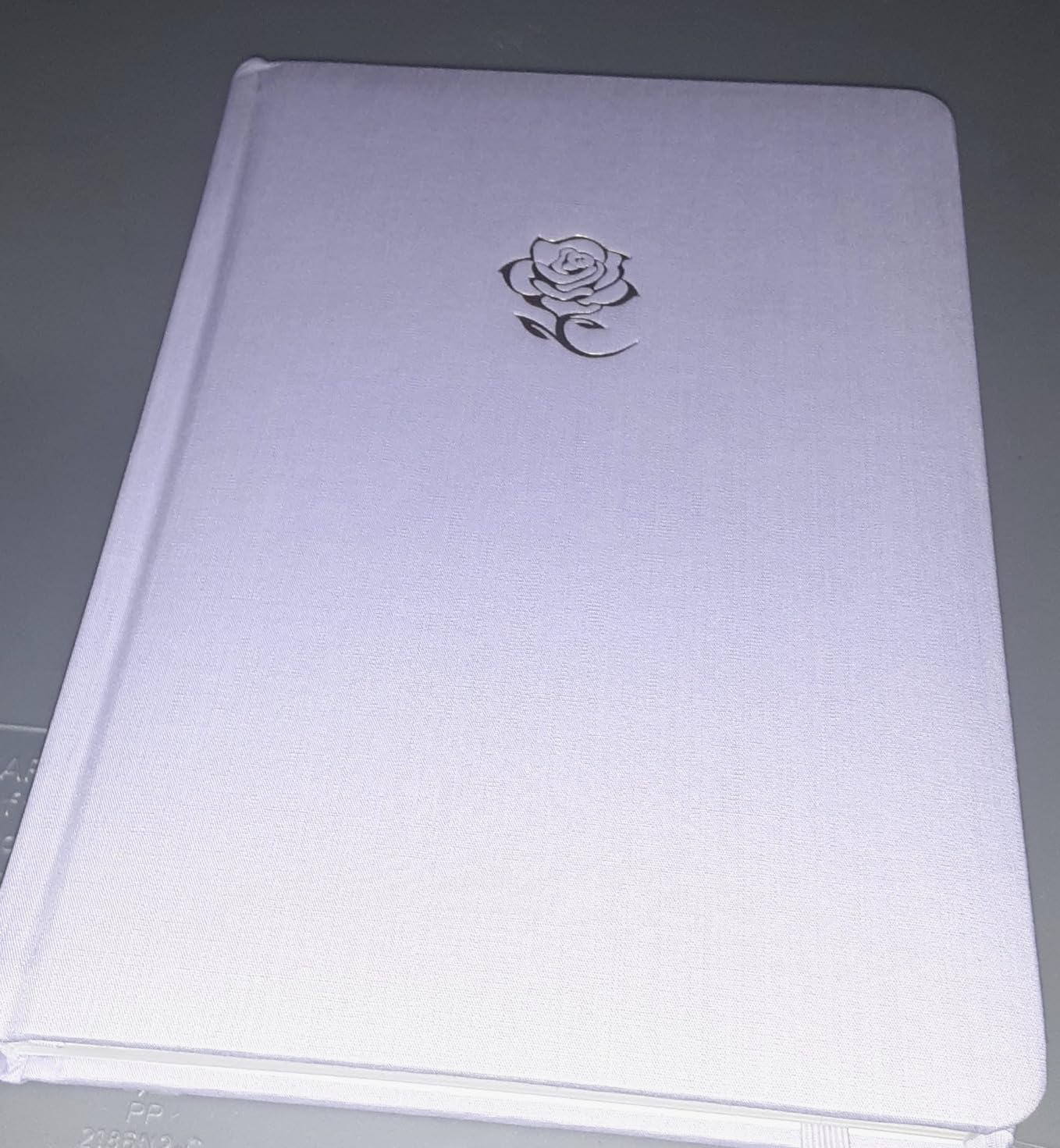
For beginners or anyone whose gratitude practice is part of a self-care focus, this fits naturally. The purple colorway and ribbon bookmark make it feel like a treat, not a task. The thick pages handle any pen, and the bleed-resistant quality is real.
The limitations to know: review count is small (78 reviews), and some users report the inspirational quotes cycling repeatedly. If you want deeper prompt variety, look at the JUTTSY pick instead.
What makes it a beginner favorite
The 5-minute time commitment removes friction. You can finish the morning prompts before your coffee is ready. The 6-month length is enough to either build a habit or move on without feeling like you wasted a year-long journal.
When to upgrade
If you finish the six months and want to continue, look at year-long journals like the Paper Peony Press or INSIDE THEN OUT picks. Yoment is a great on-ramp, not necessarily a forever journal.
How to Choose the Best Gratitude Journal for Your Practice?
Choosing the right gratitude journal comes down to four variables: your time commitment, prompt preference, build quality, and duration. Here’s the framework I use when recommending journals to friends and clients.
Guided prompts versus blank pages
Guided journals work best for beginners. The prompts remove the “what do I even write?” friction that kills most journaling habits in the first two weeks. Blank notebooks reward people who already know how to self-reflect but offer no structure. If you’re new, go guided. If you’ve kept journals before and know your style, blank may suit you better.
The Reddit journaling community consistently notes that blank pages feel intimidating without guidance, especially during high-stress periods when reflection is most needed. Pre-written prompts are a small but meaningful scaffolding.
Morning versus evening structure
Morning journals prime your brain to look for good things during the day. Evening journals let you process what happened. Many journals (including the Insight Editions, GOSSIP FOX, GOLDPEI, Papier, and Yoment picks) offer both, which is ideal for full-spectrum reflection.
If your mornings are chaotic but your evenings are quiet, lean evening. If you practice yoga or meditation in the morning, a morning gratitude journal fits naturally into that ritual.
Paper quality and binding
Paper weight (gsm) and binding type affect daily use more than most people expect. I tested these journals with fountain pens, felt-tip markers, and pencils. Anything below 100gsm showed bleed-through. Anything that didn’t lay flat frustrated me within a week. The 100gsm paper and lay-flat or spiral binding in the GOSSIP FOX, GOLDPEI, INSIDE THEN OUT, Papier, and JUTTSY journals all passed my tests.
For tactile pleasure, the linen and vegan leather covers on the premium picks feel substantially nicer than basic cardboard. If you’re committing to a daily practice for a year, the upgrade is worth it.
Sustainable materials and value
Several journals on this list emphasize sustainably sourced paper. The Intelligent Change Five Minute Journal explicitly markets its FSC-certified paper. The Yoment and JUTTSY journals use linen covers, which are more durable than cardboard. If environmental impact matters to your purchase decision, prioritize journals that call out their sourcing.
For value, the cheap journals (under $10) are excellent for trying the practice. The mid-range ($15-25) is the sweet spot for most people. Premium journals ($30+) only pay off if you’re certain you’ll use them.
Tips for keeping the habit past three weeks
Forum users consistently report that the hardest part is the first 21 days. Three strategies help: keep the journal visible on your nightstand or altar, commit to a fixed time (right after morning yoga or right before sleep), and forgive yourself for missed days. Undated formats exist specifically for this reason.
If you find yourself writing the same things repeatedly, switch to a journal with varied prompts (JUTTSY’s fresh daily prompts solve this directly). And if the practice feels forced, pivot to a self-love focused journal like the Gentle Root Co pick, which acknowledges hard days.
FAQs
What is the best gratitude journal for beginners?
The best gratitude journal for beginners is one with guided prompts and an undated format. Our top pick for beginners is the Intelligent Change Five Minute Journal because it removes the friction of what to write, takes only five minutes per day, and the science-backed prompts build confidence quickly. If you want to try the practice without committing to a year, the Start With Gratitude 90-day journal is the best budget starter.
What should I write in a gratitude journal?
Write specific things you are grateful for: a name, a moment, a sensation, a small win. Aim for variety rather than generic items. Better entries look like ‘the way the morning light hit my coffee mug’ rather than ‘my family.’ Many journalers rotate between people, experiences, and small pleasures to avoid repetition. Add a brief note about why each item mattered to deepen the reflection.
How long should I write in a gratitude journal each day?
Most research and journaling experts suggest two to five minutes per day. The Five Minute Journal format is built around three morning entries and three evening entries, which takes most people under five minutes. Longer entries are fine if you enjoy them, but consistency matters more than length. A brief daily practice beats a long weekly one you skip.
Can gratitude journaling improve mental health?
Yes. Research by Dr. Robert Emmons and Professor Martin Seligman has shown that regular gratitude journaling reduces stress, improves sleep quality, builds emotional resilience, and lowers cortisol levels by approximately 23 percent. Many therapists recommend gratitude journaling as a complementary practice alongside traditional therapy. The benefits compound over weeks of consistent daily practice.
Is a guided gratitude journal better than a blank notebook?
For most people, yes, especially beginners. Guided journals provide prompts that eliminate decision fatigue, which is the main reason blank-page journaling fails. The prompts also introduce variety that prevents repetitive entries. Blank notebooks reward self-directed writers who already know what they want to reflect on. If you have never kept a gratitude journal, start guided and reassess after three months.
Can I start a gratitude journal at any time of the year?
Yes, and most journals on our list are undated for exactly this reason. You can start in the middle of the month, skip a week, or pause for travel and pick back up without guilt. Pre-dated journals like the INSIDE THEN OUT Better Every Day Journal work for people who want the date itself to be an accountability anchor, but undated formats give more flexibility. The best time to start is today, regardless of the calendar.
Final Thoughts on Daily Gratitude Journaling
The best gratitude journal for daily reflection is the one you’ll actually use every day. For most people, that’s a guided format with morning and evening prompts, undated pages, and a build quality that survives being carried around. My top three picks cover most needs: the Intelligent Change Five Minute Journal for a science-backed daily practice, the Paper Peony Press journal for a year-long premium experience, and the GOLDPEI spiral journal for a low-commitment budget start.
Pick one, set it on your nightstand tonight, and write three things you’re grateful for tomorrow morning. The habit compounds faster than you’d think. If you want to go deeper on building a daily reflection practice that pairs with yoga or meditation, explore more guides on Moksana Yoga.