
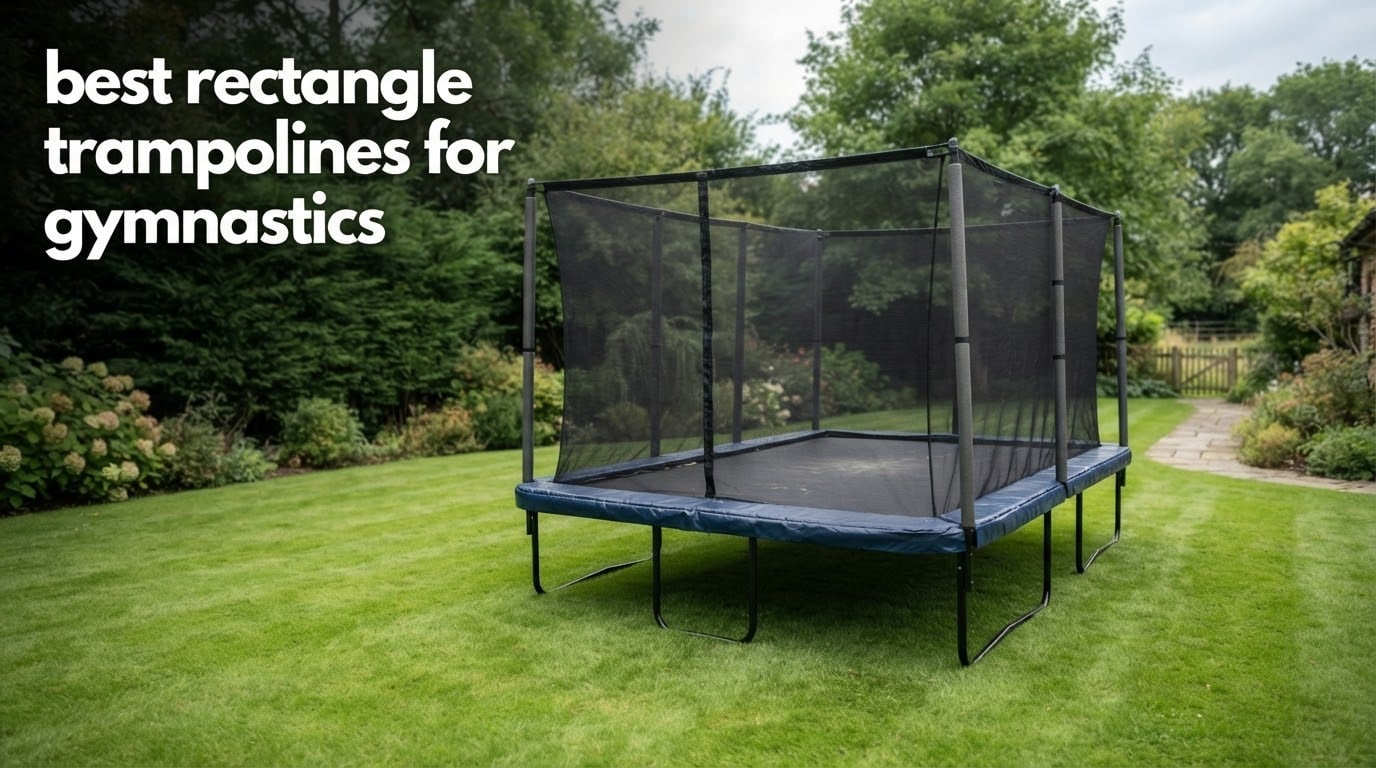
Most families buying a trampoline for gymnastics make the same mistake: they buy the round unit with the nicest reviews and then discover at the first handspring that the frame keeps pulling the jumper back toward the center. A rectangle changes the geometry of every bounce, and picking the wrong size or the wrong spring setup means a gymnast spends a season fighting the equipment instead of learning skills.
We spent weeks comparing the ten rectangle trampolines on this page by spec sheet, by the complaints owners actually report, and by how each one holds up when a straight tumbling pass matters. We looked at frame gauge, spring count and length, single-jumper weight capacity, enclosure design, warranty length by component and how many people it takes to put the thing together. Every number we quote below comes from the manufacturer’s own listing data or from owner reviews, not from marketing adjectives.
If you are still working out the basics rather than chasing a full tumbling pass, our guide to the best rectangle trampolines for families is a useful side-by-side read. Families shopping for younger kids usually want a padded, forgiving unit first, and our backyard trampoline guide for kids covers the safety-first picks in more detail.
The short version: for anyone training real skills, a 10×17 ft rectangle with a 10-year frame warranty and a no-gap enclosure is the right starting point. Here is the full breakdown.
Table of Contents
Top 3 Picks for Rectangle Trampolines for Gymnastics in 2026

Zupapa 10×17 No-Gap Rectangle
- Patented no-gap net-to-mat connection
- 51mm Q195 steel frame
- 1800 lbs static / 450 lbs dynamic
- 10-year frame warranty

AOTOB 12/14 ft Rectangle
- No-gap enclosure with foam poles
- 72 springs
- 93.5 lb build
- 5-year mat and frame support

ACON 16 HD 17×9.8 ft
- 14.2 x 7.2 ft jump zone
- 140 HD 10-inch springs
- SafeMat 2-inch foam
- 330 lb single-jumper capacity
Are Rectangle Trampolines Better? Shape Changes the Physics of Tumbling
Yes, for gymnastics. On a round trampoline every perimeter spring pulls inward toward a single center point, so an off-center jumper gets dragged back midair and body alignment breaks. On a rectangle, the long-side and short-side springs act independently, creating a straight sweet spot where a gymnast can run a tumbling line and land facing the same direction they took off. That straight-line control is why competition floors and serious training pits are rectangular.
The trade-off is honest: rectangles cost more, take more yard space and sag more easily across the long side if the support layout is cheap. They are built for line work, not for a whole family bouncing at once.
All 10 Picks Compared Side by Side in 2026
| Product | Specifications | Action |
|---|---|---|
| Zupapa 10×17 No-Gap Rectangle |
|
Check Latest Price |
| AOTOB 12 or 14 ft Rectangle |
|
Check Latest Price |
| ACON 16 HD 17×9.8 ft |
|
Check Latest Price |
 GIANTEX 8×14 ASTM Rectangle GIANTEX 8×14 ASTM Rectangle |
|
Check Latest Price |
 Zupapa 13×23 2500LBS Rectangle Zupapa 13×23 2500LBS Rectangle |
|
Check Latest Price |
 Goplus 8×14 with Enclosure Goplus 8×14 with Enclosure |
|
Check Latest Price |
 Galactic Xtreme 13×23 Pro Galactic Xtreme 13×23 Pro |
|
Check Latest Price |
 BSPORTY Air 8×14 Zipper-Free BSPORTY Air 8×14 Zipper-Free |
|
Check Latest Price |
 BSPORTY Ultra 8×14 Six-Leg BSPORTY Ultra 8×14 Six-Leg |
|
Check Latest Price |
 Zupapa 10×17 with Hoops Zupapa 10×17 with Hoops |
|
Check Latest Price |
The table above covers every model in this roundup, including the four 8×14 units that are the only realistic option for a small yard. Note the spread: dynamic load ratings run from 450 lb to 800 lb, and single-jumper capacity on the premium models is far lower than the static figure, which tells you how these frames are actually tested.
How We Picked These 10 Rectangle Trampolines
We did not test-jump these units in a lab, and we will not pretend otherwise. What we did was compare every published specification field across the ten models and cross-check each one against the pattern of complaints in owner reviews. Owner reviews are the most useful signal on this product category because trampoline failures are mechanical and repetitive: net straps tear in wind, spring pads wear through in a predictable place, poles bend during assembly.
Seven spec fields decided our ordering. Frame wall thickness and steel grade determine whether a 13×23 ft rectangle caves in down the long axis. Spring count and spring length set the feel of the bounce. Single-jumper dynamic load capacity tells you whether an adult or a teenage gymnast can train on it. Enclosure design, specifically whether the net attaches to the mat or hangs outside the spring pad, determines gap risk during a flip. Mat weave and UV rating predict mat life. Warranty length by component predicts which replacement bill you will face. Assembly weight predicts whether you will finish the job in an afternoon or never.
We also read every negative review cluster on each listing. A trampoline with a beautiful spec sheet and a long tail of snapped net supports is a worse buy for a gymnast than a slightly plainer one, because the failure mode shows up during a landing.
1. Zupapa 10×17 No-Gap Rectangle – Best Overall for Skill Training
Zupapa 1800LBS Weight Capacity Rectangle Trampoline 10x17FT 9X15FT 8X14FT Outdoor Square Gymnastics Trampolines with Basketball Hoops for Kids Adults Long Large Big Rectangular Tumbling Trampolin
10x17 ft rectangle
51mm Q195 steel, 2.5mm walls
1800 lbs static / 450 lbs dynamic
10-year frame warranty
Pros
- Patented no-gap net attaches to the mat
- Four-leg layout with middle support resists long-side sagging
- 689 reviews at 4.5 stars
- Same model line covers 8x14 through 10x17
Cons
- 249 pound build makes repositioning difficult
- Net zipper can be left open by younger jumpers
- Large yard footprint required
This is the unit we keep coming back to, because the middle support system is the part most rectangle listings quietly omit. On a 10×17 ft frame, the long sides are the weak point, and a frame that flexes there turns a straight tumbling pass into a wobble at exactly the moment of landing. Zupapa adds a middle support leg specifically to fight that, and owners mention long-side stability repeatedly in the reviews.
The patented no-gap design is the other reason it ranks first for gymnastics. Instead of the net hanging outside the spring pad and leaving a strip of exposed springs and mat edge between the two, the net connects directly to the mat. When a gymnast lands slightly off line, there is no coil of steel and no mat edge to land on.
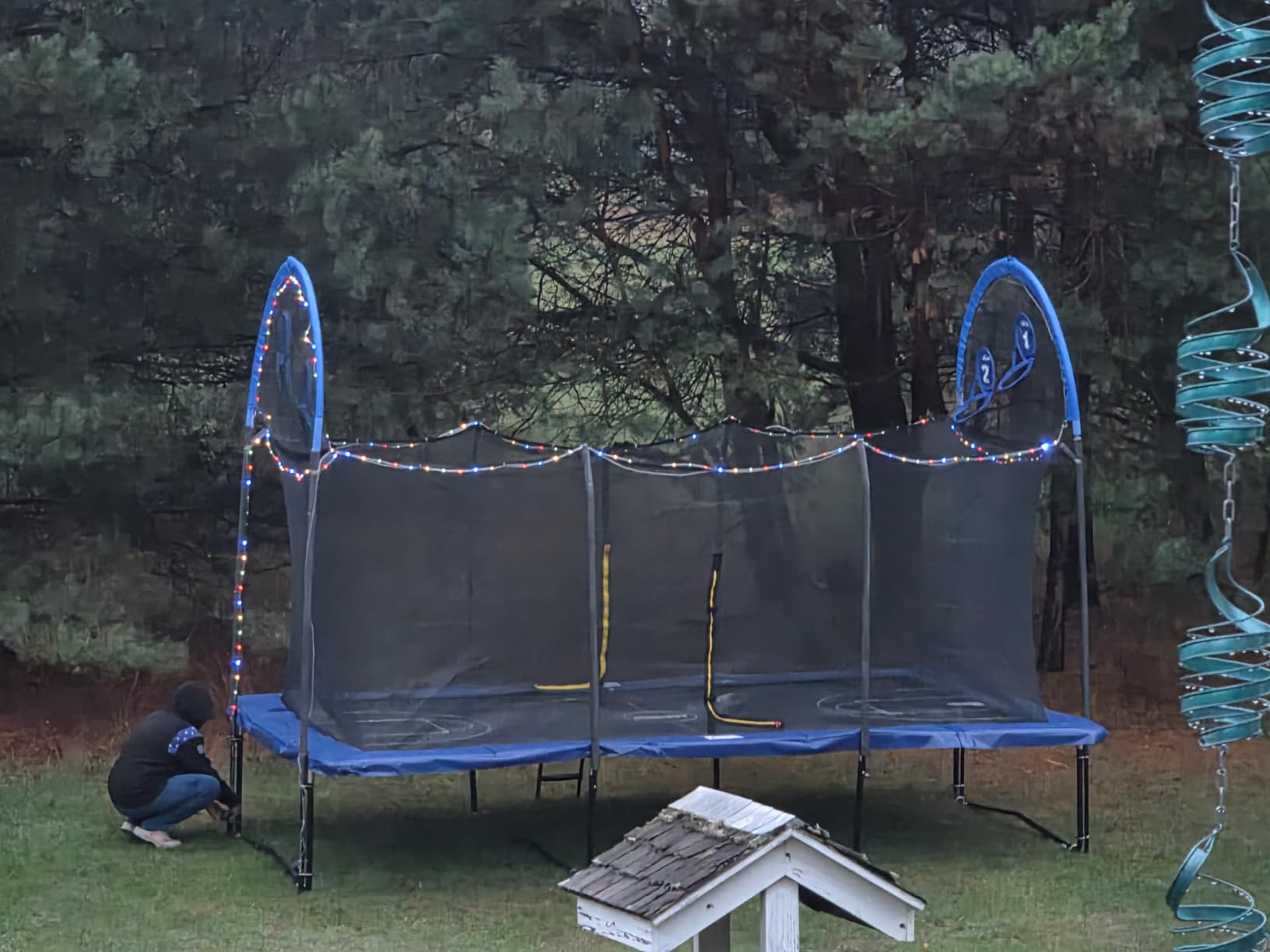
Frame construction is 51mm diameter Q195 steel with 2.5mm wall thickness, hot-dip galvanized, rated at 1800 lbs static and 450 lbs dynamic. The important number for you is the 450 lb dynamic figure. Static load is the weight the frame holds when nobody is moving; dynamic load is the load it takes with someone actively bouncing, and that is the number that governs a gymnast’s safety.
The warranty structure is among the strongest here: 10 years on the frame, 2 years on the mat, pad, net and springs, plus free replacement of other parts. Spare parts carry a 10-year listing, which matters more than most buyers realize.
What the 10×17 size gives you for skill work
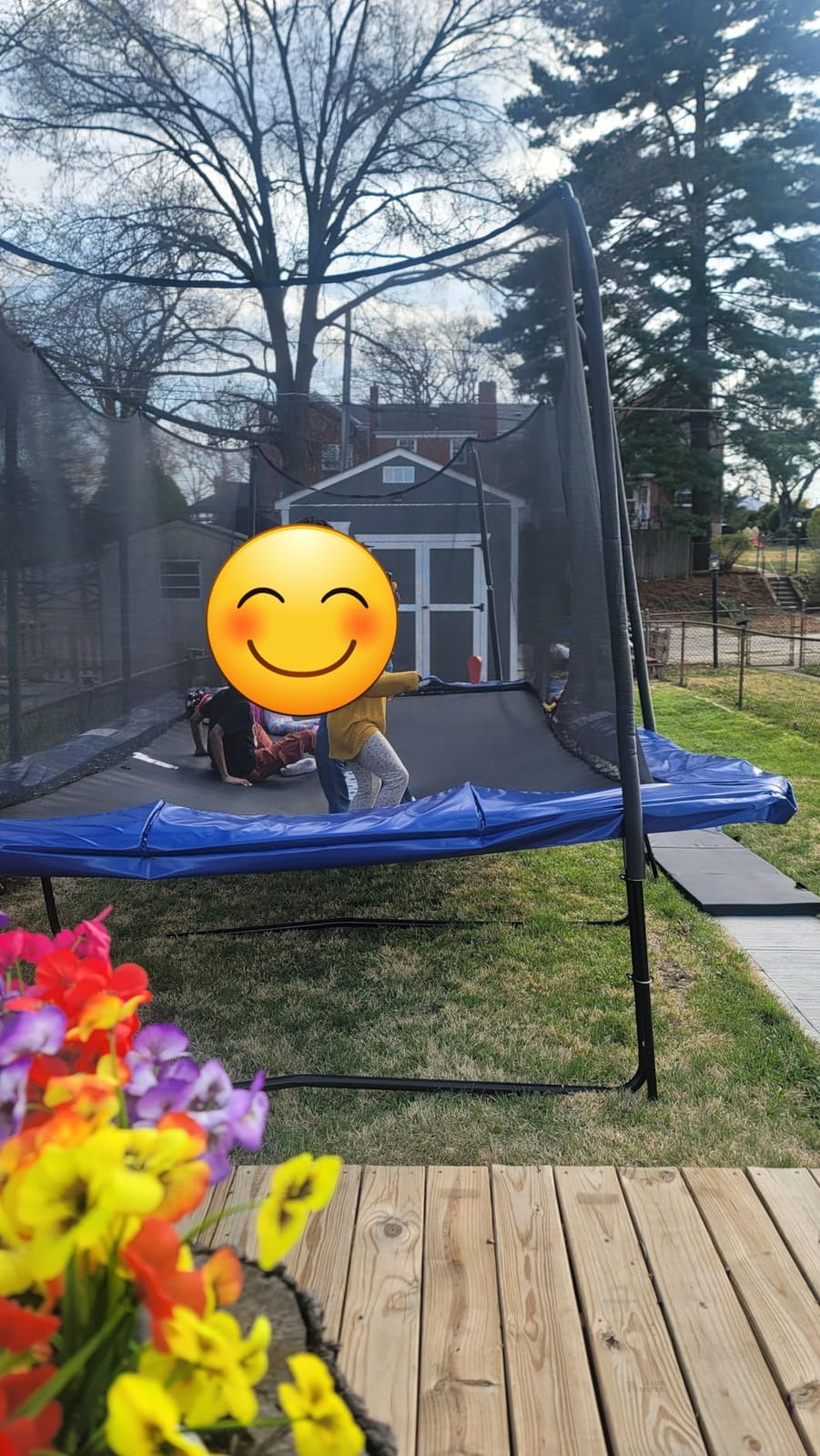
Ten by seventeen is the standard gymnastics rectangle because the usable mat sits around 8×15 ft, which is enough run-up for a roundoff into a back handspring without drifting into the frame. A 10×17 also handles two people bouncing at once, which an 8×14 cannot really do without the springs fighting each other.
For a child in the 7 to 11 range working on straight bounces, stretches and the first handspring shapes, this is more trampoline than needed. For a teenager chasing layouts, it is exactly right.
What you compromise on
At 249 pounds, moving this across a lawn is a genuine chore and you will assemble it in one place. The zipper entry is the other weak point. A zippered net door relies on a person remembering to pull it shut, and a nine-year-old mid-skill will not always remember.
Owner reviews also flag footprint as the top drawback, which is fair. A 10×17 needs a clear zone around it far wider than the frame itself.
2. AOTOB 12 or 14 ft Rectangle – Budget Pick for First-Time Buyers
AOTOB 8×14FT Rectangle Trampoline with Net for Kids-Black
12 ft and 14 ft options
No-gap enclosure, foam-wrapped poles
72 springs
93.5 pounds
Pros
- Lightest build we could confirm at 93.5 pounds
- 318 reviews at 4.6 stars
- Zippered no-gap net entry
- Four supportive legs
- 5-year mat frame and spring support
Cons
- 72 springs is low for the size
- Net and pole caps covered for 3 years only
- Frame size listing is 168 inches across variants
The AOTOB wins on one number that matters more than any spec sheet: 93.5 pounds. You can lift it, carry it, and turn it over with one other person. That is the difference between owning a trampoline and owning a permanently installed obstacle in your yard.
For a family starting out, this is the rational first buy. The no-gap enclosure with foam-wrapped poles removes the two most common backyard trampoline injuries, foot contact with springs and collision with a pole, and the powder-coated steel frame with four supportive legs is built for all-weather use.
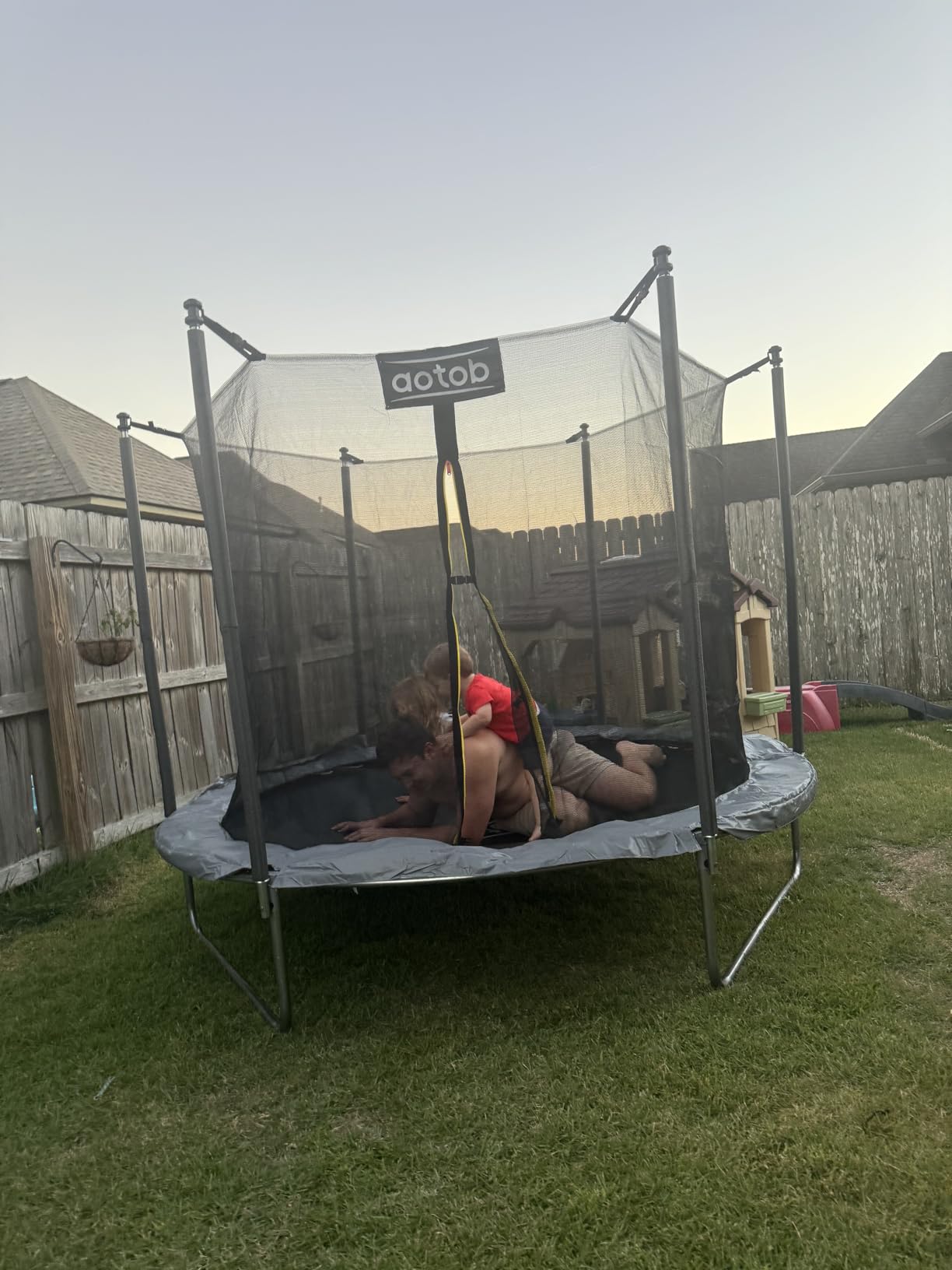
The honest weakness is spring count. Seventy-two springs on a 12 or 14 ft rectangle is the lowest here, and owners say the response feels less lively than heavier builds. If your gymnast is working on height and airtime for a back handspring, you will feel the difference. For bouncing, core work and stretch drills, you will not.
Warranty is 5 years on the mat, frame and springs, 3 years on the net and pole caps, with spare parts covered for 5 years. That is a step below the Zupapa frame coverage but well above most of this list.
Is 72 springs enough for a first gymnast
For ages roughly 5 to 9 working on fundamental shapes, yes. The mat gives a consistent, controlled rebound that suits straight bounces and assisted skills. The limit arrives when a taller, heavier gymnast needs to generate real airtime for a flip.
Assembly guidance is unusually good here. The Bilt app provides 3D step-by-step instructions, which matters for a buyer who has never built one, and the packaging splits the build into two manageable cartons rather than one unusable mass.
Where this one stops working
This is a family trampoline with a rectangular shape, not a gymnastics-grade rig. There is no middle support for long-side rigidity, and at 14 ft with 72 springs you will notice more give toward the ends during a bouncing session.
If your child is under about 60 pounds and just starting, the value is hard to argue with. If a teenager is training, step up a tier.
3. ACON 16 HD 17×9.8 ft – Most Versatile for Serious Tumblers
ACON 16 HD Rectangular Trampoline 17×9.8 ft, 140 HD Springs, SafeMat
17 x 9.8 ft frame, 14.2 x 7.2 ft jump zone
140 HD 10-inch springs
SafeMat 2-inch foam plus spring skirt
330 lb single-jumper capacity
Pros
- Genuine competition-scale straight jumping area
- 140 long springs tuned with frame and mat
- Highest single-jumper capacity here at 330 lb
- Zipperless two-level net entry
- 10-year frame with 5-year mat and spring coverage
Cons
- 242 kg build is a professional installation job
- Carbon steel and PVC construction is not sized for an indoor gym roster
- Only 90 reviews for the volume
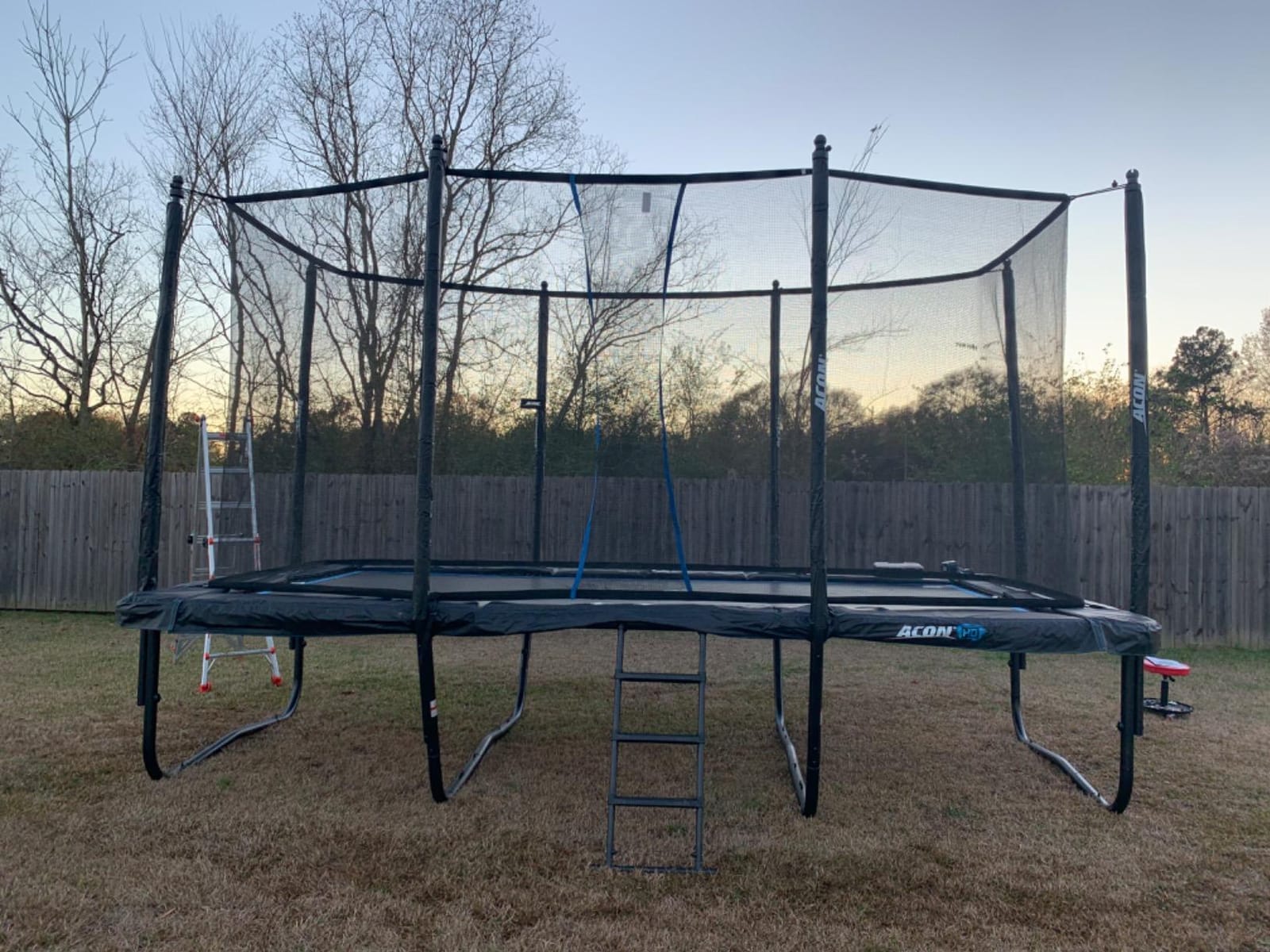
The ACON is the only unit here with a genuine competition-style jump zone, 14.2 by 7.2 ft inside a 17 by 9.8 ft frame. That is the measurement that matters. Frame size tells you the footprint; jump zone tells you how much of it you can actually use before the frame is in the way.
The spring system is the reason coaches point at this model. 140 HD 10-inch springs tuned together with the frame and mat by Synergy Design produce a deep, consistent bounce rather than the sharp surface snap you get from short 7-inch springs. Longer springs absorb more energy per cycle, which is easier on a gymnast’s knees and ankles through a long session.
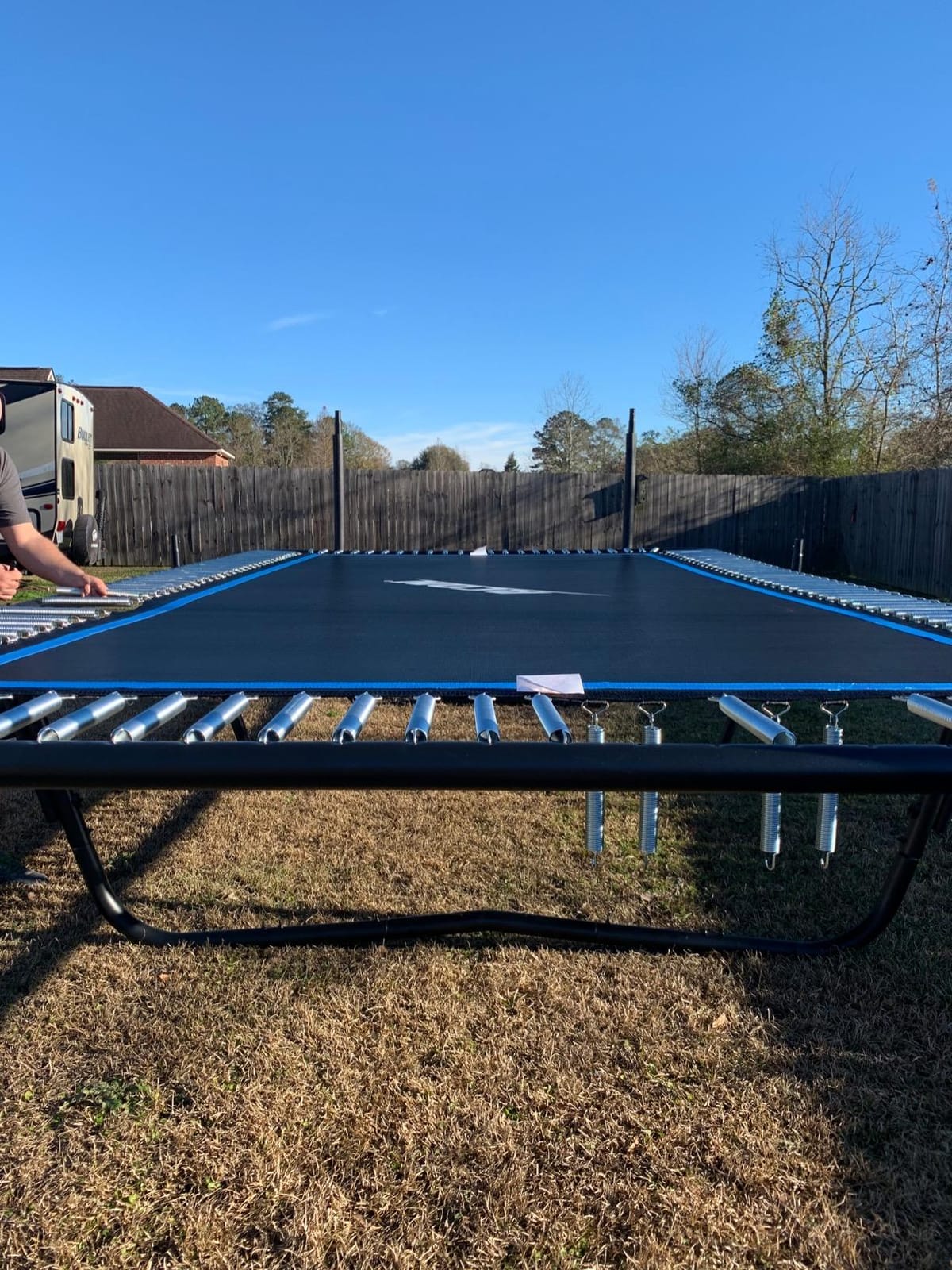
SafeMat adds a 2-inch foam buffer plus a spring-covering skirt, two separate layers of protection between a jumper and the springs. The No Finger Access net uses zipperless two-level entry, so there is no door flap to swing into during a rotation.
Frame is galvanized, powder-coated 2.4 inch steel tube with 0.1 inch wall thickness, tested to 1650 lbs static. Single-jumper capacity is 330 lb, and the maker states that figure separately rather than folding it into one combined load number. CE and ASTM certified. In-ground pit installation is supported as an option.
Who should spend at this level
A household with a teenager in a competitive club, a cheer squad rehearsing at home, or an adult training flips. The straight-line jump area and deep bounce support a full tumbling pass with a run-up, which the 8×14 units in this roundup do not.
It also makes sense if you intend to install it as a permanent pit. The frame supports it, and an in-ground rectangle removes the wind-drag problem entirely because there is no net above ground to catch wind.
When we would skip this one
At 242 kg, plan the installation before the delivery arrives. This is not an afternoon project with one helper, and owners consistently describe the weight as the defining drawback. The 330 lb single-jumper limit also means it is built for one gymnast at a time, not a family.
Carbon steel and PVC or polypropylene materials are outdoor and backyard constructions. A school or club training a full roster would look at commercial trampolines instead.
4. GIANTEX 8×14 ASTM Rectangle – Best Value for Small Yards
Giantex Rectangle Trampoline for Kids – 8 FT x 14 FT ASTM Certified Rectangular Trampoline with Enclosure Net, Ladder, Double-Side Galvanized Steel Frame, Outdoor Recreational Trampoline for Adults
8 x 14 ft rectangle
84 heavy-duty springs
Double-side hot-dip galvanized steel
440 lbs maximum load
Pros
- ASTM certified rectangular surface
- Galvanized on internal and external surfaces
- Curved poles leave net clearance
- 5000-hour UV-tested mat
- Ladder and all tools included
Cons
- Assembly labels are hard to follow and take several hours
- Net poles bend easily and parts can be costly
- Replacement nets have been hard to source
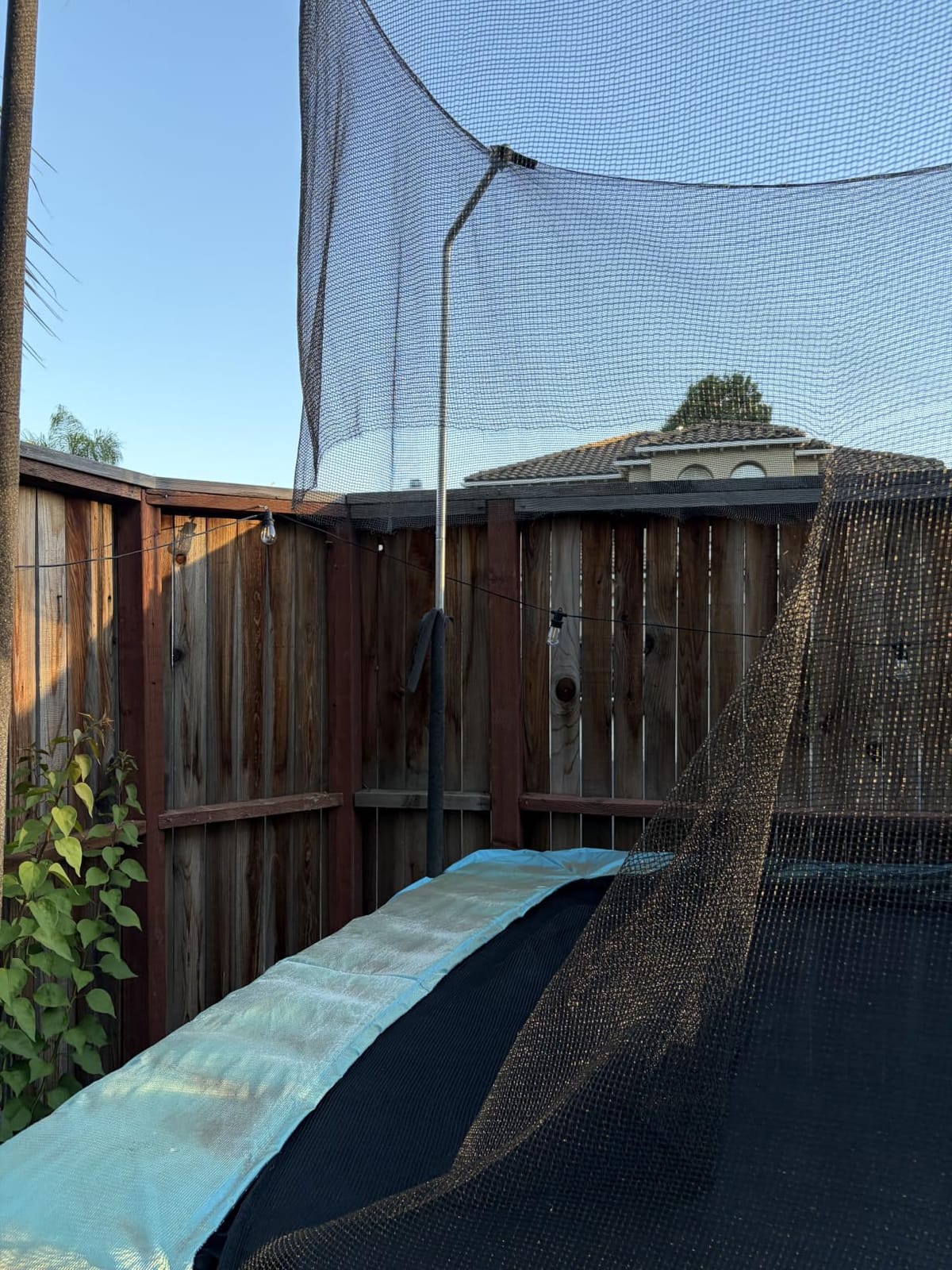
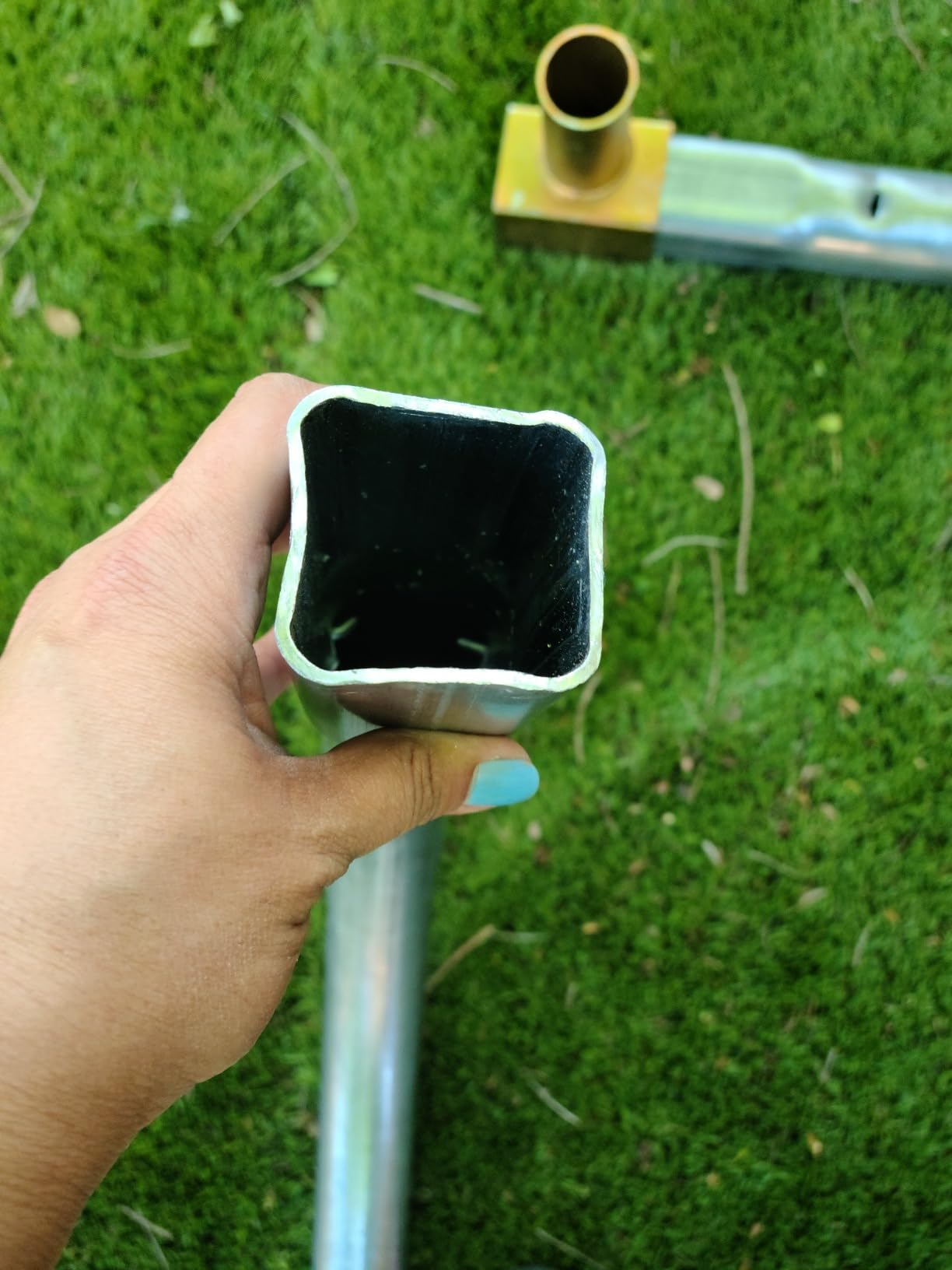
An 8×14 is the only rectangle that genuinely fits a normal suburban yard with a safety perimeter. If you are measuring in feet and the larger rectangles do not clear your fence line, this is the realistic choice, and it is ASTM certified with a hot-dip galvanized frame coated on both the internal and external surfaces.
The 84 heavy-duty steel springs give a firm rebound, and the polypropylene mat is tested for 5000 hours of UV resistance, which in practice means it holds up through multiple summers of direct sun better than an untested mat. Curved enclosure poles bend the net away from the jumper, creating clearance on a fall rather than a taut wall of mesh.
Owners rate the flip side of this generous package too. The ladder, all installation tools and the enclosure are in the box, so you are not adding accessories in your first month.
At 4.2 stars with 11 percent one-star reviews, this sits near the bottom of the ratings here, and the complaints are specific rather than vague. Assembly instructions are poorly labelled, net poles bend, and replacement parts have reportedly become hard to get from the manufacturer. That last point is the serious one. A bent pole on a five-year-old trampoline ends the product.
What an 8×14 can and cannot train
Eight by fourteen supports straight bounces, aerial awareness drills, front walkovers, the first front handsprings with a coach, and lots of conditioning. It will not support a full tumbling pass with a proper run-up. There is not enough length to build speed and land facing the same direction.
For a child aged roughly 6 to 10 in a beginner class, that is genuinely useful training. It is practice for the mat, not a replacement for it.
The after-sales catch
Budget three to four hours for assembly, and expect at least two adults on the frame stage. Read the instruction diagram before you start rather than after you have 40 springs half attached.
For a serious club gymnast, the after-sales situation is disqualifying. Confirm replacement net availability before you buy, not after a pole bends.
5. Zupapa 13×23 2500LBS Rectangle – Best for Serious Full-Pass Training
Zupapa 2500LBS Weight Capacity Rectangle Trampoline 13x23FT Outdoor Square Gymnastics Trampolines with 10-Year Quality Assurance for Kids Adults Large Commercial Grade Rectangular Pro Trampoline
13 x 23 ft rectangle
2500 lbs static / 800 lbs dynamic
180 electroplated 3.5mm springs
Seven-leg support layout
Pros
- 13 x 23 ft commercial-grade jump surface
- 800 lb dynamic load rating
- 180 springs for heavy-duty response
- Seven-leg anti-sag geometry
- Net and ladder included
Cons
- 750 pound build requires a crew
- Needs an exceptionally large yard or indoor hall
- Spring and mat coverage is 2 years
- Review base is 61
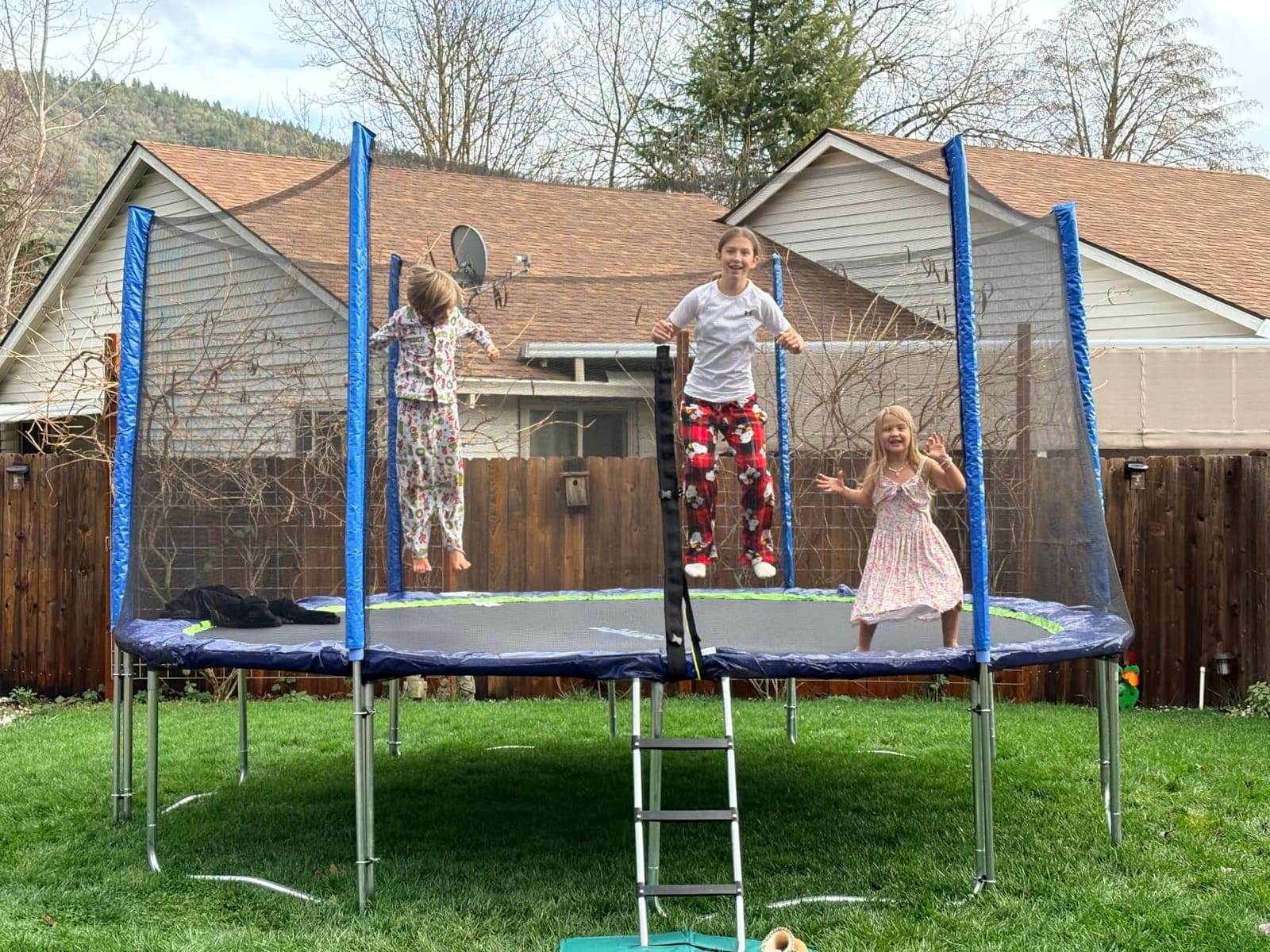
At 13 by 23 ft this is tied for the largest surface in the roundup, and it is one of only two units here big enough for a genuine full tumbling pass. If a teenager is working layouts and full twisting combinations, this is the size of mat that makes those skills possible at home.
The engineering is the point. Seven side-by-side legs with a center support eliminate long-side cave-in, which is the failure mode that makes a big rectangle unusable. 180 electroplated springs with 3.5mm wire diameter are rated at 2500 lbs static and 800 lbs dynamic, comfortably enough headroom for adult training and multiple users.
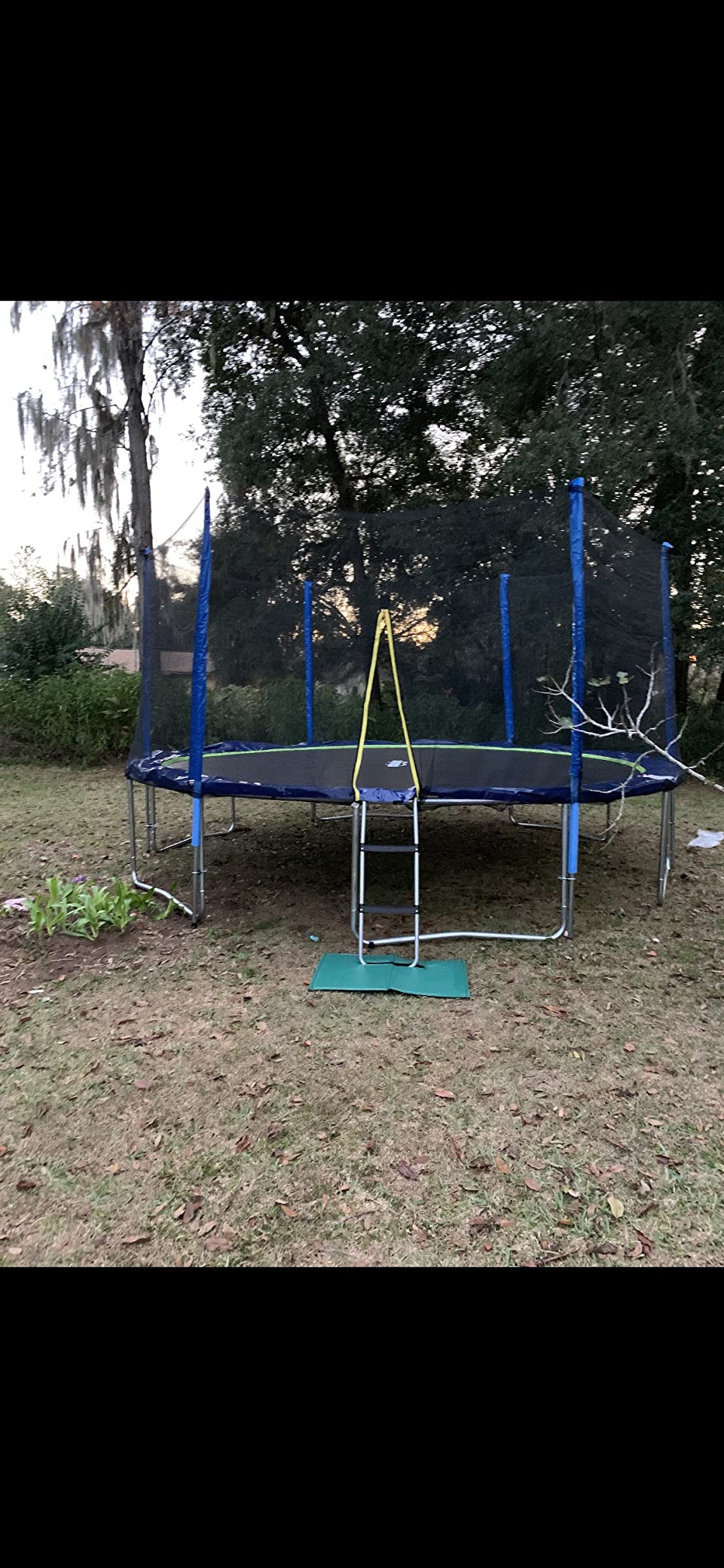
The same patented no-gap net-to-mat connection from the smaller Zupapa is here, and the extra-large polypropylene mat is a heavier weave than a standard recreational mat. Cables run between the legs as an extra anti-sag measure, and the frame is 51mm Q195 steel with 2.5mm walls, the same gauge used on the 10×17.
Warranty is 10 years on the frame and 2 years on mat, pad, net and springs, with free replacement of other parts. At 4.6 stars with 61 reviews and no one-star ratings at all, satisfaction is high, but the review base is small for a unit of this scale.
Space and skill requirements for a 13×23
Plan the footprint before the delivery, not after. A 13×23 frame plus the safety clearance zone around it needs a genuinely large yard or a dedicated indoor hall. Residential lots under half an acre rarely work, and no amount of anchoring fixes a trampoline that does not fit.
The skill payoff is real. A run-up, a roundoff, a back handspring and a layout fit in one line on this surface. On a 10×17 you would be stopping short.
What the space requirement rules out
At 750 pounds, this is a professional installation. Budget for a crew, and check whether your ground is level before the frame arrives, because you cannot move 750 pounds once it is assembled.
For most families this is overkill. It makes sense for a club-adjacent household, a training studio, or a gymnast already competing and needing volume at home.
6. Goplus 8×14 with Enclosure – Best for Kids and Teens on a Budget
Goplus 8FT x 14FT Rectangular Trampoline, 440LBS Bearing Recreational Trampolines w/Enclosure Net & Non-Slip Ladder, Waterproof Pad, ASTM Approved Bounce Outdoor Trampoline for Kids Adults (Orange)
8 x 14 ft rectangle, ASTM compliant
6 ft 360-degree polyester net
84 heavy-duty springs
440 lbs load rating
Pros
- Screw-mounted net resists wind far better than straps
- No-gap design limits foot clipping
- Generous pole-to-net clearance on falls
- Non-slip ladder and foot pads included
- Dual zipper and locking buckle entry
Cons
- Net and pad straps are the most commonly criticised parts
- 210 pound build is hard work solo
- 4.2 stars with 11 percent one-star reviews
The design decision that separates this from its competitors is net attachment. The 6-foot polyester net is screwed to the poles rather than strapped on, and that single choice addresses the most common structural complaint in this category, which is net supports tearing apart in wind.
The no-gap design between net and mat reduces foot clipping during an off-center landing, and the pole-to-net spacing is set so a falling jumper lands on mesh rather than on a pole. The PP mat carries 5000 hours of sun protection, the frame is hot-dip galvanized on both sides with four U-shaped legs and non-slip foot pads, and the ladder is non-slip too.
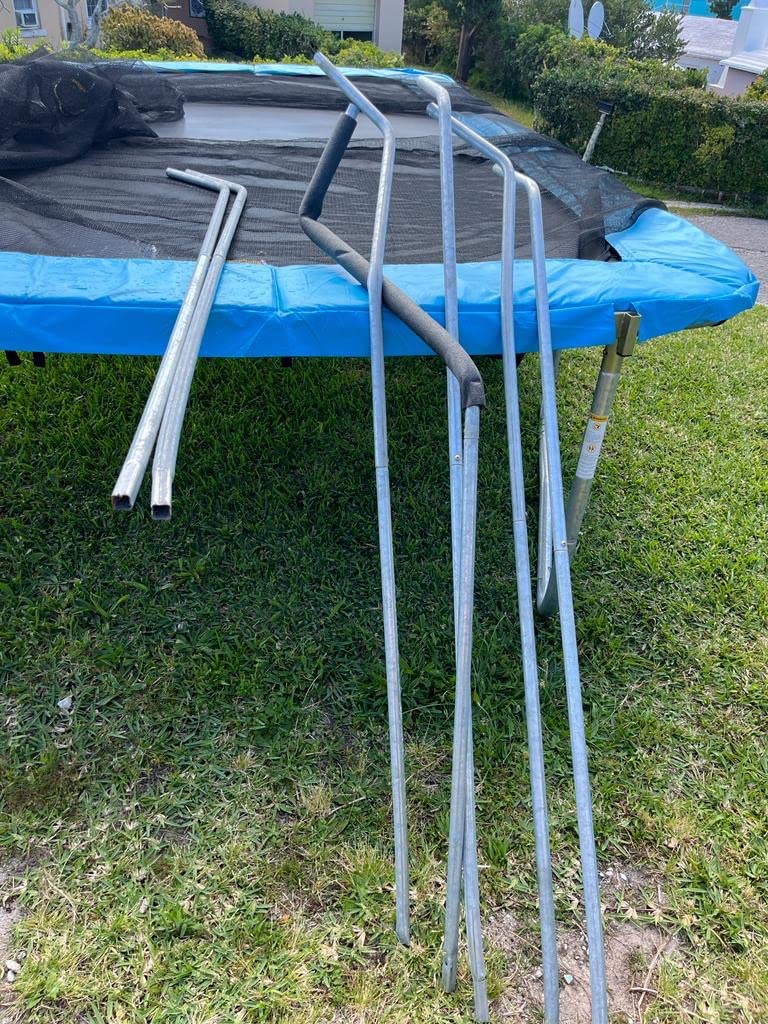
Owners also like the connector design, which attaches poles without wrestling with screws, and the thick waterproof pad that covers the full spring run.
Against that, the negative reviews concentrate in one place. The waterproof pad and net hardware are the weak components, and strap failures inside the first month or two show up repeatedly. At 4.2 stars with 11 percent one-star share, the pattern is narrow and predictable rather than random, which means you could manage it with a few zip ties and a hardware check each month.
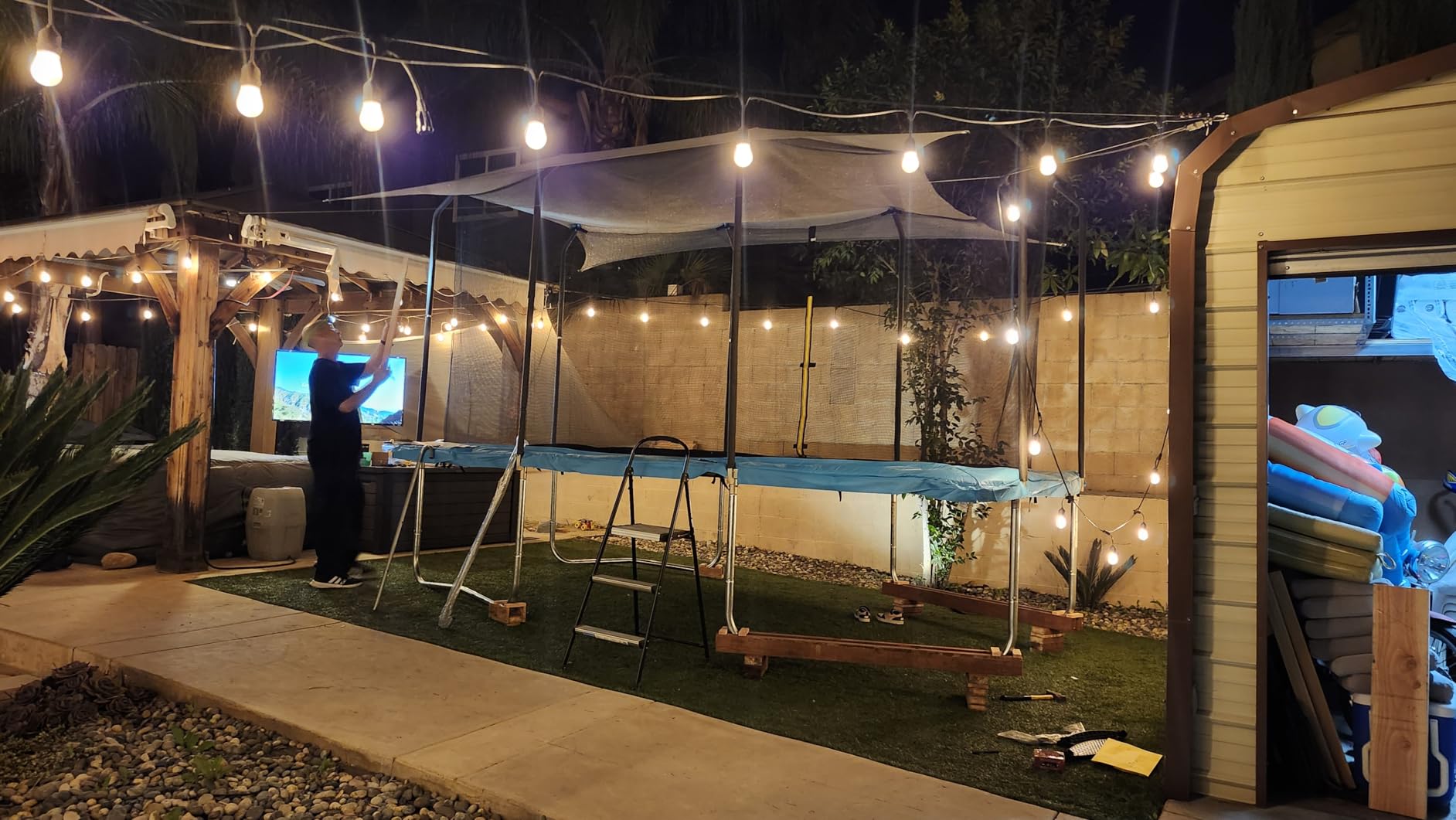
Best age and weight for this one
The 440 lb load rating covers a typical family, including one adult and two children. For a teen in early tumbling, the 8×14 mat is tight but workable for drills that do not need a full pass.
We would pair this with a check of your local wind exposure. The screw-fastened net helps, but an 8×14 with a full 360-degree net still presents a lot of surface to the wind in an open lot.
What the strap failures mean for you
210 pounds is a two-person lift once the mat and springs are on. The pad and net hardware are consumable components on this price tier, so budget for one replacement within a few seasons rather than treating them as permanent.
Owners who want a trampoline they will never touch again should look one tier up.
7. Galactic Xtreme 13×23 Pro – Best for High-Capacity Multi-User Use
Happy Trampoline Pro Rectangle Trampoline 13×23 with Net Enclosure for Backyard Heavy Duty 750lbs Jumping Capacity – Commercial Grade Outdoor
13 x 23 ft rectangle, 9.5 ft frame height
750 lb jumping capacity
172 galvanized 9-inch springs
Patented 4-leg 3.0mm frame
Pros
- 750 lb jumping rating for shared use
- 172 galvanized 9-inch springs
- Reversible spring pad doubles pad life
- Dual-side zipper and buckle entry
- Six rectangle sizes offered
Cons
- Very heavy build that needs a crew
- Large 13x23 footprint for the yard
- Reversible pad needs seasonal flipping
This is the other 13×23 in the roundup, and it competes on a different strength: shared capacity. The 750 lb jumping rating is listed for multiple users rather than a single one, which means two people can bounce simultaneously without the frame fighting the load, and the 172 fully galvanized 9-inch springs give a consistent response across a very large perimeter.
The reversible spring pad is the most distinctive feature in this roundup. Flipping the wide pad over puts a fresh face against the springs, which effectively doubles its lifespan. Most pads wear through in one place because the springs hit the same spot every cycle; a reversible pad halves that concentration of wear.
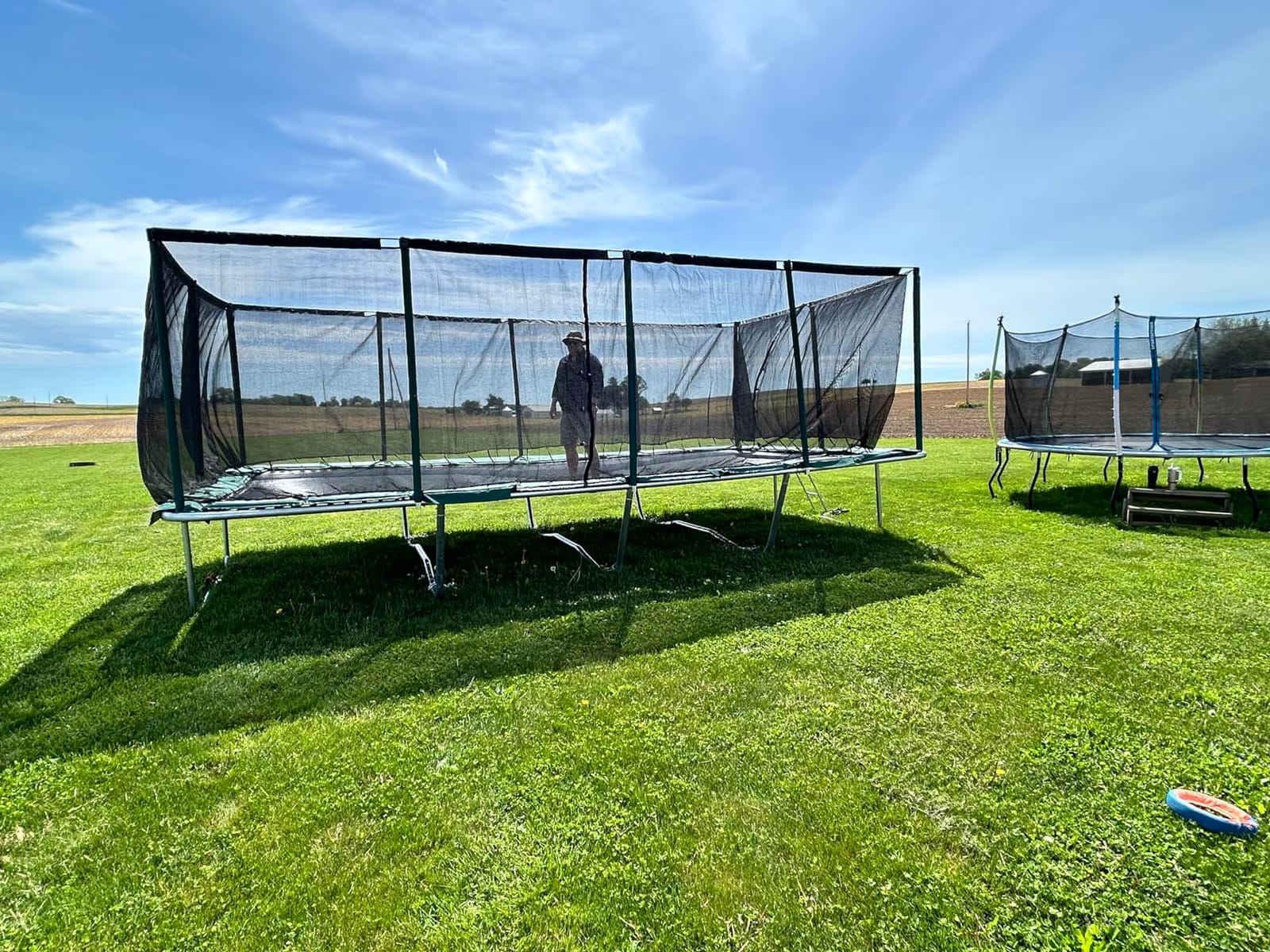
The frame is a patented 4-leg design in 3.0mm galvanized steel tubing with a 9.5 foot frame height, and the full polyester mesh enclosure has zipper and buckle entry on both sides so two users do not queue.
Size choice is unusually broad here, running from 10×17 up to 13×23 including a 10×30 option, and the ladder is included in the box.
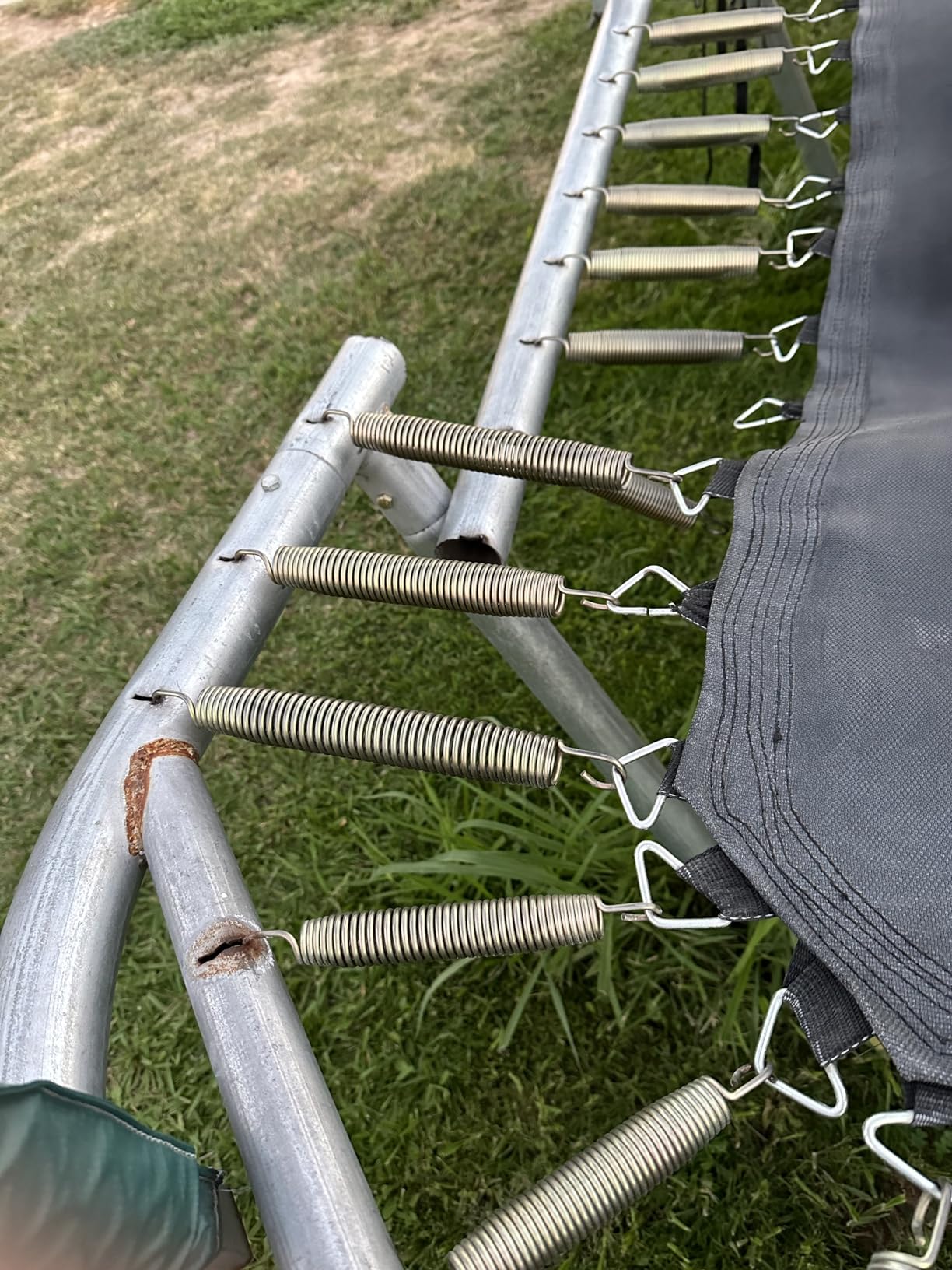
When a 750 lb rating actually earns its price
It earns it when more than one person trains on it, or when a heavier adult works on skills alongside children. Most single-gymnast households never reach that ceiling, and would feel the difference more in the 172 springs than in the rating itself.
The 9.5 foot frame height also gives more clearance around the jumping surface, which matters when a taller gymnast is running a handspring close to the edge.
What the mid-rating reviews point to
This is a major purchase with a major footprint, and the review base is 36, the thinnest of the high-capacity units. With 12 percent of reviews at 3 stars, a larger mid-rating share than any other product here, that usually signals durability drift rather than a defective batch.
Flipping the pad is seasonal work, not a set-and-forget task.
8. BSPORTY Air 8×14 Zipper-Free – Best Zipper-Free Enclosure
BSPORTY Air Rectangle Trampoline 8X14FT 1800LBS Weight Capacity Outdoor Square Gymnastics Heavy-DutyTrampolines with Net Enclosure for Kids Adults
8 x 14 ft rectangle, full-wrap no-gap net
Zipper-free overlap door
1800 lbs static / 500 lbs dynamic
2-inch reinforced leg tubes
Pros
- Overlap door removes the open-zipper failure mode
- 1800 lbs static and 500 lbs dynamic rating
- Poles sit outside the active jumping area
- Replaceable UV-resistant PVC pole sleeves
- Spring pull tool included
Cons
- Only 1-year warranty
- Net support hardware and pad straps have snapped early for some
- Net and pad are the weakest parts relative to the frame
The overlap door is the idea worth stealing. Every zipped net on this list shares the same failure mode: somebody jumps, the door swings open, and the next jumper runs into loose mesh. Replacing the zipper with an overlapping panel that cannot latch open removes the problem entirely rather than managing it.
The enclosure is a 360-degree full-wrap no-gap design with poles positioned outside the active jumping area, and eight evenly spaced reinforced vertical straps support the net. Leg tubes are upgraded to 2-inch diameter with 2.5mm walls, dual-galvanized, rated 1800 lbs static and 500 lbs dynamic.
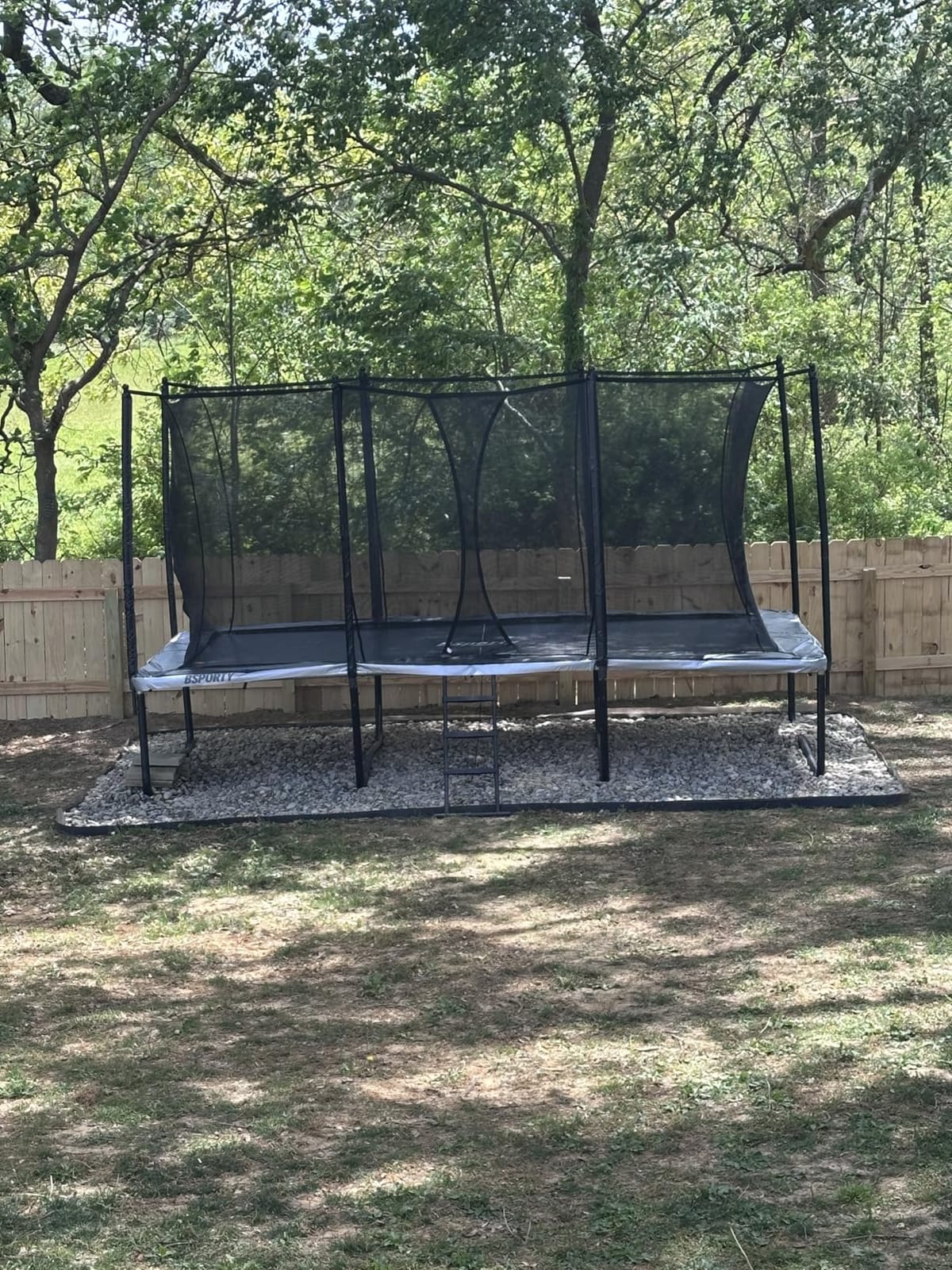
The replaceable UV-resistant PVC pole sleeves block 98 percent of UV rays and can be swapped rather than replaced wholesale, which extends both the foam and the net life in a hot climate. Assembly is reported at roughly two to two and a half hours for two people, and the spring pull tool is included.
Owners describe a high, smooth bounce with enough length for flips and a frame that does not wobble on uneven ground, which is a genuine problem for lighter builds on sloping lots.
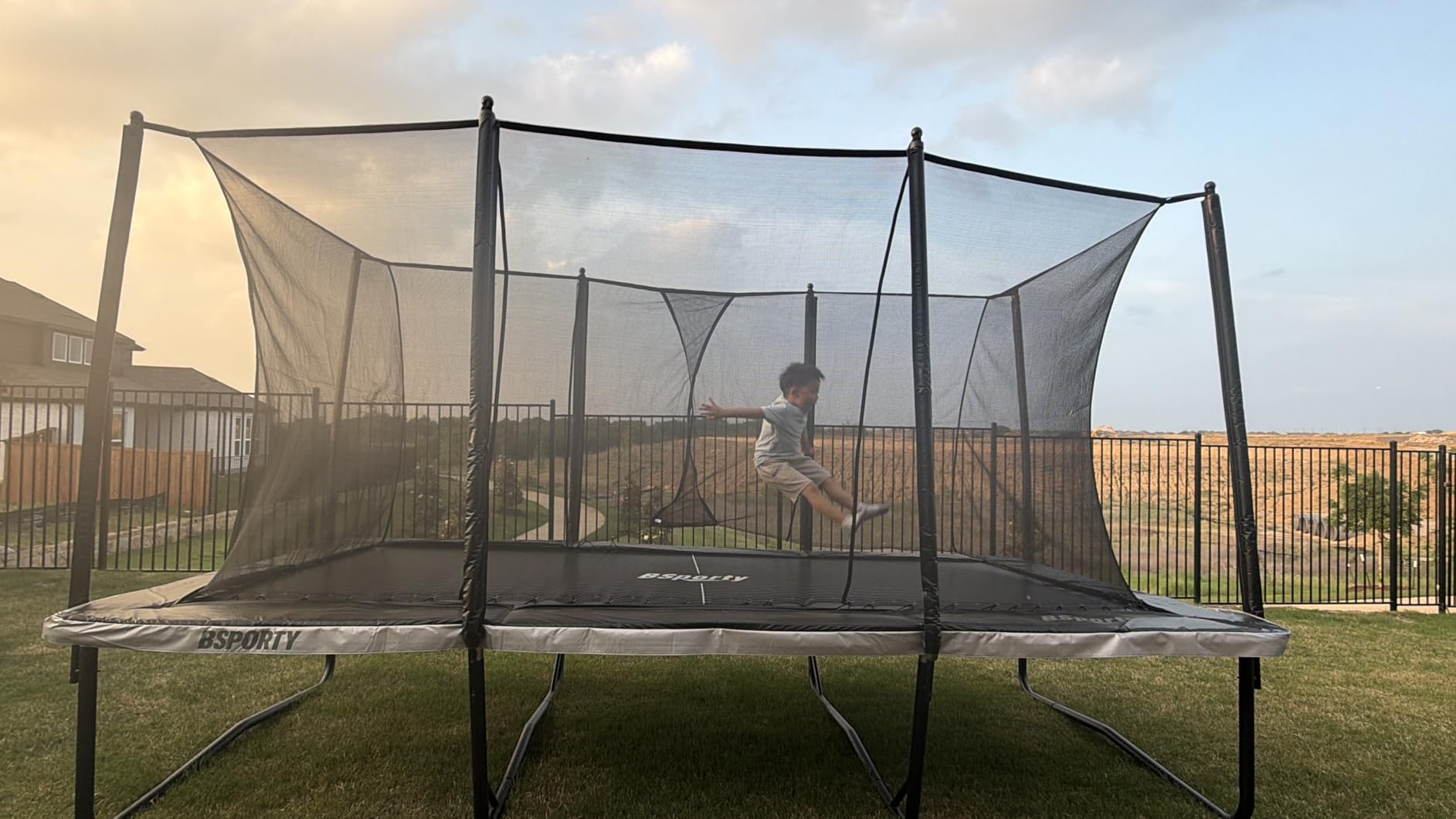
Is a zipper-free entry worth choosing for
It is worth choosing for households with mixed ages bouncing at once and for any yard where supervision is informal. For a single disciplined teen training alone, the safety benefit is smaller, though the full-wrap no-gap enclosure still helps on a bad landing.
Buying a spring pull tool is not optional on any rectangle, and having one included removes a small but real friction point on assembly day.
The 1-year warranty problem
The 1-year warranty is the shortest in this roundup, and that is not a minor detail on a product where the net hardware is the known weak link. Two strongly negative reviews describe net support bars snapping off and pad straps tearing in the first wind within a month or two.
You are buying an excellent enclosure concept attached to the cheapest consumable parts. Inspect the net top rails and pad straps monthly.
9. BSPORTY Ultra 8×14 Six-Leg – Best Frame Geometry in an 8×14
BSPORTY Ultra Rectangle Trampoline 8X14FT 2200LBS Weight Capacity Outdoor Square Gymnastics Heavy-Duty Trampolines with Full-Wrap Net Enclosure for Kids Adults
8 x 14 ft rectangle, six-leg frame
2200 lbs static / 700 lbs dynamic
65Mn 7-inch springs
Intertek UV-tested net
Pros
- Six legs with dual center cross-grid braces
- 2200 lbs static rating
- Mat webbing-stitched to the pad for a true zero-gap perimeter
- 2-inch tubes with 2.5mm walls resist flexing
Cons
- Only 28 reviews
- a small evidence base
- 11 percent one-star share points to attachment weakness
- Combined pad rather than a separate spring pad
Most 8×14 rectangles use four legs and a center support. This one uses six, arranged with two crosswise legs and dual center cross-grid braces for torsional rigidity, plus side crossbars for a steadier edge-to-edge bounce. On a rectangular frame that is the geometry that resists twisting when a gymnast lands hard near a corner.
The no-gap approach here is the most thorough we saw in this roundup. The mat webbing is stitched directly to the spring pad around the full perimeter, so there is no loose gap ring anywhere along the edge. Tube specification is 2-inch, 50mm diameter steel with 2.5mm walls, rated 2200 lbs static and 700 lbs dynamic, the highest static figure among the 8×14 models listed.
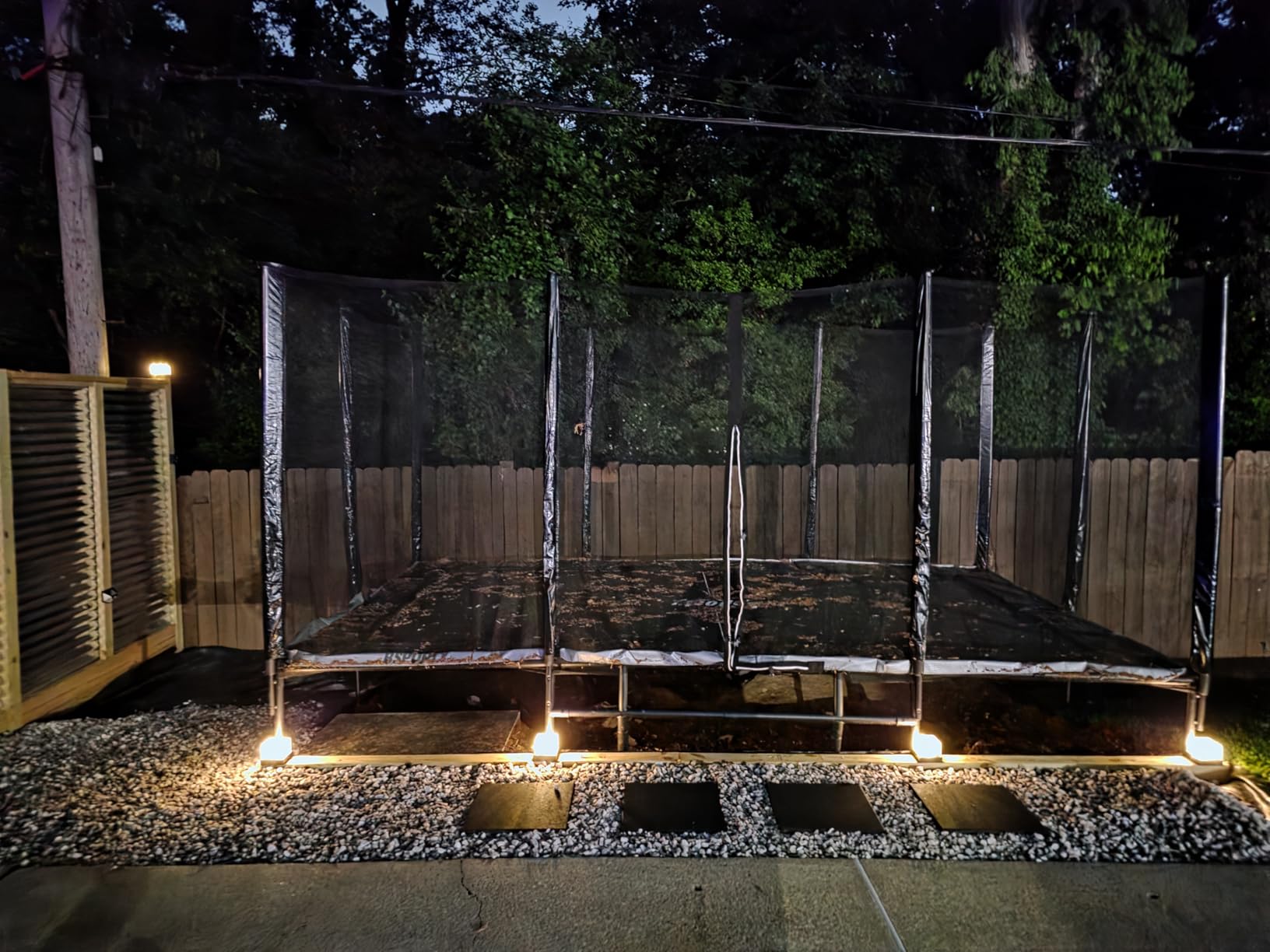
The spring system is 65Mn spring steel in 7-inch springs tuned for smoother takeoffs and landings, and the EnduraWeave net is Intertek UV tested to Grade 6, which is a real certification rather than a marketing phrase.
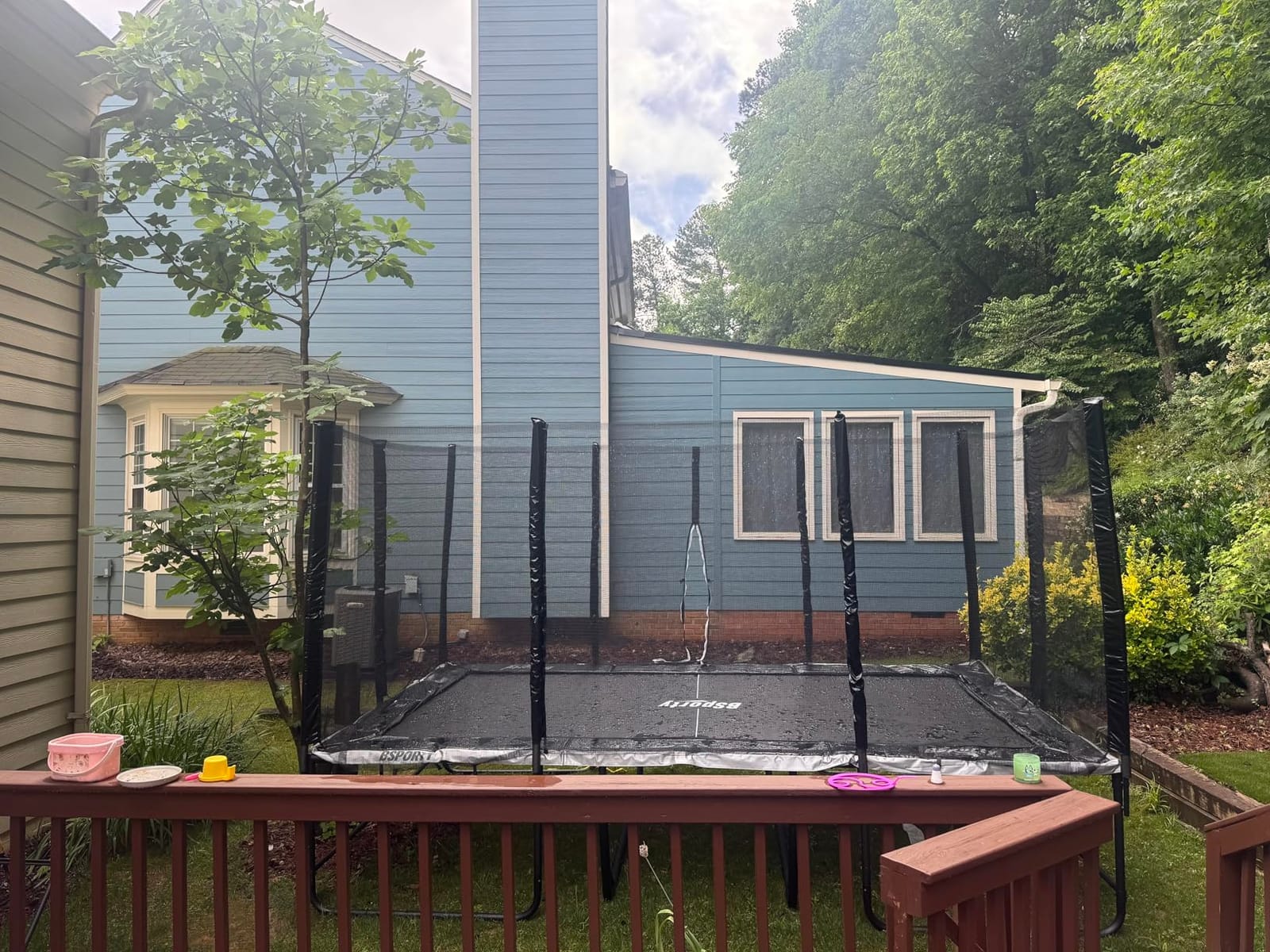
One listing inconsistency is worth flagging honestly: a specification field on this product records the shape as round, while the title and frame size both describe an 8×14 rectangle. The physical product is a rectangle.
Does frame geometry matter more than spring count
For tumbling, yes. A rigid frame keeps the mat flat, and a flat mat gives a predictable rebound. Springs give height; geometry gives consistency. Eighteen extra springs on a frame that twists will feel worse than fewer springs on a frame that holds still.
The trade-off is shorter springs. Seven-inch springs produce a firmer, shallower response than the 9 or 10-inch springs on the larger units, which suits quick drills and core work over high-amplitude flips.
What the thin review base means
Twenty-eight reviews is among the thinnest evidence bases in this roundup, and an 11 percent one-star share suggests a durability complaint cluster around the net and pad attachments, the same pattern as the sibling model above.
If you want this geometry with more spring depth, the 10×17 Zupapa at position one is the better-supported path.
10. Zupapa 10×17 with Basketball Hoops – Best for Tumbling and Court Play
Zupapa 1800LBS Weight Capacity Rectangle Trampoline 10x17FT Outdoor Square Gymnastics Trampolines with 10-Year Quality Assurance for Kids Adults Long Large Big Rectangular Backyard Trampoline
10 x 17 ft rectangle, five-leg support
1800 lbs static / 550 lbs dynamic
Two patented soft basketball hoops
CPC-certified, ASTM F381-16
Pros
- Highest average rating in the set at 4.9 with no rating below 4
- Five-leg design prevents long-side sagging
- No-gap net-to-mat connection
- Includes net and ladder
- Court line printing
Cons
- Only 25 reviews
- so long-term evidence is thin
- 390 pound build needs multiple people
- Hoop area sits where a gymnast lands at the ends
This is the highest-rated unit in the roundup at 4.9 stars across 25 reviews, with 92 percent five-star and no rating below four. That distribution is unusually clean, and the reviewer themes are consistent: the no-gap design holds up during flips, and the five-leg layout keeps the 10×17 surface steady.
The frame is 51mm Q195 steel with 2.5mm walls at 1800 lbs static and 550 lbs dynamic, which is a slightly higher dynamic rating than the standard 10×17 in this roundup. The net poles extend to the ground, and the mat and net are UV protected and CPSIA and ASTM F381-16 compliant.
What makes it distinct are the two patented basketball hoops with metal-free soft baskets and surrounding nets, plus printed court lines. For a household with two athletic kids, that is a genuine second use: one child tumbling, one shooting, without a conflict.
Warranty matches the rest of the Zupapa line at 10 years frame, 2 years on mat, pad, net and springs, with free replacement of other parts. The ladder and net are both in the box.
Is a dual-use trampoline worth the trade-offs
For a mixed-athletics household, yes, and the soft baskets are safer than a hard rim for a bouncing child. The court printing also gives a straight reference line, which is genuinely useful for a gymnast working on the landing line.
For a single gymnast with a clear training plan, the hoops are unused surface area, and that is where they create a problem. Any protrusion at the end of a tumbling line is something a rotating body can reach.
What the 25-review base does not tell you
Twenty-five reviews is a small base. A 4.9 average on 25 reviews tells you current owners are happy, not how the frame and mat look at year six. Treat the long-term picture as unproven.
At 390 pounds, this needs more than two people to assemble, and it is a fixed commitment once it is in the yard.
Rectangle Trampoline Buying Guide for Gymnastics
A backyard rectangle is a training aid, not a gym. It supports bounces, aerial awareness, straight-line drills and progression toward skills, and it can shorten the time between classes. It does not replace a coach, a sprung competition floor, or the spotting that a front flip requires. Our guide to gymnastics rings for bodyweight training covers the complementary strength side of the same training block.
What Size Rectangle Trampoline Do You Need
For most home gymnastics, 10×17 ft is the best size, and 9×16 ft is the minimum worth buying. Below 8×14 there is not enough run-up for a handspring, and above 10×17 the jump surface outgrows what one person can use well. Bigger is not better for a single gymnast; longer is only useful if a full pass fits inside it.
Here is how the sizes map to real use:
8×14 ft: beginner bounces, walkovers, first front handsprings with a coach, family multi-use. Only realistic option in a small yard.
9×15 and 9×16 ft: intermediate straight bounces, aerial awareness, early tumbling shapes. A compromise between run-up length and footprint.
10×17 ft: roundoffs, back handsprings, tuck and layout progressions. This is the standard training rectangle and our recommendation for a household with an active gymnast.
13×23 ft and larger: full tumbling passes with run-up, multiple users, or a training studio. Requires serious property or indoor space.
Match size to the gymnast’s age and weight, not to ambition. A 60 pound seven-year-old will train productively on a 10×17 and get the same benefit from a 9×15.
Spring Count, Spring Length and the Sweet Spot
Spring count scales with perimeter. The 8×14 models listed here run 72 to 84 springs, the 13×23 units reach 172 to 180, and a 140-spring count belongs to the 17×9.8 ft ACON frame. Fewer springs per square foot means a firmer, shallower surface. More springs with longer wire means more energy absorbed and returned per cycle. Several listings here do not publish a spring count, so treat a missing number as a question to ask rather than a spec you can count on.
Spring length matters more than count for tumbling feel. Seven-inch springs give a quick, sharp response suited to drills. Nine and 10-inch springs give a deeper, more forgiving rebound that is easier on joints through a long session, and they are what competition-adjacent equipment uses.
The sweet spot is the straight zone on a rectangle where the springs act independently. It is the reason a rectangle beats a round unit for line work, and it is the single most important physical difference in this whole roundup.
No-Gap Enclosures and Where the Springs Sit
A no-gap enclosure attaches the net to the mat or the spring pad rather than hanging outside it, so there is no open strip where a foot or hand can reach springs. On this list, the Zupapa no-gap patent, the BSPORTY webbing-stitched perimeter, the BSPORTY Air full-wrap design and the AOTOB and Goplus no-gap layouts all work this way.
Where the net door is a zipper, treat it as a shared responsibility item. Check it is closed before every session. Where a model uses an overlap panel instead, the problem disappears, which is why the BSPORTY Air design is worth a look for a busy household.
User Weight Limit vs Static Load Capacity
These two numbers are not the same and comparing them is the most common mistake in this category. Static load is the weight the frame holds at rest. Dynamic load is the load it carries with active bouncing. A trampoline listing 1800 lbs static may list 450 lbs dynamic, and the dynamic number is the one that governs safety.
Even more important is the single-jumper limit, which is often lower again. The ACON lists 1650 lbs static and 330 lb for one jumper. Look for that specific figure on any listing you read, and never let a large static number stand in for it.
Brand Reliability and Warranty by Component
Warranty length is only meaningful when you know which component it covers. Zupapa offers 10 years on the frame and 2 years on mat, pad, net and springs, with free replacement of other parts and spare parts carrying a 10-year listing. ACON offers 10 years frame, 5 years mat and springs, 2 years pad, 1 year net and ladder. AOTOB offers 5 years on mat, frame and springs and 3 years on net and pole caps. The BSPORTY Air carries 1 year, the shortest here.
On brand reliability, owner discussion on enthusiast forums keeps circling the same shortlist: ACON is the consistent quality benchmark that most families then price out of their budget, and Zupapa, Skywalker, Upper Bounce and Jumpking are the four names buyers actually compare in the mid-range. Frame warranty length is the most useful proxy for long-term confidence, and galvanization matters just as much in snowy or coastal regions.
For a family doing general bouncing rather than skills training, our kids trampolines with enclosures guide covers the lower-cost tier, and a small rebounder is a sensible low-cost add-on for a second training surface.
Assembly Reality Check and High-Wind Anchoring
Assembly is the variable buyers underestimate. The AOTOB at 93.5 pounds is a two-person afternoon. The Zupapa 10×17 at 249 pounds needs at least three people and most of a day. The ACON at 242 kg and the Galactic Xtreme 13×23 are effectively professional installation jobs, and the Zupapa 13×23 at 750 pounds needs a crew and level ground prepared in advance.
Assemble where it will live. Every one of these units is awkward or impossible to reposition once the mat and springs are on.
For wind, anchor before the first storm rather than after. A 13×23 with full netting presents an enormous sail, and real-world anchoring failure has destroyed well-built rectangles. Screw-fastened net attachment, as on the Goplus, holds better than straps. A cover helps more than most buyers expect. In-ground installation, supported by the ACON, removes the net from the wind equation entirely at the cost of excavation and ventilation.
Check your homeowner’s policy before you buy, and confirm any insurance conditions. Keep the safety clearance zone clear, supervise younger jumpers, and stick to one jumper at a time on a rectangle that is being used for skills.
Frequently Asked Questions
Are rectangle trampolines better than round ones for gymnastics?
Yes. On a round trampoline every perimeter spring pulls inward toward the center, dragging an off-center jumper back and breaking body alignment. On a rectangle, long-side and short-side springs act independently, creating a straight sweet spot where a gymnast can run a tumbling line and land facing the direction they took off. The trade-off is cost, footprint and a higher risk of long-side sagging on cheaper frames.
What is the best size rectangle trampoline for gymnastics?
10×17 ft is the best size for most home gymnastics, and 9×16 ft is the minimum worth buying. Eight by fourteen fits small yards but only supports bounces, walkovers and early handspring shapes. 10×17 handles roundoffs, back handsprings and tuck and layout progressions. 13×23 and larger support a full tumbling pass with a run-up, and need a large yard or indoor hall.
Are trampolines good for gymnastics?
A backyard rectangle is a useful training aid for bounces, aerial awareness, straight-line drills and skill progression, and it can shorten the time between classes. It is not a substitute for coached gym training or a sprung floor, because flips need spotting and progression control. Coaches commonly use a home rectangle to build the confidence and awareness that makes gym time more productive.
Which trampoline brand is considered the most reliable?
ACON is the most consistent quality benchmark in this category, with a 10-year frame warranty, 5-year mat and spring coverage and CE and ASTM certification, though it sits at the top of the price range. Zupapa is the strongest mid-range option, offering a 10-year frame warranty, 10-year spare part coverage and free replacement parts. Always check warranty length by component, since frame, mat, net and springs are often covered for very different periods.
What is the best shape trampoline overall?
For gymnastics skills, a rectangle is best because of its independent spring sections and straight landing zone. A round trampoline suits general family bouncing and group play, since it keeps jumpers moving toward the center and away from the springs. Square and oval frames are a middle ground with more center mat than a round and less straight-line length than a rectangle.
Is trampoline gymnastics hard to learn?
It is moderately hard and progression takes weeks, not sessions. Straight bounces and stretch shapes come within days, front walkovers within a few weeks with practice, and back handsprings take longer because they require a rebound and a shoulder tuck at speed. Front flips and layouts should only be attempted with a coach present. Warm up with flat bounces before every session and add one skill at a time.
Final Verdict: The Best Rectangle Trampoline for Gymnastics in 2026
The Zupapa 10×17 no-gap rectangle is the best rectangle trampoline for gymnastics in 2026 for the simple reason that it has the most reviews in the set, a 10-year frame warranty with 10-year spare part coverage, and a middle support leg that stops the long-side sag that ruins most rectangles at this size. If your child is anywhere from 8 to 16 and actively in a class, this is the one we would buy.
Buy something else if your situation is different. In a small yard, the GIANTEX 8×14 keeps the budget contained but check replacement net availability first. If assembly weight is the deciding factor, the AOTOB at 93.5 pounds is the only unit here you can move yourself. For a teenager running full tumbling passes, the Zupapa 13×23 or the ACON 16 HD earns its cost, with the ACON going one step further as an in-ground pit.
Whichever you choose, anchor it before the first storm, keep the clearance zone clear, and add a mini trampoline only after the big one is stable. Progress one skill at a time, and leave the flips to a coach.