
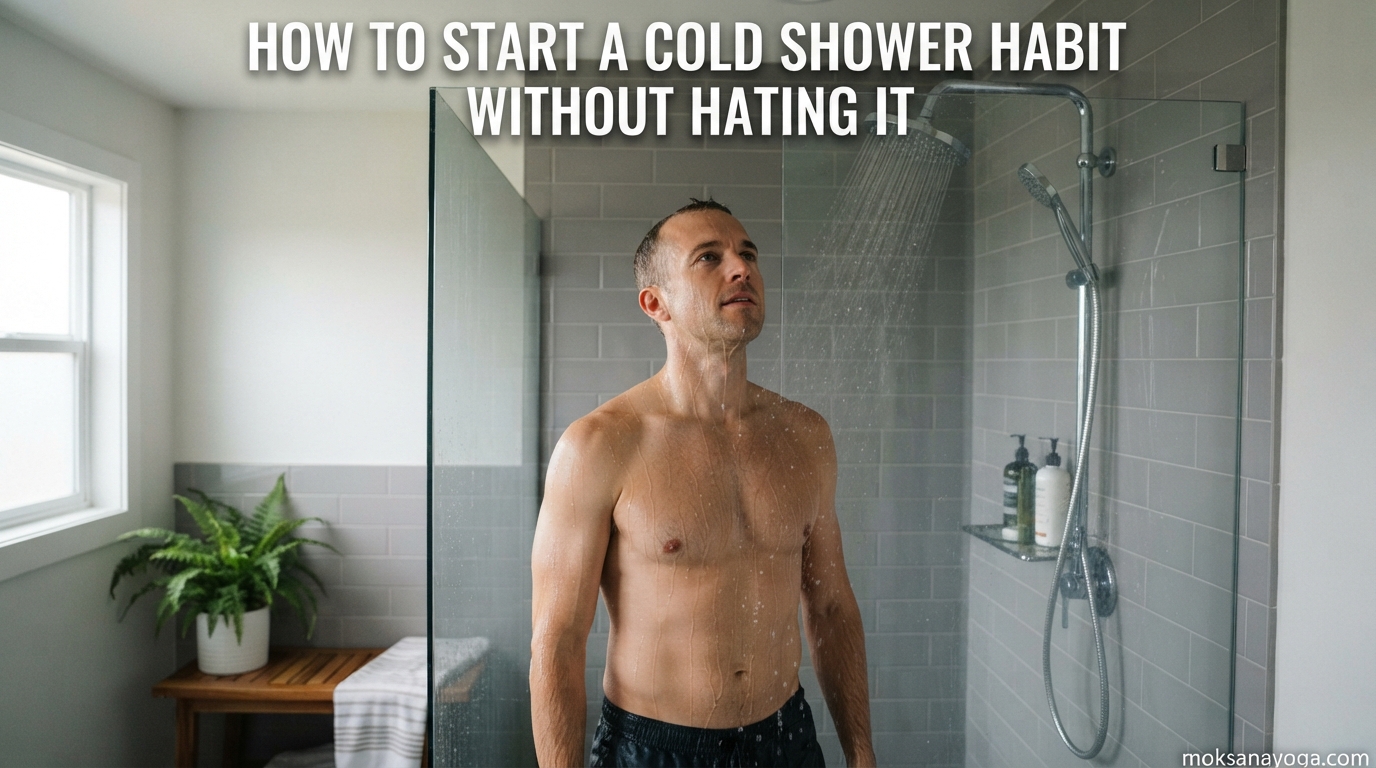
Standing outside your shower, hand hovering over the cold tap, your brain screams at you to keep the warm water running. I have been there more times than I can count. The good news is that building a cold shower habit does not require superhuman willpower or a personality transplant.
The secret is doing it gradually. Most people quit cold showers on day three because they went too hard, too fast, and convinced themselves they hate the experience. In this guide, I will walk you through a sane, staged approach to starting a cold shower habit without hating it, including breathing techniques, mindset shifts, a week-by-week progression plan, and safety guidance that most beginner articles skip entirely.
Whether you want a sharper morning routine, better circulation, or simply the mental discipline that comes from doing something hard on purpose, this guide gives you the exact steps to make cold showers a habit you can actually sustain.
Table of Contents
Why Bother: Cold Shower Benefits Worth Knowing
Before you suffer through your first cold rinse, it helps to understand what is actually happening inside your body. Cold showers are not just a trendy biohacking fad. The physical and mental benefits are backed by growing research, and the mechanisms are surprisingly well understood.
What Happens in Your Body During Cold Exposure
When cold water hits your skin, your body launches a cascade of responses. Blood vessels near the surface constrict (vasoconstriction), pushing blood toward your core to protect vital organs. When you warm back up, those vessels open again (vasodilation), flushing oxygen-rich blood through your tissues. This cycle acts like a pump for your circulatory system.
Your sympathetic nervous system also activates, releasing a surge of norepinephrine, a neurotransmitter and hormone linked to alertness, focus, and mood. Some studies have measured norepinephrine levels increasing up to 530 percent during cold water immersion. That is the chemistry behind the wide-awake, slightly euphoric feeling you get after a cold shower.
The Physical and Mental Benefits
Here is a quick summary of what research and practitioner experience suggest cold showers can do for you:
- Increased alertness and energy: The norepinephrine spike leaves you feeling sharper, often replacing the need for a second cup of coffee.
- Improved circulation: The vasoconstriction-vasodilation cycle trains your blood vessels to respond efficiently.
- Mood elevation: Cold exposure triggers beta-endorphin release, which can lift your mood for hours afterward.
- Faster muscle recovery: Athletes have used cold water for decades to reduce inflammation after intense training.
- Better stress tolerance: Repeated controlled exposure trains your nervous system to stay calm under physical stress.
- Mental resilience: Choosing discomfort on purpose builds a kind of discipline that spills into other areas of life.
The mental resilience piece is what keeps people coming back. Reddit communities like r/coldshowers and r/BecomingTheIceman are full of practitioners who say the discipline of facing cold water every morning changed how they handle stress at work, difficult conversations, and uncomfortable emotions. The cold becomes a training ground for discomfort.
One important note: brown fat activation is often mentioned alongside cold showers. Brown adipose tissue is a metabolically active fat that burns calories to generate heat. Cold exposure does activate brown fat, but the calorie burn is modest. Treat it as a bonus, not the main reason you are doing this.
How to Start a Cold Shower Habit Without Hating It: The Gradual Method
This is the part that matters most. The biggest mistake beginners make is going cold on day one and trying to last a full minute. That approach almost guarantees you will quit within a week. Here is the gradual method I recommend, built from the most consistent advice across practitioner forums and clinical guidance.
Step 1: Take Your Normal Warm Shower First
Do not start cold. Take your regular warm shower exactly as you always do. Clean your body, wash your hair, and enjoy the warmth. This removes the friction of feeling like you are giving up your comforting shower routine entirely. You are simply adding a cold finish.
Step 2: Add 20 Seconds of Cold at the End
When you would normally turn the water off, switch to cold instead. Aim for water between 50 and 59 degrees Fahrenheit (10 to 15 degrees Celsius) if your tap can reach that range. If not, just turn it as cold as it goes. Stay under for about 20 seconds.
Twenty seconds is short enough that anyone can survive it, but long enough to trigger the physiological response. That is your entire cold shower practice for week one.
Step 3: Add 10 Seconds Per Week
Each week, extend your cold exposure by 10 seconds. Week two becomes 30 seconds. Week three is 40 seconds. Within eight to ten weeks, you will be at two minutes, which is enough to get most of the benefits without overstaying your welcome.
Step 4: Let the Cold Hit Your Chest and Back First
Where the water hits matters. Step into the cold stream so it lands on your chest and upper back first, where your vagus nerve pathway sits. This triggers the calming parasympathetic response more effectively than soaking your head or shoulders immediately. Move the water across your limbs after the initial shock settles.
Step 5: Always End Cold
One of the most consistent tips from experienced cold shower practitioners is this: always end your shower on cold. Even if you switch back and forth between warm and cold during the shower, the final exposure should be cold. You want your body to enter the warming phase on its own, which is where much of the circulatory benefit happens.
This gradual approach is exactly how I started, and how most long-term practitioners built their tolerance. The goal is not to prove anything on day one. The goal is to still be doing this six months from now.
Breathing Techniques to Survive the Shock
The gasp reflex is the single biggest barrier to cold shower tolerance. When cold water hits your skin, your body instinctively wants to inhale sharply and hyperventilate. Learning to control that reflex is the difference between panic and calm.
Why Your Body Gasps
The gasp reflex, technically called cold shock response, is a survival mechanism. Your brain detects rapid skin cooling and assumes you may have fallen into cold water, so it forces a sharp inhale to prepare for fight or flight. The reflex peaks in the first 30 seconds of cold exposure and fades as your body adjusts. Knowing it is coming, and knowing it will pass, is half the battle.
The Box Breathing Technique
Box breathing is the technique I recommend for the moments just before and during the cold switch. It is simple, portable, and used by everyone from Navy SEALs to meditation teachers. Here is how to do it:
- Inhale through your nose for a count of four.
- Hold your breath for a count of four.
- Exhale slowly through your mouth for a count of four.
- Hold empty for a count of four.
- Repeat for at least four cycles before turning the water cold.
The pattern slows your heart rate and primes your nervous system to stay calm. When the cold hits, keep your breathing slow and deliberate. If you feel the gasp reflex building, exhale forcefully through your mouth. A strong exhale interrupts the panic response faster than trying to suppress it.
The Wim Hof Method Connection
You have probably heard of Wim Hof, the Dutch athlete famous for cold exposure and breathing techniques. His method involves 30 to 40 deep, forceful breaths followed by a breath hold, often done before cold immersion. Many cold shower practitioners swear by it.
For beginners, I suggest doing a simplified version: take 10 to 15 deep breaths in through your nose and out through your mouth before stepping into the cold. Hold the last exhale as you turn the tap to cold, then resume slow breathing once the initial shock hits. This pre-oxygenates your system and gives you something to focus on besides the cold.
The Pre-Shower Breathing Routine I Use
Before every cold finish, I do this 60-second routine. It works for me, and it might work for you:
- Stand outside the shower stream.
- Take 10 deep breaths, inhaling for four counts and exhaling for six.
- On the final exhale, hold empty for a beat.
- Step into the cold water while keeping your mouth closed and breathing through your nose.
- Count your breaths slowly. Each full breath is about eight seconds, so 15 breaths gets you through two minutes.
Counting breaths gives your mind a job. Distraction is one of the most effective tools for tolerating cold because panic thrives on attention. Give your brain a counting task and the cold becomes much more manageable.
Mental Strategies: Making Peace With the Cold
Breathing handles the physical shock, but the mental side is where most people fail. The dread you feel before a cold shower is almost always worse than the shower itself. Learning to manage that dread is the real skill you are building.
The Dread Is Worse Than the Cold
This is the single most repeated insight across cold shower forums, and it is worth repeating here. The 30 seconds of mental negotiation before you turn the tap are more painful than the actual cold water. Once you are under, your body adapts within seconds and you are simply there, doing it.
Recognizing this gap between anticipation and reality is a skill. Every time you push through the dread, you train yourself to trust that you can handle discomfort. That skill transfers to everything else in your life that feels scary before you start.
Reframing the Discomfort
Instead of telling yourself the cold is bad, try framing it differently. The cold is not pain, it is sensation. It is intense, but it is not injuring you. Your body is doing exactly what it evolved to do in response to cold, and you are choosing to experience that response on purpose.
Some practitioners frame it as a two-minute meditation. Others treat it as a daily victory over their own resistance. The framing you choose matters less than choosing one intentionally. The default frame, which is that cold showers are miserable, is the one that keeps people quitting.
Identity-Based Habit Building
James Clear popularized this idea in Atomic Habits, and it applies perfectly here. Instead of telling yourself you are trying to take cold showers, tell yourself you are the kind of person who does hard things on purpose. The identity shift changes the conversation in your head.
When you identify as someone who faces discomfort voluntarily, skipping the cold shower feels like betraying who you are. That is far more powerful than relying on motivation, which fades by week two.
What Real Practitioners Say
The most honest insight from experienced cold shower takers is this: it never fully becomes easy. Even people who have been doing it for years still feel resistance on cold mornings. The difference is they have stopped expecting it to feel easy and they show up anyway. Consistency matters far more than duration or enthusiasm.
Another common theme from practitioner communities: do not negotiate in the shower. Make the decision before you step in. Once you are standing under the water, the decision is already made. Internal debate is what kills habits.
Your Week-by-Week Progression Timeline
Here is a concrete progression schedule you can follow. Adjust it based on how your body responds, but use it as a baseline so you are not guessing each morning.
Week 1: 20 Seconds at the End
Finish your warm shower with 20 seconds of cold. Focus entirely on your breathing. Expect the gasp reflex to be strong this week. It gets noticeably weaker by week two.
Weeks 2 to 3: Build to 40 Seconds
Add 10 seconds per week. Start experimenting with colder water temperatures if your tap allows. Begin moving the cold water across your chest, back, and limbs systematically rather than just standing under it.
Weeks 4 to 5: Reach One Minute
One minute is a meaningful milestone. Most practitioners report that the mental difficulty peaks around this stage and then plateaus. If you can do one minute, you can do two.
Weeks 6 to 8: Reach Two Minutes
Two minutes is the sweet spot for most benefits without diminishing returns. Some people go longer, but research and practitioner consensus suggest one to three minutes covers the majority of the gains.
Beyond Week 8: Maintain or Explore
Once you can do two minutes comfortably, you have options. You can maintain that as your daily practice, try colder water, experiment with full cold showers (no warm start), or explore ice baths if you want to go deeper. The habit is the foundation. Everything else is optional.
Morning vs Evening: When Should You Shower?
Most people benefit from cold showers in the morning because the norepinephrine boost supports alertness and aligns with your natural circadian rhythm. The energy lift can last for hours.
That said, some people find evening cold showers help them sleep by lowering core body temperature before bed. If you try evening, keep it shorter and milder. Avoid intense cold exposure right before bed if you notice it leaves you wired instead of relaxed.
A common middle path is taking a warm shower in the evening for hygiene and a brief 30 to 60 second cold rinse in the morning for energy. Experiment and see what fits your body and schedule.
Safety Considerations and When to Skip Cold Showers
Cold showers are safe for most healthy adults, but they are not appropriate for everyone. This section is shorter than the others, but it matters as much as any of them.
Who Should Avoid Cold Showers or Check With a Doctor First
Talk to your doctor before starting cold showers if you have any of the following:
- Cardiovascular conditions: Heart disease, high blood pressure, or history of stroke. Cold exposure stresses the cardiovascular system.
- Raynaud’s phenomenon: This condition causes some blood vessels to spasm in cold, leading to painful numbness in fingers and toes. Cold showers can trigger episodes.
- Pregnancy: Check with your obstetrician before adding cold exposure to your routine.
- Thyroid conditions: Hypothyroidism can impair temperature regulation, making cold exposure riskier.
- Weakened immune system: If you are recovering from illness or undergoing treatment, skip cold exposure until you are cleared.
General Safety Guidelines
Never push through genuine pain. Discomfort is expected, sharp pain is not. If you feel dizzy, nauseous, or lightheaded, get out immediately. Sit down if needed.
Avoid cold showers if you are already very cold, sleep-deprived, or running a fever. Start warm, finish cold, and never stay in longer than feels manageable. Two to three minutes is plenty for most people, and going longer does not meaningfully increase benefits.
Finally, ease off during illness. A cold shower when you are fighting off a virus adds stress your body does not need. The habit will still be there when you recover.
FAQs
How do I start liking cold showers?
Start by finishing your normal warm shower with just 20 seconds of cold water, then add 10 seconds each week. Focus on slow nasal breathing during the cold exposure, and reframe the cold as intense sensation rather than pain. Most people stop hating cold showers within two to three weeks of consistent practice as their tolerance builds.
What is the 1-10-1 rule in cold water?
The 1-10-1 rule describes the three phases of cold water immersion: one minute of cold shock response where your breathing and heart rate spike, ten minutes of cooling where your skin and muscles lose heat, and one hour before core body temperature drops dangerously. For cold showers, you only deal with the first phase, which passes quickly if you control your breathing.
How can I get used to taking cold showers?
Build tolerance gradually by ending each warm shower with 20 seconds of cold water and adding 10 seconds per week. Use box breathing (inhale 4, hold 4, exhale 4, hold 4) before and during cold exposure to manage the gasp reflex. Practice daily for at least three weeks so the habit sticks before the shock reflex fades.
Can cold showers help neuropathy?
Cold showers may temporarily reduce nerve pain for some people with neuropathy because cold numbs nerve endings and reduces inflammation. However, cold exposure can also worsen symptoms for people with conditions like Raynaud’s phenomenon or certain nerve disorders. Always check with your neurologist before adding cold exposure to a neuropathy management routine.
How long should a cold shower be for beginners?
Beginners should aim for 20 to 30 seconds of cold water at the end of a warm shower, using water between 50 and 59 degrees Fahrenheit if possible. Build up gradually to two minutes over six to eight weeks. Going longer than three minutes provides minimal additional benefit and increases the risk of overcooling.
Start Small and Stay Consistent
Building a cold shower habit without hating it comes down to one principle: start so small you cannot fail, then build slowly. Twenty seconds today is infinitely better than zero seconds, and a thousand small sessions will transform your tolerance, your discipline, and your relationship with discomfort far more than one brutal attempt ever could.
Your only job this week is to add 20 seconds of cold to the end of one shower. Do that tomorrow morning. Then do it again the day after. The rest takes care of itself.