
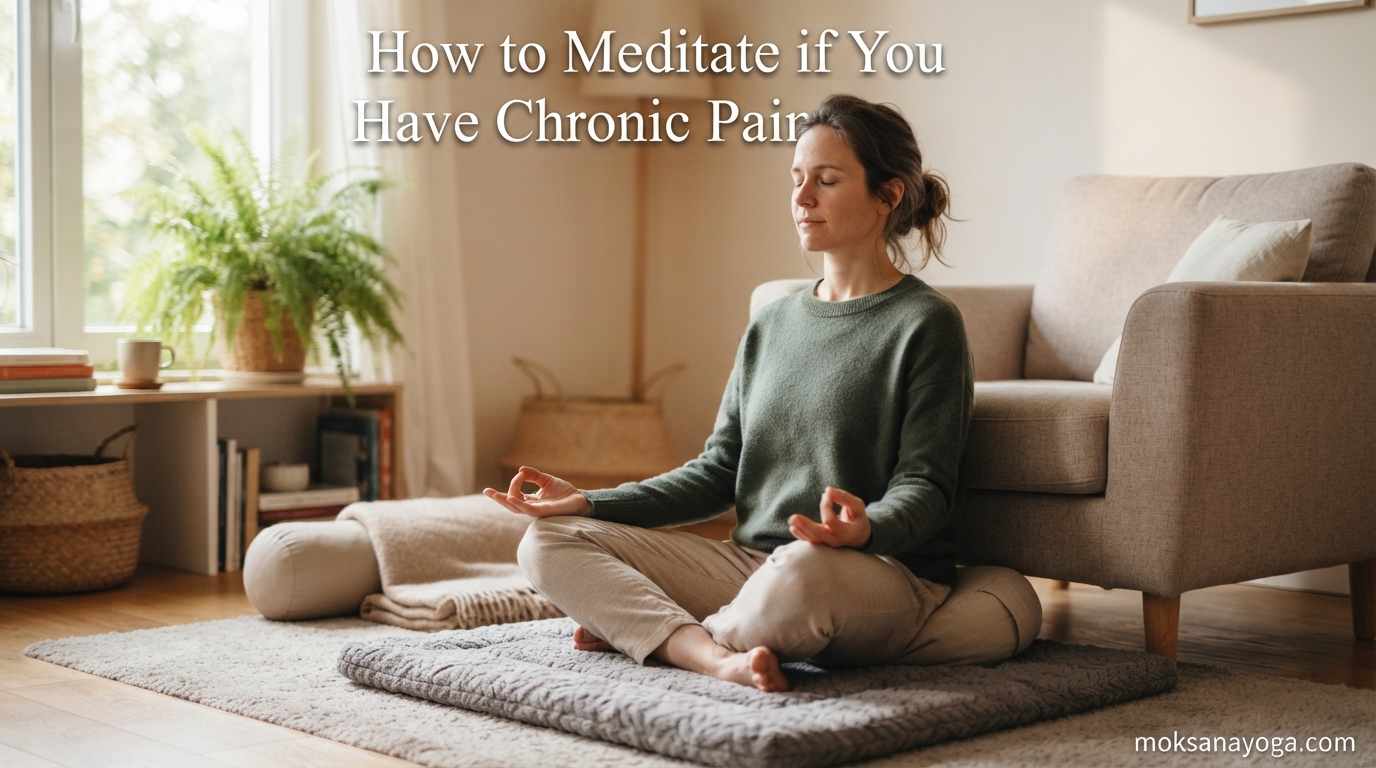
If you live with chronic pain, someone has probably told you to “just meditate.” That advice can feel dismissive when every breath hurts and your mind keeps circling back to the discomfort. I understand how frustrating that is, because millions of people in the same situation hear the same suggestion every day.
Here is the truth: learning how to meditate if you have chronic pain is not about ignoring what you feel. It is about changing your relationship with those sensations so they no longer control your entire day. In this guide, I will walk you through practical, gentle techniques you can start using today, even on your worst pain days.
Table of Contents
Why Meditation Helps When You Have Chronic Pain
Meditation does not magically erase pain signals, but it does change how your brain processes them. Research from the National Institutes of Health shows that regular mindfulness practice can reduce pain intensity by activating the relaxation response and lowering stress hormones that amplify discomfort.
The key concept here is the mind-body connection. Pain is not just a physical sensation, it also has a psychological component. When you tense up, worry, or feel angry about pain, your nervous system interprets that as more danger and turns up the volume. Meditation teaches your nervous system that you are safe, which can dial the volume back down.
Studies on neuroplasticity, the brain’s ability to rewire itself, show that consistent meditation actually changes gray matter density in areas related to pain processing. Over time, your pain threshold can shift. This does not happen overnight, but it does happen for many people who stick with a regular practice.
What to Expect When You Start
Let me set realistic expectations, because false hope is worse than no hope. Meditation for pain relief is a skill, and like any skill, it takes practice. In the first few sessions, you might feel more aware of your pain, not less. That is normal and temporary.
Most people begin noticing subtle changes after two to three weeks of daily practice. These changes often show up first as better sleep, less anxiety about pain, and a greater sense of control. Actual reductions in pain intensity tend to follow after four to eight weeks of consistent practice, according to clinical research on mindfulness-based stress reduction programs.
Some days will feel easier than others. A meditation that went beautifully yesterday might feel impossible today because of a flare-up. That is not failure, it is just how chronic pain works. The goal is consistency, not perfection.
How to Meditate if You Have Chronic Pain: Body Scan Step by Step
The body scan is widely considered the best meditation for chronic pain. Jon Kabat-Zinn, who developed Mindfulness-Based Stress Reduction at the University of Massachusetts Medical School, recommends it as the foundational practice for anyone dealing with persistent pain conditions. Here is a simple step-by-step guide you can follow right now.
Step 1: Find a position that works for your body. You can lie flat on your back, sit in a supportive chair, or recline on pillows. There is no “correct” posture. If lying down causes less pain than sitting, lie down. Comfort comes first.
Step 2: Close your eyes and take three slow breaths. Inhale through your nose for a count of four, then exhale through your mouth for a count of six. Let your shoulders drop on each exhale. This signals your nervous system to begin relaxing.
Step 3: Bring attention to your toes. Notice whatever you feel there, tingling, warmth, coolness, pressure, or even nothing at all. You are not trying to change anything. You are simply observing, like a curious scientist gathering data.
Step 4: Slowly move your attention upward. Travel through your feet, ankles, calves, knees, and thighs, spending about 20 to 30 seconds on each area. When you reach a painful area, do not skip it and do not dwell on it. Acknowledge the sensation, name it without judgment, and continue moving upward.
Step 5: Scan your torso, arms, and neck. Move through your hips, lower back, upper back, stomach, chest, shoulders, arms, hands, and neck. Notice areas of tension and areas of ease. Both contain useful information about how your body is holding stress.
Step 6: Rest your attention on your whole body. Spend a minute sensing your body as one complete organism, breathing and alive, pain and all. Then take three more slow breaths and gently open your eyes.
A full body scan takes about 15 to 20 minutes, but you can do a shortened version in 5 to 10 minutes by moving more quickly through each area. Start with whatever length feels manageable and build from there.
Mindful Breathing Techniques for Pain Relief
Breath is the most accessible tool you have for managing pain in the moment. You carry it everywhere, it costs nothing, and you can use it discreetly during a flare-up at work, in the car, or lying in bed at 3 AM.
The simplest technique is extended exhale breathing. Inhale through your nose for a count of four, then exhale slowly through pursed lips for a count of eight. The long exhale activates the parasympathetic nervous system, which is responsible for rest and healing. Do this for five rounds whenever pain spikes.
Another effective approach is breathing into the pain. Instead of tensing around the painful area, imagine sending your breath directly there. On each inhale, visualize warmth or space expanding around the discomfort. On each exhale, imagine tension releasing, even slightly. This technique, recommended by meditation teachers across multiple traditions, helps you stop fighting the pain and start working with it.
For a grounding practice when pain feels overwhelming, try box breathing. Inhale for four counts, hold for four, exhale for four, hold for four. Repeat this cycle eight to ten times. Military personnel use this technique to manage extreme stress, and it works equally well for acute pain episodes.
Five Meditation Techniques for Chronic Pain Relief
Beyond the body scan, several other meditation approaches can help you manage chronic pain. Different techniques work for different people and different types of pain, so experiment to find what resonates with you.
1. Body Scan Meditation. The detailed step-by-step method described above. Best for overall body awareness and tension release. Ideal for fibromyalgia and widespread pain conditions.
2. Mindful Breathing. Focus entirely on the sensation of breath at the tip of your nose or the rise and fall of your belly. When pain pulls your attention away, gently return to the breath. This builds the mental muscle of redirecting focus, which is invaluable for chronic pain management.
3. Visualization or Safe-Place Meditation. Imagine a place where you feel completely at ease, a beach, a forest, a cozy room. Engage all your senses in the visualization. This technique gives your nervous system a break from pain signals by directing attention elsewhere entirely.
4. Loving-Kindness Meditation. Silently repeat phrases of compassion toward yourself: “May I be free from suffering. May I be at peace. May I be gentle with myself.” Chronic pain often comes with anger, grief, and self-blame. This practice addresses the emotional suffering that amplifies physical pain.
5. Open-Awareness Meditation. Instead of focusing on one thing, let your attention rest openly on whatever arises, sounds, sensations, thoughts, emotions. Observe each one without getting caught in it. This advanced practice helps you develop a sense of spaciousness around pain so it no longer fills your entire experience.
Accessible Meditation Positions When Sitting Is Painful
One of the biggest barriers to meditation for people with chronic pain is the assumption that you must sit cross-legged on the floor. You absolutely do not. Here are accessible alternatives that many pain patients find more comfortable.
- Chair meditation: Sit in a firm chair with both feet flat on the floor, back supported. Place your hands on your thighs. This position works well for arthritis, back pain, and hip issues.
- Reclining meditation: Lie on your back with a pillow under your knees and another under your head. Bend your knees if that relieves lower back pressure. Ideal for flare days.
- Supported side-lying: Lie on your side with a pillow between your knees and one under your top arm. Great for pregnancy-related pain and shoulder tension.
- Wall-supported standing: Lean your back against a wall with feet slightly forward. Useful when sitting and lying both feel uncomfortable.
- Walking meditation: Walk slowly, focusing on each movement of your feet. This works when stillness intensifies your pain.
No meditation teacher worth listening to will tell you that a specific posture is required. The best position is whatever lets you focus on your practice rather than your discomfort.
Overcoming Common Challenges When Pain Is Overwhelming
People in chronic pain communities on Reddit and other forums consistently share the same struggles with meditation. Let me address the most common ones directly.
“Pain is all I can focus on.” This is the most frequent complaint, and it makes sense. When pain is loud, it drowns everything else out. Instead of trying to push pain away, try the opposite approach. Turn toward it with curiosity. Ask yourself: Is the pain sharp or dull? Does it pulse or stay steady? Does it shift when I breathe? Investigating pain as sensation rather than suffering often reduces its emotional intensity.
“Meditation makes my pain worse.” Sometimes sitting still allows you to notice pain you were distracting yourself from. This can feel like meditation caused the flare. In reality, the pain was there all along. If stillness increases your pain, switch to walking meditation or gentle movement-based practices.
“I cannot find a comfortable position.” Use the accessible positions listed above. Change positions mid-meditation if needed. There is no rule that says you must stay frozen for 20 minutes.
“I get frustrated when nothing happens.” Meditation is not a painkiller you take for instant relief. It is more like physical therapy for your nervous system. The benefits compound over weeks and months, not minutes. Track small changes in sleep quality, mood, and stress levels rather than expecting immediate pain reduction.
Building a Sustainable Practice: Morning vs Evening
When should you meditate? The honest answer is whenever you will actually do it consistently. But timing does matter for some people, so here is what I have found works best.
Morning meditation, ideally within 30 minutes of waking, sets a calm baseline for the day. It primes your nervous system to respond to pain rather than react to it. Even five minutes of breathing before you check your phone can make a difference. Many people with morning stiffness find that a gentle body scan helps them ease into movement.
Evening meditation helps with the two biggest challenges of chronic pain: sleep and stress processing. Pain often worsens at night when distractions fade. A 10-minute relaxation practice before bed can improve sleep onset and quality, which in turn reduces next-day pain sensitivity.
If you can only choose one time, pick the time when your pain tends to be most manageable. Trying to meditate during your worst pain window sets you up for frustration. Start with five minutes daily at your best time, then gradually expand as the habit takes root.
FAQs
How do you meditate when you have chronic pain?
Find a comfortable position, close your eyes, and start with slow breathing. Try a body scan meditation, slowly moving your attention through each part of your body. When you notice pain, observe it with curiosity rather than resistance, then continue. Start with 5 to 10 minutes daily and build from there.
Can meditation really help chronic pain?
Yes. Research from Harvard and the NIH shows that regular meditation can reduce pain intensity by activating the relaxation response and changing brain structure through neuroplasticity. Most people notice improvements in stress, sleep, and pain coping within a few weeks of daily practice.
How long does it take for meditation to help pain?
Most people notice subtle benefits like improved sleep and reduced anxiety within two to three weeks. Measurable reductions in pain intensity typically appear after four to eight weeks of consistent daily practice of at least 10 to 20 minutes.
What if sitting still makes my pain worse?
Try walking meditation, reclining positions, or chair meditation with back support. You can also change positions mid-session. There is no requirement to sit cross-legged on the floor. The best position is whatever lets you focus on your practice rather than your discomfort.
Is body scan meditation good for chronic pain?
Yes. Body scan meditation is widely considered the most effective technique for chronic pain. It was developed by Jon Kabat-Zinn as part of Mindfulness-Based Stress Reduction and is recommended by Harvard Health for pain conditions including fibromyalgia, arthritis, and back pain.
Final Thoughts on Starting Your Practice
Learning how to meditate if you have chronic pain is one of the most compassionate things you can do for yourself. It will not fix everything overnight, and some days will be harder than others. But with patience and consistency, you can develop a tool that puts you back in the driver’s seat of your own experience.
Start small. Five minutes today is infinitely better than zero minutes. Pick one technique from this guide, find a comfortable position, and give yourself permission to be a beginner. Your pain does not define you, and meditation can help you remember that.