
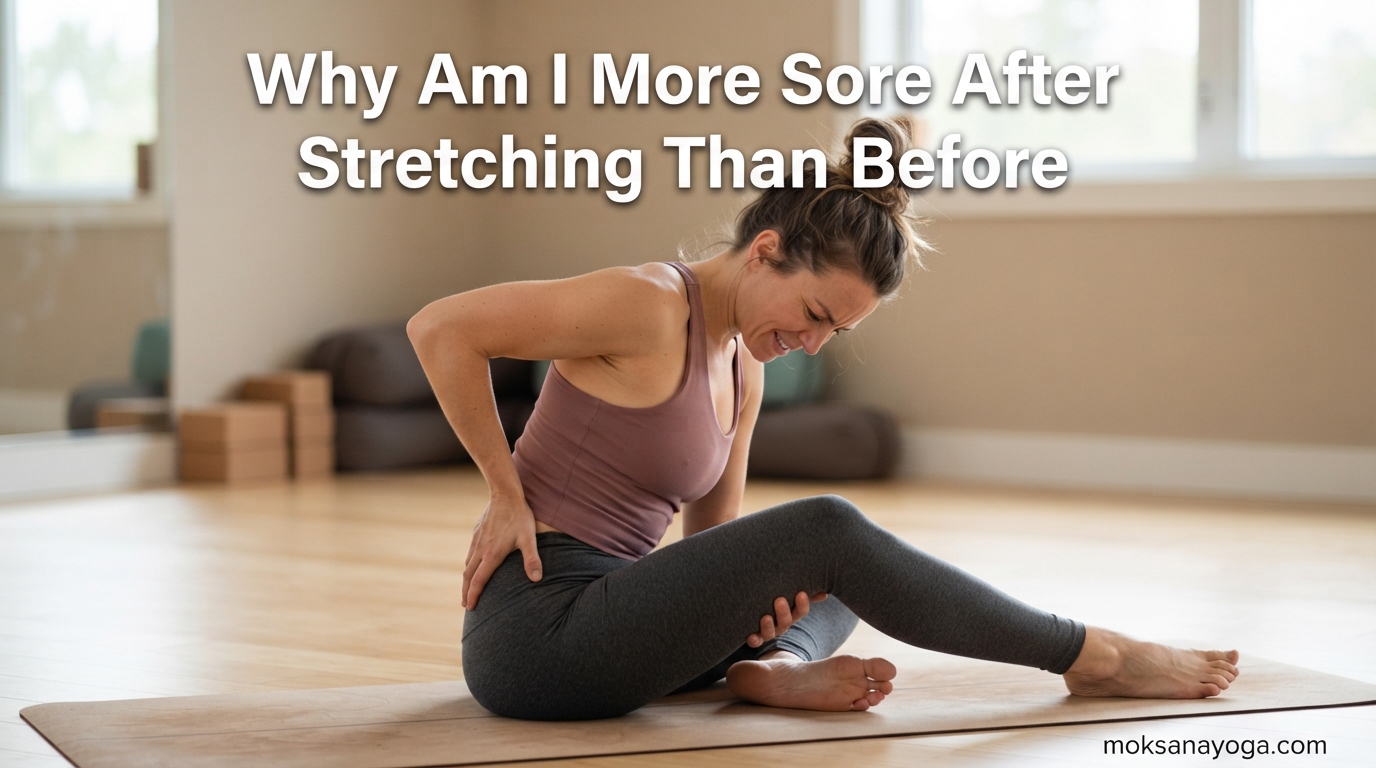
You rolled out your yoga mat, moved through a slow stretching sequence, and felt wonderful afterward. Then you woke up the next morning barely able to reach for your coffee mug. If you have ever found yourself wondering why am I more sore after stretching than before, you are not imagining things. This is one of the most common surprises I hear from students at our studio, especially those returning to yoga after a break or trying a deeper flexibility routine for the first time.
The confusion is understandable. Stretching is supposed to feel relaxing, not punishing. So when your hamstrings scream at you the day after a gentle forward fold, it can feel like you did something wrong. Most of the time, you did not.
In this article, our team breaks down exactly what happens in your muscles when you stretch, why that post-stretch soreness shows up a day or two later, and how to tell the difference between productive adaptation and an actual injury. We also cover yoga-specific factors that no one else seems to be talking about, including how breathwork, props, and the style of practice you choose all affect how sore you feel the next morning.
Table of Contents
Quick Answer: Why You Feel More Sore After Stretching Than Before
Stretching, especially when it is new, deeper, or more intense than what your body is used to, causes microscopic tears in your muscle fibers and connective tissue. Your body responds with inflammation and fluid shifts, a process known as Delayed Onset Muscle Soreness, or DOMS. This soreness typically peaks 24 to 72 hours after the session and fades on its own.
The main reasons you feel more sore after stretching than before include:
- Your muscles and fascia are experiencing microtears from a new range of motion
- You stretched cold without warming up first
- You went deeper or held poses longer than your current stretch tolerance allows
- You tried a more intense stretching style like PNF, ballistic, or assisted stretching
- Your nervous system is not yet adapted to the new demands
- You are dehydrated, under-recovered, or returning after a long break
None of this means stretching is bad for you. It means your body is doing exactly what bodies do when asked to do something new. Let us look at the science behind it.
What Is Actually Happening in Your Muscles When You Stretch
Most people think of stretching as a passive activity. You lengthen a muscle, hold it, and the muscle just relaxes. In reality, stretching places real mechanical load on your tissues. When you move a muscle beyond its habitual resting length, those fibers experience tension that they are not used to handling.
That tension creates microscopic damage in the muscle fibers themselves. These are called microtears, and they are the same mechanism that causes soreness after strength training. Your body sees these tiny tears as damage that needs repairing, so it sends inflammatory compounds to the area to clean up and rebuild.
That inflammatory response is what you feel as soreness. It brings fluid into the tissue, which is why a sore muscle can feel slightly swollen or tender to the touch. It also increases nerve sensitivity in the area, which is why stretching the same muscle the next day feels more intense than usual.
This process has a name: Delayed Onset Muscle Soreness, or DOMS. DOMS is well-documented in exercise science and is considered a normal part of muscle adaptation. The soreness does not usually show up immediately. It builds over the first 24 hours, peaks between 24 and 72 hours, and then gradually fades.
Here is something that surprises many of my yoga students. Your connective tissue, particularly the fascia that wraps around every muscle, also responds to stretching. Fascia is not passive tissue. When you hold a deep stretch, especially in styles like Yin Yoga, you are placing deliberate stress on the fascia and the connective tissue around your joints. That stress triggers a remodeling process, which can produce its own soreness separate from what you feel in the muscle belly.
So if you have ever wondered why a slow, seemingly gentle stretching session left you more sore than a brisk workout, the answer is that your muscles and connective tissue were both doing real work. They just were not the kind of work you are used to associating with soreness.
Key Terms to Know
Microtears: Tiny structural damage in muscle fibers caused by new or intense mechanical load. This is the trigger for muscle growth and adaptation, not a sign of injury.
DOMS (Delayed Onset Muscle Soreness): The inflammatory response to microtears. It peaks 24 to 72 hours after activity and resolves on its own as the tissue repairs.
Fascia: The connective tissue that surrounds and interconnects your muscles. Fascia responds to sustained stretching by remodeling, which can cause its own soreness.
The Nervous System and Stretch Tolerance
Here is where the science gets interesting, and where most articles on this topic stop short. Soreness after stretching is not just about muscle damage. Your nervous system plays a massive role in how far you can stretch and how much soreness you experience afterward.
Inside every muscle, you have sensory receptors called muscle spindles. Their job is to detect how fast and how far a muscle is stretching. When a muscle stretches too quickly or too far, the muscle spindles fire a protective reflex that tells the muscle to contract. This is your body’s way of preventing a tear.
You also have Golgi tendon organs, located at the junction where your muscles meet your tendons. These receptors monitor tension. When tension gets too high, they signal the muscle to relax. This is actually the mechanism behind PNF stretching, which uses controlled contractions to reset this protective threshold.
Your current stretch tolerance is essentially the point at which your nervous system says “stop.” When you push past that point, whether by stretching deeper, holding longer, or using a partner to assist, you are asking your nervous system to accept a new range of motion. That process involves real tissue change and real neurological adaptation.
This is why soreness tends to decrease over time as you stretch regularly. Your nervous system learns that the new range is safe, your muscle spindles recalibrate, and your stretch tolerance increases. The same stretch that left you sore a month ago becomes routine.
It also explains why stretching feels different on different days. If your nervous system is on high alert, maybe from stress, poor sleep, or a hard workout the day before, your stretch tolerance drops. You feel tighter, you push harder to get the same range, and you end up more sore the next day.
Why Some Types of Stretching Cause More Soreness Than Others
Not all stretching is created equal. The style of stretching you do has a direct impact on how sore you feel afterward. In our studio, we see this constantly. A student who feels fine after a gentle Hatha class might be wrecked for three days after their first Yin Yoga session or PNF flexibility routine.
Here is how the main stretching types compare in terms of soreness risk:
- Static stretching: Holding a stretch for 15 to 60 seconds. Moderate soreness risk, especially if you push to your end range. This is what most people picture when they think of stretching.
- Dynamic stretching: Controlled, flowing movements through a full range of motion. Low soreness risk because the muscle is never held at maximum length. Great for warm-ups.
- PNF stretching: Contract-and-relax stretching that uses neurological feedback to increase range. Higher soreness risk because you are actively contracting muscles at their end range.
- Ballistic stretching: Bouncing or momentum-based stretching. High soreness and injury risk. Not recommended for most people.
- Yin Yoga stretching: Long holds of 3 to 5 minutes targeting connective tissue and fascia. Moderate to high soreness risk because of sustained stress on fascia and ligaments.
- Assisted stretching: A therapist or partner moves you deeper than you could go alone. Higher soreness risk because your nervous system is bypassed and you may go past your natural stretch tolerance.
If you are sore after stretching and wondering why, the first question to ask yourself is what type of stretching you did. PNF, assisted stretching, and deep Yin holds are the three most common culprits behind post-stretch soreness I see in practice.
Common Mistakes That Make You More Sore After Stretching
Most post-stretch soreness comes from a handful of common mistakes. I have made all of these myself over the years, and I see them constantly in students who come to our studio frustrated and sore. The good news is that each one is easy to fix once you know what to look for.
1. Stretching Cold
This is the number one cause of unnecessary soreness. When your muscles are cold, they are less elastic and more resistant to lengthening. Your connective tissue is stiffer. Your nervous system is more protective. Stretching cold means you are fighting your body at every step, which leads to more microtears and more inflammation.
A proper warm-up does not need to be long. Five minutes of light movement, enough to raise your core temperature and get blood flowing into the muscles you plan to stretch, makes a massive difference. Sun salutations, brisk walking, or gentle dynamic movements all work well.
2. Going Too Deep Too Fast
Flexibility takes time. When you force your body into a deeper stretch than it is ready for, you create more microtears than your body can comfortably repair. This is especially common in yoga classes where you see the person next to you touching their toes and you decide to match them.
Your stretch depth should be challenging but sustainable. If you cannot breathe smoothly in a stretch, you are too deep. If you are bracing or gripping to hold a position, you are too deep. Back off slightly and let your body open at its own pace.
Step 3: Stay Hydrated
Your muscles and fascia need water to function properly and to recover from any tissue stress. Dehydrated tissue is stiffer, more prone to microtears, and slower to heal. Aim for consistent water intake throughout the day, not just after your stretching session.
Step 4: Prioritize Sleep
Sleep is the single most powerful recovery tool available. Most tissue repair happens during deep sleep, when your body releases growth hormone and anti-inflammatory compounds. If you are sleeping poorly, you will be sorer from the same stretching session than someone who is well-rested.
Step 5: Eat Enough Protein
Your body needs amino acids from protein to repair the microtears caused by stretching. Without adequate protein intake, recovery slows and soreness lingers. A general guideline is 0.7 to 1 gram of protein per pound of body weight per day, adjusted based on your activity level.
Step 6: Use Active Recovery
If you are already sore, gentle movement helps more than total rest. A slow walk, easy cycling, or a restorative yoga sequence keeps blood flowing to the sore muscles without adding more stress. Avoid intense stretching or strength training on the same muscle group until the soreness fades.
Step 7: Consider Foam Rolling
Foam rolling can help relieve muscle tension and improve blood flow to sore areas. Use it gently on sore muscles, avoiding any area that feels sharp or localized. Spend 30 to 60 seconds per muscle group, breathing slowly throughout.
Step 8: Build Up Gradually
The best way to prevent soreness is to progress slowly. If you are new to stretching or returning after a break, start with shorter holds and fewer poses. Add intensity gradually over weeks, not days. Your body will adapt, your stretch tolerance will increase, and your soreness will decrease.
When to Be Concerned: Red Flags After Stretching
Most post-stretch soreness is harmless and resolves on its own. But there are times when you should pay closer attention and potentially seek medical care. Here are the red flags to watch for.
If you feel numbness, tingling, or a shooting pain that travels down your arm or leg after stretching, that is a sign of nerve irritation or compression. Stop stretching immediately and consult a healthcare provider. Nerve pain is different from muscle soreness and should not be ignored.
If a specific stretch always causes pain in the same spot, no matter how gently you approach it, something may be structurally wrong. Chronic pain in one location is different from general post-stretch soreness and warrants evaluation by a physical therapist or doctor.
If your soreness has not started improving after four or five days, or if it is getting worse instead of better, that goes beyond normal DOMS. Muscles typically begin recovering within 72 hours. Persistent or worsening pain suggests a strain or other injury.
If you notice significant swelling, redness, warmth, or bruising around a joint or muscle after stretching, those are signs of a more serious injury. Rest the area and get it evaluated rather than trying to stretch through it.
Recovery Timeline: What to Expect Day by Day
Knowing what a normal recovery timeline looks like can help you stop worrying and give your body the time it needs. Here is what I tell students to expect after a challenging stretching or yoga session.
Day 1 (the day of stretching): You usually feel fine. Mild tightness may set in by evening, but most people feel good immediately after stretching. This is why the soreness catches you off guard the next morning.
Day 2 (24 hours post-stretch): This is when DOMS typically begins. You wake up feeling stiff and achy, especially in the muscles you stretched most deeply. The soreness is usually at its worst when you first start moving and eases slightly as you warm up.
Day 3 (48 to 72 hours post-stretch): Soreness may peak during this window. This is when most people start wondering if something is wrong. As long as the soreness is dull, bilateral, and gradually improving with movement, it is normal.
Day 4 and beyond: Soreness should be noticeably fading. You may feel slightly tight but functional. If soreness is still at peak intensity on day four or five, reassess your intensity and consider whether you may have overstretched.
FAQs
Why did stretching make me more sore?
Stretching causes microscopic tears in muscle fibers and connective tissue, triggering an inflammatory response called Delayed Onset Muscle Soreness (DOMS). This is especially common when you are new to stretching, return after a break, try a deeper or more intense style, or stretch without warming up first. The soreness typically peaks 24 to 72 hours after the session and fades on its own.
What are two signs of muscle being overstretched?
Two clear signs of overstretching are sharp or stabbing pain during the stretch (rather than a dull, stretching sensation) and soreness that lasts longer than three to four days without improvement. Other warning signs include pain localized to one specific spot near a joint, visible swelling or bruising, and numbness or tingling radiating down a limb.
Should I still stretch if I’m sore from stretching?
You can do gentle, light movement and very mild stretching when sore, but avoid intense or deep stretching of the same muscles until the soreness fades. Active recovery like walking, restorative yoga, or easy dynamic movement helps blood flow and speeds healing. If stretching increases the pain, give the muscle more rest before returning to your routine.
Does stretching help lower cortisol?
Yes, gentle stretching combined with slow breathing activates the parasympathetic nervous system, which can help lower cortisol levels. This is one reason yoga and mindful stretching are associated with stress reduction. However, intense or forced stretching can have the opposite effect by triggering a stress response, so the style and intensity matter.
How long does soreness from stretching last?
Post-stretch soreness typically lasts one to three days, peaking between 24 and 72 hours after the session. Mild soreness may clear up within 24 hours, while soreness from a particularly deep or new stretching routine can last up to four days. If soreness persists beyond five days or is getting worse, it may indicate overstretching or injury.
Why does stretching hurt but feel good at the same time?
That satisfying but uncomfortable sensation during a stretch comes from your muscle spindles signaling tension while your body simultaneously releases endorphins. The discomfort is your nervous system monitoring the stretch, and the pleasure response comes from endorphins and the activation of your parasympathetic nervous system. As long as the sensation is a dull stretch rather than sharp pain, it is normal.
Can stretching cause a muscle strain?
Yes, stretching too aggressively, too quickly, or without a warm-up can cause a muscle strain. A strain is an actual injury to the muscle or tendon fibers, not just microtears from normal adaptation. Signs of a strain include a sharp pain during the stretch, persistent soreness in one spot, weakness, and pain that does not improve with rest after a few days.
Conclusion: Working With Your Body, Not Against It
If you came to this article asking why am I more sore after stretching than before, the short answer is that stretching is real work for your body. It creates microtears, triggers inflammation, and asks your nervous system to accept new ranges of motion. Soreness is the natural result of that process, and it is almost always temporary.
The key takeaways are simple. Warm up before you stretch. Breathe slowly throughout. Progress gradually rather than forcing depth. Use props to support your body where it is today, not where you think it should be. Stay hydrated, sleep well, and give your muscles time to adapt between sessions.
If you practice yoga, pay attention to the style you are doing. Yin Yoga, deep Hatha holds, and intense Vinyasa flows all carry different soreness profiles. Match your practice to your recovery capacity, and remember that consistency will always serve you better than intensity.
Most importantly, trust your body. Soreness that fades within a few days is a sign of growth. Pain that lingers, sharpens, or radiates is a sign to back off and possibly seek help. Learn to tell the difference, and your stretching practice, whether on a yoga mat or anywhere else, will become something your body looks forward to rather than dreads.