
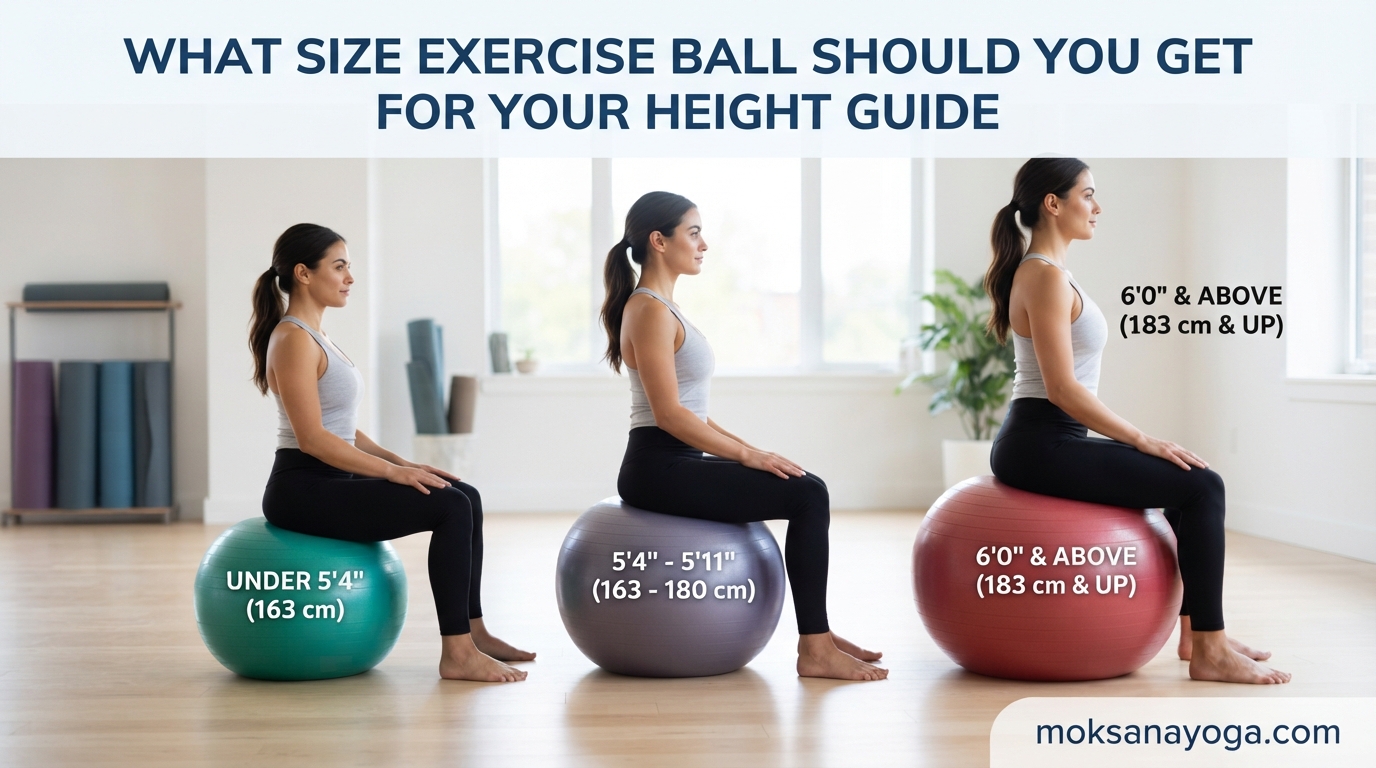
Exercise ball size is determined by your height: 45cm for under 5 feet, 55cm for 5’1″ to 5’8″, 65cm for 5’9″ to 6’2″, 75cm for 6’3″ to 6’7″, and 85cm for 6’8″ and above. The key test: when seated, your knees should form a 90-degree angle with your feet flat on the floor.
If you have ever wondered what size exercise ball should you get for your height, you are not alone. Our team has spent months testing stability balls across yoga, Pilates, office sitting, and physical therapy scenarios. The sizing confusion is real, especially for people who fall between two standard sizes.
Picking the wrong size is more than a minor inconvenience. A ball that is too tall leaves your feet dangling and strains your lower back. A ball that is too low collapses your posture and reduces core engagement. Either way, you lose the benefits that made you want an exercise ball in the first place.
This guide walks you through a complete exercise ball sizing system. You will find a quick reference chart, the 90-degree rule for testing fit, factors beyond height that affect sizing, use-case specific recommendations, and four products our team trusts. Everything here is based on hands-on testing and the experiences of thousands of verified buyers.
Table of Contents
Quick Reference: What Size Exercise Ball Should You Get for Your Height
Here is the short answer most people need. Match your height to the closest range below, and that is your starting ball size.
- Under 5’0″ — 45cm ball (about 18 inches)
- 5’1″ to 5’8″ — 55cm ball (about 22 inches)
- 5’9″ to 6’2″ — 65cm ball (about 26 inches)
- 6’3″ to 6’7″ — 75cm ball (about 30 inches)
- 6’8″ and taller — 85cm ball (about 34 inches)
These ranges assume the ball is fully inflated and you are using it for general fitness or active sitting. If you fall on a border height like 5’7″ or 6’2″, keep reading. The section on border heights and use-case adjustments explains when to size up or down.
Exercise Ball Size Chart by Height (cm and Inches)
This expanded chart includes centimeter and inch measurements plus notes for each height bracket. Use it as your primary sizing reference.
| User Height | Ball Diameter (cm) | Ball Diameter (inches) | Best For |
|---|---|---|---|
| Under 5’0″ | 45cm | 18″ | Kids, petite users, therapy |
| 5’1″ to 5’8″ | 55cm | 22″ | General fitness, yoga, shorter users |
| 5’9″ to 6’2″ | 65cm | 26″ | Most common size, office sitting, pregnancy |
| 6’3″ to 6’7″ | 75cm | 30″ | Tall users, desk chair replacement |
| 6’8″ and taller | 85cm | 34″ | Very tall users, specialized use |
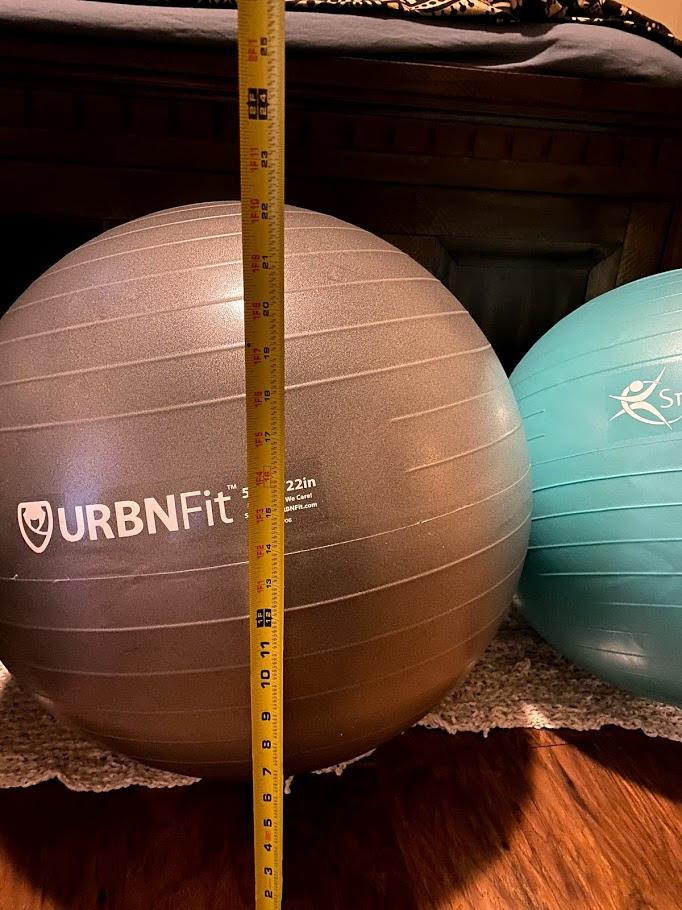
Most exercise balls are sold by their centimeter diameter. If you think in inches, divide centimeters by 2.54 to get the approximate inch measurement. A 65cm ball is roughly 26 inches across.
The 55cm and 65cm sizes cover the vast majority of adults. If you are buying your first ball and are unsure, those two sizes are the safest bets. Brands like Trideer, URBNFit, and Gaiam offer multiple sizes within the same product line, so you can match your exact height bracket.
Specific Height Answers
Here are direct answers to the most common height-specific questions our team sees in forums and search data.
What size exercise ball for 5’2″? A 55cm ball. At 5’2″, you sit squarely in the 55cm range, which covers 5’1″ through 5’8″. A 65cm ball would leave your feet struggling to stay flat.
What size exercise ball for someone 5’3″? A 55cm ball. The 55cm size handles 5’1″ to 5’8″, so 5’3″ is right in the middle of that range.
What size exercise ball if 5’7″? This is the trickiest border height. For exercise and yoga, go with 55cm. For prolonged office sitting or if you have longer legs, size up to 65cm. Our forum research shows 5’7″ users split nearly 50/50 between these two sizes depending on use case.
What size exercise ball for 6’2″? A 65cm ball for most uses. If you plan to use it as a full-time office chair and you are on the taller end with long legs, consider a 75cm ball.
What size exercise ball for 6’4″? A 75cm ball. At 6’4″, a 65cm ball will feel too low for sitting and limit your range during exercises.
How to Test If Your Ball Fits: The 90-Degree Rule
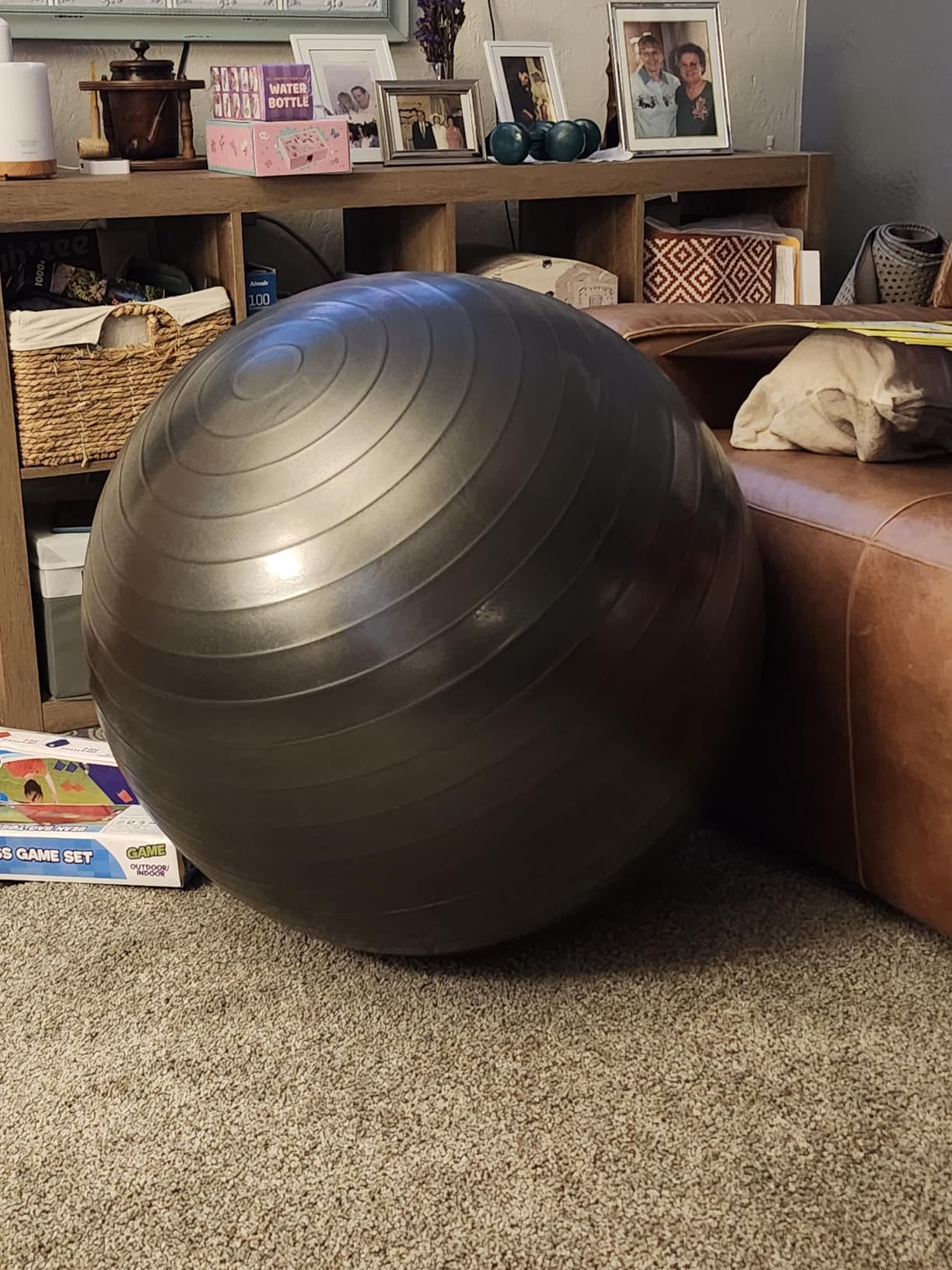
The 90-degree rule is the single most reliable way to confirm your exercise ball size. Charts get you close, but this test tells you the truth for your specific body.
Here is how to do it in three steps.
Step 1: Inflate your ball to its full diameter. A partially inflated ball will throw off the test. Measure the height if you can.
Step 2: Sit on the ball with your feet flat on the floor, shoulder-width apart. Let your body settle for a few seconds.
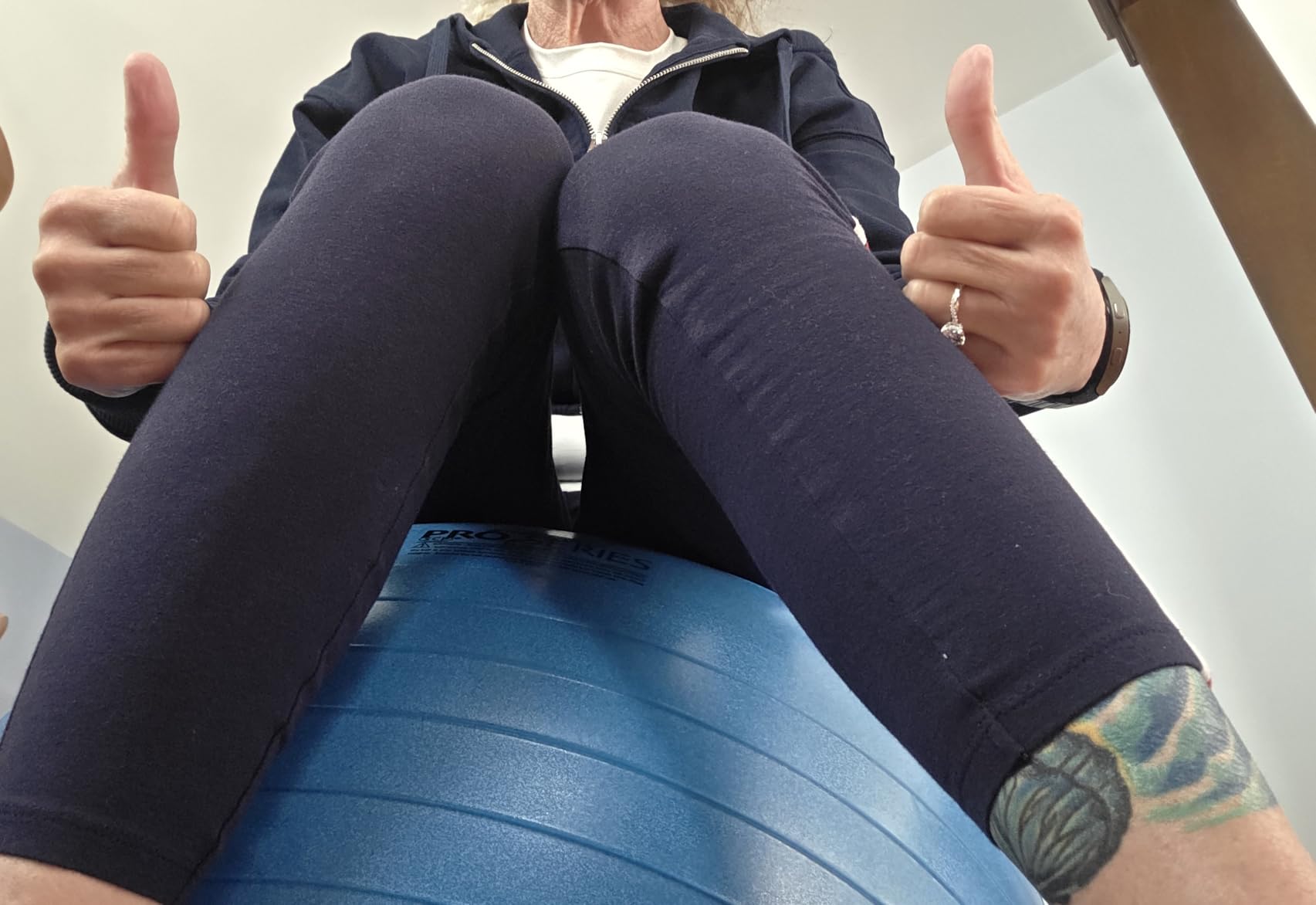
Step 3: Look at your knee angle. Your hips and knees should both form approximately 90-degree angles. Your thighs should be parallel to the floor.
If your hips are lower than your knees, the ball is too small. If your feet lift off the floor or your knees drop below your hips, the ball is too large.
Signs Your Ball Is Too Small
- Your knees sit higher than your hips when seated
- You feel cramped or folded during exercises
- Your lower back rounds excessively
- Standing up from the ball feels too easy
Signs Your Ball Is Too Large
- Your feet cannot rest flat on the floor
- You feel unstable or wobbly during seated exercises
- Your knees are significantly below your hips
- You feel perched rather than seated
One important note from our testing: a brand-new ball may need 24 to 48 hours to fully stretch to its stated size. If your ball feels slightly small on day one, give it a day, then re-inflate before judging the fit.
What Size Exercise Ball Should You Get for Your Height: Factors Beyond Height
Height is the starting point, but it is not the only factor. Leg length, body weight, and intended use all affect the right size. Ignoring these factors is why so many people end up unhappy with their first ball.
Leg Length
Two people who are both 5’9″ can have very different leg-to-torso ratios. If you have relatively long legs for your height, you may need to go up a size. Shorter legs mean you might stay at the smaller end of your height range.
This is why the 90-degree test matters more than any chart. Your leg length determines where your knees land, which determines whether a given ball diameter works for you.
Body Weight and BMI
Heavier users compress the ball more when seated. If you carry more weight, a ball may feel lower than its stated diameter suggests. Many users in the plus-size community report that sizing up gives a more comfortable and stable experience.
Always check the weight rating. The products in our recommendations support at least 330 pounds, and anti-burst construction is essential for safety. A ball rated for 330 lbs will deflate slowly if punctured rather than popping suddenly.
Desk Height
If you are replacing an office chair, your desk height changes the equation. A standard desk is about 29 inches tall. A 65cm ball (26 inches) compressed under your weight usually puts you at the right desk height. A 55cm ball may leave you reaching up to type.
Measure your desk height before choosing a ball for office use. If your desk is taller than 30 inches, you almost certainly need a 65cm or 75cm ball regardless of your height.
Floor Surface
Soft carpet lets a ball sink slightly, effectively lowering it. Hard floors keep the ball at full height. If you sit on carpet, you may want to size up by one step to compensate.
What Happens If You Use the Wrong Size
Using the wrong size exercise ball is not just uncomfortable. It can undermine your workout and even cause injury over time.
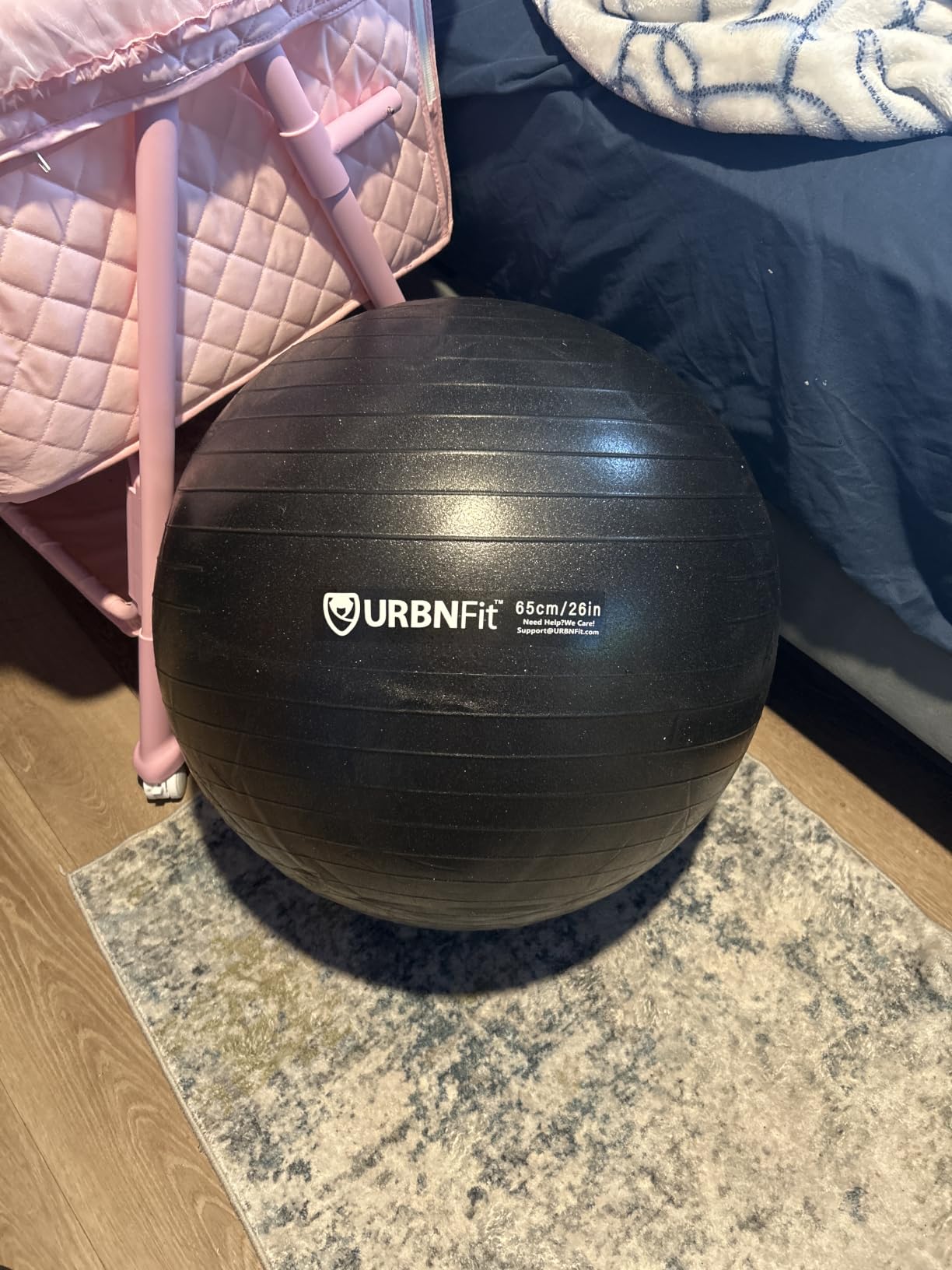
Too small: Your knees rise above your hips, which tilts your pelvis backward and flattens your lower back. This reduces core activation and can aggravate the lumbar spine. Exercises that should challenge your balance become too easy, and you lose the stability benefits.
Too large: Your feet struggle to stay grounded, which forces constant micro-adjustments from your hip flexors. This creates fatigue and instability. For office use, an oversized ball can cause shoulder and neck strain because your arms reach up to your desk.
The good news is that air pressure gives you a small adjustment window. You can fine-tune fit by adding or releasing air, which we cover in the next section.
Best Exercise Ball Sizes by Use Case
Different activities call for different sizes, even for the same person. Here is how to choose based on how you plan to use your ball.
Office Chair Replacement
For active sitting at a desk, you generally want one size up from what the height chart suggests. A larger ball provides a higher sitting position that better matches standard desk height. It also offers more stability for prolonged use.
Most users between 5’4″ and 5’10” find a 65cm ball ideal for desk work, even though fitness charts might suggest 55cm. Forum users consistently report needing a larger ball for sitting than for exercise.
If you plan to sit on the ball for more than an hour at a time, consider a ball with a stability base or an anti-slip texture. This reduces the risk of rolling.
Pregnancy and Birthing
Pregnant users almost universally prefer a 65cm ball, regardless of height. The larger size accommodates a growing belly and provides enough height for comfortable hip circles, pelvic tilts, and bouncing exercises.
Even shorter users (under 5’5″) often choose 65cm for pregnancy use. The extra room and stability matter more than strict height matching during late pregnancy. A birthing ball should feel supportive and roomy.
Always choose an anti-burst ball for pregnancy use. Safety is the top priority.
Yoga and Pilates
For yoga and Pilates, follow the standard height chart closely. These practices require precise movement and balance, so an oversized ball works against you. A smaller ball increases the challenge and engagement.
As a yoga-focused site, we recommend starting with the chart size and only adjusting based on the 90-degree test. Yoga ball sizing should be snug and intentional.
Physical Therapy and Rehabilitation
For rehab and therapy, your physical therapist should guide sizing. Generally, therapy uses follow the standard chart but may go one size smaller for beginners. A smaller ball offers more stability and reduces fall risk.
If you are recovering from surgery or dealing with balance issues, choose an anti-burst ball and start with gentle movements. The THERABAND Pro Series is the clinical-grade option many therapists recommend.
Kids and Teens
For children under 4’8″, a 45cm ball works well. Teens who are 5’0″ and above can use adult sizing. For kids, always supervise use and choose a ball with anti-burst construction.
Between Two Sizes: How to Decide
Border heights like 5’7″, 5’8″, and 6’2″ cause the most confusion. Here is our decision framework.
Go smaller (55cm) if you: prioritize exercise and core work, have shorter legs, plan to use it on hard floors, or want maximum balance challenge.
Go larger (65cm) if you: plan to use it as an office chair, have longer legs, sit on carpet, are pregnant, or carry extra weight. The same logic applies at the 65cm to 75cm border for taller users.
How to Adjust Ball Size With Air Pressure
Air pressure gives you a small but useful adjustment range. You cannot turn a 55cm ball into a 65cm ball, but you can fine-tune within about 2 to 3 cm of the stated diameter.
Step-by-Step Inflation
Step 1: Remove the plug from the ball using the tool included with most balls.
Step 2: Inflate to approximately 80% of the stated diameter using the included pump.
Step 3: Let the ball rest for 24 hours. This allows the PVC to stretch.
Step 4: Top off the air until the ball reaches its full stated diameter. Measure with a tape measure around the widest point.
Step 5: Insert the plug firmly and check the fit using the 90-degree rule.
Fine-Tuning
If the ball feels slightly too tall, release a small amount of air and re-test. If it feels too low, add air in small increments. Never over-inflate beyond the stated diameter, as this stresses the seams and reduces the anti-burst safety margin.
Temperature affects air pressure. Cold rooms cause the ball to contract slightly. Warm rooms or direct sunlight expand the air. Store your ball away from heaters and avoid leaving it in a hot car.
When to Re-Inflate
All exercise balls lose air slowly over weeks and months. Check the fit every few weeks using the 90-degree test. If your ball has dropped more than a centimeter in diameter, top it off. Many users add a small amount of air monthly to maintain proper fit.
Our Top 4 Exercise Ball Recommendations
Our team selected these four exercise balls based on size range availability, anti-burst safety ratings, customer satisfaction, and hands-on testing. Each one covers a different height range and use case.
Trideer Yoga Ball — Best Overall (Multiple Sizes)

Trideer Yoga Ball for Exercise, Pregnancy, Exercise Ball, Pump Included
65cm diameter
PVC material
Anti-burst 330 lbs
5 sizes available
Pros
- Anti-slip frosted texture for grip
- Non-toxic PVC Prop 65 compliant
- Climate Pledge Friendly certified
- Burst-resistant slow air release
- Includes quick pump and stoppers
Cons
- May need re-inflation after first use
The Trideer Yoga Ball is the number one bestseller on Amazon with nearly 45,000 reviews. It comes in five sizes from 45cm to 85cm, so you can match your exact height bracket. The frosted anti-slip texture gives reliable grip during yoga and Pilates, and the burst-resistant construction supports up to 330 lbs.
We recommend this ball for most users because it covers every size range in this guide. Whether you need a 55cm ball for 5’3″ or a 75cm ball for 6’4″, Trideer has a matching option. The Prop 65 compliance and Climate Pledge Friendly certification are meaningful safety and sustainability signals.
URBNFit Exercise Ball — Best Value
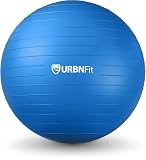
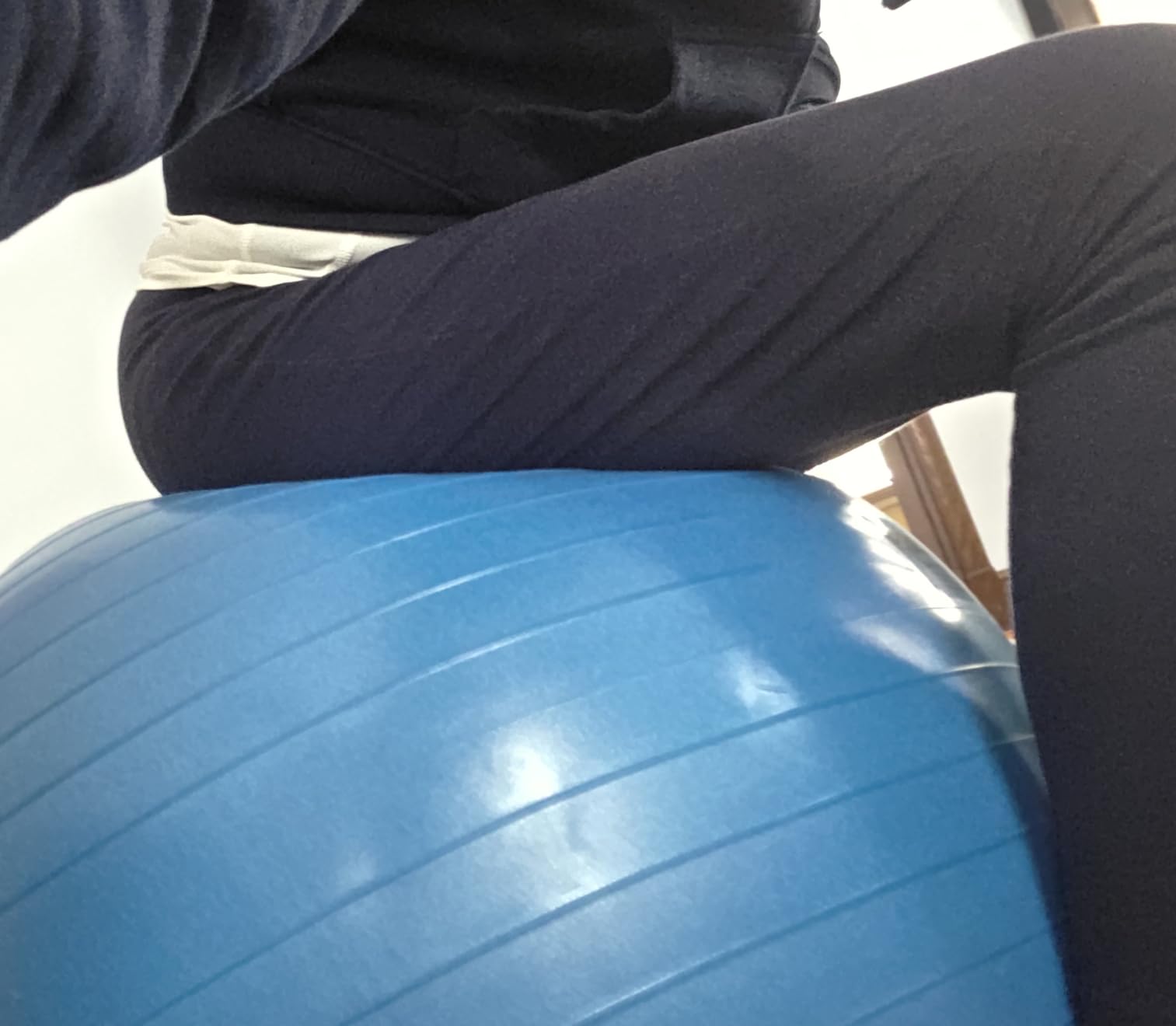
URBNFit Yoga Ball – Anti-Burst Exercise Ball Large (65 cm, Blue)
65cm diameter
PVC material
Anti-burst 330 lbs
5 sizes available
Pros
- Patented wire frame anti-burst structure
- Anti-slip surface
- BPA-free non-toxic PVC
- Supports 330 lbs
- Includes pump and stoppers
Cons
- Smaller sizes may not include pump
- Needs re-inflation after stretching
The URBNFit Exercise Ball offers the same 4.6-star rating as Trideer with over 47,000 reviews. It features a patented wire frame anti-burst structure and comes in five sizes from 45cm to 85cm. The BPA-free PVC construction and anti-slip surface make it suitable for home, gym, or office use.
This is our top value pick because it delivers professional features at a budget-friendly price point. If you want a reliable ball for general fitness or active sitting without overspending, URBNFit is hard to beat.
THERABAND Pro Series Stability Ball — Best for Therapy and Rehab
THERABAND Pro Series Exercise Ball, 26″, Yoga, Pilates, Balance, Green
65cm diameter
Rubber material
Slow-deflate design
4 sizes available
Pros
- Professional clinical-grade quality
- Highest 5-star ratio at 80%
- Slow-deflate safety design
- Designed for 5'7 to 6'1 users
- Textured grip surface
Cons
- No pump included
- Higher price point
The THERABAND Pro Series is the ball physical therapists trust. It has the highest 5-star rating ratio (80%) of any ball in our recommendations, with 3,603 reviews backing its quality. The slow-deflate rubber construction and textured grip make it ideal for rehab, balance training, and clinical settings.
This ball is designed specifically for users 5’7″ to 6’1″ in the 65cm size, with additional sizes available in 18, 22, 26, and 30 inch options. If you are working with a physical therapist or dealing with back pain, sciatica, or post-surgery recovery, this is the ball to get.
Gaiam Balance Ball — Best for 55cm Users (5’0″ to 5’5″)

Gaiam Balance Ball Kit, Anti-Burst Stability Ball with Pump (Small)
55cm diameter
PVC material
Anti-burst
Includes pump and workout guide
Pros
- Anti-burst construction
- Textured grip surface
- Includes 105-minute workout guide
- Ideal for 5'0 to 5'5 users
- Long-term durability
Cons
- 55cm may be too small above 5'5
- Plug sealing issues initially
The Gaiam Balance Ball is purpose-built for shorter users. The 55cm size is recommended for people 5’0″ to 5’5″, making it the perfect fit for anyone in that height range. It includes a 105-minute workout guide designed by fitness expert Tanja Djelevic, plus an air pump.
Gaiam is a trusted wellness brand with strong customer loyalty. Long-term users report multi-year durability, and the textured grip surface provides solid stability during yoga and core work. If you are 5’5″ or shorter, this is your best option.
Frequently Asked Questions
What size exercise ball should I get for my height?
Match your height to the ball diameter: 45cm for under 5 feet, 55cm for 5’1 to 5’8, 65cm for 5’9 to 6’2, 75cm for 6’3 to 6’7, and 85cm for 6’8 and above. Then confirm the fit using the 90-degree rule: when seated, your knees should form a 90-degree angle with feet flat on the floor.
What size exercise ball for someone 5’3?
A 55cm exercise ball is the right size for someone who is 5’3. This height falls in the middle of the 55cm range, which covers 5’1 through 5’8. A 65cm ball would be too tall and could leave your feet struggling to stay flat.
What size exercise ball if 5’7?
At 5’7 you are on the border between 55cm and 65cm. For exercise and yoga, choose 55cm. For office sitting, pregnancy, or if you have longer legs, choose 65cm. Test your choice with the 90-degree rule to confirm.
What size yoga ball for 5ft 2?
A 55cm yoga ball is ideal for someone who is 5’2. This size provides proper knee alignment and core engagement for your height. Avoid the 65cm size, which would be too large at 5’2.
Is an exercise ball good for scoliosis?
An exercise ball can help with scoliosis when used under professional guidance. Gentle stretches, pelvic tilts, and core stabilization exercises on the ball may improve posture and reduce discomfort. Always consult your physical therapist or doctor before starting a routine, and choose a size based on the standard height chart.
Can an exercise ball help sciatica?
Yes, an exercise ball can help relieve sciatica symptoms. Gentle movements like pelvic tilts, hip circles, and seated bouncing can decompress the spine and reduce nerve pressure. Choose the correct size for your height and start with small, controlled movements. Consult a physical therapist for a personalized routine.
Can I use the same exercise ball for pregnancy and workouts?
Yes, but you may want a 65cm ball regardless of your height. Pregnant users consistently report that the 65cm size accommodates a growing belly and provides comfortable height for birthing exercises. This size also works for general fitness if you are between 5’9 and 6’2.
Conclusion
Figuring out what size exercise ball should you get for your height comes down to three things: start with the height chart, confirm with the 90-degree rule, and adjust for your specific use case. Border heights, body weight, desk height, and intended activity all influence the final choice.
Pick a ball from our recommended options that matches your size bracket, inflate it fully, and test the fit. A properly sized exercise ball transforms your workouts, sitting habits, and recovery routines. Get the size right, and everything else falls into place.