
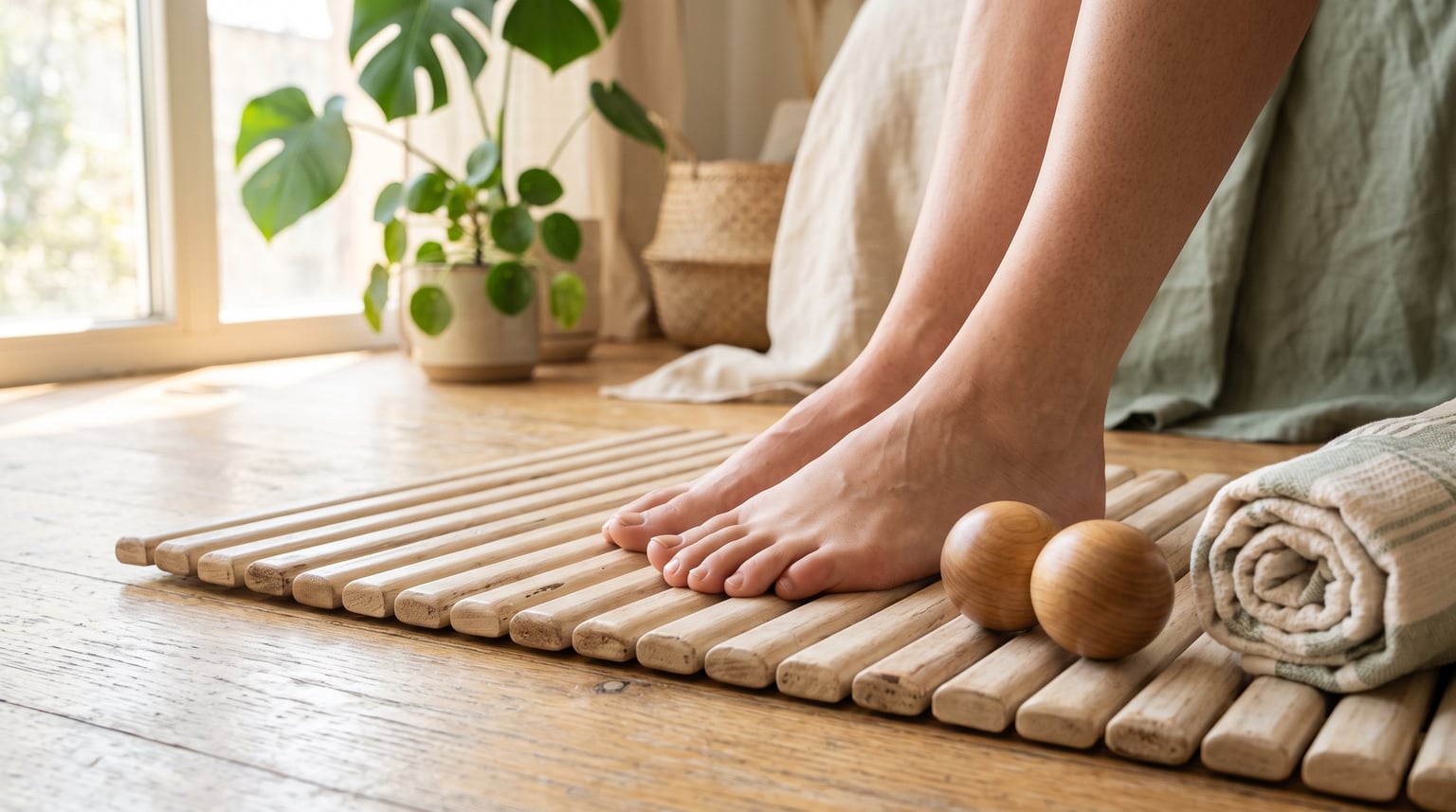
Have you ever taken off your shoes after a long day and noticed your feet feel like clenched fists? That tightness in your arches, the cramping in your toes, the dull ache across the bottom of each foot — it is not just from standing too long. Your feet may be holding onto stress the same way your jaw or shoulders do.
Foot tension is something I see constantly in yoga classes and hear about from clients every week. Most people do not realize that the body stores stress in peripheral areas like the feet, hands, and jaw. When we feel threatened or overwhelmed, those distant extremities are often the first to tighten up and the last to let go.
This article explores why tension builds in the feet and walks through practical, proven ways to release it. Whether you deal with chronic stress, spend hours on your feet, or notice your arches cramping during balancing poses, you will find techniques you can use today.
If you have ever wondered, why do I hold tension in my feet and how to release it, you are asking a question more people share than you might think. Let us break it down step by step.
Table of Contents
Signs Your Feet Are Holding Tension
Foot tension shows up in ways that are easy to dismiss or misread. Many of my students come to class thinking they just need new shoes, when really their feet have been gripping the ground for months.
Here are the most common signs that anxiety and stress are showing up in your feet:
Tightness or cramping in the arch, especially first thing in the morning
Toes that curl or claw without you noticing
Cold feet even in warm environments (a sign of restricted blood flow)
A constant urge to stretch the bottom of the foot
Cramping during yoga balancing poses like Tree or Warrior III
Heel pain that worsens under stress
A feeling of heaviness or fatigue in the feet by mid-afternoon
These symptoms come and go depending on your stress load. If you notice them flaring up during difficult weeks, that pattern is a strong clue that your feet are responding to more than just physical activity.
Why Do I Hold Tension in My Feet and How to Release It?
To understand why do I hold tension in my feet and how to release it, we have to look at how the body processes stress. Foot tension is rarely just a foot problem. It is a full-body stress response that happens to land in your feet.
The Fight-or-Flight Response in Your Feet
When your brain perceives a threat, whether it is a deadline, a conflict, or a genuine danger, it triggers the fight-or-flight response. Adrenaline floods your system and cortisol levels rise. Your muscles contract to prepare for action.
The feet sit at the farthest point from your core. They are loaded with small intrinsic muscles, ligaments, and connective tissue that brace for impact when stress hits. If the perceived threat never resolves, those muscles stay partially contracted for hours, days, or even years.
Over time, the nervous system learns this braced posture as the new normal. Your feet forget how to fully relax.
Cortisol and Chronic Foot Tension
Cortisol plays a direct role in muscle tension throughout the body. When cortisol stays elevated, muscles remain primed for action and recovery gets delayed. Blood vessels constrict, reducing circulation to peripheral areas like the feet.
Poor circulation means less oxygen, slower tissue repair, and more inflammation. That combination explains why stressed feet ache, cramp, and feel stiff even when you have not been especially active.
High cortisol can absolutely contribute to foot pain. If you have ruled out structural issues and your foot discomfort tracks with your stress levels, the hormone connection is worth taking seriously.
Emotional and Somatic Storage in the Feet
This is where most resources stop short. Somatic practitioners and trauma therapists have long recognized that the body stores unresolved experiences in specific regions, and the feet are a primary site.
The feet are your foundation. They represent your sense of safety, grounding, and contact with the earth. When you have experienced trauma, chronic anxiety, or a prolonged freeze response, the body often braces at the base.
I have worked with students who cried the first time they truly relaxed their feet during a restorative pose. That reaction is not unusual. It is the nervous system finally allowing a held area to release.
Somatic experiencing practitioners note that foot tension is especially common in people who feel unsafe, unsupported, or constantly on edge. The gripping is an unconscious attempt to stay ready.
Habitual and Physical Contributors
Not all foot tension comes from emotion or stress hormones. Several physical habits compound the problem:
Wearing stiff or narrow shoes that prevent natural toe splay
Standing on hard surfaces for long stretches without movement breaks
Weak foot and ankle muscles from too much sitting
Tight calves pulling on the plantar fascia
Repetitive movement patterns from running or cycling without recovery
Usually, it is a mix. Stress lays the groundwork, and physical habits intensify it. Addressing only one side of the equation rarely brings lasting relief.
7 Effective Ways to Release Tension in Your Feet
These techniques work because they address both the physical tightness and the nervous system response that created it. I recommend trying each one and noticing which your body responds to most.
1. Ball Rolling for the Plantar Fascia
This is the single most effective self-care technique for tight arches. You will need a firm ball — a lacrosse ball, tennis ball, or specialized massage ball all work.
Stand or sit and place the ball under the arch of one foot. Roll slowly from the ball of the foot to the heel, spending extra time on any tender spots. Apply enough pressure to feel a deep stretch but not sharp pain. Continue for 60 to 90 seconds per foot.
When you hit a tight area, pause and breathe into it for several breaths. This sends a signal to your nervous system that it is safe to release.
2. Toe Stretch and Splay
Sit with one foot resting on the opposite knee. Interlace your fingers between your toes, gently spreading them apart. Hold the stretch for 30 seconds, then rotate your foot in slow circles in both directions.
This stretch reawakens the small muscles between the toes that stiffen from wearing conventional shoes. Doing it daily restores natural foot mobility over time.
3. Calf Release With a Foam Roller
The calves connect directly to the feet through the Achilles tendon and plantar fascia. Tight calves almost always mean tight feet.
Sit on the floor and place a foam roller under one calf. Cross the other leg over for added pressure. Roll slowly from just below the knee to the ankle, pausing on tender points. When you find a tight spot, flex and point your foot several times to release it deeper.
4. Legs Up the Wall Pose
This restorative yoga pose reverses blood flow, calms the nervous system, and lets gravity drain tension from the lower body. It is one of my favorite practices for end-of-day foot fatigue.
Sit sideways next to a wall, then swing your legs up as you lie back. Your sit bones should be close to or touching the wall. Stay for 5 to 15 minutes, breathing slowly. Let your feet soften against the wall without gripping.
5. Hero Pose With Tucked Toes
Kneel on the floor and tuck your toes under, then slowly sit back onto your heels. You will feel an intense stretch across the bottoms of your feet and toes.
Start with 30 seconds and build up. This stretch targets the toe flexors that tighten from standing, walking, and stress. Come out slowly if the sensation is too strong.
6. Self-Massage With Warm Oil
Warm a small amount of oil between your palms and massage one foot at a time using both thumbs. Work from the heel toward the toes along the arch. Use firm, slow pressure and pay attention to any tender trigger points.
The warmth combined with intentional touch signals safety to the nervous system. This practice also lowers cortisol, especially when done in the evening before bed.
7. Slow Breathing With Foot Awareness
Sit comfortably and bring your attention to the soles of your feet resting on the floor. Breathe in for a count of four, hold briefly, and exhale for six. As you exhale, imagine your feet softening and spreading.
This technique trains your nervous system to associate relaxation with your feet. After a few minutes, you will notice the gripping pattern loosening on its own. Practicing this daily retrains chronic holding patterns at their root.
Daily Prevention Routine for Healthy Feet
Releasing tension once is not enough. The key is building small habits into your day that keep stress and tightness from accumulating.
Here is a simple routine I recommend. None of these steps takes more than a few minutes.
Morning: Wake Up Your Feet
Before you stand up, spend two minutes doing the toe stretch and splay. Then roll the arch of each foot over a ball for 60 seconds while still seated. This prepares the tissues for the day and breaks the overnight stiffness pattern.
Midday: Reset Circulation
If you sit at a desk, take off your shoes and spread your toes against the floor every couple of hours. If you stand all day, sit down and elevate your feet for five minutes during a break. Both habits restore blood flow and prevent tension from building.
Evening: Calm the Nervous System
End your day with five minutes of self-massage followed by legs up the wall. Pair this with slow breathing. This combination signals to your body that the day is over and it is safe to release the bracing pattern in your feet.
Weekly: Deeper Release
Once or twice a week, add a longer session. Twenty minutes of yoga focused on the lower body, a professional foot massage, or a somatic practice can reset patterns that daily habits alone cannot fully address.
When to Seek Professional Help?
Most foot tension responds well to the techniques above within a few weeks. But some situations call for outside support.
See a podiatrist or physical therapist if you experience sharp pain that does not improve, numbness or tingling, swelling that does not resolve overnight, or pain that alters the way you walk. These can indicate plantar fasciitis, nerve compression, or other structural issues that need targeted treatment.
If your foot tension tracks with anxiety, trauma, or chronic stress and self-care techniques are not making a dent, consider working with a somatic therapist. They can help your nervous system release patterns that no amount of stretching alone will resolve.
There is no shame in getting help. Sometimes the deepest tension needs skilled, attuned support to unwind.
FAQs
Can high cortisol cause foot pain?
Yes. Elevated cortisol keeps muscles in a state of readiness and restricts blood flow to peripheral areas like the feet. Over time this leads to cramping, stiffness, and dull aching that can feel like structural foot pain.
How to release tightness in feet?
Roll a firm ball under your arch for 60 to 90 seconds, stretch your toes apart with your fingers, foam roll your calves, and practice slow breathing with attention on your feet. Doing these daily prevents tension from accumulating.
Do foot massages lower cortisol?
Yes. Studies show that massage therapy reduces cortisol levels while increasing oxytocin and circulation. A daily foot massage with warm oil, especially in the evening, helps calm the nervous system and relax held tension.
What are signs of anxiety in the feet?
Cold feet, toe curling, arch cramping, a constant urge to stretch the bottom of the foot, heaviness by midday, and cramping during balancing yoga poses. These symptoms often flare during stressful periods and ease when stress decreases.
Conclusion
Foot tension is a message from your body, not a flaw to push through. By understanding why do I hold tension in my feet and how to release it, you give yourself a daily practice of listening and responding.
Start small. Pick one technique from this guide and try it tonight. Your feet have carried you through every stressful moment of your life. They deserve a few minutes of real attention.