
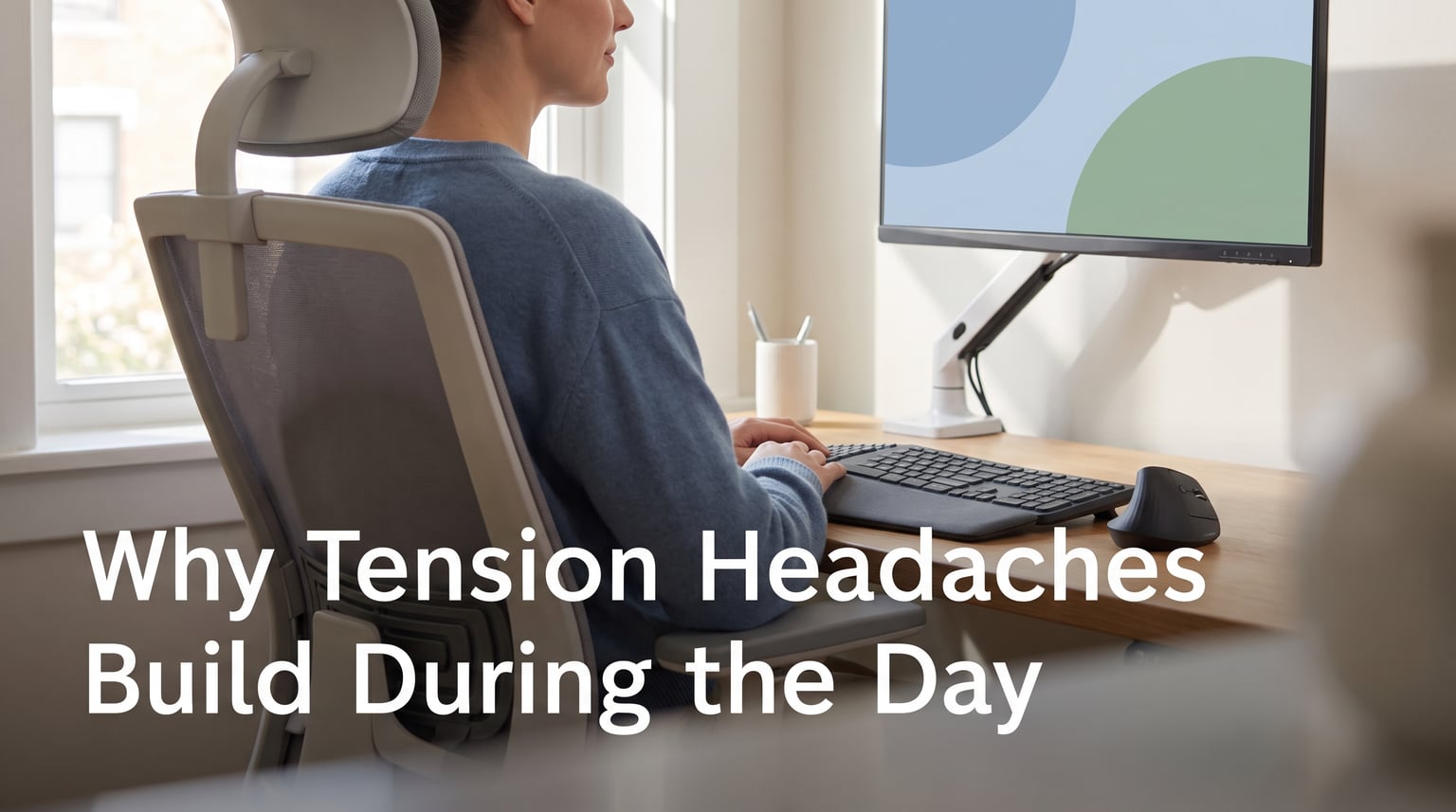
By 3 PM, your head feels like it is caught in a slowly tightening vice. The dull ache that started as a faint pressure around your temples has now spread across your forehead and down into your neck. If this sounds familiar, you are far from alone.
Tension headaches are the most common type of headache worldwide, and they have a frustrating habit of building gradually as the day goes on. Understanding why you feel tension headaches building during the day can help you stop them before they take hold.
In this guide, we will walk through what tension headaches are, why they tend to worsen as hours pass, the most common triggers, and practical strategies to prevent them. We will also share yoga stretches and breathing techniques that our community has found genuinely helpful for relief.
Our team has spent years working with students who struggle with daily headaches, neck stiffness, and stress-related tension. The patterns we see in our yoga studio mirror what medical research confirms about how muscle tension accumulates throughout the day.
Table of Contents
What Is a Tension Headache?
A tension headache is a dull, aching pain that typically feels like a tight band wrapped around your head. The pressure usually affects both sides of your forehead and temples, and the pain ranges from mild to moderate intensity.
Unlike migraines, tension headaches rarely come with nausea, vomiting, or sensitivity to light and sound. They also do not usually get worse with physical activity. What they do come with is a steady, nagging pressure that makes it hard to concentrate.
Healthcare providers classify tension headaches into three categories based on frequency. Episodic infrequent tension headaches happen fewer than 12 days per year. Frequent episodic tension headaches occur between 12 and 180 days per year. Chronic tension headaches strike on 15 or more days per month for at least three months.
The pain originates from muscle tension in your neck, shoulders, scalp, and jaw. When these muscles stay contracted for extended periods, they develop what are called trigger points. These are tight knots of muscle that refer pain outward, including up into your head.
According to Cleveland Clinic, tension headaches are the most common type of headache, affecting up to 80 percent of people at some point in their lives. They are also sometimes called stress headaches or muscle tension headaches because of their clear connection to physical and emotional tension.
Many people describe the sensation as a vice squeezing their skull. Others feel it as a weight pressing down on the top of their head. The pain is bilateral, meaning it affects both sides, and it tends to stay constant rather than throbbing.
Why Tension Headaches Build During the Day?
The answer to why tension headaches build during the day comes down to one word: accumulation. As the hours pass, multiple factors stack on top of each other, progressively tightening the muscles in your neck, shoulders, and scalp.
Think of your muscles like a rubber band. When you wake up rested, that rubber band is relaxed and flexible. But every hour you spend hunched over a screen, clenching your jaw during a stressful meeting, or holding your shoulders tense adds another layer of tightness to that band.
No single moment causes the headache. Instead, it is the cumulative effect of sustained muscle contractions, repetitive movements, mental stress, and physical fatigue building over many hours. By the time you feel the pain, the tension has been accumulating silently for most of the day.
Here is how the buildup typically unfolds across a single day.
Morning: The Starting Point
How you feel in the morning sets the stage for the rest of your day. If you slept poorly, slept in an awkward position, or ground your teeth during the night, you may already wake up with mild muscle tension in your jaw and neck.
This gives the headache a head start before your day even begins. People who clench their jaws overnight often wake up with stiffness at the base of their skull that only gets worse as they sit at a desk.
Even your morning routine can contribute. Checking your phone in bed creates forward head posture before you have even gotten up. Rushing out the door without breakfast starts a blood sugar dip that will hit you hours later.
Mid-Morning: Posture and Screen Time Take Effect
After an hour or two at your desk, forward head posture begins to strain the suboccipital muscles at the base of your skull. Every inch your head moves forward adds roughly 10 pounds of pressure to your neck.
Your body adapts by tightening muscles to hold the position. The trapezius muscles in your upper shoulders start to burn. The levator scapulae, which connects your neck to your shoulder blade, becomes chronically shortened.
At the same time, eye strain from screen brightness and focus begins to tighten the muscles around your eyes and forehead. The frontalis muscle across your forehead and the orbicularis oculi around your eyes contract subtly but continuously.
You probably will not feel pain yet. But the muscle tension is already being stored and compounded with every minute you spend in the same position.
Afternoon: The Tipping Point
By early afternoon, accumulated muscle tension, mild dehydration, eye strain, and mental fatigue all converge. This is why so many tension headaches peak between 1 PM and 4 PM. The muscles have been holding sustained contractions for hours without relief.
Your nervous system is also more sensitized by this point. Stress hormones like cortisol have been circulating all morning, keeping your muscles in a low-level state of readiness that prevents full relaxation.
The pain threshold gets crossed not because anything dramatic happened, but because the slow accumulation finally reaches a level your brain can no longer ignore.
Evening: Full Crystallization
Without intervention, the headache reaches its full intensity by evening. The tight band sensation is at its worst, and the pain may extend from your temples down into your shoulders and upper back.
At this point, quick fixes like a glass of water or a short stretch may not be enough. The muscles need extended release, which is why evening yoga sessions, warm showers, and massage tend to be the most effective relief at this stage.
This is also why poor sleep creates a vicious cycle. The tension you carry to bed partially carries over to the next morning, giving the next day’s headache an even earlier starting point.
Common Causes and Triggers
Several factors contribute to the gradual buildup of tension headaches. Most people deal with a combination of these triggers rather than just one. Identifying your personal mix is key to effective prevention.
1. Stress and Anxiety
Emotional stress is the single most common trigger for tension headaches. When you feel anxious or pressured, your body responds by unconsciously tightening muscles in your jaw, neck, and shoulders. The more stressed you are, the tighter these muscles get throughout the day.
Chronic stress keeps your sympathetic nervous system activated, which means your muscles stay in a low-grade state of contraction. Over hours, this creates exactly the kind of sustained tension that triggers headaches.
Anxiety also tends to cause shallow chest breathing, which strains the neck muscles that lift your ribcage. The connection between anxiety, stress, and tension headache building throughout the day is something forum users on Reddit discuss constantly.
2. Poor Posture
Forward head posture, rounded shoulders, and slumping in your chair all strain the muscles that support your head. Forum users on Reddit frequently note that chronic tension headache sufferers almost always have rounded shoulders, tight sternocleidomastoid muscles, and forward head posture.
When your head sits forward of your shoulders, the muscles at the back of your neck have to work constantly to keep your head from dropping. This is like holding a bowling ball at arm’s length all day instead of resting it close to your body.
Text neck from phone use compounds the problem. Every downward glance at your phone adds strain to the same muscles already fatigued from desk work.
3. Extended Screen Time
Staring at a computer or phone screen for hours causes eye strain, which triggers tension in the muscles around your eyes, forehead, and scalp. The blue light and constant focus also contribute to mental fatigue, which makes muscle tension worse.
The reduced blink rate during screen use, often dropping from 15 blinks per minute to 5 or 7, causes dry eyes and additional strain. Many people unconsciously squint or furrow their brow while concentrating on screens.
Working in poor lighting makes this worse. Both harsh overhead lights and dim screens force your eye muscles to work harder, feeding directly into forehead and temple tension.
4. Dehydration and Skipped Meals
Even mild dehydration causes blood vessels in your brain to narrow, reducing oxygen flow and triggering headache pain. Skipping meals drops your blood sugar, which has a similar effect. Both factors compound the muscle tension already building in your head and neck.
Many people do not realize how little water they drink during a busy workday. By afternoon, the cumulative effect of mild dehydration can be enough to tip existing muscle tension into a full headache.
Heavy or carb-heavy lunches can also cause a post-meal blood sugar crash that contributes to the classic afternoon headache window.
5. Caffeine and Sleep Problems
Too much caffeine can cause muscle jitteriness and tension. Too little caffeine if you are a regular coffee drinker can trigger withdrawal headaches. Poor sleep quality prevents your muscles from fully recovering overnight, so each day starts with residual tension from the day before.
The caffeine crash from morning coffee typically hits between 1 PM and 3 PM, which aligns perfectly with the afternoon headache peak for many sufferers.
Sleep disorders like sleep apnea and bruxism, or teeth grinding, are particularly damaging. They prevent deep muscle relaxation and directly add tension to your jaw and neck overnight.
6. Jaw Tension and TMJ
Clenching your jaw or grinding your teeth, whether from stress or during sleep, directly tightens the temporomandibular joint. Many Reddit users report that their tension headaches flare when they talk or smile a lot, which points directly to jaw muscle involvement.
The masseter and temporalis muscles that control your jaw are some of the strongest in your body relative to their size. When they stay contracted, the referred pain spreads across your temples and forehead.
Many people clench their jaws unconsciously during stressful tasks without realizing it. Building awareness of this habit is an important part of prevention.
Afternoon Headache Patterns
If you notice your headaches hitting reliably between 1 PM and 4 PM, you are experiencing a very common pattern. Afternoon tension headaches have distinct triggers that differ slightly from general daytime headaches.
The afternoon crash often involves a combination of post-lunch blood sugar dips, accumulated screen fatigue, and peak workplace stress. Many people also experience a natural circadian dip in alertness between 2 PM and 3 PM, which makes existing muscle tension feel more intense.
Several specific factors make afternoon headaches so predictable.
Post-lunch blood sugar drop after eating a heavy or carb-heavy meal
Caffeine wearing off from morning coffee around 1 to 3 PM
Eye strain peaking after five or more hours of screen work
Dehydration from forgetting to drink water all morning
Stress accumulation from meetings and deadlines hitting critical mass
Muscle stiffness from sitting in the same position for hours
Circadian alertness dip that amplifies pain perception
Jaw tension from morning meetings and conversations
Recognizing your personal afternoon pattern is the first step to breaking the cycle. Once you know when the headache typically hits, you can intervene 30 to 60 minutes before that time with movement, hydration, and breathing exercises.
Many people in our yoga community have found that a simple 10-minute reset at 12:30 PM completely changes their afternoon. A short walk, some water, and a few neck stretches can prevent the buildup from reaching the pain threshold.
How to Prevent Tension Headaches Building During the Day?
Preventing tension headaches building during the day requires a mix of physical habits, workspace adjustments, and stress management techniques. Here is what works based on both medical guidance and real community experience.
Fix Your Workspace Ergonomics
Your monitor should sit at eye level so your head stays centered over your shoulders. Your elbows should rest at 90 degrees, and your feet should sit flat on the floor. Every adjustment that reduces forward head posture directly reduces the muscle tension that causes headaches.
Use a standing desk if possible, or at least alternate between sitting and standing throughout the day. Position your keyboard close enough that your shoulders stay relaxed rather than shrugged.
Take Movement Breaks Every 45 Minutes
Set a timer and stand up, walk around, and stretch for two minutes every 45 minutes. This prevents muscles from locking into sustained contractions. Even brief movement helps restore blood flow and resets your posture.
The key is consistency. A two-minute break every 45 minutes is far more effective than a 15-minute break every three hours, because it prevents the tension from accumulating in the first place.
Practice the 20-20-20 Rule for Eye Strain
Every 20 minutes, look at something 20 feet away for 20 seconds. This gives your eye muscles a chance to relax and reduces the strain that contributes to forehead and temple tension.
Also adjust your screen brightness to match the ambient light in the room, and consider using a blue light filter if you work in front of screens for most of the day.
Stay Hydrated All Day
Keep a water bottle at your desk and sip continuously rather than chugging once or twice. Aim for at least 8 glasses spread throughout the day. Dehydration is one of the easiest triggers to eliminate.
If you struggle to remember, link drinking water to existing habits. Take a sip every time you finish an email, every time a meeting ends, or every time your movement break timer goes off.
Manage Stress Proactively
Stress management is not optional for tension headache sufferers. Deep breathing exercises, short meditation breaks, and awareness of jaw clenching can all reduce the muscle tension that accumulates during stressful workdays.
Even 60 seconds of deep breathing between tasks can reset your nervous system enough to release some of the tension your body has been holding. The goal is to interrupt the stress accumulation cycle before it reaches your muscles.
Check Your Sleep Quality
Poor sleep leaves your muscles tight and your nervous system on edge. Aim for 7 to 9 hours of quality sleep, and consider whether teeth grinding at night is contributing to your morning tension.
If you wake up with a stiff jaw or sore teeth, talk to your dentist about a night guard. Addressing nighttime grinding can dramatically reduce daytime tension headache frequency.
Consider Your Caffeine Timing
If you drink coffee, time it so the caffeine does not crash during your vulnerable afternoon window. Avoid caffeine after 2 PM to protect your sleep quality.
Switching to green tea, which contains a smaller dose of caffeine alongside the calming compound L-theanine, can give you a gentler energy curve that avoids the sharp afternoon crash.
Eat Regular, Balanced Meals
Do not skip meals, and aim for a balance of protein, healthy fats, and complex carbohydrates at lunch. This prevents the post-lunch blood sugar crash that contributes to afternoon headaches.
Keep healthy snacks like nuts or fruit at your desk for mid-morning and mid-afternoon fuel to keep your blood sugar stable throughout the day.
Yoga Stretches and Breathing for Tension Relief
Yoga is one of the most effective tools for releasing the muscle tension that builds throughout the day. Our community consistently reports that stretching, deep breathing, and yoga provide real relief for tension headaches. Here are five poses and techniques to try.
1. Neck Rolls
Sit up straight and slowly lower your right ear toward your right shoulder. Roll your chin down toward your chest, then over to the left shoulder. Complete five slow rolls in each direction. This releases tension in the sternocleidomastoid and upper trap muscles.
Move slowly and never force the stretch. If you feel any sharp pain, reduce the range of motion. The goal is gentle, sustained release.
2. Seated Eagle Arms
Sit tall and wrap your right arm under your left, bringing your palms together if possible. Lift your elbows to shoulder height and breathe deeply for five breaths. Switch sides. This stretches the muscles between your shoulder blades that tighten from desk work.
If you cannot bring your palms together, just hold your shoulders. The stretch is still effective and will improve with practice over time.
3. Child’s Pose
Kneel on the floor, sit back on your heels, and fold forward with your arms extended. Rest your forehead on the mat and breathe slowly for 10 breaths. The gentle pressure on your forehead and the release in your neck and shoulders can ease headache pain directly.
The forehead pressure in child’s pose is particularly soothing because it gently stimulates the area where tension accumulates, providing a comforting counter-pressure to the tight band sensation.
4. Legs Up the Wall
Lie on your back with your legs extended up a wall. Rest your arms at your sides and breathe deeply for three to five minutes. This restorative pose calms your nervous system, reduces stress, and releases tension throughout your body.
This pose is especially effective in the evening to release the day’s accumulated tension before bed, which can improve your sleep quality and reduce the next morning’s starting tension level.
5. Box Breathing
Inhale for four counts, hold for four, exhale for four, and hold for four. Repeat this cycle for two to three minutes. Box breathing activates your parasympathetic nervous system, which counteracts the stress response that drives muscle tension throughout the day.
You can do this anywhere, including at your desk during a stressful meeting. Nobody will know you are doing it, but your muscles will start to release within the first few cycles.
For best results, combine these stretches with a brief breathing session. Even 10 minutes of yoga and breathing in the mid-morning can significantly reduce the afternoon tension headache peak.
Our team has watched students transform their daily headache patterns through consistent practice. The key is not intensity but regularity. Five minutes every day is far more powerful than one long session once a week.
FAQs
Why do I have tension headaches during the day?
Tension headaches build during the day because muscle tension in your neck, shoulders, and scalp accumulates with each hour. Poor posture, screen time, stress, dehydration, and skipped meals all contribute. The muscles progressively tighten, causing the dull pressure and tight band sensation around your head to worsen as the day goes on.
Is it normal to get tension headaches every day?
Getting tension headaches every day is not normal and may indicate chronic tension-type headache. If you experience headaches on 15 or more days per month for three months or more, you should see a healthcare provider. Chronic daily headaches often require a combination of lifestyle changes, stress management, and medical treatment.
Why do I get headaches every day in the afternoon?
Afternoon tension headaches are typically caused by accumulated muscle tension from sitting at a desk, post-lunch blood sugar drops, caffeine wearing off, eye strain after hours of screen time, and dehydration. The combination of these factors peaks between 1 PM and 4 PM for many people.
What vitamin deficiency causes tension headaches?
Vitamin D deficiency, magnesium deficiency, and B vitamin deficiencies have all been linked to increased headache frequency. However, tension headaches are primarily caused by muscle tension and stress rather than vitamin deficiencies alone. If you suspect a deficiency, ask your doctor for a blood test before starting supplements.
How long can tension headaches last?
Episodic tension headaches typically last 30 minutes to a few hours, though they can persist for several days. Chronic tension headaches can last for hours at a time and recur daily. If a tension headache lasts more than 72 hours, seek medical attention.
When should I see a doctor for tension headaches?
See a doctor if your headaches occur more than twice per week, worsen over time, or do not respond to over-the-counter pain relievers. Seek immediate medical attention if you experience sudden severe headache pain, headache with fever or stiff neck, or headache after a head injury.
Can tension headaches be cured?
Tension headaches cannot be cured in the traditional sense, but they can be effectively managed and significantly reduced in frequency and intensity. Most people see major improvement through a combination of posture correction, stress management, regular movement, yoga, and addressing underlying triggers like sleep problems or jaw tension.
Conclusion
Tension headaches build during the day because muscle tension in your neck, shoulders, and scalp accumulates with every hour you spend sitting, staring, and stressing. The good news is that this pattern is both understandable and preventable.
By addressing your posture, taking regular movement breaks, staying hydrated, managing stress, and incorporating yoga stretches and breathing exercises, you can interrupt the accumulation cycle before it becomes a full-blown headache. Start with one or two changes, and build from there.
Your head does not have to hurt every afternoon. With consistent habits and a little awareness, you can keep that tightening band from ever closing in.