
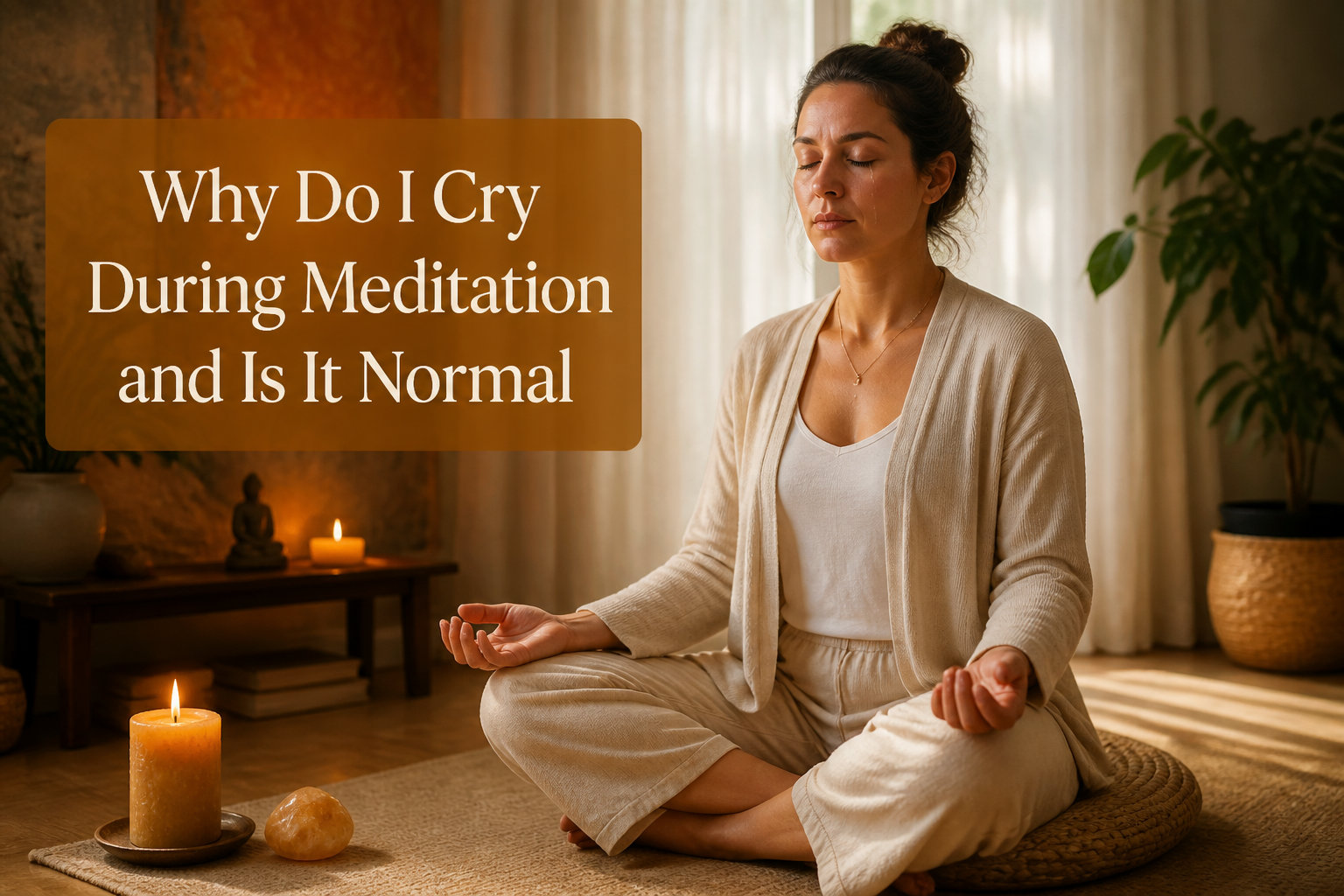
If you have ever found yourself with tears streaming down your face mid-session and wondered what just happened, you are far from alone. Crying during meditation is one of the most common experiences people report, especially in their first few months of practice. Yet almost nobody talks about it before it happens, which leaves many people confused, embarrassed, or worried that something is wrong.
I remember the first time it happened to me. I was about ten minutes into a guided body scan when an unexpected wave of sadness rolled through my chest. Within seconds I was crying, not from any specific thought, but from a feeling I could not quite name. I left the session feeling lighter but deeply unsure whether I should continue meditating at all.
In this article, we will explore why crying during meditation happens, what it means from both a scientific and spiritual perspective, and exactly what to do when tears show up on your cushion. We will also cover when emotional release is a sign of progress and when it might be worth talking to a professional.
Table of Contents
Is It Normal to Cry During Meditation?
Yes, crying during meditation is completely normal and incredibly common. Teachers across traditions, from mindfulness instructors to Buddhist monks, regularly reassure students that tears on the cushion are a natural part of the process. Meditation creates the quiet space your nervous system needs to finally process emotions you have been carrying, sometimes for years.
The short answer is that crying during meditation is a sign your practice is working. When you sit still and turn inward, you are no longer distracting yourself from what you feel. The mental defenses you use to get through the day, like staying busy or pushing difficult feelings aside, begin to soften. What was held back can finally move.
Many people in meditation communities, particularly on forums like Reddit’s r/Meditation, describe feeling embarrassed or even ashamed when tears appear. Some worry it means they are doing something wrong, or that they are somehow “bad” at meditating because they cannot stay calm. The opposite is true. The fact that your body feels safe enough to release emotion means your practice is reaching a deeper layer.
It is worth noting that some people cry nearly every time they meditate, especially in the beginning. Others might have one emotional session and never experience it again. Both responses are normal. Frequency depends on how much emotional material you carry, how long you have been suppressing it, and how deeply your practice allows you to let go.
Why Do I Cry During Meditation? 8 Common Reasons
Understanding the specific reasons behind tears during meditation can help you feel more at ease with the experience. Here are eight explanations that cover the physical, emotional, and spiritual dimensions of this phenomenon.
1. Your Body Is Releasing Stored Emotion
Throughout your daily life, you experience hundreds of emotions that you never fully process. A rude comment from a coworker, a stressful news headline, a fleeting memory of a lost loved one. Your mind registers these moments, but you keep moving because you have things to do.
Those unprocessed feelings do not simply disappear. They get stored in the body, often as tension in the jaw, shoulders, chest, or stomach. When you meditate, your body finally has a chance to discharge that accumulated emotional energy. Tears are one of the most direct ways the body releases what it has been holding.
2. Suppressed Emotions Are Surfacing
Many of us learn from a young age to suppress emotions rather than express them. Crying in public is often treated as a weakness, so we learn to swallow our tears and carry on. Over time, this habit creates a backlog of unexpressed grief, frustration, fear, or even joy.
Meditation removes the noise of daily life and creates space for these suppressed emotions to rise to the surface. You might find yourself crying over something that happened weeks, months, or even years ago. This is your mind finally giving those feelings the attention they were denied.
3. Your Nervous System Is Relaxing
Most of us spend our days in a low-grade state of fight-or-flight. The sympathetic nervous system keeps us alert and ready to respond to stress, even when there is no immediate danger. Cortisol and adrenaline stay elevated, and the body never fully relaxes.
Meditation activates the parasympathetic nervous system, also known as the rest-and-digest response. As stress hormones drop, the body lets go of tension it has been holding for survival. This sudden shift from alertness to deep relaxation can trigger tears as the body releases the stress it no longer needs to carry.
4. Your Heart Chakra Is Opening
In yogic and energy-based traditions, the heart chakra, or anahata, is the energy center associated with love, compassion, and emotional connection. When this chakra begins to open through practices like loving-kindness meditation or breathwork, stored emotional energy in the heart center can release as tears.
People who cry during heart-focused meditations often describe the tears as different from sadness tears. They feel warmer, more expansive, and sometimes tinged with gratitude or relief. This is what many traditions call “spiritual tears,” a sign that the heart is softening and opening to deeper levels of feeling.
5. Stress and Cortisol Are Dropping
Research has shown that regular meditation can significantly reduce cortisol levels over time. Cortisol is the body’s primary stress hormone, and chronically elevated cortisol is linked to anxiety, poor sleep, weight gain, and a host of other health issues.
When you meditate and cortisol levels begin to fall, your body experiences a sense of relief that can be overwhelming. The contrast between the stress you have been carrying and the calm of the present moment can be so striking that tears follow naturally. This is essentially your body saying, “Thank goodness, I can finally rest.”
6. Meditation Creates Vulnerability
In ordinary life, we maintain a kind of emotional armor to navigate social situations, work demands, and daily challenges. We present a composed version of ourselves to the world. Meditation asks you to set that armor down.
Sitting in silence with your own mind is an inherently vulnerable act. There is nowhere to hide, no phone to check, no task to accomplish. In that vulnerability, authentic feelings emerge. For many people, this is the first time all day they have been truly honest with themselves about how they feel.
7. Past Trauma Is Resurfacing
For people who have experienced trauma, whether recent or in the distant past, meditation can sometimes bring unresolved material to the surface. The mind, in its quiet state, may begin to process memories, sensations, or emotions that were too overwhelming to handle when they originally occurred.
This kind of crying can feel different from other types. It may come with body sensations, flashbacks, or a sense of reliving an experience. If this happens to you, know that it is a known response and that trauma-informed approaches to meditation exist specifically to support this kind of processing safely.
8. You Are Experiencing a Spiritual Awakening
Some spiritual traditions view crying during meditation as a sign of awakening or deepening awareness. As you become more present and connected to your inner self, you may experience a sense of oneness, gratitude, or connection that moves you to tears.
These tears are often described as tears of joy, relief, or recognition. They come not from pain but from a profound sense of coming home to yourself. Many long-term meditators report that these moments, while rare, are among the most meaningful experiences of their practice.
The Science Behind Tears During Meditation
From a scientific standpoint, the tears you experience during meditation have a clear physiological basis. When you sit down to meditate, several measurable changes occur in your body and brain.
First, meditation activates the parasympathetic nervous system, which slows your heart rate, lowers blood pressure, and signals to your body that it is safe to relax. This shift directly counters the sympathetic nervous system’s fight-or-flight response that most of us live in throughout the day.
As the body relaxes, cortisol levels begin to drop. Cortisol is produced by the adrenal glands in response to stress, and chronically high cortisol keeps the body in a state of heightened alertness. When meditation brings cortisol down, the body releases the physical tension that was being maintained by those elevated stress hormones.
At the same time, meditation has been shown to increase activity in the prefrontal cortex, the area of the brain responsible for emotional regulation and self-awareness. This increased activity allows you to notice and process emotions that might normally stay beneath your conscious awareness. Combined with the relaxation response, this creates the perfect conditions for emotional release.
Research also suggests that the limbic system, which processes emotions and memory, becomes more active during meditation. This is why long-forgotten memories or feelings can suddenly surface during practice. Your brain is literally reviewing and integrating emotional material that was previously stored without being fully processed.
What Crying During Meditation Means Spiritually?
Spiritual traditions around the world have long recognized crying during meditation as a meaningful experience. Rather than seeing tears as a problem to be fixed, many traditions view them as a sign of deepening practice and spiritual opening.
In yoga and energy healing traditions, crying is often associated with the heart chakra. The heart chakra, located at the center of the chest, governs love, compassion, forgiveness, and emotional balance. When meditation opens this energy center, stored emotional energy releases as tears. Practitioners in these traditions often describe the sensation as a feeling of expansion in the chest followed by a warm flow of emotion.
In Buddhism, emotional release during meditation is understood as part of the process of developing insight. The Buddhist teacher Pema Chodron has spoken extensively about how meditation brings us face to face with emotions we have been avoiding. Rather than pushing them away, the practice invites us to sit with them fully. In this context, tears are not a distraction from the practice but an expression of it.
Many meditators also report that the type of tears they experience changes over time. Early in practice, tears may come from grief, sadness, or stress release. As practice deepens, tears increasingly come from gratitude, compassion, and a sense of connection to something larger than oneself. Some traditions call these “tears of devotion” or “tears of realization.”
What to Do When You Cry During Meditation?
Knowing how to respond when tears arrive can make the difference between an experience that feels healing and one that feels overwhelming. Here is a step-by-step approach you can follow.
Step 1: Do not stop meditating. Your first instinct might be to open your eyes, grab a tissue, and end the session. Unless the emotions feel genuinely destabilizing, try to stay with the experience. The tears are a sign that something important is being processed.
Step 2: Let the tears flow without judgment. Resist the urge to analyze why you are crying while it is happening. Thinking about the emotion can actually interrupt the release. Instead, simply notice the physical sensations, the warmth of the tears, the movement in your chest, the sound of your breath, and let them be there.
Step 3: Keep breathing. Emotional intensity can make your breath shallow or erratic. Gently bring your attention back to your breath, taking slow, steady inhales and exhales. This keeps your nervous system regulated and allows the emotion to move through you rather than getting stuck.
Step 4: Place a hand on your chest or heart. This simple physical gesture can provide comfort and grounding. It also reinforces a sense of self-compassion, which is exactly what your nervous system needs during emotional release.
Step 5: Sit for a few minutes after the tears stop. Do not rush to get up. Give yourself time to settle into the space that the release has created. Notice how your body feels now compared to before. You may feel lighter, clearer, or simply quiet.
Step 6: Journal or reflect afterward. After your session, take a few minutes to write down anything that came up. You do not need to have all the answers, but capturing impressions while they are fresh can help you understand patterns over time.
Step 7: Be gentle with yourself for the rest of the day. Emotional release can leave you feeling raw or tired. Drink water, eat nourishing food, and avoid scheduling anything demanding immediately after an intense session.
When Crying During Meditation Might Mean Something More?
While crying during meditation is normal and healthy, there are situations where it may be a signal to seek additional support. Knowing the difference can help you approach your practice with wisdom rather than forcing yourself through experiences that need a different kind of care.
If you find that every meditation session ends in uncontrollable sobbing and you feel worse, not better, afterward, this may indicate that you are moving through material that would benefit from professional support. A therapist, especially one trained in trauma-informed care or somatic experiencing, can help you process these emotions in a structured, safe environment.
Similarly, if crying is accompanied by flashbacks, panic symptoms, dissociation, or intrusive thoughts that persist well beyond your meditation session, these may be signs of unresolved trauma. Meditation can sometimes bring trauma-related material to the surface faster than you can process it alone. This does not mean meditation is bad for you, but it may mean you need to adjust your approach or work with a trauma-informed meditation teacher.
Some people benefit from shorter sessions, grounding-focused practices, or working with a guide rather than meditating alone. Others find that combining meditation with therapy creates the most supportive container for deep emotional work. There is no single right path, and seeking help is a sign of self-awareness, not weakness.
FAQs
Are you supposed to cry during meditation?
Yes, crying during meditation is entirely normal and expected for many practitioners. Tears are a natural form of emotional release that occurs when your nervous system relaxes enough to process stored stress, suppressed emotions, or unresolved experiences. Meditation teachers across traditions consider it a sign that your practice is working, not a sign that something is wrong.
What does it mean spiritually when you cry during meditation?
Spiritually, crying during meditation often signals that your heart chakra is opening and releasing stored emotional energy. Many traditions view these tears as a sign of spiritual growth, increased compassion, and deepening self-awareness. Some meditators describe spiritual tears as feeling warmer and more expansive than tears of sadness, often accompanied by a sense of gratitude, connection, or inner peace.
What are signs my meditation is working?
Signs that your meditation practice is working include increased self-awareness, reduced reactivity to stress, improved focus, better emotional regulation, and a greater sense of calm in daily life. Crying during meditation can also be a sign of progress, as it indicates your nervous system is relaxing enough to release stored emotions. Over time, you may notice deeper sleep, more patience, and a stronger connection to the present moment.
Can meditation help with cortisol?
Yes, research shows that regular meditation can significantly reduce cortisol levels. Cortisol is the body’s primary stress hormone, and chronically elevated cortisol is linked to anxiety, poor sleep, and other health issues. By activating the parasympathetic nervous system, meditation helps bring cortisol levels down, which is one reason emotional release and tears can occur as the body lets go of accumulated stress.
Should I stop meditating if I always cry?
Not necessarily, but it depends on how you feel afterward. If crying leaves you feeling lighter, clearer, and more at peace, it is a healthy release and you can continue your practice. However, if every session leaves you feeling destabilized, exhausted, or re-traumatized, consider shortening your sessions, trying a grounding-focused practice, or working with a trauma-informed meditation teacher or therapist.
Why does guided meditation make me cry more than silent meditation?
Guided meditations often include prompts like visualizations, loving-kindness phrases, or body scans that directly access emotional centers in the brain. The guidance can bypass your usual mental defenses, making it easier for suppressed emotions to surface. This is why many people, especially beginners, experience more tears during guided sessions than during silent, self-directed practice.
Conclusion
Crying during meditation is one of the most natural, common, and meaningful experiences a practitioner can have. It is your body and mind doing exactly what they are designed to do: releasing what no longer needs to be carried and making space for greater clarity, calm, and connection.
Whether your tears come from stored stress, suppressed emotion, a heart chakra opening, or simply the relief of finally slowing down, they are a sign that your practice is reaching beneath the surface. The eight reasons we covered show that there is no single cause and no single meaning behind meditation tears. Your experience is uniquely yours.
If you find yourself crying during meditation, the best thing you can do is stay with it. Breathe, place a hand on your heart, and let the tears move through you. Then take time to integrate what came up, whether through journaling, a walk in nature, or simply a quiet cup of tea.
And if the tears ever feel like too much to handle on your own, remember that seeking support from a therapist or trauma-informed meditation teacher is a sign of strength. Your meditation practice should serve your wellbeing, and there is no shame in getting help to navigate the deeper waters.
Keep showing up. Keep breathing. And trust that every tear on your cushion is part of the journey toward a more open, aware, and peaceful version of yourself.