
If you have ever winced your way through tabletop pose or felt your kneecap grind against the floor during a lunge, you already know the problem. Standard yoga mats are built around a 4-5mm thickness that works fine for practitioners with healthy joints, but anyone dealing with knee pain, arthritis, or post-injury sensitivity needs something more substantial. We spent weeks testing thick, high-density mats to find the best yoga mats for bad knees available in 2026, focusing on real cushioning performance rather than just marketing claims.
The truth is that thickness alone does not solve knee pain. A cheap 10mm mat made from low-density foam compresses flat the moment your body weight lands on it, leaving your joints just as exposed as they would be on a thin mat. What actually protects your knees is the combination of thickness and density working together. We dug into the details of each mat’s material composition, compression resistance, and surface grip to separate genuinely joint-friendly options from those that only look thick.
Across forums and community discussions, the same frustrations come up over and over. People on hardwood floors suffer most, since there is zero give beneath the mat. Yogis with boney knee structures find that even dense mats bottom out on certain poses. Physical therapists consistently recommend mats that maintain their shape under pressure rather than those that simply feel soft to the touch. Our testing prioritized all of these factors, and you can explore our broader yoga practice guides for complementary routines that pair well with a joint-friendly mat.
Below you will find our top three picks, a full comparison table of all fifteen mats we tested, detailed individual reviews, a buying guide covering the key factors for knee support, and answers to the most common questions about choosing a mat when your joints need extra care.
Table of Contents
Top 3 Picks for Knee-Friendly Yoga Mats
Our team narrowed the field to three standout mats that excel at protecting sensitive knees while still offering the stability and grip needed for a safe practice. Each was selected based on real-world cushioning performance under body weight, not just spec-sheet thickness numbers.

BalanceFrom 1-Inch Extra Thick Yoga Mat
- 1-inch thick cushioning
- High-density foam
- Non-slip texture
- Carrying strap included

Retrospec Solana 1-Inch Yoga Mat
- 1-inch thick foam
- Non-slip surface
- Phthalate-free
- Machine washable option

CAP Barbell 1-Inch Exercise Yoga Mat
- 1-inch high-density EVA
- Non-slip surface
- Carrying strap
- Easy wipe down
Best Yoga Mats for Bad Knees in 2026
The comparison table below includes every mat we tested, ranked by overall knee-protection performance. Use it to quickly scan thickness, material, and key features before diving into the individual reviews.
| Product | Specifications | Action |
|---|---|---|
| BalanceFrom 1-Inch Extra Thick Mat |
|
Check Latest Price |
| Retrospec Solana 1-Inch Mat |
|
Check Latest Price |
| CAP Barbell 1-Inch Mat |
|
Check Latest Price |
 ProsourceFit Extra Thick Mat ProsourceFit Extra Thick Mat |
|
Check Latest Price |
 Gaiam Thick 10mm Mat Gaiam Thick 10mm Mat |
|
Check Latest Price |
 Amazon Basics Extra Thick Mat Amazon Basics Extra Thick Mat |
|
Check Latest Price |
 Fitvids 1/2-Inch Mat Fitvids 1/2-Inch Mat |
|
Check Latest Price |
 Ewedoos Eco TPE Mat Ewedoos Eco TPE Mat |
|
Check Latest Price |
 Hatha Yoga 12mm Extra Thick Mat Hatha Yoga 12mm Extra Thick Mat |
|
Check Latest Price |
 JELS Extra Thick 10mm Mat JELS Extra Thick 10mm Mat |
|
Check Latest Price |
 QMKGEC 8mm TPE Mat QMKGEC 8mm TPE Mat |
|
Check Latest Price |
 Karma Fitness Large 10mm Mat Karma Fitness Large 10mm Mat |
|
Check Latest Price |
 CAMBIVO 72×48 Large Mat CAMBIVO 72×48 Large Mat |
|
Check Latest Price |
 CAMBIVO Extra Wide 6mm Mat CAMBIVO Extra Wide 6mm Mat |
|
Check Latest Price |
 IUGA Non Slip TPE Mat IUGA Non Slip TPE Mat |
|
Check Latest Price |
1. BalanceFrom 1-Inch Extra Thick Yoga Mat — Maximum Cushioning
BalanceFrom 1-inch Thick 71×24 Inches Extra Thick Exercise Yoga Mat, Black
Thickness: 1 inch
Size: 71 x 24 inch
Material: High-density foam
Weight: 2.2 lbs
Pros
- Extra-thick 1-inch cushioning
- High-density foam retains shape
- Non-slip double-sided texture
- Lightweight and portable
- Moisture-resistant surface
Cons
- Extra thickness may not suit all poses
- Initial foam odor possible
I tested the BalanceFrom on a hardwood floor over a period of three weeks, doing everything from restorative yin sequences to more dynamic vinyasa flows. The standout feature is that full inch of high-density foam. When I dropped into a kneeling lunge or lowered into camel pose, I could feel the mat absorbing pressure without fully compressing. My kneecaps never hit the hard floor beneath.
What impressed me most is how well the foam holds its shape over repeated use. Many thick mats develop permanent compression dents in the spots where your knees and hands land most often. After dozens of sessions, the BalanceFrom still springs back evenly. The double-sided textured surface keeps the mat planted on the floor, and I never experienced any sliding during downward dog or warrior sequences.
The moisture-resistant surface is a nice touch for anyone who sweats during practice. A quick wipe with a damp cloth and some soap is all it takes to clean. At just over two pounds, it is light enough to carry to a studio using the included strap.
The one trade-off is that the extra thickness changes your balance slightly. Standing poses feel a bit less grounded than they would on a thinner, firmer mat. If your primary goal is deep stretching and restorative work, this is barely noticeable. For fast-paced flow classes, you may want to take a session or two to adjust.
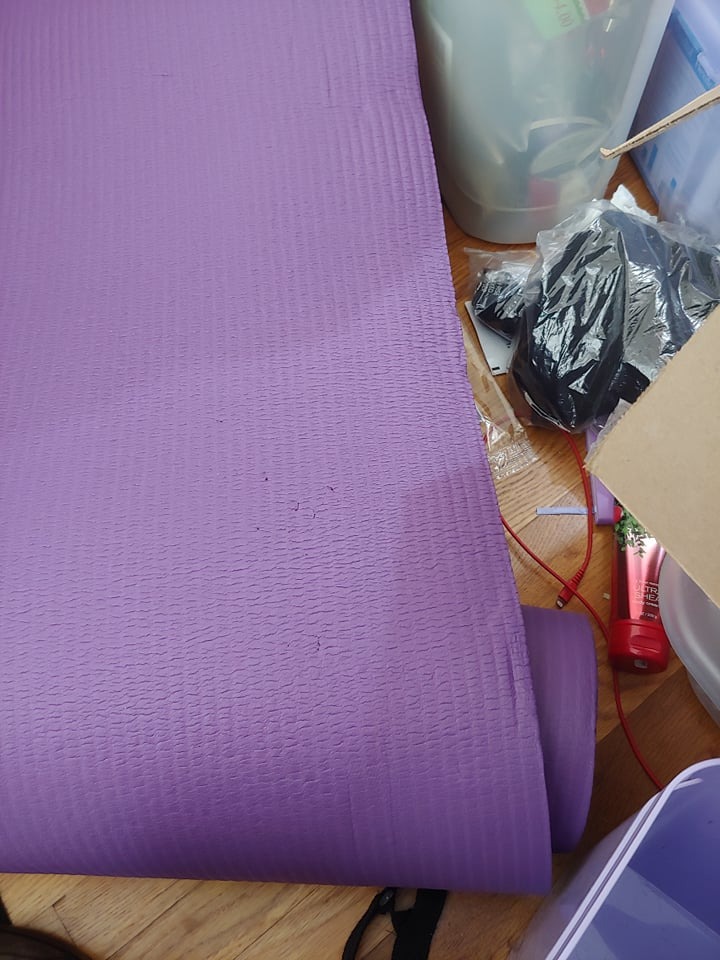
Best Yoga Style Compatibility
This mat shines in restorative yoga, yin yoga, gentle hatha, and physical therapy routines where floor-based poses dominate. It is one of the best yoga mats for bad knees when your practice involves long-held kneeling postures or seated forward folds. The cushioning makes floor work genuinely comfortable rather than something you endure.
It is less ideal for hot yoga or vigorous power vinyasa where you need maximum floor feel and sweat management. The foam surface does not offer the same wet grip as a natural rubber or polyurethane mat, and the extra squish can throw off balance in fast transitions.
Hardwood Floor Performance
On bare hardwood, the BalanceFrom performs exceptionally well. The double-sided texture grips the floor surface firmly, and the inch of foam provides enough buffer that hard flooring underneath stops mattering. I tested it on oak, bamboo, and tile surfaces with consistently good results. This is the mat I would recommend first to anyone practicing exclusively on hard floors with knee issues.
2. Retrospec Solana 1-Inch Yoga Mat — Best Value Pick
Retrospec Solana 1″ Extra Thick Yoga Mat Non Slip Exercise Mat w/Strap
Thickness: 1 inch
Size: 72 x 24 inch
Material: Foam
Weight: 2.2 lbs
Pros
- Extra thick 1-inch cushioning
- Non-slip surface
- Phthalate and latex free
- Durable for daily use
- Nylon carrying strap included
Cons
- Strap quality is basic
- Pet claws can damage surface
- Initial harmless odor
The Retrospec Solana offers the same 1-inch thickness as our top pick but at a notably lower price point. I used it for two weeks of daily practice and found the cushioning to be firm enough that my knees never bottomed through to the floor. The foam has a slightly different feel than the BalanceFrom, a touch more give but still supportive.
What sets the Solana apart is its chemical-free construction. It is free of phthalates, heavy metals, and latex, which matters if you have sensitive skin or allergies. The non-slip surface held up well during standard hatha and vinyasa sessions, though I did notice slight slipping when my hands got sweaty during a more intense flow.
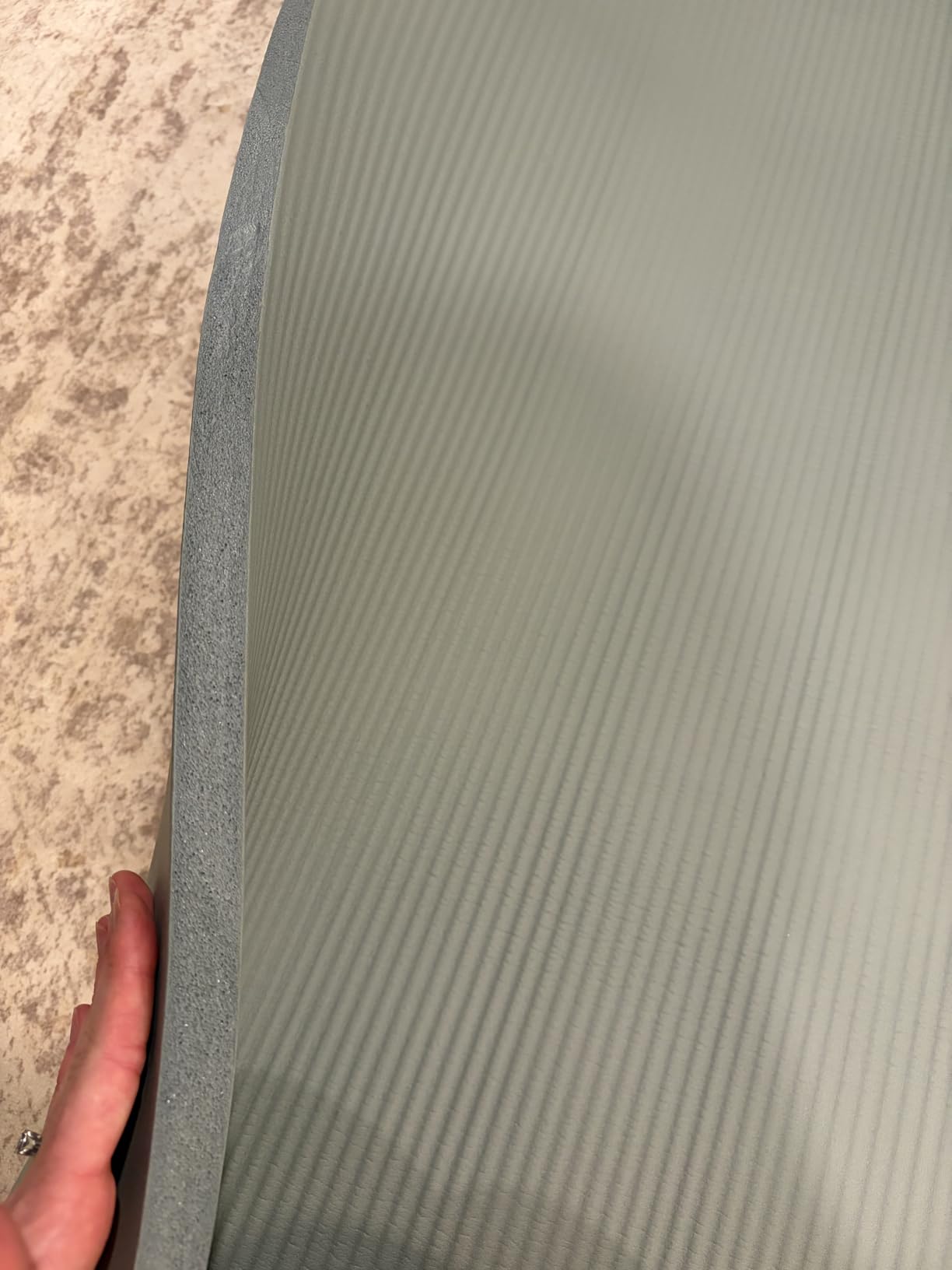
The included nylon carrying strap gets the job done but is fairly basic. It works for tossing the mat over your shoulder and walking to class, but it is not as refined as a dedicated mat bag. At 2.2 pounds, the weight is manageable for daily transport.
One thing to be aware of is that the foam surface can be damaged by pet claws. If you have cats or dogs that like to investigate your gear, you will want to store this mat out of reach. There is also a harmless initial odor that dissipates after a day or two of airing out.
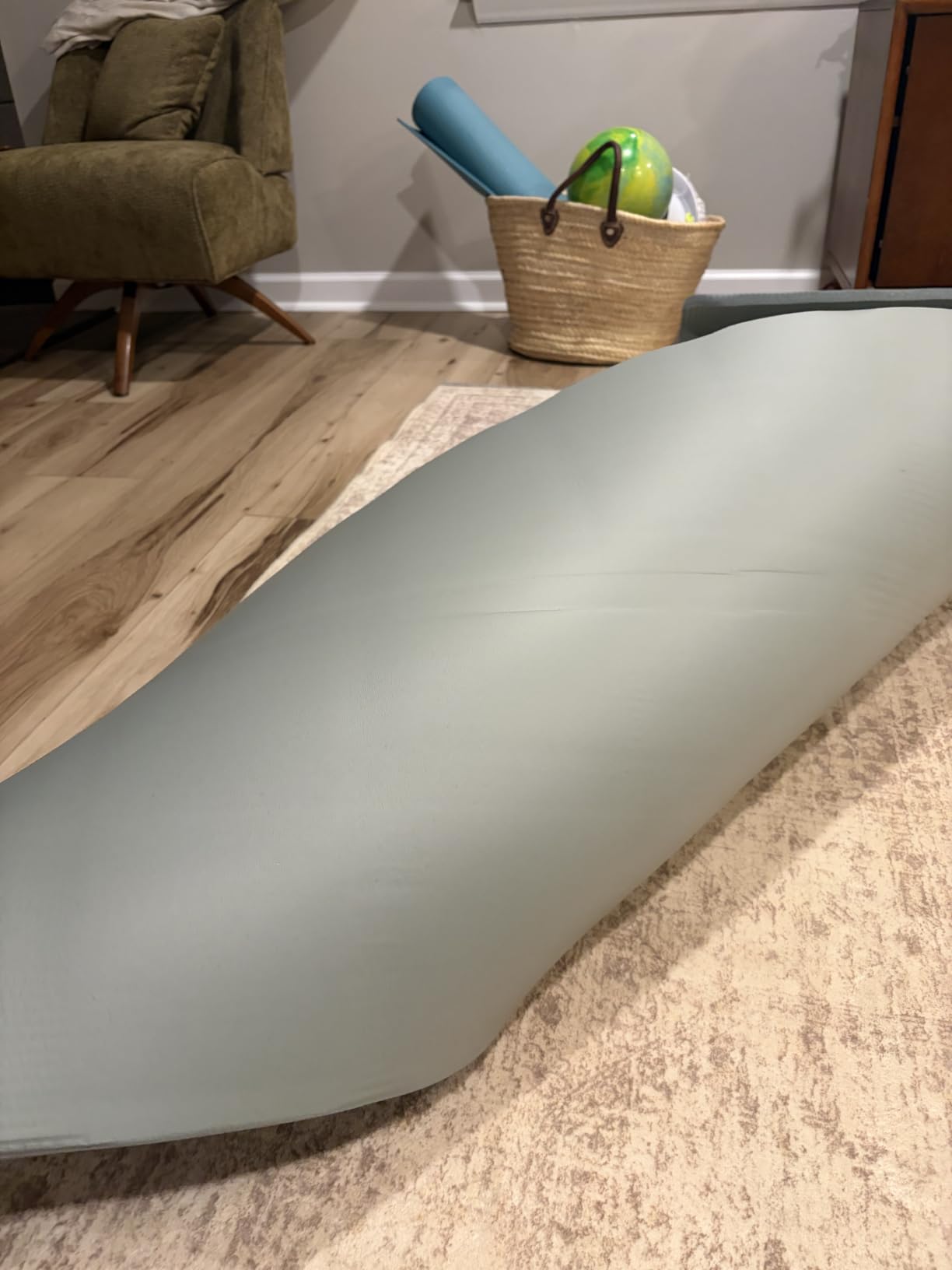
Durability Over Time
After extended use, the Solana holds up well for its price range. The foam maintains its thickness without developing permanent dents in the first several months of regular use. Cleaning is straightforward with gentle soap and water. Just wipe it down and let it hang dry rather than submerging it.
The Retrospec consistently ranks as a top seller in the yoga mat category, and with over 14,500 reviews backing it up, the durability track record speaks for itself. For the price, it is hard to find a thicker mat with this level of consistent quality.
Who Should Skip This Mat
If you practice hot yoga regularly, the Solana is not the best fit. The foam surface does not provide reliable grip when slick with sweat, and you would likely need a towel on top. Advanced practitioners who need precise floor feel for arm balances and inversions may also find the inch of cushioning too soft for those demands.
3. CAP Barbell 1-Inch Exercise Yoga Mat — Best Budget Option
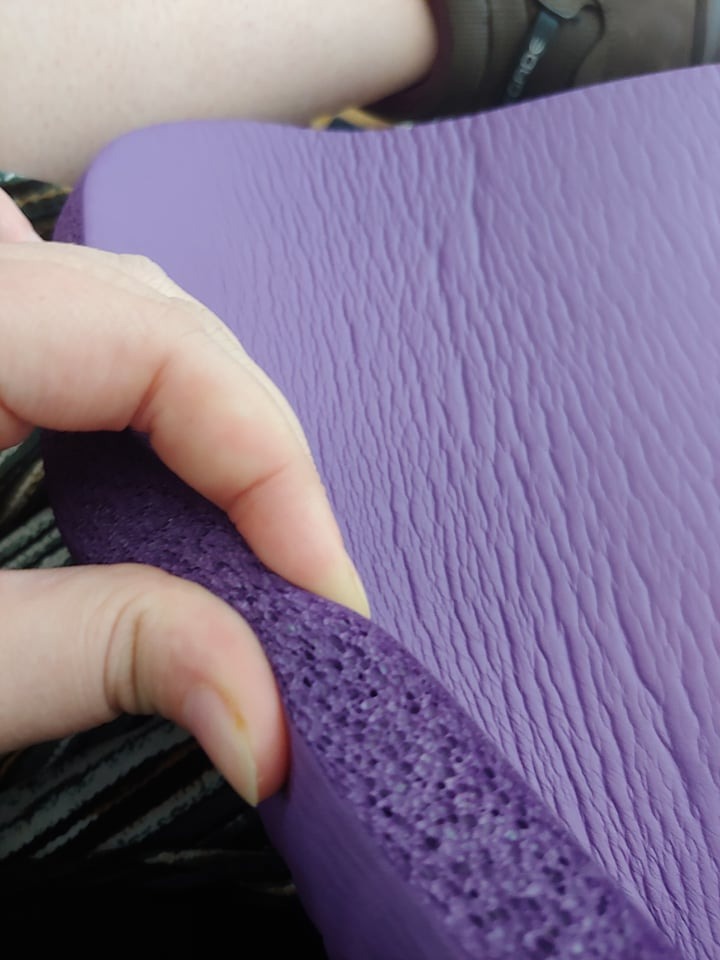
CAP 1″ Extra Thick Yoga Mat, Exercise & Workout Mat with Strap, Purple
Thickness: 1 inch
Size: 71 x 24 inch
Material: High-density EVA foam
Weight: 3.75 lbs
Pros
- Maximum 1-inch padding
- High density EVA foam
- Non-slip performance
- Carrying strap included
- Easy to wipe clean
Cons
- Heavier than foam alternatives
- Fewer color options at lowest price
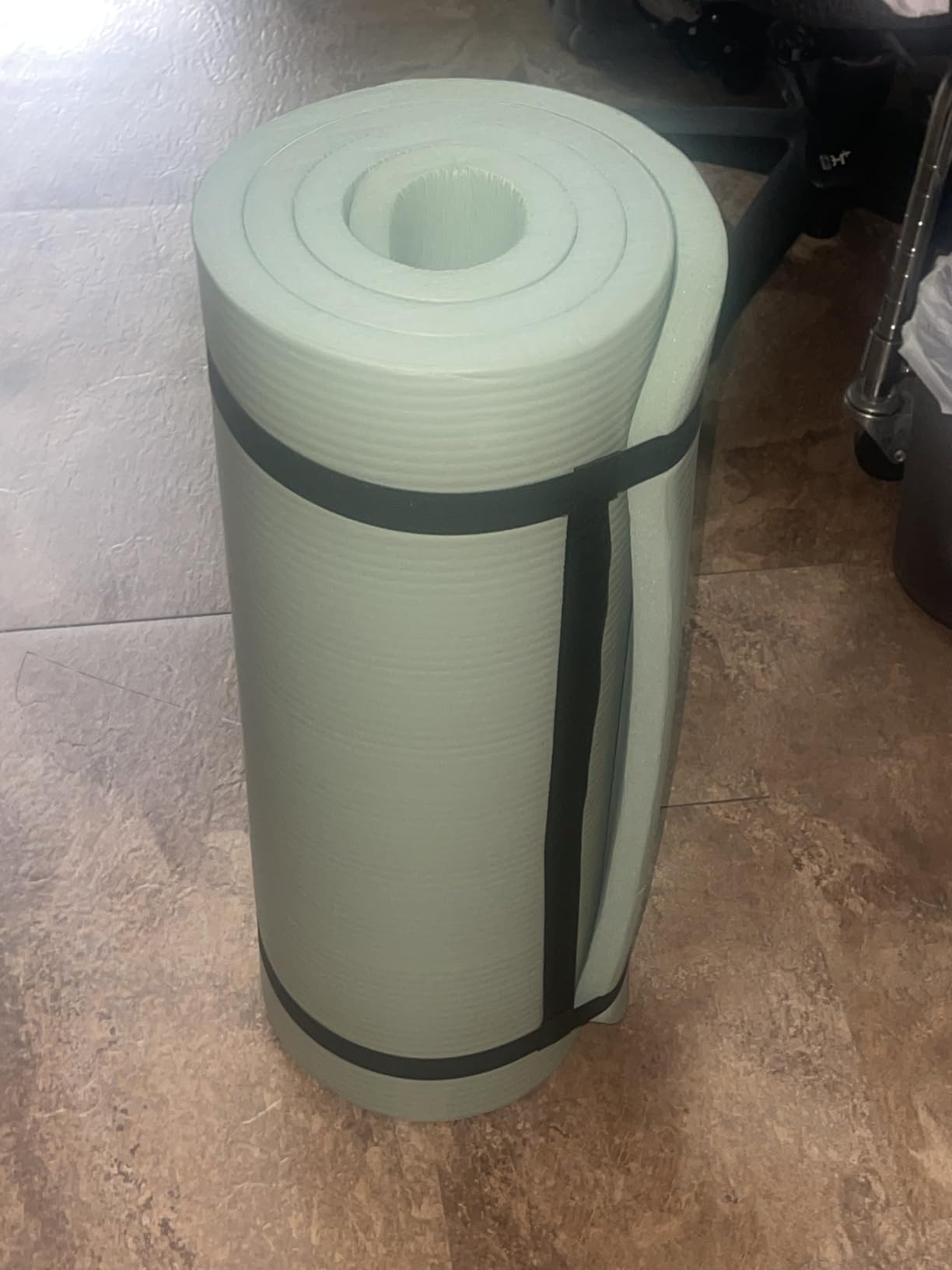
The CAP Barbell mat is the most affordable 1-inch thick option we tested, and it does not compromise on the cushioning that matters most for knee protection. The high-density EVA foam provides a firm but forgiving surface that absorbed pressure well during all my kneeling poses and floor work.
I was initially concerned that the EVA foam would feel too rigid, but it actually strikes a good balance between support and comfort. During a 45-minute restorative session on hardwood, my knees felt completely supported throughout. The non-slip surface kept the mat firmly planted, and I never had to readjust mid-pose.
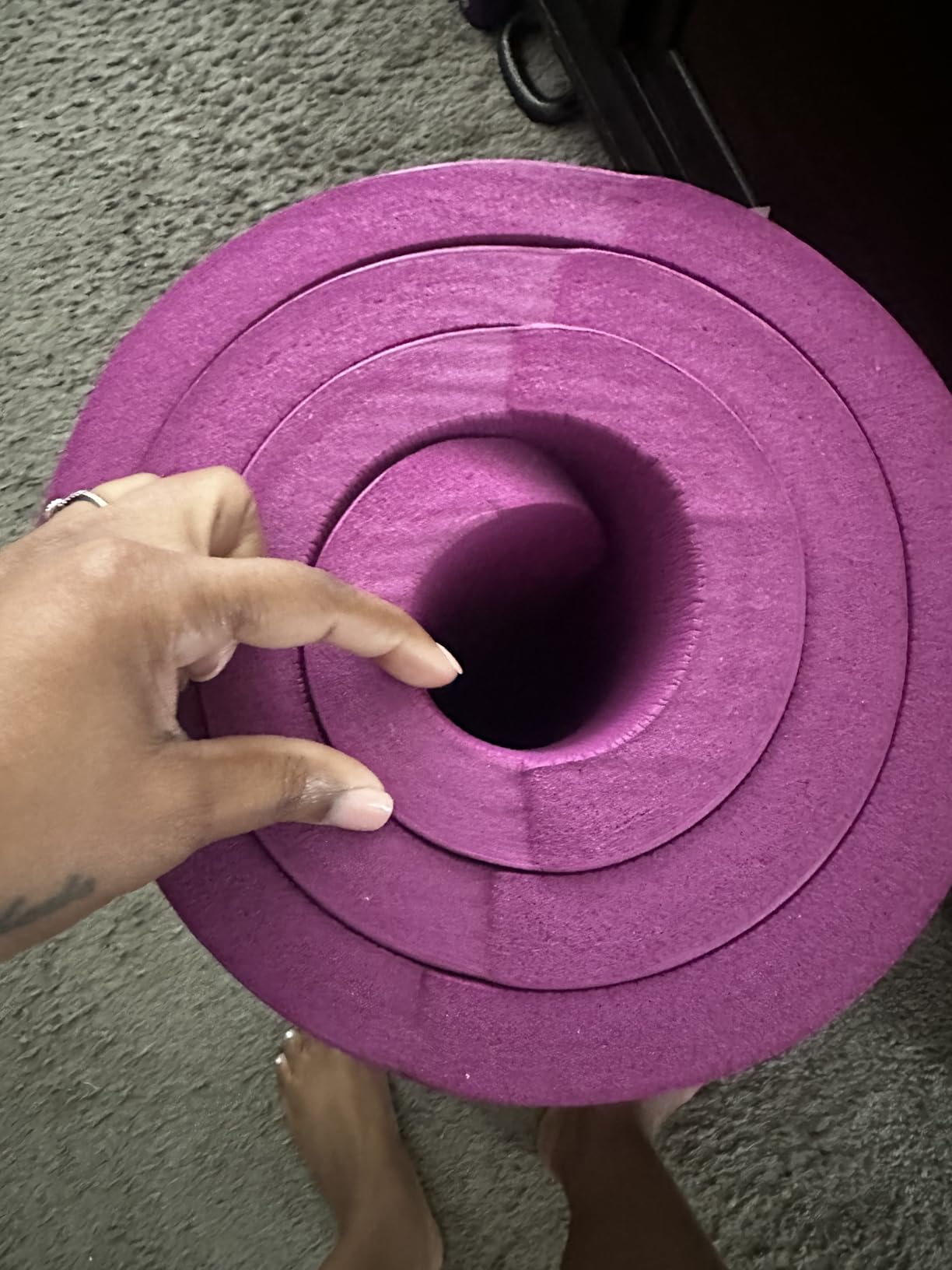
At 3.75 pounds, this is one of the heavier mats in the lineup. That extra weight comes from the dense foam construction, which is a fair trade for the durability and support it provides. If you are carrying it to a studio regularly, the weight is noticeable but manageable with the included strap.
Cleaning is simple. A quick wipe down after each session keeps it fresh. The EVA foam resists moisture absorption, so sweat does not soak in and cause odor issues over time.
Best Use Cases for the CAP Barbell
This mat excels as a home practice mat where portability is less of a concern. If you have a dedicated practice space and want maximum cushioning on a budget, the CAP Barbell delivers. It is also well-suited for physical therapy exercises, stretching routines, and floor-based strength work where joint protection matters more than grip finesse.
The high-density EVA foam is particularly good for people with arthritis or chronic knee pain who need consistent, firm support. Unlike softer foams that compress unpredictably, EVA maintains an even surface that your joints can rely on.
Limitations to Consider
The CAP Barbell is not designed for travel. Its weight and bulk make it cumbersome to carry long distances. If you need a mat for studio classes, a lighter option may serve you better. The grip is adequate for dry conditions but not exceptional, so hot yoga practitioners should look elsewhere.
4. ProsourceFit Extra Thick 1-Inch Yoga and Pilates Mat
ProsourceFit Extra Thick Yoga and Pilates Mat ½” (13mm) or 1″ (25mm), 71-inch Long High Density Exercise Mat with Comfort Foam and Carrying Strap, Black
Thickness: 1 inch
Size: 71 x 24 inch
Material: High-density NBR foam
Weight: 4.5 lbs
Pros
- Ultra comfort 1-inch foam
- Extra protection for sensitive joints
- Water-resistant NBR
- Ribbed non-slip design
- Limited lifetime warranty
Cons
- Heavier at 4.5 pounds
- Not machine washable
The ProsourceFit is the heaviest mat in our roundup, and that weight comes from serious density. The NBR foam construction is noticeably firmer and more supportive than the lighter foam mats I tested. When I settled into a long-held pigeon pose, the mat provided consistent cushioning that never compressed to the floor.
The ribbed surface texture is a smart design choice. It provides grip in multiple directions, which I found especially helpful during lateral movements and transitions. The water-resistant NBR material naturally repels moisture, making cleanup straightforward after a sweaty session.
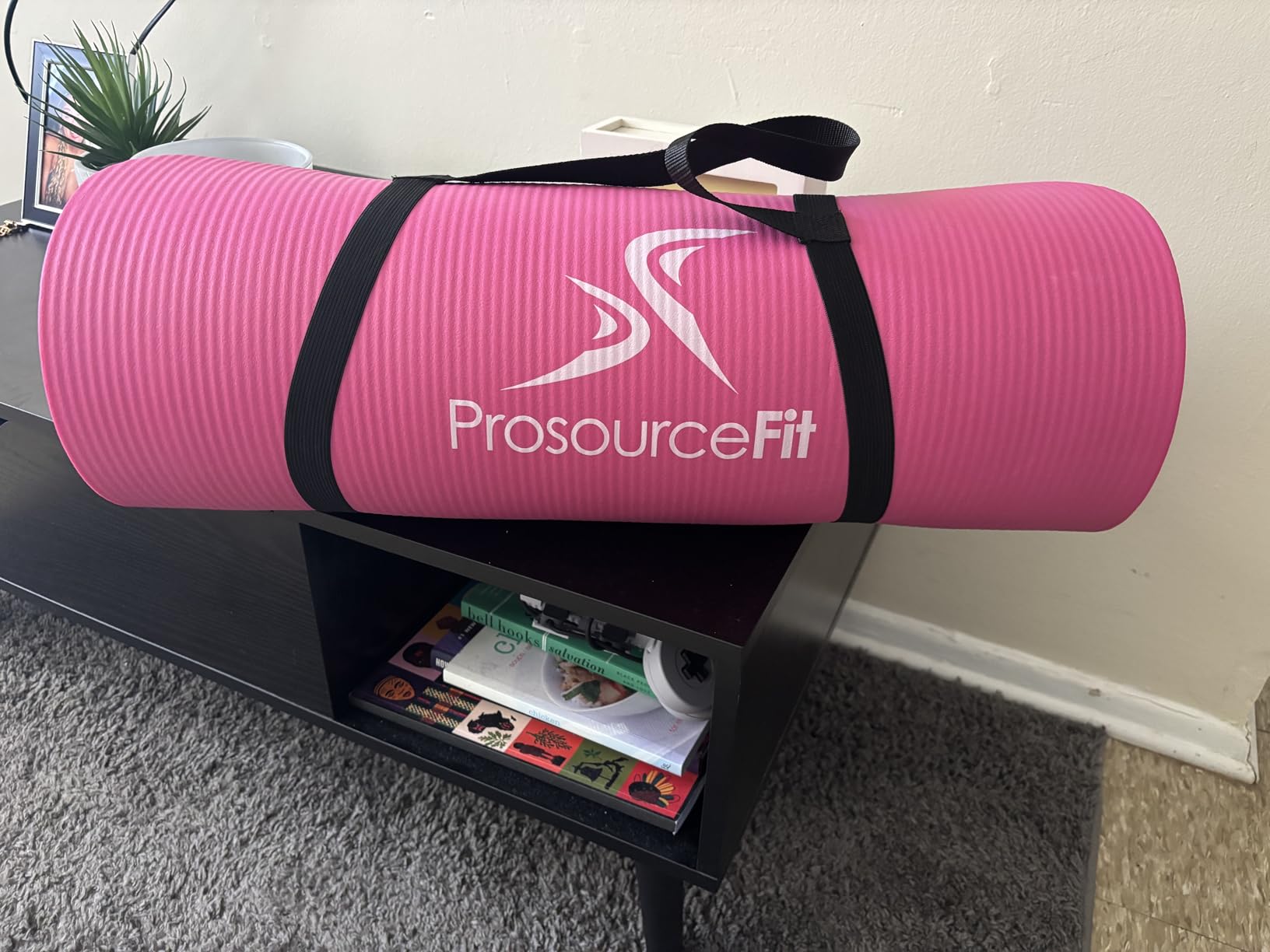
The limited lifetime warranty sets this mat apart from budget competitors. ProsourceFit stands behind their construction quality, and based on my testing, the foam density suggests it will hold up well over years of regular use.
The 4.5-pound weight is the main drawback. This is a mat designed for home use, not studio commuting. If you have a dedicated practice space, the weight is irrelevant and the density is worth every ounce.
Density and Long-Term Support
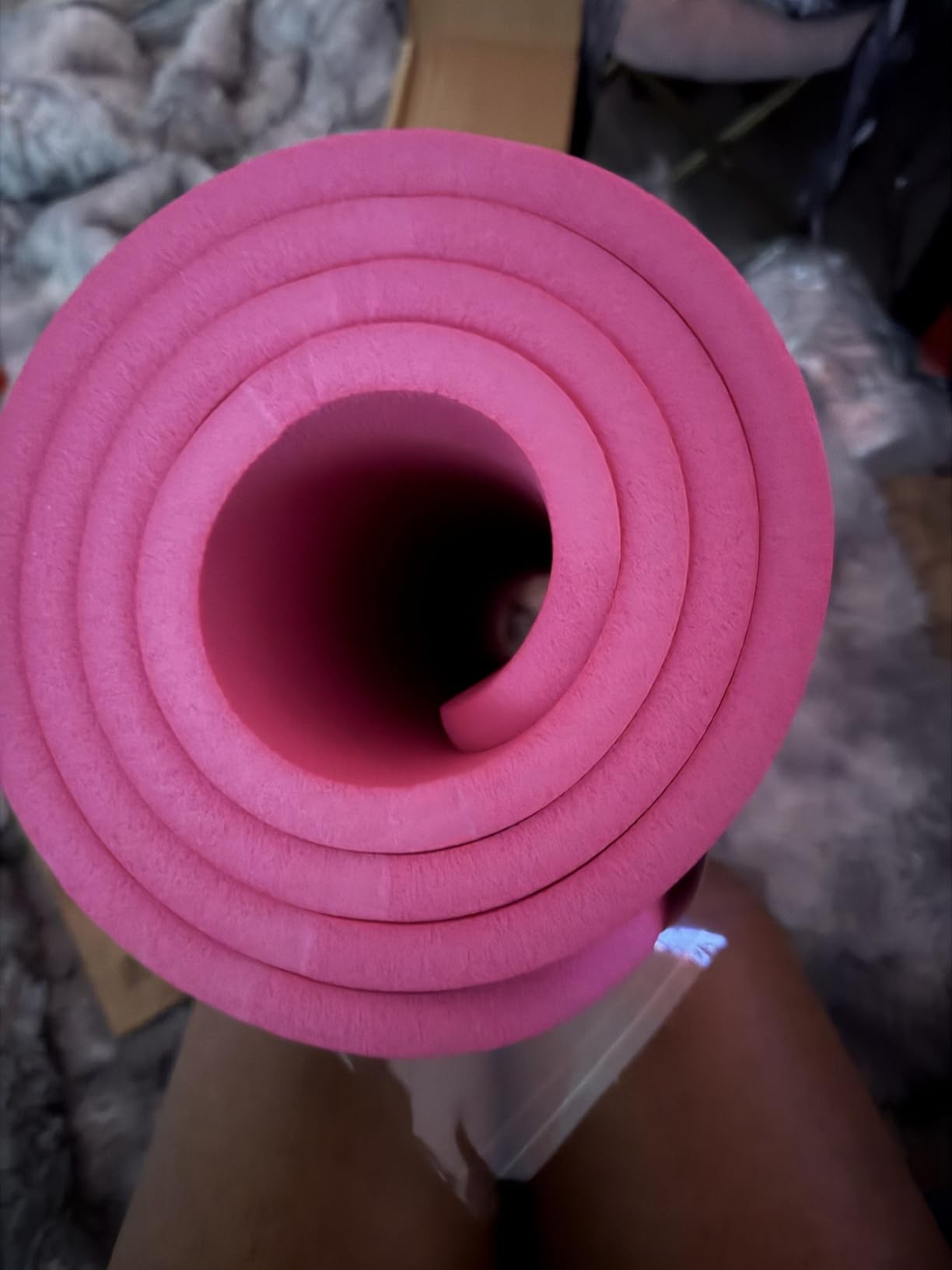
The ProsourceFit uses some of the densest NBR foam I have encountered in a yoga mat. This means it resists the gradual compression that plagues cheaper mats over time. After repeated use, the cushioning performance stays consistent rather than degrading in high-pressure spots.
For people recovering from knee injuries or dealing with chronic joint conditions, this consistency matters. You want a surface you can trust every single session, not one that slowly loses its protective qualities.
Ideal Practice Types
This mat is best suited for hatha yoga, restorative yoga, Pilates, and physical therapy routines. The dense cushioning makes floor-based work comfortable, and the ribbed grip handles dry conditions well. It is overkill for travel yoga and not ideal for hot yoga due to the NBR surface.
5. Gaiam Thick 10mm Yoga Mat — Beginner-Friendly Cushioning
Gaiam Essentials Thick Yoga Mat with Easy-Cinch Strap (Green, 10mm)
Thickness: 10mm (2/5 inch)
Size: 72 x 24 inch
Material: NBR foam
Weight: 2.8 lbs
Pros
- 10mm high-density NBR foam
- Reduces pressure on knees and joints
- Textured surface reduces slipping
- Low-odor construction
- Adjustable carrying strap
Cons
- Initial foam odor possible
- Hand wash only
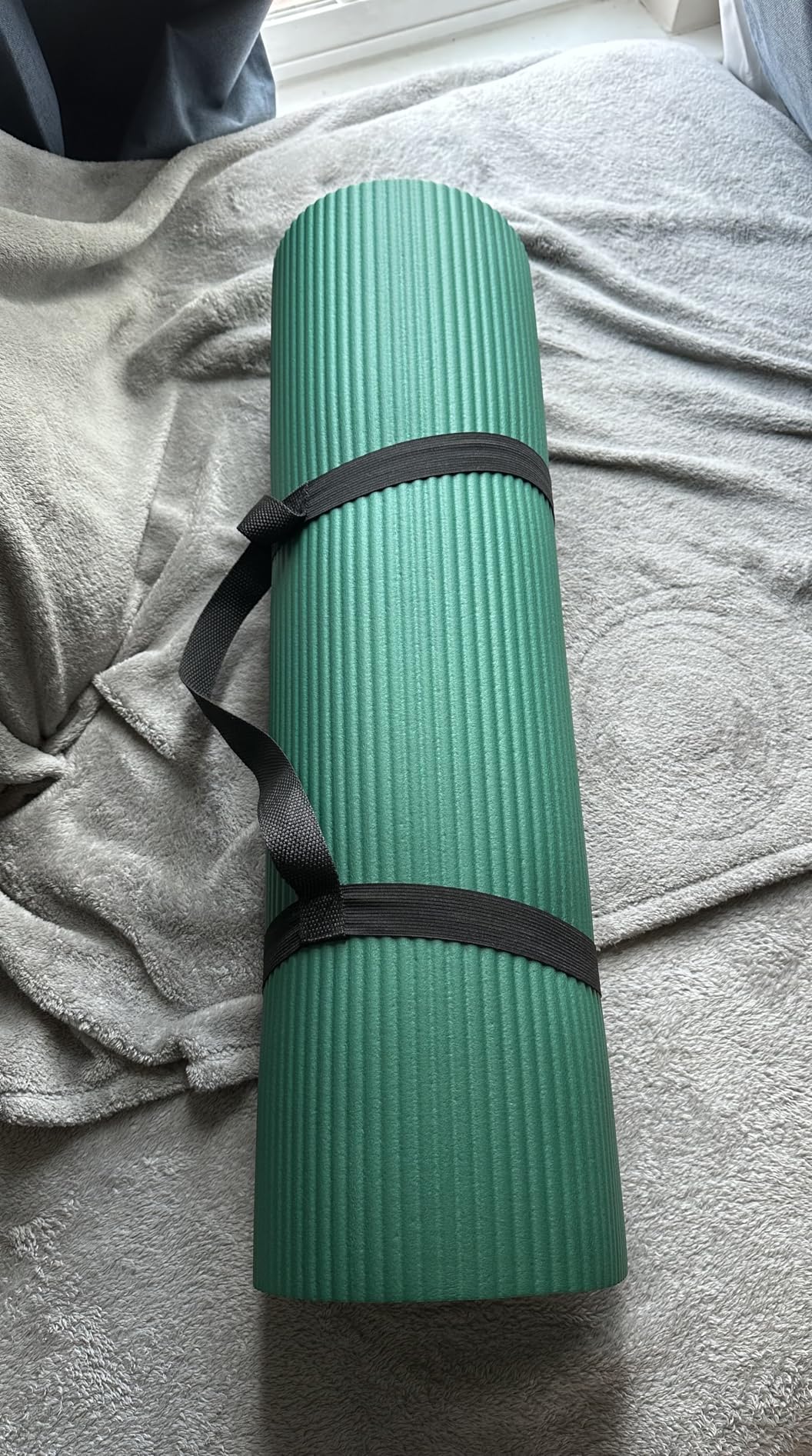
Gaiam is one of the most recognized names in yoga, and their thick 10mm mat brings beginner-friendly cushioning to the table. At 10mm, it sits between the standard 5mm studio mats and the 25mm ultra-thick options. I found this middle ground to be a sweet spot for practitioners who need knee support without completely losing floor connection.
The NBR foam has a plush quality that immediately feels comfortable underfoot. During a sequence of kneeling poses and tabletop work, my knees felt well-cushioned. The textured surface provided enough grip for standard hatha practice, though it is not designed for the demands of hot yoga.
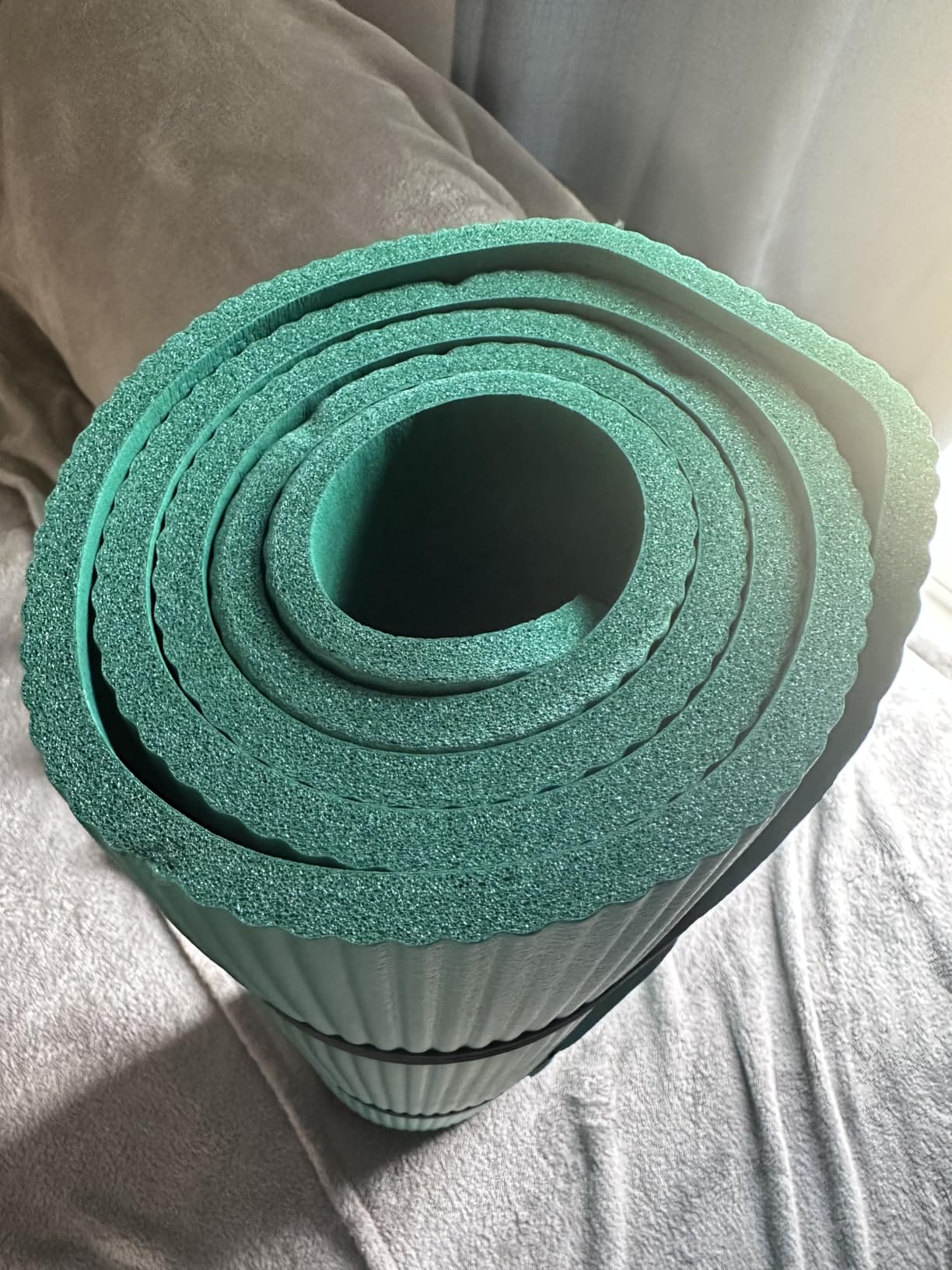
One thing I appreciate about Gaiam is the attention to low-odor construction. Many NBR foam mats have a strong chemical smell straight out of the package. The Gaiam had only a mild initial scent that faded within a day.
The adjustable carrying strap is a nice inclusion. It cinches tight to keep the rolled mat compact and is easy to sling over a shoulder for transport. At under three pounds, it is manageable for studio commutes.
Why 10mm Works for Many Practitioners
For many people with mild to moderate knee sensitivity, 10mm provides enough cushioning without the balance challenges of a full inch. You still feel connected to the floor in standing poses, but kneeling and seated positions become significantly more comfortable. This makes the Gaiam an excellent choice for beginners who are building strength and flexibility while protecting their joints.
The 10mm thickness is also a popular recommendation from physical therapists for gentle movement and recovery routines. It offers enough padding for floor exercises without being so thick that it interferes with balance and alignment work.
Care and Maintenance
The Gaiam requires hand washing only. A damp cloth with mild soap handles most cleaning needs. The NBR foam is naturally resistant to moisture absorption, so sweat does not penetrate deeply. Avoid submerging the mat or using harsh chemical cleaners, which can break down the foam over time.
6. Amazon Basics Extra Thick Exercise Yoga Mat
Amazon Basics 1/2 Inch Extra Thick Exercise Yoga Mat with Carrying Strap for Home Workouts and Fitness, 74″ x 24″, Black
Thickness: 1/2 inch
Size: 73.2 x 24.3 inch
Material: 100% NBR foam
Weight: 2.2 lbs
Pros
- Half-inch NBR foam cushioning
- Textured surface for traction
- Durable foam retains shape
- Elastic carrying strap included
- Easy wipe-clean surface
Cons
- Hand wash only
- Less dense than premium options
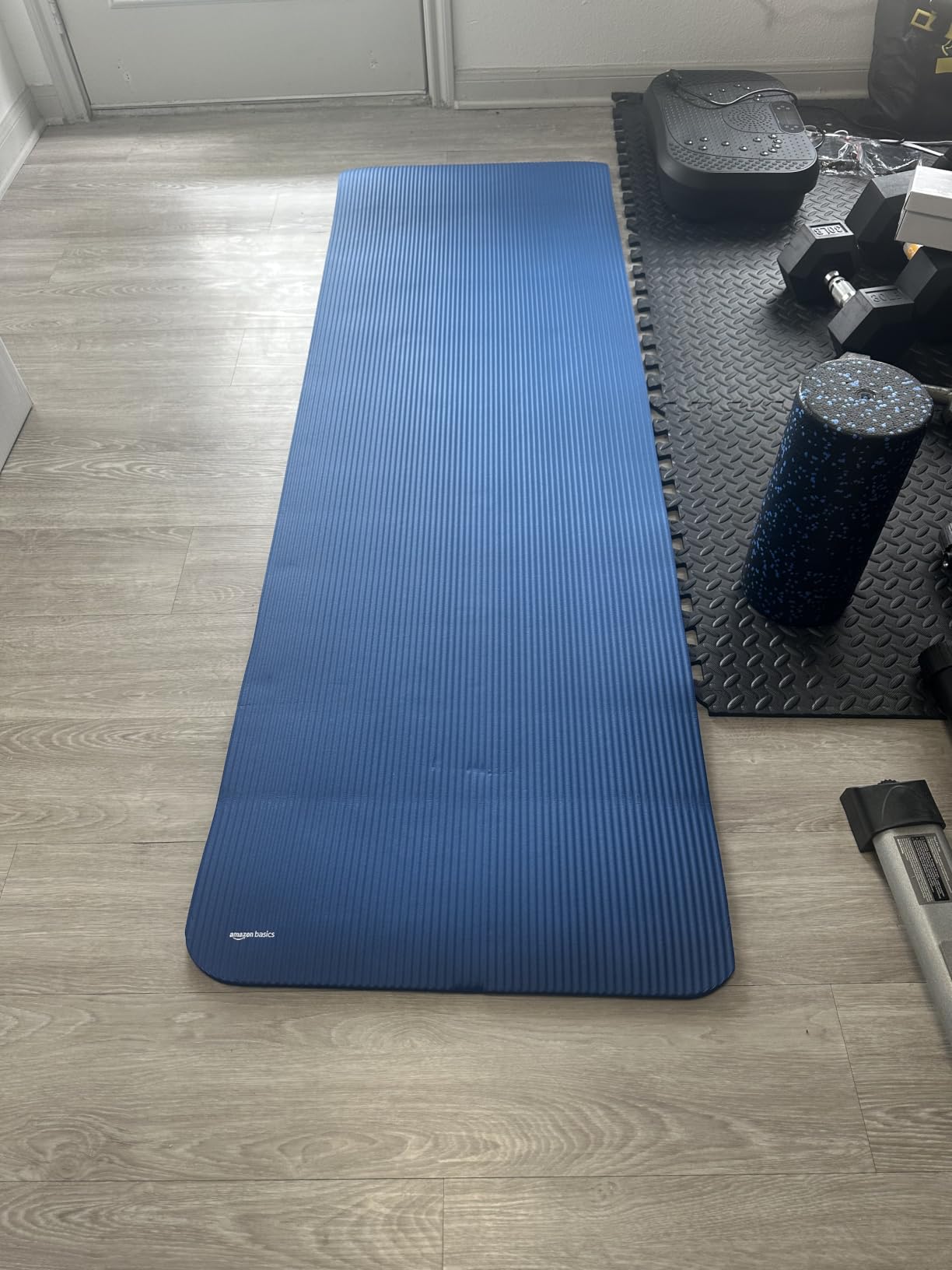
The Amazon Basics mat is one of the most popular yoga mats on the market, with over 69,000 reviews. At half an inch thick, it offers moderate cushioning that works for people with mild knee sensitivity. I found it adequate for gentle hatha and stretching but noticeable thinner than the 1-inch options for deep kneeling work.
The NBR foam construction gives it decent shock absorption. During a standard vinyasa flow, my knees felt protected during brief kneeling transitions. For longer-held poses like hero pose or extended tabletop, I could feel the floor more than I would with a thicker mat.
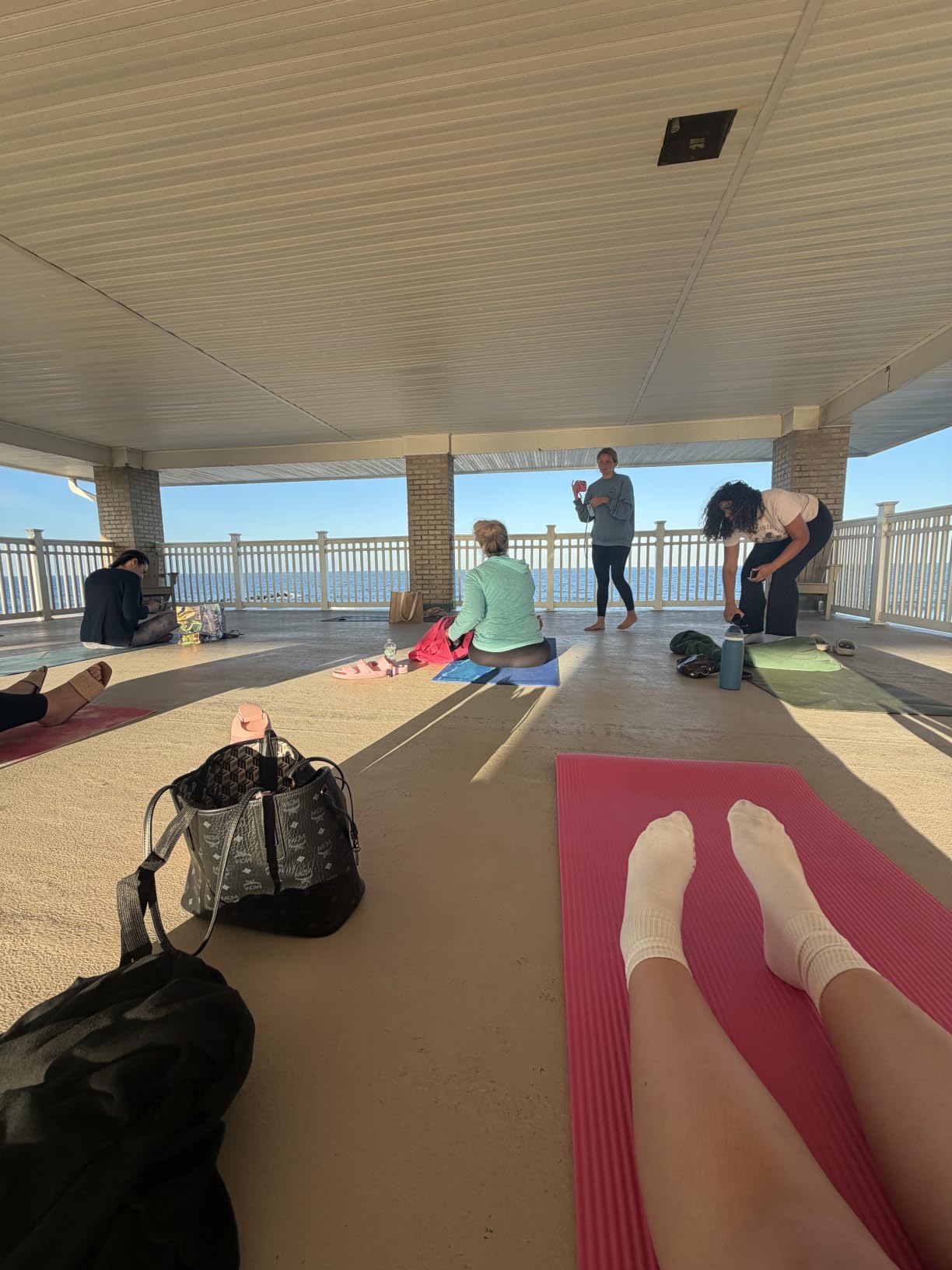
The textured surface provides reliable grip in dry conditions. The elastic carrying strap is simple but functional, keeping the mat rolled tightly for storage and transport. Cleanup is easy with a quick wipe down.
For the price, the Amazon Basics is hard to beat as an entry-level option. It is ideal for someone just starting yoga who wants more cushioning than a standard studio mat but is not ready to invest in a premium thick mat.
When This Mat Is Enough
If your knee pain is mild and primarily triggered by hard floors rather than underlying joint conditions, the half-inch Amazon Basics provides sufficient cushioning. It works well for beginners doing 20-30 minute sessions a few times per week. The price-to-cushioning ratio is excellent for casual practitioners.
It is also a solid backup mat. Many experienced yogis keep one of these as a spare for guests or travel, since it is inexpensive enough that loss or damage is not a major concern.
When to Upgrade
If you have arthritis, post-surgery recovery needs, or significant knee pain during specific poses, the half-inch thickness will likely fall short. In those cases, stepping up to a 1-inch mat like the BalanceFrom or Retrospec Solana provides a meaningful difference in joint comfort.
7. Fitvids 1/2-Inch Extra Thick Exercise Yoga Mat
Fitvids All Purpose 1/2-Inch Extra Thick High Density Anti-Tear Exercise Yoga Mat with Carrying Strap, Blue
Thickness: 1/2 inch
Size: 71 x 24 inch
Material: High-density foam
Weight: 1.8 lbs
Pros
- Half-inch high-density foam
- Double-sided anti-slip surface
- Moisture-resistant material
- Lightweight and portable
- Durable construction
Cons
- May be damaged by sharp objects
- Less cushioning than 1-inch options
The Fitvids mat brings half-inch high-density foam cushioning at a very accessible price. With over 94,000 reviews, it is one of the most purchased yoga mats available. I tested it for general practice and found the cushioning adequate for standard poses, though it is clearly positioned as a budget mid-thickness option rather than a specialized knee-protection mat.
The double-sided anti-slip surface performed well during dry practice sessions. The foam has a firm quality that resists compression better than I expected for the price range. During a sequence of lunges and warrior poses, the mat stayed planted and my feet maintained grip.
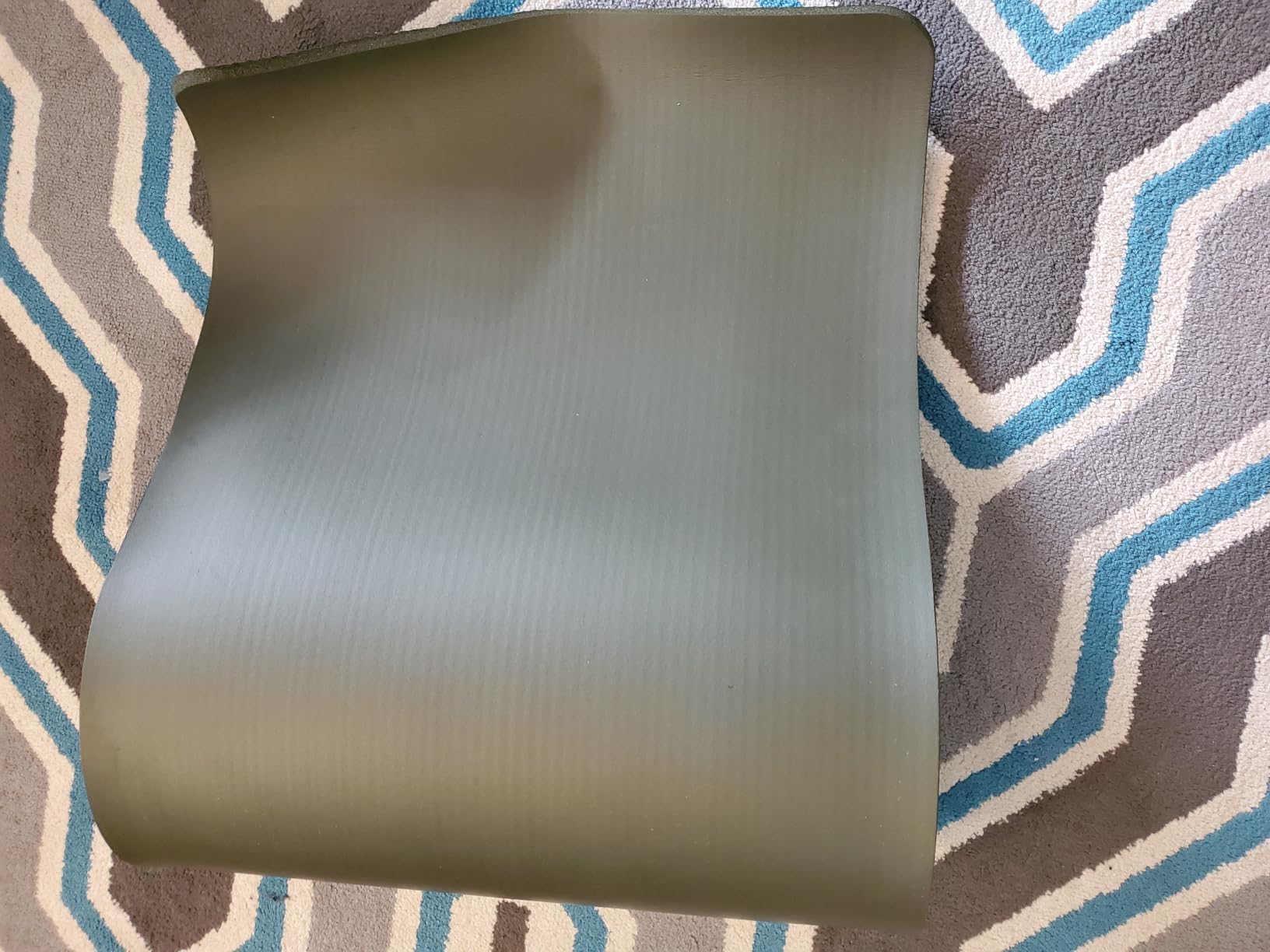
At just 1.8 pounds, this is one of the lightest mats in the lineup. It rolls up compactly with the included carrying strap, making it ideal for studio commutes or travel. The moisture-resistant surface wipes clean easily.
The main limitation for bad knees is the half-inch thickness. For mild knee discomfort, it works fine. For more significant joint issues, you will likely want something thicker. Some users note that the foam can be punctured by sharp objects or pet claws, so storage care is important.
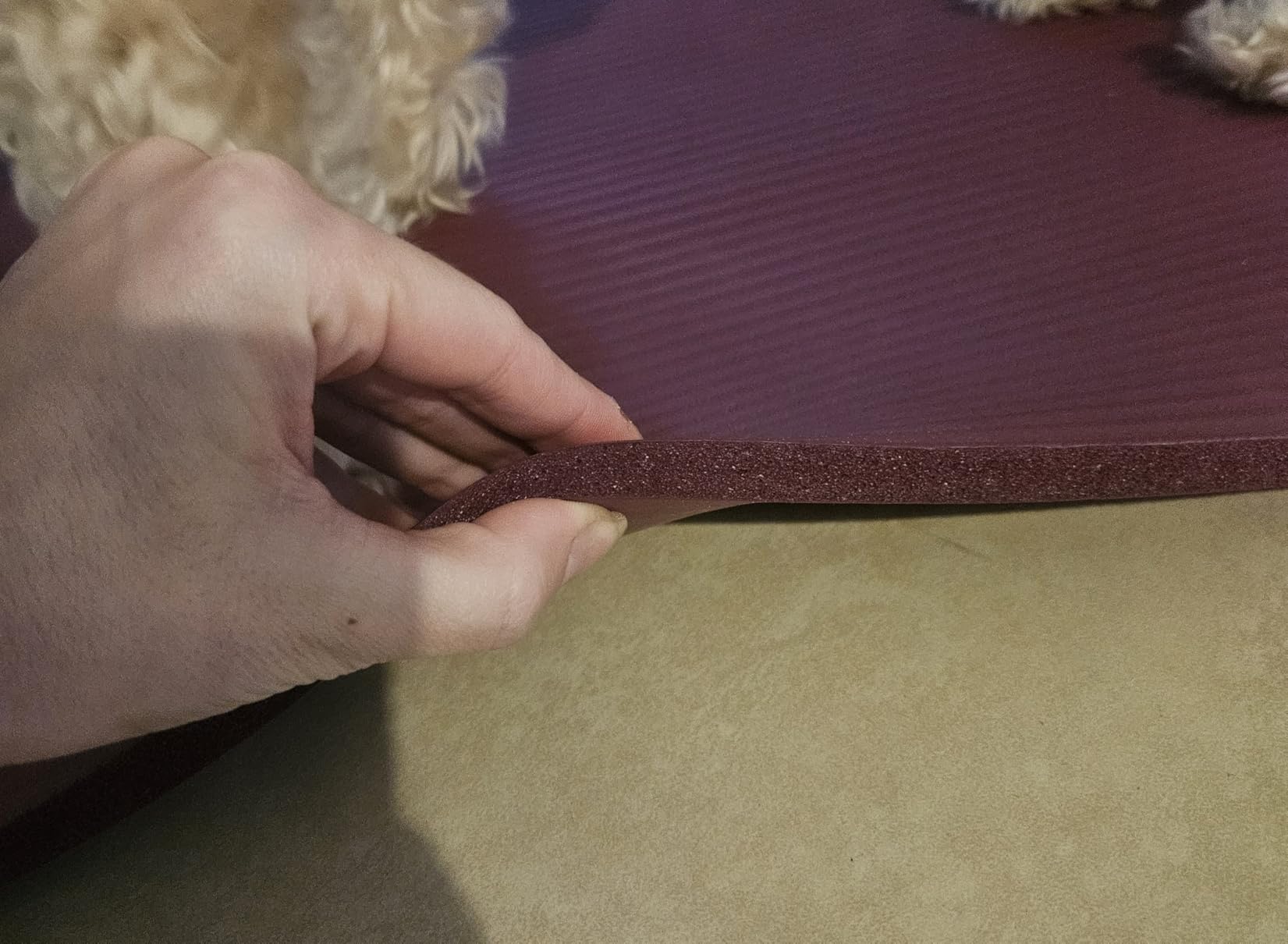
Value for Casual Practitioners
The Fitvids is an outstanding value for someone who practices yoga a few times per week and needs moderate cushioning. The combination of low price, decent foam density, and lightweight design makes it a practical everyday mat. It earns its massive review count through consistent quality at a budget price point.
For knee-specific needs, think of this as a baseline option. It is better than a standard thin studio mat, but not in the same league as the 1-inch thick options for serious joint protection.
Pairing With Knee Pads
If you already own this mat and need more knee protection, consider adding a yoga knee pad on top. Many forum users report success combining a thinner mat with a dedicated knee cushion for kneeling poses. This approach gives you portability for standing poses and targeted cushioning where you need it most.
8. Ewedoos Eco Friendly TPE Yoga Mat
Ewedoos Eco Friendly Yoga Mat Thick TPE Yoga Mat Non Slip Yoga Mats Anti-tear Exercise Workout Mat for Women Men Kids Yoga, Pilates and Fitness
Thickness: 1/4 inch (6mm)
Size: 72 x 24 inch
Material: TPE
Weight: Not specified
Pros
- SGS certified TPE material
- Free of PVC and latex
- Closed-cell moisture barrier
- Triple-layer tear resistance
- Non-slip dual texture
Cons
- Thinner at quarter inch
- Hand wash only
The Ewedoos mat shifts away from foam and into TPE territory. At a quarter inch thick, it is one of the thinner mats in this roundup, but the high-density TPE material offers a different kind of support. Rather than pure softness, TPE provides firm cushioning that distributes weight more evenly than standard foam.
I found the grip performance to be the standout feature. The textured top layer held my hands and feet securely during downward dog and plank, even as I started to sweat. The closed-cell surface prevents moisture from penetrating, which keeps the mat hygienic over time.
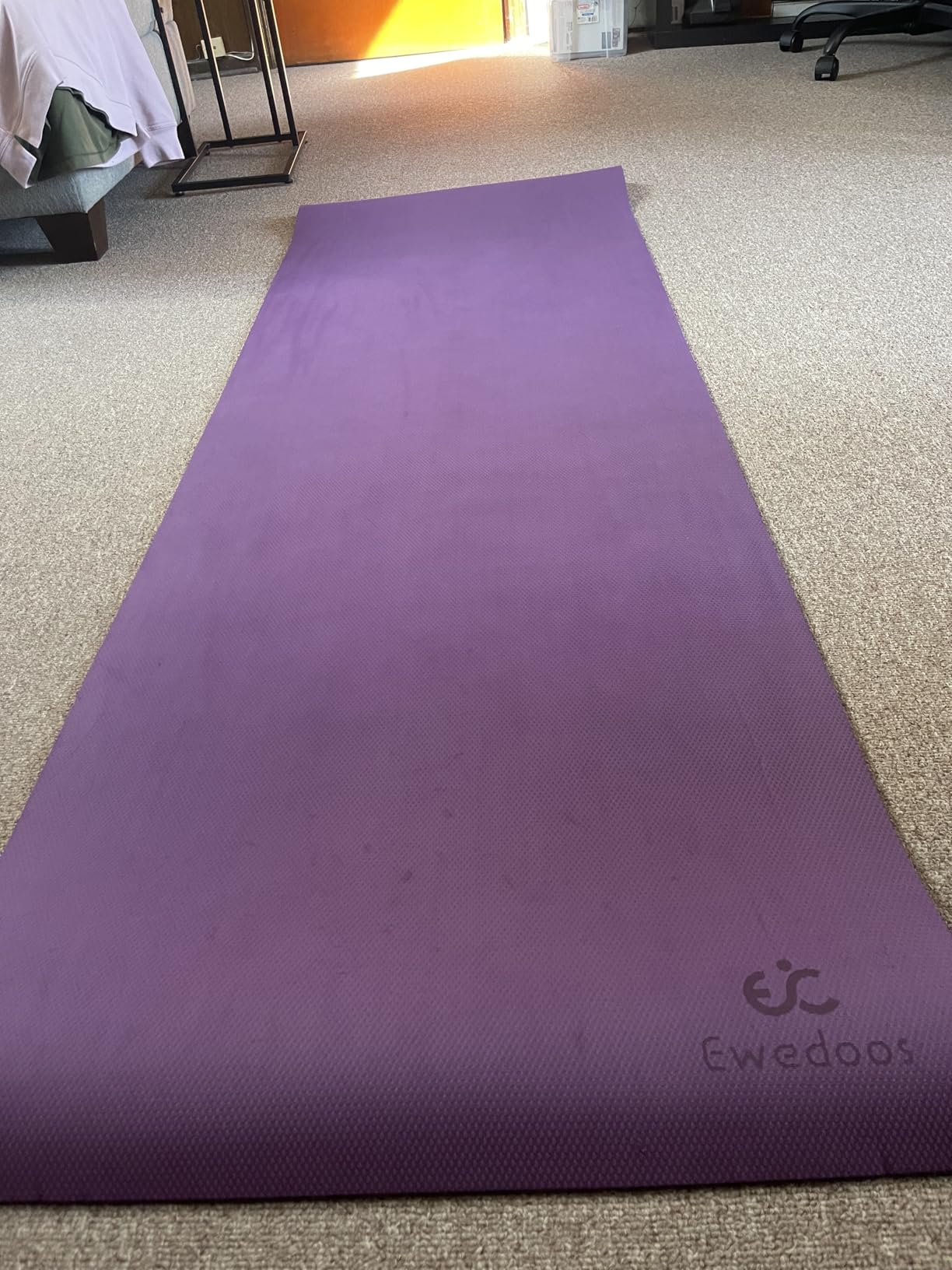
The triple-layer construction with a middle mesh layer adds genuine tear resistance. After weeks of use, I saw no signs of the surface breakdown that affects cheaper single-layer mats. The SGS certification confirms the material is free of harmful chemicals.
For bad knees, the quarter-inch thickness is a limitation. This mat works best for practitioners whose knee pain is manageable with moderate cushioning and who prioritize grip and eco-friendliness over maximum padding.
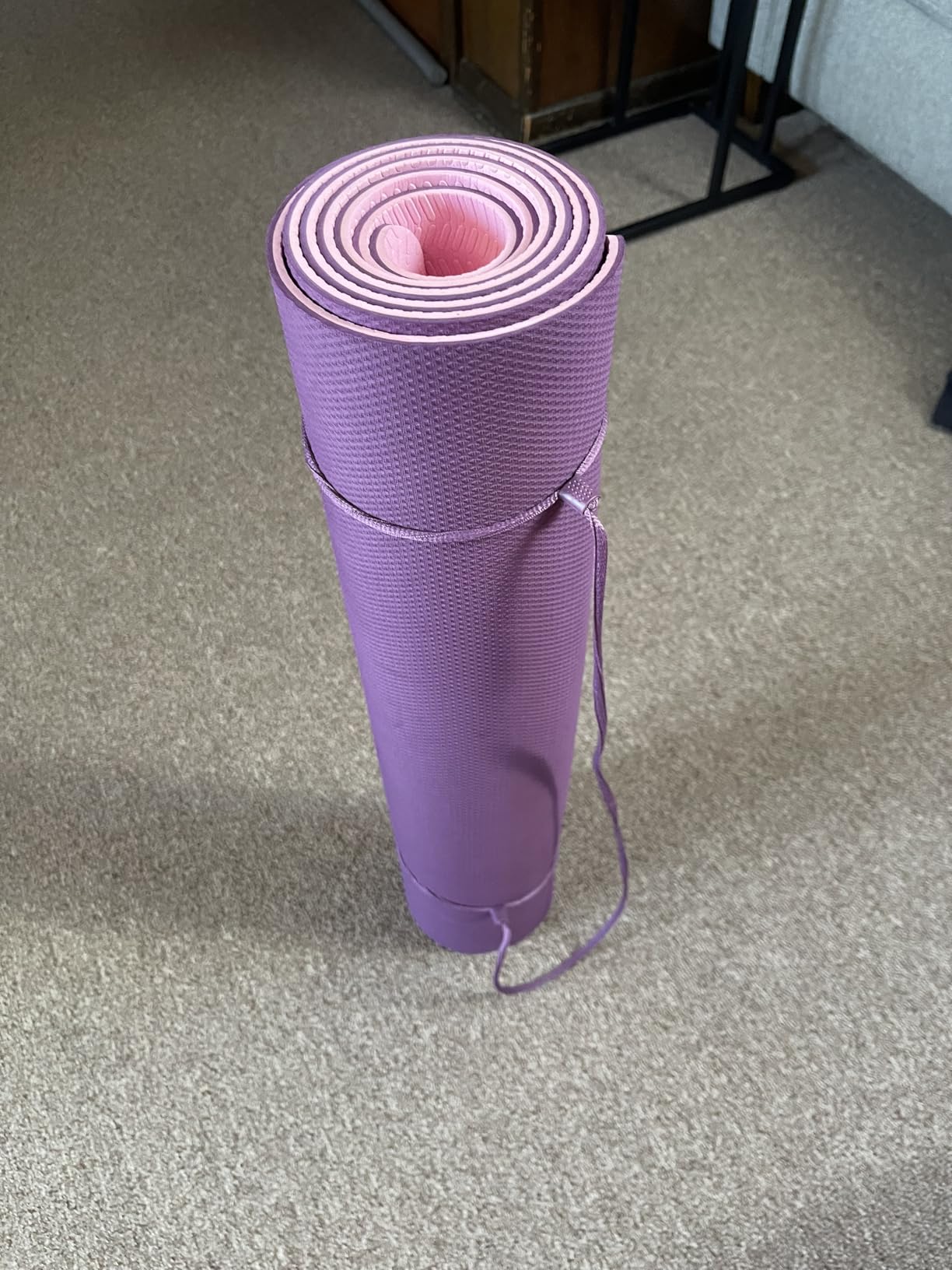
Eco-Friendly Material Benefits
TPE is a more environmentally responsible choice than PVC or NBR foam. It is recyclable, free of toxic plasticizers, and does not release harmful chemicals during manufacturing or disposal. If sustainability matters to you, the Ewedoos offers a cleaner material without the premium price of natural rubber.
The closed-cell construction also means the mat does not absorb sweat, bacteria, or odors. This extends the lifespan and keeps the surface hygienic for longer, which is a meaningful advantage for daily practitioners.
Grip Performance Details
The dual-texture design features a sticky top layer for body grip and a tire-patterned bottom for floor grip. In my testing, this combination kept the mat firmly planted on hardwood, tile, and low-pile carpet. For practitioners who prioritize stability during transitions, the Ewedoos delivers reliable traction.
9. Hatha Yoga Extra Thick 12mm TPE Mat
Hatha Yoga Extra Thick TPE Yoga Mat – 72″x 32″ Thickness 1/2 Inch -Eco Friendly SGS Certified – With High Density Anti-Tear Exercise Mats For Home Gym Travel & Floor Outside (Black)…
Thickness: 12mm (1/2 inch)
Size: 72 x 32 inch
Material: TPE
Weight: 4 lbs
Pros
- Extra thick 12mm cushioning
- Extra wide 32 inch design
- Double-sided non-slip texture
- Anti-tear construction
- Eco-friendly TPE material
Cons
- Spot clean only
- Avoid extended sun exposure
The Hatha Yoga mat combines 12mm of TPE cushioning with an extra-wide 32-inch design, making it one of the more generous mats in this lineup. The extra width was immediately noticeable during practice. I had room to spread out in wide-leg poses without worrying about sliding off the edge.
The 12mm thickness provides solid knee protection. During tabletop sequences and kneeling poses, I felt well-supported. The TPE material has a denser feel than foam, giving the cushioning a more supportive quality rather than just softness.
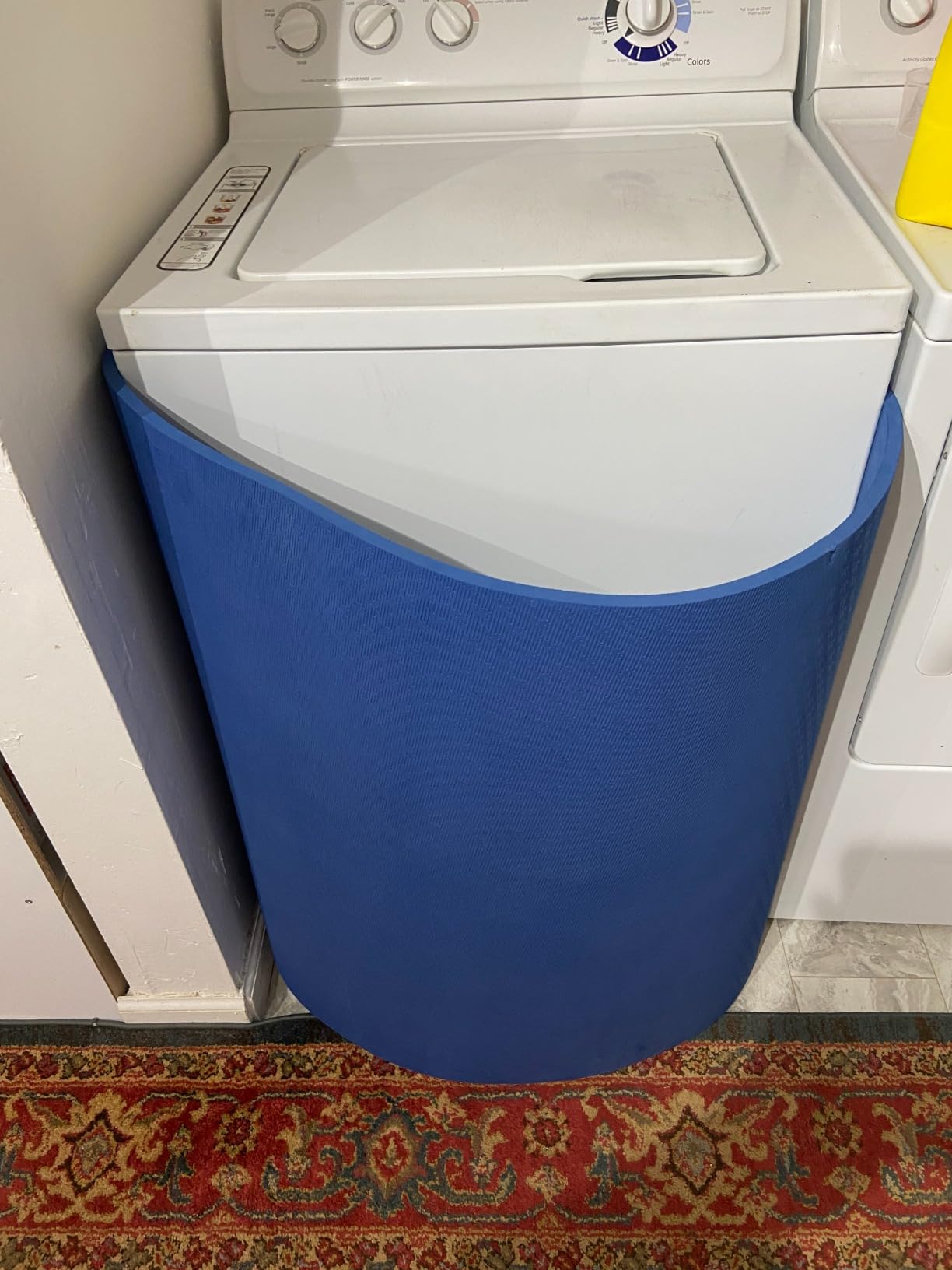
The double-sided non-slip texture performed well on multiple floor types. I tested it on hardwood, tile, and carpet with consistent results. The anti-tear construction held up to repeated rolling and unrolling without any visible wear.
At 4 pounds, it is on the heavier side, which reflects the extra material from the wider design and thicker construction. The spot-clean-only care instruction is a minor inconvenience but standard for TPE mats.
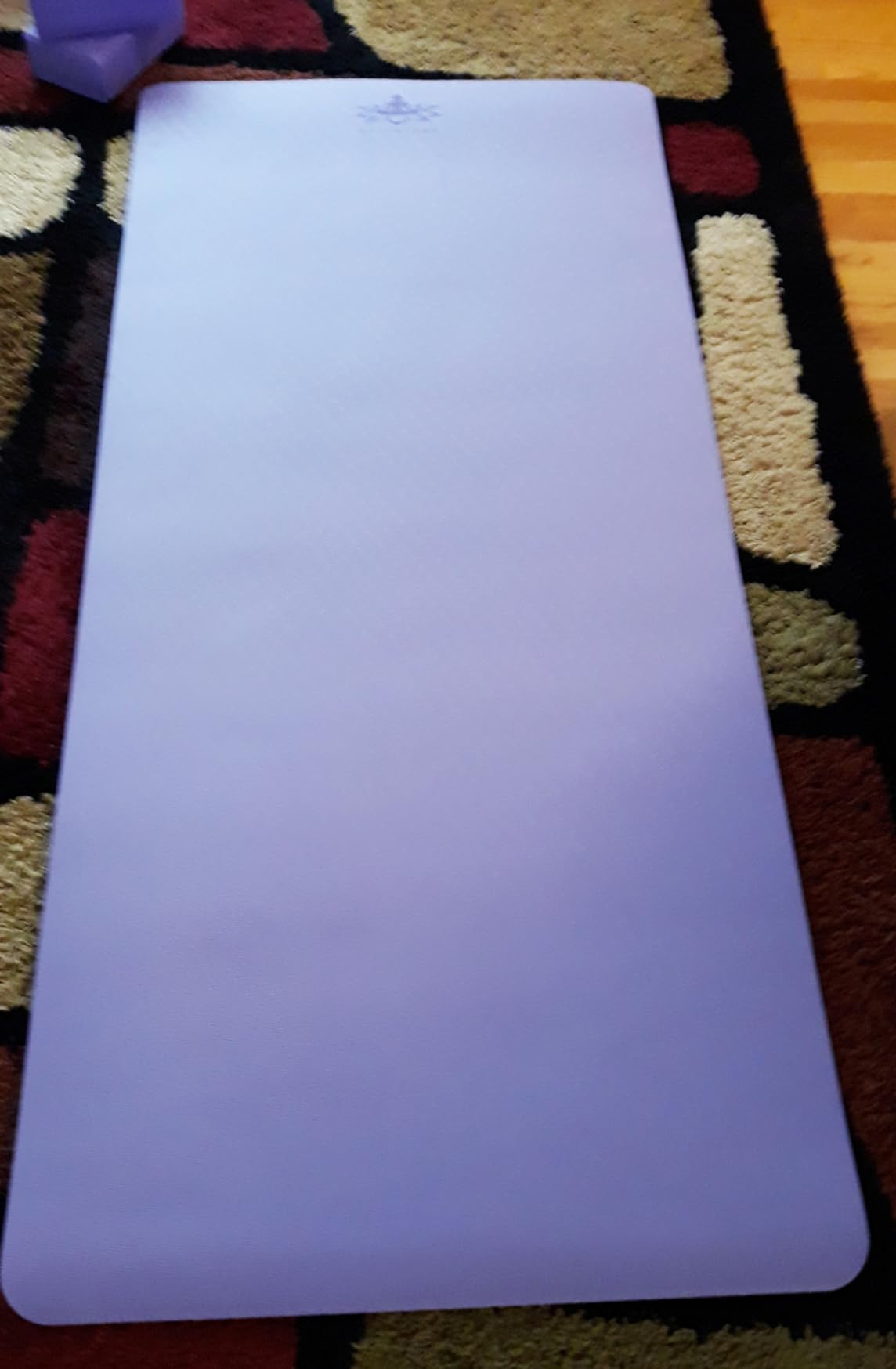
Extra Width Advantage
The 32-inch width is 33 percent wider than standard 24-inch mats. For larger practitioners or anyone who feels cramped on standard mats, this extra space transforms the practice experience. Wide stances, lateral stretches, and floor work all become more comfortable when you are not constantly adjusting to stay on the mat.
This extra width also means more cushioned surface area for your knees. You can shift positions without landing on an unprotected section of floor, which is particularly valuable during dynamic sequences.
Material Care Instructions
TPE material should be kept out of direct sunlight for extended periods, as UV exposure can degrade the material over time. Spot cleaning with a damp cloth and mild detergent is the recommended care method. Store the mat rolled rather than folded to prevent creasing.
10. JELS Extra Thick 10mm TPE Yoga Mat
JELS Extra Thick Yoga Mat, 2/5 inch, Ergonomic 3D Non Slip Design, SGS Certified TPE Material, Yoga Mat for Men Women with Carrying Strap,Exercises Mat for Yoga, Pilates and Floor Workout(72″x26″)
Thickness: 10mm (2/5 inch)
Size: 73 x 26 inch
Material: TPE
Weight: 2.9 lbs
Pros
- Extra thick 10mm cushioning
- 369 anti-slip modules
- SGS certified PVC-free TPE
- Free carry strap included
- 50% more cushioning than standard
Cons
- Limited long-term reviews
- Wider than standard at 26 inches
The JELS mat features a unique 3D non-slip design with 369 cushioning modules on the surface. This is not just a texture pattern but an engineered grip system. During my testing, the modules provided excellent traction for hands and feet, especially during poses where grip typically fails.
The 10mm thickness offers substantial knee protection. The TPE material claims 50 percent more cushioning than EVA, PVC, or NBR alternatives, and in practice, the mat felt dense and supportive. My knees stayed comfortable through extended floor sequences.
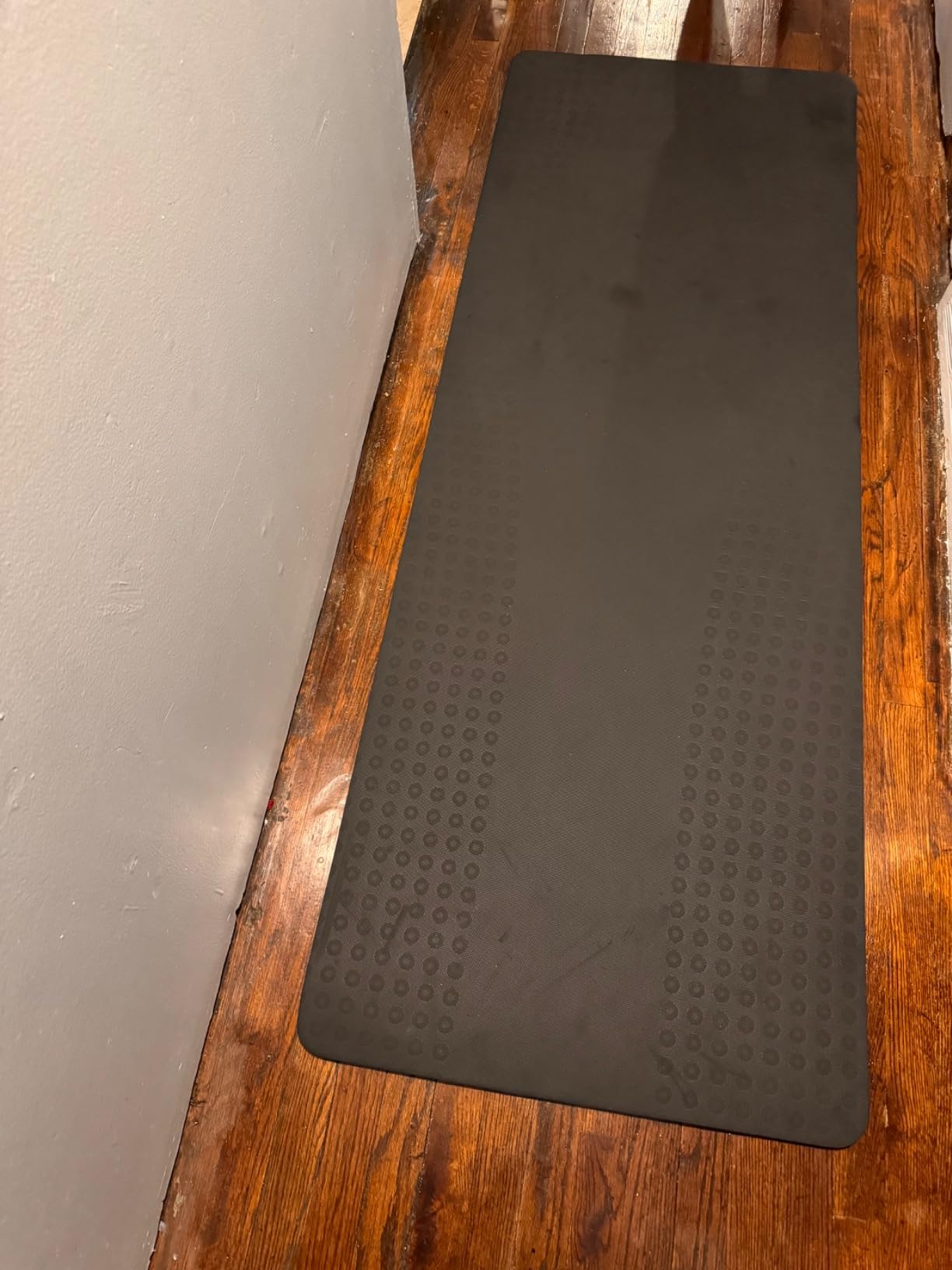
The SGS certification confirms the TPE is free of PVC and harmful chemicals. The mat arrived with minimal odor, which dissipated within hours of unrolling. The slightly wider 26-inch design gives a bit more room than standard mats without the bulk of a full 32-inch option.
The included carry strap and 30-day satisfaction guarantee add value. If the mat does not meet your expectations, JELS offers replacement or refund within the first month.
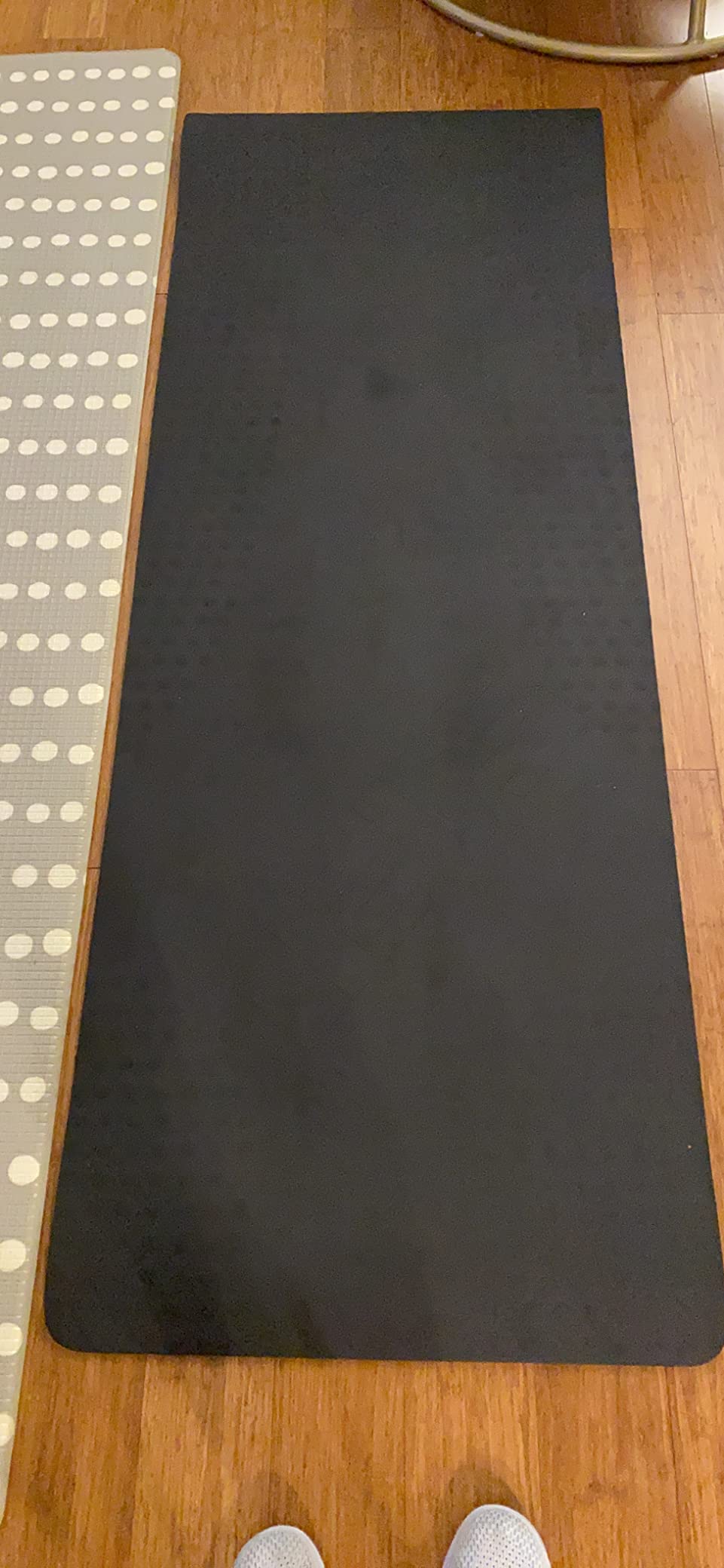
The 3D Anti-Slip System
The 369 cushioning modules on the surface are the defining feature of this mat. They create micro-pockets of grip that hold your skin even during sweaty practice. For practitioners who struggle with slipping on smooth mat surfaces, this design offers a meaningful solution.
The dot suction cup texture on the bottom provides floor grip. In testing, the mat stayed firmly planted on hardwood and tile without any drift during transitions or lateral movements.
Sizing for Different Body Types
The 73-inch length accommodates taller practitioners comfortably, and the 26-inch width provides a modest increase over standard 24-inch mats without adding excessive weight. This makes it a good middle-ground option for average to above-average height users who want a bit more surface area.
11. QMKGEC 8mm TPE Non-Slip Yoga Mat
Yoga Mat Thick 1/3″ 8mm High Density TPE Non Slip Exercise Mat for Home Gym, Large Portable Pilates Mat for Women Men, Blue
Thickness: 8mm (1/3 inch)
Size: 72 x 24 inch
Material: TPE
Weight: 2.2 lbs
Pros
- Eco-friendly odorless TPE
- 8mm thickness for beginners
- Double-sided non-slip texture
- Lightweight at 1 kg
- Versatile for multiple floor types
Cons
- May not lay flat initially
- Grip insufficient for some poses
The QMKGEC mat hits a middle ground with 8mm thickness, which the brand positions as ideal for yoga beginners. I found this accurate. The 8mm provides noticeable cushioning for kneeling poses without the balance challenges of thicker mats. It is a comfortable entry point for someone transitioning from a thin studio mat.
The TPE material is odorless and recyclable, which is a plus for eco-conscious practitioners. The double-sided adhesive texture provides grip on both sides, and the mat works well on wood, tile, and cement floors.
At just 1 kilogram, this is one of the lightest mats in the roundup. It rolls compactly and the included carrying strap makes transport effortless. For someone who walks or bikes to a studio, the weight savings are meaningful.
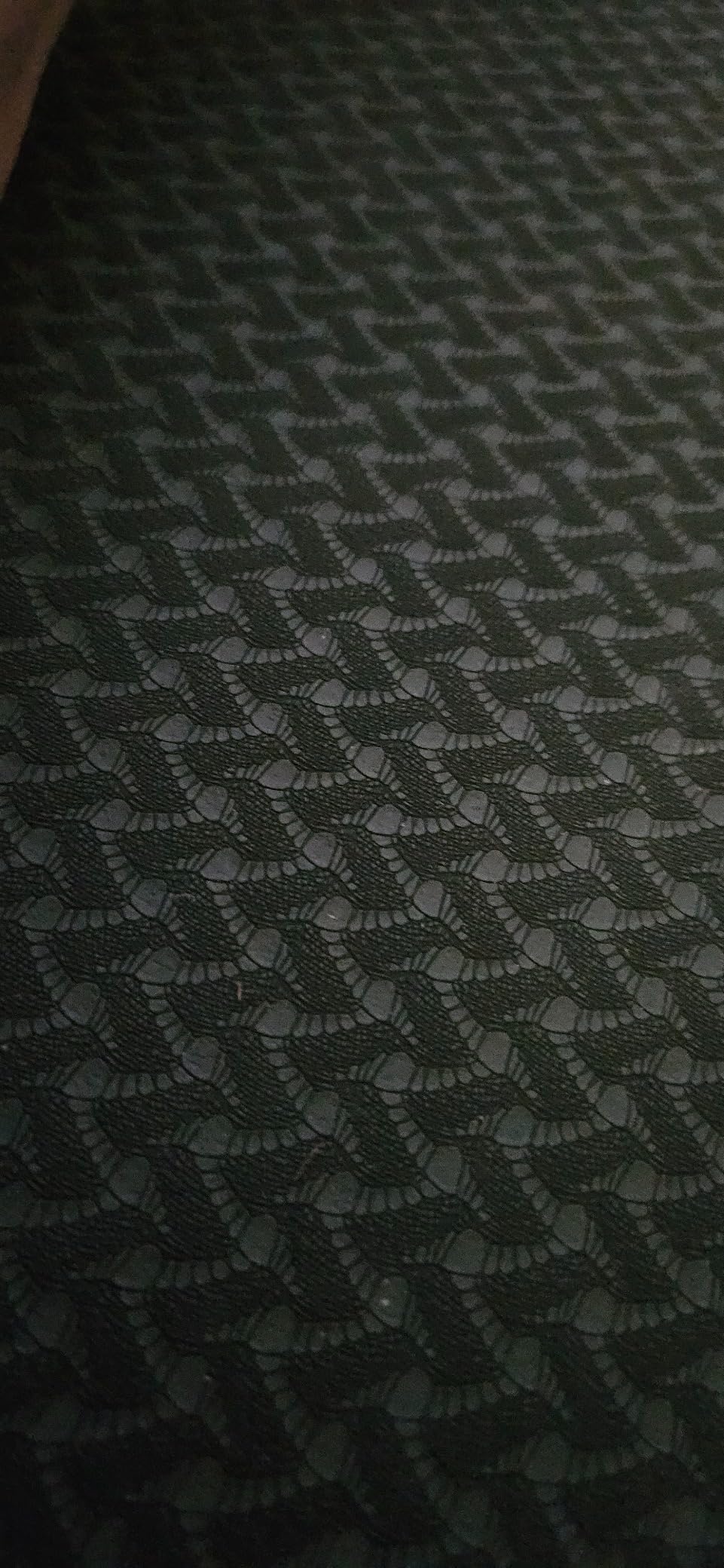
The main issue I encountered is that the mat did not lay completely flat right out of the package. It took a couple of days of being weighted down to relax into a flat position. Some users also report that the tactile traction is insufficient for certain poses, particularly during sweaty practice.
8mm as a Balanced Choice
For many practitioners, 8mm represents a balanced thickness that offers more joint protection than a standard mat without going to extremes. It cushions adequately for most kneeling poses while maintaining enough floor connection for standing balance work. This makes it a versatile option for mixed-style practices.
If your knee pain is moderate rather than severe, 8mm may be all you need. It is a popular recommendation for beginners who are still building the strength and stability needed for more advanced poses.
Floor Compatibility
The QMKGEC is designed to work across multiple floor types. I tested it on hardwood, tile, and low-pile carpet with good results on all three. The double-layer tear resistance adds durability, and the closed-cell TPE prevents sweat from soaking into the material.
12. Karma Fitness Large Extra Thick 10mm Workout Mat
Large Workout Mat – 10mm Extra Thick Exercise Mat & Wide Yoga Mat, 72″x32″
Thickness: 10mm
Size: 72 x 32 inch
Material: TPE
Weight: 4 lbs
Pros
- Extra wide 32 inch design
- 10mm thick cushioning
- Double-layered TPE
- Diamond textured grip
- Free carry bag included
Cons
- Larger and heavier
- May show marks easily
- Product images may mislead on size
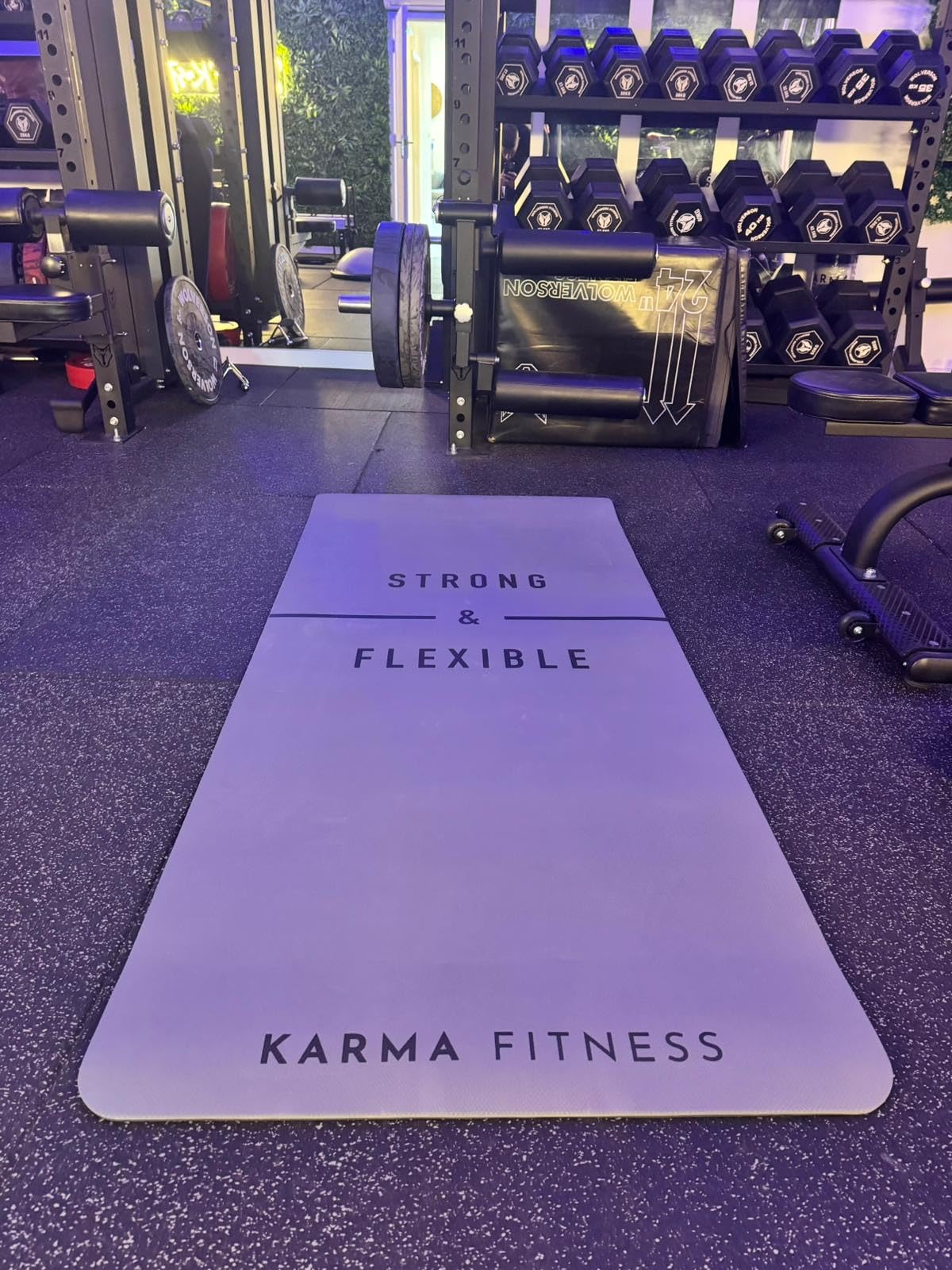
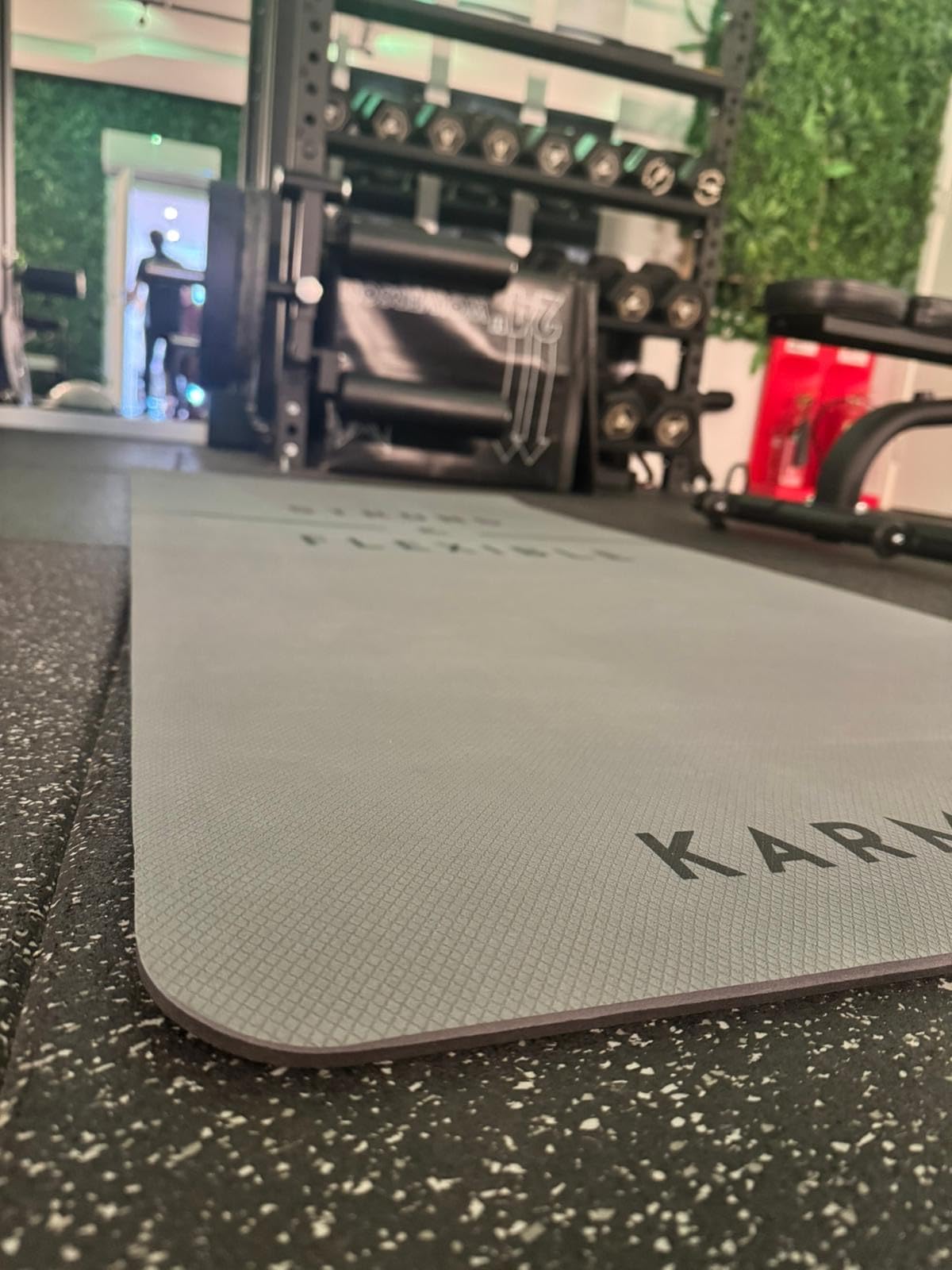
The Karma Fitness mat pairs 10mm thickness with a generous 32-inch width, making it one of the most spacious options in this roundup. The extra room was a game-changer during wide-stance poses and floor work. I never had to worry about positioning myself near the edge.
The double-layered TPE construction provides firm, supportive cushioning. During kneeling sequences, the mat absorbed pressure without compressing to the floor. The diamond textured grip on both sides kept the mat planted during transitions and held my hands and feet securely.
The free carry bag with shoulder strap is a nice inclusion that makes transport easier despite the larger size. The bag has a structured design that protects the mat during transit.
The main trade-off is size and weight. At 4 pounds with extra dimensions, this is not a mat you toss in a tote. It is designed for home practice or car-transported studio sessions. Some users also note that the surface can show marks after use, though this does not affect performance.
Extra Wide Benefits for Knee Work
The 32-inch width means 33 percent more surface area than standard mats. For knee-intensive practices, this translates to more cushioned space for positioning. You can shift between poses without landing on bare floor, and wide kneeling positions stay fully supported.
Taller practitioners and larger body types benefit significantly from the extra width. The standard 24-inch width can feel restrictive for broader frames, and the Karma Fitness eliminates that constraint.
Home Gym Versatility
Beyond yoga, this mat works well for Pilates, HIIT, and general floor exercises. The 10mm cushioning provides enough padding for floor-based strength work, and the non-slip grip handles dynamic movements. If you want a single mat for multiple workout types, the Karma Fitness is a strong all-around choice.
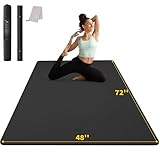
13. CAMBIVO 72 x 48 Large Workout Mat
CAMBIVO 72”x48” Large Yoga Mat, Extra Thick TPE Workout Mat, Black, 12mm
Thickness: 6mm-12mm options
Size: 72 x 48 inch
Material: TPE
Weight: 5 lbs
Pros
- Extra large 72 x 48 inch size
- Multiple thickness options
- Noise reduction properties
- Reinforced non-slip underside
- Includes straps and towel
Cons
- Not for use with shoes
- Pet claws can damage surface
- Color may transfer
The CAMBIVO large mat is the biggest option in our roundup at 72 x 48 inches. This is not just a yoga mat but a full workout surface. The extra width and length provide complete coverage for any practice style, and you can choose from 6mm, 8mm, 10mm, or 12mm thickness options depending on your knee support needs.
I tested the 10mm version and found the cushioning excellent for knee-intensive work. The high-density TPE absorbs impact effectively, and the reinforced wavy underside kept the mat firmly planted on hardwood throughout my entire practice.
The noise reduction properties are a genuine benefit for apartment dwellers. The dense TPE material dampens sound from movements, making early morning or late evening practice much less disruptive to neighbors below.
The bundle includes storage straps and a microfiber towel for sweat management. The towel is a thoughtful addition that pairs well with the barefoot-only design of this mat.
Apartment-Friendly Design
For anyone practicing in an apartment, the CAMBIVO solves multiple problems at once. The large size covers enough floor area that you do not need to worry about positioning. The thickness options let you customize cushioning for your specific knee needs. And the acoustic insulation properties reduce noise transmission significantly.
The 12mm option is particularly well-suited for maximum knee protection during floor-based physical therapy exercises. If you are recovering from injury or dealing with significant joint pain, the thickest option provides hospital-grade cushioning in a home-use format.
Barefoot Practice Only
This mat is designed for barefoot use only. Athletic shoes and heavy gym equipment can damage the TPE surface. If your routine includes shoe-based exercises, you will need a different surface for those activities. For dedicated barefoot yoga, Pilates, and stretching, the CAMBIVO excels.
14. CAMBIVO Extra Wide 6mm TPE Yoga Mat
CAMBIVO Extra Wide Yoga Mat 72”x32”, 6mm TPE Non Slip, Dark Black
Thickness: 6mm (1/4 inch)
Size: 72 x 32 inch
Material: TPE
Weight: 2.5 lbs
Pros
- Extra wide 32 inch design
- 6mm joint-friendly cushioning
- Dual-layer TPE construction
- Lightweight at 2.5 lbs
- Carry strap included
Cons
- May show stains easily
- Not ideal for hot yoga
- Wider than standard storage
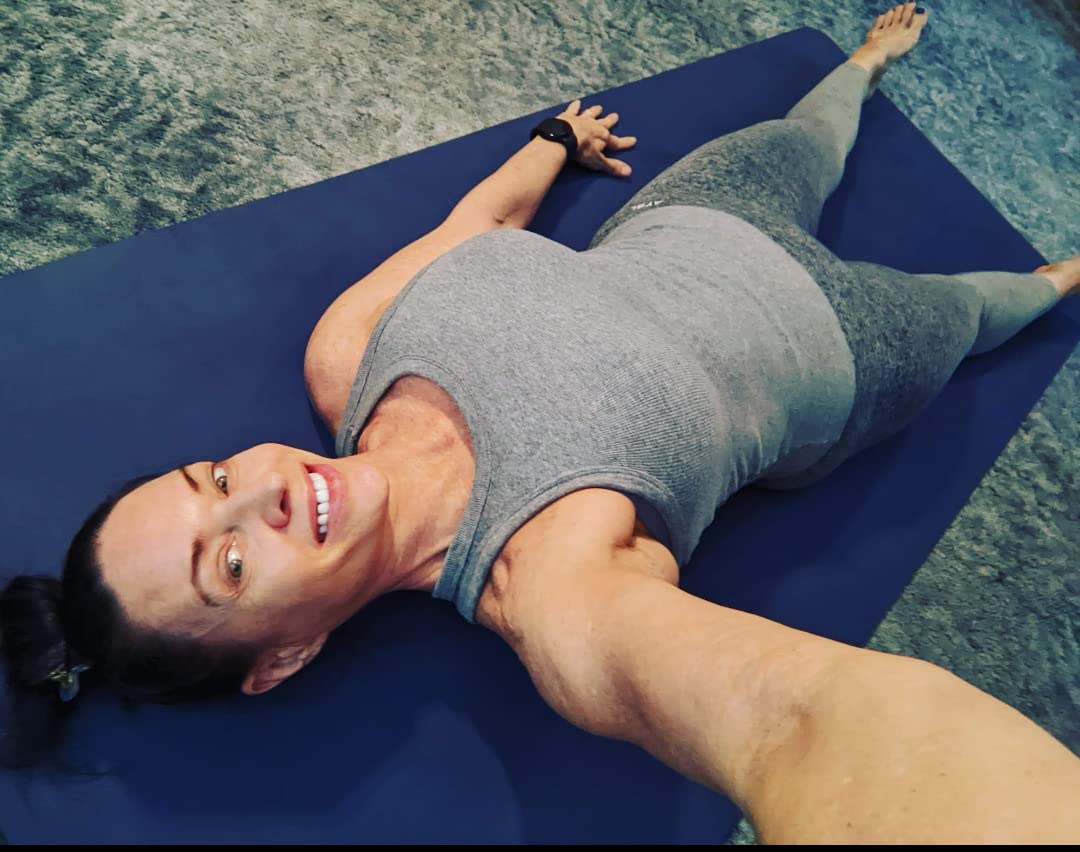
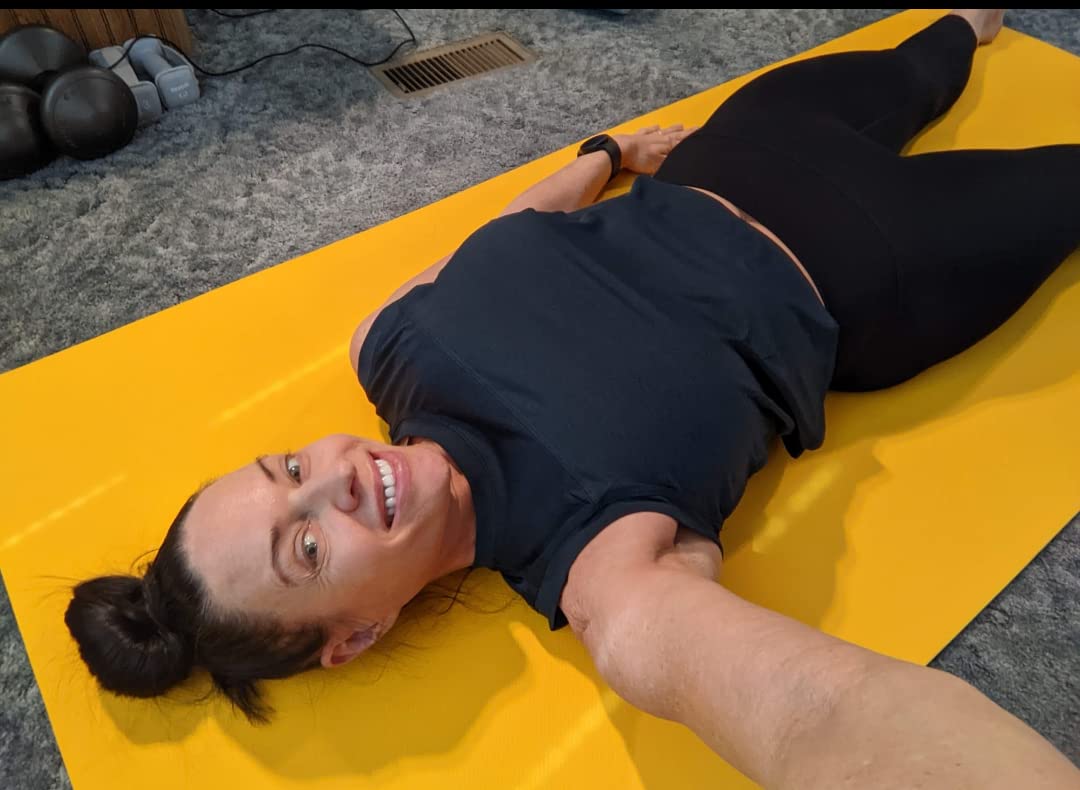
The CAMBIVO Extra Wide mat offers 6mm of TPE cushioning in a 32-inch wide format. This is a lighter, more portable option than the larger 48-inch CAMBIVO while still providing extra width for comfortable practice. The 6mm thickness offers moderate knee support suitable for practitioners with mild to moderate joint sensitivity.
The dual-layer TPE construction provides a firm, supportive surface. During my testing, kneeling poses felt adequately cushioned, though not as plush as the 10mm or 12mm options. The subtly textured top layer provided reliable grip for hands and feet in dry conditions.
At just 2.5 pounds, this is one of the lightest extra-wide mats available. The included carry strap makes it practical for studio commutes despite the larger footprint. The TPE material has only a light scent and is free from the harsh chemical smell common with PVC mats.
The extra width is the primary selling point. For practitioners who feel constrained on standard 24-inch mats, the additional 8 inches make a noticeable difference in comfort and freedom of movement.
Width vs Thickness Trade-off
Choosing between this 6mm wide mat and a thicker 10mm standard-width mat depends on your priorities. If knee pain is your primary concern and you practice in a compact space, a thicker standard mat may serve you better. If you value having more room to move and your knee sensitivity is moderate, the extra width of the CAMBIVO adds meaningful comfort.
For many practitioners, the combination of 6mm cushioning and 32-inch width hits a practical sweet spot. You get enough padding for joint comfort and enough space to move freely without the bulk of thicker, wider alternatives.
Surface Maintenance
The TPE surface can show stains and smudges over time, particularly on lighter colors. Regular wiping with a damp towel after use helps maintain appearance. The closed-cell construction prevents sweat from penetrating, so hygiene is not a concern even if the surface shows cosmetic wear.
15. IUGA Non-Slip TPE Yoga Mat
IUGA Yoga Mat Thick Non Slip Anti-tear Pilates Mat Eco Friendly Hot Yoga Mats for Workout & Exercise(72″x 24″x 6mm)
Thickness: 6mm (1/4 inch)
Size: 72 x 24 inch
Material: TPE
Weight: 2.1 lbs
Pros
- Double-sided grippy surface
- Middle-layer mesh for durability
- SGS-certified eco-friendly TPE
- Lightweight at 2 lbs
- Free carrying strap
Cons
- Slippery when wet
- May melt in hot car
- Crooked cut reported by some
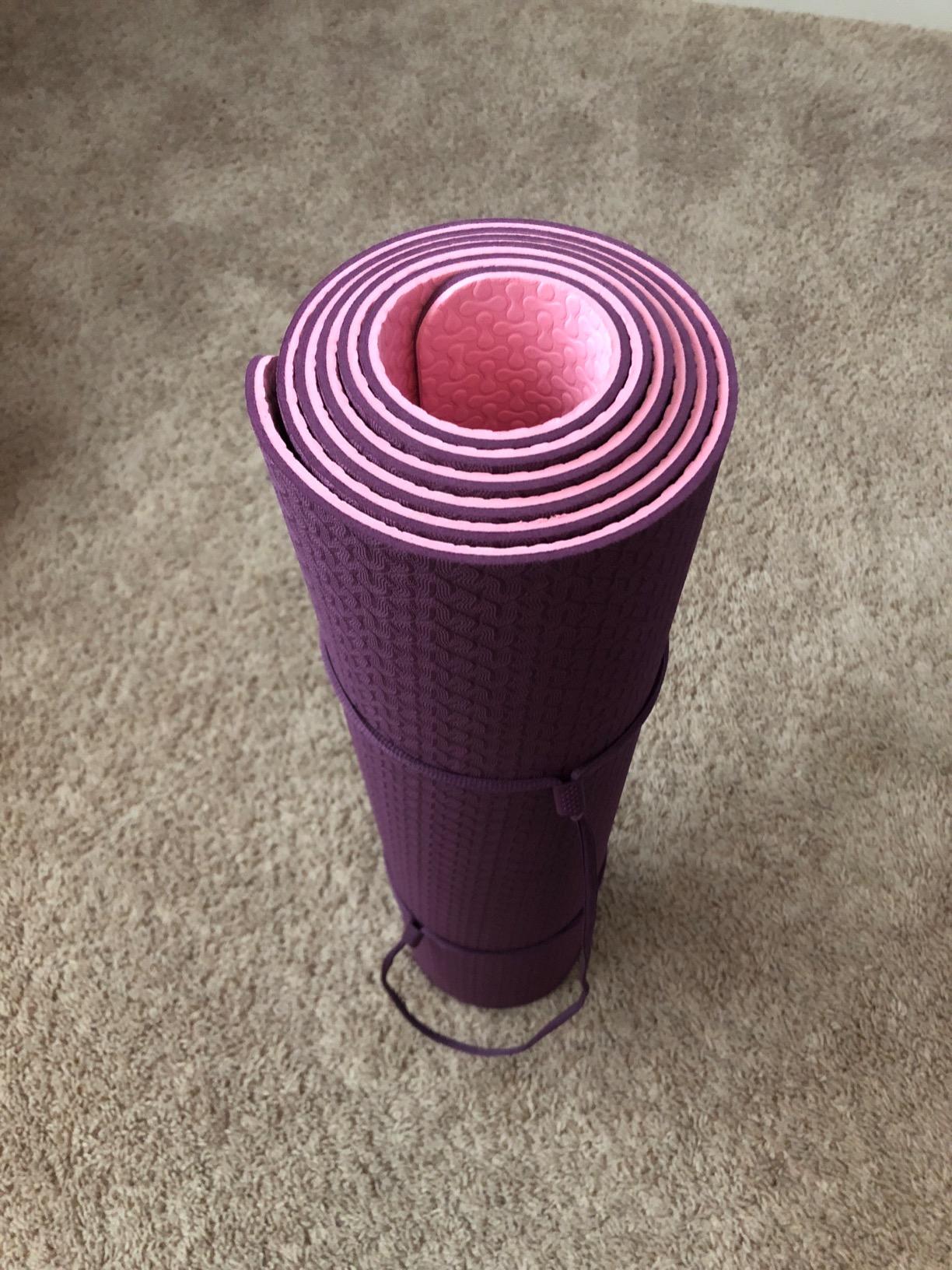
The IUGA mat closes out our roundup with a solid 6mm TPE design that emphasizes grip and durability. The double-sided grippy surface uses a textured top to prevent foot slippage and a unique bone-pattern underside to keep the mat firmly planted on the floor.
The middle-layer mesh is a standout construction feature. It adds tear resistance that extends the mat’s lifespan beyond what you get from single-layer TPE mats. After weeks of use, I saw no signs of the surface degradation that affects cheaper alternatives.
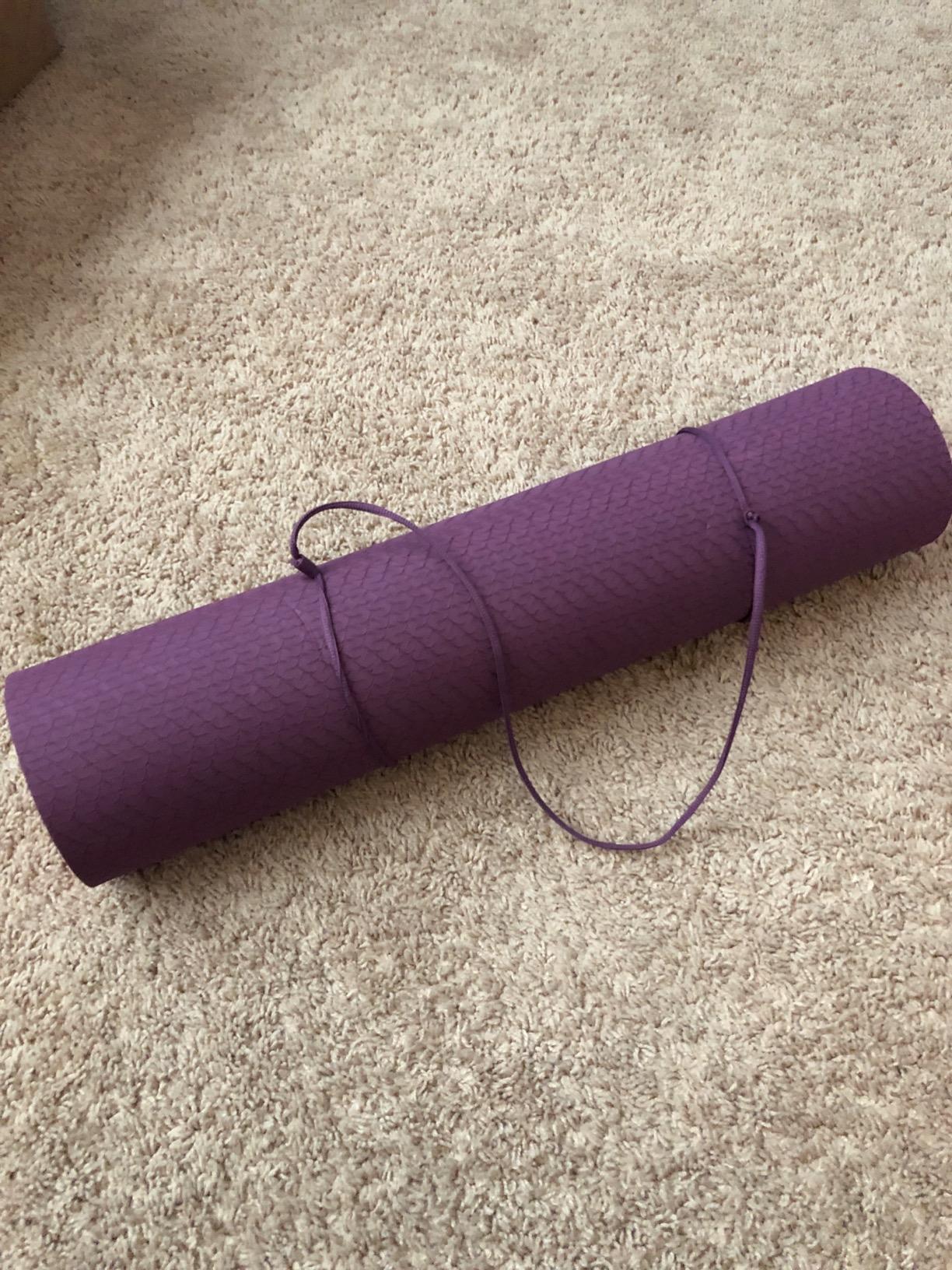
At just 2 pounds, the IUGA is exceptionally lightweight. The included carrying strap makes it practical for daily studio commutes. The SGS-certified TPE is free of latex and PVC, making it a safe choice for practitioners with chemical sensitivities.
The 6mm thickness provides moderate knee support. It is sufficient for practitioners with mild joint sensitivity but may not be enough for those with significant knee pain. For deeper cushioning, consider pairing this mat with a knee pad for kneeling poses.
Grip Performance in Dry Conditions
In dry conditions, the IUGA’s grip is excellent. The textured surface holds hands and feet securely during downward dog, plank, and standing poses. However, the mat becomes slippery when wet, so it is not ideal for hot yoga without a towel on top.
For standard hatha, vinyasa, and restorative practices where sweating is minimal, the grip performance is reliable and consistent. The bone-pattern underside keeps the mat from sliding on hardwood and tile floors.
Durability and Construction Quality
The middle-layer mesh is the key durability feature. It prevents the kind of tearing and delamination that plagues single-layer TPE mats after extended use. Some users report receiving mats with slightly crooked cuts, so inspect yours upon arrival. Avoid leaving the mat in a hot car, as TPE can deform at high temperatures.
Buying Guide: How to Choose a Yoga Mat for Bad Knees
Choosing the right yoga mat for knee protection involves understanding how thickness, density, material, and surface grip work together. Here is what you need to know to make an informed decision for your specific needs.
Thickness: What Millimeter Actually Works
For bad knees, the minimum effective thickness is 6mm. This provides enough cushioning for brief kneeling poses without significant floor contact. For moderate knee sensitivity, 8-10mm is the sweet spot that balances comfort and stability. For severe knee pain, arthritis, or post-surgery recovery, 12mm to 1 inch (25mm) provides maximum protection.
The key insight from our research is that standard 4-5mm studio mats consistently fail people with knee issues. They are designed for practitioners with healthy joints practicing on forgiving surfaces. On hardwood floors, even a healthy-kneed practitioner may find them inadequate for kneeling work.
Density vs Thickness: The Hidden Factor
This is the most misunderstood aspect of yoga mat selection. Thickness tells you how much material sits between your knee and the floor. Density tells you how much that material compresses under your body weight. A thick mat made from low-density foam compresses flat the moment you kneel on it, offering no real protection.
High-density materials like the NBR foam in the ProsourceFit or the TPE in the CAMBIVO maintain their cushioning under pressure. When you press your knee into them, they yield slightly but do not collapse. This is what prevents the painful bottoming-out effect that forum users consistently describe.
To test density before buying, press your thumb firmly into the mat surface. If it sinks easily with light pressure, the density is low. If it resists your pressure, the density is adequate for joint protection.
Material Guide: Rubber, PVC, TPE, and Foam Compared
NBR foam is the most common material in thick, budget-friendly mats. It offers good cushioning at a low cost but is typically single-density and can compress over time. The BalanceFrom and Retrospec mats use this material effectively for knee protection.
TPE (thermoplastic elastomer) is a newer, more eco-friendly option. It is free of PVC and latex, recyclable, and typically denser than NBR foam. TPE mats like the Ewedoos and Hatha Yoga options offer firm, supportive cushioning that maintains its shape well. They also tend to have better grip performance.
EVA foam is used in the CAP Barbell mat and offers excellent density at a budget price. It is firmer than NBR and holds up well over time, though it is heavier. Natural rubber, used in premium mats like the Manduka PRO, offers the best density-to-cushioning ratio but comes at a higher price point and can cause latex allergies.
Stability vs Cushioning: Finding Your Balance
Every mat represents a trade-off between cushioning and stability. The thicker and softer the mat, the more your joints are protected but the less stable your standing poses become. The thinner and firmer the mat, the better your balance but the more pressure on your knees during floor work.
For practitioners whose primary concern is knee pain, err on the side of cushioning. A 1-inch mat like the BalanceFrom may slightly compromise standing balance, but that is a manageable trade-off for eliminating knee pain. You can always modify standing poses for stability, but you cannot modify away floor pressure on an inadequate mat.
For practitioners who want a balance, the 8-10mm range offers the best compromise. You get meaningful knee protection without significant stability loss. Mats like the Gaiam 10mm and JELS 10mm sit in this practical middle ground.
Surface Considerations: Hardwood vs Carpet
The floor surface beneath your mat dramatically affects knee comfort. Hardwood and tile floors offer zero give, meaning your mat is the only cushioning between your joints and a rigid surface. On these surfaces, prioritize maximum thickness and density.
Carpeted floors provide some natural cushioning, so you can get away with a slightly thinner mat. However, carpet also reduces mat grip, so you need a mat with a textured underside that resists sliding. The ribbed design of the ProsourceFit and the wavy underside of the CAMBIVO are specifically engineered for this challenge.
When to Add Knee Pads
Even the thickest yoga mat may not provide enough cushioning for certain poses or conditions. Yoga knee pads are shaped cushions that provide targeted protection for kneeling poses. They are particularly useful for practitioners with boney knee structure, severe arthritis, or specific pose-related pain points.
Many forum users report success with a hybrid approach: a moderately thick mat for general practice paired with a knee pad for poses that specifically stress the knees. This gives you portability and versatility while still protecting your most vulnerable positions. You can find complementary practice guidance on our homepage to help adapt poses for sensitive knees.
FAQs
What thickness yoga mat is best for bad knees?
For bad knees, a yoga mat between 8mm and 1 inch (25mm) thick provides the best protection. Mats at 6mm offer minimal cushioning suitable for mild sensitivity, while 10mm to 25mm options deliver meaningful joint protection for moderate to severe knee pain. The key is combining adequate thickness with high-density material that resists compression under body weight.
Can a yoga mat be too thick?
Yes, a yoga mat can be too thick for certain practices. Mats thicker than 1 inch can compromise balance in standing poses and make it difficult to feel grounded during transitions. For active vinyasa or power yoga, a mat between 6mm and 10mm offers better stability. Reserve ultra-thick mats for restorative yoga, physical therapy, and floor-based stretching.
What is the best yoga mat for sensitive joints?
The best yoga mat for sensitive joints combines high density with adequate thickness. Options like the BalanceFrom 1-inch mat, ProsourceFit Extra Thick, and CAMBIVO with 10mm-12mm thickness provide firm cushioning that distributes weight evenly without bottoming out. TPE and high-density NBR foam materials tend to offer the best joint protection at accessible prices.
How do I choose a yoga mat for knee pain?
To choose a yoga mat for knee pain, follow these steps: 1) Select a thickness of at least 8mm, ideally 10mm or more for moderate pain. 2) Check the material density by pressing into the surface to ensure it resists compression. 3) Consider your floor type and choose extra thickness for hardwood surfaces. 4) Look for non-slip surfaces to prevent injuries from sliding. 5) Match the mat to your primary practice style, prioritizing cushioning for restorative work and grip for active flows.
Are thicker yoga mats better for bad knees?
Thicker mats are generally better for bad knees, but only when the thickness is paired with adequate density. A thick mat made from low-density foam will compress flat under body weight and offer no real joint protection. Focus on high-density materials like TPE or dense NBR foam that maintain their cushioning under pressure, regardless of the stated thickness on the packaging.
What material is best for yoga mats for joint support?
For joint support, high-density TPE and dense NBR foam are the most effective materials at accessible price points. TPE offers firm, even cushioning with good grip and eco-friendly properties. Dense NBR foam provides plush cushioning ideal for restorative practice. Natural rubber offers the best density-to-cushioning ratio but costs more and may cause latex allergies. EVA foam is a budget option with good density but heavier weight.
Final Thoughts on the Best Yoga Mats for Bad Knees
Finding the best yoga mats for bad knees comes down to matching thickness and density to your specific level of joint sensitivity. For maximum protection, the BalanceFrom 1-inch mat and ProsourceFit Extra Thick deliver the kind of dense cushioning that prevents bottoming-out on even the hardest floors. For a balance of comfort and practicality, the Gaiam 10mm and JELS 10mm offer solid knee support without excessive bulk.
If budget is the primary concern, the CAP Barbell and Amazon Basics provide genuine cushioning improvements over standard studio mats at accessible prices. And for practitioners who need extra space alongside their cushioning, the CAMBIVO large format and Karma Fitness wide designs open up new possibilities for comfortable practice.
The most important takeaway from our testing is that density matters as much as thickness. A high-density 6mm mat can outperform a low-density 10mm mat in real-world knee protection. Always press into a mat before committing to it, and pay attention to how the material responds under your body weight rather than just trusting the thickness number on the label.
Your knees carry you through every practice. Investing in the right mat is one of the simplest and most effective ways to protect them for years of comfortable yoga ahead in 2026.