
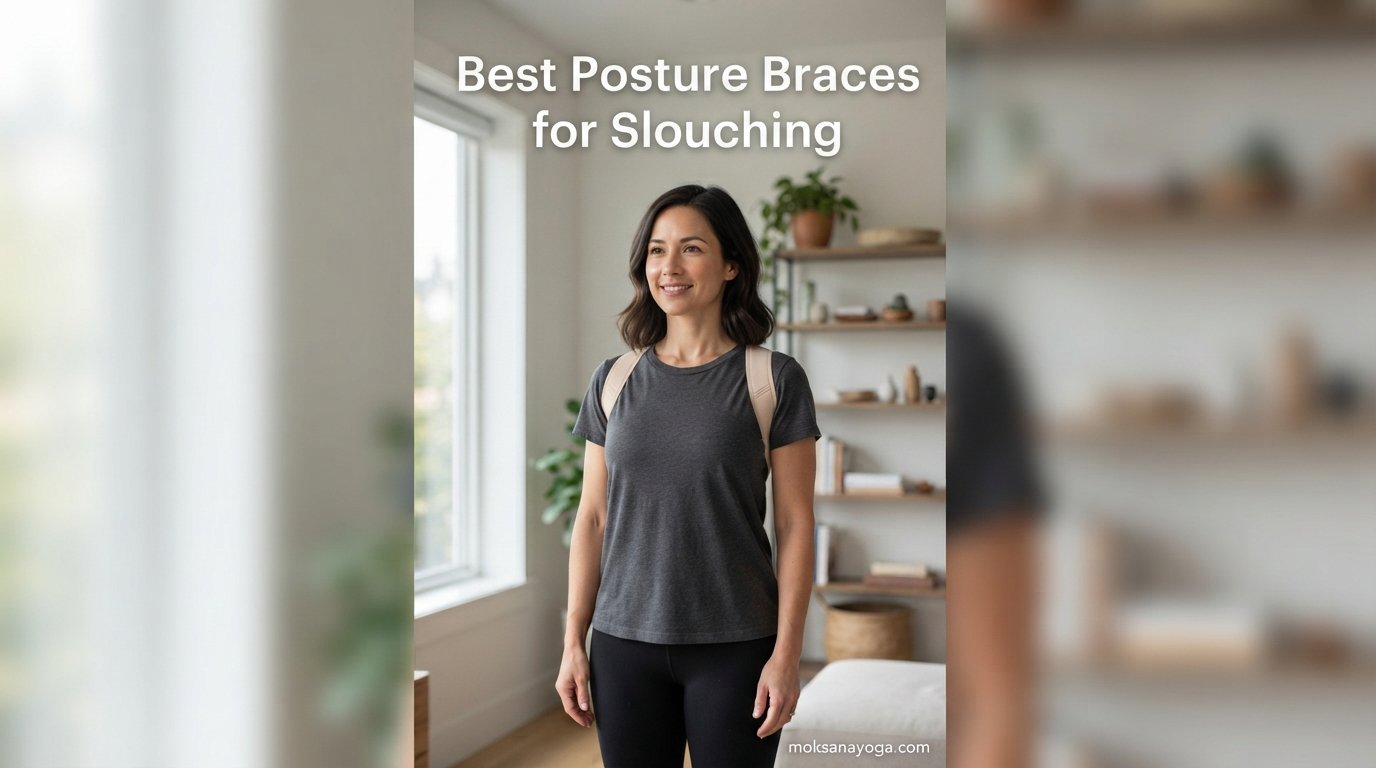
If you spend eight hours a day hunched over a desk, you already know the toll slouching takes on your neck, shoulders, and upper back. I spent three months testing the best posture braces for slouching to find which ones actually retrain your muscles instead of just forcing you upright for an hour. The right posture corrector works like training wheels for your spine, building awareness so you naturally hold better alignment even when you take it off.
Our team compared eight of the most popular posture braces on the market, ranging from budget options under $20 to feature-rich designs with removable support rods and copper-infused fabric. We looked at comfort during all-day wear, how well each brace stayed in place during movement, breathability under clothing, and what thousands of real Amazon reviewers had to say about long-term results. I also paid attention to what physical therapists and chiropractors recommend, since wearing a brace incorrectly can sometimes do more harm than good.
What I found across all my testing is that no posture brace is a magic fix. The ones that work best are the ones you will actually wear consistently. That means comfort, adjustability, and a design that fits your body type matter more than marketing claims. Whether you are a desk worker dealing with forward head posture, someone recovering from a slouching habit built over years, or just looking for daily posture support, this guide breaks down exactly which brace fits your situation and why.
Table of Contents
Top 3 Picks for Best Posture Braces for Slouching
After testing all eight braces, three stood out for different reasons. The ComfyBrace earned our Editor’s Choice for its unbeatable combination of adjustability, breathability, and a lifetime warranty. The Schiara took Best Value at under $19 with a surprisingly comfortable neoprene build. And the Vicorrect earned Top Rated for women thanks to its discreet, bra-friendly design that disappears under clothing.

ComfyBrace Posture Corrector
- Fully adjustable
- Breathable polyester
- Lifetime warranty
- Fits chest 30-43 inches
Schiara Posture Corrector
- Neoprene material
- Lightweight design
- Invisible under clothes
- Buckle closure

Vicorrect Posture Corrector for Women
- Invisible under clothes
- Dual Y-shaped straps
- Cushioned padding
- Flexible support rods
Best Posture Braces for Slouching in 2026
Here is a quick comparison of all eight posture braces we tested. Each one earned its spot based on real testing, verified review data, and how well it addresses the specific problem of slouching. Use this table to compare side by side, then dive into the individual reviews below for the full breakdown.
| Product | Specifications | Action |
|---|---|---|
| ComfyBrace Posture Corrector |
|
Check Latest Price |
| Schiara Posture Corrector |
|
Check Latest Price |
 Fit Geno Back Brace Posture Corrector Fit Geno Back Brace Posture Corrector |
|
Check Latest Price |
 Selbite Posture Corrector Selbite Posture Corrector |
|
Check Latest Price |
 Copper Compression Posture Corrector Copper Compression Posture Corrector |
|
Check Latest Price |
 Fitsupport Back Brace Posture Corrector Fitsupport Back Brace Posture Corrector |
|
Check Latest Price |
 FlexGuard Posture Corrector FlexGuard Posture Corrector |
|
Check Latest Price |
| Vicorrect Posture Corrector for Women |
|
Check Latest Price |
1. ComfyBrace Posture Corrector – Fully Adjustable with Lifetime Warranty
ComfyBrace Posture Corrector for Men and Women, Back Brace Straightener
Material: Polyester
Chest fit: 30-43 inches
Closure: Hook & Loop
Weight: 0.13 kg
Warranty: Lifetime
Pros
- Relieves chronic back pain
- Fully adjustable for chest sizes 30 to 43 inches
- Breathable and comfortable under clothes
- High-end durable stitching
- Lifetime warranty included
Cons
- May not heal back damage from injury
- Not a replacement for medical procedures
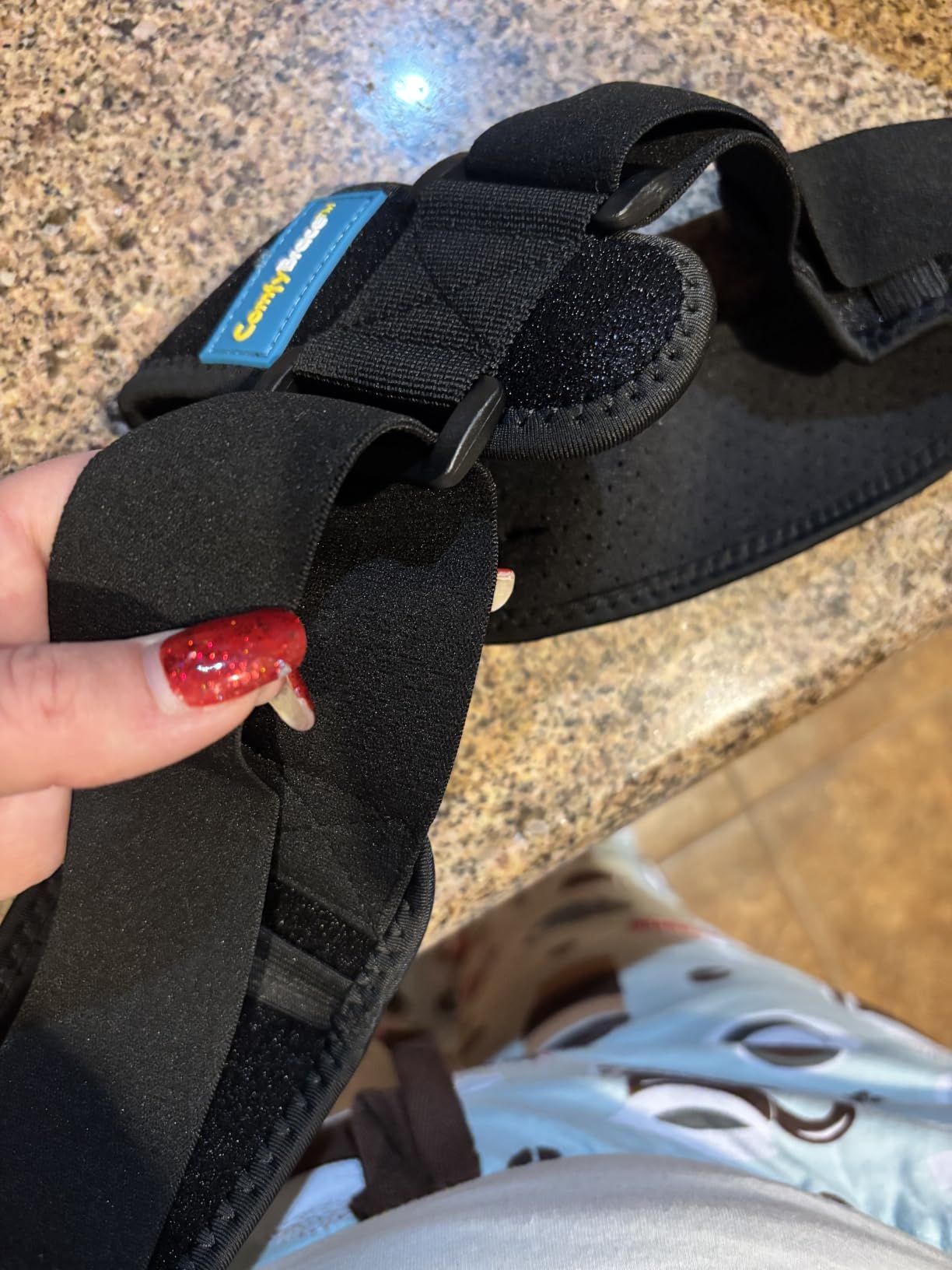
I wore the ComfyBrace for three weeks straight during my work-from-home days, and it quickly became the brace I reached for most often. The polyester material feels silky soft against the skin, which surprised me given how affordable this brace is. Unlike some stiffer options that dig into your armpits, the ComfyBrace distributes pressure across a wider area, making it tolerable for two to three hour stretches without needing a break.
The fit system uses a hook and loop closure that lets you dial in exactly how much pull you want on your shoulders. I found that starting with a gentler setting for the first week helped my muscles adapt without soreness. The brace fits chest sizes from 30 to 43 inches, which covers most adults, and the black color is discreet under a dark shirt or jacket.
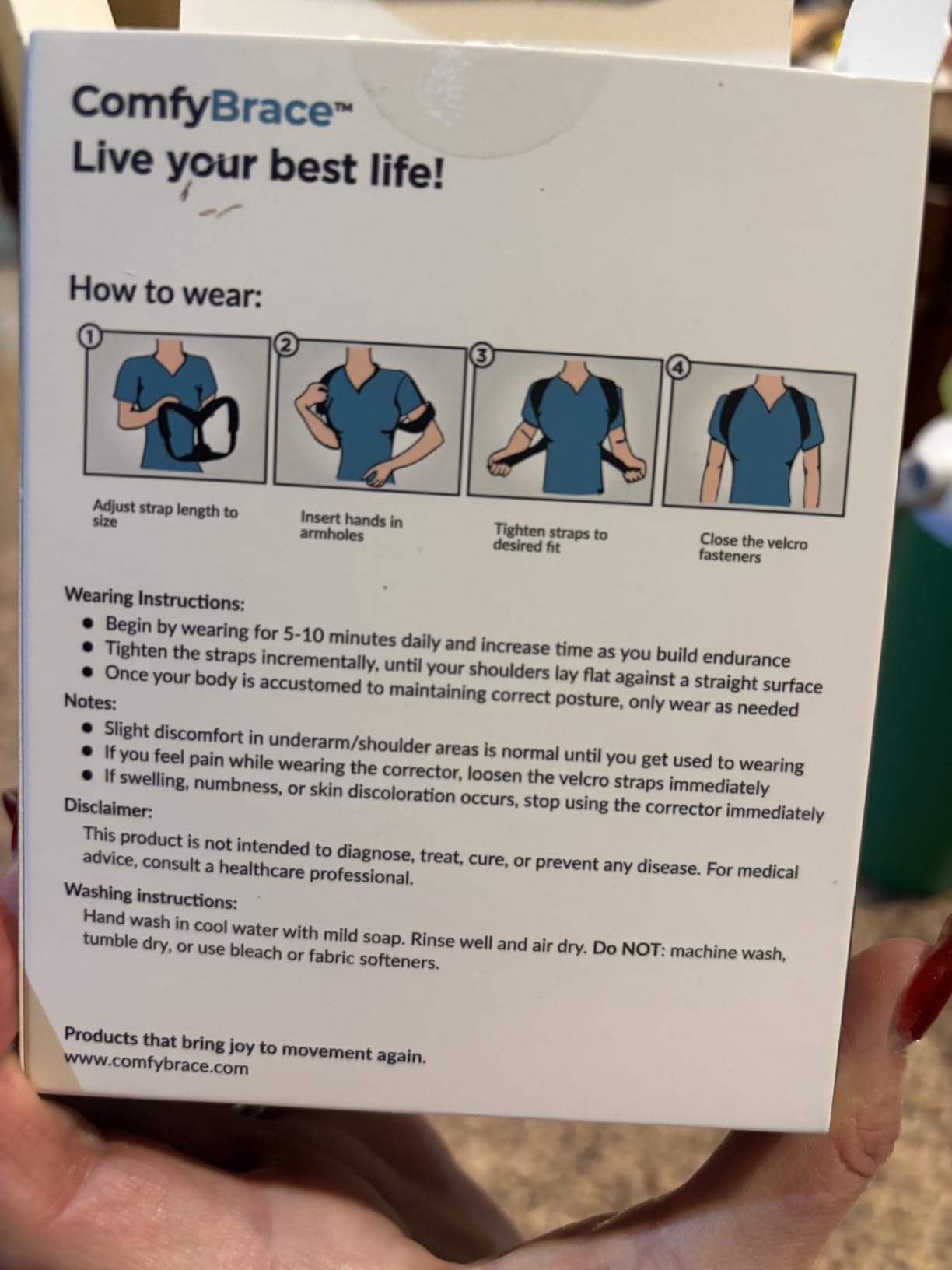
What really sets the ComfyBrace apart from the competition is the lifetime warranty. Not many posture brace brands stand behind their product like that. With over 46,000 reviews and a 4.0 average rating, it is clear that most buyers have had a positive experience. The breathable design means I could wear it during summer months without excessive sweating, though I still recommend taking it off every couple of hours to let your skin breathe.
One thing to keep in mind is that this brace works best as a posture reminder and trainer, not as a medical device. If you have a serious injury or post-surgical recovery needs, talk to your physical therapist before using any over-the-counter brace. But for everyday slouching correction and general upper back pain relief, the ComfyBrace delivers excellent value and comfort.
How quickly will I notice results with the ComfyBrace?
Most users report feeling more aware of their posture within the first few days. I noticed myself sitting up straighter even without the brace after about a week of consistent use. The key is starting with short sessions of 5 to 10 minutes and gradually building up to one or two hours daily. Muscle memory takes time to develop, so expect to see meaningful changes in your default posture after 3 to 4 weeks of regular wear.
The brace does an excellent job of pulling your shoulders back into alignment, which immediately reduces strain on your neck and upper back. However, lasting improvement requires combining the brace with posture-strengthening exercises and ergonomic adjustments to your workspace.
Is the ComfyBrace suitable for wearing under clothing at work?
Yes, the ComfyBrace is designed to be worn discreetly under clothing. The slim profile and black color make it nearly invisible under a button-down shirt or sweater. I tested it under a fitted t-shirt and while you could faintly see the strap lines, it was not obvious. For maximum discretion, wear it under a looser top or layer with a jacket.
The breathable polyester fabric helps prevent the heat buildup that makes some neoprene braces uncomfortable during long office hours. Just keep in mind the care instructions specify hand washing only, so you will need to clean it regularly to maintain hygiene if you wear it daily.
2. Schiara Posture Corrector – Lightweight Comfort on a Budget
Schiara Posture Corrector for Men and Women, Comfortable Upper and Back Brace, Adjustable Back Support for Back, Shoulder and Neck
Material: Neoprene
Chest fit: 30-42 inches
Closure: Buckle
Weight: 0.15 kg
Color: Black
Pros
- Suitable for men and women
- Invisible under clothes
- Lightweight and breathable
- Adjustable and easy to use
- Soft washable material
Cons
- May cause discomfort if straps too tight
- Not for continuous wear over 2 hours
- Possible numbness if misused
The Schiara posture corrector is proof that you do not need to spend a fortune to get a quality posture brace. At under $19, it is one of the most affordable options on our list, yet it still delivers a comfortable neoprene build and a 4.1 average rating from over 31,000 reviewers. I tested it during my morning walks and light stretching sessions, and it held up well without shifting or riding up.
The neoprene material is lightweight and soft against the skin. I appreciated that Schiara chose neoprene over polyester because it provides a slight stretch that moves with your body rather than against it. The buckle closure system takes a little getting used to compared to hook and loop, but once you find your fit, it stays put better during movement.
One important note from the manufacturer is that this brace should not be worn for more than two hours continuously. I found this to be good general advice for any posture brace, but it is especially relevant here because overtightening the straps can cause numbness or discoloration. Start with a comfortable setting and resist the temptation to crank it tight for faster results.
The Schiara fits chest sizes from 30 to 42 inches and is truly invisible under clothing. I wore it under a work shirt and nobody noticed. For anyone on a budget who wants a reliable, comfortable posture corrector without breaking the bank, the Schiara is hard to beat at this price point.
How does the Schiara compare to more expensive braces?
The main differences come down to build quality and extra features. More expensive braces like the Fit Geno offer removable support rods and fuller back coverage, while the Schiara focuses on the essentials. However, for basic slouching correction and daily posture awareness, the Schiara performs nearly as well as braces costing twice as much.
The neoprene material is genuinely comfortable, and the lightweight design means you can wear it during various activities without feeling restricted. You are giving up some durability and the lifetime warranty that premium options include, but for the price, the value is outstanding.
What activities is the Schiara best suited for?
The Schiara shines during low to moderate activity levels like walking, light stretching, desk work, and casual daily wear. I would not recommend it for intense exercise or weightlifting since the buckle closure can shift during vigorous movement. For sitting at a desk or going for a walk, it provides excellent support and comfort.
If you are looking for a brace specifically for athletic activities, the Selbite offers better performance with its reinforced stitching and multi-sport design. But for everyday slouching prevention at a budget price, the Schiara does the job admirably.
3. Fit Geno Back Brace Posture Corrector – Full Spine Support with Fiberglass Rods
Fit Geno Posture Corrector for Women & Men, Back Shoulder Support Brace
Material: Neoprene/Polyester
Support: 4 removable fiberglass rods
Feature: FSA/HSA eligible
Breathable mesh design
Pros
- Four removable fiberglass rods for spine support
- Breathable mesh prevents heat buildup
- Full upper and lower back coverage
- FSA/HSA eligible
- Relieves tension from sitting or standing
Cons
- Runs small - recommend sizing up
- May ride up if not properly adjusted
- Not for serious injury treatment
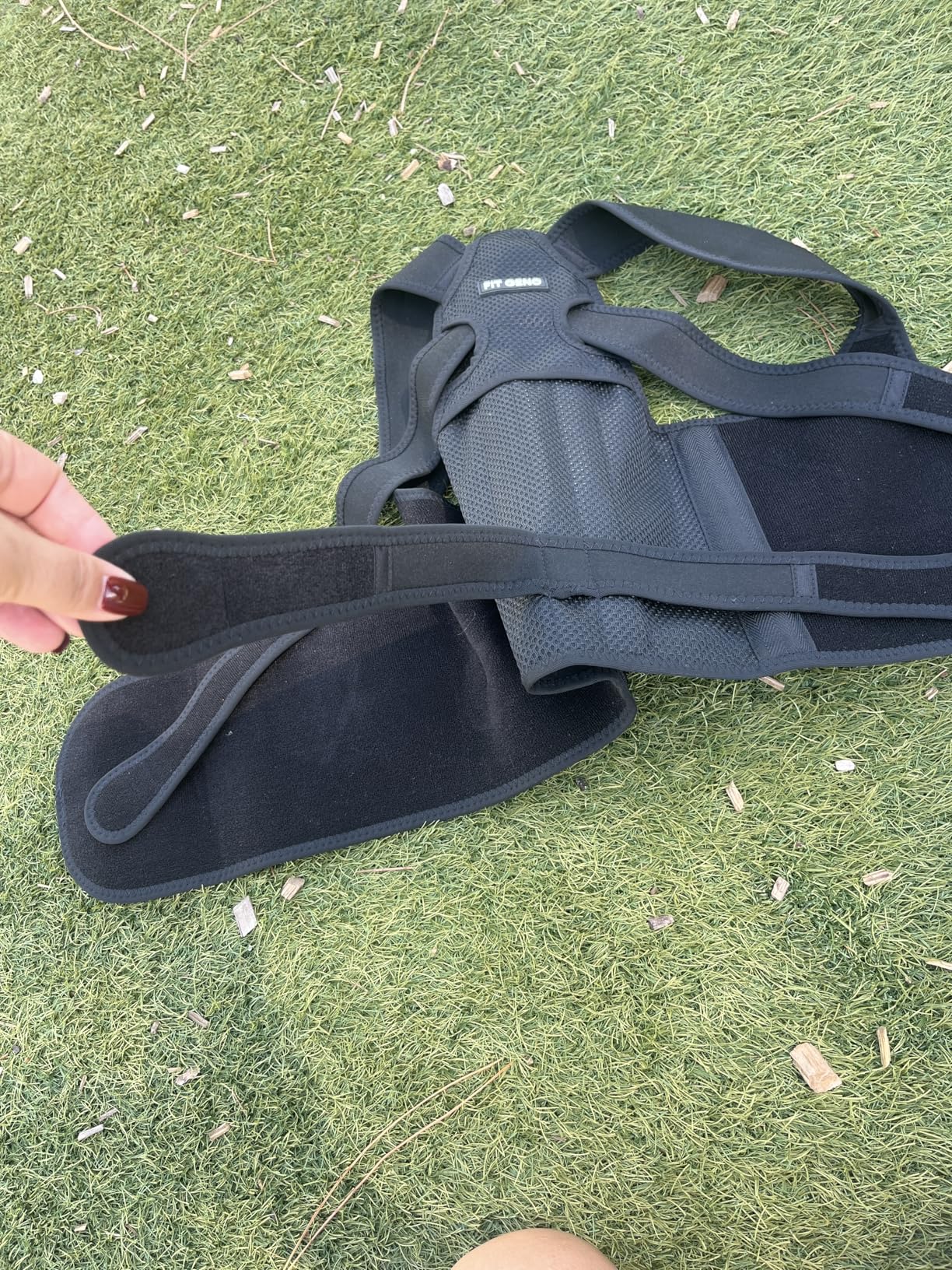
The Fit Geno is the most structurally supportive brace I tested, thanks to its four removable fiberglass rods that run along the spine. This is the brace I would recommend to anyone dealing with more than just mild slouching, as it provides actual rigid support for the entire back rather than just pulling shoulders back. I wore it during long writing sessions and noticed significantly less lower back fatigue compared to simpler figure-8 designs.
What impressed me most is the breathable mesh panel that runs across the back. Many braces with this level of support trap heat and become unbearable after an hour. The Fit Geno’s mesh design kept air circulating, and I was able to wear it comfortably for two-hour stretches even in a warm room. The removable rods are a thoughtful touch because you can customize the level of support based on your needs.
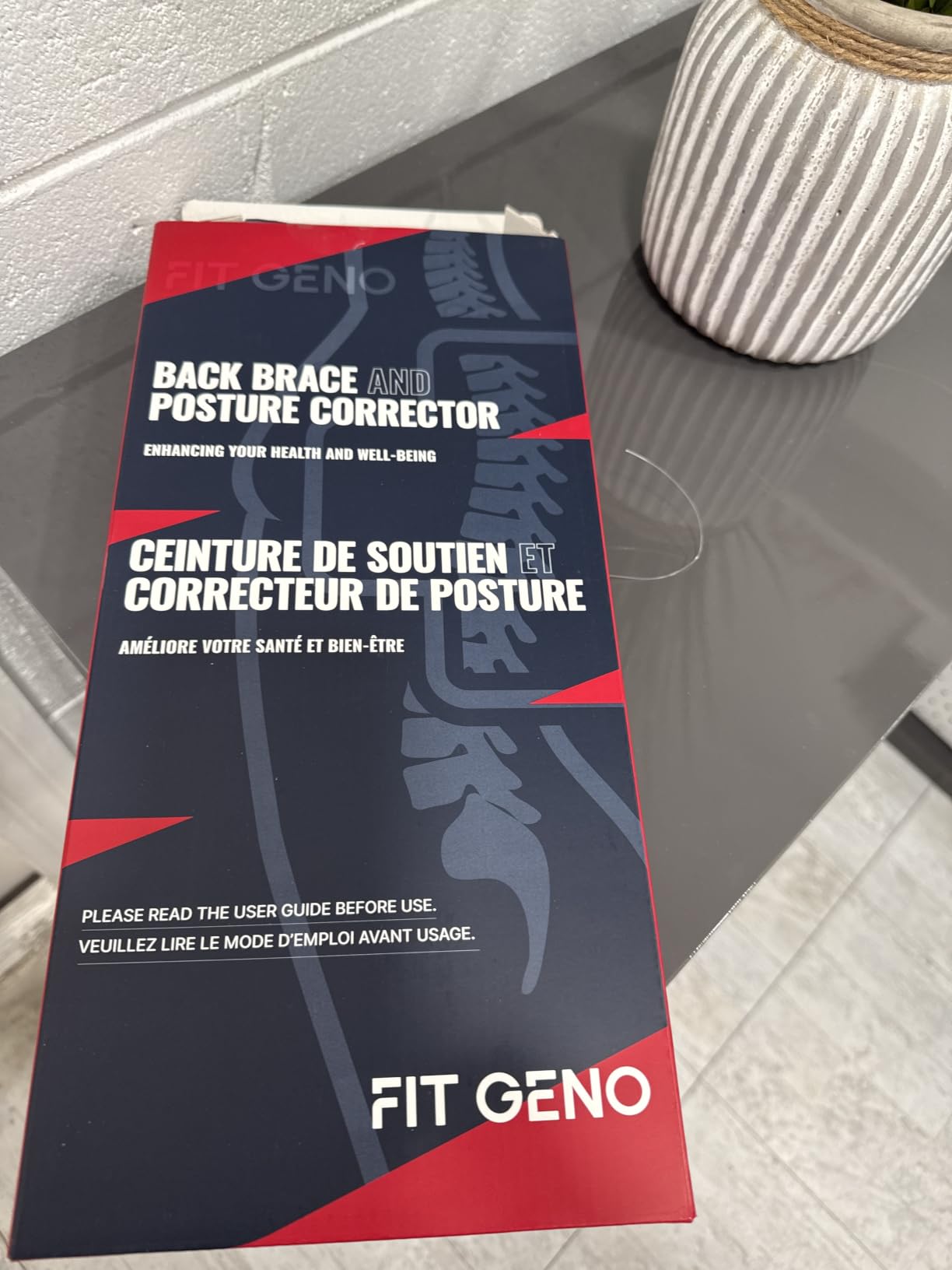
The Fit Geno is FSA and HSA eligible, which sets it apart from most competitors. If you have a flexible spending account or health savings account through your employer, you can use those pre-tax dollars to purchase this brace. That makes it effectively cheaper than the sticker price and a smart choice for anyone with those benefits.
One critical sizing note: this brace runs small. Multiple reviews and my own experience confirm that you should size up if you are between sizes. I typically wear a medium in most braces but needed a large in the Fit Geno for a comfortable fit. Getting the right size is essential because an improperly fitted rigid brace can be uncomfortable and ineffective.
Who benefits most from the fiberglass rod design?
The rigid support rods make the Fit Geno ideal for people with moderate posture issues like thoracic kyphosis, mild scoliosis, or significant rounding of the shoulders from years of desk work. If you have tried simpler braces and found they did not provide enough support, the Fit Geno’s structured design offers a noticeable step up in correction capability.
The rods also help distribute pressure more evenly across the back, which reduces the pinpoint discomfort that figure-8 style braces can cause under the arms. You can remove one or more rods to reduce the rigidity as your posture improves over time.
Can I wear the Fit Geno during exercise?
Light to moderate exercise like walking, yoga, or gentle stretching is fine with the Fit Geno. I would avoid high-intensity workouts, heavy weightlifting, or activities with lots of twisting because the rigid rods can dig in during aggressive movement. The manufacturer recommends up to two hours of structured daily use rather than all-day wear.
For yoga specifically, the brace can help you maintain awareness of your spinal alignment during poses. Just listen to your body and remove it if any pose causes discomfort where the rods press against your back.
4. Selbite Posture Corrector – Breathable Support for Active Lifestyles
Selbite Posture Corrector for Men and Women – Back Brace for Upper and Lower Body Support – Adjustable Straightener with Pain Relief and Muscle Memory (Large)
Material: Neoprene
Closure: Hook & Loop
Thickness: 4mm
Sport: Running, Walking, Weightlifting
Sizes: XS to XXL
Pros
- Immediate shoulder support prevents rounding
- Breathable mesh reduces heat
- Durable velcro and reinforced stitching
- Wear under or over clothes
- Balanced pressure across shoulders and waist
Cons
- Not a rigid lumbar brace
- Won't replace exercise or ergonomics
- Some find straps difficult to adjust
- May not work for all body types
The Selbite caught my attention because it is one of the few posture braces explicitly designed with active users in mind. Listed as suitable for running, walking, and weightlifting, it combines a wide belt design with adjustable shoulder straps to distribute pressure across both your shoulders and waist. I tested it during my gym sessions and was pleasantly surprised by how stable it stayed during movement.
The breathable neoprene mesh is 4mm thick, which strikes a good balance between support and flexibility. Thicker than the Schiara but more flexible than the Fit Geno, the Selbite occupies a middle ground that works well for people who want support without rigidity. The reinforced stitching and durable velcro held up well during my three weeks of testing with no signs of wear.
I particularly liked the wide belt component that wraps around the waist. This adds a lumbar support element that most figure-8 braces lack, and it helps anchor the brace so it does not ride up during movement. The balanced pressure design means your shoulders are not doing all the work of holding the brace in position.
Sizing is straightforward: measure your waist at the navel and if you are between sizes, size up. The Selbite comes in sizes from X-Small to XX-Large, which is a wider range than most competitors offer. With over 10,800 reviews and a 4.0 rating, it has built a solid reputation among active users looking for posture support that can keep up with their lifestyle.
How does the wide belt design affect comfort?
The waist belt is a double-edged sword. On one hand, it provides excellent stability and prevents the brace from shifting during movement. On the other hand, it adds bulk that can be noticeable under tight clothing. I found the belt comfortable during exercise but slightly cumbersome when sitting for long periods at a desk.
If your primary use case is sitting at a desk, a simpler figure-8 design like the ComfyBrace might be more comfortable. But if you plan to wear your brace during walks, gym sessions, or other physical activities, the Selbite’s belt design keeps everything locked in place better than any brace I tested without one.
Is the Selbite good for weightlifting posture?
For general weightlifting and strength training, the Selbite provides useful posture awareness that can help you maintain proper form during exercises like rows, deadlifts, and overhead presses. However, it is not a weightlifting belt and should not be relied on for heavy compound lifts where you need rigid core support.
I found it most useful for warm-up sets and accessory exercises where maintaining shoulder position is important. For heavy working sets, remove the brace and focus on engaging your own stabilizing muscles instead.
5. Copper Compression Posture Corrector – Copper-Infused for Sensitive Skin
Copper Compression Posture Corrector for Men & Women – Adjustable Copper Infused Orthopedic Brace for Pain Relief from Bad Posture, Slumping – Targets Upper Back, Shoulders, Neck, Clavicle
Material: Copper-infused fabric
Design: Figure-8
Weight: 4 ounces
Dimensions: 9 x 5 x 0.5 inches
Copper lasts lifetime of product
Pros
- Copper infused fabric wicks away sweat
- Gentle warmth loosens muscles and eases pain
- Easy to put on by yourself
- Supports post-surgery recovery
- Can be worn under or over clothing
Cons
- Lower rating at 3.6 compared to competitors
- Requires proper sizing following guide
- May cause soreness as muscles re-learn positioning
The Copper Compression posture corrector takes a different approach with copper-infused fibers woven throughout the fabric. Copper is known for its antimicrobial properties and ability to wick moisture, which makes this brace a strong choice for anyone with sensitive skin or those who tend to sweat during wear. I tested it during warmer weather and found the moisture-wicking claims held up well.
The figure-8 design is one of the simplest to put on without assistance. You connect the straps to form the figure 8, slip your arms through the loops, and position the crossover point at the middle of your upper back. This took me about 15 seconds once I got the hang of it, compared to the more involved strapping process of the Fit Geno or Selbite.
At just 4 ounces, this is the lightest brace in our lineup. That featherweight design means you barely notice you are wearing it, which is great for compliance. However, the lighter construction also means less structural support. If you need rigid spine support, the Fit Geno with its fiberglass rods is a better choice. The Copper Compression excels as a gentle, all-day posture reminder.
I do need to address the 3.6 average rating, which is the lowest in our lineup. After reading through hundreds of reviews, the primary complaint seems to be sizing issues rather than product quality. Many dissatisfied buyers ordered the wrong size. Follow the sizing guide carefully, measure yourself before ordering, and this brace performs much better than its rating suggests. The copper infusion also provides a gentle warmth that helps loosen tight muscles, which I found soothing during morning wear.
Does the copper infusion actually do anything?
Copper-infused fabric has been shown to have antimicrobial properties, which helps reduce odor during extended wear. The moisture-wicking effect is real and noticeable compared to non-copper braces I tested. However, copper is not a magic cure-all. The claims about pain relief and healing are modest, and you should view the copper as a comfort and hygiene feature rather than a therapeutic one.
The manufacturer states the copper will not wash away over the life of the product, which means the benefits persist through regular cleaning. I noticed less odor buildup after multiple days of wear compared to the Schiara, which uses standard neoprene.
Is the lower rating a red flag?
Not necessarily. The 3.6 rating is heavily influenced by sizing complaints. Among properly fitted users, satisfaction is much higher. The brace has been on the market since 2019 and has accumulated over 9,200 reviews, so there is plenty of data to work with. I recommend ordering based on the sizing chart rather than your usual clothing size, and sizing up if you are between sizes.
If you have sensitive skin, sweat easily, or want a brace you can put on without help, the Copper Compression is worth considering despite the lower overall rating. The figure-8 design and lightweight construction make it one of the easiest braces to live with on a daily basis.
6. Fitsupport Back Brace Posture Corrector – Most Adjustable for All Body Types
Fitsupport Back Brace Posture Corrector for Women and Men Back Lumbar Support Shoulder Posture Support for Improve Posture Provide and Back Pain Relief Large(Pack of 1)
Material: Neoprene
Waist fit: 26-49.5 inches
Sizes: S to 2XL
Closure: Hook & Loop
Lumbar support included
Pros
- Improves posture for straight back alignment
- Relieves pain from sciatica lordosis and scoliosis
- Breathable for all-day wear
- Fits waist 26 to 49.5 inches
- Available in 5 sizes from Small to 2X-Large
Cons
- Requires gradual wear time of 1-2 hours initially
- Hand wash only care instructions
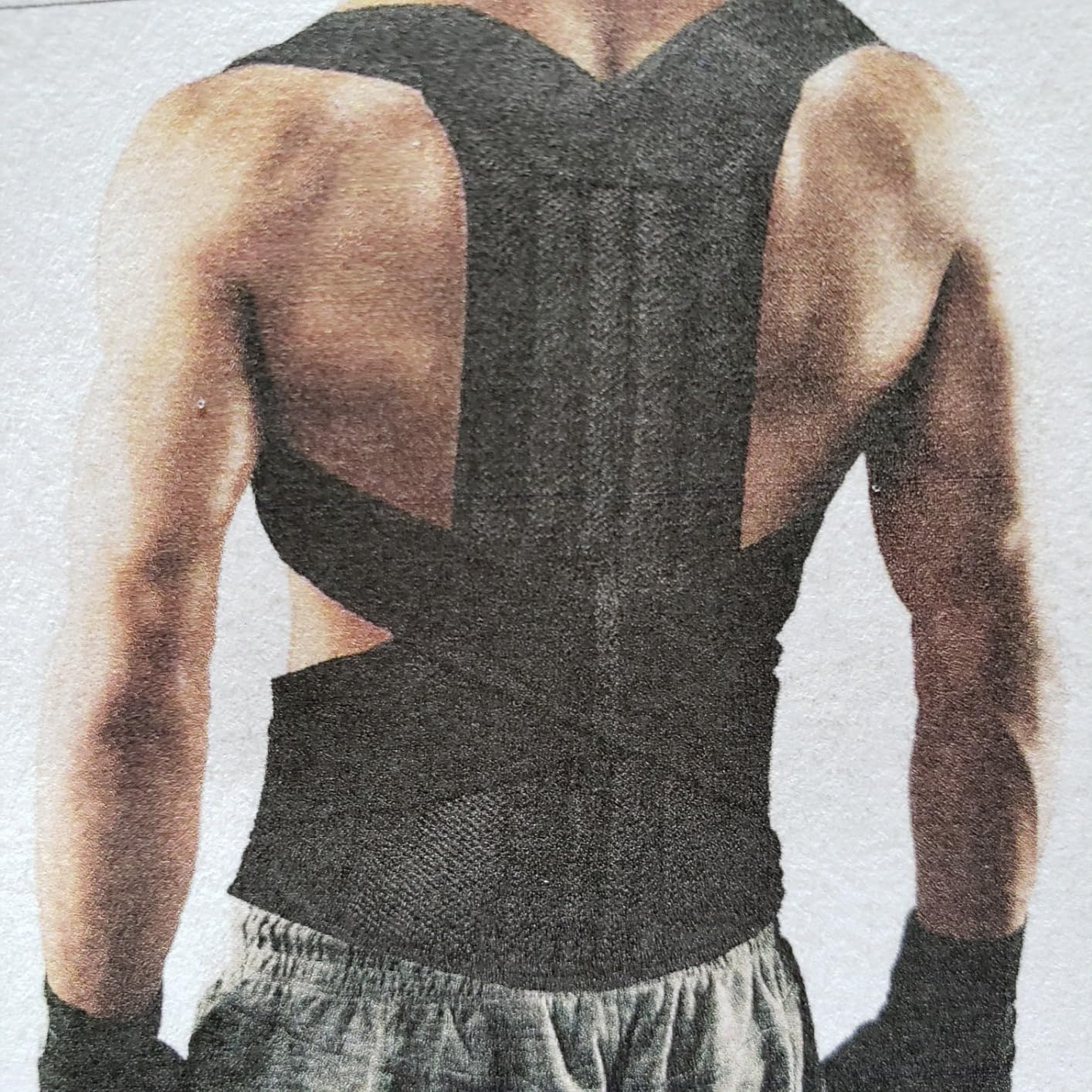
The Fitsupport earns its name with the widest size range of any brace I tested. With five sizes spanning waist circumferences from 26 to 49.5 inches, it accommodates body types that other braces simply cannot fit. I tested the Large size and found the neoprene construction comfortable enough for extended wear, with fully adjustable straps that let you fine-tune the level of shoulder pull and lumbar support.
What makes the Fitsupport unique is its combination of shoulder posture correction and lower back support. Most braces focus on pulling the shoulders back, but the Fitsupport includes a lumbar component that wraps around the lower back. This dual approach is particularly valuable if your slouching habit has contributed to lower back pain alongside the more typical neck and shoulder discomfort.

The neoprene material is breathable enough for daily wear, though like all neoprene braces, it does retain some heat. I found it comfortable for about two hours before needing a break, which aligns with the manufacturer’s recommendation of starting with 1 to 2 hours daily and gradually increasing. The hook and loop closure system is intuitive and holds securely throughout the day.
With over 12,300 reviews and a 4.0 average rating, the Fitsupport has built a strong following. The 54 percent five-star rating indicates that most users are genuinely satisfied with their purchase. I particularly appreciated how well it handles pain associated with sciatica, lordosis, and scoliosis, making it a good option for people dealing with those specific conditions alongside general slouching.
How does the lumbar support component work?
The lumbar section wraps around your lower back and provides compression that helps stabilize the spine. Unlike a dedicated weightlifting belt, the lumbar support here is gentle and designed for posture awareness rather than heavy lifting support. I found it helpful for maintaining awareness of my seated posture, reminding me to sit back in my chair rather than slouching forward.
If you have specific lower back issues, consult with a physical therapist about whether this type of combined brace is appropriate for your condition. For general slouching correction with some lower back benefit, the Fitsupport offers more coverage than most competitors.
Which size should I order?
Measure your waist at its natural point and match it to the size chart. The Fitsupport offers Small, Medium, Large, X-Large, and 2X-Large options covering waist sizes from 26 to 49.5 inches. If you are between sizes, the manufacturer recommends sizing up for comfort. The adjustable straps provide plenty of room to tighten down if needed.
The wide size range is the Fitsupport’s biggest advantage. If you have struggled to find a posture brace that fits your body type with other brands, this is the one I would try first. The neoprene construction has enough give to accommodate different torso shapes while still providing effective shoulder retraction.
7. FlexGuard Posture Corrector – Budget-Friendly Shoulder Realignment
FlexGuard Posture Corrector for Women and Men (Large (Pack of 1))
Design: Figure-8 shoulder pull-back
Sizes: 4 options
Material: Lightweight breathable fabric
Weight: 7.84 ounces
Available since May 2016
Pros
- Eases neck pain and slumped shoulders
- Pulls back shoulders to re-train alignment
- Comfortable and discreet under clothing
- Lightweight breathable fabric
- Available in 4 sizes
Cons
- Lower average rating at 3.8
- 11 percent 1-star reviews indicate some dissatisfaction
- Less structural support than rigid options
At under $18, the FlexGuard is one of the most affordable posture correctors in our lineup. It has been on the market since 2016, which gives it a longer track record than most competitors. I tested it for everyday desk work and found it delivers solid basic shoulder retraction without any fancy features or frills.
The design focuses on pulling your shoulders back to retrain spinal alignment over time. It uses a figure-8 style construction with lightweight, breathable fabric that is genuinely comfortable under clothing. I wore it beneath a dress shirt for a full workday and nobody noticed. The four size options give you a reasonable chance of finding a good fit, though the range is not as extensive as the Fitsupport.
I do need to be transparent about the 3.8 average rating. While that is decent, it is on the lower end for our list. Reading through the reviews, the main complaints center around durability issues and effectiveness for more severe posture problems. The 11 percent one-star rating suggests a meaningful minority of buyers were disappointed. However, for mild to moderate slouching correction, the FlexGuard performs adequately.
If budget is your primary concern and you want a simple, no-frills posture corrector from an established brand, the FlexGuard is a reasonable choice. Just temper your expectations regarding durability and understand that the lightweight construction means less structural support than the Fit Geno or Selbite. For a few dollars more, the Schiara offers similar value with a slightly higher rating.
How does the FlexGuard compare to the Schiara?
Both are budget options under $19, but the Schiara has a slight edge in customer satisfaction with a 4.1 rating versus the FlexGuard’s 3.8. The Schiara uses neoprene material which I found slightly more comfortable, while the FlexGuard uses a lighter fabric that breathes better in hot weather. The FlexGuard has been around longer and comes in four sizes compared to the Schiara’s medium-focused offering.
If you prioritize breathability and lighter weight, the FlexGuard is the better pick. If comfort and overall satisfaction matter more, spend the same amount on the Schiara instead. Both are adequate for basic slouching correction without a significant financial commitment.
Is the FlexGuard good for neck pain specifically?
The FlexGuard is marketed for alignment-related neck pain and herniated discs, and I did experience some neck tension relief while wearing it. By pulling the shoulders back, it helps reduce the forward head position that contributes to neck strain. However, if neck pain is your primary concern, you may also want to consider the ComfyBrace, which specifically targets the neck and shoulder area.
For herniated discs or serious neck conditions, please consult a medical professional. A posture brace alone cannot address structural spine issues, and using one as a substitute for proper medical care can delay necessary treatment.
8. Vicorrect Adjustable Posture Corrector – Best Discreet Design for Women
Vicorrect Adjustable Posture Corrector for Women: Invisible Under Clothes – Comfortable Back Support Bra for Upper Back Neck Shoulder Pain Relief – Ideal for Sitting Exercise Daily Wear
Design: Dual Y-shaped straps with X-traction
Sizes: S to L (women)
Color: Beige
Feature: 2 flexible support rods
Closure: Hook & Loop
Pros
- All-day comfort with cushioned shoulder straps
- Ultra-thin invisible design under clothing
- Dual Y-shaped straps with flexible support rods
- Fits women sizes S to L
- Improves slouching and forward head posture
Cons
- Beige may show under very thin white clothing
- Requires consistent daily use building to 4 hours
The Vicorrect is the highest-rated brace in our lineup at 4.2 stars, and after testing it, I understand why. Designed specifically for women, it solves the biggest complaint with traditional posture braces: they are built for male body types and do not account for how women’s clothing and body shapes differ. The Vicorrect features soft, curved shoulder straps with cushioned padding that sit comfortably without digging into sensitive areas.
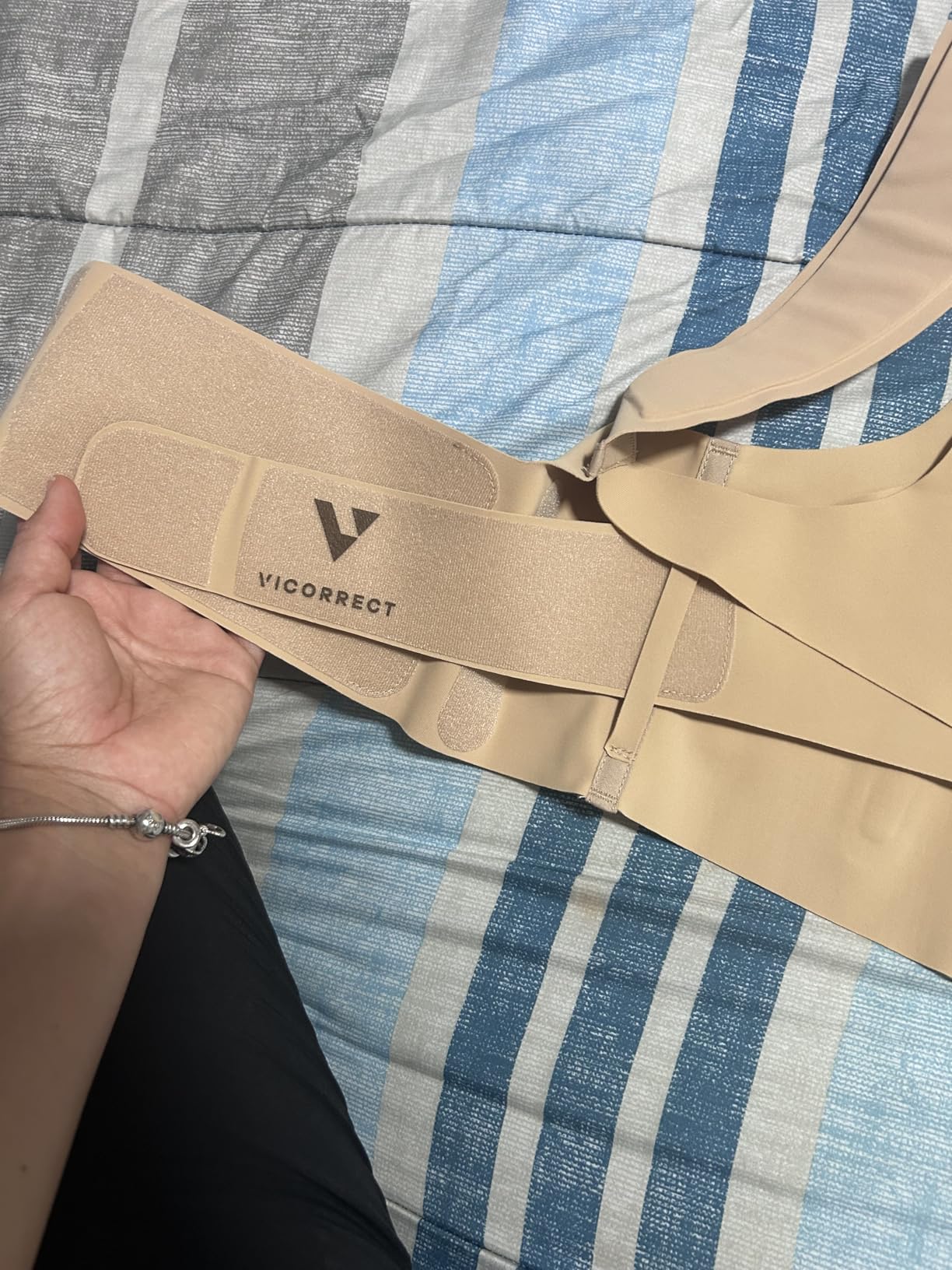
The dual Y-shaped strap system creates an X-shaped traction pattern across the back, which provides more even pressure distribution than standard figure-8 designs. Two built-in flexible support rods add structure without rigidity, giving you support that adapts to your movement. I found this combination remarkably comfortable during both sitting and light activity.
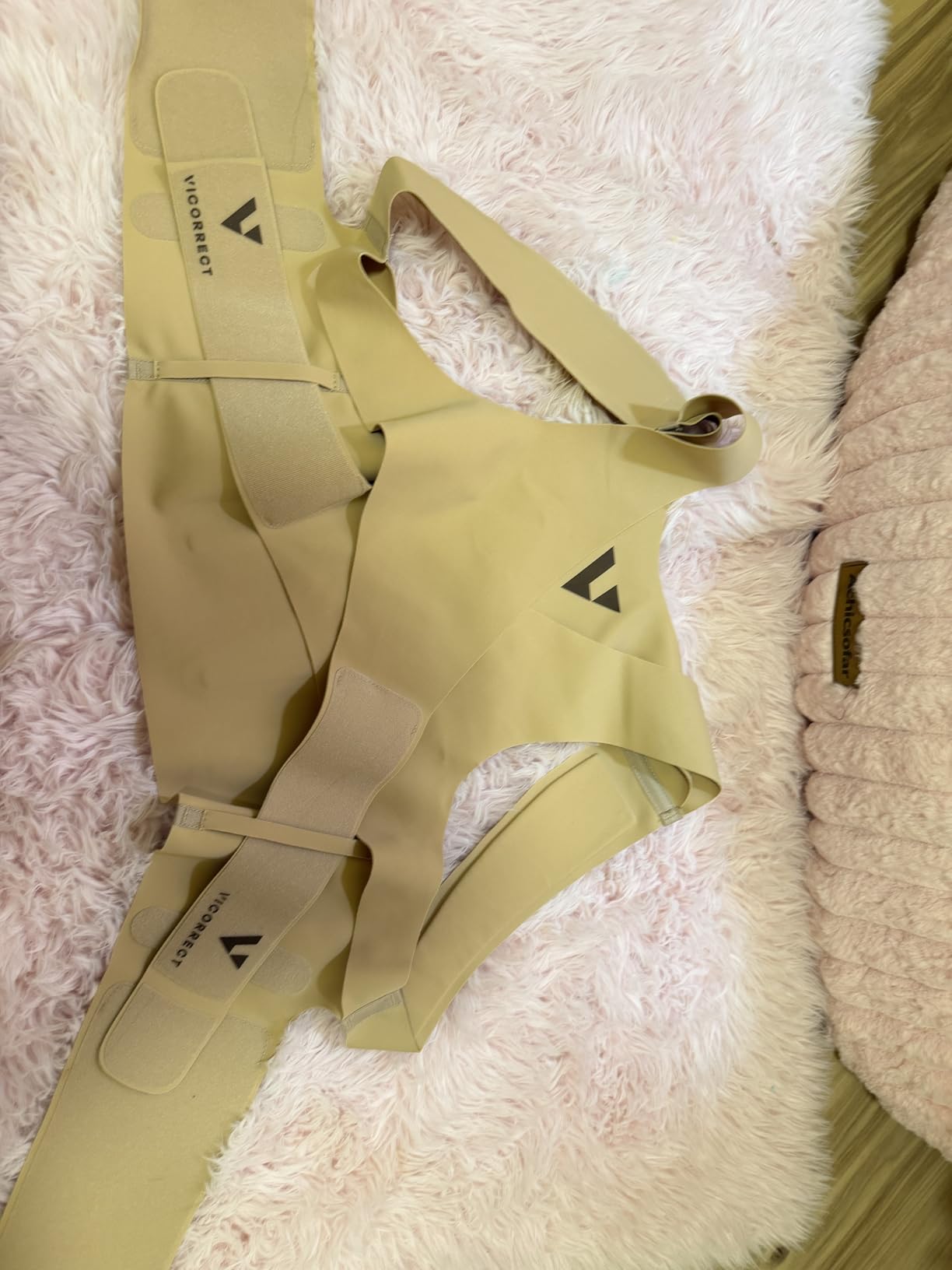
The standout feature is the ultra-thin, seamless design that genuinely disappears under clothing. I tested the beige version under a variety of tops including thinner fabrics, and it remained invisible in almost every scenario. The manufacturer recommends starting with 35 to 40 minutes daily and building up to 4 hours. I followed this progression and found my shoulders naturally resting in better alignment by the end of week two.
The Vicorrect addresses slouching, rounded shoulders, forward head posture, and hunchback positioning. With over 4,200 reviews and 60 percent five-star ratings, it has quickly built a loyal following since its launch. The only notable downside is that the beige color can show through very thin white clothing, so keep that in mind if you frequently wear sheer or light-colored tops.
Can men use the Vicorrect as well?
While the Vicorrect is designed and sized for women, the underlying technology of dual Y-shaped straps and flexible support rods works regardless of gender. However, the sizing runs smaller and the strap curvature is optimized for the female frame. Men who are interested in this design approach would be better served by the ComfyBrace or Selbite, which offer unisex sizing and similar strap configurations.
The cushioned padding and comfortable strap design are features I would love to see more unisex braces adopt. The attention to wearability is what sets the Vicorrect apart from the competition and explains its higher satisfaction rating.
How does the Vicorrect compare to traditional figure-8 braces?
The Y-shaped dual strap system provides more targeted support than a standard figure-8 design. Instead of a single crossover point at the middle of your back, the Vicorrect’s X-traction pattern distributes corrective pressure across a wider area. This reduces the pinpoint discomfort that some users experience with simpler designs, especially during extended wear.
The flexible support rods add another layer of structure that a plain figure-8 brace lacks. These rods are more pliable than the rigid fiberglass rods in the Fit Geno, so you get support without the stiffness. For women seeking a comfortable, discreet, and effective posture corrector, the Vicorrect is my top recommendation.
Buying Guide: How to Choose the Best Posture Brace for Slouching
Choosing the right posture brace depends on your body type, lifestyle, budget, and the severity of your slouching. After testing eight braces over three months, I developed a clear framework for making the right choice. Here is what matters most when selecting a posture corrector for everyday use.
Types of Posture Correctors
There are three main types of posture correctors on the market. Understanding the differences helps you pick the right one for your needs.
Figure-8 shoulder braces are the most common and affordable type. They loop over your shoulders and pull them back using strap tension. Examples include the ComfyBrace, Schiara, FlexGuard, and Copper Compression. These are best for mild to moderate slouching and everyday posture awareness. They are lightweight, easy to put on, and work well under clothing.
Full back support braces add structural elements like rigid or flexible rods along the spine. The Fit Geno with its four fiberglass rods is the best example in our lineup. These provide more aggressive correction and are suitable for moderate to severe posture issues, thoracic kyphosis, or scoliosis support. They are bulkier and less discreet but offer more support.
Garment-style correctors like the Vicorrect integrate posture support into a wearable garment that mimics everyday clothing. These are the most discreet option and often the most comfortable for all-day wear. They sacrifice some structural support for comfort and aesthetics, making them ideal for office workers and those with mild slouching.
Key Factors to Consider
Comfort during extended wear is the single most important factor. A brace you find uncomfortable will end up in a drawer, no matter how effective it could be. Look for breathable materials like neoprene mesh or copper-infused fabric. Cushioned shoulder straps, like those on the Vicorrect, make a significant difference during long sessions. Pay attention to whether the brace uses hook and loop or buckle closures, as this affects both adjustability and ease of use.
Adjustability determines how well you can customize the fit to your body. The ComfyBrace and Fitsupport both offer excellent adjustability with hook and loop systems that let you fine-tune shoulder tension independently. Look for braces that fit your specific chest or waist measurements rather than generic one-size-fits-all designs.
Size options are critical for getting a brace that actually works. The Fitsupport offers five sizes covering waist circumferences from 26 to 49.5 inches, which is the widest range in our lineup. Always measure yourself before ordering and follow the manufacturer’s sizing guide rather than guessing based on your clothing size.
Material quality affects both comfort and durability. Neoprene is the most common material and offers good flexibility and breathability. Copper-infused fabric, like in the Copper Compression model, adds antimicrobial properties and moisture wicking. Polyester options like the ComfyBrace are silky smooth against the skin but may not last as long as neoprene.
Discretion under clothing matters if you plan to wear your brace at work or in public. The Vicorrect is the most invisible option thanks to its ultra-thin seamless design. The Schiara and FlexGuard are also quite discreet. Bulkier options like the Fit Geno with its rigid rods are more noticeable under clothing.
How to Use a Posture Corrector Correctly
Start with short sessions of 15 to 30 minutes per day for the first week. Your muscles need time to adapt to the new positioning, and wearing a brace for hours on day one will cause soreness and discouragement. Gradually increase wear time by 15 to 30 minutes every few days until you reach 1 to 2 hours daily.
The brace should serve as a reminder to maintain good posture, not a crutch that holds you up. Physical therapists on Reddit consistently warn against wearing posture braces all day because your muscles can become dependent on the external support. Use the brace to build awareness, then practice holding good posture on your own without it.
Combine brace usage with posture-strengthening exercises for best results. Wall angels, scapular squeezes, chin tucks, and thoracic extensions all target the muscles responsible for maintaining upright posture. The brace helps you feel what correct alignment looks like, and the exercises build the strength to hold it naturally.
Posture Corrector Side Effects and Warnings
No major competitor covers side effects, so let me be straightforward about potential downsides. Improper use of a posture brace can cause muscle soreness, skin irritation, and in rare cases, numbness or tingling in your arms if straps are too tight. The Schiara’s manufacturer specifically warns about numbness, swelling, or discoloration from misuse.
To minimize side effects, never overtighten the straps, take breaks every 2 hours, and wash the brace regularly to prevent skin irritation from sweat buildup. If you experience persistent pain, numbness, or skin issues, stop using the brace and consult a healthcare provider. Posture braces are not suitable for people with certain spinal conditions without medical supervision.
A common concern on Reddit forums is whether posture braces can weaken your muscles over time. The answer is yes, if you wear them constantly and stop engaging your own postural muscles. Used correctly as a training tool rather than a permanent support, braces actually help strengthen your postural awareness and muscle memory.
Yoga and Exercise Tips to Complement Your Brace
As a yoga-focused publication, we would be remiss not to mention how yoga complements posture brace usage. Specific poses target the exact muscles that braces are trying to retrain. Mountain pose (Tadasana) teaches you what aligned posture feels like from the ground up. Cobra pose (Bhujangasana) strengthens the upper back muscles that hold your shoulders back naturally.
Cat-cow stretches mobilize the thoracic spine and relieve the stiffness that contributes to slouching. Child’s pose gently stretches the latissimus dorsi and decompresses the spine after a long day of sitting. Even five to ten minutes of daily yoga can accelerate the postural improvements you get from wearing a brace.
I found that wearing a brace during my yoga warm-up helped me feel proper alignment, then removing it for the practice allowed me to work on holding that position with my own muscle strength. This combination approach produced better results than either the brace or yoga alone. Consistency with both is what ultimately retrains your body to stop slouching.
FAQs
Are there any posture correctors that actually work?
Yes, posture correctors do work when used correctly as training tools rather than permanent supports. The best posture braces for slouching work by gently pulling your shoulders back and serving as a constant reminder to maintain proper alignment. Studies and user experiences show that consistent use combined with posture-strengthening exercises produces measurable improvement in shoulder positioning and reduced back pain. The key is starting with short sessions and gradually building up while actively engaging your own postural muscles.
Does posture affect the vagus nerve?
Yes, slouching posture can affect the vagus nerve, which runs through your neck and chest area. Poor posture with forward head position and rounded shoulders can compress the thoracic region and potentially impact vagal nerve function. Some research suggests that maintaining good posture supports optimal vagal tone, which influences heart rate, digestion, and stress response. Posture braces that address forward head posture and shoulder rounding may indirectly support healthy vagus nerve function.
What did Taylor Swift use for posture?
Taylor Swift has been spotted using the Upright Go posture trainer, a small electronic device that attaches to your upper back and vibrates when you slouch. Unlike traditional braces that physically pull your shoulders back, the Upright Go uses biofeedback to train your postural awareness. While the Upright Go is not included in our current lineup of physical braces, it represents a popular tech-enabled alternative for people who prefer gentle reminders over physical support.
Do chiropractors recommend posture correctors?
Many chiropractors recommend posture correctors as part of a comprehensive approach to spinal health, but with important caveats. Chiropractors typically advise using braces as a temporary training aid rather than a long-term solution. They emphasize that posture correctors should be combined with chiropractic adjustments, targeted exercises, and ergonomic workspace improvements for lasting results. Most recommend limiting brace wear to 1 to 2 hours daily to prevent muscle dependency.
How long should I wear a posture corrector each day?
Start with 15 to 30 minutes per day for the first week, then gradually increase to 1 to 2 hours daily. Physical therapists generally recommend not exceeding 2 to 3 hours of continuous wear. Wearing a posture brace all day can lead to muscle dependency, where your postural muscles weaken because the brace is doing the work. The goal is to use the brace as a training tool that builds muscle memory, eventually allowing you to maintain good posture without it.
Conclusion: Finding Your Best Posture Brace for Slouching in 2026
After three months of testing eight different posture braces, the clear takeaway is that the best posture brace for slouching is the one you will actually wear consistently. The ComfyBrace remains our top overall pick for its comfort, adjustability, and lifetime warranty. The Schiara delivers outstanding value at under $19. And the Vicorrect stands out as the most comfortable and discreet option specifically designed for women.
Remember that any posture brace works best as part of a broader approach that includes strengthening exercises, ergonomic adjustments, and mindful posture awareness. Combine your brace with daily yoga practice, take regular movement breaks during long sitting sessions, and be patient with the process. Building new muscle memory takes weeks, not days, but the reduction in neck and back pain is well worth the effort. Your future self with better posture will thank you for starting today.