
Balance training changed the way I approach my yoga practice and post-injury rehab. Whether you are recovering from an ankle sprain, working on your stability for single-leg poses, or simply trying to prevent future injuries, the right foam balance pad makes a massive difference. I spent weeks testing these pads across standing poses, kneeling work, seated exercises, and core drills to see which ones truly hold up.
A foam balance pad is a thick piece of cushioned foam, typically 2 to 3 inches deep, that creates an unstable surface for training. When you stand on it, your ankles, knees, hips, and core all fire together to keep you upright. This trains proprioception, the body’s awareness of where it is in space. Physical therapists rely on these pads constantly for ankle stability, fall prevention in seniors, and post-surgical rehabilitation.
Our team compared 10 of the most popular foam balance pads for stability training available in 2026. We looked at foam density, surface grip, size options, durability over repeated use, and real customer feedback. Below you will find our top picks, a detailed comparison table, and individual reviews to help you find the right pad for your needs.
Table of Contents
Top 3 Foam Balance Pads for Stability Training in September 2026
Not everyone has time to read through all 10 reviews. Here are the three pads that stood out above the rest after our testing.

ProsourceFit Exercise Balance Pad
- TPE foam
- 16920 reviews
- 4.8 star rating
- Limited lifetime warranty

The ProsourceFit pad earned our Editor’s Choice spot for its incredible combination of quality, affordability, and overwhelmingly positive customer feedback. Yes4All takes Best Value with multiple size options and dense TPE foam at a budget-friendly price. The AIREX pad is our Premium Pick, the gold standard used in physical therapy clinics worldwide.
Best Foam Balance Pads for Stability Training in September 2026
Here is a side-by-side look at all 10 pads we tested. The table shows key specifications and features to help you quickly narrow down your options before diving into the individual reviews.
| Product | Specifications | Action |
|---|---|---|
| ProsourceFit Balance Pad |
|
Check Latest Price |
| Yes4All Balance Pad |
|
Check Latest Price |
| AIREX Balance Pad Elite |
|
Check Latest Price |
 StrongTek Balance Pad StrongTek Balance Pad |
|
Check Latest Price |
 ANVICTOX XL Balance Pad ANVICTOX XL Balance Pad |
|
Check Latest Price |
 Vive Balance Pad Vive Balance Pad |
|
Check Latest Price |
 OPTP Stability Trainer OPTP Stability Trainer |
|
Check Latest Price |
 Hshbxd Balance Pad Hshbxd Balance Pad |
|
Check Latest Price |
 HAPBEAR Balance Pad HAPBEAR Balance Pad |
|
Check Latest Price |
 Gradient Fitness Balance Pad Gradient Fitness Balance Pad |
|
Check Latest Price |
1. ProsourceFit Exercise Balance Pad – Best Overall for Stability Training
ProsourceFit Exercise Balance Pad – Non-Slip Cushioned Foam Mat & Knee Pad for Fitness and Stability Training, Yoga, Physical Therapy 15.5”x12.75”, Blue
15.5 x 12.75 x 2.25 inches
TPE foam
0.75 lbs
340kg max weight
Lifetime warranty
Pros
- Improves balance and core strength
- Non-toxic TPE material is sweat-proof and slip-resistant
- Suitable for all fitness levels
- Versatile for yoga
- PT
- standing desks
- kneeling
Cons
- May be too small for some users
I have used the ProsourceFit pad more than any other on this list, and it is easy to see why it dominates with over 16,000 reviews. The first thing I noticed was how light it feels at just 12 ounces, yet the TPE foam provides a firm yet forgiving surface that really challenges your balance during single-leg work.
In my yoga practice, I placed this pad under my standing foot during tree pose and warrior III. The instability is noticeable right away, and my ankle stabilizers were burning after about 30 seconds. That is exactly what you want from a balance training tool. The sweat-proof surface held up well during hot yoga sessions without any slipping.
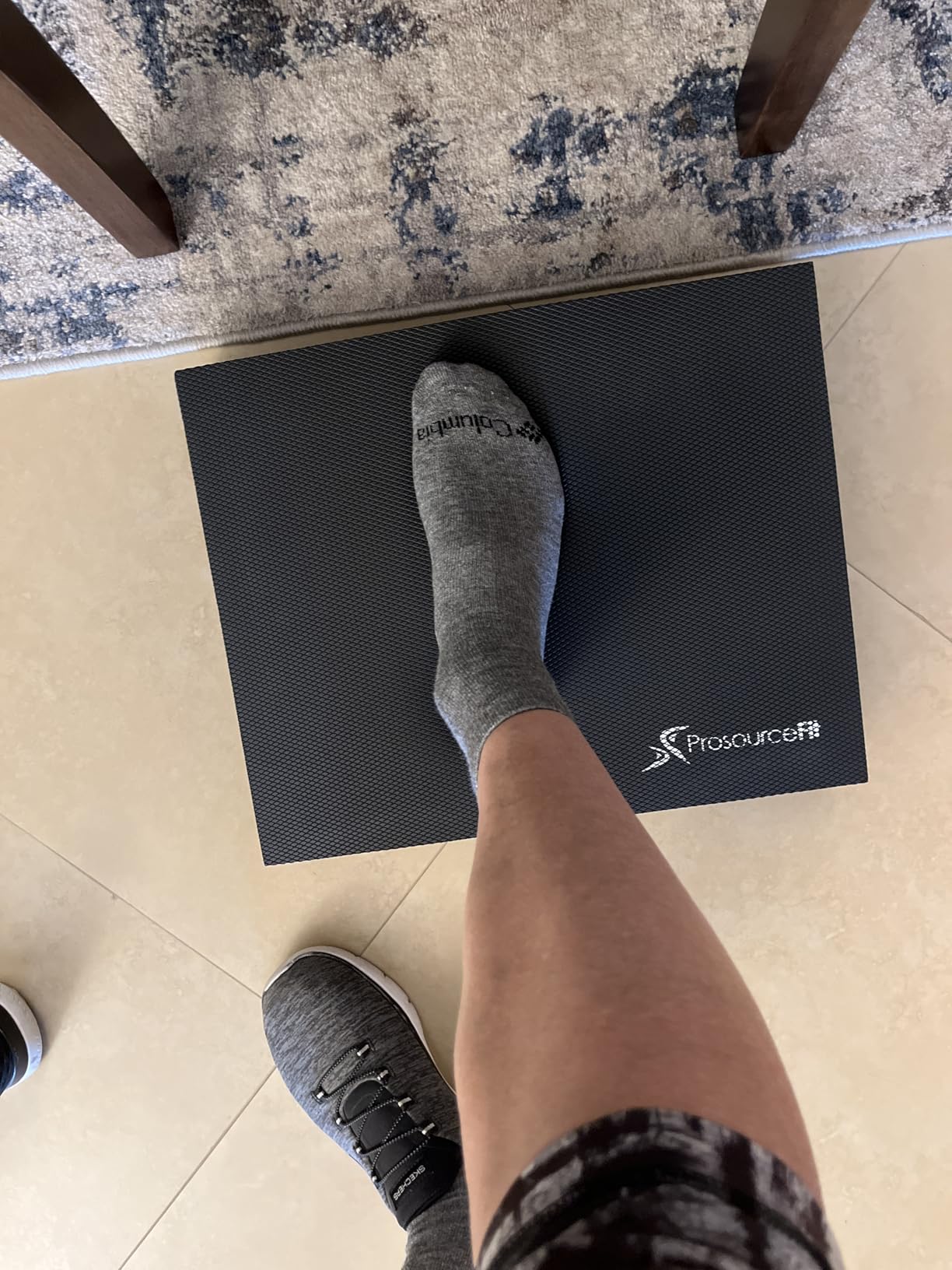
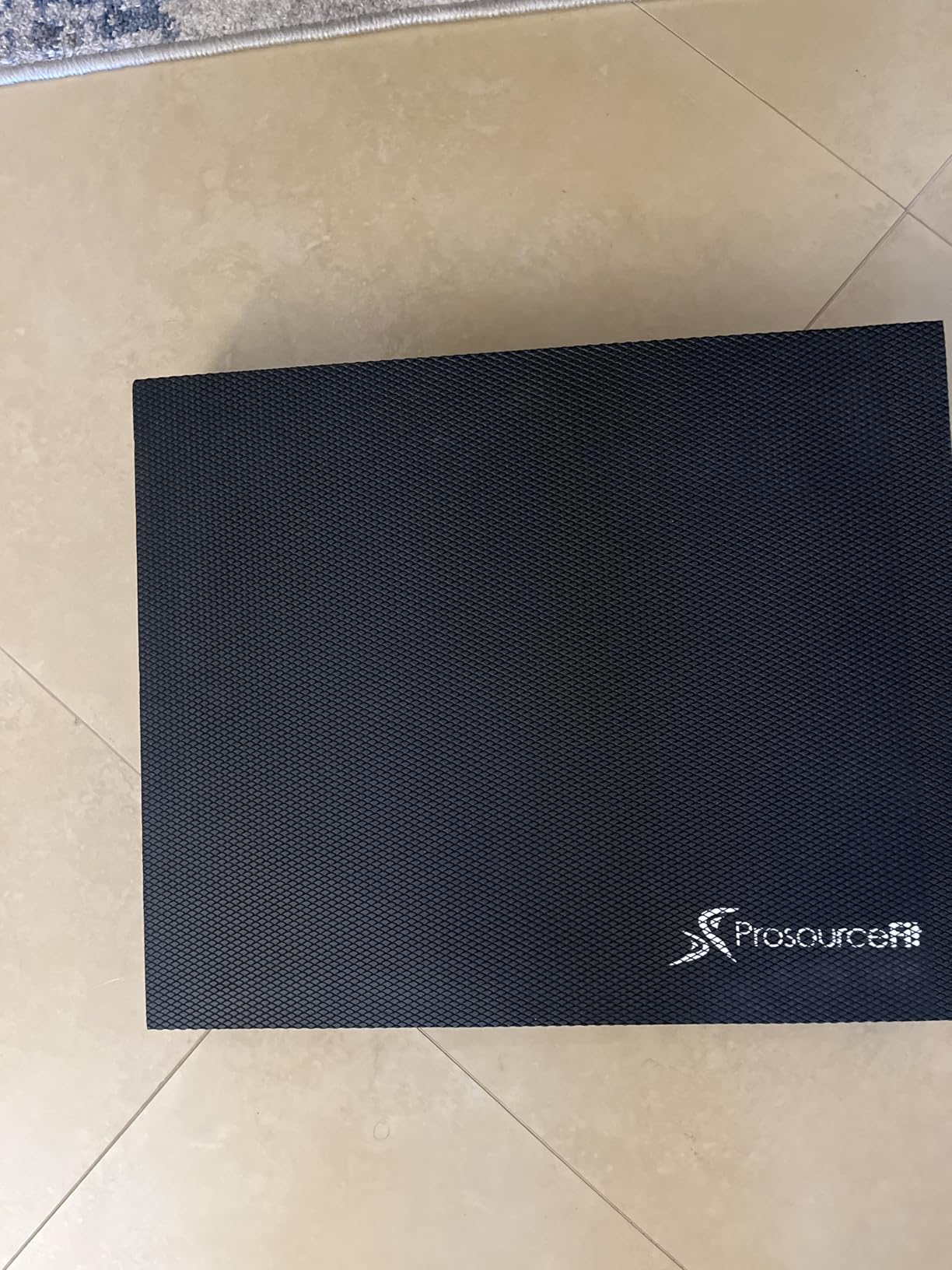
The blue TPE material has a slight texture that gives decent grip barefoot but is not as aggressive as the AIREX waffle pattern. For the price, the foam density is impressive and I did not notice any compression or sagging even after weeks of daily standing exercises. The pad cleans easily with a damp cloth and has shown no signs of wear.
One thing I appreciate is the versatility. I used it as a knee pad during gardening, a seat cushion for my meditation practice, and a foot pad under my standing desk. Multiple uses make it easy to justify the purchase even if you are new to balance training.
Who Should Buy This Pad
This pad is perfect for beginners and intermediate users who want a reliable balance tool without spending a fortune. Yoga practitioners will love it for challenging poses, and anyone doing home physical therapy will find it meets their needs. With a 340-kilogram weight capacity, it accommodates users of all sizes.
What to Keep in Mind
At 15.5 by 12.75 inches, some larger users found the surface area a bit tight for wide stances. If you plan to do lunges or squats with both feet on the pad, you may want to consider the Yes4All XL or the ANVICTOX XL instead. The limited lifetime warranty does provide peace of mind for long-term use.
2. Yes4All Balance Pad – Best Value with Multiple Size Options
Yes4All Exercise Balance Pad, Non-Slip Foam Kneeling Pad – L, Blue
15.5 x 13 x 2 in (Large)
TPE foam
1.1 lbs
500kg max weight
1-year warranty
Pros
- Available in L
- XL
- and XXL sizes
- Dense non-slip TPE foam with strong grip
- Absorbs impact and reduces stress on joints
- Versatile for daily life and workouts
Cons
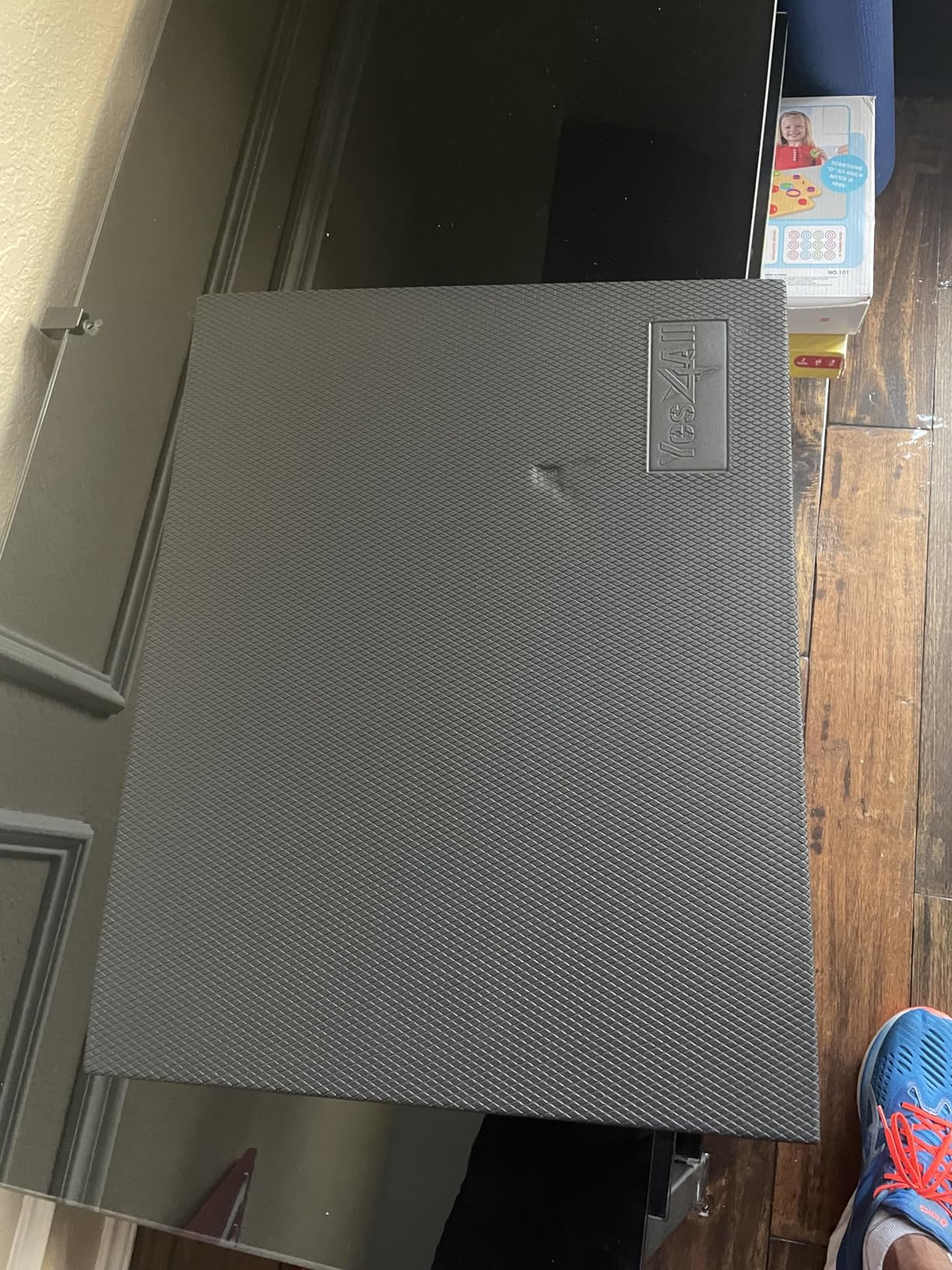
- Some customers reported shipping damage
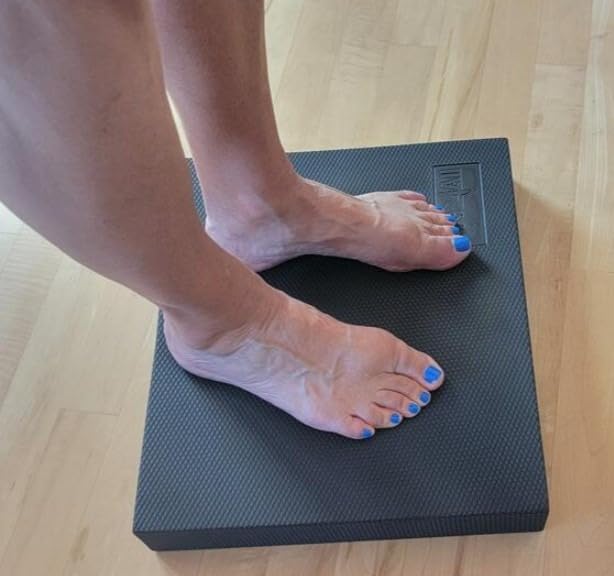
The Yes4All pad caught my attention because of the three size options, something most competitors do not offer. I tested the Large size, but the fact that XL and XXL are available means you can match the pad to your specific needs. Larger pads are better for wide stances and two-foot exercises, while the L size works well for targeted single-leg training.
The foam density on this pad feels slightly firmer than the ProsourceFit, which I actually preferred for standing exercises. The firmer surface still creates plenty of instability but feels more secure underfoot. During yoga transitions, I felt confident moving from one pose to another without worrying about the pad shifting.
With a 500-kilogram maximum weight recommendation, this is one of the strongest pads on the list. The TPE material has held up well through repeated planks, kneeling work, and step-up exercises. I did not notice any deformation or soft spots developing over time.
The non-slip surface works well on hardwood and tile, though I recommend using it on a yoga mat for maximum stability during dynamic movements. The pad is easy to wipe clean after sweaty sessions and dries quickly.
Who Should Buy This Pad
Anyone who wants flexibility in size should look at the Yes4All. If you are taller or have larger feet, the XL or XXL options give you the surface area you need. The 30-day free return policy and 1-year warranty make this a low-risk purchase for first-time balance pad buyers.
What to Keep in Mind
A small number of customers reported receiving pads with dents or compression marks from shipping. This is worth checking when your pad arrives. If you notice any deformation, Yes4All’s return process is straightforward and their customer service is responsive.
3. AIREX Balance Pad Elite – Professional Grade for Serious Training
Airex Balance Pad – Exercise Foam Pad Physical Therapy, Workout, Plank, Yoga, Pilates, Stretching, Balancing Stability Mat, Kneeling Cushion, Mobility Strength Trainer for Knee, Ankle – Elite, Blue
20 x 16 x 2.5 in
Closed-cell foam
1 lb
Swiss manufacturing
1-year warranty
Pros
- Number 1 recommended by physical therapists
- Non-slip waffle texture for extra grip
- Closed cell foam repels moisture and odors
- Edges remain flat and will not curl
- Professional-grade durability
Cons
- Premium price point compared to alternatives
The moment I stepped on the AIREX pad, I understood why physical therapists call it the gold standard. The waffle-textured surface gives an immediate grip sensation that no other pad on this list matches. My feet felt locked in even during dynamic movements, which built confidence for challenging balance exercises.
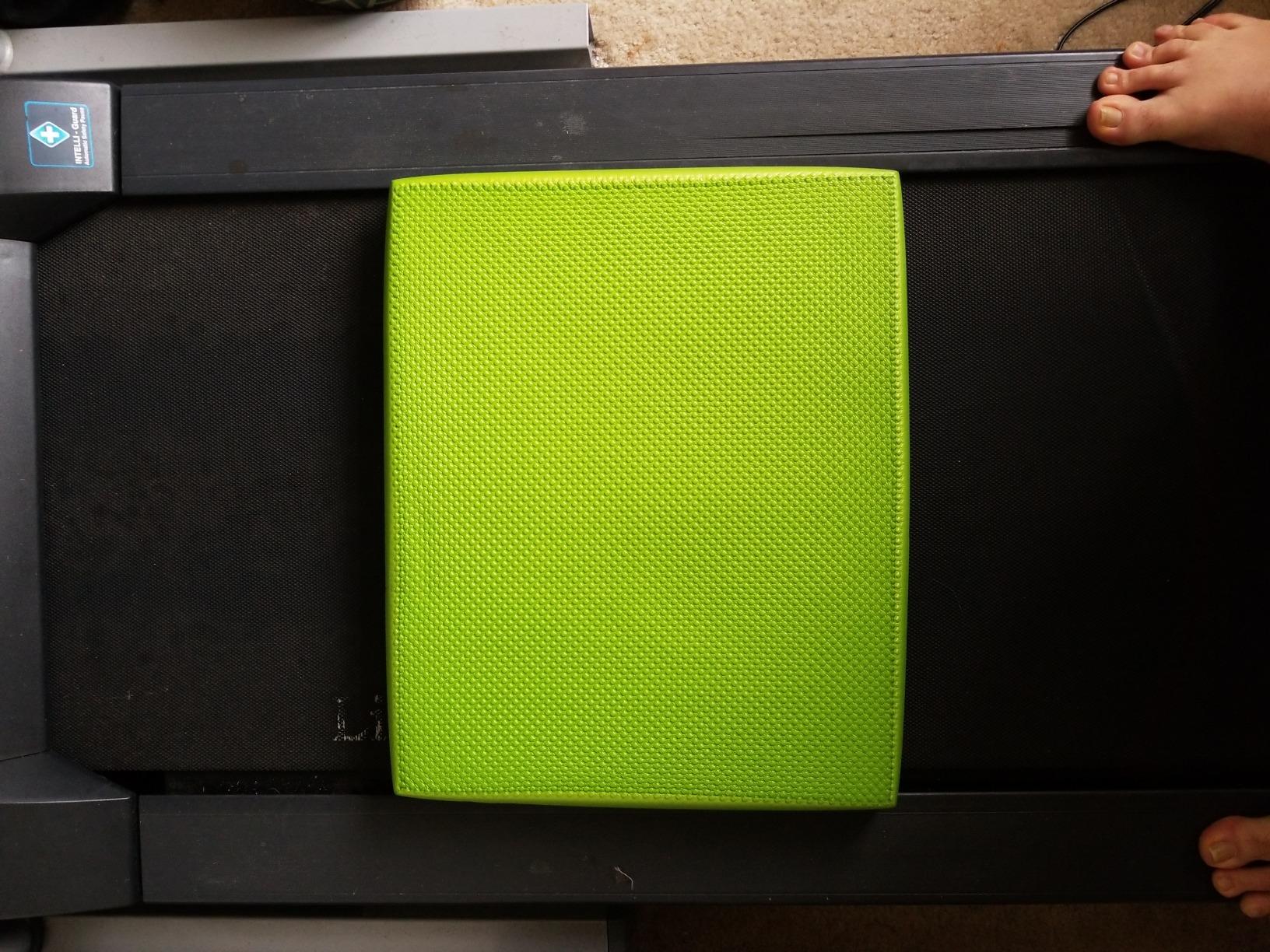
At 20 by 16 inches, the AIREX Elite gives you substantially more surface area than most competitors. This extra room made a real difference during lunges, wide-stance squats, and seated balance work. I never felt like I was running out of pad, even when transitioning between exercises.
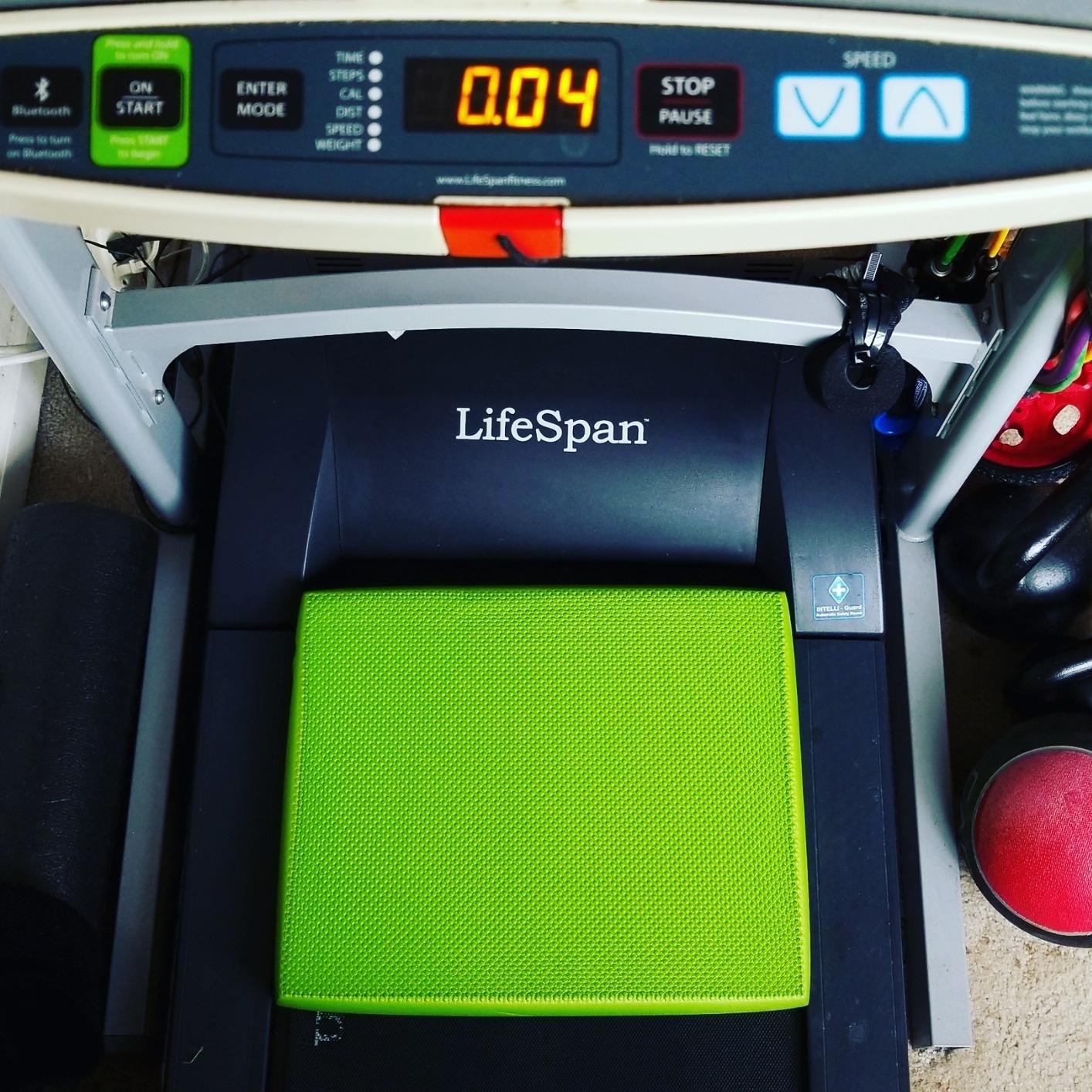
The closed-cell foam construction is what sets AIREX apart from TPE pads. It repels moisture, resists odors, and maintains its shape over years of use. I left a water bottle on it overnight and the surface was completely dry in the morning. Cleaning is as simple as rinsing it off and letting it air dry.
The Swiss manufacturing quality is evident in every detail. The edges are crisp and flat, showing no signs of curling even after being rolled for storage. The pad weighs just one pound but feels substantial and well-constructed when you hold it.
Who Should Buy This Pad
If you are serious about rehabilitation, run a physical therapy practice, or want the absolute best quality available, the AIREX is worth every penny. It is the pad that clinics and professional sports teams rely on daily. Yoga studios that want equipment to last for years should also invest in AIREX.
What to Keep in Mind
The price is significantly higher than every other pad on this list. For casual home use, a TPE pad at one-third the cost will serve most people well. However, if you train daily or need something that will not compress over time, the AIREX delivers long-term value that cheaper pads cannot match.
4. StrongTek Professional Foam Balance Pad – Compact and Reliable
StrongTek Foam Balance Pad, High-Density TPE, 15.8 x 13 x 2 in, Non-Slip
15.8 x 13 x 2 in
High-density TPE foam
0.7 lbs
Water-resistant
Textured surface
Pros
- Premium high-density TPE foam
- Textured surface for secure grip
- Soft yet firm joint-friendly cushioning
- Water-resistant and easy to clean
Cons
- Hand wash only care instructions
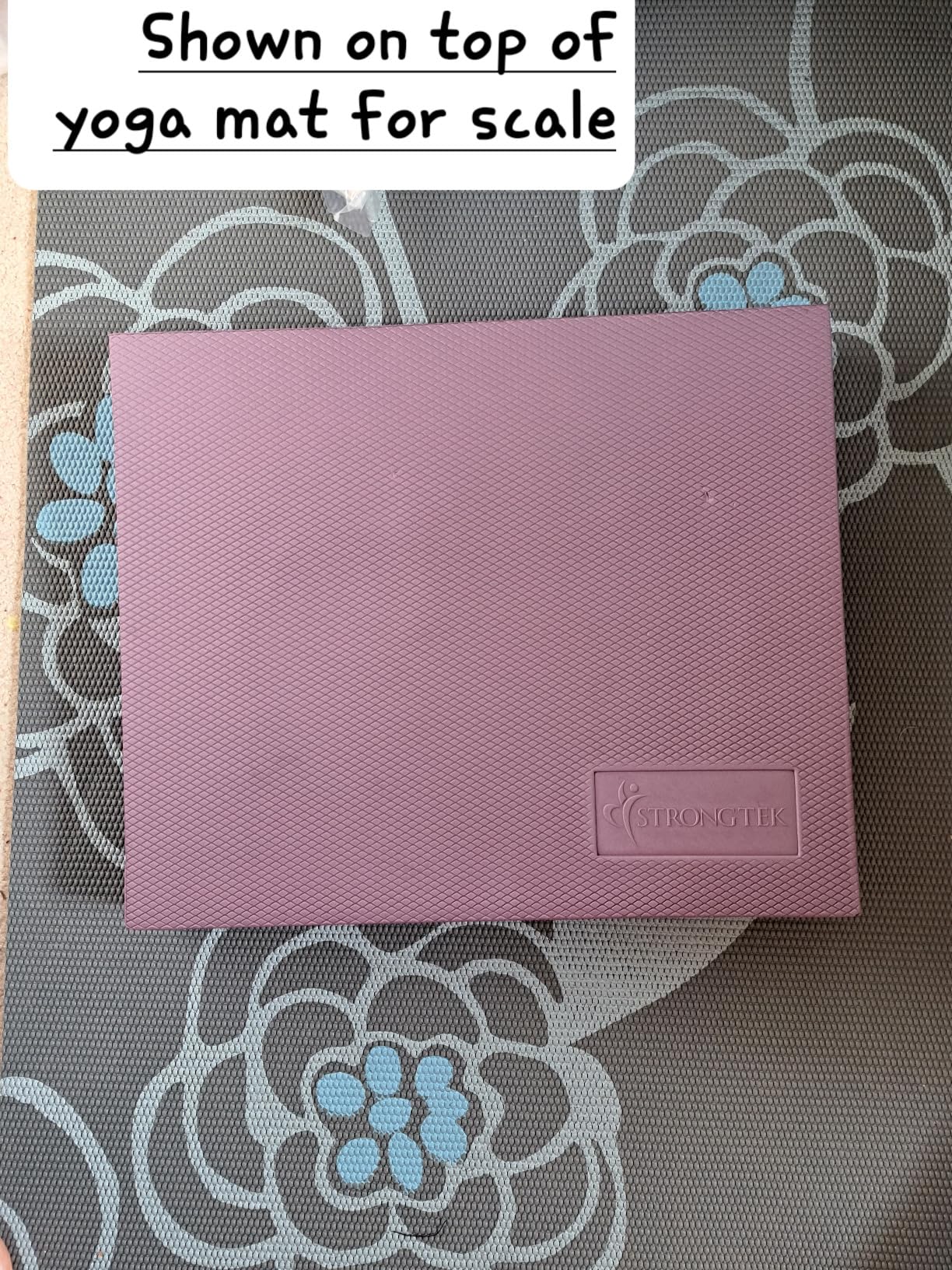
The StrongTek pad surprised me with its foam quality. The high-density TPE feels slightly different from the ProsourceFit, with a firmer rebound that some users may prefer for stability work. I found it particularly good for kneeling exercises where you need cushioning without sinking too deep.
During yoga practice, I used it for kneeling lunges and seated forward folds. The textured surface kept my knees and hands from sliding, even during a sweaty session. At just 0.7 pounds, it is one of the lightest pads on this list, making it easy to toss in a bag for studio sessions.
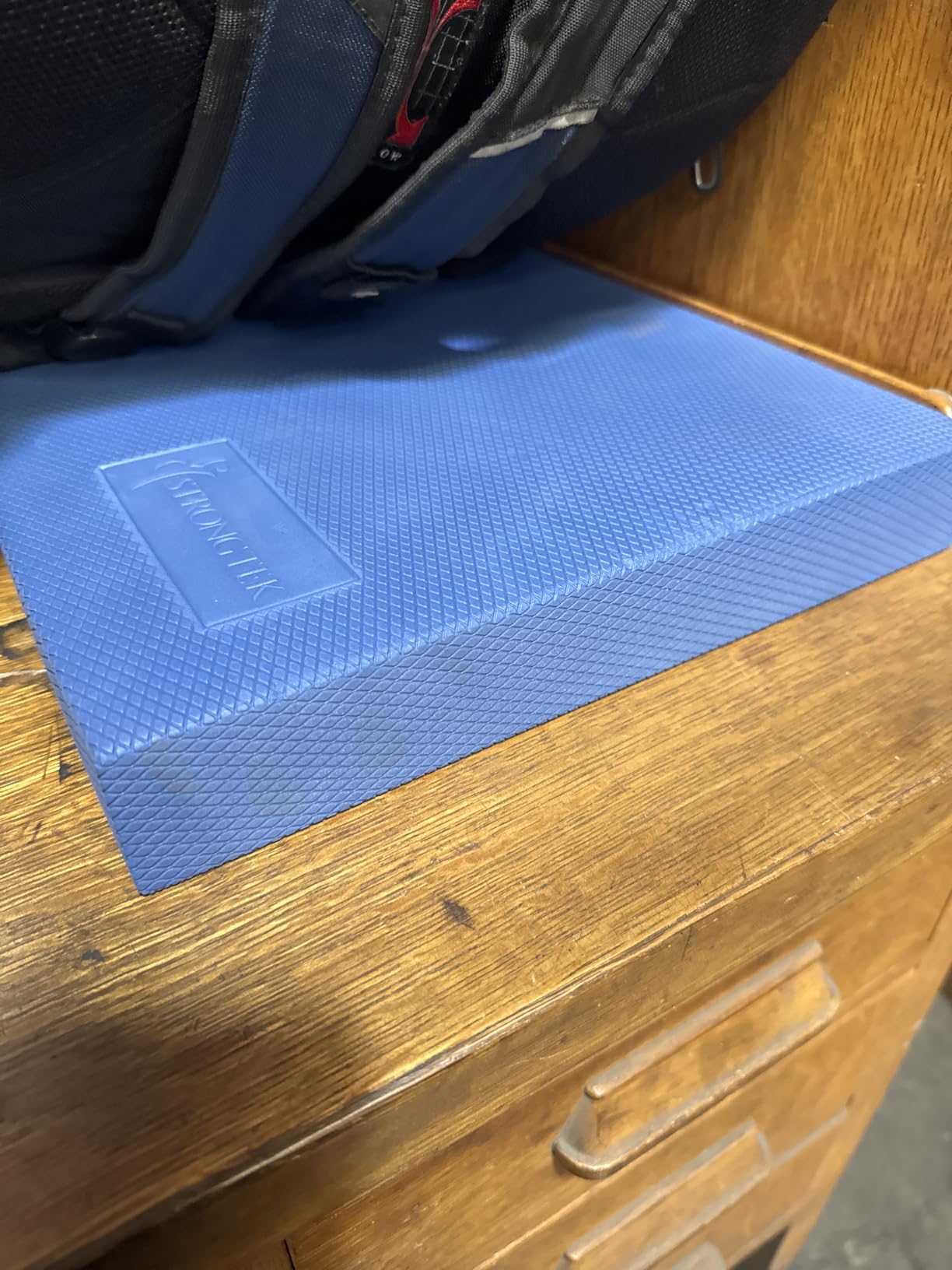
The water-resistant surface is a nice touch. After an intense workout, I simply wiped it down with a damp cloth and it was ready for the next session. The foam has maintained its shape well through repeated use, showing no signs of the compression that cheaper pads develop.
With 84 percent 5-star reviews from over 1,100 customers, the StrongTek has built a solid reputation. Users particularly praise it for standing desk use, where the firm surface provides all-day cushioning without becoming mushy.
Who Should Buy This Pad
This pad is a great fit for standing desk users who need cushioning alongside balance training. The firm TPE foam holds up well to extended standing without compressing. It is also a solid choice for yoga practitioners who want a pad that doubles as a meditation cushion.
What to Keep in Mind
The care instructions specify hand wash only, which is slightly more involved than wipe-clean pads. The 15.8 by 13 inch size is adequate for most exercises but may feel cramped for users with larger feet doing wide stances. Consider the ANVICTOX XL if you need more surface area.
5. ANVICTOX XL Balance Pad – Extra Large Surface for Maximum Stability
ANVICTOX Balance Pad 19.8 * 15.7 * 2.4″,XL Balance Pad for Physical Therapy,Extra Large Foam Balance Board Stability Pad for Rehabilitation Core Training Stretching Mobility (Blue-TPE)
19.8 x 15.7 x 2.4 in
TPE foam
570g
XL size
One-year warranty
Pros
- Extra large size with 102 sq in more surface area
- Premium TPE material with good elasticity
- Large support area for safety during training
- Good anti-slip performance
Cons
- Larger size may be less portable
If you have ever felt cramped on a standard balance pad, the ANVICTOX XL solves that problem. At 19.8 by 15.7 inches, it offers 102 square inches more surface area than a standard large pad. I could comfortably do bilateral exercises like squats and wide stances without worrying about my feet sliding off the edges.
The 2.4-inch thickness is on the higher end, providing deeper instability that challenges even experienced users. During single-leg balance work, I felt the extra depth immediately. My stabilizer muscles worked harder to maintain equilibrium compared to thinner pads.
The TPE material has good elasticity and springs back quickly after compression. I tested repeated step-ups and jumps, and the foam recovered its shape every time. The anti-slip surface performed well on both hardwood and carpet, though I still recommend a yoga mat underneath for dynamic exercises.
ANVICTOX offers a one-year warranty with 24/7 customer service, which is reassuring for a relatively newer brand. The 301 reviews and 4.6-star rating suggest solid customer satisfaction, with users particularly praising the pad for rehabilitation therapy.
Who Should Buy This Pad
Taller users, anyone doing bilateral exercises, and people in rehabilitation who need a larger stable surface should consider the ANVICTOX XL. The extra room provides confidence during exercises where balance is already challenging. It is also great for seated balance work where you need more surface area.
What to Keep in Mind
The larger size means it is less portable than standard pads. If you plan to carry your pad to a studio or gym regularly, the dimensions may be cumbersome. The brand is also newer with fewer reviews than established names, so long-term durability data is limited compared to something like the AIREX.
6. Vive Balance Pad – Senior-Friendly Design with Solid Warranty
Vive Balance Pad – Foam Board Yoga Mat Block for Physical Therapy
15.8 x 13.4 x 2.4 in
Closed-cell foam
0.33 kg
300lb capacity
60-day guarantee
Pros
- Improves strength
- balance and mobility
- Extra large textured platform
- Durable tear-resistant closed-cell foam
- 60 day unconditional guarantee
- Lightweight and portable
Cons
- May not be suitable for individuals over 300 pounds
The Vive pad is specifically marketed toward seniors and rehabilitation patients, and it shows in the design. The lightly textured surface provides grip without being aggressive on sensitive feet. I found it comfortable for barefoot use during extended balance sessions.
The 2.4-inch thickness hits a sweet spot for beginners and seniors. It provides enough instability to challenge balance without being so thick that it feels dangerous. My mother, who is in her 70s, tried it for simple standing balance exercises and felt secure and supported.
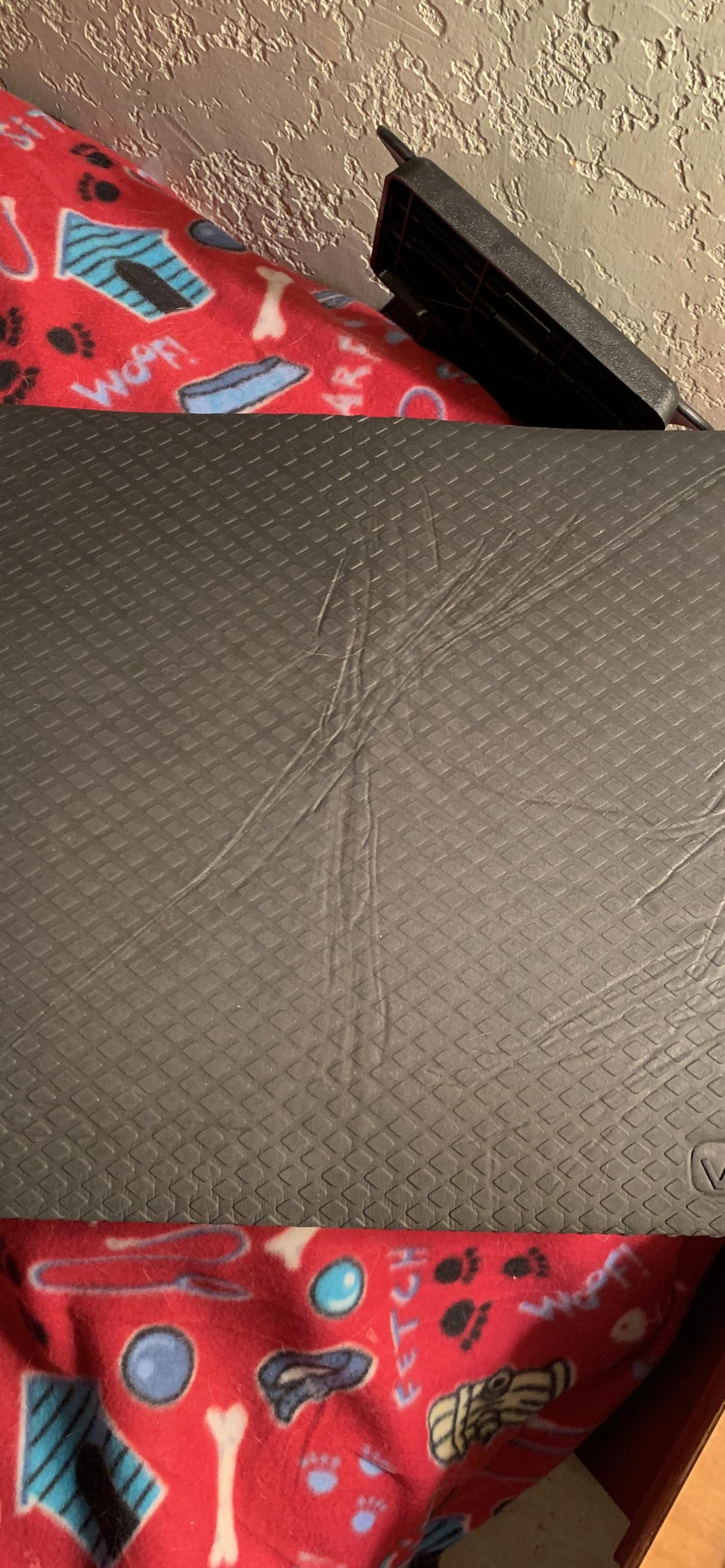
The closed-cell foam is tear-resistant and has held up well through repeated use. I appreciate that it is latex-free, which matters for users with latex allergies. The foam repels sweat effectively and dries quickly between sessions.
With over 6,500 reviews and a 4.6-star rating, the Vive has built impressive customer trust. The 60-day unconditional guarantee is one of the best return policies on this list. If the pad does not work for you, you have two full months to return it.
Who Should Buy This Pad
Seniors, physical therapy patients, and beginners should put the Vive at the top of their list. The moderate instability level is perfect for building confidence before progressing to more challenging surfaces. The 300-pound weight capacity covers most users, and the 60-day guarantee removes all purchase risk.
What to Keep in Mind
The 300-pound weight limit is lower than several competitors on this list. Heavier users should look at the ProsourceFit (340kg) or Yes4All (500kg) instead. The foam density is slightly softer than premium pads, which is intentional for the senior market but may not provide enough challenge for advanced athletes.
7. OPTP Stability Trainer – Professional Choice for Clinics and Studios
OPTP Stability Trainer – Textured Foam Balance Pad, Non-Slip Surface, Blue
17 x 9.5 x 2.4 in
Closed-cell foam
Latex free
Textured surface
Compact design
Pros
- Versatile for PT
- yoga
- pilates and dance
- Compact and travel-friendly
- Textured surface for non-slip footing
- Water-resistant and easy to clean
- Latex free
Cons
- Limited stock availability
- Narrower than standard pads
The OPTP Stability Trainer has a different footprint from most pads on this list. At 17 by 9.5 inches, it is narrower and longer, which changes the training dynamic. I found this shape excellent for single-leg work and linear movements where a wider pad is unnecessary.
The closed-cell foam has a firm, professional feel that reminds me of clinical equipment. It provides consistent instability without the soft sinking sensation of some TPE pads. During ankle rehabilitation exercises, the firmer surface gave me better proprioceptive feedback.
OPTP is a respected name in physical therapy, and the build quality reflects that heritage. The textured surface grips well barefoot and with socks, and the latex-free construction makes it suitable for clinical settings where allergies are a concern.
The compact size makes this the most travel-friendly pad on the list. I easily fit it in a carry-on bag for a trip, which is something I cannot say for the wider AIREX or ANVICTOX pads. For therapists who travel between clinics, this is a significant advantage.
Who Should Buy This Pad
Physical therapists, Pilates instructors, and anyone who needs a travel-friendly balance pad should consider the OPTP. The narrower shape is ideal for targeted single-leg training and linear exercise patterns. Dancers will also appreciate the elongated surface for footwork drills.
What to Keep in Mind
The 9.5-inch width is noticeably narrower than standard pads. If you need room for both feet or wide stances, this is not the right choice. Stock availability has also been an issue, with only limited quantities available at times. The review count of 148 reflects its niche professional market positioning.
8. Hshbxd Professional Balance Pad – Rising Star with Excellent Ratings
Professional Balance Pad for Physical Therapy and Stability Training
15.7 x 13 x 2 in
TPE foam
0.31 kg
300lb capacity
Two sizes available
Pros
- Boosts balance and core strength
- Designed for physical therapy and injury recovery
- Versatile everyday support
- Non-slip sweat-resistant TPE
- Portable in two sizes
Cons
- Lower review count indicates newer product
The Hshbxd pad is a newer entrant with an impressive 4.8-star rating across 90 reviews. Sometimes newer products have something to prove, and this pad delivers. The TPE foam has a satisfying density that rivals more established brands at a similar price point.
I tested it across a range of exercises including standing balance, planks, and kneeling stretches. The textured surface provided consistent grip throughout, and the foam recovered quickly between sets. The eco-friendly TPE material has no chemical smell, which I appreciated during the first few uses.
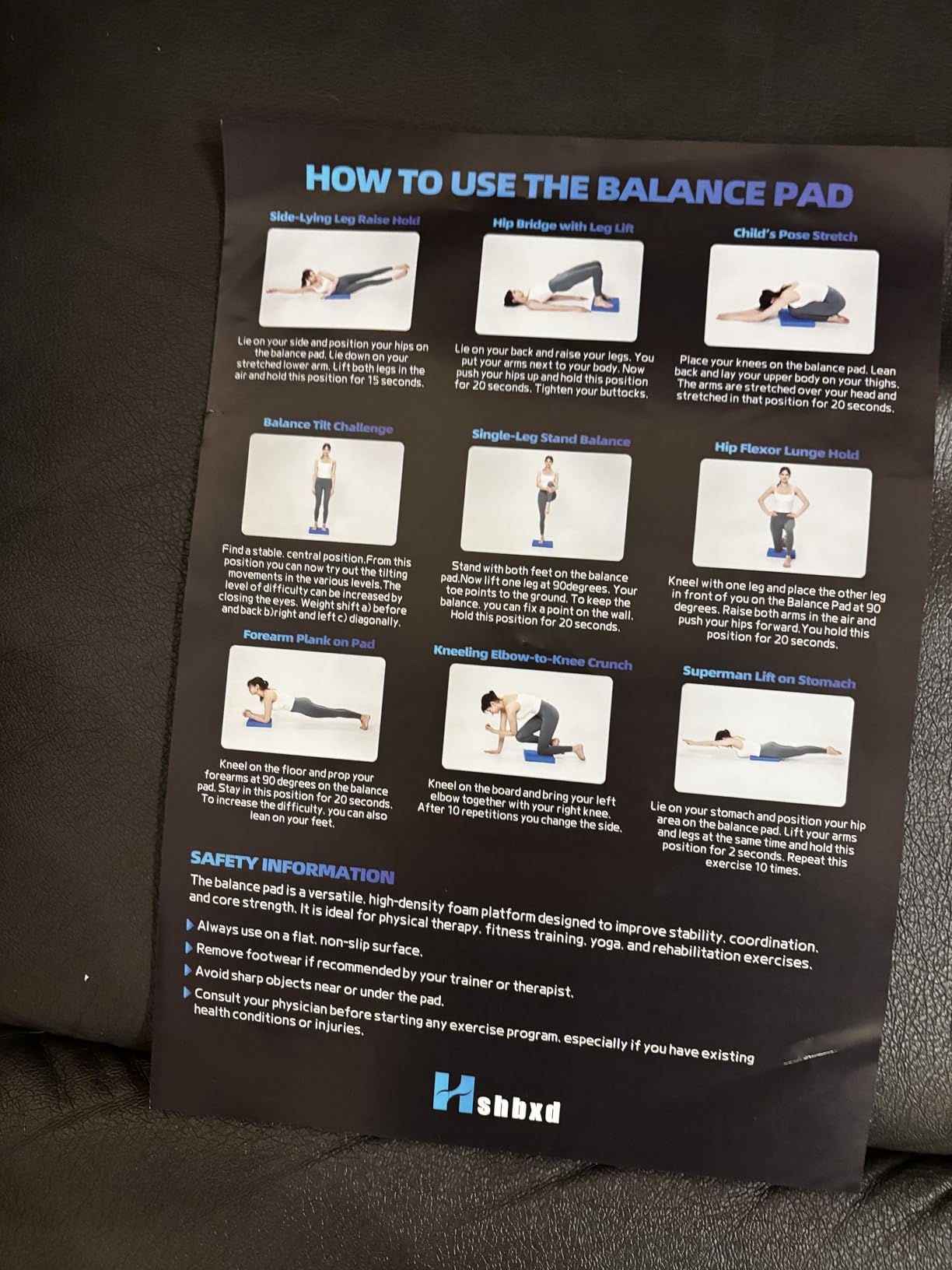
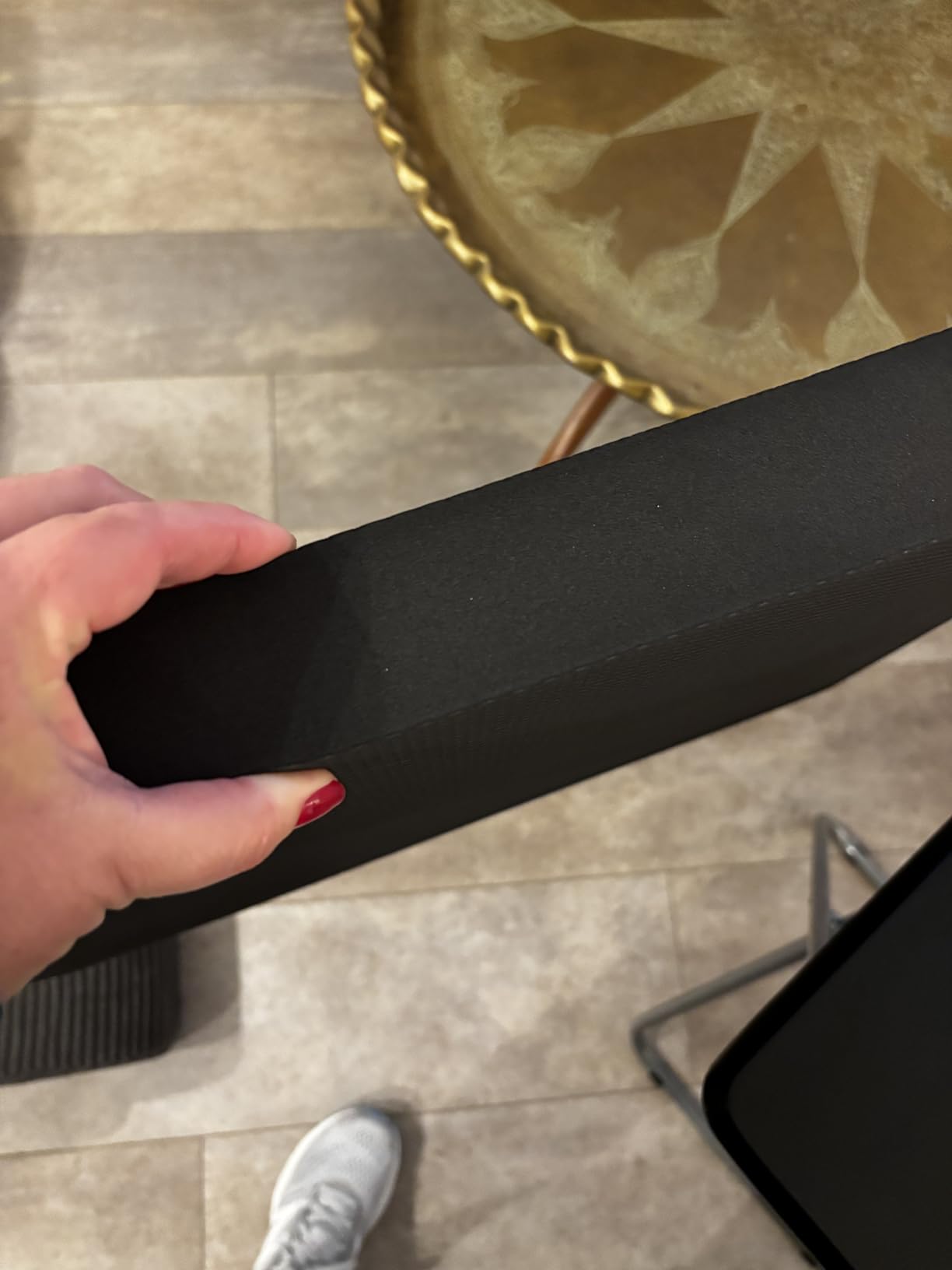
The two available sizes (15.7 by 13 by 2 inches and 18.8 by 15 by 2 inches) give you flexibility similar to the Yes4All. I tested the standard size, which worked well for all my exercises. At just 0.31 kilograms, it is one of the lightest pads available.
What impressed me most was the versatility. I used it as a meditation cushion during a 20-minute seated session, then transitioned directly into balance training. The cushioning was comfortable for sitting while still providing the right amount of instability for standing exercises.
Who Should Buy This Pad
Budget-conscious buyers who want quality should look at the Hshbxd. The 87 percent 5-star rating suggests excellent customer satisfaction despite the limited review count. It is a particularly good option for home users who need a versatile pad for both fitness and everyday comfort uses.
What to Keep in Mind
With only 90 reviews, this is a relatively untested product compared to the ProsourceFit’s 16,000-plus reviews. While the early feedback is excellent, long-term durability data is still accumulating. The 300-pound weight capacity is adequate for most users but lower than the top-rated options.
9. HAPBEAR Exercise Balance Pad – Budget Pick with Dual-Sided Design
HAPBEAR Exercise Balance Pad – 15″x12″ Non-Slip Textured Bottom Stability Training Mat – 2.25″ Thick Soft Cushioned Foam for Adults, Physical Therapy, Core Training & Home Workouts – Blue
15.8 x 13 x 2.4 in
TPE foam
320g
Dual-sided design
Diamond-grid texture
Pros
- Dual-sided and dual-use design
- Thick 6cm cushioned support
- Diamond-grid pattern for powerful grip
- Waterproof easy-clean surface
- Lightweight for transport
Cons
- Weight capacity listing appears to be a data error
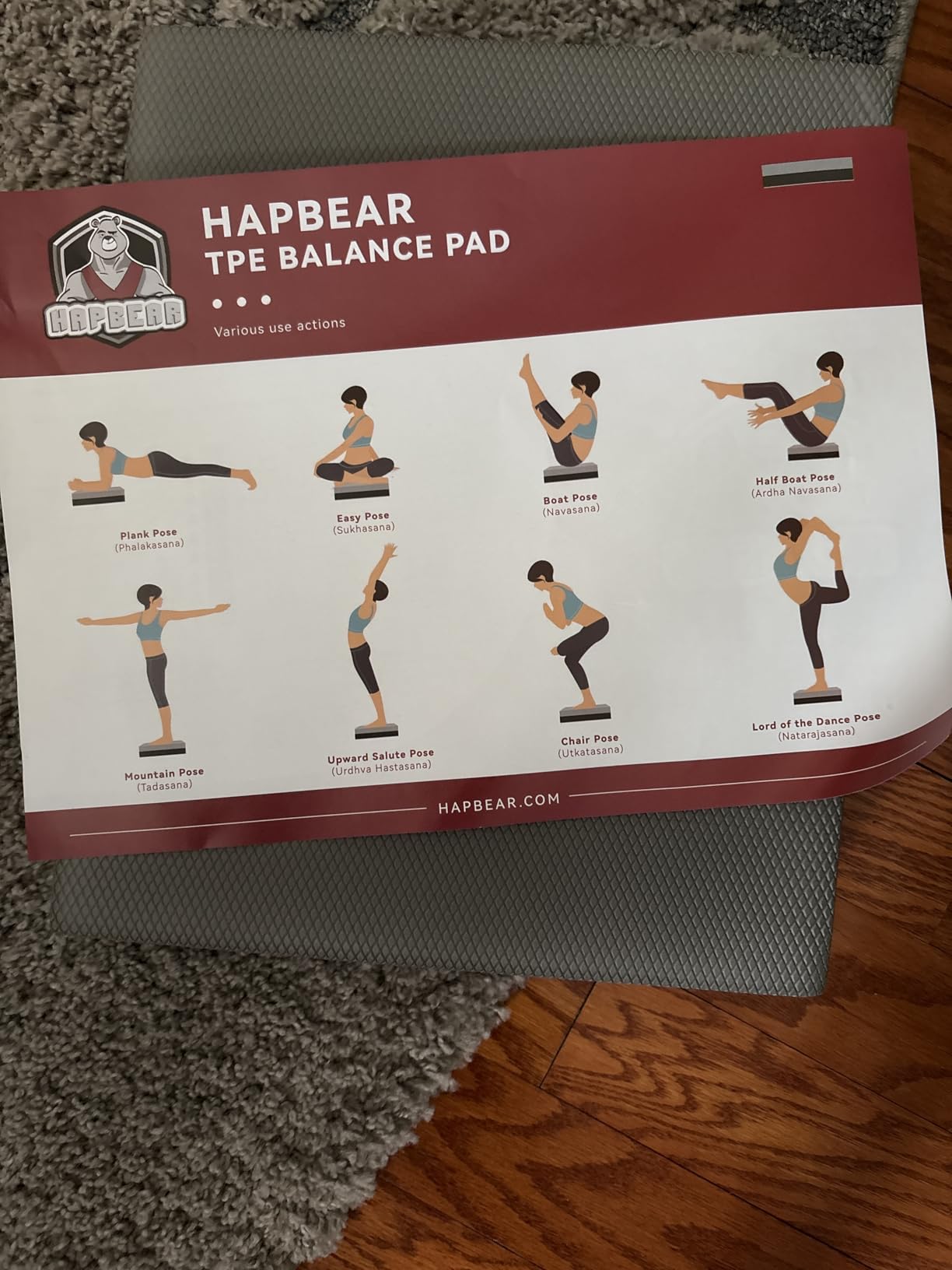
At under $22, the HAPBEAR is the most affordable pad on this list, but it does not feel cheap. The dual-sided design with different colors on each side is a nice touch that lets you choose your aesthetic. More importantly, both surfaces provide solid grip thanks to the diamond-grid pattern.
I tested both sides during my workouts and found equally reliable grip on each. The 6cm (2.4 inch) thickness provides deep cushioning that challenges balance effectively. During planks and push-ups with hands on the pad, my wrists and core got an extra workout from the instability.
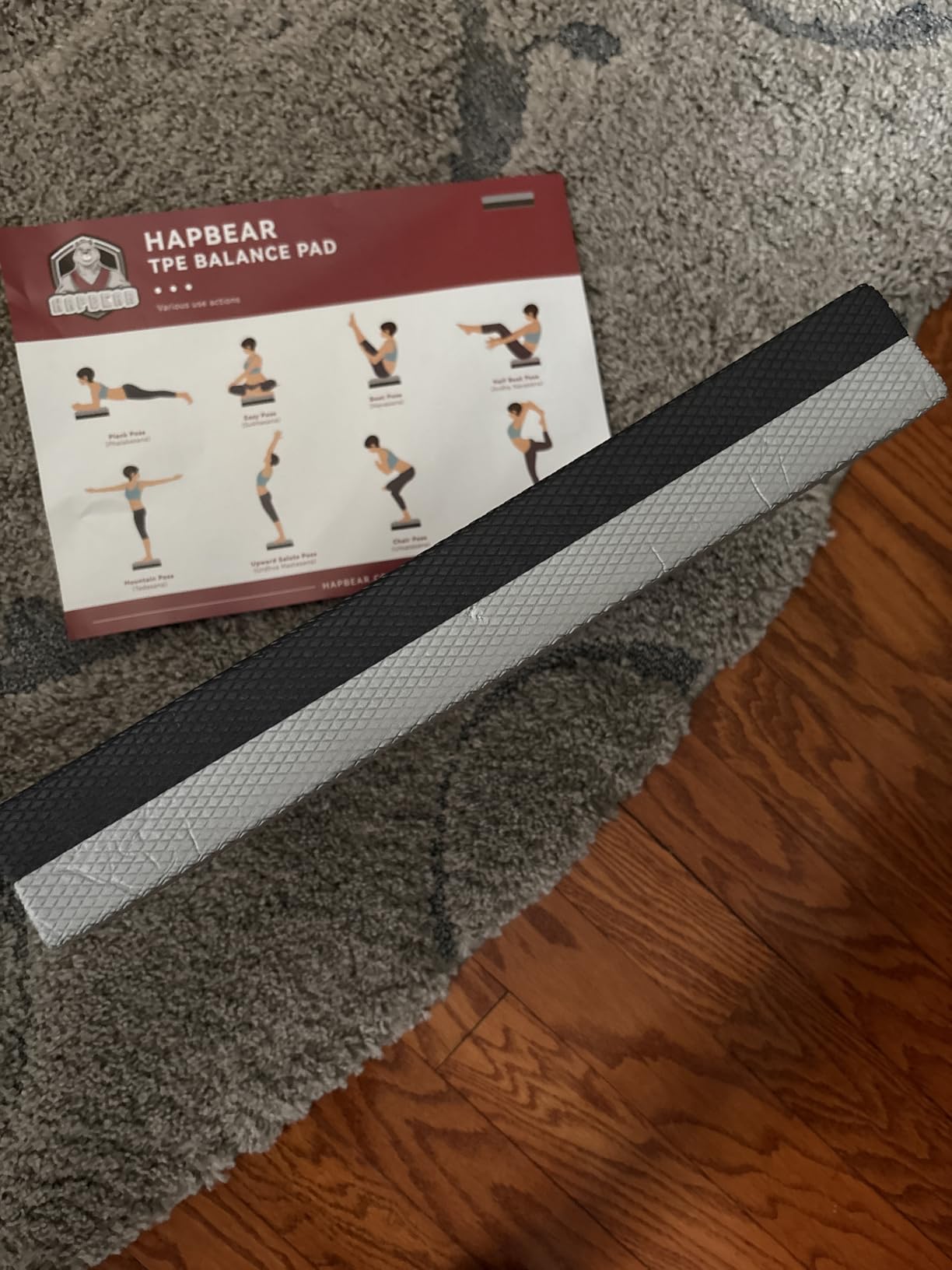
The waterproof TPE surface wipes clean in seconds, which I appreciate after sweaty sessions. The diamond-grid texture is more aggressive than the ProsourceFit surface, providing a locked-in feel that built my confidence during single-leg work. The foam has maintained its shape through weeks of testing.
With 261 reviews and an 81 percent 5-star rate, the HAPBEAR has quickly built a loyal following. Users praise the dual-sided design and the thick cushioning that works for both balance training and joint protection during floor exercises.
Who Should Buy This Pad
Anyone on a tight budget should start here. The HAPBEAR delivers quality and features that rival pads twice its price. Beginners will appreciate the thick cushioning and secure grip, while the dual-sided design adds versatility. It is also a great option as a second pad for travel or outdoor use.
What to Keep in Mind
The listed maximum weight recommendation appears to be a data entry error, so heavy users should verify weight capacity before purchasing. The aggressive texture may feel rough on sensitive skin compared to smoother TPE pads. Start with shorter sessions if you are new to balance training.
10. Gradient Fitness Balance Pad – Simple and Effective for Core Training
Gradient Fitness Balance Pad Foam Board Stability Cushion Exercise Trainer for Balance, Stretching, Physical Therapy, Mobility, Rehabilitation and Core Strength Training
16 x 13.5 x 2.5 in
Foam
0.66 kg
Black
Lightweight and portable
Pros
- Enhanced balance through proprioceptive challenge
- Core muscle strengthening including abs and lower back
- Rehabilitation and injury prevention support
- Improved flexibility and joint mobility
- Versatile and portable
Cons
- Older product with relatively few reviews
The Gradient Fitness pad has been around since 2016, which gives it a longer track record than most pads on this list. The soft, durable foam has a different feel from the TPE pads, slightly more cushioned and less firm. I found it comfortable for kneeling and seated exercises.
At 16 by 13.5 by 2.5 inches, the dimensions are similar to the StrongTek but with a bit more thickness. The black color is sleek and does not show dirt easily, which is practical for frequent use. During standing balance work, the foam provided consistent instability across the surface.
I particularly liked this pad for core exercises. Planks and crunches on the unstable surface engaged my abdominals and lower back more intensely than doing the same exercises on the floor. The proprioceptive challenge is real, and I felt the difference in my core the next day.
The foam is easy to compress for storage and springs back to full thickness when released. With 83 percent 5-star reviews from 138 customers, the feedback is positive. Users particularly praise the pad for injury prevention and flexibility work.
Who Should Buy This Pad
Users focused on core strengthening and flexibility will get the most out of the Gradient Fitness pad. The softer foam is gentle on joints during floor work while still challenging your balance system. It is also a good option for users who prefer a traditional foam feel over TPE material.
What to Keep in Mind
With only 138 reviews and a 2016 launch date, this product has not generated the volume of feedback that newer competitors have. The foam may compress more quickly than denser TPE alternatives with heavy daily use. For professional or clinical applications, the AIREX or OPTP would be better long-term investments.
How to Choose the Right Foam Balance Pad in 2026?
Choosing the right balance pad comes down to understanding your specific needs. Here are the key factors I considered during testing, along with insights from physical therapy forums and customer reviews.
Thickness: Finding Your Instability Level
Thickness is the most important factor for how challenging the pad feels. Most pads range from 2 to 2.5 inches thick. A 2-inch pad provides moderate instability suitable for beginners and seniors. Thicker pads (2.4 to 2.5 inches) create more challenge for intermediate and advanced users.
If you are recovering from an injury, start with a standard 2-inch pad and progress to thicker options as your stability improves. The Vive and HAPBEAR both offer 2.4-inch thickness that challenges without overwhelming, making them good middle-ground options.
Material: Closed-Cell Foam vs TPE
The two main materials are closed-cell foam (used by AIREX and Vive) and TPE (thermoplastic elastomer, used by most other brands). Closed-cell foam repels moisture, resists odors, and maintains shape longer. It is the professional standard for clinical use. TPE is lighter, more affordable, and still provides excellent instability training.
Reddit’s physical therapy community consistently notes that Airex closed-cell foam feels more secure underfoot compared to generic TPE pads. However, for personal home use, TPE pads at one-third the price are perfectly acceptable. The ProsourceFit and Yes4All both demonstrate that TPE can deliver professional-level performance.
Size: Match the Pad to Your Exercises
Standard balance pads measure roughly 15.5 by 13 inches. If you plan to do bilateral exercises with both feet on the pad, look for XL options like the ANVICTOX (19.8 by 15.7 inches) or the Yes4All XXL. For travel and single-leg work, the narrower OPTP (17 by 9.5 inches) is ideal.
Taller users and those with larger feet should prioritize surface area. Standing on a pad that is too small defeats the purpose because your feet may hang off the edges, reducing the instability challenge and creating a safety risk.
Surface Texture and Grip Quality
Grip quality varies significantly between brands. The AIREX waffle texture provides the best barefoot grip of any pad I tested. The HAPBEAR diamond-grid pattern is also excellent. Smoother TPE surfaces like the ProsourceFit are adequate but may feel less secure during sweaty sessions.
Physical therapists on Reddit noted that some generic brands feel slippery underfoot compared to clinical-grade pads. If grip is a priority, look for textured or patterned surfaces rather than smooth foam.
Budget vs Premium: When to Invest More
For home use, a $20-30 TPE pad will serve most people well. The ProsourceFit, Yes4All, StrongTek, and HAPBEAR all deliver excellent value in this range. For daily or professional use, the AIREX at around $100 is a worthwhile investment that will outlast cheaper pads by years.
The running community on Reddit prefers foam pads over balance boards for ankle strengthening, noting that pads are safer and more versatile. For injury prevention and general fitness, any pad on this list will do the job. Choose based on your budget and intended frequency of use.
Yoga-Specific Balance Pad Exercises
Since Moksana Yoga is all about deepening your practice, here are three ways to incorporate a balance pad into yoga. Place the pad under your standing foot during tree pose to challenge ankle stability. Use it under both hands during downward dog to engage your core more intensely. Try seated meditation on the pad for an active sitting challenge that improves postural awareness.
FAQs
Are balance pads good for ankle stability?
Yes, balance pads are excellent for ankle stability. The unstable foam surface forces your ankle stabilizer muscles to engage continuously, strengthening the muscles, tendons, and ligaments around the ankle joint. Physical therapists regularly prescribe balance pad exercises for ankle sprain recovery and injury prevention.
What is the best balance pad?
The AIREX Balance Pad is the gold standard recommended by physical therapists for its professional-grade closed-cell foam and durability. For home users, the ProsourceFit Exercise Balance Pad offers the best value with over 16,000 reviews and a 4.8-star rating. Budget-conscious buyers should consider the HAPBEAR Balance Pad.
Do balance boards actually improve balance?
Yes, balance boards and foam balance pads both improve balance by challenging your proprioceptive system. The unstable surface forces your body to make constant micro-adjustments, strengthening stabilizer muscles in your ankles, knees, hips, and core for better overall coordination.
What is the best balance device for seniors?
Foam balance pads are ideal for seniors because they provide moderate instability without the fall risk of balance boards. The Vive Balance Pad is particularly good for seniors with its large platform, 300-pound capacity, and 60-day guarantee. Seniors should start with 2-inch thick pads and progress gradually.
Are balance pads worth it?
Balance pads are worth the investment for anyone focused on ankle stability, injury prevention, or core strength. They cost between $20 and $100 and last for years with proper care. Physical therapists use them extensively in rehabilitation, and athletes incorporate them into training for improved proprioception.
Final Thoughts on the Best Foam Balance Pads for 2026
After testing all 10 pads, three stand out for different reasons. The ProsourceFit Exercise Balance Pad is our Editor’s Choice for its unbeatable combination of quality, reviews, and value. The Yes4All Balance Pad offers the best overall value with multiple size options and a 500-kilogram weight capacity. The AIREX Balance Pad Elite remains the professional standard for anyone willing to invest in the best.
For seniors and beginners, the Vive Balance Pad provides the safest entry point with its moderate instability and 60-day guarantee. Budget-conscious buyers will love the HAPBEAR at under $22. And for those who need extra surface area, the ANVICTOX XL gives you room to move.
Whichever pad you choose, consistency is what matters most. Even five minutes of daily balance training on a foam balance pad can improve ankle stability, core strength, and proprioception over time. Start with short sessions, focus on form, and enjoy the process of building better balance.