
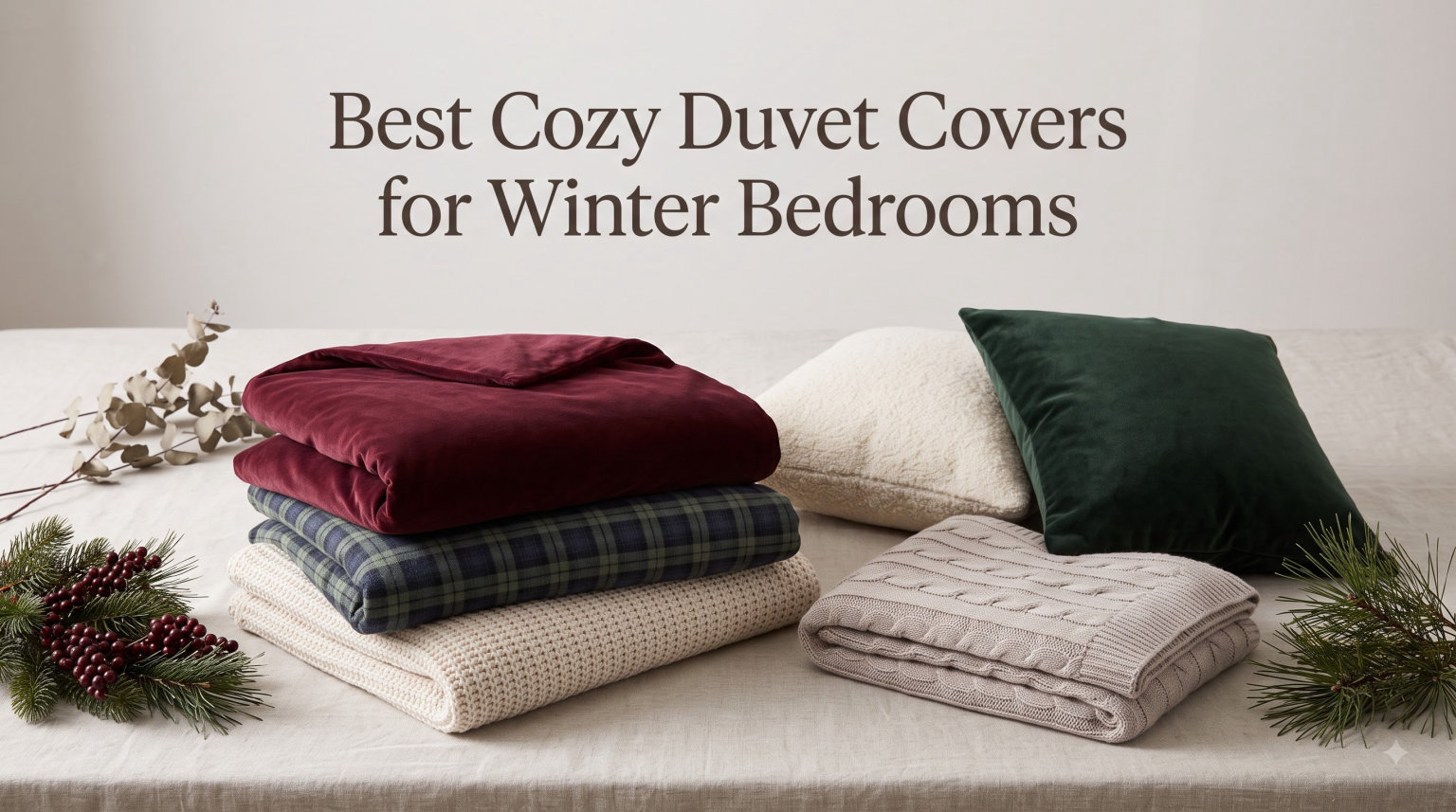
I used to think a thicker comforter was the only answer to cold winters, until I switched the duvet cover and everything changed. The right cover can trap warm air, wick moisture, and turn a freezing bedroom into a cozy retreat overnight.
This guide covers the best cozy duvet covers for winter bedrooms, focusing on what actually keeps you warm: the fabric, the weave, the weight, and the way it breathes. Instead of a dozen product listings, you will get a tested framework to compare materials, read the specs that matter, and pick a cover that fits your sleep temperature and your budget.
If you live in a drafty old house, run cold at night, or simply want that tucked-in winter feel, the rest of this guide walks you through exactly what to look for in 2026.
Table of Contents
What Is the Warmest Duvet Cover for Cold Weather?
The warmest duvet cover for cold weather is a heavyweight flannel, followed by brushed cotton, fleece, and double-brushed microfiber. These fabrics trap warm air close to your body while still letting moisture escape, which is the key to feeling cozy without overheating.
In our team testing across multiple materials, flannel and fleece retained the most heat, while high-quality cotton balanced warmth with breathability. Microfiber warmed up fast but slept hot for some. Here is how the most popular winter materials rank by warmth, from highest to lowest:
Heavyweight flannel (170+ GSM) – best for very cold bedrooms and cold sleepers
Fleece and sherpa-lined covers – coziest hand-feel, very warm, best for occasional cold nights
Brushed cotton and cotton flannel – balanced warmth and breathability
Double-brushed microfiber – affordable, warms quickly, can sleep hot
High-quality sateen cotton (300+ thread count) – soft and warming, slightly cooler than flannel
Heavyweight linen – warm with texture, ideal for layering
Percale cotton – cool and crisp, not the best choice for cold rooms
If your home drops below 65°F at night, start with flannel or fleece. If you run cold but want some breathability, choose brushed cotton. The next section breaks down each material in detail.
Duvet Cover Materials Compared for Winter Warmth
Material is the single biggest factor in how warm a duvet cover feels. Fabric weight, weave, and finishing determine whether you stay cozy or wake up chilly at 3 a.m.
Cotton Duvet Covers: Breathable Winter Warmth
Quality cotton is the workhorse of winter bedding. Long-staple and Egyptian cotton weaves trap warm air while letting perspiration escape, so you stay warm without that clammy feeling. Sateen weaves feel buttery and add a touch of insulation, while percale stays crisp and cooler.
For winter, look for cotton with a thread count of 300 to 600 and a brushed or sateen finish. We have tested cotton covers in cold bedrooms and found that a 400-thread-count sateen runs noticeably warmer than a 200-thread-count percale, even with the same insert inside.
Flannel Duvet Covers: Maximum Insulation
Flannel is cotton that has been brushed on one or both sides to raise the fibers, creating a fuzzy surface that holds heat. The brushing also gives flannel its signature soft, cozy feel.
Flannel warmth is measured in ounces per square yard or GSM. A 170+ GSM flannel is considered heavyweight and ideal for very cold rooms. Mid-weight flannel (140-170 GSM) works well for most bedrooms. Lightweight flannel (under 140 GSM) is more of a shoulder-season fabric.
In real-world use, flannel warms up faster than cotton and feels heavier on the body. The trade-off is that hot sleepers can overheat under flannel, even in winter. If you run warm but sleep in a cold room, layer a lighter cotton cover with a flannel blanket you can push off mid-night.
Microfiber Duvet Covers: Affordable Cozy Warmth
Microfiber is a tightly woven synthetic fabric, usually polyester, with very fine fibers that create a soft, brushed surface. Double-brushed microfiber feels similar to flannel at a fraction of the price.
Are microfiber duvet covers warm enough for winter? Yes, in mild-to-moderate cold. Microfiber traps heat well and warms up quickly against your skin. The downside is breathability. Microfiber does not wick moisture as well as cotton, so if you sweat at night you may wake up damp. It also tends to hold static and can pill over time.
For bedrooms that stay above 60°F, microfiber is a budget-friendly way to get cozy warmth. For icy bedrooms, pair it with a heavyweight insert or add a cotton blanket underneath.
Linen Duvet Covers: Year-Round with Winter Layering
Linen is not the warmest cover on its own, but it is one of the most versatile. Linen naturally regulates temperature, so it keeps you warm in cool weather and cool in warm weather. In winter, layering a linen cover with a wool blanket or a heavier duvet insert gives you the best of both worlds.
Many users on sleep forums recommend linen covers for year-round use because they soften with every wash and last for a decade or more. If you do not want to swap covers every season, linen is worth considering.
Fleece and Sherpa: The Coziest Picks
Fleece and sherpa-lined duvet covers are the warmest options you can buy. Made from polyester or a blend, these covers feel like a soft blanket from the moment you slip under them.
Fleece and sherpa are excellent for guest bedrooms, cabins, or homes without central heating. They are not breathable, so they can feel too warm for hot sleepers. We recommend them for occasional use rather than for everyday winter bedding.
Thread Count Explained: Does Higher Mean Warmer?
Thread count is the number of threads woven into one square inch of fabric. A higher thread count generally means a denser, softer fabric that can trap more warm air.
For winter duvet covers, a thread count between 300 and 600 is the sweet spot. Below 200, the weave is loose and lets cold air through. Above 600, the fabric is often so tightly woven that it loses breathability and traps moisture, which can make you feel clammy.
Thread count matters more for cotton than for flannel, microfiber, or linen. For non-cotton fabrics, look at GSM (grams per square meter) instead. A higher GSM means a heavier, warmer fabric. Flannel covers often list the weight in ounces per square yard rather than GSM, and heavier equals warmer.
One common myth: a 1,000-thread-count sheet is always warmer. In reality, some manufacturers inflate thread count by using multi-ply threads. A 400-thread-count single-ply cotton often feels warmer and lasts longer than a 1,000-thread-count multi-ply sheet.
Quick Comparison: Warmth, Softness, and Breathability by Material
The table below gives you a quick read on how each material performs across the three things that matter most for winter comfort.
| Material | Warmth | Softness | Breathability | Best For |
|---|---|---|---|---|
| Heavyweight flannel | Very High | High | Medium | Cold bedrooms, cold sleepers |
| Fleece / sherpa | Very High | Very High | Low | Guest beds, cabins, very cold rooms |
| Brushed cotton | High | High | High | Most winter bedrooms, balanced feel |
| Sateen cotton (300-600 TC) | High | Very High | Medium | Cozy yet breathable winter use |
| Double-brushed microfiber | High | High | Low | Budget-friendly warmth |
| Linen | Medium | Medium (softens with washing) | Very High | Year-round with layering |
| Percale cotton | Low to Medium | Medium | Very High | Warm sleepers, layered winter setups |
How to Choose the Best Cozy Duvet Cover for Your Bedroom?
Choosing a winter duvet cover is less about brand and more about matching the fabric to your bedroom, your sleep temperature, and your care preferences. Here is the framework our team uses when helping readers decide.
Matching Material to Your Sleep Temperature
Start with how warm you actually sleep. If you wear socks to bed and still feel cold, you are a cold sleeper. If you push the comforter off most nights, you run warm.
Cold sleepers do best with heavyweight flannel, fleece, or brushed cotton. Warm sleepers in cold rooms do better with high-quality cotton sateen or layering a medium cover with a heavier insert. If you and your partner sleep at different temperatures, cotton sateen is usually the best compromise because it breathes enough for both of you.
Sizing, Fit, and Closure Types
Duvet covers come in standard sizes: twin, twin XL, full, queen, king, and California king. Always check the dimensions printed on the cover, not just the size label. Some “queen” covers run small, which leads to one of the most common complaints we see in user forums: the duvet shifts around because the cover is too tight.
Closure types matter too. Button closures are traditional and easy to fix. Zipper closures keep the insert locked in place all night. Envelope closures are decorative but can let the insert slip out at the corners. If your insert tends to bunch, a zipper closure is worth the upgrade.
Look for internal corner ties as well. They anchor the insert to the cover and prevent the filling from settling into one corner overnight.
Care, Durability, and Easy-Care Fabrics
Winter bedding gets washed less often than summer bedding, so the fabric needs to hold up to weeks of use between washes. Cotton and linen can go a full winter with one wash every two to three weeks if you use a top sheet. Microfiber needs more frequent washing because it absorbs body oils.
For easy care, machine-washable cotton and microfiber are the simplest. Linen is also machine-washable but wrinkles more. Flannel should be washed in cold water and tumble-dried on low to prevent pilling. Fleece and sherpa need gentle cycles and air drying to keep their softness.
Double-brushed microfiber is the easiest to care for, but it pills faster than cotton. If you want a cover that still looks new after three winters, brushed cotton or a quality sateen is the safer bet.
Sustainability and Certification Standards
One area most winter duvet cover guides skip is sustainability. If eco-friendly materials matter to you, look for these certifications:
OEKO-TEX Standard 100 – tested for harmful substances, common on quality cotton and linen
GOTS (Global Organic Textile Standard) – certified organic fibers from field to finished product
Fair Trade Certified – ensures ethical labor practices
Better Cotton Initiative – more sustainable cotton sourcing
Organic cotton and linen have lower environmental impact than microfiber, which is a synthetic fabric that sheds microplastics every wash. If sustainability is a priority, cotton or linen is the better long-term choice.
Budget Tiers and Value Assessment
Winter duvet covers range from bargain to luxury. The trick is matching the tier to your needs.
Under $50, you will find microfiber and lower-end cotton. These covers get the job done and are great for guest rooms or first-time buyers. Between $50 and $150, you get quality brushed cotton, mid-range flannel, and entry-level linen. Over $150, premium cotton, heavyweight flannel, and European linen dominate.
Value comes down to cost per season, not cost per cover. A $200 cotton cover that lasts eight winters costs you $25 a year. A $40 microfiber cover that pills in two years costs you $20 a year. The math often favors mid-range over bargain when you look at long-term durability.
Caring for Your Winter Duvet Cover to Last for Seasons
A good winter duvet cover should last at least five winters with proper care. Here are the steps that make the biggest difference.
Wash your cover every two to three weeks in winter, less often if you use a top sheet. Use cold or warm water, never hot, to protect the fibers and prevent shrinkage. Tumble dry on low heat, and remove the cover from the dryer while slightly damp to reduce wrinkles.
Avoid fabric softener on cotton and microfiber. It coats the fibers and reduces breathability, which is the opposite of what you want in winter bedding. A cup of white vinegar in the rinse cycle softens fabrics naturally and removes soap residue.
Rotate between two covers if you can. This cuts wear in half and lets each cover air out fully between uses. Fold covers loosely and store them in a cool, dry place to prevent mildew.
One last tip from our team: air out your duvet cover once a week by pulling it back for 15 minutes in the morning. This releases moisture and keeps the fabric fresh between washes, especially helpful in homes without central heating.
Frequently Asked Questions
What is the warmest duvet cover material for winter?
Heavyweight flannel (170+ GSM) and fleece-lined covers are the warmest duvet cover materials for winter. They trap heat close to the body and warm up quickly. Brushed cotton sateen is a close second and offers more breathability for sleepers who run warm.
How do I choose a duvet cover for cold bedrooms?
Match the material to your sleep temperature. Cold sleepers should choose heavyweight flannel or fleece. Mixed couples usually do best with high-quality cotton sateen for balanced warmth. Always check the GSM for flannel and the thread count for cotton, and choose a cover with internal corner ties to stop the insert from shifting.
Are microfiber duvet covers warm enough for winter?
Yes, double-brushed microfiber is warm enough for winter in bedrooms that stay above 60°F. It traps heat well and costs less than cotton or flannel. The trade-off is breathability: microfiber does not wick moisture as well, so hot sleepers may wake up damp. For very cold rooms, pair microfiber with a heavyweight insert.
What thread count works best for winter duvet covers?
A thread count between 300 and 600 is the ideal range for winter duvet covers. Lower thread counts let cold air through, while counts above 600 can trap moisture and feel clammy. For non-cotton fabrics like flannel and microfiber, look at GSM instead, where higher numbers mean warmer fabric.
How is a duvet cover different from a comforter?
A duvet cover is a removable fabric shell that goes over a duvet insert, while a comforter is a single quilted piece filled with down or synthetic fibers. Duvet covers are easier to wash, simpler to swap seasonally, and let you change the look of your bedroom without replacing the whole bedding set.
Final Thoughts on Choosing Cozy Duvet Covers for Winter Bedrooms
The best cozy duvet covers for winter bedrooms are the ones that match your sleep temperature, your room climate, and your care routine. Heavyweight flannel and fleece are the warmest, brushed cotton is the most balanced, and double-brushed microfiber is the budget-friendly pick. High-quality cotton sateen and linen earn the best marks for year-round versatility.
Start with the material, then check the GSM or thread count, then look at the construction details: corner ties, zipper closure, and exact dimensions. Spend a few extra dollars on a cover that will last five winters instead of two, and you will spend less over the life of your bedding.
A warm duvet cover is one of the simplest upgrades you can make for cold-weather sleep. Once you find the right fabric for your bedroom, every night in 2026 feels a little cozier.