
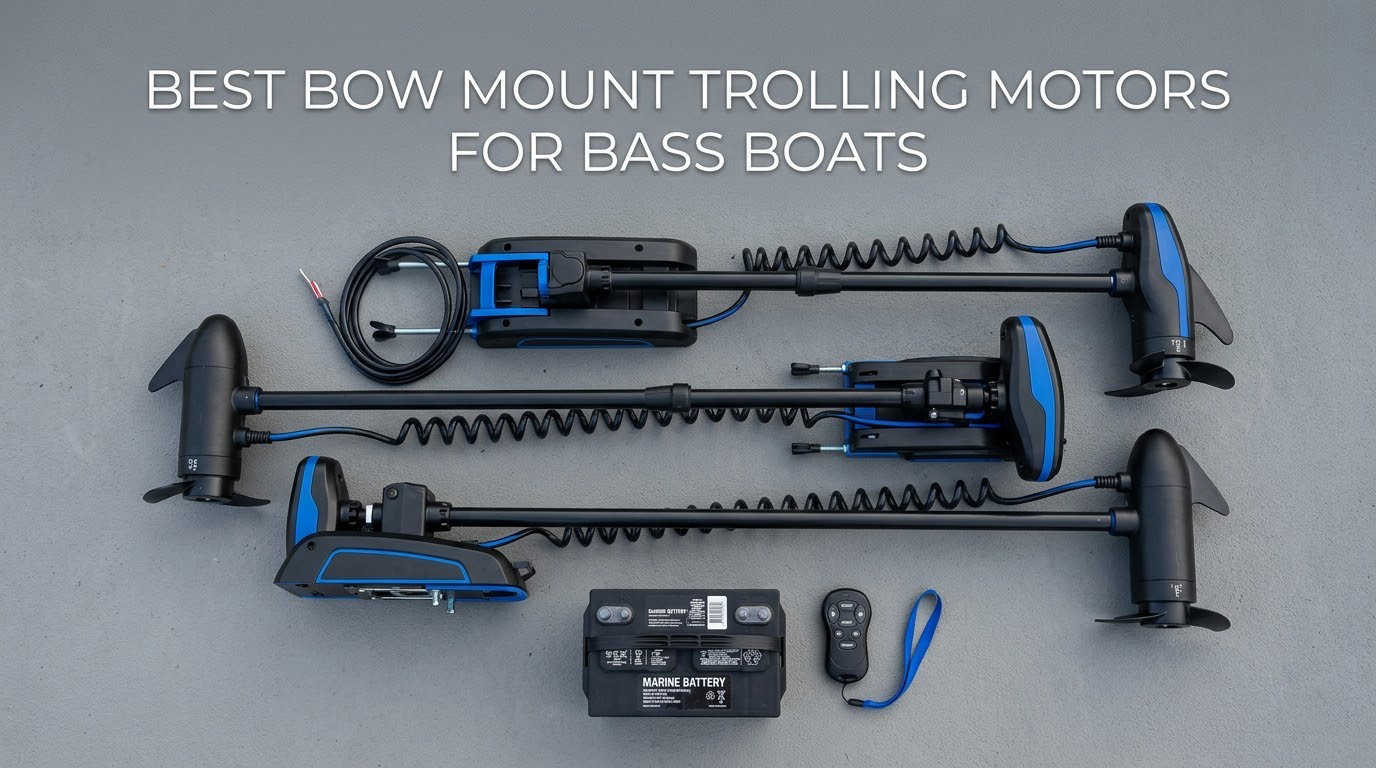
The best bow mount trolling motors for bass boats are the ones that put a spot lock, a quiet approach and enough thrust to hold a weed edge in wind on a single set of batteries. A bow mount pulls from the front of the hull, so the boat pivots around its bow and you keep both hands on the rod while you work the deck.
That is a different job from the transom mount we cover in our broader trolling motor roundup for fishing boats, which leans on small boats and transom heights. This page is only about bow mount trolling motors sized for a bass boat casting deck, where the shaft is usually 48 to 60 inches and the deck height decides whether the motor can be stowed at all.
We spent the season comparing six bow mounts across the three tiers a bass angler actually shops in: 12V and 55 lb for a 16-foot boat, 24V and 70 to 80 lb for an 18 to 20 foot hull, and the electric-steer models that deploy themselves. The mix matters because the cheapest mistake in this category is not buying a weak motor, it is buying a strong motor with a shaft too short for your deck or a battery bank too small for the draw.
Two questions came up constantly while we were comparing these six. The first is whether cruise control is enough or whether you need a real GPS anchor. The second is whether sonar mounted at the head of the trolling motor shaft is worth the interference you get with the motor running. Both answers change which motor belongs on your boat, so we treat them in full below.
Table of Contents
Top 3 Picks for Bow Mount Trolling Motors for Bass Boats in 2026
Our top three cover the three real buying decisions: a lightweight 12V workhorse, the cheapest way into a genuine spot lock, and the 24V motor with sonar built in. Here is the short version before we get into the detail.

Haswing Cayman 55 lb Bow Mount
- 12V 55 lb thrust
- 48-inch aluminum shaft
- 2.4G wireless remote and foot control
- cruise control with sacrificial anode

Minn Kota PowerDrive 55 GPS
- 55 lb thrust on 12V
- GPS Spot-Lock
- drift
- follow and dodge modes
- Deploy-Assist lever with composite shaft

Minn Kota Terrova 80 lb MEGA Down
- 80 lb thrust on 24V
- 60-inch shaft
- built-in MEGA Down Imaging transducer
- foot pedal and wireless remote
The Cayman 55 earns the top slot because it is the only bow mount here that a smaller bass boat can carry without a battery rebuild, and because 299 owners have lived with it long enough for the weaknesses to be well documented rather than mysterious. The PowerDrive 55 is the value pick for a different reason: it is the least expensive way on this list to own a true spot lock. The Terrova 80 is our sonar pick, with a transducer in the head and a 60 inch shaft that suits a tall modern deck.
Best Bow Mount Trolling Motors for Bass Boats at a Glance in 2026
Every motor in this roundup, with the specs that decide whether it fits your boat. The voltage column matters most, because 24V models need two batteries in series and a 24V charger.
| Product | Specifications | Action |
|---|---|---|
| Haswing Cayman 55 lb Bow Mount |
|
Check Latest Price |
| Minn Kota PowerDrive 55 GPS |
|
Check Latest Price |
| Minn Kota Terrova 80 lb MEGA Down |
|
Check Latest Price |
 Haswing 80 lb Bow Mount Haswing 80 lb Bow Mount |
|
Check Latest Price |
 Minn Kota Ulterra 80 lb Electric Steer Minn Kota Ulterra 80 lb Electric Steer |
|
Check Latest Price |
 MotorGuide X3 70 lb Cable Steer MotorGuide X3 70 lb Cable Steer |
|
Check Latest Price |
Two things jump out of that table. Only the PowerDrive 55 and the Ulterra give you a genuine GPS anchor, and only the Terrova puts fish-finding sonar in the motor head itself. If your boat has a tall bow deck, also check the shaft column before anything else, because a 45 or 48 inch shaft on a 21 inch deck will not stow flat.
1. Haswing Cayman 55 lb Bow Mount – the quiet, lightweight workhorse
Black Haswing Cayman 12V 55lbs 48 inch Bow Mount Electric Trolling Motor Lightweight, Variable Speed, with Foot Control/Quick Release Bracket for Bass Fishing Boats Freshwater/Saltwater
12V 55 lb thrust
48-inch aluminum shaft
2.4G remote plus foot control
Quick release bracket
Pros
- Quiet variable speed control
- Wireless remote plus foot control
- Quick release bracket for easy removal
- Fresh and saltwater ready with sacrificial anode
- Light on a smaller bow deck
Cons
- Cruise control is not a true spot lock
- Only 3-month accessory warranty
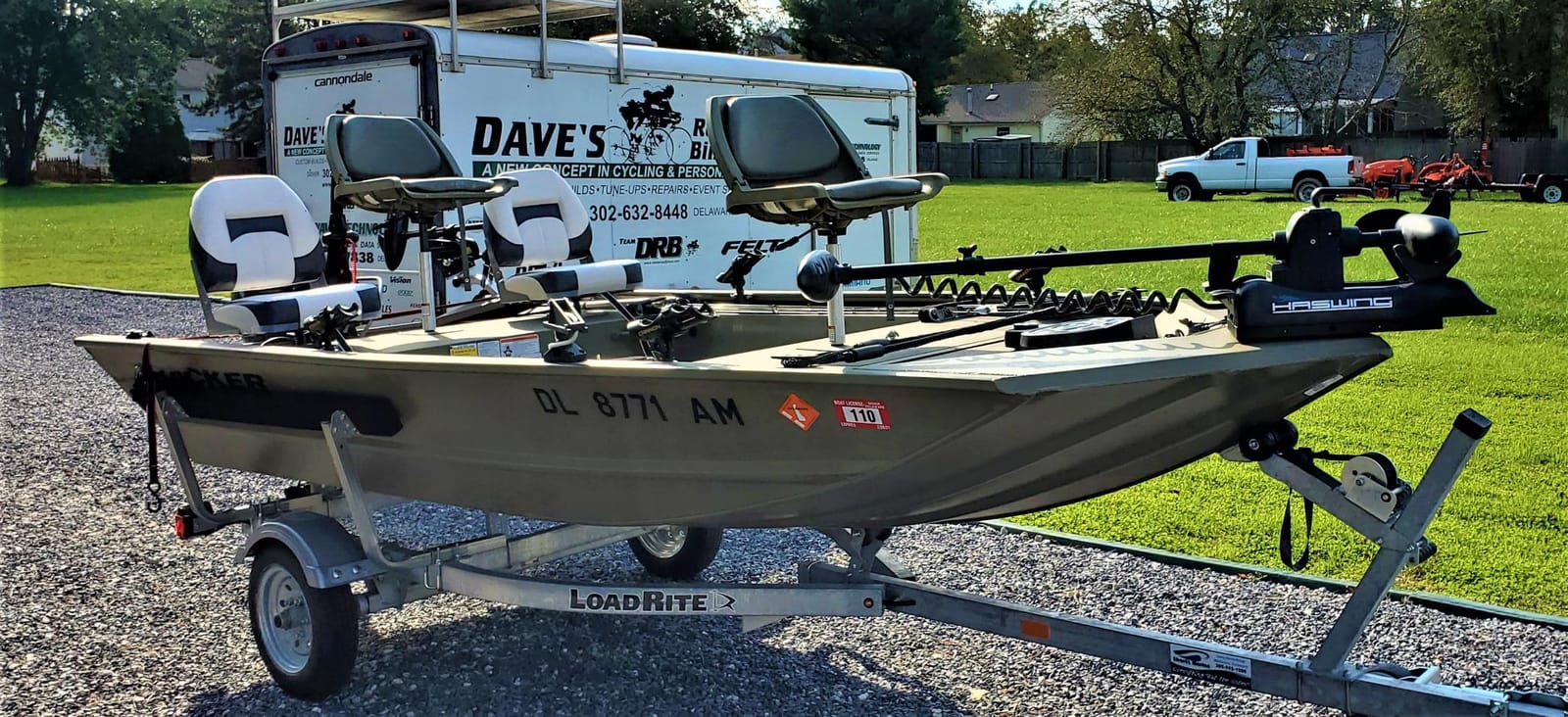
The Cayman 55 is a 12V, 55 lb thrust bow mount on a 48 inch aluminum shaft, and it is the motor we would put on a 16 foot bass boat without hesitating. It weighs in as one of the lighter options here, which matters more than buyers expect because every pound on the bow of a small boat eats payload capacity you would rather spend on tackle.
Owners consistently describe it as quiet, with variable speed that gives you the low-speed creep you need to work a suspended school without pushing them down. The 2.4G wireless remote reaches 164 ft, and you also get foot control, so you can drive it from the bow or the casting deck.
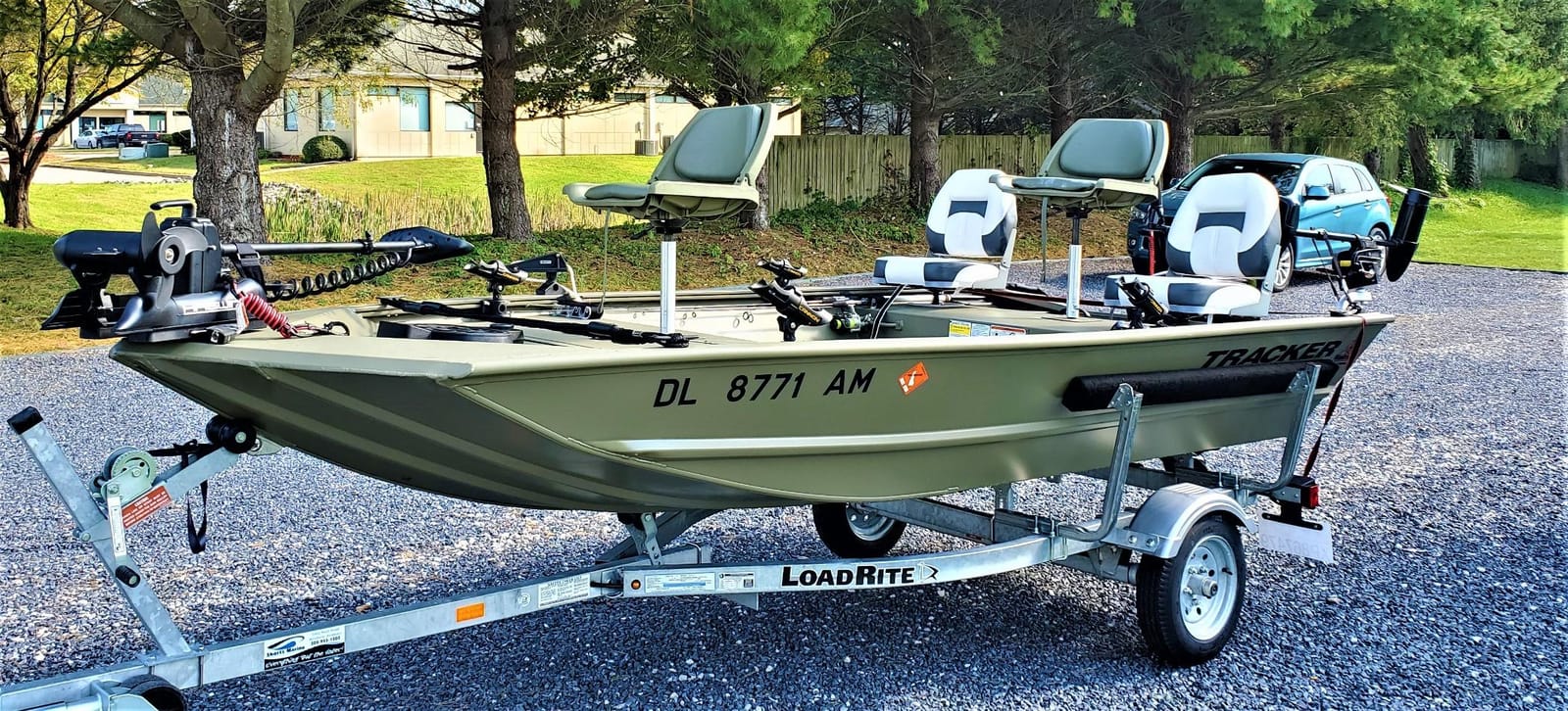
It ships with a quick release bracket, an ergonomic lifting handle and a stow and deploy pedal, which is more hardware than most budget bow mounts include. The sacrificial anode covers both fresh and salt water, so an occasional run to a coastal launch will not be the thing that ruins it.
The electronics are deliberately simple. Variable speed, cruise control, and a battery meter, with no GPS in the head. The shaft is aluminum, so expect to treat it gently around rocks and submerged timber, and the listing pairs it with boats up to 2750 lbs.
Who the Cayman 55 suits
This is the motor for a smaller bass boat with a modest bow deck and a single Group 31 battery already sitting under the deck. If your fishing is lake work, launching ramps, and long slow days of drifting a ledge, the quiet running and low power draw do more for you than a spot lock would.
It is also the easiest motor here to carry to the ramp and mount alone, which is exactly what you want on a boat you fish solo before work. The quick release bracket means you can pull the whole motor off in a couple of minutes to clear the trailer bed.
Where the Cayman 55 falls short
The cruise control is not a spot lock, and that gap shows up in wind and current. You hold speed well, but heading is on you, so on a long drift across a windy flat you will be correcting drift by hand all morning rather than locking a position and fishing it.
Warranty coverage is also uneven: two years on the motor, three months on accessories. If the remote or the pedal takes a beating, that is the part with the short clock, and replacement parts for a lesser-known brand are harder to source than Minn Kota or MotorGuide equivalents.
2. Minn Kota PowerDrive 55 GPS – spot lock on a 12V budget
Minn Kota PowerDrive Bow-Mount Electric Trolling Motor with GPS – 55 Lb. Thrust, 54 In. Shaft, Freshwater
55 lb thrust on 12V
54-inch composite shaft
Spot-Lock, drift, follow and dodge
micro remote included
Pros
- True GPS spot lock on a single 12V battery
- All-day efficiency with Digital Maximizer
- Composite shaft and Power Prop
- Deploy-Assist lever stows one-handed
Cons
- Remote-only control with no foot pedal option
- A small number shipped with a non-working GPS unit
The PowerDrive 55 is the reason this list can offer a spot lock without a 24V battery rebuild. It delivers 55 lb of thrust and a 54 inch composite shaft from a single 12V battery, with GPS that covers Spot-Lock, drift mode, follow mode and dodge mode.
For most bass anglers that is the whole argument. Spot-Lock is what lets you set the boat on a spot, put the rod down and fish it, and it removes the constant small corrections that end a bite window. Drift mode is the underrated feature, since it counters wind and current for you while you work a ledge.
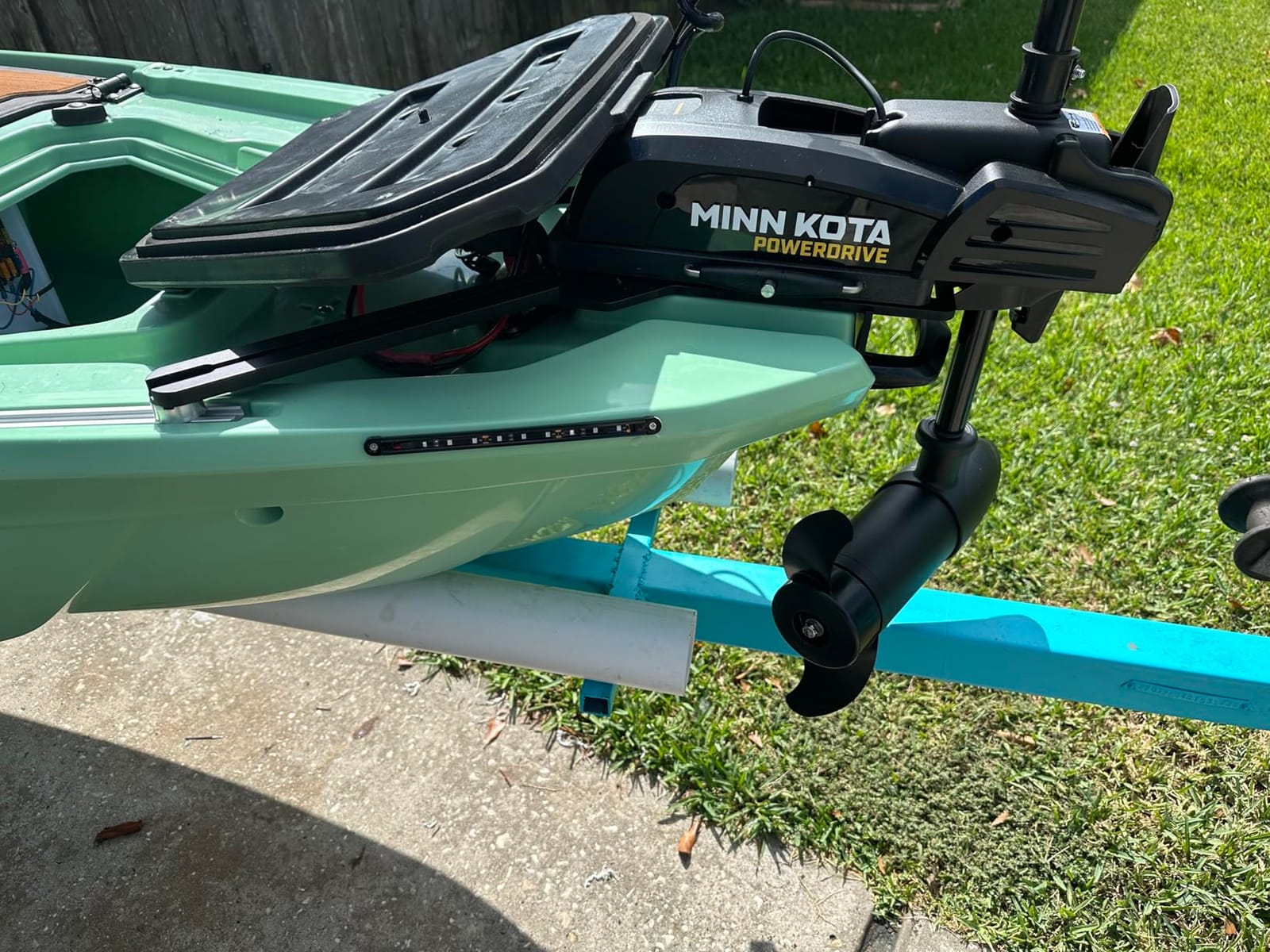
Reviewers report the Spot-Lock holding reliably in wind and tide, which is the honest test of any GPS anchor. The composite shaft will not bend or corrode the way an aluminum shaft can, and the Power Prop is built to be pushed hard without complaint.
Power management comes through Digital Maximizer, and owners report running all day on a single 12V battery. The box includes the micro remote, the MKP-37 propeller and mounting hardware, plus a push-to-test battery meter so you are checking charge with a button press rather than a guess.
Why a 12V spot lock changes a fishing day
It is tempting to assume spot lock means a premium 24V or 36V system, and it does not. The GPS and the steering controller are what cost money, not the battery count, and this motor proves it. One battery forward, one charger, minimal wiring, and a real anchor on a 16 or 17 foot boat.
The 54 inch shaft also helps. On a mid-height bow deck it stows without leaning the boat, and the Deploy-Assist lever lets you stow and deploy with one hand, which is the difference between deploying while carrying tackle and setting it down first.
Where the PowerDrive 55 disappoints
It is remote-only, and several owners wish they could add a foot pedal. If you like heel-toe steering with your foot while both hands stay on the rod, this motor does not offer that option out of the box.
There is also a small but real group of reports of motors that shipped with a GPS unit that did not work. It is not a widespread failure pattern, but it is exactly the kind of part that gets returned in the first week, so confirm the GPS functions before you cut a single wire.
3. Minn Kota Terrova 80 lb with MEGA Down – the sonar-integrated 24V pick
Minn Kota Terrova Bow-Mount Electric Trolling Motor with GPS, Spot-Lock, MEGA Down Imaging – 80 Lb. Thrust, 60 In. Shaft, Freshwater
24V 80 lb thrust
60-inch shaft
Built-in MEGA Down Imaging
Foot pedal and wireless remote
Pros
- Integrated MEGA Down Imaging with 200 ft depth capability
- Spot-Lock with Jog for 5 ft repositioning
- Weedless Wedge 2 prop cuts heavy vegetation
- Dual steering foot pedal plus wireless remote
Cons
- Heavier 24V system needs two batteries and real deck space
The Terrova 80 is the only bow mount in this roundup with a fish finder built into the head, and that changes the buying decision for anyone who is still deciding what to run off the trolling motor shaft. The integrated transducer delivers MEGA Down Imaging to 200 ft of depth, with no separate transducer cable to route and no interference between the sonar and the motor electronics.
Thrust is 80 lb on 24 volts, which is the performance tier where a 19 or 20 foot bass boat stops fighting the motor in a crosswind. The Weedless Wedge 2 prop is the prop to have when you are pushing over a hydrilla edge or working a grassy creek mouth.
Control is dual, with a corded foot pedal offering heel-toe steering, Spot-Lock, autopilot and rotary speed control, plus a wireless remote in the box. Spot-Lock with Jog is the feature anglers notice most, because it moves you in five-foot increments, which is roughly one cast from where you were standing.
Digital Maximizer handles the power, and the warranty runs three years with registration. Shaft options on this family include 45 inch, 60 inch and a 112 lb 60 inch version, so the same platform covers a 20 foot boat or a tournament rig.
Deck space and the 24V bank
This is a 24V motor, which means two deep cycle batteries in series, a 24V charger, and a heavier wire run than the 12V models. Owners who came from a 55 lb 12V bow mount consistently flag the size and power requirements of an 80 lb class motor as the adjustment that takes a weekend to get right.
The payoff is a full day of trolling without watching the gauge. Keep both batteries as close to the bow as the layout allows, use proper gauge marine wire with an in-line fuse near the battery, and the deck space question stops being about the motor and starts being about your battery tray.
Handling a 60 inch shaft from the casting deck
The 60 inch shaft is the right call on a modern tall-deck bass boat, because when the motor is stowed the head lies flat instead of standing up and catching wind off the trailer. Deploying a 60 inch shaft is more work than a 45, and that is why the electric-steer tier exists at all.
One thread worth reading before you buy: anglers running LiveScope at the head of the trolling motor note that it effectively points wherever the motor points. The Terrova sidesteps the worst of that by putting a downward imaging transducer in the head, where the beam points at the water below the boat rather than forward at a fixed heading.
4. Haswing 80 lb Bow Mount – raw thrust for mid-size hulls
Haswing Bow Mount Trolling Motor 80lbs 54in – Remote & Foot, Quick Release
24V 80 lb thrust
54-inch shaft with 44.3 in usable
180 ft remote plus 33 ft foot control
Fits boats up to 4000 lbs
Pros
- Strong thrust that moves larger bass and pontoon hulls
- Owners report a full charge after 5+ hours
- Straightforward installation
- Fresh and salt water ready
Cons
- Some units saw controller or circuit board failure within a year
- Lift mechanism can bind on the way out of the water
- Requires a locking hasp that is not supplied
This 80 lb bow mount is the one on the list rated for boats up to 4000 lbs, which makes it the natural partner for a bigger bass boat or a deck boat that lives in current. It runs on 24 volts, so it belongs in the same electrical conversation as the Terrova and the Ulterra.
Owners like the raw thrust and report that a full charge is still available after 5 or more hours of use. The dual control is unusual at this level: a wireless remote reaching 180 ft and a separate wireless foot control with a 33 ft range, so you can steer from the bow or the deck.
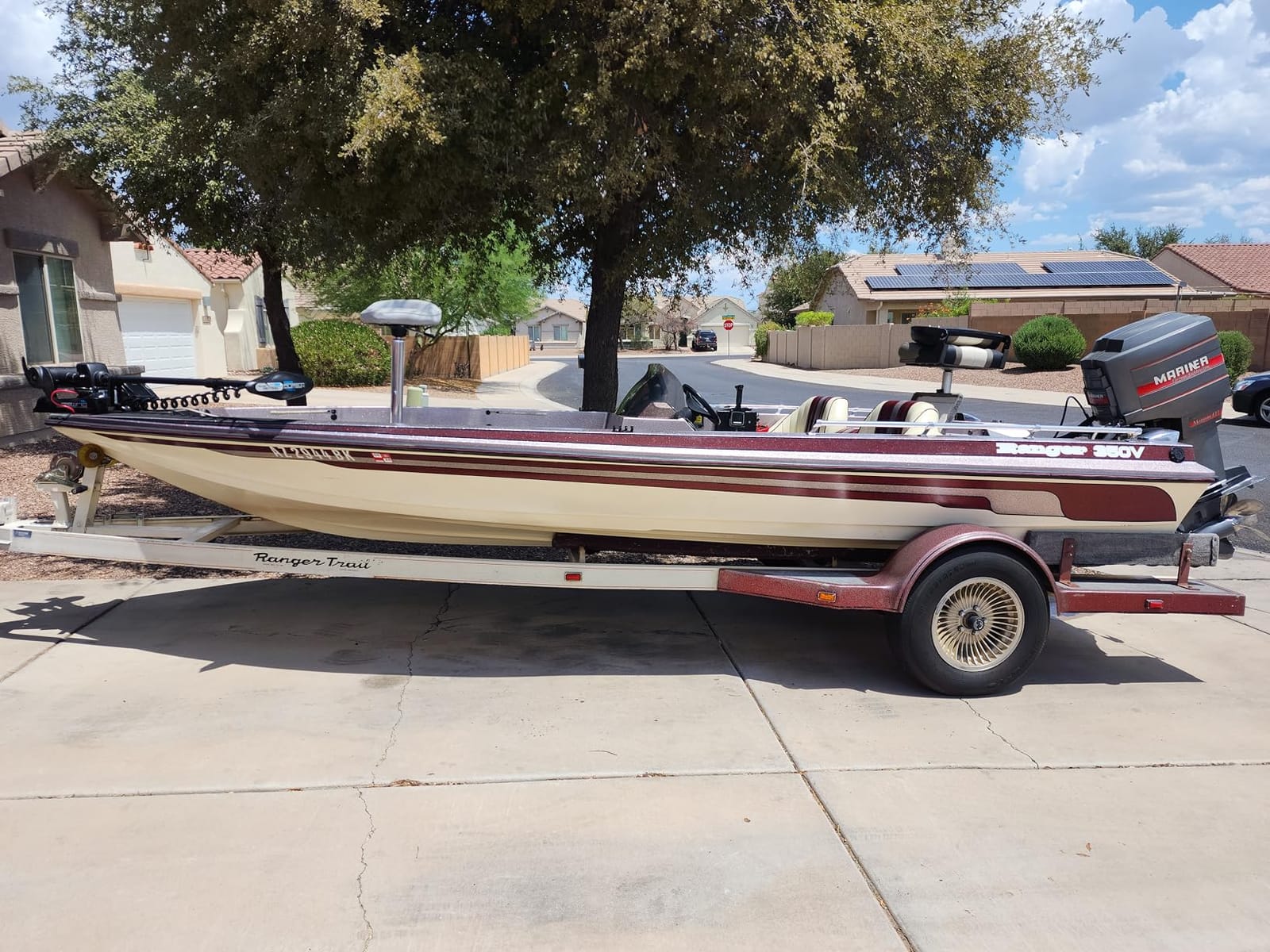
The shaft is 54 inches with 44.3 inches usable, and the mounting footprint needs a 13.7 by 8 inch flat surface. That last number is worth checking against your deck before you commit, since sloped or narrow bass boat bows are exactly where a flat mounting requirement gets awkward.
Like the Cayman, it has a sacrificial anode and is rated for fresh and salt water, with a quick release bracket and a lifting handle on the head. The motor warranty runs two years with three months on accessories.

Big water hulls on a single deck
Where this motor earns its place is wind and current. A 24V 80 lb system gives you the headroom to hold a spot on a big lake in a stiff breeze or to work a river mouth without turning the current into a drift you fight all day. Owners running larger hulls report it moves them with authority, and if your family boat is set up for the lake rather than the ramp, our pontoon boat picks cover the hulls that share that deck space problem.
It is also one of the more straightforward installs in this roundup, with clear instructions and hardware that fits a normal bass boat deck. Just confirm the flat mounting area and the fact that you will need a 24V charger and two batteries before the day of the launch.
Build quality issues to plan around
The recurring complaints are mechanical rather than electrical in character. A number of owners report a binding lift mechanism that stalls halfway out of the water, and unsynchronized release handles where only one side lets go, both of which you feel every time you stow the motor.
Controller and circuit board failures within about a year show up in a smaller share of reviews, and customer service has resolved some of them with free replacement boards. The deal breaker to plan for is the missing locking hasp, which is not supplied and has to be sourced separately before you run the boat in a marina.
5. Minn Kota Ulterra 80 lb – the auto deploy and stow upgrade
Minn Kota Ulterra Freshwater Bow-Mount Trolling Motor with 60-Inch Shaft, MEGA Down Imaging, and i-Pilot Link GPS (24-Volt, 80-Pound)
24V 80 lb thrust
45-inch shaft
Button deploy and stow
i-Pilot Link GPS with Spot-Lock
Pros
- Automatic stow and deploy with one button press
- Spot-Lock holds tightly in waves and current
- Silent through speed 4
- MEGA Down Imaging links to Humminbird units
Cons
- Networking cables are expensive
- Some buyers report weak product support
The Ulterra is an electric-steer bow mount, which is the only real mechanical difference between it and everything else in the 80 lb tier. Instead of a cable running from the pedal to a steering head, a motor in the head turns the shaft, and a button raises and lowers the whole unit.
That single change is the reason people upgrade, and it is also why forum anglers argue about it. Multiple threads describe cable-steer models as having to be deployed and stowed by hand every trip, which is exactly the chore the Ulterra removes.
On the electronics side, i-Pilot Link GPS covers Spot-Lock, path recording and track, and Humminbird connectivity. The built-in Humminbird MEGA Down Imaging transducer reads to 125 ft and links to a Helix unit, so the sonar lives on the network instead of needing a second transducer.
At 80 lb of thrust on 24 volts, it belongs on the same boat as the Terrova, and the 45 inch shaft version is listed here with a 60 inch option available on the same platform. A multi-function foot pedal, heading sensor and cabling are included, and the box carries a wireless remote as well.
Owners describe it as the premium freshwater upgrade, with near-silent running and a Spot-Lock that holds in waves. The rating is strong, but the review pool here is much smaller than the other products on this list, so treat the consensus as promising rather than proven at scale.
What automatic deploy and stow actually saves you
On a 60 inch shaft, hand deployment is a two-person job some days and a shoulder test on every launch. The Ulterra does it from the seat, which is a genuine quality of life gain for anyone fishing alone, and for older anglers moving a 69 lb motor around it is the difference between fishing the day and skipping it.
Electric steer also holds heading more consistently in wind, because there is no cable stretch to absorb the load. If your boat lives on a big water where the wind forecast decides your day, that consistency is worth more than it looks on a spec sheet.
Networking cost and support risk
The MEGA Down Imaging only pays off if you own a compatible Humminbird unit, and the networking cables to get there are the expensive part. Budget for them, and check the head unit connection before you commit, because that is where the cost surprises people.
Reliability is the open question on this model. A bass fishing group thread on Ulterra reliability and service describes an owner who went through three months and three service calls on a motor that would not run a full day without problems. That is an isolated report rather than a pattern, and with only a dozen reviews here, it is the reason this motor sits outside our top three despite the feature set.
6. MotorGuide X3 70 lb – the cable-steer alternative
MotorGuide 940200120 X3 Freshwater Bow Mount Trolling Motor — Cable Steer, Foot-Control — 50-Inch Shaft, 70-Pound Peak Thrust 24V
24V 70 lb peak thrust
50-inch shaft
Heel-toe foot control
Variable Ratio Steering
Pros
- Very quiet and responsive on the water
- Prop cuts through heavy seaweed
- 70 lb thrust moves a 15 ft trihull
- Runs all day on a 24V setup
Cons
- Steering cables at the pedal are thin
- Pedal direction indicator may not light up
- Warranty service is described as a hassle
The MotorGuide X3 is the only pure cable-steer bow mount in this roundup with real thrust behind it, at 70 lb peak on a 24V system with a 50 inch shaft. It is also the only one here built around a heel-toe foot pedal rather than a remote-first control scheme.
Owners describe it as quiet and responsive, with a prop that cuts through heavy seaweed. Several report that 70 lb is enough to move a 15 foot trihull with authority, and that it runs all day on a 24V setup.
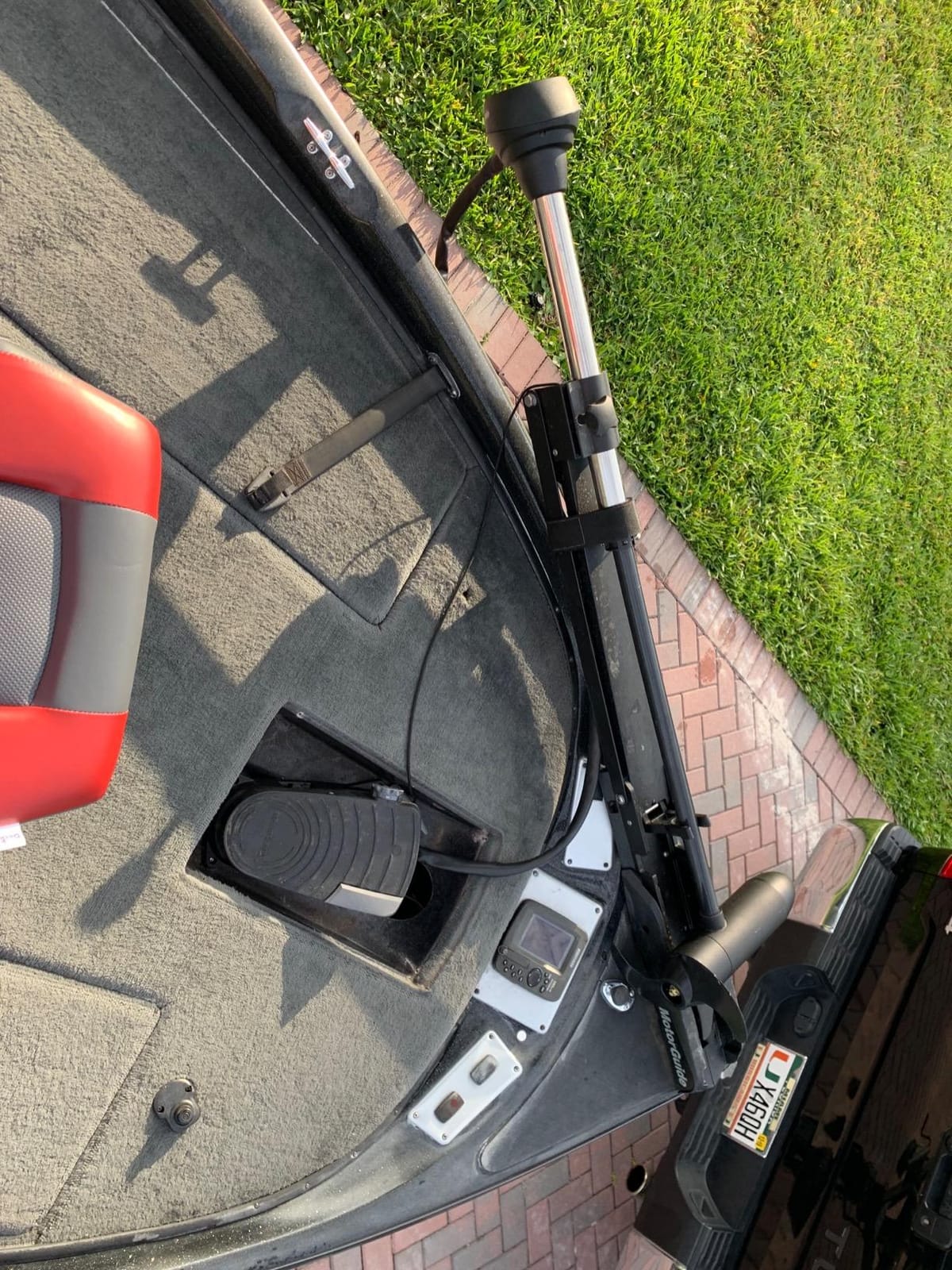
The patented Variable Ratio Steering is the part worth understanding. It changes the steering ratio as the load builds, so the pedal stays predictable when a current or a crosswind pushes on the prop, which is the failure mode that makes cheap cable motors feel vague.
Construction is solid where it counts: a rigid aircraft-grade aluminum mount with stainless steel bushings, and composite bushings and a precision locking pin for quiet running. This is a freshwater motor, and the listing pairs it with fresh water use only.
The case for a heel-toe foot pedal
Foot control keeps the angler in contact with the boat without looking down. With a long shaft deployed over a weed edge you can feel the load change through the pedal, and heel-toe steering gives you speed on one axis and direction on the other without looking for a knob.
For an angler who spends the day working a trolling motor rather than running between spots, the pedal is often the control they actually prefer. It is also the most analog option here, which means fewer electronics to fail and a repair that does not depend on a dealer.
Where the X3 needs service attention
The most common complaint is the steering cable itself. Owners report thin cables that can break, and one unit arrived with a cable off its pulley, leaving the head free to spin, which is a bad day on the water and a straightforward fix if you catch it at install time.
The pedal direction indicator is also reported as unlit on some motors, and warranty service through MotorGuide is described as a hassle by owners who needed it. Installation is labor intensive on sloped bows and tight compartments, so allow real time for the mount and cable routing rather than assuming an afternoon.
How to Choose a Bow Mount Trolling Motor for a Bass Boat
Start with thrust, then shaft length, then voltage, then control type. Get those four in that order and the rest of the decision, prop, batteries, spot lock, becomes detail. Get them out of order and you end up with a motor you cannot stow or cannot power.
How to size the motor for your bass boat
The rule of thumb bass anglers use is 2 lb of thrust per 100 lb of fully loaded boat weight, including fuel, batteries, tackle and the people in the boat. Multiply your true loaded weight, then round up to the next thrust class. A 3000 lb loaded rig asks for roughly 60 lb, which means a 70 or 80 lb motor is the honest answer, not a 45.
14 to 16 ft: 1800 to 2500 lbs loaded, 45 lb minimum thrust, 55 lb comfortable
16 to 18 ft: 2500 to 3500 lbs loaded, 55 lb minimum thrust, 70 to 80 lb comfortable
18 to 20 ft: 3500 to 4500 lbs loaded, 70 lb minimum thrust, 80 lb comfortable
20 ft and up: 4500 lbs and up loaded, 80 lb minimum thrust, 112 lb comfortable
Under-buying thrust is the most common regret in the forums. Anglers who sized for a lightly loaded boat and then added a second battery, a tall electronics package and three anglers find themselves fighting the motor on every windy day, and the fix is a new motor rather than new technique.
Shaft length versus bow deck height
Measure from the top of your bow deck down to the bottom of the hull, then subtract about 6 inches. That is your minimum usable shaft. Modern bass boats with raised casting decks routinely need 48 to 60 inch shafts, and anglers report that 52 inch and 57 inch options are the ones that finally solved their stow problem.
16 to 18 in deck height: 36 in minimum shaft, 42 to 45 in comfortable
19 to 21 in deck height: 45 in minimum shaft, 48 to 52 in comfortable
22 to 24 in deck height: 52 in minimum shaft, 54 to 57 in comfortable
25 in deck height and up: 57 in minimum shaft, 60 in comfortable
Too short and the motor cannot stow flat, which drags on a shallow launch and catches crosswinds. Too long and the head sits high enough to foul your casting deck, and every deploy becomes a fight. Measure the actual boat rather than the model year.
12V, 24V or 36V and what the battery bank really costs
Voltage is a capacity decision. A 12V 55 lb motor draws hard for a small gain, a 24V 80 lb motor gives roughly double the endurance at the same thrust, and 36V exists for the 112 lb tournament tier. The motor is only part of the cost, and the battery bank is where the money actually goes.
12V 55 lb: one Group 31 deep cycle battery, 12V charger, high draw at speed and low draw on spot lock, realistically a full day on spot lock
24V 70 to 80 lb: two batteries in series or one 24V unit, 24V charger, about 42A at full speed and 15 to 20A mid range, 8 to 12A low, realistically a whole day on anchor or 4 to 5 hours hard trolling on a 60Ah lithium bank
36V 112 lb: three batteries in series, 36V charger, high draw under tournament load, realistically multi-day strings and heavy gear
Those amp figures for an 80 lb 24V system come from angler instrumentation reported in the forums, and they matter because runtime is a speed question, not a label. On anchor the motor draws a fraction of what it pulls at speed, which is why spot lock days feel endless and full-speed lake crossings end sooner than you expect.
Two more notes. Lithium is the most recommended upgrade for weight savings and run time, and on a 24V lithium bank anglers report a full day on spot lock. But LED battery meters read inaccurately on lithium, so track voltage yourself rather than trusting the gauge. And run 6 AWG marine wire with a proper in-line fuse near the battery, because the leads that come with a bow mount are rarely long enough for a deck run.
Moving the battery forward is what most solves this, and freeing up deck space by consolidating two lead-acid batteries into one 24V lithium unit is the trend in the discussions we read.
Foot control, corded remote or micro remote
Foot control keeps you in the boat tactilely, which is why anglers who grew up on pedal motors still prefer it. Corded and wireless remotes let you move to the bow, which matters on a 19 foot boat where the front deck and the casting deck are not the same place.
For most bass anglers the micro remote is the sweet spot: a small dial you can hold in one hand, with the motor deploying and stowing as you stow and deploy the trolling motor. The Ulterra pushes this furthest, driving the motor from a remote, a foot pedal, or a Humminbird fish finder once the network is set up.
Mounting sonar off the trolling motor shaft
LiveScope and forward scan at the head of a trolling motor is the most requested install and the most misunderstood. The beam points where the motor points, so a shaft-mounted unit loses the side-to-side coverage you would get from a bow-mounted transducer, and you can get interference when the motor transmits.
Three ways to handle it. Use a motor with a downward imaging transducer in the head, like the Terrova or Ulterra, and let the sonar live where the boat is. Mount the transducer on the trolling motor shaft but isolate the electronics, which reduces but does not eliminate the problem. Or mount forward scan and imaging on the bow where the unit looks where you are steering, and use the trolling motor purely for propulsion.
Also plan the mount for a locking hasp and a reinforced flat area. A bass fishing group thread asking for photos of a bow mount setup with bracket pictures is a good reminder that a standard trolling motor mount plate plus a locking pin are the two cheapest security upgrades you can make. Deck plate reinforcement is not optional on a bass boat that gets launched every weekend.
For the electrical side of the build, protecting a boat’s interior from moisture matters as much as the motor itself, and our boat dehumidifier roundup covers what actually works in a closed console.
Frequently Asked Questions
How big of a bow mount trolling motor do I need?
Size by loaded weight, not boat length alone. The working rule is 2 lb of thrust per 100 lb of fully loaded weight, including fuel, batteries and anglers. A 3000 lb rig calls for about 60 lb, so a 70 or 80 lb motor is the realistic answer. Round up if you fish big water, carry heavy gear or tow to the coast.
Who makes the best bow mount trolling motor?
Minn Kota holds the broadest lineup in this class, covering value 12V units, 24V performance models and electric-steer models. In this roundup the Haswing Cayman 55 is our overall pick for small boats, the PowerDrive 55 for the best spot lock per dollar, and the Terrova 80 for built-in sonar.
Can I use a trolling motor as a bow thruster?
Yes, within limits. A bow mount is very effective for pivoting the boat at a dock because it pulls from the front, so most of the load comes on the shaft at a shallow angle rather than driving the prop. Use a low speed, avoid full throttle in a tight slip, and expect reduced rudder authority at speed, so it is a docking aid rather than a substitute for an outboard.
Which is better, Terrova or Ulterra?
The Terrova is cable-steer, so you deploy and stow it by hand, and it costs less. The Ulterra is electric-steer, so it deploys and stows from a button and holds heading more consistently in wind. Both are 80 lb 24V class motors with spot lock and built-in sonar. Choose the Terrova for value and the Ulterra for convenience and big water.
Can you run a 36 volt trolling motor on 24 volts?
No, and it is not a soft limitation. A 36V motor expects roughly 43.2 volts at full charge, and running it on 24V gives it a quarter of its rated voltage, so it will not make its rated thrust, may run hot and risks damage to the electronics. Match the motor to the battery bank or move up in tiers.
How long should my trolling motor shaft be for my bass boat?
Measure from the top of the bow deck to the bottom of the hull and subtract about 6 inches for the minimum. A 20 inch bow deck needs at least a 45 inch shaft, a 23 inch deck needs 52 inches or more, and decks at 25 inches and above need a 60 inch shaft to stow flat.
Final Verdict on the Best Bow Mount Trolling Motors for Bass Boats
For most bass boats, the best bow mount trolling motors for bass boats in 2026 come down to size and control preference, not brand. On a 16 foot boat with one battery, the Haswing Cayman 55 is the pick: quiet, light, dual control and the most owner history on this list. Add a real spot lock to that boat and the Minn Kota PowerDrive 55 becomes the better buy for the money.
Step up to a 19 or 20 foot hull and the decision moves to 24V. The Terrova 80 is the one to buy if you want sonar in the head and a 60 inch shaft for a tall deck. Go electric-steer only if deploying and stowing by hand is the part you dread, and go MotorGuide X3 if a heel-toe pedal and a cable-steer feel matter more to you than any gadget. Measure your bow deck, size your bank to the voltage, and you will not be the angler regretting the motor in 2026.