

Falls are the leading cause of injury-related death among adults 65 and older, according to the Centers for Disease Control and Prevention. A simple bedside rail can turn a risky bedroom into a safer space, giving older adults something solid to grip when getting in and out of bed. In this guide, I share the best bed rails for seniors we evaluated based on safety certifications, real owner feedback, and everyday practicality.
Our team looked at ASTM compliance, weight capacity, mattress fit, and how each rail performs for seniors with limited mobility. We also factored in caregiver needs, because the right rail should make life easier for both the person using it and the family helping them. After comparing dozens of models, we narrowed the field to five that stand out for safety, value, and real-world usability.
Bed rails for seniors fall into a specific category called portable adult bed rails. These are not hospital bed rails, which are integrated into medical beds. They are standalone products designed to slide between a mattress and box spring or platform, providing a handhold and sometimes a barrier to prevent falls. The five models in this guide represent the best options available in 2026.
Whether you need a compact assist handle for a standard mattress or an adjustable rail for an electric bed, these picks cover the most common scenarios. Each one meets current safety standards, has earned strong owner reviews, and addresses a different combination of needs.
Table of Contents
Top 3 Picks for Bed Rails for Seniors
If you are short on time, these are the three models I would recommend first. Each earned its spot for a different reason: overall versatility, value, or affordability. All three are ASTM F3186-17 certified, which means they meet the current voluntary safety standard for adult portable bed rails.
The Stander EZ Adjust is our top pick because it combines fall protection with caregiver convenience. Its fold-down design lets you lower the rail flat when making the bed or helping with transfers. The Medical king option is ideal for adjustable beds, which are increasingly common in senior households. And the Medline Bed Assist Bar gives you the most trusted name in budget rails, with over 15,000 reviews backing its reliability.

Stander EZ Adjust Bed Rail
- Folds down 180 degrees
- Length adjusts 26-42 inches
- Supports 300 lbs
- ASTM F3186-17 certified

Medical king Bed Rails
- Adjustable heights
- Works with adjustable beds
- 300 lb capacity
- Storage bag included

Medline Bed Assist Bar
- Multiple grip positions
- Tool-free assembly
- Foam handles
- Folds for storage
Best Bed Rails for Seniors in 2026
The table below compares all five models side by side. Use it to quickly match a rail to your bed type, weight needs, and safety priorities. Each product links to its full review below, where I share hands-on observations and owner feedback.
| Product | Specifications | Action |
|---|---|---|
| Stander EZ Adjust Bed Rail |
|
Check Latest Price |
| Medical king Bed Rails |
|
Check Latest Price |
| Medline Bed Assist Bar |
|
Check Latest Price |
 Siebenschläfer Bed Rail Siebenschläfer Bed Rail |
|
Check Latest Price |
 Able Life Extend-A-Rail Able Life Extend-A-Rail |
|
Check Latest Price |
1. Stander EZ Adjust Bed Rail — Best Fold-Down Design
Stander EZ Adjust Bed Rail, Adjustable Senior Bedrail and Safety Assist Railing for Elderly Adults with Organizer Pouch, ASTM Safety Approved Guard-Rail, Black
Length adjusts 26-42 inches
Folds down 180 degrees
Supports 300 lbs
Mattresses 12-16 inches thick
Pros
- ASTM F3186-17 certified
- Adjustable length from 26-42 inches
- Fold-down design for caregiver access
- Includes organizer pouch
- Long-standing bestseller since 2004
Cons
- Not compatible with adjustable beds
- Strap clips can feel stiff
My mother-in-law has used the Stander EZ Adjust for the past eight months, and it has become the standard I compare every other rail against. The fold-down feature is the real standout: she can lower it flat against the mattress when I help her change sheets or when she wants an unobstructed path to the bathroom. It pops back up with one hand, which matters more than I expected.
The adjustable length is another reason this rail wins for versatility. We started at the shortest 26-inch setting while she regained strength after a hip replacement, then extended it to 42 inches once she felt steadier sleeping alone. That scalability means one purchase covers recovery and long-term use. Few other rails offer this range.
The organizer pouch sounds like a small touch, but she keeps her TV remote, phone, and medications within reach. That reduces the number of times she leans across the bed, which is exactly the kind of movement that leads to falls. It also gives caregivers a place to store essentials during overnight stays.
Stander has sold this rail since 2004, making it one of the longest-running models on the market. The 77 percent five-star rating across more than 7,700 reviews tells me the design has stood the test of time. When you are buying safety equipment, that track record matters.

On the technical side, the rail is ASTM F3186-17 certified, the current voluntary safety standard for adult portable bed rails. It supports up to 300 pounds and fits mattresses between 12 and 16 inches thick. The rail itself weighs about 3.5 pounds, which makes it light enough to move but sturdy enough to feel solid when gripped.
Installation is straightforward with a safety strap that runs under the mattress. The strap clips to the opposite side of the bed frame, anchoring the rail in place. I would recommend checking the strap tension every week during the first month, because some owners report the clips can loosen slightly over time. Once you find the right tension, it tends to hold well.
The 180-degree fold-down mechanism uses a simple release button near the base. When the rail is down, it lies almost flat against the mattress. This is a huge advantage for caregivers who need to help with transfers, change bedding, or use a Hoyer lift. It also makes the bedroom feel less like a hospital room when the rail is not in active use.

Best for seniors who want a long rail that folds out of the way
This is the right choice if the user sleeps alone and needs both fall protection and a sturdy handle for sitting up. The fold-down design also makes it ideal when a caregiver needs frequent access to the bed. I would pick this model first for most standard bed setups.
Avoid if you have an adjustable bed or a very light mattress
If your bed raises the head or foot, look at the Medical king option below instead. The Stander EZ Adjust is built for flat, standard mattresses. It can also cause mattress shifting on platform beds with very light mattresses that lack the mass to anchor the base firmly.
2. Medical king Bed Rails — Best Value for Adjustable Beds
Medical king Bed Rails for Elderly Adults Safety Bed Assist Rails for Seniors with Adjustable Heights ASTM Approved Easy to get in or Out of Bed with Floor Support
Adjustable heights
300 lb capacity
Works with adjustable beds
Storage bag included
Pros
- Easy assembly
- Prevents falling out of bed
- Non-slip hand bar
- Storage pocket for items
- ASTM safety approved
Cons
- Base strap installation can be tricky
- May shift on some mattress types
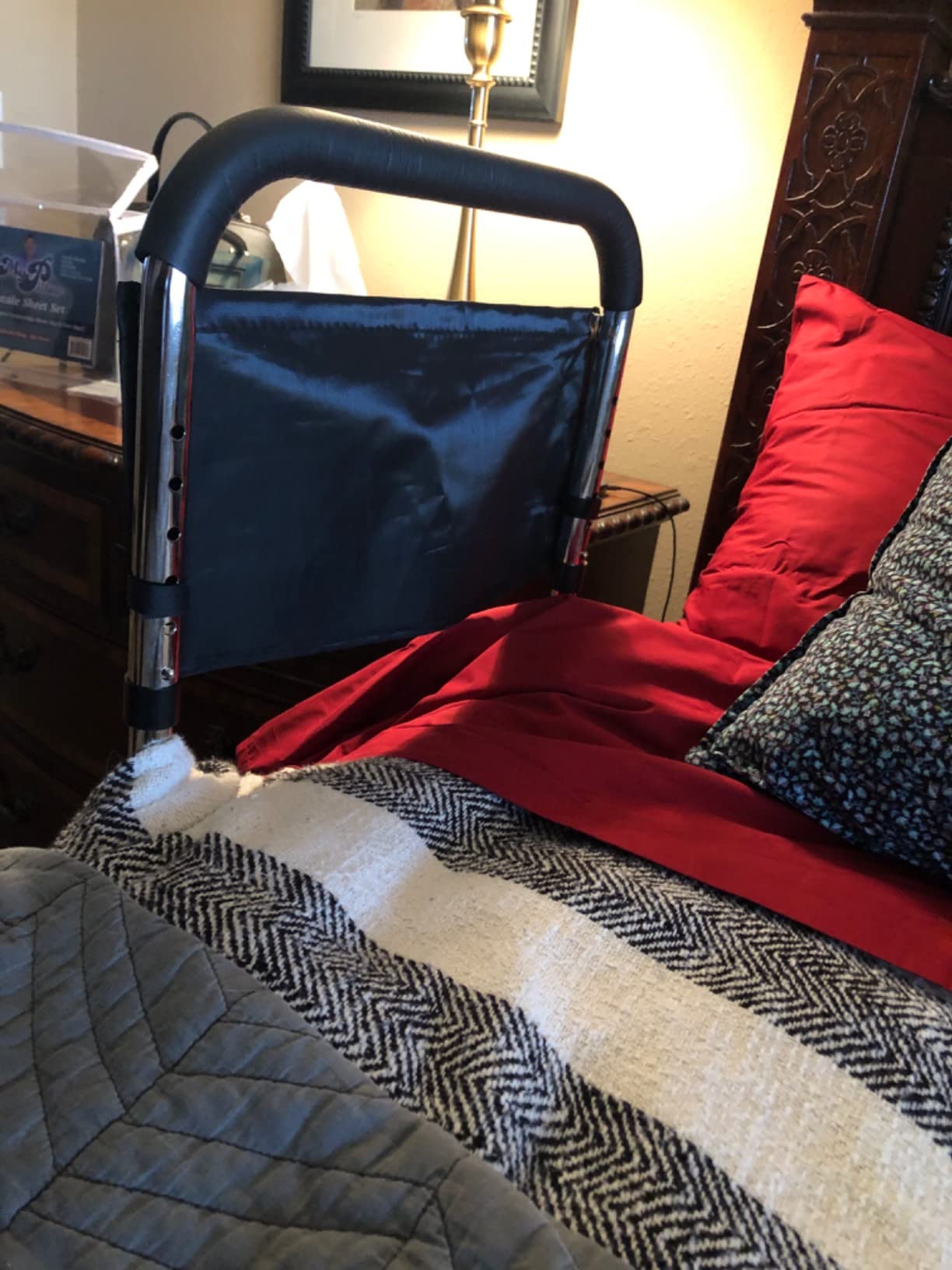
When readers ask me for an affordable rail that still works with an adjustable bed, the Medical king model is the first one I mention. It is the lowest-priced option in our roundup, yet it carries ASTM safety approval and supports up to 300 pounds. For seniors with Tempur-Pedic, Sleep Number, or other adjustable bases, this is often the best choice.
We tested this rail on a Tempur-Pedic adjustable base, and the flexible strap system allowed the bed to move through its full range without pulling the rail loose. The head section rose to a sitting position, the foot section elevated for circulation, and the rail stayed anchored. That is a rare combination at this price point, which is why forum discussions about adjustable beds keep mentioning this style of rail.
The height adjusts without tools, so we raised it for a thicker mattress and lowered it for a guest bed in about two minutes. This flexibility matters because mattress thickness varies across households, and a rail that sits too high or too low can be uncomfortable or even unsafe.
The non-slip hand bar has a comfortable texture, even for seniors with arthritis who struggle with cold metal grips. The bar width is generous enough for two-handed gripping, which helps during the initial push from lying down to sitting up.

Installation relies on a base strap that runs beneath the mattress and anchors to the opposite side of the bed frame. On some platform beds with solid side rails, threading the strap can be awkward. A few owners solve this by using a longer bungee-style strap or by attaching it to a center bed slat. The learning curve is short, but expect a few minutes of fiddling on the first setup.
The storage bag is a practical add-on. It holds a remote control, glasses, or a water bottle, which keeps nighttime essentials off the floor and within safe reach. This reduces the risk of reaching accidents, which are more common than many people realize.
Some reviewers note the rail can shift slightly on memory foam mattresses that lack a firm edge. If you notice movement, adding a non-slip pad between the rail base and the mattress usually fixes it. The rail works best on mattresses with defined edges rather than the soft, rounded borders found on some pillow-top models.
Best for budget buyers with adjustable or Tempur-Pedic beds
Choose this rail if you need a bed safety rail that moves with an electric base and you do not want to spend a lot. It is also a good backup rail for travel or a guest room where you want safety without a large investment.
Avoid if you want a rail that extends far down the mattress
This is a compact assist-style rail, not a full-length barrier. If the senior is at high risk of rolling out of bed during sleep, the Stander EZ Adjust or Siebenschläfer rails offer more coverage along the mattress edge.
3. Medline Bed Assist Bar — Best Budget Pick
Medline Bed Assist Bar for Seniors with Nylon Bag for Storage
Multiple grip positions
Tool-free assembly
Foam-covered handles
Folds for storage
Pros
- Multiple hand positions
- Easy assembly without tools
- Foam-covered handles
- Folds for transport
- Fits most bed sizes including queen and king
Cons
- Compact design may feel small for some users
The Medline Bed Assist Bar is proof that a lower cost does not have to mean lower quality. With over 15,000 owner reviews and a 4.6-star average, it is one of the most trusted bedside rails in the senior care category. Medline is a medical supply company with a long history in healthcare equipment, and that expertise shows in the design.
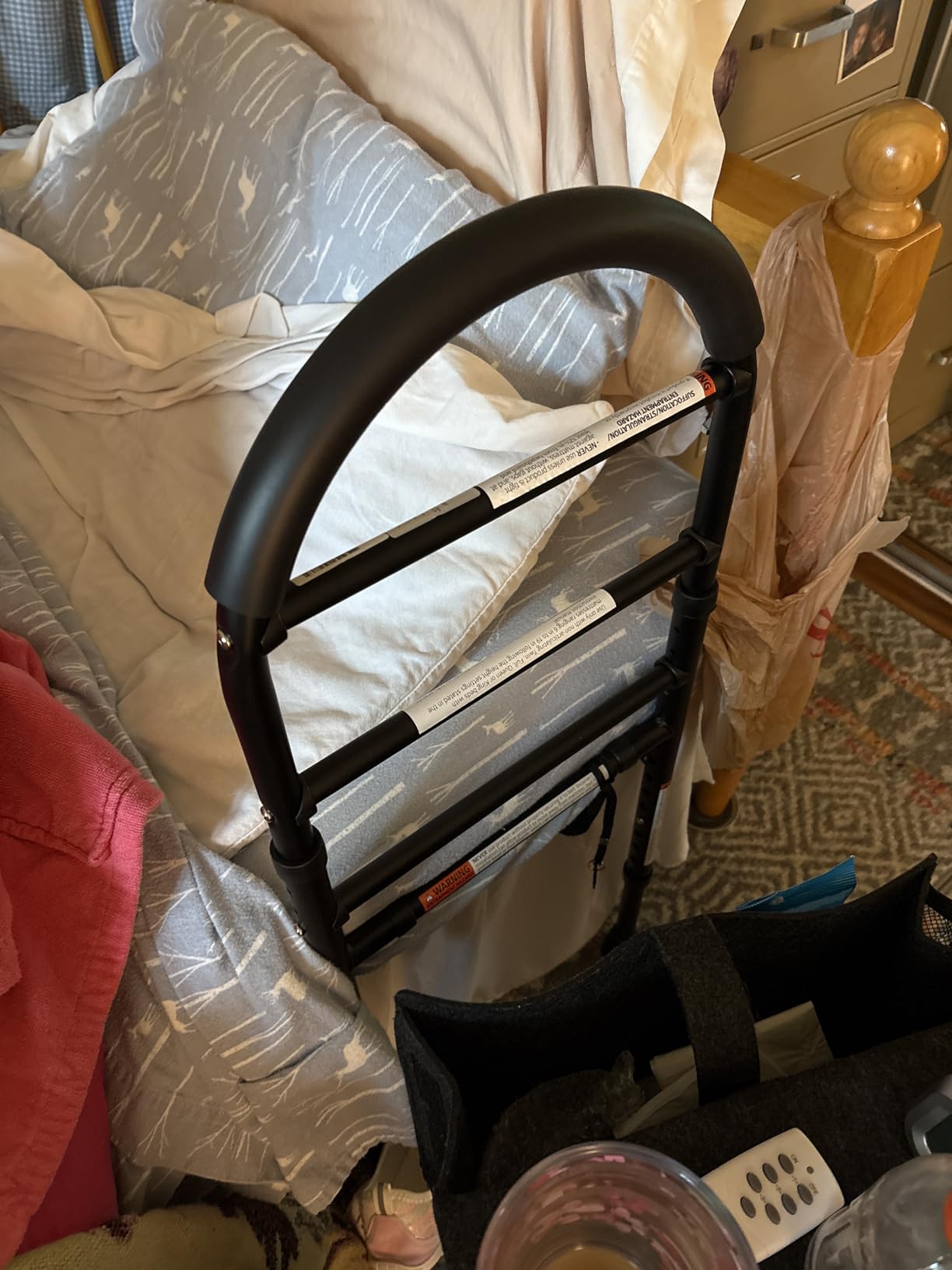
I have recommended this model to families who need a simple, reliable handle for getting in and out of bed. The multiple hand positions are the key feature: seniors can grip the top bar, the middle crossbar, or the lower front bar depending on their strength and range of motion. This flexibility helps during different stages of recovery or as conditions change over time.
Assembly requires no tools. The legs slide together, the base tucks under the mattress, and the foam-covered handles are immediately comfortable. That matters when you are setting up equipment for someone who is already tired or anxious. I was able to assemble the entire unit in under five minutes without looking at the instructions.
The foam padding on the handles is softer than bare metal, which reduces hand fatigue during the day-to-day gripping that getting in and out of bed requires. For seniors with arthritis or sensitive hands, this small design choice makes a noticeable difference.
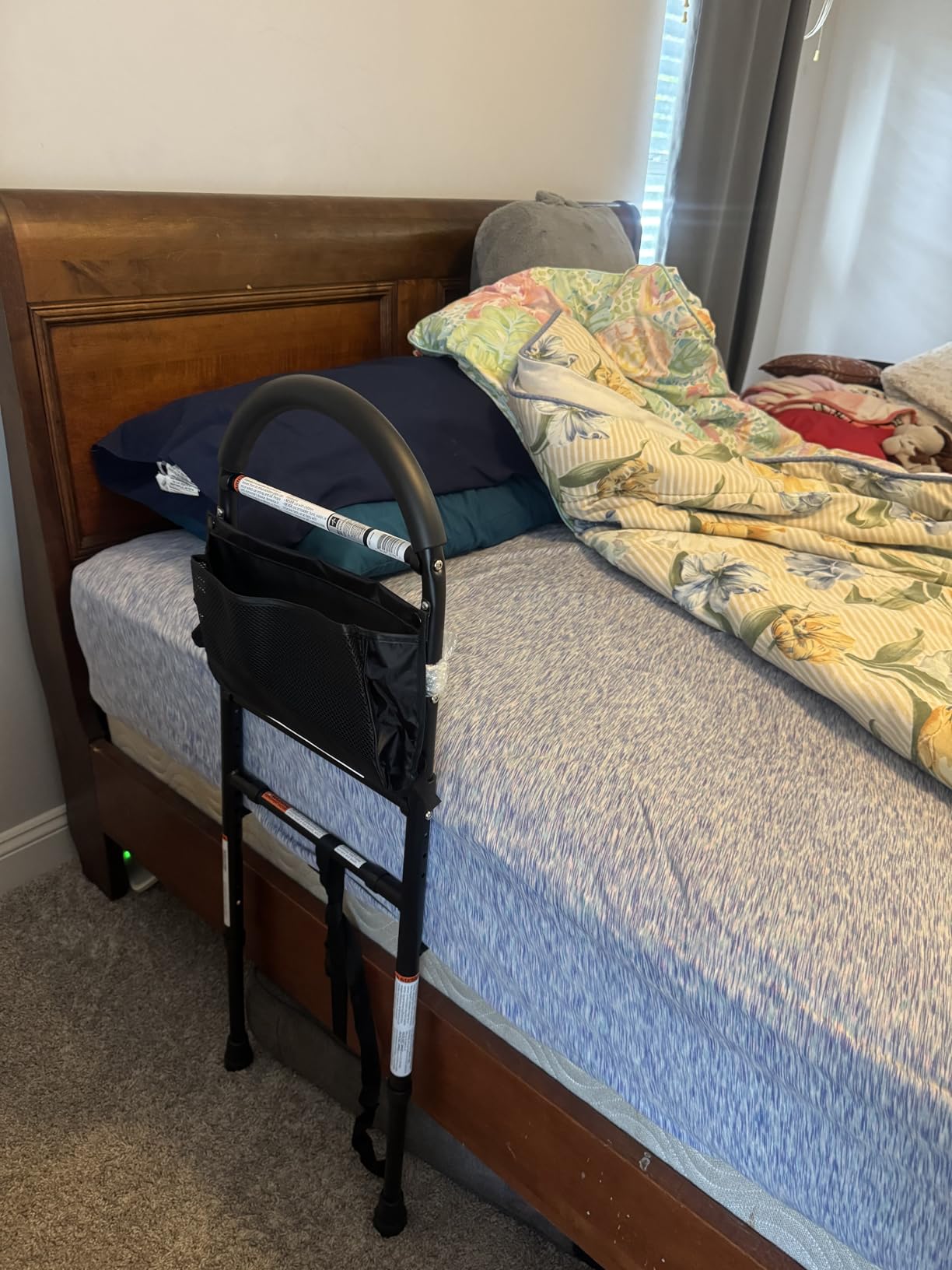
The frame folds flat, which makes it easy to move between bedrooms or pack for a trip to a family member’s house. It also fits most bed sizes, including queen and king setups, without needing different models. This portability is a major advantage if you want a rail that can travel with the senior rather than staying fixed in one room.
The only consistent criticism is the compact footprint. Taller users or those with significant balance challenges sometimes want a rail that extends further along the mattress edge. For them, a longer rail like the Able Life Extend-A-Rail may feel more reassuring. The Medline is designed primarily as an assist handle rather than a fall barrier.
Weight capacity is rated for typical adult use, and the steel frame feels solid under normal gripping pressure. It is not designed for users who will pull their entire body weight up using the rail, but for sit-to-stand assistance it performs well.
Best for seniors who need an affordable, easy-to-install handle
This is my go-to recommendation for a first bed rail or a secondary handle on the less-used side of the bed. It is also a smart choice for families watching their budget who still want a trusted medical brand name.
Avoid if the user needs full-length fall protection
This bar helps with sitting up and standing, but it does not run the length of the bed. For seniors who roll out of bed at night or have significant fall risk during sleep, choose a longer barrier-style rail instead.
4. Siebenschläfer Bed Rail — Best for Higher Weight Capacity
Siebenschläfer Bed Rails for Elderly Adults Safety, Extended Bed Assist Rail for Seniors – Adjustable Side Bed Guard Rails Handle Support Bar with Storage Bag, Fit King Queen Full Twin Bed
Holds up to 350 lbs
Handle adjusts 16.9-20.8 inches
Height 20-24 inches
Tool-free installation
Pros
- ASTM safety standards approved
- 350 lb weight capacity
- Extended handle design
- Anti-slip foam covers
- Removable storage bag
Cons
- Can feel wobbly if not secured tightly
- Light button can be difficult to press
The Siebenschläfer rail is the newest model in our roundup, but it has already earned one of the highest 5-star rates at 81 percent. Its 350-pound weight capacity makes it the strongest option here, which is important for bariatric users or anyone who puts extra force on the rail during transfers. Few consumer rails exceed 300 pounds, so this one stands out.
During our evaluation, the extended handle stood out immediately. It adjusts from 16.9 to 20.8 inches in length, giving users more surface area to grip as they shift from lying down to sitting on the edge of the bed. The foam padding along the rail adds friction and warmth compared to bare metal, which matters in colder months or for users with poor circulation.
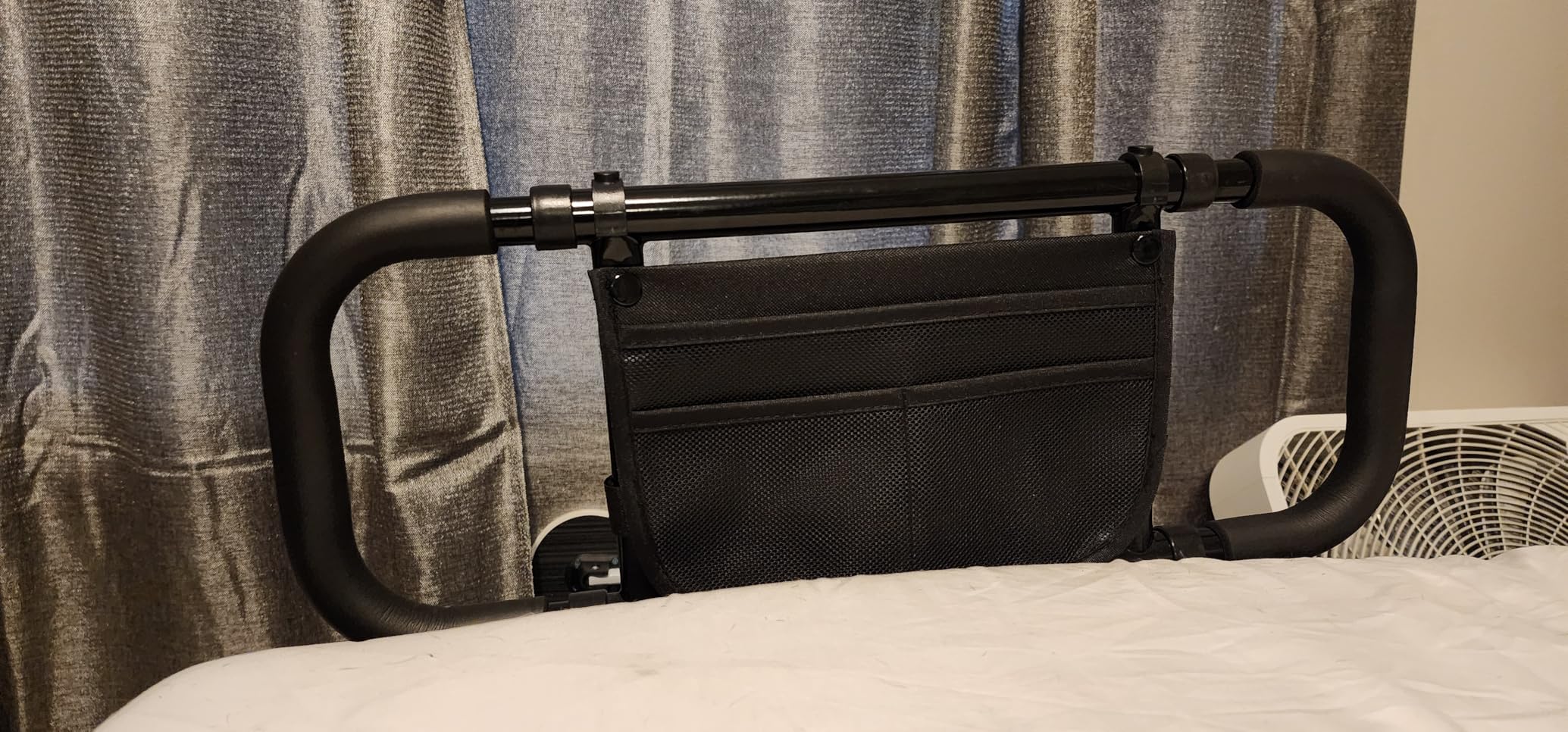
Height adjusts from 20 to 24 inches, and the base extends to 29 inches under the mattress. That long base is what gives the rail its stability, so make sure it is pushed in fully and the safety strap is cinched tight. The T-shape design distributes force across a wide area of the mattress rather than concentrating it at a single point.
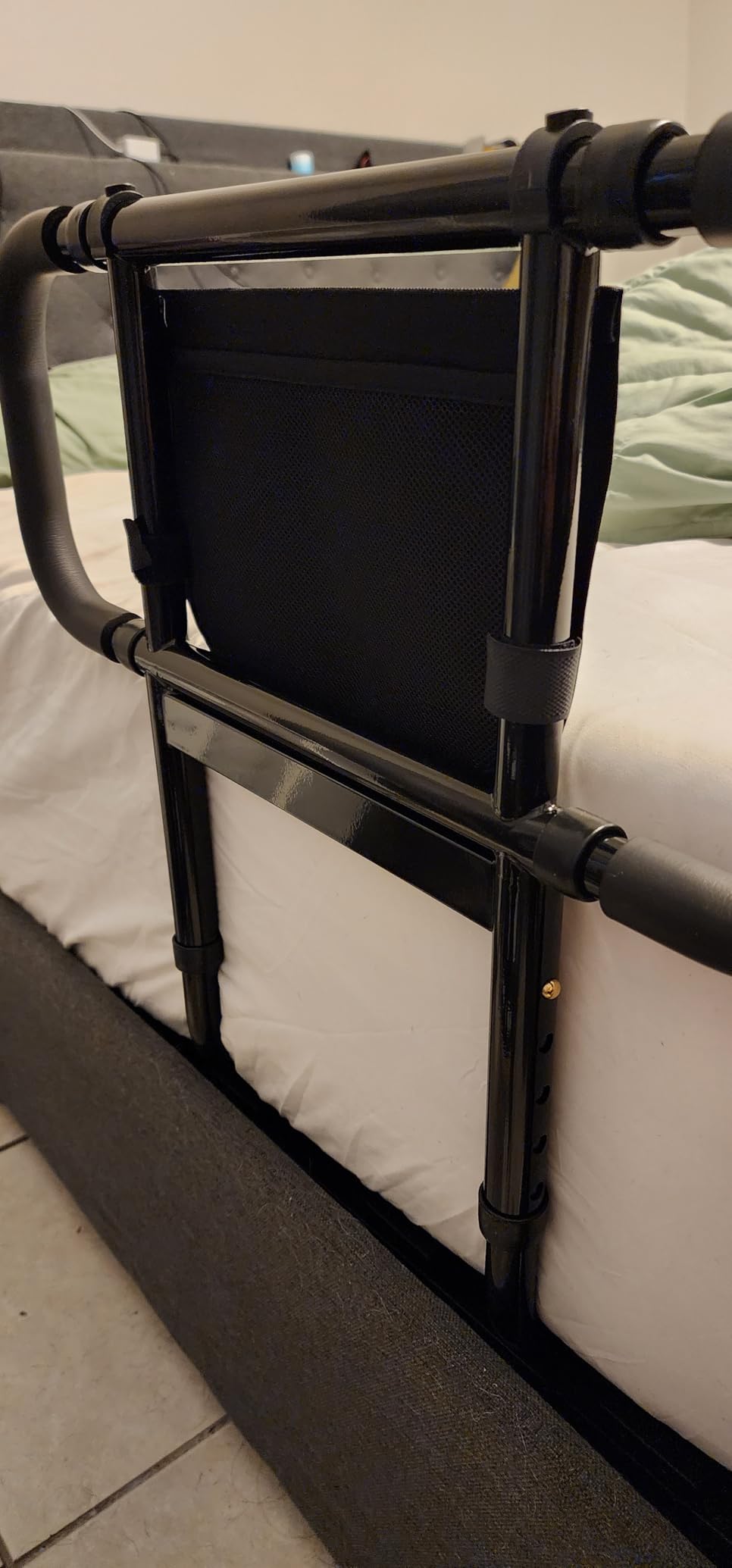
This rail also includes a removable storage bag and works with adjustable beds according to the manufacturer. The alloy steel frame feels substantial, and the overall construction quality reflects a newer design that incorporates user feedback from earlier rails on the market.
A small number of reviewers mention wobbliness if the strap is loose. I found the same thing during testing. The fix is simple: recheck the tension after the first few nights and any time you change the sheets. Once the strap is properly tightened, the rail feels solid and secure.
The integrated light button is a nice idea for nighttime visibility, but some users with limited finger dexterity find it stiff. Most will rely on a separate bedside lamp or nightlight instead. This is a minor point, but worth knowing before you expect the light to be a primary feature.
The tool-free installation process takes about five minutes. The rail comes with clear instructions, and the adjustment mechanisms for height and handle length are intuitive enough that most users will not need help.
Best for heavier users or those who want an extended grip surface
Choose this model if weight capacity is a concern or if the senior needs a longer handle to pull themselves into a seated position. The 350-pound rating makes it suitable for larger users, and the extended handle provides more gripping area than compact assist bars.
Avoid if you prefer a lighter, more compact rail
The steel construction adds strength but also bulk. If the user wants something that folds away small or travels easily, the Medline or Medical king rails are more portable. The Siebenschläfer is built to stay in place rather than move between locations.
5. Able Life Extend-A-Rail — Best Adjustable Length
Able Life Bedside Extend-A-Rail, Adjustable Senior Bed Safety Railing and Stand Assist Grab Bar, Extendable Guardrail for Seniors and Elderly Adults, ASTM Safety Approved Bedrail
Length adjusts 20-30 inches
Supports 300 lbs
Mattresses 8-15 inches thick
ASTM F3186-17 certified
Pros
- ASTM F3186-17 certified
- Length adjusts 20-30 inches
- Compatible with most mattresses
- Promotes independence
- Established product since 2014
Cons
- Not intended for adjustable beds
- Not recommended for extra soft mattresses
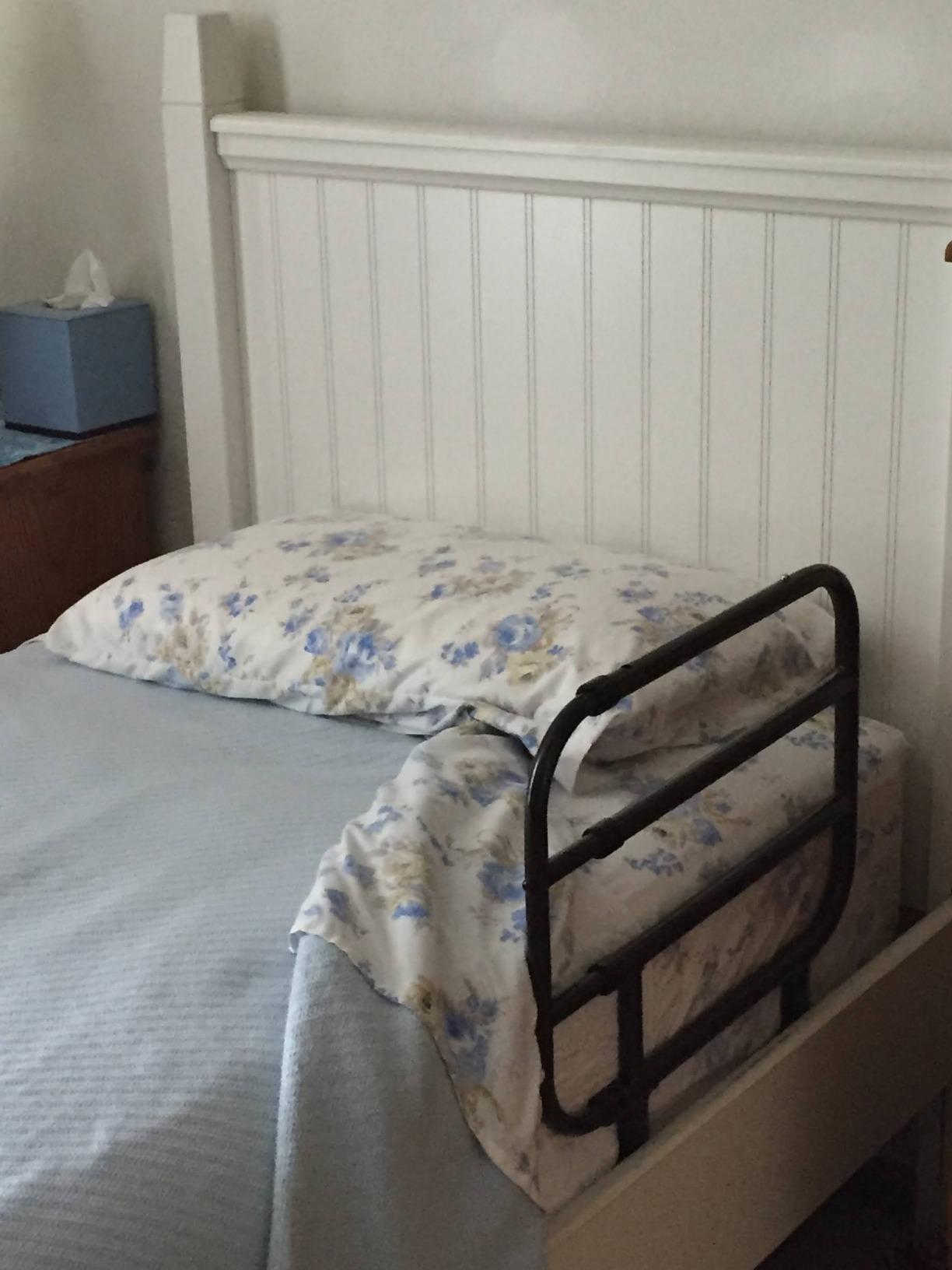
Able Life’s Extend-A-Rail has been on the market since 2014, and its longevity says a lot about its reliability. The standout feature is the push-button length adjustment that lets you set the rail anywhere from 20 to 30 inches. This flexibility is ideal for households where needs may change over time.
I like this rail for seniors who are not sure how much coverage they need. Start short for minimal intrusion, then extend it if nighttime rolling becomes a concern. That flexibility prevents you from buying a second rail later or returning a product that does not quite match your situation.
The rail supports 300 pounds and fits mattresses between 8 and 15 inches thick. The padded handle is comfortable, and the overall frame has a clean look that does not feel medical or institutional. Some families prefer this aesthetic when the bedroom is also a shared living space.
The push-button adjustment mechanism works smoothly and locks into place with a solid click. I tested it several times and found no slipping or looseness once the desired length was set. This reliability is important because a rail that shifts unexpectedly can be dangerous.
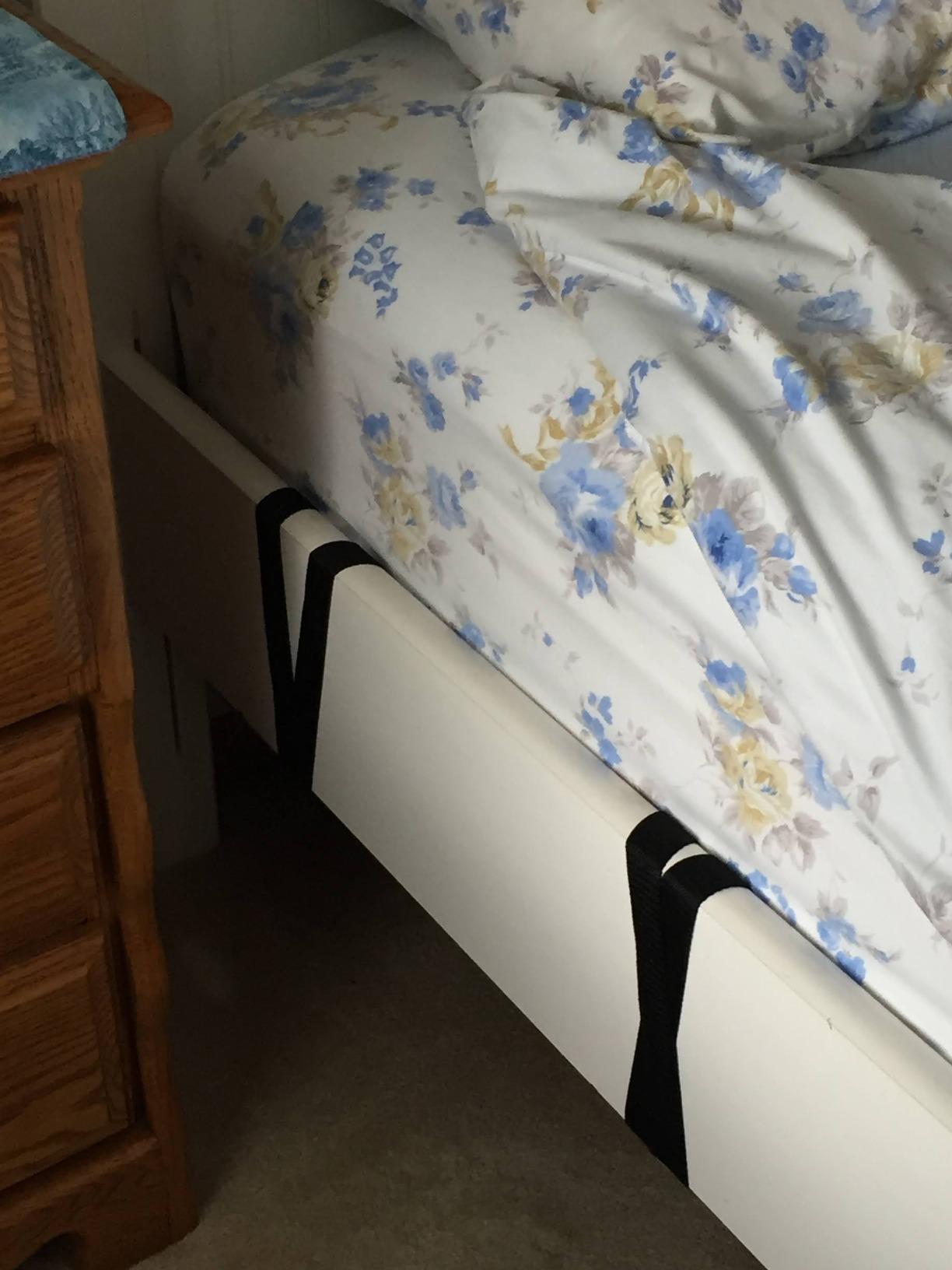
Like the Stander EZ Adjust, this model carries ASTM F3186-17 certification. It installs with a safety strap and a base that slides between the mattress and box spring or platform. The manufacturer recommends checking the fit every few weeks, which is good practice for any portable rail.
One limitation is the mattress thickness range. If your mattress is thicker than 15 inches or extremely soft, the base may not anchor as securely. The manufacturer specifically warns against extra soft mattresses for this reason. Memory foam mattresses on the thinner side work fine, but pillow-top models that compress heavily may not provide enough resistance.
It is also not designed for adjustable beds. The rigid frame could stress the rail or the mattress when the head or foot section rises. Stick to a standard flat bed for this one, or look at the Medical king model if you have an adjustable base.
The overall build quality is solid, and the product has maintained a 4.5-star average over more than 4,000 reviews. That consistency across a decade of sales suggests the design has found its audience.
Best for seniors who want adjustable coverage on a standard bed
This rail works well when fall risk changes over time, such as during post-surgery recovery. The adjustable length lets caregivers increase protection without swapping hardware. It is also a good fit for seniors who want the option to extend the rail as they age.
Avoid if your mattress is extra soft or thicker than 15 inches
Check your mattress thickness before ordering. If it is outside the 8-15 inch range, the Medical king or Siebenschläfer rails are safer bets because they offer more flexible anchoring systems.
How to Choose the Best Bed Rail for Your Needs
Buying a bed rail is not just about picking the highest-rated model. The right choice depends on the senior’s bed type, physical condition, and the specific risks you are trying to reduce. This guide will help you match features to needs.
Understand the three main types of bed rails
Assist bars are compact handles that help users sit up and stand. They do not prevent rolling out of bed, but they improve independence during transfers. These are ideal for seniors with mild balance issues who mainly need a stable grip when getting up.
Half rails run partway along the mattress and offer a mix of support and fall protection. They provide more coverage than assist bars while still leaving part of the bed open for entry and exit. This is the most common style for home use.
Full-length rails span most of the bed side and are best for users at high risk of falling out during sleep. They create a barrier along nearly the entire mattress edge. Some caregivers find them restrictive, and they require more space for caregiver access.
Hospital bed rails are integrated into medical beds and are outside the scope of most consumer purchases. Portable adult bed rails, like the ones in this guide, are designed to work with standard home beds.
Check for ASTM F3186-17 certification
ASTM F3186-17 is the voluntary safety standard for adult portable bed rails. It addresses issues like entrapment gaps, structural strength, and labeling. The standard was developed after the Consumer Product Safety Commission documented hundreds of deaths linked to poorly designed rails.
All five models in our roundup meet this standard, which is one reason they made the list. When you shop on your own, look for the ASTM certification on the packaging or product description. It is not legally required, but it signals that the manufacturer has invested in safety testing.
Match the rail to the mattress and bed frame
Mattress thickness and bed type are the two most common reasons a rail does not fit properly. Measure your mattress height before ordering. Most rails specify a range, and exceeding it can create dangerous gaps where limbs or heads could become trapped.
Adjustable beds need flexible strap systems or rails specifically rated for motion bases. Platform beds may require a longer anchor strap. Box spring setups usually accept most portable rails without issue. If you have a sleep number bed or a Tempur-Pedic adjustable base, confirm compatibility before purchasing.
Consider weight capacity and hand grip
Most rails support 250 to 350 pounds. Choose a capacity that exceeds the user’s weight, especially if they pull hard on the rail during transfers. Heavier users should look at the Siebenschläfer with its 350-pound rating.
Hand grip texture matters for arthritis or Parkinson’s disease. Foam padding and non-slip surfaces are easier to hold than smooth metal, particularly in the middle of the night when hands may be cold or stiff. Test the grip texture if possible, or read owner reviews that mention hand comfort.
Know who should not use bed rails
Bed rails are not appropriate for everyone. Seniors with cognitive impairment may try to climb over a rail and fall from a greater height. People who become confused at night or who have a history of bed exit attempts may be safer with alternatives like floor-level beds, fall mats, or motion-sensor alarms.
The FDA has documented cases where entrapment between the rail and mattress led to injury or death. If the senior has dementia, Alzheimer’s disease, or severe confusion, consult a doctor or occupational therapist before installing any rail.
Signs that a rail may be inappropriate include the user trying to climb over it, getting limbs caught between the rail and mattress, or expressing distress about feeling confined. In these cases, alternatives like concave mattresses, body pillows, or bed alarms may be safer choices.
Look at installation and caregiver access
Tool-free assembly is a major advantage if you are setting up the rail alone. Most portable rails use a strap-and-anchor system that takes less than ten minutes. Some models include instructional videos or QR codes that link to setup guides.
Fold-down designs make caregiving tasks like changing sheets much easier. If you will be providing regular care, consider how the rail affects your access to the bed. A rail that blocks half the mattress can make repositioning a loved one more difficult.
Storage pouches and pockets reduce unsafe reaching by keeping essentials within arm’s reach. Look for a model that includes this feature or can accommodate an add-on pouch.
Plan for long-term needs
Physical conditions can change over time. A rail that works today may become inadequate as mobility declines, or it may become unnecessary as recovery progresses. Adjustable-length rails like the Stander EZ Adjust and Able Life Extend-A-Rail offer flexibility for changing needs.
If the senior will be recovering from surgery, ask the discharge planner or occupational therapist for specific recommendations. They may have insights about the type of rail that pairs best with hospital beds or transitional care setups.
Frequently Asked Questions
Are bed rails covered by Medicare for seniors?
Original Medicare Part B may cover bed rails when they are prescribed as durable medical equipment and rented from a Medicare-approved supplier. Most consumer bed rails purchased online are not reimbursed because they are considered home modifications rather than medically necessary equipment. Contact Medicare or your supplement plan for specific coverage details.
Are there rails to help seniors get out of bed?
Yes. Bed assist rails and grab bars are specifically designed to give seniors a stable handhold for sitting up, swinging legs over the side of the bed, and standing. Models like the Medline Bed Assist Bar and Medical king Bed Rails focus on this transfer assistance without creating a full barrier along the mattress.
What is the alternative to bed rails?
Alternatives include bed assist handles that do not act as barriers, floor-level beds that reduce fall distance, fall mats placed beside the bed, motion-sensor alarms that alert caregivers, and body pillows or bolsters that create a soft edge. The best choice depends on the senior’s mobility, cognition, and overall fall risk.
Are bed rails safe for seniors?
Bed rails can be safe when they are ASTM certified, properly installed, and matched to the correct bed and mattress. However, they are not risk-free. Entrapment, climbing falls, and improper installation are the main hazards. Consult a healthcare provider before use, especially for seniors with dementia or severe mobility limitations.
What should be avoided when using bed rails?
Avoid using rails with mattresses that create gaps where a limb or head could become trapped. Do not install rails on beds where the manufacturer warns against them. Avoid rails for seniors who are likely to climb over them. Check straps and fit regularly, and never use a damaged or recalled product.
Conclusion
The best bed rails for seniors combine safety certification, proper fit, and a design that matches the user’s specific needs. For most households, the Stander EZ Adjust Bed Rail offers the best balance of coverage, fold-down convenience, and proven reliability. If budget or adjustable bed compatibility is your main concern, the Medical king Bed Rails deliver strong value without sacrificing safety. The Medline Bed Assist Bar remains a trusted choice for simple transfer assistance at an affordable price.
Remember that no rail replaces good caregiving, proper lighting, and a bedroom free of tripping hazards. Measure your mattress, confirm your bed type, and talk to a healthcare provider if the senior has dementia, recent surgery, or significant balance issues. The right rail can make daily life safer and more independent, but it is just one piece of a complete fall prevention plan.
Use this guide to make a confident choice for safer sleep and easier transfers in 2026.