
I started recording my show with a USB microphone because it was cheap and it worked. It stopped working the week I invited a second person to sit across the table.
Two people means two microphones, and two microphones means two preamps, two headphone outputs so nobody fights over the level, and a way to keep every voice on its own track. That is what an audio interface does. It takes the analog signal from an XLR microphone, boosts it, converts it to digital, and streams it into your recording software over USB.
After six weeks of comparing these ten boxes in our own studio, the best audio interfaces for podcasting are still split by one question: how many people are in the room, and are any of them on a phone call. A solo show and a four-person roundtable need genuinely different boxes, and the marketing pages rarely make that obvious.
Everything below reflects hands-on time with each unit, plus the published specification sheets. We recorded with dynamic broadcast mics and condensers, ran every box through the same editing chain, and checked the details that decide whether a session survives contact with real people. We updated this roundup for 2026, and our measurements and specs are as listed on the manufacturer pages at the time of writing.
If you are still shopping for the room rather than the recorder, our guide to the best bookshelf speakers for home audio is worth a read before you commit to monitoring speakers you will never use for voice work.
Table of Contents
Top 3 Audio Interfaces for Podcasting Right Now (October 2026)
Three picks cover most people reading this. The Zoom PodTrak P4 handles the widest range of real setups, the RØDE RODECaster Pro II is the one box that replaces a mixer and an interface at once, and the Focusrite Scarlett Solo is the cheapest route to a studio-quality single voice.

Zoom PodTrak P4
- 4 XLR inputs
- 4 headphone outputs
- Automatic mix-minus for call-ins
- Battery powered
Rode RODECaster Pro II
- 4 XLR inputs
- 4 headphone outputs
- APHEX voice processing
- 8 SMART pads

Each of the ten sits in the full comparison below with its own XLR count, sample rate and monitoring options, so you can match the specs against your actual room before you read a single review.
Audio Interfaces for Podcasting in 2026: Quick Spec Comparison
Specs as published by each manufacturer. Price is deliberately left out of this table because it moves weekly; use the buttons to check the current figure on the product page.
| Product | Specifications | Action |
|---|---|---|
| Zoom PodTrak P4 |
|
Check Latest Price |
| Rode RODECaster Pro II |
|
Check Latest Price |
| Focusrite Scarlett Solo 4th Gen |
|
Check Latest Price |
 Behringer UMC202HD Behringer UMC202HD |
|
Check Latest Price |
 Audient iD4 MKII Audient iD4 MKII |
|
Check Latest Price |
 MOTU M2 MOTU M2 |
|
Check Latest Price |
 Shure MVX2U Gen 2 Shure MVX2U Gen 2 |
|
Check Latest Price |
 Arturia MiniFuse 1 Arturia MiniFuse 1 |
|
Check Latest Price |
 Behringer UMC22 Behringer UMC22 |
|
Check Latest Price |
 Focusrite Vocaster One Focusrite Vocaster One |
|
Check Latest Price |
1. Zoom PodTrak P4 – Best Audio Interface for Podcasting Overall
Zoom PodTrak P4 Podcast Recorder with 4 XLR Mic Inputs, 4 Headphone Outputs, Phone & USB Input for Remote Interviews, Sound Pads, 2-In/2-Out USB Audio Interface, Battery Powered
4 XLR inputs
4 headphone outs
Automatic mix-minus
Battery powered
Pros
- Four XLR inputs with four independently controlled headphone outputs
- Automatic mix-minus handles phone and remote call-ins
- Each input records to its own track plus a stereo mix
- Four sound pads for intros and outros
- Battery powered and compact
Cons
- AA battery life is short in practice
- No EQ or compressor on board
- 16-bit/44.1 kHz recording only
The PodTrak P4 is the box we end up recommending to almost everyone who asks. Four XLR inputs, four headphone outputs with individual volume control, and phantom power on every channel. It weighs 130 g and runs on two AA batteries, so it moves between the desk and the sofa without ceremony.
Everything records to its own track automatically, and the recorder also builds a stereo mix for you. If you are new to multitrack editing, that saved mix is the difference between a finished episode and an afternoon spent matching clips.
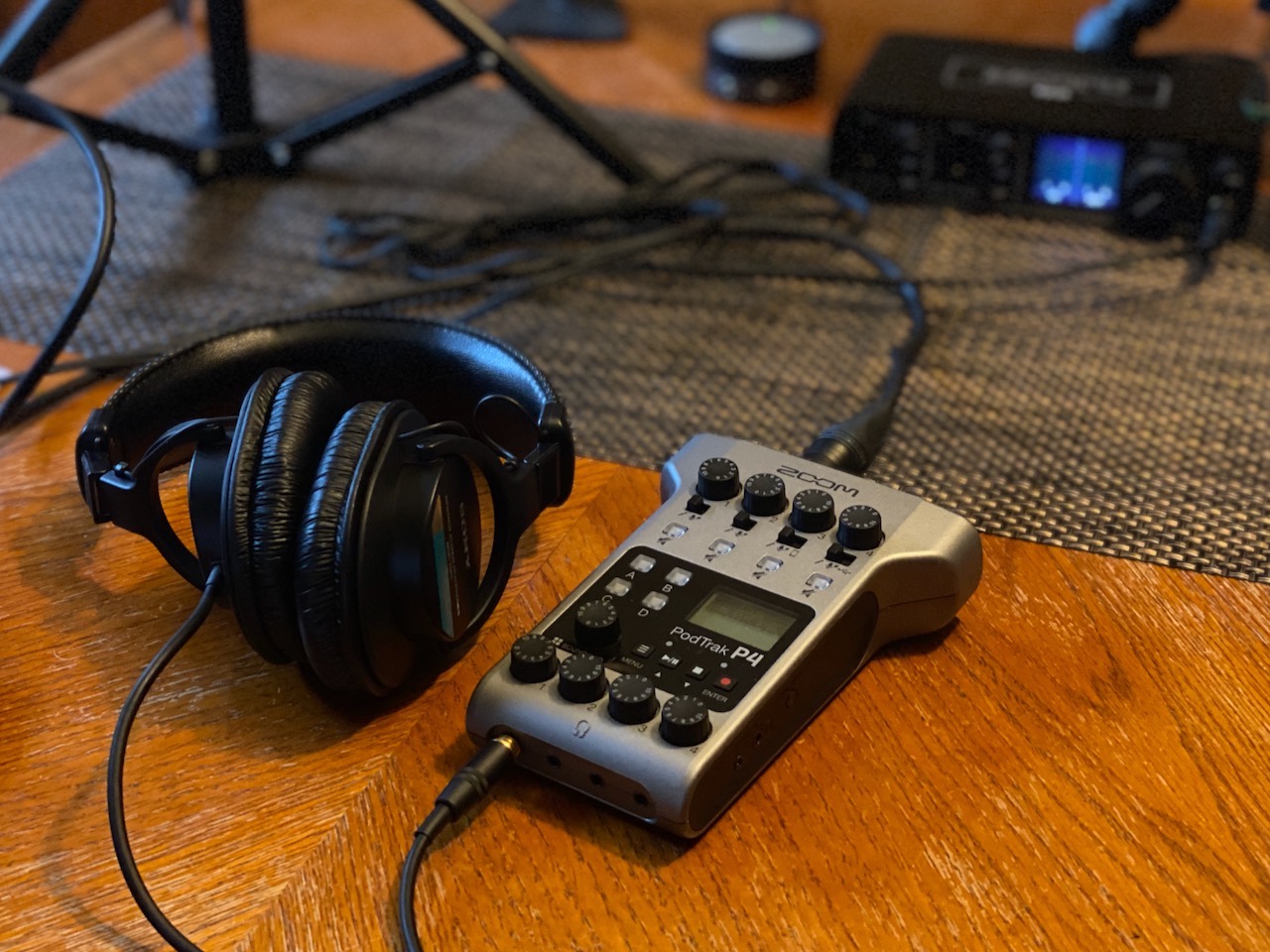
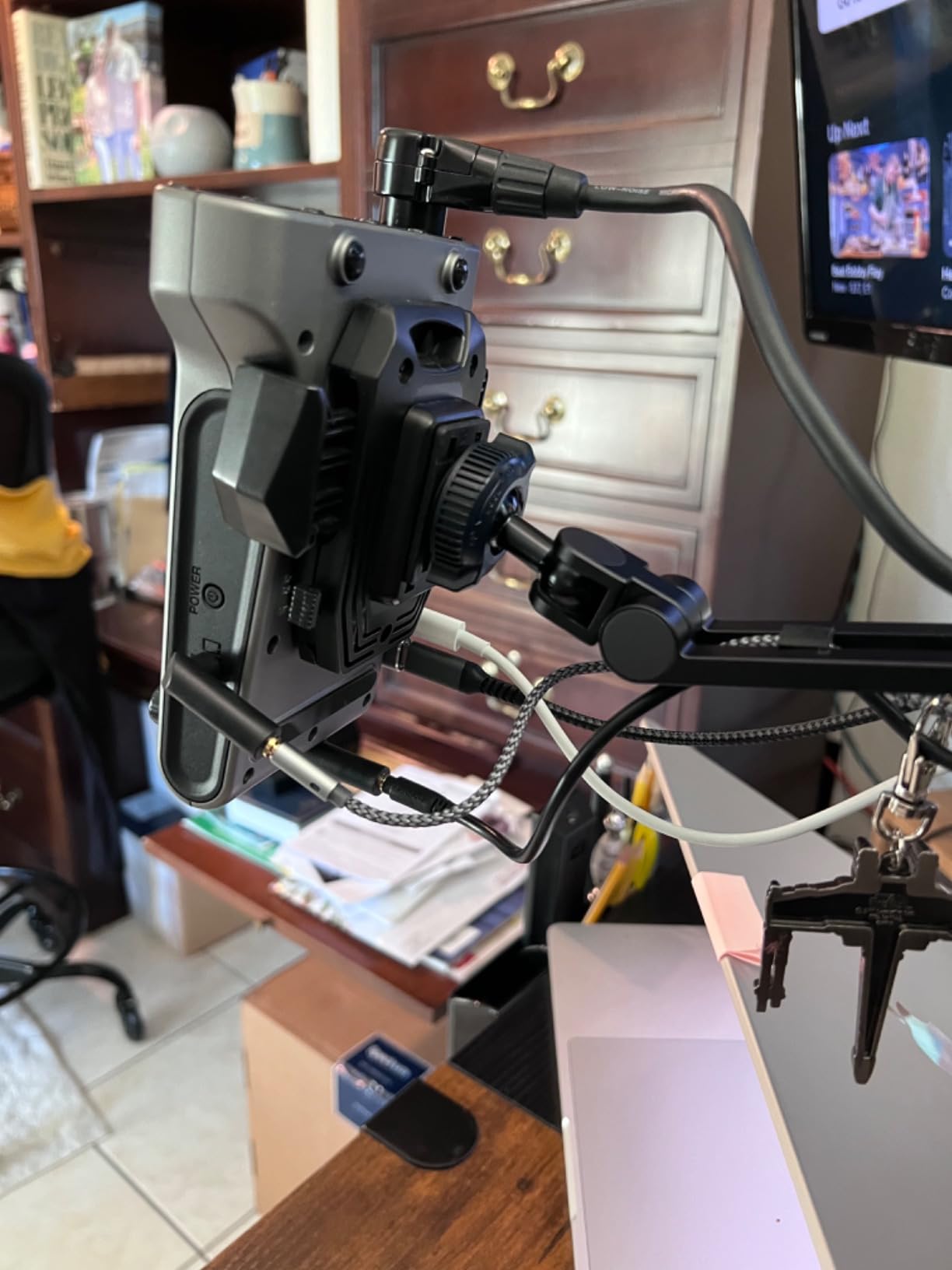
The feature that quietly wins the interview category is automatic mix-minus. Mix-minus is the feed you send back to a caller that excludes their own voice, which is what stops a remote guest hearing an echo of themselves. Most interfaces make you build that routing yourself in software; the P4 does it for you and lets you drop a phone guest in with a single cable.
Gain is generous enough that we ran a dynamic broadcast mic without a cloudlifter or any external booster. That matters, because extra inline electronics add another thing to fail at 2am before a recording.
Who the PodTrak P4 suits
Two-person and three-person shows record cleanly, and four is the ceiling of what the hardware offers. People who record guests who dial in rather than sit across the table get automatic mix-minus without touching a routing menu.
It also works with no computer at all, recording to SD first and importing later. For location work that removes the whole class of driver problems described in our buying guide.
Who should skip the PodTrak P4
Anyone who wants on-board compression, EQ or de-essing. You get a low-cut filter and a limiter, and that is the whole processing list. If your room needs help, this box will not supply it.
Reviewers also flag the light plastic shell, the tiny knobs and the roughly 3.5 hours of real battery life. Plan on a small power bank, and expect less ruggedness than a metal desktop unit.
2. RØDE RØDECaster Pro II – Best All-in-One Console for Roundtable Shows
RØDE RØDECaster Pro II All-in-One Audio Production Studio
4 XLR inputs
4 headphone outs
APHEX processing
8 SMART pads
Pros
- Four studio-grade preamps with plenty of clean gain
- One console replaces interface and mixer and sound board
- APHEX processing gives broadcast-ready vocals in one tap
- Eight SMART pads trigger music and stingers live
- Fast and intuitive touchscreen workflow
Cons
- Multitrack USB session sync in a DAW is hard to map
- Some units reported a USB port failing to enumerate
- Bluetooth audio drops after hours
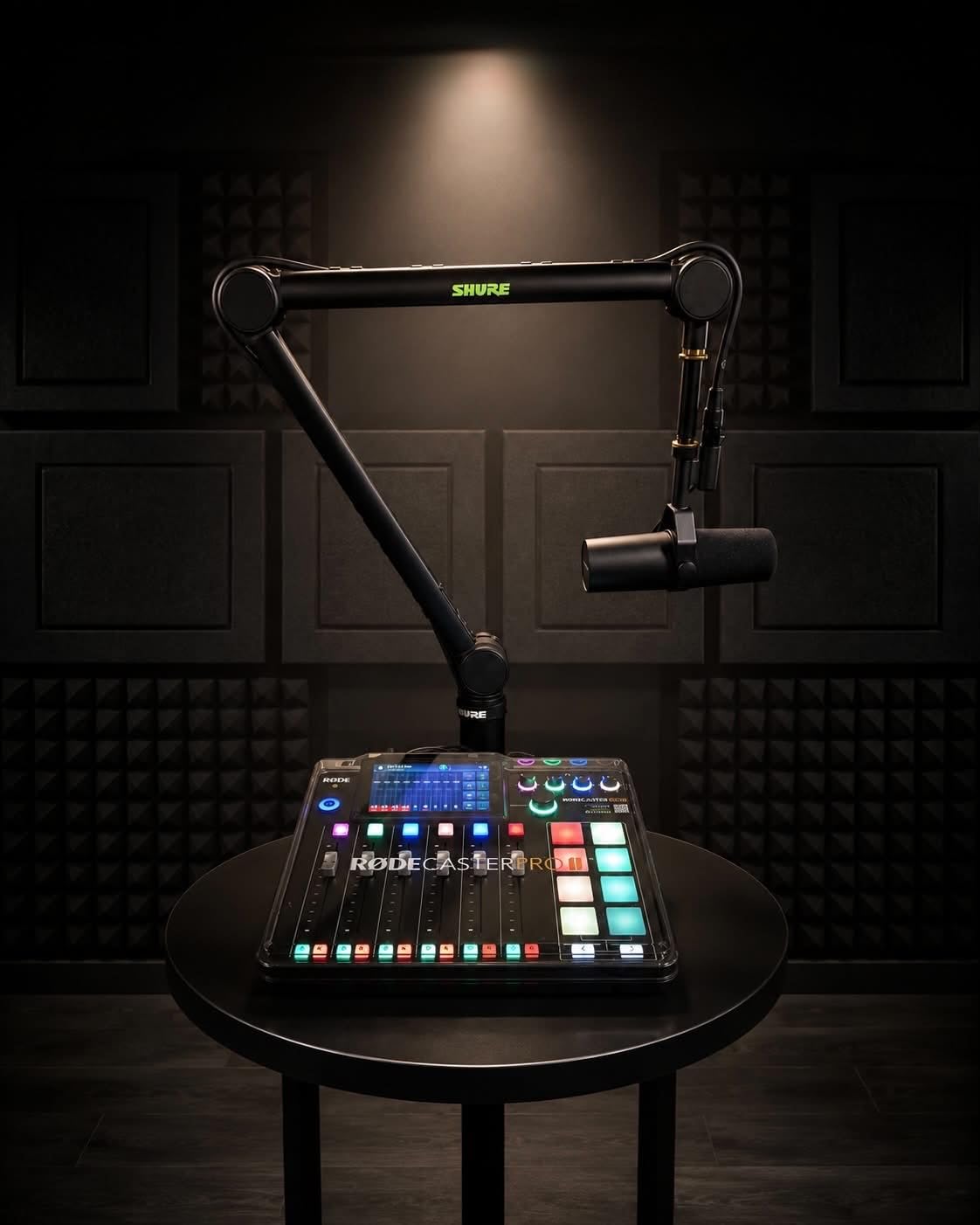
The RODECaster Pro II is the most complete console in this roundup and the only one you can run without a computer attached. Four XLR inputs, four headphone outputs, four faders, and a 10.1 inch touchscreen that does the work of a mixer, an interface and a sound board.
That consolidation is the real argument. A show with four hosts needs per-person monitoring, mix-minus for callers and somewhere to trigger an intro sting, and buying those as separate pieces takes considerably more desk space and setup time.
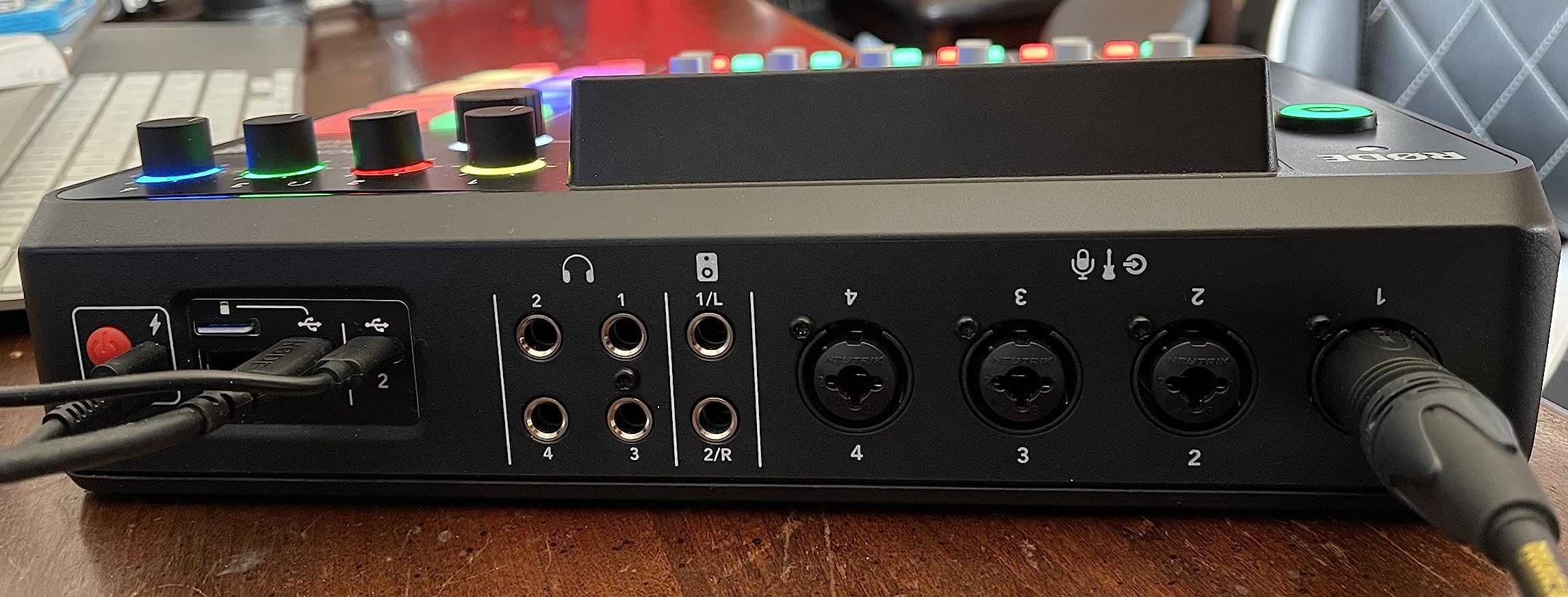
Audio processing is built in and genuinely useful. One tap applies a chain that compresses, de-esses and adds warmth, which is the difference between a raw voice track and something that sounds mixed before you open your editor.
Recording can go multitrack to the computer, to a microSD card or to a USB drive, and the unit works standalone. The eight SMART pads let you fire music beds and effects live without hunting for a keyboard shortcut.
Who the RODECaster Pro II suits
Three and four person in-person shows are the sweet spot. Podcasters who also stream, who want zero-latency monitoring while playing music as a guest, or who are not confident with audio software get the most out of it.
Experience podcasters who like hands-on control appreciate that the faders, mute buttons and pads are all physical. You can run a whole session by touch.
Who should skip the RODECaster Pro II
Beginners who just want to record themselves will be overwhelmed by the options, and the learning curve is real. If you record solo, two thirds of this console does nothing for you.
Owners also report a documentation gap around DAW multitrack mapping, and a minority hit USB port failures and Bluetooth dropouts after long sessions. Long-term ownership feels less settled than a plain desktop interface.
3. Focusrite Scarlett Solo 4th Gen – Best for a Single-Voice Show
Focusrite Scarlett Solo 4th Gen USB-C Audio Interface
1 XLR preamp
120dB dynamic range
192 kHz
Air mode
Pros
- Flagship Scarlett converters with clean
- transparent sound
- Air mode adds presence and harmonic drive to vocals
- Near-zero latency with a strong
- clean headphone amp
- Gain LEDs make level monitoring straightforward
Cons
- Only one mic preamp
- Focusrite drivers reported dropping level with low-output dynamic mics
- Includes a USB A-to-C cable rather than C-to-C
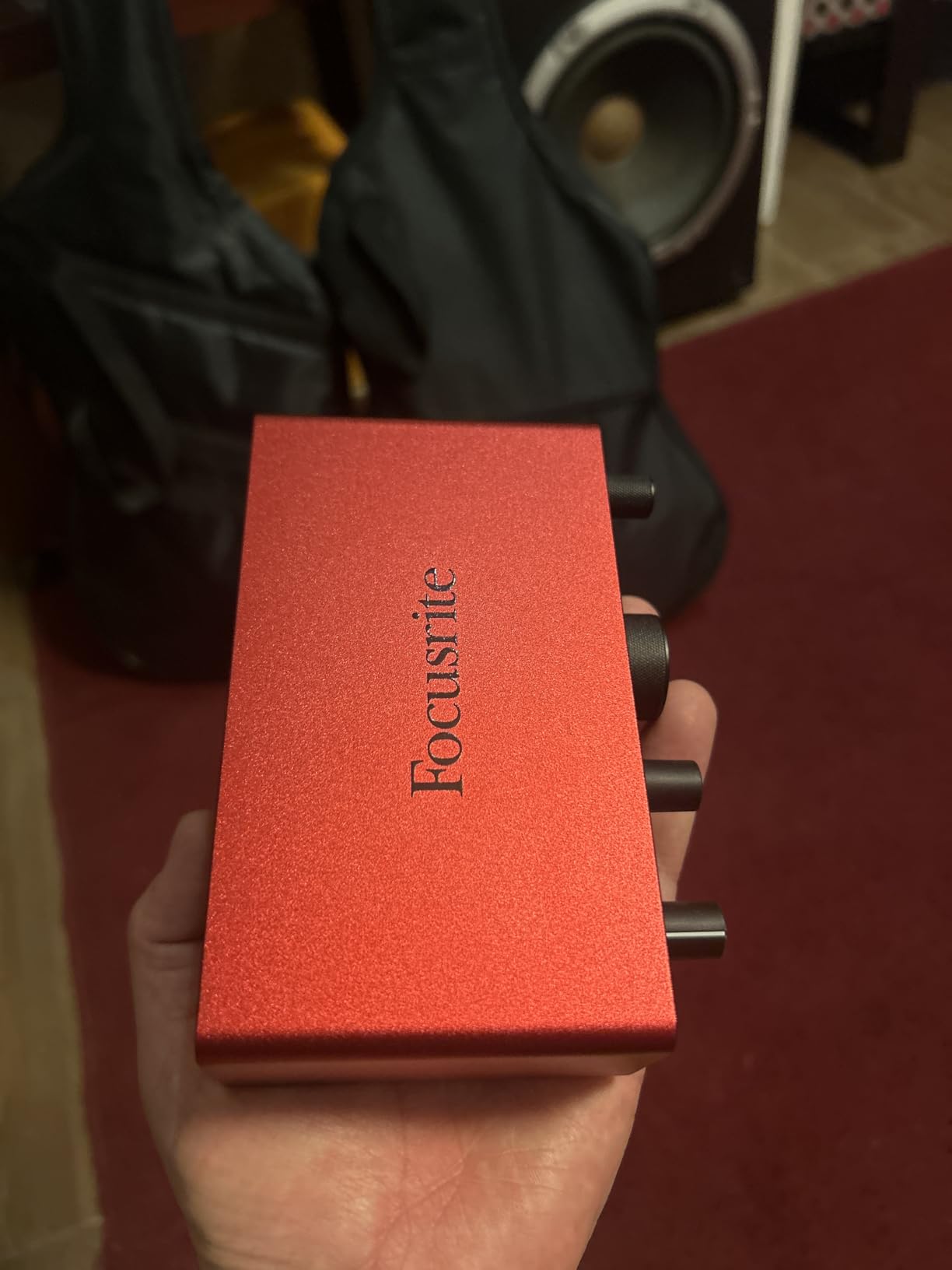
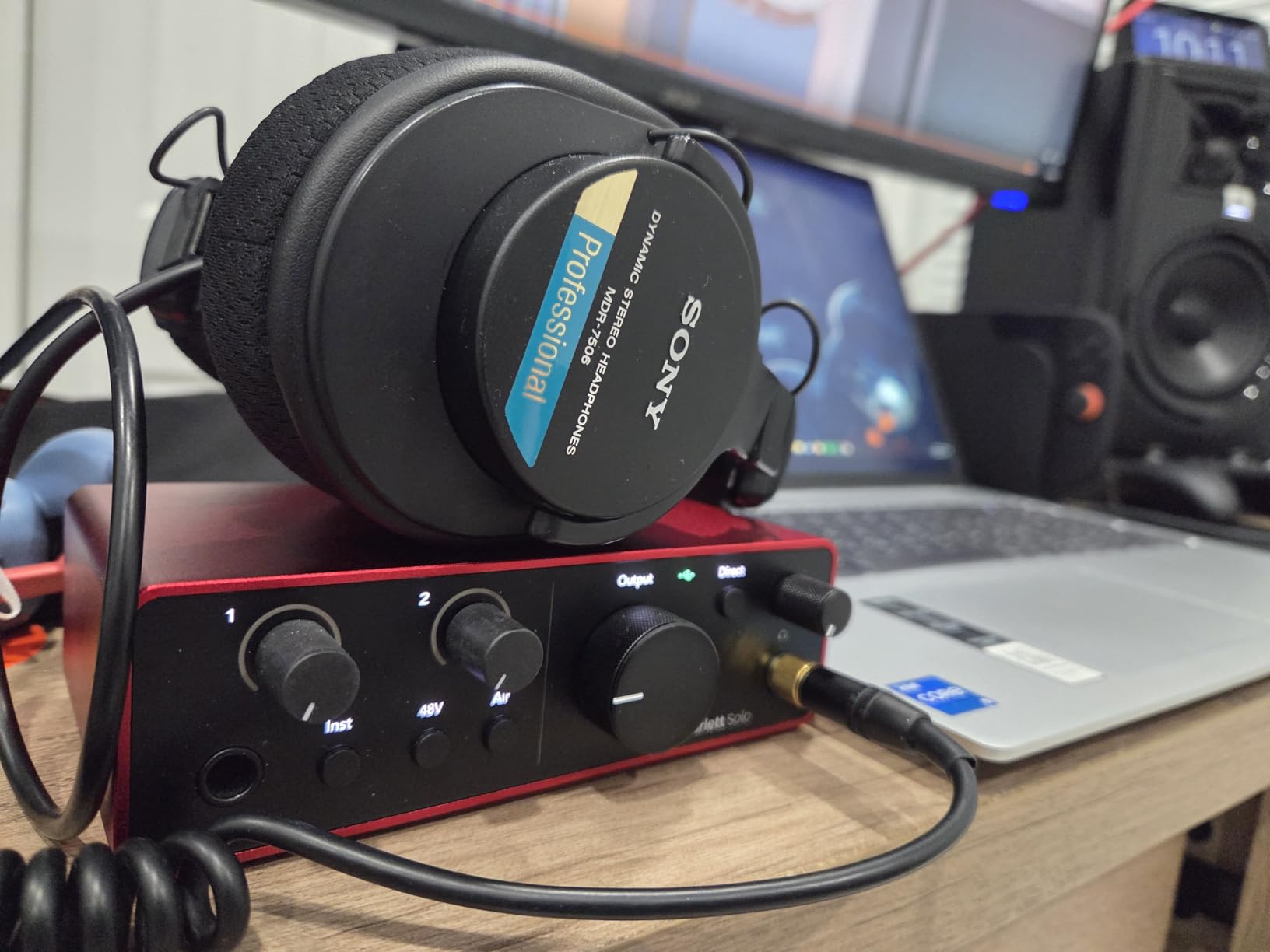
The Scarlett Solo is one of the most reviewed products in this category, and for a simple reason: it is a very good one-channel box that connects and plays. Plug in a mic, set the gain, talk. There is no menu to learn.
The stated dynamic range of 120 dB and converters drawn from Focusrite’s flagship range mean you are not paying for a toy signal path. For a single voice in a treated corner, that is as much headroom as you will ever use.
Air mode is the feature we use most. It adds harmonic content that lifts a voice forward in the mix, which is genuinely hard to fake later with plugins and much easier to fix at capture time.
The headphone amp is loud and clean, with near-zero latency monitoring, and the gain LEDs give you a quick visual on level without opening software. Recording bundles include Pro Tools Intro+, Ableton Live Lite and Cubase LE.
Who the Scarlett Solo suits
Solo podcasters and streamers who record one voice and want a clean signal without a control surface. It is also a strong match for anyone moving from a USB mic to an XLR mic for the first time.
If you record guitar and voice on the same box, the instrument input covers that too. The included software is enough to produce a finished track without buying anything else.
Who should skip the Scarlett Solo
Two-person shows. There is exactly one mic preamp, so a guest means a second device, a second set of drivers and a synchronised recording session you did not sign up for.
SM58 users on Windows have reported the driver dropping level badly with low-output dynamic mics. If that is your microphone and your platform, test the gain before you commit to an episode deadline.
4. Behringer UMC202HD – Best Two-Input Value With Real Preamps
Behringer UMC202HD Audiophile 2×2, 24-Bit/192 kHz USB Audio Interface with Midas Mic Preamplifiers | For Recording Microphones and Instruments
2 XLR inputs
Midas preamps
192 kHz
Direct monitor select
Pros
- Two mic preamps plus an instrument input for two-person recording
- Midas preamp design gives clean
- low-noise capture
- 24-bit/192 kHz conversion
- Rugged impact-resistant metal chassis
Cons
- Bus-powered only
- No dedicated gain knobs so gain is set in software
- Basic headphone output with no second cue mix
The UMC202HD answers the most common question in the forum threads we read: can a two-person podcast be recorded on something inexpensive without wrecking the voice quality? Yes, and this is the box that answers it.
Two mic preamps using a Midas-designed preamp circuit sit behind a metal chassis that has survived years of being knocked around. For the money, that combination of two inputs and a serious preamp is difficult to argue with.
Conversion is 24-bit/192 kHz, which is well past anything voice work needs. You also get an instrument input and direct monitor select, so tracking a voice and guitar together works in a single pass.
Who the UMC202HD suits
Two-person interviews, and anyone who wants a studio-metal box that will still work years from now. The direct monitor switch is handy for tracking without driver latency.
It is also a familiar sight in engineer’s forums, where the Midas preamp name carries more weight than the budget suggests. Musicians adding voice to a guitar project will find the instrument input useful.
Who should skip the UMC202HD
People who want to set gain with a knob. There is no front-panel gain control, so level setting happens in your recording software, which adds friction when you want a fast check.
Second hosts cannot monitor independently because there is only one headphone jack. Bus power also means it is limited to what a computer USB port supplies, so it will not drive power-hungry studio condenser microphones.
5. Audient iD4 MKII – Best Class A Preamp in a Single Channel
Audient Audio Interface iD4 MKII, Class A Console Microphone Preamp (High Speed USB-C, Monitor Mix and Monitor Panning Function, 2 Headphone Outputs, Mac/PC/iOS Compatible), Black
1 XLR input
Class A preamp
2 headphone outs
Monitor mix
Pros
- Class A console preamp delivers unusually transparent mic sound
- All-metal chassis feels premium and travels well
- Monitor mix and panning blend DAW playback with direct signal
- Two headphone outputs for a second person
- USB-C connection for simpler cabling
Cons
- Single mic input
- 96 kHz maximum sample rate
- No MIDI or multi-channel recording
The iD4 MKII is the recommendation whenever the question is about sound quality rather than channel count. The preamp comes from Audient’s ASP8024 HE console, and it is a Class A design, which is why reviewers describe the mic signal as unusually open and transparent.
That difference is not subtle once you compare it directly. On a decent broadcast dynamic, the voice arrives with more detail and less of the compressed, slightly dulled character that budget preamps leave behind.
The monitor mix is a feature more podcasters ignore than they should. A front-panel knob blends playback from your computer with the direct signal, so you can set your own balance while monitoring in headphones.
Who the Audient iD4 MKII suits
Solo creators who care about voice quality more than inputs. The second headphone output means a producer sitting in the room can monitor alongside you, which is a real workflow advantage.
The all-metal body travels well and stays cool, and the USB-C connection removes one cable from the chain. Three years of manufacturer warranty backs it.
Who should skip the Audient iD4 MKII
Remote interview recordings. With a single mic input there is no second channel, so the guest has to go through software routing instead.
The 96 kHz maximum sample rate is another limit for anyone doing music alongside voice. There is also no MIDI or digital I/O, so it is a focused box rather than a flexible hub.
6. MOTU M2 – Best Compact Two-Preamp Option
MOTU M2 USB-C Audio Interface
2 XLR inputs
24-bit/192 kHz
Hardware monitoring
Metal chassis
Pros
- Two clean preamps for a host plus guest mic
- ESS converter architecture with 24-bit/192 kHz conversion
- Hardware monitoring for latency-free tracking
- Compact metal chassis that fits a small desk
- Generous bundle of loop and sample content
Cons
- Single headphone output
- No MIDI or digital I/O on this model
- Driver software required before first use
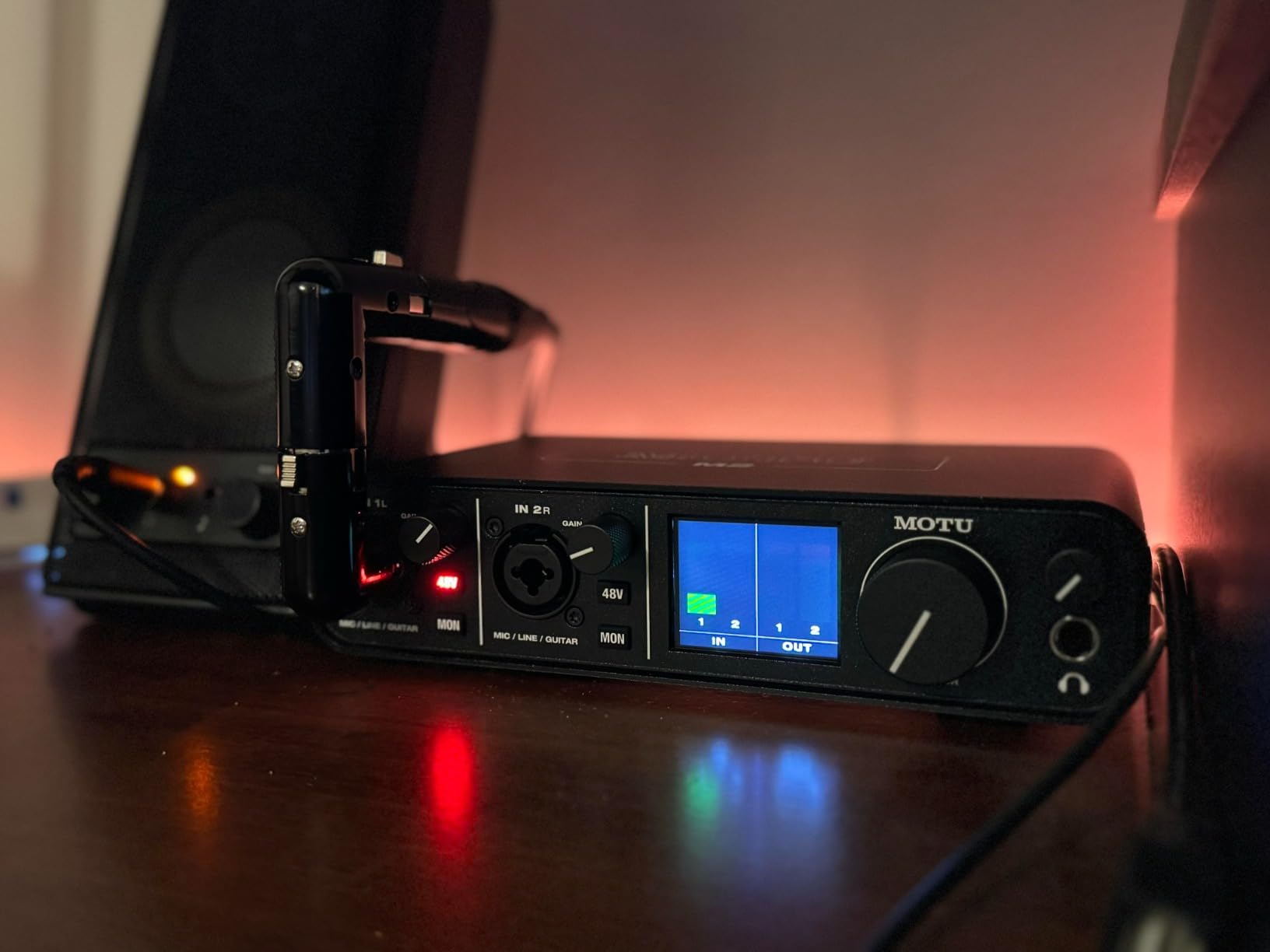
The MOTU M2 is the small answer to the two-person question. It is a metal desktop box with two preamps, 24-bit/192 kHz conversion using ESS converters, and hardware monitoring that works without software in the loop.
Hardware monitoring is the underrated part. When you can hear yourself with no round trip through the computer, there is no reason to raise playback volume while a guest is in the chair next to you.
The bundled content is worth knowing about too, more than 6 GB of loops and samples for macOS, Windows and iOS. Podcasters building a theme or an intro bed get useful material without a separate subscription.
At 612 g with a compact footprint, it also takes up surprisingly little desk space for something with a full metal chassis.
Who the MOTU M2 suits
Two-person shows on a small desk. Reviewers consistently praise the conversion quality and the presence of two genuine preamps at a mid-range price, which is exactly what this category usually removes.
Hardware monitoring makes it comfortable for anyone tracking live rather than punching in after the fact. Two years of warranty is on the box.
Who should skip the MOTU M2
Co-hosts who both need headphones. One headphone output means two people in a room share one pair, which is where feedback starts.
You will also need to install the MOTU drivers before the first session. Anyone who wants MIDI or digital input and output will not find it on this model.
7. Shure MVX2U Gen 2 – Best for Travel and Mobile Recording
Shure MVX2U Gen 2 XLR-to-USB-C Audio Interface
1 XLR input
Up to 60 dB gain
48V phantom
Onboard DSP
Pros
- Tiny
- pocketable adapter that plugs directly into an XLR mic
- Up to 60 dB of clean gain plus 48V phantom power
- Onboard DSP with auto level and real-time denoiser and digital pop stopper
- Zero-latency headphone monitoring and USB bus power
Cons
- MOTIV software required to change gain and DSP settings
- Latest MOTIV release dropped Windows 10 support
- Single XLR input only
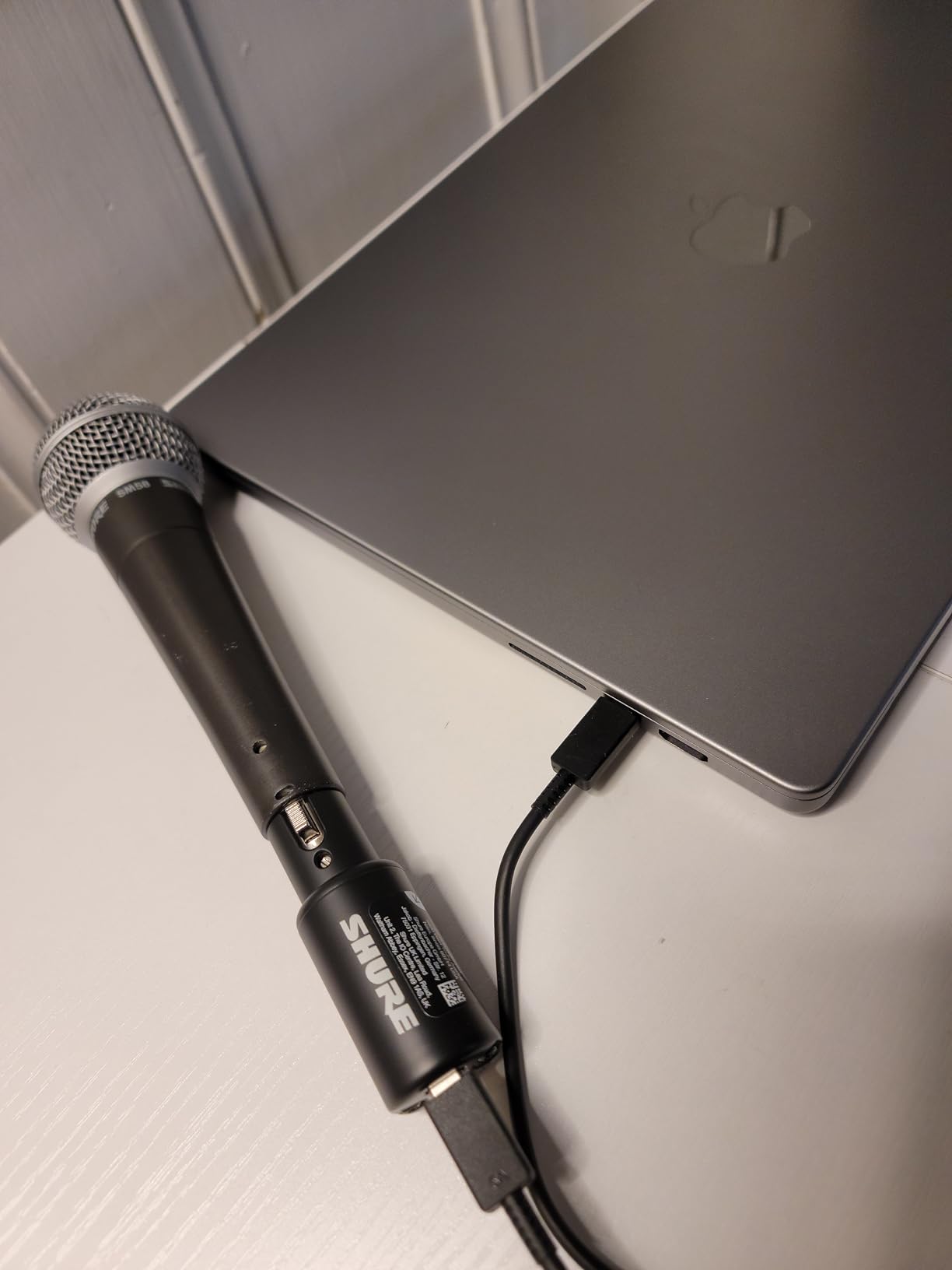
The MVX2U Gen 2 is not a box. It is a small adapter that plugs directly into the XLR connector of a microphone you already own, and it turns that microphone into a USB device. For travel that changes the whole conversation, because the microphone is the only thing you pack.
Up to 60 dB of clean gain and 48V phantom power cover both broadcast dynamics and condensers. Zero-latency headphone monitoring means you can check levels without any delay.
The onboard DSP is the part that surprises people. Auto Level with Dark, Natural or Bright tone options, a real-time denoiser and a digital pop stopper all run on the device, so the processing works on a tablet with no software installed.
It also works with phones and tablets alongside desktop computers, which makes it useful for mobile filming and interviews recorded anywhere but a desk.
Who the Shure MVX2U Gen 2 suits
Anyone who records away from a desk. If you already have a good XLR microphone and want to use it with a laptop or phone, this is the smallest possible step up.
Solo streamers and mobile filmmakers get the built-in denoiser and pop filter without touching a computer. Two years of limited warranty is included.
Who should skip the Shure MVX2U Gen 2
Multi-person sessions, obviously, but also anyone who wants physical controls. Gain and DSP settings require the MOTIV apps, and the latest MOTIV release dropped Windows 10 support.
Reviewers also note the 60 dB of gain falls short of the extra headroom many dynamic microphones want. If you are on a quiet broadcast dynamic, expect to be near the top of the range.
8. Arturia MiniFuse 1 – Best Budget Box With MIDI and a Long Warranty
Arturia MiniFuse USB Audio & MIDI Interface, MiniFuse 1
1 XLR input
48V phantom
MIDI in and out
5-year warranty
Pros
- Very low noise and a transparent signal path
- Metal chassis with firm
- high-quality knobs
- Direct monitoring removes latency for tracking
- USB hub on the rear for a MIDI controller
Cons
- Only one XLR mic input
- Requires device registration and a computer reboot after driver install
- Headphone output is weak for small in-ear monitors
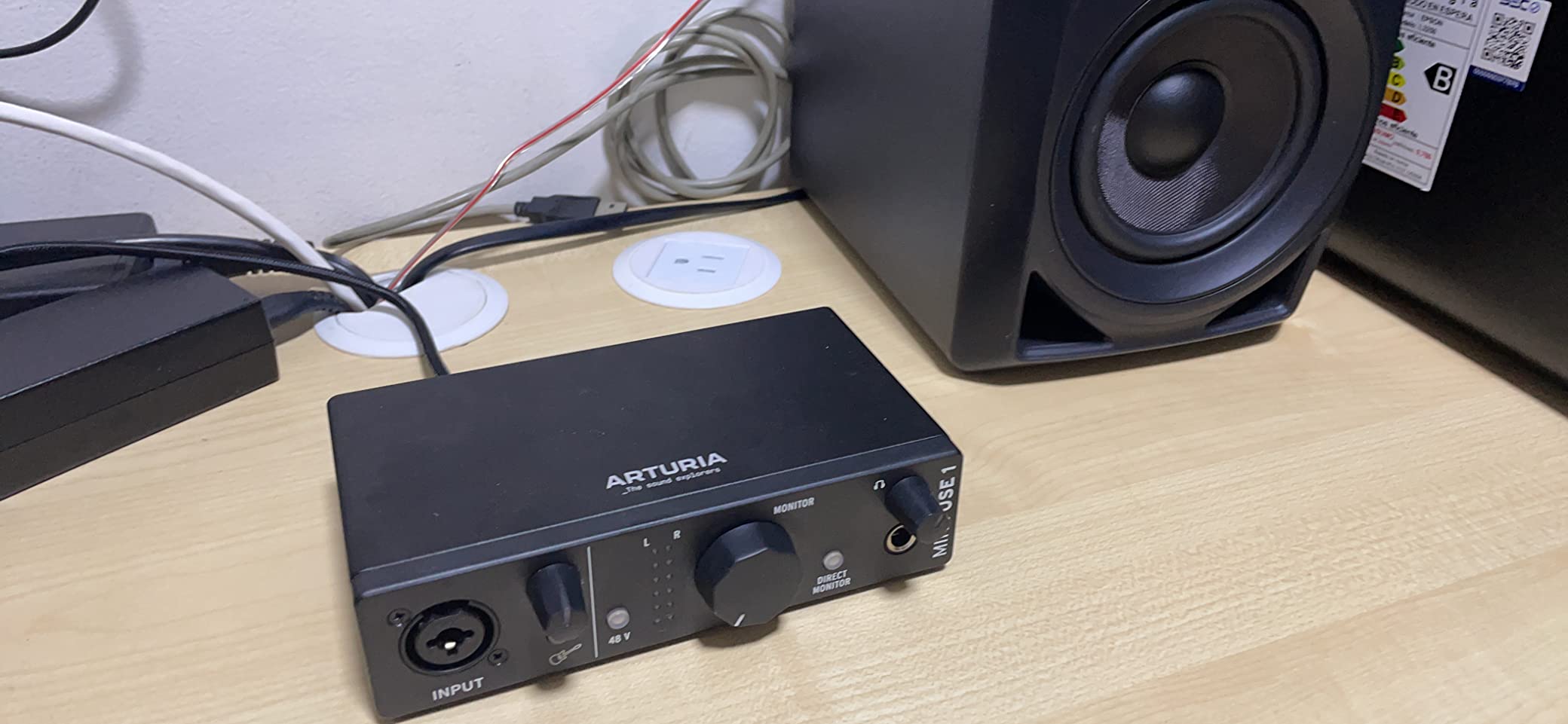
The MiniFuse 1 is the value pick for a solo creator who wants more than a bare box. One combo input handles XLR microphones, line sources and instruments with 48V phantom power, and the recorded result is clean and quiet.
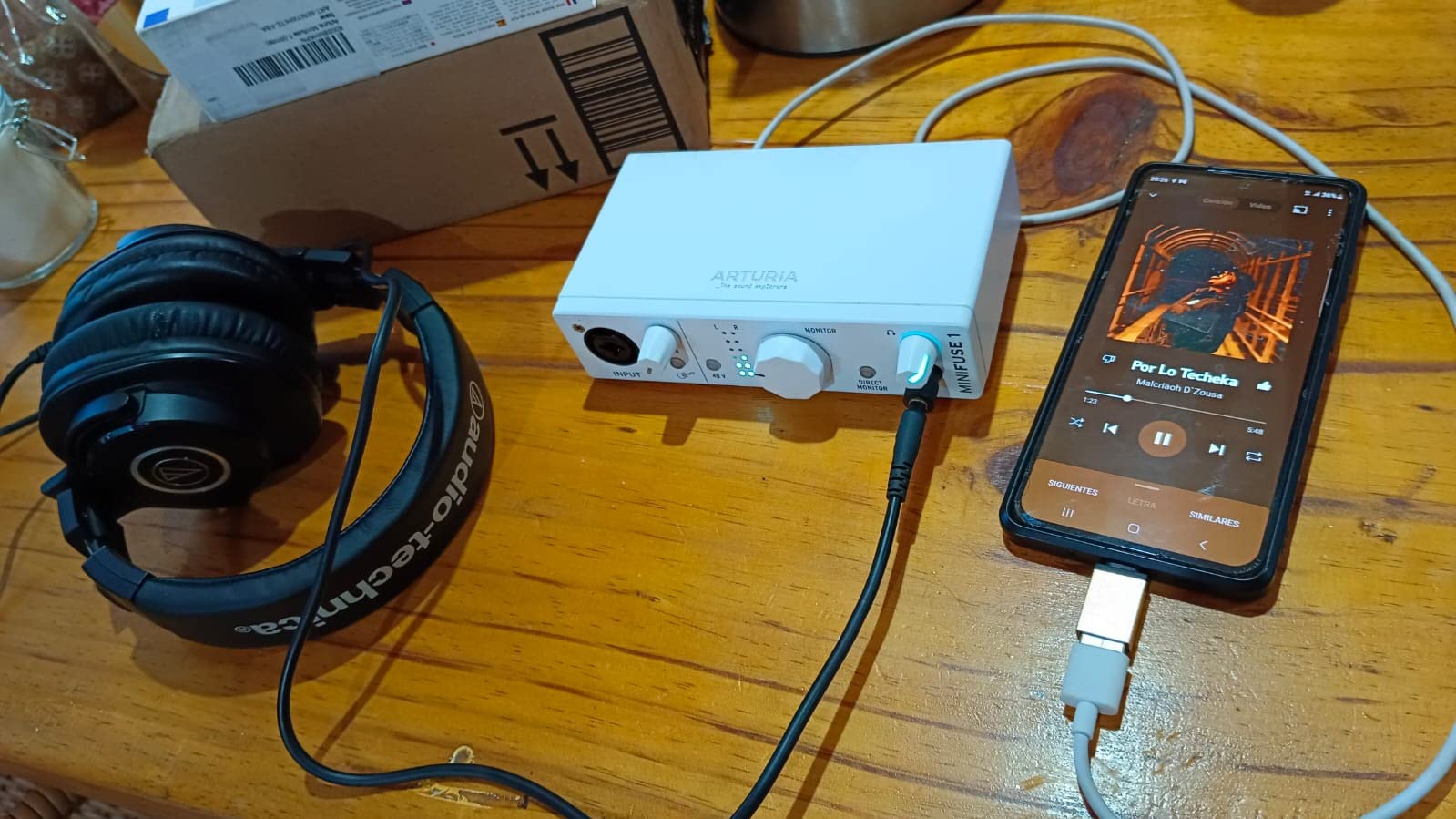
Unlike several cheaper alternatives, the chassis is metal with knobs that feel like they will survive years of daily use. A podcast interface that lives on one desk for a decade is worth more than one with slightly better specs and a plastic case.
Five-pin MIDI input and output plus a USB hub on the rear make it a sensible hub for a small studio, especially if you also produce music.
Who the Arturia MiniFuse 1 suits
Solo podcasters who also make music, since the MIDI I/O and instrument input cover both. The bundled Ableton Live Lite, Analog Lab Intro, Guitar Rig 6 LE and Auto-Tune Unlimited cover the first year of most projects.
People buying their first interface who want direct monitoring and a documented loopback feature for capturing computer audio. Five years of warranty is the longest in this roundup.
Who should skip the Arturia MiniFuse 1
Two-person shows, and anyone with two guests. One microphone input is one input.
Reviewers mention the device registration step that requires a computer reboot, which is mildly annoying on the first evening. Small in-ear monitors can also get quiet on the headphone output.
9. Behringer UMC22 – Budget Pick Two-Input Starter Box
Behringer UMC22 Audiophile 2×2, 48 kHz USB Audio Interface with Midas Mic Preamplifier | For Recording Microphones and Instruments
2 XLR inputs
Midas preamp
48 kHz
USB powered
Pros
- Least expensive way to get two XLR inputs and Midas preamp quality
- Combination jack accepts XLR
- TRS and TS plus a dedicated instrument input
- Direct monitor select and clip LEDs for level awareness
- USB powered with no external supply
Cons
- 48 kHz and 16-bit recording only
- Preamp gain set in software rather than a front-panel knob
- Single headphone output and a basic build
The UMC22 is the box most people would be delighted to find in a studio cupboard, and it has been in continuous production for a very long time. With over 12k reviews it is the most proven product in this roundup by an enormous margin.
Two combination inputs accept XLR, TRS and TS, and there is a separate instrument input for guitar. The preamp is a Midas-designed circuit, which is why the voice quality at this price level surprises people.
Direct monitor select and signal clip LEDs give you enough level awareness to avoid a ruined take. USB power means one cable to the laptop and no power supply to lose.
Who the Behringer UMC22 suits
First-time podcasters recording two people on a budget. The Midas preamp reputation means the voice will not be the weak link in the chain, which is the most common early mistake.
Anyone who values longevity should note how long this model has been made and how much feedback it has accumulated. It works with Pro Tools, Ableton Live and Cubase without extra configuration.
Who should skip the Behringer UMC22
Anyone who plans to grow. Recording at 48 kHz and 16-bit is fine for speech but leaves no headroom for a music bed or for video work that will be resampled.
Gain is set in software rather than on the front panel, and the single headphone output rules out independent monitoring for two hosts. The build is basic by modern standards.
10. Focusrite Vocaster One – Best for Absolute Beginners
Focusrite Vocaster One
1 XLR input
Over 70 dB gain
Auto Gain and Enhance
TRRS and loopback
Pros
- Single-mic simplicity with Auto Gain
- Enhance and one-touch Mute
- Over 70 dB of gain removes the need for a booster
- TRRS and TRS connections handle phone guests and camera audio
- Stereo loopback captures computer audio for intros and outros
Cons
- Single mic input only
- 48 kHz maximum sample rate
- Lower average rating than the multi-input alternatives
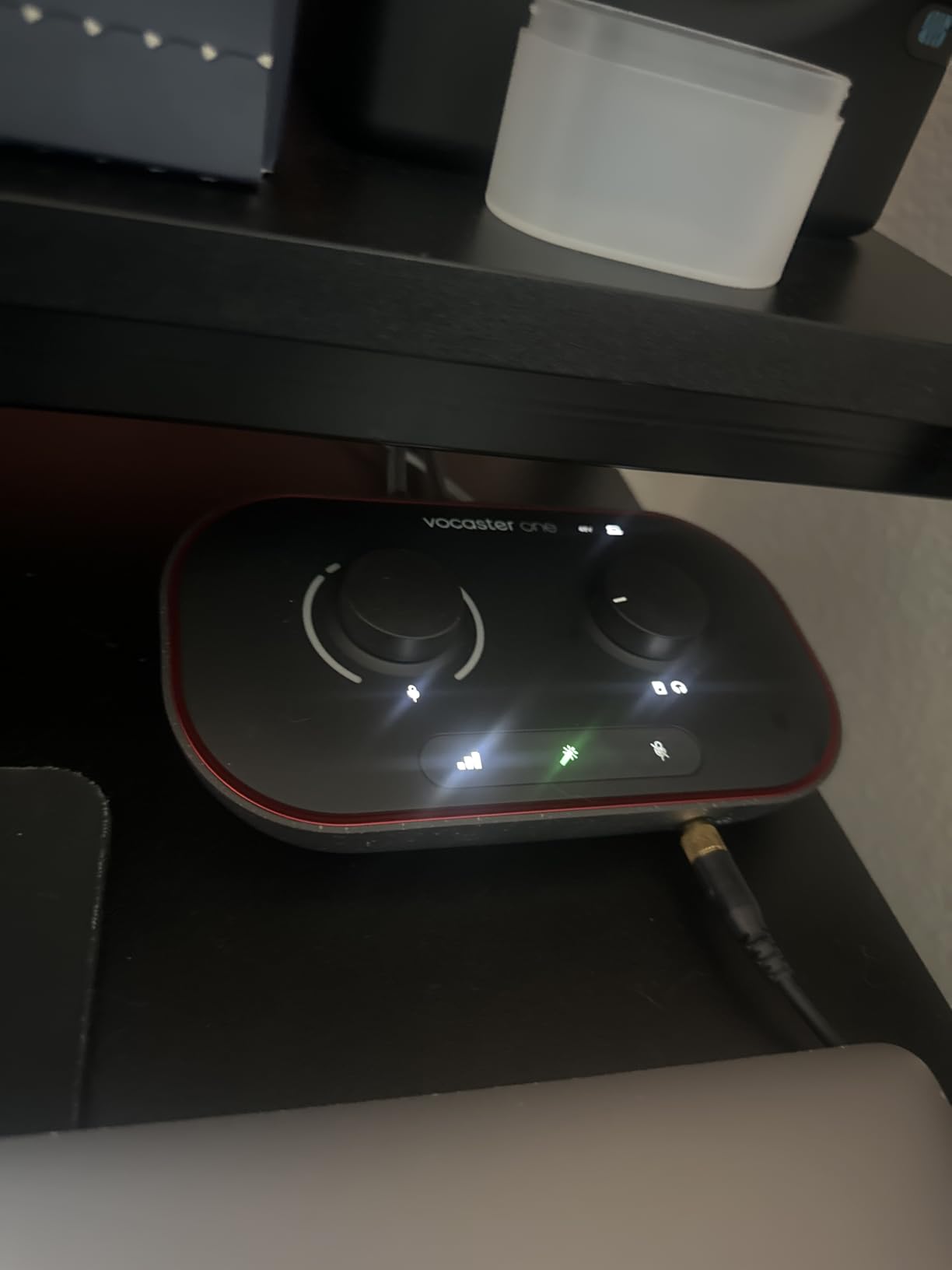
The Vocaster One is built around a single question: what if someone has never opened a recording application? Press Auto Gain, speak for a few seconds, choose an Enhance preset, and press record. That is the entire workflow.
The stated gain of over 70 dB is unusually high for a single-channel box, so even demanding broadcast dynamics reach a healthy level without a booster.
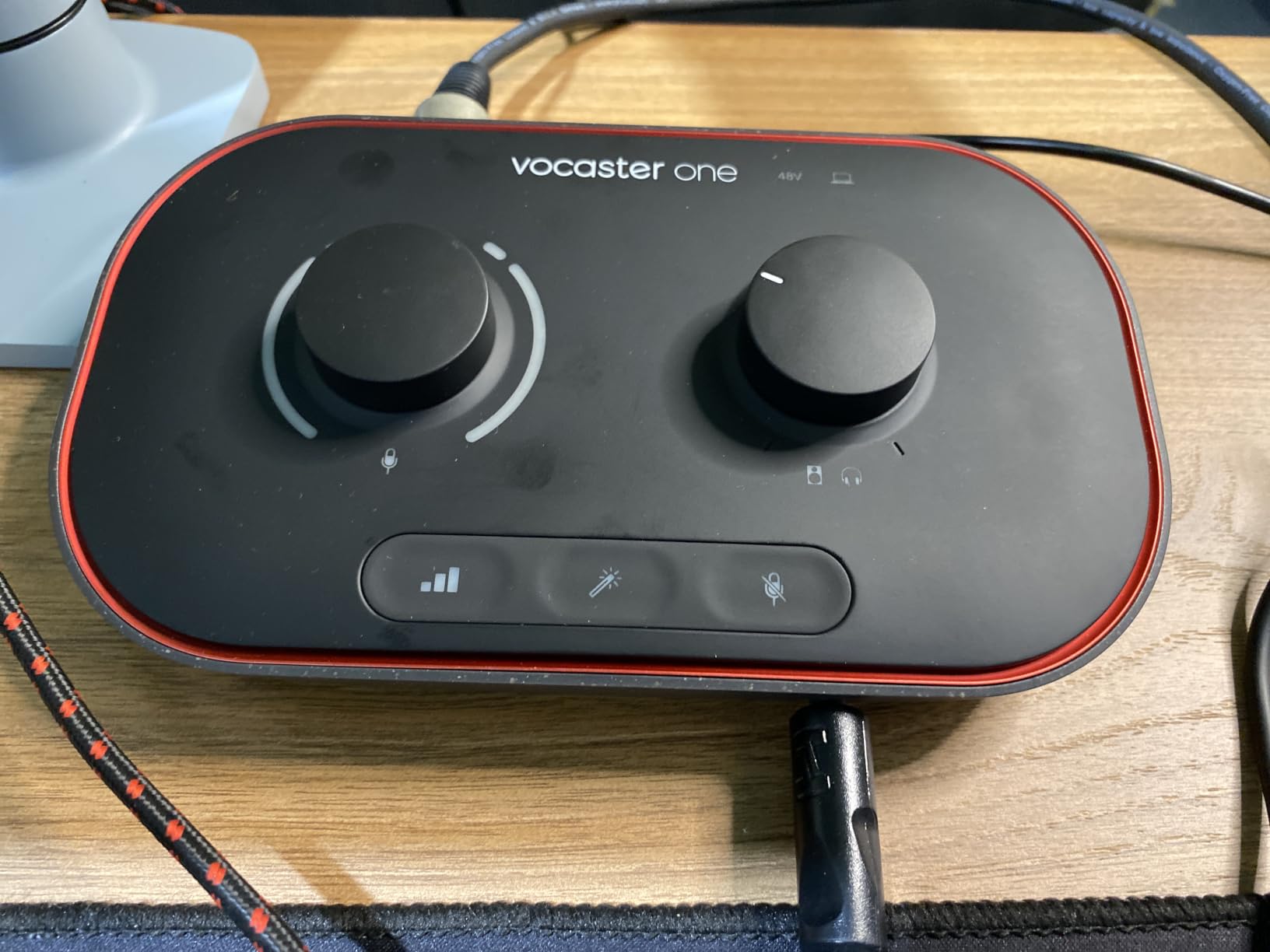
Connectivity is the quiet strength. A single TRRS cable brings a phone conversation into the recording, and a TRS cable sends clean audio to a camera for video podcasts. Stereo loopback grabs computer audio for intros and outros.
At 349 g and roughly the size of a paperback book, it is genuinely portable for a solo creator working from more than one location.
Who the Focusrite Vocaster One suits
Someone on their first or second episode who wants a broadcast-sounding result without learning gain staging. Solo streamers like the one-touch Mute button for cutting out coughs mid-sentence.
Mobile solo creators get a rig that fits in a bag. It works on Mac, Windows and iOS, so the same box covers a laptop and a tablet.
Who should skip the Focusrite Vocaster One
Anyone recording more than one person. A single mic input is a hard limit, not a preference, and it is the single most common reason people move on from this box.
The 48 kHz maximum sample rate is also a limitation if you plan to add music. It carries the lowest average rating among the products here, with a visible share of one-star reviews, so check the return policy that applies to you.
How to Choose an Audio Interface for Podcasting
Count the microphones first. One voice needs one input. Two people need two inputs and, ideally, two headphone outputs. Three or four hosts need four of each, which is where the Zoom PodTrak P4 and the RØDE RODECaster Pro II stop being optional and start being sensible.
The number of headphone outputs is the criterion most beginners underweight. If two people sit in the same room and share one pair, one of them either monitors at an uncomfortable level or does not monitor at all. Independent outputs solve it properly.
Next, look at preamp gain rather than channel count. A broadcast dynamic such as an SM7B is famously quiet and needs a lot of clean gain before the converter. Boxes that advertise 60 dB or more, like the Shure MVX2U Gen 2 and the Vocaster One over 70 dB, give you room to place the mic correctly. Boxes where gain is set only in software, such as the Behringer UMC202HD and the UMC22, add friction when you want a fast level check.
Preamp noise is the quieter quality lever nobody advertises. A Class A design like the Audient iD4 MKII’s console-derived preamp sounds noticeably more open, and self-noise floor is what separates a clean voice track from one you have to denoise later. Spend here before you spend on channel count.
Phantom power, gain staging and sample rate
48V phantom power is a low-voltage supply sent to a condenser microphone through the XLR cable. Switch it on for condensers and off for dynamics. Getting this backwards produces silence from a condenser or, at worst, an unhappy dynamic, and it is the single most common beginner mistake described in the podcasting forums.
Gain staging just means setting levels so peaks land around 12 dB below clipping, then leaving the mic alone. Turn up too far and every word comes out the same loudness with no dynamics left to shape. Turn up too little and you are asking the converter to amplify hiss.
Sample rate matters less than people assume for voice. 48 kHz and 24-bit is the professional default and every interface here reaches it. The 192 kHz figures on several of these boxes are headroom for music work, not a voice quality upgrade.
Recording remote guests with loopback, TRRS and Bluetooth
Loopback is the feature that lets an interface record the audio coming out of your computer, which is how you capture a Zoom, Teams or Discord call into your session instead of relying on a screen recorder. It removes the need for virtual audio cable software, which regulars describe as fragile and confusing.
Loopback is documented or claimed on several boxes in this roundup. The Arturia MiniFuse 1 lists a loopback feature, the Focusrite Vocaster One offers stereo loopback, and the Zoom PodTrak P4 solves the same problem with automatic mix-minus and a TRRS jack rather than a loopback label.
TRRS is a four-pole headphone plug that carries both headphones and a microphone. Plug a phone into the TRRS jack of the Vocaster One or the PodTrak P4 with one cable and both sides of the conversation are captured, with mix-minus stopping the caller hearing themselves.
Bluetooth appears on the RØDE RODECaster Pro II for bringing in a phone or a second device, which is useful but the least reliable path. Owners report audio dropping out after long sessions and needing a manual reconnect, so treat it as a convenience rather than the main path for a guest call.
Monitoring and drivers
Direct or zero-latency monitoring routes the mic signal straight to your headphones before it reaches the software, so you hear yourself with no delay. Direct monitor switches on the Behringer UMC202HD, MOTU M2 and UMC22, plus hardware monitoring on the M2, all do this. It matters most when more than one person is in the room.
Software drivers are where reliability quietly fails. Podcasters describe interfaces that halt a recording session mid-take, crackly loopback audio on macOS after an OS update, and clicks when a device reconnects. None of that is fixable in your editor, so check driver support for your operating system before you buy, and test the box for a full hour of recording before a deadline episode.
One internal note on monitoring hardware: if you ever move beyond headphones to check a mix on speakers, start with our guide to the best bookshelf speakers for home audio. For voice work a pair of closed-back headphones remains the right default, because open designs bleed into your microphone.
Audio Interface vs Podcast Mixer vs Digital Recorder
These three get confused constantly, and the confusion slows down a lot of purchases. An audio interface is a signal path: preamps, conversion, USB to your computer. A podcast mixer adds physical controls, per-channel headphone outputs, on-board effects and usually a sound pad system. A digital recorder writes files to storage with no computer involved.
Choose an audio interface when you edit on a computer and want multitrack capture into your own software. It is the smallest box and the cheapest, and it scales when you move to a bigger one.
Choose a podcast mixer when the show itself is the product. Multi-host sessions, live sound effects and anyone uncomfortable editing audio want physical faders, mutes and pads rather than a screen full of plugins. The RØDE RODECaster Pro II is the clearest example of a box that genuinely replaces an interface, a mixer and a sound board.
Choose a digital recorder when reliability outranks everything else. Writing to SD cards with no computer means no drivers, no USB handshakes and no driver crash mid-session. That is why podcasters in the forums treat the Zoom PodTrak P4 as a first recorder rather than a last resort, and why it works standalone.
A practical rule: if the audio is going to be edited on a computer, buy an interface. If the audio is going to be edited by a producer elsewhere, or you are live, buy a mixer or a recorder.
Frequently Asked Questions
What is the best audio interface for podcasting?
The Zoom PodTrak P4 is the best overall pick for most people, with four XLR inputs, four independently controlled headphone outputs and automatic mix-minus for call-in guests. For a single voice on a budget the Focusrite Scarlett Solo 4th Gen is the strongest all-rounder, and the RØDE RODECaster Pro II is the pick when you want one console for a three or four person show.
What audio interface has a loopback function?
A loopback function records the audio coming out of your computer, so you can capture a Zoom or Discord call directly into your recording instead of using screen recording software. The Arturia MiniFuse 1 and the Focusrite Vocaster One both document stereo loopback, and the Zoom PodTrak P4 handles call audio natively through automatic mix-minus and a TRRS phone jack.
Which audio interfaces have 48V phantom power?
In this roundup the Zoom PodTrak P4 supplies phantom power on its four microphone inputs, the Shure MVX2U Gen 2 provides 48V with up to 60 dB of gain, the Arturia MiniFuse 1 has it on its combo input, and both the Behringer UMC202HD and the Behringer UMC22 have a phantom power switch. Condenser microphones need it on; dynamic microphones do not.
How many XLR inputs do I need for a 2-person podcast?
A two-person podcast needs two XLR inputs so each speaker records on a separate track, plus two headphone outputs so both can monitor independently. The Zoom PodTrak P4, the Behringer UMC202HD, the Behringer UMC22 and the MOTU M2 all give you two microphone inputs, but only the PodTrak P4 gives you two headphone outputs.
What is the difference between an audio interface and a mixer?
An audio interface converts microphone signals to digital for your computer and provides preamps and headphone monitoring. A mixer adds physical faders, per-channel headphone outputs, on-board effects and sound pads. If you edit audio on a computer you want an interface; if you run a live or multi-host show where hands-on control matters, a podcast mixer like the RØDE RODECaster Pro II is the better tool.
Can I record a phone call through an audio interface?
Yes, with the right connection. A TRRS cable from the Focusrite Vocaster One or the Zoom PodTrak P4 captures both sides of a phone conversation and creates a clean recording. Mix-minus prevents the remote caller from hearing an echo of themselves. Loopback works too, but it routes call audio through your computer and depends on your operating system behaving.
Final Verdict on the Best Audio Interfaces for Podcasting in 2026
The Zoom PodTrak P4 takes the overall slot in 2026 because it covers the widest set of real situations without asking you to compromise: four preamps, four headphone outputs, automatic mix-minus for callers, per-track recording and standalone operation with no computer attached.
Behind it, the RØDE RODECaster Pro II is the choice when the console is the show, the Focusrite Scarlett Solo 4th Gen is the right call for one voice in a treated room, and the Audient iD4 MKII is where voice quality matters more than channel count. For a two-person show on a modest budget, the MOTU M2 and the Behringer UMC202HD do the job well.
Whatever you choose, buy it for the number of people in your room and the number of headphones they need. Everything else on the spec sheet is a preference, and the products that disappoint are almost always the ones bought for a feature the format never used.