
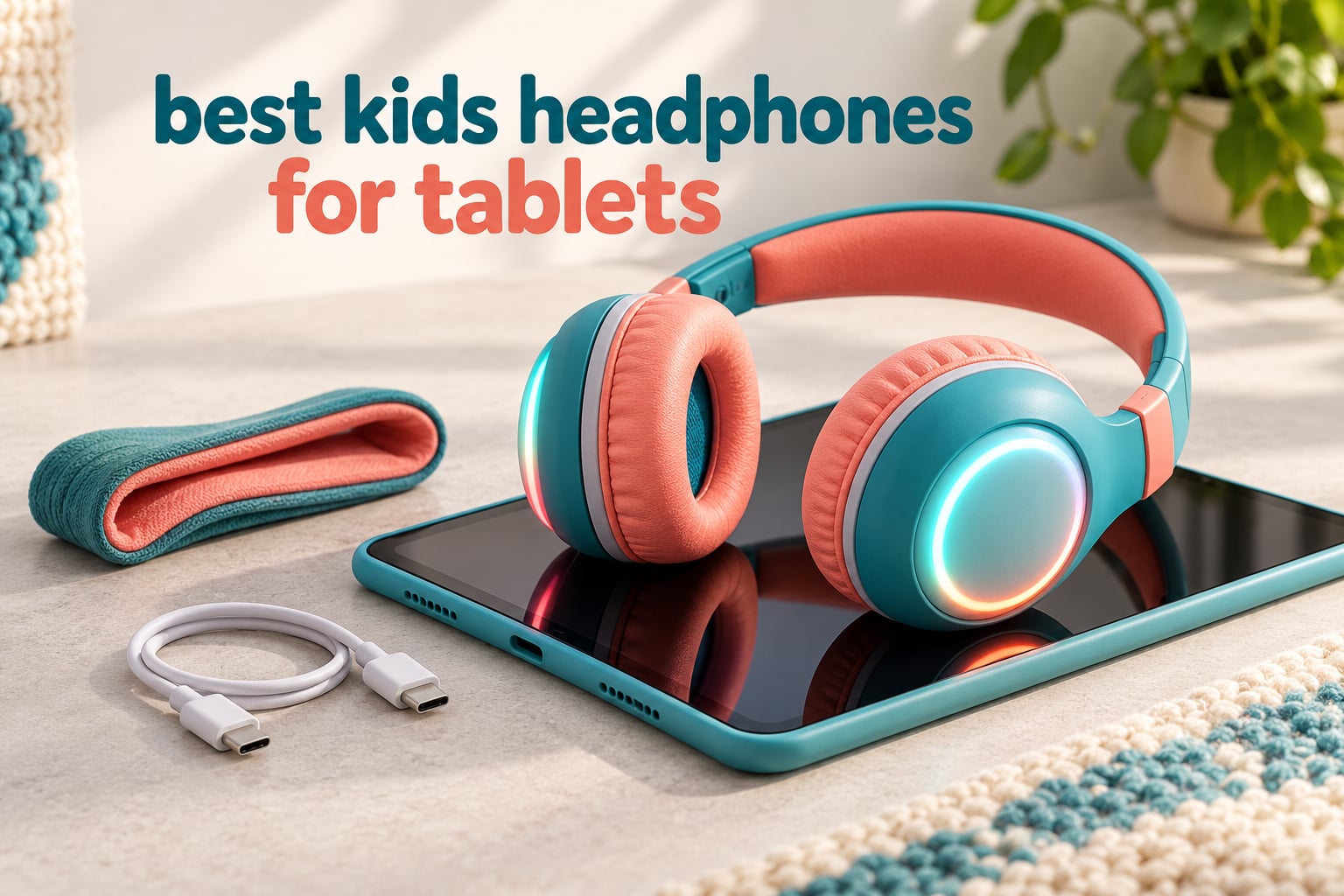
The best kids headphones for tablets are child-sized headsets that cap the output in hardware, connect to the port your tablet actually has, and stay comfortable past the 40-minute mark. Most of the disappointment in this category comes down to one detail: the cable that ships in the box plugs into a 3.5mm jack your tablet does not have.
We put ten sets through the same checks: the port on each, the stated decibel cap, the headband range and the weight against small heads. A pair had to be volume-limited in hardware rather than relying on the tablet’s own software slider, and it had to connect either over Bluetooth or through a usable cable.
Below that, we cover toddler sets, wired school pairs, travel models with hard cases and long-battery wireless units, then finish with a buying guide on ports, volume limits and the fit problems parents keep describing.
Best overall: the iClever Cat Ear set pairs a switchable 74/85/94dB hardware cap with both wireless and wired modes, 50 hours of playback and a design most children accept without a fight.
Best battery life: the iClever BTH12 runs up to 85 hours on a charge and carries the same three-step volume cap, which makes it the least interrupted option for long trips.
Best for two kids: the EarFun K1 and the Nabevi BH100 each have a 3.5mm sharing port, so two children can hear the same tablet audio without a splitter.
Best wired value: the Riwbox WT-7S is bright, light in the hand and lasts 60 hours, but it has no hardware volume cap, so it needs adult volume control.
Most important buying check: confirm whether your tablet has a USB-C port, a 3.5mm jack or neither, then buy Bluetooth or budget for a USB-C audio adapter before anything else.
For the tablet itself, our guide to the best tablets for reading and streaming covers the screen sizes that pair best with kid-sized headsets.
Table of Contents
Top 3 Picks for Kids Headphones for Tablets in 2026
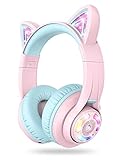
iClever Cat Ear Headphones
- Switchable 74/85/94dB cap
- 50 hours of playback
- Wireless plus wired 3.5mm mode
Those three cover most households. The cat-ear model is the safest single buy, the BTH12 wins on endurance, and the Riwbox is the one to consider if you already control volume through the tablet and want the lights.
All 10 Picks Compared in 2026
| Product | Specifications | Action |
|---|---|---|
| iClever Cat Ear Bluetooth Headphones |
|
Check Latest Price |
 iClever BTH12 iClever BTH12 |
|
Check Latest Price |
| Riwbox WT-7S |
|
Check Latest Price |
 EarFun K1 EarFun K1 |
|
Check Latest Price |
 Nabevi BH100 Nabevi BH100 |
|
Check Latest Price |
 EarFun K2 EarFun K2 |
|
Check Latest Price |
 iClever BTH22 iClever BTH22 |
|
Check Latest Price |
 JoySpark T5 JoySpark T5 |
|
Check Latest Price |
 Acer Kids Bluetooth Headphones Acer Kids Bluetooth Headphones |
|
Check Latest Price |
 Belkin SoundForm Mini Belkin SoundForm Mini |
|
Check Latest Price |
What are some good kids headphones for iPads?
For an iPad, pick a Bluetooth pair so there is no adapter to lose. Every iPad made without a headphone jack uses USB-C for both charging and audio, so a wired 3.5mm set needs a USB-C audio adapter and a 3.5mm headphone jack. The iClever cat-ear set, the BTH12 and the Belkin SoundForm Mini all pair over Bluetooth and keep their cap in hardware, which makes them the simplest match for an iPad.
1. iClever Cat Ear Bluetooth Headphones – Best Overall for Tablets
Cat Ear Bluetooth Headphones by iClever
Bluetooth 5.2 plus 3.5mm wired
Switchable 74/85/94dB cap
50 hours, USB-C charging
173g, foldable
Pros
- Three-step 74/85/94dB cap set from the ear cups
- Works wirelessly and wired from one pair
- 50 hours of playback with the lights off
- Cat-ear shape gets enthusiastic approval from young children
Cons
- Bass and treble are thin
- so it suits shows more than music
- 173g feels heavy on the smallest heads
- Folding hinge is stiff and can feel fragile
The cap switches between 74dB, 85dB and 94dB from the plus and minus buttons, so one pair covers a six-year-old and a twelve-year-old without swapping headsets.
Bluetooth 5.2 with a 10-metre range pairs with an iPad or Fire tablet without drama, and the detachable 3.5mm cable is a real fallback for devices that still have a jack.
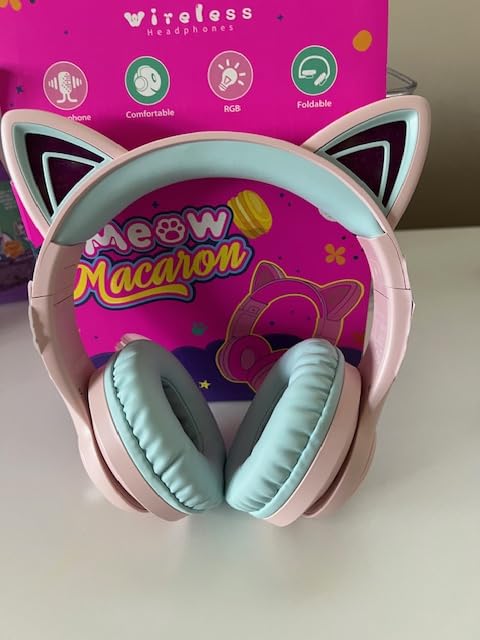
Owners praise the cat-ear styling and RGB lights, padding that survives long car trips, and a battery that lasts days once the lights are off. Sound is clean rather than exciting.
The honest weakness is audio character. Bass and treble are thin, so it suits shows more than music, and at 173g it is heavy on the smallest heads.
Is the volume cap easy to bypass?
No. It takes a deliberate button combination, so a child pressing volume up for ten minutes will not undo it, which matters because the tablet’s own slider stays fully available.
Will it work on a tablet with no headphone jack?
Yes, over Bluetooth, which is the mode you will use daily on a modern iPad or Fire tablet. Keep the detachable cable in the bag for older devices.
2. iClever BTH12 – Top Rated for Tablet Sessions
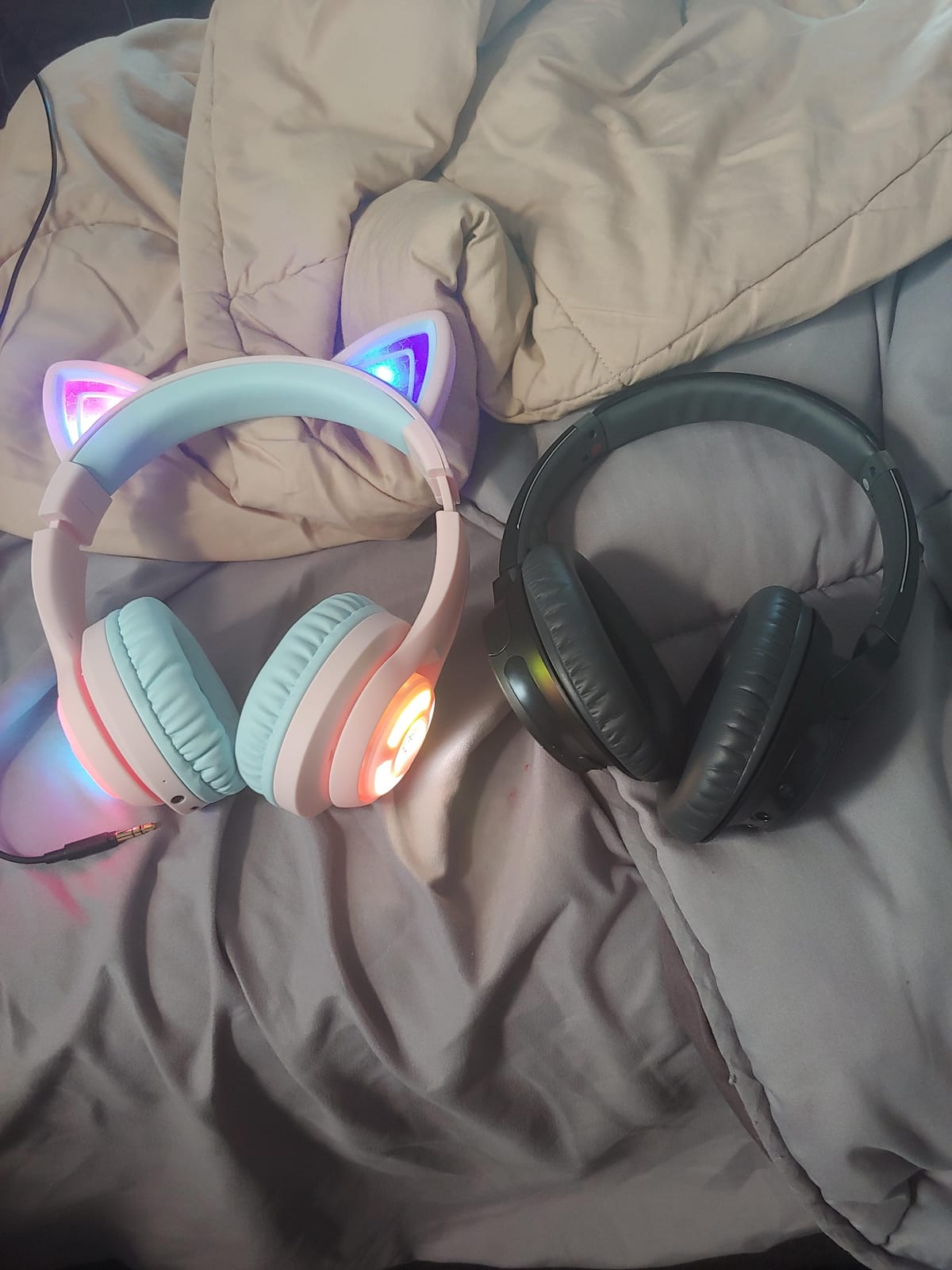
iClever BTH12 Kids Bluetooth Headphones 85H Playtime with LED Lights Travel
85 hours of playtime
74/85/94dB combination-key cap
Bluetooth 5.2 with mic
Four LED modes
Pros
- Longest stated playtime in this group at 85 hours
- Ten-minute charge adds roughly seven hours
- Built-in microphone handles online classes and calls
- Reinforced foldable build with a detachable cable
Cons
- Lights drain the battery
- so 85 hours assumes they are off
- Passive noise cancelling only
- No carry case included
For a household that runs a tablet hard, battery life decides the product: up to 85 hours per charge, with 81% five-star feedback across more than thirteen thousand ratings.
The microphone is why it suits school as well as shows. Bluetooth 5.2 with an 11-metre range holds a stable connection to a tablet on a desk, so a child can join a class or call without a second device.

The cap is set through combination keys to 74dB, 85dB or 94dB, and the 40mm drivers are described as richer in bass than the smaller sets. The reinforced foldable frame is built for a school bag.
Two notes. The 85-hour figure assumes the four LED modes are off, and noise control here is passive, so it reduces room noise without active cancellation.
Is 85 hours realistic for daily use?
At an hour a day, a full charge covers roughly three months, and ten minutes of USB-C charging adds about seven hours. The real limit becomes the child’s habit of leaving them switched on.
Does the microphone work for video calls?
Yes, and that is the main reason to pick it over a pure entertainment set. Reviewers single out the stable connection and built-in mic for classes and calls, the scenario where lag would hurt most.
3. Riwbox WT-7S – Best Value Tablet Headset with Lights
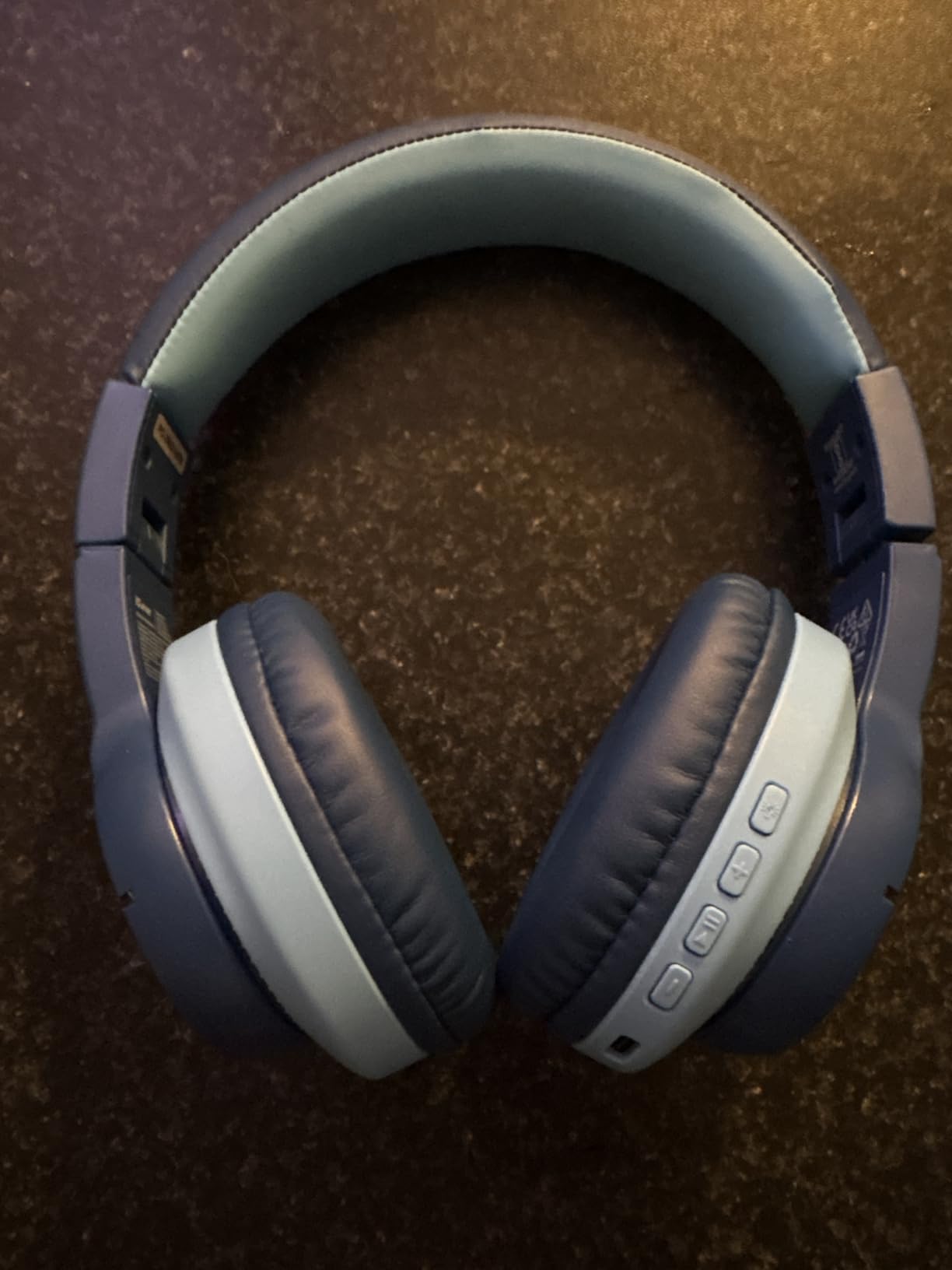
Riwbox WT-7S Kids Bluetooth Headphones Light Up, Foldable Stero Wireless Headset,with Microphone and Volume Control,Comfortable and Durable,for PC/Tablet/TV/Travel(Purple)
Bluetooth 5.3, 100-foot range
Up to 60 hours playback
Beat-synced LED lights
Wireless and 3.5mm wired
Pros
- LEDs pulse in time with the audio and get a lot of attention
- 100-foot range is the longest specified here
- One-time pairing that reconnects automatically
- Works wired with the included 3.5mm cable
Cons
- No hardware volume cap
- so the tablet slider is the only limit
- Light plastic flexes and can crack over years
- No share port for a second child
The WT-7S sounds clear with decent bass, the cushions are sponge over breathable leather, and the lights pulse along with whatever is playing.
That matters on a tablet because there is no cable for a small hand to yank, and the 100-foot range is the widest here, so the tablet can sit across the room.

The catch is safety. There is no hardware cap, and the 88dB sensitivity figure is a specification, not a limit. Keep the tablet’s own volume low and use the operating system’s parental controls.
Durability is fair rather than premium. The frame is light plastic at 280g, one parent reports three-plus years without breakage, and others note the headband can pinch fingers while adjusting.
Is it safe for a young child without a volume cap?
Only with active control from you, because the limit lives in the tablet’s software. For a child who handles the tablet alone, one of the hardware-capped sets is the safer buy.
Do the lights drain the battery?
They do, which is why the LEDs have their own on and off control. Switching them off is the normal setting for long sessions, and 60 hours is the quoted figure for everyday use.
4. EarFun K1 – Best Wired Set with a Sharing Jack
EarFun K1 Kids Headphones Wired with Mic, Volume Limit Headphones for Kids
Wired 3.5mm only
85/94dB volume limiter
3.5mm sharing jack
Braided tangle-free cable
Pros
- Sharing jack lets two children hear one tablet without a splitter
- Hardware 85/94dB limiter in a wired design
- Braided cable survives a school year of chewing
- In-line mic with play
- pause and track controls
Cons
- Wired only
- with no Bluetooth option
- Needs a 3.5mm port or an adapter
- One report of a used unit arriving
The K1 solves a problem the wireless sets cannot: two kids, one tablet. The 3.5mm sharing jack lets a second pair of headphones plug in and hear the same audio, with no splitter to buy or lose.
It is also the cheapest route into hardware volume limiting, and the soft ear caps with adjustable sliders are described as not pinching a child’s head.
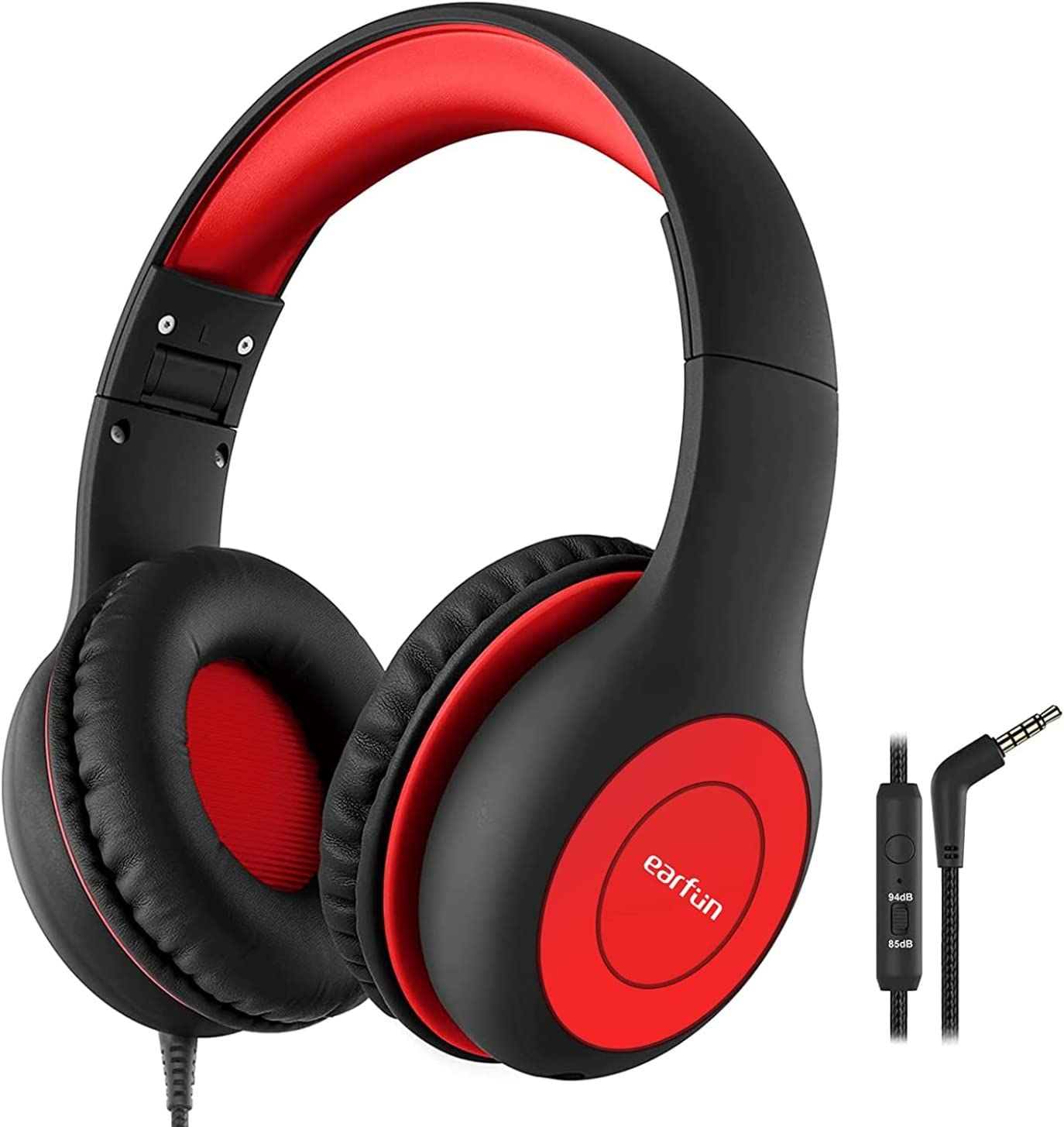
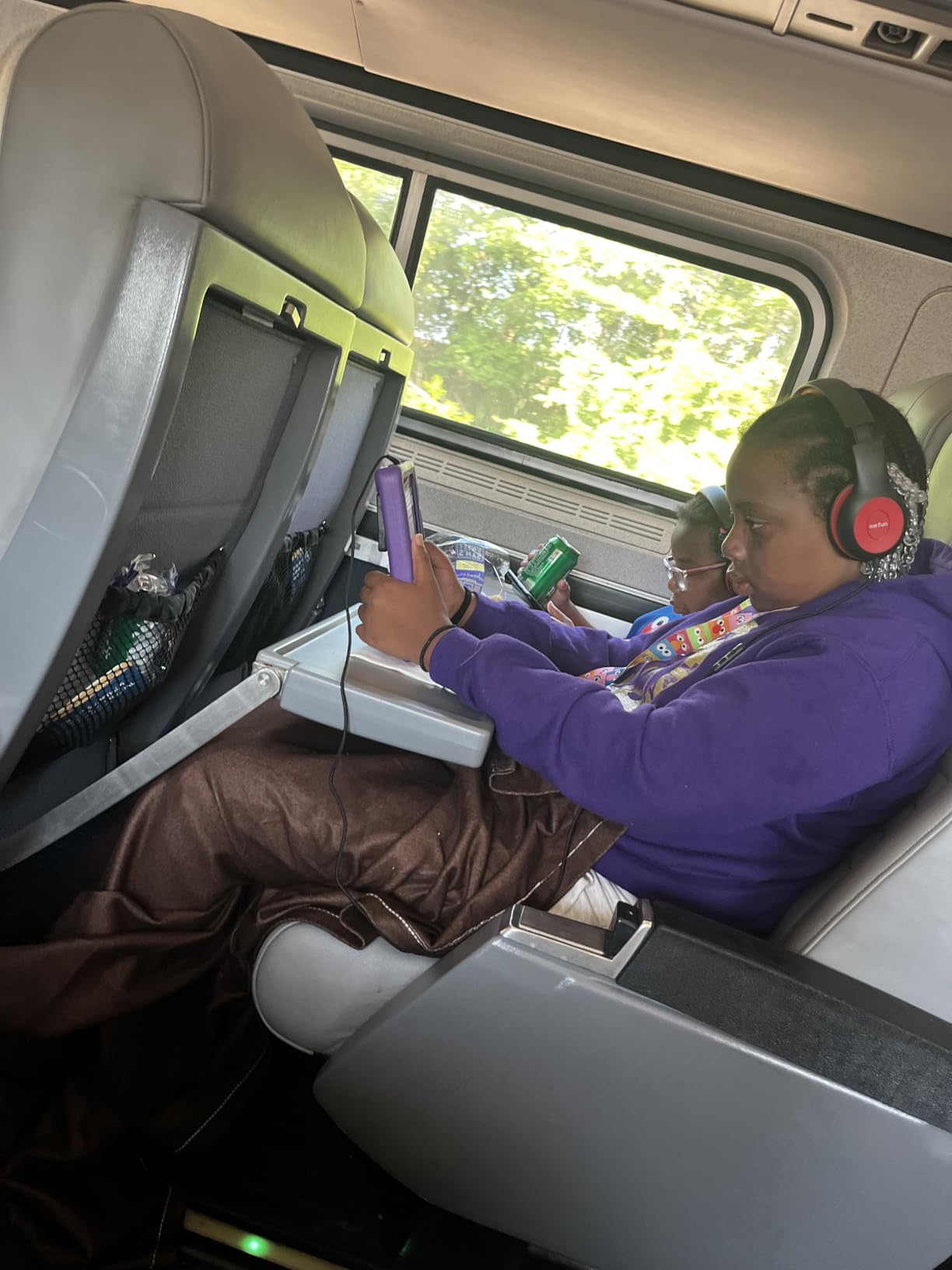
Buyers often report buying several pairs, one for school and one for travel. The nylon braided cable is tangle-free, the frame folds flat, and the in-line microphone covers classes and chats.
The limitation is unavoidable: it is wired only. Any tablet without a 3.5mm jack means a USB-C adapter, and a chewed cable is a replacement rather than a reconnection.
Does the sharing jack replace a splitter?
Yes, for two pairs. A second child plugs their own headphones into the sharing socket and both hear the tablet, which saves money in a car or on a flight.
Will it work on an iPad?
Only with a USB-C audio adapter that includes a headphone socket. For a modern iPad or Fire tablet the Bluetooth models are simpler, and for a Chromebook the K1 plugs straight in.
5. Nabevi BH100 – Soothing Cushions for Long Listening
Nabevi Kids Headphones with Cord, Over-Ear Headphones for Kids with Microphone, 85/94dB Volume Limit, Headset for Kid Boys Girls with Shareport, Wired Toddler Headphone for School/Tablet/iPad/Travel
Switchable 85/94dB limit
3.5mm share port
Soft foam and protein leather
200g, metal-free shell
Pros
- Soft protein leather over foam cushions for hours of wear
- Share port for a second pair of headphones
- Metal-free shell with no sharp corners
- Tangle-free cord that survives rough handling
Cons
- Wired only
- requiring a 3.5mm port or adapter
- No wireless mode or folding hinge for the cable
- One buyer reported an early failure
Fit is where most kids’ headphones lose, and the BH100 is the pick to try first for a child who complains about anything pressing on their head. The oval cushions use soft foam under breathable protein leather.
The limit toggles between 85dB and 94dB, and a built-in microphone covers online learning. The 40mm speakers give a 20Hz to 20kHz range that sounds respectable for shows and lessons.
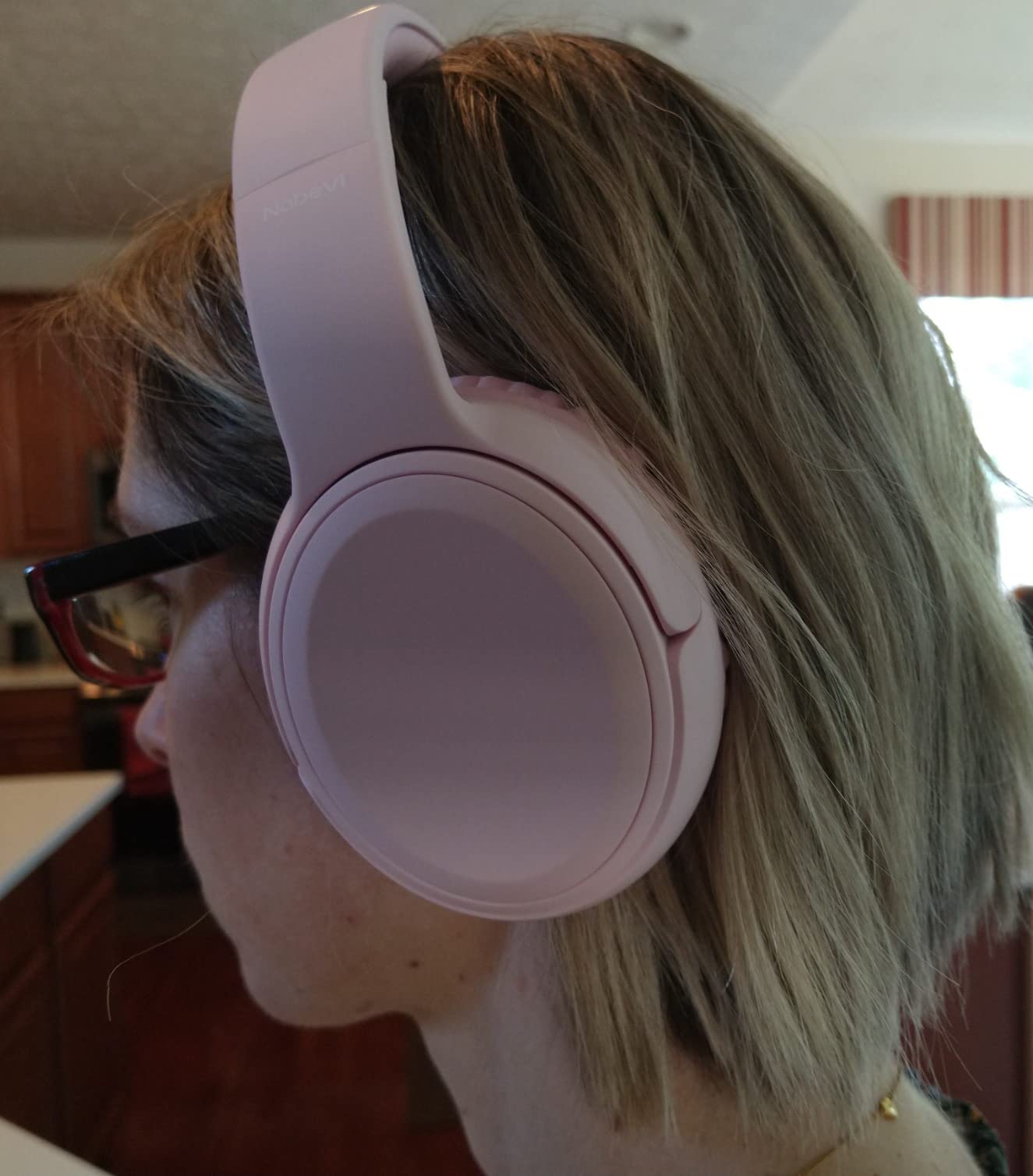
Two details suit tablet households. The share port repeats the EarFun trick for a second pair of headphones, and the metal-free ABS shell has no sharp corners for a toddler to catch.
At 200g it is light for an over-ear shape and folds for storage. The trade-offs come with being wired: you need a 3.5mm port, and durability is strong across a school year with one early failure reported.
Are the cushions suitable for a child who removes headphones constantly?
That is the strongest case for this model. Soft foam under protein leather removes the pressure point that makes children pull headphones off within minutes.
What does passive noise cancelling do here?
It reduces how much room sound leaks around the seal, with no electronics and no battery. At a reasonable volume it keeps the show audible without disturbing the house.
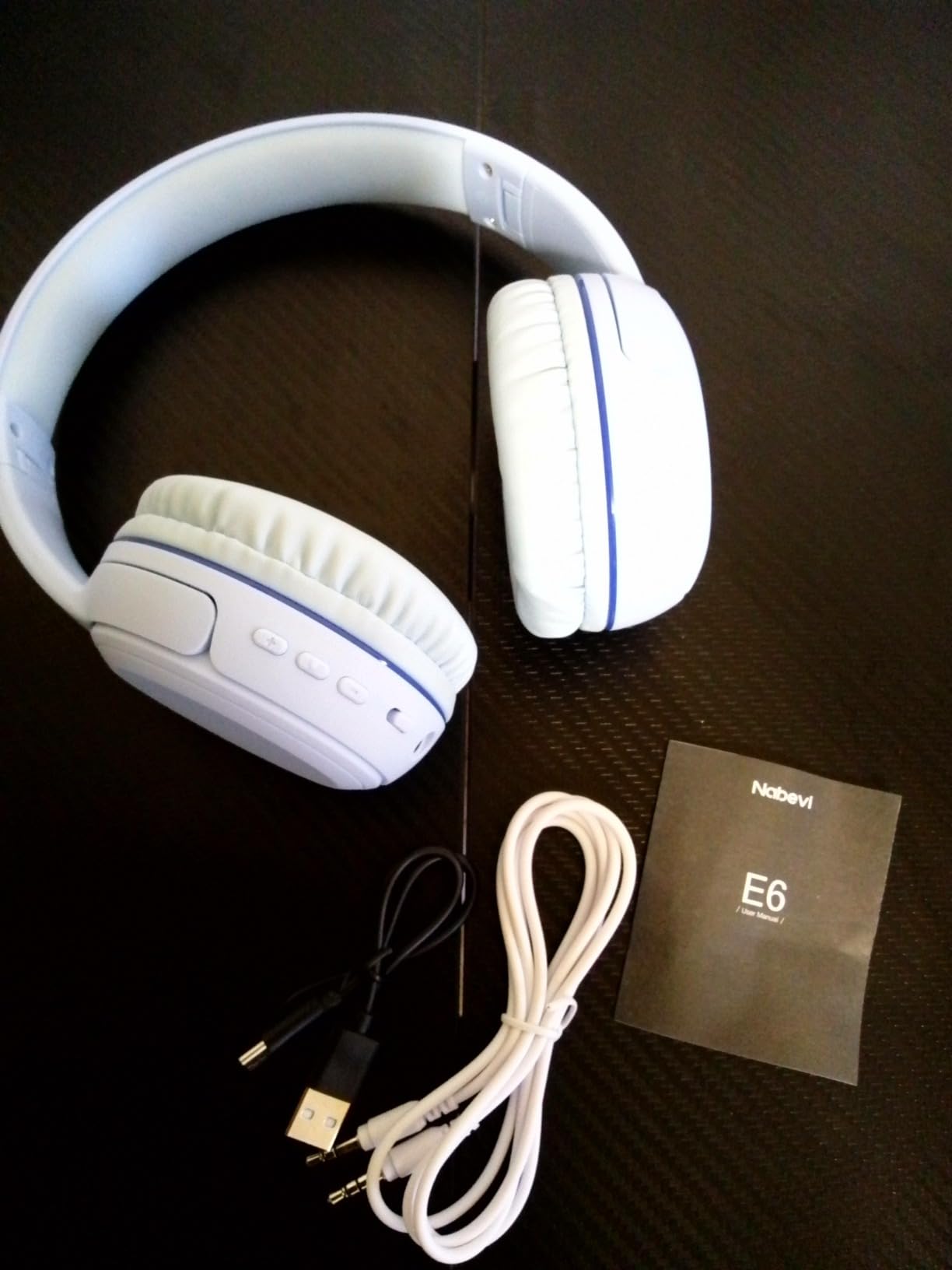
6. EarFun K2 – Best for Online Classes and Video Calls
EarFun K2 Kids Bluetooth Headphones for School, Kids Headphones with Mic
Bluetooth 5.4 with HD mic
74/85/94dB cap per WHO levels
Memory foam headband
175g, foldable
Pros
- Volume cap set to the levels recommended for children
- Lightweight fit that does not squeeze on long sessions
- Pairs quickly and reconnects on later sessions
- 18-month warranty and CPC-certified materials
Cons
- Real battery runtime often falls short of the stated figure
- Included charging cable is short and awkward to replace
- Headband starts tight and loosens over months
The K2 is the model for daily remote school. Bluetooth 5.4 is stable, the built-in HD microphone is what a video call needs, and the 74/85/94dB limiting is described as aligned with the levels recommended for children.
It is also light, at 175g with a soft memory foam headband and earpads, and the ergonomic headband resists twisting and bending.
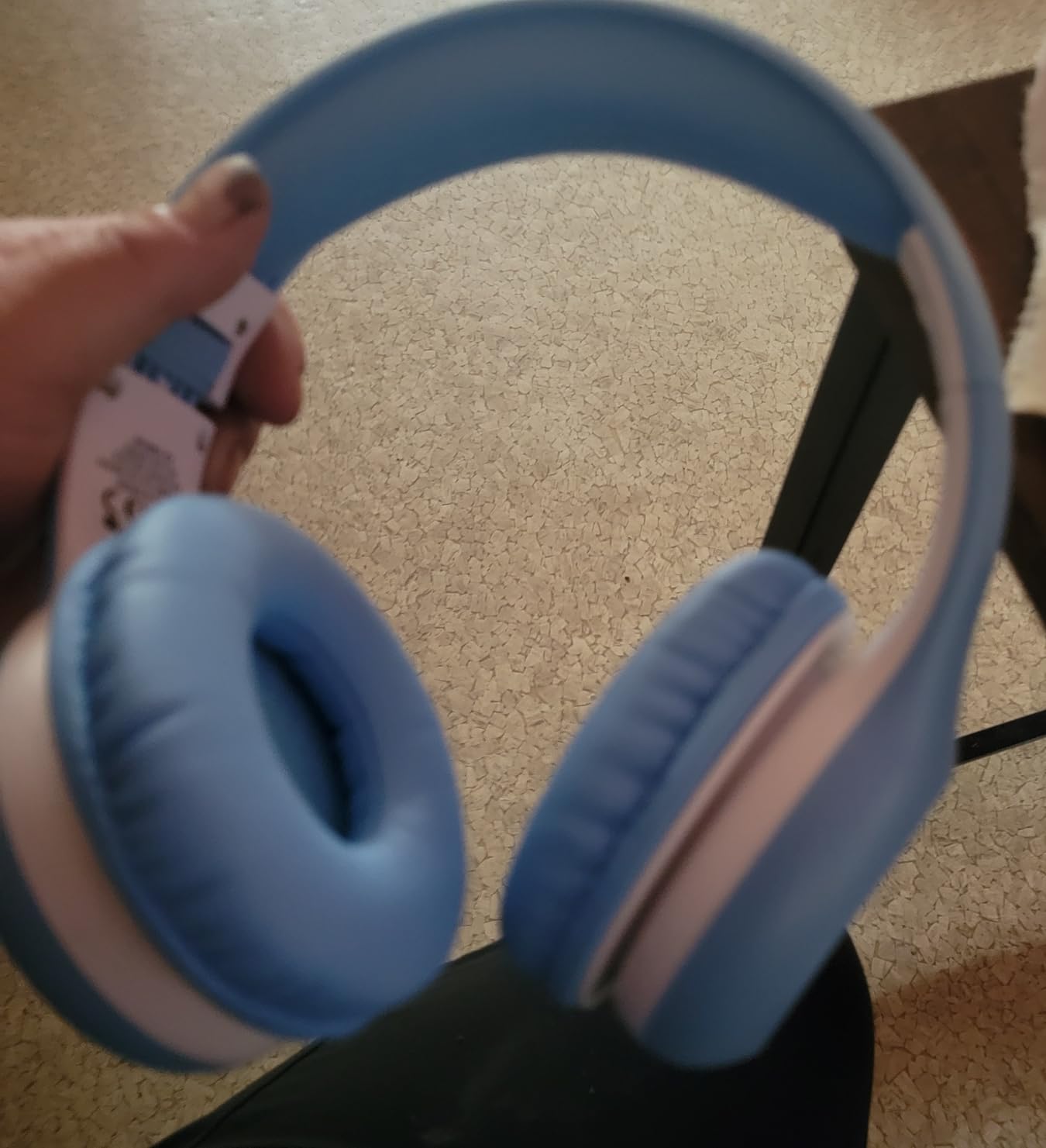
Durability holds up across a school year for an eleven-year-old in the reports we saw, and the good isolation keeps the room quiet during videos.
The most common complaint is battery life: playtime is advertised at up to 60 hours but some buyers measured well under that, and the included charging cable is short. The headband also starts tight and loosens over months.
Is this good enough for daily online school?
Yes, with one caveat. The microphone and stable Bluetooth decide that case, and the 74dB setting is the one to use at a desk. Keep a spare USB-C cable rather than relying on the short one supplied.
Does the on-ear design block outside noise?
Less well than a full over-ear cup, since fit is the limiting factor. It works at moderate volume, but in a noisy room you will be tempted to turn it up, which is what the cap prevents.
7. iClever BTH22 – Best for Toddlers and the Lightest Build
iClever BTH22 Kids Bluetooth Headphones for Toddler Travel, 60H Play Time
Sub-85dBA cap with 74dBA mode
149g, rotating ear cups
60 hours, 1.8h USB-C charge
Bluetooth 5.4 and 3.5mm
Pros
- 74dBA toddler mode on top of a sub-85dBA cap
- 149g is the lightest confirmed weight in this group
- Rotating ear cups and 10-level headband adjustment
- Easy for a small child to put on and fold
Cons
- Does not get loud enough for adults in a noisy room
- One reviewer needed a warranty replacement for a Bluetooth failure
- Protection relies on the switchable cap staying set
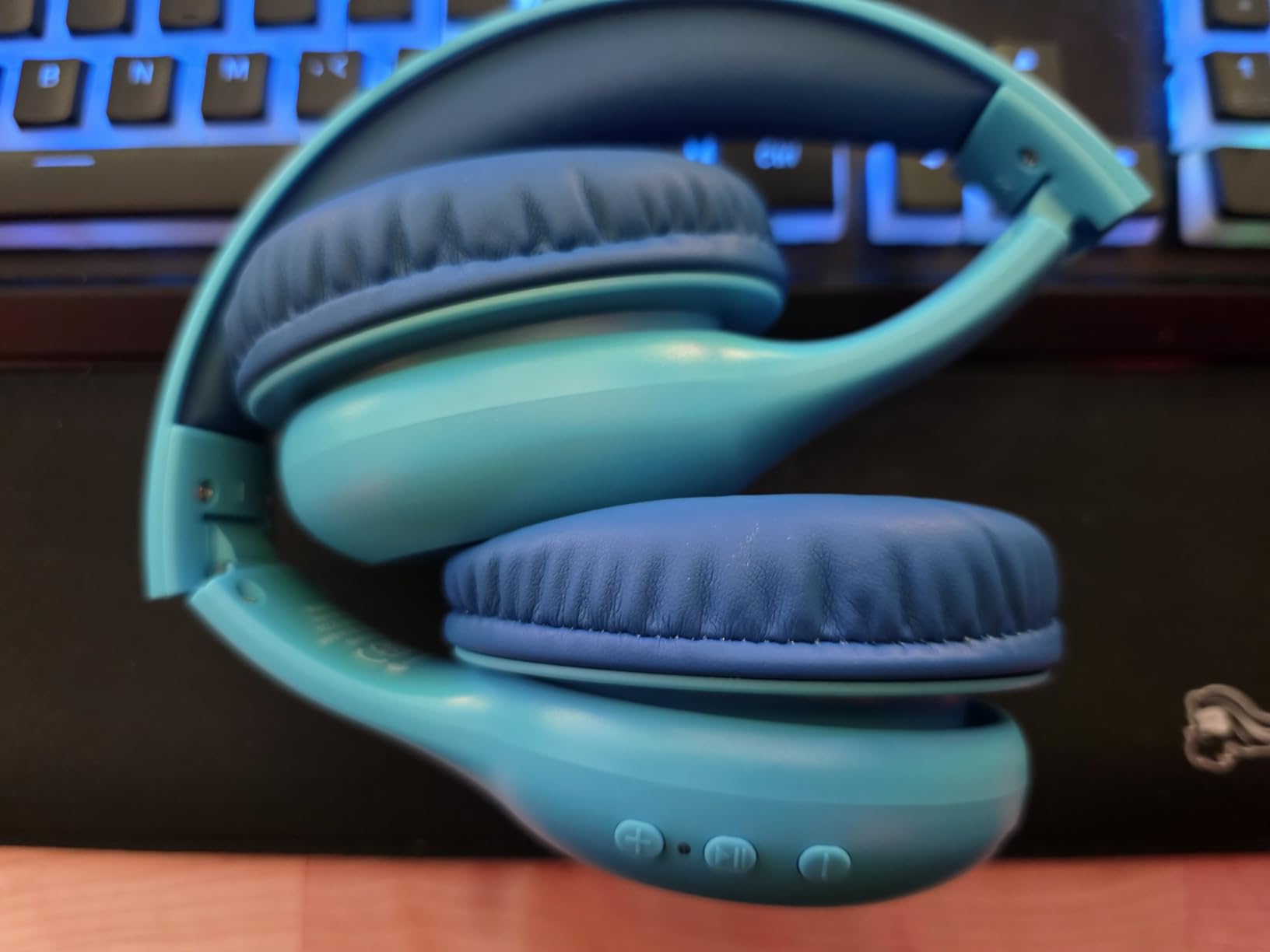
For a two or three-year-old, weight decides it, and this is the model that passes at 149g. Owners describe picky children accepting it on long trips, and rotating ear cups with 10-level headband adjustment let small hands fit it themselves.
The protection is more specific than most of these sets. Output is limited below 85dBA with high frequencies between 2K and 4KHz reduced, plus a 74dBA toddler mode reached through a combination press.
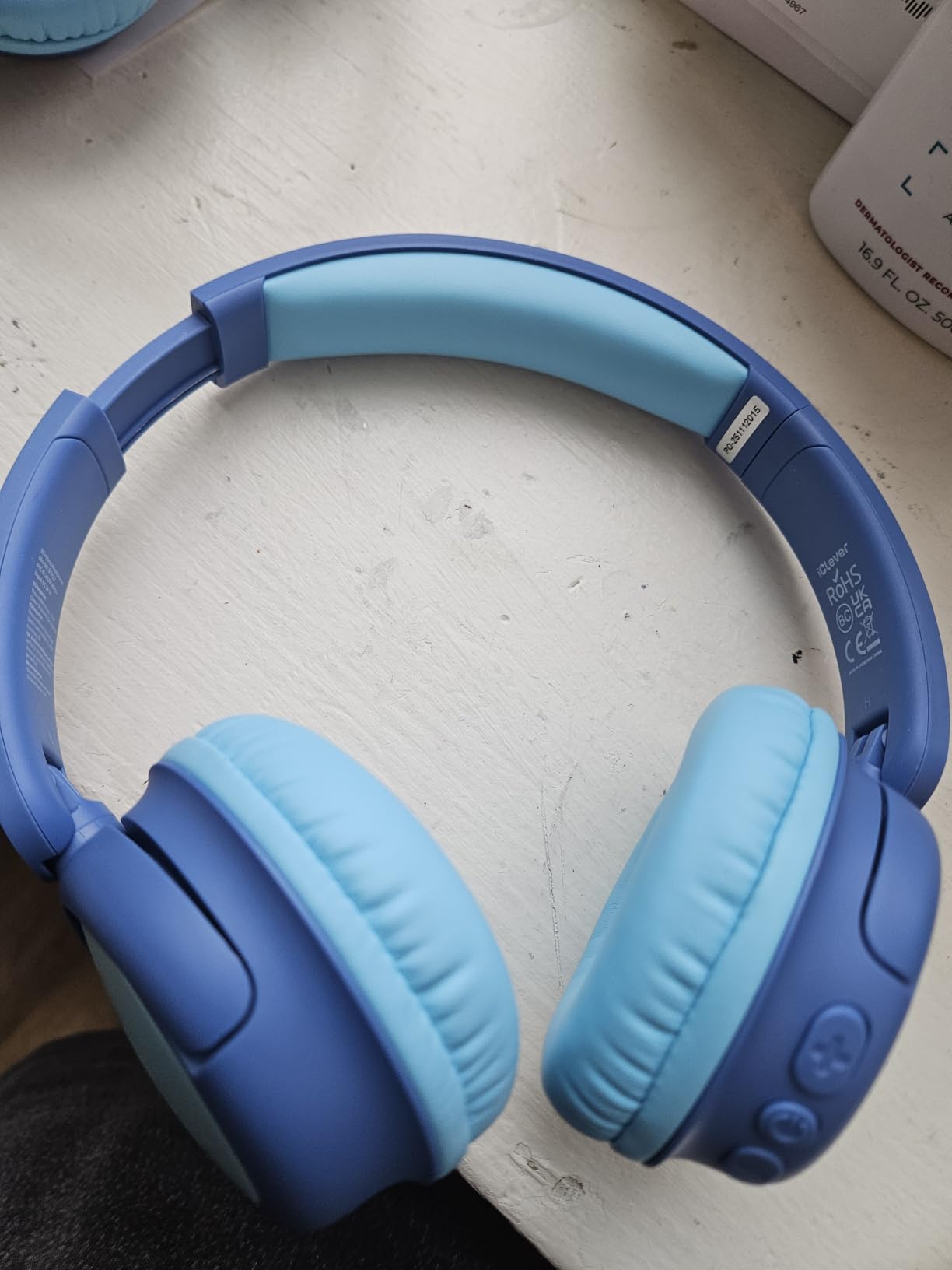
It travels well: 60 hours on Bluetooth 5.4, a 1.8 hour USB-C charge, a foldable design and a 3.5mm AUX backup cover long journeys and flat batteries.
One honest trade-off. A parent who bought a pair for herself found they cap out too quietly for adults in noisy settings, which is the intended behaviour for a toddler. A few buyers also needed a warranty replacement for a Bluetooth failure.
What ages does this fit best?
Roughly two to seven. Beyond that the cups start to feel small, and the capped maximum becomes the limiting factor, since a louder ceiling is often fine for a child with adult ears.
Is a 74dBA mode genuinely different?
It is, and it is the mode to use for a small child in a quiet room. The gap between 74dBA and 85dBA is not subtle over a long session.
8. JoySpark T5 – Best Volume Lockout That Stays Put
JoySpark Kids Bluetooth Headphones Over-Ear, 60Hrs, Built-in Mic-Purple
85/94dB set by combination keys
Memory foam cushions
Up to 60 hours playback
170g, 3.5mm backup
Pros
- Limit is set with a key combination so children cannot raise it
- Memory foam cushions with a fully adjustable padded headband
- One-button play
- pause and call control
- 3.5mm backup jack for when the battery dies
Cons
- Averaged rating is slightly below the leaders in this list
- No active noise cancelling
- Battery claim drops with regular use of the mic
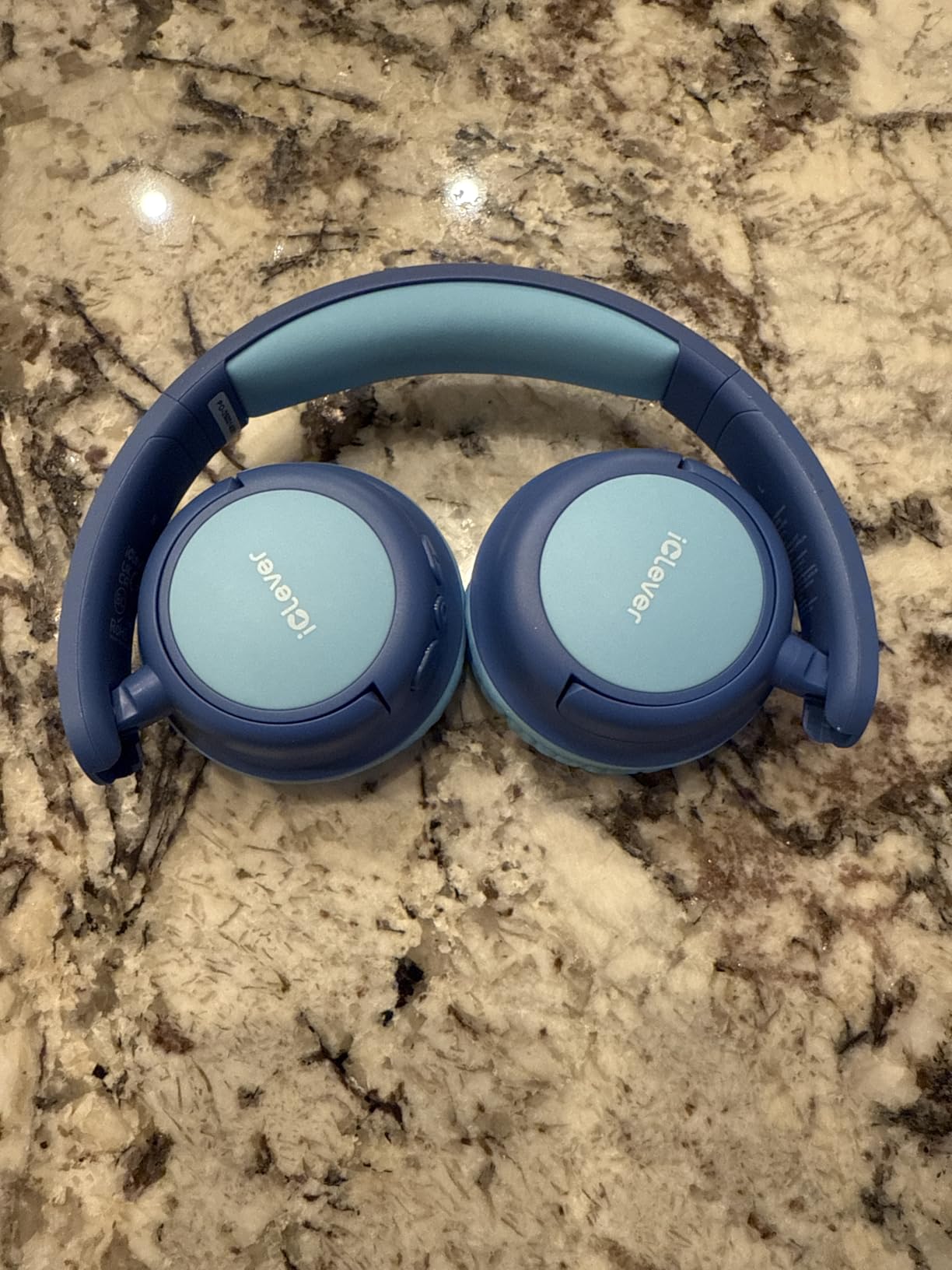
What we like most is the lockout design. The 85/94dB limit is set through a key combination specifically to prevent accidental changes, which answers one of the complaints parents raise most often about limits that quietly reset.
The rest is aimed at tablet use: Bluetooth 5.3, a 10-metre range, one-button play, pause and call control, and a built-in microphone for homework help.
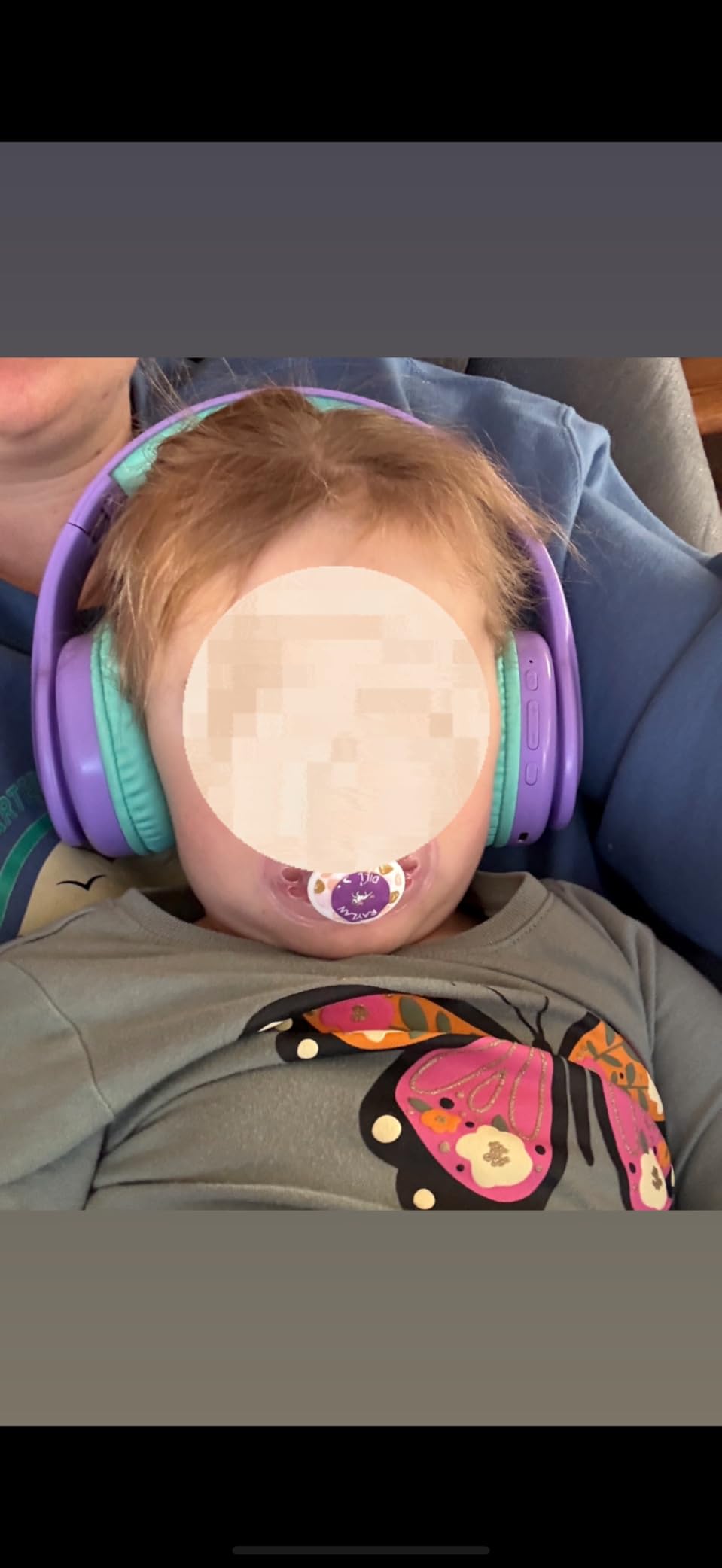
At 170g with memory foam cushions and a fully adjustable padded headband, it sits in the comfortable middle here. The 85dB sensitivity rating and 40mm speaker keep the sound clear with enough bass for music.
Satisfaction is consistent, with 81% five-star feedback across close to 2,900 ratings, and the 18-month warranty is among the longer ones here. Against that, there is no active noise cancelling, so a loud room stays loud.
Can a child change the volume limit by accident?
Not by pressing buttons for a while, which is the point of the combination-key design. A session left alone on a sofa will not drift into louder territory over an afternoon.
Does it need charging often?
Not for family use. Playtime is quoted at up to 60 hours per charge with a charge time around 2.5 hours, so one charge covers weeks of evening shows.
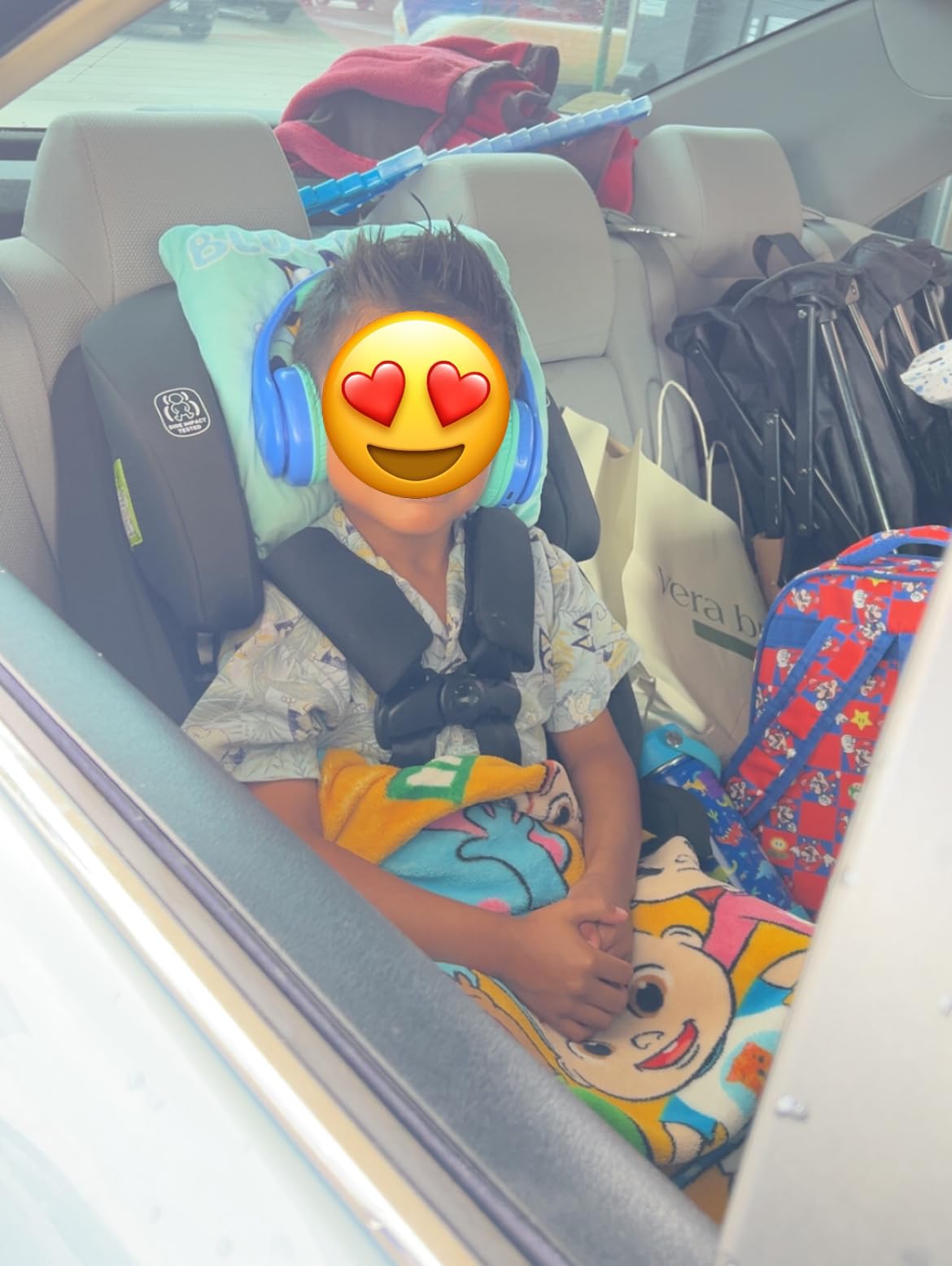
9. Acer Kids Bluetooth Headphones – Best Reinforced Build
Acer Kids Bluetooth Headphones, 85/94dB Volume Limiter, Foldable Wireless Over-Ear Headphones for iPad, Travel, 60H Playtime, Bluetooth 6.0, Built-in Mic, Blue Green
Reinforced headband hinge
Bluetooth 6.0, 33-foot range
60 hours plus quick charge
85/94dB, CPSIA certified
Pros
- Hinge is reinforced for school bags and playground use
- Bluetooth 6.0 with a 33-foot range
- Five-minute quick charge adds about two hours
- 85/94dB limiting with CPSIA-certified BPA-free materials
Cons
- Newer listing with a smaller pool of owner feedback
- Charge time is around 2.5 hours for a full fill
- No active noise cancelling
This is the pair for when rough handling is the main worry. The reinforced headband hinge is the headline feature, designed for school bags and playgrounds, and the foldable frame keeps it out of the way.
It runs the newest wireless standard here at Bluetooth 6.0 with a 33-foot range, so the tablet can sit on a shelf while the child sits on the floor. Sixty hours of playtime and a five-minute quick charge for about two hours handle a long trip.
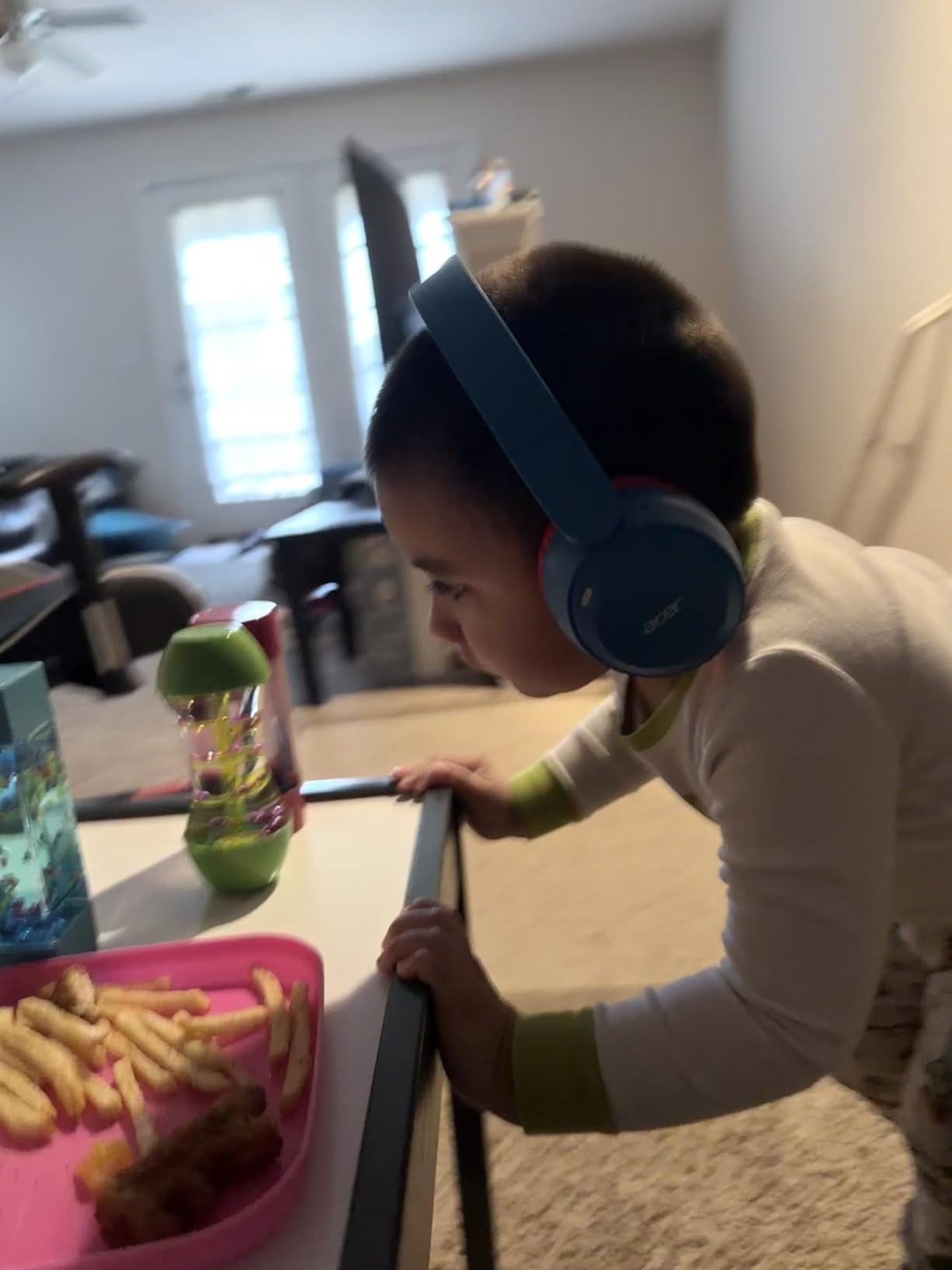
Volume limiting runs at 85dB or 94dB to meet US market regulations, materials are CPSIA certified and BPA-free, and ultra-soft memory foam cushions sit on an adjustable headband. A 3.5mm aux option is available too.
The honest note is the size of the feedback pool. This is a newer listing with 377 ratings averaging 4.5, so there is less long-term history behind it, and the one-year warranty is shorter than some rivals.
Is Bluetooth 6.0 worth choosing over an older standard?
In the same room, the practical difference from Bluetooth 5.3 is small, since connection quality depends more on the tablet. The case here is the hinge and the quick charge.
Will the hinge really survive daily abuse?
That is the design intent, and reinforced hinges are the common fix for a broken headband. It is a stronger bet than light plastic frames, though the shorter warranty means raising problems with the seller early.
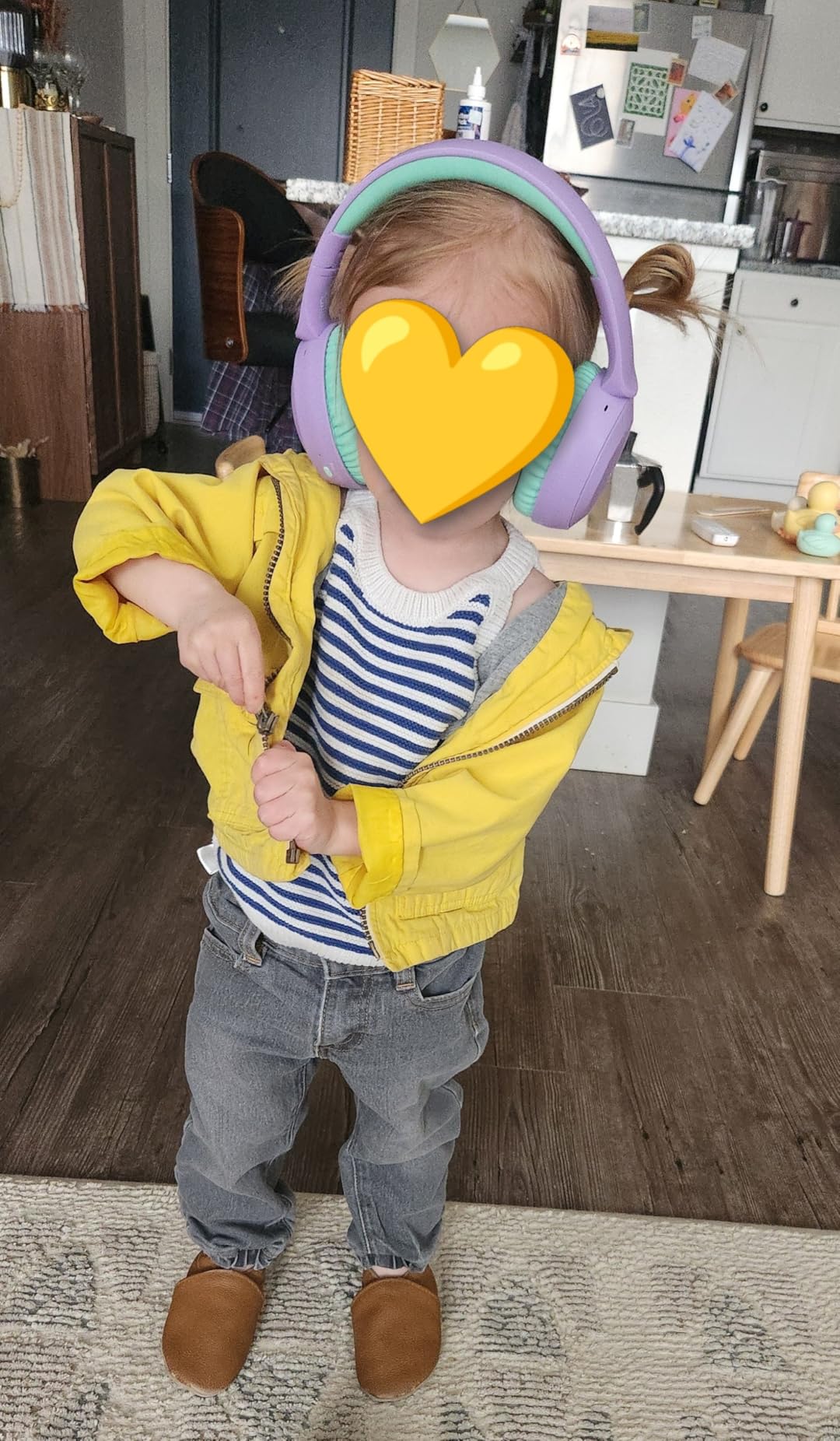
10. Belkin SoundForm Mini – Best with a Case for Travel
Belkin SoundForm Mini Kids Headphones, Wireless & Wired, 30H Playtime, Case
85dB hardware limiter
Bluetooth 5.3, 30 hours
10-minute charge gives 3 hours
Protective hard case included
Pros
- Hard case protects the cups and the folding hinges in a bag
- 10 minutes of charging returns about three hours of play
- Touch controls for play
- pause
- volume and pairing
- Two-year manufacturer warranty is the longest here
Cons
- 30 hours of battery is the shortest runtime in this group
- Highest share of one-star ratings among the ten
- Shorter playtime when the microphone is used
The Belkin is the one to pack. A protective hard case is included, and the point where kids’ headphones usually fail is a hinge or cup crushed in a rucksack between books and a lunch box.
The safety story is simple: an 85dB limiter is built in, and the tuning uses kid-sized cushions on an over-ear frame aimed at voices rather than adult music.
Charging is the other strength. Ten minutes on USB-C returns about three hours of playback, enough for a film when the battery drops mid-journey, and touch controls handle play, pause, volume and pairing.
Two drawbacks. Thirty hours is the shortest runtime here, so it needs charging more often than the long-life models, and the one-star share of 7% is the highest of these ten listings. An optional 3.5mm aux port comes with a 4-foot cable.
Is 30 hours enough for a long trip?
For most families yes, because three hours from ten minutes of charging fills the gaps. It only becomes a problem on a multi-day trip with no charger, where the 60-hour and 85-hour models suit better.
Does the case make it worth the extra spend?
If the headphones live in a school bag or carry-on, the case protects your money. The two-year warranty is the longest here, covering failure points the case cannot.
How to Choose the Best Kids Headphones for Tablets
Most returns here come down to a mismatch between the connector and the device, followed by a child refusing to wear the headphones at all. Work through the port, then the volume cap, then the fit, and the choice usually makes itself.
Check the port on your tablet first
Modern iPads and most current Android tablets and Amazon Fire devices charge and output audio through USB-C, and many have no headphone jack. A wired 3.5mm set therefore needs a USB-C audio adapter with a headphone socket, while a Bluetooth set needs nothing at all.
Chromebooks usually keep a 3.5mm port, so the EarFun K1 or the Nabevi BH100 plugs straight in. The check takes ten seconds and removes the most common disappointment.
Volume limits and hearing safety
Look for a cap built into the headphones rather than one that lives in an app. The sets here use 74dB, 85dB or 94dB limits, with 74dB and 85dB intended for younger children.
The Riwbox is the exception, with no hardware cap, so the tablet’s own volume control and operating-system parental controls do the work. That is workable for an older child under supervision and a poor choice for a toddler on the device alone.
Our wider listening guidance, including how to pair breaks into a long session, sits with our picks for the best sleep headphones for insomnia and the bone conduction headphone guide.
Fit and comfort for small heads
Children refuse headphones because they are heavy, bulky or press on the ear, not because the sound is bad. Community discussion consistently favours lightweight on-ear designs under age eight, and our lightest confirmed set here weighs 149g against 280g for the heaviest.
Look for an adjustable headband, soft foam under the cushion and oval cups that do not overhang a small ear. If a child pulls headphones off within minutes, the problem is fit.
Wired 3.5mm versus Bluetooth
Wired means no pairing, no charging and no chance of lag on a video call, which is why the K1 and BH100 remain sensible buys for a Chromebook. The cost is a cable to lose, chew through or trip over.
Bluetooth removes all three problems. The practical check is video sync: play something with visible lip movement and confirm the sound keeps up.
Battery life and charging
Battery figures are usually quoted with the lights off, and the gap can be large. The BTH12 claims up to 85 hours, several models claim 60, and the Belkin offers 30 hours with a 10-minute top-up returning about three hours.
For a tablet used every evening, any of these runs for weeks between charges. For travel, a longer runtime and a spare USB-C cable matter more than the headline number.
Two kids sharing one pair
A sharing port, sometimes called a share function, lets a second pair of headphones plug into the first and hear the same device. The EarFun K1 and the Nabevi BH100 both have a 3.5mm sharing jack, removing the need to buy a splitter.
Wireless sets here do not offer it, so two children on one tablet means a wired model, two separate wireless pairs, or a tablet that supports two simultaneous connections.
Cleaning, durability and age
Under seven, a lightweight set with a hardware cap and a 74dB mode is the sensible start. From seven to eleven, an adjustable headband and a microphone for classes matter more, and by twelve most children are comfortable with a near-adult shape.
Wipe the cushions and headband with a lightly damp cloth, avoid soaking protein leather, and let ear pads dry fully before a child wears them again, since a damp cushion causes complaints fastest.
Our noise-cancelling over-ear headphone guide covers active cancellation in detail, and it carries a warning: community feedback is consistent that large ANC headsets are often too big for young children, who then keep using the smaller non-ANC pair instead.
Frequently Asked Questions
What are some good kids headphones for iPads?
Bluetooth models are the simplest fit for an iPad because modern iPads have no headphone jack and use USB-C for both charging and audio. The iClever cat-ear set, the iClever BTH12 and the Belkin SoundForm Mini all pair over Bluetooth and keep their volume cap in hardware, so no adapter is needed. A wired set such as the EarFun K1 or Nabevi BH100 works well but requires a USB-C audio adapter with a headphone socket.
What are the best headphones for a 7-year-old?
At seven, an adjustable headband and a microphone matter more than they did at four. The iClever BTH12 and the EarFun K2 both offer a switchable 74/85/94dB cap, a built-in microphone for online classes and a folding frame for a school bag. Community feedback consistently favours lightweight on-ear designs below age eight, so check the weight against your child’s head before buying something bulky.
What headphones are compatible with an Amazon Fire tablet?
Any Bluetooth pair will pair with an Amazon Fire tablet, including every wireless model on this list. Most Fire tablets charge through USB-C and many no longer include a 3.5mm jack, so a wired pair such as the EarFun K1 or the Nabevi BH100 needs a USB-C audio adapter with a headphone socket. The EarFun K2, the Acer set and the JoySpark T5 also keep a 3.5mm fallback for devices that still have the port.
What headphones are best for small ears?
Oval over-ear cushions that do not overhang the ear work better than round cups on a small head, and low weight matters more than any feature. The iClever BTH22 is the lightest confirmed option here at 149g, with rotating ear cups and 10-level headband adjustment, while the Nabevi BH100 uses soft foam under breathable protein leather for longer sessions. If a child removes headphones within minutes, the problem is fit rather than sound.
Do kids headphones need a volume limiter?
For young ears, yes, and it is best when the limit is built into the headset rather than living in an app. The picks here cap at 74dB, 85dB or 94dB, with 74dB and 85dB the appropriate settings for younger children. Hardware caps also survive a lost or reset tablet, which a software volume limit does not. The one model here without a hardware cap relies entirely on the tablet’s own volume control.
Can a 9 year old use adult headphones?
They can, and for some older children it is the better option, with adult models offering better sound and far more choice. The trade-off is that an adult headset usually has no hardware volume cap, so safety depends on the tablet’s software limit and on supervision. Community discussion suggests fit decides the question rather than price, so try an adult pair with an adjustable headband and keep a hardware-capped set for younger siblings.
Which Kids Headphones for Tablets Should You Buy?
Buy the iClever Cat Ear set if you want one pair that handles almost every tablet. It has the switchable 74/85/94dB cap, both wireless and wired modes and a design children are happy to put on, which is the combination we would put at the top of the best kids headphones for tablets in 2026.
Choose the iClever BTH12 instead if battery life is the priority, the Nabevi BH100 or EarFun K1 if two children share one tablet, and the iClever BTH22 if your child is a toddler. Whichever you pick, confirm the port on your tablet first and keep a spare USB-C cable with the device.