
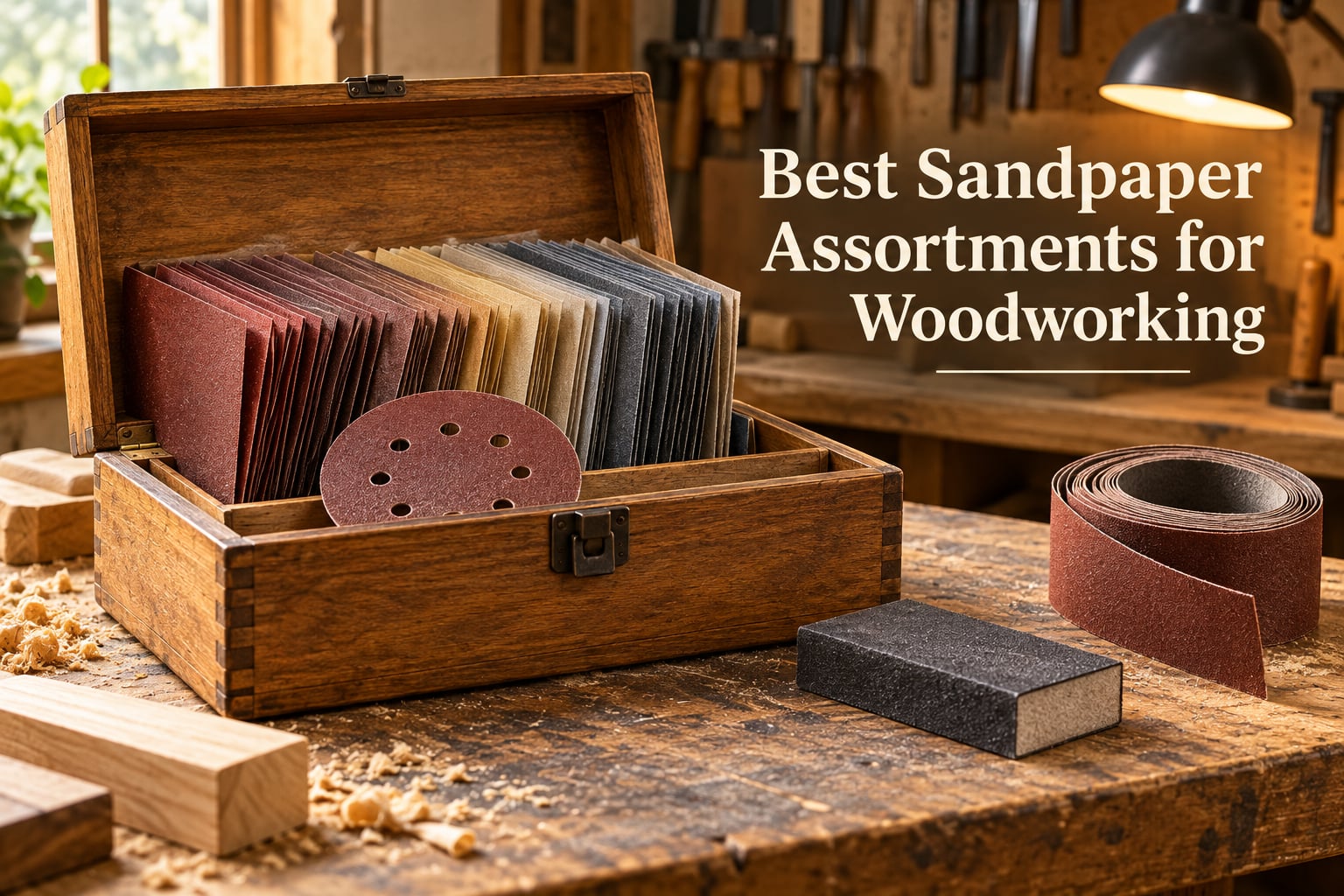
Most sandpaper mistakes are not about grit. They are about format. A shopper buys a beautiful 25-sheet box of assorted grit, opens it on the bench, and discovers the sheets are 9 x 11 inches while the sander on the shelf takes 5-inch hook-and-loop discs. The box was never wrong; it was aimed at a different tool. Buy the wrong box and you pay for it twice, once for the paper and again for the finish that shows coarse scratches you had to grind out later.
That is the whole problem this guide solves. Below, I compare ten sandpaper assortments for woodworking, ranked by what each one is actually good at rather than by sticker appeal. We look at abrasive mineral, grit coverage, sheet count per grit, backing, and the sander each pack is shaped for. Every pack here covers a real sanding sequence on its own, and every verdict is tied to a buyer type you can identify in about five seconds.
So what type of sandpaper is best for woodworking? Aluminum oxide is the general-purpose default and the mineral most multi-grit packs are built around, because it cuts well, is cheap, and handles hardwoods, softwoods, paint and metal without switching products. Ceramic alumina is the premium step-up, using precision-shaped grains that fracture as they wear so the cutting edge stays sharp longer, which is why 3M Cubitron II, 3M NetGrit and Norton ProSand are widely considered the best overall sandpapers in woodworking. Silicon carbide is the finishing and wet-sanding choice. Garnet is the traditional hand-sanding abrasive and the most economical for furniture work.
As for which pack to buy, the answer depends entirely on your sander and the wood in front of you. A hand sander and a random orbital need completely different paper shapes, and pine behaves differently than maple. Let us start with the three that cover the most ground.
Table of Contents
Top 3 Picks for Woodworking Sandpaper Assortments in 2026

3M Assorted Grit 9×11 Sheets
- Aluminum oxide
- 100/150/220 grit
- 5 full-size sheets
- hand or block sanding
- cut to size for power sanders
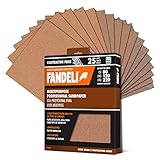
Fandeli 25-Sheet 9×11 Pack
- Aluminum oxide
- 80/120/220 grit
- 25 sheets
- FSC-certified paper
- clog resistant
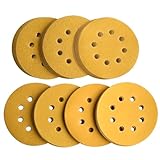
Aiyard 105 5-Inch Discs
- Fused alumina grain
- 60-400 grit
- 105 discs
- 8-hole dust extraction
- hook and loop
These three came out ahead for different reasons. The 3M pack is the one we trust a beginner to buy first, because it is small, cheap to replace, and forgiving. The Fandeli pack wins on sheet count and even grit distribution, which matters more than buyers expect. The Aiyard disc pack is the strongest pick for anyone running a 5-inch random orbital sander, and its 15-discs-per-grit count gives a genuine project quantity rather than a token few.
The 10 Best Sandpaper Assortments at a Glance in 2026
| Product | Specifications | Action |
|---|---|---|
| 3M Aluminum Oxide Assorted Grit 9 x 11 in |
|
Check Latest Price |
| Fandeli Multi-Purpose 25-Sheet 9 x 11 Pack |
|
Check Latest Price |
| Aiyard 5-Inch 8-Hole Discs 60-400 Grit |
|
Check Latest Price |
 Dura-Gold 50-Sheet Wet or Dry Assortment Dura-Gold 50-Sheet Wet or Dry Assortment |
|
Check Latest Price |
 S SATC 72-Pack 5-Inch Hook and Loop Discs S SATC 72-Pack 5-Inch Hook and Loop Discs |
|
Check Latest Price |
 BOSHCRAFT 50-Pack Quarter Sheet Sandpaper BOSHCRAFT 50-Pack Quarter Sheet Sandpaper |
|
Check Latest Price |
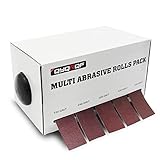 QYQRQF 5-Roll Emery Cloth Assortment QYQRQF 5-Roll Emery Cloth Assortment |
|
Check Latest Price |
 YNZDRWA 70-Pack 5-Inch Mixed Grit Discs YNZDRWA 70-Pack 5-Inch Mixed Grit Discs |
|
Check Latest Price |
 BAOSTC 50-Pack Quarter Sheet Assortment BAOSTC 50-Pack Quarter Sheet Assortment |
|
Check Latest Price |
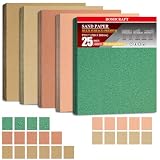 BOSHCRAFT 25-Pack 9 x 11 Sandpaper Assortment BOSHCRAFT 25-Pack 9 x 11 Sandpaper Assortment |
|
Check Latest Price |
Quick routing guide, one line per pack. If you sand by hand with a block and want a small dependable first box, the 3M pack is your answer. If you want the most usable paper for the money, the Fandeli 25-sheet pack wins. If you own a 5-inch random orbital sander, the Aiyard disc pack covers the most grits. If your work is finish sanding, color sanding, or wet sanding, the Dura-Gold silicon carbide pack is the correct mineral.
The S SATC disc pack is the volume budget option with by far the largest review base of the ten. The two quarter-sheet packs are for palm sanders specifically, and only one of them suits a machine that is used daily. The QYQRQF roll pack is the one to buy for mouldings, curves, and tight inside corners. The YNZDRWA discs reach all the way to 800 grit for users who need a fine final pass on a powered sander. The BOSHCRAFT 25-sheet full-size pack is the hand-sanding and cut-to-size workhorse.
1. 3M Aluminum Oxide Assorted Grit 9 x 11 in Sheets – The Safe First Box
3M Aluminum Oxide Sandpaper, 5 Sheets, Assorted Grit 100-150-220, 9 x 11 in
Aluminum oxide
Paper backing
100, 150 and 220 grit
5 sheets at 9 x 11 inch
3.2 ounces
Pros
- Widely trusted brand with a long review history
- Three grits span a full furniture finishing sequence
- Full-size sheets can be cut to any sander size
- Works by hand on a sanding block or in a power sander
Cons
- Only 5 sheets means frequent repurchases during big jobs
- No grits above 220 for final finish work
- Reviewers note it is not ideal for mechanical sanders
When I hand a beginner one box to start with, this is usually the one. It is five full-size 9 x 11 inch sheets in 100, 150 and 220 grit, which is precisely the middle of a furniture finishing sequence. That trio takes a planed board from joinery-sanded to ready for finish without ever skipping a step.
What stands out after repeated use is how consistently the grit stays bonded to the paper. Cheap paper sheds grit mid-sand and creates a dust cloud you cannot see properly through, which makes it easy to miss low spots. The abrasive here stays put, and the sheets stay consistent from the first pass to the last.
The paper backing is a deliberate strength for hand work. It flexes around curves and edges without tearing, and it takes a sanding block well. Buyers do note the paper is not the first choice for heavy machine sanding, where a cloth or mesh-backed sheet will run cooler and resist edge wear longer.
The honest drawback is the count. Five sheets across three grits means roughly one or two sheets per grit, and the 100 grit sheet will be used up long before the 220. For a coffee table top or a set of drawer fronts that is plenty. For a whole kitchen of cabinet doors you will be back for more before the job ends.

How many sheets will this pack actually get through?
On a small project such as a coffee table, three top surfaces, one pack is usually enough. The 100 grit is the sheet that disappears first, and the 220 is the one that survives longest, often with grit still visibly on the surface when you put it away.
For a larger job, plan on buying this pack two or three times rather than stretching one. The value here is not bulk; it is the low risk of a first purchase and a brand with a review history measured in the thousands.
Who should skip this pack
If you own a random orbital sander, this paper will work but it is not the right tool. Machine sanding puts far more heat and load into the sheet than hand sanding does, and paper backing does not shed heat or grit as well as cloth or mesh.
If your work is all fine furniture finishing, you also need grits above 220, and this pack stops at 220. A separate fine-grit pack covers that gap better than stretching three grits thinner.
2. Fandeli Multi-Purpose 25-Sheet 9 x 11 Pack – The Best Value Full Sheets
Fandeli | Multi-Purpose Sanding Paper | Assorted Grits (80,120,220) | 25 Sheets of 9” x 11” | Perfect for Sanding Metal and Sanding Wood | Hand Sanding | Orbital Sanders
Aluminum oxide
80 grit 5 sheets
120 and 220 grit 10 sheets each
25 sheets at 9 x 11 inch
FSC-certified paper
Pros
- 25 sheets gives real project coverage
- Uneven grit problem solved by splitting sheets across grits
- Cut to size for smaller sanders
- Clogging resistance keeps the paper cutting
Cons
- Only three grits in the assortment
- Missing a 150 or 180 step for ultra-smooth work
- Reviewers cite a limited grit range as the main drawback
This is the pack I buy most often, and the reason is the sheet distribution rather than the grit list. Twenty-five sheets across three grits is 5 sheets of 80, 10 sheets of 120 and 10 sheets of 220. That split matches how a real project consumes paper: the coarse grit is used fast, and the finer grits carry you through the rest of the sequence.
Fandeli is a Spanish abrasives maker that has been producing sandpaper since 1927, and the paper is FSC-certified, which matters if you care about where the backing fibre comes from. Reviewers consistently single out the clogging resistance as the difference against cheaper aluminum oxide paper on resinous softwoods like pine.
It works across a wide range of jobs because full-size sheets cut to anything. Trim a 9 x 11 sheet down for a 5-inch random orbital, a 6-inch orbital, or a belt sander, and the same pack covers hand sanding, block sanding, and machine sanding. The aluminum oxide mineral is the general-purpose default, cutting well on wood, paint, plaster and metal without a change of product.
What you give up is grit spread. Three grits is enough to get through a piece of furniture, but there is no 150 or 180 step, and nothing finer than 220. If the goal is a finish-ready surface for a high-gloss lacquer, this pack stops one step short of where you want to be.
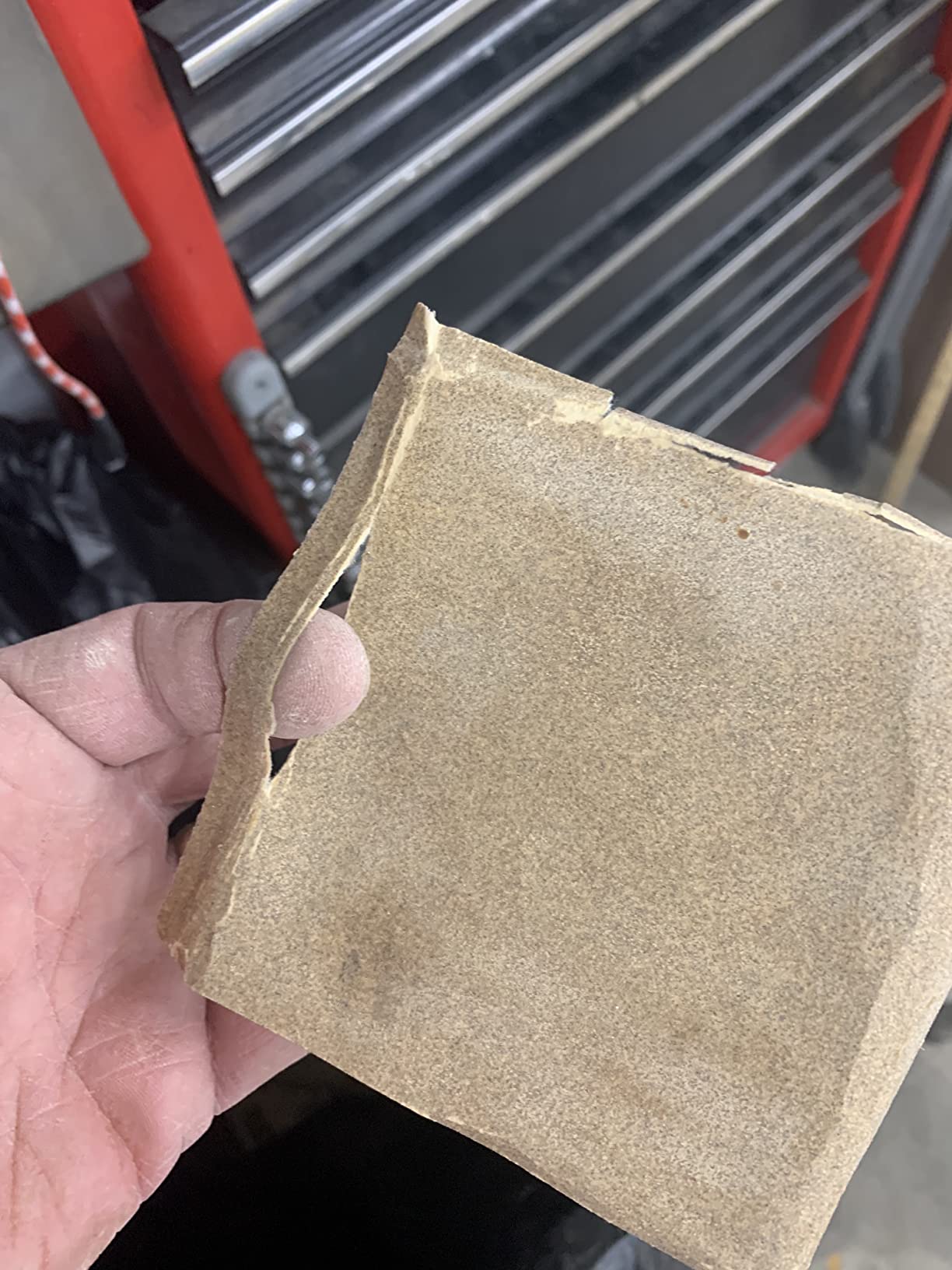
Why the 5/10/10 split matters more than the grit count
Multi-grit kits are often criticized for waste, and the criticism is fair when every grit gets the same number of sheets. You burn through the coarse ones in a single session and the fine ones sit in the drawer for years.
This pack gets the ratio closer to real use. The 80 grit is the sheet that loads fastest on softwood, and it is also the sheet most likely to snap if you try to power sand with it on a hardwood. Fewer of them is the correct call.
Where this pack falls short
The obvious limit is three grits. A user working toward a sprayed or polished finish will find 220 is the ceiling here, and a separate fine-grit pack becomes necessary partway through the project rather than at the start.
The other limit is machine sanding on hard domestic woods. Aluminum oxide handles it, but a cloth or mesh backing runs cooler under a loaded pad. For occasional machine passes this is fine. For a full day of stock removal, it is not the first choice.
3. Aiyard 5-Inch 8-Hole Discs 60-400 Grit 105-Pack – Best for Random Orbital Sanders
Aiyard 5-Inch 8-Hole Hook & Loop Sanding Discs 60-400 Mixed Grits, 105-Pack
Fused alumina grain
7 grits from 60 to 400
105 discs
5 inch with 8 dust holes
Hook and loop backing
Pros
- Seven grits cover a full power sanding sequence
- 15 discs per grit is a genuine project quantity
- Pre-punched 8-hole pattern feeds dust extraction
- Adhesion holds the disc on the pad
Cons
- Hook and loop can wear after heavy continuous use
- Wears faster than premium brand discs according to reviewers
- 5-inch format only
- will not fit larger pads
This is the pack to buy if a 5-inch random orbital sander is the machine in your shop. It is 105 discs, 15 each of 60, 80, 120, 150, 220, 320 and 400 grit, pre-punched with the 8-hole pattern that most 5-inch pads use for dust extraction.
Seven grits cover a full power sanding sequence from aggressive stock removal to a fine finish, and that matters on a random orbital. You can strip an old finish at 60, flatten at 80, take the plane marks out at 120, and still be able to finish the surface at 320 or 400 without ordering anything else.
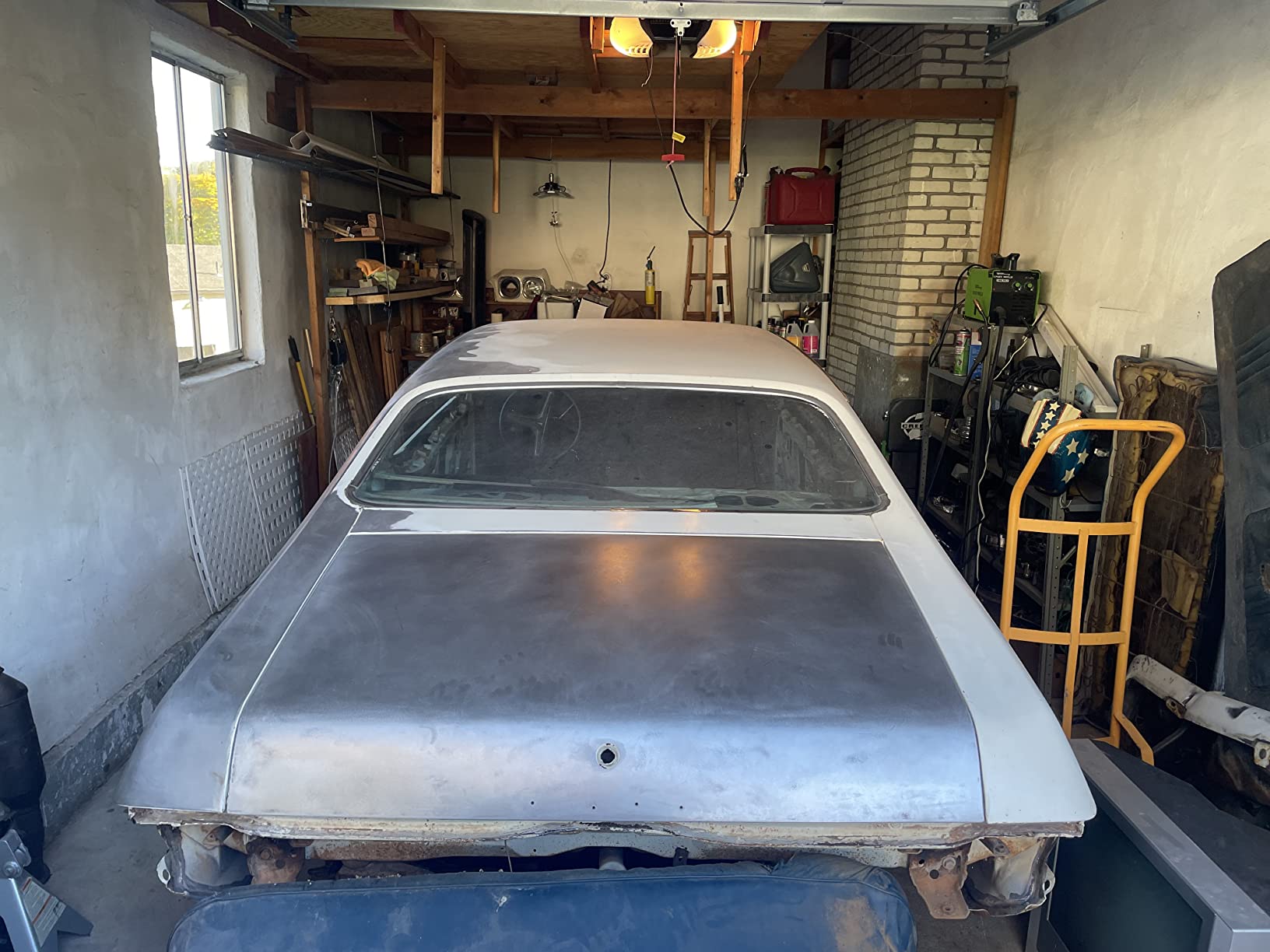
The grain is fused alumina, which is a harder, more durable form of aluminum oxide. It cuts with more bite and holds its shape better on hard domestic woods than a standard aluminum oxide disc at the same grit. The 0.04 inch thickness also helps it survive the edge wear that ruins thin discs on a rounded-over workpiece.
For pine and other resinous softwoods, the open construction and anti-clogging treatment are what keep the disc cutting. Loaded paper is the number one reason a cheap disc stops working while grit is still visibly on the face. Users running softwood report noticeably less loading than with entry-level paper.
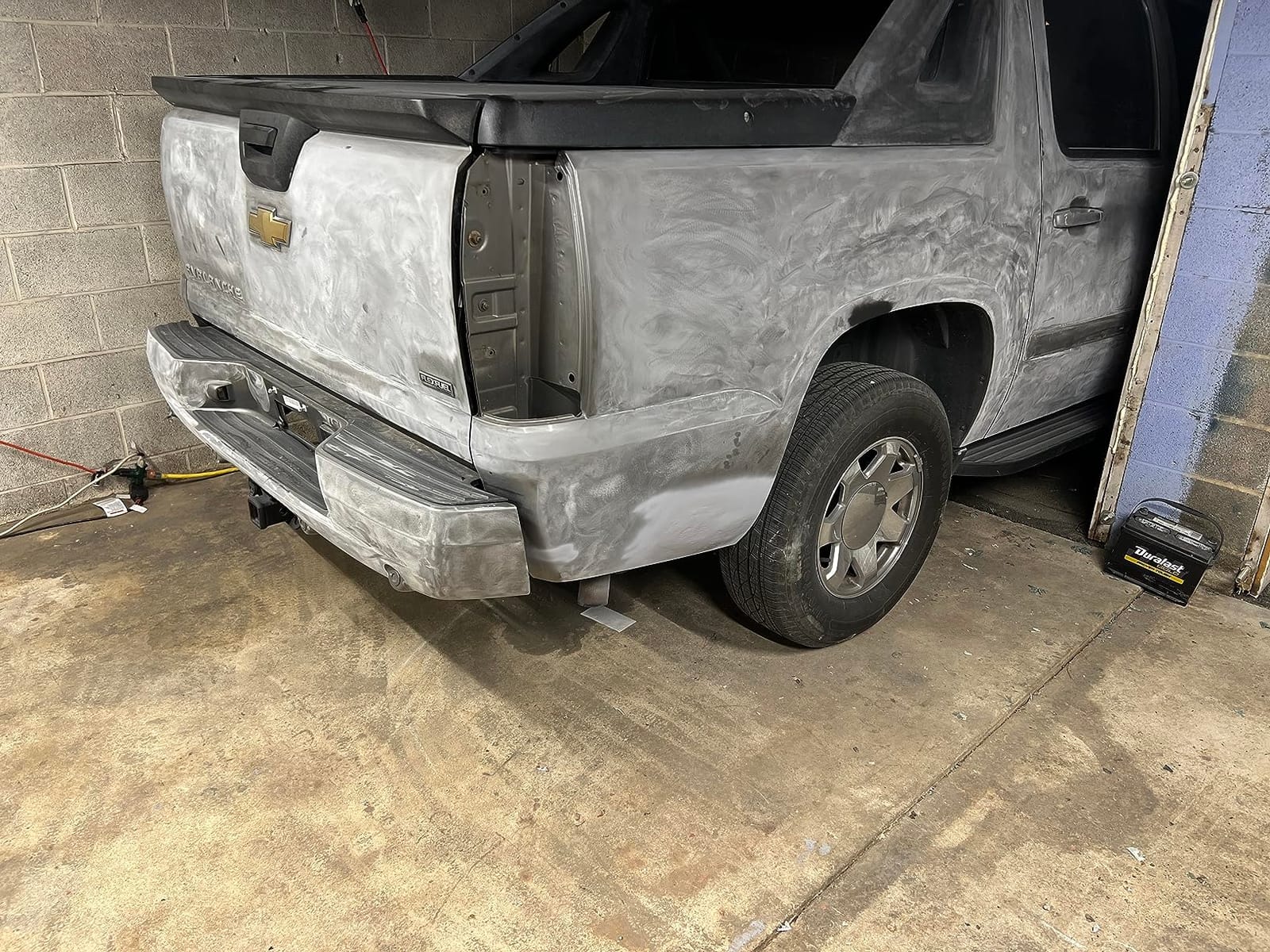
Will the hole pattern match your sander?
The 8-hole pattern is the most common on 5-inch random orbital pads, including many models sold under DeWalt, Bosch and Makita names. Before you buy, lay one disc on your pad and check the hole count and spacing. A mismatch means the disc will not sit flat, and a disc that does not sit flat cuts unevenly.
Hook and loop changes the whole workflow. A PSA adhesive disc takes thirty seconds to stick and thirty seconds to peel off a loaded face. A hook and loop disc comes off in a second, which means you change grits constantly and keep the sander running rather than picking at adhesive glue.
Where the durability stops
Reviewers report the hook and loop losing its grip after roughly half an hour of continuous heavy work, and they note the discs wear faster than premium brand equivalents. That is the expected trade at this grain density and it rarely matters on normal project work.
The real limitation is size. This is a 5-inch pack. If you also run a 6-inch random orbital or a 9-inch hook and loop pad, this assortment will not help you there, and you will need a separate pack for that machine.
4. Dura-Gold 50-Sheet Wet or Dry Assortment – Silicon Carbide for Finishing Work
Dura-Gold 50 Sheet Assorted 3-2/3″ x 9″ Wet or Dry Sandpaper, 5 Each, Grits
Silicon carbide
Wet or dry waterproof
150 to 3000 grit
50 sheets of 5.5 x 9 inch
10 grits at 5 sheets each
Pros
- Ten grits from 150 up to 3000 covers all finish work
- Silicon carbide stays flexible and does not crumble when wet
- Electro-coated for even grit distribution
- Resists clogging better than most fine paper
Cons
- Sheet size is small for large flat surfaces
- Ten grits is more than most projects will use
- Not the right mineral for heavy stock removal
Silicon carbide is the abrasive for finish work and the only one in this roundup that is genuinely waterproof. The grit is hard and sharp, which produces a finer scratch pattern at the same grit number than aluminum oxide, and the paper is electro-coated so the grit spreads evenly across the face rather than clustering.
Ten grits from 150 through 3000 is a finishing library in a box. The jump from 150 to 3000 covers between-coat scuffing, final surface prep before oil or lacquer, and wet color sanding if you ever work with filled or filled-and-painted surfaces. Five sheets of each is a sensible allocation for that kind of work.
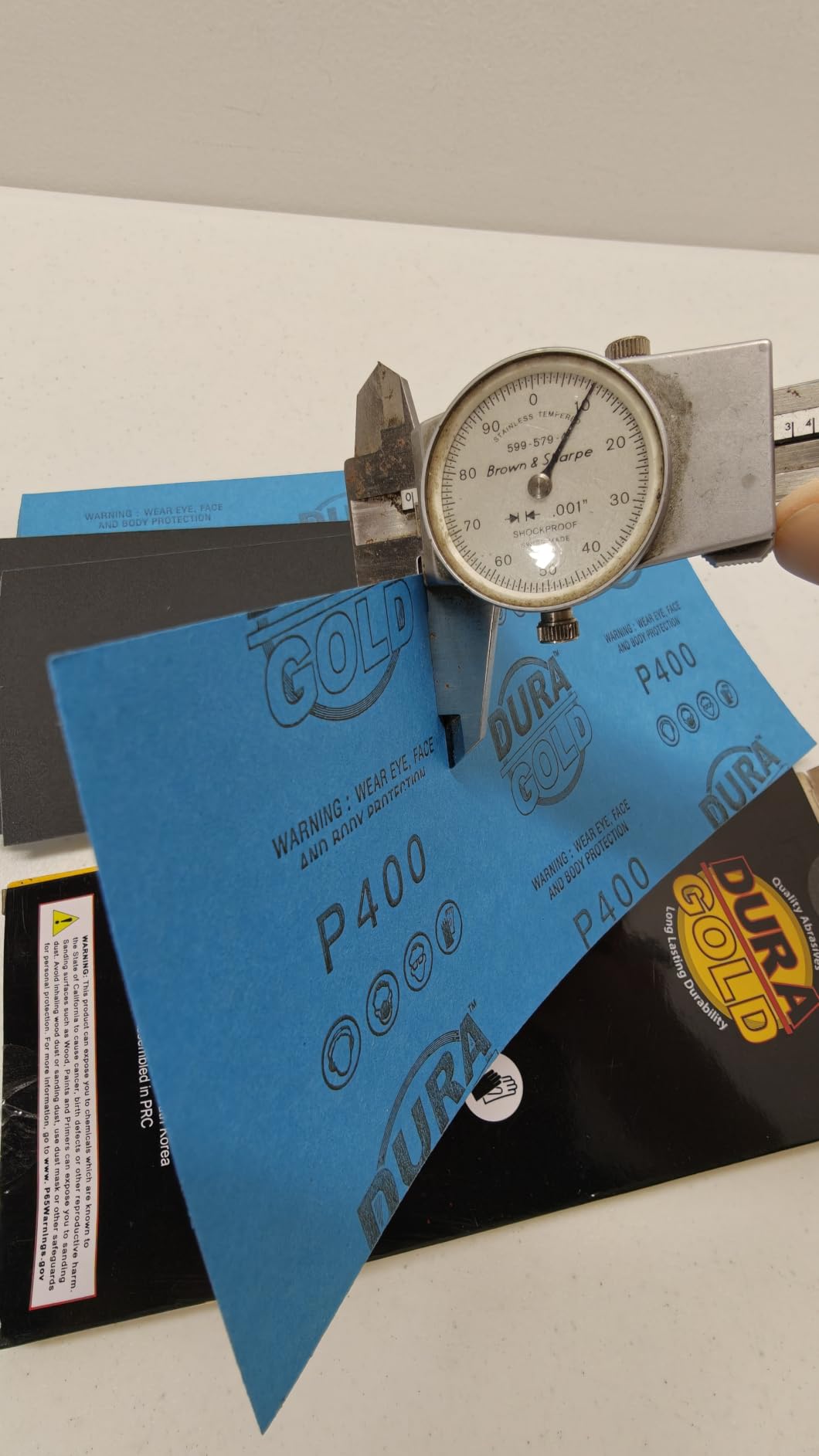
Being wet or dry rated changes what the paper can do. Soaked, it stays flexible and will not tear or crumble under a hand block, which is exactly when ordinary paper-backed sheets curl up and ruin a surface. That is why wet or dry silicon carbide is the traditional choice for finishing a varnished or lacquered table top by hand.
Clogging resistance is the other advantage at fine grits. Stearic-acid and resin-bonded fine paper loads up quickly when you are only removing a film of overspray, and a loaded 600 grit sheet scratches rather than cuts. This one keeps cutting longer at the fine end of the range.
When wet or dry paper earns its place
Reach for it when the work is finishing rather than shaping. Sanding between coats, prepping a filled surface, knocking down a nib in lacquer, or refining a panel with grain raised by water-based finish all call for a mineral that will not smear and will not crumble.
For pure surface preparation on bare wood, a hardwood or a cabinet, this paper is softer than you need. Aluminum oxide cuts faster on raw wood, and you will go through these sheets faster than you expect working dry on bare timber.
Why the small sheet size cuts both ways
At roughly 3-2/3 by 9 inches, these sheets are sized for a hand block, a small detail area, or a belt and orbital sander cut to size. They are excellent for curves, edges, and tight inside corners where a full-size sheet wraps badly and tears.
On a large flat panel, though, the small format means more joints and more time. If your project is a full set of cabinet doors, quarter sheets or full-size sheets will move faster and give you a more consistent scratch pattern across the whole face.
5. S SATC 72-Pack 5-Inch Discs 40-320 Grit – The Volume Budget Disc Pack
S SATC 72 PCS 5 Inch 8 Hole Hook and Loop Adhesive Sanding Discs Sandpaper for Random Orbital Sander 40 60 80 120 180 240 320 Grits
Aluminum oxide
Open coat construction
40 to 320 grit
72 discs
5 inch diameter
Open coat with stearate coating
Pros
- Largest review base of any pack in this roundup
- 72 discs cover a lot of coarse-to-medium work
- Stearate coating resists clogging and pilling
- Works on wood
- metal
- plastic
- stone and glass
Cons
- Some reviewers report inconsistent adhesion to the pad
- Grit can feel harsher than premium brands
- Some report fewer discs of certain grits than the label states
This is the pack that shows up most often in beginner shops, and the reason is simple: it starts at 40 grit. Nothing else in a 5-inch disc format here goes that coarse except one, and going coarse is how you remove an old finish or flatten cupped stock quickly.
The layout is 12 discs of 40 grit and 10 discs each of 60, 80, 120, 180, 240 and 320. That is a deliberate bias toward the coarse half of the range, which matches how most sanding actually starts. You burn through 40 and 60, use fewer of 180 and 240, and rarely touch 320 on a raw wood job.
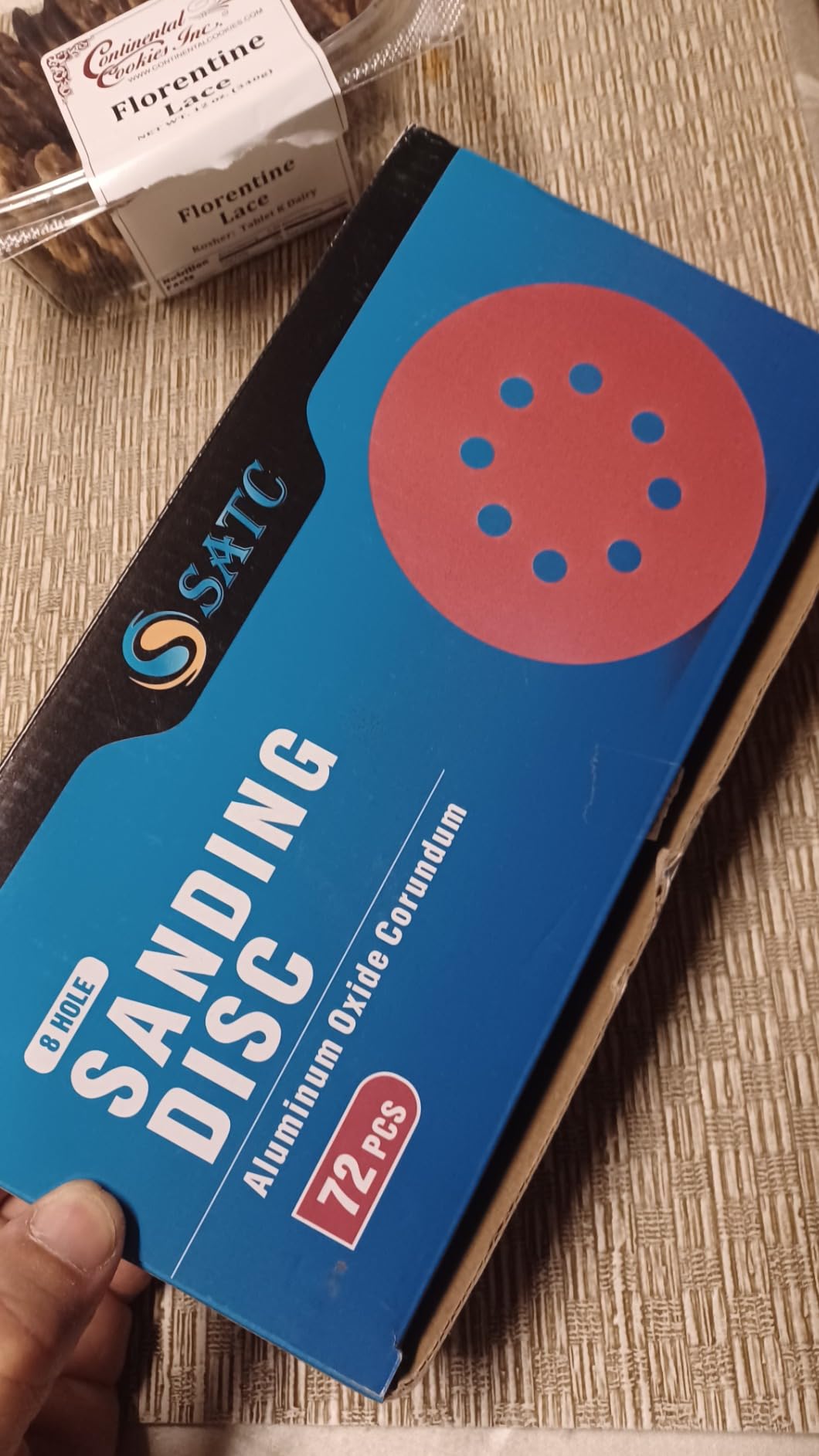
Two construction details are worth knowing about. The paper is open coat, meaning the abrasive grains sit proud of the backing with space between them, which sheds dust and gives a consistent scratch pattern. The grains carry a stearate coating, a dry lubricant that slows the loading that turns a used sheet into a polisher.
Open coat is the right construction for wood in general, and specifically for resinous softwoods. On pine, closed coat paper fills in with resin and sawdust faster than you can sand through it, and the sheet starts burnishing the surface instead of cutting it.
Is the low cost of a disc really low in practice?
Per disc, this is among the cheapest options in the roundup. The catch is that cost per disc is not the same as cost per finished surface. A disc that wears out halfway through a board costs more overall than one that finishes the board, because you pay for the wasted half twice.
Users working on furniture and trim tend to find the paper perfectly adequate. Users running heavy stock removal on oak or hard maple, or stripping paint, tend to notice the discs wear faster and reach for something harder.
What to watch for after opening the pack
Count the discs by grit as soon as you open it. Some reviewers report packs arriving with fewer of certain grits than the label states, which is worth catching at the point of purchase rather than halfway through a project.
Also test one disc on your pad before committing to a long session. Adhesion is reported as mostly good but occasionally inconsistent, and a disc that lifts under load will wrap around the edge of the workpiece and leave a curved scratch that is tedious to remove.
6. BOSHCRAFT 50-Pack Quarter Sheet Sandpaper 5.5 x 4.5 in – For Palm Sanders
BOSHCRAFT 50 Pcs 1/4 Sheet Sand Paper 5.5″ x 4.5″ – 80/150/320/400 Grit 8 Sheets Each, 120/220 Grit 9 Sheets Each, Premium Aluminum Oxide Sandpaper Assortment for Wood Metal Automotive Palm Sanders
Aluminum oxide
6 grits, 50 sheets
5.5 x 4.5 inch quarter sheets
Anti-clogging coating
Color coded by grit
Pros
- Six grits across 50 sheets is a good spread
- Quarter sheet fits palm sanders without trimming
- Anti-clogging and anti-static treatment cuts dust
- Colour coding makes grit identification instant
Cons
- Limited to palm sanders
- cannot cover a large panel quickly
- Reviewers note the sheet count is modest against some rivals
Quarter sheets are the native format for palm sanders, the small vibrating machines sold as entry tools and still common in home shops. At 5.5 by 4.5 inches, these fit directly with no cutting, which is the single biggest convenience in this roundup if your machine is that size.
The grit distribution is 8 sheets each of 80, 150, 320 and 400, plus 9 sheets each of 120 and 220. That is six grits with even weighting, which is more balanced than most kits and means the 220 is not going to run out before the 120.
Two coatings do the heavy lifting. The anti-clogging treatment slows loading on softwood, and the anti-static property reduces sand drop, which is where most of the visible mess around a palm sander comes from. Double adhesive backing keeps the sheet from creeping during a pass, which matters on a vibrating machine where the pad moves in small circles.
The colour coding is a small touch that becomes obvious after a few sessions. When six grits are in a stack, you can pick the right one in a second rather than reading numbers on the back of each sheet in poor light.
Is quarter sheet the right format if you also hand sand?
Only if you accept trimming. A quarter sheet is the right size for a palm sander pad and for detail work on edges and small parts, and it works as a hand sheet on curved or intricate profiles where a full sheet wraps awkwardly.
For a full-size hand sanding block, a 9 x 11 sheet is faster and covers a tabletop in fewer strokes. If hand sanding large flat surfaces is a regular part of your work, buy a full-size pack alongside this one rather than cutting these down.
How a palm sander changes your grit choices
Palm sanders oscillate in small circles, which produces a scratch pattern that is hard to see and harder to remove. The practical consequence is that you should not run a palm sander past 150 or 180 on a surface that will be seen closely, because the circular swirl will telegraph through a clear finish.
Which means the 320 and 400 sheets in this pack are most useful for scuffing between coats or for a surface that will be textured or painted, not for final surface preparation on a fine furniture panel. Use a random orbital or finish by hand for that last step.
7. QYQRQF 5-Roll Emery Cloth Assortment – For Curves and Detail Work
QYQRQF Emery Cloth Roll, 5 Grits Abrasive Sandpaper Rolls Assorted Sand Paper with Dispenser for Woodworking Automotive Metal Polishing, 150 240 320 400 600 Grits Per Roll 6 Meters
Aluminum oxide on cloth backing
150 to 600 grit
5 rolls at 1 inch by 6 meters
Dispenser box included
Cut to any length
Pros
- Cut to length solves the size mismatch problem
- Cloth backing is far more durable than paper
- Dispenser keeps five grits organised
- Moves easily around mouldings and tight curves
Cons
- One inch width is narrow for flat surfaces
- Cloth format will not fit every sander
- Less convenient for large flat areas than a full sheet
Rolls solve a problem nothing else here does. A 9 x 11 sheet can be cut to a small size but not to a long strip, and a moulding, a turned spindle, or a curved railing is exactly the case where you need a narrow band of abrasive that wraps the form without creasing.
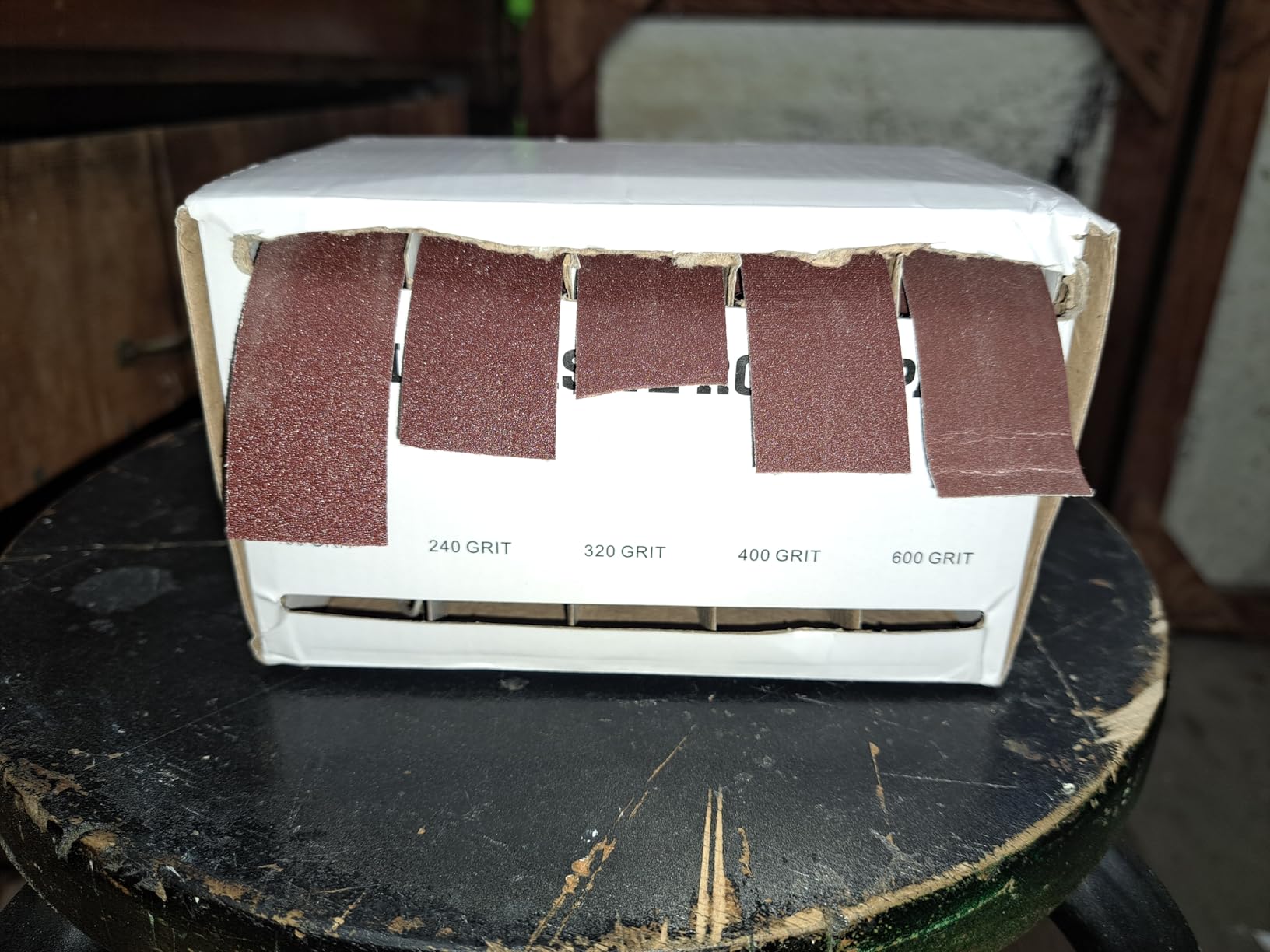
Each of the five rolls is 1 inch wide and 6 meters long, in 150, 240, 320, 400 and 600 grit. At that length you can make a great many strips, and the aluminium oxide on cloth backing is the most durable construction in this roundup. Cloth-backed material resists tearing, handles heat far better than paper, and can be used on a belt sander or a drum sander as well as by hand.
The dispenser box is more useful than it sounds. Mixed-grit paper tends to end up in a drawer as one undifferentiated stack, and the first time you need a 320 you will be pulling sheets out one at a time. Five labelled compartments in a box solve that in a way a plastic bag never will.
Six hundred grit is the finest in the set, and that puts it in between-coat territory rather than final-surface territory. For a surface that will take oil or wax, hand finish it with a finer paper or a scraper after this range is exhausted.
Where a 1-inch roll genuinely wins
Curved and profiled work is the clear answer. A strip cut from this roll follows a radius without folding, so you get a consistent scratch pattern across the whole curve rather than a crease line where a full sheet had to buckle.
It is also the right pick for small-batch detail where you only need a short piece, such as fairing a chair leg after turning, or fitting a strip into a tight inside corner where a sanding block cannot reach. Cutting a 10-centimetre length instead of sacrificing a full sheet is the point.
When a full sheet is the better tool
On a flat tabletop, a 1-inch strip is slower than a full sheet. You cover a fraction of the area per stroke and the seam between adjacent strips can leave a faint line that shows under a gloss finish.
For any project dominated by large flat faces, treat this pack as a complement rather than a replacement. It handles the shaping and detail, and a sheet or disc pack handles the broad surfaces.
8. YNZDRWA 70-Pack 5-Inch Discs Across 9 Grits – Widest Range for a Powered Sander
YNZDRWA 70 PCS 5 Inch 8-Hole Sanding Discs, 9 Mixed Grits
Aluminum oxide
9 grits from 40 to 800
70 discs
5 inch with 8 dust holes
Hook and loop backing
Pros
- Nine grits is the widest range in the roundup
- Reaches 800 grit for a fine final pass on a powered sander
- 8-hole pattern for dust extraction
- Upgraded adhesion holds discs on the pad
Cons
- Fewer discs of each grit than larger packs
- Wears faster than premium brands on hard surfaces
- 5-inch format only
- less suitable for rough stock removal
Three of the ten packs here are based on silicon carbide or in the coarsest 5-inch range, and one reaches 800 grit. Where the Aiyard pack covers seven grits from 60 to 400, this one covers nine grits from 40 all the way to 800. That extra reach at both ends is the reason to choose it: the 40 grit handles soft or very uneven stock, and the 800 gives you a genuinely fine final pass without leaving the machine.
The distribution is 5 discs of 40, 8 each of 80, 120, 180, 240, 320, 400 and 600, and 9 of 800. Total 70 discs. The bias toward the coarse end is sensible because that is where the sheets get used, but you can feel the thin end once you get to 600 and 800.
The 8-hole pattern matches the common 5-inch random orbital layout, and the aluminium oxide is described as anti-static, which helps keep dust off the disc face and out of the air. Adhesion is reported as good, and the disc thickness is consistent enough to sit flat on a pad without wobbling.
Finishing at 800 on a powered sander is worth planning around. A random orbital at 800 produces a very fine, very even surface on flat panels and is a reasonable last pass before oil or a wiped-on finish, provided you still hand sand the edges and any faces the pad cannot reach flat.
Is 800 grit on a random orbital a real advantage?
For flat, square-edged panels, yes. The orbital action at a very fine grit produces a more consistent surface than hand sanding because the pad pressure stays even across the whole face, and it saves you from hand-sanding a large area after every machine pass.
For anything with a profile, an edge, or a tight radius, the pad cannot follow the contour. Those areas still need a hand block, so a pack that stops at 400 for the machine and adds fine paper for the hand is a valid alternative strategy.
The honest limitation on grit count
Seven or nine grits sounds generous, and for the first months of a new shop it is. After that, most of the count becomes dead weight, because 600 and 800 sheets on ordinary furniture work are used once and then stored indefinitely.
Judged per disc rather than per grit, this is one of the cheapest options here. Just check the count of the coarse grits before a big stripping job, since five discs of 40 grit will not go far on a painted wardrobe.
9. BAOSTC 50-Pack Quarter Sheets 4.5 x 5.5 in – A First Palm Sander Buy
BAOSTC 1/4 Sandpaper Sheet,4-1/2″*5-1/2″ Assorted 60-80-120-180-240,50PACK
Aluminum oxide
60 to 240 grit
50 sheets at 4.5 x 5.5 inch
Strong paper backing
Dry sanding only
Pros
- Fits Ryobi
- DeWalt
- SKIL and Black and Decker palm sanders
- 50 sheets across five grits
- Aluminum oxide with strong paper backing
- Clog-free performance reported on softwood
Cons
- Dry sanding only
- cannot be used wet
- Only five grits and nothing above 240
- Paper backing wears faster than cloth
This is the pack to buy alongside a first palm sander, because it names the machines it fits. The 4.5 by 5.5 inch quarter sheet is the standard palm sander pad, and the fit list covers Ryobi, DeWalt, SKIL and Black and Decker, which is most of what a new buyer will find on a shelf.
Fifty sheets spread across 60, 80, 120, 180 and 240 grit. Five grits with equal weighting, which is a narrower range than the BOSHCRAFT quarter-sheet pack in this roundup, and that narrower range is the main thing to weigh up before buying.
The aluminum oxide grain on a strong paper backing gives predictable behaviour on raw wood. It cuts rather than burnishes, holds its shape at the edges, and the reported clog-free performance is helpful on pine and other soft, resinous stock where cheaper paper gives up quickly.
Note that this is a dry sanding paper. Silicon carbide is the wet or dry mineral, and ordinary aluminum oxide paper is not. If your project involves wet sanding a filled or painted surface, this is the wrong pack regardless of the grit list.
Is 240 grit enough for most projects?
For a project that will be painted, stained, or routed and textured, yes. Those surfaces do not need to go finer than 150 or 180 before finish, so a pack that stops at 240 covers the whole sequence with sheets to spare.
For a clear-coated or oiled furniture panel, no. You want at least 320 and 400 before the finish goes on, and for the smoothest oiled surfaces you want to hand finish at 400 or finer. Add a small pack of fine paper rather than trying to sand a fine surface with a 240 that has already been used for rough work.
How to decide between the two quarter-sheet packs
Compare the two quarter-sheet options on grit range and coatings. This one is five grits from 60 to 240 with a straightforward aluminum oxide on paper backing. The other is six grits including 320 and 400, with an anti-clogging and anti-static treatment and colour coding by grit.
For a machine that will be used for refinishing furniture, the wider range and the anti-clogging coating are worth the modest difference. For a palm sander used to prep a few boards for paint, this pack is entirely adequate and simpler to use.
10. BOSHCRAFT 25-Pack 9 x 11 in Sheets – The Even Five-Grit Hand Sanding Kit
BOSHCRAFT 25 PCS Sandpaper Assortment, 9″ x 11″ Sand Paper for Wood Metal Hand Sander – 5 Sheets Each of 80/120/150/220/320 Grit, Multi-Purpose Sanding Paper for DIY
Aluminum oxide
5 each of 80/120/150/220/320
25 full-size sheets at 9 x 11 inch
Anti-clogging coating
Color coded by grit
Pros
- Five grits at five sheets each is perfectly even distribution
- Full-size sheets cut to any sander or block
- Covers a complete finishing sequence in one pack
- Anti-static treatment reduces visible sand drop
Cons
- Only 25 sheets total
- which is modest for a large project
- Reviewers cite the low total count as the main drawback
Five sheets each of 80, 120, 150, 220 and 320 is the most evenly balanced assortment in this roundup. No grit is padded and none is starved, and the sequence from 80 to 320 takes a board from rough-sanded to finish-ready in a single pack.
The absence of a 60 grit means this is not a stripping or flattening kit. If you have already removed the old finish and only need to bring a surface up, this sequence is exactly right. If you are facing a painted wardrobe, you need something coarser first.
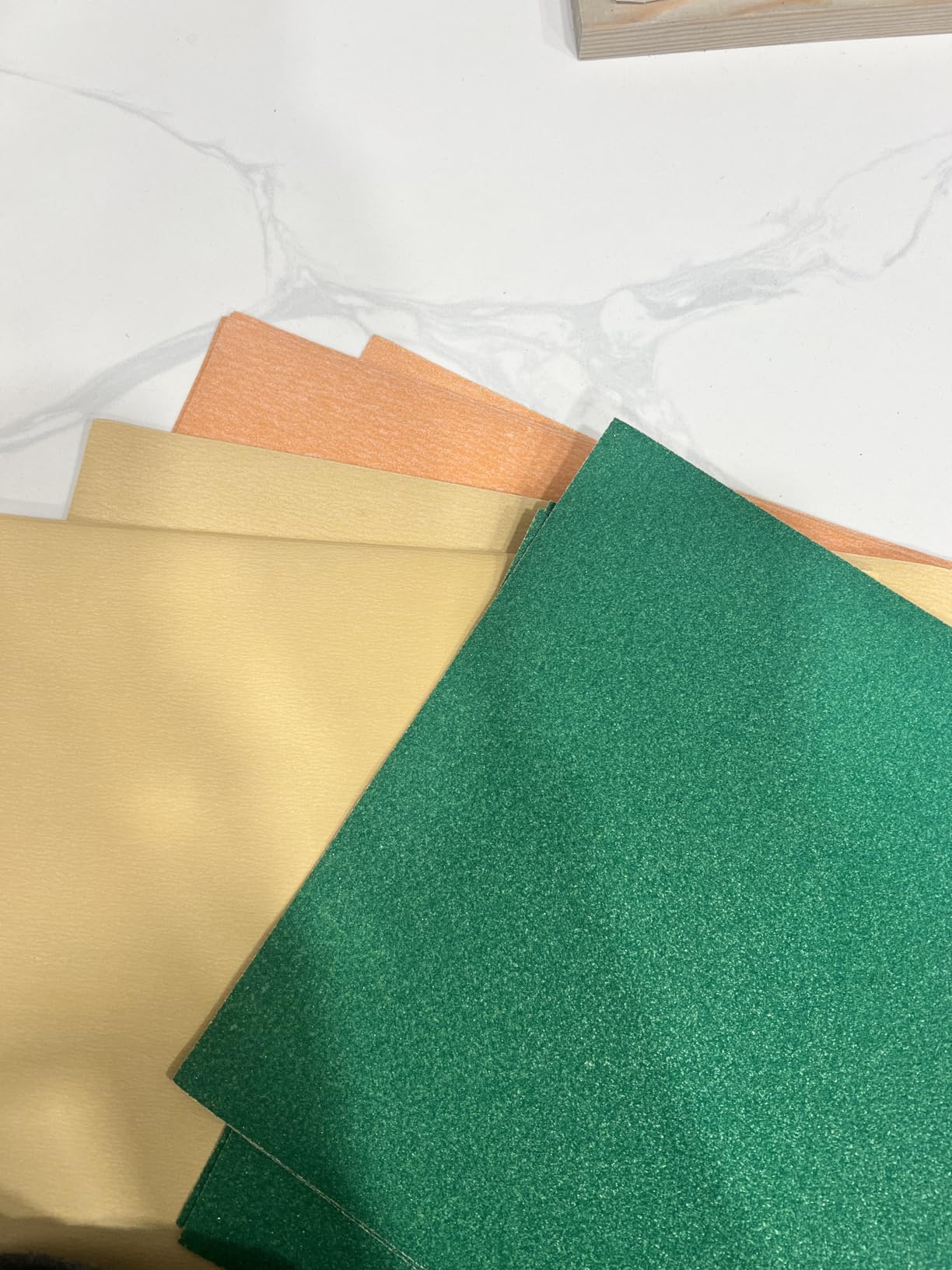
Full-size 9 x 11 sheets are the flexible option. The manufacturer notes they can be cut to quarter, third or half sizes for power tools, which means one pack covers a sanding block, a detail sander, and a random orbital sander without a second purchase. Colour coding again makes the five grits easy to separate at a glance.
The anti-clogging coating and the anti-static treatment work together on dust. Loading is what shortens sheet life on softwood, and reducing how much dust escapes around the bench makes a long hand-sanding session far more pleasant to be in the same room as.
How many sheets does a real project consume?
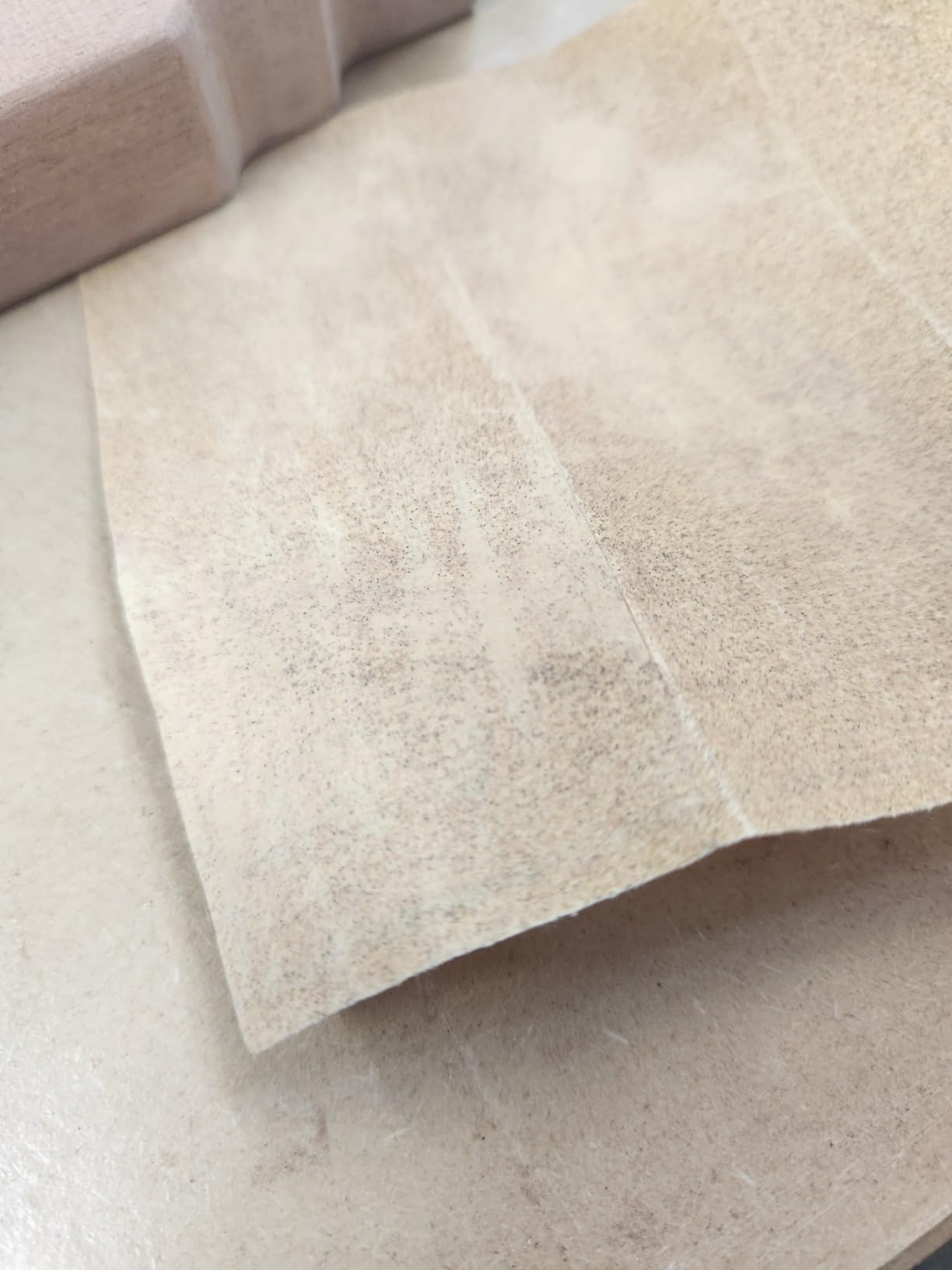
For a small piece such as a side table or a picture frame, 25 sheets across five grits is comfortable. Most of that will be spent on the 80 and 120, and you will likely have 320 sheets remaining for a future job.
For a dining table top or a set of cabinet doors, plan on buying this pack two or three times. What makes that repeat purchase painless is that you already know the sequence works and the sheets match your sander, which is not always true when switching brands mid-project.
Why even distribution beats a higher sheet count
A pack with 40 sheets and only three grits gives you a lot of paper at grits you already passed. A pack with 25 sheets and five grits gives you a workable sheet at every stage, including the 320 that finishes the project.
That makes this kit a better first purchase than it looks. The wasted sheets in an over-gritted pack are not recoverable, while an unused 320 in this one simply waits for the next project. If you find yourself short on coarse sheets later, that is a cheap problem to solve with a separate coarse pack.
Which Sandpaper Type Is Best for Woodworking?
Aluminum oxide is the best general-purpose sandpaper for woodworking, and ceramic alumina is the premium step-up. Every pack of general purpose sandpaper in this roundup is built on one of those two minerals, with silicon carbide reserved for finishing and wet work, and garnet left out of the modern shortlist for cost reasons alone.
Choosing the right grain and material
Aluminum oxide is the default for wood. It is cheap, it cuts well on both softwood and hardwood, and it is available in every grit and every format, which is why nine of these ten packs use it. Choose it for joinery, furniture prep, and general stock removal.
Ceramic alumina uses precision-shaped grains that fracture as they wear, exposing fresh sharp edges instead of dulling. It is the toughest sandpaper for sanding wood, cutting faster and lasting longer than aluminum oxide at the same grit. This is the mineral behind 3M Cubitron II, 3M NetGrit and Norton ProSand, and it costs more per sheet.
Silicon carbide is harder and sharper than aluminum oxide and produces a finer scratch pattern at the same grit number. It is the finishing mineral, and it is the only one here that is genuinely waterproof, which is why it is specified for wet or dry use.
Garnet is the traditional hand-sanding abrasive, still valued because it is the least expensive per sheet and produces a good finish. It dulls faster and loads up quicker than aluminum oxide, and it has largely disappeared from general sale at big box retailers.
Open coat versus closed coat decides how the paper behaves on your wood
Open coat paper holds the abrasive grains proud of the backing with space between them, so dust and chips clear away instead of packing into the surface. Closed coat paper lays the grains down densely, which cuts faster and makes a more aggressive scratch. Wood-specific paper of either kind typically carries 40 to 70 percent abrasive coverage rather than a full layer.
The practical split is by wood type. On soft resinous woods such as pine, use open coat, because resin and sawdust load a dense sheet faster than you can sand through it and the sheet starts burnishing the surface. On hard domestic woods such as maple, oak and ash, closed coat or a heavier open coat cuts faster and holds its shape under load.
Stearate coatings are the anti-clog answer
A stearate coating is a dry lubricant applied to the abrasive that slows the loading that turns a used sheet into a polisher. Several packs in this roundup carry one, and on softwood it is often the difference between a sheet that still cuts at the end of a pass and a sheet that has to be thrown away halfway through.
Clogging is the complaint that comes up most often in woodworking forums. A sheet can be visibly covered in grit and still have no bite, because the loading is a compacted layer of dust rather than exposed mineral. If your paper seems to stop working while grit is still on the face, it is loaded, not worn out, and the fix is to brush the disc or change it rather than press harder.
Which Sandpaper Format Matches Your Sander?
Format is decided entirely by your machine, and it is the first thing to check before reading a single feature on a pack. A sheet pack will not fit a disc sander, and a disc pack will not fit a sanding block. Getting this wrong is the most common reason a sandpaper assortment ends up unused.
9 x 11 inch full sheets suit sanding blocks, hand sanding, and any sander you are willing to cut paper for. They are the most versatile format and the easiest to store flat.
5-inch hook and loop discs suit 5-inch random orbital sanders with an 8-hole pattern. Always check the hole count and spacing against your pad before buying.
6-inch and 8 to 9 inch hook and loop discs suit the larger random orbital and hook pad sanders used on cabinets, doors and panels. These are a separate product family from the 5-inch packs, and a 5-inch pack will not help you here.
Quarter sheets at 4.5 x 4.5 or 5.5 by 4.5 inches suit palm sanders and small detail sanders. Quarter sheets are the native size for these machines, so no trimming is needed.
Cloth-backed rolls suit hand sanding on curves and profiles, and can be cut into strips for belt or drum sanders. Rolls solve the long-strip problem that sheets cannot.
PSA adhesive discs and sheets suit older or imported machines that take pressure-sensitive paper instead of hook and loop. Adhesive takes far longer to change and is much harder to remove from a loaded face.
Mesh or abrasive net suits users who want reusable discs and low dust. The material sheds dust almost completely and can be cleaned, but it costs noticeably more per disc than paper-backed material.
One rule covers the rest: if your sander can be adapted with scissors, buy full sheets and cut them. Cutting takes ten seconds and the full-size pack costs less per sheet than a pre-cut disc pack, while giving you more control over the shape.
Grit Progression: What Each Grit Number Actually Does
A grit number counts the abrasive particles per inch across the face of the paper, so a lower number is coarser and removes material faster. You work up the numbers in sequence, never down, and you clean the surface between grits, because each coarse grit leaves scratches that only the next finer grit can remove.
Is 80 grit too rough for wood? On a softwood or a rough-sawn face, no. 80 grit is a normal starting point for flattening and for knocking down edges, and it is the standard first grit after removing an old finish. On a fine furniture panel, or on a face you have already finished and plan to keep, it is far too coarse, because those scratches will still be visible under a clear finish.
Which is coarser, 40 or 60? 40 grit is coarser. Coarser means larger abrasive particles, which remove more material per pass and cut faster. The reverse convention catches people out constantly, and it is the single most common misunderstanding when people buy a kit and start at the wrong end.
What is the 100 grit rule? It is a shortcut used to describe the point at which a surface stops being rough and starts being smooth. Once you reach roughly 100 grit, the surface is fine enough that every scratch left in it will be visible under a clear finish, so from 100 onward you slow down, change paper more often, and clean between every grit. Below 100 you are shaping; from 100 upward you are finishing.
What is the golden rule of sanding? Progress through the grits in order, never skipping a step. Skipping from 80 straight to 150 leaves 80-grit scratches that the 150 cannot fully remove, and those scratches telegraph through any finish applied afterward. The rule costs you paper and saves you the finish.
For most furniture work, the practical range is 100, 120, 150, 180, 220 and 240. That is the shortlist repeated consistently in woodworking education, and it is enough to take most projects from planed stock to ready for finish. Add a coarse grit below 100 for stripping and flattening, and grits above 320 for fine finish preparation.
The reference below maps each grit to what it actually does and where it sits in the sequence.
40 and 60 grit strip old finish, take off heavy surface scale and flatten cupped or wind-damaged stock. Stock removal only, never a final step.
80 grit is the standard starting point on raw stock, knocking down raised grain, saw marks and jointing ridges after a rough plane pass.
100 to 150 grit is the smoothing stage. This is where the 100 grit rule matters, because these are the grits whose scratches will show under finish.
180 and 220 grit prepare the surface for finish and remove the visible haze from coarser grits. 220 is the classic last power-sanding grit before finishing.
240 to 320 grit are between-coat and fine-prep grits, used to scuff a cured coat before the next layer and to prepare a close-grained surface for a high-gloss finish.
400 grit and finer are for hand finishing, wet color sanding, and refining a surface that will be waxed or oiled. At this range the paper matters more than the grit, because you are removing very little material.
How many sheets of sandpaper do you need for a project? Count the stages, not the sheets. A small piece needs one or two sheets at each of five or six grits, which is roughly what the 25-sheet packs here supply. A large flat project consumes far more at the coarse end, and the coarse grits are always where the shortage bites first. Buy additional coarse paper, not additional fine paper.
How to Choose a Sandpaper Assortment Without Wasting Sheets
Most wasted sandpaper comes from buying on grit count and ignoring format, then discovering the mismatch after delivery. Work through these decisions in order, and the right pack usually becomes obvious before you look at a single product listing.
Match the format to the machine before anything else
Ask what your sander takes, not what you think you might buy later. A 5-inch random orbital sander cannot use 9 x 11 sheets unless you are prepared to cut them, and a pack of 5-inch discs is useless to a palm sander owner. If you own more than one machine, full-size sheets cut to size serve more tools than any pre-cut pack, and they cost less per piece. A shop that is still being set up is better served by getting the bench vise and hold-down sorted before fine-tuning paper, since a solid hold-down means far less hand sanding later.
Count the sheets per grit, not the total
The number that matters is how many sheets you get of the grit you will actually use. Twenty-five sheets across five grits is five per grit, which is a working project quantity. Fifty sheets across three grits leaves you short at the fine end exactly when the project needs it most. A pack that starts at 40 or 60 grit and stops at 240 will run out of coarse paper on a stripping job regardless of the total count.
Coarse grits are the sheets that disappear, and they are the reason some kits feel wasteful. If your next project is heavy, weight the purchase toward the coarse end or plan to buy a separate coarse pack that you can use down to nothing.
Judge cost per sheet, and judge it per finished surface
Cost per sheet is easy to work out and frequently misleading. A cheap disc that wears out halfway through a board has cost you more overall than an expensive one that finished the board, because you paid for the wasted half twice. The real question is how many square feet of surface each sheet completes, and that number is not published anywhere.
This is also the point at which high-piece-count unbranded packs fall apart. A listing that advertises 25 to 28 pieces across a very wide grit range, with no rating history and a price that puts it level with premium brand paper, is usually buying sheet count with grit spread rather than with quality. The fine grits in those packs are the ones you will never use, and the coarse grits are the ones that will be thin paper.
A more reliable test is whether the pack has a review history. Every product in this roundup has one, ranging from just under 1,000 reviews to more than 18,000. That history is what tells you whether the grit sheds, whether the paper clogs, and whether the stated count is accurate.
Match the abrasive to the wood in front of you
Aluminum oxide covers most situations, and it is what most of these packs use. If you work mostly in resinous softwood, prioritise open coat construction and a stearate anti-clog coating, because loading is what kills paper on pine. If you work mostly in hard domestic woods, a harder or ceramic alumina option cuts faster and holds its edge better.
Keep one pack of silicon carbide fine grits in the shop regardless. It is the only abrasive in this roundup that handles wet work, and it gives a cleaner scratch pattern at finishing grits where the finish quality is decided.
Extend sheet life before you buy more paper
Attach a shop vacuum to the sander. Dust extraction is the single biggest factor in how fast a sheet loads, and it also protects the machine bearings.
Change paper more often than you think you need to. A loaded sheet scratches instead of cutting, and the time spent changing is less than the time spent removing the scratches afterwards.
Never skip a grit. Every skipped step becomes a defect you remove later with the next step or with filler.
Clean the disc face with a stiff brush between grits to knock out the swarf and dust that is causing the loading.
Hand sand the final grit with a block along the grain. It is faster than people expect and it removes the swirl a random orbital leaves on edges and profiles.
Store the assortment so you can find what you need
Mixed-grit paper in a single drawer is the reason people rebuy grits they already own. Keep grits separated, in the original pack or in labelled compartments, and keep the order physical so the sequence runs left to right as you work. The roll format in this roundup solves this with a built-in dispenser, and colour-coded sheets solve it visually.
Store paper flat and dry, away from heaters and direct sun. Paper backing is hygroscopic and will wrinkle if it sits in a damp corner, and a wrinkled sheet will not sit flat on a block or a pad.
Wood dust is a real exposure, not a nuisance
Wood dust from hardwoods is treated as a serious inhalation hazard, and a sanding session generates a fine fraction that stays airborne long after the sander stops. Connect extraction, keep the sander moving away from your face, and wear a respirator rated for fine particulates when you are sanding a large surface or a coated panel.
This matters more when you are working through a whole assortment, because the instinct is to keep going rather than stop for the vacuum hose. Treat the vacuum as part of the tool, not an accessory, and change the filter on the same schedule as the paper.
Is a sandpaper assortment cheaper than buying grits separately? Usually, for a new shop buying one pack per format. It is not cheaper if you end up with sheets you never use, and the grits most often wasted are the finest ones. Buy a multi-grit pack to cover a project, then switch to single-grit bulk purchases in the two or three grits you consume fastest.
What sandpaper should a beginner buy first? One format that matches the sander you own or plan to buy, three grits in the middle of the range rather than a wide spread, and a brand with a review history. Most beginners do more harm with too fine a starting grit than with too coarse, so start at 80 or 120 and do not attempt a fine finish on the first pass.
Frequently Asked Questions
What type of sandpaper is best for woodworking?
Aluminum oxide is the best general-purpose sandpaper for woodworking because it cuts well, is inexpensive, and is available in every grit and format for wood, paint and metal. Ceramic alumina is the premium step-up for tough, fast stock removal, using precision-shaped grains that fracture to stay sharp longer. Silicon carbide is the choice for fine finishing and for wet or dry use, and garnet remains the economical traditional option for hand sanding.
Is 80 grit too rough for wood?
No, 80 grit is a normal starting grit for most wood projects. It knocks down raised grain, saw marks and jointing ridges after a rough plane pass and is the standard first grit after removing old finish. It is too coarse only for a fine furniture panel you plan to keep, because the scratches it leaves will still show under a clear finish.
Which is coarser, 40 or 60 grit?
40 grit is coarser. A grit number counts abrasive particles per inch, so a lower number means larger particles, which remove more material faster. That is why you work up the numbers in sequence from 40 through 80, 120, 150, 180 and 220 rather than down, and why a lower number in a pack is the aggressive end of the range.
What is the 100 grit rule with sandpaper?
The 100 grit rule marks the point where a surface stops being rough and starts being smooth. Below 100 grit you are shaping and flattening, where scratches do not matter. From about 100 grit upward, every scratch left in the surface will be visible under a clear finish, so you should slow down, change paper more often, and clean the surface between every grit.
What is the golden rule of sanding?
The golden rule is to progress through the grit numbers in order and never skip a step. Skipping from 80 straight to 150 leaves 80-grit scratches that the 150 grit cannot fully remove, and those scratches telegraph through any finish applied afterwards. The rule costs you paper and saves you the finish.
What sandpaper grit should I use for wood?
For most furniture work the practical range is 100, 120, 150, 180, 220 and 240 grits, which takes a project from planed stock to ready for finish. Add a coarse grit below 100 such as 60 or 80 for stripping old finish and flattening rough stock, and grits above 320 for between-coat scuffing and fine finish preparation.
Is a sandpaper assortment cheaper than buying single grits?
A multi-grit pack is usually cheaper for a new shop buying one pack per sander format, because it covers a full project in a single purchase. It is not cheaper if the kit contains grits you never use, and the fine grits are the most commonly wasted. A good approach is to buy a multi-grit pack to cover a project, then switch to single-grit bulk purchases in the two or three grits you use fastest.
Our Final Sandpaper Assortment Picks for 2026
After working through all ten, the best sandpaper assortment for woodworking comes down to your sander. If you have no idea where to start, the 3M 5-sheet pack is our top overall pick, because it is small, forgiving, and the least risky first purchase a beginner can make. For a 5-inch random orbital machine, the Aiyard 105-pack covers the most grits from 60 to 400 at a quantity that finishes real projects. For hand sanding and blocks, the Fandeli 25-sheet 9 x 11 pack gives the most usable paper for the money, and the BOSHCRAFT 25-pack is the better choice when you want five grits evenly represented.
For finishing work, wet sanding, or between-coat scuffing, the Dura-Gold silicon carbide set is the only one here that handles water and the only one that reaches 3000 grit. For palm sander owners, the two quarter-sheet packs cover it, with the wider grit range and anti-clogging coating worth the small difference for furniture work. For mouldings, curves and tight corners, the QYQRQF cloth-backed rolls are the only format that solves the problem.
One last note before you order. Check the format against your sander, check the sheet count at the grits you will actually use, and start at 80 or 120 with a clean sheet rather than forcing a fine grit onto a rough face. Most sanding problems are solved before the finish goes on. And a lot of the sanding itself disappears if your cuts are accurate, which is where accurate digital calipers and a dependable drill press earn their keep. If you have picked a pack from this roundup and know the grits you will actually use, you can move straight to the first project.