
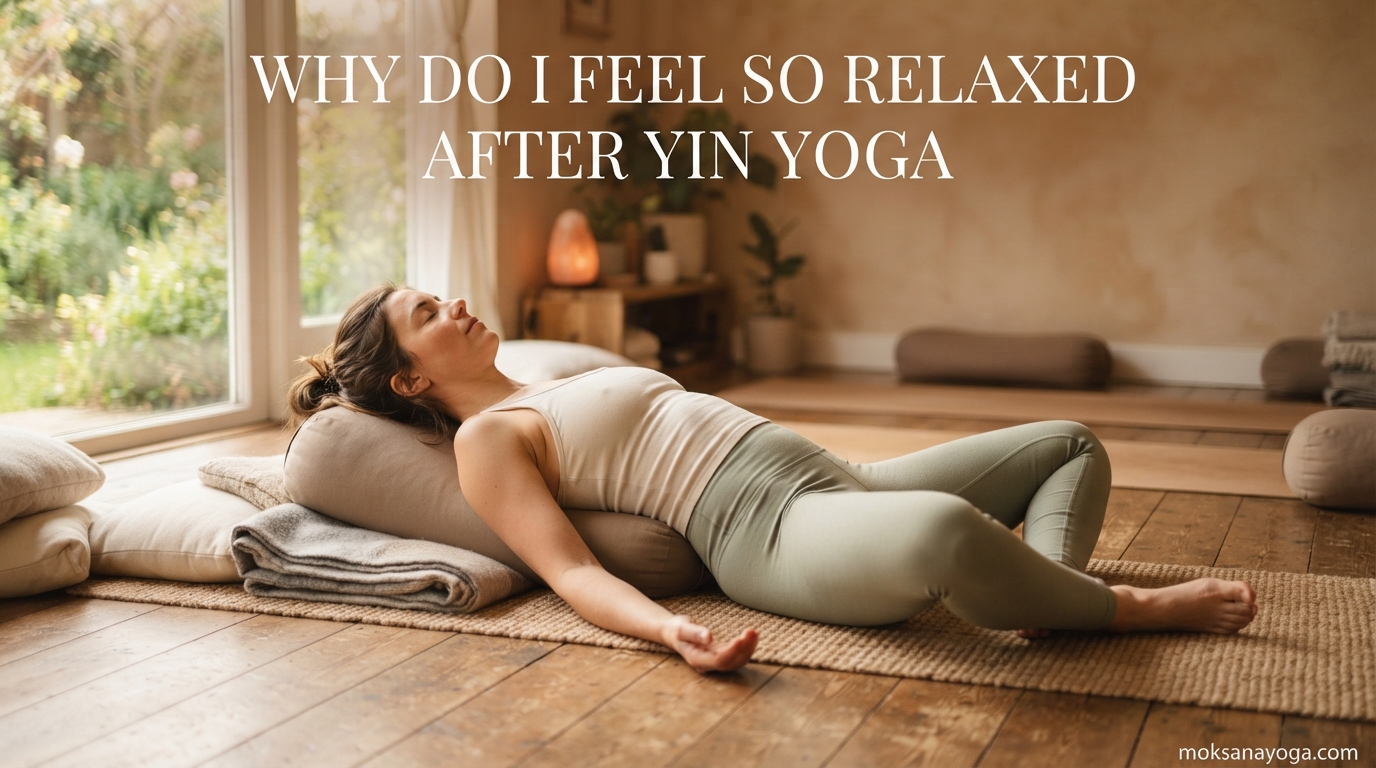
You feel so relaxed after yin yoga because the long, passive holds activate your parasympathetic nervous system, release tension stored deep in your fascia, and trigger a biochemical cascade that shifts your entire body into a recovery state. If you have ever walked out of a yin class feeling buzzy, spaced out, or so calm you could barely function, there is a very real physiological reason for it.
In this guide, we break down exactly why yin yoga relaxation feels so profound, what is happening in your nervous system and connective tissue, and why the experience can sometimes feel intense enough to leave you wondering if something is wrong.
Table of Contents
The Parasympathetic Nervous System Shift
The main reason you feel so deeply relaxed after yin yoga is that the practice flips your nervous system from sympathetic dominance into parasympathetic activation. In simple terms, your body stops running on adrenaline and cortisol and switches into rest and digest mode.
Most of us spend our days in a low-grade fight-or-flight state. Deadlines, screens, traffic, and background stress keep the sympathetic nervous system humming along. Yin yoga interrupts that pattern by asking you to hold still, breathe slowly, and surrender to gravity for three to five minutes at a time.
Those long holds stimulate the vagus nerve, the longest cranial nerve in your body and the main highway of the parasympathetic system. When the vagus nerve fires, it slows your heart rate, lowers your blood pressure, and signals to your brain that you are safe. Researchers call the strength of this signal vagal tone, and yin yoga is one of the most effective ways to build it.
As cortisol drops and the relaxation response takes over, your body shifts resources toward digestion, tissue repair, and immune function. That is why you might notice a deeply calm, almost heavy sensation after class. Your body is finally doing the maintenance work it has been postponing.
This parasympathetic rebound can feel extreme if you have been running on stress for weeks or months. The bigger the contrast between your normal state and your post-class state, the more dramatic the relaxation will feel.
Fascia, Connective Tissue, and the Gel-Sol Phase
The second piece of the puzzle is fascia, the web of connective tissue that wraps around every muscle, organ, and bone in your body. Fascia is rich in collagen and hyaluronic acid, and it behaves differently from muscle.
Muscle responds to active movement and short stretches. Fascia responds to sustained, gentle pressure held over time. That is exactly what yin yoga provides through its signature long holds.
When you hold a yin pose for three to five minutes, the fascia in the targeted area undergoes something called a gel-sol phase change. The tissue slowly transitions from a denser, more gel-like state to a more fluid, hydrated state. This is why your body can feel remarkably open and loose after a yin session even though you barely moved.
The three to five minute window is not arbitrary. Research into connective tissue mechanics suggests this is roughly how long it takes for sustained stress to reach the deeper layers of fascia and produce measurable change. Shorter holds work the muscle. Longer holds reach the tissue beneath it.
Here is where it gets interesting for relaxation. Fascia is loaded with sensory nerve endings, including receptors that communicate directly with your autonomic nervous system. When fascia releases, those receptors flood your brain with signals that reinforce the parasympathetic response. The tissue release and the nervous system shift feed each other in a loop.
This is also why the relaxation from yin can feel different from the relaxation you get after a vigorous vinyasa class. You are not just tired from exertion. You have physically altered the state of your connective tissue, and your nervous system is responding to that change.
The Rebound Effect: Why Stillness Feels So Good
If you have taken a yin class, you have probably noticed the rebound, that moment of stillness between poses where your teacher asks you to just lie down and feel. The rebound effect is one of the most distinctive and powerful parts of the practice.
After several minutes of deep, sustained stretch, your body gets a sudden release of compression and tension. Blood and fluids rush back into tissues that were temporarily restricted. Nerve pathways that were under pressure suddenly open up.
Practitioners often describe the rebound as a wave of sensation that can range from peaceful relaxation to mild euphoria. Some people feel tingling, warmth, or a floating sensation. Others feel a deep, heavy calm that borders on sleepiness.
The rebound functions like a mini savasana after every pose, and the cumulative effect is powerful. By the end of a full yin sequence, your nervous system has cycled through this release process many times, each one deepening the parasympathetic response.
Think of it like a pressure valve releasing. Each pose builds gentle, sustained pressure in the tissue, and each rebound releases it. By your final savasana, your body has let go of layer after layer of stored tension.
Why Yin Yoga Makes You Feel Tired (and Whether That’s Normal)
One of the most common questions people ask is, why does yin yoga make me so tired? The fatigue is real, and it has a biological explanation.
When your body finally drops into a deep parasympathetic state after weeks or months of stress, it does not just feel relaxed. It feels exhausted. Your system has been running on sympathetic energy, and when that fuel source gets turned off, you crash. This is sometimes called a yin hangover.
There is also a physical component. The long holds in yin yoga create micro-stress in connective tissue, and the body uses energy to remodel and repair that tissue after class. Tissue remodeling is metabolically demanding even though you are not sweating or building heart rate.
Feeling tired after yin is usually healthy. It means your body felt safe enough to enter a genuine recovery state. However, if the fatigue is extreme or accompanied by grogginess that lasts all day, low blood sugar or dehydration may be playing a role.
Many practitioners underestimate how much a 60-minute yin class can deplete their energy reserves. Eating a light snack beforehand and hydrating with minerals afterward can make a big difference in how you feel for the rest of the day.
Emotional Release and the Science of Letting Go
If you have ever found yourself unexpectedly crying in pigeon pose or feeling waves of sadness after a yin class, you are not alone. Emotional release is one of the most frequently reported experiences in the practice, and it is not just in your head.
Fascia and connective tissue are now understood to store more than just physical tension. They hold patterns of holding that often have emotional components. When long holds release that tissue, the emotions associated with the holding pattern can surface.
At the same time, yin yoga triggers the release of endorphins and endocannabinoids, your body’s natural feel-good chemicals. These compounds can produce a spaced-out, giddy, or buzzy sensation, especially in people who carry high baseline levels of anxiety and stress.
The practice also builds interoception, your ability to feel what is happening inside your body. For people who are used to ignoring their internal signals, suddenly being aware of them can feel overwhelming at first. Over time, this somatic processing becomes one of the most valuable benefits of the practice.
It is also normal to experience a low mood dip the day after an intense yin session. As endorphin and endocannabinoid levels normalize, you may feel a brief emotional letdown. This is similar to the post-exercise mood dip some runners experience, and it typically passes within a day.
Yin vs Yang Yoga: A Nervous System Comparison
To understand why yin relaxation feels so different, it helps to compare it with more active yang styles of yoga.
Yang practices like vinyasa, ashtanga, and power yoga activate the sympathetic nervous system during the session. Your heart rate rises, your muscles generate heat, and your body produces energy through exertion. The relaxation comes afterward, as a recovery response.
Yin yoga works the opposite way. It activates the parasympathetic system during the practice itself. By the time class ends, your nervous system has already been in rest and digest mode for an hour. There is no recovery period needed because the practice was the recovery.
This is why yin can feel more deeply relaxing than even the most intense workout. You are not earning relaxation through effort. You are creating the conditions for it directly, through stillness and surrender.
Both approaches have value. Yang yoga builds strength, cardiovascular fitness, and heat-based flexibility. Yin yoga builds joint mobility, fascial health, and deep nervous system regulation. A balanced practice includes both.
What to Do When the Relaxation Feels Too Intense
Sometimes the relaxation after yin yoga does not feel pleasant. It feels disorienting, dysfunctional, or just too much. Here is how to handle it.
First, check your blood sugar. Practicing yin on an empty stomach can amplify the parasympathetic drop and leave you feeling lightheaded or foggy. A small snack with protein and complex carbohydrates 30 to 60 minutes before class can stabilize your energy.
Hydrate with electrolytes, not just water. The tissue remodeling that happens after yin requires minerals like magnesium, sodium, and potassium. Plain water alone may not be enough, especially after a long session.
Ground yourself after class before driving or returning to work. Spend five to ten minutes walking slowly, drinking warm tea, or sitting quietly. Rushing straight from a deep parasympathetic state into a high-demand task can feel jarring and unpleasant.
Give yourself an integration window. The effects of yin yoga continue for hours after class as your nervous system and tissues settle. Plan for a gentler afternoon or evening if possible, especially after your first few sessions.
If you consistently feel worse after yin rather than better, talk to your teacher about modifying your practice. Less time in poses, more props, or a different sequence may be needed. Yin yoga should leave you feeling restored, not depleted.
FAQs
How do you feel after yin yoga?
Most people feel deeply relaxed, calm, and physically open after yin yoga. Common sensations include heaviness in the body, mental clarity, mild sleepiness, and sometimes emotional lightness. Some practitioners also report feeling spaced out or buzzy due to endorphin and endocannabinoid release.
Why do I feel so relaxed after yoga?
You feel so relaxed after yoga because the combination of slow breathing, sustained postures, and mindful attention activates your parasympathetic nervous system. This lowers cortisol, slows your heart rate through vagus nerve stimulation, and triggers the body’s natural relaxation response.
Does yin yoga calm the nervous system?
Yes, yin yoga is one of the most effective yoga styles for calming the nervous system. The long passive holds stimulate the vagus nerve and shift the body from sympathetic fight-or-flight mode into parasympathetic rest and digest mode, reducing stress hormones and promoting deep recovery.
How long does it take to see results from yin yoga?
Most practitioners notice improved flexibility and a calmer nervous system within two to three weeks of consistent practice, defined as two to four sessions per week. Deeper changes in fascia and joint mobility typically become noticeable after six to eight weeks of regular practice.
Is it normal to feel emotional after yin yoga?
Yes, feeling emotional after yin yoga is completely normal. The long holds release tension stored in fascia and connective tissue, and that tension often carries emotional patterns. Crying, sudden sadness, or unexpected joy during or after class are common experiences.
Why do I feel spaced out after yin yoga?
Feeling spaced out after yin yoga is caused by a combination of parasympathetic activation, endorphin and endocannabinoid release, and the sudden increase in interoceptive awareness. Eating a light snack, hydrating with minerals, and giving yourself time to transition can help reduce the foggy sensation.
Final Thoughts
Understanding why do I feel so relaxed after yin yoga comes down to three interconnected systems working together: the parasympathetic nervous system shifting your body into recovery, the fascia and connective tissue releasing stored tension through the gel-sol phase, and the rebound effect amplifying the release between every pose.
When you add in endorphins, endocannabinoids, and the deep interoception that yin cultivates, it is no wonder the experience can feel so powerful. The relaxation is not just in your mind. It is a full-body physiological event.
If the intensity ever feels overwhelming, remember that hydration, blood sugar, and integration time are your best tools. Honor what your body needs after each session, and the practice will continue to deepen over time.