
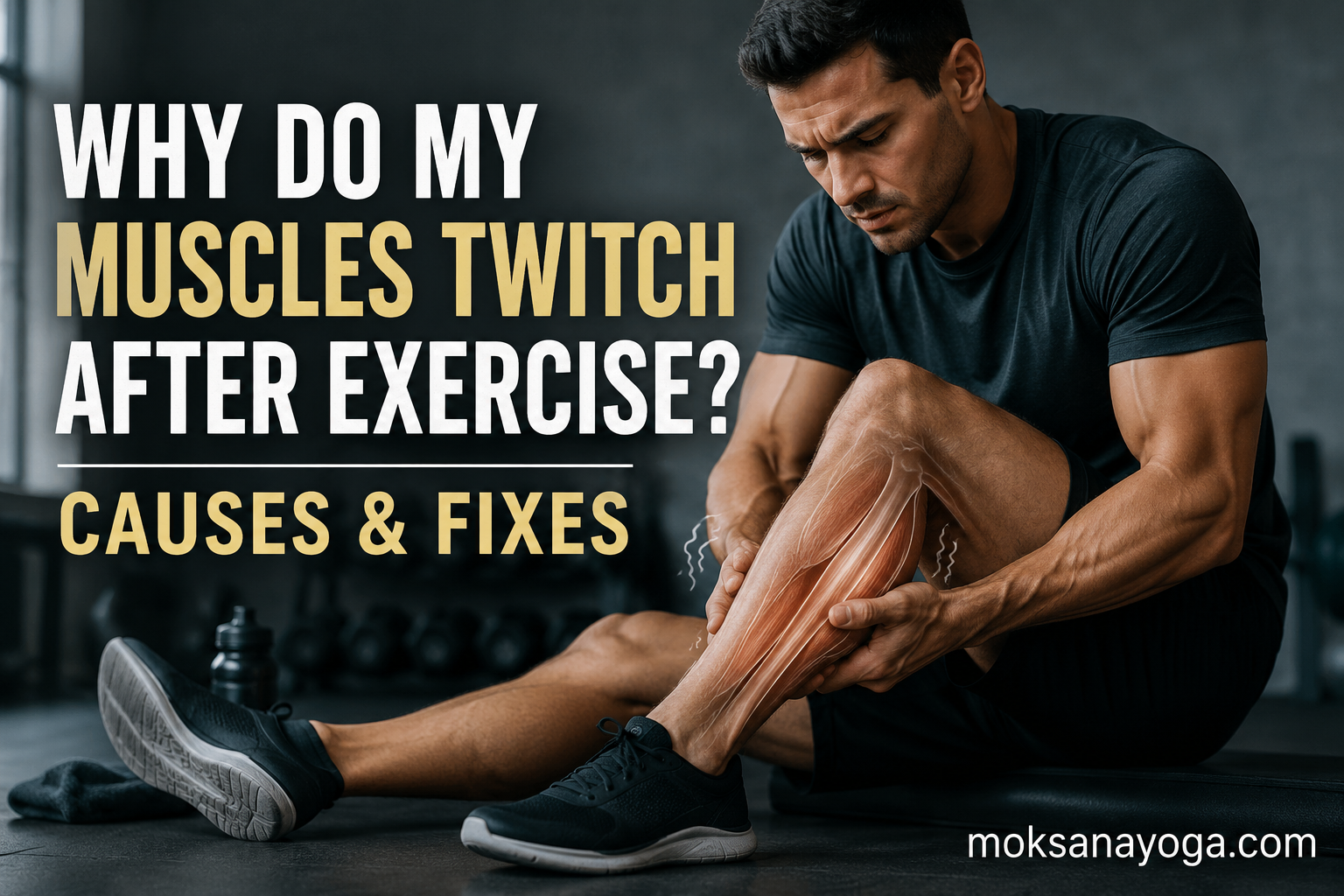
You just finished a solid workout. Maybe it was a long walk, an intense leg session, or a deep yoga flow. You sit down, feel good, and then you notice it. A tiny, involuntary flutter under your skin. Your quad is pulsing. Or maybe your calf keeps firing on its own. You wonder: is this normal, or should I be worried?
If you are asking yourself why do my muscles twitch after exercise, you are not alone. This is one of the most common questions in fitness forums, running groups, and yoga studios. Our team has seen it across every type of athlete, from first-time walkers to seasoned marathoners.
The medical term for these little contractions is fasciculations. They are rapid, involuntary muscle twitches that happen when a single motor unit, which is a nerve and the muscle fibers it controls, fires on its own without you telling it to. Most of the time, they are completely harmless. They are your body’s way of resetting after physical stress.
In this guide, we break down exactly what causes post-workout muscle twitching, how it differs from cramps and spasms, and what you can do about it. We also address the fears that send people down late-night internet rabbit holes, including concerns about ALS and other neurological conditions.
By the end, you will know whether your twitching is routine, what to do in the moment, and when it is time to call a doctor.
Table of Contents
Why Do My Muscles Twitch After Exercise? The Quick Answer
Muscles twitch after exercise primarily because of fatigue, dehydration, electrolyte depletion, caffeine, stress, or overtraining. When you push your body, the motor units that control your muscles become tired and start firing erratically as they try to recover and restore normal blood flow.
Here are the six most common causes:
- Muscle fatigue: Overworked motor units misfire as they recover, causing small involuntary contractions in the muscles you just trained.
- Dehydration: Fluid loss during exercise reduces blood volume and disrupts nerve signaling, making muscles more likely to twitch.
- Electrolyte imbalance: Sweating depletes sodium, potassium, calcium, and magnesium, all of which are minerals your nerves need to fire correctly.
- Caffeine and stimulants: Pre-workout supplements and coffee overstimulate the nervous system, lowering the threshold for muscle firing.
- Overtraining or new exercises: Unfamiliar movements or excessive volume fatigue muscles beyond their current capacity, triggering fasciculations.
- Stress and anxiety: Elevated cortisol and adrenaline keep your nervous system in overdrive, making muscle fibers more excitable even at rest.
In most cases, post-exercise twitching resolves on its own within a few hours. It is your body recalibrating, not a sign that something is wrong. Let us look at each cause in more detail so you can figure out which one applies to you.
What Are Muscle Twitches? Understanding Fasciculations
To understand why your muscles twitch after a workout, it helps to know what is actually happening beneath your skin. Every muscle in your body is controlled by the nervous system through structures called motor units.
A motor unit is a single nerve fiber plus all the muscle fibers it controls. When your brain wants a muscle to contract, it sends an electrical impulse down the nerve to those fibers. During exercise, this system works hard. Motor units fire in coordinated patterns to produce movement, and after sustained effort, they get tired.
When fatigue sets in, the signaling between nerve and muscle becomes less precise. Instead of clean, coordinated contractions, individual motor units start firing on their own. You see this as a visible twitch or feel it as a fluttering sensation under the skin. The muscle is essentially trying to reboot.
This is also why twitches tend to happen when you sit still after exercise. During activity, the constant movement masks the small misfires. Once you stop, the background chatter from overexcited nerves becomes noticeable.
According to MedlinePlus, muscle twitching is caused by minor muscle contractions in the area, or uncontrollable twitching of a muscle group served by a single motor nerve fiber. When the cause is exercise, this is classified as benign fasciculation, which means the twitching is harmless and self-limiting.
Twitches vs. Spasms vs. Cramps vs. Shaking: What Is the Difference?
One of the most confusing things about muscle issues after exercise is the vocabulary. People use twitch, spasm, cramp, and shake interchangeably, but they are different phenomena with different causes. Understanding which one you are experiencing helps you respond correctly.
Here is a breakdown of how they compare:
| Type | What It Feels Like | Duration | Common Trigger |
|---|---|---|---|
| Twitch (Fasciculation) | Small, visible flutter under the skin, usually painless | Seconds to hours | Fatigue, electrolyte loss, caffeine |
| Spasm | Sudden, involuntary contraction that may cause mild discomfort | Seconds to minutes | Muscle fatigue, dehydration, overstretching |
| Cramp | Intense, painful contraction that locks the muscle up | Seconds to several minutes | Severe dehydration, electrolyte depletion, heat |
| Shaking / Tremor | Rhythmic trembling of a whole muscle or limb | During or after exercise, minutes to hours | Muscle failure, low blood sugar, nervous system fatigue |
The key difference comes down to intensity and pain. Twitches are painless and visible. Spasms are stronger but usually brief. Cramps are painful and forceful. Shaking is a broader tremor that often affects an entire muscle group rather than a small section of fibers.
If what you are experiencing is a painless flutter that comes and goes, you are dealing with fasciculations, and the rest of this guide applies to you.
Primary Causes of Muscle Twitching After Exercise
Now let us dig into each cause in detail. Most people find that one or two of these factors are the main drivers behind their post-workout twitching.
1. Muscle Fatigue and Neuromuscular Exhaustion
This is the most common cause of all. When you exercise, you are asking your motor units to fire repeatedly for an extended period. As they fatigue, the communication between your nerves and muscle fibers becomes less coordinated.
The result is erratic firing, where individual motor units contract on their own. This is why you often notice twitching in the specific muscle you just worked. Did you do squats? Your quads may twitch. Did you do a long walk? Your calves may flutter. The muscle that did the most work is the one trying hardest to reboot.
This type of twitching typically appears within minutes of finishing your workout and can last anywhere from a few minutes to several hours. It is a sign that your muscles are recovering, not that they are damaged.
2. Dehydration
During exercise, you lose fluid through sweat and breathing. Even mild dehydration reduces blood volume, which means less oxygen and fewer nutrients reach your muscles. It also concentrates electrolytes in your blood, disrupting the delicate balance your nerves need.
A simple way to check your hydration status is the urine color test. Pale yellow means you are well hydrated. Dark yellow or amber means you need fluids. If your twitching started after a sweaty session and you have not rehydrated, this is likely a contributing factor.
3. Electrolyte Imbalance
Electrolytes are minerals that carry electrical charges in your body. The four most important ones for muscle function are sodium, potassium, calcium, and magnesium. Each plays a specific role in how nerves signal muscles to contract and relax.
When you sweat, you lose these minerals. If you are only replacing fluid with plain water, you may be diluting what remains, making the imbalance worse. This is why athletes often turn to electrolyte drinks after intense sessions.
If you are wondering what vitamin or mineral you might be lacking, magnesium deficiency is one of the most common culprits behind persistent muscle twitching. Potassium deficiency is another, especially for runners and walkers who sweat heavily.
4. Caffeine and Stimulant Intake
Pre-workout supplements, energy drinks, and coffee all contain caffeine, which is a central nervous system stimulant. Caffeine lowers the threshold at which your motor units fire, meaning your muscles become more excitable and more likely to twitch.
The FDA recommends a maximum of 400 milligrams of caffeine per day for most adults. That is roughly four cups of brewed coffee. If your pre-workout plus your morning coffee puts you near or over that limit, and you are also exercising hard, the combination can trigger noticeable fasciculations.
Many people on fitness forums describe a cycle: poor sleep leads to more caffeine, which leads to more twitching, which disrupts sleep again. Breaking that loop is often the single most effective change you can make.
5. Overtraining and New Exercises
When you introduce a new exercise or dramatically increase your training volume, your muscles face a stimulus they are not prepared for. The motor units are pushed beyond their current conditioning, and they respond with fasciculations as they adapt.
This is especially common in beginners who are starting a new fitness routine. It also happens to experienced athletes who switch disciplines, like a runner who starts weightlifting or a yogi who takes up running. The unfamiliar movement patterns fatigue different motor units, and twitching follows.
If the twitching coincides with a recent change in your routine, this is the most likely explanation. Your body will adapt within a few weeks as long as you allow adequate recovery.
6. Stress and Anxiety
Emotional stress keeps your sympathetic nervous system, which is your fight-or-flight response, in an activated state. This elevates adrenaline and cortisol levels, which make your muscles more excitable and more prone to fasciculations.
Many people notice that their twitching gets worse during high-stress periods, even if their exercise routine has not changed. The combination of physical exertion and emotional stress creates a perfect storm for overactive motor units.
Here is a summary table to help you match your symptoms to the most likely cause:
| Cause | Key Symptom | Quick Fix |
|---|---|---|
| Muscle fatigue | Twitching in the muscle you just trained | Rest, gentle stretching, wait it out |
| Dehydration | Twitching plus thirst or dark urine | Drink water steadily over 1 to 2 hours |
| Electrolyte imbalance | Twitching plus muscle weakness or tingling | Electrolyte drink or magnesium-rich food |
| Caffeine | Twitching plus jitteriness or racing heart | Reduce caffeine, stay below 400mg per day |
| Overtraining | Twitching plus persistent soreness or poor performance | Take extra rest days, reduce training volume |
| Stress and anxiety | Twitching all over, not limited to exercised muscles | Breathwork, meditation, adequate sleep |
Less Common Causes: Medications, Sleep, and Underlying Conditions
While the six causes above account for the vast majority of post-exercise twitching, there are other factors worth knowing about. These are less common but important, especially if your twitching is persistent or accompanied by other symptoms.
Medication-Induced Twitching
Certain medications can trigger muscle twitching as a side effect. Diuretics, which are commonly prescribed for blood pressure, increase fluid loss and can deplete electrolytes. Corticosteroids used for inflammation can also cause fasciculations. Estrogen-based medications and some asthma inhalers have been reported to contribute as well.
If you started a new medication around the same time your twitching began, talk to your doctor or pharmacist. Do not stop taking prescribed medication without medical guidance.
Sleep Deprivation
Sleep is when your nervous system recovers and resets. Chronic sleep deprivation keeps your motor units in a heightened state of excitability, making fasciculations more likely even without exercise. When you combine poor sleep with a hard workout, twitching is almost expected.
Forum users frequently describe a pattern where a bad night of sleep is followed by a workout, which is followed by hours of muscle twitching. Prioritizing sleep is often the fix that people overlook.
POTS and Chronic Conditions
In Reddit communities like r/POTS, users frequently discuss muscle twitching after exercise as a symptom of postural orthostatic tachycardia syndrome (POTS). POTS affects the autonomic nervous system, and exercise intolerance is one of its hallmarks.
If you experience twitching alongside dizziness, rapid heart rate upon standing, or extreme fatigue after mild exercise, it may be worth discussing POTS with your doctor. This connection is rarely mentioned in mainstream fitness content, but it affects a significant number of people in chronic illness communities.
What About ALS? Addressing the Anxiety
This is the question that keeps people up at night. If you have searched “muscle twitching after exercise ALS,” you are not alone. It is one of the most common related searches, and the anxiety it causes is real.
Here is the reassurance: benign fasciculations triggered by exercise are not the same as the twitching seen in ALS. ALS-related twitching is typically accompanied by muscle weakness, muscle wasting, and loss of function. It does not come and go with exercise. It persists and progresses regardless of activity level.
Benign fasciculations, on the other hand, are triggered by identifiable factors like fatigue, caffeine, or stress. They come and go. They do not cause weakness or loss of muscle mass. If your twitching only appears after workouts and goes away with rest and hydration, it is almost certainly benign.
That said, if twitching is new, persistent, widespread, or accompanied by weakness, numbness, or changes in muscle size, see a neurologist. Peace of mind is worth the visit.
Why Do My Muscles Twitch After Yoga?
Since we are a yoga and wellness site, this question deserves its own section. No major fitness or health publication addresses yoga-specific muscle twitching, and our team has heard this question from yoga practitioners more than almost any other.
Yoga involves something that many other forms of exercise do not: sustained isometric contractions. When you hold a pose like Warrior II, Chair Pose, or Plank, your muscles are contracting without changing length. This type of contraction is incredibly demanding on motor units, and it fatigues them in a different way than dynamic movement.
The result is that yoga practitioners frequently experience twitching in specific areas:
- Neck and shoulders: Holding the head in specific positions during poses like Downward Dog or shoulder stands fatigues the small stabilizer muscles in the neck and upper trapezius.
- Quads and thighs: Chair Pose and Warrior sequences demand sustained quad contraction, which is why thigh twitching after yoga is extremely common.
- Calves and feet: Balance poses like Tree Pose or Half Moon fatigue the small muscles of the lower leg and foot.
- Core and abdomen: Boat Pose and plank variations can trigger abdominal twitching during or after practice.
Another factor unique to yoga is breath-holding. Many practitioners unconsciously hold their breath during challenging poses, which reduces oxygen delivery to working muscles and accelerates neuromuscular fatigue. If you notice twitching during yoga, check your breath first.
The good news is that yoga-specific twitching responds well to the same solutions we cover below. Hydrate, replenish electrolytes, and give the fatigued muscles time to recover before your next session.
Twitching Timeline: Immediately After vs. Next Day vs. 2 Days Later
One question that no competitor article answers well is about timing. When should twitching start, and when should it stop? Understanding the timeline helps you figure out the cause and know when to pay attention.
Immediately After Exercise (0 to 2 Hours)
Twitching that starts right after your workout is almost always related to acute neuromuscular fatigue. Your motor units are still in recovery mode, and the background firing is visible. This is the most common and least concerning type of twitching. It typically resolves within an hour or two as your nervous system settles.
Later the Same Day (2 to 12 Hours)
If twitching starts hours after your workout, the cause is more likely related to delayed fluid and electrolyte shifts. You have been sweating, drinking water, and eating, and your body is redistributing minerals. Caffeine consumed earlier in the day may also peak during this window.
The Next Day (12 to 24 Hours)
Twitching the morning after a workout is often connected to delayed onset muscle soreness (DOMS). The micro-damage from exercise triggers inflammation, which irritates nerve endings and can cause fasciculations. This type of twitching usually accompanies soreness in the same muscle.
Two Days After (24 to 48 Hours)
If you are still twitching two days after exercise, it may be a sign that your recovery has been incomplete. This is common when people train hard without adequate rest, nutrition, or sleep. It can also indicate that caffeine intake or stress is keeping your nervous system on edge.
As a general rule, twitching that lasts more than 48 hours after a workout warrants a closer look at your recovery practices. If it persists for weeks despite rest and hydration, consult a healthcare provider.
How to Stop Muscle Twitching After Exercise
When you are sitting on the couch and your quad will not stop fluttering, you want it to stop. Here are the most effective things you can do in the moment.
Step 1: Hydrate Properly
Drink water steadily over the first hour after your workout rather than chugging it all at once. If you sweated heavily, choose a beverage that contains electrolytes. Coconut water, electrolyte tablets, or a simple mix of water with a pinch of salt and a squeeze of lemon all work well.
Avoid drinking massive amounts of plain water without electrolytes, as this can actually worsen the imbalance.
Step 2: Replenish Electrolytes
Eat a post-workout snack that includes potassium, magnesium, and sodium. Good options include a banana with peanut butter, a handful of almonds and pumpkin seeds, or a smoothie with spinach and Greek yogurt. If you suspect magnesium deficiency, foods like dark chocolate, leafy greens, and avocados are excellent sources.
Step 3: Stretch and Foam Roll
Gentle static stretching helps reset overactive motor units by lengthening the muscle and calming the nervous system. Focus on the muscle that is twitching. Hold each stretch for 30 to 60 seconds without bouncing.
Foam rolling is also effective. It applies pressure to the muscle belly, which can interrupt the erratic nerve signaling. Roll slowly over the twitching area for 1 to 2 minutes.
Step 4: Apply Heat
A warm bath or heating pad increases blood flow to the area, which helps deliver nutrients and clear metabolic waste. This is particularly helpful for twitching that persists into the evening or the next day.
Step 5: Cut the Caffeine
If you have been relying on pre-workout supplements or multiple cups of coffee, try scaling back. Switch to half-caf or green tea for a few days and see if the twitching decreases. This is one of the most impactful changes for people whose twitching is driven by stimulants.
Step 6: Rest and Sleep
Sometimes the best thing you can do is nothing. Give the affected muscle a day off from intense exercise. Prioritize a full night of sleep, because that is when your nervous system does its repair work.
How to Prevent Post-Workout Muscle Twitching
Prevention is always better than treatment. If you are tired of dealing with twitching after every workout, here are the habits that make the biggest difference.
Warm Up and Cool Down Properly
A 5 to 10 minute dynamic warm-up prepares your motor units for work. A proper cooldown with gentle movement and static stretching helps your nervous system transition out of exercise mode gradually, reducing the likelihood of erratic firing.
Progress Gradually
Follow the principle of progressive overload. Increase your training volume or intensity by no more than 10 percent per week. This gives your motor units time to adapt without being overwhelmed, which is especially important for beginners and anyone trying a new type of exercise.
Time Your Nutrition
Eat a balanced meal or snack within 90 minutes of finishing your workout. Include carbohydrates to replenish glycogen, protein for muscle repair, and electrolyte-rich foods to replace what you lost through sweat.
Schedule Regular Rest Days
Rest days are when adaptation happens. Training the same muscle group every day without recovery is a recipe for persistent fasciculations. Aim for at least one full rest day per week, and consider active recovery activities like gentle walking or restorative yoga on your lighter days.
Monitor Caffeine Intake
Keep your total daily caffeine below 400 milligrams, and avoid consuming caffeine within 6 hours of bedtime. If you use pre-workout supplements, check the label for caffeine content, as some contain 200 to 300 milligrams per serving.
When to See a Doctor About Muscle Twitching
Post-exercise muscle twitching is benign in the overwhelming majority of cases. But there are times when medical evaluation is warranted. Knowing the warning signs helps you make an informed decision.
Red Flags That Warrant a Doctor Visit
See a healthcare provider if you experience any of the following:
- Muscle weakness: You notice actual loss of strength, not just fatigue. For example, you cannot grip objects or your legs give out unexpectedly.
- Muscle wasting: A muscle visibly shrinks or looks smaller than its counterpart on the other side of your body.
- Persistent twitching: Fasciculations continue for weeks without stopping, regardless of rest, hydration, or changes to your routine.
- Widespread twitching: Twitching occurs all over your body, not just in muscles you have been exercising.
- Numbness or tingling: You experience loss of sensation, pins and needles, or other sensory changes alongside twitching.
- Difficulty swallowing or breathing: Any problem with swallowing, breathing, or speaking requires immediate medical attention.
ALS vs. Benign Fasciculation Syndrome
Many people who experience persistent twitching worry about ALS (amyotrophic lateral sclerosis). Here is what medical professionals want you to know.
ALS is a progressive neurodegenerative disease. The twitching in ALS, called fibrillation, happens alongside measurable muscle weakness and atrophy. It does not appear only after exercise and resolve with rest. It is constant, progressive, and accompanied by functional decline.
Benign fasciculation syndrome (BFS) is exactly what it sounds like. It involves persistent twitching without weakness, without wasting, and without progression. BFS is common, especially in athletes and active individuals. It is annoying but harmless.
A neurologist can perform an electromyography (EMG) test to distinguish between the two with certainty. If your twitching is causing significant anxiety, that test can provide peace of mind that is well worth the appointment.
Could It Be Multiple Sclerosis?
Multiple sclerosis (MS) is another condition people worry about. MS can cause muscle twitching, but it also causes a range of other symptoms including vision changes, numbness, balance problems, and extreme fatigue. Twitching alone, especially after exercise, is not a typical first sign of MS.
If you have multiple symptoms beyond twitching, discuss them with your doctor. They can determine whether further testing is appropriate.
FAQs
Is it good if your muscles twitch after a workout?
Yes, in most cases muscle twitching after a workout is a sign that your muscles are working hard and recovering. The fasciculations indicate that your motor units are fatigued and resetting themselves. As long as the twitching is painless, goes away within a few hours, and occurs in the muscles you exercised, it is a normal and expected response to training stress.
Does muscle twitching mean muscle loss?
No, muscle twitching does not mean you are losing muscle. In fact, it often means the opposite. The muscle you trained is recovering and adapting to the stimulus you provided. Fasciculations are a sign of neuromuscular fatigue, not atrophy. Actual muscle loss involves visible shrinking and measurable strength decline, not painless fluttering under the skin.
What vitamin am I lacking if my muscles are twitching?
Magnesium deficiency is the most common nutritional cause of muscle twitching. Potassium, calcium, and sodium imbalances can also contribute, especially after heavy sweating. Vitamin D and B vitamin deficiencies have been linked to muscle irritability as well. If twitching persists despite good hydration and nutrition, ask your doctor about a blood panel to check your levels.
Is muscle twitching a good thing?
Muscle twitching after exercise is not necessarily good or bad. It is simply a signal from your body that your motor units have been pushed and are recovering. Think of it as feedback rather than a verdict. If twitching happens occasionally after hard workouts and resolves quickly, it is completely normal. If it happens constantly or is accompanied by weakness, it warrants medical attention.
Conclusion
Understanding why do my muscles twitch after exercise comes down to recognizing that your body is talking to you. Those little fasciculations are your motor units recovering from exertion, and in the vast majority of cases, they are completely harmless.
The most common triggers are muscle fatigue, dehydration, electrolyte imbalance, caffeine, overtraining, and stress. By identifying which of these applies to your situation, you can take targeted action: hydrate, replenish minerals, reduce stimulants, prioritize sleep, and give your body adequate rest between sessions.
For yoga practitioners especially, the sustained isometric nature of many poses makes twitching in the neck, shoulders, and thighs a normal part of the practice. Listen to your breath, honor your recovery, and trust that your body knows how to recalibrate.
If twitching is ever accompanied by weakness, numbness, muscle wasting, or persistent widespread symptoms, see a doctor. Otherwise, hydrate well, eat thoughtfully, and keep moving.