
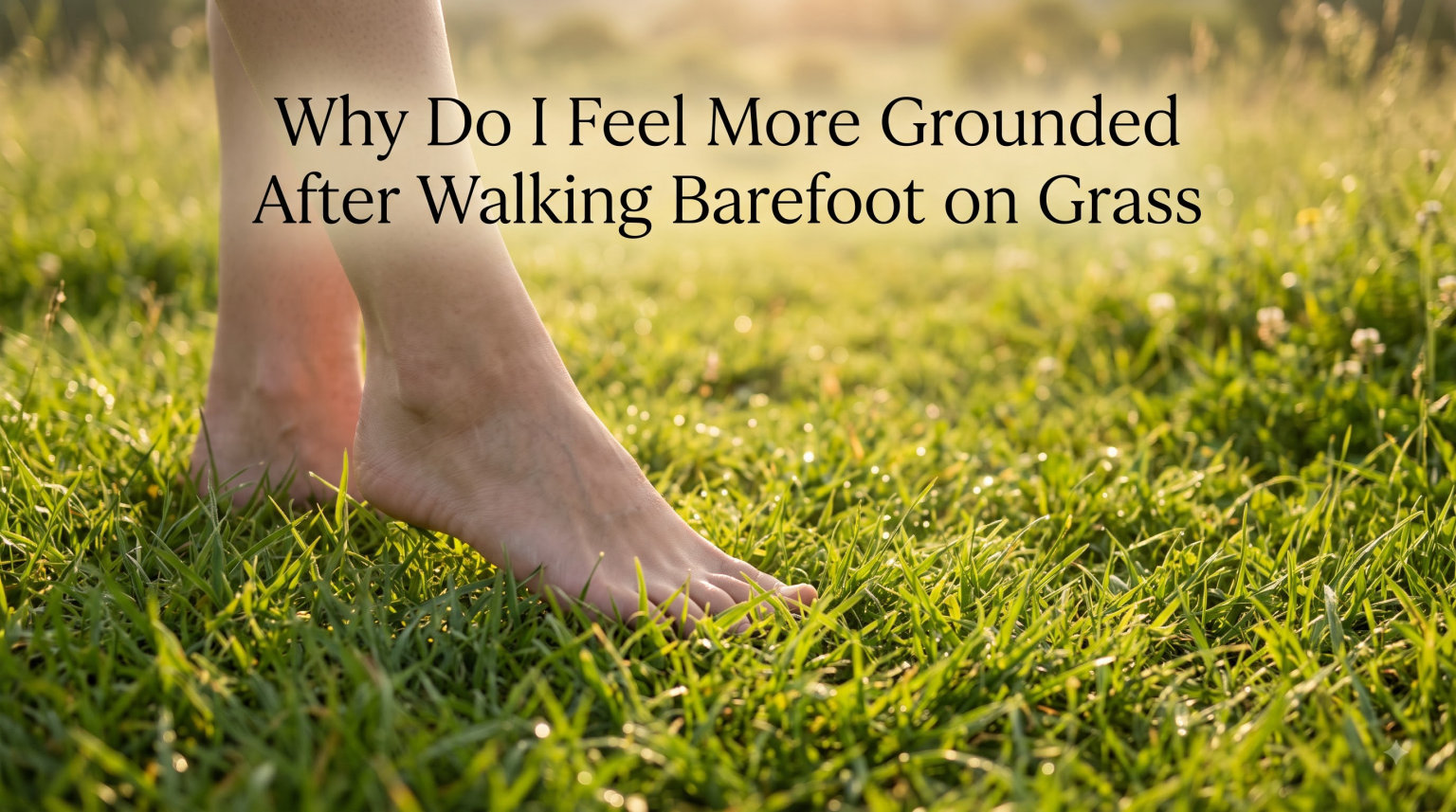
The first time I kicked off my shoes and stepped onto the dewy grass at dawn, I expected nothing more than a moment of quiet. Within minutes, my shoulders dropped, my breathing slowed, and a familiar knot of anxiety in my chest loosened. I felt, for lack of a better word, grounded. That single experience sent me down a rabbit hole of research into what actually happens in the body when we walk barefoot on the earth.
If you have ever wondered why do I feel more grounded after walking barefoot on grass, you are not imagining it. The sensation has biological, neurological, and even psychological explanations behind it. Below I will walk you through the science, the benefits, and the simple ways to start a grounding barefoot on grass practice of your own.
At Moksana Yoga, we view grounding as a natural companion to mindful movement and breathwork. The practice fits beautifully into a wellness routine that already includes yoga, meditation, and time spent outdoors.
Table of Contents
What Is Grounding (And What Does It Mean to Feel Grounded)?
Grounding, also called earthing, is the practice of placing your bare skin in direct contact with the surface of the earth. Grass, soil, sand, and even untreated concrete can all conduct the earth’s subtle electrical charge into your body. When people say they feel “grounded,” they usually mean a sense of calm stability, presence, and connection to their physical body and surroundings.
The terms grounding and earthing are often used interchangeably. Some practitioners reserve “earthing” for direct skin-to-earth contact and “grounding” for the broader practice that can include grounding mats, sheets, or patches indoors. For the purposes of this article, we treat them as the same idea: reconnecting your body electrically with the earth.
Think of it this way. For nearly all of human history, we walked, slept, and sat in direct contact with the ground. Our ancestors hunted, farmed, and gathered barefoot or in thin leather soles. Modern rubber-soled shoes, invented in the late 1800s, essentially insulated us from the earth’s electrical field. Grounding is simply a return to that ancient connection.
Feeling grounded, then, is not just a metaphor. It describes a measurable shift in your nervous system, your stress hormones, and even your blood flow. The next section breaks down exactly what happens in your body when you walk barefoot on grass.
The Science: Why Do I Feel More Grounded After Walking Barefoot on Grass?
The grounded feeling you experience after walking barefoot on grass comes down to three intertwined mechanisms: electron transfer, autonomic nervous system regulation, and the sensory richness of nature. Let’s look at each one in plain language.
1. Electron Transfer From the Earth to Your Body
The earth maintains a mild negative electrical charge, meaning it carries an abundance of free electrons. When your skin touches grass, soil, or sand, those electrons flow into your body. This matters because your body constantly produces free radicals, unstable molecules linked to inflammation, aging, and chronic disease. Free electrons from the earth act as natural antioxidants, neutralizing those free radicals.
Researchers sometimes describe this as the body returning to its natural electrical state. In our insulated modern lives, we tend to carry a slight positive charge associated with oxidative stress. Grounding barefoot on grass helps discharge that buildup.
2. A Shift From “Fight or Flight” to “Rest and Digest”
This is the heart of the answer to why do I feel more grounded after walking barefoot on grass. Your autonomic nervous system has two main branches: the sympathetic (fight or flight) and the parasympathetic (rest and digest). Most of us live in low-grade sympathetic overdrive from screens, deadlines, caffeine, and noise.
Studies on grounding suggest it activates the parasympathetic branch, slowing heart rate, deepening breath, and signaling safety to the brain. This is why your shoulders drop, your jaw unclenches, and the mental chatter quiets within minutes of stepping onto grass.
A 2015 study published in the Journal of Inflammation Research found that grounding after contact with the earth reduced blood viscosity and improved heart rate variability, a key marker of autonomic balance. Higher heart rate variability generally means your body can adapt to stress more flexibly.
3. The Sensory and Psychological Effects of Nature
Not every benefit of walking barefoot on grass comes from electrons. The sensory experience alone, the cool blades between your toes, the smell of soil, the sound of wind, triggers what researchers call “soft fascination.” This gentle attention state lets the prefrontal cortex rest, which is why a 20-minute walk in nature can feel as restorative as a nap.
Add to that the mindfulness effect. Walking barefoot forces you to slow down and pay attention. You cannot rush across gravel or scan your phone while your feet feel every twig. That forced presence is, in essence, a walking meditation, and it produces the same grounded feeling you might find on a yoga mat.
What About the Skeptics?
I want to be honest with you here, because the wellness world sometimes oversells grounding. The research on earthing is promising but still emerging. Many studies are small, and some have been funded by companies that sell grounding products. That does not mean the practice is useless, but it does mean we should temper the more dramatic claims.
What we know for sure is this: walking barefoot on grass gets you outside, slows you down, and connects you to your senses. Even setting aside the electron theory, those benefits alone explain much of the grounded feeling people describe.
Health Benefits of Grounding Barefoot on Grass
So what can regular grounding actually do for you? Drawing from the existing research and the real-world experiences shared in communities like Reddit’s barefoot and biohacking forums, here are the most commonly reported benefits of grounding barefoot on grass.
Reduced stress and anxiety. By shifting the nervous system into parasympathetic mode, grounding lowers cortisol levels and helps quiet the mental loop that fuels anxiety. Many users in online wellness communities describe feeling a “reset” after even a few minutes of barefoot time.
Better sleep quality. Several small studies link grounding to normalized cortisol rhythms, meaning your body produces stress hormones in the morning and winds them down at night. People who ground regularly often report falling asleep faster and waking more rested.
Less inflammation and pain. The free electrons absorbed through your skin may help neutralize the free radicals that drive inflammation. Anecdotally, people with arthritis, joint pain, and muscle soreness often notice relief after consistent grounding sessions.
Improved circulation. Grounding has been shown to reduce blood viscosity, or thickness, allowing blood to flow more easily through your capillaries. Better circulation means more oxygen to your muscles and brain.
Enhanced mood and emotional balance. The combination of fresh air, sunlight, sensory input, and nervous system regulation tends to lift mood. Many practitioners say grounding takes the edge off irritability and emotional reactivity.
Stronger feet and better posture. Walking barefoot strengthens the small muscles, tendons, and ligaments in your feet and ankles. Over time this can improve balance, reduce knee and hip pain, and support better alignment up the kinetic chain.
A deeper sense of nature connection. This one is harder to measure but no less real. People who ground regularly describe feeling more “in tune” with the seasons, the weather, and their own body’s rhythms. For yoga practitioners, this connection can deepen the felt sense of stability in poses like Tadasana and Vrksasana (Tree Pose).
How many of these benefits come from electrons versus simply being outside in a mindful way? Honestly, the answer is probably both. The good news is you do not have to choose. Grounding delivers the combined package.
How to Practice Grounding (and How Long to Walk Barefoot)
One of the most common questions I see in forums is, “How long do I actually need to walk barefoot to feel benefits?” The honest answer is that it varies, but here are practical guidelines based on research and user experience.
Duration Guidelines
For a noticeable shift in mood and stress, aim for 10 to 30 minutes of barefoot contact with grass or soil. Some people report feeling calmer in as little as two minutes, while deeper benefits like improved sleep and reduced inflammation tend to come from regular sessions over days or weeks.
Consistency matters more than duration. Ten minutes every morning will likely serve you better than a single two-hour session once a month.
Best Surfaces for Grounding
Not all surfaces conduct the earth’s electrons equally well. In order of conductivity:
Moist grass or soil conducts best, especially after rain or morning dew.
Sand at the beach is highly conductive and a favorite among grounding enthusiasts.
Untreated concrete, brick, or tile can work if laid directly on the earth.
Asphalt, wood, vinyl, and rubber block electron transfer almost entirely.
Simple Ways to Start
Walk barefoot in your backyard for ten minutes after waking up.
Sit on the grass during your lunch break and press your palms into the earth.
Practice a few rounds of slow yoga outdoors, barefoot, on a towel or mat.
End your day with a five-minute grounding meditation before bed.
Precautions and When to Avoid
Grounding is generally safe, but use common sense. Inspect the area for glass, thorns, and sharp debris before walking barefoot. People with diabetes or neuropathy should check their feet carefully, since reduced sensation can hide cuts. Avoid grounding during thunderstorms, and if you have a pacemaker or are pregnant, check with your doctor before making grounding a daily habit.
Clean your feet afterward, especially if you walk on shared lawns where pesticides or animal waste may be present. A simple rinse with soap and water is enough.
FAQs
Is grounding yourself by walking on grass barefoot healthy?
Yes, for most people. Walking barefoot on grass exposes you to the earth’s free electrons, which may reduce inflammation, calm the nervous system, and improve sleep. It also gets you outside, slows you down, and strengthens the muscles in your feet. Just inspect the area for debris and wash your feet afterward.
How long to walk barefoot on grass for grounding?
Most people notice a calmer, more grounded feeling within 10 to 30 minutes of barefoot contact with grass. Some feel effects in as little as two minutes. For lasting benefits like better sleep and reduced inflammation, consistency matters more than duration, so aim for short daily sessions rather than occasional long ones.
Is it healthier to walk barefoot on grass?
Walking barefoot on grass can be healthier than walking in shoes because it allows electron transfer from the earth, strengthens foot muscles, and encourages mindful movement. Grass is also softer and more conductive than hard pavement, making it one of the best natural surfaces for grounding.
Is walking barefoot a form of grounding?
Yes. Walking barefoot on a conductive surface like grass, soil, sand, or untreated concrete is the simplest and most direct form of grounding, also called earthing. It allows your skin to make direct contact with the earth so that free electrons can flow into your body.
What is the difference between grounding and earthing?
The two terms are used interchangeably in most wellness contexts. Some practitioners reserve earthing for direct skin-to-earth contact outdoors and use grounding to also include indoor tools like grounding mats and sheets. Both describe reconnecting your body to the earth’s electrical charge.
Conclusion
So, why do you feel more grounded after walking barefoot on grass? The answer combines free electrons from the earth, a parasympathetic nervous system shift, and the simple restorative power of mindful time in nature. Grounding barefoot on grass is one of the most accessible wellness practices you can adopt, no equipment required, no cost, and only ten minutes a day.
If you already have a yoga or meditation practice, grounding pairs naturally with both. Try spending ten quiet minutes on the grass before your next session and notice how much more present you feel on the mat. Your nervous system, your feet, and probably your sleep will thank you.