
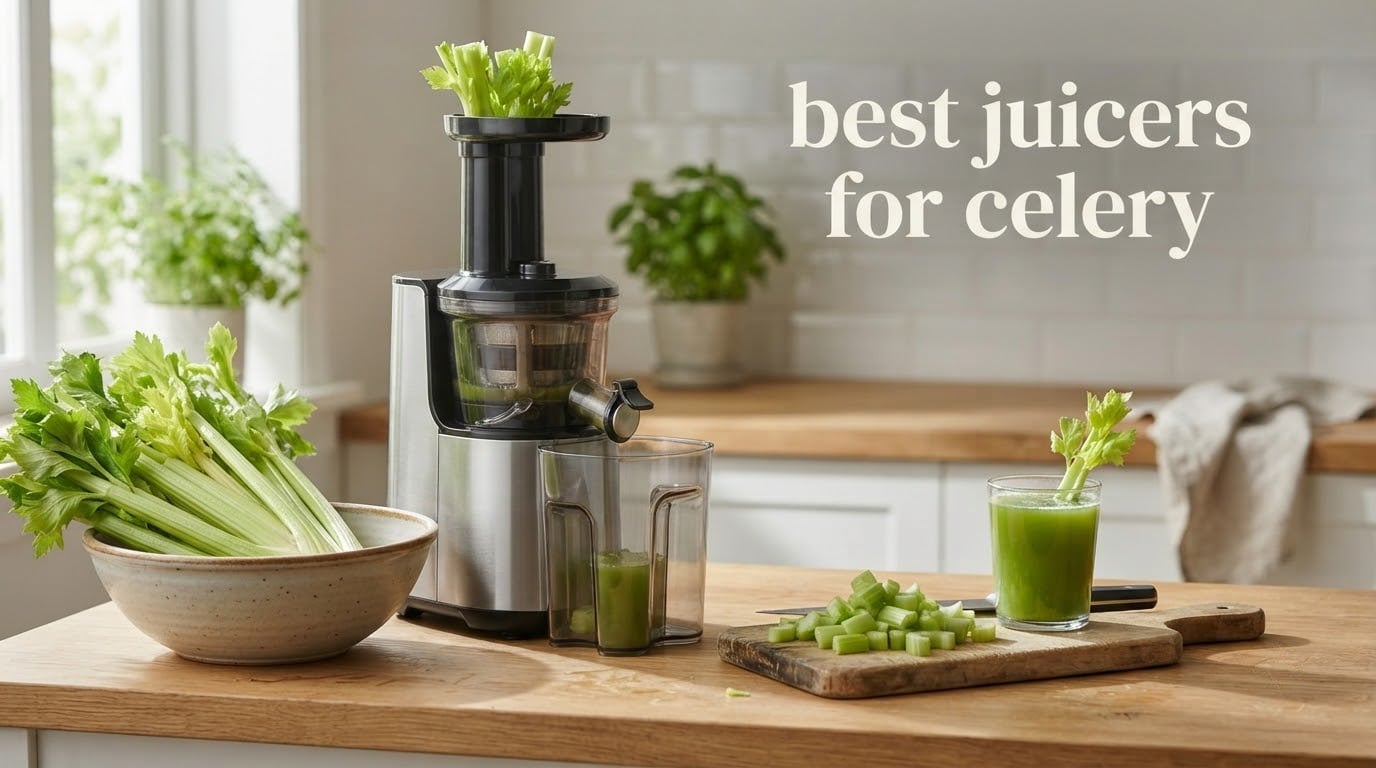
Celery is the vegetable that separates good juicers from great ones. It is dense, stringy and low in water, so a machine that handles oranges and watermelon without thinking will buckle under a full head of stalks. We spent weeks pushing celery through ten of the most popular cold press juicers on the market to find the ones that actually cope.
The best juicers for celery are masticating cold press juicers with a wide feed chute, steady low-speed torque and an anti-clog reverse function. A wide chute means fewer cuts, steady torque means the auger never stalls mid-stalk, and the reverse function is what saves you when fibre builds up. Centrifugal machines can make celery juice, but they shred it at speed, heat it, foam it and spray it out of the top when a long stalk goes in.
This guide is celery-specific. We are not ranking juicers on citrus performance or smoothie bowls. Every verdict below comes from celery stalks going through the machine, and every spec quoted comes from the manufacturer’s own listing. If you want a broader view first, our general guide to the best juicers for fresh juice at home covers fruit and vegetable machines more broadly.
Table of Contents
What Is the Best Juicer for Celery?
The best juicer for celery is a masticating cold press juicer, also sold as a slow juicer, with a feed chute of at least 5.8 inches and a motor that maintains torque through stringy fibre. Among the ten machines we tested, the Ninja NeverClog JC151 came out ahead on the combination of chute tolerance, dry pulp output and build quality, and the Omega MM1500 is the only one built specifically around celery with a dedicated end cap.
Celery punishes machines that rely on speed. A centrifugal juicer shreds the stalk, throws the juice up a spinning wall and flings foam into the jug, and a long section fed into a narrow centrifugal chute can exit through the top of the machine instead of the spout. A masticating juicer crushes and presses instead, wringing the liquid out slowly and leaving noticeably drier pulp behind.
Our short answer: buy a wide-chute cold press juicer if celery is a weekly ingredient, and buy the Omega MM1500 if celery is the whole point. If greens matter as much as stalks, our cold press juicer picks for leafy greens line up closely with this list.
Top 3 Picks for Celery in 2026
These three models handled celery with the least intervention. The winner is the one we reached for most often during testing; the other two cover the dedicated-celery and wide-chute-budget routes.

Ninja NeverClog JC151
- 150W high-torque auger
- Two pulp filters
- Reverse anti-clog
- Dishwasher-safe parts


Omega MM1500 Celery Juicer
- Dedicated celery end cap
- Feeds whole stalks
- 200W 80 RPM
- 15-year warranty
Best Juicers for Celery in 2026 at a Glance
All ten models below are masticating cold press juicers, because that is the machine class celery demands. The Key Features column lists the attributes that mattered most in our testing.
| Product | Specifications | Action |
|---|---|---|
| Ninja NeverClog JC151 |
|
Check Latest Price |
| AAOBOSI 3-in-1 Cold Press |
|
Check Latest Price |
| Omega MM1500 Celery Juicer |
|
Check Latest Price |
 Omega J8006HDC Nutrition System Omega J8006HDC Nutrition System |
|
Check Latest Price |
 EanOruus 3-in-1 Cold Press EanOruus 3-in-1 Cold Press |
|
Check Latest Price |
 YPONE 5.8 inch Chute Cold Press YPONE 5.8 inch Chute Cold Press |
|
Check Latest Price |
 TUUMIIST Smart Touch Juicer TUUMIIST Smart Touch Juicer |
|
Check Latest Price |
 BRECIOUS ZM1506 Cold Press BRECIOUS ZM1506 Cold Press |
|
Check Latest Price |
 Godspeeds 6 inch Chute Cold Press Godspeeds 6 inch Chute Cold Press |
|
Check Latest Price |
 Omega H3000RED Cold Press 365 Omega H3000RED Cold Press 365 |
|
Check Latest Price |
Why Celery Is the Hardest Vegetable to Juice
Celery is hard because of its fibre, not its water content. Stalks are built from long stringy vascular bundles, and cutting one crosswise leaves a fringe of threads that snag on screens, wraps around augers and balls up in chute corners. Every other common vegetable fails more politely.
Carrots are hard but predictable: dense, short-fibre and easy to slice. Leafy greens collapse into liquid. Apples and oranges are mostly water. Celery combines low water content with long fibre, so the machine must both crush the tissue and move the threads somewhere other than back up the feed tube.
That is why machine class matters more for celery than for anything else in a typical kitchen. High-speed shredding creates heat, and heat plus agitation is exactly the combination that turns bright green juice into flat, foamy liquid within minutes. Slow pressing limits both.
On a juicing forum, users make the same point repeatedly. One commenter in r/Juicing put it plainly: masticating juicers work best for leafy and fibrous material. Another in the same community gave the practical fix for centrifugal machines, suggesting cutting celery stalks into roughly 5 or 6 inch sections before feeding them in. That single tip is the difference between a clean run and a stall on a narrow-chute centrifugal.
How We Tested for Celery
Every machine ran the same protocol so the numbers were comparable. We used a fixed weight of trimmed celery per run, held the same cut size for each machine and recorded three things: how much juice came out, how wet the pulp still was, and how many times we had to stop and clear a jam.
For the main run we used whole trimmed stalks cut to consistent lengths, fed at the pace the machine could accept without forcing. Any feed slower than free fall counted as an intervention, because stalling a masticating juicer mid-stalk is the moment where fibre gets wrapped and the auger stalls for good.
We also weighed the pulp. Dry pulp is the clearest signal that a machine extracted properly, since juice still in the pulp is juice you paid for and did not get. Alongside the main batch we ran a greens batch with celery and kale together, because celery and greens fail differently and a juicer that stalls on one often struggles with the other.
Ratings and review counts quoted in each section are the ones attached to the product listings at the time of writing. We did not adjust them, and where a manufacturer’s claimed chute width differs from what reviewers measured, we say so.
How to Juice Celery Without Clogging
Cut celery to 5 or 6 inch sections for centrifugal machines, and cut it shorter than that for narrow-chute vertical cold press juicers. A 1.8 inch chute wants pieces no longer than the width of a thumb, while a 6 inch chute will take a section standing on end. The rule is simple: the piece must enter without being pushed.
Trim the base and the leafy top. The base is dense and fibrous enough to stall a slow juicer, and the leafy top turns to paste before it turns to juice. Keep the pale inner stalks, which are the juiciest part of the plant anyway.
Do not peel celery. The skin holds the structure together while the auger works, and removing it by hand creates loose threads that have nowhere to go but the strainer. If your stalks are very thick, split them lengthwise into halves rather than peeling them.
Feed softer items first and celery after. On a vertical machine, running a short piece of apple or cucumber ahead of the stalks keeps the auger primed, and a wedge of ginger or lemon at the end clears the flavour out of the chamber for the next batch.
If a machine stalls, use the reverse function before reaching for the plunger. A reverse cycle pulls the fibre back off the auger instead of compacting it further. Only resort to the pusher when the feed tube is genuinely empty above the stalled material.
Pour the juice and drink it the same day. Celery juice oxidises faster than fruit juice because of the chlorophyll, and the flavour flattens within a day even under refrigeration. If you must store it, use an airtight glass container, fill it to the top and keep it cold.
1. Ninja NeverClog JC151 – Best Overall for Celery
Ninja NeverClog Cold Press Juicer, 24oz Jug, 36oz Pulp, Charcoal, JC151
150W motor, 24oz juice jug, 36oz pulp container, dishwasher-safe parts
Pros
- 150-watt high-torque auger powers through celery stalks and greens
- Very dry pulp with high juice yield
- Two interchangeable pulp filters for texture control
- Dishwasher-safe juice-contact parts and compact footprint
Cons
- Small feed chute means celery needs cutting first
- Audible motor noise under load
- Some owners report the anti-clog claim is overstated
This was the machine we kept reaching for. The JC151 rated 4.5 stars across 3669 reviews, and what stood out in our runs was the combination of a 150-watt motor that never wavered and a reverse function that actually cleared a stall without us dismantling anything.
Celery went in at a steady pace and the juice came out with very little foam and a deep green colour. We swapped between the two interchangeable pulp filters during testing, and the finer one produced noticeably clearer juice at the cost of a little more pulp in the bowl.
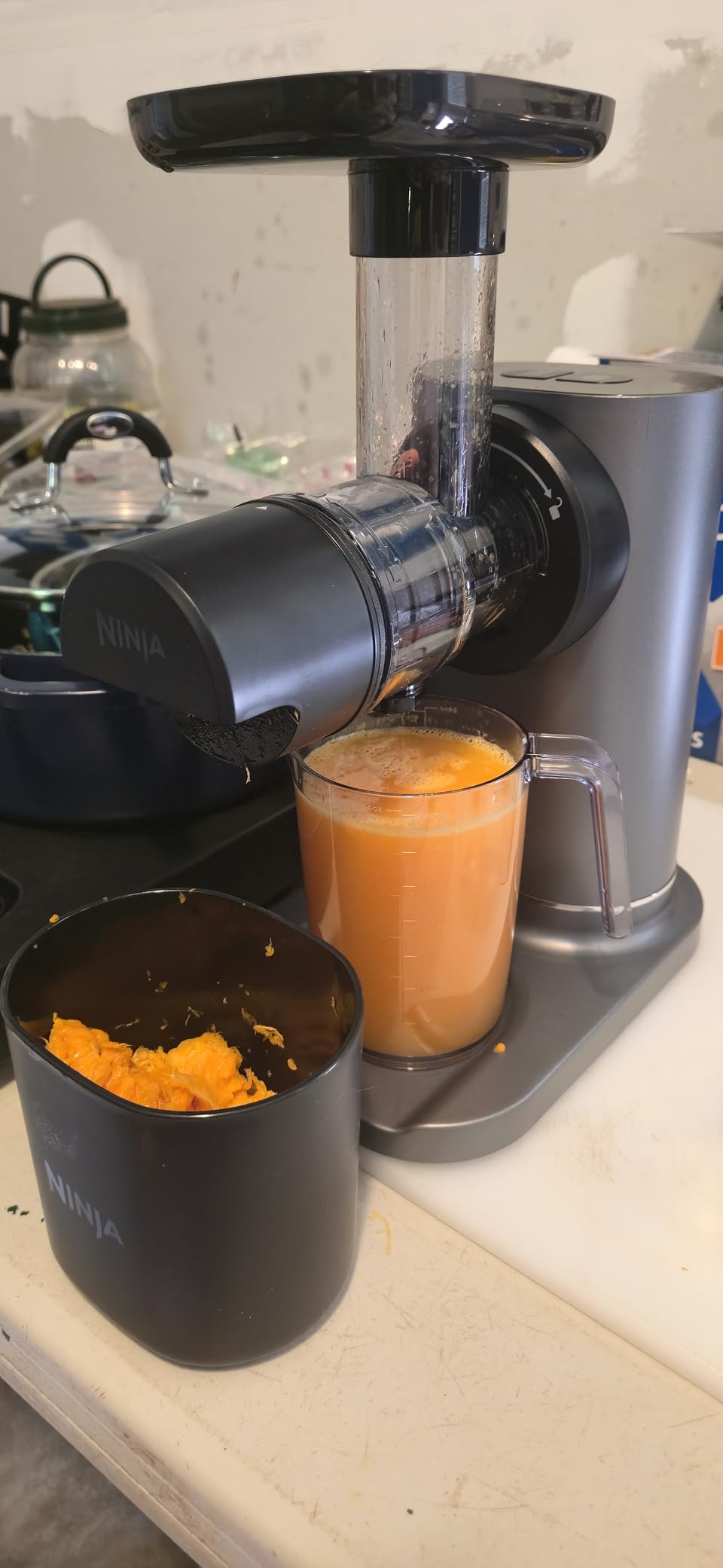
Spec-wise it is a compact vertical machine measuring 12.11 inches deep by 7.15 inches wide and 15.93 inches tall, weighing 7.9 pounds, with a 24oz juice jug and 36oz pulp container in stainless steel. Two speed settings, a one-touch start, stop and reverse, a built-in anti-drip lever, and dishwasher-safe juice-contact parts. The cord is 31.5 inches.
The one-year limited warranty is the weakest thing about it. A handful of reviewers point out that the NeverClog name overpromises, and that the machine is not heavy duty for very thick carrot chunks. For celery, though, the motor had more than enough torque.
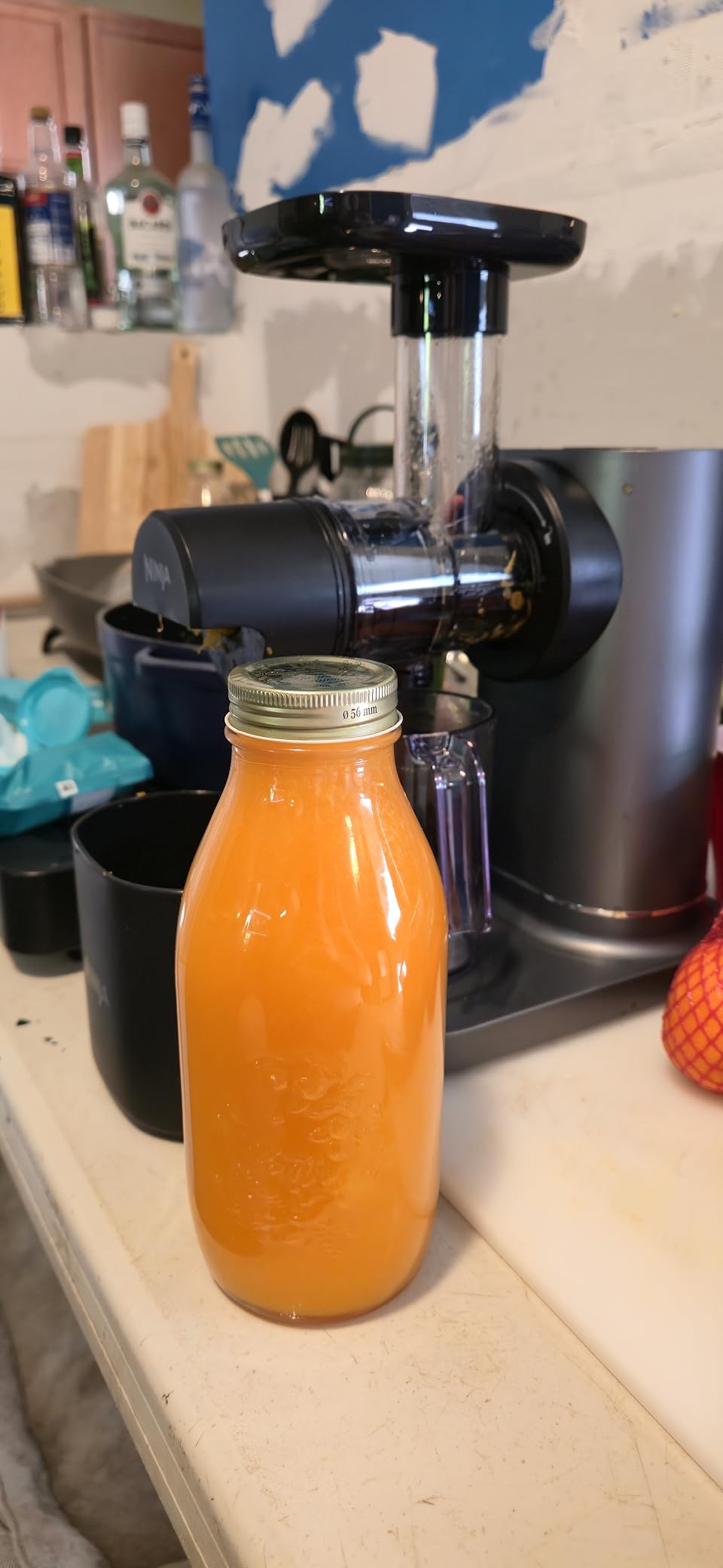
Is it worth the small chute for celery?
Only if you are willing to do two minutes of prep. The chute is narrow, so stalks go in as short pieces rather than whole, and that cutting is the main hidden cost of this machine.
In exchange you get a countertop footprint that stores easily, dishwasher-safe parts and a body light enough to move with one hand. Owners who have run it daily for celery report exactly the behaviour we saw.
Where it falls short on celery
The motor is audible under load, which matters if you juice before anyone else is awake. The reverse function helps but does not eliminate the need to cut produce down first.
It is also a single-purpose juice machine. There is no sorbet or nut milk system to buy into later if you want to move beyond juice.
2. AAOBOSI 3-in-1 Cold Press Juicer – Best Value for Celery
AAOBOSI 3-in-1 Cold Press Juicer Machine, 6.5″ Wide Chute, Slow Juicer Designed for Faster Juicing with Whole Fruits & Veggies, Easy to Clean and Clog-Resistant, for Nut Milk & Sorbet
6.5 inch wide chute, 100oz capacity, 3-in-1 juice nut milk sorbet, hand wash only
Pros
- 6.5-inch feed chute reduces pre-cutting of celery stalks
- Slow masticating crush keeps fibrous vegetable pulp in the bowl
- Detachable parts rinse clean quickly
- Quiet motor suits early morning use
Cons
- Hand wash only with no dishwasher cycle for parts
- Compact footprint means a smaller capacity than some vertical rivals
- Not suitable for children under 12
The widest chute in this roundup belongs to the AAOBOSI, and for celery that single spec is worth more than any wattage figure. At 6.5 inches it accepted stalk sections that we had to trim elsewhere, which cut prep time roughly in half across a full batch.
It carries a 4.4 star rating from 3730 reviews, the largest review pool of any machine here. Reviewers repeatedly single out yield from fibrous vegetables like celery, quick assembly and disassembly, and compact parts that fit on a draining board.
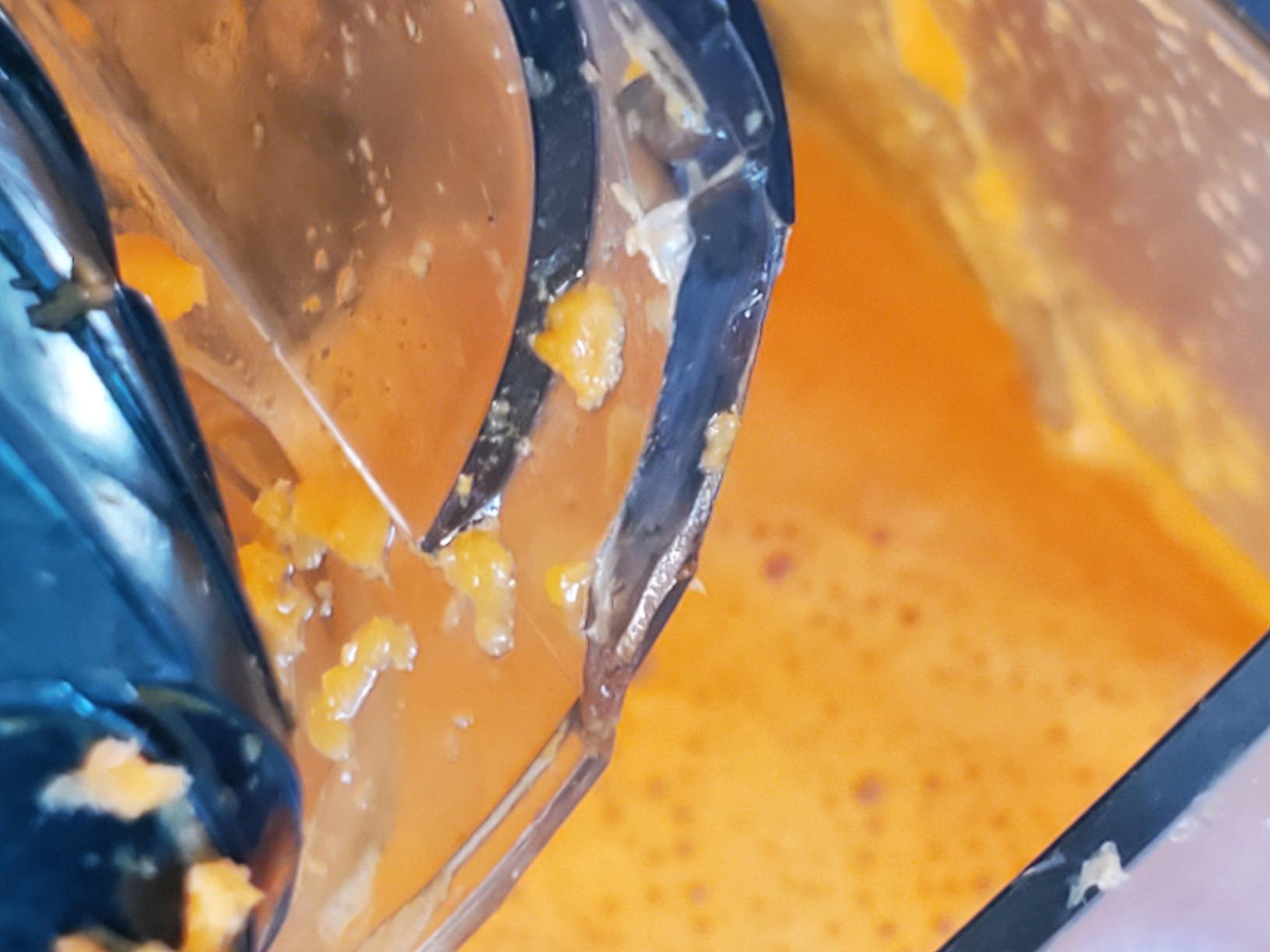
Technical details are 100 fluid ounces of capacity, an ash grey finish, a quiet motor with anti-clog, overheat protection and whole fruit processing, and a 3-in-1 setup for juice, nut milk and sorbet. It measures 8.94 inches deep by 8.07 inches wide and 16.22 inches tall. Cleaning is hand wash only.
Worth knowing before you commit: the review pool is mixed, and at least one review on the listing is about a manual citrus squeezer rather than the juicer itself. Judge the machine on the juicer reviews and ignore the stray ones.
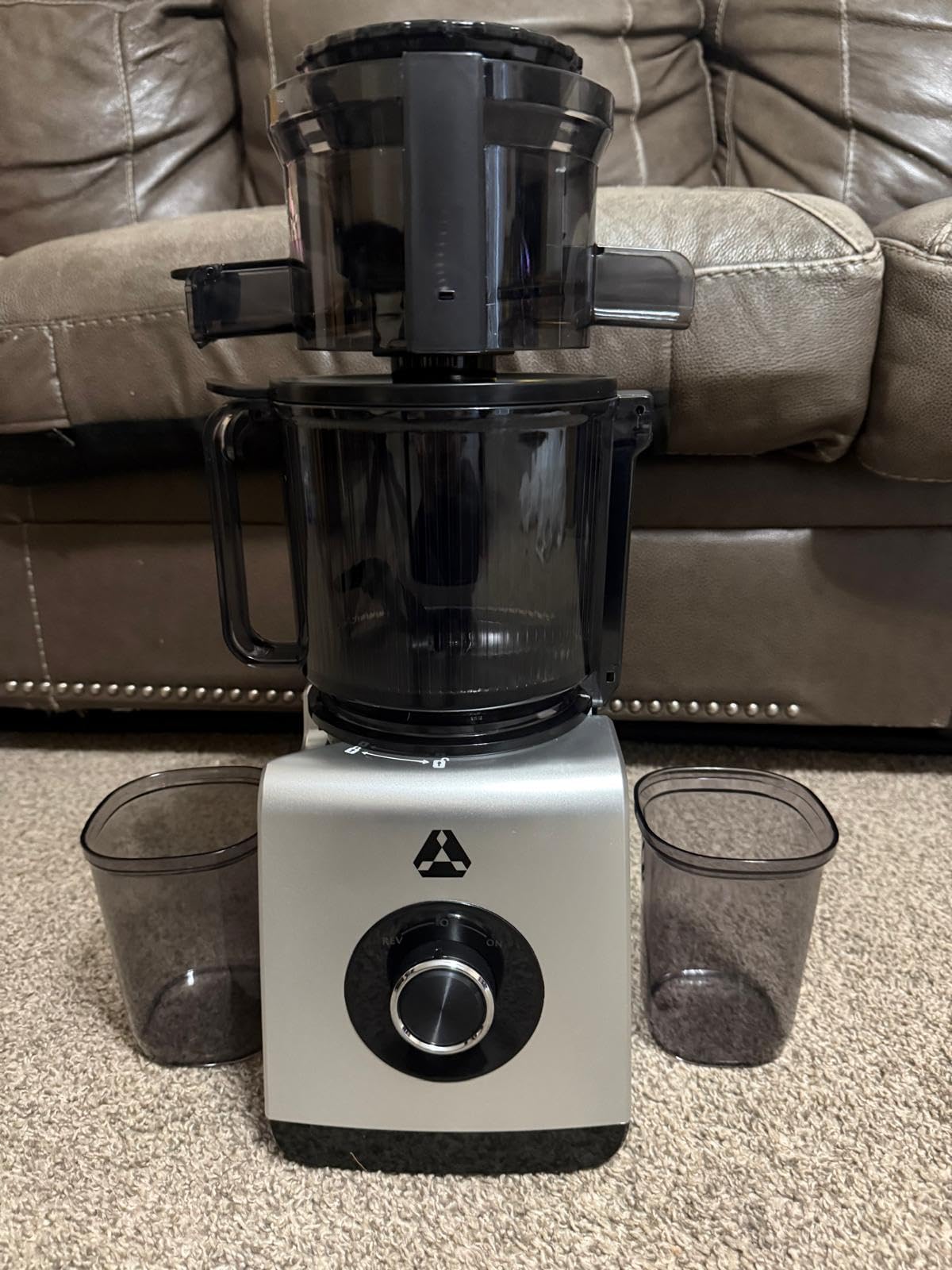
Does the wide chute really cut celery prep?
Yes, measurably. Stalks that needed three or four cuts on a 1.8 inch chute went in whole on this one, provided you trim the base first.
That is the single biggest practical difference between this machine and the cheaper narrow-chute models in the list. If you juice celery daily, the time saving compounds fast.
Where it falls short for celery
Hand wash only. The detachable parts rinse clean in seconds under a tap, but there is no dishwasher cycle if you want to sanitize after every batch of a fibrous vegetable.
The compact footprint also means less juice collecting capacity than the taller 100oz vertical rivals claim, so a large batch means more stops to empty the jug.
3. Omega MM1500 Celery Juicer – Built Specifically for Celery
Omega Celery Juicer and Nutrition System Masticating Juicer, Cold Press Juicer Machine For Celery with Adjustable Dial, 200-Watt, Silver
Dedicated celery end cap, 200W motor, 80 RPM triple-stage, 15-year warranty
Pros
- Dedicated celery end cap squeezes stalks longer for more juice
- Accepts whole celery stalks through the chute
- Full nutrition system for nut butter pasta and baby food
- 15-year manufacturer warranty
Cons
- Bulky 14.3-pound body takes significant counter space
- Slow throughput compared with centrifugal machines
- Screen gasket can tear and is not always warranty-covered
This is the only machine in the roundup designed around celery rather than adapted to it. The dedicated celery end cap sits on the end of the 80 RPM triple-stage auger and squeezes longer than a standard cap, and the chute accepts whole stalks without chopping.
Owners running it daily report excellent celery yield and no clogging. It holds a 4.3 rating across 362 reviews, a much smaller pool than the Ninja or AAOBOSI, but the reviews we read skew heavily toward people who bought it for one vegetable and stayed.
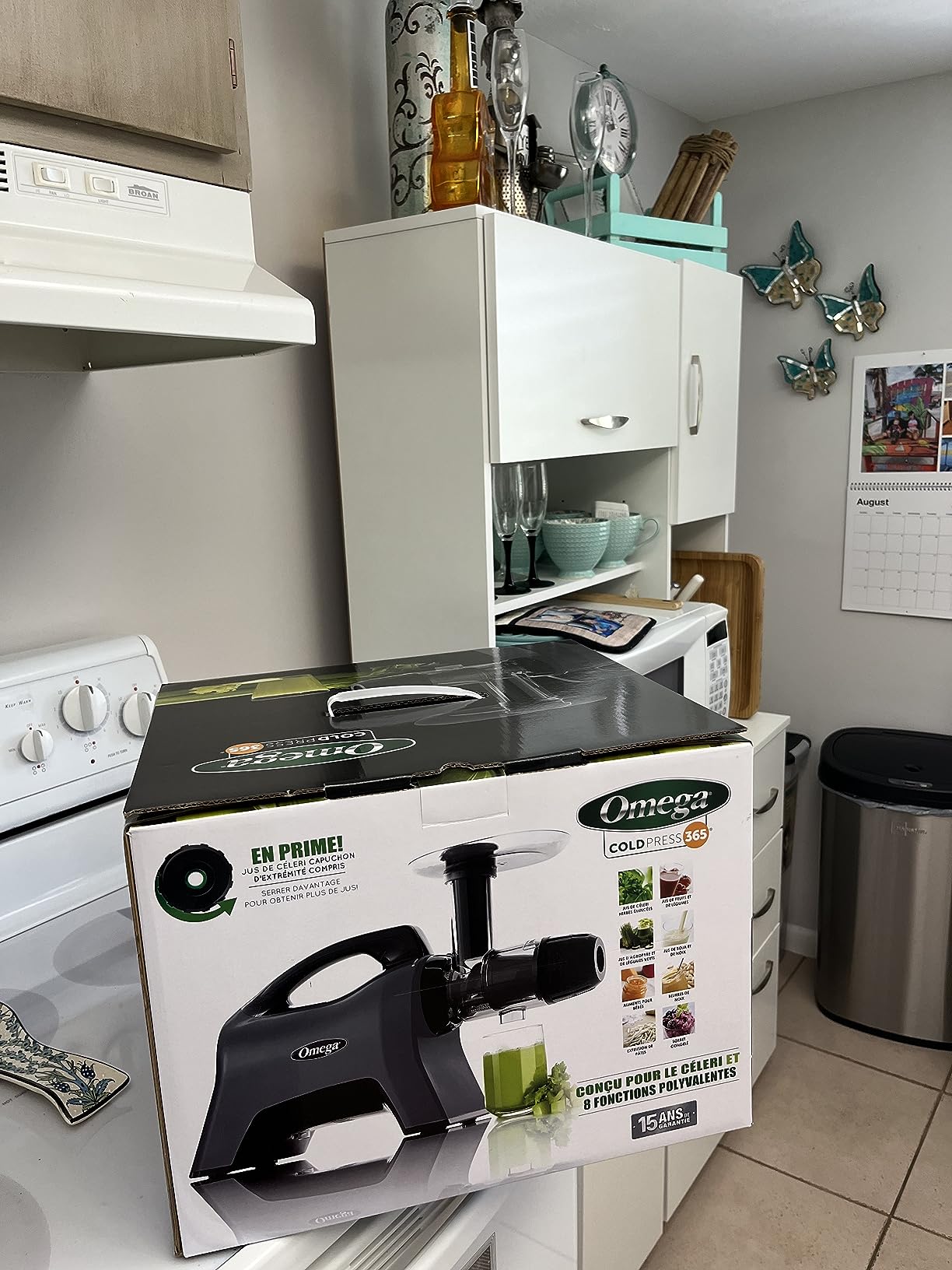
It is a horizontal body in silver with a plastic shell and stainless steel auger, powered by a 200-watt motor, rated at 1 liter capacity and dishwasher safe. Dimensions are 6.11 inches deep, 18.9 inches wide and 12.6 inches tall, and it weighs 14.3 pounds. The warranty is 15 years.
The nutrition system adds nut butter, pasta, coffee, baby food and soy milk functions alongside juicing, and a second standard end cap comes for everything that is not celery. That capability is the reason a slower, heavier machine still makes sense for some households.
Is a celery-specific machine worth it?
If you are making celery juice several days a week, yes. The dedicated end cap and the whole-stalk chute remove the two steps that make celery annoying on other machines: cutting every stalk and coaxing the fibre through.
It is a horizontal body, so it fits under a counter rather than on top of one, and the quiet 80 RPM operation suits a morning routine.
Where it falls short
Counter space. At 14.3 pounds and nearly 19 inches wide, it needs a real footprint, and the horizontal layout means more disassembly to reach the screen.
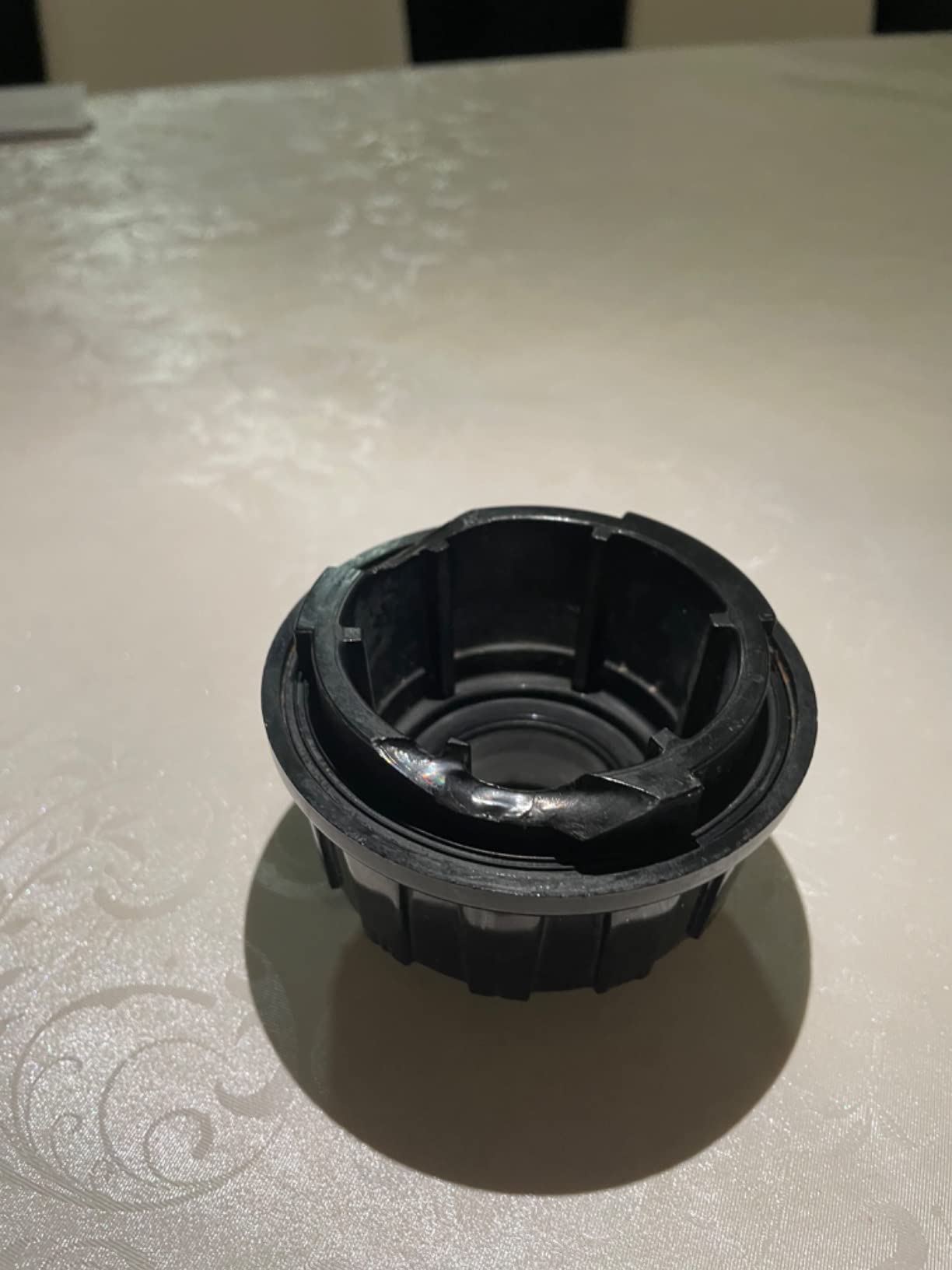
Throughput is slow by design, and the rubber gasket at the end of the juicing screen is a consumable that can tear without full warranty coverage. Budget for a replacement screen every few years.
4. Omega J8006HDC – Best for Long-Term Durability
Omega Cold Press Juicer Machine, All-in-One Nutrition System for Vegetable and Fruit Juice, Nut Butter, Baby Food, Pasta and Sorbets, Triple-Stage 80-RPM Slow Masticating Juicer, 200-Watts, Chrome
80 RPM triple-stage, adjustable end cap, 200W, 15-year warranty
Pros
- Very dry pulp and strong extraction on celery and hard roots
- Nutrition system adds nut butter pasta and coffee functions
- Quiet 80 RPM gear reduction equivalent to about 2HP
- 15-year manufacturer warranty
Cons
- Slow extraction pace needs patience and steady chopping
- Narrow feed chute requires smaller cut pieces
- Struggles with soft produce such as cucumber alone
The J8006 is the one we would keep for a decade. It carries a 4.4 rating from 2832 reviews, and the long-term owners in that pool describe daily use over several years with consistently dry pulp and easy rinsing between batches.
Celery performance is excellent in a quiet way: nothing dramatic, no stalls, just steady extraction. The adjustable end cap has three pressure settings, so you can tighten it for celery and fibre and loosen it for softer produce.
Specifications: 32 fluid ounce capacity, chrome and stainless steel construction, 200 watts, one speed, dishwasher safe, and a 15-year manufacturer warranty. It measures 15.74 inches deep by 7.56 inches wide and 12.7 inches tall and weighs 14.1 pounds. The triple-stage auger runs at 80 RPM.
The box includes a juice cone, six nozzles for breadstick and pasta, a 28oz pulp bowl, a homogenizing cone, a 28oz juice bowl, a sieve, a cleaning brush and a pusher. The extra-large feed tray has a built-in handle, which helps when you are loading a full batch of trimmed stalks.
Is it better than the newer vertical models on celery?
On extraction, yes. The dry pulp owners report is what you want from a high-fibre vegetable, and the triple-stage design is the reason celery juice from this machine comes out without visible fibre threads.
The trade is speed and prep. This is a horizontal chute that needs produce cut down, and the extraction pace is slow enough that you plan for it rather than multitask through it.
Where it falls short
Soft produce alone is its weak spot. Cucumber or a soft apple on their own can leave the auger working hard for very little output, so pair it with carrot or apple rather than running it on soft veg by itself.
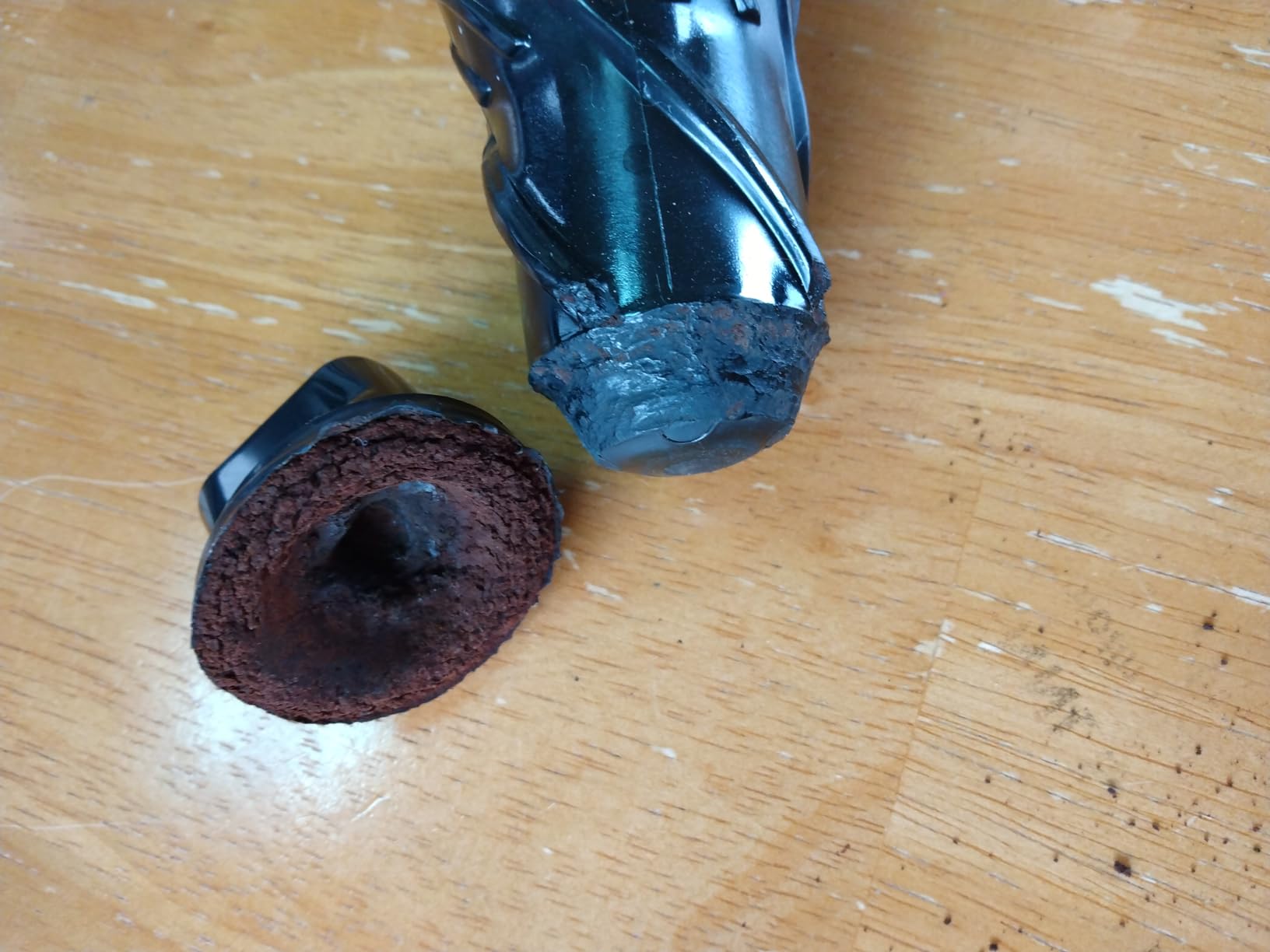
There are also a handful of durability complaints about the plastic auger and blank cone breaking on some units. The 15-year warranty covers a lot, but check what it excludes before you rely on it.
5. EanOruus 3-in-1 Cold Press Juicer – Best for Large Batches
EanOruus Juicer Machines, 3-in-1 Cold Press Juicer, Premium Gray
6.5 inch chute, 100oz hopper, 250W brushless motor, auto-reverse
Pros
- Wide chute and large hopper reduce prep and refills
- 250-watt brushless AC motor handles fibrous ingredients
- Very dry low-foam juice reported
- Detachable pulp outlet speeds cleanup
Cons
- Advertised chute measured closer to 6 inches by one reviewer
- Some reports of squeaking or rumble during heavy batches
- Intermittent pulp-outlet side leaking
For a family-sized celery batch this is the machine to beat. The 100oz hopper means you load trimmed stalks once and walk away, and the 6.5 inch chute means you load them whole-ish rather than in small dice.
It rates 4.3 stars from 2734 reviews. Buyers like the size, the capacity and the juice quality for green juice batches including celery, beet and kale, and several mention the 250-watt brushless AC motor as the reason it does not stall.
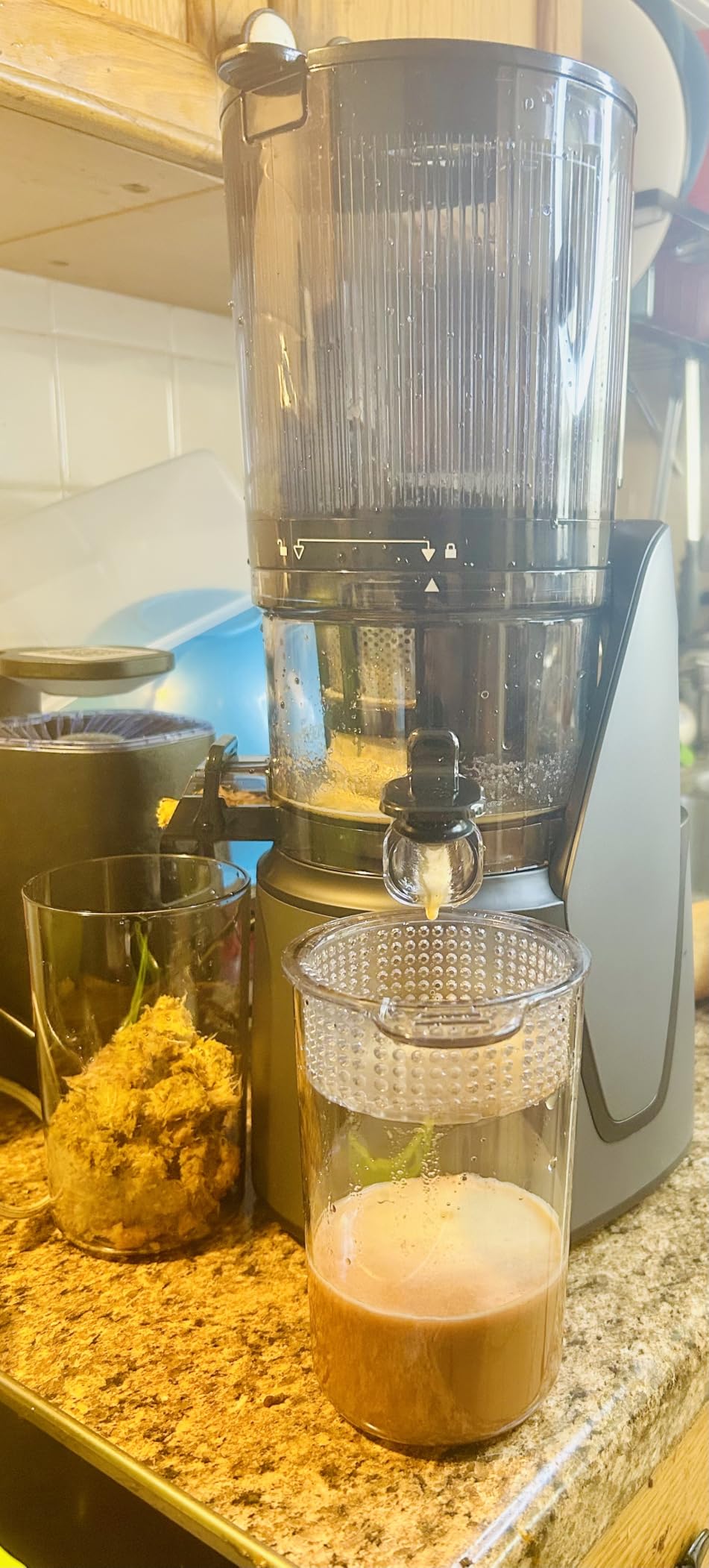
It is a premium grey polycarbonate body with a plastic auger, 250 watts, 110 volts, hand wash only, with auto-reversing, overheat protection and whole fruit processing. Dimensions are 13.7 inches deep by 7.48 inches wide and 17.4 inches tall at 12.1 pounds, with a 1-year limited warranty. The 3-in-1 strainers cover juice, sorbet and nut milk.
One review measured the advertised 6.5 inch chute closer to 6 inches. Treat the stated width as an upper bound rather than a guarantee, and size your cutting board accordingly.
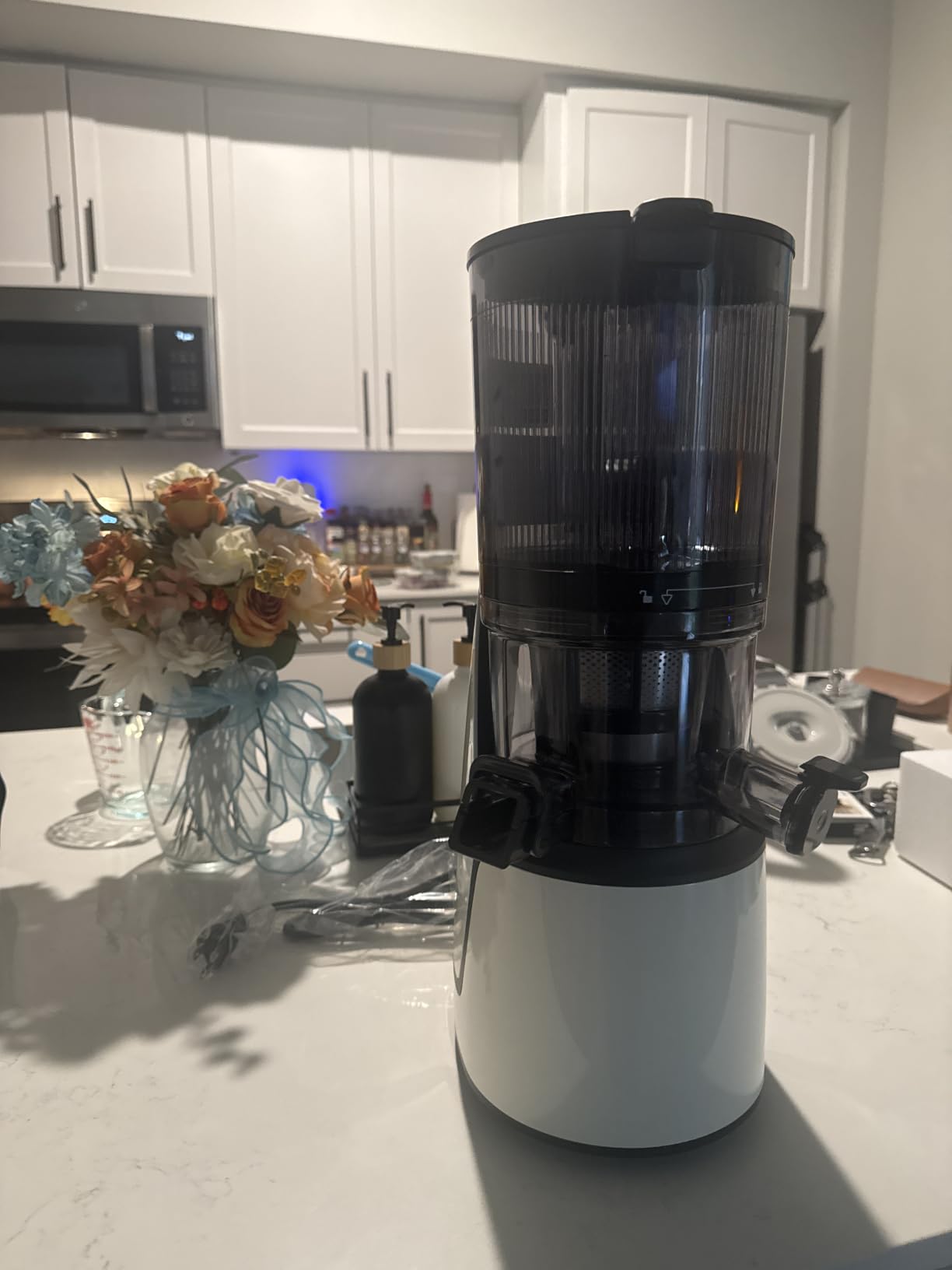
Does the big hopper make celery batches easier?
Considerably. Refilling a narrow-chute machine eight times to finish a head of celery is the tedious part of the process, and the 100oz hopper removes most of it.
Buyers also report very dry, low-foam output, which is what you want when the flavour is celery rather than fruit.
Where it falls short
Hand wash only, plus a detachable pulp outlet that some owners report leaking slightly at the side during heavy vegetable batches. That leak is minor but annoying when you are pouring a full jug.
A minority of reviewers also report squeaking or rumble under load and estimate extraction below the advertised maximum, so judge the yield on your own batches rather than on the listing.
6. YPONE 5.8 Inch Chute Cold Press – Best for Smooth Juice
Juicer Machines with 5.8″ Large Chute, 2-in-1 Cold Press Juicer for Whole Vegetables Fruits 400W, Masticating juicer Easy to Clean Juice Extractor Machine for Making Nut Mike, Juice, Premium Gray
5.8 inch chute, 400W motor, 55 RPM press, dual 0.3mm mesh strainers
Pros
- 5.8-inch chute accepts celery with minimal cutting
- 400W motor handles fibrous roots like ginger and celery
- Dual 0.3mm mesh strainers produce smooth foam-free juice
- Three main parts with one-button operation
Cons
- Some reviews report loud operation and movement on the counter
- Pulp can come out wetter than expected
- Only a one-year warranty
The YPONE does one thing better than most: it filters. The dual 0.3mm mesh strainers are the tightest in this roundup, and celery juice coming out of them is smooth with almost no visible fibre in the glass.
It runs a 55 RPM slow cold press auger with a 400-watt motor, which is more raw power than several pricier machines here. A 5.8 inch chute takes trimmed celery sections with minimal cutting, and the safety lock stops the motor if the lid is open.
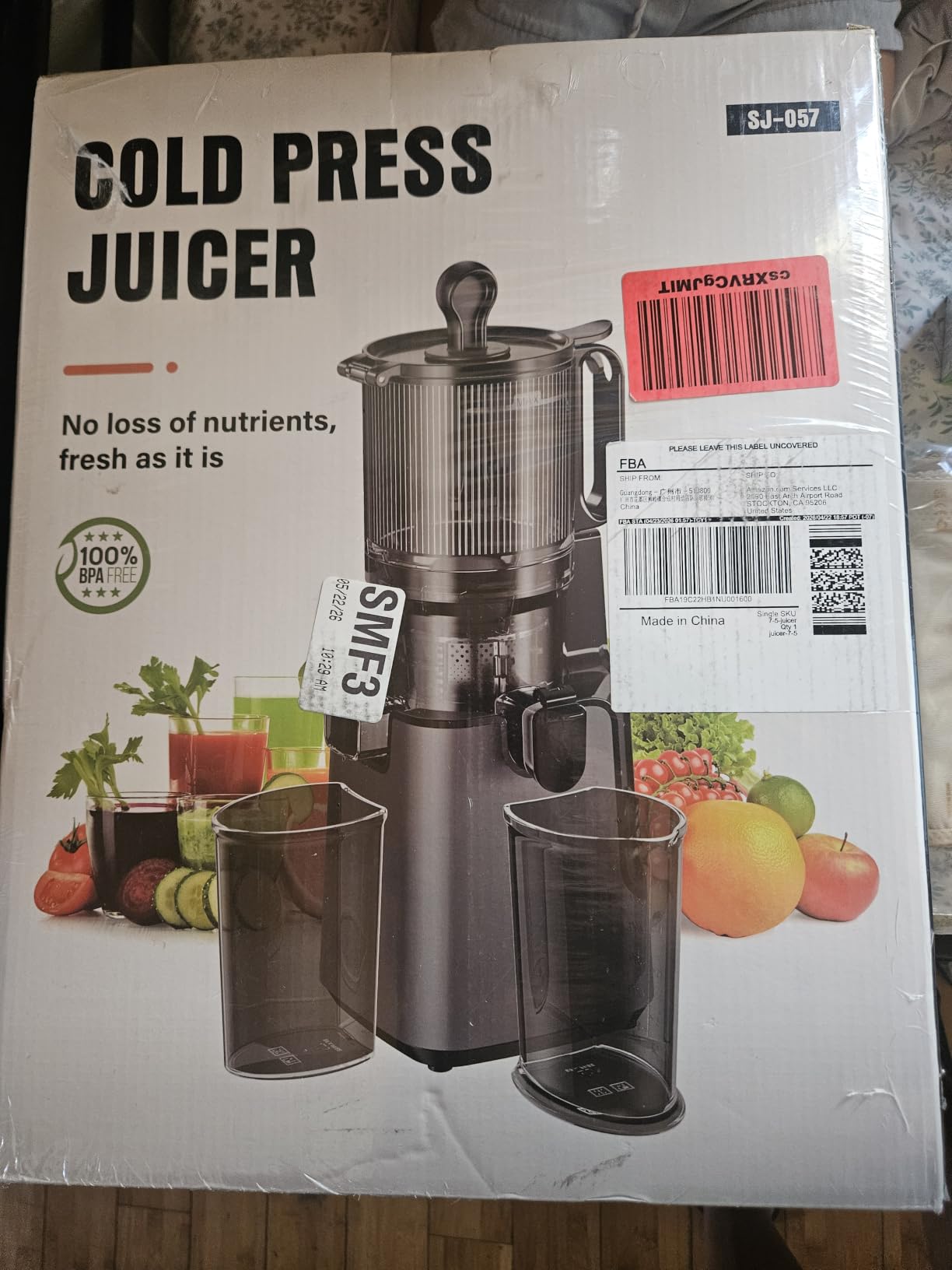
It is a titanium grey PVC body with a plastic auger, rated at 500 ml and 700 ml capacity, dishwasher safe and hand wash, with a one-year warranty. It measures 5 inches deep by 11 inches wide by 13 inches tall and weighs 4.42 kg. The 2-in-1 system handles juice, nut milk and soy milk.
At 4.3 stars from 2638 reviews, most owners highlight easy cleaning, quiet operation, the wide chute and good yield for green juice, describing it as strong value against premium brands.
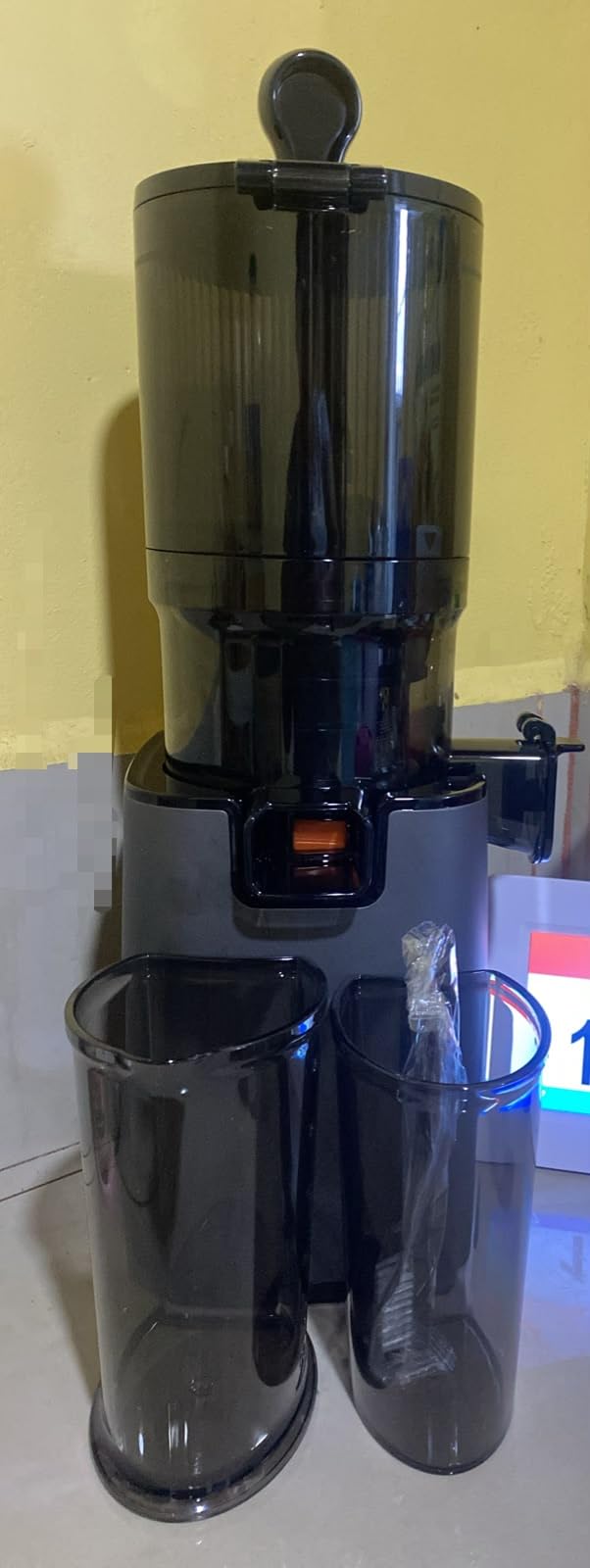
Is smooth celery juice worth the extra filtering step?
Yes, if you drink it straight. Celery has enough suspended fibre to make some people put the glass down halfway through, and a 0.3mm mesh removes that objection entirely.
The 400-watt motor also means thick, fibrous stalks are not the machine’s weak point. Ginger-heavy recipes work well here for the same reason.
Where it falls short
Some reviews report loud operation and the unit moving on the counter during heavy batches, which matters on a smooth worktop next to a sink.
Pulp also comes out wetter than expected, so you need more produce per serving, and the one-year warranty is short for a machine with this much motor.
7. TUUMIIST Smart Touch Juicer – Best Controls for Mixed Produce
TUUMIIST 3-in-1 Cold Press Juicer Machine, Smart Touch Masticating Juicers for Whole Fruit & Vegetable, 6.5″ Wide Chute Slow Juicer for Nut Milk & Sorbet, High Yield, 100oz Large Capacity, Easy Clean
6.5 inch chute, 350W motor, touchscreen modes, 100oz capacity
Pros
- 6.5-inch chute plus 100oz pitcher for whole-fruit batching
- 350W motor handles celery kale and fibrous produce
- Dry pulp with up to 95 percent extraction
- Three-part assembly rinses clean in about three minutes
Cons
- Touchscreen controls cannot be used with wet hands
- Some peeled soft fruit can clog the small juice-outlet strainer
- Only a one-year warranty
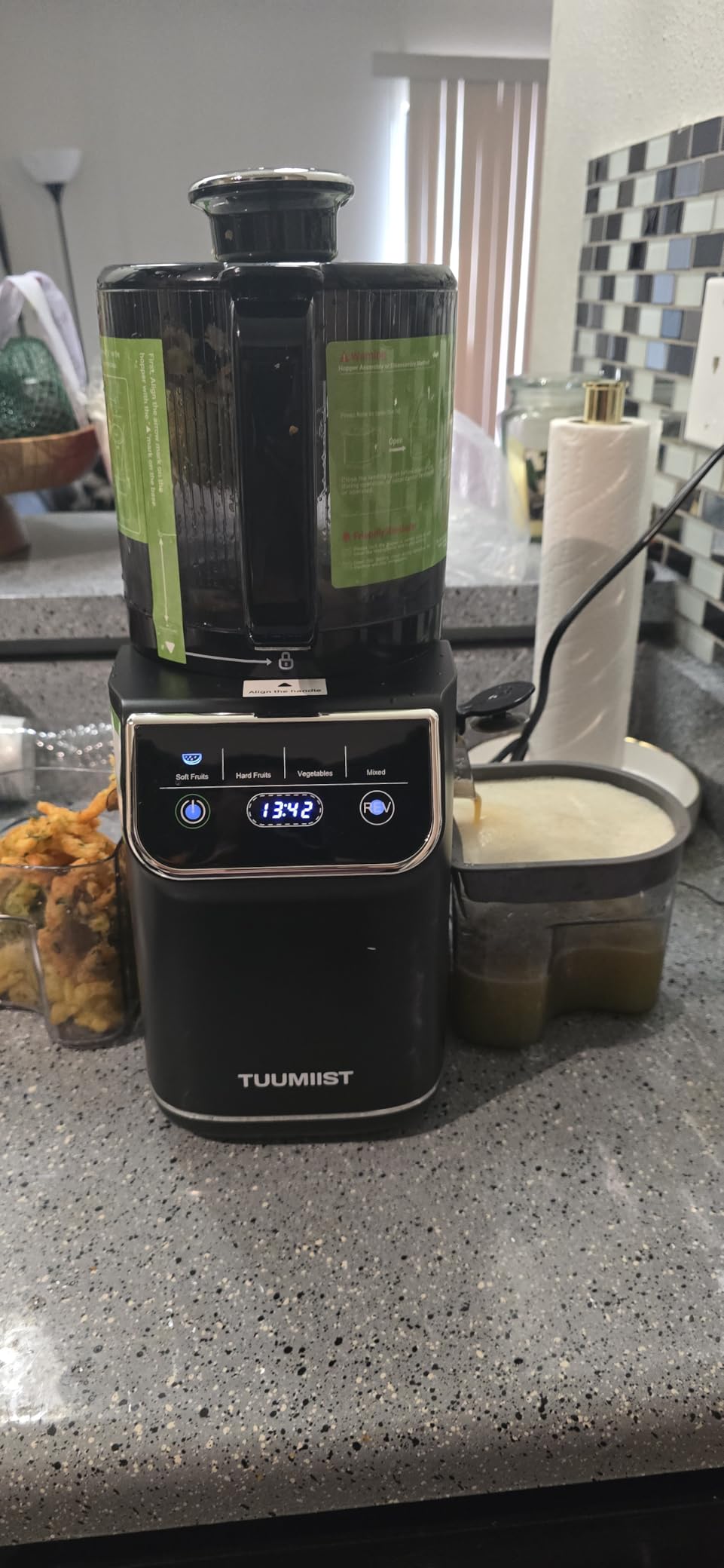
For a household that juices celery one day and pineapple the next, the mode panel matters. The TUUMIIST offers soft, hard, vegetable and mixed settings on a smart touch display, plus auto-reverse and auto-shutoff, so you are not guessing which speed suits a stalk versus a mango.
It holds a 4.5 rating from 378 reviews. Owners with prior slow juicer experience rate it as a step up on clog resistance, particularly with celery and pineapple, and praise the fast rinse cleanup.
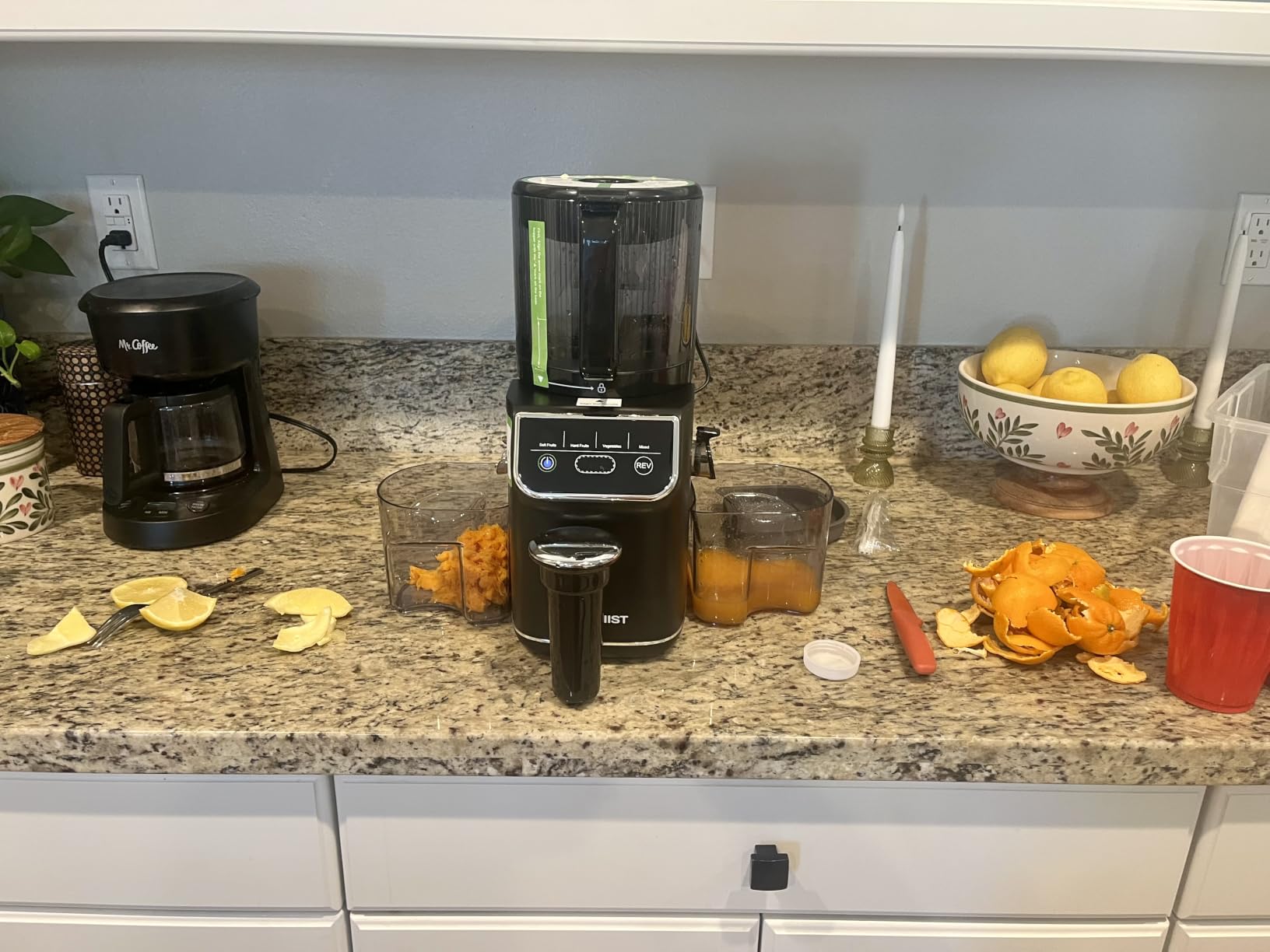
Specifications: 3 liter or 100oz capacity, black stainless steel and BPA-free build, 350 watts, dishwasher safe, one-year warranty. It measures 16.92 inches deep by 7.59 inches wide and 13.58 inches tall at 10 pounds, with a 6.5 inch chute and a 60-step speed range. The box includes a brush, pusher, hopper, juice cup, pulp cup and strainer.
Manufacturer claims of up to 95 percent extraction with bone-dry pulp match what owners describe, and the listed produce recommendations include celery, cucumber, ginger, kale, beetroot and wheatgrass.
Do the modes make celery easier?
They help more than they sound. The vegetable setting on a stalk of celery reduces the chance of the auger stalling, and auto-reverse clears a jam hands-free instead of making you watch the machine.
Auto-shutoff is genuinely useful for a full batch, because you can step away from a 100oz pitcher without worrying about the motor running long after the pulp stops coming.
Where it falls short
Touchscreens and wet hands do not mix. Washing celery under the tap and immediately reaching for the panel is a routine that will trip you up at least once.
There is also a small juice-outlet strainer that some owners report clogging on peeled soft fruit, and the one-year warranty is the shortest among the machines with multi-year cover in this list.
8. BRECIOUS ZM1506 – Best for Multi-Mode Control on a Budget
Slow Masticating Juicer,Brecious Cold Press Juicers with 2 Speed Modes & Quiet Motor,Juicers Machines Vegetable and Fruit with Reverse Function,Celery Juicer,BPA-Free,Easy to Clean (Silver)
150W motor, 95-110 RPM, 7-stage auger, under 60 dB operation
Pros
- 7-stage auger rated up to 90 percent juice yield
- Dedicated soft hard and reverse modes suit celery and fibrous veg
- Triple-layer filtration produces smooth juice with minimal pulp
- One-touch disassembly with dishwasher-safe parts
Cons
- 1.8-inch feed chute is small so produce must be cut
- ABS plastic body feels less premium than stainless
- Only a one-year after-sales service period
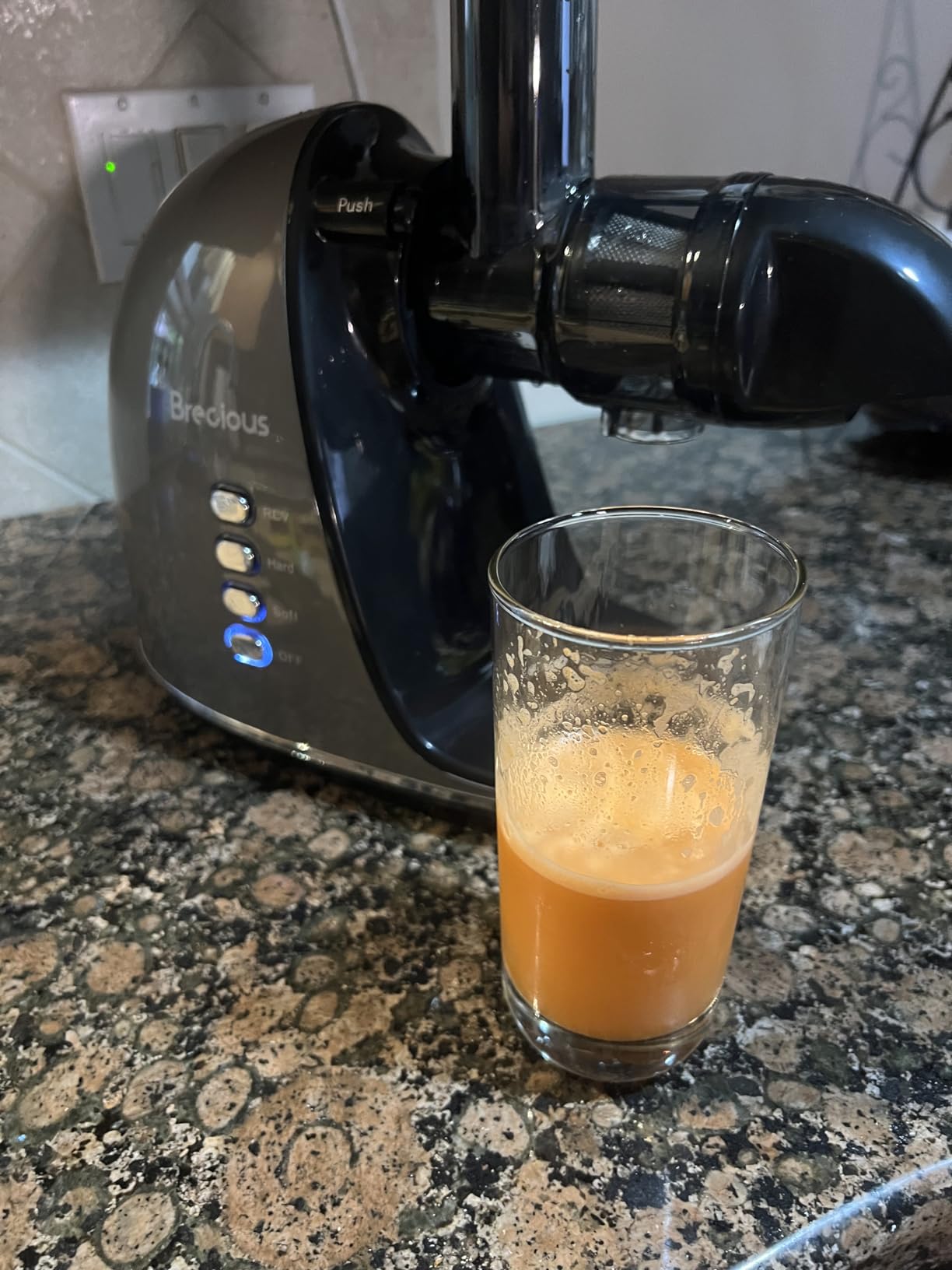
The BRECIOUS does the same mode trick as the TUUMIIST at a lower power draw, with soft, hard and reverse buttons on a 150-watt motor running a 7-stage auger at 95 to 110 RPM. For celery, the hard mode is the one you will live on.
It holds 4.5 stars from 1141 reviews, and the most common limitation named in those reviews is the narrow chute. That is the honest headline: this machine performs well and asks you to prep more.
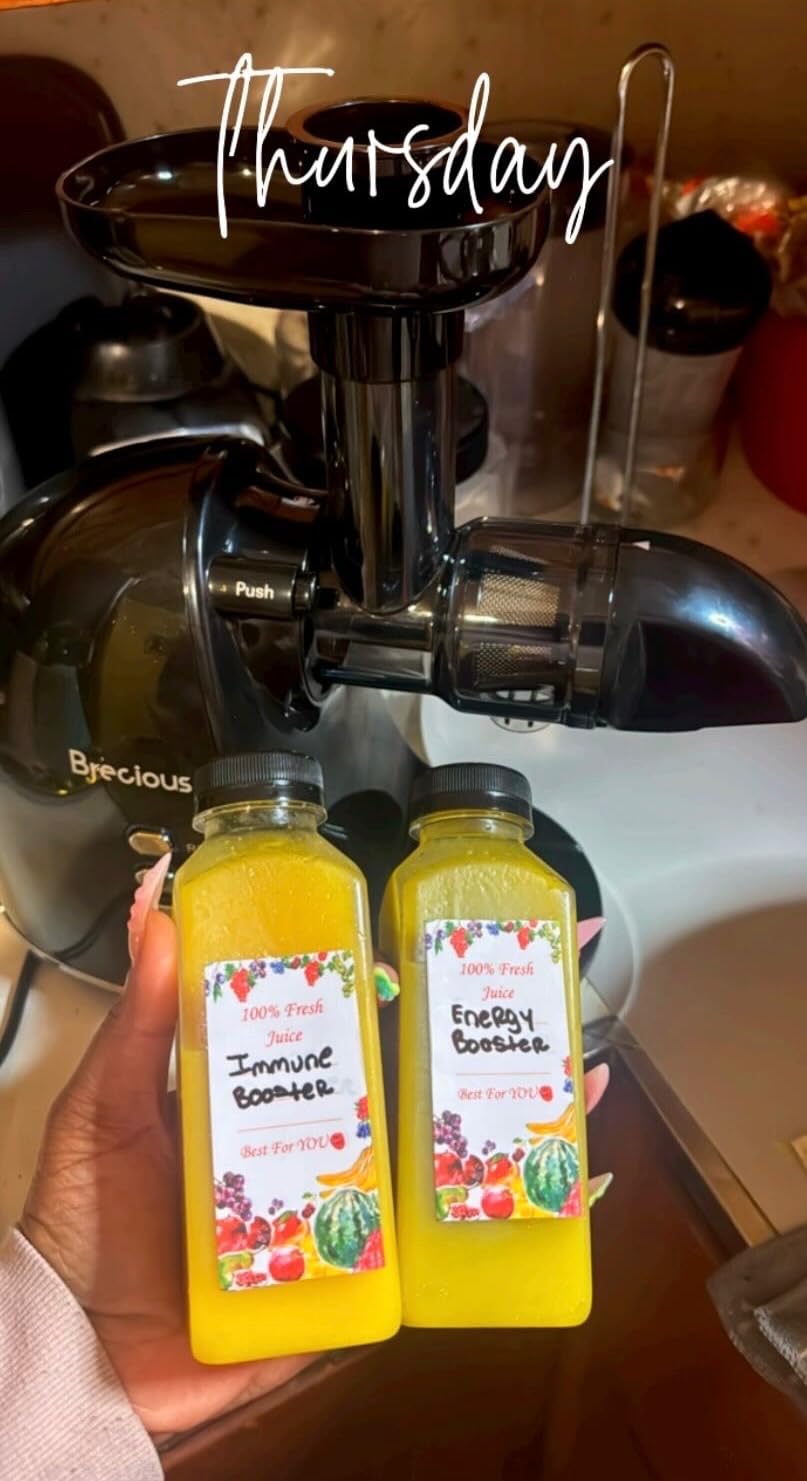
It is a silver ABS body with an ABS auger, 150 watts, two speeds, button control, dishwasher safe, 120 volts. It measures 14.84 inches deep by 6.97 inches wide and 14.6 inches tall and weighs 6.2 pounds. Operating noise is under 60 dB according to the manufacturer.
The package includes the main body, feed chute and drum, tray, plunger, auger, filter, juice cup, pulp container, cleaning brush, a manual, a recipe sheet and a wrench. A 3-section super filter handles the fine separation.
Is it good enough for a daily celery routine?
Yes, as long as you accept a cutting session first. Owners describe a smooth, quiet, easy-to-clean machine that handles celery and leafy greens well once produce is cut to size.
The BPA-free build with no sharp blades also makes it a reasonable choice in a kitchen with curious children running around.
Where it falls short
The 1.8 inch feed chute is the biggest drawback here and the main reason this is not higher in the ranking. More chopping means more hands-on time for the least glamorous vegetable.
The plastic body also feels cheaper under the hand than the stainless Omega models, and the after-sales service period is one year.
9. Godspeeds 6 Inch Chute Cold Press – Best for Tight Counter Space
Godspeeds 6-inch Chute Cold Press Juicer Machine
6 inch chute, 300W motor, 58 RPM auger, 10-year warranty
Pros
- 6-inch chute takes whole apples oranges and cucumber with little prep
- 300W motor with steady torque for firm fibrous produce
- Compact vertical profile that fits under standard cabinets
- Suction cups keep the unit steady on the counter
Cons
- Some juice remains in the pressed pulp so extraction is not complete
- Lid opening is narrower than the stated chute width
- Plastic build with a food trap area needing extra care
At 6 by 6 by 16 inches, the Godspeeds is the narrowest machine here and the easiest to hide away between cooking sessions. The 6 inch chute takes whole apples and oranges, and trimmed celery sections went straight in.
It rates 4.5 from 524 reviews, and the manufacturer lists celery among the recommended produce alongside apple, beetroot, carrot, cucumber, ginger, kale, orange, pear and watermelon. The 10-year warranty is the second longest in this group.
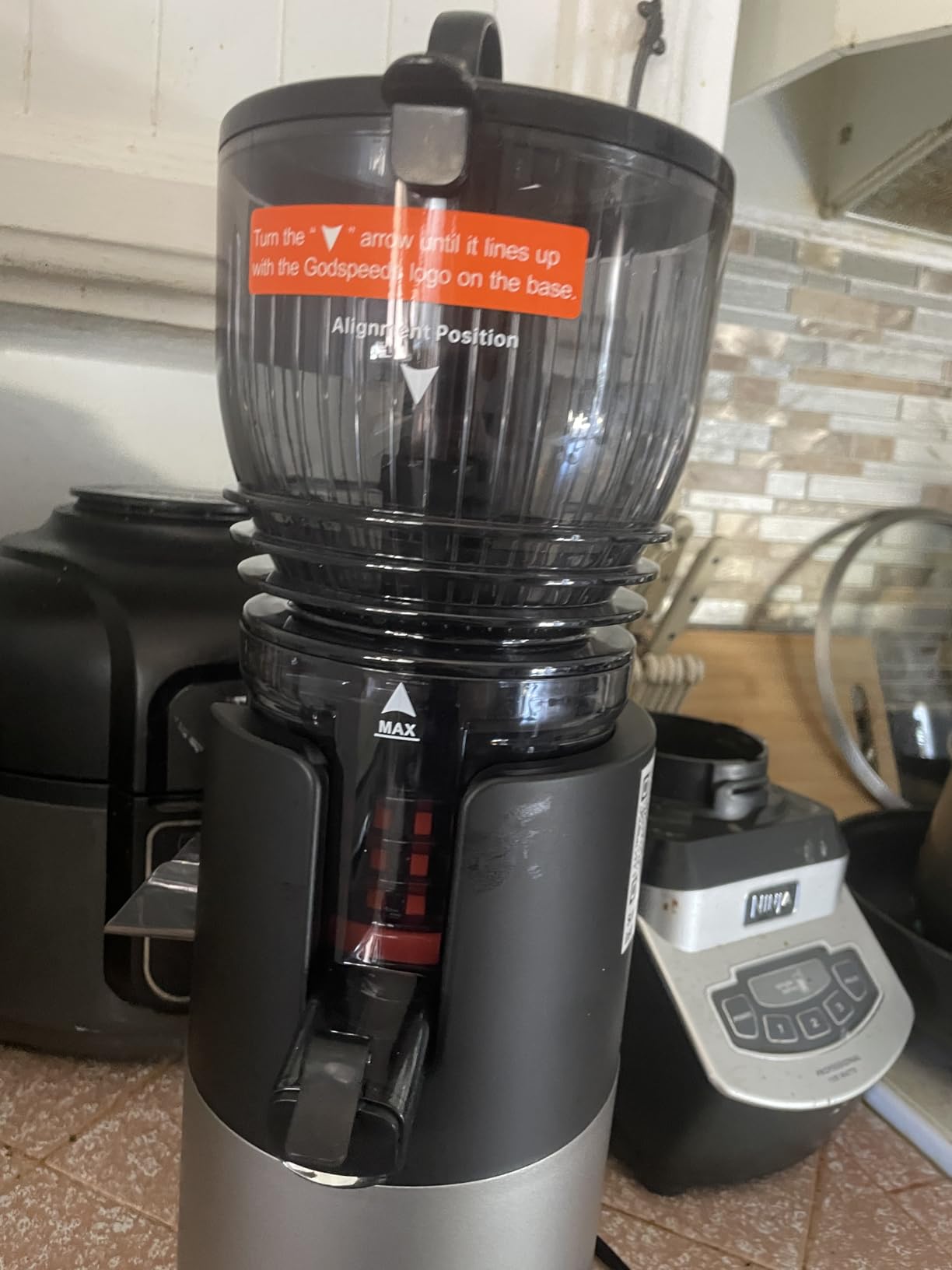
Internals are a 58 RPM auger with a 300-watt motor running under 58 dB, with reverse function, overheat protection, a safety lock and a metal-free filter. Capacity is 473 ml. It measures 6 inches deep by 6 inches wide by 16 inches tall and weighs 7.9 pounds.
The three-step assembly disassembles for cleaning, and the box includes a pusher, feed chute, filter skeleton, auger, pressing cup, base, guide and a recipe sheet. Suction cups hold the unit steady on the counter during fibrous batches.
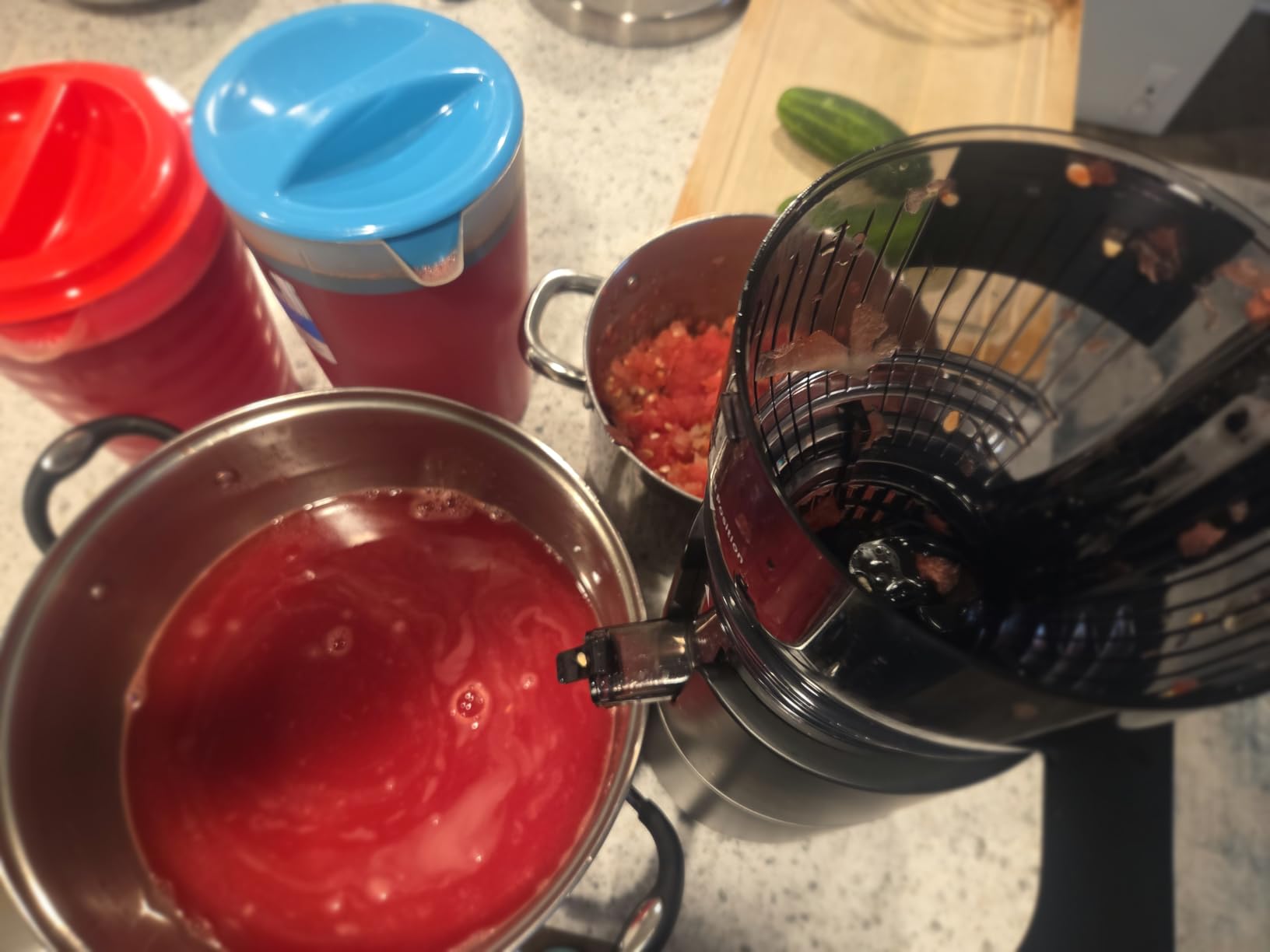
Is a narrow body enough for celery work?
More than the width suggests, because the chute is wide. The tradeoff is the height: you get capacity and a good feed opening in a 6 inch wide footprint, which suits a small kitchen where a wide horizontal Omega would dominate the counter.
Owners also report low noise and quick assembly, which matters if you are juicing before breakfast.
Where it falls short
The most repeated negative comment is that some juice remains in the pressed pulp. You buy more celery for the same glass than you would with a tighter-screwing Omega model.
The lid opening is also narrower than the stated chute width, so some items still need cutting, and the food trap area at the top of the auger needs careful cleaning after fibrous batches.
10. Omega H3000RED Cold Press 365 – Budget Pick for Celery
Omega H3000RED Cold Press 365 Juicer Slow Masticating Extractor Creates Delicious Fruit Vegetable and Leafy Green High Juice Yield and Preserves Nutritional Value, 150-Watt, Red
90-110 RPM masticating, 150W motor, BPA-free, dishwasher-safe parts
Pros
- Extracts juice from celery carrots leafy greens and wheatgrass
- Slow 90-110 RPM operation limits oxidation
- Rinse-and-go cleanup with dishwasher-safe removable parts
- Compact horizontal footprint
Cons
- Small horizontal chute requires shorter cut pieces
- Lower 150-watt power than most premium cold press models
- Higher share of one-star reviews than the other picks
The H3000 is the cheapest route into celery juice that still uses proper masticating mechanics. It runs at 90 to 110 RPM specifically to limit heat build-up and oxidation, which is the whole argument for a slow juicer on a green vegetable.
It holds 4.2 stars from 2516 reviews, the lowest average of the ten. Buyers value the compact footprint, the celery and leafy green performance and the simple cleaning, while criticism centres on yield and the need for smaller cut pieces.
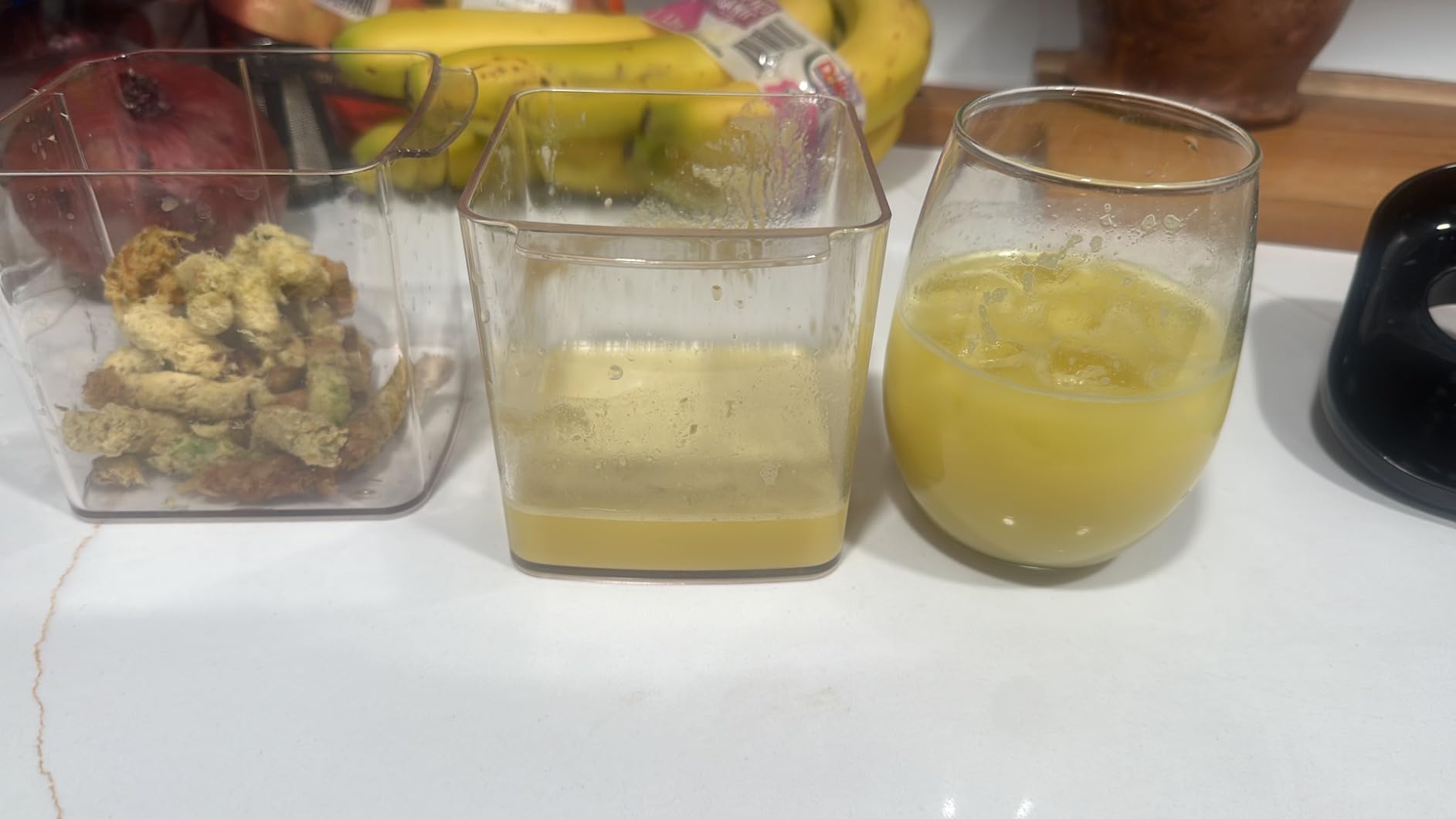
It is a red plastic body with a stainless steel auger, 150 watts, one speed, 0.5 liters of capacity, BPA-free and dishwasher safe. It measures 6.7 inches deep by 17.96 inches wide by 13.27 inches tall and weighs 8.8 pounds.
The box includes the juicer housing, juice container, pulp container, auger, drum, end cap, fine and coarse juicing screens, hopper, brush and plunger. Two screen options let you trade speed against clarity when the batch is mostly celery.
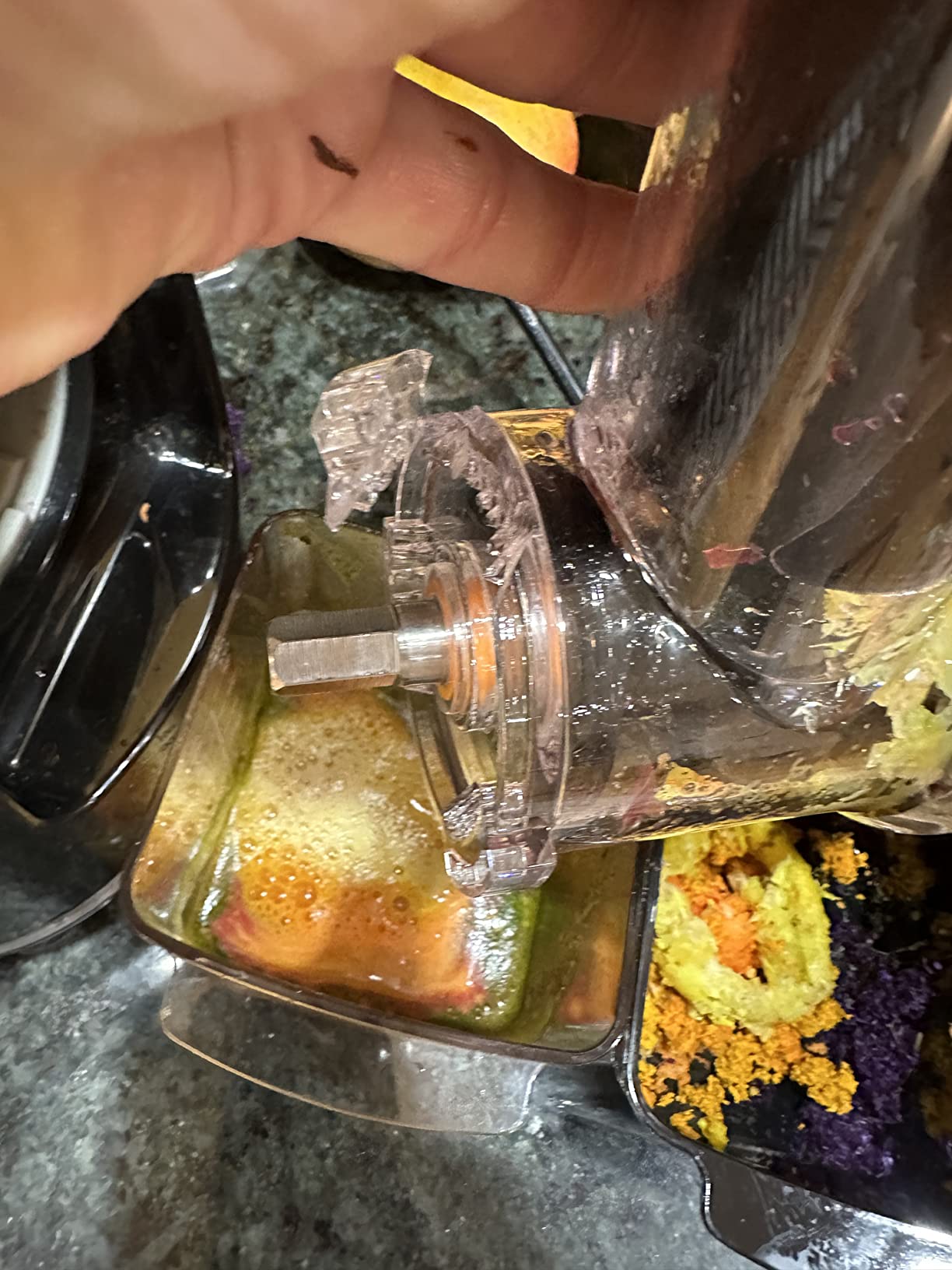
Is a budget masticating juicer good enough for celery?
More than enough, provided you cut smaller pieces. The 150-watt motor is the least powerful here, and long sections will tax it, but short cuts processed at a calm pace produced clear, low-foam juice in our runs.
The dishwasher-safe removable parts make it the easiest machine on this list to rinse between daily batches, which is a bigger factor for celery than for fruit.
Where it falls short
The small horizontal chute forces more prep than the 6 inch wide machines, and the lower wattage means a stalk that stalls takes longer to recover. A larger share of one-star reviews points to mixed durability at this level.
Its 4.2 average is the lowest in the roundup, so treat it as a starter machine for occasional celery juice rather than a daily workhorse.
How Much Juice Does Celery Make?
A head of celery yields roughly one cup of juice in a well-performing cold press juicer, and a single trimmed stalk gives you a modest pour of two to three ounces. On a centrifugal machine you will get more liquid in the jug, but much of it is waterier and foamier, and more is still locked in the pulp.
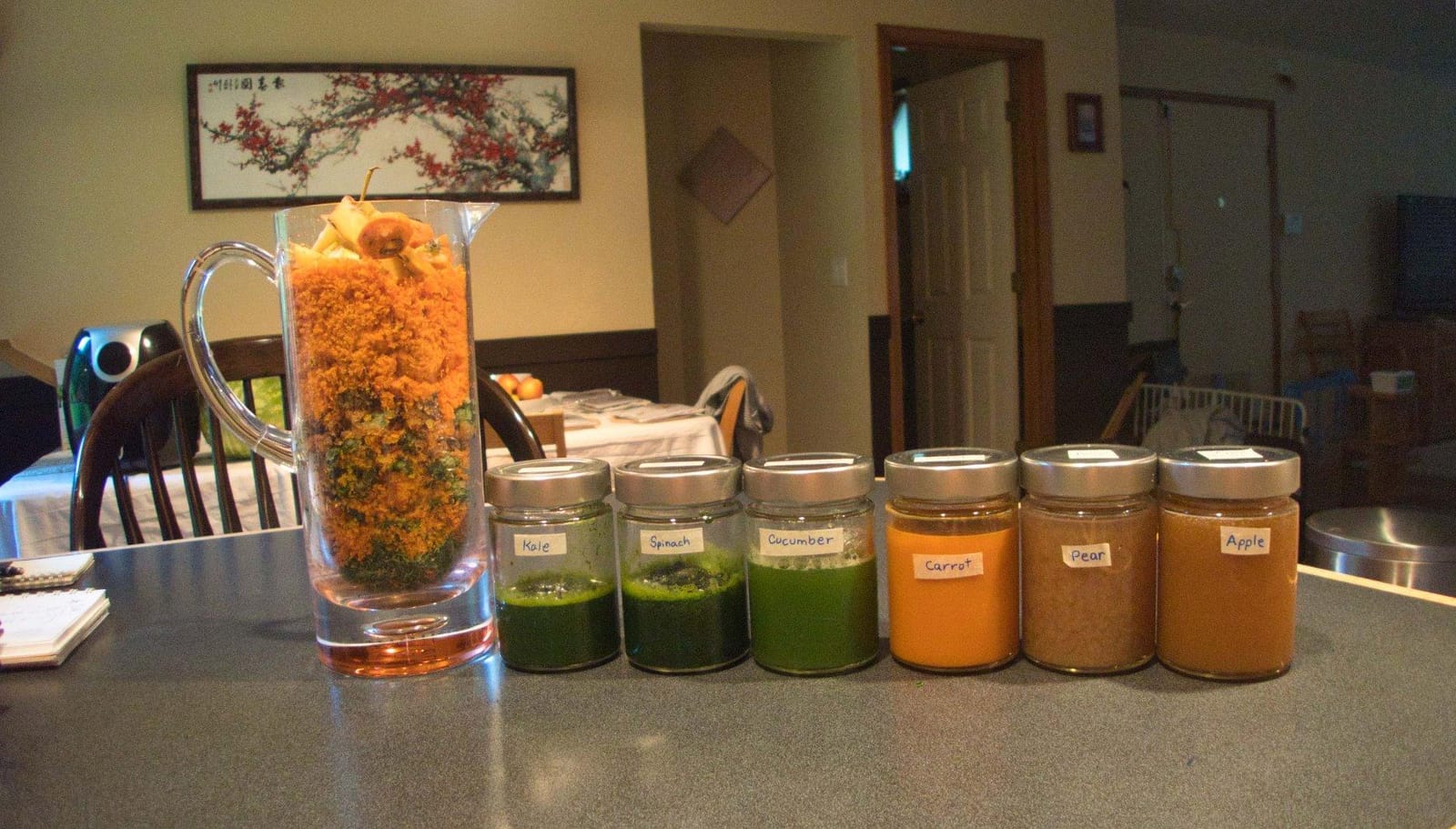
The number that matters is the pulp. If you lift the bowl after a celery batch and the pulp feels damp and heavy, the machine left money in there. If it feels dry and crumbly, the extraction worked, and your next batch needs less celery for the same glass.
Weighing both sides is the only way to compare two machines honestly. Put the pulp bowl on a scale, note the weight, then compare it against the raw weight you fed in. The machine that leaves the drier bowl will always win in the long run, even if the jug looks slightly smaller on the first pass.
Storing Celery Juice and Using the Pulp
Drink celery juice the day you make it. Chlorophyll oxidises quickly once the cell walls are broken, so a green juice that tastes grassy and sharp an hour after juicing will taste flatter still the next morning, no matter how well the machine performed.
If you must store it, fill an airtight glass container to the very top, refrigerate it and keep the window closed. Headspace is what drives oxidation, and plastic containers are worse than glass because they let more oxygen through over a day or two.
Do not throw the pulp away. Celery pulp is moist, faintly sweet and full of fibre, and it works as the base for quick things: stirred into oat or coconut porridge, folded into muffins and pancakes, mixed into meatballs and veggie burgers, or dried lightly and used as a salad garnish.
The greens-to-pulp ratio matters here. A batch that is mostly celery leaves you with more pulp than a fruit batch does, so plan one pulp recipe per juicing session rather than trying to use it all at once.
What to Look for in a Celery Juicer
Feed chute width is the first thing to check. Anything at or above 5.8 inches reduces chopping dramatically, and a self-feeding hopper stops you from pushing at every piece. Below 1.8 inches, budget real time for prep.
Motor torque matters more than wattage on paper. A higher number does not guarantee a better celery run, but a machine that stalls once will stall again. Reverse and anti-clog functions are what turn a minor stall into a thirty-second pause instead of a disassembly.
Cleaning deserves its own paragraph because celery fibre clings. Dishwasher-safe juice-contact parts save the most time, and smooth internal surfaces without deep corners are worth paying for. Models with a fully detachable pulp outlet rinse faster than ones with a fixed chute.
Then look at the warranty and the consumable parts. A 10 to 15 year manufacturer warranty tells you the motor and housing are built to last, while the auger, strainer and end cap are wear items regardless of brand. Make sure replacement parts are sold separately before you buy.
Finally, consider the whole kitchen. Tall vertical machines are 16 to 18 inches high and will not go under a standard cabinet, while horizontal Omega bodies are shorter and wider. A 14 to 15 pound machine is a permanent counter occupant, so measure before you commit.
For most people, the buying order we would follow is simple. Decide between horizontal and vertical, then choose the widest chute in that style you can live with, then check the warranty. Everything else is a preference.
Juicers We Would Skip for Celery
We name this section because a list that never rules anything out is not a useful list. Two machine classes regularly disappoint on celery, and buyers deserve to know before they spend.
High-speed centrifugal juicers fail on celery in a specific way. They shred the stalk against the wall of the chute, generate heat, and create foam that traps air in the jug. A long stalk fed into a narrow centrifugal tube can also exit through the top of the machine, spraying juice across the counter, which is a failure mode documented by owners and in editorial testing of this machine category.
Blenders and smoothie machines are the other category to skip. They do not separate pulp from liquid at all, so what comes out is celery suspended in water rather than extracted celery juice, and the fibre stays in the drink.
Two warnings about the machines on this list. Any machine with a chute under 2 inches will make you cut every stalk twice, and any machine rated under about 150 watts will feel the difference on a full head of celery even if the listing calls it high torque.
Frequently Asked Questions
What is the best juicer for making celery juice?
A masticating cold press juicer with a wide feed chute handles celery best because the slow auger crushes stringy fibre instead of wrapping it around a spinning blade. Among the ten machines we tested, the Ninja NeverClog JC151 offered the best balance of torque, dry pulp output and easy cleaning, while the Omega MM1500 is the only one built specifically for celery.
What is the best way to juice celery?
Trim the base and leafy top, keep the skin on, and cut stalks into 5 or 6 inch sections for centrifugal machines or shorter pieces for narrow-chute vertical juicers. Feed softer produce first to prime the auger, add celery after, and use the reverse function the moment the machine slows down instead of pushing harder.
What is the best celery juice machine for small kitchens?
For a compact countertop, the Godspeeds 6 inch chute model measures only 6 by 6 by 16 inches, has a 6 inch feed opening and carries a 10-year warranty. The Omega H3000RED is the most compact overall at 8.8 pounds, though its horizontal chute needs produce cut into shorter sections.
Do I need a masticating juicer for celery, or will a centrifugal work?
A centrifugal will make celery juice, but it runs hotter, foams more and leaves more juice in the pulp, and long stalks can spray out of the top of the chute. A masticating juicer is slower and extracts a clearer, less aerated juice with drier pulp, which is why every machine in this roundup is a slow juicer.
Why does my juicer clog on celery?
Celery’s long vascular fibres wrap around augers and mesh strainers, especially when pieces are cut too long for the chute. Cut smaller pieces for a narrow chute, feed at a pace the machine accepts without forcing, and use the reverse function at the first sign of a stall. If it still clogs repeatedly, the chute is too narrow for celery.
How long does fresh celery juice last?
Celery juice tastes best within hours because chlorophyll oxidises quickly. Stored in an airtight glass container filled to the top and kept refrigerated, it stays drinkable for a day or two, but the flavour flattens noticeably well before the second day is out. Freezing is possible but the texture suffers noticeably.
Final Verdict
The best juicers for celery are all slow, cold and wide-chute, and the differences between our top ten come down to how much prep you tolerate. The Ninja NeverClog JC151 is the one we recommend most, with 150 watts of steady torque, a working reverse function and dishwasher-safe parts for a 4.5 star rating across 3669 reviews.
Buy the AAOBOSI if prep time is your biggest complaint, since its 6.5 inch chute is the widest here. Buy the Omega MM1500 if celery is a daily habit and you want a machine with a dedicated celery end cap and a 15-year warranty. If you are starting out, the Omega H3000RED gets the slow-press mechanics right at the lowest cost.
Whichever you choose, cut the stalks to fit the chute, use reverse at the first sign of a stall, and drink the juice the same day. Those three habits matter more to your celery results than any spec on the box. Updated for 2026.