

If you have ever opened an RV refrigerator and wondered where the ice maker was, you are not alone. Most RV fridges are absorption or 12V compressor units, and neither type has an ice maker. Their freezers are also far too small to hold a tray of cubes, let alone a bag of ice for a week of camping. That is the gap a portable unit fills.
We spent weeks comparing countertop and cordless ice makers against the things that actually matter in an RV: counter footprint, weight, power draw, noise near a bed, and how much ice the basket really holds. The result is our list of the best ice makers for RVs in 2026, covering three tiers: entry-level bullet machines, mid-range nugget and pebble ice makers, and a battery-powered cordless option for boondocking. If you are still working out how a nugget maker differs from a bullet maker, our countertop ice maker guide for nugget ice goes deeper on that.
Two honest facts before the list. First, a portable ice maker is not a freezer. Finished ice sits in an uninsulated basket and melts, so you move it to your RV freezer or a cooler. Second, the advertised 26 lbs per day figure is a 24-hour maximum, not a storage capacity. Every model here holds between 1.3 and 2.2 lbs at a time. Anyone who tells you otherwise is repeating a marketing number.
Table of Contents
Top 3 Picks for the Best Ice Makers for RVs in 2026
Best Overall Portable Ice Maker for RV: EUHOMY 26lb Bullet Ice Maker — 9 cubes in 6 minutes, a 12.9 lb body with a carry handle, and 16,000+ reviews behind it.
Best Nugget Ice Pick: Silonn Nugget Ice Maker — chewable compacted flake ice, 36 lbs per day class output, and the largest review base of any nugget machine here.
Best Value: Frigidaire 26lb Compact Ice Maker — the biggest water reservoir in this group, a 1-year warranty, and a brand RV owners already trust for support.
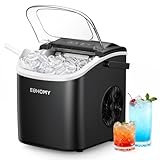
EUHOMY 26lb Bullet Ice Maker
- 9 cubes in 6 minutes
- 26 lbs per 24 hours
- 1.2L tank and 1.3 lb basket
- Built-in handle and viewing window
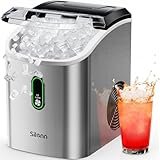
Silonn Nugget Ice Maker
- Chewable nugget ice in 6 minutes
- 36 lbs per 24 hours
- Removable top cover for deep cleaning

Frigidaire 26lb Compact Maker
- 9 cubes every 7 minutes
- 2.1 qt water reservoir
- Digital panel with two ice sizes
Three more facts worth knowing before you shop. You pour water in by hand; no plumbing line is needed. Every unit here runs on 120V AC, except the battery-powered HOMEVOL that also runs cordless. And if you boil up a batch every day, a compressor-based machine on a low wattage is far easier on a battery bank than a high-wattage nugget machine.
Every Ice Maker for RVs Compared Side by Side in 2026
| Product | Specifications | Action |
|---|---|---|
| EUHOMY 26lb Bullet Ice Maker |
|
Check Latest Price |
 EUHOMY Nugget Ice Maker EUHOMY Nugget Ice Maker |
|
Check Latest Price |
 Silonn Bullet Ice Maker Silonn Bullet Ice Maker |
|
Check Latest Price |
| Frigidaire 26lb Compact Maker |
|
Check Latest Price |
 COWSAR Nugget Ice Maker COWSAR Nugget Ice Maker |
|
Check Latest Price |
 EUHOMY Pebble Ice Maker EUHOMY Pebble Ice Maker |
|
Check Latest Price |
 Antarctic Star Ice Maker Antarctic Star Ice Maker |
|
Check Latest Price |
| Silonn Nugget Ice Maker |
|
Check Latest Price |
 ecozy Bullet Ice Maker ecozy Bullet Ice Maker |
|
Check Latest Price |
 HOMEVOL Cordless Ice Maker HOMEVOL Cordless Ice Maker |
|
Check Latest Price |
1. EUHOMY 26lb Bullet Ice Maker — Best Overall Portable Ice Maker for RVs
EUHOMY Countertop Ice Maker Machine with Handle, 26lbs in 24Hrs, 9 Ice Cubes Ready in 6 Mins, Auto-Cleaning Portable Ice Maker with Basket and Scoop, for Home/Kitchen/Camping/RV. (Black)
9 bullet cubes in 6 minutes
26 lbs per 24 hours
11.42 x 8.74 x 11.57 inch
12.9 lbs with carry handle
1.2L tank and 1.3 lb basket
Pros
- Fast 6-minute first batch
- Compact 12.9 lb body with a built-in handle
- Viewing window shows ice forming
- Two-step operation with a simple control panel
- Basket and scoop included with a 12-month warranty
Cons
- ABS plastic housing feels basic
- 1.2L tank needs frequent refills
- Bullet cubes are softer than traditional cubes
This is the machine I keep coming back to. It weighs 12.9 lbs, has a handle molded into the housing, and measures just under 12 inches in every direction, which means it fits a small travel trailer counter without stealing the prep space next to the sink. The first batch of nine bullet cubes lands in about 6 minutes, and the infrared sensors handle the rest without supervision.
Two design details matter more in an RV than the spec sheet suggests. The viewing window lets you check the basket without lifting the lid, which means fewer dropped cubes on the counter. And the one-touch self-clean cycle is 30 minutes, triggered by holding the power button for 5 seconds.
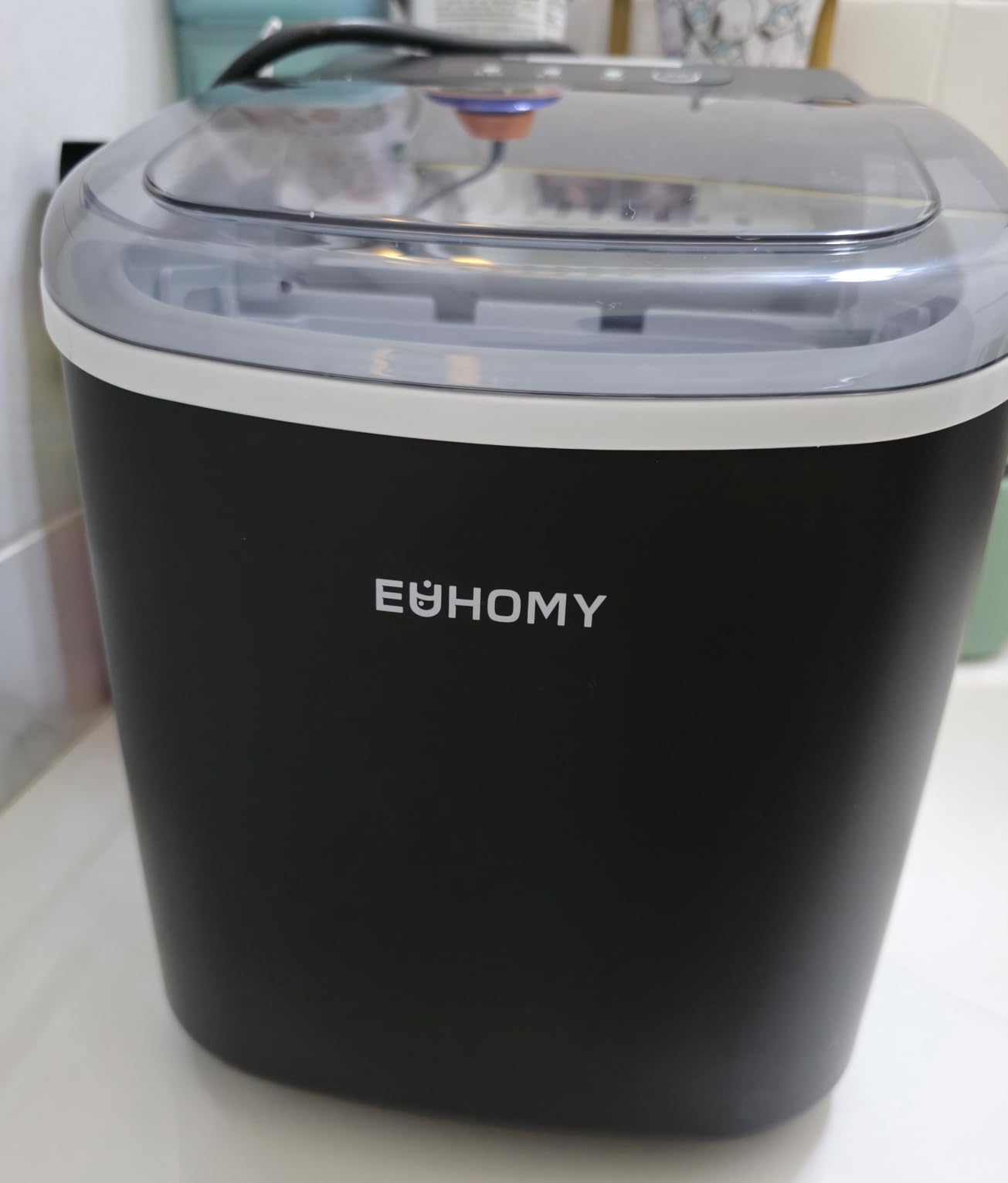
The honest weakness is water capacity. A 1.2L reservoir is roughly five cups, so on a hot week you are refilling it two or three times a day. Filling from a gallon jug is easy, but it is a daily habit you have to keep.
Power draw sits at 170W on 115V with R600a refrigerant, and the manufacturer rates consumption at 4kWh over 24 hours. That is a real number to plan around if you run a small inverter. Specs are 1.3 lbs of stored ice at once, so a full basket is about three drinks for two people.
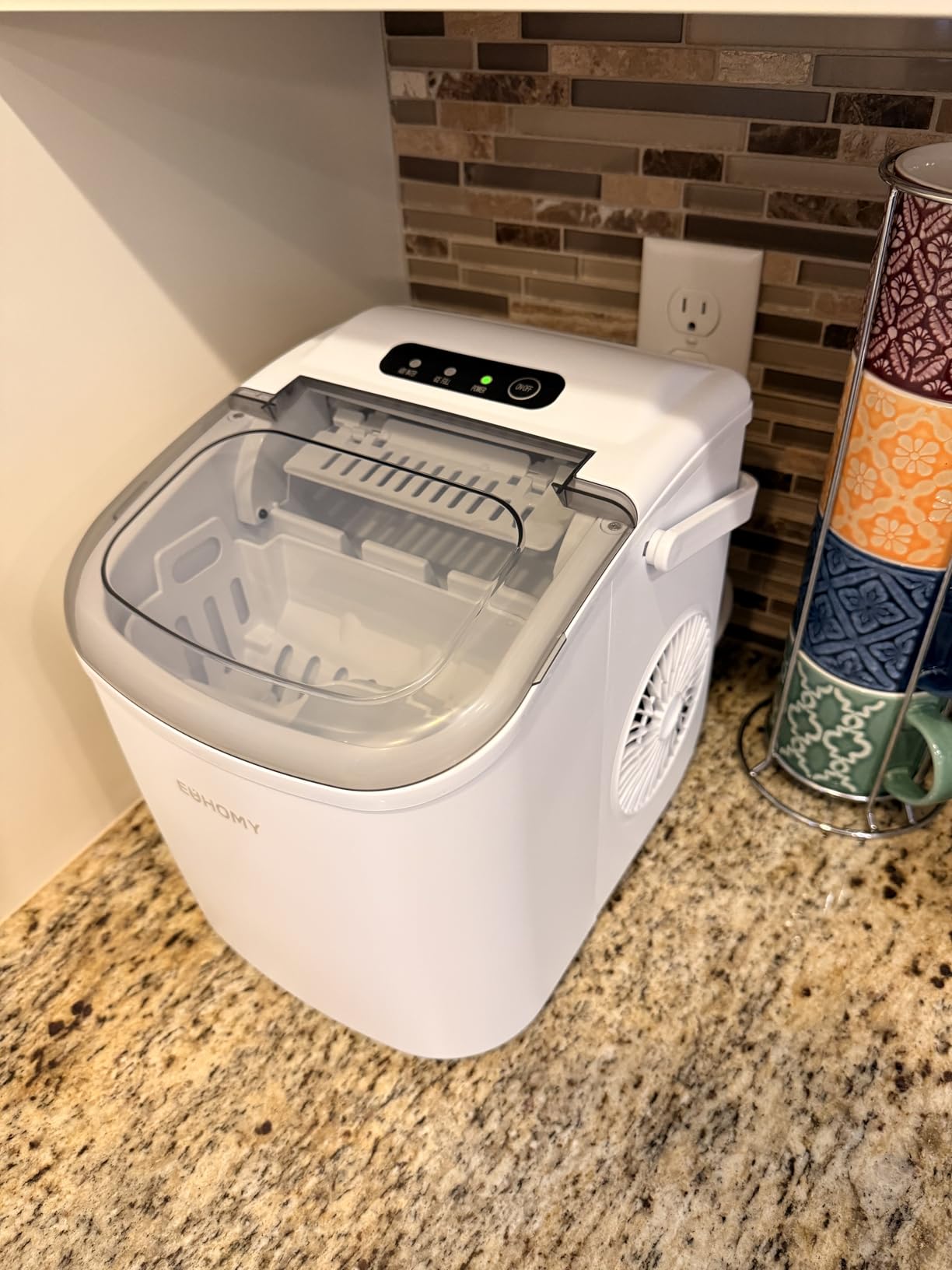
Will it fit a Class B or travel trailer kitchen?
Yes, and this is the main reason it took the top spot. The body measures 11.42 inches deep by 8.74 inches wide by 11.57 inches tall, and the 11.57 inch height clears most overhead cabinets when the lid is closed. Owners running daily drinks report it handles a weekend without fuss.
Measure before you buy, though. You need a couple of inches of clearance above the lid for the basket to come out, and the handle adds a bit of depth when you want to carry it out to the awning.
What should you watch out for on this machine?
Bullet ice from this class is hollow and low density, so it melts faster in a warm drink and clumps into a solid block if you dump a wet batch straight into the RV freezer. Spread it out first, or move it to a cooler with ice packs.
The other recurring note is the ICE FULL sensor. Owners on r/GoRVing describe machines that stop producing because the sensor reads full when the basket is not. The fix is always the same: pull the basket out and reposition the ice so nothing rests on the sensor window.
2. EUHOMY Nugget Ice Maker — Best for Deep Cleaning After a Long Trip
EUHOMY Nugget Ice Maker Countertop with Handle, Ready in 6 Mins, 34lbs Per Day, Removable Top Cover, Auto-Cleaning, Portable Sonic Ice Maker with Basket and Scoop, for Home/Party/RV/Camping (Black)
Nugget and pellet ice in 6 minutes
34 lbs per 24 hours
Lift-up removable top cover
1.8 lb removable basket
Under 45 dB
Pros
- Chewable nugget texture in about 6 minutes
- 34 lbs per day output
- Removable top exposes every corner
- Compact body with a built-in handle
- ETL certified with 1-year tech support
Cons
- Plastic housing rather than stainless steel
- Small 111-review base limits long-term reliability data
Nugget ice is a different experience from bullet ice. The pellets are denser, chewable, and melt far more slowly in a drink, which matters on a 100-degree afternoon when a bucket of bullets turns to water in twenty minutes. This machine makes the first batch in about 6 minutes and advertises 34 lbs per 24 hours.
The reason this one earns its place is the lift-up top cover. On most nugget machines, the water jets and the corners of the ice well are sealed away and you can only run the self-clean cycle. Here you can lift the mechanism out and wipe every surface by hand before a long storage period between trips.
Rated under 45 dB, it draws 144W on 115V, and carries a 1.2-quart tank feeding a removable 1.8 lb basket. Dimensions are 11.61 by 9.45 by 12.99 inches, so plan for the extra height that a nugget well requires.
Is the nugget ice worth the extra size?
If your group drinks iced coffee, cocktails, or anything you want to chew, yes. Nugget ice packs more water per cube, so you use less melt dilution in a plastic tumbler over a long afternoon.
If you mostly fill a cooler for a fishing trip or a day excursion, bullet ice does the same job at lower cost and in less space. The pebble and nugget well also needs more frequent water refills because each batch takes longer to extract.
What are the drawbacks of this nugget machine?
The 4.6 average rating is impressive, but it rests on 111 reviews. That is thin evidence about how the pump and the water-level sensor hold up after two seasons, and long-term durability feedback is sparse. Treat the rating as a promise rather than a track record.
Owners also point out the plastic body. It is lighter and easier to stow than a stainless machine, but it scuffs. Either way, the removable top is what keeps scale from becoming a problem in an RV where water sits in lines for weeks.
3. Silonn Bullet Ice Maker — Best for Small Kitchens and Tight Cabinets
Silonn Ice Maker Countertop, Portable Ice Machine with Carry Handle, Self-Cleaning Ice Makers with Basket and Scoop, 9 Cubes in 6 Mins, 26 lbs per Day, Ideal for Home, Kitchen, Camping, RV
9 bullet cubes in 6 minutes
26 lbs per 24 hours
11.57 x 11.42 x 8.74 inch
13.7 lbs
1.2L tank and 1.3 lb capacity
Pros
- Low 8.74 inch profile suits low cabinets
- 9 cubes in 6 minutes at 26 lbs per day
- Scoop clips to the basket for storage
- Three-step control panel
- Small and large cube selection
Cons
- Heavier than comparable units at 13.7 lbs
- Polypropylene housing is basic next to stainless models
The Silonn measures 11.57 by 11.42 by 8.74 inches, which makes it the lowest-profile unit in this group once you account for the carry handle. If your counter runs along the side wall of a travel trailer or a Class B van, that low height is the difference between a fit and a reshuffle.
It produces 9 cubes in 6 minutes, rated at 26 lbs per 24 hours, and lets you pick small or large bullets on the panel. That size selection is genuinely useful on a boat or at a campsite, where you want big cubes that melt slowly for a cooler and small ones for a water bottle.
The scoop clips onto the basket, which matters more than it sounds. On a moving campsite or a tailgate setup, loose plastic tools end up in the sink or on the floor, and losing the scoop is a small annoyance every single trip.
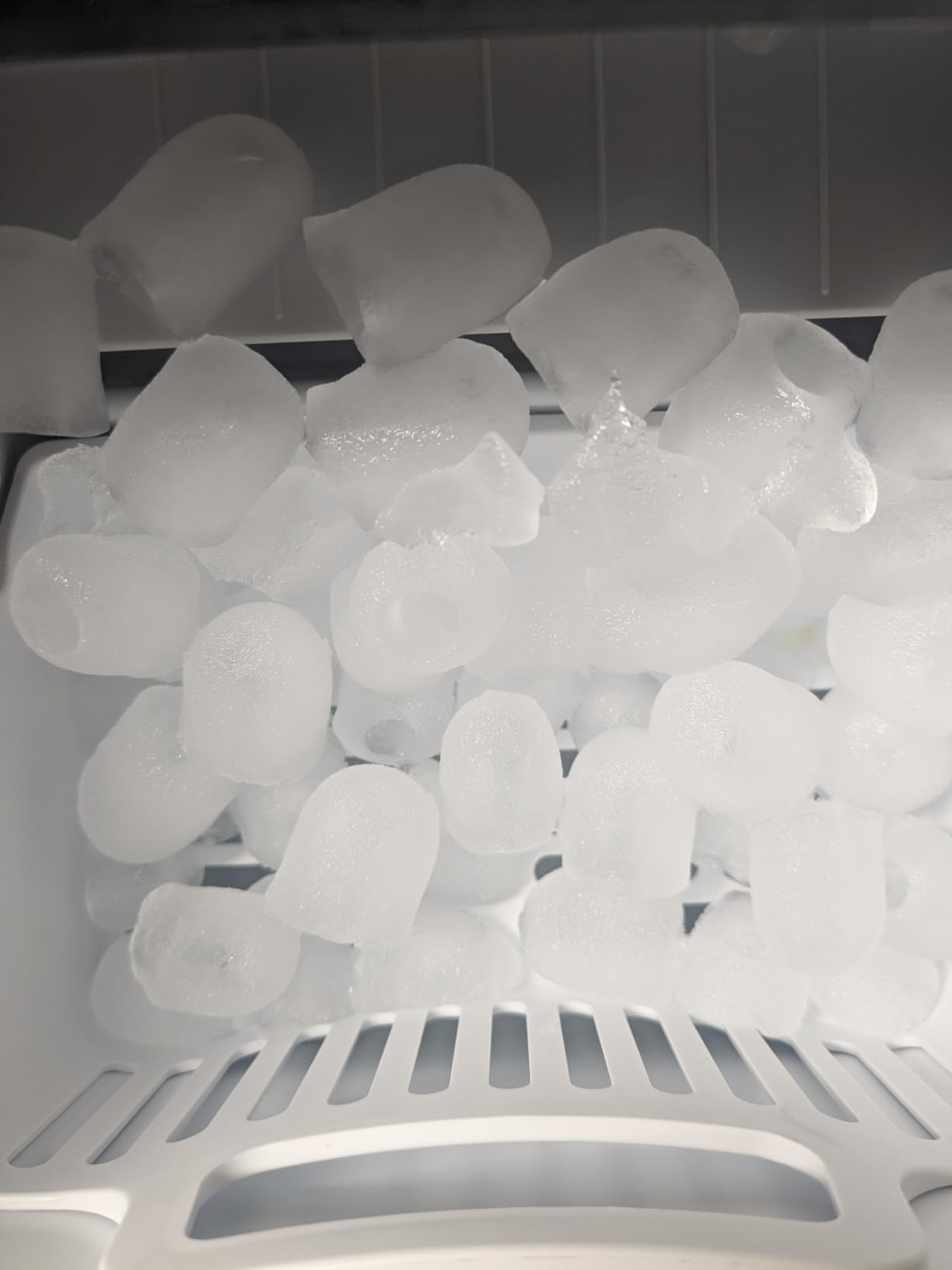
The self-clean cycle triggers by holding the clean button for 5 seconds and runs about 30 minutes. Water level and full-basket indicator lights sit on the control panel, and the 1.2L tank feeds a 1.3 lb storage capacity.
Power is 160W on 120V with R600a refrigerant, covered by a 1-year manufacturer warranty. That draw is higher than the leanest machines here, so budget for inverter capacity if you plan to run it on battery for long stretches.
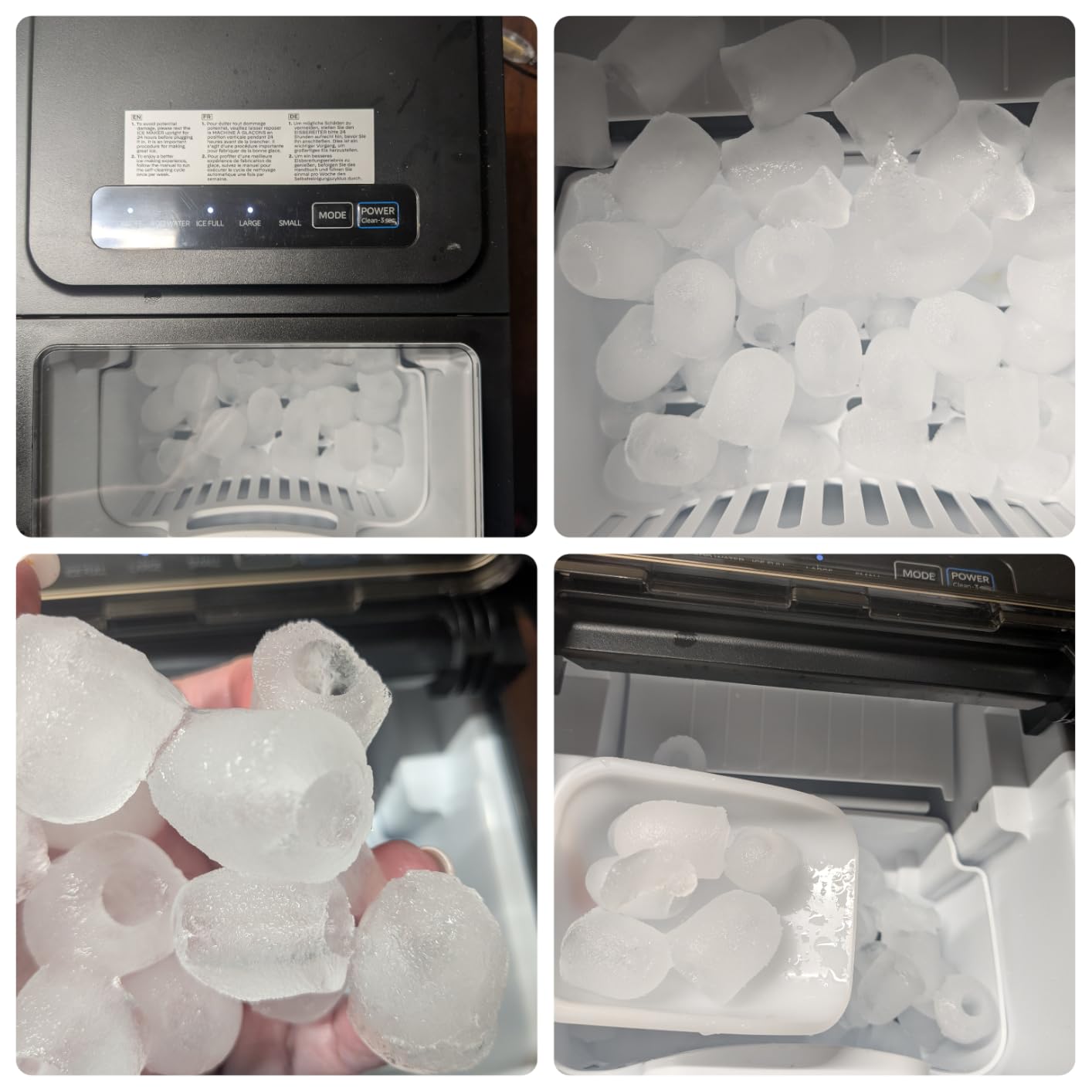
Is 13.7 lbs too heavy to move while full?
Empty, it is a one-person lift with the handle. Full, you are carrying roughly 15 lbs, which is manageable over a flat campsite but awkward up a step or a ramp. Most owners pour the basket into a cooler rather than carrying the whole machine.
That is also why the low profile matters. Lifting a full basket out of a deep, forward-tilted well is harder than the weight number suggests, and this one is built to be reached into from the front.
What do owners complain about most?
The most common note is that the machine runs continuously until you switch it off, and the basket is not refrigerated, so ice has to be moved to the freezer regularly. Reviews describe a steady supply for daily drinks and coolers without problems, provided you stay on top of transferring it.
Second is build feel. Polypropylene is functional rather than premium, and the panel takes a few uses to learn. Neither complaint has shown up as a reliability problem in owner reports, so treat it as a preference issue.
4. Frigidaire 26lb Compact Ice Maker — Best Value Pick for RV Owners
Frigidaire 26 Lbs per Day Portable Compact Maker, Ice Making Machine, Stainless, Medium
9 bullet cubes every 7 minutes
26 lbs per 24 hours
9 x 13 x 13 inch
2.1 qt water tank
1.5 lb interior basket
Pros
- Largest water reservoir in this group at 2.1 qt
- Recognizable brand with a 1-year warranty
- Stainless exterior suits a modern kitchen
- Digital LED panel with two size options
- Fast 6 to 8 minute batches
Cons
- Produces wet low-density ice that clumps when frozen
- Basket is not refrigerated so ice must be moved
- Tall 13 inch body
- 120V US plug needs a transformer abroad
The Frigidaire is the one I recommend when a family is the test. A 2.1-quart reservoir is the largest water tank among these machines, which means fewer refills when four people are drinking iced drinks all afternoon. Reviewers consistently call out the tank capacity as the reason they keep the machine running without babysitting it.
It makes 9 bullet cubes every 7 minutes, advertises 26 lbs per 24 hours, and stores 1.5 lbs in the basket. A digital LED panel handles the two ice size options, and a transparent window shows the ice without opening the lid.
At 105W on 120V, this is one of the lower-draw machines here, and Frigidaire pairs it with a 1-year warranty. For owners who want recognizable brand support rather than an anonymous marketplace listing, that combination carries real weight.
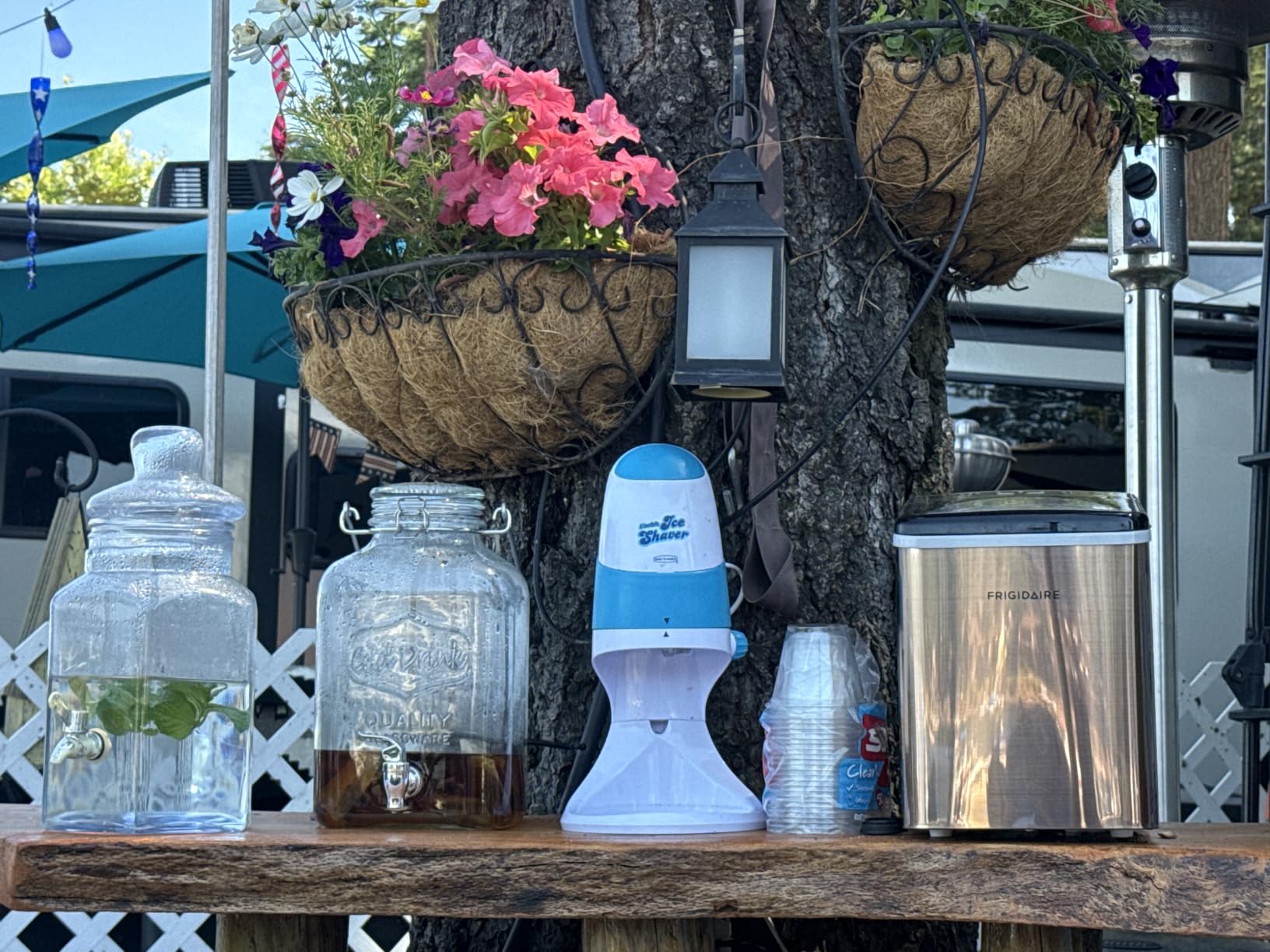
The body is 9 inches deep by 13 inches wide by 13 inches tall in a stainless and plastic build.
A drain plug sits on the base for emptying and cleaning, which matters when you drain the machine between trips. The scoop is included, and the 13-inch width and height make this the bulkiest body among the bullet machines here, so check the cabinet above the counter before you commit.
Why is a bigger water tank worth so much in an RV?
Because the reservoir is the real constraint, not the ice output. Output is a 24-hour maximum that assumes a constant supply of water. With a 2.1-quart tank you can run a full afternoon of family drinks, pour once, and stop thinking about it.
On a 1.1 or 1.2-liter machine, the same afternoon means two or three refills, and each refill is an extra trip to the fresh water tank with a jug in your hand.
What are the real drawbacks of this Frigidaire?
Ice quality. Owners describe the output as wet and low density, and it clumps into a solid block if you freeze a whole batch together. r/RVLiving members say the same thing about this class: the machines work fast, but you get a purer cube from a square-grid maker, which uses more power than an RV typically has spare.
The basket also does not hold ice cold, so every batch needs a move to the RV freezer or a cooler. And the 120V US-only plug needs a transformer if you camp outside North America.
5. COWSAR Nugget Ice Maker — Best for Heavy Daily Ice Use
COWSAR Nugget Ice Maker Countertop, Soft Chewable Pellet Ice Maker Machine with Self-Cleaning Function, 35Lbs/24H, Ready in 7 Mins, Portable Countertop Ice Makers for Home, Office, Stainless Steel
Chewable nugget ice in 7 minutes
Up to 35 lbs per 24 hours
8.86 x 12.8 x 11.22 inch
40 dB operation
2.2 lb detachable basket
Pros
- Soft hollow restaurant-style chewable ice
- First batch ready in 7 minutes
- Detachable 2.2 lb basket is easy to lift
- Quiet 40 dB operation
- Works well where freezer space is limited
Cons
- Transfer arm is short and can dump ice over the basket edge
- Per-batch output is modest against the daily claim
- Some water-level sensor faults reported within a year
The 2.2 lb detachable basket is the largest storage capacity in this group, and for a family that matters more than the headline number. You fill drinks straight from a basket you can carry to the table rather than one that stays bolted inside the machine.
Ice quality is genuinely good here. Owners compare the soft hollow pellets favorably to fast-food nugget ice, and a rated 40 dB puts it in the quieter half of this group, which matters when the galley is a few feet from the bed.
The first batch lands in 7 minutes, output is advertised at up to 35 lbs per 24 hours, and the 1.2L tank feeds the reservoir. Dimensions are 8.86 inches deep by 12.8 inches wide by 11.22 inches tall, so it is wider than most but shorter than the Frigidaire.
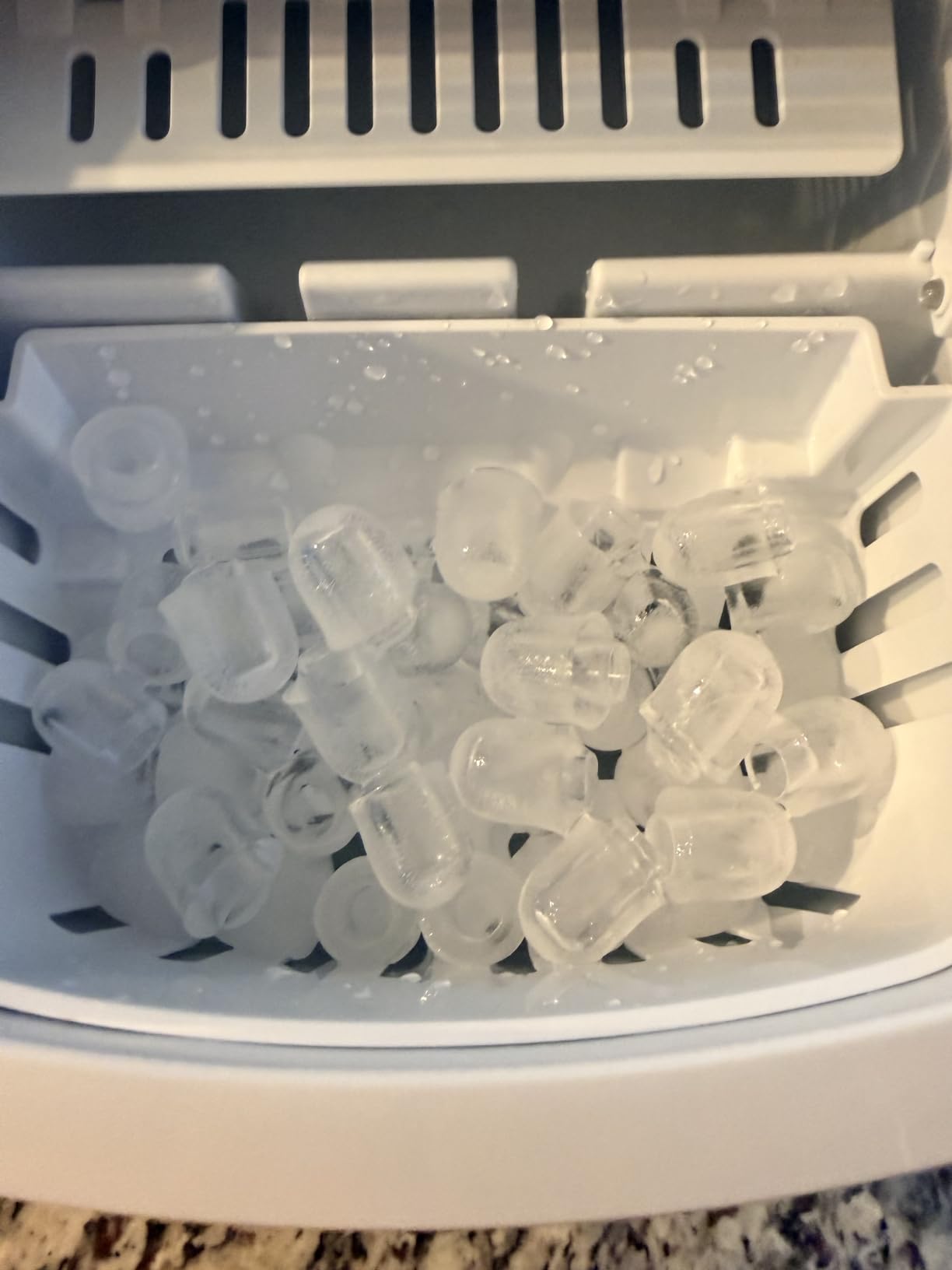
Self-cleaning is one touch, and a drain hole in the base handles a full drain between trips. The whole machine is plastic, which keeps the stow weight down when you pull it out of a storage bay to set up on arrival.
Power is 230W on 115V, the highest draw in this group. On shore power that is irrelevant. On an inverter or generator, size your battery bank for it rather than assuming a mid-size inverter covers an ice maker and an air conditioner at the same time.
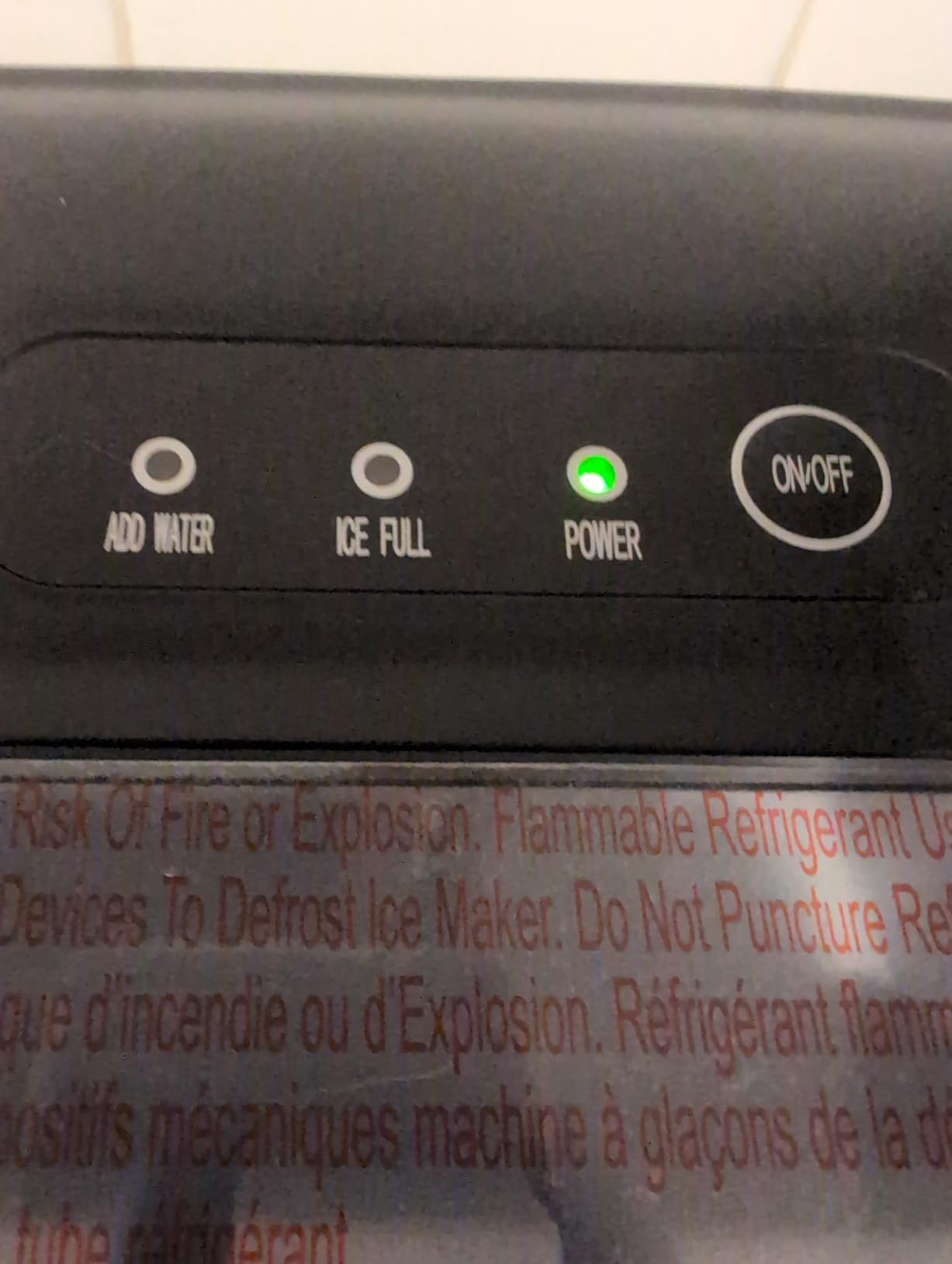
Is a 2.2 lb basket enough for a family of four?
It is the biggest here, and a bigger basket means fewer transfers into the RV freezer, which is the real bottleneck in a small trailer. You still will not store a day of ice in it, because the basket is uninsulated and the ice softens and melts.
Plan on treating the machine as a continuous feeder and the freezer as the storage. Nugget ice holds its shape better in a freezer bag than wet bullets do, so the transfer is less messy.
What problems do owners actually report?
The transfer arm is short, so ice can pile over the basket edge and land in front of the ICE FULL sensor. That triggers the machine to stop early, and several owners describe manually repositioning ice every few minutes during a long batch. It is a design quirk rather than a defect, but you need to be present for it.
A smaller number of owners on this listing report water-level sensor faults or units that stopped after several months. If you buy it, run the self-clean cycle every couple of weeks and drain it fully before storage.
6. EUHOMY Pebble Ice Maker — Best for Dishwasher-Safe Cleaning
EUHOMY Nugget Ice Maker Countertop, Ready in 7 Mins, 35Lbs/24H Pebble Ice Maker Machine, Self-Cleaning Countertop Sonic Ice Makers with Ice Scoop&Basket, Pellet Ice Maker for Home, Stainless Steel
Nugget and pebble ice in 7 minutes
35 lbs per 24 hours
11 x 9.1 x 12.6 inch
1.1L tank
Stainless steel body
Pros
- Ice texture compared favorably to fast-food drive-in ice
- Parts disassemble easily and are dishwasher friendly
- Removable top mechanism plus a self-clean cycle
- Stainless steel body
- Compact 11 x 9.1 x 12.6 inch footprint
Cons
- Noticeably loud compressor noise
- No stirrer so ice can bridge the inlet and block the full sensor
- Uneven basket drainage leaves pooled water
- Basket takes about 45 minutes to fill
This is the one to buy if mineral scale worries you. Every removable part disassembles and goes in the dishwasher, and the top mechanism lifts out for a hand wash. In an RV, where water sits in a tank for weeks between trips, a machine you can actually scrub is worth more than a slightly nicer texture.
It produces nugget and pebble ice in 7 minutes, advertises 35 lbs per 24 hours, and runs on 130W at 115V with a stainless steel body. The 1.1L tank is the smallest here, so refill frequency is the trade-off you accept for cleanability.
Note that this model arrives with a protective film on the body that should come off before first use. It is mentioned in the product documentation, and owners who left it on reported odd behavior until they found it.
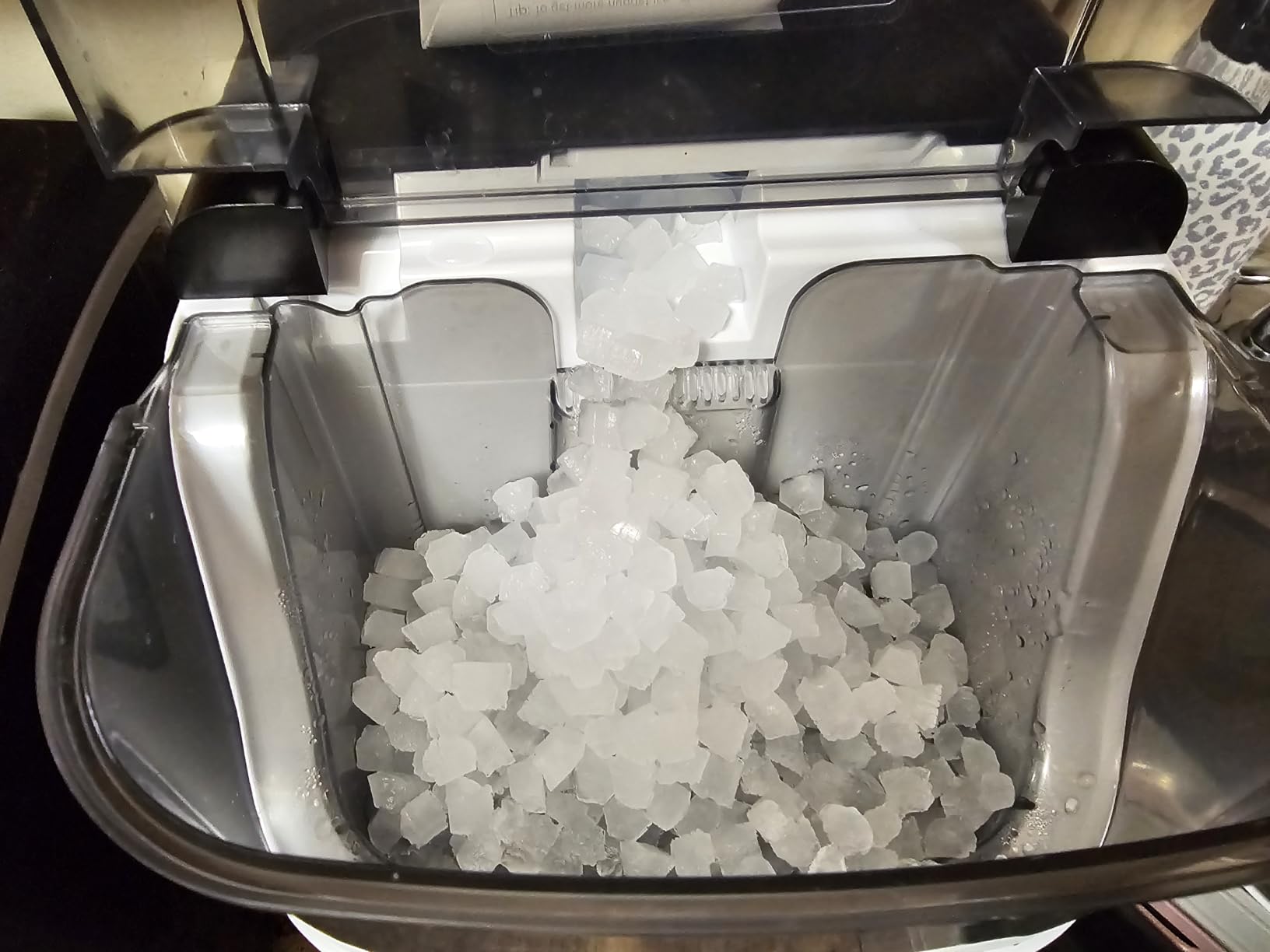
The 4.0 average is the lowest in this roundup, and the reasons are specific rather than general. Noise is the top complaint: owners report a noticeable compressor whirr that contradicts the quiet claims, and several units in this class are louder than a refrigerator.
Second is the missing stirrer. Without it, ice forms a ramp that bridges the water inlet and rests against the ICE FULL sensor, so production stalls until you reposition the pile by hand.
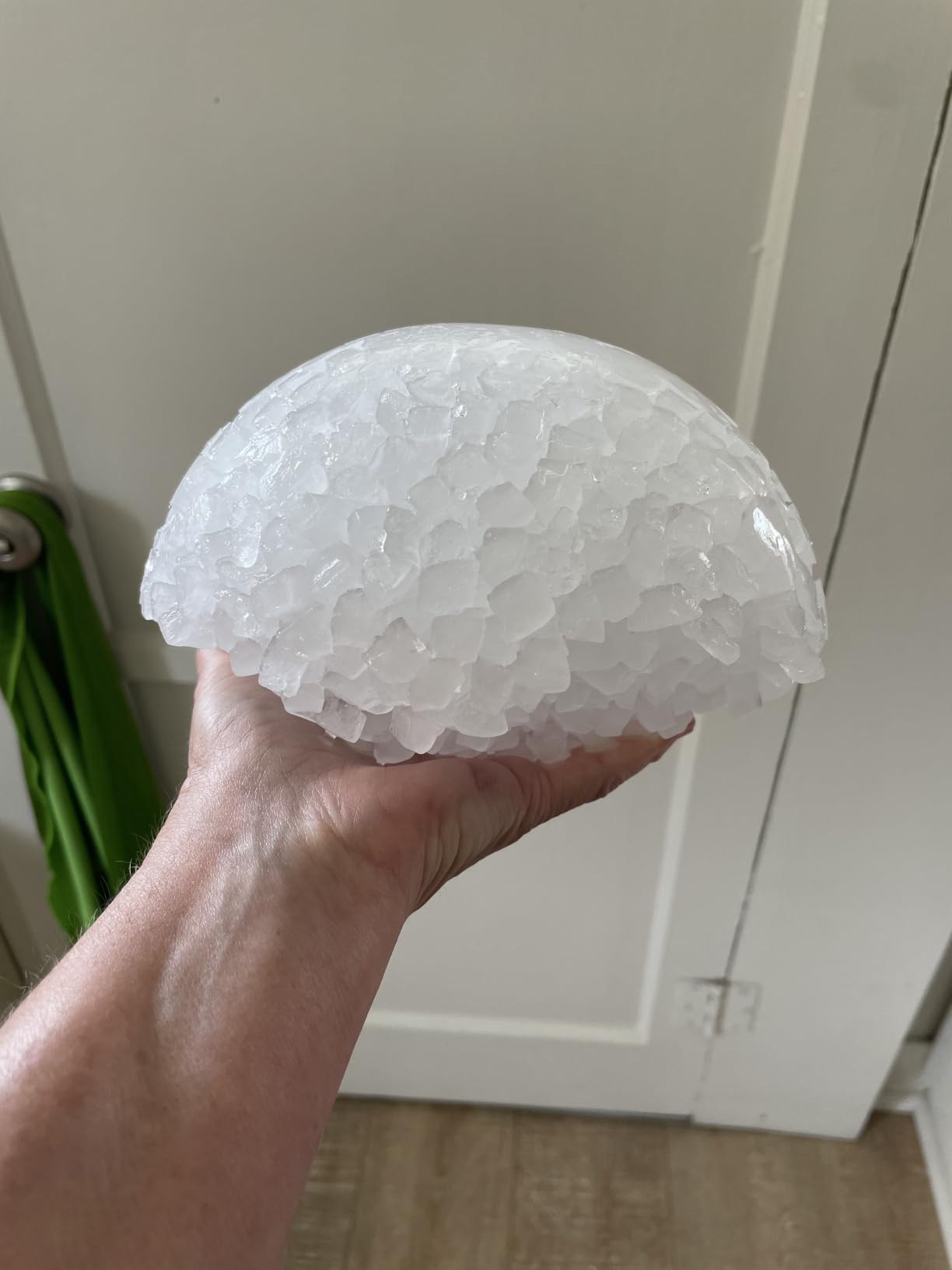
Is this machine loud enough to keep you awake?
In a travel trailer with the bed a few feet from the galley, probably yes if you are a light sleeper. In a Class A motorhome with a separated kitchen it is a non-issue. The measurement claims on the listing do not match owner impressions, so take the owner reports as the real number.
Running it while you drive or while a guest is sleeping is the practical compromise. Most owners on this listing simply start it after breakfast and stop it at bedtime.
How do you work around the blocked inlet?
Check the bin every 10 or 15 minutes during a big fill, and break up the ramp with the scoop so water can reach the inlet. The basket takes roughly 7 minutes to start filling and about 45 minutes to fill, so that is three or four checks per session.
It is a manageable routine, but it is manual attention, and that is the real cost of choosing this machine over one with a stirrer.
7. Antarctic Star Countertop Ice Maker — Best Budget Pick for Boondocking
Antarctic Star Countertop Ice Maker Machine, 26Lbs/Day Fastest 6‑Min Ice
First ice in 6 minutes
26 lbs per 24 hours
10.39 x 8.66 x 11.22 inch
88W compressor cooling
Under 40 dB claimed
Pros
- Real compressor cooling at only 88W
- About one square foot of counter space
- A batch every 6 minutes
- Under 40 dB claimed operation
- Works well on solar or off-grid power
Cons
- Basket is not refrigerated so ice must be moved
- Ice is low density and melts quickly in drinks
- Full-basket sensor can trip before the bin is full
- Some water pump failures reported around 9 months
At 88W, this draws less than half what the highest-wattage machine on this list uses, and it does that with a real compressor rather than a thermoelectric plate. That efficiency is why reviewers single it out for solar and off-grid RV setups, where every amp hour counts against your battery bank.
The footprint is about one square foot at 10.39 by 8.66 by 11.22 inches, and it carries a handle. First ice arrives in 6 minutes with 26 lbs per 24 hours advertised, and a one-touch self-clean cycle is recommended weekly or after any two-week break.
Owner reports describe it as a capable workhorse: a batch every six minutes, quiet enough not to disrupt conversation, and effective for coolers and daily drinks when you are on battery.
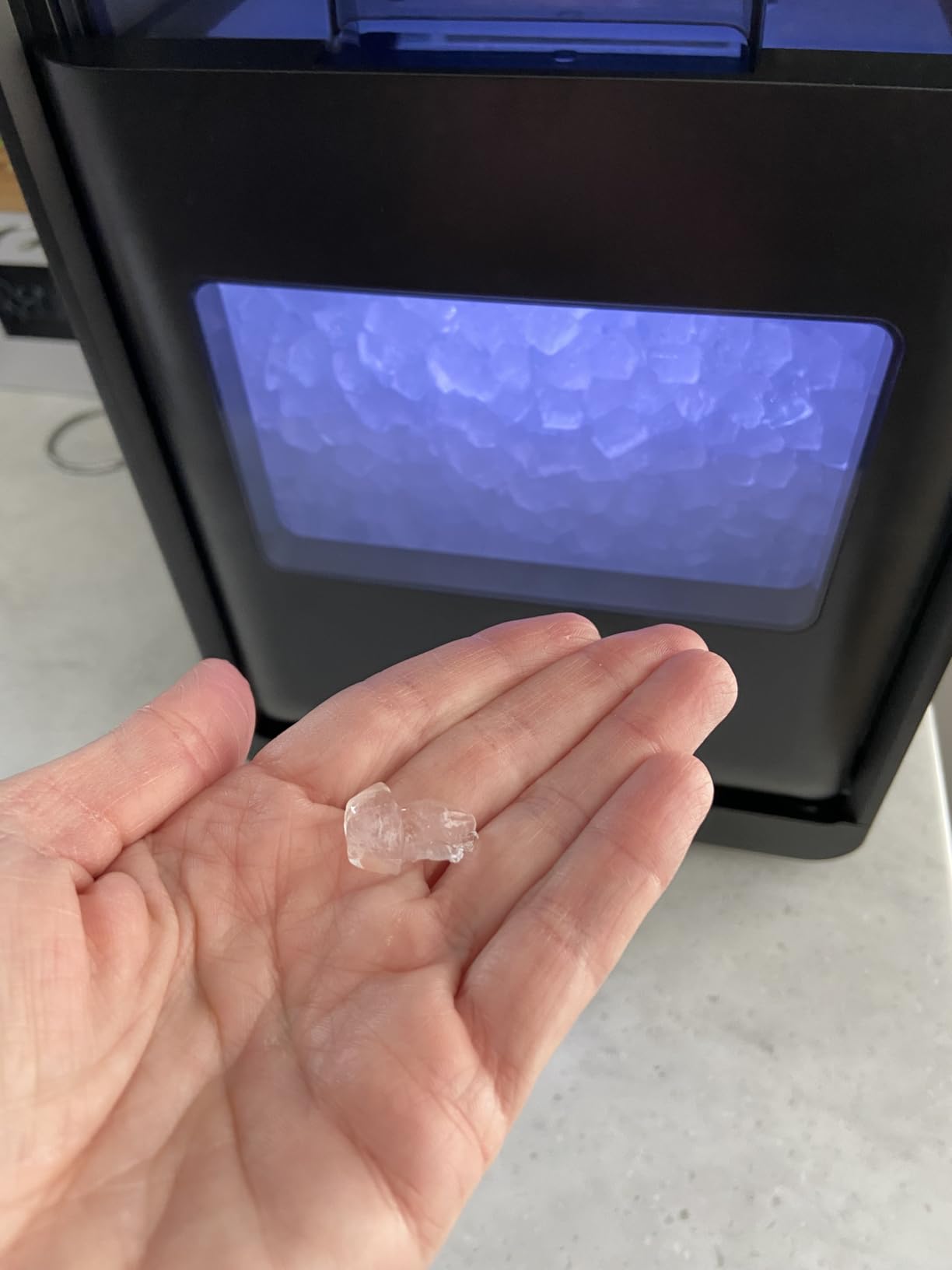
Two real caveats come straight from reviews. The basket is not refrigerated, so ice has to be attended to and emptied into a freezer or cooler on a regular rhythm. And the ice itself is low density, which means it disappears faster in a warm drink than a solid cube would.
A minority of owners report water pump failures around the nine-month mark, often traced to skipping cleaning or restarting a unit that had been shipped on its side. Let it stand upright before you power it on.
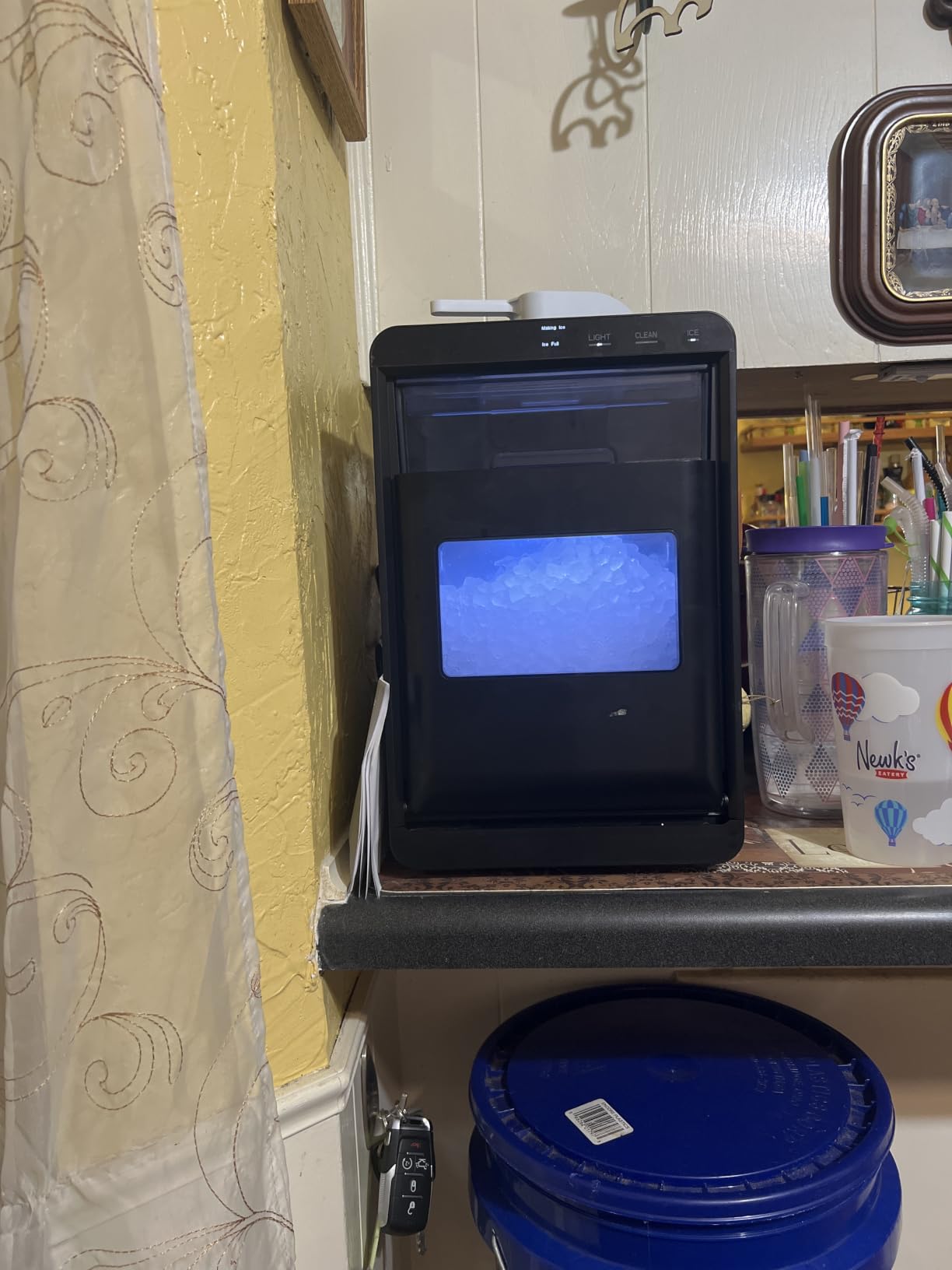
Can one small solar setup run this machine?
More easily than any other countertop unit here, because 88W is the lowest draw in this roundup. Owners running panels off-grid report steady operation, and the compressor-based design is far more practical on battery than a thermoelectric model.
Plan your energy around the daily figure rather than the wattage alone, since the compressor cycles on and off. Run it in batches tied to when you actually need ice rather than continuously, and your bank lasts much longer between recharges.
What is the catch with the sensor?
The full-basket sensor can trip before the bin is actually full, which stops production early. Pull the basket out, level the ice, and restart. It is an annoyance rather than a failure, but you should know to expect it.
Given the sensor and pump notes, keep the unit stowed dry and drained between trips rather than leaving it wet in a storage bay for a season.
8. Silonn Nugget Ice Maker — Best Pick for Chewable Nugget Ice
Silonn Nugget Ice Maker Countertop, Pellet Ice Machine with Self-Cleaning Function, Sonic Ice Maker Produces 36lbs of Chewable Ice in 24 Hours, Ideal for Home Kitchen and Office (Stainless Steel)
Chewable nugget ice in 6 minutes
36 lbs per 24 hours
8.66 x 11.3 x 12.68 inch
160W on 120V
Removable top cover
Pros
- Largest review base of any nugget machine here
- 6 minute first batch and 36 lbs per day output
- Chewable compacted flake texture
- Removable cover plus a self-clean cycle
- Quiet running for a kitchen or galley
Cons
- Basket is not refrigerated so ice must be transferred
- Manual water refills and periodic bin emptying
This is the nugget machine with the most owner history behind it, and that matters more than any spec when you are putting a compressor appliance in a vehicle. Buyers highlight the 6-minute first batch, the chewable compacted flake texture, and how quietly it runs compared with other nugget wells.
Output is advertised at up to 36 lbs per 24 hours, the highest daily figure in this roundup, and the body is 8.66 inches deep by 11.3 inches wide by 12.68 inches tall. That footprint is narrower than most nugget machines, which helps in a galley where counter width is the constraint.
The removable cover exposes every corner for manual cleaning, and the self-clean cycle triggers by holding the ice and clean button for 5 seconds. Multi-color status lights show low water and a full basket at a glance.
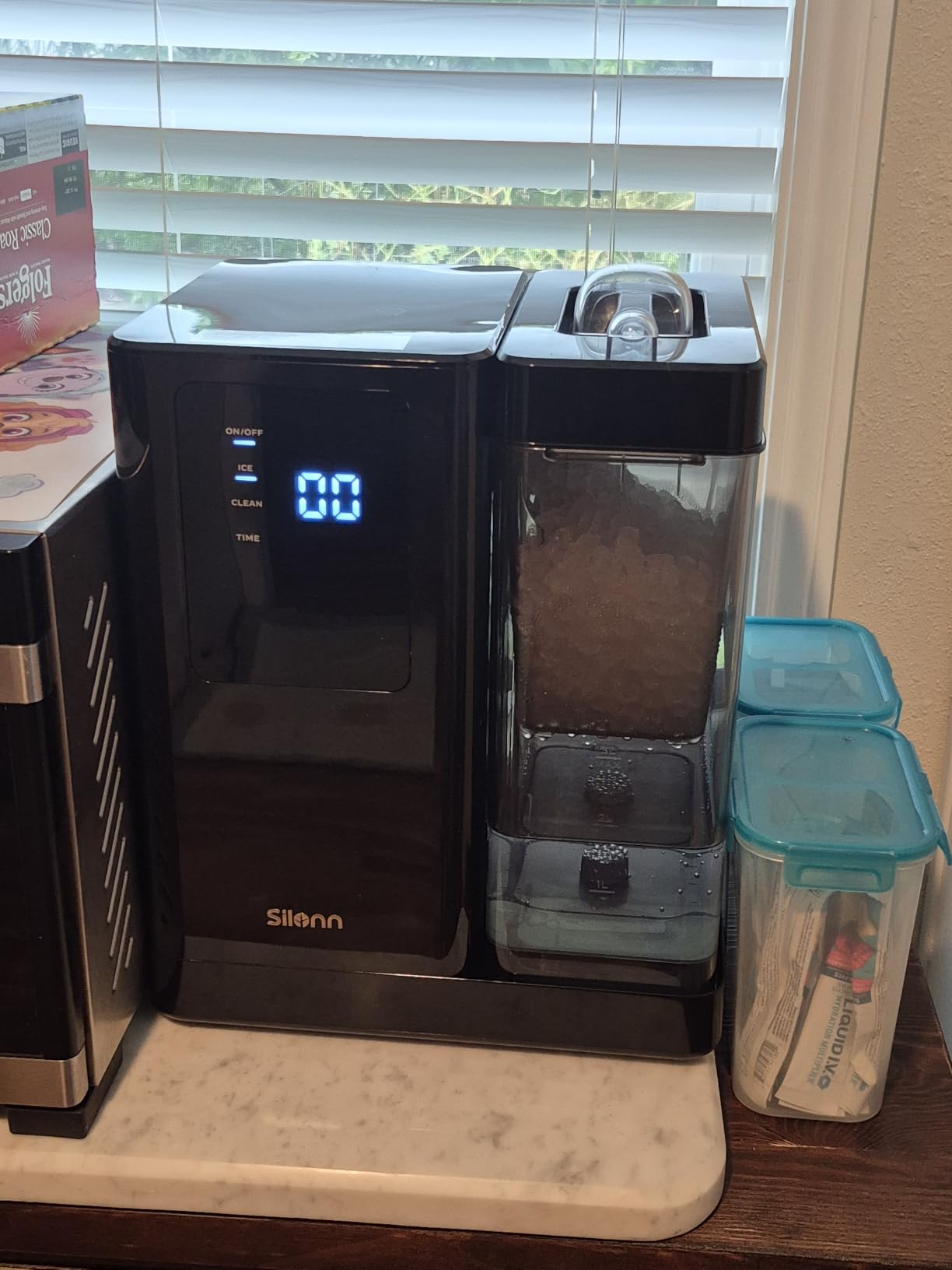
Power is 160W on 120V with R600a refrigerant. That is mid-range for this group: more than the 88W budget machine, less than the 230W high-output model, and reasonable on a 30-amp shore connection alongside a microwave.
Ice quality is the reason to stretch here. Compacted flake ice chews rather than crunches and holds its shape in a glass, which is the difference people notice first after switching up from bullets.
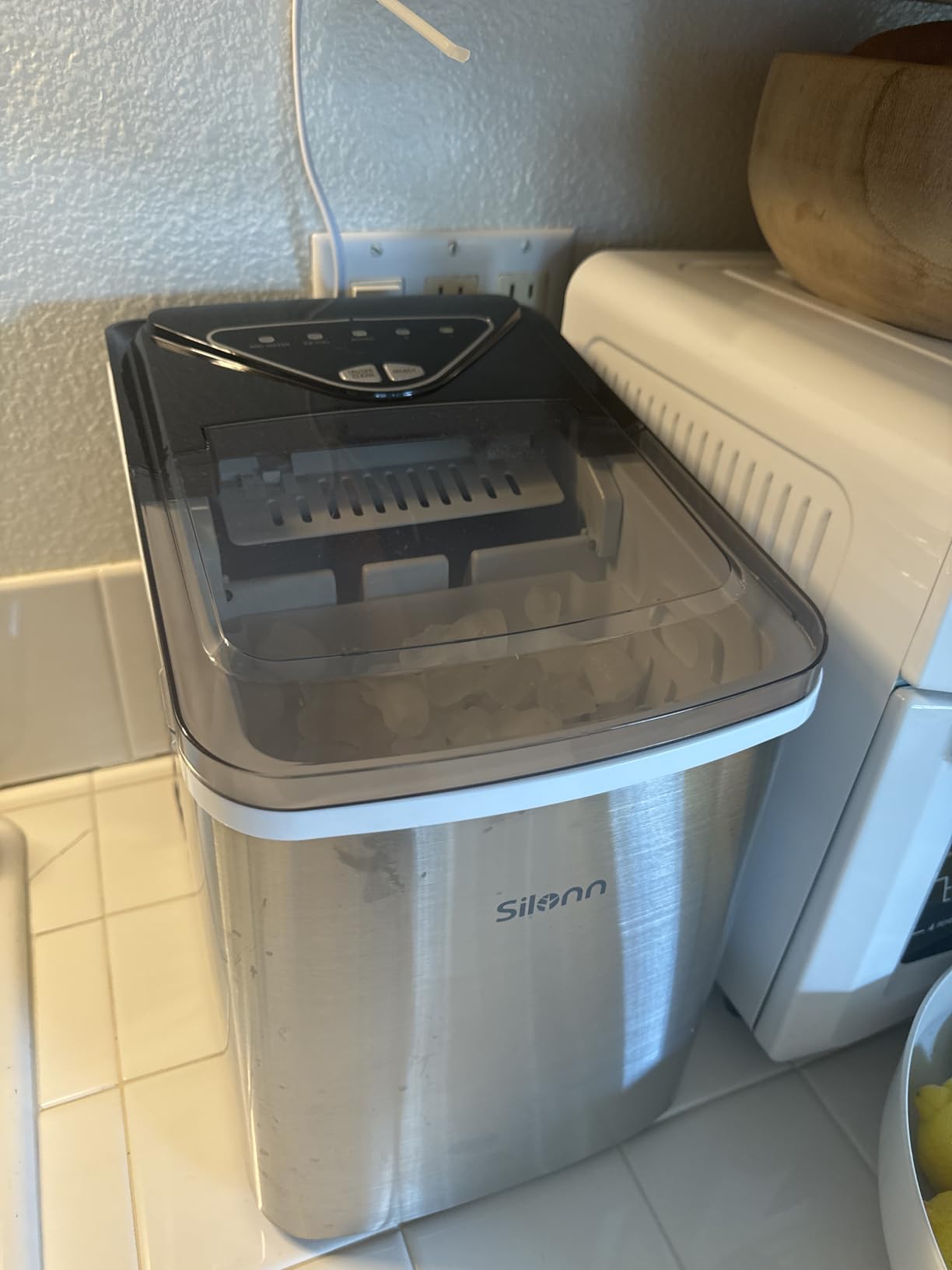
Do nugget ice makers use a lot more power?
Some do, and this one sits mid-pack at 160W. Because nugget extraction is slower than bullet freezing, the compressor runs more per batch, so expect more energy for a similar drink count than a bullet machine at 88W or 105W.
On shore power or a generator, none of that matters. On a battery setup, budget inverter capacity above the machine’s rated wattage to absorb compressor startup surge.
What is the honest limitation here?
It makes ice, it does not store it. The basket is uninsulated, so every batch moves to the RV freezer or a cooler, and the water tank needs regular refills. Reviews describe this as the one recurring limitation across an otherwise well-regarded machine.
Owners running the unit almost daily report it handles coolers and daily drinks without problems, provided you keep up the transfer rhythm. If you will not, the machine works against you.
9. ecozy Bullet Ice Maker — Best for Quiet Operation Next to the Bed
ecozy Ice Makers Countertop, 9 Ice Cubes Ready in 6 Mins, Portable Ice Machine with Carry Handle, 26lbs/24Hrs, Auto-Cleaning Ice Maker with Basket and Scoop, for Home/Kitchen/Camping/RV
9 bullet cubes in 6 minutes
26 lbs per 24 hours
8.74 x 11.57 x 11.42 inch
Under 35 dB claimed
120V on 115V
Pros
- Very quiet operation praised in owner reviews
- First batch in about 6 minutes
- Light and compact with a carry handle
- Self-cleaning cycle circulates water through the system
- Two ice cube sizes
- Ice bags and a standing scoop included
Cons
- Drain system is stiff and awkward to empty
- Must stand upright for an hour after unpacking before first use
- A small number of one-year durability complaints
Noise is the deciding factor here. The listing claims under 35 dB, and owners including several European reviewers describe it as humming gently in an open kitchen. In a small RV where the bed sits a few feet from the galley, that is the difference between a machine you tolerate and one you enjoy running overnight.
It makes 9 bullet cubes in 6 minutes, advertises 26 lbs per 24 hours, and offers two cube sizes. Infrared sensors stop production when the basket is full and alert you when water runs low, so it needs less babysitting than a manual machine.
Dimensions are 8.74 inches deep by 11.57 inches wide by 11.42 inches tall at about 13.7 lbs, with a carry handle for stowing. The package includes ice bags and a standing scoop, which is a thoughtful touch for transferring a batch straight to the freezer.
Is it truly quiet enough to run overnight?
It is the quietest claim in this roundup, and owner impressions support it better than the numbers on the other listings. Compressor hum sits well below a running refrigerator. That makes overnight topping-up realistic for owners who camp in hot weather and want ice waiting in the morning.
Keep in mind it is still a compressor appliance. It should not sit right beside your head on the nightstand shelf, and you want clearance for airflow around the vents.
What should I know before the first use?
Stand it upright for about an hour after unpacking before powering on, so any oil in the compressor settles back into place. Skipping that step is how owners end up debugging a machine that was never broken.
The drain is stiff and awkward, which is the most common complaint. Wipe the reservoir dry after cleaning and leave the lid open between trips to avoid the musty smell that shows up when a wet appliance sits in a closed storage bay.
10. HOMEVOL Cordless Battery Ice Maker — Best for Boondocking Away from an Outlet
2 in 1 Cordless Countertop Ice Maker, Battery Powered Portable Countertop Ice Machine, 6-Minute Fast Ice Cubes with 2 Size, 30lbs Daily, 40dB Quiet, Self-Cleaning, 2 × 7.8Ah Battery, Stainless Steel
Cordless or plug-in 2-in-1 operation
2 x 7.8Ah batteries included
30 lbs per 24 hours
18.5 x 7.4 x 13.6 inch
40 dB, stainless steel
Pros
- Only cordless battery option in this roundup
- Two 7.8Ah packs allow swapping while one charges
- 30 lbs per day with a 6 minute first batch
- Stainless steel finish and 40 dB operation
- Two ice sizes for drinks and outdoor use
Cons
- 18.5 inch depth is far larger than standard countertop models
- Battery output typically runs below the plugged-in claim
- Newer listing with limited long-term history
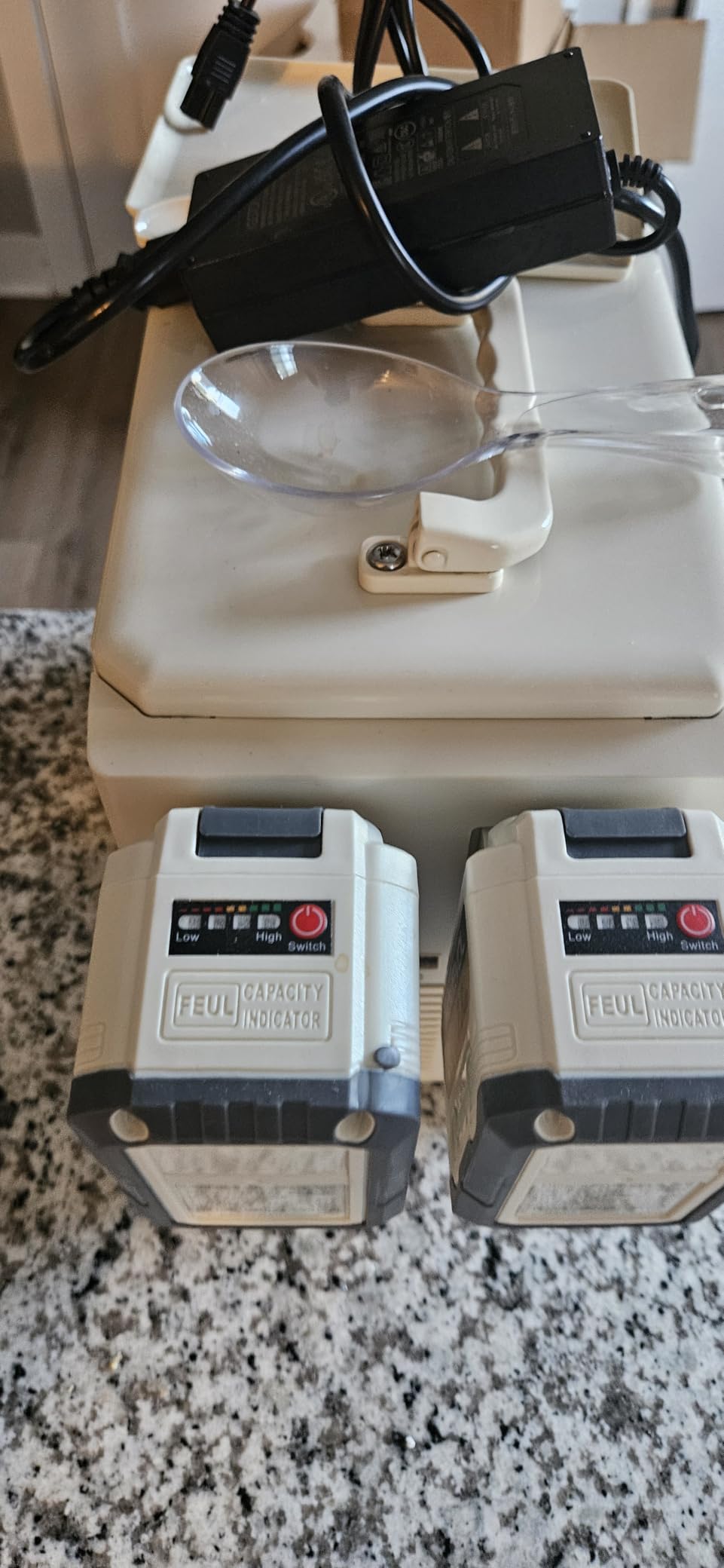
Every other machine here needs a wall outlet, an inverter, or a generator. This one runs on two rechargeable 7.8Ah packs, so you can set it on the picnic table at a boondock site or the tailgate with no power at all. The included AC cable also lets you plug it in at campground service when you have it.
Because one pack charges while the other runs, you can keep production going through a long afternoon without a generator. Buyers point to that flexibility, the quiet 40 dB running, and the stainless steel look as the main draws for RV and patio use.
Output is advertised at 30 lbs per 24 hours with a 6-minute first batch, and two cube sizes are available. It is a 20V system using R600a refrigerant, with a one-touch self-cleaning cycle.
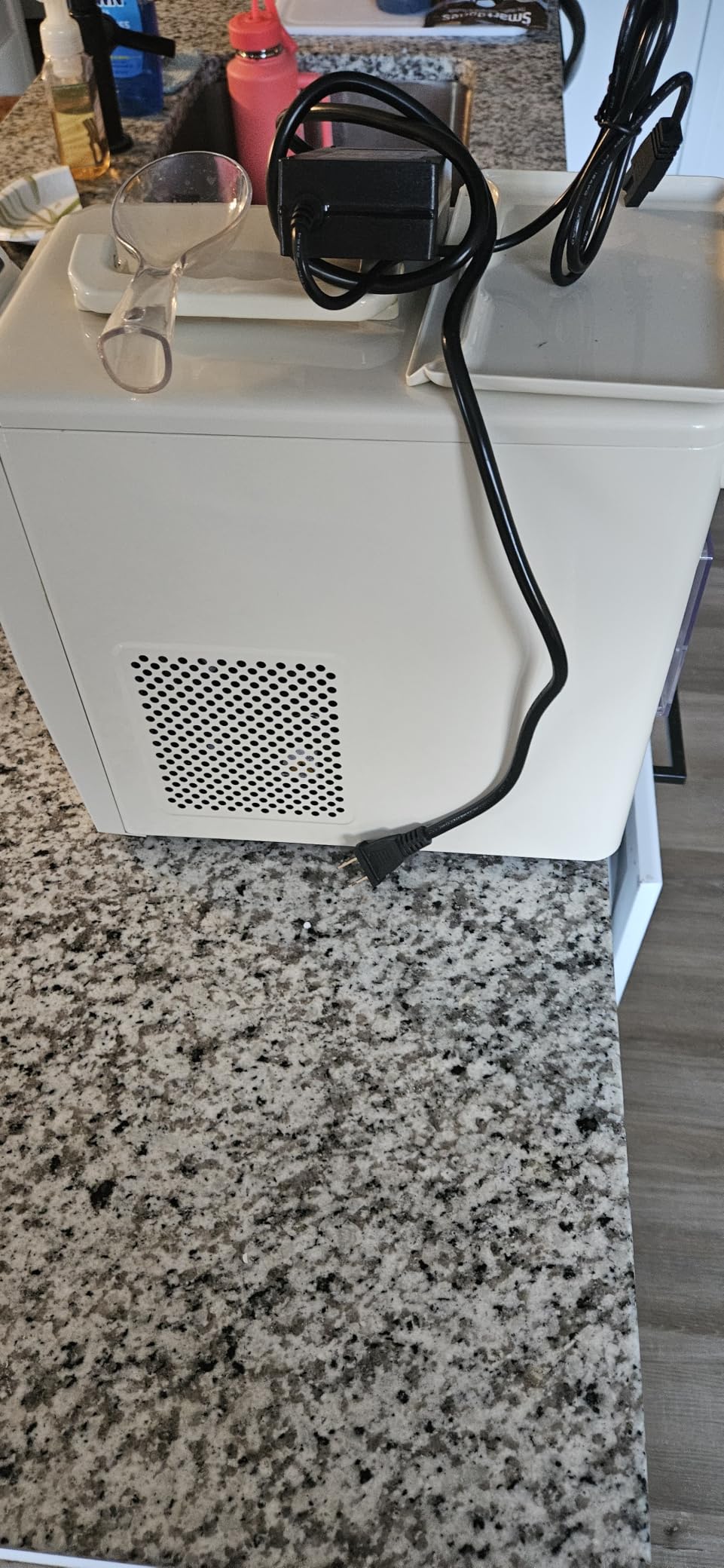
The trade-off is size. At 18.5 inches deep by 7.4 inches wide by 13.6 inches tall, it is long and narrow. That fits a side counter or a storage bay better than a standard galley, but it is the largest footprint in this roundup and needs a real plan for where it lives.
Also expect the battery-powered output to run below the plugged-in claim. Treat 30 lbs per day as a ceiling when tethered to mains, not as a battery figure.
Is battery power realistic for a full weekend?
For drinks and a cooler, yes, provided you plan charging around production rather than expecting all day output. The two-pack arrangement means you can cycle one pack while the machine runs on the other, which is the feature that makes it practical.
For heavy daily use, most owners pair it with shore power or a generator. The advantage is the situations where you have no power at all, not a replacement for it.
What are the drawbacks to weigh first?
Depth is the big one at 18.5 inches. Before buying, measure the counter depth and the storage bay, and check that you can still open the RV fridge door with the machine sitting beside it.
The listing is newer with a smaller body of reviews, so long-term reliability data on the pumps and the 20V electronics is limited. Charge both packs fully before the first trip and keep the charger accessible.
How to Choose an Ice Maker for Your RV
Measure the counter, not just the width
Footprint width is the number people look at, and it is the wrong one. Depth decides whether the machine fits beside a sink, and height decides whether the basket comes out under a cabinet. Add 2 inches of clearance above the lid for every unit on this list.
Also check the travel path. A machine that fits on arrival but cannot get through the door on setup day is a common and avoidable return. Our countertop ice maker picks breakdown has more on sizing for tight spaces.
Decide what powers it: shore, generator, inverter, or battery
Most of these machines are 120V AC. On a 30-amp campground connection you can generally run one ice maker alongside a microwave, but adding roof air conditioning at the same time is where trips happen. Sequence the compressor-heavy appliances rather than starting them together.
For battery setups, wattage is the number that matters: 88W is the lightest draw here and 230W the heaviest. Size your inverter above the running wattage to absorb compressor startup surge, and remember that a 20V battery model is the only true off-grid option in this roundup.
Bullet, pebble, or nugget ice
Bullet ice is hollow, fast, and cheap. It melts quickly in a warm drink and clumps into a block if you freeze a wet batch together. Nugget and pebble ice is denser and chewable, holds its shape longer, and costs more in counter space and power.
Pick bullets for coolers, fishing trips, and high-volume daily use. Pick nugget for drinking, entertaining, and hot-weather camping. Our guide to nugget ice makers for kitchens goes deeper on the texture differences if you are still deciding.
Understand that it is not a freezer
Every machine here makes ice and then stops storing it. The basket is uninsulated, so a full batch starts melting within an hour or two in a warm RV. Budget for a routine of moving ice into the RV freezer or a cooler.
Because fresh bullet ice is wet and soft when it goes into the freezer, spread it on a tray first. Forced into a bag, it freezes into one solid block that you then have to break apart with a hammer.
Weigh noise, weight, and maintenance before you buy
Noise under 45 dB is the practical threshold if the galley is near your bed. Weight matters more than people expect, because a full basket adds several pounds and a step or a ramp is not flat ground. And every machine needs a drain, a wipe-down, and a dry-out between trips, or you will fight scale and odor.
Reviewing recent RV owner feedback is worth more than the listing copy. Reliability by brand matters more than headline pounds per day, and forums like r/RVLiving and r/GoRVing are where the recurring failure modes get described honestly.
Frequently Asked Questions
Who makes the most reliable ice maker for an RV?
Reliability tracks the brand and the sensor design more than the headline output number. Frigidaire, Magic Chef, EdgeStar and Igloo come up repeatedly by name in RV owner threads as units that keep working season after season, and the Frigidaire EFIC120 on this list is the one with a 1-year warranty and a long production history. Look for a real compressor rather than a thermoelectric plate, expect infrared ICE FULL and ADD WATER sensors, and read recent reviews for pump and sensor failures before you commit.
What is the best 12V portable ice maker for camping and boondocking?
The battery-powered HOMEVOL cordless machine in this roundup is the only true off-grid option, running on two included 7.8Ah rechargeable packs with a 30 lbs per day ceiling and a 6-minute first batch. On a battery system rather than a cordless unit, the lightest-draw option is the Antarctic Star at 88W, which owners report running from solar without trouble. Most other units here are 120V AC and need shore power, a generator, or an inverter.
Are portable ice makers worth it in an RV?
They are worth it if you camp in hot weather, drink a lot of cold beverages, or want to stop buying bags of ice. They are not a freezer, so you still move ice to the RV freezer or a cooler, and they take counter space that a small kitchen may not have. The value case is strongest for a family of four or more on a long trip, and weakest for a solo camper who uses maybe two drinks a day.
What are the drawbacks of countertop ice makers?
The main drawbacks are: the basket is not refrigerated, so ice melts and must be moved; the advertised daily output is a 24-hour maximum while the basket holds only 1.3 to 2.2 lbs; bullet ice is wet and low density and clumps when frozen together; infrared ICE FULL sensors can stop production when the bin is not full; and the machine needs draining and drying between trips to avoid scale and odor.
Can I leave a portable ice maker on all the time?
You can, and on shore power most owners run theirs almost daily without trouble. On battery or a generator, running it continuously is the fastest way to drain a bank, so run it in batches instead. Owners on r/RVLiving report that a unit used daily handles coolers and daily drinks without problems. Run the self-clean cycle weekly, or after any two-week break, and drain the reservoir fully before storage.
How much power does a portable ice maker draw?
Wattage across this roundup runs from 88W on the Antarctic Star up to 230W on the COWSAR nugget maker, with most 120V units between 105W and 170W. That is a real load for an RV inverter, especially with roof air conditioning running, so size the inverter above the running wattage for compressor startup surge. A 20V cordless model is the only one here that runs without any external power source at all.
The Bottom Line on the Best Ice Makers for RVs in 2026
Buy the EUHOMY 26lb bullet maker if you want one answer for most RVs. It is compact, light enough to carry, quiet enough to sleep beside, and its 16,000+ reviews are the deepest pool of owner feedback behind any compact bullet machine here. Pick the Silonn nugget maker instead if the texture of the ice matters more to you than the price, and the Frigidaire if refilling water twice as often is the thing you would most like to avoid.
Go 12V or cordless only if you regularly camp with no power at all. For everyone else, plan on shore power or a generator, keep a second jug of water ready for refills, and accept that this is a feeder rather than a freezer. If you want more help matching a machine to a home setup, our countertop and ice maker roundups cover the same criteria from a different angle.
One last note. Before your first trip, run the self-clean cycle, drain the base, and let the machine stand fully dry with the lid open. That single habit prevents most of the scale and odor problems RV owners report a year later.