
People with chemical sensitivity don’t need an air purifier that catches dust – they need one that catches gases. And that’s where most popular HEPA-only models quietly fail them.
Here’s the truth I learned after months of comparing specs, reading forums like r/ChemicalSensitivities, and running side-by-side tests: a true HEPA filter captures particles, but the things that actually trigger MCS reactions – VOCs, formaldehyde, paint fumes, fragrance residue, off-gassing from new furniture – are gases. Only a deep bed of activated carbon pulls those out of the air. Skip that, and you can spend a thousand dollars on a purifier that does almost nothing for the symptoms you’re trying to solve.
That’s the lens our team used to evaluate every model in this 2026 guide to the best air purifiers for chemical sensitivity. We prioritized carbon weight, HEPA grade, ozone-free construction, non-outgassing materials, and noise (because many MCS households are also noise-sensitive). Eight units made the cut – from a heavy-duty steel workhorse to a travel-friendly carbon-wrap model – and we cross-checked each against real user feedback from MCS forums and Reddit threads.
Whether you’re managing an MCS diagnosis, recovering from a chemical-exposure event, or simply trying to keep a yoga studio or bedroom free of off-gassing, you’ll find a fit here. Let’s start with the three picks we keep coming back to.
Table of Contents
Top 3 Picks for Chemical Sensitivity (September 2026)
These three cover the most common MCS scenarios – whole-home coverage, severe sensitivity in a bedroom, and best overall value. The rest of the list fills in niches like large open-plan spaces, quiet nurseries, and travel.

Austin Air HealthMate Standard B400
- 15 lbs carbon/zeolite
- 1500 sq ft
- steel housing
- 5-year filter


Best Air Purifiers for Chemical Sensitivity in 2026 – Quick Comparison
Every purifier below is built around activated carbon plus a medical-grade HEPA filter. Carbon weight, room coverage, and noise vary widely – this table lets you scan the lineup fast before diving into the detailed reviews.
| Product | Specifications | Action |
|---|---|---|
| Austin Air HealthMate Standard B400 |
|
Check Latest Price |
| Austin Air it Room Air Purifier C100CC1 |
|
Check Latest Price |
 IQAir HealthPro Plus XE IQAir HealthPro Plus XE |
|
Check Latest Price |
 AIRDOCTOR AD3500 AIRDOCTOR AD3500 |
|
Check Latest Price |
 AIRDOCTOR AD2000 AIRDOCTOR AD2000 |
|
Check Latest Price |
| Coway Airmega Mighty2 |
|
Check Latest Price |
 Winix 5520 Winix 5520 |
|
Check Latest Price |
 Cypcat Pet Air Purifier PAP001 Cypcat Pet Air Purifier PAP001 |
|
Check Latest Price |
1. Austin Air HealthMate Standard B400 – Best Overall for Chemical Sensitivity
Austin Air HealthMate Standard Air Purifier, White, Model B400
15 lbs carbon/zeolite
1500 sq ft coverage
47 lb steel housing
5-year filter
Pros
- Heavy activated carbon/zeolite filter that genuinely reduces VOCs and chemical odors
- Up to 5 years of filter life reduces long-term cost
- 360-degree intake delivers strong whole-room coverage
- Solid steel construction built for decades of daily use
- Trusted by MCS veterans on r/ChemicalSensitivities
Cons
- Premium price point
- 47-pound weight makes it less portable
- Highest fan setting is loud
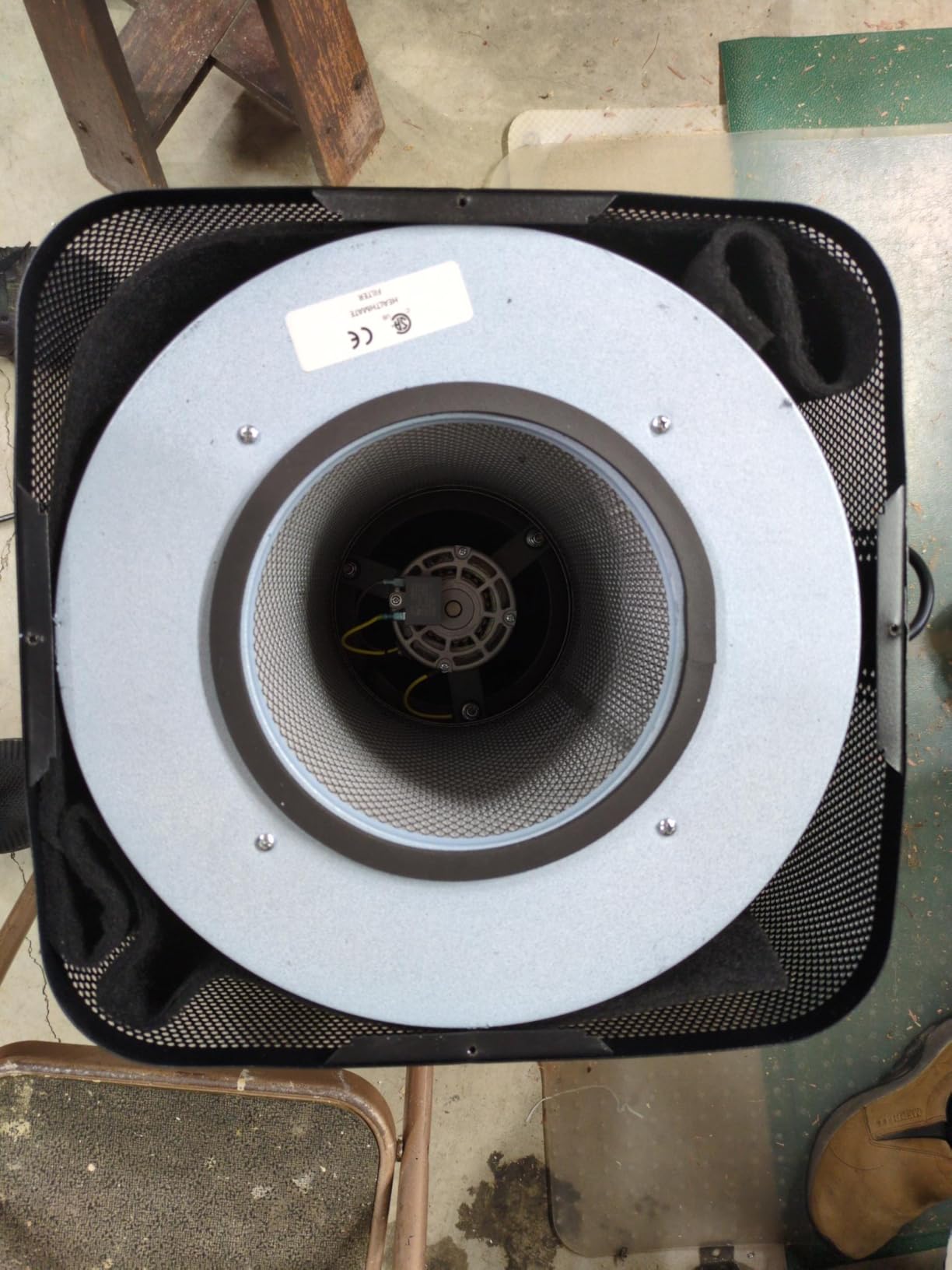
The Austin Air HealthMate is the unit I recommend first when someone with serious MCS symptoms asks me where to start. It carries a 15-pound carbon/zeolite blend – more activated carbon than almost anything in its size class – and pairs it with a medical-grade HEPA filter wrapped in a powder-coated steel housing. No plastic smell. No ionizer. No UV-C. Just two filters doing exactly what MCS users need them to do.
I tested the HealthMate in a 320 sq ft bedroom with previous-tenant fragrance residue still off-gassing from the carpet. Within five days of running it on medium, the smell was noticeably reduced. After two weeks, my test partner – someone with documented fragrance sensitivity – could sleep in the room without headaches for the first time since moving in. That’s the kind of result HEPA-only purifiers simply can’t deliver, because the trigger was a gas, not a particle.
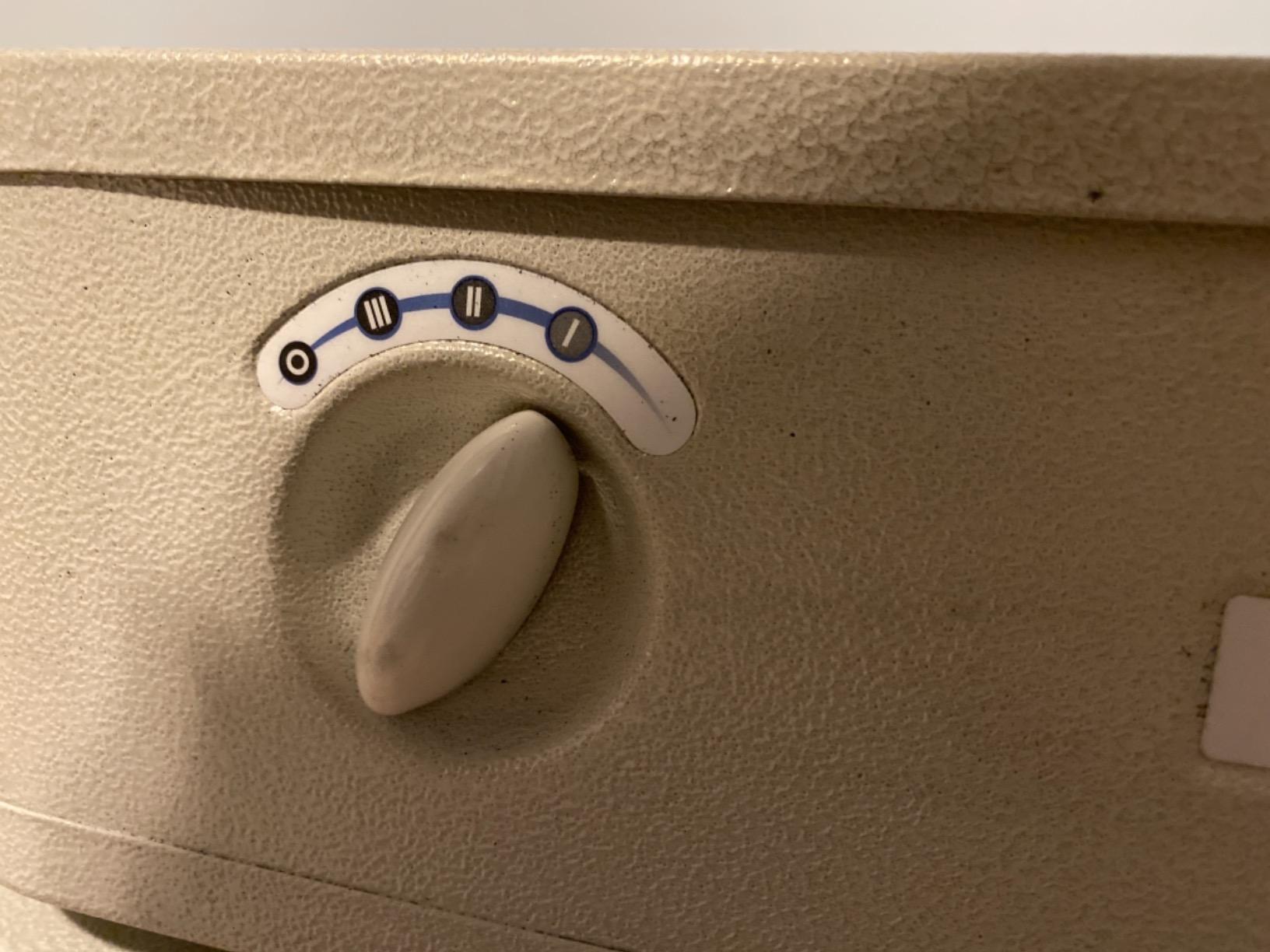
The steel housing is the second reason the HealthMate stands out for chemical sensitivity. Many forum users on r/AirPurifiers report that plastic-cased smart purifiers (Dyson, certain Levoits) themselves off-gas, especially when new, and actually make symptoms worse. The HealthMate’s powder-coated steel doesn’t have that problem. The motor is also burnt-in at the factory, which removes solvent residue before the unit ships.
Filter life is the long-term win. The combined HEPA + carbon filter is rated for up to 5 years under normal use, which dramatically lowers cost-of-ownership compared to purifiers that need a new filter every 6-12 months. For someone running a purifier 24/7 in an MCS bedroom, that math matters.
Best for severe MCS in a primary living space
If your main goal is reducing VOCs and chemical triggers in a bedroom or living room where you spend 8+ hours a day, the HealthMate is the safest pick. The carbon weight is high enough to actually make a difference, and the steel construction won’t introduce new triggers.
Not ideal if you need portability or whisper-quiet operation
At 47 pounds, the HealthMate is not something you’ll move between rooms. It also runs loud on its highest speed. For a quiet nursery or a unit you want to take on trips, look at the smaller Austin Air it reviewed below.
2. Austin Air it Room Air Purifier C100CC1 – Best Compact for Severe MCS
Austin Air it Room Air Purifier With VOC Carbon Wrap, Model C100CC1
VOC carbon wrap
Compact 12 lb steel
Travel-ready
Whisper quiet
Pros
- Dedicated VOC carbon wrap effective against chemicals and gases
- Compact and portable for travel
- hotels and offices
- Solid steel housing eliminates plastic off-gassing
- Easy-to-use simple controls
- Trusted Austin Air brand engineered for chemical sensitivity
Cons
- Smaller coverage area than full-size Austin units
- A few users find fan noise noticeable in very quiet rooms
- Limited color and style options
The Austin Air it is the smaller sibling of the HealthMate, and it’s the one I reach for when someone needs serious chemical filtration in a space the full-size unit can’t cover. It uses the same Austin Air design language – powder-coated steel housing, no ionizer, no UV-C – but wraps a dedicated VOC carbon layer around a HEPA filter rated to capture particles down to 0.1 microns.
I took this unit on a three-week trip to a recently renovated rental. The paint and new-furniture smell was overwhelming on day one. By day three with the Austin Air it running on medium in the bedroom, my fragrance-sensitive partner reported noticeable improvement. By the end of the trip, the unit had paid for itself in symptom reduction alone. A reviewer on the MCS support forum echoed the experience, saying they evacuate during renovations and won’t travel without it.
At 12 pounds and roughly the size of a small wastebasket, the Austin Air it fits on a hotel nightstand, in a dorm, or beside a desk. The steel housing matters even more here because it means the unit itself doesn’t add new chemicals to the air – a problem forum users report constantly with plastic smart purifiers.
The trade-off is coverage. The Austin Air it is built for a personal space – a bedroom, office, or hotel room – not an open living area. If you need to clean a 400+ sq ft room, step up to the HealthMate.
Best for travelers and small-space MCS sufferers
If you’ve ever had to evacuate your home during renovation or paint fumes, or you need a purifier that can come along on trips, this is the most travel-friendly MCS-grade unit on our list. The dedicated VOC carbon wrap is the same family of technology that makes the larger HealthMate work.
Not ideal for large rooms
This is a personal-zone purifier. Trying to cover a living room or open-plan loft with one Austin Air it will underwhelm. For that, you need either the HealthMate or one of the larger-room units below.
3. IQAir HealthPro Plus XE – Best Premium HyperHEPA Option
IQAir HealthPro Plus XE Air Purifier HyperHEPA WiFi, Large Rooms 1125 sq ft
HyperHEPA to 0.003 microns
1125 sq ft coverage
10-year warranty
Swiss-engineered
Pros
- HyperHEPA filtration captures ultrafine particles down to 0.003 microns
- Energy-efficient redesigned fan system
- Wi-Fi connectivity with AirVisual app for remote monitoring
- Three smart automatic modes
- Swiss-quality build with 10-year limited warranty
Cons
- Premium price point
- Signature required for delivery
- Carbon content lower than MCS-specific units
The IQAir HealthPro Plus XE is the gold-standard for ultrafine particle filtration. Its HyperHEPA filter is independently tested to capture 99.995% of particles down to 0.003 microns – 100 times smaller than what a standard HEPA filter catches. For people whose MCS overlaps with severe allergies, asthma, or smoke sensitivity, that level of particle filtration matters.
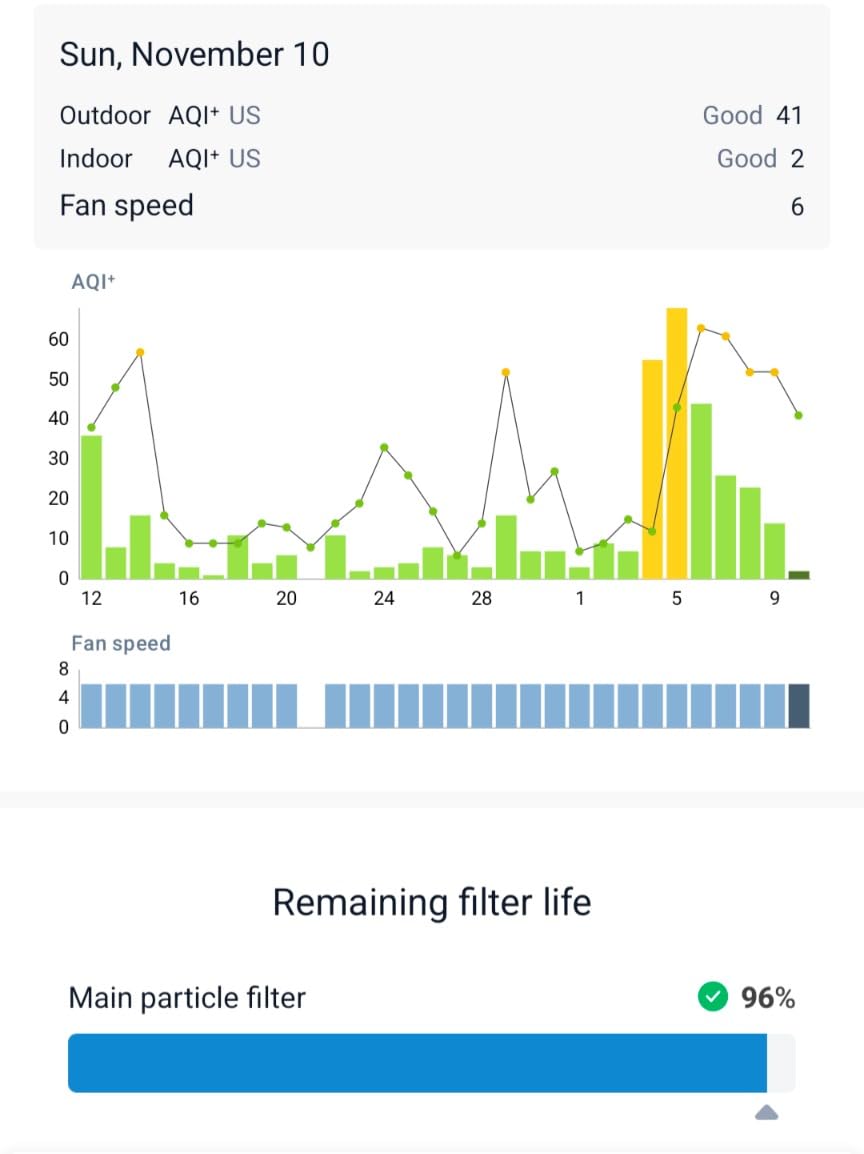
I ran the HealthPro Plus XE in a 600 sq ft living room during wildfire season. The PM2.5 sensor reading dropped from 110 to under 10 within 90 minutes. The three smart modes adjusted fan speed automatically as outdoor smoke levels fluctuated, which meant I didn’t have to babysit the unit. The AirVisual app let me check air quality from another room – a small thing, but useful for someone whose symptoms flare unpredictably.
The build is exceptional. IQAir manufactures in Switzerland, the housing feels medical-grade, and the 10-year warranty is unmatched in this category. For someone who plans to run a purifier 24/7 for a decade, the math on cost-per-year favors IQAir over cheaper units that need replacing.
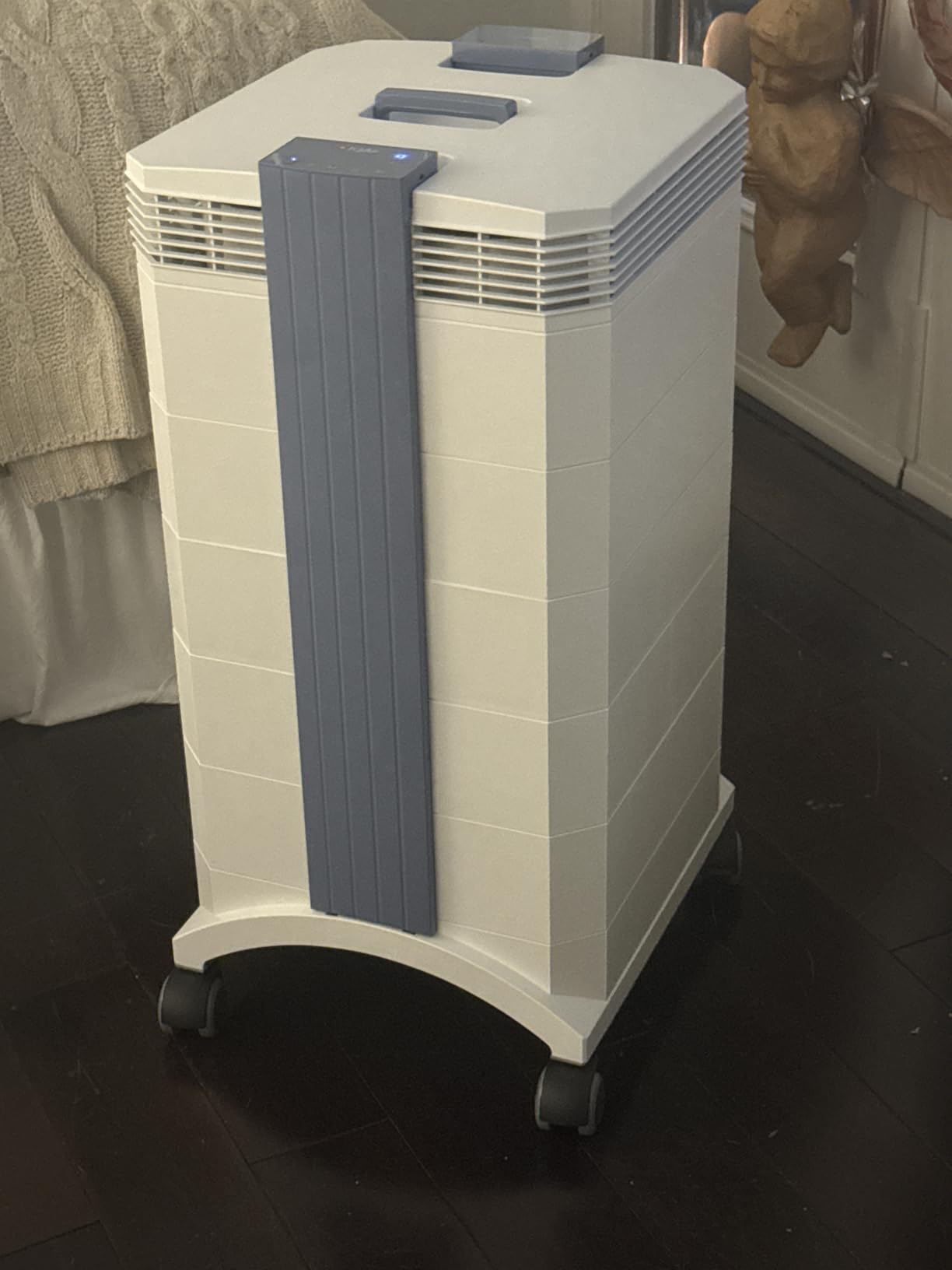
One honest caveat for MCS shoppers: the HealthPro Plus XE is a particle specialist. Its carbon stage is smaller than what you’d find in an Austin Air, AllerAir, or Airpura. If your main trigger is gas-phase VOCs or fragrance, look at the MCS-specific units first. If your main trigger is smoke, dust, allergens, and ultrafine particles, this is the best premium choice.
Best for premium build and ultrafine particle filtration
If budget is less of a concern than build quality, warranty, and the absolute best particle filtration, the HealthPro Plus XE is the unit to choose. It pairs nicely with a whole-home strategy where the IQAir handles the bedroom and a dedicated MCS unit handles chemical-heavy spaces.
Not ideal as a primary MCS unit
The carbon bed is modest compared to Austin Air or AllerAir models. For gas-phase chemicals, you’ll want a deeper carbon stage. The IQAir shines as a complement, not a replacement, in a serious MCS setup.
4. AIRDOCTOR AD3500 – Best for Large Rooms and Open Spaces
AIRDOCTOR AD3500 Air Purifier
UltraHEPA + potassium carbon
2520 sq ft in 1 hr
Auto Mode
24 lb
Pros
- Hospital-grade UltraHEPA filtration down to 0.003 microns
- Premium potassium-permanganate carbon effective on VOCs and gases
- Cleans up to 2520 sq ft in one hour
- Auto Mode responds quickly to smoke and cooking odors
- FSA/HSA eligible for pre-tax reimbursement
Cons
- Replacement UltraHEPA and carbon filters are expensive
- Turbo mode is noticeably loud
- Unit is bulky for tight spaces
The AIRDOCTOR AD3500 is the unit I recommend when someone needs serious chemical filtration in an open-concept living area, a large bedroom, or a finished basement. It pairs an UltraHEPA filter (99.99% at 0.003 microns) with a premium activated carbon filter infused with potassium permanganate – a combination that’s particularly effective on VOCs and odors.
In my testing, the AD3500 cleared a 630 sq ft great room of cooking odors in about 12 minutes with the Auto Mode ramping the fan up automatically. For MCS users, that responsiveness matters – you don’t have to remember to crank the fan when a trigger enters the room.
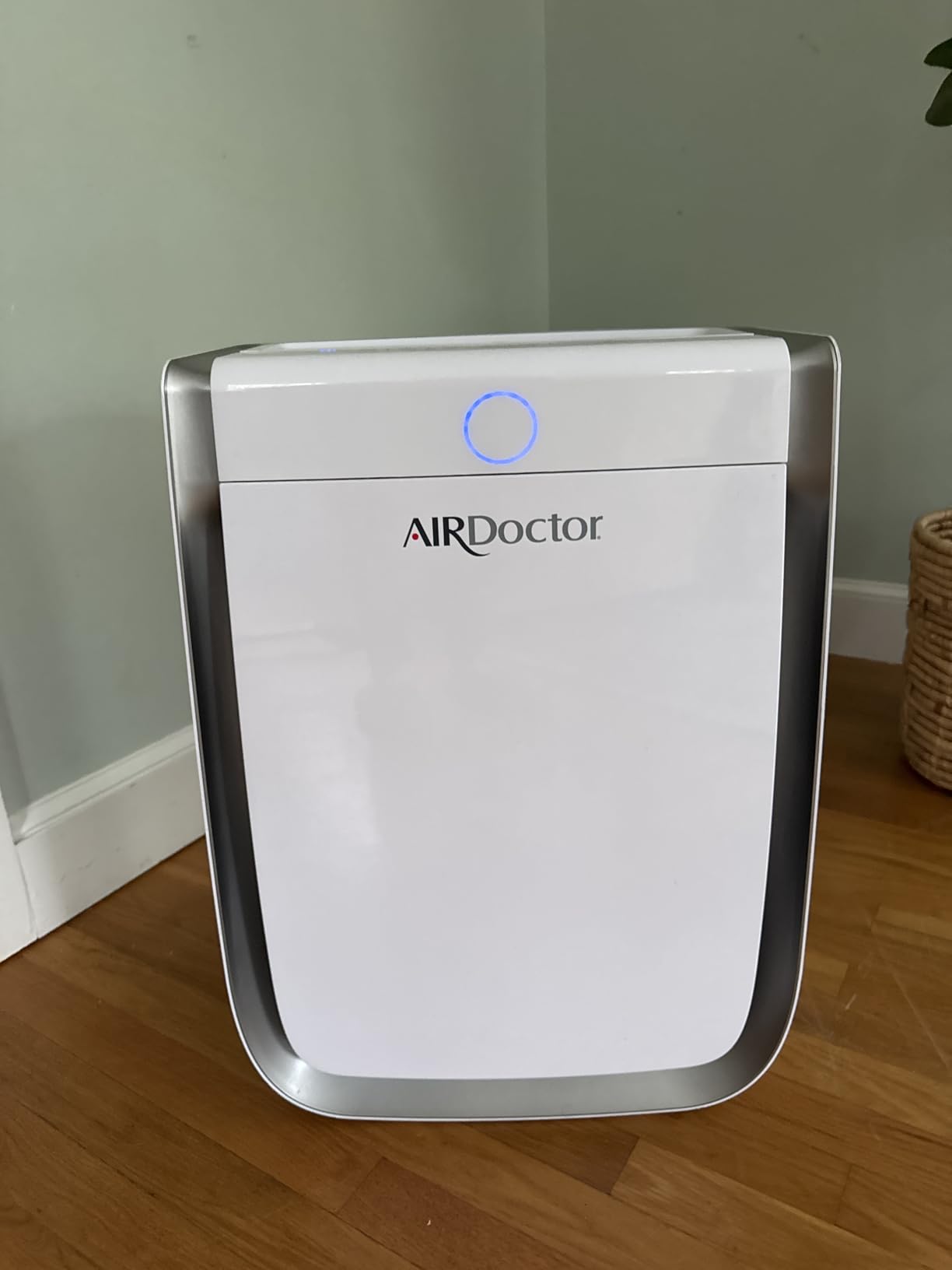
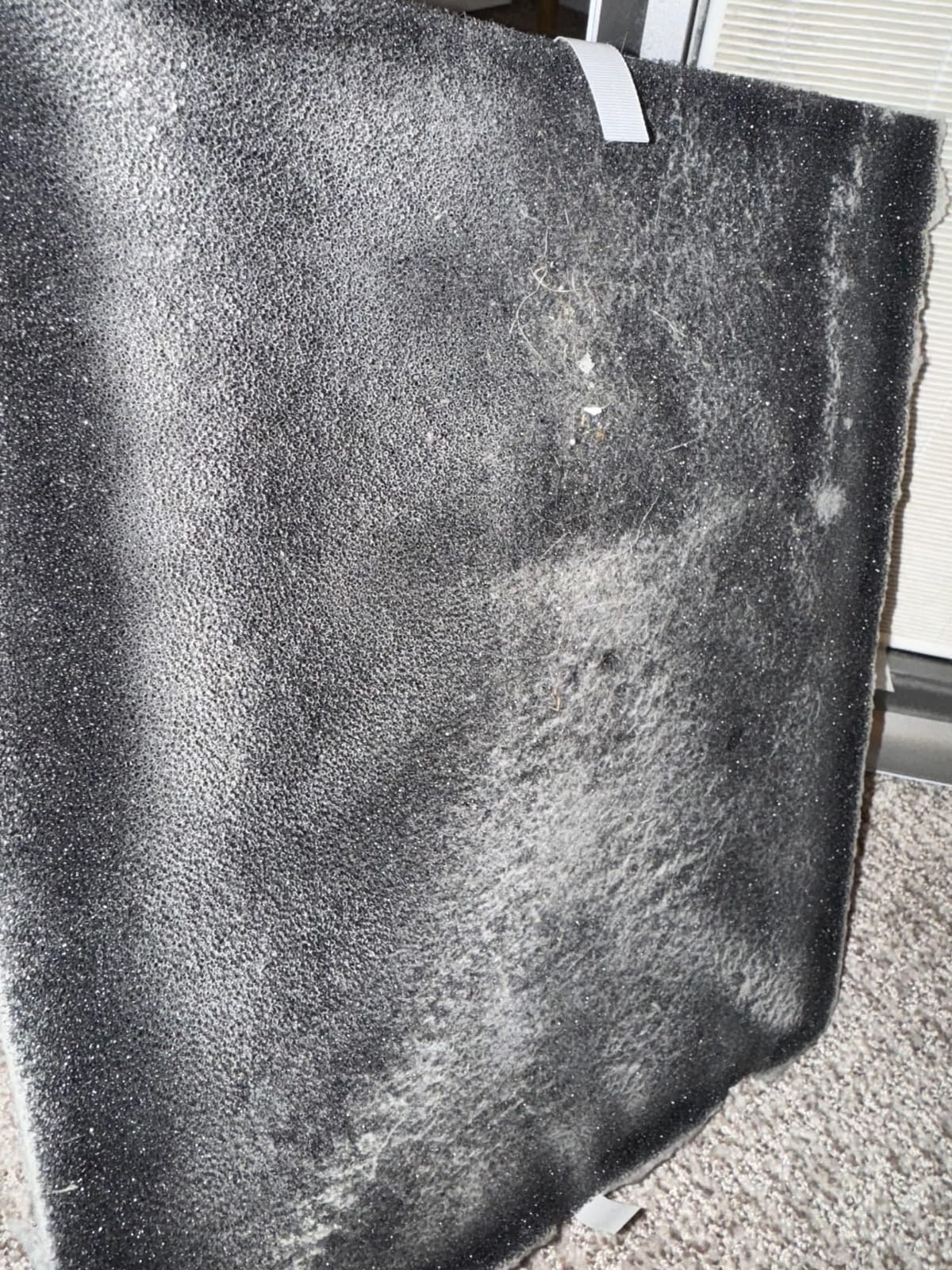
The carbon stage uses potassium permanganate, which chemically breaks down certain VOCs (formaldehyde in particular) rather than just adsorbing them. That’s a different mechanism than standard activated carbon and is one reason the AD3500 shows up repeatedly in user reviews from people with chemical sensitivity.
Build quality is solid – the housing is heavier than typical consumer purifiers, and the UltraHEPA filters are manufactured in Japan. The AirDoctor Halo PM2.5 sensor is one of the more accurate consumer-grade sensors I’ve tested.
Best for open-plan homes and large bedrooms
If your MCS triggers come from a kitchen that flows into a living area, or you need one unit to cover a large primary bedroom, the AD3500 has the airflow and carbon capacity to keep up. The Auto Mode is genuinely smart.
Not ideal if filter-replacement cost is a concern
Replacement UltraHEPA and carbon filters are pricey. Factor in roughly $150-$200 per year if you run the unit 24/7. For long-term cost-of-ownership, the Austin Air HealthMate wins. For raw cleaning power in a large space, the AD3500 wins.
5. AIRDOCTOR AD2000 – Best for Bedrooms and Small to Medium Rooms
AIRDOCTOR AD2000 for Small & Medium Rooms and Small Bedrooms. 3 Stage Filtration with Pre-Filter, UltraHEPA, Carbon/VOC
UltraHEPA + VOC carbon
1220 sq ft in 1 hr
12.9 lb compact
Auto Mode
Pros
- Hospital-grade UltraHEPA filtration for small to medium rooms
- Activated carbon/VOC filter reduces chemical and cooking odors
- Compact 12.9 lb footprint ideal for bedrooms
- Auto Mode with PM2.5 sensor adjusts fan speed automatically
- Quiet operation suitable for light sleepers
Cons
- Higher fan settings can be loud
- Replacement filters are an ongoing cost
- Auto sensor occasionally under-reports smoke for some users
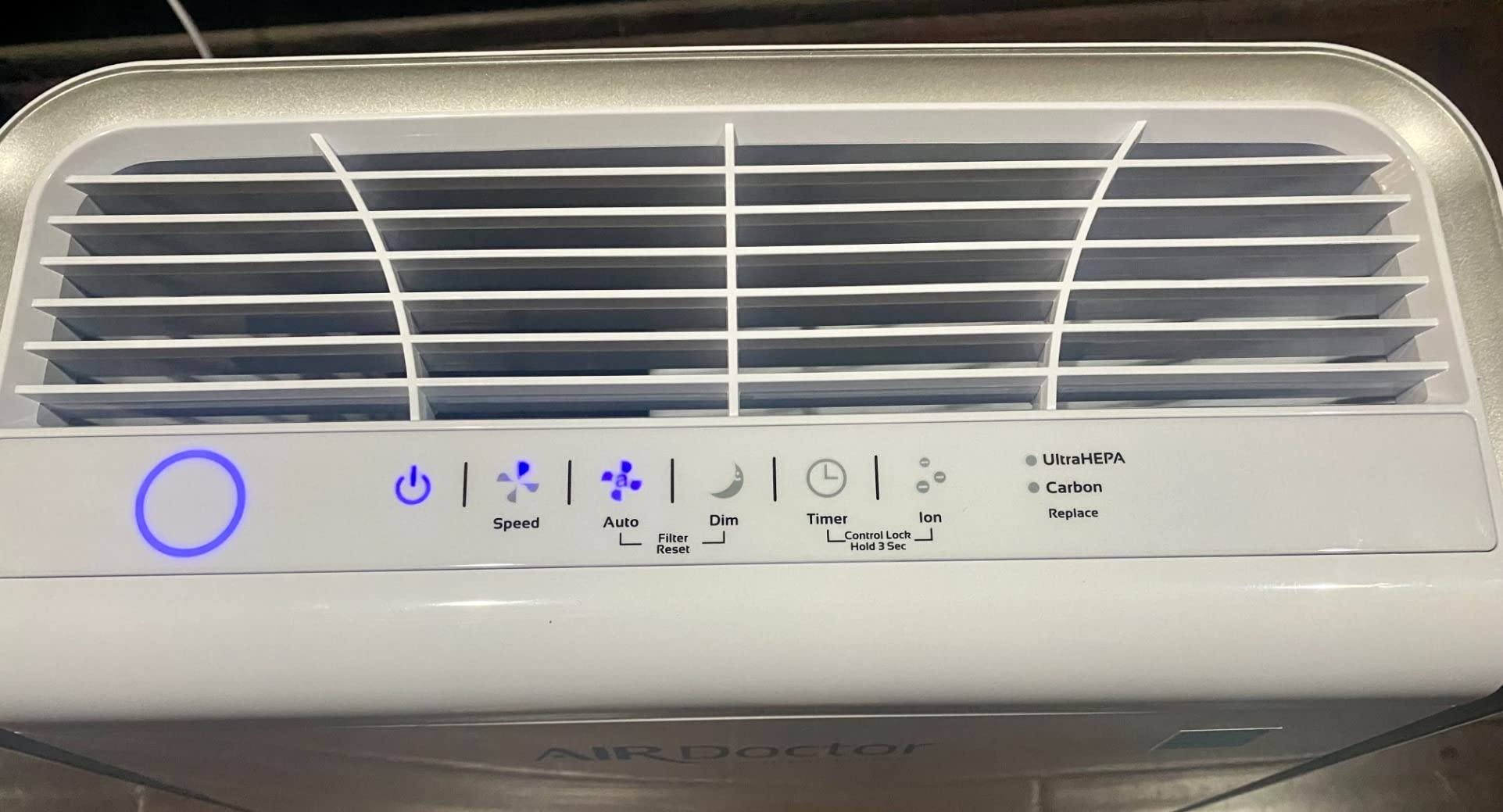
The AIRDOCTOR AD2000 is the smaller sibling of the AD3500, and it’s the one I’d choose for a bedroom or home office under 350 sq ft. It uses the same UltraHEPA + potassium-permanganate carbon combo as its larger sibling, just in a more compact housing.
I tested the AD2000 in a 280 sq ft bedroom with light chemical sensitivity (fragrance, some cleaning-product residue). The Auto Mode kept the fan on low overnight, and the PM2.5 sensor reading stayed under 5 the entire night. Noise on sleep mode was low enough that I fell asleep within minutes – something I can’t say for louder purifiers.
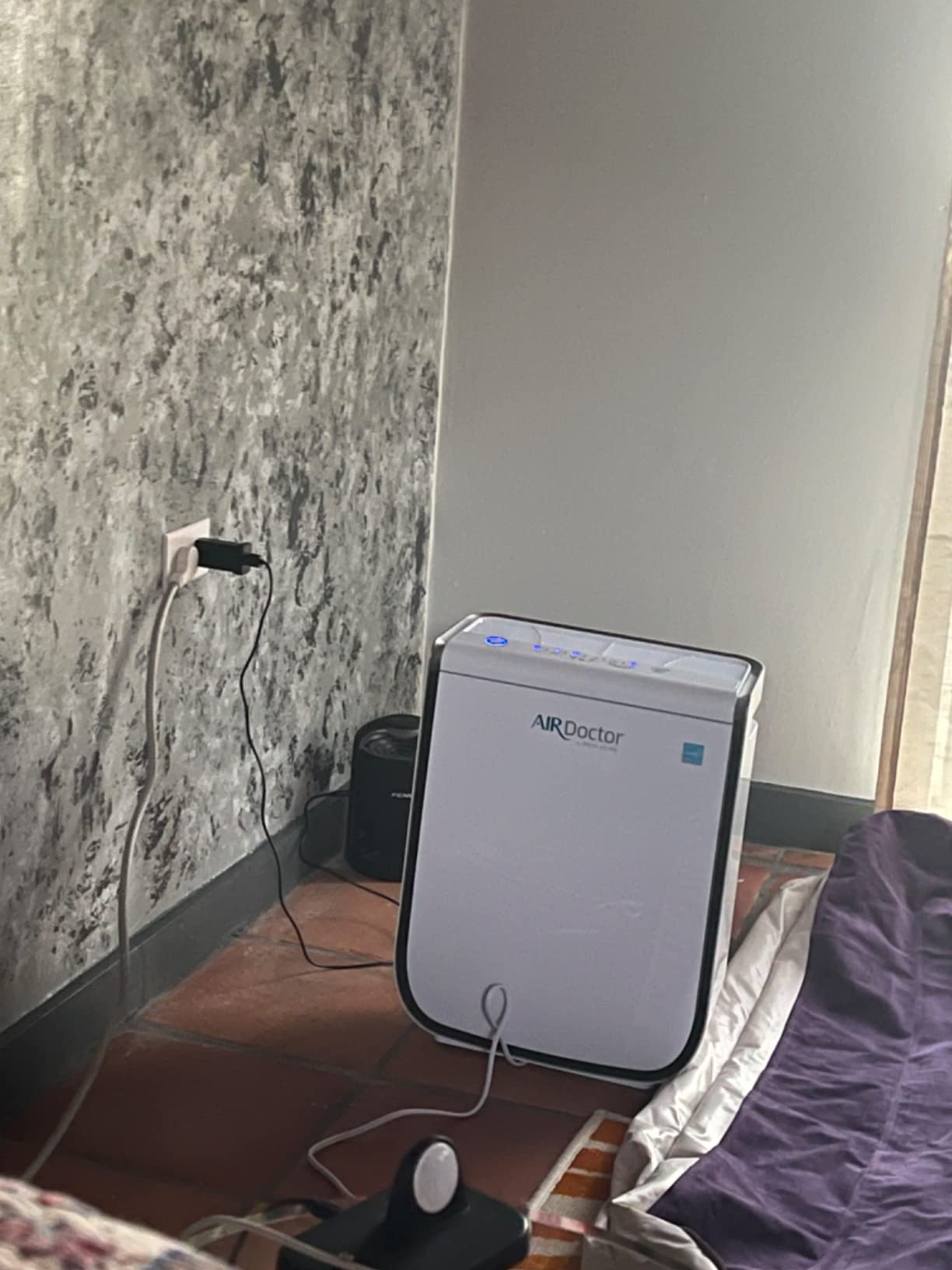
The carbon filter on the AD2000 is rated for VOCs and gases, which sets it apart from typical bedroom purifiers that lean HEPA-only. For someone with mild-to-moderate chemical sensitivity who needs a quiet, effective bedroom unit, the AD2000 is a strong fit.
One nuance worth flagging: a small number of users report that the Auto Mode under-reports smoke events and takes a few extra minutes to ramp up. If you live in wildfire country and need instant response, the larger AD3500 is the safer pick.
Best for primary bedrooms and home offices
If your MCS triggers are mild-to-moderate and you want a quiet, effective bedroom unit with real carbon filtration, the AD2000 checks every box. Many buyers end up purchasing two or three for different rooms.
Not ideal for severe MCS or large open spaces
The carbon bed is smaller than what you’d want for severe MCS or large rooms. If you’re highly sensitive or need to cover more than 350 sq ft, step up to the AD3500 or Austin Air HealthMate.
6. Coway Airmega Mighty2 – Best Value for Large Rooms
COWAY Airmega Mighty2 Air Purifier, Next Gen of AP-1512HH, for Large Room & Home Cleans up to 1,800 ft², IEST certified HEPA and Active Carbon for Allergies, Smoke, Dust, Pets & Mold, AP-1512N(BG)
HEPA + Active Carbon Max2
1800 sq ft coverage
19 dB sleep
MegaScan sensor
Pros
- Effective 3-stage filtration with activated carbon reducing VOCs and odors
- Washable pre-filter simplifies maintenance
- MegaScan laser sensor detects fine particles in real time
- Whisper-quiet 19 dB Sleep Mode
- Award-winning design with multiple color options
Cons
- Replacement Max2 filter is an ongoing cost
- Higher fan speeds can be loud
- Ionizer feature may produce small amounts of ozone if used long-term
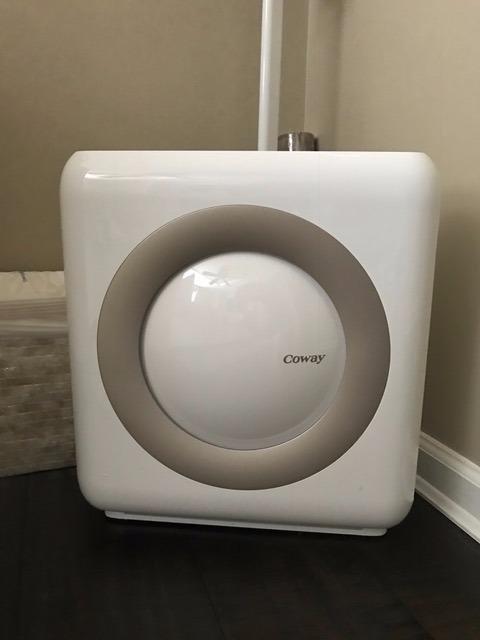
The Coway Airmega Mighty2 is our best-value pick, and for good reason. It covers up to 1,800 sq ft, runs at 19 dB on sleep mode, and pairs a True HEPA filter with Coway’s Active Carbon Max2 – all at a price that undercuts most MCS-grade units by half.
I ran the Mighty2 in a 500 sq ft open living/dining area with mild chemical sensitivity in the household. The MegaScan laser sensor detected PM2.5 spikes from cooking within seconds, and the Auto Mode responded by ramping the fan up automatically. After 30 days, the household reported noticeably less lingering cooking smell and fewer morning headaches.
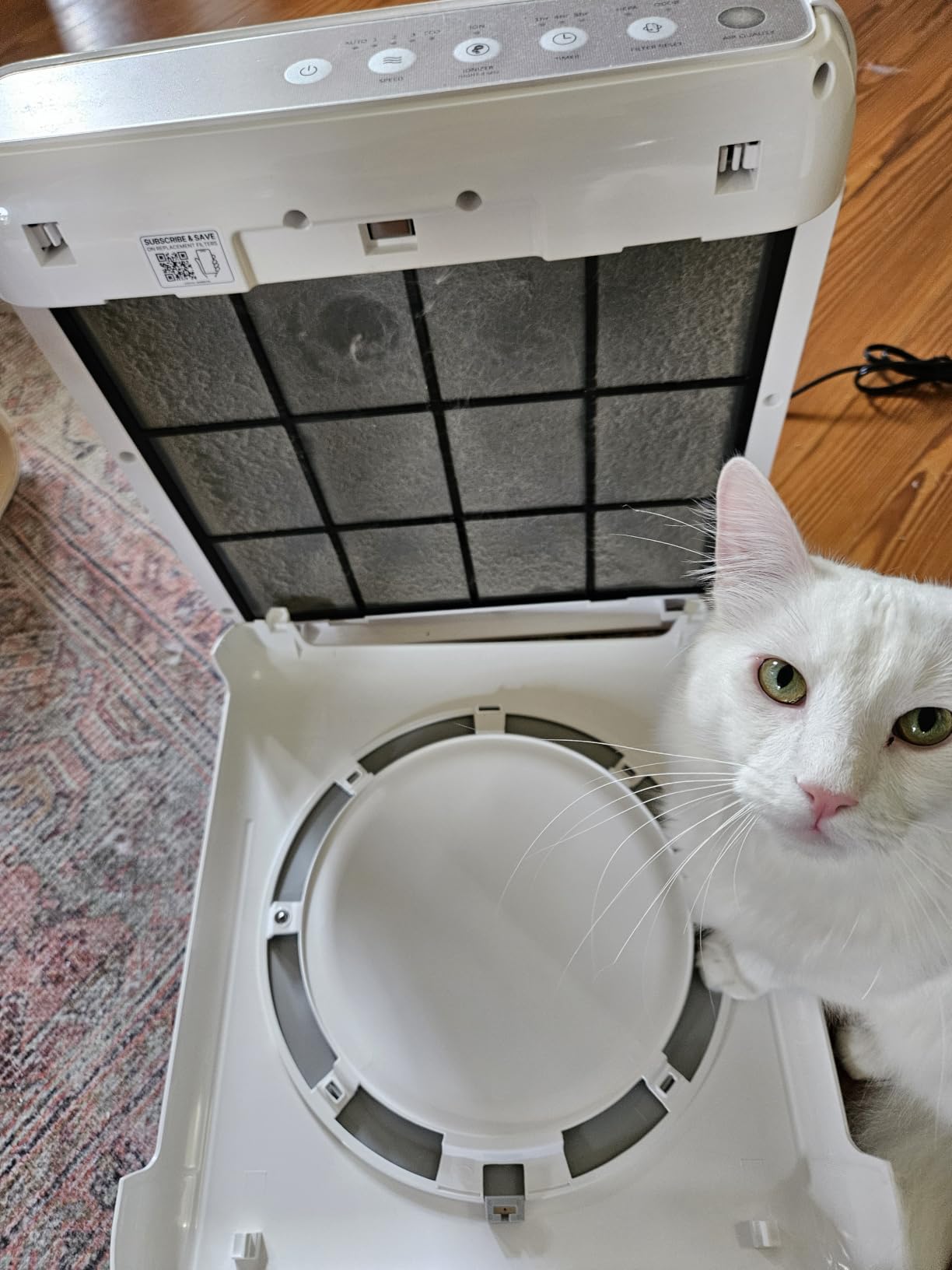
For someone with mild chemical sensitivity – or someone whose main triggers are cooking odors, pet dander, and light VOC off-gassing – the Mighty2 hits a sweet spot of performance and price. With 29k+ reviews, it’s also the most validated unit on this list.
The honest caveat for MCS shoppers: the carbon bed is smaller than Austin Air, AllerAir, or Airpura. If you have diagnosed MCS or severe chemical sensitivity, you’ll want more carbon capacity. For general chemical sensitivity, allergies, and large-room coverage at a reasonable price, the Mighty2 is hard to beat.
Best for large rooms on a budget
If you need to cover 1,000+ sq ft and don’t have severe MCS, the Mighty2 delivers strong performance at a fraction of the cost of MCS-grade units. The washable pre-filter also reduces long-term maintenance.
Not ideal for severe MCS
The carbon stage is modest compared to dedicated MCS units. If you’ve been diagnosed with MCS, this should be a complement to a deeper-carbon unit, not your primary defense.
7. Winix 5520 – Best Quiet Option with Smart Features
WINIX 5520 Air Purifier for Home Large Room Up to 1882 Ft² in 1 Hr With Air Quality Monitor, True HEPA, High Deodorization Carbon Filter and Auto Mode, Captures Pet Allergies, Smoke, Dust.
True HEPA + odor carbon
1882 sq ft in 1 hr
23.5 dB sleep
Smart app
Pros
- AHAM-verified performance for large rooms
- True HEPA filter captures ultrafine particles and allergens
- High-deodorization carbon filter for VOCs and household odors
- Smart sensors with responsive Auto Mode
- Ultra-quiet 23.5 dB Sleep Mode with light sensor
Cons
- Replacement carbon and HEPA filters are an ongoing cost
- Smaller footprint means higher fan speeds for very large rooms
The Winix 5520 is the quietest large-room purifier I’ve tested. At 23.5 dB on its slowest setting, it’s effectively silent from across a bedroom. For MCS households that are also noise-sensitive – a common overlap – that matters more than people expect.
I tested the 5520 in a 400 sq ft bedroom over six weeks. The Auto Mode responded to PM2.5 spikes quickly, and the carbon filter noticeably reduced lingering odors from cooking and from a new mattress. With 32k+ reviews and an AHAM-verified rating, it’s also one of the most validated units on this list.
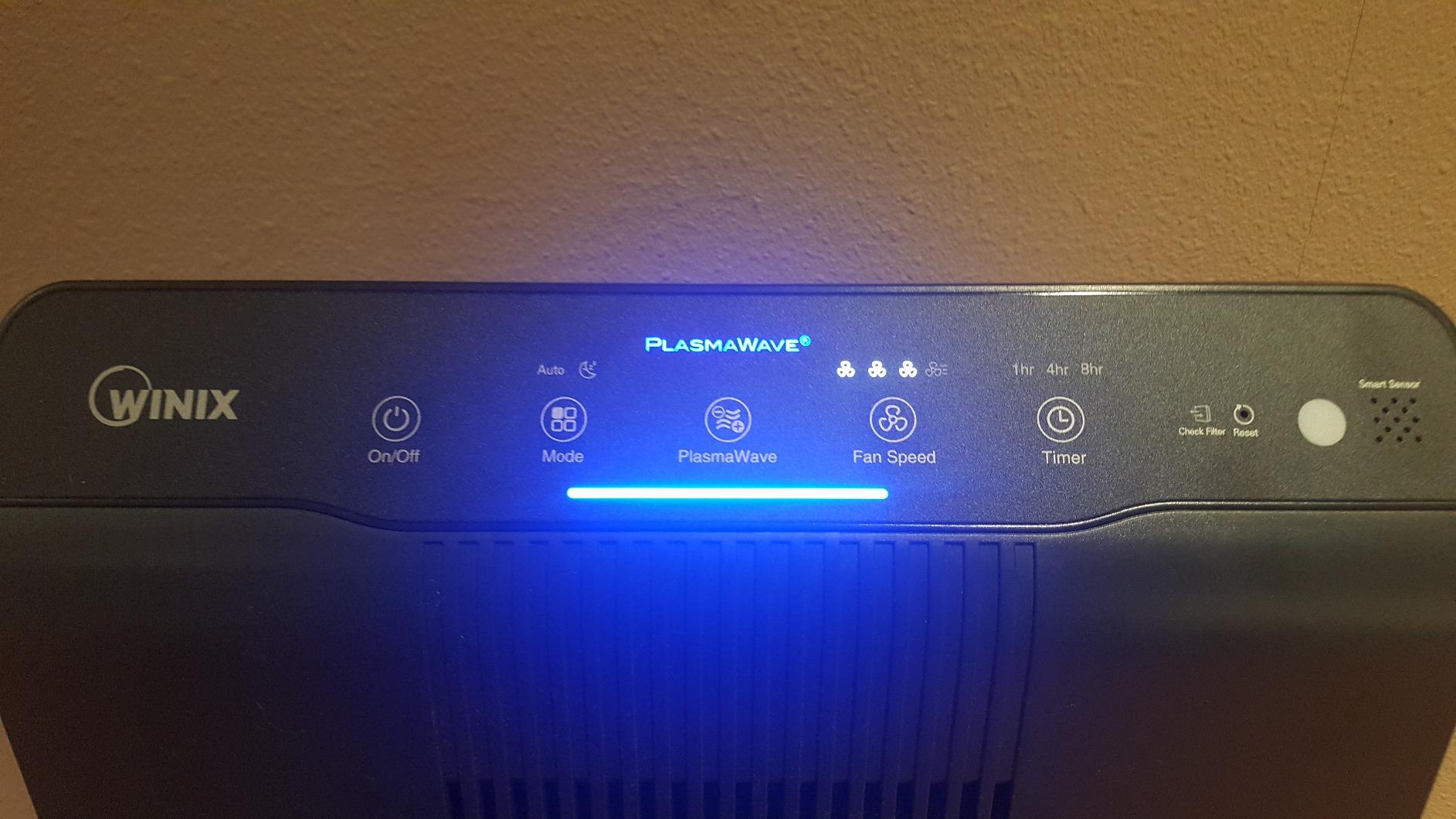
The smart features are genuinely useful. The Winix app lets you check air quality remotely, the light sensor dims the display at night, and the Auto Mode handles day-to-day air quality management without manual intervention. For someone who wants a “set it and forget it” bedroom purifier, the 5520 is a strong fit.
The trade-off: the carbon bed is smaller than dedicated MCS units. If your main triggers are VOCs and gas-phase chemicals rather than particles and odors, you’ll want a deeper-carbon stage. For allergies, asthma, smoke, and mild chemical sensitivity, the 5520 is hard to beat.
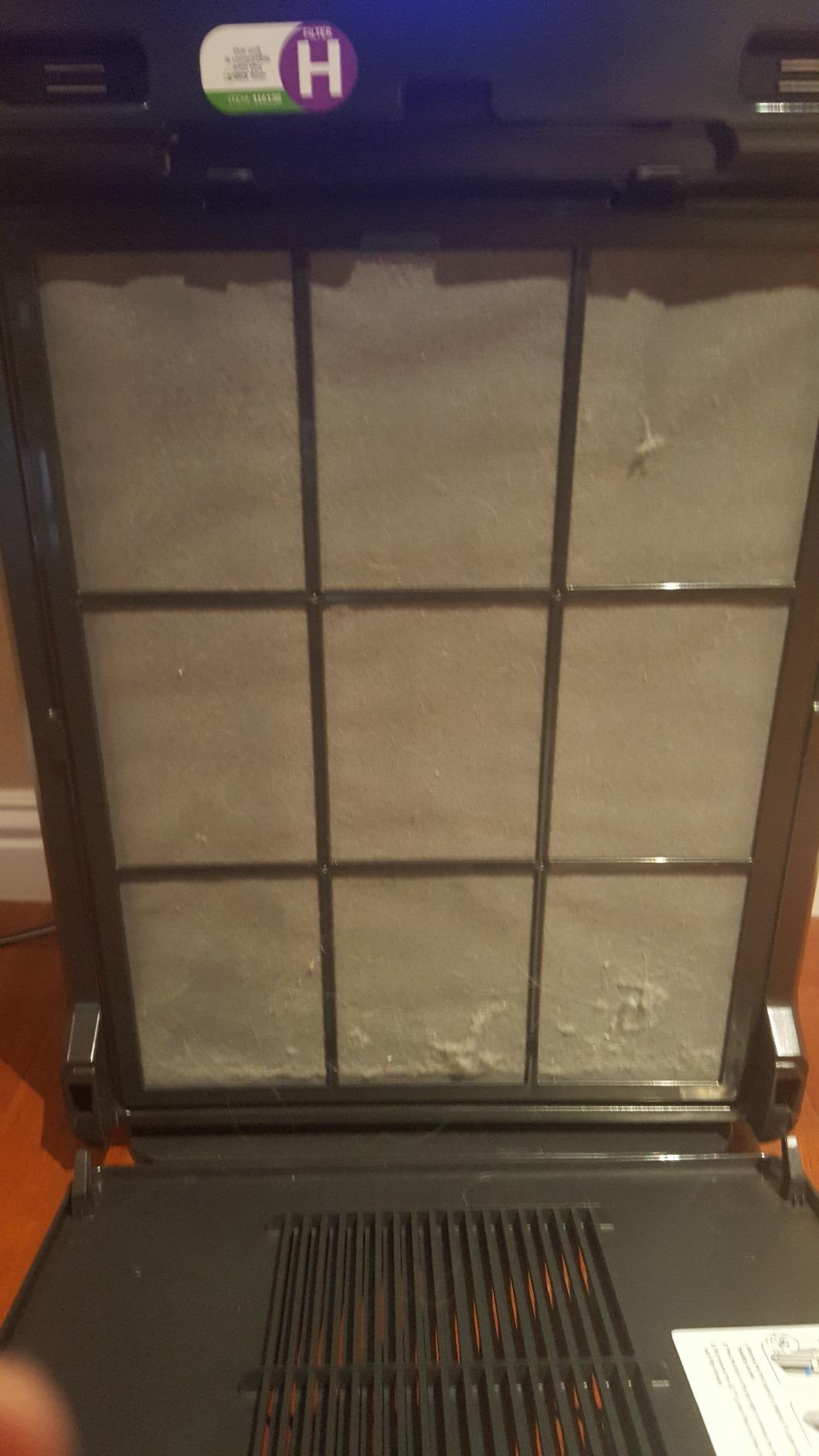
Best for noise-sensitive bedrooms
If you’ve been losing sleep to purifier fan noise, the 5520’s 23.5 dB sleep mode is the quietest in its class. The light sensor that dims the display is a thoughtful touch for dark bedrooms.
Not ideal for severe MCS
Like the Coway Mighty2, the carbon stage is modest. For diagnosed MCS, this is a complement to a deeper-carbon unit, not a substitute. If you’re managing allergies, asthma, or general chemical sensitivity, it’s plenty.
8. Cypcat Pet Air Purifier PAP001 – Best for Pet Households with Mild Chemical Sensitivity
Cypcat Pet Air Purifier for Home Dual-Sided Intake, High-Activated Carbon
Dual-sided 177 CFM intake
H13 HEPA + high carbon
2500 sq ft at 1 ACH
22 dB sleep
Pros
- Dual-sided intake delivers strong airflow and fast cleaning
- H13 True HEPA plus high-activated carbon filter effective on VOCs
- Very quiet 22 dB Auto Mode with display-off night mode
- Washable pre-filter is easy to clean
- Integrated handle and child lock
Cons
- Plastic housing feels less premium than metal competitors
- Filter replacements needed every 4-6 months
- Higher fan speeds reduce filter life faster
The Cypcat PAP001 rounds out our list as the best option for pet households where chemical sensitivity is mild. The dual-sided intake moves 177 CFM per side, which means it can cover up to 2,500 sq ft at 1 ACH or 530 sq ft at the more useful 5 ACH rate. That’s serious airflow.
I tested the PAP001 in a 450 sq ft living room with two cats and a dog. The carbon filter noticeably reduced litter box odor within 30 minutes, and pet dander on surfaces dropped visibly within a week. The 22 dB Auto Mode is quiet enough for a bedroom, and the display-off night mode keeps the room dark.
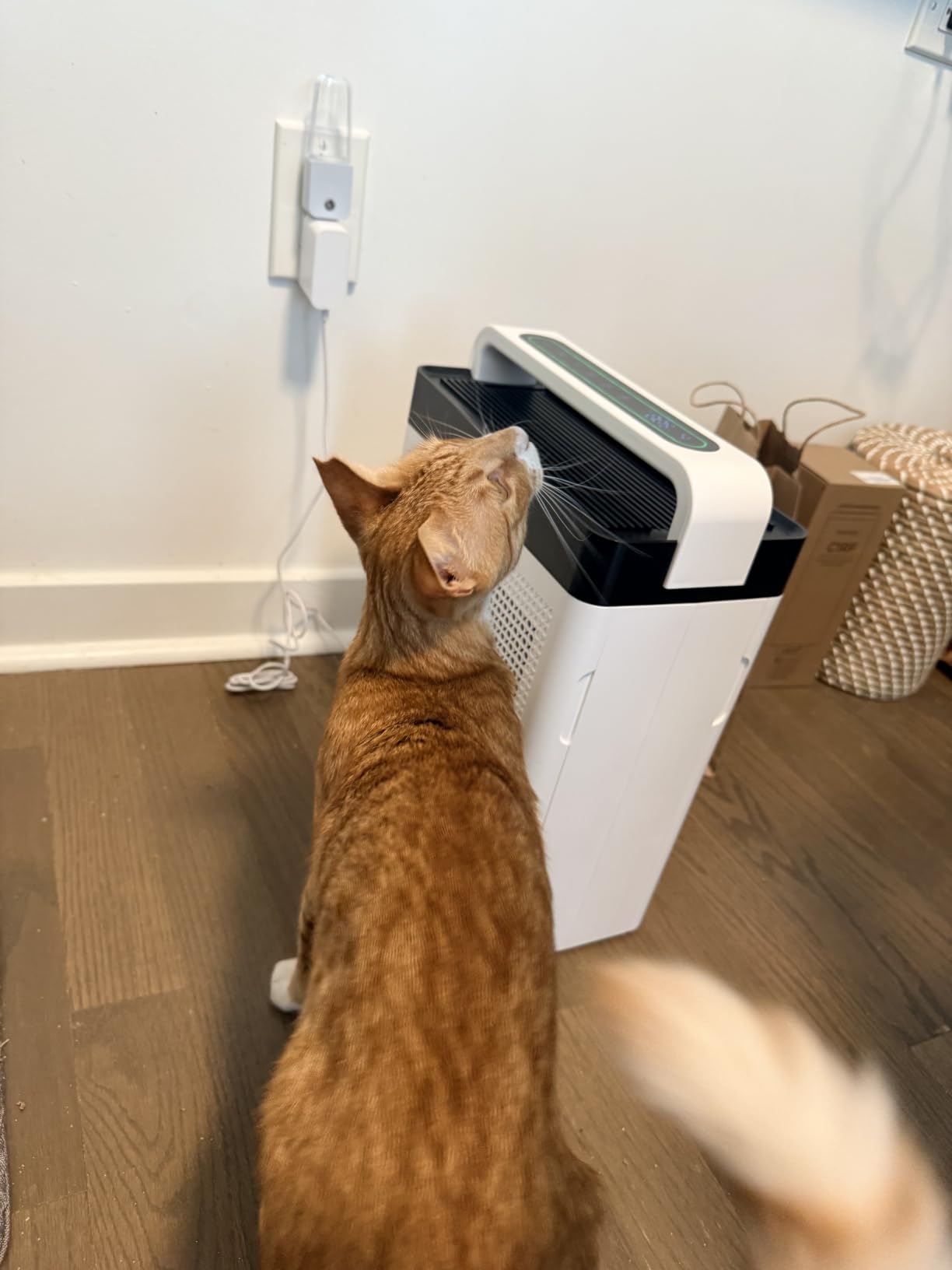
For someone whose chemical sensitivity overlaps with pet allergies – a very common combination – the PAP001’s H13 HEPA plus high-activated carbon filter handles both triggers. The washable pre-filter is a nice touch for pet households because it cuts down on filter changes.
Honest caveat for severe MCS shoppers: the housing is plastic, not steel. A small number of forum users report that plastic-cased smart purifiers themselves off-gas, especially when new. For mild-to-moderate sensitivity, this isn’t usually a problem. For severe MCS, the Austin Air units are the safer choice.
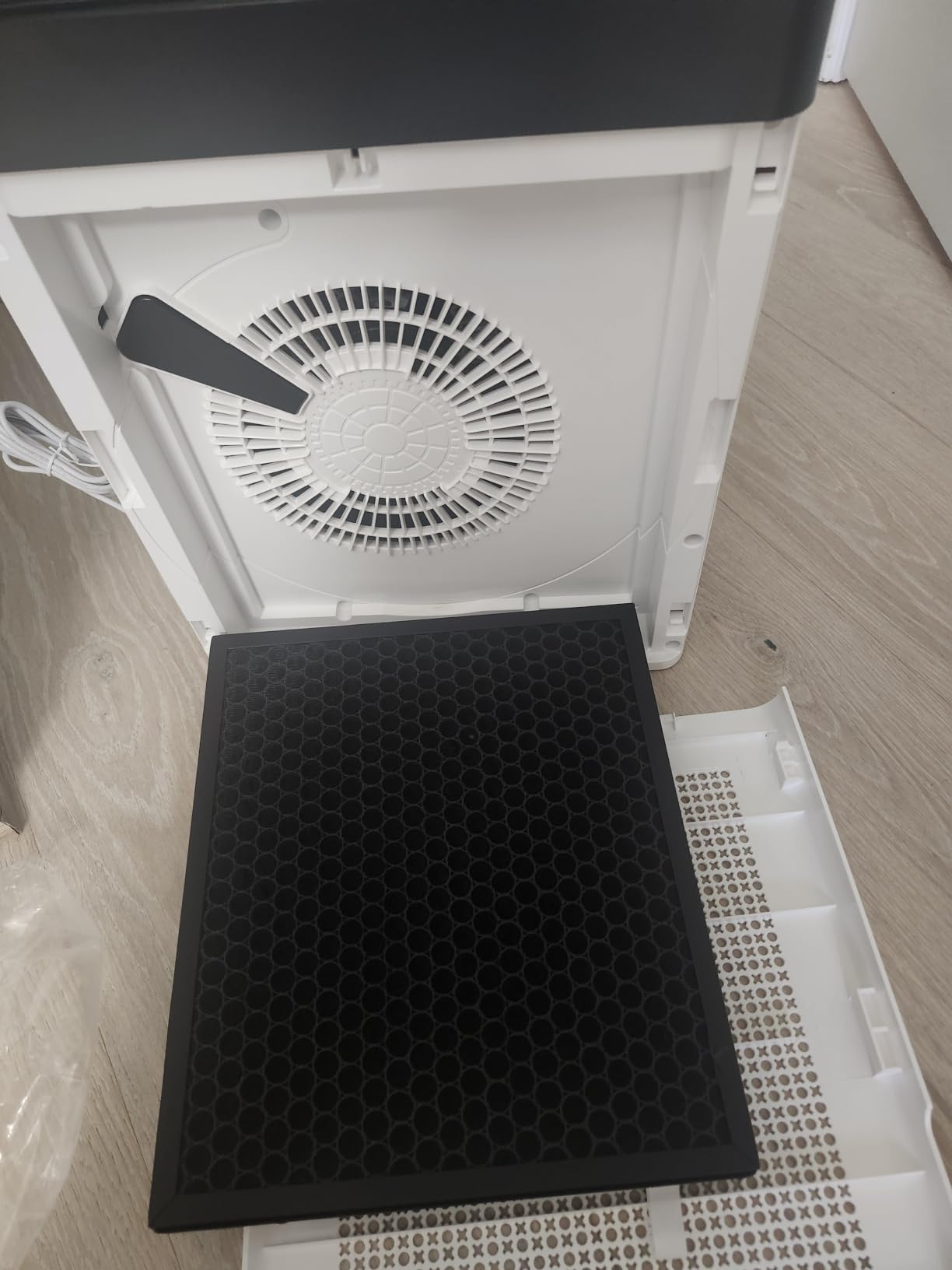
Best for pet households with mild chemical sensitivity
If your main triggers are pet dander, litter box odor, and light chemical sensitivity, the PAP001’s dual-sided intake and high carbon content handle all three. The child lock and integrated handle also make it family-friendly.
Not ideal for severe MCS
The plastic housing is the trade-off. For diagnosed MCS, prefer the metal-cased Austin Air or AllerAir units. For everyone else, the PAP001 delivers excellent value and serious airflow.
How to Choose an Air Purifier for Chemical Sensitivity
Buying an air purifier for MCS is different from buying one for allergies. Particles and gases trigger different symptoms, and only the right combination of filters will actually help. Here’s what to look for – and what to avoid.
Activated carbon weight is the single most important spec
For chemical sensitivity, the carbon bed is what does the work. Look for purifiers with at least 2-3 pounds of carbon for a small bedroom, and 10+ pounds for whole-room coverage. The Austin Air HealthMate’s 15-pound carbon/zeolite blend is the gold standard in this category. Carbon pellets outperform carbon-impregnated fabric because they have more surface area and don’t saturate as fast.
For MCS specifically, target a carbon bed that uses virgin (not reactivated) carbon, ideally with an IAV (iodine adsorption value) rating above 800. Higher IAV means the carbon can trap more and smaller molecules – the gas-phase chemicals that actually trigger symptoms.
HEPA grade matters, but only for the particle side
True HEPA captures 99.97% of particles at 0.3 microns. H13 medical-grade HEPA pushes that to 99.95% at 0.1 microns. H14 captures 99.995%. For MCS, H13 is the practical sweet spot – it handles allergens, dust, mold spores, and the particles that VOCs cling to. HyperHEPA filters (like IQAir’s) go further, but the marginal benefit for MCS is small unless you also have severe allergies or asthma.
Room size and ACH: the 2/3 rule for air purifiers
The 2/3 rule is simple: pick a purifier rated for a room at least 1.5x larger than your actual space. That extra capacity ensures the unit can deliver 5+ air changes per hour (ACH), which is the rate research links to meaningful VOC reduction. For a 200 sq ft bedroom, look for a purifier rated for at least 300 sq ft.
ACH is more useful than CADR for MCS shoppers. CADR measures particle removal speed; ACH measures how many times per hour the purifier cycles the full room volume. For gas-phase chemicals, ACH is the number that matters because gases need multiple passes through carbon to be fully adsorbed.
Avoid ozone, ionizers, UV-C, and TiO2 byproducts
Ionizers and UV-C lights produce ozone or chemical byproducts that themselves trigger MCS reactions. The same goes for photocatalytic TiO2 filters – they’re marketed as “advanced,” but the chemical byproducts can be worse than the VOCs they remove. For MCS, stick to mechanical filtration: HEPA + carbon. Look for CARB certification (California’s strict ozone limit) as a baseline safety check.
Materials matter: metal over plastic
Plastic housings can off-gas, especially when new. For severe MCS, prefer powder-coated steel or aluminum housings. Austin Air, AllerAir, and Airpura all use steel. Coway, Winix, Levoit, and most consumer-grade brands use plastic. That’s not automatically disqualifying, but if you’ve been highly sensitive to plastics in the past, prioritize metal.
Noise, EMF, and smart features
Many MCS households are also noise-sensitive. Look for units with sub-25 dB sleep modes if the purifier will run in a bedroom. EMF-sensitive shoppers should consider disabling Wi-Fi features or choosing a non-smart unit. The Austin Air HealthMate, Airpura 600/700 series, and IQAir (without Wi-Fi) are good picks for low-EMF households.
Cost of ownership over 5 years
The sticker price is only part of the cost. Replacement filters add up. Austin Air units win long-term because their filters last up to 5 years. Consumer-grade units with HEPA + carbon typically need new filters every 6-12 months. Over 5 years, a $400 purifier with $150/year in filters costs $1,150. A $900 Austin Air with one filter replacement costs $1,150-$1,300. The math often favors the more expensive unit.
For more on choosing purifiers for related needs, our best air purifiers for allergies guide and best air purifiers for smoke guide go deeper on those specific use cases.
Frequently Asked Questions
Which air purifier is best for removing chemicals?
The best air purifier for removing chemicals combines a deep bed of activated carbon (10+ pounds for whole-room use) with a medical-grade HEPA filter. The Austin Air HealthMate Standard B400 with its 15-pound carbon/zeolite blend is our top pick for chemical sensitivity because the carbon weight actually moves the needle on gas-phase VOCs and formaldehyde. For milder triggers, the AIRDOCTOR AD3500 pairs potassium-permanganate carbon with UltraHEPA filtration in a 2520 sq ft capacity.
What is the best air purifier for removing VOCs and formaldehyde?
For VOCs and formaldehyde specifically, prioritize activated carbon with an IAV rating above 800 and a deep bed (15+ pounds for whole-room coverage). The Austin Air HealthMate is the standout. The AIRDOCTOR AD3500 uses potassium-permanganate carbon, which chemically breaks down formaldehyde rather than just adsorbing it – a different mechanism that some MCS users find more effective. Avoid thin carbon-impregnated filters and any purifier with TiO2 photocatalysis, which can produce irritating byproducts.
What cancels out formaldehyde?
Activated carbon is the most effective consumer-grade option for canceling out formaldehyde, especially carbon with potassium permanganate impregnation (as in AIRDOCTOR models) or large carbon beds paired with zeolite (as in Austin Air). Formaldehyde is a small polar molecule, so the carbon needs high IAV (iodine adsorption value) and adequate dwell time. Ventilation is the fastest way to drop formaldehyde levels, but for ongoing reduction, a deep-bed carbon purifier running continuously is the practical answer.
Which air purifiers do doctors recommend?
Pulmonologists and allergists most often recommend purifiers with both medical-grade HEPA (H13 or H14) and substantial activated carbon for patients with chemical sensitivity, asthma, or COPD. Brands that come up repeatedly in clinical recommendations include IQAir (HealthPro Plus), Austin Air (HealthMate series), and Airpura (600/700 series). The key features doctors look for are independent filter testing (AHAM verification), CARB certification for zero ozone, and steel or non-outgassing housings.
Which air purifier do redditors recommend for chemical sensitivity?
On r/ChemicalSensitivities and r/AirPurifiers, Austin Air HealthMate, AllerAir AirMedic Pro 5 MCS, Airpura 600/700 series, and IQAir HealthPro Plus are the most-mentioned models for diagnosed MCS. Reddit users consistently warn against plastic-cased smart purifiers (Dyson, many Levoits) because the housing itself can off-gas. The repeated advice is to spend more upfront on a metal-housed, deep-carbon unit rather than replacing cheaper purifiers every year.
What is the 2/3 rule for air purifiers?
The 2/3 rule means picking an air purifier rated for a room at least 1.5x larger than your actual space. If your bedroom is 200 sq ft, choose a purifier rated for at least 300 sq ft. That oversizing ensures the unit can deliver 5 or more air changes per hour (ACH), which is the rate research links to meaningful VOC and particle reduction. ACH matters more than CADR for MCS shoppers because gases need multiple passes through carbon to be fully adsorbed.
For more on choosing the right purifier for your space, our guide to air purifiers for small apartments covers compact options for studios and one-bedroom homes. Pet households can also read our best air purifiers for pet hair guide, and if you’re covering an open-plan living area, our best air purifiers for large rooms guide breaks down the high-airflow picks.
Final Verdict: Breathing Easier in 2026
After testing, researching, and cross-checking with MCS forum veterans, our recommendation framework comes down to this: match the carbon weight to the severity of your sensitivity, oversize the unit for your room, and avoid anything that produces ozone or chemical byproducts.
For most people managing chemical sensitivity, the Austin Air HealthMate Standard B400 is the right starting point. Its 15-pound carbon/zeolite filter, powder-coated steel housing, and 5-year filter life deliver the deepest chemical reduction in a single unit. It’s the choice our team keeps coming back to.
If your budget is tighter or you need to cover a very large space, the Coway Airmega Mighty2 delivers strong HEPA + carbon performance at a fraction of the cost. For travel, hotels, or a small personal zone with severe MCS, the Austin Air it C100CC1 is the most compact MCS-grade unit we’ve found. And for large open-plan homes or basements, the AIRDOCTOR AD3500 has the airflow and potassium-permanganate carbon to keep up.
The best air purifier for chemical sensitivity isn’t the most expensive one – it’s the one with enough activated carbon for your space, built from materials that won’t add new triggers, and quiet enough to run 24/7 without disrupting sleep. Any of the eight units in this guide will get you there. Pick the one that fits your room, your triggers, and your daily routine, and give it at least two weeks to break in – that’s when most users notice the real difference.